Hello, Guest!

Hello, Guest!

Main Category Group

Forklift Safety Checklists

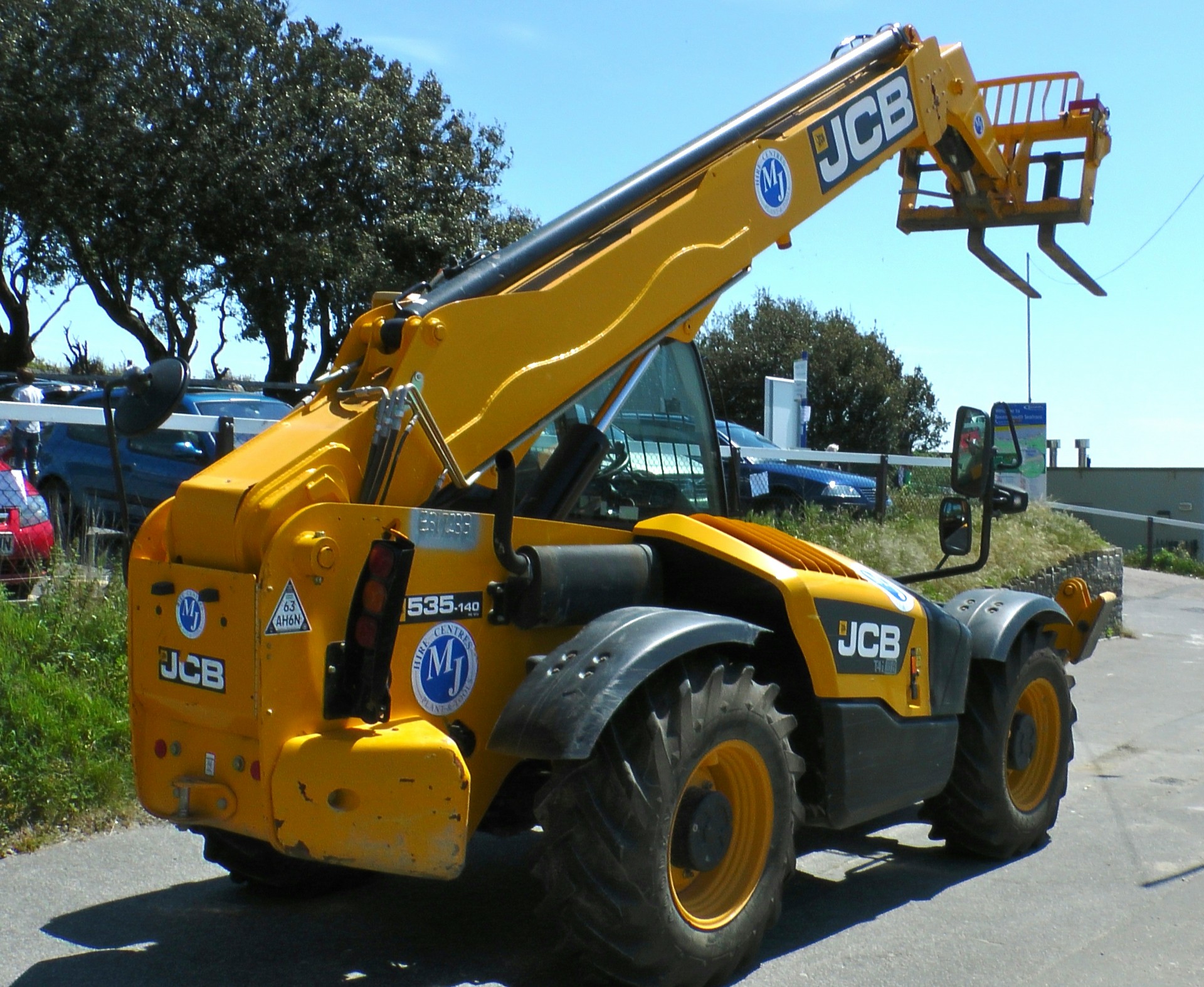
Like any other piece of mechanical equipment, forklifts pose dangers not just to operators but to others in the vicinity. This tool will significantly help prevent these incidents as well as consequential safety violations and citations. HOW TO USE THE TOOL Here are two checklists you can adapt and use to ensure forklifts/powered industrial trucks meet equipment and maintenance standards.

Forklift Safety Checklists2018-10-18T00:00:00+00:00

Focus On: 8 Ideas to Revitalize Your Team’s Morale and Productivity

People or profits? Results or relationships? Safety or Savings? As supervisors we often feel an enormous amount of pressure (spoken or unspoken) to make these types of difficult decisions. We also feel a great deal of conflict as well over the choices we make.  Effective leaders focus on both results and relationships.

Focus On: 8 Ideas to Revitalize Your Team’s Morale and Productivity2018-10-17T00:00:00+00:00

Industrial Ergonomics Hazards Assessment Checklist

Adapt and use this Hazards Assessment to determine areas of potential and existing ergonomic and materials handling concerns.

Industrial Ergonomics Hazards Assessment Checklist2018-10-17T00:00:00+00:00

Ergonomic Injury Record Review

To root out ergonomic injuries you must be proactive. The first step is to do a record review and create a “snapshot” of worker injuries, so you can analyze causes and identify trends. Here’s a form you can adapt and use at your workplace to perform an effective records review.

Ergonomic Injury Record Review2018-10-16T00:00:00+00:00

Tool: Ergonomic Injuries Data Summary and Corrective Actions

Once you gather ergonomic injury records and analyze the data, you must translate your findings into corrective actions. Fill out a separate version of this form for each type of ergonomically-related injury suffered by your workers.  Using this form will enable you to organize your injury data, determine appropriate corrective action, and establish priorities.

Tool: Ergonomic Injuries Data Summary and Corrective Actions2018-10-16T00:00:00+00:00

Office Safety

Most offices have few hazardous chemicals and no heavy or moving machinery. If the worst that can happen is a paper cut, why do we need to talk about safety training? Because a paper cut isn’t the worst that can happen. Office employees still need to know what to do in case of an emergency, and accidents are surprisingly common. Also, people who sit down and use computers most of the day need to watch out for ergonomic issues.

Office Safety2018-10-15T00:00:00+00:00

Falls Through Floor and Wall opening

It takes a split-second of inattention, a slight change in working conditions, a forgetful co-worker, or a lax safety program for you to fall through an opening.

Falls Through Floor and Wall opening2018-10-15T00:00:00+00:00

Be Safety-Conscious Off-the-Job too!

How safety-conscious are you when you are off-the-job? You can do a lot to increase your safety just by paying attention to your attitude and habits. You may be relaxing, but you can still relax safely!

Be Safety-Conscious Off-the-Job too!2018-10-15T00:00:00+00:00

Can You Do the Chemical Splash Dash?

If a chemical splashed onto your skin or into your eye, could you get to a safety shower or eyewash station quickly? The time to consider that question is now, not when you are faced with an emergency. You need to know where this equipment is located, the shortest route to reach it and how to use it effectively.

Can You Do the Chemical Splash Dash?2018-10-15T00:00:00+00:00

Ask the Expert: How do you turn a good safety program into a great safety program?

You must create a safety culture where workers feel comfortable participating. Build trust by engaging employees in all aspects by asking for concerns, opinions and solutions.

Ask the Expert: How do you turn a good safety program into a great safety program?2018-10-13T00:00:00+00:00

By the Numbers: 10 Tips for Emergency Response Plans

Being prepared for an emergency is part of your employers and your responsibility. For help developing your emergency response planning, Ready.gov offers the following guidance.

By the Numbers: 10 Tips for Emergency Response Plans2018-10-11T00:00:00+00:00

Picture This: Emergency Exit Nightmare

Let’s start with the obvious hazard – a blocked emergency exit. Blocked by conveyors, carts, trash, and cardboard boxes.

Picture This: Emergency Exit Nightmare2018-10-11T00:00:00+00:00

Don’t Let a Trench Be your Grave Safety Talk

Excavations and trenches more than 4-5 ft/1.2-1.5 m deep (depending on your federal, state, and provincial regulations) require a protective system is in place to protect workers from cave-ins. If a protective system isn’t in place – don’t enter the excavation. Look out for your safety and the safety of your co-workers and don’t become another buried body of an excavation cave-in.

Don’t Let a Trench Be your Grave Safety Talk2018-10-11T00:00:00+00:00

Emergency Preparedness – Do You Know What to Do?

Unexpected emergencies occur every day in many facilities, including laboratories, offices, and residential buildings. It might be a fire, flood, earthquake, shooting, tornado, or hazardous chemical spill. If you don’t know what to do during an emergency the odds increase that you or others around you will be injured or killed.

Emergency Preparedness – Do You Know What to Do?2023-11-30T22:23:26+00:00

Home Health Care – Workplace Violence

Workplace Violence is unacceptable, regardless of the work environment. This program defines different types of workplace violence common to home health care situations and discusses ways to prevent incidents. Recognition, prevention and de-escalation are the main techniques taught.

Home Health Care – Workplace Violence2018-10-01T00:00:00+00:00

Supermarket: Bloodborne Pathogens – Spanish

Bloodborne pathogens are sometimes called the ???Unexpected Hazard??? because, for most of us, we just don???t expect to come into contact with blood or bodily fluids when performing our normal job duties. Nevertheless, an unexpected encounter with bloodborne pathogens can happen at anytime. Responding properly when confronted with blood and other bodily fluids is critical to your health and safety. The purpose of this program is to provide viewers with the knowledge needed to take the appropriate actions when encountering bloodborne pathogens unexpectedly.

Supermarket: Bloodborne Pathogens – Spanish2018-10-01T00:00:00+00:00

Forklift Operator Training – (18 min)

This program utilizes video shot on location as well as 3D animations to train new or experienced employees in the importance of safe operation and the responsibilities of professional lift truck operations, and the skills and techniques operators can use to help ensure workplace safety and incident prevention. Anyone required to operate forklifts must be trained in accordance with mandated standards. Training must include a wide variety of topics including engineering principles, forklift operating rules, equipment characteristics, differences between a forklift and a car, environmental hazards, operator maintenance, hazardous locations, surface operating conditions, site-specific operations, potential hazards, and other pertinent information. This video does just that and is a great training aid for training new operators or as refresher training for experienced operators.

Forklift Operator Training – (18 min)2018-10-01T00:00:00+00:00

Solid Waste: Lockout Tagout – (13 min)

In most industries it is as simple as turning off the power and installing a lock to prevent the power from being turned back on. In the solid waste industry the purpose is the same, protecting employees, but the energy sources we need to control aren't usually controlled by just a circuit breaker. This program takes a detailed look about how to properly lock and block trash hauling vehicles during maintenance and clean out operations.

Solid Waste: Lockout Tagout – (13 min)2018-10-01T00:00:00+00:00

Healthcare: Hazards and Risk Factors of Multidrug-Resistant Organisms

Multidrug-Resistant Organisms (MDRO) are bacteria and other microorganisms that can lead to an infection developing that does not respond to wide range of antibiotics. If the organism does not die off when treated with antibiotics or antimicrobials, they are said to be ‘resistant’. This means that if a person has an infection caused by one of these bacteria, then they are harder to treat and the antibiotics that do work are expensive and often cause nasty side effects. Each year in the US 23,000 people die from infections caused by MDROs.

Healthcare: Hazards and Risk Factors of Multidrug-Resistant Organisms2018-10-01T00:00:00+00:00

Home Health Care – Workplace Violence – Spanish

Workplace Violence is unacceptable, regardless of the work environment. This program defines different types of workplace violence common to home health care situations and discusses ways to prevent incidents. Recognition, prevention and de-escalation are the main techniques taught.

Home Health Care – Workplace Violence – Spanish2018-10-01T00:00:00+00:00

Supermarket: Lockout/Tagout Spanish

Failure to lock out and tag machinery before working on it is a major cause of injury and death in the United States. Workers can be electrocuted or lose fingers, hands, arms, or suffer severe crushing injuries because machinery is inadvertently turned on while being serviced or maintained. Lockout/Tagout prevents these in juries. This short program is designed to explain basic lockout/tagout procedures, some terminology used in the procedures and general requirements.

Supermarket: Lockout/Tagout Spanish2018-10-01T00:00:00+00:00

Knife Safety / Cut Prevention (6 min)

Cuts are common injuries but they are preventable. Employees will learn how to safely work with knives and proper cutting techniques which will minimize risks when working with knives and other sharp items.

Knife Safety / Cut Prevention (6 min)2018-10-01T00:00:00+00:00

Solid Waste: Pre-Trip Inspection

The trucks and equipment your company operates are great pieces of equipment. They're versatile. They're powerful. And, they have to be inspected. A proper inspection protects workers and those working around them by ensuring that the equipment they are using is mechanically safe. And that's what this video is all about how???to perform a thorough, consistent and accurate pre-shift inspection.

Solid Waste: Pre-Trip Inspection2018-10-01T00:00:00+00:00

Customer Service in Hospitality

Customer Service…Hospitality, the two go hand in hand. Customer service is everyone’s job at the hotel, not just the Front Desk. This program outlines some do’s and dont’s of customer service and teaches your associates to make a good impression, regardless of what department they work in.

Customer Service in Hospitality2018-10-01T00:00:00+00:00
Go to Top