Hello, Guest!

Hello, Guest!

Forklift Safety Checklists

Like any other piece of mechanical equipment, forklifts pose dangers not just to operators but to others in the vicinity. This tool will significantly help prevent these incidents as well as consequential safety violations and citations. HOW TO USE THE TOOL Here are two checklists you can adapt and use to ensure forklifts/powered industrial trucks meet equipment and maintenance standards.

Forklift Safety Checklists2018-10-18T00:00:00+00:00

Tool: The Three Rules of Running a Meeting

A well-run meeting should stick the allotted time, have a clear purpose and plan, and at least one call to action at the end. Read more about running a meeting in this article by Adam Bryant at the New York Times. How can you apply these three principles to your next safety meeting or training?

Tool: The Three Rules of Running a Meeting2018-10-18T00:00:00+00:00

Caught and Crushed by Pinch Points

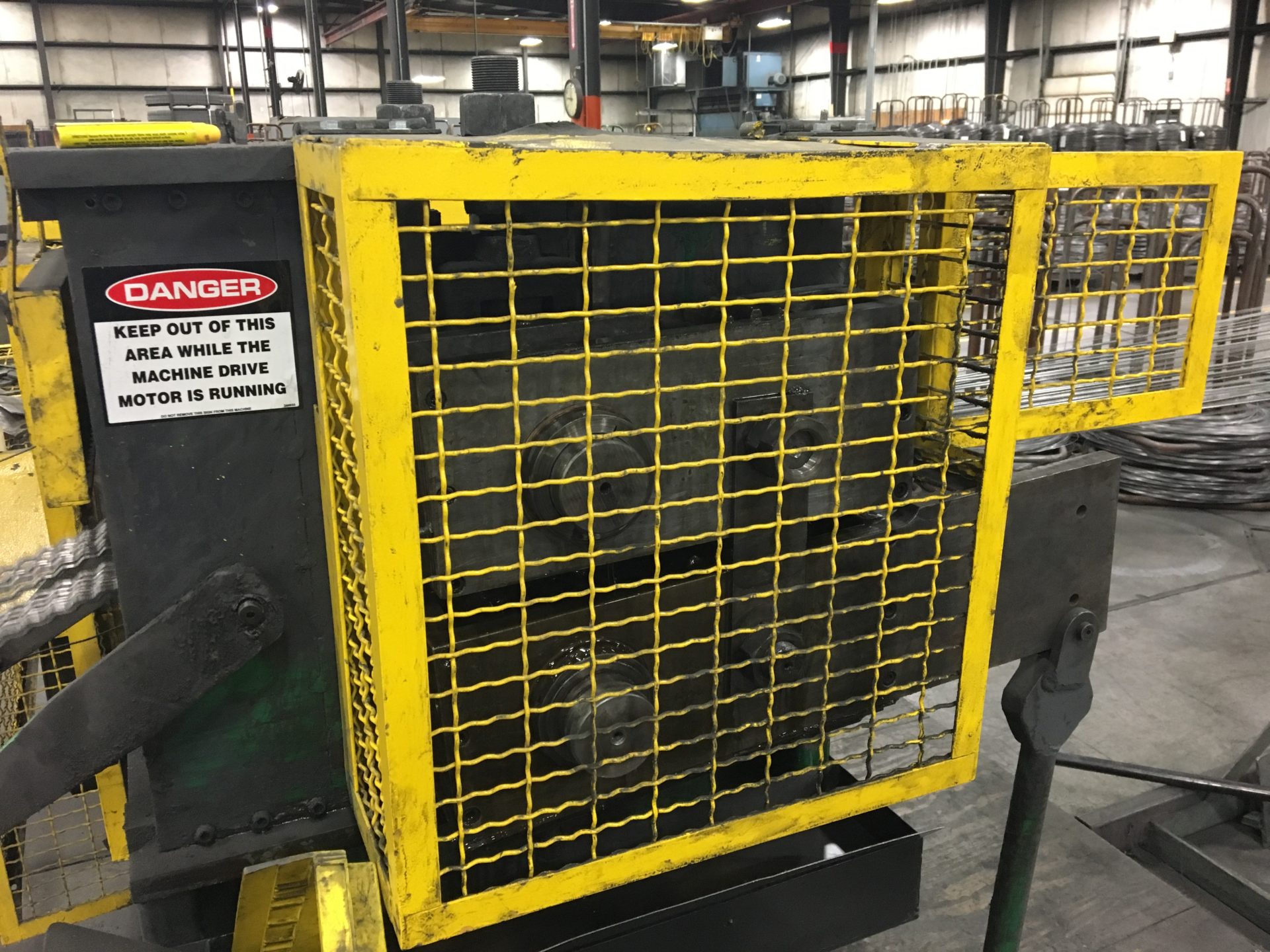
Caught and between. These two mild words describe a type of injury which is anything but mild. Instead, they refer to being caught between two moving objects or a moving object and a stationary object. The result is compression and crushing injuries which can be fatal. The places where these incidents occur are called "pinch points."

Caught and Crushed by Pinch Points2018-10-18T00:00:00+00:00

Focus On: 8 Ideas to Revitalize Your Team’s Morale and Productivity

People or profits? Results or relationships? Safety or Savings? As supervisors we often feel an enormous amount of pressure (spoken or unspoken) to make these types of difficult decisions. We also feel a great deal of conflict as well over the choices we make.  Effective leaders focus on both results and relationships.

Focus On: 8 Ideas to Revitalize Your Team’s Morale and Productivity2018-10-17T00:00:00+00:00

Industrial Ergonomics Hazards Assessment Checklist

Adapt and use this Hazards Assessment to determine areas of potential and existing ergonomic and materials handling concerns.

Industrial Ergonomics Hazards Assessment Checklist2018-10-17T00:00:00+00:00

Ergonomic Injury Record Review

To root out ergonomic injuries you must be proactive. The first step is to do a record review and create a “snapshot” of worker injuries, so you can analyze causes and identify trends. Here’s a form you can adapt and use at your workplace to perform an effective records review.

Ergonomic Injury Record Review2018-10-16T00:00:00+00:00

Tool: Ergonomic Injuries Data Summary and Corrective Actions

Once you gather ergonomic injury records and analyze the data, you must translate your findings into corrective actions. Fill out a separate version of this form for each type of ergonomically-related injury suffered by your workers.  Using this form will enable you to organize your injury data, determine appropriate corrective action, and establish priorities.

Tool: Ergonomic Injuries Data Summary and Corrective Actions2018-10-16T00:00:00+00:00

Office Safety

Most offices have few hazardous chemicals and no heavy or moving machinery. If the worst that can happen is a paper cut, why do we need to talk about safety training? Because a paper cut isn’t the worst that can happen. Office employees still need to know what to do in case of an emergency, and accidents are surprisingly common. Also, people who sit down and use computers most of the day need to watch out for ergonomic issues.

Office Safety2018-10-15T00:00:00+00:00

Falls Through Floor and Wall opening

It takes a split-second of inattention, a slight change in working conditions, a forgetful co-worker, or a lax safety program for you to fall through an opening.

Falls Through Floor and Wall opening2018-10-15T00:00:00+00:00

Be Safety-Conscious Off-the-Job too!

How safety-conscious are you when you are off-the-job? You can do a lot to increase your safety just by paying attention to your attitude and habits. You may be relaxing, but you can still relax safely!

Be Safety-Conscious Off-the-Job too!2018-10-15T00:00:00+00:00

Can You Do the Chemical Splash Dash?

If a chemical splashed onto your skin or into your eye, could you get to a safety shower or eyewash station quickly? The time to consider that question is now, not when you are faced with an emergency. You need to know where this equipment is located, the shortest route to reach it and how to use it effectively.

Can You Do the Chemical Splash Dash?2018-10-15T00:00:00+00:00

Ask the Expert: How do you turn a good safety program into a great safety program?

You must create a safety culture where workers feel comfortable participating. Build trust by engaging employees in all aspects by asking for concerns, opinions and solutions.

Ask the Expert: How do you turn a good safety program into a great safety program?2018-10-13T00:00:00+00:00

By the Numbers: 10 Tips for Emergency Response Plans

Being prepared for an emergency is part of your employers and your responsibility. For help developing your emergency response planning, Ready.gov offers the following guidance.

By the Numbers: 10 Tips for Emergency Response Plans2018-10-11T00:00:00+00:00

Picture This: Emergency Exit Nightmare

Let’s start with the obvious hazard – a blocked emergency exit. Blocked by conveyors, carts, trash, and cardboard boxes.

Picture This: Emergency Exit Nightmare2018-10-11T00:00:00+00:00

Don’t Let a Trench Be your Grave Safety Talk

Excavations and trenches more than 4-5 ft/1.2-1.5 m deep (depending on your federal, state, and provincial regulations) require a protective system is in place to protect workers from cave-ins. If a protective system isn’t in place – don’t enter the excavation. Look out for your safety and the safety of your co-workers and don’t become another buried body of an excavation cave-in.

Don’t Let a Trench Be your Grave Safety Talk2018-10-11T00:00:00+00:00

Workplan: Workplace Domestic Violence Prevention

A study done by the Society for Human Resource Management, found 65% of companies don’t have a formal workplace domestic violence plan in place even though 16% of organizations have had a domestic violence incident in the past five years.

Workplan: Workplace Domestic Violence Prevention2018-10-01T00:00:00+00:00

Home Health Care – Workplace Violence

Workplace Violence is unacceptable, regardless of the work environment. This program defines different types of workplace violence common to home health care situations and discusses ways to prevent incidents. Recognition, prevention and de-escalation are the main techniques taught.

Home Health Care – Workplace Violence2018-10-01T00:00:00+00:00

Active Shooter Awareness Video – Helping Prevent Tragedy – (9 min)

Incidents involving active shooters continue to be in the news. These acts of violence are becoming more commonplace in today's society, and although your chances of being a victim of an active shooter incident are minuscule, it is important your organization and your associates plan and be prepared for such an incident. Active shooters can strike where we live, where we work, where we study, where we shop or any other environment. No business or institution is immune to the potential of an active shooter attack. The purpose of this informational training is not to alarm viewers, but to enlighten them regarding some of the elements of an active shooter scenario and what they should do to be prepared to deal with such an act.

Active Shooter Awareness Video – Helping Prevent Tragedy – (9 min)2024-06-07T19:41:13+00:00

Utility Cart Safety

Focuses on operating safety, maintenance of electric batteries, safe driving techniques and basic safety requirements. Allowing operators to drive these vehicles without proper training increases a company's liability in the event anyone is injured as a result.

Utility Cart Safety2018-10-01T00:00:00+00:00

By the Numbers: Warning Signs and Risk Factors for Domestic Violence in the Workplace

Domestic violence often doesn’t stay confined to the home. Whether directly or indirectly, domestic violence effects the victim, co-workers, and the organization. Learn these warning signs and risk factors for domestic violence in the workplace and share the information with your employees during workplace violence training.

By the Numbers: Warning Signs and Risk Factors for Domestic Violence in the Workplace2018-10-01T00:00:00+00:00

Housekeeping: Slips, Trips and Falls Facts Prevention

Housekeeping/Slips, Trips & Falls A construction site can become a very messy place. But, the longer it stays that way, the more dangerous it becomes. This video outlines the connection between good housekeeping and injury prevention, especially slips, trips & falls. Common trip and fall hazards are shown and the root causes are examined for maximum impact.

Housekeeping: Slips, Trips and Falls Facts Prevention2018-10-01T00:00:00+00:00

BBP Know The Risk

As the title implies, this is an extremely comprehensive program relating to Bloodborne Pathogens. This program covers all aspects of an EXPOSURE CONTROL PLAN, information relating to BBP diseases, including Hepatitis B, C, and HIV, as well as modes of transmission, PPE and acceptable work practices, emergency procedures, and recordkeeping requirements. Dr. Jeffery Kahn, Liver Transplant Surgeon from the University of Southern California discusses the different types of viruses and Bloodborne Pathogens in general. Excellent program for both medical and industrial applications.

BBP Know The Risk2018-10-01T00:00:00+00:00

Domestic Violence in the Workplace

Protecting employees from harm is the foundation of every safety program and piece of safety legislation. Protecting employees from workplace violence must be part of your safety program. Further still, having a plan and program in place to help employees experiencing domestic violence should be, and in many cases must be, part of your safety program.

Domestic Violence in the Workplace2018-10-01T00:00:00+00:00

Pesticide Safety: The Basics (5 min)

Employee Training is extremely important when it comes to using pesticides. Workers are protected under the Worker Protection Standard and the Hazard Communication Standard regarding hazardous substances in the workplace. Any agricultural worker must be trained in Basic Pesticide Safety rules before entering a pesticide treated area.

Pesticide Safety: The Basics (5 min)2018-10-01T00:00:00+00:00
Go to Top