Hello, Guest!

Hello, Guest!

Four Categories of Workplace Violence and Prevention Strategies

There are four generally agreed upon categories of workplace violence. Once you know what the categories of violence are you and your employer can practice ways to protect you, co-workers, and the public from ha

Four Categories of Workplace Violence and Prevention Strategies2018-10-01T00:00:00+00:00

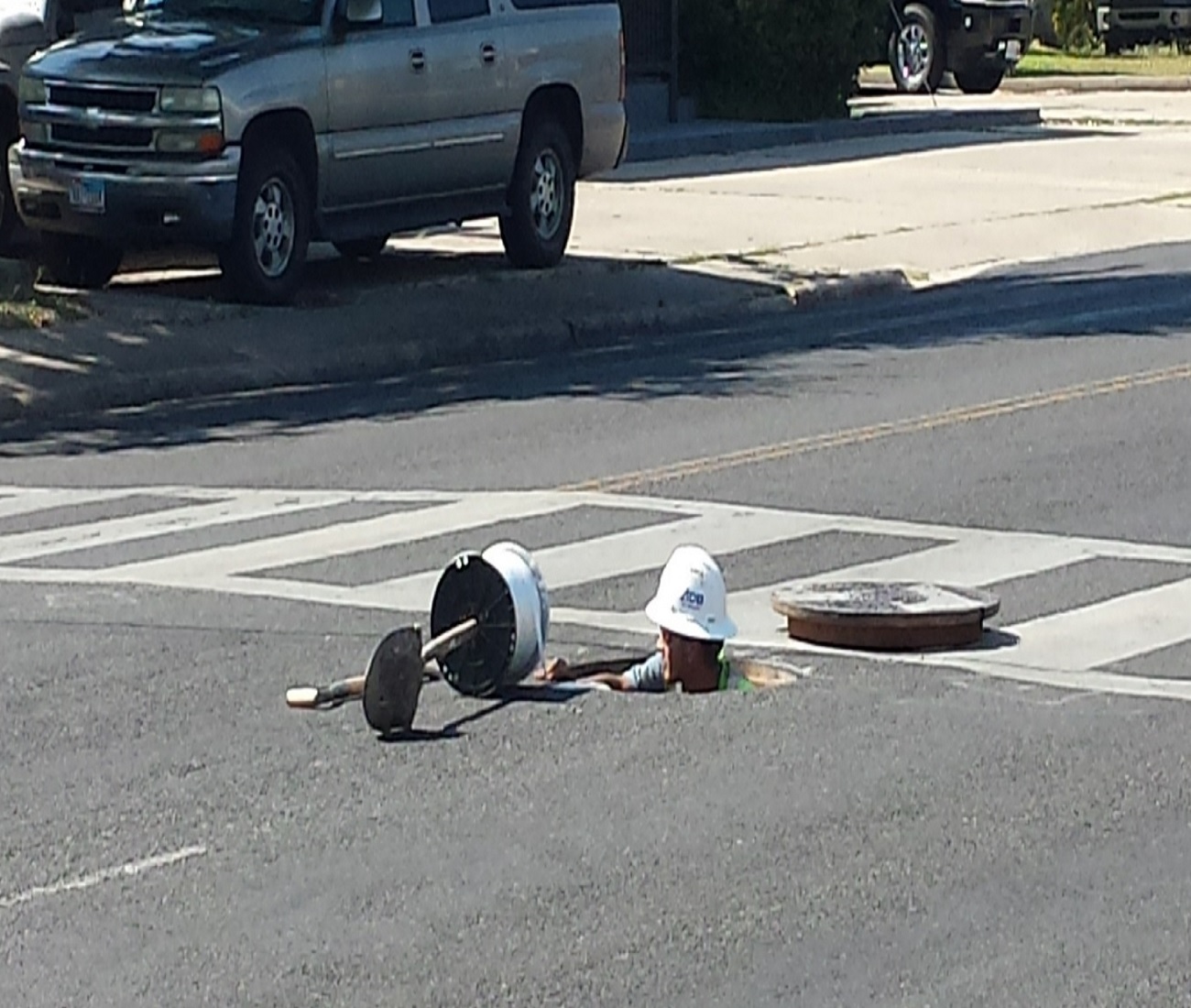
Picture This: Not So Great Moments in Hole Covers

There are some obvious hazards in this picture, yet it’s still a good tool for training and learning. Share this image with your crew and see how many hazards they spot. Then discuss why they are hazardous, how these hazards can be corrected, and what they would do if they were asked to work in this excavation.

Picture This: Not So Great Moments in Hole Covers2018-09-26T00:00:00+00:00

Train the Trainer: Emergency Preparedness

We are all vulnerable to disasters–whether they’re the work of Mother Nature in the form of earthquake, tsunami, hurricane, tornado or flood or deliberate acts of mankind in the form of arson, bombing or other act of terrorism. Surviving such disasters often hinges on being prepared.

Train the Trainer: Emergency Preparedness2018-09-19T00:00:00+00:00

Focus On: Establishing an Incident Investigation Program

When a serious incident happens in the workplace, everyone will be busy dealing with the emergency. Helping injured victims, assessing if the danger has abated, trying to piece together what happened. So, it’s critical to be prepared to investigate an incident before one occurs.

Focus On: Establishing an Incident Investigation Program2018-09-18T00:00:00+00:00

Fundamentals of First Aid: Electrical Burns

An electrical burn occurs when skin meets an electrical voltage. It does not always leave a significant burn to the skin, but the electricity can cause significant internal damage to nerves, muscles and internal organs.

Fundamentals of First Aid: Electrical Burns2018-09-16T00:00:00+00:00

Fundamentals of First Aid: Poisoning

Poisoning, accidental or intentional, causes significant harm or death to many US and Canadian people. Poisoning takes many forms as harmful chemicals can be breathed in, swallowed, touched or injected.

Fundamentals of First Aid: Poisoning2018-09-16T00:00:00+00:00

17-Year-Old Laborer Works His Last Day

Two workers entered an unprotected trench (11 feet deep x 8 feet wide) to set new sections of pipe. Only one would survive.

17-Year-Old Laborer Works His Last Day2018-09-15T00:00:00+00:00

By the Numbers: 12 Tips for Safe Trenching and Excavation

One cubic yard of soil can weigh as much as a car and the pressure on the chest can make it impossible for a worker to breathe, even if his or her head is above the level of the collapsed soil. Often, it’s impossible to rescue a trench collapse victim quickly enough to prevent death.

By the Numbers: 12 Tips for Safe Trenching and Excavation2018-09-14T00:00:00+00:00

Picture This: Trenching Tragedy in the Making

There are some obvious hazards in this picture, yet it’s still a good tool for training and learning. Share this image with your crew and see how many hazards they spot. Then discuss why they are hazardous, how these hazards can be corrected, and what they would do if they were asked to work in this excavation.

Picture This: Trenching Tragedy in the Making2018-09-13T00:00:00+00:00

Walking and Working Surfaces Checklist

Use this checklist as a starting point and edit the list as necessary for location specific regulations and work performed.

Walking and Working Surfaces Checklist2018-09-12T00:00:00+00:00

Trenching and Excavation – Daily Inspection Checklist

Trenching and excavation work puts workers in mortal danger if the excavation is not inspected and cave-in protections are not in place. Use this daily checklist as a starting point and edit the list as necessary for location specific regulations and work performed.

Trenching and Excavation – Daily Inspection Checklist2018-09-12T00:00:00+00:00

6 Tips for Avoiding Slips, Trips, and Falls in the Workplace

Slips, trips, and falls are consistently rank as one of the top 2 causes of injuries and deaths on the job. Our contributor, Zachary O’Dell from SafetyLine asks, “Have you taken these 6 precautions to avoid injuries in your own workplace?”

6 Tips for Avoiding Slips, Trips, and Falls in the Workplace2025-10-09T20:13:39+00:00

Workplan: Walking and Working Surfaces

Hazardous walking and working surfaces account for hundreds of thousands of injuries and hundreds of deaths every year.  This translates into billions of dollars spent on work comp, lost-time injuries, and days away from work.  Set yourself, your employees, and your organization up for success by doing your part to keep these surfaces safe.

Workplan: Walking and Working Surfaces2025-10-09T20:27:09+00:00

Workplan: Excavation and Trenching

An excavation is any man-made cut, cavity, trench, or depression in an earth surface formed by earth removal. Trench is a narrow excavation (in relation to its length) made below the surface of the ground. In general, the depth is greater than the width.

Workplan: Excavation and Trenching2018-09-02T00:00:00+00:00

Trenching and Excavation Safety

A trench is an excavation, too, if it isn’t more than 15 feet (4.5 meters) wide at the bottom. And, if you install forms or other structures in an excavation that reduce its width to less than 15 feet, measured at the bottom, the excavation is also considered a trench.

Trenching and Excavation Safety2018-09-01T00:00:00+00:00

Crane Safety – Safety Talk

Few experiences may be as frightening as when a crane becomes unbalanced while a load is being lifted or when the crane collapses under the weight of an excessive load. An unbalanced load or crane collapse can cause death to the operator, other construction workers, can cause damage to property or equipment.

Crane Safety – Safety Talk2018-09-01T00:00:00+00:00

Hazardous Locations Classifications for Electrical Equipment: Class/Division

Hazardous Locations are defined as premises, buildings or parts thereof where fire or explosion hazards may exist due to the presence of flammable gases or vapors, flammable liquids, combustible dusts, or easily ignitable fibers.

Hazardous Locations Classifications for Electrical Equipment: Class/Division2018-08-29T00:00:00+00:00

Hazardous Locations Classifications for Electrical Equipment: Zone System

Hazardous Locations are defined as premises, buildings or parts thereof where fire or explosion hazards may exist due to the presence of flammable gases or vapors, flammable liquids, combustible dusts, or easily ignitable fibers.

Hazardous Locations Classifications for Electrical Equipment: Zone System2018-08-29T00:00:00+00:00

Cementing Safety for Concrete Workers: Cast-in-place Concrete

A 40-year-old worker was killed at a construction site recently in Toronto. According to police, concrete panels had fallen onto the worker as they were being unloaded, and the man became trapped.

Cementing Safety for Concrete Workers: Cast-in-place Concrete2018-08-24T00:00:00+00:00

Cementing Safety for Concrete and Masonry Workers: Precast, Lift-Slab, and Masonry Construction

The potential for serious injuries and even fatalities is very high when thinking about work involved for concrete and masonry workers.  Precast concrete, lift-slab operations, and masonry construction all pose different types of risk, and all have the potential for multiple employees to be hurt or killed if these risks are ignored.

Cementing Safety for Concrete and Masonry Workers: Precast, Lift-Slab, and Masonry Construction2018-08-24T00:00:00+00:00

Aerial Lift Safety for Utility Workers

Aerial lifts are commonly used by utility workers. Aerial lifts include boom-supported aerial platforms, such as cherry pickers or bucket trucks, and elevating platforms, such as scissor lifts.

Aerial Lift Safety for Utility Workers2018-08-24T00:00:00+00:00

Tool: A 4-Step Guide to Incident Investigations

One of the biggest challenges when you are investigating an incident is sorting out the irrelevant information from the relevant information. One way to do this is by using a systematic approach to investigate all incidents that focuses on finding the root causes.

Tool: A 4-Step Guide to Incident Investigations2018-08-16T00:00:00+00:00

Picture This: Fancy a Cuppa Kerosene?

What do these dual personality containers and a woman in Utah drinking sweet tea and a BBQ joint have in common?

Picture This: Fancy a Cuppa Kerosene?2018-08-13T00:00:00+00:00
Go to Top