
Skip to content

Hello, Guest!

  • Home
  • All Topics
  • Resources
    • OSHA Program Wizards
      • Emergency Action Plan
      • Transitional Work Program
      • Personal Protective Equipment
      • Energy Control (LOTO)
      • Hazard Communication (HAZCOM)
      • Confined Space Program
      • Hearing Conservation Program
      • Ergonomics Program
      • More…
    • Program Audits
      • Confined Space
      • Emergency Planning
      • Employee Training
      • Hazard Recognition and Control
      • Hearing Conservation
      • IIPP
      • Lockout Tagout
      • Personal Protective Equipment
      • More…
    • Major Loss Source Assessment Tools
      • Amputation
      • Falls from Elevation – Construction
      • Falls from Elevation – Extension Ladders
      • Falls from Elevation – Orchard Ladder
      • Falls from Elevation – Stepladders
      • Lifting Below the Knees
      • Lifting With Arms Extended
      • More…
    • Supervisor Resources
      • California SB 553 Workplace Violence Prevention
      • New York Workplace Violence Prevention
      • Employer’s Guide HazCom
      • Employer’s Guide Lockout Tagout
      • 2026 OSHA Outreach 10 Hour Virtual Training Course
      • Forklift Train the Trainer
      • Train the Trainer
      • Business Case for Safety
      • Special Reports
      • Newsletters
      • Incident Investigations
    • Training Calendars and Bundles
      • ICW Ladder Elimination Challenge
      • Quarterly Safety Checkup
      • Training Calendars by Industry
      • Essential 29
      • Landscaping Safety
      • Fundamental 55
      • Tree Trimming
      • Towing Bundle
    • Training Engagement and Retention
      • Picture This
      • Stats and Facts
      • Fatality Reports
      • Puzzles and Games
      • Safety Checklists
    • Webinars
      • Work Comp Fraud: The Modern Fraudster
      • Returning to the Workplace During COVID-19
      • Respiratory Protection Must Haves
      • Beat the Heat: Outdoors
      • Beat the Heat: Indoors
      • More…
    • When An Injury Occurs
      • Help Injured Workers
      • Nurse Triage Hotline
      • If You’ve Been Injured
      • Transitional Work Program
      • Incident Investigation Wizard Form
      • Top 10 Tips to Lower Your Ex-Mod
  • Webinars
    • Webinars
      • Work Comp Fraud: Identifying the Modern Fraudster
      • Returning to the Workplace During COVID-19
      • Breathe Easier With These Respiratory Protection Must Haves
      • Beat the Heat: Outdoors
      • Beat the Heat: Indoors
      • Machine Guarding: 7 Questions Everyone Should Ask
      • 5 Tips for Impactful Safety Observations
      • More…
  • Ask The Expert
  • Favorites

Hello, Guest!

  • Home
  • All Topics
  • Resources
    • OSHA Program Wizards
      • Emergency Action Plan
      • Transitional Work Program
      • Personal Protective Equipment
      • Energy Control (LOTO)
      • Hazard Communication (HAZCOM)
      • Confined Space Program
      • Hearing Conservation Program
      • Ergonomics Program
      • More…
    • Program Audits
      • Confined Space
      • Emergency Planning
      • Employee Training
      • Hazard Recognition and Control
      • Hearing Conservation
      • IIPP
      • Lockout Tagout
      • Personal Protective Equipment
      • More…
    • Major Loss Source Assessment Tools
      • Amputation
      • Falls from Elevation – Construction
      • Falls from Elevation – Extension Ladders
      • Falls from Elevation – Orchard Ladder
      • Falls from Elevation – Stepladders
      • Lifting Below the Knees
      • Lifting With Arms Extended
      • More…
    • Supervisor Resources
      • California SB 553 Workplace Violence Prevention
      • New York Workplace Violence Prevention
      • Employer’s Guide HazCom
      • Employer’s Guide Lockout Tagout
      • 2026 OSHA Outreach 10 Hour Virtual Training Course
      • Forklift Train the Trainer
      • Train the Trainer
      • Business Case for Safety
      • Special Reports
      • Newsletters
      • Incident Investigations
    • Training Calendars and Bundles
      • ICW Ladder Elimination Challenge
      • Quarterly Safety Checkup
      • Training Calendars by Industry
      • Essential 29
      • Landscaping Safety
      • Fundamental 55
      • Tree Trimming
      • Towing Bundle
    • Training Engagement and Retention
      • Picture This
      • Stats and Facts
      • Fatality Reports
      • Puzzles and Games
      • Safety Checklists
    • Webinars
      • Work Comp Fraud: The Modern Fraudster
      • Returning to the Workplace During COVID-19
      • Respiratory Protection Must Haves
      • Beat the Heat: Outdoors
      • Beat the Heat: Indoors
      • More…
    • When An Injury Occurs
      • Help Injured Workers
      • Nurse Triage Hotline
      • If You’ve Been Injured
      • Transitional Work Program
      • Incident Investigation Wizard Form
      • Top 10 Tips to Lower Your Ex-Mod
  • Webinars
    • Webinars
      • Work Comp Fraud: Identifying the Modern Fraudster
      • Returning to the Workplace During COVID-19
      • Breathe Easier With These Respiratory Protection Must Haves
      • Beat the Heat: Outdoors
      • Beat the Heat: Indoors
      • Machine Guarding: 7 Questions Everyone Should Ask
      • 5 Tips for Impactful Safety Observations
      • More…
  • Ask The Expert
  • Favorites
Plan, Provide, Train When Working from Heights – Spanish
Favorite Print Email English

Los Riesgos

Cientos de trabajadores mueren por caídas cada año. Trabajar desde las alturas mientras se está en una escalera, trabajar en el techo – borde de ataque, claraboyas y otras aberturas y agujeros en el techo, trabajar en andamios y en puentes son sólo algunos de los peligros de las caídas a los que se enfrentan los trabajadores.

Sé un mejor supervisor

Se pueden prevenir esas muertes planificando el trabajo de forma segura, proporcionando el equipo de protección contra caídas adecuado y capacitando a todos los trabajadores sobre cuándo y cómo utilizar el equipo de forma segura.

A continuación se presentan algunas ideas básicas para desarrollar estrategias de protección contra caídas.

“Planificar” por adelantado para hacer el trabajo de forma segura – desarrollar un plan y asegurarse de que el equipo adecuado, el material y los trabajadores debidamente capacitados están disponibles.
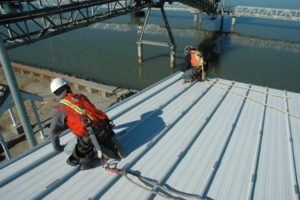
En los trabajos de techado, por ejemplo, es importante conocer la inclinación del tejado y seguir el estándar apropiado en función de la pendiente. Es necesario saber esto antes de comenzar el trabajo para tener tiempo de planear la mejor manera de proteger a los trabajadores.
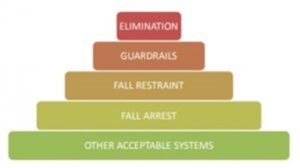
Recuerde, cuando se trata de protegerse contra los peligros siga la jerarquía de los controles. Elimine el peligro si es posible, si no utiliza estos métodos de protección.

“PROPORCIONE” el equipo adecuado y establezca a los trabajadores para la seguridad – provea protección contra caídas y el equipo adecuado para el trabajo, incluyendo los tipos adecuados de escaleras, andamios y equipo de seguridad. Luego provea una instalación segura del equipo.

Aquí hay un ejemplo para establecer un sistema personal de detención de caídas.

La longitud de la línea de vida o cordón, la posición del ancla y la distancia al nivel inferior son todos importantes. Seleccione equipos que permitan a los trabajadores operar de manera eficiente y al mismo tiempo limiten la distancia a la que podrían caer. Esto significa que debe calcular correctamente la distancia de seguridad en caso de caída para asegurarse de que un trabajador no se ponga en contacto con el nivel inferior en caso de una caída. También deberá evaluar el potencial de un efecto de péndulo o de balanceo, que podría hacer que un trabajador caído se balancee hacia un objeto cercano. Los peligros de las caídas por balanceo pueden causar lesiones graves, pero se pueden minimizar instalando el punto de anclaje por encima del área de trabajo (es decir, por encima de la pendiente del techo del trabajador) y estableciendo un rango máximo de trabajo desde el punto de anclaje de acuerdo con las instrucciones del fabricante.

“ENTRENAR” a los trabajadores para que utilicen el equipo de forma segura – entrenar a los trabajadores en el reconocimiento de riesgos y en el cuidado y uso seguro de escaleras, andamios, sistemas de protección contra caídas y otros equipos que vayan a utilizar en el trabajo.

Empiece por aplicar prácticas de trabajo seguras para reducir la posibilidad de caídas. Luego, siga la capacitación supervisando a los trabajadores para asegurar que el equipo de protección contra caídas se utilice y mantenga correctamente. Finalmente, dé el ejemplo. Los empleadores, los directores de proyectos y los supervisores deben seguir las reglas que son responsables de hacer cumplir.


New Safety Talks

New Safety Talks

Giovanni Tejada 22025-12-15T17:40:31+00:00
Dermal Absorption Safety Meeting Kit
Steeven Molina2025-10-22T23:34:43+00:00
Working with Dangerous Goods – Safe Handling Meeting kit
Steeven Molina2025-10-22T23:34:43+00:00
Working with Dangerous Goods – Safe Handling Meeting kit – Spanish
Steeven Molina2025-10-22T23:33:50+00:00
Working Safely with Ornamental Trees: Protecting Yourself, Your Team, and Your Trees Meeting Kit
Steeven Molina2025-10-22T23:33:48+00:00
Working Safely with Ornamental Trees: Protecting Yourself, Your Team, and Your Trees Meeting Kit – Spanish
Steeven Molina2025-10-22T23:31:25+00:00
Working Safely in Shrub, Lawn, and Garden Services Meeting Kit

New eLearning

Giovanni Tejada 22026-02-26T18:36:07+00:00
Work Comp Anti-Fraud Training – Spanish
Giovanni Tejada 22026-02-26T18:46:12+00:00
Work Comp Anti-Fraud Training
Steeven Molina2025-10-22T22:59:24+00:00
Flood Ready
Michelle Vera2025-10-14T23:29:51+00:00
Recognizing and Preventing Abuse & Neglect for Home Health Care Workers
Michelle Vera2025-10-14T23:28:38+00:00
Incident and Accident Investigation for Supervisors and Managers
Michelle Vera2025-10-14T23:26:46+00:00
Drug-Free Workplace: A Supervisor’s Guide to a Safe and Supportive Environment

Upcoming Events & Webinars

Damian Tollens2025-01-31T09:55:18+00:00
Feb 11 – Performance and Cultural Alignment
Damian Tollens2025-02-12T19:53:20+00:00
Feb 26 – Avoid Common Overhead Crane and Rigging Mistakes
Rick Tobin2024-10-24T16:57:11+00:00
Nov 13 – Defensive Driving For Changing Seasons
Rick Tobin2024-10-24T17:10:53+00:00
Nov 29 – What to Expect From a Health & Safety Inspection
Rick Tobin2024-10-24T17:13:55+00:00
Dec 5 – Top Safety Issues During the Holiday Season
Rick Tobin2024-10-24T17:13:30+00:00
Dec 19 – Safer in ’25: The 3 Pillars of Safety Culture
Vicky Pickford2020-12-07T00:00:00+00:00

See What's Trending

Emergency Lighting and Exit Sign Requirements – Quick Tips

Emergency Lighting and Exit Sign Requirements – Quick Tips

2026 OSHA Outreach 10 Hour Virtual Training Course

2026 OSHA Outreach 10 Hour Virtual Training Course

Forklift Train the Trainer Course

Forklift Train the Trainer Course

Forklift Training and Certification Instructions

Forklift Training and Certification Instructions

SCBA Cylinder Hydrostatic Testing – Quick Tips

SCBA Cylinder Hydrostatic Testing – Quick Tips

Upcoming Live Virtual Training Classes: Forklift Train the Trainer

Upcoming Live Virtual Training Classes: Forklift Train the Trainer

Contact Us

800-ICW-SAFETY (800.429.7233)SAFETYOnDemand@icwgroup.com

Additional Links

Manage eLearning
View list of learners
Help

Terms of Use | Legal Notice & Privacy Policy
©2023 ICW Group , All Rights Reserved

Page load link


Video Tutorials to Help You Get Started

Since it's your first time, you may want to checkout some of the video tutorials.

eLearning overview

Managing learners

Assigning courses

Reporting & Analytics

When you are ready to go, close this window.
Don't show this again
Go to Top

