
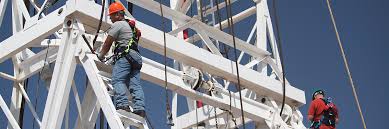
Picture This: Defying the Laws of Physics and Common Sense:
Some things you have to see to believe
Some things you have to see to believe
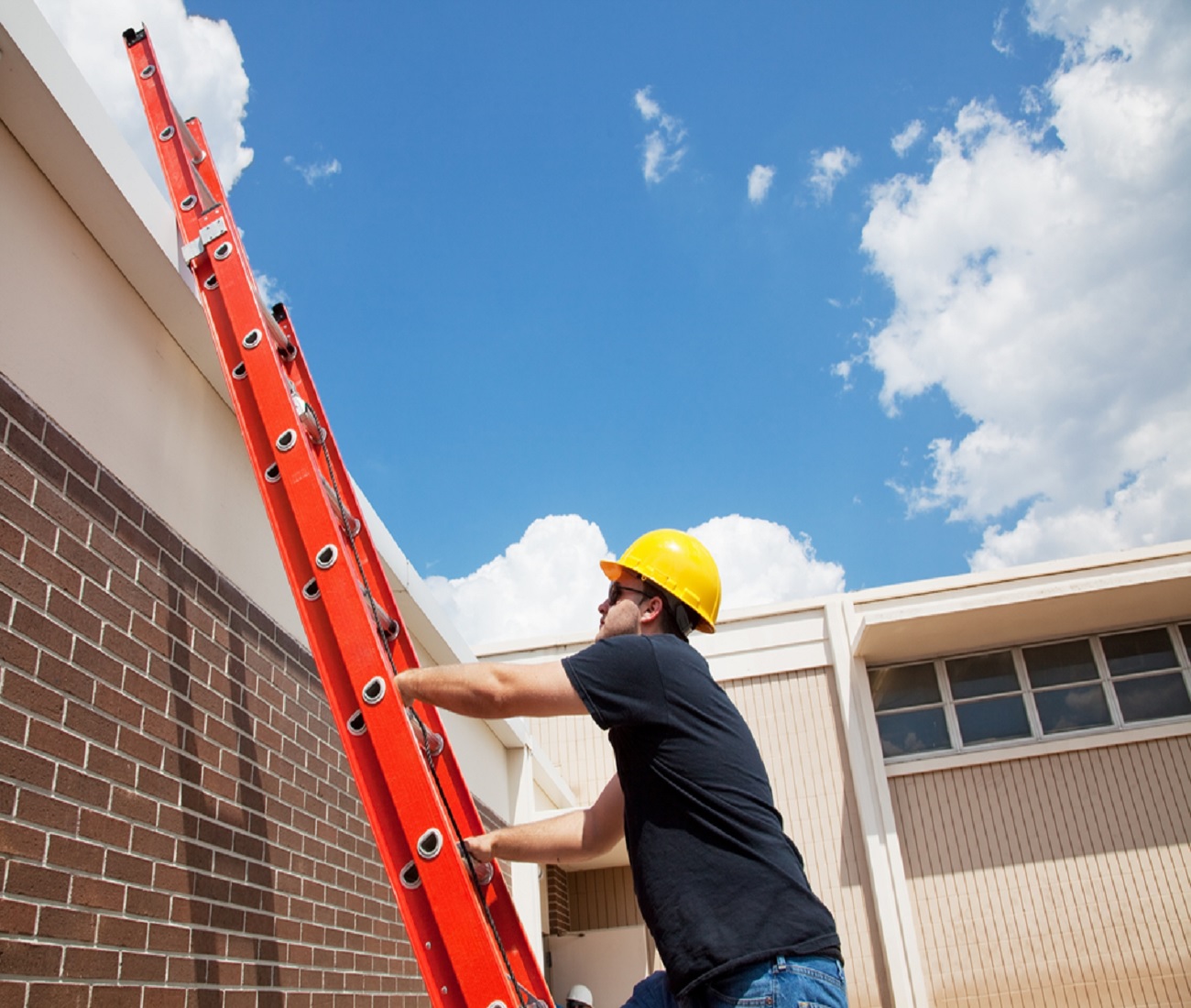
Practice makes perfect, or so it is said. But workers who perfect unsafe practices and think nothing bad will ever happen to them are often sadly proven wrong.
Whoever set this ladder up must have been so focused on getting the job done that he or she forgot to follow basic safety procedures.
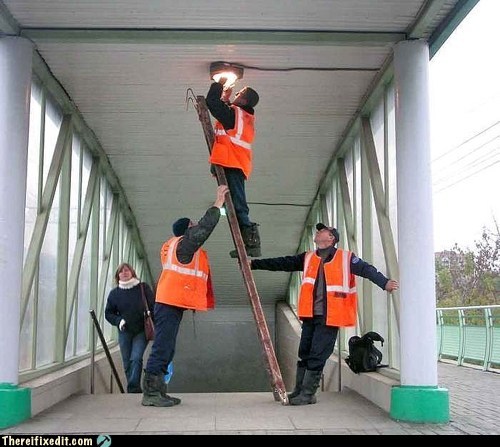
How many workers does it take to safely change a light bulb? Apparently more than these three guys.
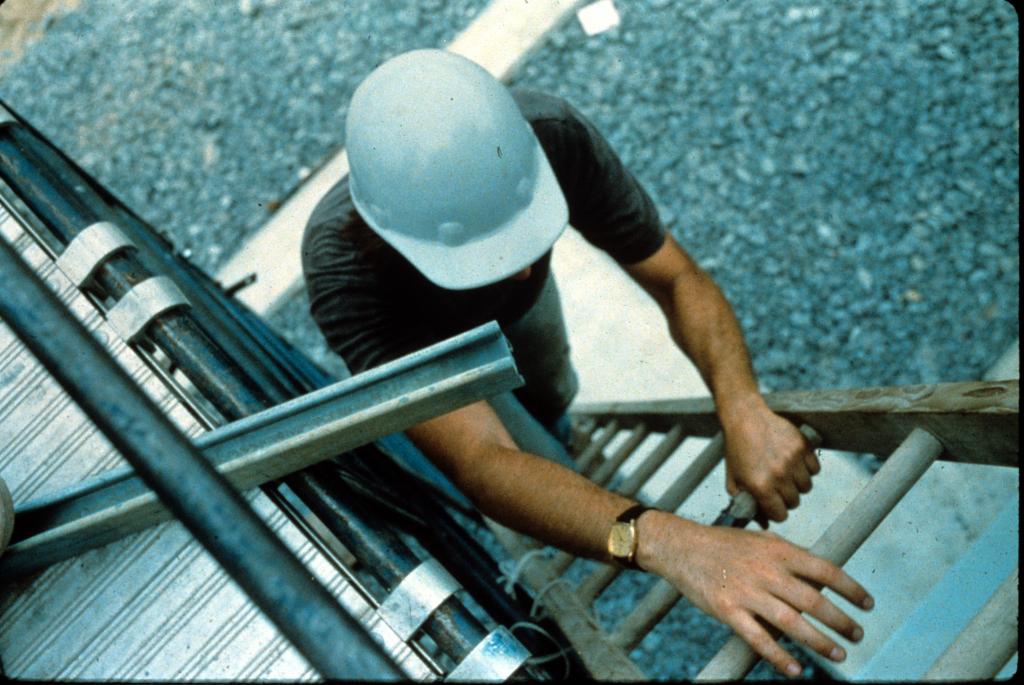
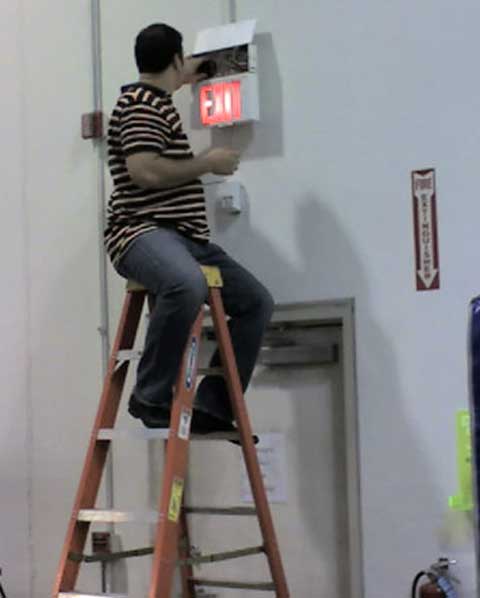
Climbing a ladder requires concentration on one's placement of hands and feet, which means this worker may be oblivious to a sharp piece of metal protruding into the area just above his body.
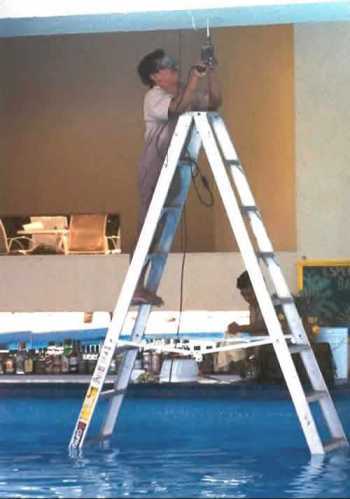
Using an aluminum ladder around electricity is dangerous enough but this guy has raised the stakes considerably.
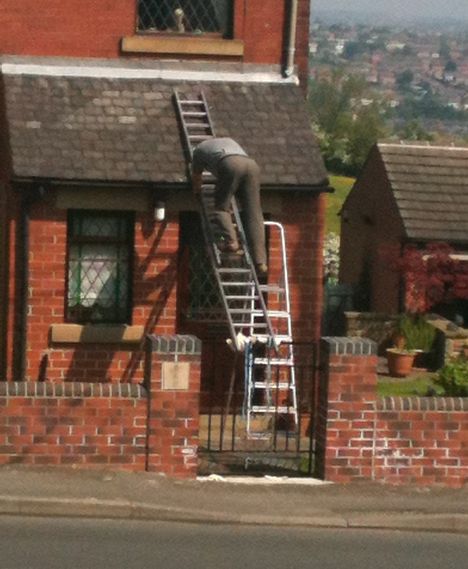
Would you trust this man's rather "unique" ladder arrangement? Neither would we. (WorkSafeVictoria, Australia)
This makeshift scaffold, made from ladders lashed together, screams trouble even before anyone sets foot on it.
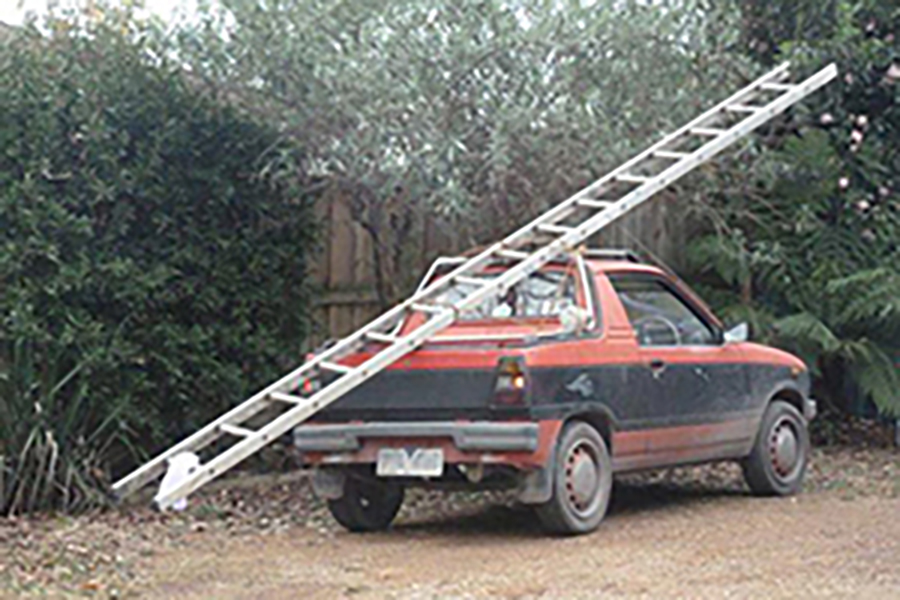
Here's how not to transport a long ladder.
This worker could be caught between shards of glass and a hard place as a result of leaning against a window.
Standing on the top rung of a ladder isn't safe. And neither is this.
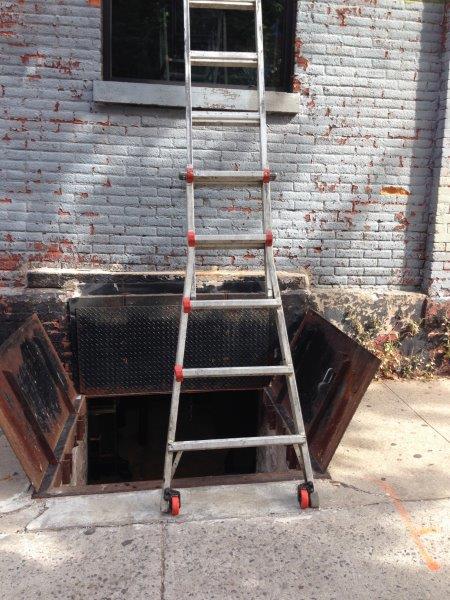
Why would anyone lean a ladder against a wall over an uncovered hole?

OSHA has proposed $108,000 in penalties against a contractor for [...]
Ladders are one of the most commonly used pieces of equipment in almost any work environment. From common stepladders to sophisticated extension ladders, they can be found almost everywhere. Training products on "Ladder Safety in Construction Environments" show that because they are so common, many employees take ladders for granted, and do not take the appropriate precautions when using ladders.
(10 minutes)

This video deals with the safe way to use stepladders, straight ladders and platform ladders, as well as common hazards associated with improper ladder use. Explains the 4:1 rule when placing straight ladders, the belt buckle rule, 36″ requirement for straight ladders above landings and more. A great program for new or experienced workers.

Trenching Violations One willful, one repeat and three serious citations [...]
How This Affects You: Every year thousands of employees are injured in falls from ladders.
Using a ladder is a safer alternative to using a makeshift climbing device or an improvised work platform.
If you think fatal falls happen only to construction workers swinging off skyscrapers, think again. Because ladder use is so common, many workers take ladder safety for granted, and do not take the appropriate precautions.
The improper setup of portable ladders is responsible for the majority of ladder-related injuries and death, both at work and at home. Read Safety talk and follow necessary steps for safe portable ladder setup.
Anyone who uses the wrong ladder for a job or uses it inappropriately is courting trouble. Don?t become a statistic. Remember these ladder safety tips: Select the correct ladder. Why waver on the top rung

Workers sometimes take chances with ladders, failing to remove worn or damaged ladders from service. This could cause serious, even fatal, injury.
Two workers were attempting to install a wooden sign board on the storefront of a building. They were both on the ground attempting to position an aluminum ladder. They lost control of it, causing the ladder to fall backwards.
Aluminum ladders are lightweight and easy to use. But aluminum ladders have one major drawback-they conduct electricity more readily than ladders made of other materials such as wood or fiberglass.
This word search is about ladder safety. While you are searching for the words, think about how they relate to safe use of ladders.
Since it's your first time, you may want to checkout some of the video tutorials.









 800-ICW-SAFETY (800.429.7233)
 SAFETYOnDemand@icwgroup.com