Is This the Right Way to Use a Ladder?

What’s wrong with this picture?


The ladder arrangement—metal ladders stacked on a bucket—in this photo would actually be considered a “scaffold,” i.e., a temporary elevated platform and supporting structure used to support workers, by OSHA (under Sec. 1910.21(f)(27)). And according to OSHA rules (Sec. 1910.28(a)(2)), scaffold footing or anchorage must be “sound, rigid and capable of carrying the maximum intended load without settling or displacement” (emphasis added).

Moral: Don’t use buckets or other unstable objects like barrels, boxes, bricks or concrete blocks to support scaffolds. Even more to the point, don’t let your workers construct makeshift scaffolds out of ladders that can get them killed and expose you to OSHA citations.

SAFE USE OF LADDERS: 3 Reasons to Pay Attention

  1. 14 of 100 American workers killed on the job each year die in falls
  1. 38% of construction workers deaths are caused by falls
  1. Misuse of ladders—such as using a portable ladder anchored by a bucket to create a makeshift scaffold like the worker in the photo—is a leading cause of workplace falls

5 BASIC TYPES OF LADDERS

Ladders come in different shapes and sizes. The most common types include:
1. Step Ladders: Self-supporting ladders that don’t have to be leaned against a type of support.


2. Extension Ladders: AKA “straight ladders,” typically include a main piece called the “base” and a second moveable piece called the “fly” that can be lifted higher than the base.


3. Platform Ladders: Front step ladders that have a platform as the top step:


4. Fixed Ladders: Ladders that are permanently attached to the side of a building, tank or other structure:


5. Scaffolds: Temporary elevated platforms with a supporting structure used to support workers, which can be made of ladders like the one in the photo (a common form is the so-called “ladder jack scaffold”:


8 LADDER USE DO’s & DON’Ts

There are 8 things to do/not do when using a ladder of any kind:

DO inspect the ladder before using it

DON’T use a ladder that’s broken, corroded or not working properly

DO ensure that ladders are anchored on a firm, solid surface—a bucket doesn’t qualify!

DON’T tie together ladders to make them longer or to make makeshift scaffolds like the worker in the photo

DO ensure stepladders are fully opened before climbing on them

DON’T use a stepladder as a straight ladder

DO ensure the ladder is set up in a location where it won’t be jostled or moved while you’re using it

DON’T use ladders when it’s very windy


Snow + Ramp = Slipping Hazard

What should’ve been done to make this incline less hazardous?

Slick ramp covered in snow

A hazard even in perfect weather conditions, ramps like the one in this picture become an even greater slip-and-fall danger when they’re covered in snow and ice. Although it appears that the ramp might have been sanded, it would have been a lot safer had the snow and ice been completely removed.

Maybe the employer thought that the powered mobile equipment apparently using this ramp was capable of safely using the incline despite the snow. But even these heavy machines could slide while using the snowy ramp, endangering the workers operating the equipment and any bystanders. (To protect workers in such situations, ensure that this equipment complies with rollover requirements.)

And even if the snowy ramp was safe for machinery, workers may also use the ramp and the platform it leads up to, which is covered in snow, too. And the sanded snow may not give them enough traction to safely navigate the incline.

That’s why it’s important after a snowfall to have workers shovel snow from all areas of the workplace used by workers, visitors and equipment, such as paths, the entrance, the parking lot and loading docks. And don’t forget ramps and inclines—whether used by machinery or people—such as a ramp for wheelchair access.

Workers should use proper snow shovelling techniques to avoid injury and heart attacks.


Is This the Kind of Foot Protection You Want YOUR Workers to Use?

What’s wrong with this picture?


Flip flops and picks aren’t a great combination. One wrong swing of his tool and this worker is looking at serious medical damage to his feet.

The Moral: The OSHA Foot Protection standard (Sec. 1910.136(a)), you must ensure workers to use appropriate protective footwear that complies with:

  • ASTM F-2412-2005, “Standard Test Methods for Foot Protection,” and ASTM F-2413-2005, “Standard Specification for Performance Requirements for Protective Footwear”
  • ANSI Z41-1999, “American National Standard for Personal Protection — Protective Footwear”
  • ANSI Z41-1991, “American National Standard for Personal Protection — Protective Footwear

Notice that flip flops didn’t make the list.

What’s at Stake: 3 Reasons to Pay Attention

1. There are a lot of things in the workplace that can hurt your feet:

  • Falling & flying objects
  • Sharp edge
  • Hazardous chemicals
  • Extreme heat & cold
  • Electricity

2. Using protective footwear will prevent most foot injuries
3. Protective footwear doesn’t work unless you wear it—too bad the worker in the photo didn’t get the memo!

9 Kinds of Protective Footwear

Flip flops aren’t appropriate foot protection. But the following footwear may be—depending on the hazards to which you’re feet are exposed:

1. Metatarsal (Mt rated) Footwear

  • Designed to protect the toes


2. Conductive (Cd rated) Footwear

  • Designed to protect against static electricity
  • Dissipate static electricity from the ground


3. Electrical Hazard (EH rated) Footwear

  • Made of materials that don’t conduct electricity and that resist shock
  • Designed to protect against electrical contact


4. Static Dissipative (SD) Footwear

  • Reduce accumulation of static electricity
  • Conduct body charge to ground while maintaining a high level of resistance


5. Puncture Resistant (PR) Footwear

  • Prevent sharp objects from piercing the sole of the foot
  • Conduct body charge to ground while maintaining a high level of resistance


6. Heat Resistant (HR) Footwear

  • Protect feet against burns and high temperatures


7. Cold Resistant Footwear

  • Protect feet against freezing and cold temperatures


8. Chemical Resistant Footwear

  • Protect feet from hazardous chemicals


9. Slip Resistant Footwear

  • Prevent falls by providing grip on slick and slippery surfaces


8 Foot Protection Tips

Protective footwear doesn’t work unless you select the right kind and use it properly:

  1. Choose safety footwear designed to protect you from the hazards you face on the job
  2. Make sure footwear you choose has markings indicating it’s been approved
  3. Walk around in safety footwear and make sure it’s comfortable before buying/selecting it
  4. Make sure boots have enough toe room—toes should be about ½ inch (12.5 mm) from the front
  5. When fit testing, make allowances for socks and inner linings
  6. Inspect your protective footwear for damage each time you use it
  7. Replace the footwear if it’s damaged
  8. Use leggings, toe guards or other additional devices necessary to protect your feet and toes

Use this Photo to Train Your Workers about Foot Protection


Is This a Good Place for a Portable Space Heater?

What’s wrong with this picture?


Even a blurry photo can’t obscure the danger of placing a kerosene heater inches away from fuel containers. Hopefully, the containers are empty; but even if they are, they may emit flammable vapors that heat from the device could cause to ignite. The electrical cord stretching across the floor as a trip wire/additional source of ignition adds insult to injury.

The Moral: Temporary heating devices are a potential ignition source that must be kept a safe distance from flammable and combustible materials like chemicals, wood, paper—and even tarpaulins used to cover the heater.

Portable Space Heaters: What’s at Stake

3 Reasons to Pay Attention

Portable space heaters are a leading cause of:

  1. Fires;
  2. Explosions; and
  3. Carbon Monoxide poisoning.

3 Types of Portable Space Heaters

1. Kerosene Heaters

  • Largest and heaviest type
  • Use fuel grade kerosene
  • Not regulated by a thermostat
  • May require use of outside ventilation source to prevent buildup of combustible vapors


2. Electric Heaters

  • Lighter, cleaner and quieter than kerosene heaters
  • Function like old-style radiator
  • Typically have thermostat allowing you to control temperature
  • Electric supply and flow potential source of ignition—although most models include automatic shutoff in case of electrical surge or tip over


3. Forced Air Heaters

  • Lightest kind of portable heater
  • Can run on electric or liquid fuel
  • Have thermostat allowing you to control temperature
  • Generally most effective in heating a space quickly
  • Often also used as fans in hot weather


8 Portable Space Heaters Do’s and Don’ts

There are 8 things to do/not do when using portable space heaters at work (or even at home):

  • DO make sure you keep the heater at least 3 feet away from chemicals and other combustible items—don’t ever get into a situation like the one in the photo above
  • DON’T use a portable space heater without first getting your supervisor’s permission
  • DO make sure the space heater you use has a label indicating that it’s been tested by a testing lab like the Underwriter’s Laboratories (UL)
  • DON’T use a light-duty extension cord or multi outlet strip/surge protector with a high wattage electric heater—it might start a fire
  • DO keep electric heaters plugged directly into the outlet
  • DON’T place electric heaters in enclosed spaces like bathrooms (unless you get a supervisor’s permission)
  • DO ensure that electric heaters are grounded with a 3-pronged plug
  • DON’T run the power or extension cord across the floor so that it becomes a trip hazard—the way the cord in the above photo is


Would You Want Your Workers Walking on These Floors?

What’s wrong with this picture?

  • Puddles on the floors.
  • Equipment blocking walkways.
  • A dust broom poking out.

If you’re a fan of slip, trip and fall hazards, this workplace is nirvana; if you’re a safety manager, it’s a nightmare.

The Moral: The OSHA housekeeping rules (contained in the Walking-Working Surfaces Genera Requirements (Sec. 1910.22(a)) require you to keep passage and walkways clean, dry, orderly and sanitary. The workplace in this photo is none of the above.

What’s at Stake: 3 Reasons to Pay Attention

Same level falls (contrary to from a higher to lower surface):

  1. Are the leading cause of injuries causing workers to miss work;
  2. Kill about 600 American workers each year; and
  3. Are almost always preventable by careful housekeeping.

10 Leading Causes of Falls

Leading causes of workplace slip, trip and fall surfaces include:

1. Wet or oily floors (like the one in the above)


2. Floor surfaces in disrepair


3. Loose rugs or mats


4. Weather hazards like ice, snow and rain


5. Protruding nails, splinters and holes in the floor


6. Wires and cords strung along the floor


7. Untied shoe laces or failure to wear the right footwear


8. Objects and obstructions in the walkway


9. Poor lighting in aisles and walkways


10. Failure to provide workers proper fall safety training


8 Trips and Falls Prevention Do’s and Don’ts

There are 8 things to do/not do to avoid slips, trips and falls at work

DO make sure you use non-slip footwear when working on slippery surfaces

DON’T leave objects in aisles and walkways that people may trip over

DO tell your supervisor immediately if you spot any puddles, slicks, spills or other trip hazards

DON’T horse around or run in walkways

DO inspect aisles and walkways for trip hazards before each shift

DON’T string extension and other cords across aisles and walkways

DO watch where you’re walking at all times

DON’T ignore hazard signs like CAUTION: TRIP HAZARD or SLIPPERY WHEN WET


Is This Any Way to Use a Circular Saw?

What’s wrong with this picture?

Of all the dangerous things the worker operating this handheld circular saw is doing, the one that scares me the most is using his legs to brace the board he’s cutting.

The Moral: Don’t let your workers use portable circular saws—or any other portable tool—unless they:

  • Wear safety glasses to protect their eyes from dust and wood chips;
  • Use hearing and head protection; and
  • Use a proper platform to cut the object—legs don’t count as a proper platform!

Handheld Circular Saws

What’s at Stake: 3 Reasons to Pay Attention

  1. An average of more than 10,000 US workers suffer serious circular saw injuries each year
  2. Almost all of these injuries are preventable
  3. The thing that would have prevented the most injuries: proper use of the saw

3 Handheld Circular Saw Hazards to Watch Out For

1. Point of Operation Hazards: You can get hurt if your hands slip or you get too close to the saw during cutting.

Prevention strategy: Keep your hands out of the line of the cut.

2. Flying Particles: Wood chips, splinters and broken saw teeth may be thrown off by the blade’s cutting action.

Prevention strategy: Use proper eye and face protection.

3. Kickback: When the blade catches the stock, it may be thrown back toward the operator.

Prevention strategy: Keep the blade sharp, use the saw at the speed the manufacturer recommends and properly support the stock being cut—remember, using your legs is not a proper means of support!

8 Circular Saw Operation Do’s and Don’ts

There are 8 things to do/not do when operating a handheld circular saw

  • DO use the proper blade for cutting action, e.g., don’t use crosscut blades for ripping
  • DON’T use the saw at speeds the manufacturer says are unsafe
  • DO maintain and sharpen the blade
  • DON’T use saws to cut stock that isn’t properly braced
  • DO use eye and face protection when operating the saw
  • DON’T use saws if the blade is cracked
  • DO direct the saw blade away from the aisle and any people who are near the saw
  • DON’T use a saw if it doesn’t have an upper guard that covers the entire blade and a lower guard that’s retractable


Is This the Right Way to Use an Aerial Lift?

What’s wrong with this picture?

Look closely and you’ll notice that the rear left wheel of this cherry picker is elevated leaving the 2 workers on the platform supported by an unstable triangle of 3 wheels. Yikes!

The Moral: Ensuring that all the wheels of an aerial lift are on a solid, level base before the boom is raised is crucial to prevent falls, not to mention citations for violating the OSHA Vehicle-Mounted Elevating and Rotating Mobile Platforms standard (Sec. 1910.67).

Safe Use of Aerial Lifts

What’s at Stake

3 Reasons to Pay Attention

  1. Falling from an aerial lift can result in death or serious injury
  2. Such falls often take place because the aerial lift tips-over
  3. If you know how to use an aerial lift safely, it’s much less likely to tip over

3 Kinds of Aerial Lifts

Aerial lifts are mobile devices that use cables to elevate workers in a cabin, car, gondola or open chair above the ground so they can work in high places. Common types:

1. Cherry Pickers:

2. Bucket Trucks:

3. Aerial Ladders:

8 Aerial Lift Do’s & Dont’s

There are 8 things to do/not do when using an aerial lift:

  • DO ensure all wheels of the aerial lift are positioned on a firm, level and uniform base—don’t be like the workers in the photo above
  • DON’T go over the boom and basket load limits set by the manufacturer
  • DO test the controls and inspect the aerial lift before using it each day
  • DON’T override the aerial lift’s hydraulic, mechanical or electrical safety devices
  • DO keep a distance of at least 10 feet away from the nearest overhead power line
  • DON’T use an aerial lift as a crane or device to lift materials
  • DO wear a hardhat, fall protection and other required PPE when working from an aerial lift
  • DON’T belt off to an adjacent pole, structure or equipment when working from an aerial lift


Is This How You Want Your Workers to Drive a Forklift?

What’s wrong with this picture?

Lifting a forklift load and driving without visibility

Forklift Operation: 3 Reasons to Pay Attention

  1. Roughly 100 U.S. workers die in forklift accidents each year
  2. Roughly 36,340 workers suffer serious injuries as a result of such accidents over that same one year
  3. At least 20% to 25% of these accidents occur because the forklift operator wasn’t adequately trained

12 Areas You Need to Be Trained in to Operate a Forklift:

According to OSHA, you may not operate a forklift—or, as it’s technically referred to “powered industrial truck” (PIT)—unless and until you get training on these 11 topics:

1. Operating instructions, warnings and precautions relating to the particular type of PIT you’re allowed to operate.

2. Differences between the PIT and a car

3. Where the PIT’s controls and instruments are located, what they do and how they work

PIT Controls

4. How the PIT’s engine/motor operates

5. How to steer and maneuver the PIT

PIT Steering

6. Visibility, i.e., the importance of being able to see where you drive both forward and reverse and with and without a load (a lesson that obviously failed to sink in with the worker in the above photo).

Forklift Visibility

7. Fork and attachment adaptation, operation and use limits

Forklift Attachment

8. The PIT’s capacity, i.e., what it can/can’t do and safely carry

9. The PIT’s stability, i.e., how it can flip over and ensure that it doesn’t

PIT Stability

10. Any inspection or maintenance on the vehicle that you’re expected to perform

PIT Inspection and Maintenance

11. Refueling and/or charging and recharging batteries safely

Refueling a PIT

12. Operating limitations, e.g., how fast the PIT can go, what kinds of surfaces you can and can’t use it on, etc.

Surfaces a PIT is approved to drive on

8 FORKLIFT DRIVING DO’s & DON’Ts


There are 8 things to do/not do when operating a forklift

  • DO turn off the engine before refueling the forklift
  • DON’T ever operate a forklift if you don’t have the proper training—EVER
  • DO look in the direction you’re travelling at all times
  • DON’T carry others as passengers or use the forklift to lift a pallet while somebody’s standing on it
  • DO conduct a visual inspection of the forklift at the start of your shift before you use it
  • DON’T try to move loads that weigh more than the forklift’s safe lifting capacity
  • DO place forks under the load as far as possible
  • DON’T park a forklift on an incline unless the wheels are safely blocked


Road Hazards: Spot the OSHA Violation


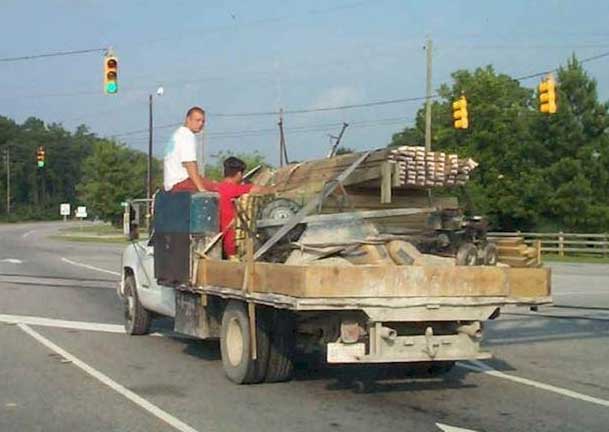
The materials this truck are carrying seem to be adequately secured. Unfortunately, the same can’t be said of the 2 gentlemen riding in the back, both of whom are one good jolt away from being splattered on the road.

The moral: All employees riding in or on equipment must be properly restrained, using proper seats and seatbelts. This applies to ALL equipment, including but not just off road vehicles, grading equipment and onsite transport such as golf carts.


Is this the kind of PPE you want your workers to use?

What’s wrong with this picture?

Working wearing bucket instead of adequate head protection.

Even if bucket head is just horsing around (as the smile on his co-worker’s face suggests), he’s committing an OSHA violation, not to mention putting his melon at risk.

The Moral: Buckets aren’t an acceptable form of head protection. So make sure all workers exposed to risk of head injuries wear protective helmets or other head protection devices that:

  • Comply with ANSI Z89.1-2003, “American National Standard for Industrial Head Protection”;
  • Comply with ANSI Z89.1-1997, “American National Standard for Industrial Head Protection”;
  • Comply with ANSI Z89.1-1986, “American National Standard for Personnel Protection — Protective Headwear for Industrial Workers—Requirements”; or
  • Other devices that you can prove are at least as effective as head protection devices meeting one of the above standards.

3 Reasons to Pay Attention

  1. There are a lot of things in the workplace that can hurt your head:
    • Falling & flying objects
    • Fixed objects like beams that you can bump into
    • Hazardous chemicals
    • Electricity
  1. Using hard hats will prevent most head injuries
  1. Hard hats don’t work unless you select the right kind and use them properly—neither of which is true about the worker wearing the bucket on his head in the above photo!

The 3 Kinds of Hardhats

The first thing you need to do is use the right kind of hard hat. There are 3 classes, each of which protects against some head hazards but not others:
Class G (formerly called Class A): General service hard hats:

  • Protect you from impact
  • Provides only limited protection from electricity


Class E (formerly called Class B): Used for electrical work:
Class E Hardhat

  • Protects you against falling objects
  • Protects you against high voltage shock/burns


Class C: Designed for comfort and provide only limited protection:

  • Protects you against bumping into fixed objects
  • Doesn’t protect you against falling objects or electrical shock


8 Hard Hat Use Dos and Don’ts

Hard hats don’t work unless you use them correctly:

DON’T drill holes in your hard hat

DO keep your hard hat away from extreme heat & cold

DON’T carry objects in your hard hat

DO wash your hard hat with water & mild soap

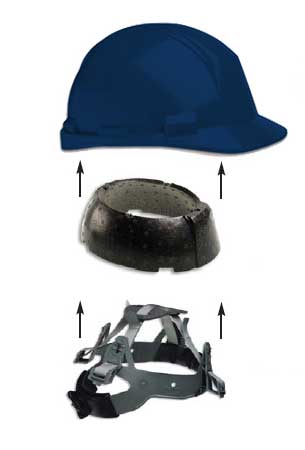
DON’T use the suspension system in your hard hat with another shell

DO inspect your hard hat for wear & damage each time you use it

DON’T paint your hard hat

DO wear your hard hat with the brim facing forward


Eye Protection

What’s wrong with this picture?

Worker inappropriately using eye protection

The worker using the circular saw has a perfectly serviceable set of goggles to protect his eyes from flying debris. Too bad he’s got them wrapped around his baseball cap instead of over his eyes.

The Moral: Providing workers the right eye protection isn’t enough to prevent eye injuries—and OSHA citations. You also have to ensure workers use the protective equipment properly.

3 Reasons to Pay Attention

  1. The workplace is full of things that can hurt your eyes like:
    • Flying particles
    • Molten metal
    • Acids & liquid chemicals
    • Chemical gases
    • Harmful light & radiation
  2. Using the right safety equipment protects your eyes from these dangers
  3. Eye protection doesn’t work unless you use it properly—which the worker in the photo above is clearly not doing

THE 5 KINDS OF EYE PROTECTION

The first thing you need to do is select the right kind of eye protection to use. The 5 most common types are:
1. Safety Spectacles have safety frames (usually metal or plastic) + impact-resistant lenses + sometimes side shields
Safety Spectacles


  • Protect  the eyes from flying objects, sparks & dust


2. Goggles completely cover the eyes, eye sockets and facial area around them


Goggles

  • Protect the eyes from impact, dust & splashes
  • May come with tinted lenses


3. Welding Shields are made of vulcanized fiber or fiberglass and fitted with filtered lenses that must be of a shade number necessary to protect against the particular hazard


Welding shield

  • Protect eyes from burns caused by intense light
  • Protect eyes & face from flying sparks & metal splatter & slag chips from welding/brazing/soldering/cutting operations


4. Laser Safety Goggles protect eyes against harmful light produced by lasers
Laser Safety Goggles


5. Face Shields are transparent plastic sheets that extend from the eyebrows to below the chin and across the entire width of the head and may be polarized to protect against glare


Face Shield

  • Protect against dust, splashes & sprays
  • Don’t protect against impact—unless you wear safety spectacles or goggles underneath


8 EYE PROTECTION DO’S & DON’Ts

There are 8 things to do/not do to ensure proper use of eye protection:

DO clean your eye protection regularly following company/manufacturer instructions

DON’T use goggles if they’re scratched, don’t fit right or the elastic band is frayed

DO inspect your eye protection each time before you use it

DON’T use safety spectacles if they’re scratched, bent or don’t fit right

DO ensure that face & welding shields are disinfected periodically

DON’T use eye protection that’s not designed to protect you from the actual hazard you face in doing the job

DO make sure you actually use your eye protection—don’t be like that worker with his goggles on his baseball cap in the photo

DON’T use eye protection equipment if it doesn’t fit right, obstructs your movement or blocks your vision


Is This Any Way to Behave Around Flammables?

Can you spot what’s wrong with this picture?

Worker taking a smoke near a flammable tank

The good news is that the white fuel storage tank in the background is marked with the proper NO SMOKING warning. The bad news is that the worker has literally turned his back on the warning while puffing blissfully away.

The Moral: Although smoking is always hazardous, it’s especially dangerous around flammable liquids. The OSHA Flammable Liquids Standard requires employers to control “sources of ignition” where flammable liquids are stored, like posting signs warning you not to smoke. But as this picture illustrates, you have a part to play in protecting your own safety by heeding warning signs and following safety instructions.

3 Reasons to Pay Attention

  1. Your work area contains flammable liquids like fuels, solvents and cleaning chemicals that can explode and burst into flames if something causes them to ignite.
  1. The things you do while working with or near flammable liquids can ignite fires and explosions.
  1. Although we’ve taken steps to protect you—like installing ventilation and storing flammables in specially designed containers—you also need to do your part by controlling “ignition sources.”

THE 3 KINDS OF FLAMMABLE LIQUIDS

A flammable liquid is one that has a “flash point,” i.e., minimum temperature at which the liquid gives off a vapor that can ignite when it mixes with the air, below 100°F (37.8°C). There are 3 types of Class I flammable liquids:

  1. Class IA: Flash point below 73°F (22.8°C) and boiling point below 100°F (37.8°C)
  1. Class IB: Flash point below 73°F (22.8°C) and boiling point at or above 100°F (37.8°C)
  1. Class IC: Flash point at or above 73°F (22.8°C) and boiling point below 100°F (37.8°C)

GENERAL SAFETY PRECAUTIONS FOR FLAMMABLE LIQUIDS


STORAGE: Flammable liquids must be stored in appropriate containers (depending on class):

  • 1 pint to 5 gallons: Can be stored in glass or approved plastic containers
  • Above 5 gallons: Must be stored in metal cans or drums

LABELS: Containers used to store flammable liquids must be clearly labeled with the name of the material they contain

CONTROL OF IGNITION SOURCES: Sources of ignition that can cause flammable liquids to explode or catch fire must be controlled, including:

  • Matches & cigarettes
  • Electricity
  • Heat generated by machinery & tools

8 FLAMMABLE LIQUID DO’S & DON’Ts

There are 8 things you must do to prevent explosions and fires when working with or near flammable liquids:

  • DO look at the label of the container to determine the kind of flammable liquid inside
  • DON’T store or use flammable liquids near an ignition source
  • DO make sure all storage drums are grounded to prevent static electricity when transferring flammable liquids from one container to another
  • DON’T smoke when using or near flammable liquids
  • DO place fire extinguishers near areas where flammable liquids are stored
  • DON’T fill containers of flammable liquid past 80% of the container’s capacity
  • DO transport flammable liquids in the back of a truck or trunk of a car rather than inside the vehicle
  • DON’T use flammable liquids unless you’ve been trained to do so properly

REMEMBER

Doing this….
Worker taking a smoke near a flammable tank
 
Can lead to this….


The Terrible Tagout: Using a cardboard box as a tagout device

Step 1:

Step 2:

Apparently, an electrician was working on an outlet that included the boss’s computer. The electrician had to stop working before the boss was ready to go home. So the electrician decided to energize the circuit via another outlet so the boss could keep using his computer for the rest of the day. He then used the cardboard box to “protect” the live outlet (Step 2).

Although it may be creative, this arrangement is an egregious violation of OSHA lockout/tagout requirements.

The Moral: A cardboard box with a scribbled safety message (even with proper spelling–FURST) doesn’t meet the OSHA requirement that tagout devices be:

  • Identified as and used only for tagout purposes
  • Substantial enough to prevent inadvertent or accidental removal
  • Durable enough to withstand the physical environment in which they’re used
  • Constructed and printed so that the safety message remains legible
  • Marked so as to identify the worker applying the device
  • Marked with warnings such as:
    • Do Not Start
    • Do Not Open
    • Do Not Close
    • Do Not Energize
    • Do Not Operate


Protecting Workers in Construction Zones

Worker in a construction zone
A couple of orange traffic cones are the only thing standing between this worker and the vehicles traveling at 45 mph in the intersection where this picture was taken. Not wearing a high-visibility vest adds insult to injury.

The Moral: Protect workers in road and highway construction zones against motor vehicle traffic hazards. Appropriate measures may include:

  • Posting warning signs and flags
  • Establishment of traffic control zones and routes
  • Deployment of physical barriers separating workers from traffic
  • Requiring workers to wear high visibility vests and other apparel
  • Training workers to work safely in road/highway work zones 

Use this Photo to Train Your Workers about Work Zone Traffic Hazards


Fall Protection Gone Bad

Can you tell what dangerous and illegal action the worker is engaging in?
Fall Protection Gone Bad

The good news: The worker scaling this elevated structure is using personal fall arrest equipment. The bad news: His body harness is upside down—the D ring should be positioned at the center of his upper back, not below his behind!

The Moral: It’s not enough to equip your workers with the right fall protection equipment. You also need to ensure they’re trained to use it properly on the job.


Walking the Plank: What’s Wrong with this Picture?

Can you figure out what’s wrong with this picture?
Unsafe floor opening exposes workers to fall hazards
An arrangement Blackbeard the Pirate would be proud of! Aaaaargghhh!!!! You’ll walk the plank, me mateys! Just watch out them OSHA scurvy dogs don’t cite ye for improper floor hole guarding.

The Moral: Any floor holes big enough for a person to fall into must be guarded by either a standard railing with standard toeboard on all exposed sides or a floor hole cover of standard strength and construction (OSHA, Guarding Floor & Wall Openings & Holes, Sec. 1910.23(a)(8)). A mere plank of wood won’t suffice!


What’s Wrong with This Picture?

Electrical Box

Somebody had the bright idea of strapping on ice bags to cool this electrical panel box after breakers kept tripping. It shouldn’t take a physics degree to recognize the dangers of exposing electrical equipment to moisture.

The Moral: Keep electrical equipment away from water and make sure any panel boxes in damp or wet locations are covered and installed so as to prevent moisture from entering (OSHA, Wiring Methods, Components & Equipment for General Use, Sec. 1910.305(e)).


Machine Guarding Hazards

This double circular mill saw isn’t properly guarded. Can you explain why?

Saw blades

These brutes are seven-foot saws in a double circular mill arrangement. And they’re not properly guarded.

The Moral: According to the OSHA Sawmills standard, Sec.1910.265(e)(2)(iii)(c), the upper saw of a double circular mill must have a substantial hood or guard. The upper saw does have a hood but it sure doesn’t look “substantial.” The other problem is that there’s no screen or other device in place to protect sawyers from flying particles as required by the standard.


Exit or no exit?

Is this an exit or not?

Make up your mind! Apparently, this door is NOT an exit. But the moment’s confusion and hesitation that these mixed messages convey could prove deadly in a fire.

The Moral: According to OSHA, doorways or passages along an exit that could be mistaken for an exit must be marked “Not an Exit” or similar designation, or identified by a sign indicating their actual use, e.g., closet (Maintenance, Safeguards & Operational Features for Exit Routes, Sec. 1910.137(b)(5)).

But while posting “this is not an exit” signs over a door marked “FIRE EXIT” technically might not be an OSHA violation, removing the “FIRE EXIT” sign would be a much safer solution.


Hazcom Hazards

Tea in Hazardous Materials Closet

Thirsty? How about a nice jug of anti-freeze? As if this storing this poison in a commercial ice tea bottle isn’t dangerous enough, somebody took the extra pains to leave this tempting concoction at the front of the shelf within easy reach!

The Moral: Never keep hazardous chemicals in commercial beverage containers that invite drinking. On the contrary, make sure all containers of hazardous chemicals are marked with either a Hazcom or new GHS workplace label notifying workers about the product inside and the hazards it poses.


Forklifts and Scaffolding

Can you spot the OSHA violation in this photo?

It’s a bit hard to make out, but the workers in this picture are using the forks of the forklift to support one end of the scaffolding another worker is working on. This is an unstable and dangerous arrangement that violates OSHA requirements for supporting scaffolds (Sec. 1910.28(a)(2) for General Industry, Sec. 1926.451(c)(2)(v) for Construction).

The Moral: Don’t use forklifts to support scaffold platforms. Exception: Such an arrangement may be okay for construction sites if:

  • The entire platform is attached to the fork; and
  • Steps are taken to ensure that the forklift isn’t moved horizontally while workers are on the platform.


Fire Extinguisher Faux Pas

Look at all the obstructions in the way of this fire extinguisher—crossed rebars, safety tape, mounted cables and an open trench. All that’s missing are alligators in the moat!

Clearly this is a violation of the OSHA Portable Fire Extinguishers standard which requires employers to locate fire extinguishers so that they’re “readily accessible to employees without subjecting them to possible injury” (Section 1910.157(c)(1)).

The Moral: Workers shouldn’t have to negotiate an obstacle course to get to fire extinguishers. Mount extinguishers in a location that’s easy to reach and keep access unobstructed at all times.


Ladder Lunacy

The worker in this picture is committing at least 3 OSHA violations. Can you spot them?”

Unsafe positioning of a ladder

 Don’t try this one at home, kids.  The worker wants to get to the second floor window but his ladder isn’t long enough. So he decides to lash his short ladder to a not-so-sturdy garden gate and use a step ladder to access it. In so doing, he risks his neck and commits at least 3 violations of the OSHA Portable Wood Ladders standard:

  1. Portable ladders shall be placed so that the side rails have a secure footing (Sec. 1910.25(d)(2)(iii));
  1. Ladders shall not be placed on boxes, barrels or other unstable bases (like maybe a garden gate?) to obtain additional height (Sec. 1910.25(d)(2)(v)); and
  1. Tops of the ordinary types of stepladders shall not be used as steps (Sec. 1910.25(d)(2)(xii)).

There may even be a fourth violation if the front door of the house swings out rather than in:

  1. Ladders shall not be placed in front of doors opening toward the ladder unless the door is blocked upon, locked or guarded (Sec. 1910.25(d)(2)(iv)).

The moral: Don’t put ladders on unstable bases or use additional ladders to extend a portable ladder’s height; if a portable ladder isn’t long enough, just get a longer one.


Electricity: Spot the OSHA Violation

This is scary stuff! Extension cords running through a puddle are an electrocution—and an OSHA violation—waiting to happen.

The moral: Electrical cords should be double insulated and not used in wet conditions. Make sure employees inspect electrical cords before each use. If condition are wet, try to substitute a battery operated power tool that doesn’t need an extension cord.


PPE: Spot the OSHA Violation

Can you find the OSHA Violation in this photo?
The worker in this picture (which, ironically enough comes from OSHA’s own Safe Workplaces photo contest) is using appropriate hand protection and a full face respirator mask. But while he’s wearing coverall body protection his hood is hanging limply around his shoulders instead of covering his head.

The moral: Workers must not only be equipped with but actually wear hoods or other appropriate head protection to guard the skin and hair against chemical splash and other hazards.