Fire Safety Checklist

Inspection date ______________________________

Inspected by ________________________________

Topic Yes No Comments
Cords, connections and other electrical equipment are in good condition, free of defects and damage
Wiring is adequate to handle the electrical load
Flammable liquids, such as solvents, are stored in the proper containers in well ventilated areas away from sources of ignition
Whenever possible, non-flammable substitutes are used
Materials which can burn, such as paper or fabric, are kept away from sources of ignition – i.e. ovens, heaters
Combustible materials are kept away from exit routes, stairways and halls
Compressed gas cylinders are a safe distance from ignition sources
Surfaces, such as ceilings, and equipment, such as dryers, are free of lint and dust
Smoking is confined to designated areas and deep no-tip ashtrays are used
Fire extinguishers and other firefighting equipment are serviced and maintained regularly
Workers are trained to locate and use fire extinguishers
Fire drills are held regularly
Exit routes are clearly marked
Sprinklers and other emergency devices are kept free of obstructions


Seven Statistics on Harassment in the Workplace

Unfortunately, harassment is alive and well in today’s fast-paced, competitive and stressful workplace. Here are some statistics surrounding this destructive behavior.

  1. Three tactics used in workplace bullying are: withholding information from a co-worker; excluding certain employees from meetings and threatening or intimidating co-workers.
  2. Ten percent of Canadian workers ages 18 through 24 reported being victims of sexual harassment in the workplace at some point within the previous year. (Canadian Labour Congress)
  3. Seven percent of male workers in the US reported being sexually harassed at work. (2008 telephone poll by Louis Harris and Associates)
  4. Ninety-six percent of people have experienced incivility (disrespectful behavior) in the workplace. (The Cost of Bad Behavior, Christine Pearson and Christine Porath)
  5. Ninety-four percent of workers who are treated uncivilly say they have attempted to get even with their tormentors. (Christine Pearson and Christine Porath)
  6. Four examples of harassment in the workplace are: serious or repeated rude, degrading or offensive remarks; displaying or sending sexist, racist or other offensive pictures, posters or emails; sexual harassment, such as unwelcome social invitations with sexual overtones or flirting; and threats, intimidation or retaliation.
  7. About 60 percent of workplace bullies are men, who tend to bully male and female employees equally. (New York Times)

Harassment in the workplace includes any objectionable behavior that demeans, belittles, humiliates or embarrasses an employee. It also includes intimidation and threats. Here are seven statistics related to workplace harassment/bullying:


Seven Statistics: The Hazards of Micro-Sleeps

A microsleep is a light, involuntary sleep lasting from a few seconds to half a minute. Here are seven statistics relating to this potentially deadly and not-uncommon occurrence.

Here are seven statistics on micro-sleeps:

  1. Of 1,000 drivers interviewed, 45 percent of men admitted to having experienced microsleeps while behind the wheel, while 22 per cent of female drivers admitted to doing so. (Brake Road Safety Charity, United Kingdom)
  2. You won’t know when you are having a microsleep, but a telltale sign that you’ve just had one is suddenly snapping into alertness with a jerk of your head.
  3. Five things you should do if you feel sleepy while driving are: pull over at a store or restaurant and pick up a coffee or other caffeinated beverage; park your vehicle; quickly drink the beverage; take a 15-minute nap and after the caffeine kicks in, resume driving.
  4. A driver who falls into a five-second microsleep while traveling at 62 miles per hour (100 km/h) will cover some 500 feet (140 meters) of ground without being aware of anything going on around him/her.
  5. A study in the Journal of the American Medical Association estimated that workplace accidents caused by sleep deprivation cost American companies $31 billion a year in damages.
  6. People tend to associate sleeping with having their eyes shut, but sleep researchers say that a person experiencing a microsleep can have his or her eyes open, yet that person’s brain is processing none of the information relayed by the eyes to the brain.
  7. Four factors that contribute to microsleeps on the job or while driving are long working hours, a string of consecutive night shifts, working alternating shifts and performing monotonous tasks.

A microsleep is a light, involuntary sleep usually lasting from a few seconds to less than 30 seconds. It can greatly jeopardize a worker’s safety, whether it occurs while someone is driving, operating potentially dangerous equipment or monitoring safety-sensitive operations.


Ohio Worker’s Death Highlights Doubling of Trench Collapse Fatalities Nationwide in 2016

Twenty-three workers have been killed and 12 others injured in trench collapses so far in 2016 – an alarming increase from the previous year. “There is no excuse,” said Dr. David Michaels, OSHA assistant secretary. “These fatalities are completely preventable by complying with OSHA standards that every construction contractor should know.”

Among the victims was a 33-year-old employee, crushed to death this summer as he dug a 12-foot trench for KRW Plumbing LLC of Ohio. An OSHA investigation found that KRW failed to protect its workers from the dangers of trench collapses. The company was issued two willful and two serious violations, with proposed penalties of $274,359.

OSHA’s trenching standards require protective systems on trenches deeper than 5 feet, with soil and other materials kept at least two feet from the edge of trench. OSHA has a national emphasis program on trenching and excavations with the goal of increasing hazard awareness and employer compliance with safety standards. For more information, read the news release.


Seven Statistics on Fire Safety

The United States and Canada recently observed Fire Prevention Week. Here are seven statistics relating to fires in the workplace and at home.

  1. Chemicals, electricity, combustible materials, flammable liquids, smoking, compressed gases and poor housekeeping are seven major contributors to workplace fires.
  2. Fourthings your employees need to know about fire safety are: the location of two emergency exits closest to their work areas; the location of the nearest fire alarm pull station and how to use it; the emergency number to call (911 or otherwise) in case of a workplace fire; and what they need to do if a workplace fire breaks out.
  3. About 200workers die in workplace fires each year across the US. (OSHA)
  4. Fires kill about eight people in Canada each week. (Fire Prevention Canada)
  5. Twoout of five home fires start in the kitchen. (National Fire Protection Association)
  6. About 100firefighters die in the line of duty each year in the US. (Louisiana Office of Emergency Preparedness)
  7. Coffee makers, space heaters and hotplates left on while no one is in the office are threesignificant contributors to workplace fires. (Fire Prevention Canada)

Fire Prevention Week has been recognized every October since 1922 (1923 in Canada) in memory of the Great Chicago Fire of 1871, which killed more than 250 people, left 10,000 homeless and destroyed some 17,400 structures. For Fire Prevention Week 2013, running Oct. 6-12, the theme is “Prevent kitchen fires.” Here are seven statistics relating to fires in the workplace and home:


Seven Statistics on Deadly Driving

Distracted driving is a safety concern for employers whose workers drive on the job because you don’t want your employees injured or killed in car accidents caused by distracted drivers. In addition, employers can be held liable for distracted driving accidents caused by their employees.

Check out these seven deadly driving statistics:

  1. At any given daylight moment across America, approximately 660,000 drivers are using cell phones or manipulating electronic devices while driving, a number that has held steady since 2010 (NOPUS), and every day in the U.S., more than eight people are killed in crashes reported to involve a distracted driver.
    (http://www.cnn.com/2016/09/02/health/gallery/distracted-driving-statistics/)
  2. Distracted Driving is now the number one risk on Canadian roads contributing to 8 in 10 collisions. (https://rates.ca/distracted-driving-infographic)
  3. When you text while driving, the time that you spend with your eyes off the road increases by about 400%. So, it’s no surprise that texting and driving is six times more likely to get you in an accident than drunk driving. That’s right, it is safer for someone to get wasted and get behind the wheel than to text and do it. (Distracted Driver Accidents.com)
  4. Reading a text message while driving distracts a driver for a minimum of five seconds each time. Five seconds is the average time your eyes are off the road while texting. When traveling at 55mph, that’s enough time to cover the length of a football field blindfolded. This means that the chances of an accident occurring while reading a text is extremely high. (2009, VTTI)
  5. It takes an average of just three seconds after a driver’s mind is taken off the road for any road accident to occur. This is the bare minimum amount of time it takes, and it is surprisingly small. Three seconds is the time it takes to turn your ignition when starting your car. (Distracted Driver Accidents.com)
  6. The chances of a crash because of any reason is increased by 23 times when you are texting. Even if the crash is another driver’s fault, you will probably have been able to avoid it if you had been looking at the road instead of the phone. (Distracted Driver Accidents.com)
  7. Driver distraction is a factor in about 4 million motor vehicle crashes in North America each year. (http://www.gov.pe.ca/photos/original/WI_ConKitDriver.pdf)

Distracted driving is a safety concern for employers whose workers drive on the job because you don’t want your employees injured or killed in car accidents caused by distracted drivers. In addition, employers can be held liable for distracted driving accidents caused by their employees.


Seven Statistics on Distracted Workers

May people think they can multitask effectively, but studies have shown that people are incapable of doing several things well simultaneously. Here are seven statistics related to distractions in the workplace.

  1. Three common distractions in the workplace that may not be dangerous, but definitely cause stress and reduce productivity are: loud co-workers, people stopping by for a chat, and too many meetings that take up too much work time.
  2. If you find yourself distracted and unable to focus, one thing that can help is to take a quick break outside and get some fresh air.
  3. A whopping 80 percent of young drivers polled believe that texting while driving makes no difference to their driving performance. (National Highway Transportation Safety Administration)
  4. An interruption of less than five seconds causes a tripling of task-related errors made by workers. (Michigan State University)
  5. Reports of distracted walkers being treated at emergency rooms increased by four times over a seven-year period. (Associated Press)
  6. One form of workplace distraction that many people might find surprising is poor housekeeping. Something as simple as putting a screwdriver down in a messy area and being unable to find it can cause frustration, waste time and distract workers from the jobs they are performing.
  7. Two things supervisors need to do to minimize dangerous distractions are: Train workers to never approach co-workers who are performing safety-sensitive tasks until those tasks have been completed and, train operators to shut down equipment, turn power tools off and stop what they are doing before talking to another worker who approaches them.

Many people think they can multi-task effectively, but research has shown that people are incapable of doing several things well at the same time. That’s why a worker who is walking while sending a text message may walk into the path of a speeding forklift, or a worker who is cutting steel while dreaming about a weekend hunting trip may end up amputating a finger. Here are seven statistics relating to distractions in the workplace.


Seven Statistics on Hand Tool Hazards

Hand-powered tools may be safer than electrically powered ones, but they can still cause some nasty injuries. Here are seven statistics related to hand tool safety. While most people would consider hand-powered tools to be much safer than electrically powered tools, there are still significant hazards associated with workers using everything from axes to wrenches. Here are seven statistics relating to the use of hand tools:

  1. Five safety tips involving knives are as follows: Use safety knives (knives with retractable blades) whenever possible; keep blades sharp; always cut away from your body; never use a knife blade as a screwdriver; and don’t work too near anyone who is using a knife.
  2. Four injuries associated with using hand tools are puncture wounds; eye injuries; broken bones (such as from unintentionally striking one’s hand with a hammer); and severed fingers, tendons, or arteries if a tool slips.
  3. Ten percent of hand injuries result from the improper use of hand tools. (Mines and Aggregates Safety and Health Association (MASHA)
  4. Three tips for avoiding injuries while using a screwdriver are: Never use a screwdriver as a chisel or pry bar; always use the correct type and size of screwdriver for the screw; and don’t use a screwdriver with a damaged tip.
  5. Wearing gloves reduces the risk of occupational hand injuries by 60 to 70 percent. (National Institute for Occupational Safety and Health (NIOSH)
  6. Injuries related to hand tools account for seven to eight percent of all compensable injuries each year. (Association of the Wall and Ceiling Industry (AWCI))
  7. Blunt or dull tools may require up to 10 times the force by the user, compared to properly sharpened tools, leading to greater likelihood for a musculoskeletal injury. (Canadian Centre for Occupational Health and Safety (CCOHS)


Chainsaw Safety

The power chainsaw is the right tool for the job when the job is bringing down limbs or whole trees. However, chainsaws are dangerous. When activated, they’ll cut anything in their path, including a finger, hand or limb. Because these tools don’t have brains, you need to tell your workers to use their own when using these tools. Here are some training pointers.

Power Chainsaw PPE

You need the proper PPE when using a chainsaw. The danger of this tool puts a premium on PPE:

  1. Clothing:
  • For cut protection of the legs, chaps or special logging pants are necessary—if that chainsaw were to slip, these specially designed pants help protect your leg by ripping apart and clogging the chain and sprockets;
  • A long-sleeved shirt is needed to protect against scratches from the branches and twigs; and
  • Gloves, generally leather palm, are a must because they provide protection against vibration and abrasion resistance from handling the wood.
  1. Eye, head and face protection: Wood chips flying around means eye, head and face protection are a must, as are safety glasses with side-shields and a face shield. The use of the logger’s hardhat with built in face shield and hearing protection is a good solution.
  2. Hearing protection:Gasoline chainsaws are noisy!  Period. End of story. However, you can protect yourself with either:
  • The hearing muff protector in the logger’s hardhat;
  • A regular hearing muff; or
  • Any type of in-the-ear plug.

Whichever type you choose, you do need hearing protection. Having said that, some of the electric chainsaws are not very noisy and you may be able to get by without hearing protection. Remember the rule of thumb: if you have to shout to be heard by a person three feet away, you’re over the OSHA limit, so use hearing protection.

16 Rules for Safe Chainsaw Operation

Now that you’ve covered the gear required, next week, you should explain the 16 important safety rules any chainsaw operator should know—and follow.

  1. Before you begin, read and understand the manufacturer’s instructions. If you don’t understand any aspect of the instructions, ask the salesperson where you purchased the equipment to explain it to you.
  2. Use PPE. (Refer to last week’s piece on what PPE is appropriate.)
  3. Do not start cutting trees until you have:
    • A clear work area;
    • Secure footing; and
    • A planned path of retreat from a falling tree.
  4. Inspect the saw prior to use. Do not operate a chainsaw that is:
    • Damaged;
    • Improperly adjusted; or
    • Not completely assembled.

Point to Inspect: Be sure that the cutting chain stops moving when the throttle control trigger is released. If in doubt regarding the mechanical condition of your saw, consult your servicing dealer.

  1. Follow the manufacturer’s sharpening and maintenance instructions. Sharpening a cutting chain is a two-step process:

Step 1: Sharpening of the cutting edge; and
Step 2: Adjusting the depth gauge setting.

Again, when in doubt, ask your servicing dealer for advice or repairs.

  1. Maintain proper saw chain tension. A loose chain can come off the guide bar and can strike the operator.
  2. When cutting:
    • Hold the saw firmly with both hands, with thumbs and fingers encircling both chainsaw handles;
    • Grip the saw with the right hand on the rear (throttle) handle and the left hand on the front handle, even if you are left handed. A firm grip will help you maintain control of the saw in the event of kickback or other unexpected reaction; and
    • Keep the chainsaw handles dry, clean and free of oil or fuel mixture to avoid slipping and to aid in control of the saw.
  3. Chainsaws are designed to run at full speed. Maintain full throttle settings while cutting to maximize your productivity and, for safer operation, to reduce fatigue.
  4. It’s possible that you may lose control of the saw. So to reduce your risk of injury:
    • Cut while standing slightly to the side, out of the plane of the cutting chain and guide bar;
    • Cut only while in a comfortable position; and
    • Do not overreach or cut above shoulder height.
  5. When carrying the chainsaw, make sure the engine is stopped, the guide bar and cutting chain are to the rear and the muffler is away from your body. When transporting your chainsaw, always use the appropriate guide bar scabbard.
  6. Do not operate a chainsaw while you are in a tree or on a ladder. Don’t overreach. Literally. If you can’t reach what you want to cut, you might have to bring in the professionals to do the job.
  7. Beware of wood closing in and pinching the saw. The ‘push’ force which is exerted when the top chain is pinched can add unexpectedly to any ‘pull’ force you may use when attempting to pull the saw free. You may pull the moving chain into yourself.
  8. Use extreme caution when cutting small-size brush and saplings. Slender material may catch the cutting chain and get hurtled toward you or pull you off balance. This is why PPE is so important.
  9. When you work with a chainsaw, keep by-standers and animals out of the work area at a safe distance.
  10. Keep all parts of your body away from the cutting chain when the engine is running.
  11. Use caution when handling fuel:
    • Move the chainsaw at least 10 feet away from the fueling point before starting the engine;
    • Do not smoke while refueling your saw; and
    • Use gasoline-powered chainsaws only in well ventilated areas.

General Advice

Chainsaws are made to cut only one thing: wood. Do not use a chainsaw to cut other materials, and never let your chain contact rocks or dirt during operation. Remember, your chainsaw is moving in excess of 50 miles per hour. In just one second of contact with a rock or with the ground, each cutter will be impacted more than ten times.

Never force a dull chain to cut. When it is sharp, the saw chain is designed to feed itself into the wood, and needs only light pressure to cut efficiently. Dull chain produces fine wood dust, a sure sign that maintenance is required.

How to Avoid Kickback

Kickback may occur when the moving chain at the nose or tip of the guide bar touches an object, or when the wood closes in and pinches the saw chain in the cut.

Contact with the tip or bar nose can occur in some cases because a lightning-fast reverse reaction occurs, kicking the guide bar up and back toward the operator. Pinching the cutting chain along the top of the guide bar may also push the guide bar rapidly toward the operator. Either of these reactions may cause you to lose control of the saw, which could result in serious personal injury to yourself or to bystanders.

The top of the tip of the chainsaw guide bar is known as the “Kickback Danger Zone.” When contact is made with an object such as a branch or a log, there is a danger of a sudden bar nose kickback reaction.

To avoid the risk of kickback:

  1. Make sure that the area in which you are cutting is free from obstructions;
  2. Do not let the nose of the guide bar contact a log, branch or any other obstruction while you are operating the saw; and
  3. Do not cut near chain link fences, wire fences, or in areas where there is loose or scrap wire.

Conclusion

Even though we just devoted a lot of time to this topic, there is always more to learn about the safe use of chainsaws. You can get more information regarding chainsaw maintenance and safety from Oregon Chain at their website http://www.oregonchain.com/tech/manual_maint.htm] and from their Maintenance and Safety Manual http://www.oregonchain.com/tech/ms_manual/ms_manual.pdf.


10 Reasons Your Trainees Don’t Listen to You

Many companies don’t realize that they can be liable for injuries caused by employees who drive drunk after an office party (or another company-sponsored event) at which alcohol is served. Even companies that know the risk exists don’t fully understand the exact nature of their potential liability and how to manage it.

As a safety trainer, the supervisor knew full well the importance of listening to instructions and procedures. But when he was on the receiving end, he didn’t practice what he had preached. On the other hand, the disconnect between the supervisor and the sailing instructor wasn’t all the supervisor’s fault.

The Communication Gap between Trainer and Trainee

Wouldn’t you hate to have somebody like that supervisor who tunes you out as a trainee? Well, guess what? You probably do. Chances are, your safety training sessions include at least one or two persons who aren’t getting your message.

Why aren’t you getting through? There is no one answer to this question. On the contrary, there are a variety of things that can cause trainees to tune out their trainers. Here are 10 reasons that training messages don’t reach their target:

  1. They Really Can’t Hear You

There’s nothing more frustrating than to deliver what you think is a clear message only to have it ignored. It’s as if the trainee doesn’t hear you. In fact, maybe he doesn’t. Do you mumble? Are you dealing with an employee with hearing loss? When explaining procedures, speak slowly, loudly and clearly. And make sure trainees are literally able to hear them.

  1. You’re Speaking Greek

Don’t assume your students understand more than they do. Define any words which may be unfamiliar. Give them all the information you can. If you’re not sure how much background knowledge they have, you can say something like, “This may be familiar to you, but let’s go over it again.”

  1. They Hear the Message but Don’t Understand the Reason

Many trainees want to know not just what but why. This is especially true if you’re trying to get them to adopt a change in procedure or technique. Explain the purpose behind the change. Otherwise, trainees may not accept the change and do things the same way they always have.

  1. They Don’t Appreciate the Stakes Involved

Before explaining a safety procedure, point out the hazard involved. It makes a lot more sense to wear protective gloves when you know about flesh-melting chemicals.

  1. Your Jokes Are Garbling the Message

Humor can be an important tool in training. But you don’t want to overdo it. If you kid around too much, it may be hard for trainees to tell when you are serious. Don’t hide behind jokes when delivering difficult messages. Your audience might not get the point.

  1. You’re Not Listening to their Questions and Concerns

Give your trainees lots of chances to ask questions. You can gauge the level of understanding by what they ask. Never laugh at questions. Respect your trainees and help bolster their confidence. If there are no questions, don’t assume everything is understood. Trainees may have nothing to ask because they don’t understand what you were talking about.

  1. You’re Not Tailoring Your Message to Who They Are

Differences in literacy levels and culture may make it difficult for you to communicate with your trainees. Be sensitive to these differences and look for ways to bridge them.

  1. You’re Not Testing Their Comprehension

A big mistake trainers make is assuming that the message has been comprehended without verifying it. Ask the group to repeat the message back to you. “Okay, now what is the procedure for disposing of oily rags?”

  1. You’re Relying Too Heavily on the Spoken Word

Different people have different learning styles. Some need to hear. Some need to see. Others need to experiment hands-on under your supervision. Still others won’t learn a thing until they get their hands on a training manual. Most need a combination of these methods.

  1. You’re Not Anticipating Obstacles

There may be roadblocks to following your instructions. Force of habit and uncertainty about what is expected are common ones. Maybe the trainee doesn’t have the tools, equipment or procedures to follow through on what you said. Look at things through the trainee’s eyes and try to anticipate these difficulties.

Conclusion

Of the 10 errors listed above, the supervisor’s sailing instructor was guilty of at least one: the last one—failure to anticipate obstacles. He overlooked the fact that his trainee’s lifejacket wasn’t fitting properly. To be fair, as a safety person, the supervisor should have known better than to wear such a lifejacket. But he’s not the first trainee to make a mistake.  Hopefully, all of you do a better job than this sailing instructor in catching mistakes.


Chemical Safety 7 Training Mistakes to Avoid

What Are Dangerous Chemicals

First, a definition: By “hazardous chemicals,” I mean those regulated by WHMIS (Workplace Hazardous Materials Information System) in Canada or the OSHA Hazardous Communication Standard (HazCom) in the U.S.

Now, on to the mistakes:

Mistake 1: Relying Heavily on the MSDS Information for Hazard Communication

The Problem: The quality of information in MSDSs (material safety data sheets) is always improving. But there are still too many MSDSs that don’t provide enough relevant information about the chemical. A poor quality MSDS doesn’t help the employee understand the potential hazard. For example, how often have you looked at an MSDS that simply stated “use appropriate gloves & respirators”?

There’s also a tendency for an MSDS to exaggerate the potential hazard and recommend the most protective forms of PPE possible. Such recommendations are not practical and are designed less to protect workers from hazard than to protect the supplier of the chemical from liability.

The Solution: You have a choice. You can:

  • Ask the supplier for a more thorough explanation of their MSDS; or
  • Select a different manufacturer provides a more thorough MSDS; and/or
  • Conduct your own risk assessment on the chemical before buying it.

Mistake 2: Not Reviewing the MSDS before Using the Chemical

The Problem: While it’s not a good idea to rely too heavily on the MSDS, it is essential that the MSDS be consulted before the product is used. But how often have you seen an employee actually reviewing an MSDS for a chemical before using it? Not very often, I bet.

The Solution: Ensure that the MSDSs are accessible. For example, in our facility, we:

  • Store our MSDSs in binders at strategic locations around the site;
  • Make MSDSs easily accessible electronically from any computer.

Making MSDSs accessible is not just a safety requirement but a legal one. It’s also important to stress to employees the value of the information contained in the MSDS. Through our annual training, we reinforce the importance of understanding the health (e.g., is it absorbed through the skin?) and safety (e.g., is it flammable?) aspects of the chemicals used in our workplace.

Mistake 3: Not Having the Proper PPE for the Chemicals Used in the Workplace

The Problem: MSDSs tend to be pretty generic regarding PPE requirements. Of course, not all forms of PPE are the same. Even if the MSDS is specific, it can raise problems. For instance, if the MSDS specifies that it is a skin absorption hazard and that neoprene gloves must be used, should you stock neoprene gloves?

The Solution: A health and safety person should review the MSDS of each chemical onsite to ensure adequate protection is available. At our workplace, we developed a PPE selection guide that is available to all employees. This guide outlines:

  • All of the PPE stocked onsite and the specific hazards they are designed to protect against; and
  • Available respirator cartridges/canisters and outlines the specific chemicals onsite that they are appropriate for.

Mistake 4. Overlooking the Importance of Fit-Testing for Respiratory Protection

The Problem: The importance of following the CSA Standard Z94.4-02 “Selection, Use and Care of Respirators” cannot be overlooked when using respiratory protection to reduce exposure to chemical hazards. Quite often there is a temptation to “just throw on a dust mask” without considering: Is the employee fit-tested? Clean-shaven? Medically fit? Trained?

The Solution: When using respiratory protection, follow the CSA standard or ideally use other controls up the hierarchy of control, such as ventilation or substitution to reduce the exposure so that respiratory protection is not required.

Mistake 5: Failing to Label Containers of Chemicals

The Problem: Unless they fall into certain exempt situations, regulated chemicals must be labeled as per the WHMIS regulations in Canada or the HazCom in the U.S. One reason for these requirements is that without labels, workers might try to use their senses to determine what a chemical is. Although I’ve never seen it personally—knock on wood—I’ve heard colleagues tell stories of first aid cases for burnt tongues, fingers, etc. resulting from such incidents.

The Solution: Make labeling easy by providing blank stickers and permanent markers for workers to use. Ideally, you should keep these materials readily available at the spot where the worker obtains the chemical. Training on labeling requirements and auditing the workplace will help reduce labeling errors.

Mistake 6: I WHMIS/HazCom Training Is Not Site-Specific

The Problem: Although there are lots of good generic WHMIS and HazCom training packages on the market, these packages come up short on site-specific training. Workers return from generic training –often from an outside service provider like a consultant, contractor or CD ROM – and think they are “all done.” But they’re not. Information provided in these training sessions must now be tied to the chemicals, operations, processes and conditions of your own workplace. You need to give your workers context.

The Solution: Once workers complete generic training, provide them site-specific training that transfers the information to your site. This training should include MSDS locations, safe handling procedures and spill response.

Mistake 7: Inadequate Precautions about Smoking & Chemicals

The Problem: Most workers are pretty good about washing their hands before eating. The same can’t be said about washing hands before smoking. Poor hand hygiene habits can result in inadvertent ingestion and inhalation of workplace chemicals via cigarettes. As an occupational hygienist friend of mine quipped, “We wouldn’t want smoking to be unhealthy now, would we?”

The Solution: When providing training on the safe handling of hazardous chemicals, remind workers that all hand-to-mouth actions – including smoking – carry the risk of ingesting hazardous chemicals.

Conclusion

Many of the mistakes highlighted in this article will be common sense for most health and safety professionals. But you’d be surprised at how these seemingly self-evident points get overlooked. So, it’s important for supervisors to bring up these points, if only to give them a few ideas on how to improve your current program and provide reassurance that your programs are working appropriately.


Construction Safety Training Programs in 6 Steps

A critical element of every construction company’s environmental health and safety (EHS) program, and one that company executives expect from their EHS managers, is the development and delivery of training courses.

A critical element of every construction company’s environmental health and safety (EHS) program, and one that company executives expect from their EHS managers, is the development and delivery of training courses. Meeting this expectation in today’s resource-constrained, outsourced world is a challenge for even the most proficient of EHS professionals. It’s especially daunting for construction training coordinators whose responsibilities are not limited to the realm of EHS. This article outlines six steps to help you implement a new training program or jump start an existing one.

The Significance of a Near Miss

Safety directors, supervisors and others in charge of creating and implementing the company’s safety program do their best to prevent illness and injury. But good intentions and earnest effort aren’t enough. All of us make mistakes. There’s no such thing as a perfect human being. The corollary to this principle is that there’s no such thing as a perfect safety program.

The second corollary is that every safety program has some flaw somewhere. The important thing is to figure out where the flaws are and fix them. The crucial question: Will you discover the flaws in your own program before somebody gets hurt? Or will it take injury or illness to bring them to light?

The answer to that question depends in large part to how you respond to close calls.

Not all incidents injure people and damage property. Close calls are the incidents where nobody or nothing gets hurt. It could be anything from someone walking in an aisle and almost getting hit by an opening door to a screwdriver being dropped to the floor by the maintenance guy working on a ladder and narrowly missing the skull of a maintenance worker below. A close call is thus a “free shot” to identify and fix problems in a safety program before they do actual harm.

Why We Don’t Take Advantage of Near Misses

Close calls happen all the time. Unfortunately, companies don’t always use them to identify and fix the flaws in their safety program. Why not? The problem is that close calls are the Rodney Dangerfield of the safety world. “They get no respect.”

One of the reasons for this lack of respect is the tendency to confuse compliance for safety. For example, OSHA/OHS recordkeeping regulations require us to record and report all occupational injuries and illnesses in the workplace. But the recordkeeping requirements don’t cover close calls. And if we don’t have to report those close calls that we see happen everywhere, we tend not to pay them any attention. No harm, no foul.

So let’s say a worker almost gets hit by a falling box. The safety director might take the following view: “Wow, that was a close one! Thankfully, there was no injury, no first aid, no lost or restricted time. I almost had a boatload of paperwork, investigation, corrective action and training to do on that one.”

Respect the Close Call

Of course, that is a terrible mistake. Neglect of close calls is a missed opportunity for prevention and a recipe for future accidents. The fact that nobody got hurt or no machinery got damaged was an accident. What’s important to realize is that something went wrong and it could go wrong again. So you need to fix the problem because the next time you might not be so lucky. And you need to be grateful the close call happened because it gave you the chance to prevent an injury.

Take Action to Prevent Future Incidents

You may say that there’s no way to address close calls since you don’t know when they occur. After all, you can’t be everywhere to see them happen. And you can’t necessarily count on workers to report them.

Not knowing about close calls is a real problem. It would be naive to believe that all of the close calls that happen on the shop floor will get recognized and reported. But there are steps you can take to make it more likely for close calls to get reported. Establishing a safety conscious attitude throughout the company and explaining the importance of close calls will go a long way toward getting people on the floor to recognize and report them.

Of course, that’s easier said than done and that for many of us this may be the biggest challenge in establishing an effective safety program. This is especially true if your plant has that sports locker room code of “what happens in the shop stays in the shop.” But this is where the safety director and supervisors can really make a difference. You can change that mentality. So there’s your challenge: Go out and create that work environment atmosphere that has workers thinking safety every day, be visible, accessible, active and relentless; listen to your workers and use everyone as a resource.

Conclusion

The next time you get a call from one of your supervisors, foremen, lead persons or operators on the shop floor asking you to come and look at a potential problem, don’t think – great, here comes a load of $*#^$%#@!! paperwork. Instead, think– hey, my safety program is working. They’re telling me about a problem and giving me a chance to fix it before it does real damage. If they’re doing something right, I must be doing something right. And, if we’re all doing something right, we must be on our way to a safer and healthier workplace.


Analyzing Hazards – A Task for Many Hands and Many Eyes


What’s at Stake?

A hazard is the potential for harm that, if left uncontrolled, can result in an injury or illness. A job hazard analysis, JHA for short, is all about breaking down jobs and tasks into smaller steps to find the hazards and then ways to reduce or remove those hazards.

A JHA might also be called a job safety analysis (JSA).

What’s the Danger?

Many jobs and tasks have hazards associated with them. It can be a job as simple as changing a light bulb or as complex as shutting down a nuclear reactor.

If these hazards aren’t identified and corrected through safe work practices, engineering controls, or the use of PPE and other methods, they can lead to injury, equipment and property damage, catastrophic events, and death. This is true for the light bulb and the nuclear reactor.

How to Protect Yourself

Typically, a JHA is conducted by a group made up of at least one supervisor and two or three employees who are well versed with the steps that a job entails.

One employee performs the task while the other JSA team members observe and note what they are seeing, using words describing actions such as “reaches into metal box next to machine” or “grasps casting and lifts it out of box.”

Once the steps are listed, all potential hazards associated with those steps must be identified and fixes recommended. Recommendations for eliminating or minimizing those hazards must be tested by workers to ensure they are effective.

Your Role

You may think a JHA is best left to your supervisor’s or safety manager, but you have an important role to play. Your experience in doing a job gives you insider knowledge of what can go wrong from a safety and health standpoint. You, and your fellow workers are a vital part of the JHA process and your input into safety issues in your job is essential to an accurate and successful JHA.

While some hazards would be obvious to everyone, you probably encounter situations that haven’t been considered by others. If you keep that knowledge to yourself, the person who takes over your job while you’re on vacation might discover a hazard the hard way.

If you are aware of situations where you or other workers have had close calls or became injured because of hazards of which they were not aware, you should ask your supervisor about the possibility of participating in a JHA.

Your employer might also use a JHA as a training guide for new employees, a “refresher” for existing employees, and as a tool for determining why an accident happened.

Changes and Updates

Finally, a job hazard analysis reflects the most up to date, safe and efficient way to do a job. Jobs do not tend to stay the same. New processes, materials and tools are being introduced all the time and what worked before might no longer be safe. Reviews and updates must be done regularly. Suggested times include:

  • Periodically, once a year or every quarter for example.
  • When the process changes.
  • When equipment or materials are changed or added; and
  • After an incident.

Final Word

Any way you analyze it, becoming involved in a job safety analysis makes sense in keeping you and your co-workers safe.


Close Calls are Urgent Calls for Action

What’s at Stake?

A close call, also called a near miss or near hit, is an incident that might have resulted in injury, death or property damage, but did not. Often, people who have experienced a close call think about the incident as a lucky break, dust themselves off and get back to work without a second thought.

But, when you don’t handle close calls correctly, right when they happen, people can easily get hurt or killed later.

What’s the Danger?

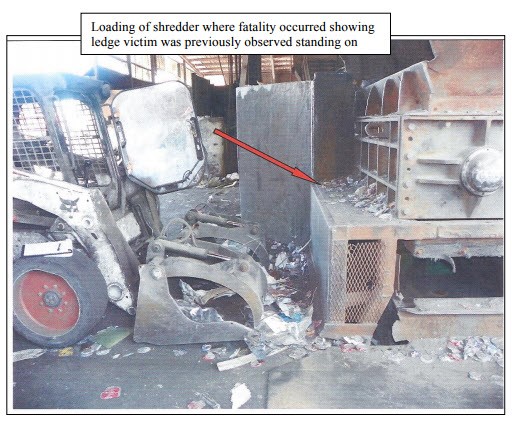
Here’s one such example. A 43-year-old machine operator died when he fell into a metal shredder at an aluminum smelting operation. Scrap metal is loaded into the hopper of the shredder where the shredder then cuts the scrap into medium-sized pieces. Then the medium pieces are moved by conveyor to another shredder to cut the pieces smaller, and then into a bin from which the metal is loaded into a furnace.

At the time of the fatality, the victim was working at the main shredder line. A co-worker came through the area looking for the victim, but could not find him. Then the co-worker saw a pool of blood and clothing at the end of the shredder line. The victim had fallen into the shredder and was carried through the entire shredder line.

Sadly, there were warnings and close calls that were overlooked. One such event happened when a co-worker saw the victim lose his balance while standing on the ledge of the shredder while the equipment was running.

How to Protect Yourself

If you see or experience a close call, report it immediately, no matter how minor it may seem.

Here are 6 steps you can take to prevent or handle close calls:

  1. Familiarize yourself today with how to report close calls/near misses to your supervisor or manager. If you are unsure of the procedure, talk to your supervisor.
  2. Don’t turn a blind eye if you see fellow workers exposed to hazards or performing their jobs in an unsafe manner. Talk to them about your concerns.
  3. Notify your supervisor or manager immediately if you see any damaged or broken machinery or equipment.
  4. Check your own worksite and equipment before each use, looking for hazards or any unusual situations.
  5. Take steps on your own to evaluate your own work processes or practices. Are you properly following all safety procedures for the work you are doing?
  6. If you witness or experience a subsequent close call after a hazard has supposedly been addressed, report it immediately to your supervisor.

In some industries, handling close calls correctly led to a two-thirds reduction in fatal incidents. So close calls don’t have to be negative events—in fact, they are some of our best opportunities to correct unsafe conditions.

Final Word

Reporting and following up on close calls immediately is a responsibility we owe to each other and to everyone who depends on us. It’s an opportunity to correct a hazard without anyone being injured.


Healthcare Eyes Word Search

Your eyes are vulnerable to injury in any kind of workplace, and that includes a healthcare facility. Look for words about eye hazards and precautions.


Care With Air Word Scramble

Compressed air and pneumatic tools have many hazards, including dust and particles which can damage your eyes.


Agriculture Word Search

A farm is one of the most dangerous working environments. Machine entanglements, falls, suffocation, motor vehicle crashes, pesticide poisonings and other mishaps befall agricultural workers.


Maritime/Marine Word Search

At the docks and on the water, hazards abound. Search here for words related to the marine and maritime industries.


Integrating Online Tools and Training into Your Safety Program


Using Technology to Engage and Train Millennials


Increasing Participation and Completion Rates of Online Training

Listen to Natae Bugg present ideas and strategies for improving your safety training retention rate among employees and dramatically reduce your accident and incident rates.


3 Keys to Effective Use of Online Safety Training Content


Why Employees Forget 70and of their Training and What You Can Do


Unlock the Potential of a Better LMS


Become a 10X Better Safety Trainer in 2018