Picture This! Remember, You Can’t Fly!

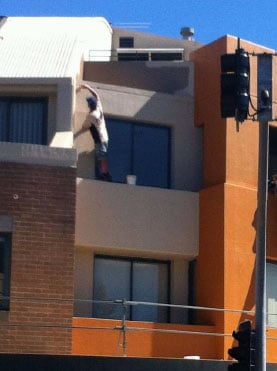
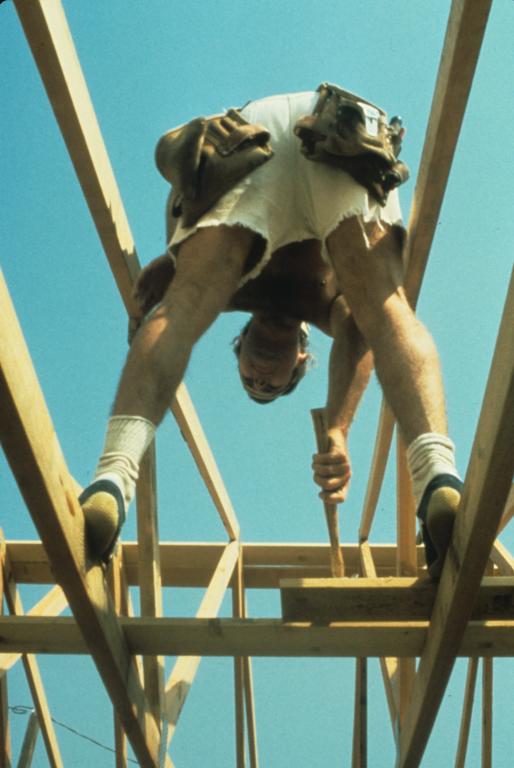
Picture This! Superman on a Ledge

This photo was snapped in Australia, so it was probably a nice day to be working outside, but this guy is more than a little light on fall protection equipment and other safety gear. One slip and he could face some heavy personal consequences. (WorkSafeVictoria, Australia)


Picture This! ‘Scaf-fold’ Could Prove to be Operative Word

When they are working well off the ground, people want to feel secure that what’s supporting them won’t suddenly buckle, resulting in a ride to agony. Would you set foot on a makeshift scaffold made from two ladders lashed together and appearing to be sagging even without a load placed on it? Sadly, someone obviously thought this system would cut it. (Naval Safety Center)


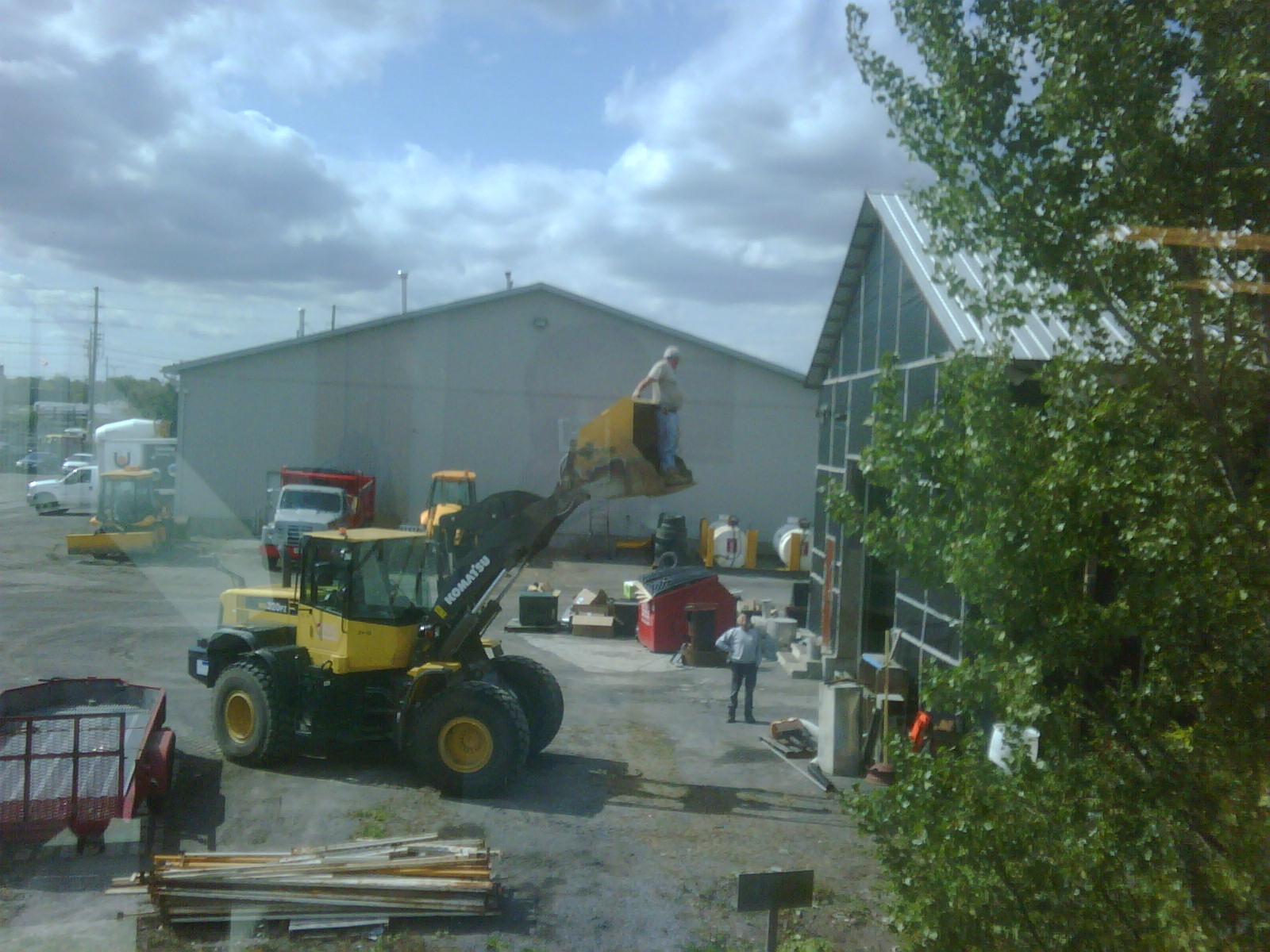
Picture This: Makeshift Bucket Lift is a Safety Downer

Man in a bucket


Here’s a construction yard worker using an unsafe method to inspect a roof. Anyone riding in this sort of contraption has zero protection against a potentially fatal fall if anything goes wrong. (Submitted by Brad Craig, health and safety supervisor, Giant Tiger Wholesale)


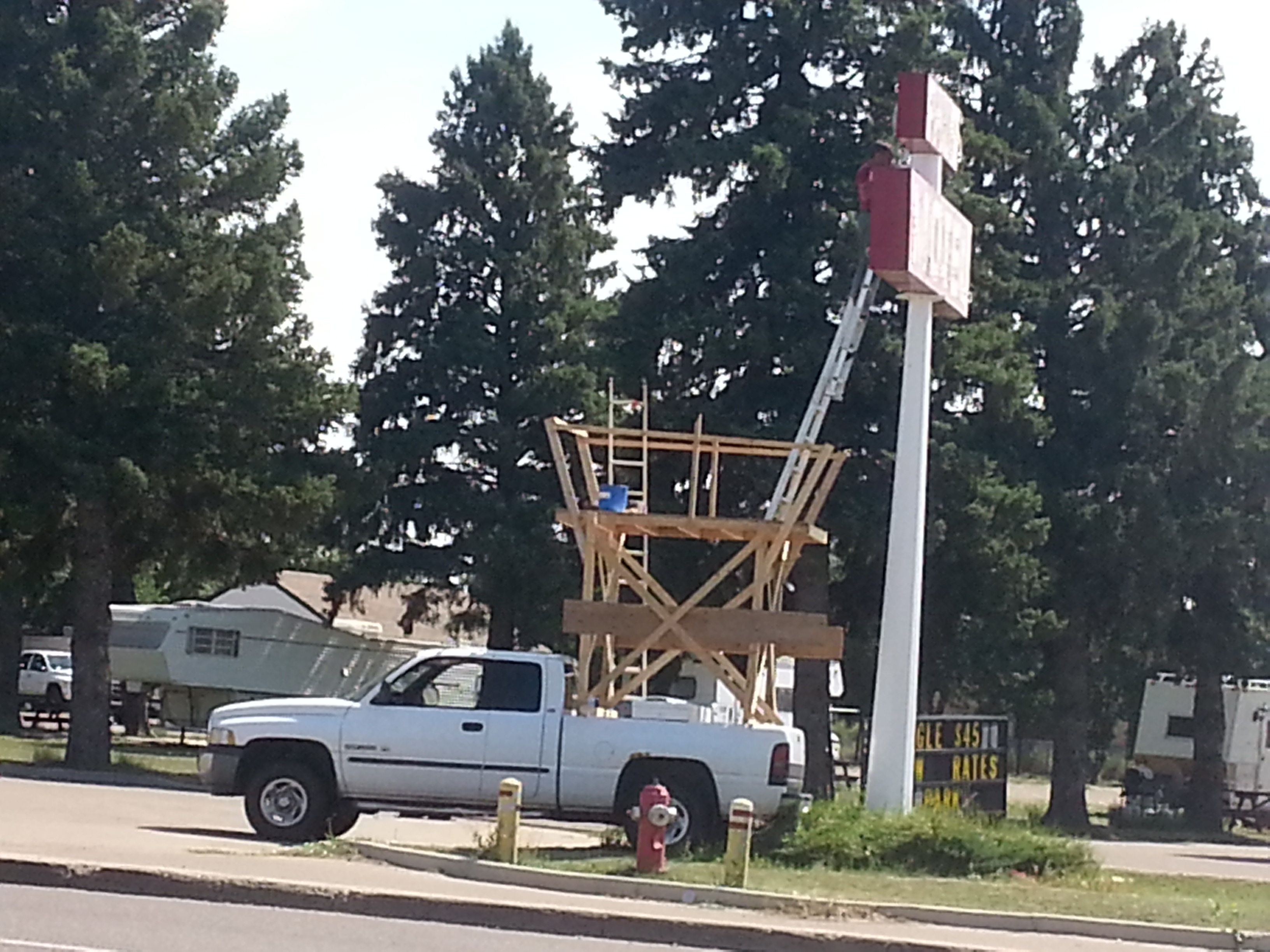
Picture This! No Time to Rent a Scissor Lift? No Problem

No time to rent a boom lift or scissor lift? No problem. We’ll just hammer a few pieces of wood together, plunk a ladder on top of it and we’re good to go. Hey Joe, did you set the E-brake on our mobile scaffold? Ironically, this photo was taken by a scaffold builder who happened to be passing by. (Photo by Mark D.)


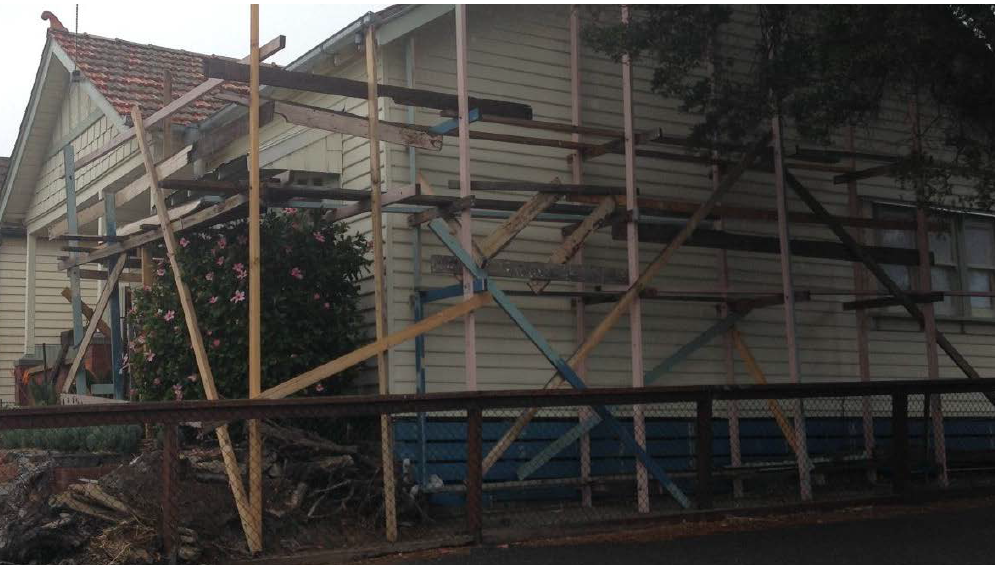
Picture This! You’ve Got to Know When to Scaffold ‘Em

Here’s another ‘pirate’s plank’ at a construction site. It appears that while workers can see the windows, they can’t always see the light when it comes to ensuring their own safety. One small misstep could have disastrous consequences. Where’s the proper scaffolding that is required by law? (WorkSafeVictoria, Australia)


Picture This! Open Excavation Beckons the Unsuspecting

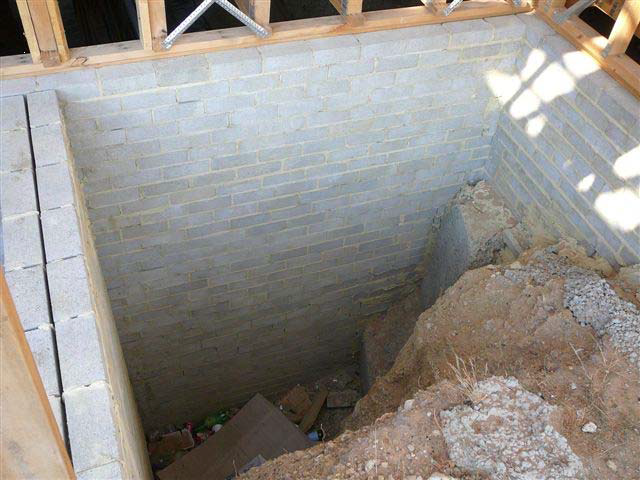
Here we have an open, unprotected hole in the ground, complete with bricks that could make the ride down even more “interesting.” This situation could easily result in a serious injury or fatality, but it’s easily preventable by building a guard around this hazard. (WorkSafeVictoria, Australia)


Picture This: Blow the Whistle on This Fire Inspector!

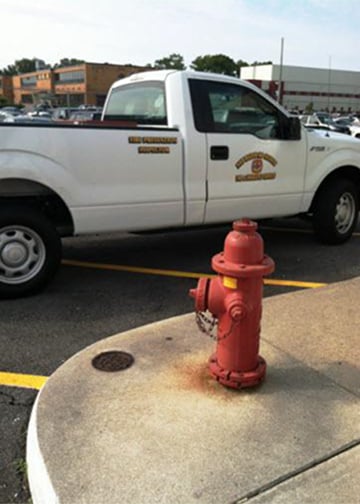
We’ve all seen vehicles parked in front of a fire hydrant and shaken our heads. But a closer look at the offending vehicle in this case would prompt a double take. It was parked here by a fire inspector, who then left the vicinity. We sure hope firefighters don’t need access to this hydrant. (Naval Safety Center)


Picture This! Hazards by the Barrel Full

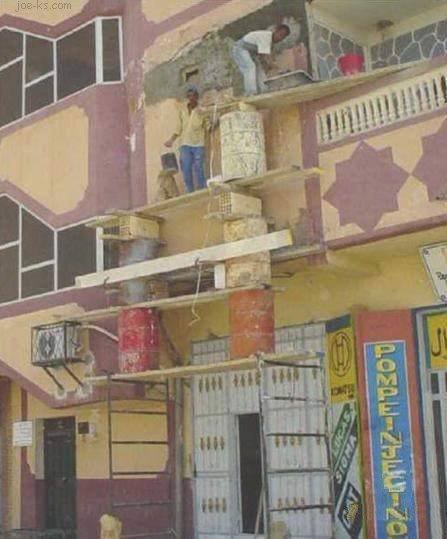
Scaffold safety has plunged to a new low in this photo. Barrels and boards stacked high have created a precarious working platform for these two workers. Like a house of cards, everything could come crashing down at any moment. (Source unknown)


Picture This! Something’s on a Roll, but it Isn’t Safety

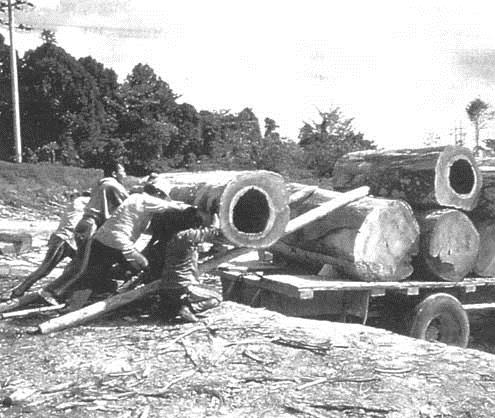
Rolling heavy logs up a makeshift ramp is hard and dangerous work. If one or more of these workers loses strength, this log could turn into a giant rolling pin, with tragic results. This photograph was taken in Indonesia. (Food and Agriculture Organization of the United Nations)


Picture This! Double Trouble in This Lifting Arrangement

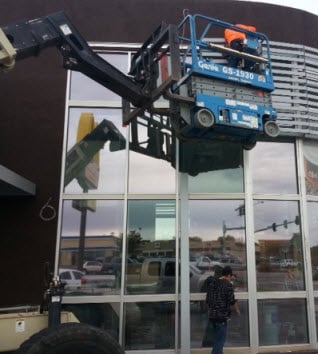
If machines could think, these two devices might tell their operators that what they are attempting isn’t smart. Any number of things could go wrong here and we certainly wouldn’t want to be standing directly underneath this arrangement, as this person is doing. (Naval Safety Center)


Picture This! Maintenance Acrobatics

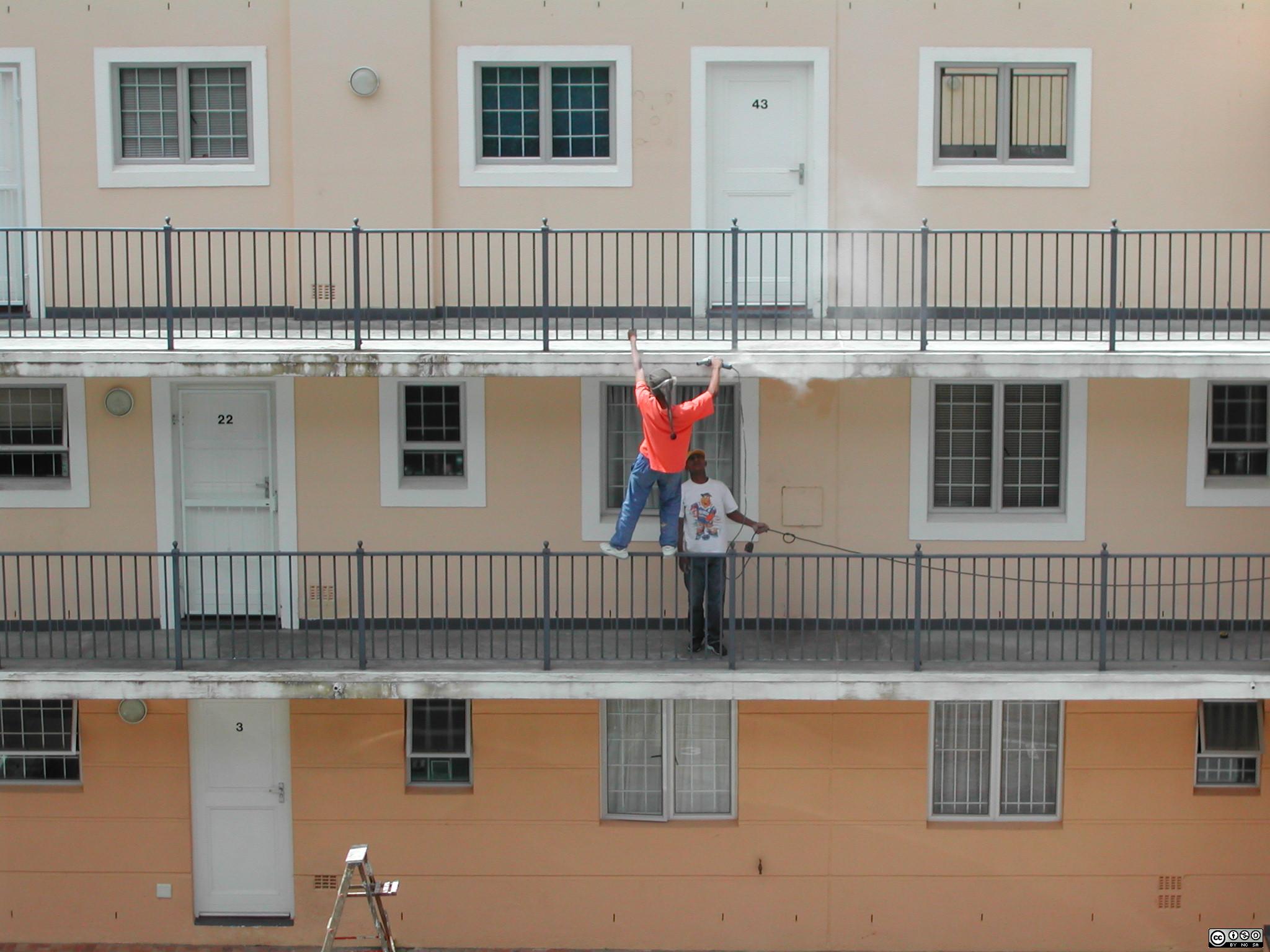
He’s maintaining three points of contact all right, but this worker has forgotten all about ladders or fall protection equipment and is hanging one-handed from a railing off the side of a building as he performs exterior maintenance. One small slip of a hand or foot could lead to his downfall. (Source unknown)


Picture This! Wrong Side of the Fence

Worker near ledge

This construction worker is standing in a most precarious place. In one split second of inattention he could step backwards into an easily fatal fall. (Washington State Department of Labor and Industries)


Picture This! Leaning on the Wrong Side of Safety


While putting on his stilts, this worker should have found a sturdier place than a window to lean against. If that window shatters and the worker falls backwards, he could be severely cut and/or suffer serious or fatal injuries if he lands the wrong way. (ELCOSH images)


Picture This! He’s Not on Board With Safety

Here’s another fearless worker, able to jump from board to board with precision, until that one time when a foot is misplaced or dizziness kicks in, fall protection equipment doesn’t, and gravity takes over. (eLCOSH)


Picture This! A Glowing Recommendation for PPE

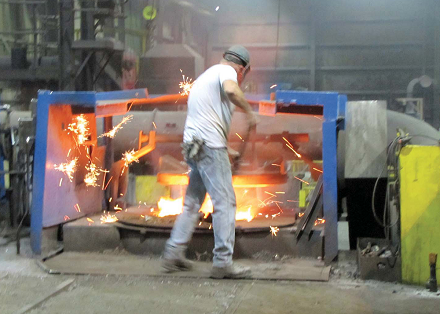
Spilling hot coffee on your jeans is bad enough, but what could this worker, dressed in jeans and a T-shirt, possibly be thinking while working this close to molten metal? This photo earned a “best of the worst” award from Minnesota OSHA Compliance.


Picture This! Girder Wrangler Tempts Fate

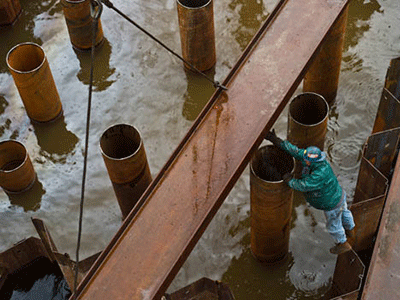
If one tiny thing goes wrong, this worker, wearing heavy clothing and without fall protection or a personal flotation device, will find himself struggling to stay afloat in 50 feet of water. (Naval Safety Center)


Picture This! Emergency Exit Fail

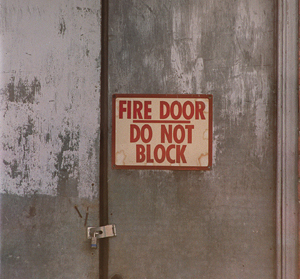
Nearly everyone in the safety field has heard about the Triangle Shirtwaist Factory Fire of 1911 in New York City, in which 146 workers died after being unable to escape the blaze because of locked exit doors. How this hazard can continue to occur in the modern world is mind-boggling, yet it still happens, even in North America. Case in point: A refrigerated food warehouse in Honolulu, HI was recently cited by the Occupational Safety and Health Administration (OSHA) for a litany of hazards, including having 13 exit doors locked from the outside and sealed shut and having storage racks filled with pallets of product blocking emergency exits. Unicold Corp. is facing $251,330 in proposed fines for the alleged hazards, which also include process safety management issues, unguarded floor openings, emergency response plan deficiencies and inadequate electrical equipment.


Picture This: Cookies and Fire Extinguisher Share Aisle 1

Fire extinguisher

 Shelf space for merchandise must be a rare commodity in this store, given this photograph of a fire extinguisher peeking out from behind these shelves. Better hope there’s not a fire or precious time could be lost trying to free this fire extinguisher from its awkward position. Amazingly, a tag on the fire extinguisher indicates that it passed a recent inspection. How could that be? (Naval Safety Center)


Picture This! Safer by the Handful

From the Canadian north to the deep southern United States, the winter of 2013/14 came early and hit hard, creating treacherous conditions for motorists and pedestrians. Slipping on icy walkways can cause serious injuries, including brain injuries. Workplaces need to be extra vigilant for icy conditions and throw down salt or ice-melting pellets on walkways to protect workers and the public.


Picture This! Three Little Words Versus One Big Risk-Taker

Safety First


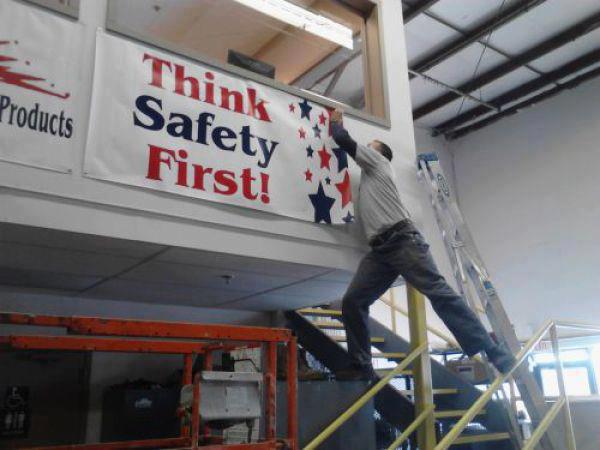
If a picture is worth 1,000 words, this guy could start by paying a little attention to the three little words staring him in the face. One slip and he could be staring at a more dazzling kind of stars than the ones on this banner. This photo was submitted by a Bongarde subscriber. We have no idea of its source, but it’s a Picture This! classic.


Picture This! McDonalds’ Crane is… Whack

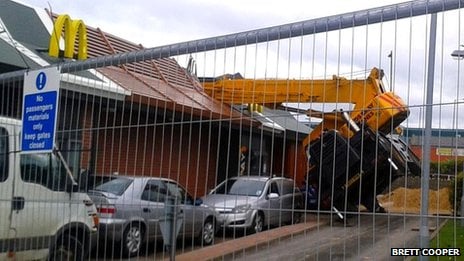
Customers at this McDonald’s restaurant in northeast England had their meal experience shaken up a bit when this mobile crane toppled over, crashing through the roof of the building. Thankfully, no one was injured. There were no drivers in the vehicles seen parked in the drive-through area. The crane overturned while lifting a chiller unit. (BBC)


Picture This! A High-Level Head Scratcher


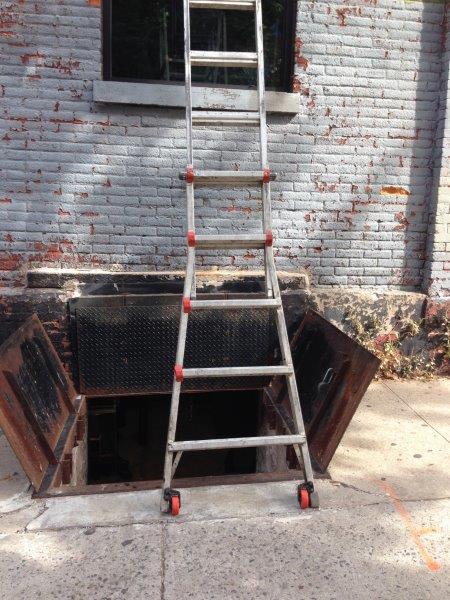
A fall from a ladder at any height can be fatal, but this unfortunate placement of a ladder raises the risk stakes considerably. We don’t know what would be worse—falling into this pit or landing on one of the vertical rust-covered pieces of metal. (Photo contributed)


Picture This! Zip Tie 1, Fire Extinguisher 0

The clasp holding this fire extinguisher broke, so someone decided to secure it with a zip tie. It’s nice and secure, so much so that in the event of a fire, this fire extinguisher won’t be able to be used without being cut free with a knife. (Naval Safety Center)


FUNDAMENTAL 55: Cannabis Workplace Safety for Employers

Key Takeaways:
  • Distinguish between risk management and impairment management
  • Explain why the language of impairment is ineffective in safely adapting to the legalization of cannabis
  • Differentiate between effective and ineffective approaches to employees’ consumption of cannabis
  • Recognize the most common deficits in safety programs regarding cannabis
  • Assess employers’ safety programs regarding cannabis against best practices
  • Access resources to address gaps in employers’ safety programs
  • Identify the most effective choice in a given scenario about employees’ cannabis use.
Course Description

This course will cover workplace safety regarding cannabis use.


How to Avoid Repeat Violations at Multiple Facilities

Find out why companies that have multiple sites are at greater risk of “repeat” OSHA violations, even if those companies generally have exemplary safety records.

How To Avoid Repeat Violations At Multiple Facilities

An OSHA citation is never a good thing. But being cited for a repeat violation is especially serious. In addition to penalties of up to $70,000 per offense, repeat violations can land you on OSHA’s Enhanced Enforcement Program (EEP) hit list and embarrass your company.

Repeat violations don’t happen just at companies that don’t care about safety. Even companies with exemplary safety records can get hit with repeat violations, especially if they have more than one facility. The reason for this is that OSHA treats all facilities of the same company as a single entity for enforcement purposes. So if one facility gets cited and another facility owned by the company gets cited for the same or similar violation, it’s considered a repeat violation-even if the two facilities are in different states thousands of miles apart!

If your company has multiple sites, you need to keep it from getting hammered for repeat OSHA violations. We’ll show you how to do that. There’s also a Model Brief in Tools that you can use to educate your facility administrators and mobilize and coordinate their compliance efforts.

What the Law Says

To assess the risk of repeat violations, you first need to understand how OSHA enforces its standards against employers with multiple facilities. The OSHA Field Inspection Reference Manual, that is, the guidelines OSHA gives to its inspectors and enforcement agents, sets out different kinds of violations. A repeat violation basically occurs when OSHA cites an employer for the same or “substantially similar” hazardous condition within three years.

Many repeat violations involve citations against the “bad eggs”-the employers who don’t care about safety and fail to abate hazards. Example: OSHA cites a factory owner for inadequately training workers who handle hazardous materials. The owner brushes it off and makes no changes. A year later, OSHA does a follow-up inspection and discovers the problem still persists. The owner could be cited for a repeat violation.

But it’s not always the bad eggs that get hit. Sometimes well-intentioned employers are cited for repeat violations. Things can get especially tricky when a company has more than one facility. That’s because substantially similar violations at separate facilities count as repeat violations against the company as long as the two facilities are under the jurisdiction (i.e., legal authority) of the same OSHA Area Office (or in the same state if the facilities are in one of the 21 states that have their own state OSHA plan).

SSOL Says: As a practical matter, OSHA doesn’t always follow territorial limits when issuing repeat violations. OSHA checks its national database to see if a company has other facilities outside the area and whether they’ve been previously cited for the same or similar violation, attorneys say. If so, OSHA might cite the employer for a repeat violation. If you’re not sure which OSHA Regional and Area office your facilities are in, go to: http://www.osha.gov/html/Ramap.html.

EEP Raises the Stakes

Avoiding repeat violations has become especially important because of OSHA’s EEP. Described by former OSHA Administrator John Henshaw as an effort to “put more tenacity and teeth in” OSHA enforcement, the EEP targets companies with dubious safety records for extra scrutiny and tougher penalties. Being cited for repeat violations is one of the ways a company can get on the EEP hit list.

More precisely, OSHA puts companies with “high gravity” violations on a “targeted employer” list. Repeat violations are considered high gravity. Moreover, if any one facility has a repeat violation, all the other facilities owned by the company end up on the list. This is true even if those other facilities have perfect safety records.

Three Steps to Avoid Repeat Violations

EEP makes it more important than ever for companies with multiple facilities to avoid repeat violations. To do this you must establish and implement a process for communicating and coordinating OSHA compliance efforts. There needs to be a system so that when one facility gets cited for a hazardous condition the administrators of all the other facilities know about it. Administrators can then assess if the same hazards exist at their own facility and, if so, take steps to address them.

Experts suggest using a combination of three methods to coordinate compliance efforts across facilities:

  1. Sharing of OSHA Inspection Data. Have each facility administrator forward a copy of any OSHA inspection files and correspondence to corporate headquarters or another central location for distribution to all other facilities. The files should contain inspection notes, photos, corrective actions and other materials.
  2. Creating a Coordinating Committee. Designate a representative from each facility to serve on a joint compliance committee. The committee should meet regularly to report on their respective compliance initiatives and inspection results so administrators knows what’s going on at all the other facilities.
  3. Distributing Reports. Corporate headquarters should create and distribute a monthly report highlighting and summarizing compliance activities at each facility. The report would also summarize the results of any recent inspections or enforcement actions by OSHA.

Brief Facility Administrators

To coordinate OSHA compliance among multiple facilities you must educate facility administrators. You need to explain what you want and expect them to do and why. You can use or adapt the Model Briefing in Tools. Like our model, your Briefing should:

  • Explain what repeat violations are and why they’re so important to avoid;
  • Explain how a violation at one facility counts against other facilities; and
  • Describe the measures the company is taking to coordinate compliance efforts and avoid repeat violations.