Workplan: Conducting Workplace Safety Inspections

Are you regularly doing scheduled workplace inspections? If you’re not, you should be and now is a great time to start. Workplace inspections give you a chance to thoroughly evaluate equipment, processes, tasks, tools, and other factors. Regular inspections help you find new hazards, see how existing hazard controls are working, correct or fix issues, and implement new controls (engineering, administrative, PPE) where needed.

Step 1: Decide on Frequency

Regularly inspect operations, equipment, work areas, and facilitates. Frequency requirements can vary between provincial, federal, state, and local regulations (and company requirements), but once a month is a common best practice and a common requirement. If monthly inspections aren’t possible, it is recommended to focus on one or two areas, types of equipment, processes, or tasks a month – and do a full inspection annually.

Step 2: Identify Who Will Perform the Inspections

Often, it is the safety committee’s job to conduct inspections, but have members of management and workers who are familiar with an area, process, or task do regular inspections too.

When determining both the frequency of inspections and who will be performing the inspections, think about the number and types of processes that will be inspected. Review regulatory requirements for equipment such as cranes and fall protection and high hazard activities or processes that require qualified, experienced, and trained personnel perform the inspection. And don’t forget about covering all shifts and who will perform inspections on these shifts.

Step 3: Prepare  

Make the most of an inspection by taking time to plan and prepare.  First, review incident and near miss data to look for trends and hazards. Gather floorplans or layouts of the space and any checklists to be used.

Then, look at past inspections for what hazards were identified and what corrective action was/should have been taken. Gather information on potential hazards – i.e. machines, equipment, materials, areas, tasks, and processes. Brush up on regulatory requirements too.

Next, make sure you’ve got the right checklist/s for the areas, machinery, or processes being inspected. Note: update checklists as conditions change – new equipment, new hazards, hazards that have been removed, etc.

Finally, don’t forget PPE for every member of the inspection team.

Step 4: Inspect

Be familiar with common hazard sources, including objects (tools, equipment, containers); activities (driving, lifting, digging, welding, sorting and filling containers); and locations (floors, stairwells, confined spaces, excavations, workstations). Determine and discuss the inspection route, put on your PPE, and start the inspection. Take notes on what you observe and use those notes, your checklists, and floorplans to document your findings.

Look for deviations from accepted safe work practices such as: equipment missing guards; LOTO procedures not being followed; poor housekeeping; using tools and equipment without proper training or authority and using damaged tools or equipment.

Stop any work that puts workers in immediate danger and don’t allow work to begin again until the hazard is fixed. Lastly, don’t create a hazard by operating equipment – ask the operator to demonstrate.

Step 5: Write a Report

Put together all the findings, including corrective action plans, into a final report. Be as detailed and specific as possible – using location, equipment name/type, process and what part of the process presents a hazard. Then prioritize which hazards require urgent or immediate fixes. Here’s an example of a system you could use:

Class A Hazard: A condition or practice likely to cause permanent disability, loss of life or body part, and/or extensive loss of structure, equipment or material. Requires immediate action.

Class B Hazard: A condition or practice likely to cause serious injury or illness, resulting in temporary disability or property damage that is disruptive but not extensive. Requires short-term action.

Class C Hazard: A condition or practice likely to cause minor, non-disabling injury or illness, or nondisruptive property damage. Requires a long-term fix.

Step 6: Follow-Up and Review

Inspections are a great tool for showing you which policies and practices are working and which ones need follow-up and revision. Reviewing available inspection data can help identify trends and situations where training is needed; uncover the reason for an injury trend; and determine which equipment, processes, or work areas need further investigation.



Focus On: Five Ways to Improve Your Safety Inspections

Conducting regular safety inspections is a key component of any workplace safety program. Unfortunately, safety inspection methods leave a lot to be desired at many workplaces. Although the specific details of the inspection process will vary from operation to operation, here are five strategies just about any employer can use to improve inspections.

Hazards

There are numerous hazards and potential hazards at most workplaces. Their severity differs with the workplace and work being performed. Conducting regular inspections and following up with corrective actions can reduce the hazards and potential for injury, illness, property and equipment damage.

Be a Better Supervisor

1. Do Your Own Inspections (Don’t Rely Just on Safety Committees)

Internal safety inspections are often the domain of employee safety committees. But they shouldn’t be the only inspection game in town. It’s important management and supervisors are involved in inspections to lend a more trained eye and focus on the bigger picture, including consistency with the company’s overall safety program.

2. Make Sure Inspection Forms Reflect Conditions of YourWorkplace

It’s important to document all inspections regardless of who carries them out. Although they can be a helpful starting point, generic, boilerplate inspection forms need to be tailored to fit your operations. Other inspection form pointers:

  • Make sure forms account for both regulatory requirements and your company’s safety program.
  • Leave plenty of blank space for comments and observations.
  • Make sure it’s clear any problems identified must be noted on the inspection forms.
3. Give Advanced Notice of Safety Committee Inspections

Safety committee inspectors are often frustrated by the lack of cooperation from workers and supervisors. Giving advanced notice of inspections goes a long way to solving that problem because it enables supervisors to plan for and minimize disruption caused by having the inspectors in the area, e.g., by manipulating the work schedule so that machines to be inspected are freed up at the appropriate times.

4. Have “Fresh Eyes” Conduct Periodic Inspections

One advantage of having supervisors conduct inspections of their own areas is that they’re familiar with the work and hazards and this expertise enhances the inspection process. But there’s also something to be said about having “fresh eyes” inspect the workplace. Have supervisors trade off and inspect each other’s areas or assemble an inspection teams that include members from outside the department.

5. Instill the Idea that Everyone Is an Inspector

The word “inspection” implies a formal, structured process. But all workers regularly conduct inspections without realizing it. For example, they look over their work stations, PPE, and equipment before starting their shifts. You can leverage this general awareness by instilling in workers the idea that simply being observant and paying attention to their surroundings is a type of inspection.

Final Word

The workplace safety inspection is an opportunity to evaluate the company’s whole OHS program. Adopting these five suggestions can go a long way toward making the most out of this opportunity.


Stairway Collapse

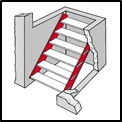
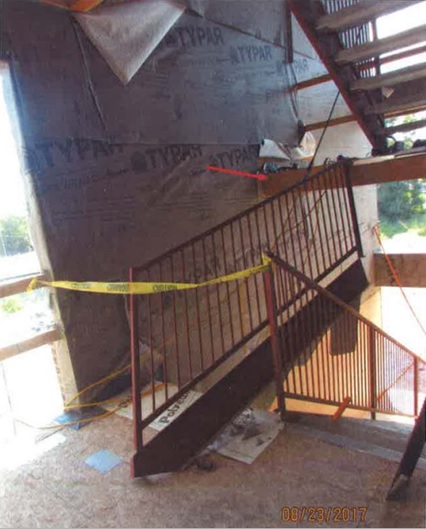
 A 64-year-old male employee was fatally injured when the stairway he was standing on collapsed 17 feet (5 meters) to the concrete floor below.

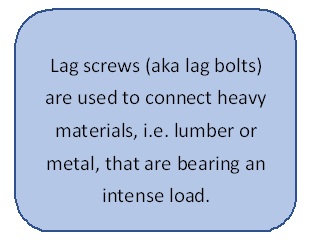
On the day of the incident, the victim was installing a metal kick plate at the top of a steel bolt-in concrete tread stairway. To install the plate, the victim first removed the lag screws from the stairway landing.


These screws secured the top of the stairway frame, or stringers, to the landing. With the assumption that the stringers were secured at the bottom step, the victim began to remove the lag screws. The stairwell was NOT secured at the bottom and once he removed the lag screws at the top the stairs shifted and collapsed, and the victim fell 17 feet to the concrete floor below.

During the inspection and investigation of the incident it was determined that the employer did not inspect or evaluate the stairways before work began to determine if they were safe to use and could support the weight of workers.

The employer was cited for failing to have and maintain programs that provided for frequent and regular inspections of the job site, materials, and equipment. Regular inspections could have identified hazards, such as incomplete stairways that were being used by employees.

In addition to employer inspection responsibilities, you must take look out for your own safety and get in the habit of checking your work area and equipment for existing or potential hazards. Report hazards and don’t start work until it is safe. Remember, you have a legal right to a safe workplace and to refuse work that is unsafe.


Workplan: Lift Plan for Critical Lifts

Think of crane safety as a triangle. One side is the written crane, hoist, and rigging policy, which includes requirements for frequent and periodic inspections.

The second side of the triangle are the supervisors, qualified and trained operators, and any designated or authorized persons qualified to operate or work around the crane.

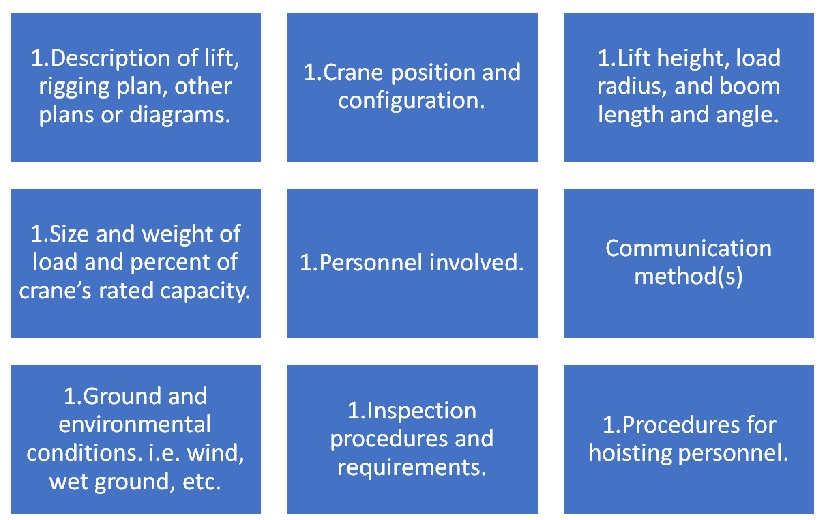
The third side is the lift plan. Most crane collapses, failures, injuries, and deaths can be prevented by using a lift plan. All lifts require at least some planning – how much does the load weigh, what’s the capacity of the crane – but critical lifts require more planning and oversight to ensure a safe and successful lift.

There are many definitions of what a critical lift is. A common definition is a lift that exceeds 75 percent of the crane’s maximum rated capacity. Here are the common components of a lift plan.

Components of a Lift Plan

Pre-Lift Review

Hold a pre-lift meeting with the crane operator, lift supervisor, rigger and anyone else involved. The critical lift plan should be reviewed to ensure the team is ready to safely conduct the lift. Whenever possible, a practice lift with similar crane configurations and load conditions should be done. Remember, practice lifts should always be performed by the same crew, using the same lifting equipment, as those used for the lift.

Hoisting Personnel

Hoisting workers must only occur if there is not a safer way to access an elevated work area and these requirements are followed.

The total weight of the load must not exceed 50% of the crane’s load chart capacity.  The weight of the platform and rated safe working load weights must be conspicuously and permanently marked on the platform.

A positive locking safety latch must be on the crane hook and load lines must have a safety factor of at least seven times the maximum intended load. Guard rails must be provided with a locking gate that does not swing outward.

Proof testing at 125% of the platform’s rating capacity is required prior to hoisting employees and after any repair or modification. Whenever the crane is moved to a new location, a new proof test is required.

A proper tie-off to a structural member inside the basket or the lower load block/overhaul ball should be reviewed during the pre-lift meeting.

The platform during the unmanned trial lift must be loaded to at least to the expected lift weight should be made from ground level to each location at which personnel will be hoisted.


Focus On: Crane Safety

Crane accidents can be dramatic events. Think of the news stories you’ve seen – large tall cranes collapsing on a busy street in the middle of downtown New York or Toronto, destroying buildings and any other structures in their wake, crushing people, and hurling deadly flying debris. While not all crane accidents are this dramatic, they are no less horrific and deadly for bystanders and victims.

The Hazards

Working with cranes, either operating or working around them exposes workers to the hazards of lifted and moving loads and equipment, shock and electrocution hazards from overhead powerlines, and the falling or collapse of the crane itself. The good news is there are things you can do immediately and in the long-term to keep your workers safe and equipment in safe working condition.

Be a Better Supervisor

The very first thing you can do is choose operators and competent persons who are trained and qualified to do their jobs. You wouldn’t think of getting on a plane if the pilot wasn’t trained and qualified. Or even something as ordinary getting a haircut – you probably wouldn’t let someone cut your hair who knows nothing about cutting hair. But are you letting untrained operators and unqualified personnel be in charge of complex and hazardous crane operations?

You must maintain and inspect each crane daily before use and as otherwise directed by the crane manufacturer and according to regulatory requirements – i.e. monthly, after a crane hasn’t been used for six months, annual certification. Inspection and maintenance include all slings, wire ropes, hoists and other rigging equipment.

Before a lift happens, always consider the following regarding the load and the location.

  1. The Load – What type of load is being lifted – forms, precast deck panels, or bridge deck girders?
  2. Load Weight – Are the net and gross load weights known? Did you remember to factor in the weight of a crane load block; jib; rigging; hook, ball, and swivel; all cable below boom point; and other accessories?
  3. What’s in the “Box”? –Are there any hidden contents that could affect load weight and stability, or that could be hazardous if spilled? Is the center of gravity marked on the load?
  4. Is the site an Obstacle Course? – Is the crane site suitable? Is the crane next to a haul road? Can the crane’s superstructure rotate 360°without coming into contact with any object creating a trapping point between the counterweight and the fixed object? Can the crane be assembled and disassembled with outriggers or crawlers fully extended in accordance with manufacturer’s specifications?
  5. Ground Conditions – Is the ground on which the crane is to sit firm and level? Is it capable of withstanding the ground-bearing pressure of an outrigger jack or a crawler crane track with the load suspended over the corner of the track or outrigger? Are there any hollow structures under the crane pad? Are crane mats needed to stabilize any soft ground conditions? Information on ground-bearing pressures can be obtained from the crane supplier and manufacturer. http://www.agcil.org/cms/ckfinder/userfiles/files/SafetyCorner.pdf
  6. Is it a Critical Lift? – A common definition of a critical lift is a lift that exceeds 75 percent of the crane’s maximum rated capacity. Other critical lifts include lifts in congested areas; lifts that involve turning or flipping the load, which can result in “shock loading” or “side loading”, both of which can lead to collapse. Lifts where the load weight is not known and if the load contains any potentially unstable pieces or materials. Lifts in areas where you don’t know the capacity of the surface the crane will be parked on and areas of poor soil or unknown ground conditions – including wet soil (from rain or snow melt). Lastly, lifts that require multiple cranes to lift and move the load.

The Crane

Your competent person (which could be you) must know the following when it comes to the crane doing the lifting. The capacity and limitations of the crane and the methods of work the crane can perform. The crane’s safe working loads from the load chart. The dimensions and weight of the crane, both in transit and after being fully set up.  If necessary, the outrigger or crawler crane track ground-bearing pressures (available from the supplier or manufacturer). Any restrictions or limitations on crane operations in the area. Finally, if renting a crane for the lift, request crane annual inspection certificate and maintenance records. http://www.agcil.org/cms/ckfinder/userfiles/files/SafetyCorner.pdf


Father Operating Faulty Crane Lead to Son’s Death

Three men hug near where the bodies of two workers were recovered after they died when their crane-hoisted lift basket fell 80 feet at a bridge construction site on Putah Creek in Winters. The basket landed on timbers covering a 30-foot hole dug for footings for the new span. The 10-worker crew included the father of one of the men killed, said Richard Disney, president of Burlingame-based Disney Construction, which was building the bridge. HECTOR AMEZCUA HAMEZCUA@SACBEE.COM https://www.sacbee.com/news/local/crime/article124001954.html

2014

California OSHA cited Disney Construction, Inc. $106,110 for serious violations following the deaths of two employees who fell 80 feet from a crane-hoisted platform at a bridge construction site.

The Sacramento District Cal-OSHA Office’s investigation found:

  1. Disney Construction’s crane had not been certified or visually inspected for defects to satisfy current testing and examination standards.
  2. The crane operator failed to perform an unmanned trial run or have a competent person inspect the rigging and platform before usage.
  3. There was no qualified, trained signal person to assist with the lifting operation.

On the day of the incident workers were using a pile driver crane when a cable broke near the top of a pile driver.

A second crane was then used to hoist a personnel platform with two workers, Marcus Powell and Glenn Hodgson, so they could troubleshoot the cable on the pile driver.

The rigging used to connect the platform to the crane dislodged, causing the platform and workers to fall some 80 feet to the ground. https://www.dir.ca.gov/DIRNews/2014/2014-107.pdf

2017

The crane operator, Mark Powell, was charged with involuntary manslaughter in the death of his son, Marcus, and the other victim, Glenn Hodgson. Cal-OSHA said Mark Powell used an aging crane that needed repairs and was not approved for lifting – to hoist Marcus and Glenn 80 feet into the air where the basket broke and both men fell to their deaths.

In addition to what Cal-OSHA characterized as a “long list of mechanical deficiencies,” the agency said in its report of the incident that the basket used to lift Powell and Hudson did not have a working safety latch. According to Cal-OSHA inspectors, Disney supervisors failed to inspect the crane and personnel lifting equipment, which they determined was “the root cause of the accident.” https://www.constructiondive.com/news/ca-crane-operator-charged-in-fatal-accident/433201/

“Since the decision was made to use a crane and a personnel platform, the root cause of the accident was the failure to survey and inspect the equipment being used and the equipment being repaired,” the agency’s inspectors concluded. https://www.sacbee.com/news/local/crime/article124001954.html


Crawler Locomotive and Truck Crane Inspection Checklist

CRAWLER LOCOMOTIVE & TRUCK CRANE INSPECTION CHECKLIST

This sample checklist from the North Carolina Department of Labor is designed to help you in developing programs tailored to your own operation.  Please copy, expand, modify and customize this sample as needed.

This document is provided as a compliance aid but does not constitute a legal interpretation of safety legislation or standards, nor does it replace the need to be familiar with, and follow, actual safety legislation and standards.

CRAWLER LOCOMOTIVE & TRUCK CRANE INSPECTION

Inspection Date: ________________________             Crane Manufacturer: ________________________

Inspector Signature ______________________            Crane Serial No: ___________________________

Any deficiency shall be carefully examined, and determination made as to whether they constitute a safety hazard.

In addition to the inspection items listed all cranes must be inspected as specifically recommended by the manufacturer.

Frequent inspection: Daily to monthly depending upon usage.


 Yes   No
___     ___     
Inspect all control mechanisms for maladjustment interfering with proper operation. Daily.
___     ___     All control mechanisms for excessive wear of components and contamination by lubricants or other foreign matter.
___     ___     All safety devices for malfunction.
___     ___     Deterioration or leakage in air or hydraulic systems, daily.
___     ___     Crane hooks for deformations or cracks.
___     ___     Rope reeving for non-compliance with manufacturer recommendations?
___     ___     Electrical apparatus for malfunction, signs of excessive deterioration, dirt and moisture accumulation.

Periodic inspections:  1-12-month intervals depending on usage or as recommended by the manufacturer.

 Yes   No
___     ___     
Deformed, cracked or corroded members in the crane structure and boom.
___     ___     Loose bolts or rivets.
___     ___    Cracked or worn sheaves and drums.
___     ___    Worn, cracked or distorted parts such as pins, bearings, shafts, gears, rollers and locking devices.
___     ___    Excessive wear on brake and clutch parts, linings, pawls and ratchets.
___     ___    Load boom angle and other indicators over their full range, for any significant inaccuracies.
___     ___    Gasoline, diesel, electric or other power plants for improper performance or non-compliance with safety requirements.
___     ___    Excessive wear of chain drive sprockets and excessive chain stretch.
___     ___    Travel steering, braking or locking devices for malfunction.
___     ___    Excessively worn or damaged tires.
___     ___    After adjustments and repairs have been made, the crane shall not be operated until all guards have been reinstalled,
___________safety devices reactivated, and maintenance equipment removed.
___     ___    Rope inspection: Running ropes-thorough inspections of all ropes shall be made at least monthly by an authorized
___________person. Look for reduction of rope diameter, internal or external corrosion, cracked, bent, worn or improperly
___________spliced end connections, severe kinking, crushing, cutting or un-stranding.
___     ___    The crane is level and blocks properly in use.
___     ___    Fire extinguisher in cab or near vicinity.
___     ___    Only designated personnel permitted to operate crane.

Comments:
__________________________________________________________________________________________

__________________________________________________________________________________________
__________________________________________________________________________________________


Mobile Crane Daily/Monthly Inspection

MOBILE CRANE DAILY/MONTHLY INSPECTION CHECKLIST

This sample checklist, from the North Carolina Department of Labor, is designed to help you in developing programs tailored to your own operation.  Please copy, expand, modify and customize this sample as needed.

This document is provided as a compliance aid but does not constitute a legal interpretation of safety legislation or standards, nor does it replace the need to be familiar with, and follow, actual safety legislation and standards.

  Mobile Crane Monthly Inspection
 Inspection Checklist may also be used for shift inspection


Signature of Competent Person ______________________________________ Date*:  ______________________

Crane Model: Crane Serial # Max. Crane Capacity:
Notes:


General Status:

S  = Satisfactory X = Deficiency R = Recommendation N/A = Not Applicable

A.  Control Mechanisms
B.  Control and drive mechanisms
C.  Air, hydraulic, and other pressurized lines
D. Hydraulic system
E. Hooks and latches
F.  Wire rope reeving
G.  Wire rope
H.  Electrical apparatus
I.  Tires
J.  Ground conditions
K.  Equipment level
L.  Operator cab windows
M.  Rails, rail stops, rail clamps
N.  Safety devices and operational aids

*Form must be retained according to regulatory/company policy.


Picture This: Unsafe Outriggers

What we’ve got here are a few people who aren’t concerned at all about stability or gravity. My question is how did everyone/anyone on these sites let this happen? Even if you’re not well-versed in safety regulations these situations look incredibly unsafe.

How did they manage to get those blocks SAFELY under the truck? The ground is muddy and the wooden blocks the outriggers are on appear to be sinking into the ground – at least on one side. Two of the three men don’t have any PPE – it’s unclear what’s going on with the second man behind the outriggers.

https://www.reddit.com/r/OSHA/comments/80t2ok/this_just_makes_me_nervous/

Next, we have an outrigger “resting” on two compressed gas bottles. Are they full? Empty? Are they rated to hold the weight of the crane and the load? No, no they are not. They’re not designed to be used as an outrigger mat. And look at the debris and unstable ground under and around the outrigger. This is not a safe area to put down your outriggers.

https://www.reddit.com/r/OSHA/comments/6q8bey/setting_up_cranes_is_a_blast/

Here are some safe outrigger tips:

1. Every time the outriggers are deployed, your outrigger pads or crane mats must be under them.

___a. Ultimately the ground is supporting everything. It must be taken into consideration in every application. Outrigger pads
should always be set-up on sufficiently compacted, drained and level surfaces.

___b. All uneven ground should be leveled prior to the placement of any outrigger pad or crane pad.

2. When stacking outrigger pads, always stack a smaller outrigger pad on top of a larger underlying pad.

3. Never stack a larger outrigger pad on top of smaller outrigger pads, cribbing, dunnage or other supporting materials.

4. Always use materials of a known strength that are designed as support for heavy equipment.

5. Outrigger pad/floats must be smooth and free from debris in order to evenly spread the load and achieve solid contact with the outrigger pad or crane mat.

https://dicausa.com/usage-and-inspection-guidelines/


Picture This: Four Reasons Inspections are Important

You probably looked at these pictures and immediately knew what was wrong and why each situation was unsafe. Unfortuntely, the hazards you face each day aren’t laid out neatly in front of you and they aren’t always easily identifiable. This can be especially true for young workers and workers who lack experience at a job or performing a task.

That’s where regular and frequent workplace inspections come in. Workplace inspections are designed to uncover hazards, the obvious and not so obvious kind. Whether it’s a formal monthly inspection done by the safety committee or a group of managers and employees, a weekly walk-through by supervisors, or daily checks done by employees and supervisors – inspections uncover hazards and potential hazards.

Most employers are required to have an inspection program and process in place. This requirement might fall under a specific piece of legislation or it might be covered under due diligence or the general duty clause.

Your safety depends on workplace inspections and the corrective actions that should be taking place.

Image sources:

https://www.reddit.com/r/OSHA/comments/aunkxs/the_full_ones_hold_the_door_open_better_because/
https://www.reddit.com/r/OSHA/comments/aum5cs/yeah_a_welding_rod_works_as_a_safety_pin_for/
https://www.reddit.com/r/OSHA/comments/aup120/let_me_just_wash_my_eyes_out/
https://www.reddit.com/r/OSHA/comments/atwplp/one_of_the_two_fire_exits_in_our_building/


Tower Crane Pre-Shift Inspection Checklist for Operators

STANDARD TOWER CRANE (FOR CRANE OPERATORS)
“START OF SHIFT INSPECTION”

Operator:                                                                                        Week of:                                         Year:                              

Project:                                                                                           Crane Owner:                                                                        

Site Address:                                                                                                                                                                                 

Crane Make:                                                           Model:                                Serial #:                                                              

+
= Approved and in good working order
X
= Found faulty – notified supervisor
/
= Not applicable to this item (details required under remarks)


# Standard Tower Crane Operator Sun Mon Tue Wed Thu Fri Sat
1 Electrical power cords – main feed – junction box/splice
2 Ground fault circuit interrupter (GFCI)
3 ON/OFF switch (main disconnect)
4 Crane base inspection
5 Inspect walkways, handrails, guards, ladders, and perimeter

barricade

6 Inspect structure, pins, keepers, and mast bolts
7 Ensure all tower wedges or tie backs are in place and tight
8 Ensure all doors, panels, and covers are in place and

weather-tight

9 Operators controls functioning adequately
10 Load moment hoist limit
11 Load moment trolley limit
12 Maximum load (line pull)
13 Trolley out
14 Trolley in
15 Hoist up deceleration limit
16 Hoist upper limit
17 Hoist down limit or slack line
18 Ensure all audio/visual indicators are functioning properly
19 Anemometer
20 Hoist brake is functioning
21 Slewing brake is functioning
22 Trolley brake
23 Visually inspect load block and hook
24 Travel brake to rail where applicable
25 Rail travel forward and reverse operation and limit
26 Inspect racks for loose connections, proper drainage,

subsidence and bogie wear on travelling cranes, rail clamps, and end stops

27 Housekeeping: concrete debris, rebar dowels, signage

lights, access/egress, etc.

28 Supervisor notified of defects or faults


29 Operator to initial daily

Remarks:                                                                                                                                                  


Weekly Supervisor and Operator signatures indicating inspections have been completed.

Operator’s Signature:                                                     Operator’s Name:                                              Certificate No.             

Supervisor’s Signature:                                                             Supervisor’s Name:                                                                  

Please note: This is a sample checklist that employers may use; manufacturer/supplier may have additional requirements.


Word Search – Machine and Equipment

Can you find all the words associated with heavy machinery and equipment?

Click the button below to Download the PDF.


Word Search – Confined Spaces Safety

Can you find all the words associated with the safety precautions and hazards of confined spaces?


Word Search – Laboratory

Can you find all the words associated with laboratory?


Word Search – Health and Safety

Can you find all the words associated with health & safety management?


Word Search – Fire Safety 2

Can you find all the words associated with fire safety?


Word Search – First Aid

Can you find all the words associated with first aid?


Word Search – Human Resources

Can you find all the words associated with human resources?


Word Search – Workplace Safety

Can you find all the words associated with general safety?

Click the  button below to Download the PDF


Word Search – Chemical Safety

Can you find all the words associated with chemical safety?


Word Search – PPE

Can you find all the words associated with PPE?


Word Search – Ergonomics

Can you find all the words associated with ergonomics injuries?


Word Search – Electrical Safety

Can you find all the words associated with electrical safety?


Word Search – Environmental Protection

Can you find all the words associated with environmental protection?


Infographic: Cross Contamination in the Workplace