Safety Data Sheets Infographic

The construction industry is known for being one of the most dangerous fields to work in. Out of every 5,000 private-industry worker fatalities, 20 percent are in construction. That means one out of every five worker deaths is construction-related!
Construction also results in many non-fatal injuries that cost companies millions of dollars per year. This makes safety paramount in the industry. While safety measures and precautions, like those outlined by OSHA, can be costly upfront, their ROI can be massive.
A successful construction business will maintain effective safety programs, stay updated on OSHA regulations and pay the expenses involved even when business is slow. Not only because OSHA violations can range anywhere from a warning to $70K per incident, but because they care about their employees.
To illustrate the importance of worksite safety, we’ve compiled 25 construction safety statistics that cover the high number of injuries and fatalities, the cost of these accidents and the benefits of safe practices.
Executing construction projects is a large managerial challenge and contributes to the industry’s productivity problem.
Specialty trade contractors are 12-28% less productive than large-scale building contractors, according to a McKinsey Global Institute study.
Improve cost, safety, efficiency, and gain a competitive advantage in the industry.
Better communication between managers and off-site contract and temporary workers.
Adopting new technology could boost $1.6 trillion in the industry(estimated), adding about 2% to the global economy, or the equivalent to meeting half of the world’s infrastructure needs (McKinsey report, 2015).
Managers can use 4D virtual reality models to immerse stakeholders and owners into the environment of the design plan for major projects such as airports and hotels. A 4D environment increases the success of building a more consistent and quality final product that meets the expectations and buy-in of stakeholders.
Physically walk through the environment with a 3D view. This allows users to gather real-time information about improvements for the environment. There are Mobile Apps that exist that allow you to interact with existing components or objects through the screen. Measure, level, and place objects with the Apps, the Apps operate using your any Smart Phone or Tablet.
Employers can improve safety and keep projects on schedule with wearable technology. Track the activity of workers, alert them of potential hazards in real time, and receive live project updates.
Better manage risk, keep projects on track, and maintain company standards with connected job sites. Track more accurate, real-time data using online cloud-based project management software. This allows users to access real-time information from anywhere. With management systems like this in place, employees can update blueprints, respond to RFIs in real-time, and it reduces the potential for error and miscommunication.
UAVs aka drones are already in use in the industry, providing a convenient way to conduct safety audits, observations, and inspections. However, advancements to make the most of their use remains to be seen. It is also estimated that more than 1.4 million new industrial robots will be installed in workplaces worldwide from 2016-2019.
When you think of workplace safety, you should realize that a safety culture isn’t just for the workers on your payroll. A safe work environment is also an expectation of contractors, and getting them involved in your safety culture is critical to helping them remain safe on the job.
We’re living in an increasingly complex workforce, where employees and contractors alike are traveling between locations. It’s a challenging task for any EHS department leader to keep track of temporary workforces, contractors, and regular hires and their roles within the company.
While contractors aren’t employees of your company, their safety is still your responsibility. Contractors that become injured while performing work for you could hold you liable, and the financial consequences could be even more severe than if one of your own employees were to get hurt.
Dealing with contractors on site who don’t adhere to your safety procedures can be risky. Since you or your employer can be subject to fines or even jail time when not compliant with regulations, you need to know who is accountable for your contractors.
Countries have different rules and regulations when it comes to safety and training for contracted companies and lone workers.
Globally, the International Labour Organization (ILO) reports that “although there are no ILO instruments that specifically address contractors’ and subcontractors’ safety and health at work (or for training in the industry), those concerning occupational safety and health (OSH) in general emphasize the importance of OSH training for all workers. Safety training should focus on supporting preventive action and finding practical solutions.”
While there are no specific global requirements, we will explore contractor safety regulations for the construction industry in the United States, United Kingdom, Canada and Australia.
OSHA offers safety and health regulations for construction. According to the regulations for construction, “in no case shall the prime contractor be relieved of overall responsibility for compliance with the requirements of this part for all work to be performed under the contract.”
Workers in the engineering and construction industries face many hazards, as construction sites are one of the most dangerous places to work in the world, especially for contracted lone workers.
OSHA also indicates that “to the extent that a subcontractor of any tier agrees to perform any part of the contract, he also assumes responsibility for complying with the standards in this part with respect to that part…With respect to subcontracted work, the prime contractor and any subcontractor or subcontractors shall be deemed to have joint responsibility.”
In 2013, OSHA noted that 20 percent of occupational fatalities were in construction. Every month, the agency reports fatalities of contract workers, and often, publicizes citations and fines for both host companies and the employers of contract employees if they are killed or injured or endangered on the job.
The Canadian Centre for Occupational Health and Safety (CCOHS) reports some instances where employers were found to not protect the safety of their contractors – with fatal results.
“On June 12, 2006, a landscape contractor was crushed to death when the backhoe his employer was driving failed to stop, pinning the employee to a wall. The investigation of the incident found that the 30-year-old backhoe had not received any regular maintenance since the vehicle was purchased and that no formal inspection had been done in the previous five years. Upon further investigation it was discovered that the vehicle had no braking capacity. In September 2010, the employer was convicted of criminal negligence causing death and was given a two-year conditional sentence to be served in the community.”
In the province of British Columbia, WorkSafe BC’s prime contractor responsibilities state that at most multiple-employer work sites, “the prime contractor is responsible for health and safety” and offers advice for contractors to protect themselves and take preventative safety measures:
Essentially, it’s best for both employer and contractor to take the above tips into consideration when working together.
Contractors fill one of every five jobs in the United States and are expected to make up nearly half our workforce within the next decade. They bring with them varying degrees of occupational health and safety knowledge, training and experience, making it difficult for organizations to manage workplace safety.
To mitigate the risks associated with disparate, and potentially inadequate safety training of contractors who work on their behalf, more than 75% of companies in a recent NAEM safety management benchmarking discussion plan to advance their contractor safety programs. It’s for good reason: Preliminary OSHA reports show that organizations across industries and trades continue to fall short when addressing critical safety hazards, including the use of personal protective equipment, operation of machinery and industrial trucks, and fall protection, among other hazards.
A strong contractor safety program—one that prequalifies contractors before they are hired and monitors and manages ongoing safety performance—can ensure that contractors are adequately equipped to mitigate hazards. This can help to prevent worker injuries, protect corporate reputation, support compliance with government regulations, and avoid hefty fines associated with violations.
“We’re in an industry with a lot of regulations,” said a NAEM participant committed to strengthening contractor safety management. “We’re responsible for our contractors and held accountable for their performance. We need to manage them because we have strong performance and safety numbers and we want to keep it that way.”
Business drivers for creating a more strategic contractor safety management program include the following:
Here are five best practices for mastering contractor safety management with dedicated, strategic programs that extend throughout your entire supply chain. Leveraging them can help you build a more comprehensive, effective program to better protect the people on your job sites and, in turn, your business.
Safety training is one of the most impactful tools companies have for sharing their safety culture throughout their workforce, including their contracted workers. What better way to ensure your workforce’s safety readiness than to train them before they set foot on a job site?
Onboarding or induction training communicates safety expectations and trains workers to safely perform job duties before they come to work. Typically instructor-led, the detailed training efficiently and effectively prepares contractors to safely operate machinery and understand how to mitigate the unique safety hazards of their jobs.
It often includes the company’s safety and emergency procedures, work permits, and site requirements. Requiring contractors to complete induction training provides assurance that they are prepared with the most effective, relevant training for the jobs they are hired to do. Use of badging or other technology-based tools to enable easy verification of training completion before a contractor goes to work is key to ensuring compliance.
Contracts help to clearly establish your organization’s expectations regarding its contractors’ safety preparedness and performance. Legal contract language should require their compliance with federal, state and local regulatory requirements, along with company-specific health and safety requirements. This may include participation in the company’s safety prequalification program administered through a third-party provider and maintenance of an acceptable safety score in their contractor management system.
In addition, some organizations also tie meeting contractor safety requirements into their accounts payable processes to help motivate and enforce contractor compliance. For example, when contractors don’t maintain their compliance, as evidenced by an acceptable safety score in the contractor management system, payment is withheld until compliance is achieved.
Key performance indicators (KPIs)—such as total number of safety-related incidents and lost time rates—are one of the newest tools for advancing contractor safety.
EHS leaders rely heavily on safety metrics to create awareness of safety adherence and motivate workers to improve their performance. Many companies leverage a third-party software provider to host a digital dashboard that features the company’s key safety-related KPIs for its contractors.
Clearly visible analysis of KPIs that represent safety adherence and progress can help decrease serious incident rates by holding department directors accountable for them. Regularly scheduled meetings to discuss performance metrics, including any incidents that occurred along with their root causes and corrective actions, can help teams strategize for continued improvement.
Periodic on-site inspections, jobsite walk-throughs and annual audits are effective ways to monitor contractor safety performance. These can be conducted by internal resources or some organizations leverage an outside vendor to perform these audits, supplementing their internal resources to give them more eyes in the field.
Organizations with advanced contractor safety programs go beyond contractor prequalification and monitoring by integrating safety performance into post-project evaluations and close-out conversations. For example, an EHS team included in the NAEM study conducts a post-project evaluation upon the completion of all contracted work. The company relies on the same general contractors for various projects, so they can regularly evaluate their performance and collaborate with them on subcontractor management to monitor and continually improve safety adherence.
The results of contractor safety audits and post-project evaluations can also be shared with supply chain, providing that part of the organization with additional metrics to monitor contractor performance, manage the relationship, and make decisions regarding inclusion in future bid invitations.
Gathering, verifying and auditing contractors’ health and safety metrics and safety programs are not quick or easy tasks. According to EHS Today’s 2019 National Safety Survey, leveraging technology for assistance is one of the most prominent industry trends. Technology, such as contractor management software solutions, modernizes contractor safety management for more efficient, effective results.
NAEM survey respondents with advanced programs rely on third-party providers with technology solutions that are backed by safety expertise to bring added capacity. A provider with expertise in contractor safety management can help standardize the prequalification process across the organization and provide clear visibility into whether a contractor company meets its safety expectations when assessing potential hires. This type of solution also frees up internal resources by handling time-consuming collection and review of safety program information from contractors and, at the individual worker-level, can provide a clear picture of contract workers’ training and readiness to work, and to help flag workers in need of additional training.
All told, then, adopting proven best practices to build or enhance your contractor safety management program can help ensure your contractors share your commitment to safety, improving safety performance and strengthening your workforce.
These ten construction safety facts can help you put precautions and procedures into perspective for your employees.
According to OSHA, about one out of every ten construction workers sustain an injury each year. Many construction companies and workers operate under the idea that injuries don’t happen often, that only those who are disregarding safety rules or not paying attention to their work can become injured. This can serve as an excellent reminder that no one is immune from injury.
This study shows that throughout a 45-year career in the construction industry, workers have a one out of 200 chance of dying on the job. And, during this same tenure, a worker has a 75% chance of sustaining an injury that will leave them disabled. The study also claims that construction workers are at a greater risk of dying early compared to other industries.
Data shows that 60% of construction workplace accidents occur within the employee’s first year on the job. There could be a number of factors that contribute to this figure, including lack of training, lack of experience, or a lack of understanding about the safety risks on a job site.
Between 2002 and 2012, nearly 20% of all work-related deaths came from the construction industry. More than half of these deaths resulted from the “fatal four” causes: electrocution, falls, being struck by an object, and being crushed between two objects.
Research shows that falls are the number one cause of fatal construction accidents. Specialty trade contractors make up the majority of fatal falls, and the risk varies depending on the construction worker’s role. Older construction workers are at a greater risk than younger workers.
Falls don’t always result in death. They can cause serious injury that could put the employee out of work for several days.
On average, two construction workers die each day as a result of work-related injuries. The fatal four mentioned in #4 are the most common culprits. Check out this infographic to learn more.
One of construction’s fatal four, electrocutions make up almost 9% of all construction-related deaths. Deaths are usually caused by coming into contact with power lines, lack of ground fault, or misusing equipment or power cords.
This figure could certainly be linked to #5 on this list. OSHA data shows that fall protection is one of its most common violations in the construction industry. It might be prudent to share these two stats with your team to remind them of the importance of using proper fall protection to mitigate the risk of injury.
Though no role is 100% safe in construction, carpenters tend to have the least amount of risk, while general laborers are at the highest risk. Electricians, roofers, and front line supervisors also carry a slightly elevated risk. The actual risk is determined by the job, the job site, and other conditions.
Employees who survive construction site accidents often sustain life-changing damage. Repercussions include blindness, deafness, loss of limb, scarring or disfigurement, spinal cord injury, neck or back injury, brain injury, or other factor that could cause permanent disability.
DID YOU KNOW?
From 2011 to 2017, the Census of Fatal Occupational Injuries (CFOI) reported 297 total crane-related deaths, an average of 42 per year over this 7-year period. Men accounted for 293 of the 297 fatal injuries involving cranes. White, non-Hispanic workers accounted for 72 percent of fatal injuries involving cranes, while 15 percent involved Hispanic and Latino workers.
Just over half of all fatal crane injuries involved the worker being struck by an object or equipment. About three-fifths of these cases (91 of 154) involved the worker being struck by a falling object or equipment; in 79 of these cases, the worker was struck by an object falling from or put in motion by a crane. Transportation incidents and falls to a lower level each made up about 13 and 14 percent of the remaining fatal injuries involving cranes, respectively.
From 2011 to 2017, 43 percent of fatal work injuries involving cranes took place in the private construction industry. Specialty trade contractors and heavy and civil engineering construction had the most fatal injuries involving cranes in private construction. The manufacturing industry accounted for another 24 percent of crane deaths.
One-third of all worker deaths involving cranes in 2011–17 were to workers in transportation and material moving occupations. Over half of these workers were crane operators. Another 31 percent of worker deaths involving cranes occurred to workers in construction and extraction occupations.
The worker was operating a crane at the time of the fatal injury in 22 percent of cases. The worker was engaged in construction, assembling, and dismantling activities in another 23 percent of cases. Just over one-quarter of all fatal crane injuries (27%) occurred at a construction site (except road construction). Twenty-four percent occurred at a factory or plant, another 8 percent occurred at a road construction site, and 6 percent occurred at a dockyard.
Cranes are commonly used on construction and industrial sites to lift and move heavy objects. While cranes are an invaluable tool, they are also extremely dangerous if not operated safely. Because of their size and purpose, cranes present a clear danger to the crane operator and other workers and visitors to the site.
The most recent data on crane accidents from the Bureau of Labor Statistics dates back to 2006. In that year, there were 72 fatalities caused by crane accidents. Over the 10 year period from 1997-2006, crane accidents were responsible for 818 workplace fatalities. From 2003-2006, Texas led the nation in the number of fatal crane accidents.
Below are the top four states in terms of fatal crane accidents over that four year period.
Crane accident fatalities occur from a variety of causes. The most common cause of fatalities is workers or bystanders who are struck by an object that falls from the cranes. Other causes include being run over by a crane, falling from a crane, and electrocution.
Below is a breakdown of crane accident fatalities by cause of death.
Cranes are usually the largest piece of equipment on any industrial site. As a result, more accidents are caused by cranes than any other piece of equipment. But what causes such heavy equipment to malfunction catastrophically? In many accidents, cranes buckle or collapse from excess weight. Each crane comes with strict weight limits, but construction supervisors can either ignore these limits or remain ignorant of them, which leads to a crane accident. That’s why many crane accidents are tied to poor training or rushed construction jobs.
Major causes of crane accidents are:
Another well-known cause of crane accidents is contact with power lines. OSHA found that 45% of crane accidents are caused by the boom or crane making contact with energized power lines. Regardless of cause, most crane accidents can be prevented by following proper safety protocol and adequately training workers on how to operate the crane safely. In fact, 90% of crane accidents are caused by human error and 80% can be attributed to crane operators exceeding operational capacity.
As cranes are work-related machines, publicly-funded investigations of crane accidents are carried out by OSHA. In the private sector, there are numerous investigators and rigging experts who specialize in crane accident investigation. These investigators will often work for defense or plaintiff law firms working on crane accident cases. Here at Arnold & Itkin, we use OSHA investigations as well as our own in-house funded investigations to determine the cause of crane accidents.
Most crane accidents result in serious injury or death. If you or a loved one was injured or killed in a crane accident, it is important that you understand your legal rights. Crane accidents can be complex, as there are often numerous parties who may be liable. In order to protect your legal rights, it is advisable to contact an experienced crane accident attorney as soon as possible.
Crane accidents are often the direct result of negligence of the crane-related professional or the lack of adequate operator training or experience.
Not only are workers seriously injured or killed, but bystanders and passersby are also being injured and killed at an alarming rate by crane accidents. Incident and fatalities happen with all types of cranes, including mobile and overhead cranes.
Did you know that when an accident happens, everyone can be held liable, including, but not limited to, the operator/rigger, the company, and the property owners?
The lack of training costs more than tuition. With looming dangers and inevitable fines from lack of well-trained operators, riggers and signal persons, it makes sense for businesses to invest in education.
The Board of Labor reports that crane accidents have been responsible for 818 workplace deaths since 1997. That number averages out to about 42 deaths-per-year. Texas is the leading state in all crane-related deaths in the United States. Another startling number that came from the report is that 90 percent of all crane accidents are a direct result of human error. Nearly 80 percent of these accidents can be attributed to mechanical malfunctions, which are mostly caused by human error. These two percentages fall under the category of negligence. Part of the responsibility falls upon the construction company or by unforeseen actions from an operator.
Due to these high statistics, the Occupational Safety and Health Administration (OSHA) has implemented a series of strict regulations to curtail the number of crane accidents. OSHA regulations require better training on how to properly operate a crane at the workplace. These regulations will force all involved to comply within the rules provided before a construction project can even begin.
Finding what caused a crane accident to occur can be a complex, lengthy process. Most clues are very difficult to find without a thorough examination of the accident site and the machine itself. The most common causes of crane accidents include improper operation, poor communication between workers, and the equipment’s beam inadvertently coming into contact with a power line. Each situation requires construction workers to develop into a cohesive unit, because failure to do so could lead to a devastating accident.
Construction companies must create better safety protocols in the workplace, like regular inspections, and train employees on how to properly operate worksite equipment. The goal should be to develop a better course of action that lowers the amount of crane accidents that take place each year.
Cranes are a marvel of engineering, and an essential component of many industries including construction, manufacturing, warehousing, and more. Operating a crane takes extensive training, and following set standards to ensure both the crane operator, and those in the surrounding area, are safe. Crane safety is an important component of overall workplace safety, and doing it right can mean the difference between life and death in many cases.
There’s no argument that preventive maintenance—conducted in accordance with the manufacturer’s recommendations—is essential to promoting overhead crane safety. This section of the standard furthers the case for preventive maintenance by outlining safe, proper preventive maintenance procedures that minimize interference with operation of cranes that are still in use.
This section also defines what must be done before equipment is returned to service, following inspections and maintenance. The service technicians of Konecranes, the world’s leading crane service provider, are well-versed and experienced in these procedures for all makes of overhead cranes.
Preventive maintenance. A preventive maintenance program based on the crane manufacturer’s recommendations shall be established.
Maintenance procedure.
Adjustments and repairs.
Repairs or replacements shall be provided promptly as needed for safe operation. The following are examples:
The injuries sustained from a crane accident can be catastrophic and even lead to death. The types of injuries that occur include being hit by fallen debris, crushed by a toppled crane, and electrocution.
If you have been injured in a crane accident, then it is in your best interest to speak with an experienced personal injury attorney. Receiving compensation from a crane accident caused by human error can be a difficult process. A personal injury attorney has resources to help with determining which party is responsible for the crane accident.
Having a detailed crane safety program in the workplace is an important step for all employers where cranes are used. This can start by identifying potential crane related hazards, and continues with finding ways to eliminate the hazards, or compensate for them in some way.
All workplace safety is important, but crane safety in particular is critical because of how devastating accidents related to cranes can be. The following are some key areas that should be included with any good crane safety plan.
Crane operators, and those working around them, should be taught what the most common crane hazards are. Being aware of these risks will help ensure that everyone is watching out for them, and taking steps to avoid them whenever possible. The following are some of the hazards that all crane safety plans should take into account because of how frequently they can occur, and how serious they can be:
Following are some hazards all employees involved in lifting operations should take into account, because of how frequently they can occur and how serious accidents can be:
First, the wire rope often comes out of its grooves and “scrubs” against the remaining rope or drum, resulting in damaged rope. Sometimes the rope actually jumps the drum and tangles itself around the shaft, resulting in stress to the rope.
In addition, side pulls cause stress in unintended ways even worse than rope problems. In a somewhat oversimplified example, a bridge beam, taller than it is wide, is lifted with a side pull. Pulling at a 45-degree angle would put equal lateral and vertical stresses on the crane, potentially causing bridge beam failure, even with weight only half of the rated capacity.
Supervisors, leads, safety monitors and all lifting personnel should be aware of, and take into account, the above information to prevent misuse, mishandling, and unsafe lifting practices.
All personnel onsite have the right to give a “Stop” signal to the operator if they see something unsafe or dangerous.
These hazards are not all-inclusive of the hazards associated with cranes.
It is the responsibility of supervisors to ensure crane operators retain certification, follow all safe work practices and correct unsafe lifting habits.
Look at it this way: certification is like having a driver’s license for a car. Just because you have a driver’s license, doesn’t mean you are a good driver.
It all comes down to having a culture and mindset of safety. The most important reason for any crane safety program is saving lives and ensuring that every lift is successful.
When operators take time to ensure every lift is made without error, the efficiency of your lift team becomes the greatest component of your productivity.
Millions of workers drive or ride in a vehicle as part of their jobs, and motor vehicle crashes are the leading cause of work-related deaths in the United States.1 All workers are at risk of crashes, whether they drive light or heavy vehicles, or whether driving is a main or incidental job duty.
Motor vehicle crashes are the 1st or 2nd leading cause of death in every major industry group.1
In 2017, 1,299 U.S. workers driving or riding in a motor vehicle on a public road died in a work-related crash (25% of all work-related deaths).3
An additional 522 deaths in 2017 (10% of all work-related deaths) involved workers driving or riding in a motor vehicle off a public road, or pedestrians struck by motor vehicles.3
Work-related MVCs are not just an issue for truck, bus, or taxi drivers. 55% of workers who died in 2017 were not employed in motor vehicle operator jobs.5
Of the 313 pedestrian worker fatalities in 2017, 47% occurred in just a few occupations: heavy and tractor-trailer truck drivers, construction occupations (trades workers, laborers, and highway maintenance), and grounds maintenance workers.
More than 1 in 3 long-haul truck drivers have experienced a serious truck crash during their career.6
Crash deaths of occupants of large trucks (above 10,000 pounds) are increasing. Between 2012 and 2015, the number of deaths held steady at 650 to 700 deaths per year, but between 2015 and 2017, the number increased from 665 to 841 – a 26% increase.7
The number of large trucks registered and large-truck miles driven are also increasing, as are overall large-truck crash rates based on miles driven.7
Texas had by far the highest number of large-truck occupant deaths in 2017 (129), followed by California (53), Florida, and Georgia (45 each). These four states accounted for almost 1/3 of all deaths.7
In 2017, 3% of large-truck drivers involved in fatal crashes had a blood-alcohol content (BAC) of .08 or more, compared to 21% of passenger-car drivers.7
Heavy- and tractor-trailer truck drivers have the highest numbers of pedestrian deaths of any occupation: 64 in 2017.
Motor vehicle crashes cause over 50% of work-related deaths in the oil and gas extraction industry.4
Historically, the greatest numbers of oil & gas workers killed in crashes each year were in a pick-up truck. In 2017, large trucks became the most common type of vehicle.
Traffic crashes are the number one cause of on the job deaths in America. 2 of every 5 people killed at work die in a workplace vehicle accident. According to the Bureau of Labor Statistics more than 1,766 deaths a year result from occupational transportation incidents. That number is more than 38% of the 4,547 annual number of fatalities from occupational injuries. These workplace vehicle accident statistics are scary.
Every 12 minutes someone dies in a motor vehicle crash, every 10 seconds an injury occurs and every 5 seconds a crash occurs. Many of accidents happen during work. And many happen traveling to and from work. To keep workers safe, employers should implement a safe driving program at work.
A safe driving program can save lives. Workplace vehicle accidents are the leading cause of death for workers of all ages. The impact of losing a loved one can be far reaching. Kids may never be the same after losing a parent. Spouses may not recover from losing their loved one.
The employer program should work to keep the driver and others the road safe. The program must work to change driver attitudes, improve behavior, and increase skills to build a safe culture. Employers should instruct employees on basic safe driving practices. Employers should reward safety-conscious behavior driving.
Employees are an employer’s most valuable assets. Workplace driver safety programs make good business sense and demonstrate that employers care about their employees. By implementing safe driving programs, an employer can help save lives.
You have the Right to a Safe Workplace
Workers have a right to a safe workplace. The law requires employers to provide employees with safe and healthful workplaces. OSHA recommends a 10 step driving safety program to help save lives on the road. Employers are prohibited by law from retaliating against employees for exercising their rights under the law. An employer cannot fire you or demote you for expressing a safety concern. You also cannot be fired for reporting an injury.
Driver safety is important for people of all ages. While many older people are skilled and experienced drivers, age-related changes can make driving more challenging.
As we age, it’s important that we re-evaluate our driving skills on a regular basis. Learning about how age can affect our driving can help, and so can brushing up on our safe driving skills.
Over 14,000 road collisions between 2008 and 2011 may have been work related. The figures include as many as 4,672 vans, trucks and buses. A further 9,427 collisions involving private cars could also have been work related.
Driving for work
includes any person who drives on a road as part of their work either in:
Commuting to work is not generally classified as driving for work, except where the person’s journey starts from their home and they are travelling to a work location that is not their normal place of work.
In the case of journeys taken in a vehicle provided an employer, such as a van, jeep or fleet car, an employer has a duty of care to ensure the safety of employees using the vehicle. Employers should have appropriate policies and procedures in place to ensure safety when employees drive a work-provided vehicle or drive their own vehicle for work.
Driving for work involves a risk not only for drivers, but also for fellow workers and members of the public, such as pedestrians and other road users. As an employer or self-employed person, you must, by law, manage the risks that may arise when you or your employees drive for work. Employers should have systems in place to ensure that Driving for Work activities are road safety compliant. Employers cannot directly control roadway conditions, but they can promote and influence safe driving behaviour and actions by their employees.
The NIOSH Center for Motor Vehicle Safety (CMVS) provides research-based guidance to prevent motor vehicle crashes for:
Employers have important obligations to protect employees, including when employees are operating a motor vehicle in the course of their work. But, in very practical terms, road safety is a shared responsibility.
The driving environment is dynamic – road, weather and traffic conditions change frequently. It’s tough to write a policy or procedure to address every possible event a driver may encounter. Your employer is relying on you to conscientiously apply your training, driving skills and good judgement plus the procedures explained in the road safety plan. More importantly, your family and friends are counting on you to arrive home safely at the end of each day.
Here are some important things every driver needs to consider.
It’s up to you to know the rules and make sure you follow them.
According to ICBC, approximately 960 crashes occur every day in B.C., many of which are caused by distracted or inattentive driving. Attitudes towards the risk represented by distracted driving, and the use of electronic devices such as cellphones, are the leading causes of distraction-related crashes and near misses. Employers are responsible for preventing the use of cellphones and other electronic devices while their workers are driving on the job.
Distractions create situations and hazards that can be prevented. When combined with a constantly-changing road environment, performing other tasks while driving can result in errors that can have tragic results.
There are four things employers can do to reduce the risk of distracted driving on the job:
Create a policy and safe work practices that clearly spell out the expectations on the use of electronic devices.
Provide your workers with the necessary information, instruction and training, and supervision. Communicate the policy and practices to your managers, workers, and contractors — often. Let them know that they can’t talk on the phone or text while driving for work.
Tell your customers that staff can’t answer calls or texts while driving. Have your workers create an “I’m behind the wheel” voice message before they begin driving.
Never use an electronic handheld device or adjust a GPS unit while you’re driving.
Roadside work, or working in the “cone zone,” is dangerous. From 2010 to 2019 in B.C., 13 roadside workers were killed and 204 were injured and missed time from work as a result of being hit by a motor vehicle.
Roadside worksites involve hundreds of activities — not just road construction. There are many types of workers in the cone zone, including:
Resources for employers, supervisors and workers to help keep workers safe when working in and around traffic.
The Cone Zone campaign runs from May to August each year. This campaign aims to reduce the number of deaths and injuries of roadside workers by increasing awareness of the vulnerability of these workers and encouraging drivers to practice safe driving behaviour in the cone zone.
Driving while fatigued is a significant road safety concern. Specific findings vary, however studies in Canada and several other countries show that driver fatigue is a contributing factor in 15-30% of all vehicle crashes*.
If your employees drive for work, these pages explain what fatigue is, why it is so hazardous and who is at risk. As well, there are ideas and resources to help you decide on the measures you can apply to reduce the risks of fatigue-related crashes in your organization.
If driving is one of your work responsibilities, information below also explains how to recognize when fatigue is affecting your driving abilities, and several practical things you can do to fight fatigue.
Fatigue Basics
This section provides statistics that illustrate how significant of a road safety issue fatigue has become, defines and describes driving fatigue, and explains the primary factors that contribute to fatigue.
Impacts and Risk Groups
Look here to learn about physiological impacts of fatigue, and how they impair a driver’s ability to perform safely and reliably. Some individuals and groups are at greater risk of becoming fatigued; find out if you or your employees fit those categories.
Tools and Resources for Employers
See practical guidance that will help you recognize a fatigued employee, and the things you can do to reduce fatigue-related risks for your driving employees. Find out about fatigue monitoring devices, and Fatigue Risk Management Systems that have become mandatory in some jurisdictions.
Tools and Resources for Employees
Learn how to recognize the signs and determine if you are becoming fatigued. Read about the practical ways by which you can reduce your fatigue risks, plus the simple steps you can take to combat fatigue in your own workplace on wheels.
Drug use in the workplace is much more prevalent than you’d think. Many addicts are functioning addicts, and can usually hide their addiction pretty well. They can be your accountant, your favorite cashier at your local grocery store, your child’s teacher or even your doctor. To explore the prevalence and impact of this issue, here are 5 statistics on drug use in the workplace.
You heard that right. Statistics show that 1 in 7 Americans will succumb to addiction in their lifetime. Of these individuals, more than 70% of them will still hold a job and be employed.
As mentioned above, these individuals can be anyone and can hold different jobs and positions. Addiction does not discriminate. They can be your child’s elementary school teacher or even your doctor. They can be your boss or even your employee.
Some professions are more susceptible to addiction than others. These individuals typically work in high stress environments, and may use drugs or alcohol to self-medicate. Addiction is most prevalent among the following professions:
Those who work in these professions should be wary of their environment, and be sure that they receive the mental health support that they need. Those who find themselves relying on drugs or alcohol should seek professional help immediately or as soon as possible.
Those numbers are staggering. Drug use in the workplace causes a huge loss in profits every year for many companies. This is because substance abuse can lead to a loss in productivity, an increase in absenteeism, high turnover rates, an increase in theft and a deprecation in the quality of work produced.
Those who struggle with addiction are less likely to show up for work. When they do, they may not be productive. They may spend a huge majority of their working hours obsessing over how they are going to obtain drugs to get high later on in the day. Some workers may be under the influence while they are at work, which means that they may produce lower quality work or make more errors.
With substance abuse and addiction rates at an all-time high, you would think that more employers would try to snuff out this issue. Surprisingly, this is not the case. Only a little over 50% of organizations in America require pre-employment drug screenings for all new hires. This includes professions in high-risk industries, like public safety and screenings.
It’s also important to note that not many employers offer drug testing programs. This is because state laws have restrictions on who can be drug tested and when they can be drug tested.
Many addiction experts urge more employers to develop a solid drug testing program within their company. This may reduce drug use in the workplace, which can lead to an increase in productivity and quality of work.
Overdose is the number one killer of Americans. In fact, it is now the leading killer of those who are under the age of 55. As the opioid epidemic continues to spread, more and more Americans are succumbing to overdoses.
According to the Bureau of Labor Statistics, 217 workers died on the job due to an unintentional overdose. This is a huge liability for companies. Those who die from an overdose may put their fellow colleagues at-risk if they are working in a high-risk position, like in mining or construction.
What’s scarier is that this number is actually a 30% increase from 2015. Statistics show that these numbers are continuing to rise year after year.
Opioids and opiates are some of the most commonly abused drugs. A recent survey found that 17.83% of employees reported taking opioids while at work.
This is not surprising, considering the fact that opioids are some of the most common prescription drugs in America. Americans consumed 99% of the world’s hydrocodone, 60% of the world’s hydromorphone and 81% of the world’s oxycodone.
Opioid misuse leads to a 17% and 18% reduction in productivity among men and women, respectively. Those who had an opioid use disorder (OUD) were more likely to be absent from work and more likely to change jobs. In fact, a recent study found that these employees tend to miss 18.5 days more work than those who do not struggle with any type of addiction at all. Additionally, only 58% of those with an addiction to opioids had the same employer throughout the previous year. This is in comparison to 75% of the general population.
Some other interesting things to note is that the annual cost of unexplained absences can be as much as $660 per employee. Also, those struggling with opioid abuse are 4.5 times more likely to visit the ER. They also have healthcare costs that are 8.7 times higher than someone who does not abuse opioids. The last statistic is particularly troubling for employers, as they are usually slapped with higher health insurance premiums as a result.
These statistics are based upon Quest Diagnostics’ 2019 Drug Testing Index report that has analyzed over 10 million workplace drug tests over three decades. The data are organized by industry which includes all positions within that industry, except for federally mandated safety-sensitive positions such as with transportation positions or nuclear operators, for example.
Alcohol and drug abuse by employees cause many expensive problems for business and industry ranging from lost productivity, injuries, and an increase in health insurance claims.
The loss to companies in the United States due to alcohol and drug-related abuse by employees totals $100 billion a year, according to the National Clearinghouse for Alcohol and Drug Information (NCADI).
These staggering numbers do not include the cost of diverting company resources, that could be used for other purposes, toward addressing substance abuse issues. Nor does it include the “pain and suffering” aspects, which cannot be measured in economic terms.
Drinking and drugging among U.S. workers create costly medical, social, and other problems that affect both employees and employers.
Substance abuse among employees can threaten public safety, impair job performance and threaten their own safety.
Using drugs impairs decision-making abilities and physically impairs people. This is a deadly concoction when on the job. In fact, 10-20% of American workers who die at work have a positive result when tested for drugs or alcohol. A study by OSHA states that the most dangerous occupations, such as mining and construction, also have the highest rates of drug use by their employees.
Employers suffer from hiring substance abusers in many ways. Not only do they run the risk of having deadly or dangerous accidents occur, but substance abusers also cost employers money and hurt them financially.
Substance abusers may:
In addition to deaths and accidents, absenteeism and loss of production, other problems that alcohol and drug abuse can cause on the job include:
However, costs to businesses can be measured at the expense of absenteeism, injuries, health insurance claims, loss of productivity, employee morale, theft, and fatalities.
According to NCADI statistics, alcohol and drug users:
One survey found that nine percent of heavy drinkers and 10 percent of drug users had missed work because of a hangover, six percent had gone to work high or drunk in the past year, and 11 percent of heavy drinkers and 18 percent of drug users had skipped work in the past month.
Research has shown that several factors can contribute to problem drinking and drugging in the workplace. Factors that can encourage or discourage workplace substance abuse include:
The culture of the workplace can play a large role in whether drinking and drug use are accepted and encouraged or discouraged and inhibited. Part of this culture can depend on the gender mix of employees.
In predominantly female occupations research shows that both male and female employees are less likely to have substance abuse problems compared to employees of both genders in male-dominated occupations.
How the Effects of Alcoholism Differ in Men
Studies have found that male-dominated occupations create heavy drinking cultures in which employees drink to build solidarity and show conformity. Therefore, these occupations have higher rates of alcohol- and drug-related problems.
Any industry or organization can be affected by workplace alcoholism, but research shows it is prevalent in these industries: food service, construction, mining and drilling,9 excavation, installation, maintenance, and repair.
Research shows that the job itself can contribute to higher rates of employee substance abuse. Work that is boring, stressful10 or isolating can contribute to employees’ drinking. Employee substance abuse has been linked to low job autonomy, lack of job complexity, lack of control over work conditions and products, boredom, sexual harassment, verbal and physical aggression, and disrespectful behavior.
The availability and accessibility of alcohol can influence employee drinking.
More than two-thirds of the 984 workers surveyed at a large manufacturing plant said it was “easy” or “very easy” to bring alcohol into the workplace, to drink at workstations, and to drink during breaks.
In cultures where alcohol is prohibited, drinking on the job and drinking, in general, is decreased significantly.
The level of supervision on the job can affect drinking and drugging at work rates. A study of evening shift workers, when supervision was reduced, found that employees were more likely to drink at work than highly supervised shifts.
Remarkably, research shows it is the social drinkers, not the hard-core alcoholics or problem drinkers, who are responsible for most of the lost productivity, according to a Christian Science Monitor article, specifically tying the hangover issue to production in the workplace11
What are the Symptoms of a Hangover?
This study also found that it was managers, not hourly employees, who were most often drinking during the workday. And 21 percent of employees said their own productivity had been affected because of a co-worker’s drinking
Twenty-three percent of upper managers and 11 percent of first-line supervisors reported having a drink during the workday, compared with only 8 percent of hourly employees.
When the issue of workplace substance abuse is addressed by establishing comprehensive programs, it is a “win-win” situation for both employers and employees, according to the U.S. Department of Labor.
A study of the economic impact of substance abuse treatment in Ohio found significant improvements in job-related performance:
Companies and employers, large and small, can adopt a workplace substance abuse policy that will reduce the loss of productivity and provide a safer work environment for all.
If you’re an employer or if you’re in a position to, you should try to create programs that may reduce drug use in the workplace. This can include anything from hosting drug education classes or offering Employee Assistance Programs (EAPs).
By reducing drug use in the workplace, you can improve overall productivity within your company by several folds. You will also see an improvement in the quality of work that is produced, as well as enhanced workplace safety.
Those who are currently struggling with drug use should try to get help as soon as possible. Addiction will only fester and worsen if you let it. Put an end to abusive and addictive behaviors by seeking help from a drug and alcohol rehab center near you.
Grounds maintenance workers, including tree trimmers, have a fatality rate that is more than three times that of the average worker in the U.S., according to the U.S. Bureau of Labor Statistics. Watch all 3 modules and learn best practices to keep you employees safe.
Arboriculturists face many hazards as they prune and care for trees, and in many cases remove hazardous trees. This session will introduce Arboriculture general hazards including insects, struck by hazards and other common safety hazards. Attendees will be introduced to purposeful safety procedures that will help protect them while working. Electrical Hazards and Elevated Work hazards will be reviewed in more detail in modules 2 and 3.
Electrical hazards are among the most severe hazards faced by Arboriculturists. Contact with electrical wires or contact with other items that have become energized like the tree, equipment or the ground can result in severe injuries and death. This module will review the training and qualification requirements for working near electrical lines, discuss the Minimum Approach distances and review a Purposeful way of performing work near electrical lines that will help protect workers and keep everyone injury free.
Elevated work occurs daily for Arboriculturists. Whether climbing a tree from the ground, being in an aerial lift, or working from a ladder, pruning and caring for trees typically require an employee to leave the ground. Falls from elevation are the second leading cause of fatalities and serious injuries for Arboriculturists. This module will focus on some of the keys to safely climbing trees including assessing the worksite, rope installation, entering the tree and positioning in the tree. The module will provide a purposeful way to complete elevated work associated with tree care that will help protect the employees and keep everyone injury free.
The Occupational Safety and Health Administration is one of the best sources for work safety laws, regulations, and information on accidents. In fact, since the early 2000s, OSHA has been documenting accidents regarding a very specific accident type, those that stem from compressed gases. In some of these accidents, employee’s fingers became amputated, injured in explosions, and even killed. For instance, one worker in 2007 was killed when he was refueling his van. The employee walked to the back of the van and knelt down by the tank and, when he did, the tank exploded and ripped the bodywork and metal bumper off the van. The employee was struck and was thrown approximately 40 feet across the tarmac, where he sustained massive trauma and died.
Compressed gas accidents are particularly serious in nature. Not only are these accidents usually preventable, but many people fail to take into consideration the great danger posed by compressed gas accidents. Experienced construction industry workers are well aware of the significant danger presented by pressurized gas cylinders. These accidents are so common that the United States Bureau of Labor Statistics reports that 20 deaths and 6,000 injuries occur due to compressed gas accidents each year. This article will review some safety precautions that all individuals should take when working near compressed gas.
It comes as no surprise that safety should always be a top concern when using compressed gases. What may be most surprising to learn, however, is that almost all accidents involving compressed gases initially result from not following established methods for the safe handling and transportation of compressed gas cylinders.
The average compressed gas cylinder is 4 feet tall and weighs between 75 and 80 pounds with contents pressured up to 2,200 pounds per square inch (psi). While this may not sound particularly heavy, serious injury can occur if these cumbersome objects are moved incorrectly or fall on an employee. Abrasions, contusions, fractures and broken bones, asphyxiation, musculoskeletal disorders, spinal cord injuries, poisoning and even death can occur if there is an accident with a compressed gas cylinder.
The most common injuries related to cylinder handling result from falling cylinders. The most prevalent are contusions and fractures in the lower extremities, including breaks in the phalanges, metatarsal, tibia and fibula bones. The second-most common injuries include sprains, strains and spinal cord injuries in the lower lumbar spine, such as herniated or bulged discs (L1-L5) in workers who attempt to catch or stop falling cylinders.
Another misstep when handling cylinders is when a worker attempts to move or lift the cylinder by pulling on the cap instead of using a cylinder cart. Often, this results in the cap disconnecting from the cylinder and forcefully projecting up into the worker’s face, leading to injuries such as lost or broken teeth or other facial injuries. Bruises and fractures, especially around the eye socket, are other common injuries. When a cap is broken off or becomes damaged in a fall, the valve easily can become compromised, exposing the worker to flammable or toxic environments and burns, smoke inhalation or asphyxiation and gas poisoning.
The handling miscues mentioned above are all too common in the workplace and hundreds of cylinder handling-related injuries are reported to OSHA each year. By keeping in mind these safe handling and transportation tips, injuries related to compressed gases can become more of a rarity on site:
Always wear the proper personal protective equipment (PPE), including safety glasses, gloves and hard-toed shoes when working around or with compressed gas cylinders. Remember that the gas comes out of the cylinder pressurized up to 2,200 psi and anything near the valve could become a harmful projectile. Falling cylinders can land or roll on your foot, leaving you with several broken bones.
Never try to catch a cylinder that is falling, no matter how confident you may be in your ability to stop it. It often is a natural reflex to attempt the save, but the risk of injury far outweighs the potential damage to the equipment.
Do not move a cylinder by its attached regulator or attempt to drag it by the cap. Besides losing your grip, you also could strain your back or fall. It also is unwise to move cylinders by laying them down and rolling them, as this subjects the cylinder to side-wall damage. Instead, move the cylinder using an approved cylinder cart and ensure that the cylinder is strapped on securely.
Secure cylinders upright so that they cannot move, even when traveling in a truck. Chains are the best way to do this, as straps and table clamps often fail due to improper use and set-up. Clamps generally are not kept tight and are placed on articles that are not secure, such as movable desks, tables, etc. Straps can be buckled incorrectly and provide little to no restraint. Instead, fasten restraints on the upper half of the cylinder, above the center of gravity, as well as the bottom approximately 8 inches to 1 foot from the base.
Never heat a cylinder. If a cylinder is stuck in ice, use hand tools to carefully chip away at the ice, making sure the hand tools never come in direct contact with the frozen cylinder. If the cylinder contents have stratified in a mixture such as CO2 and N0x, bring the cylinder into a safe building to slowly warm up while it is chained to the wall before rolling it to mix the contents.
When inspecting compressed gas cylinders, look for burn marks, dents or corrosion, and check to see if the valve cap is attached and that the contents are properly labeled by name. It is the receiver’s responsibility to do this inspection as noted in CFR 29 1910.101. Be sure to log this inspection to help guard against a hefty lawsuit.
Securely attach protective valve caps on cylinders when idle or in transport. Many cylinders contain pressures in excess of 2,000 psi. A broken valve resulting from a falling cylinder is all it takes for the cylinder to become an unguided missile. Any uncontrolled release of gas under pressure can create a dangerous environment.
Once the cylinder cap is removed, always inspect the valve for odors, visible plumes or hissing sounds. If you detect any of these, take the cylinder outside to a well-ventilated area and have your vendor pick it up.
When moving cylinders, do not move them with oily hands or gloves. This is very important when moving oxidizers, as they could react violently with the oil or grease if it comes into direct contact with the valve.
Store cylinders in a fire-resistant area that is well ventilated, cool (less than 125 F) and dry. A fire extinguisher should be available where compressed gases are stored, and have an emergency response and evacuation plan in place in the event of a fire.
Cylinders should not be stored in areas where they can come into contact with objects of extreme temperature, such as a furnace or cryogenic liquid, as these conditions will weaken containers or cause a gas release. They also should be kept a safe distance of at least 20 feet from electrical sources including electrical switches, outlets and extension cords, as they could become part of an electrical circuit. The contents of each cylinder should be clearly marked and the full cylinders separated from empty ones.
When moving cylinders on an elevator, place the cylinder chained securely to the cart in the middle of the elevator with the cart handgrip Do not attempt to ride in an elevator with a compressed gas cylinder. This is a confined space that would be impossible to escape from if there were an accidental release of gases.
Check the purchase order to ensure that you are not receiving cylinders that contain incorrect contents. The distributor should collect any incorrect cylinders immediately. Finally, never force a cylinder valve open. Only use your gloved hands to open and close the valve on the regulator.
Compressed gas cylinders are a common tool for manufacturing and construction jobs, and their hidden dangers easily are addressed with proper equipment and handling. Follow these tips to ensure that all tasks involving compressed gas cylinders are completed efficiently and safely.
Compressed air is air kept under a pressure that is greater than atmospheric pressure. Compressed air is an important medium for transfer of energy in industrial processes, and is used for power tools such as air hammers, drills, wrenches and others, as well as to atomize paint, to operate air cylinders for automation, and can also be used to propel vehicles. Brakes applied by compressed air made large railway trains safer and more efficient to operate. Compressed air brakes are also found on large highway vehicles.
Compressed air is used as a breathing gas by underwater divers. It may be carried by the diver in a high pressure diving cylinder, or supplied from the surface at lower pressure through an air line or diver’s umbilical. Similar arrangements are used in breathing apparatus used by firefighters, mine rescue workers and industrial workers in hazardous atmospheres.
At Air Source Industries, we follow the comprehensive safety requirements needed to provide you with top-quality compressed gas for your business. Air Source Industries prioritizes the safety of our customers and employees. Our team conducts ongoing safety training throughout the year. Our dedication to safety extends to making sure your compressed cylinders at your business are delivered and stored safely.
There are numerous safety considerations when you are working with compressed gas cylinders. You need to be aware of safety in all industries and conditions.
We’ll review the common types of compressed gas, how gas standards are set by the government, and common hazards that can be avoided through proper safety.
Compressed gases are grouped into 3 major categories based on the states of gases:
You’ve likely aware of liquid and non-liquid gases before but may not have heard of dissolved gases. Dissolved gases like acetylene are chemically unstable by themselves. Acetylene can explode at normal atmospheric pressure. Dissolved gases can be safely stored in cylinders when porous filler material and solvent like acetone are added.
The US government has strict compressed gas regulations to help reduce the risk of dangerous hazards and combustion. The Occupational Safety and Health Administration (OSHA) is the US government agency tasked with setting safety standards to protect workers and avoid hazardous conditions.
OSHA has set specific standards (rules) around labeling, storing, transporting, and operating compressed gas cylinders. The OSHA website has the complete rules enumerated for the different types of compressed gases and they are very detailed regulations. As an example, there are specific regulations around oxygen fuel gas used for welding and cutting.
OSHA is also very concerned about worker health and safety and advocates on their behalf. The agency informs employees on their rights and investigates any reported workplace violations seriously. Workers can file a complaint when they see any potential safety issues to bring it to the agency’s attention to investigate.
Hazards can range in severity from minor to major including serious injury and death. Being aware of the potential hazards when operating cylinders will help you stay safe. Following OSHA safety standards, reading the Safety Data Sheets (SDS), and testing cylinders regularly can help reduce the risk of hazards.
A cylinder under too much pressure may rupture. Cylinders that are under-pressurized may not operate correctly and also cause risks like the gas flowing back into the cylinder.
There are also situations where damaged cylinders under high pressure can take off like a rocket that can cause bodily injury to people nearby or property damage. Keeping cylinders securely strapped in their storage areas reduces the risk of damage.
Compressed gas leaks are hazardous. Depending on the gas, a leak could cause inert gas to collect in high concentrations and cause asphyxiation without people being aware of the leak.
Direct exposure to certain gases can have long-term health consequences. Some gases are toxic to people if they are exposed and it also depends on the concentration and other factors.
Compressed gases are classified as flammable when they pose a fire or explosion hazard. You can identify cylinders containing gases classified as flammable by looking at the label. Flammable gases like acetylene are classified as Hazmat Class 2 with a red diamond symbol and flame icon.
A way to reduce the risk of combustion is by keeping cylinders in approved storage areas away from heat sources like open flames and high-temperature environments. Reading the cylinder label allows you to identify the specific flammable gas and follow the necessary safety guidelines from the Safety Data Sheets (SDS).
A flashback occurs where a gas trail is ignited and the fire flows back to the cylinder. A flashback event is extremely dangerous and can be avoided.
Regularly check the cylinder regulators, valves and the cylinder wall for leaks or flow issues. Storing the cylinders in well-ventilated areas helps prevent gases from pooling in high concentrations if there is an unnoticed leak.
Another safety measure is using a flashback arrestor that acts to stop the gas from returning into the cylinder. A flashback arrestor is commonly used in welding to prevent the reverse flow of gas or flame from going into the cylinder.
There is also fire and explosion concern for oxidizing gases, gases that are a higher percentage of oxygen than air (>23.5% oxygen) that can combust with materials in the outside environment. Types of materials that can react with oxidizing gases are organic substances containing carbon, certain metals, and other oxidizable substances.
Oxidizing gases react very quickly with oxygen-rich environments and fire can spread quickly. It may be difficult to extinguish an oxidizing gas fire once it starts. Having CO2 extinguishers or dry chemicals on hand can be used to help reduce the initial fire spread.
There are a variety of ways in which workers and people in the proximity of compressed gas can be harmed. Some of these situations involve:
There are several types of compressed gases that can cause accidents that lead to very serious injuries. Some of these gases include:
Workers must make sure to always wear the appropriate protective clothing when working around compressed gas. This clothing at a minimum should include safety glasses to protect against projectile accidents, gloves to protect a person from potential burns, and hard-toed shoes to protect against objects that might fall on a person’s foot. In many cases, it is also a good idea for workers to wear masks to protect against any chemical leaks that might come from the compressed gas container.
Compressed gas containers must always be stored in a fire-resistant, well ventilated area that is both cool and dry. These conditions greatly reduce the risk that the container will explode and seriously harm or kill individuals. Also, a fire extinguisher should be kept in the proximity of this container in case an accident or unexpected event occurs. Workers should also create an emergency response plan in case a fire occurs.
There are several important steps that workers should take when handling compressed gas. Wherever the gas container is placed, it must be properly secured. A gas cylinder should also never be heated, which greatly increases the chances that an explosion will occur. Workers should also always inspect compressed gas containers for any signs of corrosion or dents that suggest the container might be unsafe.
These pieces of advice are just some of the most important steps that a worker should take when working with compressed gas. Even if all of these pieces of advice are followed, compressed gas accidents are still known to occur. Contact a knowledgeable lawyer at Ferrara Law if you or a loved one is harmed in a compressed gas accident.
How can compressed gas accidents be avoided? Here are some of the safety precautions that can be taken to avoid accidents and injuries:
Compressed gas cylinders are very common in the construction workplace but can actually pose many dangers. To avoid burns, explosions, and more, proper precautions should always be taken. However, even so, many accidents will continue to happen in workplaces over the next year and so forth. If you have become injured as a result of compressed gas, you may have a case.
We care about the safety of our customers and employees when using compressed gases. Our staff undergoes safety training throughout the year to stay up the date on the latest safety requirements. Our well-trained Air Source technicians will set up and secure your business gas cylinders for you.
One of the largest masonry contractors in the United States was the Western Construction Group in 2018. The company generated a revenue of 88.4 million U.S. dollars in that year. Those who work in the masonry industry are known as masons. There are several types of construction masons including brick masons (often called brick layers), cement masons, stone masons, and terrazzo masons, each working with different types of materials.
Masonry involves the building of structures from units that are usually bound together with mortar. Materials such as brick, marble, granite, limestone, and concrete block are often used in masonry construction. These common and durable materials are used to build walls, walkways, fences, and other structures. Masonry can protect buildings from fires as it is non-combustible and can be more resistant to projectiles like debris from storms. On the other hand, degradation can occur through expansion and contraction associated with freeze-thaw cycles; masonry is also heavy and must have a strong foundation; additionally, it is more susceptible to oscillation from events like earthquakes. Masonry construction requires more skilled labor than some other types of basic construction. The overall durability of the masonry construction can vary depending on the quality of materials used, the quality of the workmanship, and the pattern in which the units are assembled.
The Masonry industry exhibits an extremely low level of market share concentration, similar to other specialty contractor trade industries. In 2019, the top three largest operators are anticipated to collectively generate under 1.0% of annual industry revenue. Though there are no major players, Western Specialty Contractors, Northland Concrete and Masonry Co. LLC and McGee Brothers Inc. are notable names in the industry.
Over the five years to 2019, the industry has continued to be defined by minimal merger and acquisition activity among key operators. The Masonry industry is characterized by low barriers to entry and a high number of participants, many of which operate on a nonemployer basis. These industry characteristics enable many industry participants to compete locally on the basis of price and quality of service.
Masonry contractors largely compete on the bases of price and quality of service. Consequently, most operators rely on a good reputation for garnering new contracts, with many smaller contracts awarded based on a positive word-of-mouth recommendation. Furthermore, operators may promote their business through marketing efforts such as classified advertisements in local telephone directories and newspapers.
Each day, on average, two construction workers die of work-related injuries in the United States. In fact, one in five workplace fatalities are construction-related.
The top causes of construction-related fatalities are falls, struck-by an object, electrocution and caught between objects.
Generally, an employee cannot sue his or her employer for on-the-job injuries other than using the workers’ compensation system. However, at times the owner of the premises, the general contractor or other contractors could be liable in cases where employees have been injured.
In 2016, 10.3 million U.S. workers were employed in construction, a 16% increase after construction employment bottomed out in 2012. The Bureau of Labor Statistics (BLS) expects construction employment to increase over the next eight years. Small businesses with fewer than 20 employees account for 92.5% of all construction establishments, and 41.4% of all construction employees work in small businesses. Construction workers are more likely to be male (90.0% versus 53.0%), Hispanic (29.9% versus 16.3%), and foreign-born (26.9% versus 18.1%) than the general U.S. workforce. Falls remain the leading cause of work-related deaths in construction, accounting for about one-third of the total number of fatalities in this industry (370 of the 991 construction fatalities recorded in 2016). Although fatal falls followed the overall injury trends, fall deaths rose faster than overall deaths in construction during the economic recovery that started in 2013. Nearly half of all deaths on construction sites occur in companies with ten or fewer employees or among those who are self-employed.
There were over 10 million workers in the U.S. construction industry as of 2016.
The Engineering & Construction (E&C) industry is one of the world’s largest sectors of the economy with $10 trillion spent on construction-related goods and services each year.
Construction Supervisors: #9 most dangerous job of 2018.
According to fatal work injury rates reported by the Bureau of Labors Statistics.
43% of construction workers plan to work past age 65, according to a health and retirement study by the Center for Construction Research & Training.
60% of OSHA inspections were in the construction industry as of 2016.
Projected growth of the industry and the number of construction worker deaths are on the rise.
991 deaths out of 4,693 (21%) were in construction.
An estimated 2.3 million construction workers, or 65 percent of the construction industry, work on scaffolds. Protecting these workers from scaffold-related accidents may prevent some of the 4,500 injuries and over 60 deaths every year (Bureau of Labor Statistics (BLS), 2003 and 2004 data for the private sector), at a savings for American employers of $90 million in workdays not lost. In a recent BLS study, 72 percent of workers injured in scaffold accidents attributed the accident either to the planking or support giving way, or to the employee slipping or being struck by a falling object. All of these accidents can be controlled by compliance with OSHA standards.
The most frequently used products, are clay brick and concrete block by masons. Brick is man’s oldest manufactured product. Sun-baked clay bricks were used in the construction of buildings more than 6,000 years ago. In order to prevent distortion and cracking of the clay shapes, chopped straw and grass were added to the clay mixture. The next big step in enhancing brick production occurred about 4,000 B.C. At that time manufactures began producing brick in uniform shapes. Along with the shaping of brick, the move from sunbaking to firing was another important change. This improved the durability of the brick.
Through the centuries the methods for producing brick have continued to evolve. Today, the United States standard brick size is 2 1/2 x 3 3/4 x 8 inches. Brick is composed of shale and clay and is fired in kilns of approximately 2,000 degrees Fahrenheit. The firing process causes the clay particles to bond chemically.
As brick construction became more elaborate, the use of brick became more sophisticated. The evolution of brick construction design led, in part, to the development of concrete block.
The manufacturing and uses of concrete block evolved over a long period of time. This evolution was prompted by the development of cavity walls. When originally developed, cavity walls consisted of two separate brick or stone walls with about a 2-inch air space between them.
Cavity walls were developed to reduce the problems associated with water penetration. Water that would seep inside the outer wall would then run down that wall, while the inside wall would remain dry. Cavity walls soon became recognized as the best way to build, not only because they helped reduce problems with water penetration, but because they could support a heavy load such as a roof or floor. In 1850 a special block with air cells was developed. Over the years modifications to this product were introduced until the industry arrived at the standardized product we see today.
Concrete blocks are produced with a mixture of cement, sand, and crushed stone, or lightweight aggregate. Today’s concrete block plants are totally automated. The raw materials are loaded from trucks or railroad cars into bins. From there the mix is weighed, transported to a mixer, and fed into the block machine. If necessary, color is added. It takes the machine about six seconds to mold a block. The freshly molded blocks are put into pallets and placed in steam-curing rooms. After the curing process, they are stacked and taken to a storage yard for delivery.
After more than 6,000 years, masonry is still used today. As you look around at office buildings, schools, houses, patios, and fireplaces, you will notice that there are many aspects of society where you will see some form of masonry.
Concrete masonry is a popular building material because of its strength, durability, economy, and its resistance to fire, noise, and insects. To function as designed however, concrete masonry buildings must be constructed properly.
This TEK provides a brief overview of the variety of materials and construction methods currently applicable to concrete masonry. In addition, a typical construction sequence is described in detail.
The constituent masonry materials: concrete block, mortar, grout, and steel, each contribute to the performance of a masonry structure. Concrete masonry units provide strength, durability, fire resistance, energy efficiency, and sound attenuation to a wall system. In addition, concrete masonry units are manufactured in a wide variety of sizes, shapes, colors, and architectural finishes achieve any number of appearances and functions. The Concrete Masonry Shapes and Sizes Manual (ref. 4) illustrates a broad sampling of available units.
While mortar constitutes approximately 7% of a typical masonry wall area, its influence on the performance of a wall is significant. Mortar bonds the individual masonry units together, allowing them to act as a composite structural assembly. In addition, mortar seals joints against moisture and air leakage and bonds to joint reinforcement, anchors, and ties to help ensure all elements perform as a unit.
Grout is used to fill masonry cores or wall cavities to improve the structural performance and/or fire resistance of masonry. Grout is most commonly used in reinforced construction, to structurally bond the steel reinforcing bars to the masonry, allowing the two elements to act as one unit in resisting loads.
Reinforcement incorporated into concrete masonry structures increases strength and ductility, providing increased resistance to applied loads and, in the case of horizontal reinforcement, to shrinkage cracking.
Most concrete masonry construction is mortared construction, i.e., units are bonded together with mortar. Varying the bond or joint pattern of a concrete masonry wall can create a wide variety of interesting and attractive appearances. In addition, the strength of the masonry can be influenced by the bond pattern. The most traditional bond pattern for concrete masonry is running bond, where vertical head joints are offset by half the unit length.
Excluding running bond construction, the most popular bond pattern with concrete masonry units is stack bond. Although stack bond typically refers to masonry constructed so that the head joints are vertically aligned, it is defined as masonry laid such that the head joints in successive courses are horizontally offset less than one quarter the unit length (ref. 2). TEK 14-6, Concrete Masonry Bond Patterns (ref. 3), shows a variety of bond patterns and describes their characteristics.
The alternative to mortared construction is dry-stacked (also called surface bonded) construction, where units are placed without any mortar, then both surfaces of the wall are coated with surface bonding material. Shims or ground units are used to maintain elevations. This construction method results in faster construction, and is less dependent on the skill of the laborer than mortared construction. In addition, the surface bonding coating provides excellent rain penetration resistance. TEK 3-5A, Surface Bonded Concrete Masonry Construction (ref. 9), contains further information on this method of construction.
To achieve consistent mortar from batch to batch, the same quantities of materials should be added to the mixer, and they should be added in the same order. Mortar mixing times, placement methods, and tooling must also be consistent to achieve uniform mortar for the entire job.
In concrete masonry construction, site-mixing of mortar should ideally be performed in a mechanical mixer to ensure proper uniformity throughout the batch. Mortar materials should be placed in the mixer in a similar manner from batch to batch to maintain consistent mortar properties. Typically, about half the mixing water is added first into a mixer. Approximately half the sand is then added, followed by any lime. The cement and the remainder of the sand are then added. As the mortar is mixed and begins to stiffen, the rest of the water is added. Specification for Masonry Structures (ref. 7) requires that these materials be mixed for 3 to 5 minutes. If the mortar is not mixed long enough, the mortar mixture may not attain the uniformity necessary for the desired performance. A longer mixing time can increase workability, water retention, and board life.
The mortar should stick to the trowel when it is picked up, and slide off the trowel easily as it is spread. Mortar should also hold enough water so that the mortar on the board will not lose workability too quickly, and to allow the mason to spread mortar bed joints ahead of the masonry construction. The mortar must also be stiff enough to initially support the weight of the concrete masonry units.
To help keep mortar moist, the mortarboard should be moistened when a fresh batch is loaded. When mortar on the board does start to dry out due to evaporation, it should be retempered. To retemper, the mortar is mixed with a small amount of additional water to improve the workability. After a significant amount of the cement has hydrated, retempering will no longer be effective. For this reason, mortar can be retempered for only 1 ½ to 2 ½ hours after initial mixing, depending on the site conditions. For example, dry, hot, and windy conditions will shorten the board life, and damp, cool, calm conditions will increase the board life of the mortar. Mortar should be discarded if it shows signs of hardening or if 2 ½ hours have passed since the original mixing.
Head and bed joints are typically ⅜ in. (10 mm) thick, except at foundations. Mortar should extend fully across bedding surfaces of hollow units for the thickness of the face shell, so that joints will be completely filled. Solid units are required to be fully bedded in mortar.
Although it is important to provide sufficient mortar to properly bed concrete masonry units, excessive mortar should not extend into drainage cavities or into cores to be grouted. For grouted masonry, mortar protrusions extending more than ½ in. (13 mm) into cells or cavities to be grouted should be removed (ref. 7).
Experienced masons state that they can lay about five times as many masonry units when working to a mason line than when using just their straightedge. The mason line gives the mason a guide to lay the block straight, plumb, at the right height, and level. The line is attached so that it gives a guide in aligning the top of the course.
If a long course is to be laid, a trig may be placed at one or more points along the line to keep the line from sagging. Before work begins, the mason should check to see that the line is level, tight, and will not pull out.
Each mason working to the same line needs to be careful not to lay a unit so it touches the line. This will throw the line off slightly and cause the rest of the course to be laid out of alignment. The line should be checked from time to time to be certain it has remained in position.
Operators in the Masonry industry provide services such as stone setting, bricklaying, brick-to-glass block laying and exterior marble, granite and slate work. Industry activities also include additions, alterations, maintenance, repairs and new construction.
Masonry workers, also known as masons, use bricks, concrete and concrete blocks, and natural and manmade stones to build walkways, walls, and other structures.
Masons typically do the following:
Masons build structures with brick, block, and stone, some of the most common and durable materials used in construction. They also use concrete—a mixture of cement, sand, gravel, and water—as the foundation for everything from patios and floors to dams and roads.
The following are examples of types of masons:
Brickmasons and blockmasons—often called bricklayers—build and repair walls, fireplaces, and other structures with brick, terra cotta, precast masonry panels, concrete block, and other masonry materials. Pointing, cleaning, and caulking workers are brickmasons who repair brickwork, particularly on older structures. Refractory masons are brickmasons who specialize in installing heat- and fire-resistant masonry materials in high-temperature areas such as boilers, furnaces, and soaking pits in industrial buildings.
Cement masonsandconcrete finishers place and finish concrete. They may color concrete surfaces, expose small stones in walls and sidewalks, or make concrete beams, columns, and panels. Throughout the process of pouring, leveling, and finishing concrete, cement masons use their knowledge of how conditions may affect concrete and take steps to prevent defects. On small jobs, such as constructing sidewalks, cement masons may use a supportive wire mesh called a lath. On large jobs, such as constructing building foundations, reinforcing iron and rebar workers install the reinforcing mesh.
Stonemasons build stone walls and set stone exteriors and floors. They work with two types of stone: natural-cut stone, such as marble, granite, and limestone; and artificial stone, made from concrete, marble chips, or other masonry materials. Using a special hammer or a diamond-blade saw, workers cut stone into various shapes and sizes. Some stonemasons specialize in setting marble, which is similar to setting large pieces of stone.
Terrazzo workers and finishers, also known as terrazzo masons, create decorative walkways, floors, patios, and panels. Much of the preliminary work of pouring, leveling, and finishing concrete for terrazzo is similar to that of cement masons. Terrazzo workers create decorative finishes by blending fine marble chips into the epoxy, resin, or cement, which is often colored. Once the terrazzo is thoroughly set, workers correct imperfections with a grinder. Terrazzo workers also install decorative microtoppings or polishing compounds to new or existing concrete.
The Ministry of Labour is increasing enforcement of the Occupational Health and Safety Act (OHSA) and the Regulations for Construction Projects and promoting awareness of safety measures to improve the safety of high rise and low rise concrete forming, masonry, siding and built-up roofing (also known as “flat-roofing”) trades.
The lost-time injury (LTI) rate for these five trades ranges from almost double to four times higher than average injury rates for the construction industry in general. This is based on an analysis of 10 years of Workplace Safety and Insurance Board (WSIB) data by the Ministry and Infrastructure Health and Safety Association (IHSA).
Employers and supervisors must ensure compliance with the provisions of the OHSA and its regulations.
Key requirements for employers include:
The OHSA also sets out specific duties for workplace supervisors. A supervisor must:
Employers and supervisors should consider the following to ensure a healthy and safe workplace:
Good planning, instruction, communication and supervision are the key to preventing high-rise and low-rise forming injuries.
Protect form workers from fall hazards by:
According to data collected by the U.S. Department of Labor (USDOL), Bureau of Labor Statistics (BLS) Census of Fatal Occupational Injuries (CFOI) program, fatal injuries in confined spaces fluctuated from a low of 81 in 1998 to a high of 100 in 2000 during the five-year period, averaging 92 fatalities per year.
About 2.1 million workers enter permit confined spaces annually. According to the National Institute for Occupational Safety and Health (NIOSH), approximately 60 percent of confined-space fatalities are rescuers, and the Occupational Safety and Health Administration reported that when multiple deaths occur during a rescue, the majority of the victims are “would-be” rescuers.
Here are some findings of the NIOSH investigations of confined space incidents:
Out of 100 deaths that were investigated, the main reasons the workers entered the confined space were to perform their work functions of routine maintenance, repairs, and inspections of the confined space.
And out of 217 confined space deaths that were investigated, the two most common types of gases in confined spaces, hydrogen sulfide and carbon monoxide, were the causes found.
While these NIOSH statistics may slightly differ over the years, the reality is that the hazards of confined space entry are the same. Too many workers today are still seriously injured or dying in permit required confined spaces.
So the real question is to ask, “Why aren’t we eliminating or mitigating these risks?” Sadly, some things never change or never change enough because there is no continuous focus from the employers on realistically preparing, supervising, and protecting our workers before entry.
For more than 15 years, I have been training industrial and manufacturing workers on permit required confined space entry and rescue. The training required for entering a confined space includes a Supervisor, Entrant, Attendant, and Rescue Team.
The reality is that in my career of emergency response services for industrial and manufacturing facilities, I far too often see so many facilities that do not take permit required confined space entry preparation seriously. Their confined space entry and rescue training is inadequate, usually a short video and most often not retained, or utilization of a third-party trainer who doesn’t specialize in confined space training; thus, they’re receiving poor-quality training.
They do not have the proper equipment for confined space retrieval or rescue. They do not have the proper personal protective equipment, or their equipment has not been taken care of and is not safe to use. Or worse yet, they have no equipment at all. Their workers are not trained on the hazards associated with permit required confined spaces. They have no rescue plan or rescue team in place. They opt to call 911 (not an option). They decide they will perform only non-entry rescues, which are rarely effective when you need to rescue an unconscious victim. (Non-entry rescue only as a plan is an entire topic for another article later!)
The reality is workers and rescuers are still dying or getting seriously injured in confined spaces. The reality is permit required confined spaces are still the leading cause of multiple fatalities in the workplace. The reality is that OSHA regulations mandate employers to provide training, equipment, and proficient rescue services for permit required spaces.
For permit required confined space, OSHA requires employers to identify hazards in confined spaces, test the air prior to entry and during entry, keep the space ventilated, have the proper safety equipment for entry and exit and rescue, and have procedures for summoning proficiently trained rescue teams who can respond in a timely manner.
So how do we change the statistics of confined space injuries and fatalities? Every facility needs to conduct a reality check. A well-designed and properly executed rescue plan is a must (not an option). Investigate their permit required confined space procedures thoroughly. Make changes. Identify and comply with OSHA regulations. Make changes. Inventory their equipment—replace, buy, repair. Make changes. Assign and train their workers and rescuers. Make changes.
The reality is, things must change, and it is the employers who are responsible for protecting their workers.
Why am I so passionate about permit required confined space safety? I have witnessed the “best in class” facilities that made the right changes, and continue to make changes, to their permit required confined space entry procedures. Unfortunately, I also have visited the ones who did not, have not. The reality is, I have conducted permit required confined space entry and rescue training at facilities after a fatality(s). I have seen the faces of the workers who are grieving the loss of their co-worker(s). I have heard how distraught they are when they find out their employer didn’t do what was required by OSHA.
The resources are out there for all employers to mitigate, or eliminate, the risks of injury or a fatality(s) when their workers are entering confined spaces as a part of their work function to perform maintenance, repairs or inspections, or other work. There is no excuse to not change the statistics. And if your facility does not have the internal resources necessary to investigate, evaluate, plan, and, most importantly, make changes, find a highly qualified and reputable third-party company that can assist in written procedures, training, and identifying the proper equipment.
Protecting workers is the law and, more importantly, it’s the right thing to do to protect your workers. Your financial investment in a good permit confined space program, training, and equipment is minimal compared to the OSHA citations and the lawsuits that may be filed due to the death of a worker in a confined space. And the cost of keeping on with the old adage, some things never change, is even much higher. The reality is the loss of a worker(s) to a confined space incident is not an option. The reality is with proper training and equipment, the loss of workers working in and around permit required confined spaces can be prevented.
During a study done in 2006 by a California company, it was found that approximately one-fifth of the confined space incidents result in multiple fatalities. Data also indicated that for every fatality due to oxygen-deficient and/or toxic atmosphere, 2 non-fatal injuries occur, one of which requires hospitalization. More often than not, those additional injuries are to rescuers.
Even if properly trained, workers may forget their training and/or disregard proper entry procedures and enter a confined space without PPE because they are overcome by the natural emotion to rescue a co-worker. Although companies are required to and do have written procedures and programs related to confined space entry, it does not release the company from liability due to an employee’s disregard of those procedures, no matter if the employee is regular, temporary or contract. As far as OSHA is concerned, employers are responsible for the safety of ALL workers.
In talking with customers every day, I’ve come to realize there is some confusion out there as to the various safety aspects of a confined space and the rights and responsibilities of those who work in or around them. Over the coming weeks, we’re going to do a series of summary posts in an effort to help clarify this topic a little.
In this post, we’ll talk about the 2 main types of confined spaces – permit and non-permit required – and their differences. But before we talk about that, let’s first establish what a confined space is as it pertains to worker safety, shall we?
According to OSHA a confined space is a space that meets these criteria:
1) being large enough for an employee to enter and perform work;
2) has limited or restricted means for entry or exit; and
3) is not designed for continuous occupancy.
This describes many kinds of areas a worker can come in contact with on a daily basis whether on a construction site or elsewhere. And it also illustrates what would be considered a non-permit required confined space.
Many workplaces contain spaces that are considered to be “confined” because their configurations hinder the activities of employees who must enter into, work in or exit from them. In many instances, employees who work in confined spaces also face increased risk of exposure to serious physical injury from hazards such as entrapment, engulfment and hazardous atmospheric conditions. Confinement itself may pose entrapment hazards and work in confined spaces may keep employees closer to hazards such as machinery components than they would be otherwise. For example, confinement, limited access and restricted airflow can result in hazardous conditions that would not normally arise in an open workplace.
The terms “permit-required confined space” and “permit space” refer to spaces that meet OSHA’s definition of a “confined space” and contain health or safety hazards. For this reason, OSHA requires workers to have a permit to enter these spaces. Throughout this publication, the term “permit space” will be used to describe a “permit-required confined space.”
By definition, a confined space:
These spaces may include underground vaults, tanks, storage bins, pits and diked areas, vessels, silos and other similar areas.
By definition, a permit-required confined space has one or more of these characteristics:
Now, a permit-required confined space will contain all of the above, plus one or more of the following:
Once a confined space has been identified as having any one of the above four potential hazards, an employer should identify it as such via either safety signs or another effective means of communication. Any time an employer has workers that will be entering confined spaces, there needs to be a written program developed that outlines and instructs on the proper safety procedures for working around and occupancy of these confined spaces.
One such important procedure is drafting the actual permit for the permit required confined space. This is called the entry permit and is defined by OSHA as:
the written or printed document that is provided by the employer to allow and control entry into a permit space and that contains the necessary information as required in paragraph (f) of this standard’s section.
I can hear you now…just dying to find out what is in paragraph f! Well, don’t get too excited, because OSHA lists 14 required pieces of information that need to be on a confined space entry permit. And in the spirit of resourcefulness, I’ll list each one here in the following section, but thought it might also be helpful to show an example of a typical confined spaces entry permit, with all of the correct information, so I’ve included that after the list. Without further ado, the following information is what OSHA wants to see on an entry permit for confined spaces:
Any employer who allows employee entry into a permit space must develop and implement a written program for the space. Among other things, the OSHA standard requires the employer’s written program to:
The employer’s written program should establish the means, procedures and practices to eliminate or control hazards necessary for safe permit space entry operations. These may include:
In addition to personal protective equipment, other equipment that employees may require for safe entry into a permit space includes:
If hazardous conditions are detected during entry, employees must immediately leave the space. The employer must evaluate the space to determine the cause of the hazardous atmosphere and modify the program as necessary.
When entry to permit spaces is prohibited, the employer must take effective measures to prevent unauthorized entry. Non-permit confined spaces must be evaluated when changes occur in their use or configuration and, where appropriate, must be reclassified as permit spaces.
A space with no potential to have atmospheric hazards may be classified as a non-permit confined space only when all hazards are eliminated in accordance with the standard. If entry is required to eliminate hazards and obtain data, the employer must follow specific procedures in the standard.
Employers must inform any contractors whom they hire to enter permit spaces about:
When employees of more than one employer are conducting entry operations, the affected employers must coordinate entry operations to ensure that affected employees are appropriately protected from permit space hazards. The employer also must give contractors any other pertinent information regarding hazards and operations in permit spaces and be debriefed at the conclusion of entry operations.
A permit, signed by the entry supervisor, must be posted at all entrances or otherwise made available to entrants before they enter a permit space. The permit must verify that pre-entry preparations outlined in the standard have been completed. The duration of entry permits must not exceed the time required to complete an assignment.
Entry permits must include:
The entry supervisor must cancel entry permits when an assignment is completed or when new conditions exist. New conditions must be noted on the canceled permit and used in revising the permit space program. The standard requires that the employer keep all canceled entry permits for at least one year.
Before the initial work assignment begins, the employer must provide proper training for all workers who are required to work in permit spaces. After the training, employers must ensure that the employees have acquired the understanding, knowledge and skills necessary to safely perform their duties. Additional training is required when:
After completion of training, the employer must keep a record of employee training and make it available for inspection by employees and their authorized representatives. The record must include the employee’s name, the trainer’s signature or initials and dates of the training.
Authorized entrants are required to:
The attendant is required to:
Entry supervisors are required to:
Rescue service personnel
The standard requires employers to ensure that responders are capable of responding to an emergency in a timely manner. Employers must provide rescue service personnel with personal protective and rescue equipment, including respirators, and training in how to use it. Rescue service personnel also must receive the authorized entrants training and be trained to perform assigned rescue duties.
The standard also requires that all rescuers be trained in first aid and CPR. At a minimum, one rescue team member must be currently certified in first aid and CPR. Employers must ensure that practice rescue exercises are performed yearly and that rescue services are provided access to permit spaces so they can practice rescue operations. Rescuers also must be informed of the hazards of the permit space.
Authorized entrants who enter a permit space must wear a chest or full body harness with a retrieval line attached to the center of their backs near shoulder level or above their heads. Wristlets may be used if the employer can demonstrate that the use of a chest or full body harness is not feasible or creates a greater hazard.
Also, the employer must ensure that the other end of the retrieval line is attached to a mechanical device or a fixed point outside the permit space. A mechanical device must be available to retrieve someone from vertical type permit spaces more than five feet (1.524 meters) deep.
If an injured entrant is exposed to a substance for which a Safety Data Sheet (SDS) or other similar written information is required to be kept at the worksite, that SDS or other written information must be made available to the medical facility personnel treating the exposed entrant.
DID YOU KNOW?
When you think of workers’ compensation and workplace injuries, there’s a good chance that the image that comes to mind is of an employee with an injured back. There’s a good reason why this is what you think of first – according to the Bureau of Labor Statistics (BLS), roughly twenty percent of all workplace injuries or illnesses involved the back, adding up to over one million back injuries every single year. Back injuries make up 25% of all workers’ compensation claims. Most back injuries that occur on the job come about as a result of lifting, and four out of five involve the lower back. If you have suffered a workplace back injury and need information about your rights as an injured worker. We are experienced workers’ compensation lawyers in Lancaster, and we have a wealth of knowledge to support you in all aspects of the workers’ compensation applications and appeal process.
The back is made up of bones, muscles, ligaments, vertebrae, disks, and connective tissue, and workplace back injuries can damage any of those. Though injuries can happen anywhere along the spinal column between the head and the tailbone, the majority of workplace back injuries involve the lower back. Perhaps the most common of these are disk problems, which result when one of the disks that act as a shock absorber between the vertebrae in our spinal column are suddenly compressed and ends up protruding out of its normal position. If this disk touches a spinal nerve it can result in severe pain. In most cases this type of injury is the result of improper lifting. Other common injuries occur when the ligaments that support the connections between the vertebrae in our spine are pulled beyond their capacity as a result of twisting or turning. In most cases, back injuries are a result of exceeding the capacity of the back’s structures, and can result in pain and disability that lasts a very long time.
Humans are designed for hard work, but our backs are prone to injury. Back injuries lead to more lost days of work than any other kind of injury or illness.
There are a number of common back injuries that are sustained in the workplace. These are divided into two different categories: non-accidental injuries that occur as a result of normal, non-strenuous activities, and accidental injuries that are the result of an unexpected action or strain. Back injuries may result from physically demanding jobs that require a good deal of lifting, straining or twisting, but they can also come from the poor ergonomics provided by office chairs, standing for long periods of time, or working hunched over a computer all day. Where the former can come in the form of overextensions result in muscle strains, tears, and ruptures of the discs in the spine, the injuries from sitting are often more along the lines of neck strain and lower back pain.
Of the 1.3 million reported lost-time injuries and illnesses in 2003, sprains and strains were by far the largest category, 43 percent, according the Bureau of Labor Statistics (BLS). Of these, most were back-related. Not surprisingly, construction has the highest lost-time incident rate for back injuries (51.2 lost-time injuries per 10,000 full-time workers in 2004).
It’s not only workers who suffer, but their employers as well. Not only must companies compensate injured workers during their absences, they also often must pay for their treatment. According to Liberty Mutual, the largest workers’ compensation insurance provider in the United States, overexertion injuries – lifting, pushing, pulling, holding, carrying or throwing an object – cost employers $13.4 billion every year.
Back injuries in the workplace
We spend so much time of our lives at work and rather worryingly every year there are high numbers of work-related back injuries reported:
More than one million back injuries are sustained in the workplace annually.
According to the Bureau of Labor Statistics (BLS), a back-related injury accounts for one in every five injuries and illnesses at work.
BLS ran a survey and discovered that 80% of these injuries were to the lower back and, unsurprisingly, 75% of these happened during lifting tasks.
These injuries affect more than 600,000 American workers per annum, to the tune of more than $50 billion each year.
A back injury is the top cause of a ‘job-related disability’ and a large contributor to missed work days.
One in every five injuries and illnesses in the workplace is for this very reason.
After the common cold, it is the biggest reason for absenteeism from work. This is a problem for both employers and employees.
Occupations most at risk of back injuries
There are certain jobs that place workers at a higher risk of experiencing them.
Anything that involves repetitive actions like lifting materials, sudden movements, whole body vibrations, lifting and twisting simultaneously or bending for long periods of time, will make you more prone.
Read on and check if your job is on the list below:
In 2016, musculoskeletal disorders involving the back accounted for 38.5 percent of all work-related musculoskeletal disorders with nursing assistants taking the most days off work as a result of a back injury.
See the other occupations close behind:
Nursing assistants (52.8%)
Stock and order fillers (45.7%)
Laborers and freight, stock, and material movers (43%)
Maintenance and repair workers (42.5%)
Janitors and cleaners (37.5%)
Heavy and tractor-trailer truck drivers (32.4%)
Workers in the healthcare industry sustain 4.5 times more overexertion injuries than any other type of worker.
US workers who suffered this kind of injury took an average of 12 days to recuperate before returning to work.
For some industries, injuries to the back result in a higher rate of job transfer or restriction, as opposed to days away from work.
For example, in general merchandise stories, back injuries result in 31.8 cases per 10,000 for job transfers, or some sort of restriction to what workers can do.
Back pain accounts for more than 264 million lost work days in one year — that’s two work days for every full-time worker in the country.
In the US, back disorders account for over 24% of all occupational injuries and illnesses involving days away from work.
Productivity losses from missed work cost employers $225.8 billion, or $1,685 per employee, each year.
KEEP IN MIND
Pushing, pulling, carrying, lifting, bending, twisting: Some jobs require a great deal of physical work; but even sedentary jobs may require minor activities that can lead to back injuries. In fact, statistics show that back injuries are fairly common among American workers. According to the Occupational Health and Safety Administration (OSHA), back injuries are the most common type of workplace injuries among employees today.
Although doctors of chiropractic treat more than just back pain, many patients initially visit a chiropractor looking for relief from this pervasive condition. In fact, about 31 million Americans experience low back pain at any given time.
Interesting Facts about Back Pain
Worldwide, back pain is the single leading cause of disability, preventing many people from engaging in work as well as other everyday activities.
Back pain is one of the most common reasons for missed work. One-half of all working Americans admit to having back pain symptoms each year.
Back pain accounts for more than 264 million lost work days in one year—that’s two work days for every full-time worker in the country.
Experts estimate that up to 80% of the population will experience back pain at some time in their lives.5
Back pain can affect people of all ages, from adolescents to the elderly.
Back pain is the third most common reason for visits to the doctor’s office, behind skin disorders and osteoarthritis/joint disorders.
Most cases of back pain are mechanical or non-organic—meaning they are not caused by serious conditions, such as inflammatory arthritis, infection, fracture or cancer.
Most people with low back pain recover, however reoccurrence is common and for small percentage of people the condition will become chronic and disabling.
Worldwide, years lived with disability caused by low back pain have increased by 54% between 1990 and 2015.
Low-back pain costs Americans at least $50 billion in health care costs each year8—add in lost wages and decreased productivity and that figure easily rises to more than $100 billion.
Causes of Back Pain
The back is a complicated structure of bones, joints, ligaments and muscles. You can sprain ligaments, strain muscles, rupture disks, and irritate joints, all of which can lead to back pain. While sports injuries or accidents can cause back pain, sometimes the simplest of movements—for example, picking up a pencil from the floor— can have painful results. In addition, arthritis, poor posture, obesity, and psychological stress can cause or complicate back pain. Back pain can also directly result from disease of the internal organs, such as kidney stones, kidney infections, blood clots, or bone loss.
Common on-the-job back injuries include:
Lower back strains and sprains: Lower back injuries are fairly common among workers. Employees who must sit or stand for long periods of time may develop pain in their lower back, while employees who are very active could easily sustain a sprain. Most of these injuries are mild and may be treated with pain medication and physical therapy.
Bulging, herniated, and slipped discs: In between each vertebra bone sits a soft disc that acts as a shock absorber. When one of these discs slips out of place or is damaged, this can cause a great deal of pain.
Pinched nerves: When a disc pushes against a nerve in the back, this is called a pinched nerve. This type of injury can be very painful and can affect the neck, back, and legs.
Fractured vertebrae: Fractured vertebrae can require substantial medical care. Injuries that result from traumatic accidents, such as motor vehicle accidents or heavy machinery malfunctions, can include fractured vertebrae.
Degenerative disc disease: As we get older our lumbar spine discs suffer wear and tear. If an accident increases the wear and tear, you may be entitled to workers’ compensation benefits in Virginia. If a work accident aggravates, accelerates, or exacerbates your pre-existing lumbar spine disease, you can win your claim.
Here’s something to keep in mind: No matter the type of on-the-job back injury you suffer, you must prove that a specific event caused a sudden, obvious mechanical or structural change to the body. Repetitive stress injuries are often more difficult to prove in a worker’s compensation claim, but injuries that result from repetitive motions may still be covered in a claim.
Worker Responsibility
For workers, the first step is to get in good physical shape and maintain it. Being overweight, especially when most of the excessive weight is carried in the abdomen, creates tremendous stress, day in and day out, on the back. Getting in shape means developing good eating habits and exercising regularly. It also may include building strength through weight training or other exercise designed to strengthen the body core.
It is also important to maintain good posture and find effective ways to manage stress.
The next thing is to learn how to avoid back injuries on the job.
Stretching before work starts is a good idea. The goal is to slightly elevate the heart rate and get blood flowing to the muscles as well as to the discs between the vertebrae in the spine.
When facing a specific task, always assess the load and decide if it can be handled by one person. See how far it must be moved. See if there are obstacles in the path. Set the task up to be as easy as possible and bring in help whenever necessary. Many tasks (stacking forms, for instance) can be done faster and safer with two people. Note that back belts do not prevent back injuries and can provide a false sense of security.
Keep in mind that some tasks can be better done with mechanical equipment. Talk to the foreman about using lifts or other equipment.
When actually lifting, bend the knees and get as close to the load as possible. Keep the back straight and use the legs to do the heavy work. Avoid twisting when lifting, carrying or lowering the load. While carrying, keep it as close to the body as possible. When finished, take a few seconds to straighten and stretch the back.
Finally, pay attention to your back and address any problems that arise. Often, a back injury begins with a slight twinge. If it is ignored, the whole back can lock up. More significantly, minor, daily back pain can be ignored, but then its cause is not addressed. Eventually, a herniated (ruptured, pinched) disc can result.
Treatment
Back injuries – whether steady, long-term pain rooted in the spine or painful pulls or knots in the muscle – require rest for recovery, although excessive bed rest can actually worsen the condition. A doctor should be consulted, especially if the pain is severe, and medication may be required to alleviate pain and help afford the necessary rest (i.e., to sleep at night).
The most severe pain is usually caused by one of the discs – soft tissue between the vertebrae that keep them from rubbing on each other – pinching the spinal cord, the long nerve that runs along the vertebra from the neck to the legs. Vertebrae are hard bones; typical back stress does not affect them. But back stress can cause the vertebrae to crush the discs, squeezing them so that they pinch the nerve.
For many people, rest will allow the discs to repair themselves, eliminating the pinch on the nerve and, thus, the pain. Appropriate exercise will strengthen the body core and help prevent a similar injury. In some cases, the pain is too great or the condition so deteriorated that back surgery is necessary.
Surgery
However, comparisons of the rate of back surgery in different parts of the United States raise questions about whether surgery is too often prescribed. Though there is no reason to think that a given region has more or more serious back injuries than another, the highest rate regions have eight times more surgeries than the lowest rate regions.
Moreover, back surgery is expensive. Lower back pain is a condition that 80 percent of Americans will experience at one time or another in their lives. Treatment costs reach $25 billion annually, not counting another $25 billion for lost time and workers’ compensation. And the fastest growing share of treatment costs is for surgery.
Between 1997 and 2004, the number of fusion surgeries (in which two or more vertebrae are locked together to prevent crushing of the disc between them) rose 127 percent to more than 303,000. Yet, the data do not show that surgery leads to an improved result.
A study published last November in The Journal of the American Medical Association compared results for two groups of patients with sciatic pain arising from back injuries (the sciatic nerves run down the legs from the base of the spine; when the spinal cord is pinched, it can shoot pain down the sciatica). One group had immediate surgery; the other began simply with rest. Within three to six months, both groups reported marked improvement, and after two years, about 70 percent described “major improvement.” Moreover, no one who waited for surgery or avoided it entirely had a disastrous result, and no one who had surgery experienced serious consequences. The only apparent difference was that, for some, immediate surgery produced a more immediate reduction in pain.
One misconception, common among patients and doctors alike, that the study debunked is that permanent nerve damage can occur if surgery is postponed or avoided. That, simply, is not the case. Therefore, unless the pain is unbearable, patients, doctors and their health plans can save considerable expense by waiting to see if rest and exercise will solve the problem. If not, surgery remains an option.
Tips to Prevent Back Pain
There are several simple strategies that can help to prevent the onset of back pain. Among them:
Maintain a healthy diet and weight.
Remain active—under the supervision of your chiropractor.
Avoid prolonged inactivity or bed rest.
Warm up or stretch before exercising or physical activities, such as gardening.
Maintain proper posture.
Wear comfortable, low-heeled shoes.
Sleep on a mattress of medium firmness to minimize any curve in your spine.
When lifting an object, lift with your knees, keep the object close to your body, and do not twist.
Quit smoking. Smoking impairs blood flow, resulting in oxygen and nutrient deprivation to spinal tissues.
Work with your chiropractor to ensure that your workstation is ergonomically correct.
Recordkeeping
Identification of problem jobs: Each employer with 10 or more employees shall establish and maintain accurate records of the identification of “problem jobs.” The records shall include the following information and be maintained for at least 5 years:
name and job classification of employees in each “problem job”;
copies of most recent, initial, and follow-up completed workplace risk factor check list for employees in “problem jobs”, with date of completion; and
any other conditions that might have affected the results of the identification of “problem jobs.”
Job improvement process: The employer shall establish and maintain an accurate record of most recent job improvement process. These records shall be kept for at least 5 years after job is controlled.
Training: The employer shall maintain a current copy of training materials and program used, and the most recent methods and results of evaluations of the effectiveness of training for five years.
Medical management:
employee records shall be maintained for at least the duration of an employees
employment plus 5 years and shall include:
name of employee;
musculoskeletal disorder management plan prepared by the health care provider.
Hepatitis is an inflammation of the liver that can be caused by alcohol abuse, toxins, some medications, and other infections, but is most commonly caused by viruses. The most common types of viral hepatitis are hepatitis A, hepatitis B, hepatitis C, hepatitis D, and hepatitis E. Transmission and treatment vary depending on the type of hepatitis, but symptoms are similar for all types. Many people with hepatitis do not have any symptoms, but if symptoms do appear, they may include fatigue, nausea and vomiting, dark urine, a loss of appetite, and yellow-colored skin and eyes.
Hepatitis A is the milder form of hepatitis, which rarely causes death or lasting damage to the liver. Most people with hepatitis A recover in a few weeks or months. Hepatitis A, like hepatitis E, is transmitted through contaminated food or drinks, but is preventable through immunization. In 2017, there were just over 3,360 cases of viral hepatitis A infection in the U.S., with the state of Michigan reporting by far the highest rate of hepatitis A infection of any other U.S. state. At that time, the rate of death for hepatitis A was only 0.03 per 100,000 population for both males and 0 for females. However, the rate of death for hepatitis A increases with age.
Hepatitis B is transmitted through infected blood and other bodily fluids and is therefore commonly passed through sex, the sharing of needles, or from a mother to her child. A vaccine for hepatitis B does exist and infected adults usually recover from the disease within a few months and are immune to the disease afterwards. However, hepatitis B can cause cirrhosis, liver failure, and liver cancer and can result in death if left untreated. In 2017, there were around 3,400 cases of hepatitis B in the U.S., with the state of Florida accounting for 588 such cases, the highest number of any U.S. state. The death rate from hepatitis B is low, but is slightly higher among males than among females. Furthermore, the death rate is significantly higher among Asian/Pacific Islanders than it is among any other race or ethnicity.
Hepatitis C, much like hepatitis B, is spread through infected blood. There is no vaccination for hepatitis C and, although in some cases it only lasts for a few weeks, it can also develop into a life-long chronic infection that can lead to cirrhosis, liver cancer, and death. In 2017, there were around 3,190 cases of acute hepatitis C infections in the U.S. However, during that year, viral hepatitis C caused 17,253 deaths. Acute hepatitis C requires no treatment, but chronic hepatitis C is treated with several different medications. Hepatitis C medications have changed and improved over the years and it is now predicted that, due to increased screening and the availability of new treatments, around 267,000 liver-related deaths due to hepatitis C will be avoided by the year 2050.
66 outbreaks (two or more cases) of viral hepatitis related to healthcare reported to CDC during 2008-2019; of these, 62 (94%) occurred in non-hospital settings.
Single identified cases are not included in the table and may be particularly difficult to confirm as healthcare-associated infection transmission events. However, although this list is not exhaustive, during 2008-2018 the following single cases were reported and confirmed as likely patient-to-patient healthcare-associated transmission:
KEEP IN MIND
Ergonomics is the science of designing the workplace, keeping in mind the capabilities and limitations of the worker. Poor worksite design leads to fatigued, frustrated and hurting workers. This rarely leads to the most productive worker. More likely, it leads to a painful and costly injury, lower productivity and poor product quality.
A systematic ergonomics improvement process removes risk factors that lead to musculoskeletal injuries and allows for improved human performance and productivity.
By making improvements to the work process, you are removing barriers to maximum safe work performance. You are providing your workers with a job that is within their body’s capabilities and limitations. And you’ll be contributing to your company’s bottom line.
Bloodborne pathogens are infectious microorganisms in human blood that can cause disease in humans. These pathogens include, but are not limited to, hepatitis B (HBV), hepatitis C (HCV) and human immunodeficiency virus (HIV). Needlesticks and other sharps-related injuries may expose workers to bloodborne pathogens. Workers in many occupations, including first responders, housekeeping personnel in some industries, nurses and other healthcare personnel, all may be at risk for exposure to bloodborne pathogens.
In order to reduce or eliminate the hazards of occupational exposure to bloodborne pathogens, an employer must implement an exposure control plan for the worksite with details on employee protection measures. The plan must also describe how an employer will use engineering and work practice controls, personal protective clothing and equipment, employee training, medical surveillance, hepatitis B vaccinations, and other provisions as required by OSHA’s Bloodborne Pathogens Standard. Engineering controls are the primary means of eliminating or minimizing employee exposure and include the use of safer medical devices, such as needleless devices, shielded needle devices, and plastic capillary tubes.
In general, the standard requires employers to:
Hepatitis B is a liver disease caused by the hepatitis B virus (HBV). HBV is far more infectious than HIV and can be prevented by a vaccine. People who have not been vaccinated may be at risk of getting infected.
About 95 percent of adults will recover within 6 months of becoming infected (acute hepatitis B) and as a result will develop lifelong protection against it. The remaining 5 percent are unable to clear the virus and will become chronically infected. Chronic hepatitis B infection is treatable.
It is estimated that less than 1 percent of Canada’s population is infected with either acute or chronic HBV. People who are infected before the age of 7 are at a higher risk of developing chronic infection. In 2011, the overall reported rate of acute hepatitis B infection in Canada was 0.6 reported cases per 100,000 people living in Canada.
Many people infected with HBV do not know they have the virus because symptoms can take two to six months to appear and only about 50 percent of people develop symptoms. During this time, they can spread the infection to others. You may not know you have this infection until damage has already been done to your liver. Potential complications from chronic HBV infection include cirrhosis of the liver, liver failure, liver cancer and premature death.
It’s important to keep your liver healthy because it plays a key role in your overall health. It helps digest food and stores vitamins and minerals. Most importantly, the liver acts as a filter for chemicals and other substances that enter the body. It is also important in the production of your blood and many of the proteins that keep your body working.
HBV is spread through contact with infected blood and body fluids including semen and vaginal fluid.
Hepatitis B is NOT spread by casual contact such as hugging, kissing or shaking hands or by being around someone who is sneezing or coughing. It cannot be spread by breastfeeding unless the nipples are cracked and bleeding. The hepatitis B virus is not found in food or water.
Transmission through saliva not visibly contaminated with blood is uncommon.
You may have hepatitis B and not have any signs or symptoms. Symptoms of HBV infection can include some or all of the following: fatigue, loss of appetite, fever, nausea, vomiting, dark urine, pale stools, stomach pain, joint pain and jaundice (yellowing of the skin and eyes). About half of the people infected with HBV don’t develop any symptoms until their liver has already been damaged – that’s why it’s important to take precautions against HBV, and to get tested if you think you might be infected.
There is a safe and effective vaccine available to prevent you and others from getting hepatitis B. In Canada, all provinces and territories have free immunization programs for children and certain groups of adults.
If you are pregnant and infected with hepatitis B, it is important for you to know that your infant is at a high risk of developing chronic HBV infection. In Canada, it is recommended that infants born to infected mothers receive a special injection immediately after birth, as well as, the first dose of vaccine within 12 hours of birth to help prevent infection.
Hepatitis B vaccination is the best way to protect yourself against becoming infected. You can also reduce the risk of hepatitis B infection by taking the following precautions:
If you think you are at risk, or may be infected with hepatitis B, talk to your healthcare provider about testing for hepatitis B, and the hepatitis B vaccination.
Most adults with hepatitis B infection will clear the virus on their own within 6 months. If you clear the virus, you will no longer be infected and will not be able to transmit the virus to others. You will also have antibodies that protect you from getting hepatitis B again. Until your health care provider tells you that you have cleared the virus, you are still infectious and can transmit the virus to others. Management and care of acute HBV infection is focused on relief of symptoms, preventing complications and further transmission.
If you have a chronic HBV infection your healthcare provider will monitor you closely with blood tests to keep an eye on your liver health and may recommend treatment. Not all people with chronic HBV infection need to be treated. A combination of medications can be used to treat hepatitis B. Talk to your health care provider to see if treatment is right for you.
To prevent further damage to your liver, your health care provider may advise vaccination against hepatitis A. Many provinces and territories provide this vaccination at no direct cost to you. In addition, you may want to limit or avoid alcohol consumption to decrease your risk of liver damage.
If you have either an acute or chronic infection, you should advise anyone who may have been exposed to your blood or bodily fluids (e.g., sexual partners, people you live with, and health care workers). These people should consult a health care provider right away as there are ways to prevent them from getting the infection.
If you have acute or chronic hepatitis B, you may infect others. You can prevent spreading the virus by following the same safe sex, drug behaviour and personal hygiene precautions outlined to reduce your risk of infection. Additionally:
Hepatitis B is a vaccine-preventable disease.
Chronic hepatitis B is treatable. If you think you may be infected with hepatitis B, it is important to find out if you have the virus so that you can take the necessary steps to protect yourself and others.
Any combustible material can burn rapidly when in a finely divided form. If such a dust is suspended in air in the right concentration, under certain conditions, it can become explosible. Even materials that do not burn in larger pieces (such as aluminum or iron), given the proper conditions, can be explosible in dust form.
The force from such an explosion can cause employee deaths, injuries, and destruction of entire buildings. For example, 3 workers were killed in a 2010 titanium dust explosion in West Virginia, and 14 workers were killed in a 2008 sugar dust explosion in Georgia. The U.S. Chemical Safety and Hazard Investigation Board (CSB) identified 281 combustible dust incidents between 1980 and 2005 that led to the deaths of 119 workers, injured 718, and extensively damaged numerous industrial facilities.
A wide variety of materials that can be explosible in dust form exist in many industries. Examples of these materials include: food (e.g., candy, sugar, spice, starch, flour, feed), grain, tobacco, plastics, wood, paper, pulp, rubber, pesticides, pharmaceuticals, dyes, coal, metals (e.g., aluminum, chromium, iron, magnesium, and zinc). These materials are used in a wide range of industries and processes, such as agriculture, chemical manufacturing, pharmaceutical production, furniture, textiles, fossil fuel power generation, recycling operations, and metal working and processing which includes additive manufacturing and 3D printing.
Combustible dust accumulation is all too often an ignored hazard which if allowed unchecked accumulates in, and around your process machinery and vessels, settles on your floors, beams and all horizontal surfaces is a very real danger.
Combustible dust incidents have resulted in more than 342 fatalities worldwide last year alone, with an additional 441 injuries. There currently is no formal body collecting the data on combustible dust incidents, however they happen more often than most people realize. The US Chemical Safety Board identified 392 combustible dust incidents in the United States alone between 1980 and 2017, causing 185 fatalities and injuring 1,055 people.
Canada has not been immune to these incidents as well. In 2012 alone, multiple explosions caused the death of 4 workers and injured 41 more, but currently we have no system in place to record and report combustible dust incidents. There isn’t even a real way to track how many incidents are occurring, however they are happening with a frequency that can’t be ignored.
There are numerous laws across Canada which require you to address the combustible dusts in your facility. These include but aren’t limited to; the provincial Occupational Health and Safety Acts, the National and Provincial Fire codes, not to mention provincial requirements such as the ‘Pre-start safety and Health review’ (or PSR/PSHR) in Ontario, among others.
Failure to protect your facility and workers from combustible dust hazards can result in hefty fines, stop work orders and even criminal charges all across Canada. Large fines are increasingly common, and criminal charges usually follow fatalities. Just ask Veolia Sarnia, ON, who received $218,000 fine earlier this year when a combustible dust explosion claimed the life of an employee, not to mention the criminal charges laid against the manager, as well as the owner.
In existing facilities there is quite often a common misconception that the equipment and safety systems are adequate because of some sort of ‘grandfathering,’ however the grandfather clause doesn’t apply in virtually all circumstances, and ignorance of the hazard just doesn’t fly with authorities anymore. If you have dust in your facility and you can’t prove it isn’t combustible, then you are in a precarious position if you don’t have the proper safety systems in place.
The process to ensure your facilities are safe and compliant doesn’t have to be complicated. The first step is simple, determine if your dust(s) are in fact combustible (and if the dust is combustible how severe that combustion will be if ignition occurs). The proper test to determine this is the 20L Dust explosibility test which is performed to the dust testing standard.
In order to perform this test, you will be required to collect approximately 1 kg of the finest dust in your facility. The reason for this is the finest dust stays airborne the longest, accumulates on all horizontal surfaces and collects on the filter media of your air material separators among other equipment. Even if a great majority of the material you are handling in your facility is large particulate, the fines tend to accumulate and represent the actual hazard.
A good example of this can be illustrated with common granular sugar. When you pour sugar out of a larger bag into a serving container, a great majority of the sugar is granular and falls out of the bag and into the container, whereas the fines create a small dust cloud above the container floating around with the air currents. This fine dust in an industrial process will stay suspended, travel and accumulate. There are explosion protection process safety companies located in Canada that can provide this testing service as well as international testing experts in the U.S.
Combustible dust-fueled fires and explosions continue to injure and claim the lives of workers across a broad spectrum of industries, including the food, chemical, paper, pharmaceutical, and metal processing industries. In 2006, after investigating three combustible dust-related incidents over a two year period, the CSB conducted an in-depth study that identified 281 combustible dust incidents between 1980 and 2005 that killed 119 workers, injured 718, and extensively damaged industrial facilities. Since that time, the CSB has conducted four additional investigations into dust-related incidents, and the agency’s Office of Incident Screening and Selection continues to identify serious dust-related incidents on a regular basis.
The CSB believes that a general industry standard for combustible dust is greatly needed to prevent future tragedies. OSHA commenced rulemaking in October 2009; however, the agency has yet to issue a proposed rule. Moreover, the next step in the rulemaking process, the convening of a Small Business Regulatory Enforcement Fairness Act (SBREFA) panel, has been postponed several times.
For a dust explosion to occur, everything has to be lined up just right. Unlike a fire, which can be started by a trio of elements — fuel, an ignition source and oxygen — a dust explosion can occur only if a pentagon comprising two additional elements, dispersion and confinement, come together.
That destructive constellation is now being investigated as a possible cause behind the explosion of two sawmills in British Columbia that blew up months apart from each other. On January 20, 2012, an explosion and fire destroyed Babine Forest Products mill in Burns Lake, killing two workers and seriously injuring more than a dozen. On April 23, an explosion and the resulting fire razed Lakeland Mills in Prince George, claiming two employees and injuring 22.
The similarities between the two explosions are striking — both are sawmills, dust was present in both facilities and both are working with beetle-infested wood. A similarity so uncanny that it prompted a review, an industry-wide directive order and several investigations to find out just what went wrong, and how it could go so wrong.
The destruction of the two sawmills has triggered a search for answers that will be close to the heart of many industries that generate fine particles — from mills that process wood, grain and sugar; chemical manufacturing plants and facilities that fabricate rubber and plastic products; to coal-fired power plants.
On April 25, provincial labour minister Margaret MacDiarmid convened an urgent meeting involving representatives from the industry, United Steelworkers and WorkSafeBC to review mill safety and compile a document on industry best practices relating to combustible dust control in sawmills.
The following day, the provincial safety regulator issued a directive order to all sawmill operators to conduct a full hazard identification, risk assessment and safety review with particular focus on combustible dust, dust accumulation and potential ignition sources. “WorkSafeBC officers will be following up on these orders to confirm the ordered actions have been taken and sawmills are in compliance with the Workers Compensation Act and Occupational Health and Safety Regulation in regard to combustible dust and potential safety hazards,” a WorkSafeBC statement noted in April.
Until the investigation has concluded, Roberta Ellis, vice-president of corporate services with WorkSafeBC in Richmond, British Columbia, says it “cannot speculate, based on the similarities, as to the cause of these events.”
It did, however, reveal in a statement in May the ignition sources in both investigations appear to have been located at the conveyor belt level where electrical and/or mechanical equipment was in operation in areas contained by walls and equipment. These areas are located at the basement or lower level of both mills.
Officers inspecting all sawmills and associated site facilities under the directive order “will be paying particular, but not exclusive, attention to areas similar to those identified in the Babine Forest Products and Lakeland Mills investigations,” the statement notes.
The Council of Forest Industries in Vancouver has also established a task force comprising representatives and stakeholders from the wood products manufacturing industry to investigate combustion risks in mills. The task force, which reports to a CEO Action Committee, “is a significant collaborative effort to ensure that British Columbia’s wood products manufacturers are operating to the absolute highest standards,” Hank Ketcham, chief executive officer of West Fraser, says in a statement.
Don Kayne, chief executive officer of Canfor, adds that “we have taken every opportunity to increase our efforts in safety since the serious incidents at Lakeland and Babine, and this joint initiative is a next and very important step.”
Stephen Hunt, director of western Canada (district 3) with the United Steelworkers, went to Babine Forest Products mill with several union representatives following the incident. “Nobody from anywhere could recall a catastrophic explosion in a sawmill that literally blew the mill right off the face of the earth,” he says. When the mill in Burns Lake exploded, “I think it is safe to say that everybody is convinced that it was a one-off; something happened in that mill that was so unique that they could not be replicated,” Hunt continues. “Then three months later, we blow another one up.”
The two incidents have raised many questions on why dust particles are hazardous and what makes them combustible.
Combustible dust — also known as dry, deflagarable dust — is a wood particulate with an average diameter of 420 micrometers or smaller and has a moisture content of less than 25 percent, notes information from WorkSafeBC. “The drier the dust, the finer it can become and it is more of a fire explosion hazard,” says John Astad, director of the Combustible Dust Policy Institute in Santa Fe, Texas.
Combustible dusts are often organic or metal dusts that are finely ground into very small particles. Types of dusts include, but are not limited to metal dust (such as aluminum and magnesium); wood dust; plastic dust; biosolids; organic dust (like sugar, paper, soap and dried blood); and dusts from certain textiles, notes information from EMSL Canada, Inc. in Mississauga, Ontario. The United States-based firm is one of two companies identified by WorkSafeBC as being able to perform combustible dust testing.
Suspended dust burns more rapidly while confinement allows for pressure to build up. The initial explosion can cause dust that has settled over the years to become airborne, resulting in a secondary explosion that propagates throughout the plant, often with disastrous results.
Apart from primary and secondary explosions, there is also a “multitude of non-consequential combustible-related fires,” Astad notes. While the majority of combustible dust-related incidents do not result in injuries, fatalities or property loss, “these can be precursors to catastrophic events.”
No amount of dust, it seems, is too little to be ignored. Any surface that has more than five per cent of dust accumulation on it has to be cleaned off. In fact, a thickness that exceeds an eighth of an inch is too much, says Craig Kennedy, owner of Kennedy Forest and Safety Consultants in Williams Lake, British Columbia. “That is the thickness of two nickels.”
Potentially explosive particles can accumulate wherever dust is generated, says Dr. Graeme Norval, PhD, associate chair and undergraduate coordinator with the department of chemical engineering and applied chemistry at the University of Toronto. For sawmills, this means places where the blades are located and where lumber gets transported. In sugar mills, vulnerable spaces include those where grinding operations, transportation of materials on conveyor belts and bagging of sugar and flour take place.
In other words, “anytime you are changing a particle size, that is when you have a vulnerability,” Astad notes.
Many new, automated mills are using more efficient, computerized technology to process wood, generating finer dust in greater amounts which, when suspended, presents an explosion risk, Kennedy explains. “They are pounding wood through really fast,” he adds, citing bandsaws, fast-moving table saws and circular saws as examples.
Hunt agrees. “We are finding that, like in many workplaces, the size and speed of the saw blades have changed; the nature of the dust coming off has changed.” These changes demands the accompaniment of safety controls, although “it appears that that may have been left behind,” Hunt suggests.
Transfer points like conveyor belts, bucket elevators, mixers and dryers are vulnerable to the risk of dust explosion. Friction from moving equipment — like a bucket elevator with its metal rubbing against a casing — and industrial-powered equipment, such as forklifts, can also cause fires or explosion when hot surfaces from motors, brakes and engine exhaust system meet suspended dust in sufficient amounts. “All that is missing is an ignition source,” Astad says, noting that explosion-proof forklifts should be used to ensure safe operation in environments where dust is being generated.
Any activity that involves heat, electricity and an open flame can serve as an ignition source. A worker doing hot work on the other side of a process equipment, Astad cites by way of example, can accumulate sufficient electrostatic charge to potentially ignite dust accumulation in that area. The possibility of an electric rotor or electrical panel arcing or sparking presents an additional risk.
Combustible dusts are fine particles that present an explosion hazard when suspended in air in certain conditions. A dust explosion can be catastrophic and cause employee deaths, injuries, and destruction of entire buildings. In many combustible dust accidents, employers and employees were unaware that a hazard even existed. It is important to determine if your company has this hazard, and if you do, you must take action now to prevent tragic consequences.
In addition to the familiar fire triangle of oxygen, heat, and fuel (the dust), dispersion of dust particles in sufficient quantity and concentration can cause rapid combustion known as a deflagration. If the event is confined by an enclosure such as a building, room, vessel, or process equipment, the resulting pressure rise may cause an explosion. These five factors (oxygen, heat, fuel, dispersion, and confinement) are known as the “Dust Explosion Pentagon”. If one element of the pentagon is missing, an explosion cannot occur.
An initial (primary) explosion in processing equipment or in an area where fugitive dust has accumulated may dislodge more accumulated dust into the air, or damage a containment system (such as a duct, vessel, or collector). As a result, if ignited, the additional dust dispersed into the air may cause one or more secondary explosions. These can be far more destructive than a primary explosion due to the increased quantity and concentration of dispersed combustible dust. Many deaths in past accidents, as well as other damage, have been caused by secondary explosions.
Combustible dust explosion hazards exist in a variety of industries, including: agriculture, chemicals, food (e.g., candy, sugar, spice, starch, flour, feed), grain, fertilizer, tobacco, plastics, wood, forest, paper, pulp, rubber, furniture, textiles, pesticides, pharmaceuticals, tire and rubber manufacturing, dyes, coal, metal processing (e.g., aluminum, chromium, iron, magnesium, and zinc), recycling operations, and fossil fuel power generation (coal).
To identify factors that may contribute to a explosion, OSHA recommends a thorough hazard assessment of:
Essentially, a combustible dust is any fine material that has the ability to catch fire and explode when mixed with air. Combustible dusts can be from:
Some of these materials are not “normally” combustible, but they can burn or explode if the particles are the right size and in the right concentration.
Therefore, any activity that creates dust should be investigated to see if there is a risk of that dust being combustible. Dust can collect on surfaces such as rafters, roofs, suspended ceilings, ducts, crevices, dust collectors, and other equipment. When the dust is disturbed and under certain circumstances, there is the potential for a serious explosion to occur. The build-up of even a very small amount of dust can cause serious damage.
The technical definitions for combustible dust vary. In Canada, the Hazardous Products Regulation (WHMIS 2015) defines combustible dust as ” a mixture or substance that is in the form of finely divided solid particles that, upon ignition, is liable to catch fire or explode when dispersed in air”.
Another example is Alberta’s Occupational Health and Safety Code which defines combustible dust as “a dust that can create an explosive atmosphere when it is suspended in air in ignitable concentrations”.
The Occupational Safety and Health Administration (OSHA) in the United States defines combustible dust as “a solid material composed of distinct particles or pieces, regardless of size, shape, or chemical composition, which presents a fire or deflagration hazard when suspended in air or some other oxidizing medium over a range of concentrations”.
Many materials can become combustible under specific situations. Examples include:
There are many, many more types of materials that may become a combustible dust. The US OSHA has created a poster which lists more examples.
What workplaces are at risk for a dust explosion?
Dust explosions have occurred in many different types of workplaces and industries, including:
Dusts are created when materials are transported, handled, processed, polished, ground and shaped. Dusts are also created by abrasive blasting, cutting, crushing, mixing, sifting or screening dry materials. The buildup of dried residue from the processing of wet materials can also generate dusts. Essentially, any workplace that generates dust is potentially at risk.
How do combustible dust explosions happen?
Any fire needs three elements. These elements are known as the “fire triangle”:
Dispersion means the dust particles are suspended in air. Confinement means the dust is in an enclosed or limited space. This restriction allows pressure to build up, increasing the likelihood of an explosion.
What is deflagration?
Deflagration is a term often used to describe combustible dust explosions. A deflagration is an “ordinary” fire such as a gas stove, burning wood or paper, and even the burning of gasoline vapour inside the cylinder of an automobile. In a deflagration, a burning substance releases heat, hot gases, and energetic particles or sparks that ignite and spread the fire.
In a dust explosion, the deflagration processes happen so rapidly that the heated air and gaseous fire products (such as carbon dioxide) produce extreme air pressure that can blow out walls and destroy structures.
What are primary and secondary dust explosions?
When combustible dusts ignite, there are often two explosions known as primary and secondary explosions.
The primary dust explosion is the first explosion. It occurs when there is a dust suspension in a confined space (such as a container, room, or piece of equipment) that is ignited and explodes.
The primary explosion will shake other dust that has accumulated. When this dust becomes airborne, it also ignites. This secondary dust explosion is often more destructive than the primary one.
What conditions are needed for a dust explosion to happen?
The basic requirements for a dust explosion to occur is that combustible dusts are suspended in air and are ignited. In practice, for a dust explosion to occur, a number of conditions must be met including:
There are many variables that must be considered – the particle size of the dust, the method of dispersion, ventilation system characteristics, air currents, ignition sources, confinement of the dust cloud, physical barriers, and so on. As a result, the often quoted “rule of thumb” about dust accumulation (such as being able to write in the dust, or the dust being the thickness of a paperclip, dime or quarter, or the amount of visibility through a dust cloud) is not always reliable.
Best practice is to keep the workplace as dust free as possible.
Conduct a risk assessment and look specifically for dust explosion possibilities. Below are some questions that may help.
Once you have identified the hazards, you need to take prevention measures.
Install smooth ceilings and other surfaces (instead of a rough finish) to minimize dust accumulation and to make cleaning easier.
Download this Infographic on Office Safety
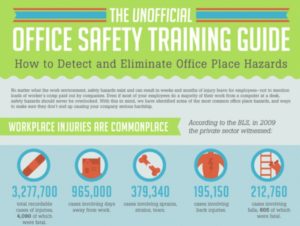
Download this printable Infographic on Off-the-Job Training

Download this printable Infographic on Outdoor Animal Hazards
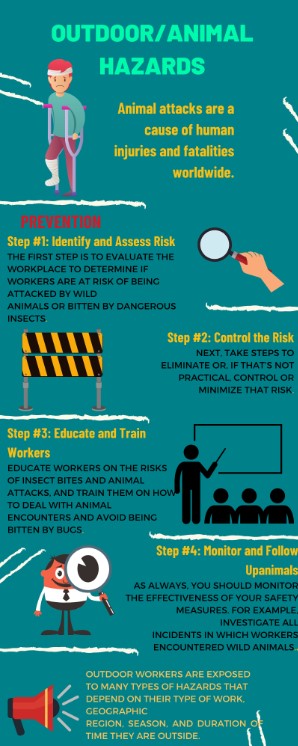
Download this printable Infographic on Overhead Hazards
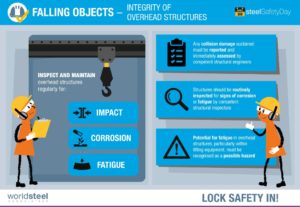
Download this printable Infographic on Patient Lifting

Download this printable Infographic on PPE-Eyes
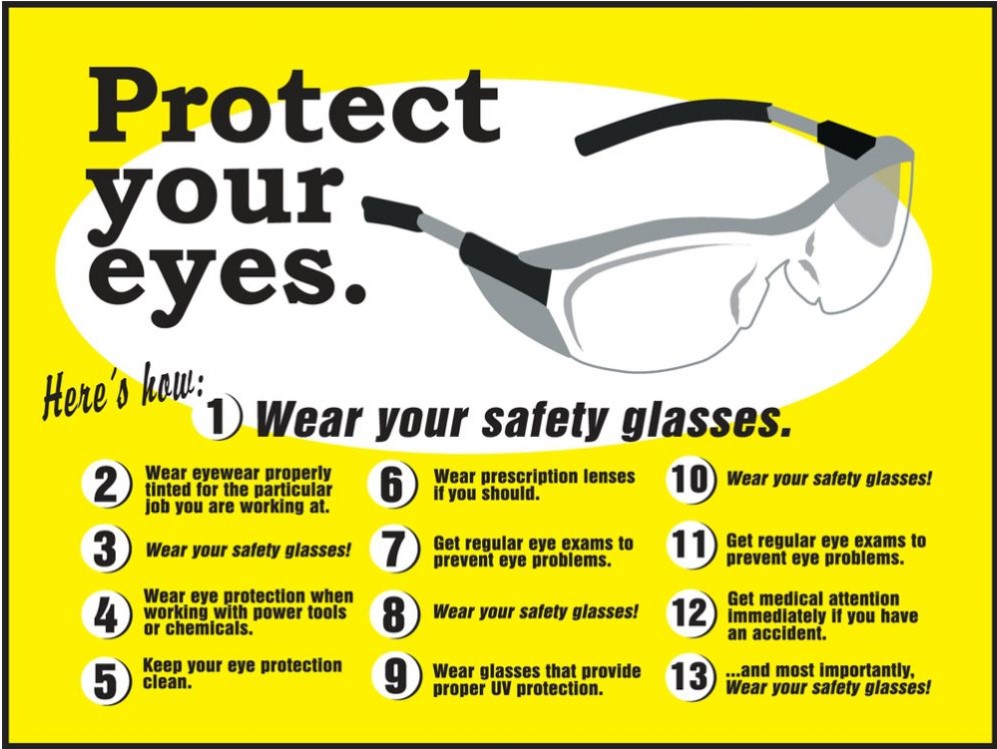
Download this printable Infographic on PPE – General

Download this printable Infographic on PPE – Hand, Wrist, Fingers
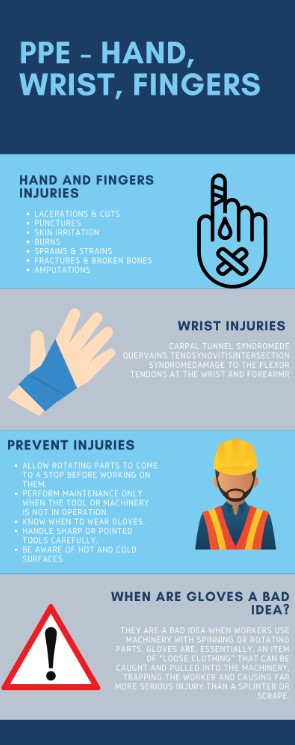
Download this printable Infographic on PPE – Head/Face
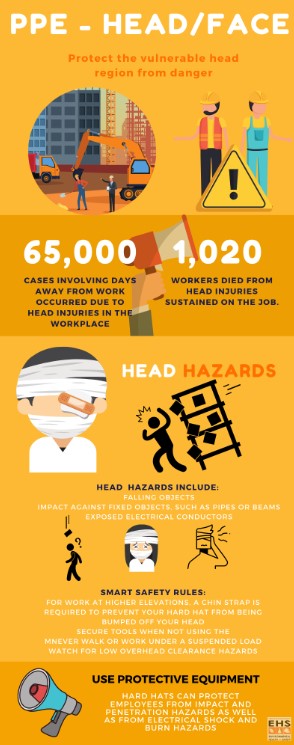
Download this printable Infographic on PPE – Hearing
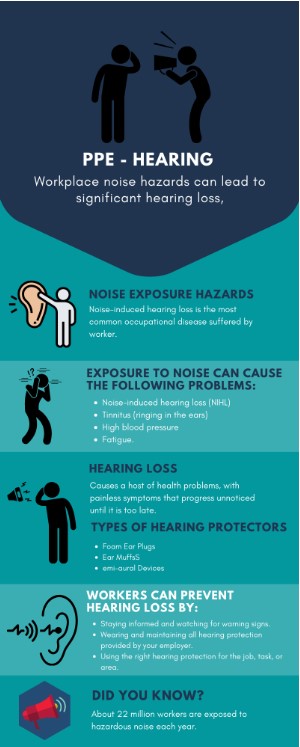
Download this printable Infographic on PPE – Legs/Feet
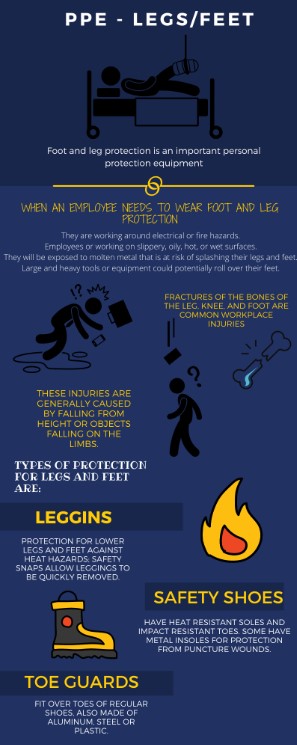
Download this printable Infographic on PPE – Respiratory
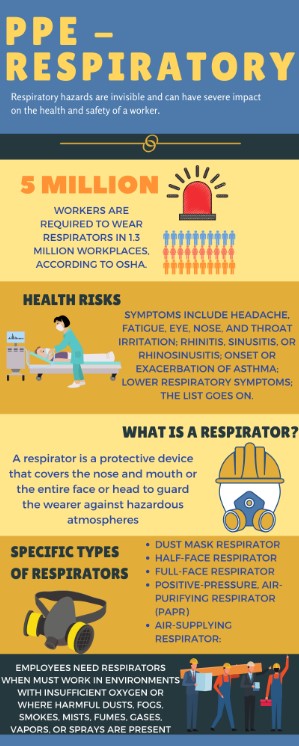
Download this printable Infographic on Radiation
