Cumulative Trauma Disorder

This section addresses Cumulative Trauma Disorders, and ergonomic hazards.

There are five main risk factors that contribute to the development of a CTD:

  1. Position – When working with the wrists approximately straight, elbows at about 90°, shoulders relaxed and the spine kept in its natural “S” curve, the strain placed on muscles, tendons, discs and ligaments is minimized.
  2. Force – The more force required to perform a particular task, or the longer that force must be applied, the greater the risk of developing a CTD.
  3. Repetition – Tasks that use the same muscles and tendons over and over, require more muscle effort and allow less recovery time. Often jobs that require high repetition rates can lead to fatigue and injury.
  4. Vibration – The use of vibrating or impact tools or equipment for hours at a time can stress the hands and arms, the lower back and the neck.
  5. Lifting – Unassisted, frequent or heavy lifting, especially when performed improperly, can stretch the ligaments of the back and cause the vertebrae to become misaligned.

Other factors such as extreme temperatures, poor lighting, general health, age and gender can also have an effect. In fact, it is impossible to predict exactly who might develop a CTD. Because cumulative trauma disorders are so unpredictable, it is especially important for you to be able to recognize symptoms of common CTDs in their early stages. Take symptoms seriously. Medical costs and time away from the job both increase as the illness progresses.

Tendonitis, carpal tunnel syndrome, and lower back problems are the most common cumulative trauma disorders—both in the office and on the shop floor.

Tendonitis

Tendonitis, an inflammation of a tendon, can occur at any joint in your body. Tendonitis associated with office work is most likely to occur at the wrist because of the stresses that can be involved in typing or filing. In industry, tendonitis is also common at the elbow and shoulder.

Tendons connect muscle to bone. Any work that is done, any movement that is made, requires muscles to expand and contract, and moves tendons back and forth through a joint. When a tendon is used too long or too hard, the result can be tendonitis, a painful condition that usually takes a long time to heal.

To avoid developing tendonitis, employees should be able to work without straining.

Carpal Tunnel Syndrome

Carpal tunnel syndrome affects feeling and movement in the thumb and first three fingers. It is caused by pressure on a nerve in the wrist.

Carpal tunnel syndrome can begin with tendonitis in the wrist—often from typing or doing any kind of repetitive hand work with an awkward wrist position. When the tendons become inflamed, they swell and put pressure on a major nerve that passes through a small opening called the carpal tunnel; the median nerve, controls feeling and movement in the thumb and first three fingers.

Anything that creates pressure on the median nerve can affect a person’s ability to use his or her hand. Other causes of pressure could be the accumulation of excess fluid caused by injury, hormonal changes or certain medical conditions. The first symptoms of carpal tunnel syndrome often occur at night or during periods of rest. If the illness continues, the symptoms may also begin to occur during the day. Common prolonged symptoms:

  • Tingling or numbness in the hand at night or during rest.
  • Tingling or numbness in the hand during the day.
  • Pain in the hand and possibly up the arm.
  • Difficulty holding onto objects.
  • Wasting of muscle in the heel of the hand below the thumb.

It is extremely important to get medical help for carpal tunnel syndrome while the symptoms are in the early stages.

Lower Back Pain

Many back problems, especially of the lower back, can be the result of minor stresses that accumulate over a long period of time. These can be caused by sitting without adequate support, or by lifting, lowering, carrying and even getting up and down in ways that put unnecessary stress on the back.

The spine supports a lot of weight and the effects of the daily stresses that are put on the muscles, joints and discs in the back can eventually add up to a real problem.

The backbone is a series of vertebrae separated and cushioned by strong, resilient discs. The weight of the entire upper body, plus anything else that a person picks up, is supported by the back muscles. This weight also puts pressure on the discs in the spine. Working with fatigued back muscles can often result in a stiff or aching back at the end of the day. But it can also lead to a much more serious problem. Over a period of time many of the conditions that overwork back muscles can also lead to a very painful problem with discs – especially the discs in the lower back.

The actions that most often lead to lower back problems are:

  • Twisting with a load
  • Lifting a load too far out from the body
  • Lifting too frequently
  • Lifting a load that is too heavy
  • Carrying a heavy load in one hand instead of two
  • Leaning forward, backward or to either side without support
  • Sitting for long periods without support for the weight of the upper body

All of these things can put unnecessarily high pressure on discs. They actually overload the discs with too much weight, or they load the discs unevenly. Instead of being evenly  distributed, the weight of the load is concentrated on one side of the discs.

Too much pressure on a disc can result in premature wear. It can also create tiny tears in the disc wall, eventually causing it to bulge out or rupture. When a disc ruptures, the result can be very serious – often disabling.


Cumulative Trauma Disorders (CTDPH)

What are Cumulative Trauma Disorders?

This fact sheet describes Cumulative Trauma Disorders (CTDs), provides information about some types of CTDs and their most common symptoms, addresses who is at risk for developing them, and explains how to prevent CTDs.

Cumulative trauma disorders (CTDs) also known as repetitive strain injuries, repetitive motion disorders, overuse syndrome and work-related musculoskeletal disorders. CTDs are the largest cause of occupational disease in the United States and the most frequently reported type of occupational disease in Connecticut. CTDs are injuries of the musculoskeletal system, which includes joints, muscles, tendons, ligaments, nerves, and blood vessels. CTDs are usually caused by a combination of the following risk factors:

  • repetitive motions
  • forceful exertions – pulling, pushing, lifting, and gripping
  • awkward postures – body positions that are not the natural resting position
  • static postures – body positions held without moving
  • mechanical compression of soft tissues in the hand against edges or ridges, such as using tools or objects which press against the palm
  • fast movement of body parts
  • vibration, especially in the presence of cold conditions
  • mental stress
  • lack of sufficient recovery time (rest breaks, days off), which will increase the risk of developing a CTD by any of the above factors.

Cumulative trauma disorders primarily affect the upper extremities and include such disorders as carpal tunnel syndrome, wrist tendonitis, ulnar nerve entrapment, epicondylitis, shoulder tendonitis, and hand-arm vibration syndrome.         Common symptoms of CTDs include pain, and swelling of the body parts that are performing the work duties. Although back injuries are excluded from the definition of CTDs, it is important to note that they too, are often the result of similar risk factors. While some occupations have more risk factors than others for the possible development of CTDs, these risk factors can be reduced. It is important to note that CTDs are preventable.


Forklift Safe Work Practices

WHAT’S AT STAKE?

The forklift is a commonly used tool that helps people lift and move heavy loads with very little physical effort and excellent precision. Using a forklift lessens the risk of injuries caused by lifting or carrying heavy items. For this reason, many companies employ forklifts and forklift operators to do this kind of labor. These machines are powerful, though, and there is always risk involved when they are used by people who have not been trained on operating them safely.

Forklifts (also called industrial lift trucks) are used to lift, stack and transfer loads in many workplaces. However, every year they continue to cause workplace deaths and injuries resulting in substantial financial and human costs for workers, industry and the community all forklifts fall.

WHAT’S THE DANGER?

The National Traumatic Occupational Surveillance System registered 1,530 worker deaths from forklift accidents between 1980 and 2001. Of these accidents, the biggest portion, 22%, was caused by a forklift overturn. Collisions between forklifts and workers on the ground where the ground worker died accounted for 20% of deaths. Another 16% of deaths were caused by someone being crushed by a forklift, and 9% by an operator falling from a forklift. In fact, each year almost 100 people are killed and another 20,000 injured by forklift accidents.

With proper training and diligent forklift safety practices, most of these deaths could have been prevented. If you work around forklifts or are a forklift operator, you should learn all you can about using these machines safely to prevent injury or death.

HOW TO PROTECT YOURSELF

Safety Features of Forklifts

Although you might think that driving a car would prepare you to operate a forklift, they do not work in the same way. In most automobiles the front wheels provide steering, but in a forklift the steering is done by the rear wheels. This allows the front end to be used to carry the load, but requires room for the rear of the forklift to swing around to make turns.

Forklifts are also not as quick to respond as cars. Stopping quickly and swerving are hard to do without losing control of the forklift. It is also very easy to lose control on inclines. In order to minimize risks, you should always keep the load on the uphill side, which requires the operator to drive in reverse, sometimes for long stretches.

Forklifts are equipped with a load backrest to keep the load from falling onto the operator. This backrest is required any time loads are lifted high and could fall to the rear when driving on uneven surfaces or in the case of acceleration or sudden stops. Forklifts that can be used to lift loads over the operator are also required to have an overhead guard. These guards are meant to protect the operator from small packages being dropped, but are not effective against the loss of a full load.

Restraints for operators are standard requirements for all forklifts built since 1992. Older forklifts can often be retro fitted with operator restraints. As a forklift operator, it is important to always use the restraint because it can prevent you from being thrown out of the protective cage should your forklift overturn. Many fatalities occur because operators attempt to jump from the machine when it overturns. The nature of forklifts causes them to turn very slowly at first. Then the center of gravity shifts, and the turn speeds up rapidly. The slow turn gives operators the false sense that they have time to jump out, when in reality they do not.

Safety Features of Forklifts

  • A horn to indicate when a forklift is coming through an intersection or when the operator’s vision is obscured. Forklifts also have backup alarms that will sound whenever the forklift operates in reverse.
  • All forklifts should have a re extinguisher on board (a), especially those that are gas powered.
  • The warning, directional, and brake light (b) must be in working order.
  • Mirrors are often used to help the driver maintain a visual of his surroundings to avoid collisions with other equipment and people.
  • Additional forward or rear-facing lighting may be present to assist with visibility in low light conditions (c).

Operational Safety of Forklifts

Along with maintaining the vehicle, any forklift operator must use safety precautions while driving it. You must remind yourself of how dangerous these vehicles can be and avoid situations that put you and other employees at risk. This includes any kind of horseplay on or around the equipment. There is always temptation to fool around and play games at work, but the potential for disaster is too great to give in to these temptations. Instead operators must remain completely focused on the vehicle and the job at hand.

At the end of the day, it is the forklift driver who holds the keys to avoiding disasters. He or she has to understand how the forklift works and how to react in a given situation in order to avoid an accident. These skilled drivers have to pay attention to many factors while operating their trucks. For example, they must pay close attention to the type of terrain. Any loose objects, holes, or bumps on the road surface can lead to a loss of control.

This can cause you to drop the load or sink and destabilize. The surface you drive on must be rated for four times the amount of weight you will carry. For example, if your forklift weighs 6,000 pounds and is carrying a 4,000 pound load, you multiply the total, 10,000 pounds, by four, which means the floor must be able to hold 40,000 pounds. Keep in mind that the weight on forklifts is not completely even, so if just one wheel goes off onto a surface that is not rated for that weight, it could cause the whole vehicle to destabilize.

FORKLIFT SAFE WORK PRACTICES

What does it take to be safe in the modern industrialized plant/factory where the forklift is the prime driver of goods, merchandise??

DO’s

  1. Perform a visual and operational check of the forklift at the start of the shift.
  2. Buckle up as soon as you get on the forklift.
  3. Place forks as far under the load as possible. Drive with load against heel of rack with mast tilted back.  Be sure forks are spaced correctly to support load.
  4. Operate a forklift smoothly when stopping, starting, lifting and tilting.
  5. Carry load as low as possible.
  6. Sound horn before moving forklift when other vehicles or worker may not be able to see forklift movement.
  7. Match speed to driving surfaces, load and workplace conditions.
  8. Know that overloading the forklift can cause loss of steering.
  9. Check for adequate overhead clearance before raising the load.
  10. Keep forks pointed uphill when traveling with a load on an incline.
  11. Keep forks pointed downhill when traveling without a load on an incline.
  12. Travel in reverse when load is blocking frontal vision.
  13. Sound horn and slow down when approaching pedestrians, doorways, rows aisles, ramps and other forklifts.
  14. Keep pedestrians away and raise and lower the load smoothly. Any elevated load is hazardous.
  15. Stop when a group of people are waking across the route being traveled: lower the load to the floor, and wait until the people get by before proceeding.
  16. Watch out for pedestrians, avoid driving a forklift up to anyone who is standing in front of a bench or other fixed object.
  17. Stay constantly alert to changing or unusual conditions.
  18. Always be prepared to stop.
  19. Whenever anything develops that affects the normal operation of the forklift, tell the supervisor immediately.
  20. Report any accidents promptly to supervisor, immediately.
  21. Use only approved personnel platforms, securely fastened to the forks to elevate anyone. Reduce speed when doors, corners and elevations restrict vision. Keep to right unless plant conditions or layout dictate otherwise.
  22. Park forklift with controls in neutral, brakes applied and forks in a down position with the motor switched off.
  23. Keep hands, arms, head and feet and legs inside the confines of a moving forklift.
  24. Observe and obey the load capacity of the forklift.

DON’T

  1. Do not leave forklifts running inside for long periods of time without ventilation.
  2. Do not handle steering wheel if your hands or gloves are greasy or slippery.
  3. Do not try to move or adjust any part of the load, the forklift or the surroundings when on the forklift.
  4. Do not move loads that are piled or stacked poorly.
  5. Do not lift a load that extends above the load backrest unless no part of the load can possibly slide back toward the operator.
  6. Do not allow anyone but the operator to ride on the forklift.
  7. Do not use pallets elevated by forklifts as an improvised working platform.
  8. Do not permit anyone to stand or walk under the elevated part of any forklift, whether loaded or unloaded.
  9. Do not allow anyone to stand, walk or work under elevated forks.

FINAL WORD

Forklift incidents can be prevented, especially when workers and businesses work together to improve health and safety at work.


FORTIS BC Safety Talk

WHAT’S AT STAKE?

Excavating is serious business. That is why it’s critical to take due care. Knowing where natural, gas pipelines are located BEFORE you start excavating is the first step to ensure safety on the job.

WHAT’S THE DANGER?

Striking or rupturing an underground utility line while digging can create an unsafe situation for you and the general public. It can also seriously delay your work schedule. When planning an excavation, take some time to think ahead.

This is instructive advice bearing in mind the following narrative that ended in disaster.

The cable construction company installation crew was installing a utility pole support anchor in a city sidewalk. They struck and ruptured an underground, high-pressure gas service pipeline, resulting in a natural gas leak.

Within a minute of striking the gas line, the company crew foreman, following company procedures, informed his supervisor. However, the supervisor did not immediately notify the owner of the gas line or emergency response agencies. About 15 minutes after the gas line was struck, another individual, who was not associated with the construction project, notified emergency responders. The supervisor called the owner of the gas line about 30 minutes after the line was struck.

A fire truck and four firefighters were on the scene about 18 minutes after the rupture and about 2 minutes after being notified. Two power company employees, a gas technician specialist, and a utility locator technician, having been notified by the fire department, arrived on the scene about 26 minutes after the pipeline was ruptured.

The gas technician specialist entered the basement of a nearby building, which housed a deli and a pizza restaurant. While the gas technician specialist was taking readings with a combustible gas monitor, the locator technician was determining whether the service line was properly marked. Approximately 39 minutes after the gas line was struck, the explosion killed the gas technician specialist, the utility locator technician, one person in the building, and a nearby pedestrian. A three-person power company construction crew, which had been dispatched to shut down the damaged portion of the line, was still 2 blocks away from the accident site when the explosion occurred.

According to a report from the fire department, the explosion occurred in the basement of the building that housed the pizza restaurant and deli. The report could not identify the source that ignited the gas that was accumulated in the basement. However, potential ignition sources included gas water heaters.

HOW TO PROTECT YOURSELF

Gas safety precautions

If your risk assessment has found hazards linked to the use of gas, then you need to put precautions in place.

There are a number of things you can do, such as the following.

  • Make sure your staff are trained to use equipment.
  • Store gas cylinders as per regulations.
  • Install and regularly test carbon monoxide (CO) detectors and alarm systems.
  • Perform regular inspections.
  • Schedule and record formal maintenance that is carried out by a competent person.
  • Make sure pipes, storage areas and vehicles carrying gas are suitably marked and signed.

You should also

  • keep areas around external flue outlets clear including from leaf and paper debris
  • make sure there is suitable airflow around gas appliances.
  1. REQUIREMENTS

Digging Responsibilities

Digging up a major intersection or installing fence posts, BC regulations require three steps before digging starts.

  1. Call BC One Call and request line location information. The call is free. If the activity as described on the underground pipeline location information request provided by BC One Call is:
  • Within two (2) meters or crossing the Intermediate Pressure pipeline(s) OR within a pipeline Right of Way, please call the Permit Desk at 604-576-7021 or 1-877-599-0996 to obtain a permit
  • Within ten(10) metres of the Intermediate Pressure pipeline(s) but is more tha n two (2) metres away from the Intermediate Pressure pipeline(s), please call the Public Underground Location Services Department at 1-888-822-6555 to request a physical locate.
  • Within forty (40) metres of the Intermediate Pressure pipeline(s) but is more than ten (10) metres away from the Intermediate Pressure pipeline(s), the activity is permitted to proceed.
  1. Use the information to mark the location of buried gas lines.
  2. Hand dig to expose the gas line.

Locating and Hand Digging Guidelines

Before beginning any excavation or boring, you must locate the buried gas line and hand dig to expose the line. The BC Safety Authority has approved these guidelines for locating and hand digging.

You MUST:

  • have gas line information on site
  • identify the location of the gas line and mark the line with paint or stakes until digging is underway
  • hand dig across the boundary limits of the locate area in cuts no more than 0.3 m deep

Do not use mechanical equipment to deepen the excavation past the hand dig area within the boundary limits.

When locating and exposing buried gas lines, the “no mechanized dig zone” refers to the area equal to the diameter of the gas pipe plus one metre on either side of the gas line’s indicated location extending upwards to the surface. Hand dig within “the zone” to expose the pipe, using manual equipment and tools. Mechanized equipment should not be used for any purpose other than to break the surface.

Safety Laws and Regulations

WorkSafeBC and the BC Safety Authority require you to obtain buried gas line location information and hand dig to expose the lines.

Line Location Assistance

You are responsible for contacting BC One Call and requesting line location information. However, Fortis BC will provide on-site locates on gas pipelines and temporary surface marking or staking when:

  • detailed records are not available
  • the information on the plans or listing of facility locations is unclear or the gas installation is not where Fortis BC records indicate
  • there is an emergency repair of another utility in progress (e.g., damaged water main or sewer)
  • the excavator has been unsuccessful in hand locating our main or service
  • the planned excavation is within 40 m of a pipeline operating above 100 psi (690 kPa). See section on obtaining a Fortis BC permit below.

All requests for location information must be submitted through BC One Call at 1-800-474-6886, *6886 on a cell phone, or faxed to 604-451-0344 a minimum of two business days prior to the scheduled start of an excavation.

If your project is delayed and your excavation work has not started within 10 working days of receiving gas line information from Fortis BC, you must verify the location information through BC One Call before beginning work.

FortisBC Gas Line Permit

You must have a permit from FortisBC for any activity or work when:

  • crossing over or under or undertaking construction or excavation work within 40 meters of a pipeline operating above 100 psi (690 kPa)
  • working within a FortisBC gas pipeline statutory right of way

FINAL WORD

Excavators need to: establish a detailed work plan and train their employees prior to excavating on the proper procedures of determining the locations of underground utilities; contact and coordinate with the utilities companies to establish the locations of the underground installations; and take all necessary precautions to prevent damaging underground utility installations.


Filling up Dieseling Equipment

WHAT’S AT STAKE?

Refueling is a hazardous activity. The hazards are greater when highly flammable fuels such as petrol are being dispensed, because petrol releases flammable vapors that expand into the atmosphere.

WHAT’S THE DANGER?

When a flammable liquid flows, static electricity is generated from the friction between dissimilar materials (e.g. the fuel and the metal fuel filler neck). When the static electricity discharges, it produces sparks which can ignite the fuel vapors. The fuel dispensing pumps found at service stations and the fuel filler necks of motor vehicles are earthed to minimize and control the static electricity produced during normal vehicle refueling.

The Dangers of Static Electricity

  • invisible and unpredictable.
  • discharged in the form of a spark which can ignite flammable materials.
  • a natural phenomenon that cannot be prevented but can be controlled.
  • rarely understood by most people.

HOW TO PROTECT YOURSELF

The risk of refueling fires is greater when fuel is dispensed into portable containers. The following should be observed to control the effects of static electricity and to control the risk of fire when refueling portable containers and other plant:

  • Always read and observe the safety signs at service stations.
  • Never use unapproved containers to store fuel.
  • Always use a plastic fuel container that complies with AS2906 or an appropriate metal container with a well-sealed lid.
  • Use only containers with serviceable caps / lids and seals.
  • Always place the fuel container on the ground before filling with flammable liquid. This will discharge any static electricity prior to refueling.
  • Never fill a container in the boot of a car, or in the tray, or on the tailgate of a utility, particularly if it is fitted with a plastic tray liner.
  • Fill containers slowly to avoid overflow and spillages.
  • Do not lock the refueling trigger “on”.
  • Do not fill portable containers to more than 95% full; this allows for expansion.
  • Secure portable fuel containers against transit damage.
  • Avoid refueling petrol operated equipment (mowers, generator sets, jet skis, etc.) while located within a utility tray.

HANBOOK OF FUELING/DIESELING PRACTICES

DO’s

  • Turn off vehicle ignition.
  • Place vehicle in gear and engage brake.
  • Note the location of fire extinguishers.
  • Put nozzle and hose back in the proper place.
  • Report all leaks as soon as possible. If a vehicle or piece of machinery leaks diesel, contain the spill using proper spill control procedures.
  • Guard against over-dieseling.

DONT’S

  • Do not smoke, within 7.5 meters (25’) of fuel.
  • Do not cause spillage of any amount.
  • Do not leave nozzle unattended while fueling.
  • Do not fully top up fuel tank.
  • Do not diesel equipment near waterways.
  • Do not diesel on asphalt.
  • Do not diesel where a source of ignition is present.

FINAL WORD

The storage of petrol may pose several risks: Fire/explosion, environmental damage, health effects when handled by individuals.


Ignition Sources During Fueling

WHAT’S AT STAKE?

Workplace have flammable liquids. They include fuel, common cleaning agents, solvents, points, coxes and polishes. Naked flames or burning cigarettes are obvious ignition sources but it can include static electricity generated from electronics including cellphones.

WHAT’S THE DANGER?

Internal combustion engines, whether fueled by gasoline, diesel, propane, natural gas, or other fuels, can act as ignition sources.

Examples:

  • Stationary engines such as compressors, generators and pumps.
  • Mobile equipment or transports such as vans, trucks, forklifts, cranes, well servicing equipment, drilling rigs, excavators, portable generators and welding trucks.
  • Contractor vehicles and motorized equipment.
  • Emergency response vehicles such as fire engines and ambulances.
  • Vehicle-mounted engines on vacuum trucks, tanker trucks and waste haulers.
  • Small portable engines such as mowers, blowers, generators, compressors, welders and pumps. This includes hand tools unrelated to a process, such as chain saws, brought in by contractors.
  • Cell phone use in operating areas, propylene oxide handling and storage area, propane, gas and refueling areas.
  • Fuel-rich conditions in an engine can result in incomplete combustion.
  • When uncombusted fuel from the cylinders enters the exhaust system, it can ignite due to the hot surface, discharging sparks and flames (backfire). These can ignite flammable vapors and gases in the surrounding area.

Other Ignition Sources – Mobile Phones

  • Mobile phones that light up when switched on or when they ring release enough energy to provide a spark for ignition
  • Mobile phones should not be used in filling stations, or when fueling lawn mowers, boat, etc.
  • Mobile phones should not be used, or should be turned off, around other materials that generate flammable or explosive fumes or dust, (I.e., solvents, chemicals, gases, grain dust, etc…)

INTERNAL COMBUSTION ENGINES

Internal combustion engines require a specific fuelto-air ratio to work properly. Air enters the engine through the intake that leads to the combustion chambers (cylinders). If employers allow internal combustion engines in areas where flammable vapors or gases exist, then the vapors and gases can enter the cylinders of the engine along with the air. Additional flammable material in the cylinders provides an external fuel source and increases the fuel-to-air ratio in the engine.

Changes in the fuel-to-air ratio create ignition hazards by:

  • Elevating engine operating temperatures.

Increasing the fuel-to-air ratio causes an increase in the energy output which results in increased surface and exhaust temperatures. Internal Combustion Engines as Ignition Sources Internal combustion engines present an ignition hazard when used in facilities processing flammable liquids and gases. If flammable vapors or gases are released in these facilities, an internal combustion engine could ignite the flammable materials with catastrophic consequences. Investigations by OSHA and the U.S. Chemical Safety Board (CSB) document a history of fires and explosions at workplaces (oilfields, refineries, chemical plants, and other facilities) where an internal combustion engine was identified as or suspected to be the source of ignition.1 Increasing the fuel-to-air ratio also causes pre-ignition within internal combustion engines. Pre-ignition occurs when a fuel-rich mixture in the cylinder ignites before the spark plug fires. Pre-ignition creates damaging pressure surges and higher engine surface and exhaust system temperatures. If the temperature of the surface of the engine in contact with the fuel/air mixture reaches the autoignition temperature of that mixture, a fire or explosion will occur.

HOW TO PROTECT YOURSELF

Identify Ignition Sources

A list of the different types of ignition sources that identify ignition and fire hazards at your own worksite.

  • Matches, cigarettes, cigarette lighters, flames, blow torches, gas appliances and heaters
  • Welding and flame cutting equipment
  • Static electricity generated by during fuel decanting and dispensing, clothing, or electronic equipment like mobile phones, thermostats, keyless remotes, light switches.
  • Hand tools, machinery and equipment that generate sparks eg, grinders
  • Operating plant and machinery that generates heat: boilers, steam pipes, engines, furnaces.
  • Prevent Engines from Becoming Ignition Workplace Sources
  • Identify areas where flammable liquids or gases are used or stored.
  • Evaluate where internal combustion engines are located.
  • Assess contractor use of internal combustion engines in flammable material areas. Whenever possible, do not install permanently-mounted internal combustion engines in areas where flammable vapors or gases could be present.

Four Rules for Safe Refueling:

  1. Turn off engine
  2. Don’t smoke
  3. Don’t use your cell phone – leave it inside the vehicle or turn it off
  4. Don’t re-enter your vehicle during fueling.

FINAL TAKEAWAY

If employers cannot remove internal combustion engines from areas processing flammable materials, then preventive measures should be used. Which include administrative procedures for the safe use of portable or mobile equipment with internal combustion engines.

FINAL WORD

Naked flames and burning cigarettes are clearly ignition sources. But the use of mobile or cell phones may be the worst culprit because the cell phone / mobile phone is attached to the “hip” as an appendage to people.


What Is and Isn’t Coronavirus – Spanish


What is Social Distancing? – Spanish


Cords and Plugs Checklist – Spanish

Lista de comprobación de la auditoría de seguridad de los contratistas eléctricos, cables y enchufes

  • ¿Los cables de extensión tienen un conductor de tierra?
  • ¿Están prohibidos los adaptadores de enchufe múltiples?
  • ¿Están todos los circuitos temporales protegidos por interruptores de desconexión o conectores de enchufe adecuados en la unión con el cableado permanente? ¿Se reparan o sustituyen rápidamente los cables expuestos y los cables con aislamiento deshilachado o deteriorado?
  • ¿Están los cables flexibles y los cables libres de empalmes o grifos?
  • ¿Se proporcionan abrazaderas u otros medios de sujeción en los cables o cordones flexibles en los enchufes, receptáculos, herramientas, equipos, etc., y se sujeta firmemente la cubierta del cordón en su lugar?
  • ¿Están intactas y seguras todas las conexiones de los cordones, cables y conductos?
  • ¿Están cerradas todas las aberturas no utilizadas (incluidos los trozos de conductos) de los recintos y accesorios eléctricos con las tapas, enchufes o placas adecuadas?
  • ¿Están los recintos eléctricos como interruptores, receptáculos, cajas de conexiones, etc., provistos de tapas o placas ajustadas?
  • ¿Se determina la ubicación de las líneas y cables eléctricos (aéreos, subterráneos, bajo el suelo, al otro lado de las paredes, etc.) antes de iniciar la excavación, la perforación o un trabajo similar?


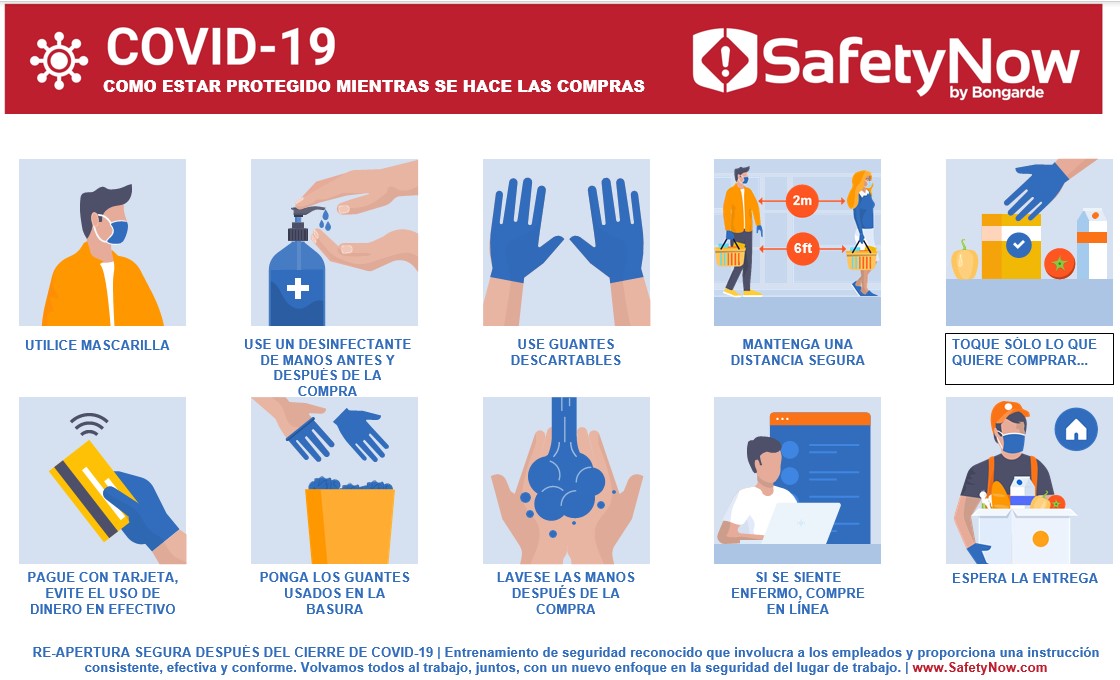
Coronavirus Safety Advice While Shopping Infographic – Spanish


Cost Containment Injury Follow Up Safety BriefCost Containment Injury Follow Up Safety Brief – Spanish

Seguimiento de la supervisión/monitoreo del empleado lesionado

Los supervisores desempeñan un papel destacado en la prevención de accidentes, así como en el seguimiento y la vigilancia de las reclamaciones. La intervención eficaz de los supervisores después de una lesión a menudo puede prevenir los litigios, reducir el tiempo de descanso y garantizar una experiencia positiva de atención y preocupación para todos los involucrados. Más allá de las funciones críticas de asegurar el tratamiento del empleado lesionado y el procesamiento adecuado del papeleo, los supervisores también son responsables del seguimiento y el rápido retorno del empleado a la productividad.

El papel del supervisor 

El supervisor siempre debe responder positivamente al primer informe de lesión del empleado.

  • Tómese el tiempo necesario para manejar la lesión adecuadamente.
  • Autorice la atención médica inmediatamente.
  • No juzgue o evalúe la validez de la lesión, reúna e informe de los hechos.
  • Investigue el accidente y documente toda la información pertinente.

El supervisor puede desempeñar un papel importante para que el empleado lesionado vuelva al trabajo.

  • Manténgase informado del progreso del empleado.
  • Contacte con el empleado para ver cómo se siente y para determinar el progreso del tratamiento médico.
  • Asegure al empleado que el equipo lo necesita. Dígale al empleado cuánto lo extrañan.
  • Asegúrese de que el empleado asista a las citas médicas y que esté satisfecho con la atención médica.
  • Si es necesario, discuta el caso con el médico tratante, incluyendo la modificación de las oportunidades de trabajo/disponibilidad y la fecha de regreso al trabajo.

La actitud del supervisor puede hacer que el regreso del empleado al trabajo sea exitoso.

  • Haga que el empleado que regresa se sienta bienvenido y contento de estar de vuelta. Anime a sus compañeros de trabajo a seguir el ejemplo del supervisor.
  • Proporcione un deber modificado, si se indica – aclarar los deberes y expectativas – hacer cumplir las restricciones y limitaciones.


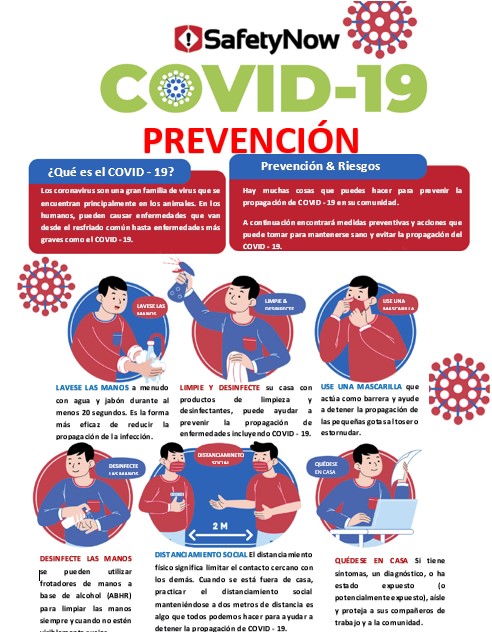
Covid-19 Prevention Flyer – Spanish


Crew Follows Boss Into Confined Space – Spanish

La Tripulación Sigue Al Jefe En El Espacio Confinado

Cuando un jefe de obra fue encontrado muerto en el agua en el fondo de una alcantarilla, sus trabajadores lo siguieron al espacio confinado y se arriesgaron a morir ellos mismos.

La muerte ocurrió cuando su tripulación estaba instalando una línea de alcantarillado. Había dicho a sus trabajadores que iba a tomar algunas medidas para planificar la siguiente fase del trabajo, pero no se sabe por qué entró en la alcantarilla cuando podría haber hecho los mismos cálculos fuera.

Cuatro de sus trabajadores arriesgaron sus vidas al entrar en el espacio confinado para intentar rescatarlo sin prepararse para peligros como una atmósfera carente de oxígeno o que contiene gases tóxicos. Cada vez que hay un incidente de “persona caída” en un espacio confinado, hay que sospechar de los peligros atmosféricos. Resultó que los cuatro trabajadores escaparon sin sufrir lesiones, aunque el primer rescatista que entró en la alcantarilla informó de que tenía náuseas y falta de aire, lo que debería haber alertado a los otros tres sobre la posibilidad de un problema con el aire del interior.

Cuando se hicieron las pruebas atmosféricas después del incidente, se encontró que el aire era normal en ese momento. Los investigadores supusieron que el jefe se resbaló y cayó cuando entró en la alcantarilla. Un forense confirmó que murió ahogado.

Es vital que todos los miembros de la tripulación sean conscientes de los peligros de la entrada en espacios confinados. Muchos intentos de rescate se convierten en múltiples muertes. Nadie debe entrar en un espacio confinado sin la formación, el equipo, la autorización y la ayuda externa de respaldo adecuados.


Crushed by Machine – No LOTO – Spanish

Aplastado Por La Máquina – No Hay Bloqueo/Etiquetado

Un empleado de 46 años fue herido mortalmente cuando fue aplastado por el pistón superior de una mezcladora de caucho. En el momento del incidente, la víctima estaba trabajando con un técnico de laboratorio para asegurarse de que los ingredientes adecuados estaban en su lugar para un lote de un tipo específico de goma.

Una vez que los ingredientes se colocaron en el transportador de alimentación; el transportador se colocó en posición en la parte delantera de la puerta de la mezcladora. El transportador alimentaba los ingredientes a la mezcladora y dos rotores en la parte inferior de la mezcladora combinaban los ingredientes. Se creía que este lote estaba arruinado debido al sobrecalentamiento, por lo que la tolva tenía que ser limpiada a mano.

Una vez que la tolva regresó al interior de la mezcladora, la víctima colocó su cabeza y ambos brazos dentro de la puerta frontal de la mezcladora para limpiar el lote malo. El carnero comenzó a moverse hacia abajo, y el movimiento hacia abajo del carnero inmovilizó a la víctima dentro de la puerta de la mezcladora, aplastándola.

La investigación reveló que la víctima no había cerrado la batidora antes de entrar para limpiarla; el pasador utilizado para evitar que el carnero cayera no estaba insertado bajo el carnero; y el interruptor del carnero en el panel de control principal estaba defectuoso.

Los investigadores también encontraron que los procedimientos de control de la energía no se desarrollaban, documentaban o utilizaban cuando los empleados se dedicaban a actividades como la limpieza y el despeje de la máquina. Lo que significa que no existía un procedimiento que requiriera que los empleados aplicaran un bloqueo en el extremo del pasador de bloqueo, de modo que no había nada que impidiera que el ariete bajara.

Por último, la investigación reveló que los empleados autorizados no habían recibido capacitación en el reconocimiento de fuentes de energía peligrosas, el tipo y la magnitud de la energía presente, o los métodos y medios necesarios para el aislamiento y el control de la energía.


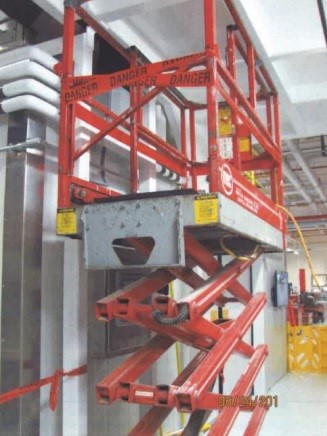
Crushed-Between Scissor Lift and Support Beam – Spanish

Aplastado Entre La Elevación De Tijera Y El Rayo De Apoyo

Un empleado de 27 años resultó mortalmente herido al ser aplastado entre la barandilla de un elevador de tijera y una viga de soporte exterior de entrepiso mientras instalaba aislamiento en los conductos. El día del incidente, la víctima estaba trabajando sola instalando aislamiento alrededor de los conductos usando una plataforma de trabajo de tijera Dyna-Mite.

Sólo se podía acceder a los conductos a través de una pequeña abertura de aproximadamente dieciocho pulgadas de alto por treinta y una pulgadas de ancho bajo la plataforma del entresuelo entre las vigas verticales, una caja de conexiones eléctricas y las tuberías. En un esfuerzo por llegar a la zona, la víctima se colocó inclinada hacia atrás en el elevador de tijera con la espalda apoyada en las barandillas superiores del elevador.

En algún momento mientras instalaba el aislamiento la víctima quedó atrapada entre la barandilla superior del elevador de tijera y la parte inferior de la viga de soporte exterior del entresuelo. Durante la investigación se determinó que la consola de control del elevador de tijera no tenía la protección que impide la activación involuntaria de la bajada y subida de la plataforma de trabajo.

La consola de control se encontró colgada en el lado opuesto del elevador de la posición de trabajo de la víctima. Lo más probable es que la víctima contactara con la consola de control no vigilada con su pie mientras intentaba posicionarse inclinándose hacia atrás para salir del ascensor.

Si el guardia hubiera estado en el panel de control y la víctima no hubiera trabajado sola, es probable que este incidente hubiera tenido un resultado muy diferente. Sin embargo, durante la inspección también se comprobó que los controles inferiores del ascensor no funcionaban, por lo que es posible que, incluso si alguien más estaba presente, no hubiera podido mover el ascensor y liberar a la víctima a tiempo.

Este incidente también pone de relieve la importancia del mantenimiento preventivo y de retirar del servicio los equipos dañados o defectuosos hasta que sean reparados o sustituidos.


Cords and Plugs Checklist

Electrical Contractors Safety Audit Checklist, Cords and Plugs

  • Do extension cords have a grounding conductor?
  • Are multiple plug adaptors prohibited?
  • Are all temporary circuits protected by suitable disconnecting switches or plug connectors at the junction with permanent wiring? Are exposed wiring and cords with frayed or deteriorated insulation repaired or replaced promptly?
  • Are flexible cords and cables free of splices or taps?
  • Are clamps or other securing means provided on flexible cords or cables at plugs, receptacles, tools, equipment, etc., and is the cord jacket securely held in place?
  • Are all cord, cable and raceway connections intact and secure?
  • Are all unused openings (including conduit knockouts) in electrical enclosures and fittings closed with appropriate covers, plugs, or plates?
  • Are electrical enclosures such as switches, receptacles, junction boxes, etc., provided with tight fitting covers or plates?
  • Is the location of electrical power lines and cables (overhead, underground, under floor, other side of walls, etc.) determined before digging, drilling, or similar work is begun?


Heat Stress

INCIDENT

In Georgia, Miguel Angel Guzman Chavez, a 24-year-old farmworker, died of heatstroke while working the field last month when the heat index reached 105 degrees Fahrenheit. Earlier this month, 52-year-old Cruz Urias-Beltran was found dead in a cornfield in Nebraska after temperatures topped 100°F. Postal worker Peggy Frank died in her mail truck near Los Angeles on July 6, when the temperature reached 117°F. She was 63.

NEED TO KNOW

Any worker exposed to hot and humid conditions is at risk of heat illness, especially those doing heavy work tasks or using bulky protective clothing and equipment. Some workers might be at greater risk than others if they have not built up a tolerance to hot conditions, including new workers, temporary workers, or those returning to work after a week or more off. All workers are at risk during a heat wave.

The three main heat related illnesses are heat stroke, heat exhaustion, and heat cramps. Heat stroke can be fatal and heat exhaustion and heat cramps can quickly lead to heat stroke if left untreated.

Heat Rash. Heat rash is generally misunderstood to be an affliction for babies, but heat rash can affect adults, too, especially during hot, humid weather. Heat rash develops when blocked pores, or sweat ducts, trap perspiration under your skin.

Symptoms. Adults usually develop heat rash in skin folds where clothing causes friction. Symptoms include superficial blisters and can even present as deep, red lumps. Some forms of heat rash can feel extremely itchy.

Treatment. Heat rash will usually clear on its own by cooling the skin and avoiding exposure to the heat that caused it. If symptoms such as increased pain, swelling, redness, or warmth extend for longer than a few days reach out to a doctor for specialized treatment.2

Heat Cramps. Heat cramps are painful, brief muscle cramps where the muscles may spasm or jerk involuntarily. These cramps can begin during the activity in the heat, or may start several hours later. Muscles that are most susceptible to heat cramps are those that are usually fatigued by heavy work such as calves, thighs and shoulders.

The exact cause of heat cramps is unknown, but medical professionals are able to boil it down to a chemical imbalance in the muscles–usually related to electrolytes. Electrolytes include various essential minerals, such as sodium, potassium, calcium and magnesium. They are involved in the chemical reactions of your muscles, and an imbalance can cause issues.

Symptoms. Someone who is experiencing heat cramps will feel muscle spasms that are painful, involuntary, brief, intermittent and self-limited (meaning, they go away on their own).

Treatment. To treat heat cramps, begin with rest and a sports drink that includes electrolytes and salt or drink cool water. You can make your own salt solution by mixing a quarter to a half teaspoon of salt into a quart of water.3

Usually, heat cramps will dissipate on their own, but if you begin to see conditions worsen and the patient becomes dizzy, nauseous, experiences shortness of breath and a fast heartbeat, you should see a doctor. Heat cramps often accompany a more serious heat-related illness: heat exhaustion.

Heat Exhaustion. Heat exhaustion is a result of your body overheating and can cause heavy sweating, rapid pulse, dizziness and low blood pressure upon standing. Causes of heat exhaustion include exposure to high temperatures, particularly when combined with high humidity and vigorous physical activity.

Symptoms. Without prompt treatment, heat exhaustion can quickly lead to heat stroke, a life-threatening condition, so it is important to know the signs of someone who is likely suffering from heat exhaustion. Signs and symptoms may develop suddenly or over time and include cool, moist skin with goose bumps in the heat, heavy sweating, faintness, dizziness, fatigue, weak and rapid pulse, low blood pressure upon standing, headache, nausea and muscle cramps.

Treatment. If you see someone who might be experiencing heat exhaustion, instruct them to halt all activity and rest, move to a cooler place and drink cool water or a sports drink.

A doctor should be contacted if signs and symptoms worsen or if they don’t improve within one hour. A patient will need immediate cooling and urgent medical attention if their core body temperature reaches 104 Fahrenheit or higher. Those who exhibit confusion, agitation, loses consciousness or is unable to drink must also be taken to see a medical professional as soon as possible.4

Heat Stroke. Heat stroke is the most serious form of heat injury and can occur if your body temperature rises to 104 Fahrenheit or higher. Heat stroke requires emergency treatment, and if left untreated, can quickly damage the brain, heart, kidneys and muscles. Damage to internal organs worsens the longer treatment is delayed, increasing your risk of serious complications or death.

While anyone can develop heat stroke, there are several factors that can increase the risk of illness such as age, exertion in hot weather, a lack of cool air or air conditioning, certain medications and certain health conditions.

Symptoms. Heat stroke symptoms include high body temperature, altered mental state or behavior, alteration in sweating, nausea and vomiting, flushed skin, rapid breathing, racing heart rate and headache.

Treatment. Someone who is suffering from a heat stroke must take immediate action to cool down their body while waiting for emergency treatment. To do this, move to shade or indoors, remove excess clothing and cool with whatever means available (put in a cool tub of water or a cool shower, spray with a garden hose, sponge with cool water, fan while misting with cool water, or place ice packs or cold, wet towels on the person’s head, neck, armpits and groin).5

BUSINESS / REGULATIONS

There is a legal duty to guard workers against heat stress, even though OSHA doesn’t have a specific standard on heat stress. The OSHA General Duty Clause (Section 5(a)(1) of the OSH Act) says that every employer must safeguard workers against “recognized hazards” that can cause great bodily harm or death. Heat stress can cause great bodily harm or death. And it’s a recognized hazard. As a result, all employers must take steps to protect their workers against heat stress.

This isn’t just abstract legal theory. OSHA has Invoked the Duty to Protect Workers Against Heat Stress in Actual Cases.

Example: An Ohio steel and iron castings manufacturer plant with 1,500 workers used molten metal containers that produced tremendous amounts of heat. During a heat wave, one of the workers who worked near a molten metal container collapsed twice from heat stress. After he passed out the first time, the employer tried to cool the work area with large fans and radiant heat shields. But the heat was still unbearable and workers complained to OSHA. An OSHA inspector took measurements and reported the temperature of the worker’s workstation as 95° F. That was just too high in OSHA’s opinion. So it fined the employer for failing to take adequate measures to reduce heat stress hazards in violation of the General Duty Clause [Duriron Co. v. Secretary of Labor, 750 F.2d 28 (6th Cir. 1984)].

The Duriron case isn’t the only source of authority to show that there’s an OSHA duty to protect against heat stress. In a 2001 Interpretation Letter, OSHA stated that it has the right to prosecute employers for not taking measures to deal with heat stress hazards [OSHA Interpretation Letter, Oct. 17, 2001]. The Letter also lists specific steps that employers can take to reduce such hazards including:

  • Letting workers drink as much water as they want whenever they want while working in hot conditions;
  • Scheduling short shifts and frequent breaks to limit how long workers exert themselves in the heat; and
  • Developing a heat stress program that includes specific procedures to be followed for heat-related emergency situations.

In addition to the General Duty Clause, the OSHA Hazardous Waste Operations and Emergency Response Standard, arguably requires prevention of heat stress hazards. For example, it requires employers to adopt personal protective equipment programs that limit workers’ exposures to temperature extremes and heat stress.

The Law of Heat Stress in Canada

Canadian OHS laws are generally clearer and more specific than OSHA about heat stress. At least seven jurisdictions—BC, NB, NL, PEI, QC, SK and YT—include specific measures that employers must take to protect workers against heat stress in their OHS regulations. For example, Part 7 of the BC OHS Regulation requires employers to:

  • Limit workers’ exposure to excessive heat;
  • Conduct heat stress assessments to determine workers’ risk of hazardous exposure;
  • Put into place a heat stress exposure control plan; and
  • Implement engineering and administrative controls.

The laws of the other provinces don’t say anything specific about heat stress. But that doesn’t mean employers in those provinces get a free ride. On the contrary, every province has a general duty clause that requires employers to take all reasonable precautions to protect workers against foreseeable risks that can cause death or great bodily harm like the U.S. OSHA statute.

Although the specifics vary slightly, all provinces require at a minimum that employers train employees about heat stress and adopt policies and procedures for working in high temperatures.

Some of the “general duty clause” provinces that don’t spell out specific heat stress measures in their regulations do so in guidelines or special alerts. In essence, these guidelines explain what the General Duty Clause requires respecting heat stress. For example, the Ontario Ministry of Labour has issued guidelines stating that Section 25(2)(h) of the OHS Act—the Ontario version of the general duty clause (which requires employers to “take every precaution reasonable in the circumstances for the protection of a worker”)—requires employers to “develop hot environment policies and procedures to protect workers in hot environments due to hot processes or hot weather.”

Employers Fined for Lack of Heat Stress Protection

As in the U.S., Canadian employers have been prosecuted for not doing enough to protect workers against heat stress. Two examples:

Ontario: A worker at a national bakery and food store died on the job from heat stress. The incident occurred on August 6, 2001, when southern Ontario was in the middle of a heat wave. With outdoor temperatures of 34° C, the temperature inside the bakery was 36°. The worker overheated and collapsed. The MOL charged the employer with failing to implement a heat stress management plan in violation of Sec. 25(2)(h). The employer pleaded guilty and was fined $215,000 [Weston Bakeries Limited, MOL News Release, Feb. 18, 2004].

New Brunswick: In 1992, a boilermaker who worked for a repair contractor collapsed and died after three days of repair work in a paper mill. The outside temperature was 30° C and the inside of the mill was even hotter. The contractor pleaded guilty to not instructing the worker how to deal with heat stress dangers (in violation of Sec. 23(1) of the NB OHS Regulations) and was fined $7,500 [R. v. Lorneville Mechanical Contractors Ltd., [1993] N.B.J. No. 633].

STATISTICS

Hot weather is dangerous in more subtle ways, and is an ominous signal of what increasing average temperatures and climate change portend for some of the most vulnerable who must endure the heat to earn a living. According to the Bureau of Labor Statistics, more than 15 million people in the United States have jobs that require them to be outdoors at some point, and rising temperatures are proving dangerous for them.

Worker protections from high temperatures are sorely lacking

However, when we’re talking about climate change, the financial impacts should be secondary to the consequences for human life. And millions of workers remain alarmingly vulnerable to high temperatures. The advocacy group Public Citizen reported that worker fatalities from heat stress show a close link to average annual temperatures in the United States:

States like Minnesota, California, and Washington do have some heat regulations in place. But according to Public Citizen, that still leaves 130 million workers across the country without these legal protections.

The group is trying to change that by cosigning with more than 130 environmental and labor groups. Public Citizen sent a petition to the Occupational Safety and Health Administration for a national workplace heat standard.

They’re asking for provisions including heat stress thresholds, mandatory rest breaks, protective equipment, and heat risk education programs.

If you’re getting hot at work, stay hydrated, take breaks (or a nap), and avoid the sun. Your paycheck, and your life, may depend on it.

Between 1992 and 2017, more than 815 workers were killed and 70,000 were seriously injured by heat stress between 1992 and 2017, according to the Bureau of Labor Statistics. This begs the ever-important question: How can employers address heat dangers and keep workers safe?

In 2014 alone, 2,630 workers suffered from heat illness and 18 died from heat stroke and related causes on the job. Heat illnesses and deaths are preventable.

For farmworkers, delivery personnel, and construction crews, high temperatures can also mean heat exhaustion and related maladies. Between 1992 and 2016, excessive heat killed 783 US workers and seriously injured 69,374, according to the BLS.

As the climate changes, heat waves are poised to get longer and more intense. That means more workers will face triple-digit temperatures, often for single-digit wages, threatening lives and livelihoods.

While much of the rest of the workforce is in air-conditioned offices and stores, they’re not immune to the economic blows from climate change. By 2028, climate change will cost the US $360 billion per year, about half the expected growth of the economy, according to the Universal Ecological Fund. Much of this is due to health costs.

Researchers are starting to realize just how costly high temperatures are, and workers are now fighting back for cooler conditions.

Extreme heat is costly for workers and the economy as a whole

A huge slice of the US economy requires workers being outdoors and vulnerable to extreme temperatures. There are almost 5 million employed in transportation and logistics, more than 1.3 million farmworkers, more than 7 million working in construction, and more than 600,000 in mining. (Both open pit mines and shaft mines can get extremely hot.)

Rising temperatures have an impact on productivity well before they become dangerous. Economist R. Jisung Park reported that worker productivity declines by 2 percent for every degree Celsius above room temperature. It’s a worldwide phenomenon, with the hottest regions getting hit the hardest. The heat can dehydrate laborers, and higher temperatures demand more frequent breaks.

A 2014 study from the Rhodium Group found that the largest economic losses from climate change in the United States will come in the form of lost labor productivity.

According to the Environmental Protection Agency, the United States will lose 1.8 billion labor hours across the workforce in the year 2100 due to extreme temperatures under a business-as-usual climate change scenario. That adds up to $170 billion in lost wages.

But laborers aren’t the only ones vulnerable to heat. Researchers at the London School of Economics found that urban areas also pay a price for high temperatures, even among indoor office workers. They found that in London, a warm year could cost the city’s economy upward of 2.3 billion euros in productivity. Workers make more mistakes and act more slowly as temperatures rise above their optimal range. You can also see this effect in factories.

RECOMMENDATIONS

OSHA has provided the following recommendations to prevent the ill – effects of heat stress.

  • Protect new workers during the first tow weeks on the job. Make sure they take plenty of rest breaks and drink enough fluids.
  • Never leave workers alone when they complain of heat-related symptoms. Their conditions can worsen quickly! Take them to a cool location and provide first aid. Even a brief delay in first aid can make the difference between life and death.
  • Temperatures do not have to be extremely hot to cause heat stroke in workers. Remember, total heat stress is a combination of environmental heat and workload. Air temperatures in the 80s (°F) are high enough to result in a Heat Index value of 90°F.  They are also high enough to kill some workers.
  • Even experienced workers are vulnerable to heat-related illness when the weather becomes warmer. Throughout the first week of warmer conditions, treat all workers as if they need to adapt to working in the heat. Take extra precautions to protect them from heat-related illnesses.
  • Make sure workers drink enough fluidsduring warm or hot weather.
  • Heat-related illness can occur indoors. The risk is not limited to outdoor workers.
  • Some types of work clothing prevent the release of heat from the body. Environmental heat measurements underestimate the risk of heat-related illness in these situations.
  • Workers are at risk of heat-related illness when they are reassigned to warmer job tasks.

PREVENTION

Heat cramps are painful but not life-threatening: They most often occur in the leg and stomach muscles, and are caused by an imbalance of water and salt in the body. Water, rest and a lightly salted snack will help.

Heat exhaustion is more serious: It can be caused by either too little water or loss of salt through sweat. The first symptoms are dizziness, sweating, headache, weakness, tiredness and nausea. As this condition progresses, symptoms are reduced mental alertness, blurred vision, pale and wet skin and shallow rapid breathing.

If someone is suffering from heat exhaustion:

  • Move the person to a cooler place.
  • Loosen restrictive clothing.
  • If the victim is conscious, have him drink a solution of one teaspoon of salt per pint of water.
  • Lay the victim down.
  • Raise the person’s feet and legs slightly higher than his head.
  • Fan the victim.
  • Sponge with lukewarm water to encourage heat loss but don’t chill the victim.
  • Call for medical help.

Heat stroke is serious: Heat stroke is a life-threatening medical emergency. The body has lost its ability to sweat and the inner temperature has risen dangerously. The symptoms are similar to heat exhaustion but the skin will be hot and dry, and breathing will be deep and fast as if the victim has been running. He or she might complain that the muscles feel as if they are on fire. The person may collapse with little or no warning.

If someone is suffering from heat stroke:

  • Call for medical assistance immediately.
  • If the person is not breathing and you are properly trained, begin rescue breathing procedures.
  • It is important to lower the inner body temperature rapidly because damage to the brain, kidneys and heart can occur. Remove the person’s clothing and cover with a wet blanket or spray gently with water. Fan the person to increase heat loss.

These tips can help prevent heat stress in any form:

  • Drink plenty of water or one of the commercially prepared drinks designed to replace fluids and minerals.
  • Take rest breaks in a cooler area.
  • Eat light, cool meals.
  • Dress lightly, in layers, so that you can adjust as the temperature changes.
  • Gradually get used to working in the heat.

Heat and humidity, either courtesy of mother nature or from man-made equipment and environments are hard on workers. Working in hot environments can easily fatigue workers and quickly lead to serious heat-related illness if not properly managed.

Step 1: Conduct Heat Stress Assessment

Are workers exposed to direct sunlight; is the humidity high along with the temperature; do workers wear PPE or protective clothing (respirators, fire-resistant clothing, and even hard hats); are there heat-producing equipment or processes?

Step 2: Measure Heat Exposure

The WetBulb Globe Temperature (WBGT) is a measure of the heat stress in direct sunlight, which considers temperature, humidity, wind speed, sun angle and cloud cover (solar radiation). This differs from the heat index, which takes into consideration temperature and humidity and is calculated for shady areas.

Step 3: Allow for Acclimatization

The body will get used to working in a hot environment gradually – it can take anywhere from 7-14 days.  This is known as acclimatization or acclimating to the heat. What that means is the body becomes better at cooling itself down – it redirects blood to the skin’s surface; the heart becomes more efficient; sweating starts sooner, there is more of it and the sweat contains less salt.

During this adjustment period, symptoms of fatigue, dizziness, heat rash, and stomach discomfort are common. Dehydration can cancel the benefits of acclimatization so providing and allowing for frequent intake of water and sports drinks is a must.

And while acclimatized workers will generally be able to work longer in a hot environment than unacclimated workers, caution must still be taken, and heat stress is still possible.

Step 4: Prevent Dehydration

Extreme temps and high humidity can make workers more susceptible to becoming dehydrated. Symptoms of dehydration include thirst, fatigue, muscle cramps, nausea, dizziness or confusion, excessive perspiration, and hot, dry skin.

Provide water nearby on the job site and ensure everyone drinks even if they’re not thirsty. As a general guideline, the recommended amount of water intake is one quart per hour of active work or exercise for the average adult. That is the equivalent of 128 ounces (3.78 liters) every four hours at minimum. It is also suggested that the water intake be distributed over a period of time, such as every 15-30 minutes per shift.

Step 5: Manage Heat Exposure

In addition to allowing for acclimatization and preventing dehydration, there are other steps you can take to help workers manage heat exposure. Establish a first-aid response system with trained first-aid providers and a way to record and report heat stress incidents. Use the buddy system so workers can look out early signs of heat stress in each other. Provide shaded shelter and allow for frequent breaks.

Provide lift aids for material handling — dollies, carts, lifting devices — to reduce physical activity. Organize the work to reduce the pace of activity – if possible, postpone strenuous work until a cooler time of the day. Another option is to use job rotation and rotate workers in and out of hot areas.

Fans can be helpful under certain conditions – since fans do not cool the air, so air currents flowing over the body must be cooler than your body temperature to cool you down. So, provide fans when air temperature is below skin temperature (98.6°F/ 35°C) and the humidity is below 70%. Consider cooling or dehumidifying the workplace. When the temperature exceeds 98.6°F/ 35°C and the relative humidity is above 70%, the use of fans will increase worker’s temperature because there will be little evaporation of sweat.

Step 6: Provide Training

Train workers on the different types of heat-related illnesses, their signs and symptoms, and response and treatment. Educate them on the importance of staying hydrated and that thirst is not an indicator of hydration – which is why they must drink fluids regularly even if they aren’t thirsty. Finally, make sure they understand that medications they take, and activities done outside of work, including drinking alcohol, can affect their response to heat.

Be on the Lookout

Before understanding the steps needed to address heat-related illnesses, you must first be aware of what kinds of injuries and illnesses can occur in the summers’ extreme heat. Like mentioned before, the chances of a worker suffering from heat rash, heat cramps, heat exhaustion and heat stroke are significantly higher when the temperature begins to soar. Here are the most common heat illnesses, their symptoms and how to treat them.

PPE Checklist Meeting Kit

WHAT’S AT STAKE?

Safety managers/supervisors use Personal Protective Equipment (PPE) checklist to:

  1. ensure staff are using the right equipment;
  2. ensure that accidents or fatalities are reduced or eliminated.

Rationale: Protect employees by controlling hazards at the source.

WHAT’S THE DANGER?

Due to the absence of PPE or failure to wear PPE, accidents frequently occur. The purpose of PPE is to reduce unnecessary exposure for employees to hazards, particularly, when it is not feasible or effective by employing engineering and administrative controls.

HOW TO PROTECT YOURSELF

PPE includes protective helmets, eye protection, high-visibility clothing, safety footwear, safety harnesses and, sometimes, respiratory protective equipment.

  1. Head Protection

Hard hats are common on construction sites. They are designed to protect against flying or falling objects that would otherwise impact or penetrate the worker. Some hard hats are equipped with accessories such as face shields and earmuffs. Hard hats should be well-fitted; those that are too large or too small are inappropriate for use.

  1. Eye and Face Protection

Eye and face protection are equally as important as head protection. Safety goggles, spectacles and full face shields can give you the protection needed for the eyes and face. Metal work, wood-work, hot-work and air-tool operations all require this type of protection. General laborers can also benefit from safety goggles since there is usually debris on construction sites.

  1. Respiratory Protection

Respiratory protection is vital on sites where toxic substances are present. Sometimes what you can’t see can hurt you. Respiratory protections like respirators are designed to protect you from dust, fumes, paint spray, pesticides and other dangerous substances that could cause permanent impairment. Respiratory protection should be used in environments with air contaminants. In work environments, respirators are relied upon when adequate ventilation is unavailable or other engineering control systems are not feasible or inadequate.

PPE HANDBOOK

The PPE checklist can be accessible for easy reference by supervisors/workers on the job site.

Examples

Head PPE

Danger from falling, flying or thrown objects, or other harmful head contact.

  • Is the proper PPE available and used? (hard hat)
  • Has the PPE been replaced as suggested by the manufacturer (usually annually for the suspension and every 5 years for the shell)?

Eye/Face PPE

Flying particles, dust, hazardous chemicals, extreme heat or light.

  • Is proper PPE available and used? (e.g. safety goggles, face shields, UV protective glasses, welding shield)
  • Does the PPE fit and is it in good condition?

Respiratory PPE

Irritating dust particles or toxic fumes in the work area.

  • Is there a respiratory protection program in place that includes annual fit testing?
  • Is the proper PPE available and used? (e.g. dust masks, respirators, supplied-air respirators)
  • Has the wearer been fit-tested in the last year?

Hearing PPE

Continuous exposure to loud noises or sudden loud noises.

  • Is proper PPE (ear plugs, ear muffs) available and being used?

Hands/ Extremities

Hands, arms, feet and legs work involving pinch-pints, irritating, chemicals, extreme hot/cold or danger of injury to feet/toes.

  • Is the proper PPE used e.g. long sleeves, feet/toes, chaps, work gloves, steel-toed boots)?

Musculoskeletal

Work that require continuous lifting, twisting or bending.

  • Mechanical aids used, or proper lifting techniques followed to prevent musculoskeletal injury

Falls from Heights

Work performed at heights where a person could be injured by a fall.

  • Is proper PPE available and used? (fall prevention or fall arrest systems)
  1. Hand and Skin Protection

Occupational skin diseases such as contact dermatitis, skin cancers, and other skin injuries and infections are the second most common type of occupational disease and can be very costly. Because a lot of work is done with the hands, gloves are an essential item in providing skin protection. Some examples of gloves commonly used as PPE include rubber gloves, cut-resistant gloves, chainsaw gloves and heat-resistant gloves. Using gloves helps to avoid hazards usually involved when working with chemicals, glass, sheet metal, electricity, hot materials or slippery objects.

  1. Hearing Protection

Industrial noise is often discounted as an occupational hazard since it isn’t visible to the eye. The Occupational Safety and Health Administration establishes occupational noise exposure standards. NIOSH recommends that worker exposures to noise be reduced to a level equivalent to 85 dBA for eight hours to reduce occupational noise-induced hearing loss. Earplugs and earmuffs are common hearing protection tools. It is important to note that earmuffs are more effective in reducing high-frequency noise while earplugs are more effective for reducing low-frequency noise.

FINAL WORD

Using PPE, and wearing it properly, is vital to avoid unnecessary injury in the workplace. Choosing not to wear PPE can be dangerous especially when it could save your life.


Respiratory Protection

WHAT’S AT STAKE?

Workplaces require millions of worker to wear respirators. Workers are protected against insufficient oxygen environments, harmful dusts, fogs, smokes, mists, gases, vapors and sprays by their use of respirators.

WHAT’S THE DANGER?

Whenever engineering and work practice control measures are not adequate to prevent atmospheric contamination at the worksite, employees need to wear respirators. Enclosing or confining the contaminant – producing operation, exhausting the contaminant, or substituting with less toxic – materials are strategies for preventing atmospheric contamination.

HOW TO PROTECT YOURSELF

Two basic ways respirators protect the user from removal

  1. Respirators include particulate respirators which filter out airborne particles, and
  2. Air-purifying respirators with cartridge canisters which filter out chemicals and gases.

Employees must use respirators while effective engineering controls, if they are feasible, are being installed. If engineering controls are not feasible, employers must provide respirators and employees must wear them when necessary to protect their health. The employee’s equipment must be properly selected, used, and maintained for a particular work environment and contaminant. In addition, employers must train employees in all aspects of the respiratory protection program.

Effective Respiratory Protection Program

Objective exposure to air contaminated with harmful dusts, fogs, fumes, mists, gases, smokes, vapors, or sprays, and to prevent occupational illness.

Program Administrator

  • Must be responsible for the program.
  • Must be knowledgeable about respirators to supervise the program properly.

General

Larger plants or companies with industrial hygiene, in-house medical department, safety engineering, or fire prevention departments should administer the program in liaison with the program administrator. In smaller plants without specialists, an upper-level superintendent, foreman, or qualified person must serve as program administrator.

Any respirator program should stress thorough training of all respirator users. Employees must be aware that a respirator does not eliminate the hazard. If the respirator fails, the user will be overexposed to dangerous substances. To reduce the possibility of failure, the respirator must fit properly and be maintained in a clean and serviceable condition.

The following factors must be addressed in any respiratory program

  • Written worksite specific procedures
  • Program evaluation
  • Selection of an appropriate respirator approved by the National Institute for Occupational Safety and Health (NIOSH)
  • Training
  • Fit testing
  • Inspection, cleaning, maintenance, and storage
  • Medical evaluations
  • Work area surveillance; and
  • Air quality standards.

Choose the Correct Respirator

It Involves:

  • Determine what the hazard is and its extent,
  • Consider factors that affect respirator performance and reliability, and
  • Select an appropriate NIOSH-certified respirator.

Selection Factors

  • When selecting respirators, employers must consider the chemical and physical properties of the contaminant, as well as the toxicity and concentration of the hazardous material and the amount of oxygen present. Other selection factors are nature and extent of the hazard, work rate, area to be covered, mobility, work requirements and conditions, as well as the limitations and characteristics of the available respirators.
  • Air-purifying respirators use filters or sorbents to remove harmful substances from the air. They range from simple disposable masks to sophisticated devices. They do not supply oxygen and must not be used in oxygen-deficient atmospheres or in other atmospheres that are immediately dangerous to life or health (IDLH).
  • Atmosphere-supplying respirators are designed to provide breathable air from a clean air source other than the surrounding contaminated work atmosphere. They include supplied-air respirators (SARs) and self-contained breathing apparatus (SCBA) units.

INSPECTION CARE OF RESPIRATORS

Attention to Wear and Tear

It is important to inspect all respirators for wear and tear before and after each use, giving special attention to rubber or plastic parts that can deteriorate or lose pliability. The facepiece, headband, valves, connecting tube, fittings, and cartridges, canisters or filters must be in good condition. A respirator inspection must include checking the tightness of the connections.

Monthly Inspection

Users must inspect SCBAs at least monthly and ensure that air and oxygen cylinders are fully charged according to the manufacturer’s instructions. The inspection should include a check of regulator and warning devices to ensure their proper function. Employers must keep records of inspection dates and findings.

Replacement Protocol

Users should replace chemical cartridges and gas mask canisters as necessary to provide complete protection, following the manufacturer’s recommendations. In addition, they should replace mechanical filters as necessary to avoid high resistance to breathing.

Experienced Repair Service

Only an experienced person is permitted to make repairs, using parts specifically designed for the respirator. This person must consult the manufacturer’s instructions for any repair and no attempt should be made to repair or replace components or make adjustments or repairs beyond the manufacturer’s recommendations.

Clean and Disinfect

The employer must ensure that respirators are cleaned and disinfected as often as necessary to keep them sanitary. In addition, the employer must ensure that emergency-use respirators are cleaned and disinfected immediately after each use.

Sanitizers

Respirators should be washed in a detergent solution and then disinfected by immersing them in a sanitizing solution. Cleaner-sanitizers that effectively clean the respirator and contain a bactericidal agent are available commercially. The bactericidal agent frequently used is a quaternary ammonium compound. Strong cleaning and sanitizing agents and many solvents can damage rubber or plastic respirator parts. Use these materials with caution or after consultation with the respirator manufacturer.

Respiratory Storage

Users must store respirators in a way that protects them against dust, sunlight, heat, extreme cold, excessive moisture, and damaging chemicals. When packed or stored, each respirator should be positioned to retain its natural configuration. Facepieces and exhalation valves should rest in a normal position to prevent the rubber or plastic from deforming.

TWO KINDS OF RESPIRATORY PROTECTION

  • Air-purifying respirators are used against particulates, gases and vapors. These are categorized as negative-pressure respirators that use chemical cartridges and/or filters; gas masks; and positive-pressure units such as powered air-purifying respirators (PAPRs).
  • Air-supplied devices rely on a primary air source to deliver a steady flow of respirable air to the user’s facepiece. These consist of Self-Contained Breathing Apparatus (SCBA) and air-line devices.

Air-Purifying Respirators

Air-Purifying Respirators (APRs) range from simple disposable cup masks to low-maintenance half-mask facepieces with cartridges and/or filters to the more complex PAPRs with full facepieces or hoods.

  • APRs for particulates use filters to capture dusts, mists and fumes. Filters do not protect against gases or vapors, and generally become less effective as particles accumulate on the filter and plug spaces between the fibers. Filtering APRs require filter replacement when the user finds it difficult to breathe through them.
  • Gas and vapor APRs employ chemical cartridges or canisters to remove hazardous gases or vapors from the air. They do not protect against airborne particles. Made to protect against specific gases or vapors, they provide protection only as long as the cartridge’s absorbing capacity is not depleted.
  • Combination APRs, fitted with both particulate filters and gas/vapor cartridges, are worn in atmospheres that contain hazards of both particulates and gases.
  • PAPRs provide a continuous filtered airflow with a battery-operated blower. Includes a facepiece, hood or helmet, breathing tube and a canister/cartridge/filter type assembly.

Supplied-Air Respirators

Supplied-Air Respirators (SARs) comprise air-line respirators, SCBA and combination (supplied-air) respirators.

  • Air-line respirators are used for extended periods in non-IDLH atmospheres. They use a hose (air-line) to deliver clean breathing air from a stationary source of compressed air for prolonged periods of time. Although comparatively lightweight, air-line respirators can limit users’ mobility.
  • Self-contained breathing apparatus (SCBA) have an open-circuit design that provides air rated for 30 to 60 minutes. They consist of a wearable, clean-air supply and a tight-fitting facepiece, and are used for short-duration (30- to 60-minute rated) work shifts and entrance to or escape from atmospheres that are or may be IDLH. They offer relatively unrestricted movement.
  • Combination SARs are air-line devices used for extended work periods in atmospheres that are or may be IDLH. They have an auxiliary self-contained air cylinder that can be used if the primary air supply fails. The air cylinder can also be used for entry into or escape from IDLH atmospheres, such as confined spaces.

Employers are required to provide employees using SARs with breathing gases of high purity and ensure that compressed air, compressed oxygen, liquid air and liquid oxygen used for respiration is in accordance with the specifications of OSHA Standard 1910.134(i). Whether your inspection takes you inside a rail car to examine coatings or through a paint shop, make sure you’re wearing the appropriate respiratory protection.

FINAL WORD

Respiratory protection can save a life, hazards in the workplace may not seem as serious to you but regular exposure to certain materials and particles can lead to chronic illnesses and can cause drastic damage to your lungs.


Tiger Torch

WHAT’S AT STAKE?

Tiger torches are invaluable for welders and fitters but there are hazards, if not used properly. Their misuse makes these valuable tools not valuable!!!

WHAT’S THE DANGER?

Treat Tiger Torch with respect and caution by following these recommendations:

  1. The propane cylinder contains gaseous and liquid propane. If the torch is moved rapidly, tilted too far to the side or upside down, the liquid can enter the valve and cause the flame to flare or extinguish. To prevent this, adjust the torch to a ¼” long inner flame and let the torch warm-up for 5 minutes prior to such movement, and then slowly re-adjust as necessary once the torch is in the desired operating position.
  2. Make sure torch is cool before tightening or removing accessories. Check all joints and couplings periodically to insure against loose connections. With valve open, without lighting, test all connections with soapy water. If bubbles appear, gas is leaking and torch must be repaired. NEVERUSE A FLAME TO CHECK FOR LEAKS. Make this test in a well-ventilated and spark-free area, and where there are no open flames
  3. Never attempt to light the torch with a setting that would result in a main flame less than one quarter inch (1/4) long. An excessively short flame will cause lighting difficulties, will result in inefficient heating and may damage the ignition mechanism.
  4. Cold weather operation:
  5. In cold weather, the size of the flame will be smaller. To produce a larger flame, pre-warm the cylinder to room temperature prior to use
  6. There is a greater possibility that the flame will extinguish when the torch is turned upside down in cold weather.
  7. NOTE: As a safety feature, the burner may snap if the torch is dropped, in which case the burner must be replaced.

HOW TO PROTECT YOURSELF

First do a pre-use inspection on the cylinder, the regulator, the hose and the torch itself. Check for any damage, such as dents in the cylinder or holes in the hose. Check the tag on the cylinder to ensure an inspection has been done in the last ten years. If there’s no tag, inform a supervisor and tag it out. Check to ensure there is a pressure release valve. The cylinders should always be used and stored in the upright position. Don’t lay them on their side or roll them. They should also always be stored outside. Use a proper wrench to tighten the regulator in to steer clear of leaks. If you smell propane while using it you probably have a leak. Turn off the tank and torch and disconnect then reconnect properly. Always be careful to turn off the torch and the tank. When lighting the torch, always hold away from any personnel and use a striker. Never use a cigarette lighter or matches. Only use tiger torches for the proper applications, they are not meant to heat your toes or to melt ice off another propane tank. When you are finished, always disconnect the tiger torch, never store a cylinder still connected to the regulator and torch.

More Protection

  • When a torch is used, a proper fire extinguisher must be present.
  • Torches are not to be used for heating of work areas or thawing of lines and equipment, etc., when not in use.
  • Ensure that the propane bottles are properly shut off.
  • Fuel lines are to have regulators.
  • Propane bottles shall be secured in an upright position
  • Ensure you are conversant with the operation of equipment before use.
  • When a torch is used, an adequate fire extinguisher should be present.
  • Eye protection must be worn when heating edges where loose aggregate is present, because the rocks can explode due to the extreme heat that is applied to them.
  • Ensure fuel lines are in good working conditions. Inspect the hoses and valves to ensure there are no leaks. If you suspect that there is a leak, do not use a match to test.  Instead, use soap and water and look for bubbles.
  • Ensure proper cylinders are secured and regulators in place
  • When not used for pre-heating operation, shut torch off. Do not leave the tiger torch on, unattended.
  • Torches are not to be used for heating or thawing of lines where known hydrocarbons are present.
  • Ensure that the propane bottles are properly shut off.
  • Ensure that you turn the propane off at the tank and not just the tiger torch head. This will ensure that no propane will leak out of the tank if there is a leak in the propane line linking the tank to the torch.

Supervisor Responsibility

Supervisors are responsible to facilitate and/or provide proper instruction to their workers in protection requirements and training.

FINAL WORD

Tiger torches are a day-to-day tool in the trades. But you need to remember that they are still compressed gas with flames shooting out the end and have obvious hazards that come with them, so use cautiously.


Winter Safety Hazards

WHAT’S AT STAKE?

The cold weather brings all kind of safety hazards that affect our work and lives away from the jobsite. People living in temperate and for north climes have to deal with all cold weather issues. By and large most people adjust and get used to the vagaries of cold weather hazards despite the fact that there are challenges in coping and dealing with winter safety issues.

WHAT’S THE DANGER?

The temperatures drop and the seasonal risks emerge. But the work must go on. The following are the situations where there is risk and danger for workers with the winter hazards:

  • winter driving
  • work zone traffic safety
  • stranded in vehicles
  • operating snow blowers
  • clearing roofs
  • slips and falls in ice and snow
  • repairing downed or damaged power lines
  • working near downed or damaged power lines
  • removing trees
  • slippery surfaces for employees
  • good housekeeping habits
  • carbon monoxide dangers in worksites
  • fire risks an constructions sites

Common Medical Risks

  • Hypothermia
  • Frostbite
  • Trench foot

Those most at risk for the above are employees working in cold temperatures and increased speed wind speed workers in freezers, outdoor agriculture, and construction.

HOW TO PROTECT YOURSELF

A.    Winter Driving

Employers can promote safe driving behavior by ensuring workers: recognize the hazards of winter weather driving and are properly trained for driving in winter weather conditions, and, are licensed for the vehicles they operate.

Employers should set and enforce driver safety policies. Employers should also implement an effective maintenance program for all vehicles and mechanized equipment that workers are required to operate.

Employers should ensure properly trained workers’ inspect the following vehicle systems to determine if they are working properly:

  • Brakes: Brakes should provide even and balanced braking. Also check that brake fluid is at the proper level.
  • Cooling System: Ensure a proper mixture of 50/50 antifreeze and water in the cooling system at the proper level.
  • Electrical System: Check the ignition system and make sure that the battery is fully charged and that the connections are clean. Check that the alternator belt is in good condition with proper tension.
  • Engine: Inspect all engine systems.
  • Exhaust System: Check exhaust for leaks and that all clamps and hangers are snug.
  • Tires: Check for proper tread depth and no signs of damage or uneven wear. Check for proper tire inflation.
  • Oil: Check that oil is at proper level.
  • Visibility Systems: Inspect all exterior lights, defrosters (windshield and rear window), and wipers. Install winter windshield wipers.

An emergency kit with the following items is recommended in vehicles:

  • Cellphone or two-way radio
  • Windshield ice scraper
  • Snow brush
  • Flashlight with extra batteries
  • Shovel
  • Tow chain
  • Traction aids (bag of sand or cat litter)
  • Emergency flares
  • Jumper cables
  • Snacks
  • Water
  • Road maps
  • Blankets, change of clothes

B.    Work Zone Traffic Safety

Workers being struck by vehicles or mobile equipment lead to many work zone fatalities or injuries annually. Drivers may skid, or lose control of their vehicles more easily when driving on snow and/or ice covered roads. It is therefore, important to properly set up work zones with the traffic controls identified by signs, cones, barrels, and barriers, to protect workers. Workers exposed to vehicular traffic should wear the appropriate high visibility vest at all times, so that they can be visible to motorists.

C.    Stranded in a Vehicle

If you are stranded in a vehicle, stay in the vehicle. Call for emergency assistance if needed, response time may be slow in severe winter weather conditions. Notify your supervisor of your situation. Do not leave the vehicle to search for assistance unless help is visible within 100 yards. You may become disoriented and get lost in blowing and drifting snow. Display a trouble sign by hanging a brightly colored cloth on the vehicle’s radio antenna and raising the hood. Turn on the vehicle’s engine for about 10 minutes each hour and run the heat to keep warm. Also, turn on the vehicle’s dome light when the vehicle is running as an additional signal. Beware of carbon monoxide poisoning. Keep the exhaust pipe clear of snow, and open a downwind window slightly for ventilation.

Watch for signs of frostbite and hypothermia. Do minor exercises to maintain good blood circulation in your body. Clap hands and move arms and legs occasionally. Try not to stay in one position for too long. Stay awake, you will be less vulnerable to cold-related health problems. Use blankets, newspapers, maps, and even the removable car mats for added insulation. Avoid overexertion since cold weather puts an added strain on the heart. Unaccustomed exercise such as shoveling snow or pushing a vehicle can bring on a heart attack or make other medical conditions worse.

Shoveling Snow

Shoveling snow can be a strenuous activity, particularly because cold weather can be tasking on the body. There is a potential for exhaustion, dehydration, back injuries, or heart attacks. During snow removal in addition to following the tips for avoiding cold stress, such as taking frequent breaks in warm areas, there are other precautions workers can take to avoid injuries. Workers should warm-up before the activity, scoop small amounts of snow at a time and where possible, push the snow instead of lifting it. The use of proper lifting technique is necessary to avoid back and other injuries when shoveling snow: keep the back straight, lift with the legs and do not turn or twist the body.

Using Powered Equipment like Snow Blowers

It is important to make sure that powered equipment, such as snow blowers are properly grounded to protect workers from electric shocks or electrocutions. When performing maintenance or cleaning, make sure the equipment is properly guarded and is disconnected from power sources.

Snow blowers commonly cause lacerations or amputations when operators attempt to clear jams with the equipment turned on. Never attempt to clear a jam by hand. First, turn the snow blower off and wait for all moving parts to stop, and then use a long stick to clear wet snow or debris from the machine. Keep your hands and feet away from moving parts. Refuel a snow blower prior to starting the machine; do not add fuel when the equipment is running or when the engine is hot.

Clearing Snow from Roofs and Working at Heights

Employers must evaluate snow removal tasks for hazards and plan how to do the work safely. Workers should be aware of the potential for unexpected hazards due to the weather conditions, for example, layers of ice can form as the environmental temperature drops, making surfaces even more slippery. A surface that is weighed down by snow must be inspected by a competent person to determine if it is structurally safe for workers to access it, because it may be at risk of collapsing. Snow covered rooftops can hide hazards such as skylights that workers can fall through. Electrical hazards may also exist from overhead power lines or snow removal equipment.

Employers can protect workers from these hazardous work conditions, for example, by using snow removal methods that do not involve workers going on roofs, when and where possible. Employers should determine the right type of equipment (ladders, aerial lifts, etc.) and personal protective equipment (personal fall arrest systems, non-slip safety boots, etc.) for the job and ensure that workers are trained on how to properly use them.

Preventing Slips on Snow and Ice

To prevent slips, trips, and falls, employers should clear walking surfaces of snow and ice, and spread deicer, as quickly as possible after a winter storm. In addition, the following precautions will help reduce the likelihood of injuries:

  • Wear proper footwear when walking on snow or ice is unavoidable, because it is especially treacherous. A pair of insulated and water resistant boots with good rubber treads is a must for walking during or after a winter storm. Keeping a pair of rubber over-shoes with good treads which fit over your street shoes is a good idea during the winter months.
  • Take short steps and walk at a slower pace so you can react quickly to a change in traction, when walking on an icy or snow-covered walkway.

Repairing Downed or Damaged Power Lines

Repairing and/or replacing damaged power lines in severe winter weather conditions are especially hazardous. A major hazard is snow, because the moisture can reduce the insulation value of protective equipment, and could cause electrocution. In these conditions de-energized work is safer, but if energized work must be done, qualified workers and supervisors must first do a hazard analysis that includes evaluating the weather conditions and identifying how to safely do the job.

Potential hazards include:

  • Electrocution by contacting downed energized power lines, or contacting objects, such as broken tree limbs, in contact with downed energized power lines.
  • Fires caused by an energized line or equipment failure.
  • Being struck or crushed by falling tree limbs, collapsing poles, etc.

When working on downed or damaged power lines, electrical utility workers should use safe work practices, appropriate tools and equipment (including personal protective equipment (PPE)). Extra caution should be exercised when working in adverse weather conditions.

Working Near Downed or Damaged power lines

Assume all power lines are energized and stay clear of any downed or damaged power lines. Establish a safe distance from power lines and report any incidents to the responsible authority. Only properly-trained electrical utility workers can handle damaged power lines.

Removing Downed Trees

Clearing downed trees is a critical job during severe winter weather conditions. It is usually urgent to remove downed trees that block public roads and damage power lines. Emergency crews are often tasked with clearing downed trees.

Potential hazards include:

  • Electrocution by contacting downed energized power lines or contacting broken tree limbs in contact with downed energized power lines
  • Falls from heights.
  • Being injured by equipment such as chain saws

Personal Protective Equipment

Workers should wear PPE that protect them from the hazards of the tree removal tasks. Workers using chainsaws and chippers to clear downed trees should use: gloves, chaps, foot protection, eye protection, fall protection, hearing protection and head protection.

Powered Equipment

Only powered equipment designed for outdoor and wet conditions should be used. Use all equipment and tools (saws, chippers, etc.) properly and for the purpose that they are designed for. Ensure that equipment is always maintained in serviceable condition and inspected before use by a knowledgeable person that can identify any problems with the equipment. Do not use equipment that is not functioning properly. Equipment must have proper guarding (as applicable); safe guards must never be bypassed.  All controls and safety features must function as designed by the manufacturer.

Here are six simple tips to avoid slips, trips and falls during the winter season:

  1. Keep walkways, stairways and other work areas clear.
  2. Remove hazards, such as water on floors and snow on sidewalks,
  3. When walking, look where you are going and have your hands ready to steady yourself should you slip.
  4. Avoid carrying heavy loads that may compromise your balance.
  5. Mark hazardous areas. Use temporary signs, cones, barricades or floor stands to warn passing workers.
  6. Outside, wear footwear with heavy treads for increased Walk along grassy areas if a walkway is covered in ice. Make yourself visible to drivers by wearing a brightly colored jacket or clothes.

FINAL WORD

Before using heating devices such as torches for thawing frozen utilities make sure you understand and observe all safety precautions. Learn your employer’s procedures for winter emergencies such as storms and power outages. You might have to assume extra duties in these situations but protect your own safety and health while helping others.


Uneven Terrain

WHAT’S AT STAKE?

Uneven ground can introduce several avoidable hazards, such as sloping slippery surfaces, ruts and furrows, and the risk of penetrating into voids hidden below the ground.

Each year, health and safety statistics continue to rank slips, trips and falls as being among the main causes of injury in workplaces

WHAT’S THE DANGER?

Slips, trips, and falls account for the majority of general industry incidents each year, including accidental deaths. The cost is significant, running businesses billion per year in workers’ compensation and medical costs.

These accidents are attributed to a wide variety of causes, from ice and wet spots to loose flooring, clutter, and electrical cords. But one slip, trip, and fall hazard is too often overlooked: uneven ground conditions.

The workers most at risk for slips, trips, and falls due to uneven ground surfaces might be those who are often around unpaved ground, which can be unpredictable, or concrete, which is prone to cracking and holes.

Construction workers, highway maintenance workers, landscapers, and even postal workers all fall into this category. But, of course, many other workers must deal with uneven terrain and walking surfaces at some point throughout their shifts.

Workers face other dangers that are aligned with uneven terrain:

  • Curbs
  • Milled edges
  • Tools on the ground
  • Raised manholes
  • Dismounting Equipment – Quickly jumping off a pick-up truck, or even spinning when you only have one ladder rung remaining on a roller can be enough to twist or roll your ankle.
  • Excavations – Beware of climbing in and out of excavations, in particular, where the excavation is only 1-3’ deep.
  • String-line – Tripping hazard
  • Concrete structures

HOW TO PROTECT YOURSELF

Experts suggest that variation in a walking surface of as little as a quarter of an inch is enough to cause a trip and fall. That’s about the thickness of a pencil. And while it’s not always an easy issue to correct, there are a few key things employers can do to mitigate the safety risk that uneven surfaces pose.

  1. Conduct Regular Inspections to Identify (and Fix) Uneven Surfaces

Whether indoors or outdoors, it’s important to regularly inspect and assess the ground conditions of your worksite. Identify any and all places where there is an uneven walking surface – even if it’s only a quarter or half an inch – and decide whether each one is fixable.

  1. Well Lit Work Areas

Trip and fall risks are amplified when workers aren’t able to see well. Keeping work areas lit is critical for ensuring that any safety hazards are visible. Indoors, this means changing burnt out lightbulbs as soon as you notice them and using lamps in areas where overhead lighting is insufficient.

Outdoors

Outdoor surfaces can pose unique challenges that require creative solutions. One fix might be as simple as using a shovel to clear or pack down a raised pile of dirt or snow, or to fill a hole. In muddy spots where ground is both uneven and unpredictable, covering the area with sheets of plywood can help provide a sturdy, even walking surface to avoid trips.

Early morning and later evening outdoor work often requires additional lighting, since the sun isn’t up. There are many different options when it comes to portable work lights, including strings of lights and those that are on tripods. Some require electricity and others run on rechargeable batteries, so it’s important to prepare properly for the environment you’ll be in.

  1. Slow Down

The majority of trips and falls are preventable by simply slowing down and keeping an eye on the ground conditions in front of you. Tread carefully, and bring any concerns about the ground condition to the attention of a supervisor immediately.

  1. Use Signs (When Appropriate)

Whenever possible, you should aim to eliminate a hazard. However, when that isn’t an option, clearly marked signs can help draw employees’ attention to a particularly risky area, ensuring they use more caution when walking and working.

  1. Delay Work When Necessary

If you spot uneven (and unsafe) terrain and there is no fix available, it’s perfectly acceptable to delay work. Mud, ice, and snow in particular are difficult to address on the spot and it’s not always possible to work around them in a safe manner. A better option is to amend the work schedule and either return with a game plan to deal with the specific hazard or wait until it’s resolved (e.g., the mud hardens, snow melts).

FINAL WORD

When you encounter an uneven ground surface, the best course of action is to be proactive and address it as best as possible. Don’t leave it for someone else to deal with – or for someone else to get injured by. Many uneven surfaces are made safer through simple fixes, and it’s always worth it in the end.


Chain and Sling Safety

WHAT’S AT STAKE?

The slings that cranes use to hold suspended loads are a key element in this kind of material handling.

The size and type of load and the environmental conditions in the work area determines the type of sling to use.

WHAT’S THE DANGER?

For cranes and slings to perform properly, they have to be in top condition. So, good inspection and maintenance are especially important. A substandard or faulty chain or sling can injure or kill. It is critical that chains and slings conform to specifications at all times.

GENERAL HAZARDS

There are two main hazards when we use cranes and slings:

  1. Dropping the load.
  2. Hitting someone with the load or the equipment.

Avoid damaging the load or the equipment itself. That can be very costly both in terms of equipment repair and replacement and in ability to meet our productivity and quality goals.

These hazards are present any time you skip a step or ignore a problem at any point in the inspection, maintenance and use of this equipment. To avoid danger to the operator and others in the crane’s vicinity, understand the safety procedures and follow them closely.

Identify Hazards

The best way to identify a crane and sling hazard is to keep your eyes open. Anyone who works around an operating crane has to be constantly aware of its movements. Stay out of the way of the machine and its moving parts. If the operator sounds the crane’s warning signal, get out of the way fast. It’s also a good idea to become familiar with the crane signalman’s hand signals. They’re much like the ones used by traffic cops and can alert you to the crane’s movement.

HOW TO PROTECT YOURSELF

All slings (new, altered, modified, or repaired) should be inspected by a competent person before they are used in the workplace to make sure they are built to specifications, not damaged, and will be appropriate for the work being performed. For record keeping purposes it is useful if each chain has a metal tag with an identification number and load limit information. Information about the chain length and other characteristics and an inspection schedule should be recorded in a log book.

A competent person must also inspect chain slings periodically, and at least once a year. Inspection frequency is based on how often the sling is used, the types of lifts being performed, the conditions in which the sling is being used, and past experience with service life of similar slings and usage. If the sling is used in more severe conditions, then the inspection should be performed every 3 months. Inspections must be recorded.

Use chain slings safely

  • Always know how to properly use the equipment, slinging procedures before attempting the lift operation.
  • Inspect the slings and accessories before use for any defects.
  • Replace broken safety latches.
  • Find out load weight before lifting. Do not exceed rated load of the sling.
  • Check whether chain slings fit freely. Do not force, hammer or wedge chain slings or fittings into position.
  • Keep hands and fingers from between load and chain when tensioning slings and when landing loads.
  • Ensure the load is free to be lifted.
  • Make a trial lift and trial lower to ensure the load is balanced, stable and secure.
  • Balance the load to avoid overstress on one sling arm or the load slipping free.
  • Lower the working load limit if severe impact may occur.
  • Pad sharp corners to prevent bending links and to protect the load.
  • Position hooks of multi-leg slings facing outward from the load.
  • Cordon off the area.
  • Reduce the load limit when using chain in temperatures above 425°C (800°F).
  • Store chain sling arms on racks in assigned areas and not lying on the ground. The storage area should be dry, clean and free of any contaminants which may harm the sling.

Care

  • Chain requires careful storage and regular maintenance.
  • Store chain slings by hanging.
  • Oil chains to avoid corrosion before prolonged storage.
  • Do not heat alloy chain as this will alter its molecular structure and strength.

USE

To protect both operators and materials, observe these precautions when using chain slings:

  • Before each use, inspect chain and attachments for damage.
  • Do not exceed working load limit. Any of the following factors can reduce the working load limit of the sling:
  • Shock loading can produce dangerous overloading.
  • Angle of inclination of sling in relation to the load will affect the working load limit of the sling. As the angle decreases the force exerted by the load increases.
  • Twisting, knots or kinks subject links to unusual stress decreasing the strength of the sling.
  • Using slings for purposes other than that which they are designed for can reduce the strength of the sling.
  • Free chain of all twists, knots and kinks
  • Properly load hooks so that point loading of hook does not occur.
  • Hook latches must never support load.
  • Avoid sudden jerks when lifting or lowering loads
  • Balance all loads: avoid off center loading that could cause load to shift during lift.
  • Pad around sharp and square corners.
  • Do not drop loads on chain or attachments.
  • Block under all loads to avoid crushing chain.
  • Match all attachments (hooks, rings, etc.) to working load limit of chain.
  • Never force or hammer hooks or chain into position.
  • Do not use in acid solutions
  • Clean chain slings regularly as dirt and grit can cause wear at link bearing points
  • For overhead lifting use only grade 80 or higher alloy chain.

CHAIN AND SLING OVERVIEW

The following is a point key point “Hand Book” that users toil and personnel who toil in the chain and sling workplace.

DO’s. These are preventative and precautionary guidelines that must be strictly adhered to.

DO´s

  • Always fasten the sling or chain to a rigid, fixed point on the load. In some cases, temporary eye hooks may be fastened to the load.
  • While hoisting and carrying a load, always try to ensure it is centered. This will help minimize an awkward center of gravity or shift of the load which could increase strain on the chain or sling.
  • Always ensure hooks have a clasp to avoid inadvertent slipping of the hook.
  • Inspect the condition of the chains and slings for link damage, cracking, separation, fraying, etc. Some slings are designed so that any exposed red material means the sling should be replaced.
  • Understand the rated load for the chain, sling, or hook. Hooks are usually stamped accordingly.
  • If you cannot read the rated tag on a sling, take the sling out of service.
  • If the chain does not have an affixed tag, remove it from service to be inspected and tagged.
  • Make sure there is a routine inspection for preventative maintenance for the chains and slings.

2 Critical DONT’s

  • NEVER stand directly underneath a load- You cannot always trust that the sling or chain will support a load.
  • NEVER modify or improperly use chains, slings, or hooks; use them only for their intended purpose.

FINAL WORD

Apart from a careful and competent inspection process of the chain and sling infrastructure, the working load weight limit must be not be exceeded in any circumstances.


Cut-off Saw Meeting Kit

WHAT’S AT STAKE?

It is important to read fully to understand the contents of the owner’s manual about cut-off saws which are dangerous high-speed cutting tools.

WHAT’S THE DANGER?

An abrasive saw, also known as a cut-off saw or metal chop saw, is a power tool which is typically used to cut hard materials, such as metals. The cutting action is performed by an abrasive disc, similar to a thin grinding wheel. The saw generally has a built-in vise or other clamping arrangement, and has the cutting wheel and motor mounted on a pivoting arm attached to a fixed base plate.

Risks

  • Inhalation
  • Eye Injury
  • Trauma (Impact & Cutting)
  • Hand/Foot Injury
  • Fire
  • Electrical Shock

Before starting to cut with a blade, carefully look that it’s not damaged. Damaged blades can break during cutting, ejecting hot steel pieces. Check that the blade isn’t missing segments, that it isn’t cracked, and that it doesn’t appear to have been overheated. One way to tell if a blade is cracked is to bang it with a piece of wood to see if it rings. Inspect the blade regularly to guarantee it remains in good condition.

HOW TO PROTECT YOURSELF

Before using your cut-off saw, make a quick inspection.

  • Check the machine for loose or missing fasteners.
  • Make sure to replace and/or tighten all screws and bolts.
  • Check the throttle trigger, trigger interlock, and stop switch to make sure they are functioning properly.
  • Inspect the wheel guard to make sure it is properly mounter and doesn’t have any cracks or other damage.
  • Never alter your cutoff machine’s blade guard.
  • Inspect the wheel that you are using.
  • Make sure it is the proper wheel for the work you are doing.
  • Look for: missing segments, cracks in the blade’s core, water saturation of abrasive wheels.
  • Make sure that your blade flanges are in good condition, and make sure the blade is properly mounted on the saw.
  • Make sure that your belt has been properly tensioned.

While Operating:

  • Hold the cut-off machine firmly with both hands.
  • Maintain good balance and stable footing.
  • Do not stand directly behind the plane of the blade.
  • Allow the blade to do the grinding, do not force the blade into the material.
  • Do not attempt to change the direction of the cut while the blade is in the cut, this can cause the blade to pinch and kick back.
  • Avoid cutting with the upper quadrant of the blade, this will result in higher chance of kickback.
  • Do not cut above your head.

WARNING

Never cut any material containing asbestos without using a respirator specifically approved for that purpose.

  • Some materials throw off dangerous sparks when cut. You should wear non-flammable clothing free of fuel, oil, or grease under these conditions.
  • Check the saw for broken, loose, or damaged parts. Repair or replace before using.
  • Use only cutting wheels approved by the manufacturer. Unapproved, cracked, or warped wheels may shatter or break, exposing the operator to serious injury or death.
  • Adjust the wheel guard to deflect sparks, dust, and material away from the operator and flammable materials.
  • Be sure the wheel does not turn while the engine is idling. Adjust the carburetor if necessary.
  • Fuel the engine in a well-ventilated outdoor area. Engine must be shut off and cool. Do not smoke while fueling and wipe off spilled fuel immediately.

AFTER USING THE SAW:

  • Remove the cutting wheel when transporting the saw.
  • Secure the saw to prevent fuel spillage and damage to the unit.
  • Store the saw, with cutting wheel removed, safely away from children.

THE DON’T’S

  1. Don’t allow bystanders to stand in the work area while using a cut-off saw.
  2. Don’t cut in the vicinity of anything that is flammable. Most cutting produces sparks.
  3. Don’t operate the cut-off saw without the wheel guard in place.
  4. Don’t exceed the maximum operating speed marked on the wheel.
  5. Don’t cock, jam or wedge the wheel into a cut.
  6. Don’t grind on the side of the wheel.
  7. Don’t operate a cut-off saw that is damaged, improperly adjusted or improperly assembled.
  8. Don’t use water on a dry cutting wheel, or sprinkle the blade periodically with water. (Sudden temperature changes will weaken the wheel)
  9. Never cut with the top or front of the blade
  10. Never cut above shoulder height.
  11. Make sure you can contact people in the event of an incident.

FINAL WORD

Do not underestimate the power and potential damage powered tools and machines can wreck on people by respecting the power, much work, progress and positive results will occur.


Roller Safety

WHAT’S AT STAKE?

Workers who operate or work around roller/compactors are at risk of injury from a machine rollover or being struck by the machine or its components. Injuries and deaths can be prevented through wider use of rollover protective structures (ROPS) and seat belts on roller/compactors, training, establishing and adhering to safe work practices and procedures, and using appropriate personal protective equipment.

No cost is greater than the loss of human life, especially considering these accidents are preventable. The following reminders about compaction roller safety are just as applicable to any other construction equipment.

Newer compaction rollers are designed to be more stable. They have a lower center of gravity, wider base and low speed options. But when your jobsite terrain is hilly or you’re working an embankment, every machine is at risk of rolling over.

WHAT’S THE DANGER?

The two common causes of injury are machine rollovers and being stuck by the moving machine.

Compaction rollers should have two critical safety features

ROPS. Do not operate a machine that isn’t equipped with a rollover protection structure. This is the only thing that will keep the operator from getting crushed if the equipment does roll over.

Reliable seat belts. Always wear your seat belt – it’s the only thing that will keep the operator in place within the ROPS in the event of a rollover. Do not operate a machine with damaged or worn seat belts – replace them first. Make sure seat belts are adequately sized, too, because if they don’t fit properly they won’t work.

HOW TO PROTECT YOURSELF

Safety while in motion

Always wear your hard hat, when inside an enclosed cab. Even when you’re wearing your seat belt, it’s easy to hit your head on some hard surface in an accident.

If you’re working near a slope, operate the machine so your seat is parallel to the edge. With the end constantly in sight, you can stay far enough away to prevent the roller or wheels from slipping onto the slope.

If you get too close for some reason, immediately stop the machine and set the parking brake. Dismount so you can assess whether it will be safer to move forward or backward to get back onto the flat surface.

If you’re working on a slope, always drive the machine up or down, never along the side of the hill. Angled operation makes the machine more vulnerable to sliding or tipping.

When traveling on a grade, use a low speed and do not change gears.

Never park the machine on sloping ground unless you have no choice. If you must park near a slope, at least be sure the footing is firm so the equipment won’t slide.

Never exit the machine without first setting the parking brake.

What to do if machine tips over

There are several things you can do to reduce your risk of injury. Most important is to stay in place – trying to jump out of the cab is the riskiest thing Roller Safety you can do because it increases the chance you will get caught under the ROPS. Instead, prepare for the impact by:

  • Pull your elbows and knees in close to your body.
  • Holding on tightly.
  • Leaning uphill (away from the impact).

Employers, manufacturers, and rental establishments should take the following protective steps for workers from injury while working with ride-on roller/compactors.

  1. Site Set-Up
  • Develop site-specific safety plans for all aspects and stages of the job. Have plans analyzed by a qualified person to determine the safest possible methods to perform the work.
  • Minimize the presence of workers on foot near machinery.
  • Provide all workers on-site with training in sitespecific safety procedures and in hazards they may encounter at the site.
  • Use barriers to separate workers, pedestrians, and vehicles from moving equipment.
  • Use visual aids to identify edges.
  • Continually evaluate safety plans to address changing conditions at the worksite.
  • Provide appropriate personal protective equipment (PPE) such as high-visibility reflective vests and hard hats, and ensure that workers use and maintain them.
  • Use machinery equipped with ROPS and seatbelts, and ensure their use. Replace seatbelts if they are damaged, worn, or too small.
  • Contact equipment manufacturers or equipment dealers to determine whether approved retrofit ROPS and seatbelts are available for machinery without these safety features.
  • Ensure that machines are not operated on grades steeper than those specified by the manufacturer.
  • Establish a documented maintenance program for all machinery.
  • Replace worn or damaged warning labels on machinery.
  • Ensure that operators’ manuals are present on all machinery or available to the operator.
  • Make sure that all the manufacturers’ safety features are operational.
  • Ensure that all site workers comply with all applicable requirements of machine warning labels and operator manuals.
  1. Equipment Operator
  • Take training in safety procedures at the site and in the proper use of the equipment. Follow manufacturers’ specifications and recommendations.
  • Check work areas for workers on foot in the machine’s path before moving the machine or changing the direction of travel.
  • Use spotters or barriers where necessary. Be aware of equipment blind spots.
  • Be aware of the hazards associated with operating machinery on non-level surfaces. A competent person should continuously evaluate grades on which machinery is being operated to prevent rollover.
  • Do not operate machinery without the ROPS and seat belts supplied by the manufacturer. Do not remove the ROPS or seatbelts.
  • When capable, ensure that when rolling edges, the seat is positioned parallel to the edge to ensure visibility when working in close proximity to leading edges.
  • Wear the seat belt and do not jump from the equipment in the event of a rollover. Keep knees and elbows close to the body, hold on firmly, and lean away from the impact to avoid being crushed by the ROPS.
  • Conduct daily or pre-shift visual and operational checks on all equipment systems and operating controls before working the machine.
  • Make sure that all the manufacturers’ safety features are operational.
  • Comply with all warning labels.
  1. Other Site Workers
  • Take training to recognize and avoid unsafe conditions and follow required safe work practices that apply to the work environment.
  • Be aware of the hazards and blind spots associated with working near moving equipment.
  • Before each work shift begins, review and con- firm communications signals to be used between equipment operators and workers on foot.
  • Do not approach machinery without first signaling the operator to shut down the equipment and receiving acknowledgment from the operator.
  • Do not ride as a passenger on rollers or similar mobile equipment.
  • Do not rest or lean against any equipment.
  • Wear PPE that is provided, such as high visibility reflective vests and hard hats, to increase visibility. Equipment Manufacturers
  • Ensure that ROPS and seatbelts installed on a ride-on roller/compactor meet specific Society of Automotive Engineers (SAE) minimum levels of performance [SAE 1994, SAE 1997].
  • Consider equipping machinery such as rollers that must change direction frequently with sensors to detect the presence of persons in the machine’s path. This would provide site workers with an additional safety control.
  • Clearly identify and label all machine controls.
  • Consider providing multilingual warning labels and operator manuals.
  1. Equipment Rental Establishments
  • Include only ROPS- and seatbelt-equipped machines in fleet selection.
  • Establish a documented preventive maintenance program for machinery.
  • Provide training for customers upon delivery.
  • Provide customers with machine-specific safety brochures.
  • Ensure that operators’ manuals are located on machines or are available to operators.

FINAL WORD

Operators simply must be more vigilant and more careful in order to protect themselves. Here’s how you – and they – can remain productive while focusing on jobsite safety.