OSHA Program Wizard: Personal Protective Equipment

This Personal Protective Equipment (PPE) Program provides a consistent approach to managing workplace hazards when personal protective equipment is necessary to maintain employee safety.
The purpose of this safety program is to aid business owners with their Federal OSHA compliance efforts. Each business is unique and this wizard guides you through the required customization. As the program is customized, remember to only include words, sections, concepts, procedures, etc. that are relevant to the operations. The purpose of any written safety program is to provide a clear and consistent plan for addressing safety in a particular area of focus.


OSHA Program Wizard: Confined Spaces

This confined space program identifies and evaluates potential hazards of work in confined spaces, and ensures the use of protective measures in these spaces so as to prevent injury or incident.
The purpose of this safety program is to aid business owners with their Federal OSHA compliance efforts. Each business is unique and this wizard guides you through the required customization. As the program is customized, remember to only include words, sections, concepts, procedures, etc. that are relevant to the operations. The purpose of any written safety program is to provide a clear and consistent plan for addressing safety in a particular area of focus.


OSHA Program Wizard: Emergency Action Plan

When emergencies happen, they require quick, correct, and decisive responses. This emergency action plan facilitates and organizes actions of your workforce during workplace emergencies.
The purpose of this safety program is to aid business owners with their Federal OSHA compliance efforts. Each business is unique and this wizard guides you through the required customization. As the program is customized, remember to only include words, sections, concepts, procedures, etc. that are relevant to the operations. The purpose of any written safety program is to provide a clear and consistent plan for addressing safety in a particular area of focus.


OSHA Program Wizard: Hearing Conservation Program

Controlling noise exposure improves workplace safety, lowers absenteeism, and reduces medical costs. This Hearing Conservation Program is designed to reduce the exposure to occupational hearing impairment in your high noise areas.
The purpose of this safety program is to aid business owners with their Federal OSHA compliance efforts. Each business is unique and this wizard guides you through the required customization. As the program is customized, remember to only include words, sections, concepts, procedures, etc. that are relevant to the operations. The purpose of any written safety program is to provide a clear and consistent plan for addressing safety in a particular area of focus.


OSHA Program Wizard: Ergonomics Program

This ergonomics program will provide a consistent approach to managing the risk of musculoskeletal disorders in the workplace.
The purpose of this safety program is to aid business owners with their Federal OSHA compliance efforts. Each business is unique and this wizard guides you through the required customization. As the program is customized, remember to only include words, sections, concepts, procedures, etc. that are relevant to the operations. The purpose of any written safety program is to provide a clear and consistent plan for addressing safety in a particular area of focus.

Click the links below for additional tools referenced in the Wizard.


OSHA Program Wizard: Heat Illness Prevention Plan

This Heat Illness Prevention Plan (HIPP) is designed to assure the safety of company employees who work in outdoor areas of employment or on job tasks where the environmental risk factors for heat illness are present, and are at risk for developing heat illnesses if they do not protect themselves appropriately.
The purpose of this safety program is to aid business owners with their Federal OSHA compliance efforts. Each business is unique and this wizard guides you through the required customization. As the program is customized, remember to only include words, sections, concepts, procedures, etc. that are relevant to the operations. The purpose of any written safety program is to provide a clear and consistent plan for addressing safety in a particular area of focus.


OSHA Program Wizard: Hazard Recognition

This program establishes a plan for the systematic recognition and control of workplace hazards (unsafe acts and conditions) through periodic safety surveys.
The purpose of this safety program is to aid business owners with their Federal OSHA compliance efforts. Each business is unique and this wizard guides you through the required customization. As the program is customized, remember to only include words, sections, concepts, procedures, etc. that are relevant to the operations. The purpose of any written safety program is to provide a clear and consistent plan for addressing safety in a particular area of focus.


OSHA Program Wizard: Bloodborne Pathogens

In pursuit of providing a safe and healthy work environment, the following Bloodborne Pathogen (BBP) program is provided to eliminate or minimize occupational exposure to bloodborne pathogens in accordance with OSHA standard 29 CFR 1910.1030, “Bloodborne Pathogens.”
The purpose of this safety program is to aid business owners with their Federal OSHA compliance efforts. Each business is unique and this wizard guides you through the required customization. As the program is customized, remember to only include words, sections, concepts, procedures, etc. that are relevant to the operations. The purpose of any written safety program is to provide a clear and consistent plan for addressing safety in a particular area of focus.


OSHA Program Wizard: Fall Protection

This procedure provides employees the criteria for the recognition and control of fall hazards. It applies to all facilities and field operations where personnel could be exposed to fall hazards of 4 feet or greater.
The purpose of this safety program is to aid business owners with their Federal OSHA compliance efforts. Each business is unique and this wizard guides you through the required customization. As the program is customized, remember to only include words, sections, concepts, procedures, etc. that are relevant to the operations. The purpose of any written safety program is to provide a clear and consistent plan for addressing safety in a particular area of focus.


OSHA Program Wizard: Hand and Power Tool Safety

This guideline provides safe procedures for the use of hand and power tools. This program applies to personnel who may be required to use hand or power tools for work activities.
The purpose of this safety program is to aid business owners with their Federal OSHA compliance efforts. Each business is unique and this wizard guides you through the required customization. As the program is customized, remember to only include words, sections, concepts, procedures, etc. that are relevant to the operations. The purpose of any written safety program is to provide a clear and consistent plan for addressing safety in a particular area of focus.


OSHA Program Wizard: Hot Work

This program provides guidelines and requirements for conducting welding and cutting operations. This procedure applies to employees conducting welding and cutting operations. It does not apply to work on or about processes of highly hazardous chemicals or work in confined spaces.
The purpose of this safety program is to aid business owners with their Federal OSHA compliance efforts. Each business is unique and this wizard guides you through the required customization. As the program is customized, remember to only include words, sections, concepts, procedures, etc. that are relevant to the operations. The purpose of any written safety program is to provide a clear and consistent plan for addressing safety in a particular area of focus.


OSHA Program Wizard: Incident Investigation

This program outlines the procedure for reporting accidents and incidents and to provide information that will ensure effective investigations of work related incidents and injuries which will promote the reduction or elimination of future incidents.
The purpose of this safety program is to aid business owners with their Federal OSHA compliance efforts. Each business is unique and this wizard guides you through the required customization. As the program is customized, remember to only include words, sections, concepts, procedures, etc. that are relevant to the operations. The purpose of any written safety program is to provide a clear and consistent plan for addressing safety in a particular area of focus.


OSHA Program Wizard: Powered Industrial Truck Safety

This program protects the health and safety of Powered Industrial Truck (PIT) operators and pedestrians. PITs include forklifts, platform lift trucks, motorized hand trucks, and other specialized industrial trucks powered by electric or internal combustion engines.
The purpose of this safety program is to aid business owners with their Federal OSHA compliance efforts. Each business is unique and this wizard guides you through the required customization. As the program is customized, remember to only include words, sections, concepts, procedures, etc. that are relevant to the operations. The purpose of any written safety program is to provide a clear and consistent plan for addressing safety in a particular area of focus.


OSHA Program Wizard: Respiratory Protection

This program protects those employees performing operations for which exposures cannot be controlled by use of conventional engineering or administrative controls – prior to establishing a negative air exposure assessment – and to require that respiratory protective equipment is selected, used, maintained, and stored in accordance with acceptable practices.
The purpose of this safety program is to aid business owners with their Federal OSHA compliance efforts. Each business is unique and this wizard guides you through the required customization. As the program is customized, remember to only include words, sections, concepts, procedures, etc. that are relevant to the operations. The purpose of any written safety program is to provide a clear and consistent plan for addressing safety in a particular area of focus.


OSHA Program Wizard: Safety Observations

A Safety Observations Program will assist your supervisors with observing and correcting any unsafe acts and conditions in reducing overall accident frequency.
The purpose of this safety program is to aid business owners with their Federal OSHA compliance efforts. Each business is unique and this wizard guides you through the required customization. As the program is customized, remember to only include words, sections, concepts, procedures, etc. that are relevant to the operations. The purpose of any written safety program is to provide a clear and consistent plan for addressing safety in a particular area of focus.


OSHA Program Wizard: Subcontractor Safety

This program provides guidelines for the review and approval of contractors and subcontractors by determining whether potential contractors (including suppliers and vendors) meet their risk management, insurance, and general liability obligations prior to formalizing a contract.
The purpose of this safety program is to aid business owners with their Federal OSHA compliance efforts. Each business is unique and this wizard guides you through the required customization. As the program is customized, remember to only include words, sections, concepts, procedures, etc. that are relevant to the operations. The purpose of any written safety program is to provide a clear and consistent plan for addressing safety in a particular area of focus.


OSHA Program Wizard: Injury and Illness Prevention

Effective safety policies are an essential element to facilitate a safe work environment and provide a workplace free of recognized hazards.
The purpose of this safety program is to aid business owners with their Federal OSHA compliance efforts. Each business is unique and this wizard guides you through the required customization. As the program is customized, remember to only include words, sections, concepts, procedures, etc. that are relevant to the operations. The purpose of any written safety program is to provide a clear and consistent plan for addressing safety in a particular area of focus.


Newsletter – October 2020

  • A History of Workplace Learning;
  • Safe Driving Safety Tips;
  • Simple Stretches to Avoid Injuries;
  • Fatality File: Toxic Chicken Wings;
  • The Safety Risks of Fatigue and How to Manage Them;
  • Health and Wellbeing Infographic;
  • Safety Talks on Asbestos, Chemical Safety, and Working Surfaces;
  • and more…


By the Numbers – Back Injury

DID YOU KNOW?

15 Back Injury Statistics

  1. About 80% of adults are estimated to experience a back injury in their lifetime… with roughly 10% suffering a re-injury.
  2. More than one million back injuries are sustained in the workplace every year
  3. .Back injuries account for one in every five injuries and illnesses in the workplace.
  4. 80% of these injuries are associated with manual materials handling tasks.
  5. Seven occupations accounted for more than 25% of ergonomic injuries, with Heavy and Tractor-Trailer Truck Drivers, Laborers and Freight, Stock and Material Movers, Nursing Assistants, Janitors and Cleaners, Registered Nurses, Maintenance and Repair Workers.
  6. Back injuries are the most common reason for nonattendance in the general workforce, after the common cold.
  7. Up to 1/3 of back injuries could be prevented through a better designed job workspace.
  8. Low back pain is the single leading cause of disability worldwide.
  9. Back injuries made up 41% of ergonomic injury cases.
  10. Back disorders account for over 24% of all occupational injuries and illnesses involving days away from work.
  11. Workers who suffered ergonomic injuries required an average of 12 days to recuperate before returning to work.
  12. Workers in the Healthcare industry sustain 4.5 times more overexertion injuries that any other type of worker.
  13. Work-related back injuries and illnesses are caused mainly by repeated lifting of materials, sudden movements, whole body vibration, lifting and twisting at the same time, or bending over for long periods of time, rather than major illness.
  14. Low back pain is 7.7% more common in high-income areas of North America.
  15. More than $50 billion is spent each year trying to treat back again.
    • According to the US Bureau of Labor Statistics, back injuries account for nearly 20 percent of all injuries and illnesses in the workplace. In fact, only the common cold accounts for more lost work days.

KEEP IN MIND

Although there is not a specific regulation for training employees on back safety, the General Duty Clause does require employers to provide employees with a workplace that is “free of recognized hazards,” and given the prevalence of back injuries in the workplace – it’s hard to not see it as a “recognized hazard.”

In fact, a back-safety program is key to dramatically reducing debilitating back injuries on the job.

Disabling back injuries are costly and all too prevalent. That’s why your company needs more than a quick fix approach to battling back pain.

Whether it’s dull and achy or sharp and stabbing, back pain can make it hard to concentrate on your job. Unfortunately, many occupations — such as nursing, construction and factory work — can place significant demands on your back. Even routine office work can cause or worsen back pain. Understand what causes back pain at work and what you can do to prevent it.

A number of factors can contribute to back pain at work. For example:

  • Force. Exerting too much force on your back — such as by lifting or moving heavy objects — can cause injury.
  • Repetition. Repeating certain movements, especially those that involve twisting or rotating your spine, can injure your back.
  • Inactivity. An inactive job or a desk job can contribute to back pain, especially if you have poor posture or sit all day in a chair with inadequate back support.

Back pain and lifestyle factors

Of course, factors such as aging, obesity and poor physical condition also can contribute to back pain. While you can’t control your age, you can focus on maintaining a healthy weight, which minimizes stress on your back.

Start by eating a healthy diet. Make sure you get enough calcium and vitamin D. These nutrients can help prevent osteoporosis, a condition that causes your bones to become weak and brittle and is responsible for many of the bone fractures that lead to back pain.

Combine aerobic exercise, such as swimming or walking, with exercises that strengthen and stretch your back muscles and abdomen. Exercises that increase your balance and strength can also decrease your risk of falling and injuring your back. Consider tai chi, yoga and weight-bearing exercises that challenge your balance.

For most healthy adults, the Department of Health and Human Services recommends at least 150 minutes a week of moderate aerobic activity or 75 minutes a week of vigorous aerobic activity — preferably spread throughout the week — and strength training exercises at least twice a week.

Also, if you smoke, quit. Smoking reduces blood flow to your lower spine, which can contribute to spinal disc degeneration and slow healing from back injuries. Coughing associated with smoking can also cause back pain.


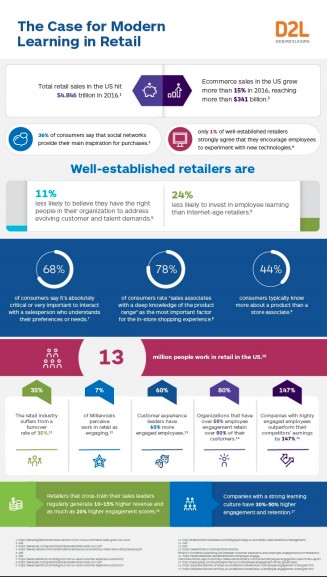
Retail Infographic


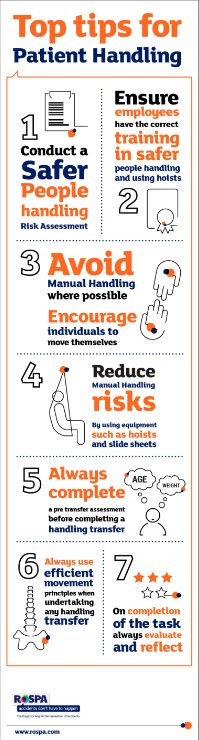
Safe Patient Handling Infographic


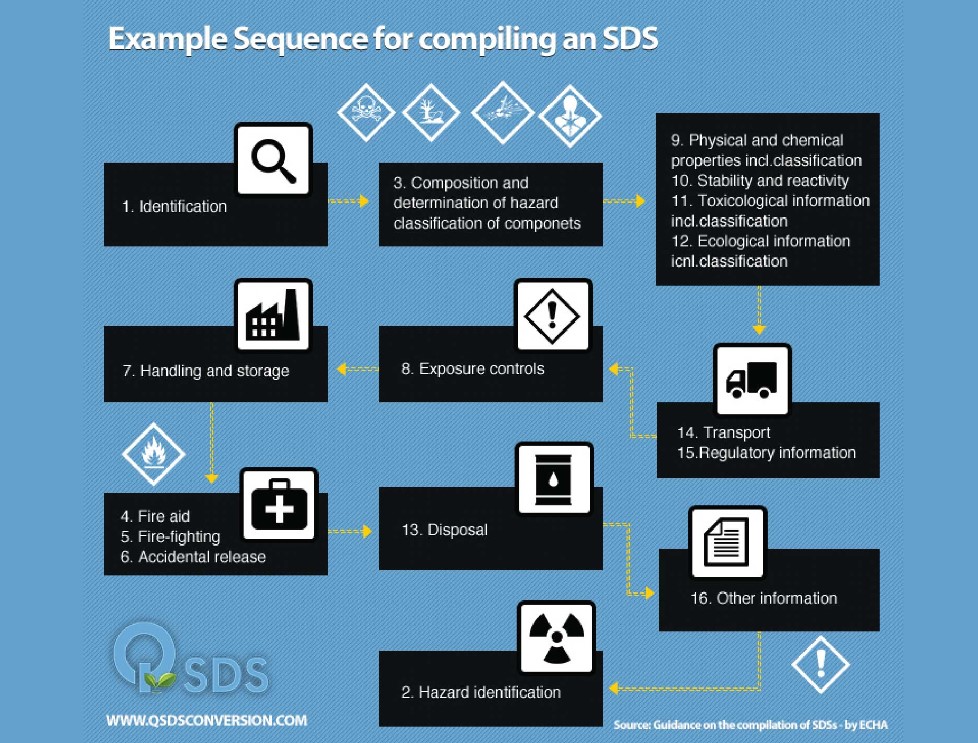
Safety Data Sheets Infographic


Contractor Safety – Stats and Facts

DID YOU KNOW?

The construction industry is known for being one of the most dangerous fields to work in. Out of every 5,000 private-industry worker fatalities, 20 percent are in construction. That means one out of every five worker deaths is construction-related!

Construction also results in many non-fatal injuries that cost companies millions of dollars per year. This makes safety paramount in the industry. While safety measures and precautions, like those outlined by OSHA, can be costly upfront, their ROI can be massive.

A successful construction business will maintain effective safety programs, stay updated on OSHA regulations and pay the expenses involved even when business is slow. Not only because OSHA violations can range anywhere from a warning to $70K per incident, but because they care about their employees.

To illustrate the importance of worksite safety, we’ve compiled 25 construction safety statistics that cover the high number of injuries and fatalities, the cost of these accidents and the benefits of safe practices.

Construction Fatality Statistics

  1. One in five worker deaths annually is in construction. [OSHA]
  2. Workplace fatalities that were crane-related fell to their lowest level recorded in 2017 with 33 deaths. [BLS]
  3. Construction workers accounted for 1008 (47 percent) of all fatal work injuries in 2018. [BLS]
  4. The “Fatal Four” leading causes of private sector working fatalities in the construction industry are falls, being struck by an object, electrocution and being caught in something or between two objects. These accidents are responsible for 58.6 percent of construction worker deaths. [OSHA]
  5. Companies with 10 or fewer employees and those who are self-employed account for nearly half of all deaths on construction sites. [CDC]
  6. Of all industries, construction sees the most fatal falls, accounting for 51 percent of all falls in the United States. [CDC]
  7. During a 45-year career, there is a 1 in 200 chance that a construction worker will die from a work-related incident. [Safety & Health Magazine]

1.     Non-Fatal Injuries in Construction

  1. One in every 10 construction workers is injured annually. [OSHA]
  2. Construction sees non-fatal injury rates that are 71% higher than any other industry. [Accident Analysis & Prevention]
  3. Around half of serious workplace injuries go unreported each year.
  4. Lifting, using a tool or machine, and carrying heavy objects are the leading causes of strain injuries in construction.
  5. Workers who are between the ages of 35 – 34 are the most likely to be injured while working in construction. [National Safety Council]
  6. Construction worker illnesses and injuries are down from 10.9 incidents per 100 workers in 1972 to 2.8 per 100 workers in 2017.

2. The Cost of Jobsite Injuries

  1. One fatal injury costs an average of $991,027 in hospital costs. [Converge Point]
  2. The construction industry sees a 71 percent higher spend on workers’ compensation than all goods-producing industries combined, more than twice the mean cost for the average employer in other industries. [CPWR]
  3. 15 percent of overall workers’ compensation costs are spent on workers who were injured at a construction site. [Workers Compensation]
  4. Work-related injuries have caused companies to lose 103,000,000 production days in 2018. [National Safety Council]
  5. Indirect costs for injuries in the construction industry can be as much as 17 times more than direct costs. [Safety & Health Magazine]
  6. Purvis Home Improvement Co. Inc was fined $1.79 million for a preventable fatal fall, the highest fine of 2019. (OSHA)

3. It Pays to Practice Safety

  1. Construction companies can save an average of $32,000 for each medically consulted injury they avoid. [National Safety Council]
  2. Construction companies can save $4 – 6$ in indirect costs for every $1 invested in direct costs by evading an injury in the workplace. [OSHA]
  3. Construction site injuries account for 6–9 percent of project costs, while safety and health programs only account for 2.5 percent of project costs. [CPWR]
  4. A company must sell an additional $1,667,000 in services to offset $50,000 in losses from injuries, illness or damage and still make a 3% profit. [CPWR]
  5. Better and more frequent training, regular inspections and regular health and safety meetings with construction supervisors result in lower costs, fewer lost-time injuries and more profits. [CPWR]
  6. Getting rid of the “Fatal Four” causes of construction worker deaths would save 591 lives in the U.S. each year. [OSHA]

Special Trade Contractors

Executing construction projects is a large managerial challenge and contributes to the industry’s productivity problem.

Specialty trade contractors are 12-28% less productive than large-scale building contractors, according to a McKinsey Global Institute study.

5 Advances in Construction Technology for 2018

Improve cost, safety, efficiency, and gain a competitive advantage in the industry.

Better communication between managers and off-site contract and temporary workers.

Adopting new technology could boost $1.6 trillion in the industry(estimated), adding about 2% to the global economy, or the equivalent to meeting half of the world’s infrastructure needs (McKinsey report, 2015).

  1. Virtual Reality

 Managers can use 4D virtual reality models to immerse stakeholders and owners into the environment of the design plan for major projects such as airports and hotels. A 4D environment increases the success of building a more consistent and quality final product that meets the expectations and buy-in of stakeholders.

  1. Augmented Reality

Physically walk through the environment with a 3D view. This allows users to gather real-time information about improvements for the environment. There are Mobile Apps that exist that allow you to interact with existing components or objects through the screen. Measure, level, and place objects with the Apps, the Apps operate using your any Smart Phone or Tablet.

  1. Advanced Tracking

Employers can improve safety and keep projects on schedule with wearable technology. Track the activity of workers, alert them of potential hazards in real time, and receive live project updates.

  1. Connected Job Sites

Better manage risk, keep projects on track, and maintain company standards with connected job sites. Track more accurate, real-time data using online cloud-based project management software. This allows users to access real-time information from anywhere. With management systems like this in place, employees can update blueprints, respond to RFIs in real-time, and it reduces the potential for error and miscommunication. 

  1. Unmanned Aerial Vehicles (UAVs)

UAVs aka drones are already in use in the industry, providing a convenient way to conduct safety audits, observations, and inspections. However, advancements to make the most of their use remains to be seen. It is also estimated that more than 1.4 million new industrial robots will be installed in workplaces worldwide from 2016-2019.

KEEP IN MIND

When you think of workplace safety, you should realize that a safety culture isn’t just for the workers on your payroll. A safe work environment is also an expectation of contractors, and getting them involved in your safety culture is critical to helping them remain safe on the job.

The Importance of Contractor Safety

We’re living in an increasingly complex workforce, where employees and contractors alike are traveling between locations. It’s a challenging task for any EHS department leader to keep track of temporary workforces, contractors, and regular hires and their roles within the company.

While contractors aren’t employees of your company, their safety is still your responsibility. Contractors that become injured while performing work for you could hold you liable, and the financial consequences could be even more severe than if one of your own employees were to get hurt.

Dealing with contractors on site who don’t adhere to your safety procedures can be risky. Since you or your employer can be subject to fines or even jail time when not compliant with regulations, you need to know who is accountable for your contractors.

Countries have different rules and regulations when it comes to safety and training for contracted companies and lone workers.

Globally, the International Labour Organization (ILO) reports that “although there are no ILO instruments that specifically address contractors’ and subcontractors’ safety and health at work (or for training in the industry), those concerning occupational safety and health (OSH) in general emphasize the importance of OSH training for all workers. Safety training should focus on supporting preventive action and finding practical solutions.”

While there are no specific global requirements, we will explore contractor safety regulations for the construction industry in the United States, United Kingdom, Canada and Australia.

United States

OSHA offers safety and health regulations for construction. According to the regulations for construction, “in no case shall the prime contractor be relieved of overall responsibility for compliance with the requirements of this part for all work to be performed under the contract.”

Workers in the engineering and construction industries face many hazards, as construction sites are one of the most dangerous places to work in the world, especially for contracted lone workers.

OSHA also indicates that “to the extent that a subcontractor of any tier agrees to perform any part of the contract, he also assumes responsibility for complying with the standards in this part with respect to that part…With respect to subcontracted work, the prime contractor and any subcontractor or subcontractors shall be deemed to have joint responsibility.”

In 2013, OSHA noted that 20 percent of occupational fatalities were in construction. Every month, the agency reports fatalities of contract workers, and often, publicizes citations and fines for both host companies and the employers of contract employees if they are killed or injured or endangered on the job.

Canada

The Canadian Centre for Occupational Health and Safety (CCOHS) reports some instances where employers were found to not protect the safety of their contractors – with fatal results.

“On June 12, 2006, a landscape contractor was crushed to death when the backhoe his employer was driving failed to stop, pinning the employee to a wall. The investigation of the incident found that the 30-year-old backhoe had not received any regular maintenance since the vehicle was purchased and that no formal inspection had been done in the previous five years. Upon further investigation it was discovered that the vehicle had no braking capacity. In September 2010, the employer was convicted of criminal negligence causing death and was given a two-year conditional sentence to be served in the community.”

In the province of British Columbia, WorkSafe BC’s prime contractor responsibilities state that at most multiple-employer work sites, “the prime contractor is responsible for health and safety” and offers advice for contractors to protect themselves and take preventative safety measures:

  • Get it in writing.
  • Identify, address and correct hazards.
  • Communicate and coordinate with subcontractors.
  • Assign a qualified coordinator.
  • Establish an emergency response plan.
  • Maintain accurate records.

Essentially, it’s best for both employer and contractor to take the above tips into consideration when working together.

Contractors fill one of every five jobs in the United States and are expected to make up nearly half our workforce within the next decade. They bring with them varying degrees of occupational health and safety knowledge, training and experience, making it difficult for organizations to manage workplace safety.

To mitigate the risks associated with disparate, and potentially inadequate safety training of contractors who work on their behalf, more than 75% of companies in a recent NAEM safety management benchmarking discussion plan to advance their contractor safety programs. It’s for good reason: Preliminary OSHA reports show that organizations across industries and trades continue to fall short when addressing critical safety hazards, including the use of personal protective equipment, operation of machinery and industrial trucks, and fall protection, among other hazards.

A strong contractor safety program—one that prequalifies contractors before they are hired and monitors and manages ongoing safety performance—can ensure that contractors are adequately equipped to mitigate hazards. This can help to prevent worker injuries, protect corporate reputation, support compliance with government regulations, and avoid hefty fines associated with violations.

“We’re in an industry with a lot of regulations,” said a NAEM participant committed to strengthening contractor safety management. “We’re responsible for our contractors and held accountable for their performance. We need to manage them because we have strong performance and safety numbers and we want to keep it that way.”

Business drivers for creating a more strategic contractor safety management program include the following:

  • Rising safety incident or injury rates.
  • Regulatory requirements.
  • Benchmarking best practices.
  • Environmental, social and governance reporting/stakeholder expectations.
  • Enterprise risk management.

Here are five best practices for mastering contractor safety management with dedicated, strategic programs that extend throughout your entire supply chain. Leveraging them can help you build a more comprehensive, effective program to better protect the people on your job sites and, in turn, your business.

  1. Ensure that safety and expectations are communicated through induction training.

Safety training is one of the most impactful tools companies have for sharing their safety culture throughout their workforce, including their contracted workers. What better way to ensure your workforce’s safety readiness than to train them before they set foot on a job site?

Onboarding or induction training communicates safety expectations and trains workers to safely perform job duties before they come to work. Typically instructor-led, the detailed training efficiently and effectively prepares contractors to safely operate machinery and understand how to mitigate the unique safety hazards of their jobs.

It often includes the company’s safety and emergency procedures, work permits, and site requirements. Requiring contractors to complete induction training provides assurance that they are prepared with the most effective, relevant training for the jobs they are hired to do. Use of badging or other technology-based tools to enable easy verification of training completion before a contractor goes to work is key to ensuring compliance.

  1. Build safety requirements into contracts and accounts payable processes. 

Contracts help to clearly establish your organization’s expectations regarding its contractors’ safety preparedness and performance. Legal contract language should require their compliance with federal, state and local regulatory requirements, along with company-specific health and safety requirements. This may include participation in the company’s safety prequalification program administered through a third-party provider and maintenance of an acceptable safety score in their contractor management system.

In addition, some organizations also tie meeting contractor safety requirements into their accounts payable processes to help motivate and enforce contractor compliance. For example, when contractors don’t maintain their compliance, as evidenced by an acceptable safety score in the contractor management system, payment is withheld until compliance is achieved.

  1. Establish and track contractor safety KPIs. 

Key performance indicators (KPIs)—such as total number of safety-related incidents and lost time rates—are one of the newest tools for advancing contractor safety.

EHS leaders rely heavily on safety metrics to create awareness of safety adherence and motivate workers to improve their performance. Many companies leverage a third-party software provider to host a digital dashboard that features the company’s key safety-related KPIs for its contractors.

Clearly visible analysis of KPIs that represent safety adherence and progress can help decrease serious incident rates by holding department directors accountable for them. Regularly scheduled meetings to discuss performance metrics, including any incidents that occurred along with their root causes and corrective actions, can help teams strategize for continued improvement.

  1. Leverage audits and incorporate safety performance into post-project evaluations. 

Periodic on-site inspections, jobsite walk-throughs and annual audits are effective ways to monitor contractor safety performance. These can be conducted by internal resources or some organizations leverage an outside vendor to perform these audits, supplementing their internal resources to give them more eyes in the field.

Organizations with advanced contractor safety programs go beyond contractor prequalification and monitoring by integrating safety performance into post-project evaluations and close-out conversations. For example, an EHS team included in the NAEM study conducts a post-project evaluation upon the completion of all contracted work. The company relies on the same general contractors for various projects, so they can regularly evaluate their performance and collaborate with them on subcontractor management to monitor and continually improve safety adherence.

The results of contractor safety audits and post-project evaluations can also be shared with supply chain, providing that part of the organization with additional metrics to monitor contractor performance, manage the relationship, and make decisions regarding inclusion in future bid invitations.

  1. Leverage technology and third-party vendor support. 

Gathering, verifying and auditing contractors’ health and safety metrics and safety programs are not quick or easy tasks. According to EHS Today’s 2019 National Safety Survey, leveraging technology for assistance is one of the most prominent industry trends. Technology, such as contractor management software solutions, modernizes contractor safety management for more efficient, effective results.

NAEM survey respondents with advanced programs rely on third-party providers with technology solutions that are backed by safety expertise to bring added capacity. A provider with expertise in contractor safety management can help standardize the prequalification process across the organization and provide clear visibility into whether a contractor company meets its safety expectations when assessing potential hires. This type of solution also frees up internal resources by handling time-consuming collection and review of safety program information from contractors and, at the individual worker-level, can provide a clear picture of contract workers’ training and readiness to work, and to help flag workers in need of additional training.

All told, then, adopting proven best practices to build or enhance your contractor safety management program can help ensure your contractors share your commitment to safety, improving safety performance and strengthening your workforce.

These ten construction safety facts can help you put precautions and procedures into perspective for your employees.

1. Construction Injuries Are More Common Than You Might Think

According to OSHA, about one out of every ten construction workers sustain an injury each year. Many construction companies and workers operate under the idea that injuries don’t happen often, that only those who are disregarding safety rules or not paying attention to their work can become injured. This can serve as an excellent reminder that no one is immune from injury.

2. The Chance of Death throughout a Worker’s Career is 1 in 200

This study shows that throughout a 45-year career in the construction industry, workers have a one out of 200 chance of dying on the job. And, during this same tenure, a worker has a 75% chance of sustaining an injury that will leave them disabled. The study also claims that construction workers are at a greater risk of dying early compared to other industries.

3. New Construction Workers Could Be at a Greater Risk of Injury

Data shows that 60% of construction workplace accidents occur within the employee’s first year on the job. There could be a number of factors that contribute to this figure, including lack of training, lack of experience, or a lack of understanding about the safety risks on a job site.

4. Nearly a Fifth of Workplace Deaths Come From the Construction Industry

Between 2002 and 2012, nearly 20% of all work-related deaths came from the construction industry. More than half of these deaths resulted from the “fatal four” causes: electrocution, falls, being struck by an object, and being crushed between two objects.

5. Falls Are the Biggest Risk to Construction Workers

Research shows that falls are the number one cause of fatal construction accidents. Specialty trade contractors make up the majority of fatal falls, and the risk varies depending on the construction worker’s role. Older construction workers are at a greater risk than younger workers.

Falls don’t always result in death. They can cause serious injury that could put the employee out of work for several days.

6. An Average of Two Deaths Occur Daily in Construction

On average, two construction workers die each day as a result of work-related injuries. The fatal four mentioned in #4 are the most common culprits. Check out this infographic to learn more.

7. Electrocutions Account for 9% of Construction Deaths

One of construction’s fatal four, electrocutions make up almost 9% of all construction-related deaths. Deaths are usually caused by coming into contact with power lines, lack of ground fault, or misusing equipment or power cords.

8. Fall Protection Is One of the Biggest OSHA Violations in Construction

This figure could certainly be linked to #5 on this list. OSHA data shows that fall protection is one of its most common violations in the construction industry. It might be prudent to share these two stats with your team to remind them of the importance of using proper fall protection to mitigate the risk of injury.

9. Laborers Are at the Greatest Risk of Injury

Though no role is 100% safe in construction, carpenters tend to have the least amount of risk, while general laborers are at the highest risk. Electricians, roofers, and front line supervisors also carry a slightly elevated risk. The actual risk is determined by the job, the job site, and other conditions.

10. Surviving a Construction Accident Isn’t Without Consequences

Employees who survive construction site accidents often sustain life-changing damage. Repercussions include blindness, deafness, loss of limb, scarring or disfigurement, spinal cord injury, neck or back injury, brain injury, or other factor that could cause permanent disability.





Crane Safety – Stats and Facts

DID YOU KNOW?

From 2011 to 2017, the Census of Fatal Occupational Injuries (CFOI) reported 297 total crane-related deaths, an average of 42 per year over this 7-year period. Men accounted for 293 of the 297 fatal injuries involving cranes. White, non-Hispanic workers accounted for 72 percent of fatal injuries involving cranes, while 15 percent involved Hispanic and Latino workers.

Event or Exposure

Just over half of all fatal crane injuries involved the worker being struck by an object or equipment. About three-fifths of these cases (91 of 154) involved the worker being struck by a falling object or equipment; in 79 of these cases, the worker was struck by an object falling from or put in motion by a crane. Transportation incidents and falls to a lower level each made up about 13 and 14 percent of the remaining fatal injuries involving cranes, respectively.

Industry and Occupation

From 2011 to 2017, 43 percent of fatal work injuries involving cranes took place in the private construction industry. Specialty trade contractors and heavy and civil engineering construction had the most fatal injuries involving cranes in private construction. The manufacturing industry accounted for another 24 percent of crane deaths.

One-third of all worker deaths involving cranes in 2011–17 were to workers in transportation and material moving occupations. Over half of these workers were crane operators. Another 31 percent of worker deaths involving cranes occurred to workers in construction and extraction occupations.

Worker Activity and Location

The worker was operating a crane at the time of the fatal injury in 22 percent of cases. The worker was engaged in construction, assembling, and dismantling activities in another 23 percent of cases. Just over one-quarter of all fatal crane injuries (27%) occurred at a construction site (except road construction). Twenty-four percent occurred at a factory or plant, another 8 percent occurred at a road construction site, and 6 percent occurred at a dockyard.

Cranes are commonly used on construction and industrial sites to lift and move heavy objects. While cranes are an invaluable tool, they are also extremely dangerous if not operated safely. Because of their size and purpose, cranes present a clear danger to the crane operator and other workers and visitors to the site.

CRANE ACCIDENT STATISTICS

The most recent data on crane accidents from the Bureau of Labor Statistics dates back to 2006. In that year, there were 72 fatalities caused by crane accidents. Over the 10 year period from 1997-2006, crane accidents were responsible for 818 workplace fatalities. From 2003-2006, Texas led the nation in the number of fatal crane accidents.

Below are the top four states in terms of fatal crane accidents over that four year period.

  • Texas – 42 fatalities
  • Florida – 27 fatalities
  • California – 25 fatalities
  • Louisiana – 17 fatalities

Crane accident fatalities occur from a variety of causes. The most common cause of fatalities is workers or bystanders who are struck by an object that falls from the cranes. Other causes include being run over by a crane, falling from a crane, and electrocution.

Below is a breakdown of crane accident fatalities by cause of death.

  • Contact with object or equipment – 62%
  • Falls – 20%
  • Transportation incidents – 10%
  • Contact with electrical current – 8%

WHAT CAUSES MOST CRANE ACCIDENTS?

Cranes are usually the largest piece of equipment on any industrial site. As a result, more accidents are caused by cranes than any other piece of equipment. But what causes such heavy equipment to malfunction catastrophically? In many accidents, cranes buckle or collapse from excess weight. Each crane comes with strict weight limits, but construction supervisors can either ignore these limits or remain ignorant of them, which leads to a crane accident. That’s why many crane accidents are tied to poor training or rushed construction jobs.

Major causes of crane accidents are:

  • Use of crane for purposes outside of the manufacturer’s specifications
  • Improper crane selection
  • Poor weather
  • Improper crane set up
  • Falling debris or other hazardous conditions surrounding the crane

Another well-known cause of crane accidents is contact with power lines. OSHA found that 45% of crane accidents are caused by the boom or crane making contact with energized power lines. Regardless of cause, most crane accidents can be prevented by following proper safety protocol and adequately training workers on how to operate the crane safely. In fact, 90% of crane accidents are caused by human error and 80% can be attributed to crane operators exceeding operational capacity.

As cranes are work-related machines, publicly-funded investigations of crane accidents are carried out by OSHA. In the private sector, there are numerous investigators and rigging experts who specialize in crane accident investigation. These investigators will often work for defense or plaintiff law firms working on crane accident cases. Here at Arnold & Itkin, we use OSHA investigations as well as our own in-house funded investigations to determine the cause of crane accidents.

Most crane accidents result in serious injury or death. If you or a loved one was injured or killed in a crane accident, it is important that you understand your legal rights. Crane accidents can be complex, as there are often numerous parties who may be liable. In order to protect your legal rights, it is advisable to contact an experienced crane accident attorney as soon as possible.

Accidents can be prevented:

Crane accidents are often the direct result of negligence of the crane-related professional or the lack of adequate operator training or experience.

  • 90% of crane accidents occur due to human error
  • 80% of all crane upsets are attributed to operators exceeding the crane’s operational capacity
  • 54% of these incidents are the result of swinging the boom or making a lift without the outriggers full extended
  • 45% of all mobile crane accidents involve electrocution that results from the crane contacting a power source during operation
  • 40% the victims were struck by an object (such as an uncontrolled hoisted load or crane part)
  • 50% of U.S. crane accidents that had injuries in 2009 resulted in fatalities
  • 80 lift and material handling equipment workers are killed each year, on average

Not only are workers seriously injured or killed, but bystanders and passersby are also being injured and killed at an alarming rate by crane accidents. Incident and fatalities happen with all types of cranes, including mobile and overhead cranes.

Did you know that when an accident happens, everyone can be held liable, including, but not limited to, the operator/rigger, the company, and the property owners?

The lack of training costs more than tuition. With looming dangers and inevitable fines from lack of well-trained operators, riggers and signal persons, it makes sense for businesses to invest in education.

The hidden costs of lack of training:

  • Missed Work Days
  • Increased Insurance Rates
  • OSHA Fines
  • Litigation
  • Lost Business Opportunities

The Board of Labor reports that crane accidents have been responsible for 818 workplace deaths since 1997. That number averages out to about 42 deaths-per-year. Texas is the leading state in all crane-related deaths in the United States. Another startling number that came from the report is that 90 percent of all crane accidents are a direct result of human error. Nearly 80 percent of these accidents can be attributed to mechanical malfunctions, which are mostly caused by human error. These two percentages fall under the category of negligence. Part of the responsibility falls upon the construction company or by unforeseen actions from an operator.

Due to these high statistics, the Occupational Safety and Health Administration (OSHA) has implemented a series of strict regulations to curtail the number of crane accidents. OSHA regulations require better training on how to properly operate a crane at the workplace. These regulations will force all involved to comply within the rules provided before a construction project can even begin.

Determining the cause of crane accidents

Finding what caused a crane accident to occur can be a complex, lengthy process. Most clues are very difficult to find without a thorough examination of the accident site and the machine itself. The most common causes of crane accidents include improper operation, poor communication between workers, and the equipment’s beam inadvertently coming into contact with a power line. Each situation requires construction workers to develop into a cohesive unit, because failure to do so could lead to a devastating accident.

Construction companies must create better safety protocols in the workplace, like regular inspections, and train employees on how to properly operate worksite equipment. The goal should be to develop a better course of action that lowers the amount of crane accidents that take place each year.

KEEP IN MIND

Cranes are a marvel of engineering, and an essential component of many industries including construction, manufacturing, warehousing, and more. Operating a crane takes extensive training, and following set standards to ensure both the crane operator, and those in the surrounding area, are safe. Crane safety is an important component of overall workplace safety, and doing it right can mean the difference between life and death in many cases.

There’s no argument that preventive maintenance—conducted in accordance with the manufacturer’s recommendations—is essential to promoting overhead crane safety. This section of the standard furthers the case for preventive maintenance by outlining safe, proper preventive maintenance procedures that minimize interference with operation of cranes that are still in use.

This section also defines what must be done before equipment is returned to service, following inspections and maintenance. The service technicians of Konecranes, the world’s leading crane service provider, are well-versed and experienced in these procedures for all makes of overhead cranes.

Preventive maintenance. A preventive maintenance program based on the crane manufacturer’s recommendations shall be established.

Maintenance procedure.

  1. Before adjustments and repairs are started on a crane the following precautions shall be taken:
  2. The crane to be repaired shall be run to a location where it will cause the least interference with other cranes and operations in the area.
  3. All controllers shall be at the off position.
  4. The main or emergency switch shall be open and locked in the open position.
  5. Warning or “out of order” signs shall be placed on the crane, also on the floor beneath or on the hook where visible from the floor.
  6. Where other cranes are in operation on the same runway, rail stops or other suitable means shall be provided to prevent interference with the idle crane.
  7. After adjustments and repairs have been made the crane shall not be operated until all guards have been reinstalled, safety devices reactivated and maintenance equipment removed.

Adjustments and repairs.

  1. Any unsafe conditions disclosed by the inspection requirements of paragraph (j) of this section shall be corrected before operation of the crane is resumed. Adjustments and repairs shall be done only by designated personnel.
  2. Adjustments shall be maintained to assure correct functioning of components. The following are examples:
  • All functional operating mechanisms.
  • Limit switches.
  • Control systems.
  • Brakes.
  • Power plants.

Repairs or replacements shall be provided promptly as needed for safe operation. The following are examples:

  1. Crane hooks showing defects described in paragraph (j)(2)(iii) of this section shall be discarded. Repairs by welding or reshaping are not generally recommended. If such repairs are attempted, they shall only be done under competent supervision and the hook shall be tested to the load requirements of paragraph (k)(2) of this section before further use.
  2. Load attachment chains and rope slings showing defects described in paragraph (j)(2)(iv) and (v) of this section respectively.
  3. All critical parts which are cracked, broken, bent, or excessively worn.
  4. Pendant control stations shall be kept clean and function labels kept legible.

9 Facts About Cranes

  1. The first human-made crane was built by the Ancient Greeks in 500 BC. This primitive, wooden form has since been improved hundreds of times, but it was a modern wonder in the Greek’s world. The machine was powered by humans and animals to pull heavy objects up and construct some of the most beautiful structures of the Ancient World. One of the Greeks most famous building, the Parthenon, shows evidence of cranes used in its construction.
  2. In the Middle Ages, a new addition was added to the Greek’s crane. This addition, called a “jib,” allowed the crane’s arm to move horizontally, not just vertically. During this time, the crane was first used in harbors to unload cargo from ships.
  3. When the steam engine was invented in the 19th century, this technology was added to power cranes, eliminating the need for animals and humans to power cranes.
  4. In the 1950s, stronger steel was being manufactured and cranes were put on the back of trucks, introducing the first mobile crane.
  5. Today, there are over 200,000 cranes used around the world. It is estimated that 125,000 cranes are used in the construction industry, and 80,000-100,000 cranes are used in general and maritime industries.
  6. The tallest crane in the world is a Liebherr type 357 HC-L. It can lift up to 18 tons at 44 meters/minute. It was used in the construction of the Kingdom Tower in Saudi Arabia, the world’s tallest building.
  7. Although cranes are helpful, they can be dangerous. In the US, there are about 90 crane-related deaths each year.
  8. Out of all crane accidents, 11% are caused by some kind of mechanical failure. If caught beforehand, a lot of these failures can easily be prevented, which is why WMs Cranes are inspected daily by operators and yearly by Inspectors.
  9. Cranes have many different purposes and are used for many specific projects. Across all industries, there are over 20+ specialized types of cranes, all used for various purposes. Some of these crane types include: mobile cranes, tower cranes, rough terrain crane, truck mounted crane.

Types of crane accident injuries

The injuries sustained from a crane accident can be catastrophic and even lead to death. The types of injuries that occur include being hit by fallen debris, crushed by a toppled crane, and electrocution.

If you have been injured in a crane accident, then it is in your best interest to speak with an experienced personal injury attorney. Receiving compensation from a crane accident caused by human error can be a difficult process. A personal injury attorney has resources to help with determining which party is responsible for the crane accident.

Developing Crane Safety Procedures in the Workplace

Having a detailed crane safety program in the workplace is an important step for all employers where cranes are used. This can start by identifying potential crane related hazards, and continues with finding ways to eliminate the hazards, or compensate for them in some way.

All workplace safety is important, but crane safety in particular is critical because of how devastating accidents related to cranes can be. The following are some key areas that should be included with any good crane safety plan.

Common Crane Hazards

Crane operators, and those working around them, should be taught what the most common crane hazards are. Being aware of these risks will help ensure that everyone is watching out for them, and taking steps to avoid them whenever possible. The following are some of the hazards that all crane safety plans should take into account because of how frequently they can occur, and how serious they can be:

  • Electrical Hazards – Cranes operate at great heights, which puts them in a terrible position for accidentally hitting electrical lines. The metal in the crane is an excellent conductor, and can cause fatal electrocution. Crane operators must be aware of where every electrical line is at all times.
  • Materials Falling – Every load that a crane lifts needs to be properly secured. But even when the loads are secured, there is always a risk of something falling off. Those below the crane should avoid working in the area, and wear hard hats and other appropriate PPE when it is unavoidable.
  • Overloading a Crane – Cranes can lift an astounding amount of weight, but there are limits. Crane operators, and those that load cranes, need to know precisely how much weight it can handle, and exactly how much weight they have added at any given time. Overloading a crane can cause it to tip over, or to drop the load, which can have devastating consequences.
  • Crane Movement (pinch points) – Cranes often need to twist or move to get the load where it needs to go. This can create pinch or crush points where someone could be seriously injured.
  • Dropped Loads – If a crane drops its load, whatever is under it will be crushed. Even vehicles or structures can be crushed from the impact of a heavy load dropped from a significant height. Nobody should work directly under a crane load for any reason, even with PPE.

Following are some hazards all employees involved in lifting operations should take into account, because of how frequently they can occur and how serious accidents can be:

  • Pre-Use Operational Inspection – Making sure that the crane, rigging, rigging hardware and attachment points are in proper working order before lifting is essential. If anything is not working correctly, it can cause serious accidents and injuries to those in the area. Please refer to the Crane Daily Pre-Use Inspection Checklist for a list of items which must be inspected and be in a satisfactory condition prior to operating any crane or hoist.
  • Crane/Rigging Movement (pinch points)– Cranes often need to twist, adjust and move to get the load and rigging where it needs to go. This can create pinch or crush points where someone could be seriously injured. Know where your feet and hands are at all times. Operators must communicate with the signal person to ensure all personnel are clear of pinch points.
  • Improper Lifting Techniques/Damaged Rigging – Choosing the proper size of rigging, the proper hitch and working within the proper load angle factors will reduce the chance of overloading or causing damage to the rigging. Do not use damaged or out-of-service rigging.
  • Dropped Loads– If a crane drops its load, whatever is under it will be crushed and the object dropped could be damaged, putting a delay in the production process. No one should work directly under a crane load for any reason, even with PPE. Keeping non-essential personnel clear of the suspended load at all times will reduce the chance of injury if the load shifts, swings or drops unintentionally.
  • Materials Falling– Every load a crane lifts needs to be properly secured and free of loose parts and tools. Even when a load is secure, there is always a risk of something falling off. Employees below the crane should avoid working in the area and be aware of the suspended load while it is moving.
  • Crane Overloading– Cranes can lift an astounding amount of weight, but there are limits. Crane operators and those who load the crane need to know precisely how much weight it can handle and exactly how much weight they have added or are lifting at any given time. Overloading a crane can cause it to tip over, cause structural damage or cause a loss of load, which all can have devastating consequences.
  • Side Pull – This is one of the most common mistakes made with overhead cranes. Hoists and cranes are designed to lift straight up and lower straight down only. Side pulls cause a number of dangerous conditions.

First, the wire rope often comes out of its grooves and “scrubs” against the remaining rope or drum, resulting in damaged rope. Sometimes the rope actually jumps the drum and tangles itself around the shaft, resulting in stress to the rope.

In addition, side pulls cause stress in unintended ways even worse than rope problems. In a somewhat oversimplified example, a bridge beam, taller than it is wide, is lifted with a side pull. Pulling at a 45-degree angle would put equal lateral and vertical stresses on the crane, potentially causing bridge beam failure, even with weight only half of the rated capacity.

Supervisors, leads, safety monitors and all lifting personnel should be aware of, and take into account, the above information to prevent misuse, mishandling, and unsafe lifting practices.

All personnel onsite have the right to give a “Stop” signal to the operator if they see something unsafe or dangerous.

These hazards are not all-inclusive of the hazards associated with cranes.

It is the responsibility of supervisors to ensure crane operators retain certification, follow all safe work practices and correct unsafe lifting habits.

Look at it this way: certification is like having a driver’s license for a car. Just because you have a driver’s license, doesn’t mean you are a good driver.

It all comes down to having a culture and mindset of safety. The most important reason for any crane safety program is saving lives and ensuring that every lift is successful.

When operators take time to ensure every lift is made without error, the efficiency of your lift team becomes the greatest component of your productivity.


Driver Safety – Stats and Facts

DID YOU KNOW?

Millions of workers drive or ride in a vehicle as part of their jobs, and motor vehicle crashes are the leading cause of work-related deaths in the United States.1 All workers are at risk of crashes, whether they drive light or heavy vehicles, or whether driving is a main or incidental job duty.

Motor vehicle crashes are the 1st or 2nd leading cause of death in every major industry group.1

In 2017, 1,299 U.S. workers driving or riding in a motor vehicle on a public road died in a work-related crash (25% of all work-related deaths).3

  • Among these 1,299 deaths, the Transportation and Warehousing industry had the highest share (40%), followed by Construction (11%), Wholesale and Retail Trade (9%), and Agriculture, Forestry, Fishing, and Hunting (7%).
  • The highest proportion of roadway fatalities involved semi, tractor-trailer, and tanker trucks (38%), followed by pickup trucks (14%), delivery trucks/vans (11%) and automobiles (9%).4

An additional 522 deaths in 2017 (10% of all work-related deaths) involved workers driving or riding in a motor vehicle off a public road, or pedestrians struck by motor vehicles.3

Work-related MVCs are not just an issue for truck, bus, or taxi drivers. 55% of workers who died in 2017 were not employed in motor vehicle operator jobs.5

Of the 313 pedestrian worker fatalities in 2017, 47% occurred in just a few occupations: heavy and tractor-trailer truck drivers, construction occupations (trades workers, laborers, and highway maintenance), and grounds maintenance workers.

More than 1 in 3 long-haul truck drivers have experienced a serious truck crash during their career.6

Crash deaths of occupants of large trucks (above 10,000 pounds) are increasing. Between 2012 and 2015, the number of deaths held steady at 650 to 700 deaths per year, but between 2015 and 2017, the number increased from 665 to 841 – a 26% increase.7

The number of large trucks registered and large-truck miles driven are also increasing, as are overall large-truck crash rates based on miles driven.7

Texas had by far the highest number of large-truck occupant deaths in 2017 (129), followed by California (53), Florida, and Georgia (45 each). These four states accounted for almost 1/3 of all deaths.7

In 2017, 3% of large-truck drivers involved in fatal crashes had a blood-alcohol content (BAC) of .08 or more, compared to 21% of passenger-car drivers.7

Heavy- and tractor-trailer truck drivers have the highest numbers of pedestrian deaths of any occupation: 64 in 2017.

Motor vehicle crashes cause over 50% of work-related deaths in the oil and gas extraction industry.4

Historically, the greatest numbers of oil & gas workers killed in crashes each year were in a pick-up truck. In 2017, large trucks became the most common type of vehicle.

Traffic crashes are the number one cause of on the job deaths in America.  2 of every 5 people killed at work die in a workplace vehicle accident. According to the Bureau of Labor Statistics more than 1,766 deaths a year result from occupational transportation incidents. That number is more than 38% of the 4,547 annual number of fatalities from occupational injuries.  These workplace vehicle accident statistics are scary.

Every 12 minutes someone dies in a motor vehicle crash, every 10 seconds an injury occurs and every 5 seconds a crash occurs. Many of accidents happen during work.  And many happen traveling to and from work.  To keep workers safe, employers should implement a safe driving program at work.

Employers Should Set Up a Safe Driving Program to Keep Employees Safe on the Road

A safe driving program can save lives.  Workplace vehicle accidents are the leading cause of death for workers of all ages.  The impact of losing a loved one can be far reaching.  Kids may never be the same after losing a parent.  Spouses may not recover from losing their loved one.

The employer program should work to keep the driver and others the road safe. The program must work to change driver attitudes, improve behavior, and increase skills to build a safe culture. Employers should instruct employees on basic safe driving practices.  Employers should reward safety-conscious behavior driving.

Employees are an employer’s most valuable assets. Workplace driver safety programs make good business sense and demonstrate that employers care about their employees. By implementing safe driving programs, an employer can help save lives.

You have the Right to a Safe Workplace

Workers have a right to a safe workplace. The law requires employers to provide employees with safe and healthful workplaces.  OSHA recommends a 10 step driving safety program to help save lives on the road. Employers are prohibited by law from retaliating against employees for exercising their rights under the law.  An employer cannot fire you or demote you for expressing a safety concern.  You also cannot be fired for reporting an injury.

KEEP IN MIND

Driver safety is important for people of all ages. While many older people are skilled and experienced drivers, age-related changes can make driving more challenging.

As we age, it’s important that we re-evaluate our driving skills on a regular basis. Learning about how age can affect our driving can help, and so can brushing up on our safe driving skills.

Over 14,000 road collisions between 2008 and 2011 may have been work related. The figures include as many as 4,672 vans, trucks and buses. A further 9,427 collisions involving private cars could also have been work related.

Driving for work

includes any person who drives on a road as part of their work either in:

  • A vehicle provided by their employer; or
  • Their own vehicle and receives an allowance or payment from their employer for distances driven.

Commuting to work is not generally classified as driving for work, except where the person’s journey starts from their home and they are travelling to a work location that is not their normal place of work.

In the case of journeys taken in a vehicle provided an employer, such as a van, jeep or fleet car, an employer has a duty of care to ensure the safety of employees using the vehicle. Employers should have appropriate policies and procedures in place to ensure safety when employees drive a work-provided vehicle or drive their own vehicle for work.

Driving for work involves a risk not only for drivers, but also for fellow workers and members of the public, such as pedestrians and other road users. As an employer or self-employed person, you must, by law, manage the risks that may arise when you or your employees drive for work. Employers should have systems in place to ensure that Driving for Work activities are road safety compliant. Employers cannot directly control roadway conditions, but they can promote and influence safe driving behaviour and actions by their employees.

The NIOSH Center for Motor Vehicle Safety (CMVS) provides research-based guidance to prevent motor vehicle crashes for:

  • Truck drivers
  • Drivers in other high-risk jobs (EMS, law enforcement, oil and gas extraction)
  • Light-vehicle drivers (real estate, sales, health care)

Tips for Employees Who Drive

Employers have important obligations to protect employees, including when employees are operating a motor vehicle in the course of their work. But, in very practical terms, road safety is a shared responsibility.

The driving environment is dynamic – road, weather and traffic conditions change frequently. It’s tough to write a policy or procedure to address every possible event a driver may encounter. Your employer is relying on you to conscientiously apply your training, driving skills and good judgement plus the procedures explained in the road safety plan. More importantly, your family and friends are counting on you to arrive home safely at the end of each day.

Here are some important things every driver needs to consider.

Before You Drive

  • Manage journeys – Ask yourself if you can get your work done without driving. Can you use a phone call, an email, an online meeting to avoid unnecessary driving? Can you reduce risks by using public transit?
  • Taxis and ride-hailing services are travel options you can use to eliminate some of the driving you do. Use the suggested practices in this tip sheet to ensure a safe trip.
  • If you need to drive, prepare for the trip. Even if it’s a short trip, TripCheck is a handy online tool to help you get ready for the trip ahead.
  • Prepare yourself – Are you well-rested, alert and confident to reach your destination?
  • Prepare a trip plan – Check the route you intend to travel and scope out an alternate route just in case. Check traffic and road conditions. Set up a check-in contact, and share your plan with your supervisor.
  • Prepare your vehicle – Are the seat, mirrors and headrest adjusted for you? Do a pre-trip inspection to confirm everything is working properly. Is the maintenance up to date? If you don’t think the vehicle is up to the trip, talk to your supervisor.

While You Drive

It’s up to you to know the rules and make sure you follow them.

  • Wear your seatbelt.
  • Take a break from driving at least once every two hours. Stretch your legs. Have a quick walk. Rehydrate.
  • Pay attention and avoid distractions. Don’t use a cell phone or adjust the GPS while driving. When you’re behind the wheel, driving is your only job.
  • Drive for the conditions. Speed limits are set for optimal driving conditions. Adjust your speed so that it’s right for you and your vehicle in those conditions.

After You Drive

  • Report any vehicle damage or required maintenance.
  • Share information about unsafe routes or things to watch out for so your colleagues don’t encounter the same problems, are better prepared or can make other adjustments like timing.

Distracted driving

According to ICBC, approximately 960 crashes occur every day in B.C., many of which are caused by distracted or inattentive driving. Attitudes towards the risk represented by distracted driving, and the use of electronic devices such as cellphones, are the leading causes of distraction-related crashes and near misses. Employers are responsible for preventing the use of cellphones and other electronic devices while their workers are driving on the job.

The risk

Distractions create situations and hazards that can be prevented. When combined with a constantly-changing road environment, performing other tasks while driving can result in errors that can have tragic results.

Reducing the risk

There are four things employers can do to reduce the risk of distracted driving on the job:

Create a policy and safe work practices

Create a policy and safe work practices that clearly spell out the expectations on the use of electronic devices.

Communicate the policy and practices

Provide your workers with the necessary information, instruction and training, and supervision. Communicate the policy and practices to your managers, workers, and contractors — often. Let them know that they can’t talk on the phone or text while driving for work.

Support your workers

Tell your customers that staff can’t answer calls or texts while driving. Have your workers create an “I’m behind the wheel” voice message before they begin driving.

Set an example

Never use an electronic handheld device or adjust a GPS unit while you’re driving.

Working in and around traffic

Roadside work, or working in the “cone zone,” is dangerous. From 2010 to 2019 in B.C., 13 roadside workers were killed and 204 were injured and missed time from work as a result of being hit by a motor vehicle.

Roadside worksites involve hundreds of activities — not just road construction. There are many types of workers in the cone zone, including:

  • First responders
  • Landscapers
  • Municipal workers
  • Telecommunications and utility workers
  • Tow truck drivers
  • Traffic control persons
  • Truck drivers

Road Safety Toolkit

Resources for employers, supervisors and workers to help keep workers safe when working in and around traffic.

Cone Zone campaign

The Cone Zone campaign runs from May to August each year. This campaign aims to reduce the number of deaths and injuries of roadside workers by increasing awareness of the vulnerability of these workers and encouraging drivers to practice safe driving behaviour in the cone zone.

Driving while fatigued is a significant road safety concern. Specific findings vary, however studies in Canada and several other countries show that driver fatigue is a contributing factor in 15-30% of all vehicle crashes*.

If your employees drive for work, these pages explain what fatigue is, why it is so hazardous and who is at risk. As well, there are ideas and resources to help you decide on the measures you can apply to reduce the risks of fatigue-related crashes in your organization.

If driving is one of your work responsibilities, information below also explains how to recognize when fatigue is affecting your driving abilities, and several practical things you can do to fight fatigue.

Fatigue Basics

This section provides statistics that illustrate how significant of a road safety issue fatigue has become, defines and describes driving fatigue, and explains the primary factors that contribute to fatigue.

Impacts and Risk Groups

Look here to learn about physiological impacts of fatigue, and how they impair a driver’s ability to perform safely and reliably. Some individuals and groups are at greater risk of becoming fatigued; find out if you or your employees fit those categories.

Tools and Resources for Employers

See practical guidance that will help you recognize a fatigued employee, and the things you can do to reduce fatigue-related risks for your driving employees. Find out about fatigue monitoring devices, and Fatigue Risk Management Systems that have become mandatory in some jurisdictions.

Tools and Resources for Employees

Learn how to recognize the signs and determine if you are becoming fatigued. Read about the practical ways by which you can reduce your fatigue risks, plus the simple steps you can take to combat fatigue in your own workplace on wheels.