Distracted While Walking Fatality Report – Spanish

Uno de los casos más extremos se produjo cuando Ryan Robbins, de 19 años, murió en febrero de 2011 tras una noche de fiesta en Melbourne (Australia), al pasar accidentalmente por encima de una barandilla corta en un aparcamiento y precipitarse a la muerte mientras enviaba mensajes de texto a su amigo.

El gobierno federal no es el único que intenta frenar el aumento de las lesiones, ya que existe una nueva aplicación llamada Walk and Text que hace que los teléfonos inteligentes “vean a través” y la pantalla muestre una cámara con un teclado transparente.

De este modo, los verdaderos adictos al texto pueden seguir escribiendo mensajes mientras ven si hay un bache errante a unos metros delante de ellos.

Apenas 24 horas después de ese accidente, se produjo otra tragedia similar. En la mañana del jueves 16 de enero de 2020, Xiang Ji, de 67 años, murió al caerle encima un trozo de madera contrachapada recubierta de aluminio de un edificio en Flushing, Queens. Estaba caminando bajo un edificio de la calle Main con varios anuncios de madera contrachapada adheridos a él, cuando uno se desplomó sobre ella. Sorprendentemente, el edificio bajo el que caminaba con un mensaje de texto ya tenía una orden de paralización de obras por 18 infracciones abiertas. El concejal Peter Koo pidió que la ciudad cerrara el edificio hasta que se colocaran los andamios y se garantizara la seguridad del lugar, aunque, lamentablemente, es demasiado tarde para la Sra. Ji.


Distracted While Walking – Picture This – Spanish

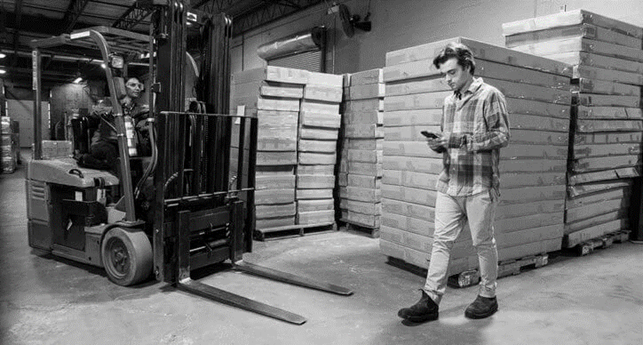
¿Qué hay de malo en esta foto?

Hay un trabajador caminando y usando su teléfono móvil sin prestar atención a lo que hay a su alrededor. Puede resultar gravemente herido por una carretilla elevadora en funcionamiento. Las lesiones por “caminar distraído” se han duplicado con creces desde 2004, y las encuestas han demostrado que el 60% de los peatones también se distraen con otras actividades mientras caminan.

Caminar distraído está provocando que la gente se caiga por las escaleras, tropiece con los bordillos y se meta en el tráfico, causando cortes, contusiones, esguinces y fracturas. Caminar distraído también puede hacer que se pasen por alto peligros potenciales como el hielo, la nieve o un cambio en la superficie para caminar, lo que supone un riesgo de caída.

Anime a sus empleados a vigilar las espaldas de los demás. Cuando los empleados vean que sus compañeros de trabajo están distraídos por los teléfonos móviles, el estrés u otros factores, anímelos a que se ayuden mutuamente a recuperar el rumbo y la concentración. Demostrar que te importa suele ser una medida de seguridad muy eficaz.


Distracted Driving (Cellphone Use) Meeting Kit

Distracted Driving (Cellphone Use) Safety Talk

Using cellphones or other devices while driving has proven to be deadly. Cellphone use during driving is very prevalent on our roads today. In fact, at any given time throughout the day, approximately 660,000 drivers are attempting to use their phones while behind the wheel of an automobile.

SAFETY RISKS

Smartphones have made it easy for us to stay connected at all times. But that can pose serious safety risks if someone decides to check his or her text messages, emails, phone calls, or any other mobile applications while driving.

Driving requires us to See, Hear, Do, and Think. Using a cell phone to text or carry on a conversation requires you to use all four skills – See, Hear, Do and Think.

Cell phone usage ranks at the top of the list for distracting behaviors that increase your chances of being involved in a crash or near crash event.

  1. Text messaging (or texting) on a cell phone – 23 times more likely
  2. Talking on a cell phone – 4 to 5 times more likely
  3. Reading – 3 times more likely
  4. Applying makeup – 3 times more likely
  5. Reaching for a moving object – 9 times more likely
  6. Dialing on a hand-held device – 3 times more likely
  7. Talking or listening on a hand-held device – 1.3 times more likely

MITIGATION ACTION FOR DISTRACTED DRIVING

Workers must take the following actions to stay focused behind the wheel.

  • Don’t use a cell phone if you are a new driver or are getting accustomed to a new car.
  • Pull over to the side of the road to take or make calls, including calls to 9-1-1.
  • Familiarize yourself with any motor vehicle laws pertaining to cell phones.
  • Limit phone use to when you are parked or ask a passenger to make calls for you.
  • Use a hands-free headset and keep calls brief.
  • Don’t take notes or look up phone numbers while driving.
  • Get to know your phone and its features so you know where the buttons are.
  • Keep your phone within easy reach so you don’t have to take your eyes off the road.
  • Don’t make or take calls during heavy traffic or severe weather.
  • Never have stressful or emotional conversations while driving.
  • Keep conversations brief. Let the person know you are driving and must hang up as soon as possible
  • Do not use your phone while driving.
  • Make necessary adjustments (e.g., adjust controls, program directions) to your car before your drive.
  • Do not reach to pick up items from the floor, open the glove box, or try to catch falling objects in the vehicle.
  • Avoid emotional conversations with passengers, or pull over in a safe location to continue the conversation. For normal conversation, passengers in the vehicle can often help lower crash risk for adult drivers.
  • Focus on the driving environment — the vehicles around you, pedestrians, cyclists, and objects or events that may mean you need to act quickly to control or stop your vehicle.

Employers: Use the following recommendations to prevent distracted driving.

  • Ban all phone use while driving a company vehicle, and apply the same rules to use of a company-issued phone while driving a personal vehicle.
  • Require workers to pull over in a safe location if they must text, make a call, or look up directions.
  • Prepare workers before implementing these policies by communicating:
  • How distracted driving puts them at risk of a crash
  • That driving requires their full attention while they are on the road
  • What they need to do to comply with your company’s policies
  • What action you will take if they do not follow these policies
  • Consider having workers acknowledge that they have read and understand these policies.
  • Provide workers with information to help them talk to their family about distracted driving.

FINAL WORD

Safe driving requires undivided attention. Keep your eyes and your mind on the road. Driving and multitasking can never safely coexist.  If you need to make or take a phone call, check driving directions or select some different music, pull over into a safe place. Two minutes of inconvenience seems like a more than fair trade for a few extra years or decades of life.


Distracted Driving (Cellphone Use) Stats and Facts

FACTS

  1. Distracted driving occurs any time you take your eyes off the road, hands off the wheel, and mind off your primary task: driving safely. Any non-driving activity you engage in is a potential distraction and increases your risk of being involved in a motor vehicle crash.
  2. Talking and texting on a phone are driving distractions. Texting while driving is especially dangerous because it combines all three types of distractions. Research shows that hands-free phones are as distracting as handheld phones.
  3. Driving while talking or texting on a cell phone not only puts you at risk for an accident- it can also result in an expensive fine and demerit points on your driver’s licence if police catch you doing it.

STATS

Roughly, nine people are killed and more than 1,000 injured daily in accidents in which at least one driver was distracted.

  • Nearly 4,000 people were killed in crashes involving distracted drivers in 2015.
  • Distracted driving was the reported cause of death of 3,450 people in 2016.
  • An estimated 391,000 drivers were injured in distracted driving crashes in 2017.
  • For comparison, there were 39,773-gun deaths in the United States in 2017.
  • In 2019, distracted driving was a reported factor in 8.5% of fatal motor vehicle crashes.

In March 2019, The Zebra conducted a survey of the driving behaviors and attitudes of 2,000 Americans.

  • 37% of respondents aged 18 to 34 said they felt a high degree of pressure to respond to work-related messages while driving, compared to 25% of the national average among all age groups.
  • Parents with young children were more likely to be distracted while driving (87%) than were adults with no small children (74%).
  • One in three female drivers admitted to taking photos while driving.

The variations in distracted driving behavior based on the operating system of the cell phone the driver used.

  • 16% of iPhone users said they never get distracted while driving (vs. 23% of Android users and 38% of users of other mobile operating systems).
  • iPhone and Apple Car play users are more than twice as likely than Android users to video-chat, use Instagram, stream shows on Netflix or Hulu, and take photos and videos while driving.
  • 10% of iPhone users admitted watching videos on YouTube while driving, while 4% of Android users admitted to doing the same.


Distracted Driving (Cellphone Use) Fatality Report

HOUSTON – The driver of a pickup truck that collided with a church minibus in rural Texas, killing 13 people, apologized after the crash and acknowledged he had been texting while driving, a witness said Friday.

Jody Kuchler told The Associated Press he was driving behind the truck and had seen it moving erratically prior to the Wednesday collision on a two-lane road about 75 miles west (120 km) of San Antonio, near the town of Concan. Kuchler said the truck had crossed the center line several times while he followed it.

Kuchler said he called the sheriff’s offices for both Uvalde and Real counties while he followed the truck and told them “they needed to get him off the road before he hit somebody.”

Kuchler said he witnessed the crash and afterward, he checked on both the bus and the truck and was able to speak with the driver, who has been identified by the Texas Department of Public Safety as 20-year-old Jack Dillon Young, of Leakey, Texas.

“He said, ‘I’m sorry, I’m sorry. I was texting.’ I said, “Son, do you know what you just did? He said, ‘I’m sorry I’m sorry,’” Kuchler quoted the pickup driver as saying.

Department of Public Safety Sgt. Conrad Hein declined to comment on Friday on the cause of the crash or if texting might have played a role. But officials have said the truck driver appeared to have crossed the center line.

Young remains hospitalized following the crash.


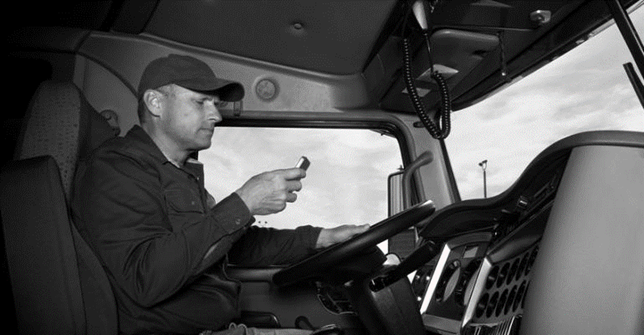
Distracted Driving (Cellphone Use) – Picture This

What’s wrong in this picture, using mobile phones can cause drivers to take their eyes off the road, their hands off the steering wheel, and their minds off the road and the surrounding situation. It is this last type of distraction – known as cognitive distraction – which appears to have the biggest impact on driving behaviour. Evidence shows that the distraction caused by mobile phones can impair driving performance in a number of ways, e.g. longer reaction times (notably braking reaction time, but also reaction to traffic signals), impaired ability to keep in the correct lane, and shorter following distances. Text messaging also results in considerably reduced driving performance, with young drivers at particular risk of the effects of distraction resulting from this use.

Studies suggest that drivers using a mobile phone are approximately four times more likely to be involved in a crash than when a driver does not use a phone. At the time of writing, there is no conclusive evidence to show that hands-free phoning is any safer than hand-held phoning, because of the cognitive distraction involved with both types of phones.


Distracted Driving (Cellphone Use) Meeting Kit – Spanish

QUÉ ESTÁ EN RIESGO

Charla de seguridad sobre la conducción distraída (uso del teléfono móvil)

El uso de teléfonos móviles u otros dispositivos mientras se conduce ha demostrado ser mortal. El uso del teléfono móvil durante la conducción es muy frecuente en nuestras carreteras hoy en día. De hecho, en cualquier momento del día, aproximadamente 660.000 conductores intentan utilizar sus teléfonos mientras están al volante de un automóvil.

CUÁL ES EL PELIGRO

RIESGOS DE SEGURIDAD

Los teléfonos inteligentes nos han facilitado estar conectados en todo momento. Pero eso puede suponer graves riesgos para la seguridad si alguien decide consultar sus mensajes de texto, correos electrónicos, llamadas telefónicas o cualquier otra aplicación móvil mientras conduce.

Conducir requiere que veamos, oigamos, hagamos y pensemos. Utilizar el teléfono móvil para enviar mensajes de texto o mantener una conversación requiere utilizar las cuatro habilidades: Ver, Oír, Hacer y Pensar.

El uso del teléfono celular se encuentra en la parte superior de la lista de comportamientos de distracción que aumentan las posibilidades de estar involucrado en un accidente o casi accidente.

  1. El envío de mensajes de texto (o mensajes de texto) en un teléfono celular – 23 veces más probable
  2. Hablar por un teléfono celular – 4 a 5 veces más probable
  3. Leer – 3 veces más probable
  4. Aplicar el maquillaje – 3 veces más probable
  5. Alcanzar un objeto en movimiento – 9 veces más probable
  6. Marcar en un dispositivo de mano – 3 veces más probable
  7. Hablar o escuchar con un dispositivo de mano – 1,3 veces más probable

COMO PROTEGERSE

ACCIONES DE MITIGACIÓN DE LA DISTRACCIÓN

Los trabajadores deben tomar las siguientes medidas para mantenerse concentrados al volante.

  • No utilice el teléfono móvil si es un conductor novel o se está acostumbrando a un coche nuevo.
  • Deténgase a un lado de la carretera para atender o realizar llamadas, incluidas las llamadas al 9-1-1.
  • Familiarícese con las leyes sobre vehículos de motor relativas a los teléfonos móviles.
  • Limite el uso del teléfono a cuando esté estacionado o pida a un pasajero que haga las llamadas por usted.
  • Utilice un auricular de manos libres y mantenga las llamadas breves.
  • No tome notas ni busque números de teléfono mientras conduce.
  • Conozca su teléfono y sus funciones para saber dónde están los botones.
  • Mantén el teléfono al alcance de la mano para no tener que apartar la vista de la carretera.
  • No hagas ni recibas llamadas cuando haya mucho tráfico o mal tiempo.
  • Nunca mantengas conversaciones estresantes o emocionales mientras conduces.
  • Mantenga conversaciones breves. Haz saber a la persona que estás conduciendo y que debes colgar lo antes posible.
  • No utilice el teléfono mientras conduce.
  • Realice los ajustes necesarios (por ejemplo, ajustar los mandos, programar las direcciones) en su coche antes de conducir.
  • No intente coger objetos del suelo, ni abrir la guantera, ni tratar de coger los objetos que se caen en el vehículo.
  • Evite las conversaciones emocionales con los pasajeros, o deténgase en un lugar seguro para continuar la conversación. En el caso de una conversación normal, los pasajeros del vehículo pueden ayudar a reducir el riesgo de colisión de los conductores adultos.
  • Concéntrese en el entorno de la conducción: los vehículos que le rodean, los peatones, los ciclistas y los objetos o sucesos que pueden hacer que tenga que actuar rápidamente para controlar o detener su vehículo.

Para los empleadores: Utilicen las siguientes recomendaciones para evitar la conducción distraída.

  • Prohíban el uso del teléfono mientras conduce un vehículo de la empresa, y aplique las mismas normas al uso de un teléfono proporcionado por la empresa mientras conduce un vehículo personal.
  • Exijan a los trabajadores que se detengan en un lugar seguro si tienen que enviar mensajes de texto, hacer una llamada o buscar direcciones.
  • Preparen a los trabajadores antes de aplicar estas políticas comunicándoles:
  • Cómo la conducción distraída les pone en riesgo de sufrir un accidente
  • Que la conducción requiere toda su atención mientras están en la carretera
  • Lo que tienen que hacer para cumplir con las políticas de su empresa
  • Qué medidas tomará usted si no siguen estas políticas
  • Considere la posibilidad de hacer que los trabajadores reconozcan que han leído y entendido estas políticas.
  • Proporcione a los trabajadores información que les ayude a hablar con su familia sobre la conducción distraída.

CONCLUSIÓN

La conducción segura requiere una atención total. Mantenga sus ojos y su mente en la carretera. La conducción y la multitarea nunca pueden coexistir de forma segura.  Si necesitas hacer o atender una llamada telefónica, consultar las instrucciones de conducción o seleccionar otra música, detente en un lugar seguro. Dos minutos de incomodidad parecen un intercambio más que justo por unos cuantos años o décadas más de vida.


Distracted Driving (Cellphone Use) Stats and Facts – Spanish

HECHOS

  1. La conducción distraída se produce cada vez que se apartan los ojos de la carretera, las manos del volante y la mente de la tarea principal: conducir con seguridad. Cualquier actividad no relacionada con la conducción que realice es una distracción potencial y aumenta el riesgo de verse involucrado en un accidente de tráfico.
  2. Hablar y enviar mensajes de texto por teléfono son distracciones al volante. Enviar mensajes de texto mientras se conduce es especialmente peligroso porque combina los tres tipos de distracciones. Las investigaciones demuestran que los teléfonos de manos libres distraen tanto como los de mano.
  3. Conducir mientras se habla o se envía un mensaje de texto por teléfono móvil no sólo supone un riesgo de accidente, sino que también puede acarrear una costosa multa y puntos de demérito en el carné de conducir si la policía te pilla haciéndolo.

ESTADÍSTICAS

Aproximadamente, nueve personas mueren y más de 1.000 resultan heridas diariamente en accidentes en los que al menos un conductor estaba distraído.

  • En 2015 murieron casi 4.000 personas en accidentes con conductores distraídos.
  • La conducción distraída fue la causa declarada de la muerte de 3.450 personas en 2016.
  • Se estima que 391.000 conductores resultaron heridos en accidentes por conducción distraída en 2017.
  • En comparación, hubo 39.773 muertes por arma de fuego en los Estados Unidos en 2017.
  • En 2019, la conducción distraída fue un factor reportado en el 8,5% de los accidentes automovilísticos fatales.

En marzo de 2019, The Zebra realizó una encuesta sobre los comportamientos y actitudes de conducción de 2.000 estadounidenses.

  • El 37% de los encuestados de entre 18 y 34 años dijo que sentía un alto grado de presión para responder a los mensajes relacionados con el trabajo mientras conducía, en comparación con el 25% de la media nacional entre todos los grupos de edad.
  • Los padres con hijos pequeños eran más propensos a distraerse mientras conducían (87%) que los adultos sin hijos pequeños (74%).
  • Una de cada tres conductoras admitió haber hecho fotos mientras conducía.

Las variaciones en el comportamiento de conducción distraída se basan en el sistema operativo del teléfono móvil que utilizaba el conductor.

  • El 16% de los usuarios de iPhone dijeron que nunca se distraen mientras conducen (frente al 23% de los usuarios de Android y el 38% de los usuarios de otros sistemas operativos móviles).
  • Los usuarios de iPhone y Apple Car play son más del doble de propensos que los de Android a chatear por vídeo, utilizar Instagram, transmitir programas en Netflix o Hulu y hacer fotos y vídeos mientras conducen.

El 10% de los usuarios de iPhone admitió ver vídeos en YouTube mientras conducía, mientras que el 4% de los usuarios de Android admitió hacer lo mismo.


Distracted Driving (Cellphone Use) Fatality Report – Spanish

HOUSTON – El conductor de una camioneta que chocó con un minibús de la iglesia en una zona rural de Texas, matando a 13 personas, se disculpó después del accidente y reconoció que había estado enviando mensajes de texto mientras conducía, dijo un testigo el viernes.

Jody Kuchler dijo a The Associated Press que conducía detrás de la camioneta y que la había visto moverse de forma errática antes de la colisión del miércoles en una carretera de dos carriles a unas 75 millas (120 km) al oeste de San Antonio, cerca de la localidad de Concan. Kuchler dijo que el camión había cruzado la línea central varias veces mientras lo seguía.

Kuchler dijo que llamó a las oficinas del sheriff de los condados de Uvalde y Real mientras seguía al camión y les dijo que “tenían que sacarlo de la carretera antes de que atropellara a alguien”.

Kuchler dijo que fue testigo del choque y que después, revisó tanto el autobús como el camión y pudo hablar con el conductor, que ha sido identificado por el Departamento de Seguridad Pública de Texas como Jack Dillon Young, de 20 años, de Leakey, Texas.

“Dijo: ‘Lo siento, lo siento. Estaba enviando un mensaje de texto’. Le dije: “Hijo, ¿sabes lo que acabas de hacer? Dijo: ‘Lo siento, lo siento'”, citó Kuchler al conductor de la camioneta.

El sargento Conrad Hein, del Departamento de Seguridad Pública, se negó a comentar el viernes la causa del accidente o si el envío de mensajes de texto pudo haber influido. Pero las autoridades han dicho que el conductor de la camioneta parecía haber cruzado la línea central.

Young sigue hospitalizado tras el accidente.


Distracted Driving (Cellphone Use) – Picture This – Spanish

¿Qué hay de malo en esta imagen? El uso del teléfono móvil puede hacer que los conductores aparten la vista de la carretera, las manos del volante y la mente de la carretera y de la situación que les rodea. Es este último tipo de distracción -conocido como distracción cognitiva- el que parece tener el mayor impacto en el comportamiento al volante. Las pruebas demuestran que la distracción causada por los teléfonos móviles puede perjudicar el rendimiento de la conducción de varias maneras, por ejemplo, tiempos de reacción más largos (sobre todo el tiempo de reacción al frenar, pero también la reacción a las señales de tráfico), la capacidad de mantenerse en el carril correcto y distancias de seguimiento más cortas. El envío de mensajes de texto también reduce considerablemente el rendimiento de la conducción, y los conductores jóvenes corren un riesgo especial de sufrir los efectos de la distracción resultante de este uso.

Los estudios sugieren que los conductores que utilizan un teléfono móvil tienen aproximadamente cuatro veces más probabilidades de verse involucrados en un accidente que cuando un conductor no utiliza el teléfono. En el momento de redactar este informe, no hay pruebas concluyentes que demuestren que el teléfono manos libres sea más seguro que el teléfono de mano, debido a la distracción cognitiva que conllevan ambos tipos de teléfonos.


Diesel Exhaust Dangers and Safeguards Meeting Kit

Diesel Exhaust Composition

Diesel exhaust is a mixture of gases and particulates produced during the combustion of diesel fuel. The very small particles are known as diesel particulate matter (DPM), which consists primarily of solid elemental carbon (EC) cores with organic carbon (OC) compounds adhered to the surfaces.

EXPOSURE TO DE/DPM

Occupations with potential exposure to DE/DPM include miners, construction workers, heavy equipment operators, bridge and tunnel workers, railroad workers, oil and gas workers, loading dock workers, truck drivers, material handling operators, farmworkers, long-shoring workers, and auto, truck and bus maintenance garage workers.

Most heavy-and medium-duty trucks are equipped with diesel engines, as well as equipment used in mines; buses, locomotives and ships; heavy equipment such as bulldozers and tractors; and other types of equipment such as bucket lifts and generators.

HEALTH EFFECTS OF DE/DPM

  • Short term exposure to high concentrations of DE/DPM can cause headache, dizziness, and irritation of the eye, nose and throat severe enough to distract or disable miners and other workers.
  • Prolonged DE/DPM exposure can increase the risk of cardiovascular, cardiopulmonary and respiratory disease and lung cancer.

HOW TO PROTECT WORKERS

  • Limit workers’ time spent in an area with higher levels of diesel exhaust.
  • Properly ventilate any areas where there may be high levels of exhaust.
  • Perform routine air monitoring to ensure levels are not at a dangerous level.
  • Perform routine preventive maintenance of diesel engines to minimize emissions.
  • Install engine exhaust filters.
  • Install cleaner burning engines.
  • Using special fuels or fuel additives (e.g., biodiesel).
  • Provide equipment cabs with filtered air.
  • Install or upgrade main or auxiliary ventilation systems, such as tailpipe or stack exhaust vents to capture and remove emissions in maintenance shops or other indoor locations.
  • Prohibit unnecessary idling or lugging of engines.
  • Restrict the amount of diesel-powered equipment in an area.
  • Designate areas that are off-limits for diesel engine operation and/or personnel travel.

FINAL WORD

Diesel exhaust has been listed as a known human carcinogen in 2012, so it is very important to recognize the hazards that the exhaust poses. Exposure to the exhaust can be greatly limited through proper engineering controls as well as practices as simple as not allowing equipment to idle unless absolutely necessary.


Diesel Exhaust Dangers and Safeguards Stats and Facts

FACTS

  1. Workers exposed to diesel exhaust face the risk of health effects ranging from irritation of the eyes and nose, headaches and nausea, to respiratory disease and lung cancer.
  2. There is no national occupational standard for exposure to diesel emissions
  3. Diesel exhaust is the second most common cause of cancer after UV exposure
  4. Underground production workers, including diesel loader operators and shotcreters, face the highest risk.
  5. Three effective controls to eliminate or reduce exposure to diesel exhaust are the use of: engine exhaust filters, local tailpipe exhaust ventilation, dilution ventilation.
  6. Substituting diesel fuel with a safer fuel, for example, dimethyl ether or low Sulphur diesel fuel.

STATS

  1. Using Department of Mines and Petroleum data from 2003 to 2015 and other studies, it modelled the average levels of exposure among employees in a range of occupations on Western Australian mine sites.
  • It then estimated the number of lung cancer deaths caused by those levels with stark results.
  • Diesel exhaust could be causing fatal lung cancer in underground miners at a rate up to 38 times the accepted occupational risk.
  • Above-ground mine workers were found to face lower levels of risk, with an average exposure of 14 ug/m3 over 45 years causing about 5.5 lung cancer deaths per 1,000 workers.
  • For workers, exposure to diesel soot, also called diesel particulate matter or DPM, in diesel exhaust can cause health problems ranging from eye and skin irritation to breathing difficulty and, potentially, cancer. In 2008 throughout the US, 84 workers died as a result of same level falls. (Bureau of Labor Statistics)
  1. Using the California limit for comparison, NIOSH researchers tested DPM levels in 104 air samples on oil and gas worksites in Colorado, North Dakota, Texas, and New Mexico from 2008 to 2012. Of these samples, 49 were from personal breathing zones of workers and 55 were from the general work area where workers spend part of their shifts. The results showed that the level of DPM varied widely. Measured values ranged from less than 1 to 52 micrograms per cubic meter of air over the workday. The average level measured in workers’ breathing zone samples was 10 micrograms per cubic meter over the accepted range.


Diesel Exhaust Dangers and Safeguards Fatality Report

One man was rushed to a hospital in critical condition and another treated for less severe injuries Wednesday evening after a work accident caused an explosion and fire at a local diesel mechanic shop.

Shortly after 5 p.m. on Wednesday, April 10, emergency medical technicians and firefighters responded to a blaze at S&M Diesel, located at 3585 W. 5000 North, in an unincorporated area of Box Elder County between Bear River City and Honeyville.

Box Elder County Fire Marshal Corey Barton said an employee was using a plasma cutter on a metal storage tank when he accidentally hit an active fuel line. The employee who was using the cutter sustained severe burns in the explosion, but no additional details regarding his injuries or condition were available as of Thursday afternoon.

Barton said 25 firefighters from six agencies, including Box Elder County, Corinne, Fielding, Garland, Honeyville and Tremonton, responded to the resulting fire. He said the fire at the mechanic shop spread quickly and had already consumed much of the shop by the time firefighters were able to get there, but crews were able to extinguish the blaze before it spread to an adjacent home and other nearby structures.

“We were able to get it knocked down, but it took quite a while and there was quite a bit of damage,” Barton said. “It was quite an intense fire because of the fuel supply.”

Firefighters also faced the challenge of having a limited water supply from a nearby hydrant, so several “tender” trucks with large water tanks were brought in.

“They held it in check with what supply they had until the tenders got there,” Barton said.

He said the total damage to the facility is estimated at about $750,000.

“The building and everything in it is a total loss,” he said.

According to its website, S&M Diesel is a family-owned and operated company specializing in road service and towing. In addition to its Box Elder County location, the company also has a shop in Evanston, Wyo..


Diesel Exhaust Dangers and Safeguards – Picture This

What’s wrong in this picture?

It is estimated that 800 cases of cancer are caused by workplace exposure to diesel exhaust emissions every year.

Workers most likely to be exposed to diesel exhaust include drive-in booth operators, miners, construction workers, oil and gas workers, forklift drivers, loading dock workers, truck drivers, farmworkers, stevedores, and vehicle maintenance workers.

The major source of workplace exposure to diesel exhaust is from heavy vehicles that use diesel fume like trucks, buses, trains, tractors, ships, bulldozers and fork lift trucks.

Work planning and scheduling is a method of reducing plant and worker interaction. Some workers, for example diesel plant operators can work from fully sealed and air-conditioned cabins. In vehicle repair workshops a separate area could be used for diesel plant to prevent exposure to workers in other areas.

Respiratory protective equipment (RPE) may be appropriate in some situations where there is diesel exhaust exposure in the workplace.


Diesel Exhaust Dangers and Safeguards Meeting Kit – Spanish

QUÉ ESTÁ EN RIESGO

Composición de los gases de escape a diésel

Los gases de escape a diésel son una mezcla de gases y partículas producidas durante la combustión del combustible diésel. Las partículas muy pequeñas se conocen como partículas diésel (DPM), que consisten principalmente en núcleos sólidos de carbono elemental (EC) con compuestos de carbono orgánico (OC) adheridos a las superficies.

CUÁL ES EL PELIGRO

EXPOSICIÓN A DE/DPM

Entre las ocupaciones con posible exposición a DE/DPM se encuentran los mineros, los trabajadores de la construcción, los operadores de equipos pesados, los trabajadores de puentes y túneles, los trabajadores del ferrocarril, los trabajadores del sector del petróleo y el gas, los trabajadores de muelles de carga, los conductores de camiones, los operadores de manipulación de materiales, los trabajadores agrícolas, los trabajadores de la estiba y los trabajadores de talleres de mantenimiento de automóviles, camiones y autobuses.

La mayoría de los camiones pesados y medianos están equipados con motores diésel, así como los equipos utilizados en las minas; los autobuses, las locomotoras y los barcos; los equipos pesados, como las excavadoras y los tractores; y otros tipos de equipos, como los elevadores de cubos y los generadores.

EFECTOS DE LA DE/DPM SOBRE LA SALUD

  • La exposición a corto plazo a altas concentraciones de DE/DPM puede causar dolor de cabeza, mareos e irritación de los ojos, la nariz y la garganta lo suficientemente graves como para distraer o incapacitar a los mineros y otros trabajadores.
  • La exposición prolongada a DE/DPM puede aumentar el riesgo de enfermedades cardiovasculares, cardiopulmonares y respiratorias y de cáncer de pulmón.

COMO PROTEGERSE

CÓMO PROTEGER A LOS TRABAJADORES

  • Limite el tiempo que los trabajadores pasan en una zona con niveles elevados de gases de escape de diésel.
  • Ventilar adecuadamente las zonas en las que pueda haber niveles elevados de gases de escape.
  • Realice un control rutinario del aire para asegurarse de que los niveles no son peligrosos.
  • Realice un mantenimiento preventivo rutinario de los motores diésel para minimizar las emisiones.
  • Instalar filtros de escape en los motores.
  • Instalar motores de combustión más limpia.
  • Utilizar combustibles especiales o aditivos de combustible (por ejemplo, biodiesel).
  • Dotar a las cabinas de los equipos de aire filtrado.
  • Instalar o mejorar los sistemas de ventilación principales o auxiliares, como los respiraderos del tubo de escape o de la chimenea para capturar y eliminar las emisiones en los talleres de mantenimiento u otros lugares interiores.
  • Prohibir el ralentí o el arrastre innecesario de los motores.
  • Restringir la cantidad de equipos con motor diésel en una zona.
  • Designar zonas prohibidas para el funcionamiento de motores diésel y/o para el desplazamiento del personal.

CONCLUSIÓN

Los gases de escape de los motores diésel fueron incluidos en la lista de carcinógenos humanos conocidos en 2012, por lo que es muy importante reconocer los peligros que suponen los gases de escape. La exposición a los gases de escape puede limitarse en gran medida mediante controles de ingeniería adecuados, así como mediante prácticas tan sencillas como no permitir que los equipos estén al ralentí a menos que sea absolutamente necesario.


Diesel Exhaust Dangers and Safeguards Stats and Facts – Spanish

HECHOS

  1. Los trabajadores expuestos a los gases de escape del diésel corren el riesgo de sufrir efectos sobre la salud que van desde la irritación de los ojos y la nariz, los dolores de cabeza y las náuseas, hasta las enfermedades respiratorias y el cáncer de pulmón.
  2. No existe una norma nacional de trabajo para la exposición a las emisiones de diésel
  3. Los gases de escape del diésel son la segunda causa más común de cáncer después de la exposición a los rayos UV
  4. Los trabajadores de la producción subterránea, incluidos los operadores de cargadores diésel y los gunitadores, son los que más riesgo corren.
  5. Tres controles eficaces para eliminar o reducir la exposición a los gases de escape diésel son el uso de: filtros de escape del motor, ventilación local del tubo de escape, ventilación por dilución.
  6. Sustituir el combustible diésel por otro más seguro, por ejemplo, éter dimetílico o combustible diésel con bajo contenido de azufre.

ESTADÍSTICAS

  • Utilizando los datos del Departamento de Minas y Petróleo de 2003 a 2015 y otros estudios, modeló los niveles medios de exposición entre los empleados de una serie de ocupaciones en las minas de Australia Occidental.
  • A continuación, se estimó el número de muertes por cáncer de pulmón causadas por esos niveles, con resultados contundentes.
  • Los gases de escape del diésel podrían estar causando un cáncer de pulmón mortal en los mineros subterráneos a un ritmo hasta 38 veces superior al riesgo laboral aceptado.
  • Se descubrió que los trabajadores de las minas a cielo abierto se enfrentaban a niveles de riesgo más bajos, con una exposición media de 14 ug/m3 a lo largo de 45 años que causaba unas 5,5 muertes por cáncer de pulmón por cada 1.000 trabajadores.
  • Para los trabajadores, la exposición al hollín del diésel, también llamado materia de partículas diésel o DPM, en los gases de escape del diésel puede causar problemas de salud que van desde la irritación de los ojos y la piel hasta la dificultad para respirar y, potencialmente, el cáncer. En 2008, en todo Estados Unidos, murieron 84 trabajadores como consecuencia de caídas del mismo nivel. (Oficina de Estadísticas Laborales)
  • Utilizando el límite de California como comparación, los investigadores del NIOSH analizaron los niveles de DPM en 104 muestras de aire en obras de petróleo y gas en Colorado, Dakota del Norte, Texas y Nuevo México entre 2008 y 2012. De estas muestras, 49 procedían de las zonas de respiración personal de los trabajadores y 55 del área de trabajo general donde los trabajadores pasan parte de sus turnos. Los resultados mostraron que el nivel de DPM variaba mucho. Los valores medidos oscilaron entre menos de 1 y 52 microgramos por metro cúbico de aire durante la jornada laboral. El nivel medio medido en las muestras de la zona de respiración de los trabajadores fue de 10 microgramos por metro cúbico en el intervalo aceptado.


Diesel Exhaust Dangers and Safeguards Fatality Report – Spanish

Un hombre fue trasladado a un hospital en estado crítico y otro fue tratado por lesiones menos graves el miércoles por la noche después de que un accidente de trabajo provocara una explosión y un incendio en un taller mecánico de gasóleo local.

Poco después de las 5 p.m. del miércoles 10 de abril, los técnicos de emergencias médicas y los bomberos respondieron a un incendio en S&M Diesel, ubicado en 3585 W. 5000 North, en un área no incorporada del Condado de Box Elder entre Bear River City y Honeyville.

El Jefe de Bomberos del Condado de Box Elder, Corey Barton, dijo que un empleado estaba usando un cortador de plasma en un tanque de almacenamiento de metal cuando accidentalmente golpeó una línea de combustible activa. El empleado que estaba usando el cortador sufrió quemaduras graves en la explosión, pero no había detalles adicionales sobre sus lesiones o su estado hasta el jueves por la tarde.

Barton dijo que 25 bomberos de seis agencias, incluyendo el Condado de Box Elder, Corinne, Fielding, Garland, Honeyville y Tremonton, respondieron al incendio resultante. Dijo que el fuego en el taller mecánico se extendió rápidamente y ya había consumido gran parte de la tienda en el momento en que los bomberos fueron capaces de llegar allí, pero las tripulaciones fueron capaces de extinguir las llamas antes de que se extendiera a una casa adyacente y otras estructuras cercanas.

“Pudimos apagarlo, pero nos llevó bastante tiempo y hubo bastantes daños”, dijo Barton. “Fue un incendio bastante intenso debido al suministro de combustible”.

Los bomberos también se enfrentaron al reto de tener un suministro limitado de agua de un hidrante cercano, por lo que se trajeron varios camiones “tiernos” con grandes depósitos de agua.

“Lo mantuvieron a raya con el suministro que tenían hasta que llegaron los camiones auxiliares”, dijo Barton.

Dijo que los daños totales en las instalaciones se estiman en unos 750.000 dólares.

“El edificio y todo lo que hay en él es una pérdida total”, dijo.

Según su página web, S&M Diesel es una empresa familiar especializada en servicios de carretera y remolque. Además de su ubicación en el condado de Box Elder, la empresa también tiene un taller en Evanston, Wyo.


Diesel Exhaust Dangers and Safeguards – Picture This – Spanish

¿Qué hay de malo en esta imagen? Se calcula que cada año se producen 800 casos de cáncer por la exposición en el lugar de trabajo a las emisiones de los gases de escape del diésel.

Entre los trabajadores con más probabilidades de estar expuestos a los gases de escape del diésel se encuentran los operadores de cabinas de autoconsumo, los mineros, los trabajadores de la construcción, los trabajadores del petróleo y el gas, los conductores de carretillas elevadoras, los trabajadores de muelles de carga, los conductores de camiones, los trabajadores agrícolas, los estibadores y los trabajadores de mantenimiento de vehículos.

La principal fuente de exposición a los gases de escape del diésel en el lugar de trabajo procede de los vehículos pesados que utilizan humos diésel, como camiones, autobuses, trenes, tractores, barcos, excavadoras y carretillas elevadoras.

La planificación y programación del trabajo es un método para reducir la interacción entre la planta y los trabajadores. Algunos trabajadores, por ejemplo los operarios de plantas de gasóleo, pueden trabajar desde cabinas totalmente selladas y con aire acondicionado. En los talleres de reparación de vehículos podría utilizarse una zona separada para la planta diésel con el fin de evitar la exposición de los trabajadores de otras áreas.

Los equipos de protección respiratoria (EPR) pueden ser apropiados en algunas situaciones en las que haya exposición a los gases de escape de los motores diésel en el lugar de trabajo.


Helping Workers Handle the Hazards of Isolation

How do you protect workers who work alone? One part of the answer is to assess the risks they face when they perform jobs in isolation and establish safe work procedures.

But that’s not all you can or should do. You should also teach workers how to assess hazards themselves. Here’s one way to do that.

The Hazards of Working Alone

Working alone means performing a job in isolation without the prospect of being able to receive immediate help in case of injury, illness or threat. Needless to say, working alone is extremely dangerous and even life-threatening. Imagine that a worker is alone at work and they:

  • Are suddenly overcome by an odorless and invisible gas;
  • Fall from a scaffold; or,
  • Are threatened by an assailant.

In a worst case scenario, no one knows that they are working alone and hours can go by before:

  • They are reported missing;
  • The next shift comes on duty; or,
  • They are found dead.

Protecting Isolated Workers Is a Two-Way Street

Working alone is dangerous because it heightens the risks inherent in the job. This is true whether the work involves travel, working with toxic substances, handling money or any other conditions; it’s true whether the individual working alone is male or female. The job of protecting the worker is a shared responsibility between employer and worker.

It is the employer’s job to provide instructions to the worker and to ensure that others are aware of the worker’s whereabouts and schedule. The employer must also furnish a means of communication that at a minimum enables the worker to call for help.

But workers who work alone also have an important role to play in protecting themselves. Specifically, they can take precautions to ensure they’re ready for eventualities that cannot be anticipated and that they keep their heads and show common sense when and if these unforeseen events arise.


Working Sober is the Only Safe Way

Some people are driven to distraction by a picture hanging crooked, or a light switch or wall plate that is installed off square. But if a worker is off kilter as a result of being impaired by alcohol or drugs, whether prescription or otherwise, the results can go far beyond shoddy workmanship.

Sobering Statistics

According to the American Council for Drug Education (ACDE), 23 million Americans use marijuana at least four times a week and 18 million people abuse alcohol. In Canada, between four and five million people are believed to engage in high-risk drinking.

The ACDE estimates that more than 70 percent of people who abuse alcohol or drugs are employed.

Sobering Effects

If you have ever worked while hung over from a night of partying, or been high or drunk on the job, you know how difficult it is to concentrate on working. No one has to tell you that your productivity and work quality is suffering, but have you considered the danger you pose to yourself and others?

Substance abusers are five times more likely than other workers to cause injuries and they are responsible for 40 percent of all industrial fatalities, according to the ACDE.

Here are two tragic examples of what can happen when drugs or alcohol are mixed with work:

A 39-year-old construction worker died after falling 21 feet (6.4 meters) from a load of lumber on a forklift truck. The beams were being raised to a second story window and after starting to pull the heavy beams from inside a house, the victim stepped out onto the forks to push them inside. He lost balance and fell when the beams shifted. Tests found alcohol and drugs in the victim’s body.

A 33-year-old equipment operator died after slipping between the tracks and the body of the bulldozer he was operating. The operator had given a co-worker a ride on a bulldozer and he lowered the blade to the ground and stood on the track to hand the other worker a jacket that he had forgotten to take with him. The bulldozer suddenly moved backwards and the operator fell and was crushed to death. A blood test revealed that the operator had been significantly impaired by alcohol.

Working with a Hangover Is No Good, Either

Even if you aren’t high or drunk while working, you can be a menace to yourself and others if you are suffering the after effects from a previous night of partying. Whether you’re dealing with a pounding headache, a stomach that feels like a volcano ready to erupt or severe fatigue, your mind is anywhere but on your job. All it takes is a second of inattention to find yourself in the wrong place at the wrong time, or to endanger a co-worker through your hazy actions.

Is It Time for Some Serious Soul-Searching?

If you’re dragging yourself into work hung over or consuming alcohol or drugs on the job, you need to take a serious look at your lifestyle and seek help.

If you seriously believe you are hurting no one but yourself you are wrong, potentially dead wrong.


Newsletter – October 2021

  • Emergency Preparedness;
  • Safety Talks on Emergency Response, Hearing Protection, Fire Prevention, and Workplace Violence;
  • Fatality Reports;
  • Proper Use of Portable Fire Extinguishers;
  • Surviving a Power Outage;
  • The Link Between Sleep Deprivation and Safety;
  • and more…


Dangers of Excessive Sitting – Could This Have Been You

John is a 42 year old man who developed pain in his lower back immediately after moving house. He couldn’t recall any specific injury but did quite a lot of lifting, carrying and bending down during the move. At the time he felt a few twinges but didn’t think anything of it. However over the subsequent few days the pain increased steadily and became very severe and began radiating down the back of his thigh at times.

He was otherwise well apart from being a bit overweight. He had a few episodes of back pain in the past but it was never severe enough for him to seek treatment. He did no regular sports or exercise apart from chasing after his two children who are both under 4. His job is office based and he sits for most of the day.


Neutralize Acids and Bases – Quick Tips

Spills of hazardous substances must be absorbed, neutralized or controlled at the time of the incident in order to maintain workplace safety. Acid and base neutralization helps make spilled materials safer to handle and helps decrease the cost of disposal.

How Do You Know If a Solution Is Acidic or Basic?

The best way to determine if a material is acidic or basic is to measure its pH. This can be accomplished with pH paper, chemical indicators or pH meters. The pH scale measures from 0 to 14. Chemicals with a pH of 0 to 3 are considered strong acids. Chemicals with a pH of 12 to 14 are considered strong bases. To be considered neutral, a chemical must have a pH of 7.

Acids typically will have a sour taste and a pH of less than 7. There are two types of acids: mineral (inorganic) acids such as sulfuric, hydrochloric or nitric and carboxylic (organic) acids such as formic or acetic. To neutralize acids, a weak base is used.

Bases have a bitter or astringent taste and a pH greater than 7. Common bases are sodium hydroxide, potassium hydroxide and ammonium hydroxide. Bases are neutralized by using a weak acid.

Products for Acid and Base Neutralization

There are many different products available that aid in the neutralization of acids and bases. They can be as simple as a bag of citric acid or sodium bicarbonate (baking soda), or as complex as a solidifier and a neutralizer combined. Some of the major considerations in selecting the best method of neutralization are safety (mixing chemicals is always a potentially dangerous process), cost and convenience.

When neutralization occurs, the acid and base react, forming water, salt and heat. If the acid and base are both very strong (such as concentrated hydrochloric acid and concentrated sodium hydroxide), a violent reaction will occur. This is why most neutralizers are very weak — to help keep the reaction at a slow pace and lessen the evolution of heat and gas.

Most neutralizer manufacturers provide an estimated volume of acid/base that their product will neutralize. It can take a large amount of the product to neutralize an acid or base, especially if it is concentrated. Some acid and base neutralizers have a built-in color indicator to let you know when the spill is neutralized. Other neutralizers require you to check the pH with pH paper or a pH meter to monitor the neutralization process. Some neutralizers also solidify the spill as they neutralize, to help make the spill easier to clean up. See the comparison charts below for examples of treatment ratios for some common neutralizers for acids and bases.

Chart A

Gallons of Acid Neutralized
Acid Spill-X-A®
2.5 lbs.
Spilfyter®Dry Acid
2.0 lbs.
Acetic 99% .30 .25
Hydrochloric 37% .27 .31
Hydrofluoric 49% .25 *
Nitric 70% .55 *
Perchloric 70% .29 *
Phosphoric 85% .30 .10
Sulfuric 93% .30 .27

*Not Applicable

Chart B

Gallons of Base Neutralized
Base Spill-X-C®
2.0 lbs.
Spilfyter®Dry Base
2.0 lbs.
Ammonium Hydroxide .41 .25
Potassium Hydroxide .27 .27
Sodium Hydroxide .17 .18

Sources

ANSUL Spill X

NPS Corporation

The information contained in this article is intended for general information purposes only and is based on information available as of the initial date of publication. No representation is made that the information or references are complete or remain current. This article is not a substitute for review of current applicable government regulations, industry standards, or other standards specific to your business and/or activities and should not be construed as legal advice or opinion. Readers with specific questions should refer to the applicable standards or consult with an attorney.

Source: Grainger Know How – https://www.grainger.com/know-how


OSHA Fall Protection Defense Guide – Quick Tips

The duty to have fall protection and Ineffective or missing fall protection have been OSHA’s most-cited violation for more than 10-years running.

Not only has ineffective or missing fall protection been on the Occupational Safety and Health’s (OSHA’s) most-cited violation for more than 10-years running, according to the Bureau of Labor Statistics falls to a lower level were the fourth leading fatal event and the fifth leading event resulting in cases with days away from work in 2019.

OSHA provides specific rules to address the hazards of falls from height, including the height at which fall protection is required – four feet for general industry, six feet for construction, 10-feet for scaffold erection, 15-feet for steel erection and whenever employees are working over dangerous equipment/machinery at any height. Floor holes, open-sided platforms, floors, and runways must be properly guarded. And before any employee is exposed to a fall hazard, the employer must provide training covering:

  • Fall from height hazards in the work area and how to recognize them,
  • Procedures to be followed to minimize the hazards,
  • Procedures for installing, inspecting, operating, maintaining, and disassembling personal fall protection systems that are going to be used, and
  • Correct use of personal fall protection systems and equipment

Fall Protection Program

When developing a fall protection program, the first step is to identify all tasks that require employees to work at heights. Any time a worker is at a height, there is a risk of falling.

The second step is to assess the level of risk that could result from exposure to working at height. Risk is the combination of the likelihood of being exposed to the hazard and the potential severity or consequence associated with that exposure. Generally, the greater the height, the greater the risk is of sustaining a more severe injury.

Once all working at height hazards have been identified and the risk of each job task has been assessed the next step is to prioritize the hazards and risks for mitigation. By prioritizing, an action list is created. When creating the action list, the amount of risk an organization is willing to tolerate or accept allows appropriate control measures to be utilized for each job task.

The next step is control of the working at height hazards. Once a hazard has been identified and assessed, hazard controls must be put in place to either eliminate or reduce the workers’ exposure to it. Working at height hazards are controlled either by removing or reducing their ability to cause harm. Traditionally, the National Institute for Occupational Safety and Health’s (NIOSH’s) Hierarchy of Controls is used as a means to determine how to implement feasible and effective control solutions. One representation of this Hierarchy is shown below.

Although each control method can be effective at reducing exposures to working at height hazards, those at the top of the pyramid are considered most effective. Elimination controls can be as simple as moving the work to ground level and eliminating the work height. Substitution can be using a mobile elevating work platform to raise properly secured workers to perform the task When hazards cannot be physically removed or replaced, engineering controls, administrative controls, and personal protective equipment (PPE) are often used in combination with one another to reduce the risk of working at heights.

A last step to take in a fall protection program is assessing residual risk after control measures have been implemented. Residual risk is the amount of risk that remains after controls are implemented. It is important to monitor both the hazard and the control to make sure that the control is working effectively and that exposure to the working at height hazard has been reduced or eliminated.

If exposure to hazards cannot be engineered completely out and safe work practices and other forms of administrative controls cannot provide sufficient additional protection, a supplementary method of control is the use of personal protective equipment.

Three Basic PPE Categories

  1. Positioning: Devices that hold a worker in place while allowing hands-free work. These devices must limit free fall to less than two feet. Positioning is comprised of four basic components:
    • Anchor point: Certified (evaluated by a qualified person) two times the foreseeable force; Non-certified (selected by a competent person) tested to 3000-pound (lb.) load
    • Body wear: Full-body harness and/or belt
    • Connecting device: Rebar chain assembly
    • Fall arrest backup: Shock-absorbing lanyard or self-retracting lifeline (SRL)
  2. Restraint: Devices used to limit the worker from reaching an unprotected edge or other fall hazard. This is accomplished by limiting the length of the connector. Restraint is comprised of three basic components:
    • Anchor point: Certified (evaluated by a qualified person) two times the foreseeable force; Non-certified (selected by a competent person) tested to 1000-lb. load
    • Body wear: Full-body harness and/or belt
    • Connecting device: Fixed-length lanyard
  3. Personal Fall Arrest System (PFAS): Devices used to help safely absorb the energy produced in a fall event. Applies to any free fall from an elevated position of four feet or more in general industry or six feet or more in construction. A PFAS is comprised of three basic components:
    • Anchor point: Certified (evaluated by a qualified person) two times the maximum arresting force (1800 lb.); Non-certified (selected by a competent person) tested to 5000-lb. load
    • Body wear: Full-body harness only
    • Connecting device: Shock-absorbing lanyard or SRL

Harnesses and Belts

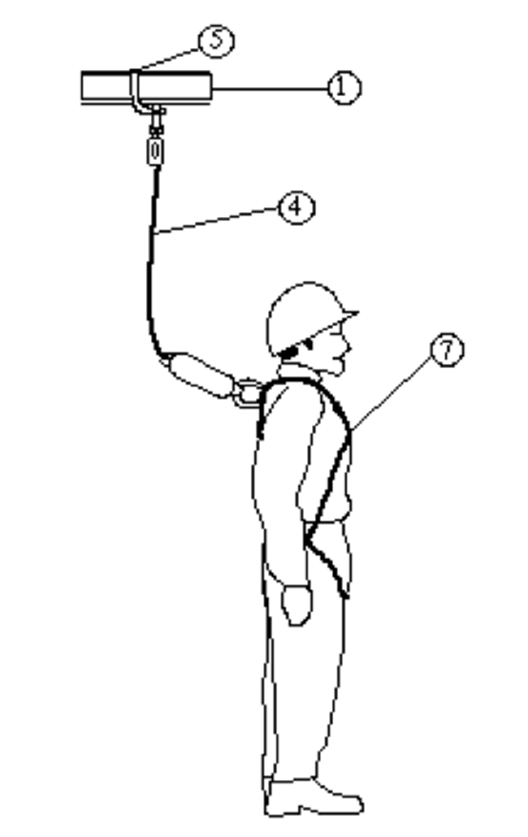
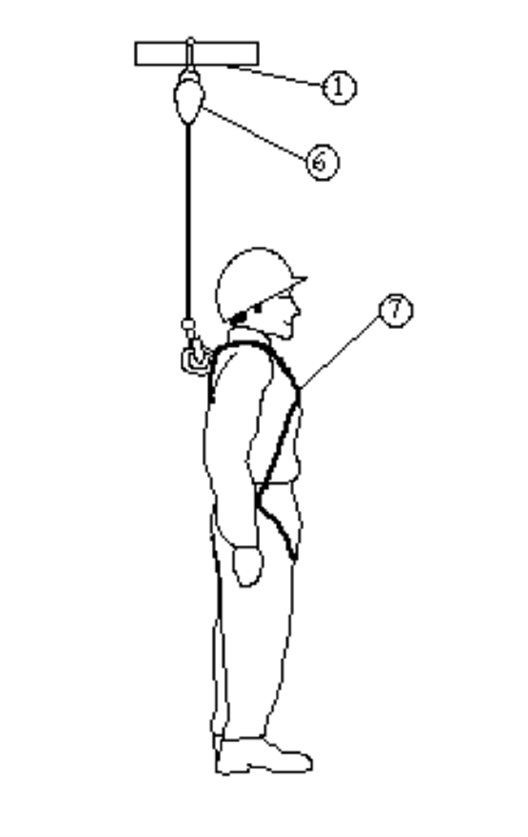
Full-body harnesses wrap around the waist, shoulders, and legs (see Figures A, B and C). A D-ring located in the center of the back between the shoulder blades when properly adjusted is the fall arrest connection point. In the event of a fall, a full-body harness distributes the force of the impact throughout the trunk of the body, not just in the abdominal area. This allows the pelvis and shoulders to help absorb the shock, reducing the impact to the abdominal area. Full-body harnesses come with optional side, front and shoulder D-rings. Side and front D-rings are connection points used for work positioning only. Shoulder D-rings are for retrieval from confined spaces.

Three factors determine the arresting force from a fall: lanyard material type, free fall distance and the weight of the worker. The use of a shock-absorbing lanyard or a higher tie-off point can help reduce the impact force.

Body belts with a D-ring located on the rear waist are for travel restraint and hip D-rings are for positioning applications.

Connection Devices

Connection devices attach the belt or harness to the tie-off point. This can be one device, such as a shock-absorbing lanyard, positioning and restraint lanyards, self-retracting lifelines (SRLs), leading-edge SRLs or a combination of devices that include items such as work lines, rope grabs, tie-off straps, and carabiners.

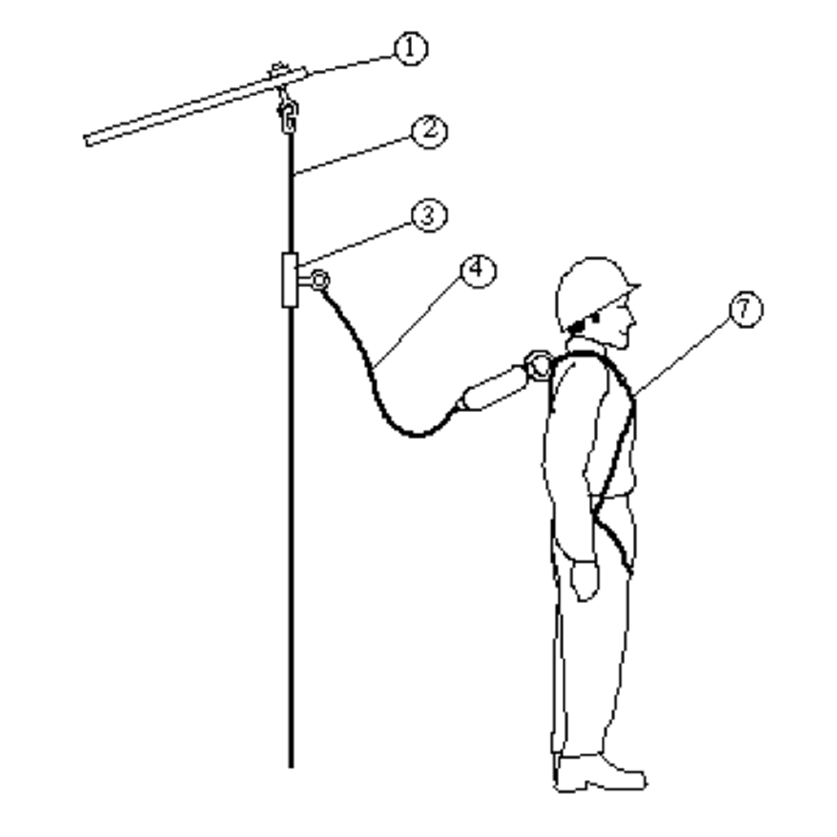
Shock-absorbing lanyards can be used both to restrain workers in position and to arrest falls. When using a restraint lanyard, the length should be kept as short as possible and never used for any vertical free fall hazard application. Restraint lanyards are available in a variety of materials, including steel cables, nylon rope, nylon webbing and polyester webbing. Shock-absorbing lanyards (see Figures A and C) can be made of steel, nylon rope, nylon webbing or Dacron webbing.

All shock-absorbing lanyards incorporate a “shock pack” that will deploy to absorb the energy produced during a fall event. The “shock pack” must reduce the potential fall arrest force to less than 1800 lbs. Use of a shock-absorbing lanyard is recommended because it typically limits the arresting force from a six-foot drop to less than 900 lbs. A shock-absorbing lanyard used for a fall is limited to allow a maximum six-foot free fall. For this reason, most lanyards are a maximum of six feet long. However, if a higher tie-off point is used, the shock-absorbing lanyard can be longer as long as the free fall distance does not exceed six feet.

Lifelines add versatility to the fall arrest system. When used in conjunction with rope grabs (see Figure C), a lifeline allows the worker to move along the length of the line rather than having to disconnect and re-connect to a new tie-off point. The rope grab is engineered to help arrest a fall instantly. A rope grab and lifeline system is a passive form of protection, allowing the user to move as long as tension is slack on the lifeline. If a fall occurs, the tension on the rope grab triggers the internal mechanism to arrest the fall. An SRL (see Figure B) automatically retracts any slack line between the worker and the tie-off point. While this type of line doesn’t require a rope grab, it must be kept directly above the worker to help eliminate any potential swing hazard if the worker falls.

A cross-arm strap (see Figure A) is used at a tie-off point with a large diameter, such as an I-beam. The cross-arm strap then provides the anchor to which a shock-absorbing lanyard, restraint lanyard or SRL can directly attach. Using a cross-arm strap helps ensure the lanyards and/or lifelines do not become abraded or twisted from wrapping around the I-beam. A carabiner (see Figure D) works in the same situations. It is used for tie-off points with a diameter of one to five inches, and then the lanyard is attached to the carabiner.

Tie-Off (Anchor) Points

A tie-off point (see Figures A, B, C and D) is where the shock-absorbing lanyard or SRL is attached to a structural support. When shock-absorbing lanyards or an SRL are being used, ensuring that the anchor point is at or above the D-ring point of the harness will minimize the free fall distance. This also helps ensure that the shock-absorbing lanyard or SRL doesn’t interfere with personal movement. Workers must also tie off in a manner that ensures no lower level will be struck during a fall. To calculate this when using a shock-absorbing lanyard, add the height of the worker, the shock-absorbing lanyard length, the stated elongation distance listed on the device and a safety factor of three feet. To calculate when using a SRL, add the height of the worker, the maximum free fall distance of two feet, the maximum deceleration distance of three and one-half feet, and a safety factor of three feet. The sum of these distances should not be greater than the distance measured from the work surface the worker is standing on to the next level or object below that any part of their body could strike if they fell.

Other Devices

For confined space applications, a tripod and winch system is used as both the tie-off point and connection device. It is used in conjunction with a full-body harness to lower and raise workers into tanks or manholes. Make sure that the tripod system you choose is designed for your application. Never use a material handling device for personnel use unless it is specifically designed to do so.

Ladder lifeline systems protect workers wearing personal fall protection equipment from falls when climbing fixed ladders. The systems consist of a cable or channel, with a grabbing device attached for a connection point.

  1. Tie-off point
  2. Lifeline
  3. Rope grab
  4. Shock-absorbing lanyard
  5. Cross-arm strap
  6. Retractable lifeline
  7. Full-body harness
  8. Restraining belt
  9. Restraining lanyard
  10. Carabiner

Figure B


Figure C

Figure D

Fall Rescue

Any fall rescue program should be as safe as possible and must take as little time as possible to bring a fallen worker to safety. When a fall occurs, any number of factors can create challenges to the effective rescue of the victim. Weather conditions, physical obstacles and the condition of the victim can consume time and create hindrances for rescue personnel.

All rescue plans should be regularly reviewed to ensure the procedures are manageable and realistic in their time estimates. Employers should act in their own best interests by implementing the safest and quickest rescue plan and by practicing procedures to maximize preparation for a real emergency.
OSHA recommends these general rescue plan guidelines:

  • Rescue suspended workers as quickly as possible
  • Be aware of the potentially life-threatening risks of orthostatic intolerance and suspension trauma
  • Be aware of signs and symptoms of orthostatic intolerance
  • Be aware that suspended workers who are unconscious or have head injuries are particularly at risk for orthostatic intolerance
  • Be aware of the factors that can increase the risk of suspension trauma
  • Be aware that some authorities advise against moving the rescued workers to a horizontal position too quickly

Visit OSHA for more information on the OSHA bulletin on orthostatic intolerance and rescue.

To help alleviate the potential for orthostatic intolerance for a conscious suspended worker, the use of trauma straps can provide comfort and relieve pressure, which improves blood circulation until rescuers arrive. Straps are designed to work with most brands of harnesses; adding a second device provides better support and balance for the fallen worker.

Inspection and Maintenance

OSHA regulations require that all personal fall protection systems be inspected before initial use during each work shift for mildew, wear, damage, other deterioration, and defective components. To properly maintain the devices, periodic cleaning is necessary. All surfaces should be cleaned with a mild detergent soap, and air dried away from excess heat. ANSI/ASSP Z359.11-2021 suggests at a minimum to comply with all manufacturer instructions regarding the inspection, maintenance, and storage of the fall protection equipment.

IMPORTANT NOTE: ANY EQUIPMENT EXPOSED TO A FALL MUST BE TAKEN OUT OF SERVICE AND NOT USED.

Sources

29 CFR 1910 Subpart D, Walking-Working Surfaces
29 CFR 1910 Subpart F, Powered Platforms, Manlifts, and Vehicle-Mounted Platforms
29 CFR 1926 Subpart E, Personal Protective and Life Saving Equipment
29 CFR 1926 Subpart L, Scaffolds
29 CFR 1926 Subpart M, Fall Protection
29 CFR 1926 Subpart R, Steel Erection
29 CFR 1926 Subpart X, Stairways and Ladders
ANSI/ASSP A10 Construction and Demolition Standards
ANSP/ASSP Z359 Fall Protection Code
ANSI/ASSP Z359.11-2021 Safety Requirements for Full-Body Harnesses
Bureau of Labor Statistics Census of Fatal Occupational Injuries, Fatal Occupational Injuries by Event, 2019
Bureau of Labor Statistics Employer-Reported Workplace Injury and Illnesses, 2019 
Quick Tips #192: Hazard Assessment Form

Frequently Asked Questions

Q: Fall protection is required whenever employees are working over dangerous equipment/machinery at any height. Does OSHA define “dangerous equipment”?

A: Yes, OSHA defines “dangerous equipment” as “equipment, such as vats, tanks, electrical equipment, machinery, equipment or machinery with protruding parts, or other similar units, that, because of their function or form, may harm an employee who falls into or onto the equipment.”

Q: Must fall protection harnesses be taken out of service after a specified amount of time – five years?

A: No – general guidelines from OSHA, ANSI/ASSP and most manufacturers state fall protection equipment does not have a specified shelf-life or life expectancy. The reference to five years comes from an older ANSI/ASSP A10 standard. ANSI/ASSP A10 addresses construction and demolition and one of the requirement listed in an older A10 standard was that unless the manufacturer specifies otherwise, harnesses should be removed from service after five years. ANSI/ASSP Z359 Fall Protection Code which applies to both general industry and construction does not include that language.

The information contained in this article is intended for general information purposes only and is based on information available as of the initial date of publication. No representation is made that the information or references are complete or remain current. This article is not a substitute for review of current applicable government regulations, industry standards, or other standards specific to your business and/or activities and should not be construed as legal advice or opinion. Readers with specific questions should refer to the applicable standards or consult with an attorney.

Source: Grainger Know How – https://www.grainger.com/know-how


Construction Fall Protection Subpart M – Quick Tips

Here are the relevant guidelines and requirements for construction fall protection:

The following list of questions and associated regulations provide guidance on common safety issues related to 29 CFR 1926.501 to 1926.503. While it by no means covers every area of fall protection in construction, it does highlight some of the more common safety issues and provides a basic understanding of these requirements.

Question: Do walking and working surfaces have the strength and structural integrity to support people safely?

Regulation: 29 CFR 1926.501(a)(2)

Question: Are employees prohibited from working or walking on surfaces that are not designed to support them safely?

Regulation: 29 CFR 1926.501(a)(2)

Question: Do guardrail systems, safety net systems or personal fall arrest systems protect employees when they work on unprotected sides and edges of walking and working surfaces that are six feet or more above a lower level?

Note: Exceptions are permitted if these systems are infeasible or create a greater hazard. However, a fall protection plan must still be developed and implemented.

Regulation: 29 CFR 1926.501(b)(1)

Question: Do guardrail systems, safety net systems or personal fall arrest systems protect employees during construction of leading edges six feet or more above lower levels?

Regulation: 29 CFR 1926.501(b)(2)(i)

Question: Do guardrail systems or personal fall arrest systems protect workers in a hoist area from falling six feet or more to lower levels?

Regulation: 29 CFR 1926.501(b)(3)

Question: Does a personal fall arrest system protect employees if guardrail systems are removed for hoisting operations, requiring employees to lean through the access opening or out over the edge of the access opening (e.g., to receive or guide equipment and materials)?

Regulation: 29 CFR 1926.501(b)(3)

Question: Do personal fall arrest systems, covers, or guardrail systems erected around holes protect employees on walking and working surfaces more than six feet above lower levels from falling through holes (including skylights)?

Regulation: 29 CFR 1926.501(b)(4)(i)

Question: Do covers protect employees on a walking and working surface from tripping in or stepping into holes (including skylights)?

Regulation: 29 CFR 1926.501(b)(4)(ii)

Question: Do covers protect employees on a walking and working surface from objects falling through holes (including skylights)?

Regulation: 29 CFR 1926.501(b)(4)(iii)

Question: Do guardrail systems, safety net systems or positioning device systems protect employees on the face of framework or reinforcing steel more than six feet above lower levels from falling?

Regulation: 29 CFR 1926.501(b)(5)

Question: Do guardrail systems, fences or barricades protect employees at the edge of an excavation six feet or more in depth from falling when the excavations are not readily seen because of plant growth or other visual barrier?

Regulation: 29 CFR 1926.501(b)(7)(i)

Question: Do guardrail systems, fences, barricades or covers protect employees at the edge of a well, pit, shaft or similar excavation six feet or more in depth from falling?

Regulation: 29 CFR 1926.501(b)(7)(ii)

Question: Do guardrail systems or equipment guards protect employees from falling from less than six feet onto dangerous equipment?

Regulation: 29 CFR 1926.501(b)(8)(i)

Question: Do guardrail systems, personal fall arrest systems or safety net systems protect employees six feet or more above dangerous equipment from fall hazards?

Regulation: 29 CFR 1926.501(b)(8)(ii)

Question: Do guardrail systems, safety net systems, personal fall arrest systems or controlled access zones protect employees performing overhand bricklaying and related work six feet or more above lower levels from falling?

Regulation: 29 CFR 1926.501(b)(9)

Question: Does a guardrail system, safety net system or personal fall arrest system protect employees performing overhand bricklaying and related work when reaching more than 10 inches below the level of the walking/working surface from falling?

Note: Bricklaying operations performed on scaffolds are regulated by Subpart L – Scaffolds

Regulation: 29 CFR 1926.501(b)(9)(i)

Question: Are employees engaged in roofing activities on low-slope roofs with unprotected sides and edges six feet or more above lower levels protected from falling by guardrail systems, safety net systems, personal fall arrest systems, or a combination of a warning line system and guardrail system, warning line system and safety net system or warning line system and personal fall arrest system, or warning line system and safety monitoring system?

On roofs 50 feet or less in width, the use of a safety monitoring system alone is permitted.

Regulation: 29 CFR 1926.501(b)(10)

Question: Do guardrail systems with toe boards, safety net systems or personal fall arrest systems protect employees on steep roofs with unprotected sides and edges six feet or more above lower levels from falling?

Regulation: 29 CFR 1926.501(b)(11)

Question: Are employees engaged in the erection of precast concrete members and related operations six feet or more above lower levels protected from falling by guardrail systems, safety net systems or personal fall arrest systems?

Note: Exceptions are permitted if these systems are infeasible or create a greater hazard. However, a fall protection plan must still be developed and implemented.

Regulation: 29 CFR 1926.501(b)(12)

Question: Are employees engaged in residential construction activities six feet or more above lower levels protected from falling by guardrail systems, safety net systems or personal fall arrest systems?

Note: Exceptions are permitted if these systems are infeasible or create a greater hazard. However, a fall protection plan must still be developed and implemented.

Regulation: CFR 1926.501(b)(13)

Question: Are employees protected from falling by a guardrail system, a safety net system or a personal fall arrest system if they are working on, at, above or near wall openings (including those with chutes attached) where (a) the outside bottom edge of the wall opening is six feet or more above lower levels and (b) the inside bottom edge of the wall opening is less than 39 inches above the walking and working surface?

Regulation: 29 CFR 1926.501(b)(14)

Question: Are employees on a walking/working surface not otherwise addressed six feet or more above lower levels protected from falling by a guardrail system, safety net system or personal fall arrest system?

Regulation: 29 CFR 1926.501(b)(15)

Question: When an employee is exposed to falling objects, are they required to wear a hard hat?

Regulation: 29 CFR 1926.501(c)

Question: When an employee is exposed to falling objects, is one of the following measures implemented?

Erect toe boards, screens or guardrail systems to prevent objects from falling from higher levels.

Erect a canopy structure and keep potential fall objects far enough away from the edge of the higher level so that those objects would not go over the edge if they were displaced.

Barricade the area to which objects could fall, prohibit employees and students from entering the barricaded area, and keep objects that may fall far enough away from the edge of a higher level so that those objects would not go over the edge if they were displaced

Regulation: 29 CFR 1926.501(c)

Question: Has a training program been provided to everyone who might be exposed to fall hazards?

Note: The training program must enable each employee to recognize the hazards of falling and know the procedures for minimizing these hazards

Regulation: 29 CFR 1926.503(a)(1)

Question: Is the training program conducted by a competent person?

Regulation: 29 CFR 1926.503(a)(2)

Question: Have individual certification records been prepared that contain the name or other identity of the person trained, the date(s) of the training and the signature of the employer or person who conducted the training?

Regulation: 29 CFR 1926.503(b)(1)

Question: Is the latest training certification for all persons trained available for inspection?

Regulation: 29 CFR 1926.503(b)(2)

Question: Is retraining conducted if a person can no longer recognize the hazards of falling or follow the proper procedures?

Regulation: 29 CFR 1926.503(c)

Question: Is retraining conducted when changes in the workplace render previous training obsolete?

Regulation: 29 CFR 1926.503(c)(1)

Question: Is retraining conducted when changes in the types of fall protection systems or equipment render previous training obsolete?

Regulation: 29 CFR 1926.503(c)(2)

Question: Is retraining conducted if a person cannot use fall protection systems or equipment or has not retained the requisite understanding or skill?

Regulation: 29 CFR 1926.503(c)(3)

FALL RESCUE

All fall rescue programs should be as safe as possible and take as little time as possible to bring a fallen worker to safety. When a fall occurs, any number of factors can create challenges to the effective rescue of the victim. Weather conditions, physical obstacles and the condition of the victim can consume time and create hindrances for rescue personnel.

All rescue plans should be regularly reviewed to ensure that the procedures are manageable and realistic in their time estimates. Employers act in their own best interests by implementing the safest and quickest rescue plan and by practicing procedures to maximize preparation for a real emergency.

OSHA RECOMMENDS THESE GENERAL GUIDELINES:

  • Rescue suspended workers as quickly as possible
  • Be aware of the potentially life threatening risks of orthostatic intolerance and suspension trauma
  • Be aware of signs and symptoms of orthostatic intolerance
  • Be aware that suspended workers who are unconscious or have head injuries are particularly at risk for orthostatic intolerance
  • Be aware of the factors that can increase the risk of suspension trauma
  • Be aware that some authorities advise against moving the rescued workers to a horizontal position too quickly

For more information on the suspension trauma and orthostatic intolerance, see After the Fall Event — Preventing Suspension Trauma.

OTHER CONSTRUCTION STANDARDS RELATED TO FALL PROTECTION

29 CFR 1926.104 SAFETY BELTS, LIFELINES AND LANYARDS

(a) Lifelines, lanyard and safety harnesses must only be used for employee safeguarding. Any of these products that are subject to in-service loading must be immediately removed from service and not be reused again.

(b) Lifelines must be secured above the point of operation to an anchorage capable of supporting a minimum dead weight of 5400 pounds.

(c) Lifelines used on rock-scaling operations, or in areas where the lifeline may be subjected to cutting or abrasion, must be a minimum of 7/8-inch wire core manila rope. For all other lifeline applications, a minimum of 3/4-inch manila or equivalent, with a minimum breaking strength of 5400 pounds, must be used.

(d) Safety belt lanyards must be a minimum 1/2-inch nylon rope or equivalent with a maximum length to allow the user to fall not more than six feet and have a nominal breaking strength of 5400 pounds.

29 CFR 1926.105 SAFETY NETS

(a) Safety nets must be provided when workplaces are higher than 25 feet above ground or water surfaces or other surfaces where the use of ladders, scaffolds, catch platforms, temporary floors, safety lines or safety belts is impractical.

(c)(1) Nets must extend eight feet beyond the edge of the work surface where employees are exposed and must be installed as close under the work surface as practical but in no case more than 25 feet below the work surface. Nets must be hung with sufficient clearance to prevent user’s contact with the surfaces or structures below. Such clearances must be determined by impact load testing.

(d) The mesh size of nets shall not exceed six inches by six inches. All new nets must meet accepted performance standards of 17,500 foot-pounds minimum impact resistance as determined and certified by the manufacturers, and must bear a label of proof test. Edge ropes must provide a minimum breaking strength of 5000 pounds.

DEFINITIONS PERTAINING TO THIS SECTION:

Lanyard means a rope, suitable for supporting one person. One end is fastened to a safety belt or harness and the other end is secured to a substantial object or a safety line.

Lifeline means a rope, suitable for supporting one person, to which a lanyard or safety belt (or harness) is attached.

Safety belt means a device, usually worn around the waist which, by reason of its attachment to a lanyard and lifeline or a structure, will help prevent a worker from falling. Body belts are to be used for restraint and positioning only, not as part of a personal fall arrest system. A worker who uses a body belt as part of a personal fall arrest system is exposed to potentially falling out of the belt, serious internal injuries and asphyxiation through prolonged suspension.

COMMONLY ASKED QUESTION

Q: What is a “competent person”?

A: The term “competent person” is used in many OSHA standards and documents. According to the 1926 construction standard, an OSHA “competent person” is defined as “one who is capable of identifying existing and predictable hazards in the surroundings or working conditions which are unsanitary, hazardous, or dangerous to employees, and who has authorization to take prompt corrective measures to eliminate them” [29 CFR 1926.32(f)]. By way of training and/or experience, a competent person is knowledgeable of applicable standards, is capable of identifying workplace hazards relating to the specific operation, and has the authority to correct them.

SOURCE

29 CFR 1926.501 Subpart M

RELATED ARTICLES

After the Fall Event — Preventing Suspension Trauma
Fall Protection for Aerial Work Platforms
Fall Protection Equipment
OSHA Scaffolding Requirements

(Rev. 9/2015)

The information contained in this article is intended for general information purposes only and is based on information available as of the initial date of publication. No representation is made that the information or references are complete or remain current. This article is not a substitute for review of current applicable government regulations, industry standards, or other standards specific to your business and/or activities and should not be construed as legal advice or opinion. Readers with specific questions should refer to the applicable standards or consult with an attorney.

Source: Grainger Know How – https://www.grainger.com/know-how