Battling Complacency Fatality Report

Freak accidents are neither freak, nor accidental.

First, the phrase implies that this type of incident hardly ever happens and there is, therefore, not much you can do about it. In fact, the phrase “freak accident” is a double-whammy. Not only dies the word “freak” imply “rare,” but the word “accident,” defined as “an unfortunate incident that happens unexpectedly and unintentionally, typically resulting in damage or injury,” implies that the event was unexpected.

One of the examples of a fatality that was labeled a “freak accident” was the tragic death of Marty Dale Whitmire in Greenville, South Carolina, in April 2017.  Whitmire was working on a paving operation when his truck clipped a live power line, which fell on him — a tragic, far-too-common — and completely preventable — cause of worker death.

Yesterday, Marty Whitmire’s nephew, Melvin Whitmore, posted a comment on that post which I am reprinting below to give it more attention. I defy you to read it without boiling over, and crying at the same time:

April 11, 2017 is a day my family and I will NEVER forget. Marty was my like a brother to me. He was actually my Uncle (my father’s baby brother) but because he was only 8 years older than me we were very close when I was a child and as I became an adult we grew to be best friends. He used to tell everyone that he and I were brothers.

Marty worked on my crew as a Pipefitter for 4+- years and the company we were working for laid him off in November of 2016. That’s when he took the job at King Asphalt to keep busy until the layoff ended. He wasn’t experienced and he was a flag man for the first 4 months he worked there. Towards the end of March 2017 he was “promoted” to the job the position that he was working when he was tragically killed, not accidentally either. This happened in my opinion (I have 22 years in Industrial Pipefitting an OSHA 30, and experience as Site Specific Safety Officer on a Federal Jobsite) due to Marty’s absence of proper training on the machine and lack of training for the foreman in the job. The power lines were lower than required by national code, the pole was not up to national codes, the spotter was out that day and no one filled his position and SCDOT inspector was sitting in his truck onsite because the road being paved was a State Road. The road has more overhead lines crossing the road than the average road in that particular area that the incident occurred, and no one notified the power company about safeguarding the power lines before work began. COMPLACENCY killed my “brother”!!!! This could have been avoided if either the paving or power company or SCDOT would have fulfilled their obligations to provide a safe place to work.


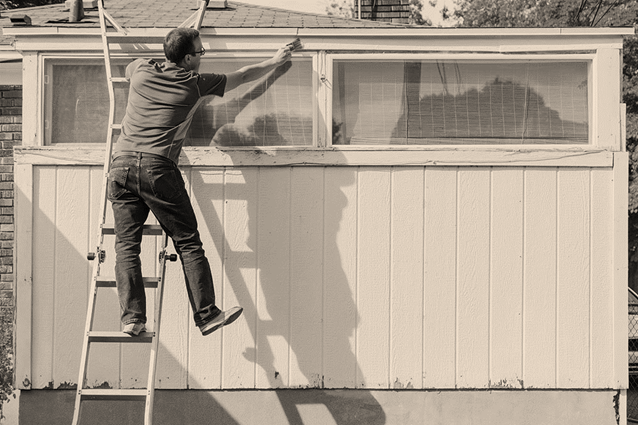
Battling Complacency – Picture This

What is wrong in this picture? Complacency at work can cause or contribute to critical errors which increase the probability of injury, from not having your eyes or mind on the task, walking into the line of fire, or losing your balance, traction or grip.

Always examine equipment, procedures and the hazards that may exist. You need to focus physically and mentally on your work, no matter how many times you may have done the same job in the past.

Moral: Awareness is something that must be a part of each of us. If you are not thinking about what could go wrong every day, all day while you work, you are not completing the task safely.


Choices at Home and Safety on the Job Meeting Kit

WHAT’S AT STAKE

Choices at Home Can Affect Safety on The Job (Safety Talk)

There are many choices we make at home that can have major effects at work. Whether it is safety-related or lifestyle choices, many of these choices have repercussions that carry over from home into the workplace.

WHAT’ S THE DANGER

CHOICES / PROCEDURES

In the high-risk world of utility operations, safety depends greatly on the choices that are made at all levels of an organization. The decisions that are made as to how we will handle a particular situation determine how safe everyone involved will be.

When decisions or choices are made because of convenience and not according to the procedures in place, an injury is sure to happen.

HABITS

When people are placed in situations, especially ones that are stressful, people will revert to what worked for them before. In utility operations, this “habit” can quickly lead to errors in the decisions or choices we make. Then it is only a matter of time before an incident occurs. To help avoid this situation, it’s important to recognize the things that form our habits:

Knowledge—Understanding the task and safety processes or procedures for that task are paramount to forming good safety habits. We can educate people to the correct way to perform tasks and the best way is to teach them early on in their career.

Skill—The ability to perform a task safely includes experience with that particular task. Many line workers have been injured because they were given a new task they had not performed before and tried to accomplish it by “bluffing” their way through.

Attitude—The desire or “will” portion of the safety equation, attitude is about the person whose safety or life is on the line. Supervisors should have open communications with workers, which allow employees to come to the supervisor with problems that could affect their performance.

HOW TO PROTECT YOURSELF

SAFETY RULES AND PROCEDURES do not prevent incidents. It is the following of those RULES AND PROCEDURES that increase the chances an incident will not occur.

  1. Set up an ergonomic work station

Provide your employees with the resources they need to set up their ergonomically correct home station.

  • Use a rolling chair equipped with back support and ample padding.
  • Position monitors 20-30 inches from your face, centered straight ahead. Your eye level should fall at the top third of the screen.
  • Sit with your back and shoulders straight, with a few inches separating the backs of your knees from the edge of the chair.
  • Follow the 20/20/20 Rule: Every 20 minutes, look at an object 20 feet away or more for at least 20 seconds.
  1. Get up, stretch and stay active

Remind your employees about the importance of stretching their legs and staying active even as they’re confined to their own homes. Set an alarm to take regular breaks. Perform simple stretches throughout your workday helps you stay relaxed and prevent overexertion injuries.

  1. Prevent slips, trips and falls

Slips, trips and falls are some of the most common types of workplace injuries. When your employees are working from home, their environment doesn’t have the safety standards you have in place at the office.

  • Prevent slips by wearing proper footwear, even inside your home – avoid slippery socks. Clean up spills, as well as mud or water tracked in on shoes, immediately.
  • To prevent trips, keep the walkways in your home clear of clutter. Keep your house well-lit and make sure cords are safely secured. Avoid distractions, like your phone, while walking.
  • Prevent falls down stairs by always turning on the lights and using a handrail when going up or down stairs. Avoid trying to carry too much – leave one hand free to catch yourself if you stumble.
  1. Pay attention to your surroundings

Encourage your employees to stay aware of their surroundings while working from home. If possible, an employee’s work area should be in a room with a closed door to avoid distractions. Employees should set aside time each week to check their work area. Best practices include:

  • Have a fire extinguisher and fire exit plan for the household
  • Prevent electrical hazards by keeping desks clear of open liquid containers, like coffee or tea
  • Dispose of trash at the end of each day
  1. Keep lines of communication open

Stay connected with your workforce while employees are working remotely. Decide what communication channels are the most valuable and use them to stay in touch. Conference calls can help bring teams together. One-on-one calls with individual employees can reveal struggles they might be having in their new workspace.

FINAL WORD

Be aware of the connection between the choices you make at home and how they affect work. We no longer only represent ourselves in this day of age of technology. We represent everything we are a part of in our professional and personal lives and they are all interconnected.


Choices at Home and Safety on the Job Stats and Facts

FACTS

  1. Remote work, home office, work from home, telework are some of the terms used to describe settings where workers are not physically present in the office of their employer or the purchaser of their services. The concept mainly works for jobs and tasks that involve a large amount of screen work. The advancement of digitalization and the shift to a more knowledge-based economy in many countries have made the option of remote work more realistic for employers and employees. For example, roughly half of all jobs could be done in a remote setting in the United States.
  2. Being sedentary might pose a higher risk to employees working at home because they’re not getting up to attend meetings or talk to their coworkers face to face.
  • Work equipment lying all over the floor – box files, mounds of paperwork etc.
  • Lifting – accidents that are caused by lifting heavy objects are the cause of many lower back and neck injuries, in particular. Whilst lifting accidents happen more often in an industrial setting, lifting heavy boxes and office equipment can still be the cause of injury/ in offices too.
  • Objects falling from height – in an office setting these types of accidents usually involve boxes or heavy files falling from high up shelves or large cupboards, falling onto a nearby worker.
  • Workstations – if they are not properly set up for the specific individual user, then a number of injuries can occur to the employee – back injuries, carpal tunnel syndrome (pressure on a nerve in the wrists) and eye strain are just some of the problems that can be caused by an incorrectly set up work station.
  • Stress at work – everyone can get stressed out at work from time to time. However, stress that is caused by acts or omissions by the employer and that happen repeatedly over a period of time, can leave the employer facing a claim from the affected employee.

STATS

  • For companies outside the tech sector and those not yet ordered by health officials to enact social-distancing protocols, mandating work at home has been more complicated. In 2017-18, only about 25 percent of U.S. workers worked at home at least occasionally and only 15 percent had days on which they only worked at home, according to the U.S. Bureau of Labor Statistics.
  • The Health and Safety Executive’s statistics for 2018/2019, reveal that there were 581,000 self-reported accidents at work causing non-fatal injuries during the year.
  • According to Injury Facts, 167,127 people died from unintentional injury-related deaths in 2018.
  • In 2005, according to the Bureau of Labor Statistics, industry in the United States reported 5,188 fatalities. Dr. E.
  • In 10 minutes, in the United States, preventable incidents will cause:
  • Three people to die
  • 885 people to suffer an injury severe enough to require a doctor or medical professional
  • $19.68 million in costs


Choices at Home and Safety on the Job Fatality Report

Man dies charging iPhone while in the bath

A man was electrocuted as he charged his mobile phone while in the bath, an inquest has heard.

Richard Bull, 32, died when his iPhone charger made contact with the water at his home in Ealing, west London.

A coroner ruled his death was accidental and plans to send a report to Apple about taking action to prevent future deaths.

Safety campaigners have warned about the dangers of charging mobiles near water following the inquest.

Mr Bull is believed to have plugged his charger into an extension cord from the hallway and rested it on his chest while using the phone, the Sun reports.

He suffered severe burns on his chest, arm and hand when the charger touched the water and died on 11 December, the newspaper said.

Charity Electrical Safety First said the death highlighted some of the dangers of having electrical appliances around water.

Product safety manager Steve Curtler said people would not get electrocuted from a mobile appliance such as a laptop or mobile phone if it was not being charged.

Such devices typically have a low voltage of 5V to 20V so “you probably wouldn’t feel it” if they came into contact with water, he added.

However, connecting a mobile phone to a charger plugged into the mains electricity supply increases the risk of harm.

“Although the cable that is plugged in to your phone is 5V, somewhere along the line it’s plugged into the electricity supply and you’re reliant on that cable and a transformer to make sure you don’t get into contact with the main voltage,” said Mr Curtler.

He said cheap, non-branded chargers may not offer such protection, but even with genuine chargers you are still taking an unnecessary risk.

“You’re wet, which conducts electricity a lot better; you’re in the bath with no clothes on, so skin resistance is less. You’re vulnerable in the bathroom.”

Note: It would be better if the “accident” had occurred while “working from home”, or, the accident occurred in non-working hours (ie) 5:PM to 6:AM


Choices at Home and Safety on the Job – Picture This

What’s wrong in this picture?

Slips, trips and falls are some of the most common types of workplace injuries. When your employees are working from home, their environment doesn’t have the safety standards you have in place at the office. They’re at risk of tripping over household objects like toys, slipping on water spilled from the dog’s bowl, or even falling down the stairs.

Prevent falls down stairs by always turning on the lights and using a handrail when going up or down stairs. Avoid trying to carry too much – leave one hand free to catch yourself if you stumble.


Choices at Home and Safety on the Job Meeting Kit – Spanish

QUÉ ESTÁ EN RIESGO

Las decisiones en casa pueden afectar a la seguridad en el trabajo (Charla sobre seguridad)

Hay muchas decisiones que tomamos en casa que pueden tener efectos importantes en el trabajo. Tanto si se trata de elecciones relacionadas con la seguridad como con el estilo de vida, muchas de estas elecciones tienen repercusiones que se trasladan del hogar al lugar de trabajo.

CUÁL ES EL PELIGRO

ELECCIONES / PROCEDIMIENTOS

En el mundo de alto riesgo de las operaciones de los servicios públicos, la seguridad depende en gran medida de las decisiones que se toman en todos los niveles de una organización. Las decisiones que se toman sobre cómo manejar una situación particular determinan la seguridad de todos los involucrados.

Cuando las decisiones o elecciones se toman por conveniencia y no de acuerdo con los procedimientos establecidos, es seguro que se producirá una lesión.

HÁBITOS

Cuando las personas se encuentran en situaciones, especialmente las que son estresantes, vuelven a lo que les ha funcionado antes. En las operaciones de servicios públicos, este “hábito” puede conducir rápidamente a errores en las decisiones o elecciones que hacemos. Entonces es sólo cuestión de tiempo que se produzca un incidente. Para ayudar a evitar esta situación, es importante reconocer las cosas que forman nuestros hábitos:

Conocimiento: entender la tarea y los procesos o procedimientos de seguridad para esa tarea es primordial para formar buenos hábitos de seguridad. Podemos educar a las personas en la forma correcta de realizar las tareas y la mejor manera es enseñarles al principio de su carrera.

Habilidad: la capacidad de realizar una tarea de forma segura incluye la experiencia con esa tarea en particular. Muchos trabajadores de línea se han lesionado porque se les dio una nueva tarea que no habían realizado antes y trataron de realizarla “fanfarroneando”.

Actitud: la parte del deseo o la “voluntad” de la ecuación de seguridad, la actitud se refiere a la persona cuya seguridad o vida está en juego. Los supervisores deben tener una comunicación abierta con los trabajadores, que permita a los empleados acudir al supervisor con problemas que puedan afectar a su rendimiento.

COMO PROTEGERSE

Las NORMAS Y PROCEDIMIENTOS DE SEGURIDAD no evitan los incidentes. Es el seguimiento de esas NORMAS Y PROCEDIMIENTOS lo que aumenta las posibilidades de que no se produzca un incidente.

1. Establezca un puesto de trabajo ergonómico

Proporcione a sus empleados los recursos necesarios para establecer su puesto de trabajo ergonómico.

  • Utilice una silla rodante equipada con soporte para la espalda y amplio acolchado.
  • Coloque los monitores a 20-30 pulgadas de su cara, centrados en línea recta. El nivel de sus ojos debe estar en el tercio superior de la pantalla.
  • Siéntese con la espalda y los hombros rectos, con unos pocos centímetros de separación entre la parte posterior de las rodillas y el borde de la silla.
  • Sigue la regla 20/20/20: Cada 20 minutos, mira un objeto a 6 metros o más de distancia durante al menos 20 segundos.

2. Levantarse, estirarse y mantenerse activo

Recuerde a sus empleados la importancia de estirar las piernas y mantenerse activos aunque estén confinados en sus casas. Fija una alarma para hacer descansos con regularidad. Realizar sencillos estiramientos a lo largo de la jornada laboral les ayuda a mantenerse relajados y a prevenir lesiones por sobreesfuerzo.

3. Evitar resbalones, tropiezos y caídas

Los resbalones, los tropezones y las caídas son algunos de los tipos más comunes de lesiones en el lugar de trabajo. Cuando sus empleados trabajan desde casa, su entorno no cuenta con las normas de seguridad que usted tiene en la oficina.

  • Prevenga los resbalones utilizando un calzado adecuado, incluso dentro de su casa: evite los calcetines resbaladizos. Limpie inmediatamente los derrames, así como el barro o el agua arrastrada por los zapatos.
  • Para evitar tropiezos, mantenga los pasillos de su casa despejados. Mantenga su casa bien iluminada y asegúrese de que los cables están bien sujetos. Evite las distracciones, como el teléfono, mientras camina.
  • Evite las caídas por las escaleras encendiendo siempre las luces y utilizando un pasamanos al subir o bajar las escaleras. No intente cargar con demasiadas cosas: deje una mano libre para agarrarse si tropieza.

4. Preste atención a su entorno

Anime a sus empleados a estar atentos a su entorno mientras trabajan desde casa. Si es posible, el área de trabajo del empleado debe estar en una habitación con la puerta cerrada para evitar distracciones. Los empleados deben reservar un tiempo cada semana para revisar su área de trabajo. Las mejores prácticas incluyen:

  • Tener un extintor y un plan de salida de incendios para el hogar
  • Prevenir los riesgos eléctricos manteniendo los escritorios libres de recipientes de líquidos abiertos, como el café o el té
  • Desechar la basura al final de cada día

5. Mantenga abiertas las líneas de comunicación

Manténgase conectado con su plantilla mientras los empleados trabajan a distancia. Decida qué canales de comunicación son los más valiosos y utilícelos para mantenerse en contacto. Las conferencias telefónicas pueden ayudar a reunir a los equipos. Las llamadas individuales con empleados concretos pueden revelar los problemas que puedan tener en su nuevo espacio de trabajo.

CONCLUSIÓN

Sea consciente de la conexión entre las decisiones que toma en casa y cómo afectan al trabajo. Ya no nos representamos sólo a nosotros mismos en esta época de tecnología. Representamos todo aquello de lo que formamos parte en nuestra vida profesional y personal, y todo está interconectado.



Choices at Home and Safety on the Job Stats and Facts – Spanish

HECHOS

  1. El trabajo a distancia, la oficina en casa, el trabajo desde casa, el teletrabajo son algunos de los términos utilizados para describir entornos en los que los trabajadores no están físicamente presentes en la oficina de su empleador o del comprador de sus servicios. El concepto funciona principalmente para trabajos y tareas que implican una gran cantidad de trabajo en pantalla. El avance de la digitalización y el cambio a una economía más basada en el conocimiento en muchos países han hecho que la opción del trabajo a distancia sea más realista para los empresarios y los empleados. Por ejemplo, aproximadamente la mitad de los trabajos podrían realizarse a distancia en Estados Unidos.
  2. El sedentarismo puede suponer un mayor riesgo para los empleados que trabajan en casa porque no se levantan para asistir a reuniones o hablar con sus compañeros cara a cara.
  • Equipos de trabajo tirados por el suelo: cajas de archivos, montones de papeles, etc.
  • Levantamiento: los accidentes provocados por el levantamiento de objetos pesados son la causa de muchas lesiones de espalda y cuello, en particular. Aunque los accidentes por levantar objetos pesados son más frecuentes en un entorno industrial, levantar cajas pesadas y equipos de oficina también puede ser causa de lesiones en las oficinas.
  • Caída de objetos desde la altura: en un entorno de oficina, este tipo de accidentes suele consistir en la caída de cajas o archivos pesados desde estantes altos o armarios grandes, que caen sobre un trabajador cercano.
  • Puestos de trabajo: si no están correctamente configurados para el usuario concreto, pueden producirse una serie de lesiones en el empleado: lesiones de espalda, síndrome del túnel carpiano (presión sobre un nervio de las muñecas) y fatiga visual son sólo algunos de los problemas que puede causar un puesto de trabajo mal configurado.
  • Estrés en el trabajo: todo el mundo puede estresarse en el trabajo de vez en cuando. Sin embargo, el estrés causado por actos u omisiones del empresario y que se repite durante un periodo de tiempo, puede hacer que el empresario se enfrente a una reclamación del empleado afectado

ESTADÍSTICAS

  • Para las empresas fuera del sector tecnológico y las que aún no han recibido la orden de los funcionarios de salud de promulgar protocolos de distanciamiento social, obligar a trabajar en casa ha sido más complicado. En 2017-18, solo alrededor del 25% de los trabajadores estadounidenses trabajaron en casa al menos ocasionalmente y solo el 15% tuvo días en los que solo trabajaron en casa, según la Oficina de Estadísticas Laborales de Estados Unidos.
  • Las estadísticas del Ejecutivo de Salud y Seguridad para 2018/2019, revelan que hubo 581.000 accidentes de trabajo autodeclarados que causaron lesiones no mortales durante el año.
  • Según Injury Facts, 167.127 personas fallecieron en 2018 a causa de muertes relacionadas con lesiones no intencionadas.
  • En 2005, según la Oficina de Estadísticas Laborales, la industria en Estados Unidos reportó 5,188 muertes. E.
  • En 10 minutos, en los Estados Unidos, los incidentes prevenibles causarán:
  • La muerte de tres personas
  • Que 885 personas sufran una lesión lo suficientemente grave como para requerir un médico o un profesional de la medicina
  • 19,68 millones de dólares en costes


Choices at Home and Safety on the Job Fatality Report – Spanish

Un hombre muere cargando su iPhone en la bañera

Un hombre se electrocutó mientras cargaba su teléfono móvil en la bañera, según se ha averiguado.

Richard Bull, de 32 años, murió cuando el cargador de su iPhone entró en contacto con el agua en su casa de Ealing, al oeste de Londres.

El juez de instrucción dictaminó que su muerte fue accidental y tiene previsto enviar un informe a Apple para que tome medidas para evitar futuras muertes.

Tras la investigación, los defensores de la seguridad han advertido de los peligros de cargar los móviles cerca del agua.

Se cree que el Sr. Bull enchufó su cargador a un cable de extensión del pasillo y lo apoyó en su pecho mientras usaba el teléfono, informa el Sun.

Sufrió graves quemaduras en el pecho, el brazo y la mano cuando el cargador entró en contacto con el agua y murió el 11 de diciembre, según el periódico.

La organización benéfica Electrical Safety First dijo que la muerte puso de manifiesto algunos de los peligros de tener aparatos eléctricos cerca del agua.

El director de seguridad de productos, Steve Curtler, dijo que la gente no se electrocuta con un aparato móvil, como un ordenador portátil o un teléfono móvil, si no se está cargando.

Estos aparatos suelen tener un voltaje bajo, de entre 5 y 20 V, por lo que “probablemente no se notaría” si entraran en contacto con el agua, añadió.

Sin embargo, conectar un teléfono móvil a un cargador enchufado a la red eléctrica aumenta el riesgo de sufrir daños.

“Aunque el cable que se enchufa al teléfono es de 5V, en algún momento se conecta a la red eléctrica y se depende de ese cable y de un transformador para asegurarse de que no entra en contacto con la tensión principal”, explica Curtler.

Según él, es posible que los cargadores baratos y sin marca no ofrezcan esa protección, pero incluso con cargadores auténticos se corre un riesgo innecesario.

“Estás mojado, lo que conduce la electricidad mucho mejor; estás en el baño sin ropa, por lo que la resistencia de la piel es menor. Eres vulnerable en el baño”.

Nota: Sería mejor que el “accidente” hubiera ocurrido mientras “trabajaba desde casa”, o, que el accidente ocurriera en horario no laboral (es decir) de 5:PM a 6:AM


Choices at Home and Safety on the Job – Picture This – Spanish

¿Qué hay de malo en esta foto?

Los resbalones, los tropezones y las caídas son algunos de los tipos más comunes de lesiones en el lugar de trabajo. Cuando sus empleados trabajan desde casa, su entorno no cuenta con las normas de seguridad que tienes en la oficina. Corren el riesgo de tropezar con objetos domésticos como juguetes, resbalar con el agua derramada del envase del perro o incluso caerse por las escaleras.

Evite las caídas por las escaleras encendiendo siempre las luces y utilizando una barandilla cuando suba o baje las escaleras. Evite intentar cargar demasiado: deje una mano libre para agarrarse si tropieza.


Chainsaw Safety Meeting Kit

WHAT’S AT STAKE

Based on the inherent danger of working with chainsaws, it’s vital that employees exposed to chainsaw operations be given the proper education and skills training so that they know how to work skillfully, keeping themselves and their co-workers safe.

WHAT’ S THE DANGER

1st RULE

Make sure you read the operator’s manual and follow the instruction for safe use of a chainsaw.

GENERAL

The high -power equipment with high-level cutters especially poses a great danger when operated recklessly, which is why it is important that an operator is knowledgeable of the tools and safety precautions regardless of experience.

MAIN HAZARDS

Although some chainsaws are electric, most have gasoline-powered, two-cycle motors. These saws have become lighter, faster and more powerful, increasing the hazard to users. Three main hazards are associated with chainsaw use: Noise, vibration and cuts.

NOISE

When the ear is exposed to high levels of noise, such as those produced by a chainsaw, hearing loss occurs. This is permanent and worsens over time, but is easily preventable. Wear properly fitted ear plugs or muffs, preferably both.

VIBRATION

Over time, the vibration produced by a chainsaw can cause circulatory problems in your finger.

To prevent these conditions, follow these tips:

  • Make sure your saw has vibration dampening (rubber bushings between the handle and the motor section).
  • Keep the saw sharp.
  • Don’t hold the saw so tightly that your hands cramp.
  • Keep warm during work.

CUTS

  • These are the most common injuries caused by chainsaws, ranging from minor hand injuries while filing the chain to major amputation from saw kickback.

HIGH – RISK CHAINSAW OPERATIONS

  • Operating a chainsaw above ground level, such as in a tree or on a ladder
  • Working on a steep slope or uneven ground
  • Cutting trees known to split
  • Working in inclement weather, such as heavy rain or extreme cold
  • Working for long periods of time with no breaks

HOW TO PROTECT YOURSELF

BEFORE STARTING A CHAINSAW

Prior to beginning the task of cutting, a chainsaw operator must do the following:

  • Check controls, chain tension, and all bolts and handles to ensure they are functioning properly and adjusted according to the manufacturer’s instructions.
  • Make sure the chain is sharp and the lubrication reservoir is full.
  • Fuel a gasoline-powered saw at least 10 feet from any sources of ignition, and ensure that the fuel is a proper mix of gas and oil based on the manufacturer’s specifications.
  • Check the fuel container to ensure it is metal or plastic, does not exceed a 5-gallon capacity and is approved by a nationally recognized testing laboratory.
  • Be sure that gasoline-, electric- and battery-powered chainsaws are equipped with a protective device that minimizes chainsaw kickback.

HERE ARE SOME GUIDELINES FOR SAFE USE OF CHAINSAWS:

  • They must be operated with two hands.
  • Always start your saw on a surface that is as clear of debris, firm and level as possible.
  • Adjust your saw so that when it is idling, the chain is stopped.
  • If the saw is fitted with a chain brake, keep it in good working order.
  • Wear a hardhat, preferably with mounted face guard and hearing protection.
  • Wear gloves when working with or fueling the saw, handling or changing the chain.
  • Wear boots with good sole grips.
  • Wear leg protectors.
  • When carrying the saw, keep the chain bar to the rear.
  • Read the entire operation manual before using any chainsaw. Always operate within the manufacturer’s guidelines.
  • Do not alter any guards on the chainsaw.
  • Do not operate a chainsaw on a ladder or any unstable surface.

FINAL WORD

Most workers can manage to start a chainsaw and cut something without incident. Today we have both electric- and battery-powered chainsaws that are easy to start. While it’s great that such advanced technology exists, this technology makes it simpler for workers to operate chainsaws without appropriate education or training about the tool or cutting trees.


Chainsaw Safety Stats and Facts

FACTS:

The Occupational Safety and Health Administration (OSHA) cites the left hand and lower left leg as the most common places for chainsaw injuries. Employers can reduce the risk of these injuries by training their employees on proper chainsaw safety and operation, and appropriate personal protective equipment (PPE).

The four leading causes of trimming and clearing fatalities are struck-by incidents in which workers are hit by falling trees, limbs or motorized equipment; caught-in incidents, which often involve workers becoming caught in wood chippers; falls from elevations such as trees, lifts or ladders; and electrocution due to contact with overhead power lines.

CHAINSAW INJURY STATISTICS

  • Most injuries from chainsaw use are due to “kickback”. Kickback occurs when the tip of the chainsaw hits a hard object such as a knot in the wood and kicks back towards the person operating it.
  • 36% percent of chainsaw injuries affect the legs and knees.
  • The average chainsaw injury requires 110 stitches according to the US Consumer Product Safety Commission.
  • Chaps or chainsaw pants as well as keeping both hands on the saw would reduce chainsaw injuries by 75 percent or more.
  • Medical costs for chainsaw injuries amount to at least $350 million per year.
  • Based on the assumption that four weeks of recovery are required, workers’ compensation costs can be estimated to be at least $125 million annually.
  • Approximately 40 percent of all chainsaw accidents occur to the legs and well over 35 percent occur to the left hand and wrist.


Chainsaw Safety Fatality Report

A worker was using a chainsaw to trim the ends off spacers used to separate layers of lumber in preparation for drying in a kiln. He was working alone although other workers were close by. He was not wearing protective clothing and there was no chain guard or anti-kickback device on the chainsaw he was using.

One of the spacers that he was cutting was apparently loose in the pile and the saw kicked back striking him on the right side of the neck. A deep laceration on his neck to the depth of his spinal cord resulted in death.

Chainsaws were once a tool used only by professional loggers, but it is now estimated that 90 per cent of chainsaws are sold outside of the logging industry.

A chainsaw should be treated like a loaded gun! Bystanders should always keep a safe distance from the operator. And the operator should protect himself as though he was at war!

Despite the fact that any chainsaw can be a killer, too many users ignore this fact and operate them in a careless manner.

Many owners even fail to read the safety tips in their operator’s manuals, and too often, when a saw is resold, the manual does not go with it. Most saws today incorporate several safety features that, when working properly, provide a good measure of safety for the operator.

Some chainsaw owners fail to wear personal protective equipment. They will even remove safety devices because they feel they “get in the way”. Too often the only thing that gets in the way is some part of their body.

All people using chainsaws both on and off the job, should take advantage of training programs and safety courses.


Chainsaw Safety – Picture This

What’s wrong in this picture?

When felling and crosscutting, you may want to bore the guide bar into the trunk. There is a kickback risk if you saw carelessly with the guide bar’s kickback zone directly facing the trunk. You can avoid the greatest kickback risk simply by never putting the nose of the guide bar directly against the wood. The bore cutting technique, however, requires sawing with the nose of the guide bar. If using this technique, make sure you understand how to perform it properly and in a safe way.

Improper chainsaw use can lead to serious injury and even death. Each year, hospital emergency rooms see approximately 30,000 catastrophic injuries from chainsaws. The most frequent chainsaw injuries occur to the left leg and the back of the left hand. These injuries are usually related to kickback and losing control of the saw.

Plan your cut so you know exactly where the saw’s bar will exit the log. As the old timers used to say: It’s not where you start the cut that counts—it’s where you finish. That is, you don’t want to sweep right through the log, out the other side, and into your leg or foot.

Sharpen the teeth and keep the chain lubricated and under proper tension for the best and safest cuts.


Chainsaw Safety Meeting Kit – Spanish

QUÉ ESTÁ EN RIESGO

Teniendo en cuenta el peligro inherente al trabajo con motosierras, es vital que los empleados expuestos a las operaciones con motosierras reciban la educación y la formación adecuadas para que sepan cómo trabajar con destreza, manteniéndose a sí mismos y a sus compañeros de trabajo seguros.

CUÁL ES EL PELIGRO

1ª REGLA

Asegúrese de leer el manual del operador y siga las instrucciones para el uso seguro de una motosierra.

GENERALIDADES

Los equipos de gran potencia con cortadoras de alto nivel suponen especialmente un gran peligro cuando se manejan de forma imprudente, por lo que es importante que el operario conozca las herramientas y las precauciones de seguridad independientemente de su experiencia.

PRINCIPALES PELIGROS

Aunque algunas motosierras son eléctricas, la mayoría tienen motores de gasolina de dos tiempos. Estas sierras se han vuelto más ligeras, rápidas y potentes, lo que aumenta el peligro para los usuarios. Hay tres peligros principales asociados al uso de las motosierras: El ruido, las vibraciones y los cortes.

RUIDO

Cuando el oído está expuesto a altos niveles de ruido, como los producidos por una motosierra, se produce una pérdida de audición. Ésta es permanente y empeora con el tiempo, pero es fácilmente prevenible. Utilice tapones para los oídos u orejeras, preferiblemente ambos.

VIBRACIÓN

Con el tiempo, la vibración producida por una motosierra puede provocar problemas circulatorios en los dedos.

Para prevenir estas afecciones, siga estos consejos:

  • Asegúrese de que su motosierra cuenta con un sistema de amortiguación de las vibraciones (casquillos de goma entre el mango y la sección del motor).
  • Mantenga la sierra afilada.
  • No sujete la sierra con tanta fuerza de manera que se le acalambren las manos.
  • Manténgase caliente durante el trabajo.

CORTES

  • Estas son las lesiones más comunes causadas por las motosierras, que van desde lesiones menores en las manos al limar la cadena hasta amputaciones importantes por el retroceso de la sierra.

OPERACIONES CON MOTOSIERRA DE ALTO RIESGO

  • Operar una motosierra por encima del nivel del suelo, como en un árbol o en una escalera
  • Trabajar en una pendiente pronunciada o en un terreno irregular
  • Cortar árboles que puedan partirse
  • Trabajar en condiciones meteorológicas adversas, como lluvia intensa o frío extremo
  • Trabajar durante largos periodos de tiempo sin descansos

COMO PROTEGERSE

ANTES DE PONER EN MARCHA UNA MOTOSIERRA

Antes de comenzar la tarea de cortar, el operador de la motosierra debe hacer lo siguiente:

  • Compruebe los controles, la tensión de la cadena y todos los pernos y mangos para asegurarse de que funcionan correctamente y están ajustados según las instrucciones del fabricante.
  • Asegúrese de que la cadena está afilada y el depósito de lubricación está lleno.
  • Abastezca de combustible una motosierra a gasolina a una distancia mínima de 3 metros de cualquier fuente de ignición, y asegúrese de que el combustible es una mezcla adecuada de gas y aceite según las especificaciones del fabricante.
  • Compruebe que el recipiente de combustible es metálico o de plástico, que no supera los 5 galones de capacidad y que está aprobado por un laboratorio de pruebas reconocido a nivel nacional.
  • Asegúrese de que las motosierras de gasolina, eléctricas y de batería estén equipadas con un dispositivo de protección que minimice el retroceso de la motosierra.

A CONTINUACIÓN SE INDICAN ALGUNAS PAUTAS PARA EL USO SEGURO DE LAS MOTOSIERRAS:

  • Deben manejarse con las dos manos.
  • Ponga siempre en marcha su motosierra en una superficie lo más limpia posible de residuos, firme y nivelada.
  • Ajuste su motosierra de forma que cuando esté en ralentí, la cadena esté parada.
  • Si la motosierra está equipada con un freno de cadena, manténgalo en buen estado de funcionamiento.
  • Utilice un casco, preferiblemente con protección facial montada y protección auditiva.
  • Lleve guantes cuando trabaje con la motosierra o le eche combustible, o cuando manipule o cambie la cadena.
  • Utilice botas con buen agarre en la suela.
  • Utilice protectores para las piernas.
  • Al transportar la sierra, mantenga la barra de la cadena hacia atrás.
  • Lea todo el manual de instrucciones antes de utilizar cualquier motosierra. Trabaje siempre dentro de las directrices del fabricante.
  • No modifique ninguna de las protecciones de la motosierra.
  • No utilice la motosierra sobre una escalera o cualquier superficie inestable.

CONCLUSIÓN

La mayoría de los trabajadores pueden conseguir arrancar una motosierra y cortar algo sin incidentes. Hoy en día disponemos de motosierras eléctricas y a batería que son fáciles de arrancar. Aunque es estupendo que exista una tecnología tan avanzada, esta tecnología hace que sea más sencillo que los trabajadores manejen las motosierras sin una educación o formación adecuada sobre la herramienta o el corte de árboles.


Chainsaw Safety Stats and Facts – Spanish

HECHOS

La Administración de Seguridad y Salud Ocupacional (OSHA) cita la mano izquierda y la parte inferior de la pierna izquierda como los lugares más comunes para las lesiones por motosierra. Los empresarios pueden reducir el riesgo de que se produzcan estas lesiones formando a sus empleados sobre la seguridad y el manejo adecuados de las motosierras, así como sobre los equipos de protección individual (EPI) apropiados.

Las cuatro causas principales de las muertes en la poda y el desbroce son los incidentes por golpes, en los que los trabajadores son golpeados por la caída de árboles, ramas o equipos motorizados; los incidentes por atrapamiento, que a menudo implican que los trabajadores queden atrapados en las astilladoras de madera; las caídas desde elevaciones como árboles, ascensores o escaleras; y la electrocución por contacto con líneas eléctricas aéreas.

ESTADÍSTICAS DE LESIONES POR MOTOSIERRA

  • La mayoría de las lesiones provocadas por el uso de la motosierra se deben al “contragolpe”. El retroceso se produce cuando la punta de la motosierra golpea un objeto duro, como un nudo en la madera, y retrocede hacia la persona que la maneja.
  • El 36% de las lesiones por motosierra afectan a las piernas y las rodillas.
  • Según la Comisión de Seguridad de Productos del Consumidor de EE.UU., la lesión media por motosierra requiere 110 puntos de sutura.
  • Las chaparreras o los pantalones para motosierra, así como el hecho de mantener ambas manos en la motosierra, reducirían las lesiones por motosierra en un 75% o más.
  • Los costes médicos de las lesiones por motosierra ascienden al menos a 350 millones de dólares al año.
  • Partiendo de la base de que se requieren cuatro semanas de recuperación, los costes de indemnización de los trabajadores pueden estimarse en al menos 125 millones de dólares anuales.

Aproximadamente el 40% de los accidentes con motosierras se producen en las piernas y más del 35% en la mano y la muñeca izquierdas.


Chainsaw Safety Fatality Report – Spanish

Un trabajador estaba utilizando una motosierra para recortar los extremos de los separadores utilizados para separar las capas de madera en la preparación para el secado en un horno. Estaba trabajando solo, aunque había otros trabajadores cerca. No llevaba ropa de protección y la motosierra que utilizaba no tenía protector de cadena ni dispositivo antiretroceso.

Al parecer, uno de los separadores que estaba cortando estaba suelto en la pila y la sierra retrocedió golpeándole en el lado derecho del cuello. Una profunda laceración en el cuello hasta la profundidad de la médula espinal le causó la muerte.

Las motosierras fueron en su día una herramienta utilizada únicamente por los leñadores profesionales, pero ahora se calcula que el 90% de las motosierras se venden fuera de la industria maderera.

Una motosierra debe tratarse como un arma cargada. Los transeúntes deben mantener siempre una distancia de seguridad con el operario. Y el operario debe protegerse como si estuviera en guerra.

A pesar de que cualquier motosierra puede ser mortal, demasiados usuarios ignoran este hecho y las manejan de forma descuidada.

Muchos propietarios ni siquiera leen los consejos de seguridad que aparecen en los manuales del operador, y con demasiada frecuencia, cuando se revende una motosierra, el manual no va con ella. La mayoría de las motosierras de hoy en día incorporan varios dispositivos de seguridad que, cuando funcionan correctamente, proporcionan una buena medida de seguridad para el operario.

Algunos propietarios de motosierras no utilizan el equipo de protección personal. Incluso quitan los dispositivos de seguridad porque creen que “estorban”. Con demasiada frecuencia, lo único que estorba es alguna parte de su cuerpo.

Todas las personas que utilizan motosierras, tanto en el trabajo como fuera de él, deberían aprovechar los programas de formación y los cursos de seguridad.


Chainsaw Safety – Picture This – Spanish

¿Qué hay de malo en esta foto?

Al talar y cortar transversalmente, es posible que desee perforar la barra guía en el tronco. Existe un riesgo de contragolpe si se sierra descuidadamente con la zona de contragolpe de la barra guía directamente orientada hacia el tronco. Puede evitar el mayor riesgo de contragolpe simplemente no poniendo nunca la punta de la barra guía directamente contra la madera. Sin embargo, la técnica de corte por perforación requiere serrar con la nariz de la barra guía. Si utiliza esta técnica, asegúrese de saber cómo realizarla correctamente y de forma segura.

El uso inadecuado de la motosierra puede provocar lesiones graves e incluso la muerte. Cada año, las salas de urgencias de los hospitales atienden aproximadamente 30.000 lesiones catastróficas causadas por motosierras. Las lesiones por motosierra más frecuentes se producen en la pierna izquierda y en el dorso de la mano izquierda. Estas lesiones suelen estar relacionadas con el retroceso y la pérdida de control de la motosierra.

Planifique su corte de manera que sepa exactamente dónde saldrá la barra de la sierra del tronco. Como decían los antiguos: Lo que cuenta no es dónde empieza el corte, sino dónde lo termina. Es decir, no quiere atravesar el tronco, salir por el otro lado y llegar a su pierna o pie.

Afile los dientes y mantenga la cadena lubricada y con la tensión adecuada para obtener los mejores y más seguros cortes.


Mine Safety Cryptogram

Learn how to safely work in a mine to avoid confined space and other hazards. Fill in the missing letters to complete the puzzle.


Near Miss Cryptogram

“Phew, that was close!” should never be the end of a near miss. Make sure all close calls are reported and investigated. Fill in the missing letters to complete the puzzle.


Needlesticks and Sharps Cryptogram

Keep an eye out for sharps in your workplace, especially in healthcare occupations. Fill in the missing letters to complete the puzzle.


New/Young Worker Safety Cryptogram

New and young workers are often the most vulnerable to safety slip-ups on the job. Fill in the missing letters to complete the puzzle.


Noise Cryptogram

Even though it is not visible to the eye, noise is one of the most serious hazards in many workplaces. Fill in the missing letters to complete the puzzle.


Hot Work/Welding Cryptogram

Proper protection while performing welding and hot work tasks is very important to worker safety. Fill in the missing letters to complete the puzzle.


Housekeeping Cryptogram

No matter the workplace, housekeeping can help avoid unnecessary injuries. Fill in the missing letters to complete the puzzle.