Diet – Picture This – Spanish

¿Qué hay de malo en esta foto? Hay un oficinista comiendo pizza mientras trabaja en su ordenador, esto no es un alimento saludable y no debería comer mientras trabaja. Para muchos de nosotros la oficina se ha convertido en nuestro comedor, y al menos un tercio de nuestras calorías diarias se consumen mientras trabajamos. El problema es que la mayor parte no es lo que los nutricionistas describirían como una comida sana y equilibrada.

Según un estudio, si uno tiende a guardar las guardias de los alimentos poco saludables en el lugar de trabajo, puede tener un mayor riesgo de padecer diabetes y enfermedades cardiovasculares, en comparación con los que comen alimentos saludables.

Los empleados que compraban los alimentos menos saludables en la cafetería tenían más probabilidades de llevar una dieta poco saludable fuera del trabajo, tener sobrepeso y/o ser obesos, en comparación con los empleados que hacían elecciones más saludables.

El profesor Carl Cederström, coautor del libro de 2014 El síndrome del bienestar, sostiene que los programas de bienestar y alimentación saludable en el lugar de trabajo pueden difuminar la línea que separa la vida y el trabajo.


Diet Fatality Report

The woman who drank only soda for 16 years.

As is generally well understood, sugar-rich soda can inflict horrible harm on the human body. After all, a single 12 oz. can of Coca-Cola contains the rough equivalent of two shot glasses full of pure, granulated sugar. Which is why it’s mind boggling that a 31-year-old woman from Monaco claims to have consumed only soda for 16 years straight. No water, juice, or tea—just high-fructose corn-syrup fizz. Doctors found this out when she fainted due to dangerously low potassium levels. According to health experts, too much cola can cause excess water to enter the bowels, meaning she was essentially cursed with persistent diarrhea. Her potassium levels—as well as an irregular heartbeat—stabilized a bit after she abstained from soda for a week and was forced to drink only water.


Diet – Picture This

What’s wrong in this picture? There is an office worker eating pizza while working on his computer, this is not a healthy food and he should not eat while he works. For many of us the office has become our dining room, with at least one-third of our daily calories consumed while at work. The problem is that most of it is not what nutritionists would describe as a healthy, balanced meal.

If you tend to keep guards on unhealthy foods down at workplace, you may be at an increased risk of diabetes and cardiovascular diseases, compared with those who eat healthy food, says a study.

Employees who purchased the least healthy food in the cafeteria were more likely to have an unhealthy diet outside of work, be overweight and/or obese compared with employees who made healthier choices.

Professor Carl Cederström, co-author of 2014 book The Wellness Syndrome, argues that workplace wellness and healthy eating programs can blur the line between life and work.


Diet Meeting Kit – Spanish

QUÉ ESTÁ EN RIESGO

SALUD

Cómo te sientas en el trabajo tendrá un efecto importante en tu capacidad para trabajar con seguridad. Es importante asegurarse de que las cosas que elige para comer y beber le ayudan a mejorar su salud y no la perjudican.

Lo que elijas para comer tendrá un gran impacto en cómo te sientes y en tu salud en general. Recuerde que es cierto el dicho “somos lo que comemos”.

CUÁL ES EL PELIGRO

ENFERMEDAD Y DIETA

Estas dos palabras están en “sintonía”

Muchos de nosotros trabajamos en una oficina, lo que significa estar sentados frente a un ordenador de 9 a 5. La falta de movimiento durante el día ya es terrible, pero si se combina con una dieta poco saludable, las cosas pueden torcerse.

El intenso ritmo de trabajo y las largas jornadas laborales afectan negativamente a la dieta. Los hábitos alimentarios irregulares y poco saludables pueden provocar enfermedades como la obesidad, la diabetes, el colesterol alto, la hipertensión, los problemas musculoesqueléticos, las hernias discales y la osteoporosis.

Pero el mayor problema de salud en Estados Unidos son las enfermedades del corazón, la primera causa de muerte, y están estrechamente relacionadas con la dieta.

COMO PROTEGERSE

EL LUGAR DE TRABAJO Y LA DIETA

La mayoría de la gente es consciente de que lo que comemos afecta a nuestro peso y a nuestra salud. Una dieta equilibrada y nutritiva aumenta la energía, combate la fatiga, reduce la ansiedad y el estrés, mejora el estado de ánimo y la autoestima.

SEGURIDAD Y DIETA

La dieta desempeña un papel importante en la seguridad en el trabajo. Si no te sientes bien, no trabajas al máximo de tu capacidad.

Limita los riesgos que tienes aplicando estrategias para mejorar tu dieta. Un paso fundamental es tener un plan y seguirlo religiosamente.

Estos son algunos consejos que puedes seguir religiosamente cuando se trata de tu dieta.

1. Tenga una dieta equilibrada.

Equilibrar tu dieta consiste en tener un poco de todo en la cantidad justa, o mejor en cantidades iguales. Puedes seleccionar los contenidos de tu dieta.

2. El desayuno es imprescindible

Nunca hay que saltarse el desayuno. El desayuno, es esa comida que te proporciona la mayor cantidad de energía y nutrientes para sobrevivir al día.

3. Toma un almuerzo ligero.

Tomar un almuerzo ligero es una buena manera de mantener la grasa almacenada en el cuerpo por más tiempo y en mayores cantidades, ya que básicamente estás sentado todo el día en la oficina.

4. Ya que almorzaste ligero, también debes cenar ligero.

Puedes optar por carne magra esta vez – puede ser pescado, pollo y carne de res, siempre y cuando no comas demasiado por la noche. Sólo asegúrate de llenar el espacio en tu estómago para que dure toda la noche mientras duermes.

5. Manténgase activo.

Sigue siendo vital que trates de involucrarte en actividades físicas- no importa cuán cortas, o cuán pequeñas.

CONCLUSIÓN

Aunque lo más importante para un empresario es proporcionar un lugar de trabajo seguro y saludable, también es importante fomentar estilos de vida saludables entre sus empleados. Los programas de alimentación saludable pueden ser un paso importante. Estos programas pueden reunir a mucha gente para aprender a mejorar su salud tanto en el trabajo como en casa.


Diet Stats and Facts – Spanish

HECHOS

  1. Los empresarios reconocen ahora que fomentar activamente la buena salud entre sus empleados y crear un entorno de trabajo saludable tiene mucho sentido desde el punto de vista empresarial. No sólo mejora la moral y la motivación del personal, sino que también conduce a una plantilla más sana y feliz, con menos ausencias por enfermedad.
  2. Estados Unidos tiene la tasa de obesidad más alta del mundo. En 2016, diez estados norteamericanos informaron de que aproximadamente el 70% de su población tenía sobrepeso u obesidad, lo que apunta a una importante crisis de salud pública.
  3. Aunque existe un debate continuo sobre la causa exacta de la obesidad, el 48 por ciento de los estadounidenses cree que la causa principal de la obesidad es la mala alimentación y el ejercicio, en lugar de los factores genéticos, ambientales y sociales.
  4. A pesar de que la mayoría de los estadounidenses tienen sobrepeso u obesidad, la obesidad suele considerarse poco atractiva o un signo de pereza o mal carácter, lo que impulsa gran parte de la motivación para perder peso.
  5. Los adultos que trabajan a tiempo completo pasan la mayor parte de sus horas de vigilia en su lugar de trabajo y consumen al menos un tercio de sus calorías diarias durante su jornada laboral. Por lo tanto, el lugar de trabajo desempeña un papel fundamental a la hora de apoyar y animar a los adultos a tomar decisiones alimentarias más saludables. El público cautivo del lugar de trabajo lo convierte en un entorno ideal para promover una alimentación saludable.

ESTADÍSTICAS

Probabilidades de morir de obesidad (con al menos 9 kilos de sobrepeso) debido a un estilo de vida sedentario: 1 de cada 10.767 (Consejo Americano de Ciencia y Salud)

  • Según un estudio del Centro Médico de la Universidad de Duke, los trabajadores obesos presentan el doble de reclamaciones de indemnización que los no obesos.
  • Los hombres obesos de entre 18 y 34 años tienen cuatro veces más probabilidades de faltar al trabajo que sus compañeros sin sobrepeso.
  • Sólo el nueve por ciento de los canadienses de entre cinco y 19 años cumple las pautas de actividad física recomendadas.
  • Uno de cada cinco estadounidenses (el 20% de la población) se considera obeso.
  • Para gozar de una salud óptima, se recomienda realizar al menos 30 minutos de actividad física moderadamente intensa al menos cinco días a la semana.
  • Más de la mitad de los canadienses se consideran inactivos.


Getting Your Management To A “Yes” For Online Safety Training

Online safety training has grown rapidly in the post-COVID world because it is a streamlined and efficient way for your organization to manage, train, and track compliance. In the US and Canada, the Occupational Safety and Health Administration (OSHA), state specific OSHA, and provincial authorities have mandatory training requirements for employers. eLearning is accepted in many cases, and it provides a simple way for companies to meet OHS regulations, in addition to also being a prevention measure against COVID-19, where group training in a classroom may expose employees.

In general, online learning is accepted as a replacement for classroom courses, while practical training must be provided in-person. Because the Internet has become necessary for doing business, and the use of video conferencing software is on the rise, which makes online safety training a viable option for almost all organizations.

From determining which training you need, to figuring out timelines, resource allocations, and a change in processes – several obstacles from a change management perspective make it difficult to transition to online safety training for most safety professionals. It isn’t that the technology doesn’t afford instant access; it’s more a matter of internal politics and management priorities that are the main hurdle for most safety professionals adopting online safety training. Getting a ‘YES’ from your executives is the final step of the process, and that means negotiations and “SELLING” the real value of change.

Short answer, it’s important consider the ways safety eLearning lowers accident & incident rates while also boosting safety confidence and culture, but it can and does also reduce liability risks, costs, and improves overall organizational efficiencies from the top-down.

In case you didn’t already know, workplace hazard and incident statistics are on the rise across industries, insurance premiums are also trending upwards – exposure and inflation can be key “selling” features when asking for an investment in safety training, but there is more you can do to frame your argument for online safety training specifically.

Here are some of the best reasons you should be transitioning from in-person to online safety training, and how you can get to a “YES” from your executive team.


COVID-19: Vaccine Passports in Your Workplace

OHS Policies At Work

Like many employers, you might have been undecided about whether to mandate that your employees get the COVID-19 vaccine. However, now that the U.S. Food and Drug Administration (FDA) has fully approved a coronavirus vaccine, namely, the Pfizer BioNTech, you are on much stronger legal ground in requiring that employees get vaccinated. In fact, if you’re a federally regulated entity or contractor that does business with the federal government, you might be required to impose a vaccine mandate on your employees.

One way or another, you’re going to want to be able to verify the vaccination status of your employees. If you’re among the majority of companies that’s not vaccinating their own employees, you need proof that staff members have been vaccinated by somebody else. One strategy is to take a page out of what many state and local governments are requiring for participating in certain kinds of non-essential public activity like going to sporting events or large indoor gatherings, and implement a vaccine passport policy requiring personnel to present proof of their vaccination status to gain entry to the workplace.


Do You Have What It Takes to Be a Leader?

Some people want to lead because they want more status and more money. Little do they know that they may also get more abuse. A good leader takes a little more of the blame, a little less of the credit and does a lot more of the work. It can be a lonely and frustrating position to be in.

Before taking on a leadership role, ask yourself these questions:

Do other people’s failures annoy me or challenge me?

Every company has employees who need help succeeding. Do you look for ways to help employees succeed? Do you encourage them to improve? If you are not a source of encouragement to others, being a leader is not for you.

Do I use people in my interactions, or do I offer constructive direction?

Simply, do you manipulate people, or do you respect them as potential professionals? If you are a manipulator, people will sense it and you will lose their loyalty. If you are a manipulator, being a leader is not for you.

Do I criticize or do I encourage?

Our first instinct is to criticize. As a leader, though, you are constructing people not destructing them. If you lean towards criticism, being a leader is not for you.

Do I focus on the mechanics or the objectives?

Are you wrapped up in telling people what to do or do you encourage your staff to learn from every task? Are you mor4e concerned with how things get done or are you focused on the ultimate objective? If you are more concerned with the mechanics, being a leader is not for you.

Do I shun controversy, or do I face my battles?

Some managers avoid conflict at all costs. Some managers look for any opportunity to argue. A successful leader picks battles carefully and fights them to win. You need to be prepared for controversy, but not seek it. If you shy away from controversy, being a leader is not for you.

Good leaders are invaluable. If you choose to become a leader, you must have a listening ear, an ability to discipline, and be able to undergo scrutiny, all without taking it personally.


HazCom Audit

Use this hazard communication audit in your organization to ensure standards are being met in the areas of a written program, labels, safety data sheets, and training.


Dealing with Stress from Home Meeting Kit – Spanish

QUÉ ESTÁ EN RIESGO

LIDIAR CON EL ESTRÉS DESDE CASA

En las buenas y en las malas, nuestra vida laboral se solapa con nuestra vida doméstica. Si no somos diligentes, nuestro trabajo puede verse afectado cuando los factores de estrés en casa empiezan a acumularse. Aunque el estrés que los trabajadores vuelven a experimentar es muy impactante, la mayor parte del estrés puede tratarse de manera que no provoque una situación peligrosa.

CUÁL ES EL PELIGRO

CUÁLES SON ESOS FACTORES ESTRESANTES COMUNES DEL TRABAJO DESDE CASA

En cualquier momento, hay un número miembro y un grado variado de estresores en nuestras líneas en un momento dado. Debemos reconocer los estresores comunes y cómo pueden afectar a nuestro trabajo.

Ejemplos

Relaciones: Las discusiones, las peleas constantes crean una atmósfera que conduce al estrés.

Finanzas: Las facturas, la falta de dinero en efectivo, siempre están en el fondo de la mente.

Inseguridad laboral: También tenemos miedo de que, sin tener la culpa, nuestro trabajo pueda ser despedido en estos momentos tan determinados y estresantes.

Salud: Las situaciones graves de salud pueden ser las más desafiantes con las que tenemos que lidiar en la vida. Lidiar con esos problemas se extiende también a los de nivel.

EL ESTRÉS AFECTA AL TRABAJO

Hay efectos negativos cuando el estrés se lleva del trabajo a casa.

Falta de estructura

Sentir una falta de límites sobre cuándo hay que empezar a trabajar (¡y parar!), cuándo hay que levantarse e irse a dormir, cuándo hay que desconectarse de las redes sociales, y más, puede sentirse como una verdadera liberación.

Pero esto puede transformarse en una sensación de descontrol.

Demasiadas distracciones

Mucha gente se olvida de que los que trabajan en casa todavía tienen que trabajar. La gente puede llamar a cualquier hora del día y puede no entenderlo. “Lo siento, tengo que trabajar ahora mismo” es tan válido como “Lo siento, te llamaré cuando salga del trabajo”.

El problema es que puede haber interrupciones todo el día, y las horas de trabajo tienen que ser horas y no una sucesión de racimos interrumpidos de unos pocos minutos cada vez

COMO PROTEGERSE

CONSEJOS PARA LIDIAR CON EL ESTRÉS

Reduzca su agenda: tener una lista de tareas domésticas desbordante conduce casi siempre al estrés. No asuma demasiados proyectos o compromisos a la vez. Aprenda a priorizar y a decir “no”.

Seleccione una actividad para controlar el estrés – Encuentre una actividad que le induzca a la relajación e incorpórela a su rutina diaria. Por ejemplo, meditar, hacer yoga, tejer, escuchar música o trabajar en el jardín;

Acepte lo que no puede controlar: si aprende a distinguir entre los casos en los que puede influir y los que no, podrá sentirse más productivo y menos abrumado;

Rodéate de gente que te apoye – Las personas que consideres tu “círculo íntimo” deben ser fuentes de consuelo, no de estrés.

Dedique tiempo a la diversión – Considere estos sencillos pero divertidos pasatiempos: leer a su hijo, jugar con una mascota, hacer una comida con la familia o los amigos.

CONCLUSIÓN

Afrontar los factores de estrés mientras se trabaja desde casa no es una tarea fácil, pero sí manejable. El primer paso es reconocer cómo te afectan los factores de estrés.



Dealing with Stress from Home Stats and Facts – Spanish

HECHOS

  1. El estrés a largo plazo suele ser un factor que contribuye a muchas de las principales causas de muerte en Estados Unidos, como las enfermedades cardíacas, el cáncer, las enfermedades pulmonares, los accidentes, la cirrosis hepática y el suicidio.
  2. Los altos niveles de estrés también pueden conducir a menudo al consumo de sustancias. Cuando el estrés es elevado y una persona está desesperada por relajarse, puede recurrir al alcohol y a otras drogas. Paradójicamente, las drogas y el alcohol suelen aumentar el estrés a largo plazo, especialmente si el individuo desarrolla adicción o dependencia.
  3. El pronóstico del estrés se basa en factores como la fuente, la intensidad y la duración del estrés. También puede verse afectado por las habilidades de afrontamiento disponibles del individuo y los sistemas de apoyo social. Cuando el estrés es alto y las habilidades de afrontamiento disponibles son bajas, los efectos del estrés son más probables, lo que puede acortar la vida de alguien.
  4. El tratamiento del estrés puede añadir una gran cantidad de habilidades de afrontamiento y apoyos a una persona en un entorno estresante. El mejor éxito se producirá cuando el tratamiento se dirija directamente a la fuente de estrés, en lugar de a los efectos secundarios del mismo.

ESTADÍSTICAS

Según el Instituto Americano del Estrés:

  • Alrededor del 33 por ciento de las personas dicen sentir un estrés extremo
  • El 77 por ciento de las personas experimenta un estrés que afecta a su salud física
  • El 73 por ciento de las personas tiene estrés que afecta a su salud mental
  • El 48 por ciento de las personas tiene problemas para dormir a causa del estrés
  • Por desgracia, para cerca de la mitad de los estadounidenses, los niveles de estrés están empeorando en lugar de mejorar.
  • Hasta el 80 por ciento de los accidentes laborales provienen del estrés o de problemas relacionados con él, como estar demasiado distraído o cansado.

Síntomas comunes del estrés

Los síntomas más comunes del estrés y el porcentaje de personas que los han experimentado incluyen:

  • Irritabilidad y enfado: 45 por ciento de las personas
  • Cansancio o baja energía: 41 por ciento
  • Falta de motivación o interés por las cosas: 38 por ciento
  • Ansiedad, nerviosismo o preocupación: 36 por ciento
  • Dolores de cabeza: 36 por ciento
  • Sentirse triste o deprimido: 34 por ciento
  • Indigestión, reflujo ácido o malestar estomacal: 26 por ciento
  • Tensión muscular: 23 por ciento
  • Cambios en el apetito: 21 por ciento


Dealing with Stress from Home Fatality Report – Spanish

Un ingeniero de software de Uber que ganaba seis cifras se suicidó en 2016, y su familia lo achacó al estrés laboral. Un becario de 21 años de Merrill Lynch se desplomó y murió en Londres tras trabajar 72 horas seguidas. Cuando ArcelorMittal cerró una planta siderúrgica que había adquirido, un empleado de 56 años murió de un ataque al corazón tres semanas después. Su familia dijo que fue por el shock. Y la Agencia para la Seguridad y la Salud en el Trabajo ha informado de que más de la mitad de los 550 millones de días de trabajo perdidos anualmente por absentismo “están relacionados con el estrés”.

En 2015, un análisis de casi 300 estudios concluyó que las prácticas nocivas en el lugar de trabajo eran tan perjudiciales para la mortalidad, y tenían la misma probabilidad de provocar una enfermedad diagnosticada por un médico, que el humo de segunda mano, un carcinógeno conocido -y regulado-.

Las prácticas nocivas en el lugar de trabajo incluyen cosas como largas jornadas de trabajo, conflictos entre el trabajo y la familia, y la inseguridad económica derivada de la pérdida de empleo y de no tener un horario de trabajo regular o predecible, una ausencia de control del trabajo y, en Estados Unidos, no tener seguro médico.

El Foro Económico Mundial calcula que unas tres cuartas partes del gasto sanitario mundial se destinan a enfermedades crónicas y que las enfermedades no transmisibles representan el 63% de todas las muertes. Las enfermedades crónicas provienen del estrés y de los comportamientos poco saludables como fumar, beber, tomar drogas y comer en exceso que el estrés induce. Numerosas encuestas demuestran que el lugar de trabajo es una de las principales causas de estrés, por lo que es una causa importante de la crisis sanitaria.


Dealing with Stress from Home – Picture This – Spanish

¿Qué hay de malo en esta foto? ¡Hay una mujer trabajando en su ordenador, usando su teléfono móvil y cuidando de sus hijos al mismo tiempo!

Cuando trabajas desde casa para poder cuidar de tus hijos durante el día o por las tardes, puede ser aún más difícil, ya que puedes sentirte arrastrada entre lealtades contrapuestas y abrumada por las responsabilidades de tus distintas funciones.

Mientras que muchas personas consideran el trabajo desde casa como un objetivo para el equilibrio general entre la vida laboral y la personal, aquellos que se encuentran haciendo su trabajo desde casa reportan mayores niveles de estrés, según un estudio de 2017 realizado por las Naciones Unidas.

El 41% de los empleados con “alta movilidad” (los que trabajan más a menudo desde casa) se consideraban también muy estresados, en comparación con solo el 25% de los que trabajaban solo in situ.

Afortunadamente, hay muchas herramientas a tu disposición y no eres el único que experimenta estrés por trabajar en casa. Mientras que las personas que trabajan juntas pueden reunirse y hablar de los retos que supone trabajar en su entorno de oficina, los que trabajan desde casa pueden necesitar ser más proactivos a la hora de encontrar un lugar para dar y recibir apoyo, y para hablar de los retos a los que se enfrentan. Puede ser más difícil darse cuenta de que no se está solo en lo que se está tratando.


Diet Meeting Kit

HEALTH

How you feel at work will have a major effect on being able to work safely. It is important to make sure the things you choose to eat and drink are helping improve your health and not hurt it.

What you choose to eat will have a major impact on how you feel and on your over-all health. Remember there is some truth in the saying “you are what you eat”.

DISEASE AND DIET

These two words are in “lock step”

Many of us work in an office, which means sitting in front of a computer from 9-to-5. A lack of movement during the day is terrible enough but when combined with an unhealthy diet, things might go sideways.

An intense business tempo and working long hours negatively affects people’s diet. Irregular and unhealthy eating habits can cause illnesses, such as obesity, diabetes, high cholesterol, hypertension, musculoskeletal problems, herniated discs, and osteoporosis.

But the biggest health issue in the U.S. is heart disease – the No.1 cause of death and it is closely linked to diet.

WORKPLACE AND DIET

Most people are aware that what we ear affects our weight and health. A balanced nutritious diet boosts energy, combats fatigue, reduces anxiety and stress, improves mood and self – esteem.

SAFETY AND DIET

Your diet plays a big role in the safety at work. If you are of feeling good, you do not work to your best ability.

Limit the risks you have by implementing strategies to upgrade your diet. A fundamental step is to have a plan and follow it religiously.

Here Are A Few Tips You Can Religiously Follow When It Comes to Your Diet

  1. Have A Balanced Diet.

Balancing your diet is all about having a little bit of everything in just the right amount, or better in equal amounts. You may select your own diet contents.

  1. Breakfast Is A Must!

One should never skip a breakfast. Breakfast, is that one meal that supplies you the most energy and nutrients to survive the day.

  1. Grab A Light Lunch.

Taking light lunch is a good way to keep the fat being stored in the body longer and in bigger amounts since you are basically just sitting the entire day at the office.

  1. Since You Had Light Lunch, You Must Also Take Light Dinner.

You can opt to go for lean meat this time- can be fish, chicken and beef, as long as you don’t eat way too much at night. Just make sure to fill in the space in your stomach to last through the night while you’re asleep.

  1. Stay Active.

It is still vital that you try to involve yourself in physical activities- no matter how short, or how small.

FINAL WORD

While it’s most important for an employer to provide a safe and healthy workplace, it’s also important to encourage healthy lifestyles among their employees. Healthy eating programs can be an important step. These programs can bring lots of people together to learn how to improve their health both at work and at home.


Diet Stats and Facts

FACTS

  1. Employers are now recognizing that by actively encouraging good health amongst their employees and creating a healthy working environment makes sound business sense. It not only improves staff morale and motivation but it also leads to a healthier, happier workforce with less sickness absences.
  2. The United States has the highest obesity rate in the world. In 2016, ten U.S. states reported that approximately 70 percent of their population was either overweight or obese, pointing to a significant public health crisis.
  3. Although there is a continued debate about the exact cause of obesity, 48 percent of Americans believe that the primary cause of obesity is poor diet and exercise, rather than genetic, environmental, and social factors.
  4. Despite the fact that most Americans are overweight or obese, obesity is often seen as unattractive or a sign of laziness or poor character, which drives much of the motivation to lose weight.
  5. Adults working full time spend a majority of their waking hours in their place of work and consume at least a third of their daily calorie allowance during their working day. Therefore the workplace setting clearly has a key role to play in supporting and encouraging adults to make healthier food choices. The captive audience within the workplace makes it an ideal setting to promote healthy eating.

STATS

Odds of dying from obesity (being at least 30 pounds overweight) because of a sedentary lifestyle: 1 in 10,767 (American Council on Science and Health)

  • Obese workers file twice the number of workers’ compensation claims as non-obese workers, according to a Duke University Medical Center study.
  • Obese men between the ages of 18 and 34 are four times more likely to miss work than their co-workers who are not overweight.
  • Only nine percent of Canadians ages five through 19 meet recommended physical activity guidelines.
  • One in five Americans (20 percent of the population) is considered obese.
  • For optimal health, people are encouraged to engage in at least 30 minutes of moderately intense physical activity on at least five days of each week.
  • More than half of all Canadians are considered inactive.


Defensive Driving Meeting Kit

DEFENSIVE DRIVING SAFETY TALK

Getting behind the wheel of your car may seem like a commonplace event, but it is likely to be the most dangerous thing you will do all day long. In the U.S., car accidents are the fifth leading cause of death.

Although you can’t control the actions of other motorists, you have a great deal of control over how you operate your vehicle. That means you can increase your chances for a safe trip by taking necessary precautions.

THE DANGERS

Motor vehicle accidents are the major cause of occupational deaths. Most vehicle accidents are the result of driver error or poor operating practices. Drivers assume responsibility for their own safety and that of others on the roadways.

Distracted Driving and Defensive Driving are two ways a driver can make significant changes in driving habits. Distracted Driving is defined as any non-driving activity a driver engages in that has the potential to distract them from the primary act of driving and increases the risk of crashing. While Defensive Driving is “…driving to save lives, time, and money, in spite of the conditions around you and the actions of others…” as defined by the National Safety Council.

Distracted Driving Example

John decides to take a route where there is less deer activity on to the road. On his way home it begins to rain heavily and the roadway becomes slick so he slows down to 5 MPH below the speed limit. After a few minutes of driving at this speed, the driver behind him begins to flash his lights and tailgate his vehicle. Instead of speeding up or stepping on the brakes, John decides to pull over where it is safe to do so to let the other driver pass.

DEFENSIVE DRIVING TIPS

  • Buckle up for safety.
  • Follow traffic rules, signs, and signals.
  • Keep your eyes on the road, your hands on the wheel, and your attention on traffic.
  • Check your rear-view and side mirrors frequently.
  • Adjust your speed and driving to changing weather and traffic conditions. Increase your distance between you and the vehicle in front of you.
  • Expect the unexpected and be especially alert in heavy traffic for sudden stops, vehicles passing or moving in and out of lanes, road debris, and work zones.
  • Keep cool, yield right of way, and don’t get into disputes with other drivers.
  • Pull over into a safe area to make or receive phone calls.
  • Don’t drink or take drugs and drive.
  • Be extra cautious when your vehicle is in reverse.
  • Look ahead at least 10 seconds, 1/4 mile, or to the next intersection or curve.
  • Scan any traffic behind you frequently.
  • When necessary, reduce your speed.
  • Have caution when nearing intersections.
  • Be aware of what other drivers do.
  • Notify other drivers of what you plan to do.
  • Prevent sudden changes in speed or direction.
  • Lightly brake when trying to stop on a slippery surface and do not pump ABS brakes. – Do not use cruise control on slippery or icy roads.
  • Patiently adjust to the flow of traffic.
  • Scan your blind spot before changing lanes.
  • Be cognizant of other vehicles changing lanes.

FINAL WORD

Defensive driving skills take account of road conditions and the actions of others to help you avoid potential hazards. By employing these techniques, starting before you get into your vehicle, you’ll minimize your risk on the road. While you can’t plan for every situation you’ll encounter, the defensive driving skills will minimize the risks you face.


Defensive Driving Stats and Facts

FACTS

  1. According to the National Vital Statistics Report, motor vehicle crashes are the number one cause of accidental death in the United States. Vehicle accidents are also the number one cause of work-related fatalities. Defensive driving techniques one can reduce the probability as well as the severity of accidents.
  2. Defensive Driving Programs keep employees safer by:
    • Decrease the risk of motor vehicle collisions and traffic violations.
    • Minimize the exposure to liability risks and legal costs.
    • Reduce the insurance premiums and workers’ compensation claims.
    • Lower the vehicle repair bills and replacement expenses.
    • Protect the business operations and brand identity.

STATS

  • Every 12 minutes someone dies in a motor vehicle crash, every 10 seconds an injury occurs, and every 5 seconds a crash occurs. And many of these accidents occur during the workday or during the commute to and from work.
  • Every 7 seconds, someone is injured in a car crash
  • Every 15 minutes, someone is killed
  • Many of the crashes occur during the work day or the daily commute
  • Motor vehicle crashes are the #1 cause of workplace death


Defensive Driving Fatality Report

A driver has been charged after three workers were killed following a crash at a work zone along an interstate in Iredell County Thursday morning, according to troopers.

“I just hate that that happened. I’m extra sorry that it happened, and I can see how it can happen because it’s always something going on the interstate,” said Paris Wilson. Wilson drove through the area after the accident occurred.

The wreck happened around 3:45 a.m. on Interstate 40 westbound near mile marker 157, closing the area. Troopers say a Freightliner box truck “failed to reduce speed and struck a stationary construction vehicle that was equipped with a crash cushion and arrow board.”

Investigators say the construction vehicle’s arrow board and flashing lights were activated at the time of the crash.

Troopers say the construction vehicle was then propelled forward, striking three members of the repair crew. All three workers, identified as 20-year-old Dustin Gelinas, 21-year-old Austin Melton and 22-year-old Noah Logan Hamilton, died at the scene.

The driver of the box truck, identified by troopers as 27-year-old Logan Lee Casey, was charged with three counts of misdemeanor death by vehicle.


Defensive Driving – Picture This

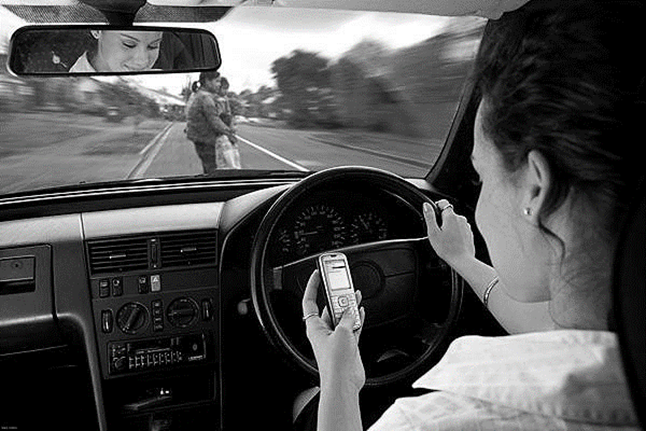
What’s wrong in this picture, there is a woman using her cellphone while driving her car paying any attention on the road and what is crossing the street. She does not notice that a family is just in front of her car and how deadly it can end.

Getting behind the wheel of your car may seem like a commonplace event, but it is likely to be the most dangerous thing you will do all day long. You can’t control the actions of other motorists, you have a great deal of control over how you operate your vehicle. That means you can increase your chances for a safe trip.

As an employer, it is in your best interest that your employees drive safely. The driving environment is dynamic – road, weather and traffic conditions change frequently.

Don’t let phones, radio, air conditioning, kids in the backseat, or a heated discussion with your spouse distract you from your job as the driver. Always pay attention to the road and your vehicle.


Defensive Driving Meeting Kit – Spanish

QUÉ ESTÁ EN RIESGO

CHARLA DE SEGURIDAD SOBRE CONDUCCIÓN DEFENSIVA

Ponerse al volante de su coche puede parecer algo cotidiano, pero es probable que sea lo más peligroso que haga en todo el día. En Estados Unidos, los accidentes de coche son la quinta causa de muerte.

Aunque usted no puede controlar las acciones de otros automovilistas, tiene un gran control sobre la forma en que maneja su vehículo. Eso significa que puede aumentar sus posibilidades de tener un viaje seguro tomando las precauciones necesarias.

CUÁL ES EL PELIGRO

LOS PELIGROS

Los accidentes de tráfico son la principal causa de muerte laboral. La mayoría de los accidentes de vehículos son el resultado de un error del conductor o de unas prácticas de conducción deficientes. Los conductores asumen la responsabilidad de su propia seguridad y la de los demás en las carreteras.

La Conducción Distraída y la Conducción Defensiva son dos formas en las que un conductor puede realizar cambios significativos en sus hábitos de conducción. La conducción distraída se define como cualquier actividad no relacionada con la conducción que un conductor realiza y que tiene el potencial de distraerle del acto principal de conducir y aumenta el riesgo de colisión. Mientras que la Conducción Defensiva es “…conducir para salvar vidas, tiempo y dinero, a pesar de las condiciones que le rodean y de las acciones de los demás…” según la definición del Consejo Nacional de Seguridad.

Ejemplo de conducción distraída

Juan decide tomar una ruta en la que hay menos actividad de ciervos en la carretera. De camino a casa empieza a llover con fuerza y la calzada se vuelve resbaladiza, por lo que reduce la velocidad a 5 MPH por debajo del límite de velocidad. Tras unos minutos conduciendo a esta velocidad, el conductor que va detrás de él empieza a encender las luces y a seguir a su vehículo. En lugar de acelerar o pisar el freno, John decide detenerse en un lugar seguro para dejar pasar al otro conductor.

COMO PROTEGERSE

CONSEJOS DE CONDUCCIÓN DEFENSIVA

  • Abróchate el cinturón de seguridad.
  • Siga las normas de tráfico, las señales y los carteles.
  • Mantenga los ojos en la carretera, las manos en el volante y su atención en el tráfico.
  • Compruebe con frecuencia los espejos retrovisores y laterales.
  • Adapte la velocidad y la conducción a las condiciones cambiantes del tiempo y del tráfico. Aumente la distancia entre usted y el vehículo que le precede.
  • Espere lo inesperado y esté especialmente atento en el tráfico pesado a las paradas repentinas, a los vehículos que pasan o se mueven dentro y fuera de los carriles, a los desechos de la carretera y a las zonas de trabajo.
  • Mantenga la calma, ceda el paso y no entre en disputas con otros conductores.
  • Deténgase en una zona segura para hacer o recibir llamadas telefónicas.
  • No beba ni tome drogas y conduzca.
  • Extrema las precauciones cuando tu vehículo vaya marcha atrás.
  • Mire hacia adelante por lo menos 10 segundos, 1/4 de milla, o hacia la siguiente intersección o curva.
  • Examine con frecuencia el tráfico que hay detrás de usted.
  • Cuando sea necesario, reduzca la velocidad.
  • Tenga precaución al acercarse a las intersecciones.
  • Sea consciente de lo que hacen los demás conductores.
  • Avise a los demás conductores de lo que piensa hacer.
  • Evite los cambios bruscos de velocidad o de dirección.
  • Frene ligeramente cuando intente detenerse en una superficie resbaladiza y no bombee los frenos ABS. – No utilice el control de crucero en carreteras resbaladizas o con hielo.
  • Ajústese pacientemente al flujo del tráfico.
  • Examine su punto ciego antes de cambiar de carril.
  • Esté atento a los demás vehículos que cambian de carril.

CONCLUSIÓN

Las técnicas de conducción defensiva tienen en cuenta las condiciones de la carretera y las acciones de los demás para ayudarte a evitar posibles peligros. Al emplear estas técnicas, empezando antes de subir a tu vehículo, minimizarás tu riesgo en la carretera. Aunque no se pueden planificar todas las situaciones con las que te vas a encontrar, las técnicas de conducción defensiva minimizarán los riesgos a los que te enfrentas.


Defensive Driving Stats and Facts – Spanish

HECHOS

  1. Según el Informe Nacional de Estadísticas Vitales, los accidentes automovilísticos son la primera causa de muerte accidental en Estados Unidos. Los accidentes de vehículos son también la causa número uno de las muertes relacionadas con el trabajo. Las técnicas de conducción defensiva una pueden reducir la probabilidad así como la gravedad de los accidentes.
  2. Los programas de conducción defensiva mantienen a los empleados más seguros al:
    • Disminuir el riesgo de colisiones de vehículos de motor e infracciones de tráfico.
    • Minimizar la exposición a riesgos de responsabilidad civil y costes legales.
    • Reducir las primas de seguro y las reclamaciones de indemnización de los trabajadores.
    • Reducir las facturas de reparación de vehículos y los gastos de sustitución.
    • Proteger las operaciones de la empresa y la identidad de la marca.

ESTADÍSTICAS

  • Cada 12 minutos muere alguien en un accidente de tráfico, cada 10 segundos se produce una lesión y cada 5 segundos se produce un accidente. Y muchos de estos accidentes se producen durante la jornada laboral o durante el trayecto de ida y vuelta al trabajo.
  • Cada 7 segundos, alguien resulta herido en un accidente de tráfico
  • Cada 15 minutos, alguien muere
  • Muchos de los accidentes se producen durante la jornada laboral o el trayecto diario al trabajo
  • Los accidentes de tráfico son la primera causa de muerte en el lugar de trabajo


Defensive Driving Fatality Report – Spanish

Un conductor ha sido acusado después de que tres trabajadores murieron después de un accidente en una zona de trabajo a lo largo de una interestatal en el condado de Iredell el jueves por la mañana, según los policías.

“Odio que eso haya sucedido. Lamento mucho que haya sucedido, y puedo ver cómo puede suceder porque siempre hay algo en la interestatal”, dijo Paris Wilson. Wilson conducía por la zona después de que se produjera el accidente.

El accidente ocurrió alrededor de las 3:45 a.m. en la Interestatal 40 hacia el oeste cerca del marcador de milla 157, cerrando el área. Los policías dicen que un camión de caja Freightliner “no redujo la velocidad y golpeó un vehículo de construcción estacionado que estaba equipado con un cojín de choque y un tablero de flecha”.

Los investigadores dicen que el tablero de la flecha del vehículo de construcción y las luces intermitentes se activaron en el momento del accidente.

Los policías dicen que el vehículo de construcción fue entonces impulsado hacia adelante, golpeando a tres miembros del equipo de reparación. Los tres trabajadores, identificados como Dustin Gelinas, de 20 años, Austin Melton, de 21 años, y Noah Logan Hamilton, de 22 años, murieron en el lugar.

El conductor del camión, identificado por los agentes como Logan Lee Casey, de 27 años, fue acusado de tres delitos menores de muerte por vehículo.


Defensive Driving – Picture This – Spanish

Lo que está mal en esta foto, hay una mujer usando su teléfono móvil mientras conduce su coche sin prestar atención a la carretera y lo que está cruzando la calle. No se da cuenta de que una familia está justo delante de su coche y de lo mortal que puede resultar.

Ponerse al volante de su coche puede parecer algo cotidiano, pero es probable que sea lo más peligroso que haga en todo el día. Usted no puede controlar las acciones de otros automovilistas, pero tiene un gran control sobre la forma en que opera su vehículo. Eso significa que puede aumentar sus posibilidades de tener un viaje seguro.

Como empleador, le interesa que sus empleados conduzcan con seguridad. El entorno de la conducción es dinámico: las condiciones de la carretera, el tiempo y el tráfico cambian con frecuencia.

No deje que los teléfonos, la radio, el aire acondicionado, los niños en el asiento trasero o una discusión acalorada con su cónyuge le distraigan de su trabajo como conductor. Preste siempre atención a la carretera y a su vehículo.


Dealing with Stress from Home Meeting Kit

DEALING WITH STRESS FROM HOME

In good ways and bad ways our work life overlaps with our home life. If we are not diligent, our work can be affected when stressors at home start to mount up. While stress that workers re-experiencing is so impactful, most stress can be dealt with in a manner that it does not cause a perilous situation.

WHAT ARE THOSE COMMON STRESSORS OF WORK FROM HOME

At any given time, there are a number of stressors in our lives at any given moment. We must recognize the common stressors and how they may be impacting our work.

Examples

Relationships: Arguing, fighting constant bickering creates an atmosphere that leads to stress.

Finance: Bills, lack of cash, is always in the back of one’s mind.

Job Insecurity: We are also fearful that through no fault of our own, our jobs can be terminated in these uncertain and stressful times.

Health: Serious health situations can be the most challenging situations we have to deal with in life. Dealing with these issues extends to loved ones as well.

STRESS AFFECTS WORK

There are negative effects when stress is carried from work at home.

Lack of Structure

Feeling a lack of boundaries on when you need to start working (and stop!), when you need to get up and go to sleep, when to log off of social media, and more can feel like true liberation.

But this can morph into a feeling of being out of control.

Too Many Distractions

Many people forget that those who work at home still need to work. People can call at all hours of the day and may not understand that. “I’m sorry, I need to work right now,” is as valid as, “Sorry, I’ll call you when I’m off work.

The problem is that there can be interruptions all day, and work hours need to be hours and not a succession of interrupted clusters of a few minutes at a time

TIPS TO DEAL WITH STRESS

Slim down your schedule – Having an overflowing home to-do list almost invariably leads to stress. Don’t take on too many projects or commitments at once. Learn to prioritize and say “no;”

Select a stress-management activity – Find a relaxation-inducing activity and weave it into your daily routine. Examples include meditating, doing yoga, knitting, listening to music or gardening;

Accept what you can’t control – By learning to distinguish between those instances in which you can have an impact and those in which you cannot, you may feel both more productive and less overwhelmed;

Surround yourself with supportive people – The people you consider to be your “inner circle” should be sources of solace, not stress.

Make time for fun – Consider these simple but fun pastimes – reading to your child, playing with a pet, making a meal with family or friends;

FINAL WORD

Dealing the stressors while working from home is not an easy task; But manageable. First step is recognition and how you are being affected by the Stressors.


Dealing with Stress from Home Stats and Facts

FACTS

  1. Long-term stress is often a contributing factor in many of the leading causes of death in the United States, including heart disease, cancer, lung disease, accidents, cirrhosis of the liver and suicide.
  2. High stress levels can often also lead to substance use. When stress is high and a person is desperate to relax, they may turn to alcohol and other drugs. Paradoxically, drugs and alcohol often increase stress in the long run, especially if an individual develops addiction or dependence.
  3. The stress prognosis is based on factors like the source, intensity and duration of stress. It may also be affected by an individual’s available coping skills and social support systems. When stress is high and available coping skills are low, the effects of stress are more likely, which can shorten someone’s lifespan.
  4. Stress treatment can add a tremendous amount of coping skills and supports to a person in a stressful environment. The best success will occur when treatment targets the source of stress directly, rather than the side effects of stress.

STATISTICS

According to the American Institute of Stress:

  • About 33 percent of people report feeling extreme stress
  • 77 percent of people experience stress that affects their physical health
  • 73 percent of people have stress that impacts their mental health
  • 48 percent of people have trouble sleeping because of stress
  • Unfortunately, for about half of all Americans, levels of stress are getting worse instead of better.
  • Up to 80 percent of workplace accidents come from stress or stress-related problems, like being too distracted or tired.

Common Symptoms of Stress

The most common symptoms of stress and the percentage of people who experienced them include:

  • Irritability and anger: 45 percent of people
  • Fatigue or low energy: 41 percent
  • Lack of motivation or interest in things: 38 percent
  • Anxiety, nervousness or worry: 36 percent
  • Headaches: 36 percent
  • Feeling sad or depressed: 34 percent
  • Indigestion, acid reflux or upset stomach: 26 percent
  • Muscle tension: 23 percent