Distracted Driving (Cellphone Use) Stats and Facts – Spanish

HECHOS

  1. La conducción distraída se produce cada vez que se apartan los ojos de la carretera, las manos del volante y la mente de la tarea principal: conducir con seguridad. Cualquier actividad no relacionada con la conducción que realice es una distracción potencial y aumenta el riesgo de verse involucrado en un accidente de tráfico.
  2. Hablar y enviar mensajes de texto por teléfono son distracciones al volante. Enviar mensajes de texto mientras se conduce es especialmente peligroso porque combina los tres tipos de distracciones. Las investigaciones demuestran que los teléfonos de manos libres distraen tanto como los de mano.
  3. Conducir mientras se habla o se envía un mensaje de texto por teléfono móvil no sólo supone un riesgo de accidente, sino que también puede acarrear una costosa multa y puntos de demérito en el carné de conducir si la policía te pilla haciéndolo.

ESTADÍSTICAS

Aproximadamente, nueve personas mueren y más de 1.000 resultan heridas diariamente en accidentes en los que al menos un conductor estaba distraído.

  • En 2015 murieron casi 4.000 personas en accidentes con conductores distraídos.
  • La conducción distraída fue la causa declarada de la muerte de 3.450 personas en 2016.
  • Se estima que 391.000 conductores resultaron heridos en accidentes por conducción distraída en 2017.
  • En comparación, hubo 39.773 muertes por arma de fuego en los Estados Unidos en 2017.
  • En 2019, la conducción distraída fue un factor reportado en el 8,5% de los accidentes automovilísticos fatales.

En marzo de 2019, The Zebra realizó una encuesta sobre los comportamientos y actitudes de conducción de 2.000 estadounidenses.

  • El 37% de los encuestados de entre 18 y 34 años dijo que sentía un alto grado de presión para responder a los mensajes relacionados con el trabajo mientras conducía, en comparación con el 25% de la media nacional entre todos los grupos de edad.
  • Los padres con hijos pequeños eran más propensos a distraerse mientras conducían (87%) que los adultos sin hijos pequeños (74%).
  • Una de cada tres conductoras admitió haber hecho fotos mientras conducía.

Las variaciones en el comportamiento de conducción distraída se basan en el sistema operativo del teléfono móvil que utilizaba el conductor.

  • El 16% de los usuarios de iPhone dijeron que nunca se distraen mientras conducen (frente al 23% de los usuarios de Android y el 38% de los usuarios de otros sistemas operativos móviles).
  • Los usuarios de iPhone y Apple Car play son más del doble de propensos que los de Android a chatear por vídeo, utilizar Instagram, transmitir programas en Netflix o Hulu y hacer fotos y vídeos mientras conducen.

El 10% de los usuarios de iPhone admitió ver vídeos en YouTube mientras conducía, mientras que el 4% de los usuarios de Android admitió hacer lo mismo.


Distracted Driving (Cellphone Use) Fatality Report – Spanish

HOUSTON – El conductor de una camioneta que chocó con un minibús de la iglesia en una zona rural de Texas, matando a 13 personas, se disculpó después del accidente y reconoció que había estado enviando mensajes de texto mientras conducía, dijo un testigo el viernes.

Jody Kuchler dijo a The Associated Press que conducía detrás de la camioneta y que la había visto moverse de forma errática antes de la colisión del miércoles en una carretera de dos carriles a unas 75 millas (120 km) al oeste de San Antonio, cerca de la localidad de Concan. Kuchler dijo que el camión había cruzado la línea central varias veces mientras lo seguía.

Kuchler dijo que llamó a las oficinas del sheriff de los condados de Uvalde y Real mientras seguía al camión y les dijo que “tenían que sacarlo de la carretera antes de que atropellara a alguien”.

Kuchler dijo que fue testigo del choque y que después, revisó tanto el autobús como el camión y pudo hablar con el conductor, que ha sido identificado por el Departamento de Seguridad Pública de Texas como Jack Dillon Young, de 20 años, de Leakey, Texas.

“Dijo: ‘Lo siento, lo siento. Estaba enviando un mensaje de texto’. Le dije: “Hijo, ¿sabes lo que acabas de hacer? Dijo: ‘Lo siento, lo siento'”, citó Kuchler al conductor de la camioneta.

El sargento Conrad Hein, del Departamento de Seguridad Pública, se negó a comentar el viernes la causa del accidente o si el envío de mensajes de texto pudo haber influido. Pero las autoridades han dicho que el conductor de la camioneta parecía haber cruzado la línea central.

Young sigue hospitalizado tras el accidente.


Distracted Driving (Cellphone Use) – Picture This – Spanish

¿Qué hay de malo en esta imagen? El uso del teléfono móvil puede hacer que los conductores aparten la vista de la carretera, las manos del volante y la mente de la carretera y de la situación que les rodea. Es este último tipo de distracción -conocido como distracción cognitiva- el que parece tener el mayor impacto en el comportamiento al volante. Las pruebas demuestran que la distracción causada por los teléfonos móviles puede perjudicar el rendimiento de la conducción de varias maneras, por ejemplo, tiempos de reacción más largos (sobre todo el tiempo de reacción al frenar, pero también la reacción a las señales de tráfico), la capacidad de mantenerse en el carril correcto y distancias de seguimiento más cortas. El envío de mensajes de texto también reduce considerablemente el rendimiento de la conducción, y los conductores jóvenes corren un riesgo especial de sufrir los efectos de la distracción resultante de este uso.

Los estudios sugieren que los conductores que utilizan un teléfono móvil tienen aproximadamente cuatro veces más probabilidades de verse involucrados en un accidente que cuando un conductor no utiliza el teléfono. En el momento de redactar este informe, no hay pruebas concluyentes que demuestren que el teléfono manos libres sea más seguro que el teléfono de mano, debido a la distracción cognitiva que conllevan ambos tipos de teléfonos.


Diesel Exhaust Dangers and Safeguards Meeting Kit

Diesel Exhaust Composition

Diesel exhaust is a mixture of gases and particulates produced during the combustion of diesel fuel. The very small particles are known as diesel particulate matter (DPM), which consists primarily of solid elemental carbon (EC) cores with organic carbon (OC) compounds adhered to the surfaces.

EXPOSURE TO DE/DPM

Occupations with potential exposure to DE/DPM include miners, construction workers, heavy equipment operators, bridge and tunnel workers, railroad workers, oil and gas workers, loading dock workers, truck drivers, material handling operators, farmworkers, long-shoring workers, and auto, truck and bus maintenance garage workers.

Most heavy-and medium-duty trucks are equipped with diesel engines, as well as equipment used in mines; buses, locomotives and ships; heavy equipment such as bulldozers and tractors; and other types of equipment such as bucket lifts and generators.

HEALTH EFFECTS OF DE/DPM

  • Short term exposure to high concentrations of DE/DPM can cause headache, dizziness, and irritation of the eye, nose and throat severe enough to distract or disable miners and other workers.
  • Prolonged DE/DPM exposure can increase the risk of cardiovascular, cardiopulmonary and respiratory disease and lung cancer.

HOW TO PROTECT WORKERS

  • Limit workers’ time spent in an area with higher levels of diesel exhaust.
  • Properly ventilate any areas where there may be high levels of exhaust.
  • Perform routine air monitoring to ensure levels are not at a dangerous level.
  • Perform routine preventive maintenance of diesel engines to minimize emissions.
  • Install engine exhaust filters.
  • Install cleaner burning engines.
  • Using special fuels or fuel additives (e.g., biodiesel).
  • Provide equipment cabs with filtered air.
  • Install or upgrade main or auxiliary ventilation systems, such as tailpipe or stack exhaust vents to capture and remove emissions in maintenance shops or other indoor locations.
  • Prohibit unnecessary idling or lugging of engines.
  • Restrict the amount of diesel-powered equipment in an area.
  • Designate areas that are off-limits for diesel engine operation and/or personnel travel.

FINAL WORD

Diesel exhaust has been listed as a known human carcinogen in 2012, so it is very important to recognize the hazards that the exhaust poses. Exposure to the exhaust can be greatly limited through proper engineering controls as well as practices as simple as not allowing equipment to idle unless absolutely necessary.


Diesel Exhaust Dangers and Safeguards Stats and Facts

FACTS

  1. Workers exposed to diesel exhaust face the risk of health effects ranging from irritation of the eyes and nose, headaches and nausea, to respiratory disease and lung cancer.
  2. There is no national occupational standard for exposure to diesel emissions
  3. Diesel exhaust is the second most common cause of cancer after UV exposure
  4. Underground production workers, including diesel loader operators and shotcreters, face the highest risk.
  5. Three effective controls to eliminate or reduce exposure to diesel exhaust are the use of: engine exhaust filters, local tailpipe exhaust ventilation, dilution ventilation.
  6. Substituting diesel fuel with a safer fuel, for example, dimethyl ether or low Sulphur diesel fuel.

STATS

  1. Using Department of Mines and Petroleum data from 2003 to 2015 and other studies, it modelled the average levels of exposure among employees in a range of occupations on Western Australian mine sites.
  • It then estimated the number of lung cancer deaths caused by those levels with stark results.
  • Diesel exhaust could be causing fatal lung cancer in underground miners at a rate up to 38 times the accepted occupational risk.
  • Above-ground mine workers were found to face lower levels of risk, with an average exposure of 14 ug/m3 over 45 years causing about 5.5 lung cancer deaths per 1,000 workers.
  • For workers, exposure to diesel soot, also called diesel particulate matter or DPM, in diesel exhaust can cause health problems ranging from eye and skin irritation to breathing difficulty and, potentially, cancer. In 2008 throughout the US, 84 workers died as a result of same level falls. (Bureau of Labor Statistics)
  1. Using the California limit for comparison, NIOSH researchers tested DPM levels in 104 air samples on oil and gas worksites in Colorado, North Dakota, Texas, and New Mexico from 2008 to 2012. Of these samples, 49 were from personal breathing zones of workers and 55 were from the general work area where workers spend part of their shifts. The results showed that the level of DPM varied widely. Measured values ranged from less than 1 to 52 micrograms per cubic meter of air over the workday. The average level measured in workers’ breathing zone samples was 10 micrograms per cubic meter over the accepted range.


Diesel Exhaust Dangers and Safeguards Fatality Report

One man was rushed to a hospital in critical condition and another treated for less severe injuries Wednesday evening after a work accident caused an explosion and fire at a local diesel mechanic shop.

Shortly after 5 p.m. on Wednesday, April 10, emergency medical technicians and firefighters responded to a blaze at S&M Diesel, located at 3585 W. 5000 North, in an unincorporated area of Box Elder County between Bear River City and Honeyville.

Box Elder County Fire Marshal Corey Barton said an employee was using a plasma cutter on a metal storage tank when he accidentally hit an active fuel line. The employee who was using the cutter sustained severe burns in the explosion, but no additional details regarding his injuries or condition were available as of Thursday afternoon.

Barton said 25 firefighters from six agencies, including Box Elder County, Corinne, Fielding, Garland, Honeyville and Tremonton, responded to the resulting fire. He said the fire at the mechanic shop spread quickly and had already consumed much of the shop by the time firefighters were able to get there, but crews were able to extinguish the blaze before it spread to an adjacent home and other nearby structures.

“We were able to get it knocked down, but it took quite a while and there was quite a bit of damage,” Barton said. “It was quite an intense fire because of the fuel supply.”

Firefighters also faced the challenge of having a limited water supply from a nearby hydrant, so several “tender” trucks with large water tanks were brought in.

“They held it in check with what supply they had until the tenders got there,” Barton said.

He said the total damage to the facility is estimated at about $750,000.

“The building and everything in it is a total loss,” he said.

According to its website, S&M Diesel is a family-owned and operated company specializing in road service and towing. In addition to its Box Elder County location, the company also has a shop in Evanston, Wyo..


Diesel Exhaust Dangers and Safeguards – Picture This

What’s wrong in this picture?

It is estimated that 800 cases of cancer are caused by workplace exposure to diesel exhaust emissions every year.

Workers most likely to be exposed to diesel exhaust include drive-in booth operators, miners, construction workers, oil and gas workers, forklift drivers, loading dock workers, truck drivers, farmworkers, stevedores, and vehicle maintenance workers.

The major source of workplace exposure to diesel exhaust is from heavy vehicles that use diesel fume like trucks, buses, trains, tractors, ships, bulldozers and fork lift trucks.

Work planning and scheduling is a method of reducing plant and worker interaction. Some workers, for example diesel plant operators can work from fully sealed and air-conditioned cabins. In vehicle repair workshops a separate area could be used for diesel plant to prevent exposure to workers in other areas.

Respiratory protective equipment (RPE) may be appropriate in some situations where there is diesel exhaust exposure in the workplace.


Diesel Exhaust Dangers and Safeguards Meeting Kit – Spanish

QUÉ ESTÁ EN RIESGO

Composición de los gases de escape a diésel

Los gases de escape a diésel son una mezcla de gases y partículas producidas durante la combustión del combustible diésel. Las partículas muy pequeñas se conocen como partículas diésel (DPM), que consisten principalmente en núcleos sólidos de carbono elemental (EC) con compuestos de carbono orgánico (OC) adheridos a las superficies.

CUÁL ES EL PELIGRO

EXPOSICIÓN A DE/DPM

Entre las ocupaciones con posible exposición a DE/DPM se encuentran los mineros, los trabajadores de la construcción, los operadores de equipos pesados, los trabajadores de puentes y túneles, los trabajadores del ferrocarril, los trabajadores del sector del petróleo y el gas, los trabajadores de muelles de carga, los conductores de camiones, los operadores de manipulación de materiales, los trabajadores agrícolas, los trabajadores de la estiba y los trabajadores de talleres de mantenimiento de automóviles, camiones y autobuses.

La mayoría de los camiones pesados y medianos están equipados con motores diésel, así como los equipos utilizados en las minas; los autobuses, las locomotoras y los barcos; los equipos pesados, como las excavadoras y los tractores; y otros tipos de equipos, como los elevadores de cubos y los generadores.

EFECTOS DE LA DE/DPM SOBRE LA SALUD

  • La exposición a corto plazo a altas concentraciones de DE/DPM puede causar dolor de cabeza, mareos e irritación de los ojos, la nariz y la garganta lo suficientemente graves como para distraer o incapacitar a los mineros y otros trabajadores.
  • La exposición prolongada a DE/DPM puede aumentar el riesgo de enfermedades cardiovasculares, cardiopulmonares y respiratorias y de cáncer de pulmón.

COMO PROTEGERSE

CÓMO PROTEGER A LOS TRABAJADORES

  • Limite el tiempo que los trabajadores pasan en una zona con niveles elevados de gases de escape de diésel.
  • Ventilar adecuadamente las zonas en las que pueda haber niveles elevados de gases de escape.
  • Realice un control rutinario del aire para asegurarse de que los niveles no son peligrosos.
  • Realice un mantenimiento preventivo rutinario de los motores diésel para minimizar las emisiones.
  • Instalar filtros de escape en los motores.
  • Instalar motores de combustión más limpia.
  • Utilizar combustibles especiales o aditivos de combustible (por ejemplo, biodiesel).
  • Dotar a las cabinas de los equipos de aire filtrado.
  • Instalar o mejorar los sistemas de ventilación principales o auxiliares, como los respiraderos del tubo de escape o de la chimenea para capturar y eliminar las emisiones en los talleres de mantenimiento u otros lugares interiores.
  • Prohibir el ralentí o el arrastre innecesario de los motores.
  • Restringir la cantidad de equipos con motor diésel en una zona.
  • Designar zonas prohibidas para el funcionamiento de motores diésel y/o para el desplazamiento del personal.

CONCLUSIÓN

Los gases de escape de los motores diésel fueron incluidos en la lista de carcinógenos humanos conocidos en 2012, por lo que es muy importante reconocer los peligros que suponen los gases de escape. La exposición a los gases de escape puede limitarse en gran medida mediante controles de ingeniería adecuados, así como mediante prácticas tan sencillas como no permitir que los equipos estén al ralentí a menos que sea absolutamente necesario.


Diesel Exhaust Dangers and Safeguards Stats and Facts – Spanish

HECHOS

  1. Los trabajadores expuestos a los gases de escape del diésel corren el riesgo de sufrir efectos sobre la salud que van desde la irritación de los ojos y la nariz, los dolores de cabeza y las náuseas, hasta las enfermedades respiratorias y el cáncer de pulmón.
  2. No existe una norma nacional de trabajo para la exposición a las emisiones de diésel
  3. Los gases de escape del diésel son la segunda causa más común de cáncer después de la exposición a los rayos UV
  4. Los trabajadores de la producción subterránea, incluidos los operadores de cargadores diésel y los gunitadores, son los que más riesgo corren.
  5. Tres controles eficaces para eliminar o reducir la exposición a los gases de escape diésel son el uso de: filtros de escape del motor, ventilación local del tubo de escape, ventilación por dilución.
  6. Sustituir el combustible diésel por otro más seguro, por ejemplo, éter dimetílico o combustible diésel con bajo contenido de azufre.

ESTADÍSTICAS

  • Utilizando los datos del Departamento de Minas y Petróleo de 2003 a 2015 y otros estudios, modeló los niveles medios de exposición entre los empleados de una serie de ocupaciones en las minas de Australia Occidental.
  • A continuación, se estimó el número de muertes por cáncer de pulmón causadas por esos niveles, con resultados contundentes.
  • Los gases de escape del diésel podrían estar causando un cáncer de pulmón mortal en los mineros subterráneos a un ritmo hasta 38 veces superior al riesgo laboral aceptado.
  • Se descubrió que los trabajadores de las minas a cielo abierto se enfrentaban a niveles de riesgo más bajos, con una exposición media de 14 ug/m3 a lo largo de 45 años que causaba unas 5,5 muertes por cáncer de pulmón por cada 1.000 trabajadores.
  • Para los trabajadores, la exposición al hollín del diésel, también llamado materia de partículas diésel o DPM, en los gases de escape del diésel puede causar problemas de salud que van desde la irritación de los ojos y la piel hasta la dificultad para respirar y, potencialmente, el cáncer. En 2008, en todo Estados Unidos, murieron 84 trabajadores como consecuencia de caídas del mismo nivel. (Oficina de Estadísticas Laborales)
  • Utilizando el límite de California como comparación, los investigadores del NIOSH analizaron los niveles de DPM en 104 muestras de aire en obras de petróleo y gas en Colorado, Dakota del Norte, Texas y Nuevo México entre 2008 y 2012. De estas muestras, 49 procedían de las zonas de respiración personal de los trabajadores y 55 del área de trabajo general donde los trabajadores pasan parte de sus turnos. Los resultados mostraron que el nivel de DPM variaba mucho. Los valores medidos oscilaron entre menos de 1 y 52 microgramos por metro cúbico de aire durante la jornada laboral. El nivel medio medido en las muestras de la zona de respiración de los trabajadores fue de 10 microgramos por metro cúbico en el intervalo aceptado.


Diesel Exhaust Dangers and Safeguards Fatality Report – Spanish

Un hombre fue trasladado a un hospital en estado crítico y otro fue tratado por lesiones menos graves el miércoles por la noche después de que un accidente de trabajo provocara una explosión y un incendio en un taller mecánico de gasóleo local.

Poco después de las 5 p.m. del miércoles 10 de abril, los técnicos de emergencias médicas y los bomberos respondieron a un incendio en S&M Diesel, ubicado en 3585 W. 5000 North, en un área no incorporada del Condado de Box Elder entre Bear River City y Honeyville.

El Jefe de Bomberos del Condado de Box Elder, Corey Barton, dijo que un empleado estaba usando un cortador de plasma en un tanque de almacenamiento de metal cuando accidentalmente golpeó una línea de combustible activa. El empleado que estaba usando el cortador sufrió quemaduras graves en la explosión, pero no había detalles adicionales sobre sus lesiones o su estado hasta el jueves por la tarde.

Barton dijo que 25 bomberos de seis agencias, incluyendo el Condado de Box Elder, Corinne, Fielding, Garland, Honeyville y Tremonton, respondieron al incendio resultante. Dijo que el fuego en el taller mecánico se extendió rápidamente y ya había consumido gran parte de la tienda en el momento en que los bomberos fueron capaces de llegar allí, pero las tripulaciones fueron capaces de extinguir las llamas antes de que se extendiera a una casa adyacente y otras estructuras cercanas.

“Pudimos apagarlo, pero nos llevó bastante tiempo y hubo bastantes daños”, dijo Barton. “Fue un incendio bastante intenso debido al suministro de combustible”.

Los bomberos también se enfrentaron al reto de tener un suministro limitado de agua de un hidrante cercano, por lo que se trajeron varios camiones “tiernos” con grandes depósitos de agua.

“Lo mantuvieron a raya con el suministro que tenían hasta que llegaron los camiones auxiliares”, dijo Barton.

Dijo que los daños totales en las instalaciones se estiman en unos 750.000 dólares.

“El edificio y todo lo que hay en él es una pérdida total”, dijo.

Según su página web, S&M Diesel es una empresa familiar especializada en servicios de carretera y remolque. Además de su ubicación en el condado de Box Elder, la empresa también tiene un taller en Evanston, Wyo.


Diesel Exhaust Dangers and Safeguards – Picture This – Spanish

¿Qué hay de malo en esta imagen? Se calcula que cada año se producen 800 casos de cáncer por la exposición en el lugar de trabajo a las emisiones de los gases de escape del diésel.

Entre los trabajadores con más probabilidades de estar expuestos a los gases de escape del diésel se encuentran los operadores de cabinas de autoconsumo, los mineros, los trabajadores de la construcción, los trabajadores del petróleo y el gas, los conductores de carretillas elevadoras, los trabajadores de muelles de carga, los conductores de camiones, los trabajadores agrícolas, los estibadores y los trabajadores de mantenimiento de vehículos.

La principal fuente de exposición a los gases de escape del diésel en el lugar de trabajo procede de los vehículos pesados que utilizan humos diésel, como camiones, autobuses, trenes, tractores, barcos, excavadoras y carretillas elevadoras.

La planificación y programación del trabajo es un método para reducir la interacción entre la planta y los trabajadores. Algunos trabajadores, por ejemplo los operarios de plantas de gasóleo, pueden trabajar desde cabinas totalmente selladas y con aire acondicionado. En los talleres de reparación de vehículos podría utilizarse una zona separada para la planta diésel con el fin de evitar la exposición de los trabajadores de otras áreas.

Los equipos de protección respiratoria (EPR) pueden ser apropiados en algunas situaciones en las que haya exposición a los gases de escape de los motores diésel en el lugar de trabajo.


Helping Workers Handle the Hazards of Isolation

How do you protect workers who work alone? One part of the answer is to assess the risks they face when they perform jobs in isolation and establish safe work procedures.

But that’s not all you can or should do. You should also teach workers how to assess hazards themselves. Here’s one way to do that.

The Hazards of Working Alone

Working alone means performing a job in isolation without the prospect of being able to receive immediate help in case of injury, illness or threat. Needless to say, working alone is extremely dangerous and even life-threatening. Imagine that a worker is alone at work and they:

  • Are suddenly overcome by an odorless and invisible gas;
  • Fall from a scaffold; or,
  • Are threatened by an assailant.

In a worst case scenario, no one knows that they are working alone and hours can go by before:

  • They are reported missing;
  • The next shift comes on duty; or,
  • They are found dead.

Protecting Isolated Workers Is a Two-Way Street

Working alone is dangerous because it heightens the risks inherent in the job. This is true whether the work involves travel, working with toxic substances, handling money or any other conditions; it’s true whether the individual working alone is male or female. The job of protecting the worker is a shared responsibility between employer and worker.

It is the employer’s job to provide instructions to the worker and to ensure that others are aware of the worker’s whereabouts and schedule. The employer must also furnish a means of communication that at a minimum enables the worker to call for help.

But workers who work alone also have an important role to play in protecting themselves. Specifically, they can take precautions to ensure they’re ready for eventualities that cannot be anticipated and that they keep their heads and show common sense when and if these unforeseen events arise.


Working Sober is the Only Safe Way

Some people are driven to distraction by a picture hanging crooked, or a light switch or wall plate that is installed off square. But if a worker is off kilter as a result of being impaired by alcohol or drugs, whether prescription or otherwise, the results can go far beyond shoddy workmanship.

Sobering Statistics

According to the American Council for Drug Education (ACDE), 23 million Americans use marijuana at least four times a week and 18 million people abuse alcohol. In Canada, between four and five million people are believed to engage in high-risk drinking.

The ACDE estimates that more than 70 percent of people who abuse alcohol or drugs are employed.

Sobering Effects

If you have ever worked while hung over from a night of partying, or been high or drunk on the job, you know how difficult it is to concentrate on working. No one has to tell you that your productivity and work quality is suffering, but have you considered the danger you pose to yourself and others?

Substance abusers are five times more likely than other workers to cause injuries and they are responsible for 40 percent of all industrial fatalities, according to the ACDE.

Here are two tragic examples of what can happen when drugs or alcohol are mixed with work:

A 39-year-old construction worker died after falling 21 feet (6.4 meters) from a load of lumber on a forklift truck. The beams were being raised to a second story window and after starting to pull the heavy beams from inside a house, the victim stepped out onto the forks to push them inside. He lost balance and fell when the beams shifted. Tests found alcohol and drugs in the victim’s body.

A 33-year-old equipment operator died after slipping between the tracks and the body of the bulldozer he was operating. The operator had given a co-worker a ride on a bulldozer and he lowered the blade to the ground and stood on the track to hand the other worker a jacket that he had forgotten to take with him. The bulldozer suddenly moved backwards and the operator fell and was crushed to death. A blood test revealed that the operator had been significantly impaired by alcohol.

Working with a Hangover Is No Good, Either

Even if you aren’t high or drunk while working, you can be a menace to yourself and others if you are suffering the after effects from a previous night of partying. Whether you’re dealing with a pounding headache, a stomach that feels like a volcano ready to erupt or severe fatigue, your mind is anywhere but on your job. All it takes is a second of inattention to find yourself in the wrong place at the wrong time, or to endanger a co-worker through your hazy actions.

Is It Time for Some Serious Soul-Searching?

If you’re dragging yourself into work hung over or consuming alcohol or drugs on the job, you need to take a serious look at your lifestyle and seek help.

If you seriously believe you are hurting no one but yourself you are wrong, potentially dead wrong.


Newsletter – October 2021

  • Emergency Preparedness;
  • Safety Talks on Emergency Response, Hearing Protection, Fire Prevention, and Workplace Violence;
  • Fatality Reports;
  • Proper Use of Portable Fire Extinguishers;
  • Surviving a Power Outage;
  • The Link Between Sleep Deprivation and Safety;
  • and more…


Dangers of Excessive Sitting – Could This Have Been You

John is a 42 year old man who developed pain in his lower back immediately after moving house. He couldn’t recall any specific injury but did quite a lot of lifting, carrying and bending down during the move. At the time he felt a few twinges but didn’t think anything of it. However over the subsequent few days the pain increased steadily and became very severe and began radiating down the back of his thigh at times.

He was otherwise well apart from being a bit overweight. He had a few episodes of back pain in the past but it was never severe enough for him to seek treatment. He did no regular sports or exercise apart from chasing after his two children who are both under 4. His job is office based and he sits for most of the day.


Neutralize Acids and Bases – Quick Tips

Spills of hazardous substances must be absorbed, neutralized or controlled at the time of the incident in order to maintain workplace safety. Acid and base neutralization helps make spilled materials safer to handle and helps decrease the cost of disposal.

How Do You Know If a Solution Is Acidic or Basic?

The best way to determine if a material is acidic or basic is to measure its pH. This can be accomplished with pH paper, chemical indicators or pH meters. The pH scale measures from 0 to 14. Chemicals with a pH of 0 to 3 are considered strong acids. Chemicals with a pH of 12 to 14 are considered strong bases. To be considered neutral, a chemical must have a pH of 7.

Acids typically will have a sour taste and a pH of less than 7. There are two types of acids: mineral (inorganic) acids such as sulfuric, hydrochloric or nitric and carboxylic (organic) acids such as formic or acetic. To neutralize acids, a weak base is used.

Bases have a bitter or astringent taste and a pH greater than 7. Common bases are sodium hydroxide, potassium hydroxide and ammonium hydroxide. Bases are neutralized by using a weak acid.

Products for Acid and Base Neutralization

There are many different products available that aid in the neutralization of acids and bases. They can be as simple as a bag of citric acid or sodium bicarbonate (baking soda), or as complex as a solidifier and a neutralizer combined. Some of the major considerations in selecting the best method of neutralization are safety (mixing chemicals is always a potentially dangerous process), cost and convenience.

When neutralization occurs, the acid and base react, forming water, salt and heat. If the acid and base are both very strong (such as concentrated hydrochloric acid and concentrated sodium hydroxide), a violent reaction will occur. This is why most neutralizers are very weak — to help keep the reaction at a slow pace and lessen the evolution of heat and gas.

Most neutralizer manufacturers provide an estimated volume of acid/base that their product will neutralize. It can take a large amount of the product to neutralize an acid or base, especially if it is concentrated. Some acid and base neutralizers have a built-in color indicator to let you know when the spill is neutralized. Other neutralizers require you to check the pH with pH paper or a pH meter to monitor the neutralization process. Some neutralizers also solidify the spill as they neutralize, to help make the spill easier to clean up. See the comparison charts below for examples of treatment ratios for some common neutralizers for acids and bases.

Chart A

Gallons of Acid Neutralized
Acid Spill-X-A®
2.5 lbs.
Spilfyter®Dry Acid
2.0 lbs.
Acetic 99% .30 .25
Hydrochloric 37% .27 .31
Hydrofluoric 49% .25 *
Nitric 70% .55 *
Perchloric 70% .29 *
Phosphoric 85% .30 .10
Sulfuric 93% .30 .27

*Not Applicable

Chart B

Gallons of Base Neutralized
Base Spill-X-C®
2.0 lbs.
Spilfyter®Dry Base
2.0 lbs.
Ammonium Hydroxide .41 .25
Potassium Hydroxide .27 .27
Sodium Hydroxide .17 .18

Sources

ANSUL Spill X

NPS Corporation

The information contained in this article is intended for general information purposes only and is based on information available as of the initial date of publication. No representation is made that the information or references are complete or remain current. This article is not a substitute for review of current applicable government regulations, industry standards, or other standards specific to your business and/or activities and should not be construed as legal advice or opinion. Readers with specific questions should refer to the applicable standards or consult with an attorney.

Source: Grainger Know How – https://www.grainger.com/know-how


Aerial Devices and Manlifts – Quick Tips

Aerial Devices

Aerial devices are vehicle-mounted, elevated and rotating work platforms. OSHA defines a vehicle as any carrier that is not manually propelled and a platform as any personnel-carrying device (basket or bucket that is a component of an aerial device. Vehicle-mounted devices—telescoping, articulating or both—used to position personnel are considered aerial devices. This includes extensible and articulating boom platforms, aerial ladders, vertical towers and a combination of any of the above. Regulations regarding these platforms are found in 29 CFR 1910.67.

Manlifts

A manlift is a device consisting of a power-driven, end-less belt that moves in one direction only. It usually includes steps or a platform with attached handholds and transports personnel from floor to floor. Manlifts are covered under 29 CFR 1910.68.

General Requirements

Aerial devices (aerial lifts) acquired on or after July 1st, 1995 shall be designed and constructed in accordance with ANSI A92.2-1969, Vehicle- Mounted Elevating and Rotating Work Platforms. These lifts may be modified for uses other than those intended by the manufacturer, provided the modification has been certified in writing by the manufacturer or a testing agency and conforms with all applicable provisions of the ANSI standard.

All new manlifts shall meet the design requirements of ANSI A90.1-1969, American National Safety Standard for Manlifts. The OSHA regulations apply to manlifts used to carry only personnel that are trained and authorized by the employer, and do not cover moving stairways, elevators with enclosed platforms, gravity lifts nor conveyors used only for conveying material.

Specific Requirements for Aerial Devices

Summary of OSHA Standard 29 CFR 1910.67: Before a vehicle is moved for highway travel, aerial ladders shall be secured in the lower traveling position. Lift controls for extensible boom platforms shall be tested each day prior to use and used only by trained individuals. A body belt for positioning shall be worn with a lanyard attached to the boom or basket when working from an aerial lift. Belting off to an adjacent pole or structure is not permitted.

When preparing an aerial lift for use, brakes shall be set, and outriggers (when used) shall be positioned on pads or a solid surface. If the lift will be used on an incline, wheel chocks must be installed beforehand. Once a boom is elevated in working position with people in a basket, the vehicle may not be moved unless such equipment is specifically designed for this type of operation.

Articulating and extensible boom platforms designed as personnel carriers shall have both upper controls on the platform and lower controls at vehicle or ground level. Although lower controls shall be able to override upper controls, lower level controls shall not be operated unless permission has been obtained from the employee in the lift, except in case of an emergency.

Safety testing, including electrical tests and bursting safety factors for hydraulic and pneumatic components must comply with the requirements of ANSI A92.2-1969. Any welding operations must conform to the American Welding Society (AWS) Standards, specifically:

  • Standard Qualification Procedure, AWS 0-41

Recommended Practices for Automotive Welding Design, AWS D8.4-61 Standard Qualification of Welding Procedures and Welders for Piping and Tubing, AWS D10.9-69

Specifications for Welding Highway and Railway Bridges, AWS D2.0-69

Special Design Requirements for Manlifts

The OSHA standard specifies several requirements for the location and design of manlifts. The following is an overview of each requirement:

Floor openings: Sizes of floor openings are dependent on the size of belt in use. All openings need to be uniform in size and approximately circular.

Landings: Clearance between the floor and lower edge of the conical guard shall be at least 7′ 6″. Space next to openings shall be kept clear at all times and shall provide safe footing at all times. Lighting of at least five foot candles shall be provided at each floor landing. Floor or emergency landings shall be provided every 25 feet or less.

Guards on underside of floor openings: A bevel guard or cone shall be provided on the ascending side of the floor opening.

Protection of entrances and exits: Entrances and exits at all floor landings to manlifts shall be guarded by a maze (staggered railing) or handrail equipped with self-closing gates. Rail construction must comply with ANSI A12.1-1967, Safety Requirements for Floor and Wall Openings, Railings and Toeboards and 29 CFR 1910.23.

Guards for openings: Openings shall be guarded on all sides not used for movement by a wall, railings or panels. Guards shall be at least 42″ high on up-running sides and 66″ high on down-running sides.

Bottom arrangement: Specific design requirements cover location and maintenance of the bottom landing, lower pulley, mounting platform and location of guardrails.

Top arrangements: There must be a top clearance of at least 11′ above the top terminal landing and a clearance of at least 5′ between the center of the head pulley shaft and any ceiling obstruction. If the distance to the head pulley is more than 6′ above the top landing, an emergency grab rail or bar must be provided at the head pulley.

Illumination: Both up and down runs of a manlift shall be illuminated at all times when the lift is in operation.

Weather protection: The entire manlift and its driving mechanism shall be protected from the weather at all times.

Mechanical Requirements for Manlifts

Brakes: Brakes used for stopping and holding shall be inherently self-engaging with an external source to disengage. The brake shall be electrically released and capable of stopping and holding the manlift when the descending side is loaded with 250 pounds on each step.

Belt: Belts shall be strong enough to meet ANSI A90.1-1969 and have the following width requirements: not less than 12″ wide for a travel distance not exceeding 100 feet; not less than 14″ for a travel distance greater than 100 feet but less than 150 feet; and 16″ for travel distance exceeding 150 feet.

Speed: The maximum allowable design speed of a manlift is 80 feet per minute.

Platforms or steps: Steps must be between 12″ to 14″ deep and at least as wide as the belt to which it is attached. The distance between steps shall be equally spaced and not less than 16′ from the upper surface of one step to the upper surface of the next step above it.

Handholds: Handholds attached to the belt must be installed between 4′ and 4′ 8″ above the step tread. The grab surface shall not be less than 4 1/2″ in width nor less than 3″ in depth and shall provide 2″ of clearance from the belt. All handholds must be of the closed type.

Up limit stops: There must be two separate automatic stop devices to cut off the power supply and apply the brake when a loaded step passes the upper terminal landing.

Emergency stop: An emergency stop must be provided within easy reach of ascending and descending runs of the belt.

Instruction and warning signs: Conspicuous and easily read signs stating Face the Belt, Use the Handholds and To Stop Pull the Rope must be placed at each landing. Additional signs are required for top floor warning and visitor warning.

Operating Rules and Inspection of Manlifts

No freight, packaged goods, pipe, lumber or construction materials of any kind shall be handled on any manlift.  Manlifts need to be inspected by a designated, competent person at intervals of not more than 30 days, and limit switches shall be checked weekly. These inspections must be maintained in a certification record.

Frequently Asked Questions

Q: What is the difference between an articulating boom and an extensible boom?

A: An articulating boom is raised and lowered by two or more hinged sections. An extensible boom is raised and lowered through a telescoping motion.

Q: Can spliced belts be used on manlifts?

A: A belt that has become torn while in use on a manlift shall not be spliced and put back in service.

Q: Can workers keep their lunches on a manlift?

A: No. An early OSHA ruling interpreted a lunch box as a packaged good, which is prohibited.

Source29

CFR 1910.67, Vehicle-mounted Elevating and Rotating Work Platforms

29 CFR 1910.68, Manlifts

ANSI A92.2-1969, Vehicle-Mounted Elevating and Rotating Work Platforms www.ansi.org

ANSI A90.1-1969, American National Safety Standards for Manlifts

American Welding Society www.aws.org

The information contained in this article is intended for general information purposes only and is based on information available as of the initial date of publication. No representation is made that the information or references are complete or remain current. This article is not a substitute for review of current applicable government regulations, industry standards, or other standards specific to your business and/or activities and should not be construed as legal advice or opinion. Readers with specific questions should refer to the applicable standards or consult with an attorney.

Source: Grainger Know How – https://www.grainger.com/know-how


Forklift Operator Training – Quick Tips

A forklift in motion is a safety risk in motion. Ensure your operators have received the proper forklift safety training.

The Occupational Safety and Health Administration (OSHA) defines a powered industrial truck (PIT) as “any mobile, power-propelled truck used to carry, push, pull, lift, stack or tier materials.” There are many different types of (PITs), and each type presents different operating hazards. PITs are commonly known as pallet trucks, rider trucks, forklifts or lift trucks. They are extremely useful in the workplace, as long as they are safely used by trained operators.

Background

OSHA revised the PIT standard, 29 Code of Federal Regulations (CFR) 1910.178, in 1999 to include operator training requirements. Violations of the PIT standard rank in the top ten most frequently cited OSHA standards each year. One of the major citations is failure to train.

Forklift Safety Training Requirements

Employers must develop and implement a training program based on the general principles of safe truck operation, the types of vehicle(s) being used, the hazards they create and the general safety requirements of the OSHA standard to ensure that operators are properly trained.

Trained operators must know how to do the job properly and safely, as demonstrated by workplace evaluations. Formal (lecture, video, etc.) and practical (demonstration and practical exercises) training must be provided. Employers must also certify that each operator has received the training and evaluate each operator’s performance at least once every three years.

Training Program Content

Operators must be initially trained in the following truck-related and workplace-related topics:

  • Truck-related:
    • Operating instructions, warnings and precautions for type of truck
    • Similarities and differences with automobiles
    • Control and instrumentation location and use
    • Engine or motor operation
    • Steering and maneuvering
    • Visibility
    • Fork and attachment limitations and use
    • Vehicle capacity
    • Vehicle stability
    • Vehicle inspection and maintenance
    • Refueling or charging batteries
    • Operating limitations
    • Other operating instructions, warnings or precautions listed in the operator’s manual
  • Workplace related:
    • Surface conditions where truck is used
    • Load composition and stability
    • Load stacking, unstacking and transport
    • Pedestrian traffic
    • Narrow aisle and restricted area operation
    • Operation in hazardous locations
    • Ramp and sloped surface operation
    • Unique or potentially hazardous conditions
    • Operating the vehicle in closed environments

Because PITs are manufactured by different companies with various models available, the training must be specific to the operating characteristics of the specific PIT being used.

If an operator was previously trained on any of the truck or workplace-related topics, and the training is appropriate to the truck and working conditions encountered, additional training on that topic is not required if the operator has been evaluated and found competent.

Evaluation and Refresher Training

An evaluation of the performance of each PIT operator must be conducted every three years. OSHA requires that formal refresher training be conducted under certain circumstances. There is no set frequency, but employers do need to retrain when:

  • The operator has been observed to operate the vehicle in an unsafe manner.
  • The operator has been involved in an accident or near-miss incident.
  • The operator has received an evaluation revealing that the operator is not operating the truck safely.
  • The operator is assigned to drive a different type of truck.
  • A condition in the workplace changes in a manner that could affect safe operation of the truck.

Certification

The employer must certify that every operator has received appropriate training, has been evaluated and has demonstrated competency in performing the operator’s duties. The name of the trainee, date of training, evaluation date and name of the person(s) performing the training or evaluation must be included on the certification.

Sources
29 CFR 1910.178, Powered Industrial Trucks.
Occupational Health and Safety Administration (OSHA), Powered Industrial Truck etool.

Frequently Asked Questions

Q: What is the stability triangle?

A: The majority of counterbalanced PITs have a three-point suspension system. The truck’s steer axle is attached to the truck by a pivot pin in the axle’s center. When these three points are connected with imaginary lines, the stability triangle is formed. When the center of gravity remains within the stability triangle, the truck is stable and will not tip over. An unloaded PIT on a level surface will have a center of gravity in the middle of the stability triangle. As a load is added to the truck, or if the truck is on an inclined surface, the center of gravity will move within the stability triangle. If the center of gravity moves outside of the stability triangle, the truck will tip over.

Q: What is considered formal training?

A: Formal training is the combination of classroom and OSHA safety training, including lecture, discussion, videos, interactive computer learning or written material.

The information contained in this article is intended for general information purposes only and is based on information available as of the initial date of publication. No representation is made that the information or references are complete or remain current. This article is not a substitute for review of current applicable government regulations, industry standards, or other standards specific to your business and/or activities and should not be construed as legal advice or opinion. Readers with specific questions should refer to the applicable standards or consult with an attorney.

Source: Grainger Know How – https://www.grainger.com/know-how


Emergency Action and Fire Prevention Plans – Quick Tips

Application of Emergency Action Plans (EAPs) and Fire Prevention Plans (FPPs)

Mandatory elements of the Occupational Safety and Health Administration’s (OSHA’s) emergency action and fire prevention plans are found in 29 Code of Federal Regulations (CFR) 1910.38 and 1910.39, respectively. Having detailed and comprehensive emergency action and fire prevention plans that are properly communicated to all members of the organization saves lives and minimizes property damage.

OSHA defines the application of EAPs in 29 CFR 1910.38(a) and FPPs in 29 CFR 1910.39(a) as: “An employer must have an EAP or FPP whenever an OSHA standard in this part (1910) requires one.”

These nine standards require organizations to have an EAP:

  • 119 Process Safety Management (PSM) of Highly Hazardous Chemicals
  • 120 Hazardous Waste Operations and Emergency Response (HAZWOPER)
  • 157 Portable Fire Suppression Equipment
  • 160 Fixed Extinguishing Systems, General
  • 164 Fire Detection Systems
  • 272 Grain Handling Facilities
  • 1047 Ethylene Oxide (EtO)
  • 1050 Methylenedianiline (MDA)
  • 1051 1,3-Butadiene

Organizations covered by the EtO, MDA or 1,3-Butadiene standards must also have a FPP in place.

The plans must be in writing, kept in the workplace and available for employees for review. However, employers with 10 or fewer employees may communicate the plans orally to employees. The plans must be reviewed with each covered employee when:

  • The plans are developed or the employee is assigned initially to a job;
  • The employee’s responsibilities under the plans change; and
  • The plans are changed.

EAPs and FPPs may vary to comply with specific company operations, but must follow the guidelines set by OSHA.

Emergency Action Plan Requirements

According to 29 CFR 1910.38(c), at a minimum, EAPs must include the following:

  • Procedures for reporting a fire or other emergency;
  • Emergency evacuation procedures and exit route assignments;
  • Procedures to be followed by employees who remain to operate critical plant operations before they evacuate;
  • Procedures to account for all employees, contractors and guests after emergency evacuations have been completed;
  • Rescue and medical duties for those employees who are to perform them; and
  • Names or job titles of persons who may be contacted for additional information or further explanation of duties under the EAP.

All employees must be familiar with the evacuation signal, whether it’s communicated verbally or by bells, whistles or sirens. The alarm system must comply with the scope, application, general requirements, installation and restoration, maintenance, testing and manual operation as stated in 29 CFR1910.165 – Employee Alarm Systems.

Fire Prevention Plan Requirements

Per 29 CFR 1910.39(c), at a minimum, FPPs must include the following:

  • A list of all major fire hazards, proper handling and storage procedures for hazardous materials, potential ignition sources and their control, and the type of fire protection equipment necessary to control each major hazard; Procedures to control accumulations of flammable and combustible waste materials;
  • Procedures for regular maintenance of safeguards installed on heat-producing equipment to prevent the accidental ignition of combustible materials;
  • Names or job titles of employees responsible for maintaining equipment to prevent or control sources of ignition or fires; and names or job titles of employees responsible for fuel source hazard control.

Employees must know the alarm procedure, where to find alarms and how to sound or activate them. Emergency phone numbers must be posted by phones. Employees must respond immediately when the alarm is sounded, whether it is a drill or an actual fire. Personal work areas must be secured, if time permits, by turning off machinery or equipment, securing hazardous materials or locking up confidential documents.

Establishing EAPs and FPPs and facilitating employee training helps prevent injuries and deaths in the workplace. Saving lives is the main goal for EAPs and FPPs. Just because an organization has an EAP and FPP, doesn’t mean they are prepared for an emergency. The plans only work if employees know and follow the emergency procedures. For additional information on OSHA’s means of egress requirements please see QuickTip #268.

Commonly Asked Questions

  1. Where can I receive help to determine if my organization requires an EAP?

A: OSHA has an electronic resource called Evacuation Plans and Procedures eTool on osha.gov. The eTool has information regarding EAPs and also an Expert System that will walk you through a series of questions to determine if your organization is required to have an EAP.

  1. Why is it important to meet for a head count in the event of an emergency?

A: It is crucial to have a designated place to meet after the evacuation process. The head count helps to determine if anyone might possibly be trapped in the building. Failing to report to this designated meeting place could endanger the life of someone who re-enters the building in an attempt to find a missing person.

  1. Why is it important to keep exits clear?

A: It is important to keep paths, escape routes and aisles clear to ensure everyone can quickly exit the building. Clutter and debris might prohibit an exit door from opening to allow for escape.

Sources

29 CFR 1910.38 Emergency Action Plans
29 CFR 1910.39 Fire Prevention Plans
29 CFR 1910.165 Emergency Alarm Systems
OSHA Evacuation Plans and Procedures eTool


The information contained in this article is intended for general information purposes only and is based on information available as of the initial date of publication. No representation is made that the information or references are complete or remain current. This article is not a substitute for review of current applicable government regulations, industry standards, or other standards specific to your business and/or activities and should not be construed as legal advice or opinion. Readers with specific questions should refer to the applicable standards or consult with an attorney.

Source: Grainger Know How – https://www.grainger.com/know-how


Welding Safety – Quick Tips

Welding is the most common method of joining metals in industry today. When welded, two pieces of similar metals are fused together by the use of heat, pressure or both. Once completed, the welded joint is as strong as or stronger than the pieces from which the joint is formed.

Welding Hazards and NIOSH’s Hierarchy of Controls

Impact, penetration, harmful dust, smoke, fumes, heat and injurious light radiation are all potential hazards associated with welding. Welding “smoke” is a mixture of very fine particles (fumes) and gases. Depending upon what is being welded, many of the substances in the smoke can be extremely toxic. The intense heat of welding and sparks can cause burns. Eye injuries have resulted from contact with hot slag and metal chips. The intense light associated with welding can cause eye damage. Ultraviolet light from an arc can cause “welder’s flash” and also skin burns. There is also a danger of electric shock. If combustible or flammable materials are nearby, the heat and sparks produced by welding can cause fires or explosions. The use of compressed gas cylinders poses some unique hazards to the welder as well.

The National Institute for Occupational Safety and Health’s (NIOSH’s) Hierarchy of Hazard Controls is a widely accepted method used by many to determine feasible and effective hazard control solutions. This concept is taught to managers in industry to be promoted as standard practice in the workplace. Following the hierarchy normally leads to the implementation of inherently safe systems, where the risk of illness or injury has been substantially reduced. It is depicted as a pyramid with five levels:

  1. Elimination: Eliminating the hazard, or physically removing it, is the most effective hazard control, such as eliminating welding.
  2. Substitution: Involves replacing something that produces a hazard (similar to elimination) with something that is less hazardous, such as replacing the base welding metal with something less toxic.
  3. Engineering Controls: Engineering controls do not eliminate the hazard, but rather isolate people from the hazard, such as local ventilation at the source of the hazard.
  4. Administrative Controls: Administrative controls change the way people work. Examples include procedural changes, employee training and installation of signs and warning labels.
  5. Personal Protective Equipment (PPE):PPE is the last control and is worn to minimize exposure to a variety of hazards. PPE is considered the least effective means of controlling hazards. Examples associated with welding are respirators and flame-resistant clothing.

Welding Safety Precautions

The Occupational Safety and Health Administration (OSHA) provides basic fire prevention and protection precautions to follow in the welding, cutting and brazing standard found in 29 Code of Federal Regulations (CFR) 1910.252(a). Highlights include:

  • A responsible individual must inspect the area and identify precautions to be taken preferably on a written Hot Works permit
  • Fire extinguishers must be ready for immediate use
  • A fire watch lasting at least 30 minutes after the welding or cutting operations is required if more than a minor fire might develop
  • All combustibles must be moved 35 feet away or properly protected or shielded

Prohibited areas for welding include
Areas unauthorized by management
Areas where sprinklers are impaired
Areas in explosive atmospheres
Areas near storage of large quantities of readily ignitable materials

Types of Welding

Gas welding: Two metals are joined by melting or fusing their adjoining surfaces. This is done by directing a gas flame over the metals until a molten puddle is formed. The energy for gas welding comes from the combustion of a fuel with oxygen or air. A few of the most popular fuels are acetylene, MAPP gas and hydrogen. Since gas welding is slower and easier to control than electric arc welding, it is often used in applications such as general maintenance work, brazing and soldering.

Arc welding: Two metals are joined by generating an electric arc between a covered metal electrode and the base metals. Heat is produced by the arc, which in turn, melts the metal and mixes the molten deposits of the coated electrode. The arc energy is provided by a power supply unit that furnishes direct or alternating current. The electrodes carry the current to form the arc, producing a gas that shields the arc from the atmosphere, and add metal to control the weld shape. When an arc is struck using a coated electrode, the intense heat melts the top of the electrode. The drops of metal from the electrode enter the arc stream and are deposited on the base metal. The equipment needed for electric arc welding is a power supply, electrode holder, ground clamp, protective shield and welder’s protective clothing.

Oxygen and arc cutting: Metal cutting in welding is the severing or removal of metal by a flame or arc. The most common cutting processes are:

Oxygen cutting: Metal is heated by gas flame, and an oxygen jet does the cutting
Arc cutting: Intense heat of electric arc melts away the metal

Personal Protective Equipment (PPE)

Eye and face protection: 29 CFR 1910.252(b)(2) states the requirements for eye protection. . Helmet, handshield, goggles and safety glasses or combination of these are acceptable protection in various applications. All filter lenses and plates must meet the test for transmission of radiant energy prescribed in ANSI/ISEA Z87.1-2015, American National Standard for Occupational and Educational Personal Eye and Face Protection Devices. According to OSHA 29 CFR 1910.252 (b)(2)(ii)(B), “Helmets and hand shields shall be arranged to protect the face, neck and ears from direct radiant heat from the arc.” Welding helmets with filter plates are intended to help protect users from arc rays and from weld sparks and spatters that strike directly against the helmet. They are not intended to protect against slag chips, grinding fragments, wire wheel bristles and similar hazards that can ricochet under the helmet. Spectacles, goggles or other appropriate eye protection must also be worn to protect against these impact hazards.

When arc cutting and arc welding with an open arc, OSHA requires operators to use helmets or hand shields with filter lenses and cover plates. Nearby personnel viewing the arc must also be protected. Safety glasses with a Shade 2 lens are recommended for general-purpose protection for viewers. Protective clothing: 29 CFR 1910.252(b)(3) refers to the PPE Hazard Assessment in 29 CFR 1910.132. This requires the employer to identify the hazard and appropriate PPE needed to protect the employer from the hazards.

Consensus standard ANSI Z49.1-2012, Safety in Welding, Cutting, and Allied Processes, provides guidance in the safe setup and use of welding and cutting equipment, and the safe performance of welding and cutting operations. Paragraph 4.3 provides more direction on clothing selection for welding tasks. “Clothing shall be selected to minimize the potential for ignition, burning, trapping hot sparks, or electric shock.” It also offers more specific selection guidelines for clothing, gloves, leggings, capes, sleeves, ear plugs, and caps.

Ventilation

Chapter 5 of ANSI Z49.1-2012 provides guidance on ventilation for welding. Ventilation refers to changes of room air as often as necessary to prevent welders and other workers from breathing high levels of airborne contaminants.. Adequate ventilation depends on the following factors:

  • Volume and configuration of the space where the welding operations occur
  • Number and type of operations that are generating contaminants
  • Concentrations of specific toxic or flammable contaminants being generated
  • Natural air flow rate where operations are taking place
  • Location of the welders’ and other workers’ breathing zones in relation to contaminants or sources

Paragraph 5.4 identifies two types of ventilation: natural or mechanical. Natural ventilation is considered sufficient when necessary precautions are taken to keep the welder’s breathing zone away from the air contaminants and when sampling of the atmosphere shows that concentration of air contaminants are below allowable limits.

If operations do not fall within the natural ventilation guidelines, mechanical ventilation is required. Mechanical ventilation options generally fall into three basic categories:

  • Local exhaust
  • Local forced air
  • General area mechanical air movement

Local Exhaust

This system consists of fixed or moveable exhaust hoods positioned as near as practicable to the work that are able to maintain a capture velocity of 100 feet per minute to keep air contaminants below the allowable limits. The hood and housing may have to be repositioned by the worker to get maximum benefit from this means of ventilation. Hoods generally remove the fumes and contaminated air through ducting and filtration before being exhausted to the outdoors or recirculated into the work area. General mechanical ventilation may be necessary in addition to local forced ventilation to make up for the air that is being lost.

Local Forced Air

This system, typically a fan, is placed so air is moved horizontally across the welder’s face. General Mechanical Ventilation

This system is generally made up of items like roof exhaust fans, wall exhaust fans, and similar large area air movers. This system is not usually a satisfactory way by itself to control contaminants in the breathing zone of a welder; however, it is often helpful when used in addition to local ventilation.

Chapter 5 also addresses concerns about recirculation, low allowable-limit materials, confined spaces, adjacent persons, brazing furnaces and contaminants containing:

  • Fluorine compounds
  • Zinc and copper
  • Cleaning compounds
  • Chlorinated hydrocarbons
  • Asbestos

Fumes and gases from welding and cutting cannot be easily classified. The quantity of fumes and gases is relative to a combination of the metal being worked, consumable material being used depending on the type of welding being done, contaminants in the atmosphere, and the area the welding is taking place in. Once these are all known personal air sampling can be done to verify the concentration levels of toxic fumes and gases.

Reference OSHA’s 29 CFR 1910 Subpart Q for guidance when performing the following operations:

  • 29 CFR 1910.252 General Requirements for all Welding
  • 29 CFR 1910.253 Oxygen-fuel gas Welding and Cutting
  • 29 CFR 1910.254 Arc Welding and Cutting
  • 29 CFR 1910.255 Resistance Welding

Commonly Asked Questions

Q: What is a fume plume?

A: A fume plume is the clearly visible column of fume that rises directly from the spot of welding or cutting. Welders and cutters should take precautions to avoid breathing this area directly. Ventilation can direct the plume away from the breathing zone. (Fume removal is most effective when the air flow is directed across the face of the welder, rather than from behind.)

Q: How do I know what hazardous materials exist in the base metal including residual chemicals on the base metal or consumables like the gas or wire I may be using?

A: Check the Safety Data Sheet (SDS). The suppliers of welding materials must provide a SDS or equivalent documentation identifying the hazardous materials, if any, used in welding and cutting products.

Q: What are the storage requirements for oxygen and acetylene and other fuel gas cylinders?

A: Oxygen cylinders should be stored 20 feet or more from fuel gas cylinders or separated by a noncombustible barrier at least five feet high with a one-half-hour fire resistance rating.

Q: What is MAPP gas?

A: MAPP gas is a product that was developed as a fuel for welding, brazing, cutting, flame hardening and metallizing operations. It has many of the physical properties of acetylene, but lacks its shock sensitivity, and therefore, can be stored and shipped in lighter containers. MAPP gas is the result of rearranging the molecular structure of acetylene and propane. It also has a very distinct odor so any leakage can readily be detected.

Sources

ANSI Z49.1-2012, American National Standards Institute: Safety in Welding, Cutting and Allied Processes

29 CFR Subpart Q – Welding, Cutting and Brazing

The information contained in this article is intended for general information purposes only and is based on information available as of the initial date of publication. No representation is made that the information or references are complete or remain current. This article is not a substitute for review of current applicable government regulations, industry standards, or other standards specific to your business and/or activities and should not be construed as legal advice or opinion. Readers with specific questions should refer to the applicable standards or consult with an attorney.

Source: Grainger Know How – https://www.grainger.com/know-how


Forklift Battery Changing Station Safety – Quick Tips

Powered industrial trucks are used in many industries for a variety of applications. Due to increasing technological advancements, battery-powered industrial trucks are becoming more and more prevalent. With longer run times, shorter recharging times and reduced emissions (which virtually eliminate the hazards associated with carbon monoxide), this type of truck is becoming even more popular. Currently, there are numerous styles of battery-operated trucks that range from small motorized pallet trucks to much larger high-lift trucks.

No matter what kind of electric-powered industrial truck you have, there are similar hazards associated with their batteries and maintenance. Electric industrial trucks are powered by large lead-acid batteries, which must be routinely charged and changed. Suggested practices for charging and changing batteries are:

  • Designate an area for the purpose of battery charging.
  • Make sure that the industrial truck is charged before using.
  • Recognize that heavy loads drain the battery more quickly.

Forklift Battery Changing and Charging Safety

Only trained personnel should change and charge batteries in electric industrial trucks. In addition to training in battery changing and charging procedures, these employees should be trained on emergency response procedures in the event of an acid spill, including using proper personal protective equipment (PPE) and how to use eyewash and shower facilities.

In order to ensure that battery changes are performed safely, certain steps should be taken. Always follow your facility’s specific procedures and the recharger manufacturer’s recommendations for attaching and removing cables.

OSHA regulations that must be followed for changing and charging storage batteries in powered industrial trucks are found in Title 29 Code of Federal Regulations (CFR) 1910.178(g)(1)-(g)(12).

OSHA’s online powered industrial truck etool is a stand-alone interactive web-based training tool that can be used to help you understand and comply with the powered industrial truck requirements found in 29 CFR 1910.178.  Under the “Types and Fundamentals” tab click on “Power Sources” and then “Electric” to review potential hazards associated with electric forklifts and suggested recommended practices.

Suggested battery charging and changing procedures include:

  • Wear proper PPE as determined in PPE hazard assessment [29 CFR 1910.132(d)(1)] Where the eyes or body of any person may be exposed to injurious corrosive materials, suitable facilities for quick drenching or flushing of the eyes and body must be provided within the work area for immediate emergency use. [29 CFR 1910.151(c)]
  • Check the electrolyte level before recharging; check the specific gravity with a hydrometer; record it in the service log and check the pilot cell
  • Check the water level —do not add water prior to recharging—record level in service log.
  • Check the voltage and if the battery has sealed vents, do not recharge with a current greater than 25 amperes.
  • Unplug and turn off the charger before connecting or disconnecting the clamp connections.
  • Attach the positive clamp (+, usually colored red) to the positive terminal first and then the negative clamp (-, usually colored black) to the negative terminal, keeping the proper polarity.
  • Turn off the charger if the battery becomes hot or the electrolyte fluid comes out of the vents and restart charging at a lower charging rate.
  • Check the water level after charging and add distilled water or de-ionized water if water level is below level indicator—record in service log.
  • Check the indicator on the hour meter to see that battery is fully charged.

Proper Personal Protective Equipment (PPE)

Whenever changing or servicing a battery proper PPE should be worn to prevent harm if an accident should occur. The first area of concern is the weight of the battery. Batteries are very heavy and pose a dropping hazard. To help protect workers against a dropped battery, proper safety footwear that meets ASTM F2413-2018 impact and compression requirements should be considered. For additional insight into this guiding footwear standard and others, see Grainger Quick Tip 252: Protective Footwear Standards.

Lead-acid batteries contain highly corrosive sulfuric acid. Also, contact with battery cells may cause electrical short circuits which can cause burns to unprotected skin. To prevent corrosive and contact burns to the body always wear appropriate PPE as determined in the PPE hazard assessment required in 29 CFR 1910.132(d)(1). Suggested minimum PPE includes:

  • Indirect vented / chemical splash goggles and a face shield
  • Acid-resistant gloves—verify resistance to sulfuric acid with the supplier
  • Acid-resistant apron / clothing—verify resistance to sulfuric acid with the supplier
  • Acid-resistant footwear—verify resistance to sulfuric acid with the supplier

In the event of an acid exposure ensure your facility has procedures in place addressing how to treat a victim for:

  • Splash to the eyes
  • Splash to the skin
  • Ingestion

Hydrogen Gas

Flammable hydrogen gas is always present during battery recharging. Toward the end of the battery charging process, batteries can give off highly explosive hydrogen gas. This is commonly referred to as “out gassing.” Ignition and/or explosion of accumulated hydrogen gas is possible. Take the following steps to prevent accumulation and explosion of hydrogen gas:

  • Post no smoking signs.
  • Use non-sparking tools.
  • Prevent open flames, sparks or electrical arcs in the charging area.
  • Provide adequate ventilation.
  • Open the battery cover when charging so that hydrogen gas can vent.

Sulfuric Acid Spill

  • Personnel responding to sulfuric acid spills must follow your established procedures. The response may include steps to contain the spill, neutralize the acid, absorb the spill and properly dispose of the absorbed material in accordance with guiding regulations. OSHA has provided some recommended guidelines: Neutralize the spill with soda ash or baking soda—use one pound of baking soda to one gallon of water.
  • The acid reaction is complete when it stops fizzing—make certain that the acid is neutralized by checking the pH (neutral is between six and eight).
  • Absorb neutralized material onto clay or other absorbent material, if necessary and if the spill is very large, contain the spill with earth or clay dikes.
  • Brush under the battery connectors and remove all grime and rinse the residue from the battery with clean water with a hose.
  • Report the incident to your supervisor.
  • Determine proper disposal by contacting local environmental authorities.

Commonly Asked Questions

Q: What type of gloves should be worn when working with battery acid (sulfuric acid)?

A: Workers should wear chemical-resistant gloves – neoprene gloves are normally sufficient for battery acid. Check with the chemical supplier, glove supplier or Grainger’s Technical Product Support for information to help you make the right product selection.

Q: Is wetness on the top of a battery a problem?

A: Wetness around the terminals on a battery can be a sign of three things – overfilling, excessive gassing during charging or leaky seals. Not only can this be a hazard for workers but to the equipment as well. Once wetness is detected, the problem should be corrected to prevent corrosion of the cell posts and other components. If this problem is left unattended, the top of the battery can become electrically conductive. Stray current flowing over the top of the batter drastically reduces the battery’s performance.

Sources

29 CFR 1910.178, Powered Industrial Trucks

29 CFR 1910.151, Medical Services and First Aid

Powered Industrial Trucks (Forklifts) etool

ASTM F2413-2018


The information contained in this article is intended for general information purposes only and is based on information available as of the initial date of publication. No representation is made that the information or references are complete or remain current. This article is not a substitute for review of current applicable government regulations, industry standards, or other standards specific to your business and/or activities and should not be construed as legal advice or opinion. Readers with specific questions should refer to the applicable standards or consult with an attorney.

Source: Grainger Know How – https://www.grainger.com/know-how


OSHA Fall Protection Defense Guide – Quick Tips

The duty to have fall protection and Ineffective or missing fall protection have been OSHA’s most-cited violation for more than 10-years running.

Not only has ineffective or missing fall protection been on the Occupational Safety and Health’s (OSHA’s) most-cited violation for more than 10-years running, according to the Bureau of Labor Statistics falls to a lower level were the fourth leading fatal event and the fifth leading event resulting in cases with days away from work in 2019.

OSHA provides specific rules to address the hazards of falls from height, including the height at which fall protection is required – four feet for general industry, six feet for construction, 10-feet for scaffold erection, 15-feet for steel erection and whenever employees are working over dangerous equipment/machinery at any height. Floor holes, open-sided platforms, floors, and runways must be properly guarded. And before any employee is exposed to a fall hazard, the employer must provide training covering:

  • Fall from height hazards in the work area and how to recognize them,
  • Procedures to be followed to minimize the hazards,
  • Procedures for installing, inspecting, operating, maintaining, and disassembling personal fall protection systems that are going to be used, and
  • Correct use of personal fall protection systems and equipment

Fall Protection Program

When developing a fall protection program, the first step is to identify all tasks that require employees to work at heights. Any time a worker is at a height, there is a risk of falling.

The second step is to assess the level of risk that could result from exposure to working at height. Risk is the combination of the likelihood of being exposed to the hazard and the potential severity or consequence associated with that exposure. Generally, the greater the height, the greater the risk is of sustaining a more severe injury.

Once all working at height hazards have been identified and the risk of each job task has been assessed the next step is to prioritize the hazards and risks for mitigation. By prioritizing, an action list is created. When creating the action list, the amount of risk an organization is willing to tolerate or accept allows appropriate control measures to be utilized for each job task.

The next step is control of the working at height hazards. Once a hazard has been identified and assessed, hazard controls must be put in place to either eliminate or reduce the workers’ exposure to it. Working at height hazards are controlled either by removing or reducing their ability to cause harm. Traditionally, the National Institute for Occupational Safety and Health’s (NIOSH’s) Hierarchy of Controls is used as a means to determine how to implement feasible and effective control solutions. One representation of this Hierarchy is shown below.

Although each control method can be effective at reducing exposures to working at height hazards, those at the top of the pyramid are considered most effective. Elimination controls can be as simple as moving the work to ground level and eliminating the work height. Substitution can be using a mobile elevating work platform to raise properly secured workers to perform the task When hazards cannot be physically removed or replaced, engineering controls, administrative controls, and personal protective equipment (PPE) are often used in combination with one another to reduce the risk of working at heights.

A last step to take in a fall protection program is assessing residual risk after control measures have been implemented. Residual risk is the amount of risk that remains after controls are implemented. It is important to monitor both the hazard and the control to make sure that the control is working effectively and that exposure to the working at height hazard has been reduced or eliminated.

If exposure to hazards cannot be engineered completely out and safe work practices and other forms of administrative controls cannot provide sufficient additional protection, a supplementary method of control is the use of personal protective equipment.

Three Basic PPE Categories

  1. Positioning: Devices that hold a worker in place while allowing hands-free work. These devices must limit free fall to less than two feet. Positioning is comprised of four basic components:
    • Anchor point: Certified (evaluated by a qualified person) two times the foreseeable force; Non-certified (selected by a competent person) tested to 3000-pound (lb.) load
    • Body wear: Full-body harness and/or belt
    • Connecting device: Rebar chain assembly
    • Fall arrest backup: Shock-absorbing lanyard or self-retracting lifeline (SRL)
  2. Restraint: Devices used to limit the worker from reaching an unprotected edge or other fall hazard. This is accomplished by limiting the length of the connector. Restraint is comprised of three basic components:
    • Anchor point: Certified (evaluated by a qualified person) two times the foreseeable force; Non-certified (selected by a competent person) tested to 1000-lb. load
    • Body wear: Full-body harness and/or belt
    • Connecting device: Fixed-length lanyard
  3. Personal Fall Arrest System (PFAS): Devices used to help safely absorb the energy produced in a fall event. Applies to any free fall from an elevated position of four feet or more in general industry or six feet or more in construction. A PFAS is comprised of three basic components:
    • Anchor point: Certified (evaluated by a qualified person) two times the maximum arresting force (1800 lb.); Non-certified (selected by a competent person) tested to 5000-lb. load
    • Body wear: Full-body harness only
    • Connecting device: Shock-absorbing lanyard or SRL

Harnesses and Belts

Full-body harnesses wrap around the waist, shoulders, and legs (see Figures A, B and C). A D-ring located in the center of the back between the shoulder blades when properly adjusted is the fall arrest connection point. In the event of a fall, a full-body harness distributes the force of the impact throughout the trunk of the body, not just in the abdominal area. This allows the pelvis and shoulders to help absorb the shock, reducing the impact to the abdominal area. Full-body harnesses come with optional side, front and shoulder D-rings. Side and front D-rings are connection points used for work positioning only. Shoulder D-rings are for retrieval from confined spaces.

Three factors determine the arresting force from a fall: lanyard material type, free fall distance and the weight of the worker. The use of a shock-absorbing lanyard or a higher tie-off point can help reduce the impact force.

Body belts with a D-ring located on the rear waist are for travel restraint and hip D-rings are for positioning applications.

Connection Devices

Connection devices attach the belt or harness to the tie-off point. This can be one device, such as a shock-absorbing lanyard, positioning and restraint lanyards, self-retracting lifelines (SRLs), leading-edge SRLs or a combination of devices that include items such as work lines, rope grabs, tie-off straps, and carabiners.

Shock-absorbing lanyards can be used both to restrain workers in position and to arrest falls. When using a restraint lanyard, the length should be kept as short as possible and never used for any vertical free fall hazard application. Restraint lanyards are available in a variety of materials, including steel cables, nylon rope, nylon webbing and polyester webbing. Shock-absorbing lanyards (see Figures A and C) can be made of steel, nylon rope, nylon webbing or Dacron webbing.

All shock-absorbing lanyards incorporate a “shock pack” that will deploy to absorb the energy produced during a fall event. The “shock pack” must reduce the potential fall arrest force to less than 1800 lbs. Use of a shock-absorbing lanyard is recommended because it typically limits the arresting force from a six-foot drop to less than 900 lbs. A shock-absorbing lanyard used for a fall is limited to allow a maximum six-foot free fall. For this reason, most lanyards are a maximum of six feet long. However, if a higher tie-off point is used, the shock-absorbing lanyard can be longer as long as the free fall distance does not exceed six feet.

Lifelines add versatility to the fall arrest system. When used in conjunction with rope grabs (see Figure C), a lifeline allows the worker to move along the length of the line rather than having to disconnect and re-connect to a new tie-off point. The rope grab is engineered to help arrest a fall instantly. A rope grab and lifeline system is a passive form of protection, allowing the user to move as long as tension is slack on the lifeline. If a fall occurs, the tension on the rope grab triggers the internal mechanism to arrest the fall. An SRL (see Figure B) automatically retracts any slack line between the worker and the tie-off point. While this type of line doesn’t require a rope grab, it must be kept directly above the worker to help eliminate any potential swing hazard if the worker falls.

A cross-arm strap (see Figure A) is used at a tie-off point with a large diameter, such as an I-beam. The cross-arm strap then provides the anchor to which a shock-absorbing lanyard, restraint lanyard or SRL can directly attach. Using a cross-arm strap helps ensure the lanyards and/or lifelines do not become abraded or twisted from wrapping around the I-beam. A carabiner (see Figure D) works in the same situations. It is used for tie-off points with a diameter of one to five inches, and then the lanyard is attached to the carabiner.

Tie-Off (Anchor) Points

A tie-off point (see Figures A, B, C and D) is where the shock-absorbing lanyard or SRL is attached to a structural support. When shock-absorbing lanyards or an SRL are being used, ensuring that the anchor point is at or above the D-ring point of the harness will minimize the free fall distance. This also helps ensure that the shock-absorbing lanyard or SRL doesn’t interfere with personal movement. Workers must also tie off in a manner that ensures no lower level will be struck during a fall. To calculate this when using a shock-absorbing lanyard, add the height of the worker, the shock-absorbing lanyard length, the stated elongation distance listed on the device and a safety factor of three feet. To calculate when using a SRL, add the height of the worker, the maximum free fall distance of two feet, the maximum deceleration distance of three and one-half feet, and a safety factor of three feet. The sum of these distances should not be greater than the distance measured from the work surface the worker is standing on to the next level or object below that any part of their body could strike if they fell.

Other Devices

For confined space applications, a tripod and winch system is used as both the tie-off point and connection device. It is used in conjunction with a full-body harness to lower and raise workers into tanks or manholes. Make sure that the tripod system you choose is designed for your application. Never use a material handling device for personnel use unless it is specifically designed to do so.

Ladder lifeline systems protect workers wearing personal fall protection equipment from falls when climbing fixed ladders. The systems consist of a cable or channel, with a grabbing device attached for a connection point.

  1. Tie-off point
  2. Lifeline
  3. Rope grab
  4. Shock-absorbing lanyard
  5. Cross-arm strap
  6. Retractable lifeline
  7. Full-body harness
  8. Restraining belt
  9. Restraining lanyard
  10. Carabiner

Figure B


Figure C

Figure D

Fall Rescue

Any fall rescue program should be as safe as possible and must take as little time as possible to bring a fallen worker to safety. When a fall occurs, any number of factors can create challenges to the effective rescue of the victim. Weather conditions, physical obstacles and the condition of the victim can consume time and create hindrances for rescue personnel.

All rescue plans should be regularly reviewed to ensure the procedures are manageable and realistic in their time estimates. Employers should act in their own best interests by implementing the safest and quickest rescue plan and by practicing procedures to maximize preparation for a real emergency.
OSHA recommends these general rescue plan guidelines:

  • Rescue suspended workers as quickly as possible
  • Be aware of the potentially life-threatening risks of orthostatic intolerance and suspension trauma
  • Be aware of signs and symptoms of orthostatic intolerance
  • Be aware that suspended workers who are unconscious or have head injuries are particularly at risk for orthostatic intolerance
  • Be aware of the factors that can increase the risk of suspension trauma
  • Be aware that some authorities advise against moving the rescued workers to a horizontal position too quickly

Visit OSHA for more information on the OSHA bulletin on orthostatic intolerance and rescue.

To help alleviate the potential for orthostatic intolerance for a conscious suspended worker, the use of trauma straps can provide comfort and relieve pressure, which improves blood circulation until rescuers arrive. Straps are designed to work with most brands of harnesses; adding a second device provides better support and balance for the fallen worker.

Inspection and Maintenance

OSHA regulations require that all personal fall protection systems be inspected before initial use during each work shift for mildew, wear, damage, other deterioration, and defective components. To properly maintain the devices, periodic cleaning is necessary. All surfaces should be cleaned with a mild detergent soap, and air dried away from excess heat. ANSI/ASSP Z359.11-2021 suggests at a minimum to comply with all manufacturer instructions regarding the inspection, maintenance, and storage of the fall protection equipment.

IMPORTANT NOTE: ANY EQUIPMENT EXPOSED TO A FALL MUST BE TAKEN OUT OF SERVICE AND NOT USED.

Sources

29 CFR 1910 Subpart D, Walking-Working Surfaces
29 CFR 1910 Subpart F, Powered Platforms, Manlifts, and Vehicle-Mounted Platforms
29 CFR 1926 Subpart E, Personal Protective and Life Saving Equipment
29 CFR 1926 Subpart L, Scaffolds
29 CFR 1926 Subpart M, Fall Protection
29 CFR 1926 Subpart R, Steel Erection
29 CFR 1926 Subpart X, Stairways and Ladders
ANSI/ASSP A10 Construction and Demolition Standards
ANSP/ASSP Z359 Fall Protection Code
ANSI/ASSP Z359.11-2021 Safety Requirements for Full-Body Harnesses
Bureau of Labor Statistics Census of Fatal Occupational Injuries, Fatal Occupational Injuries by Event, 2019
Bureau of Labor Statistics Employer-Reported Workplace Injury and Illnesses, 2019 
Quick Tips #192: Hazard Assessment Form

Frequently Asked Questions

Q: Fall protection is required whenever employees are working over dangerous equipment/machinery at any height. Does OSHA define “dangerous equipment”?

A: Yes, OSHA defines “dangerous equipment” as “equipment, such as vats, tanks, electrical equipment, machinery, equipment or machinery with protruding parts, or other similar units, that, because of their function or form, may harm an employee who falls into or onto the equipment.”

Q: Must fall protection harnesses be taken out of service after a specified amount of time – five years?

A: No – general guidelines from OSHA, ANSI/ASSP and most manufacturers state fall protection equipment does not have a specified shelf-life or life expectancy. The reference to five years comes from an older ANSI/ASSP A10 standard. ANSI/ASSP A10 addresses construction and demolition and one of the requirement listed in an older A10 standard was that unless the manufacturer specifies otherwise, harnesses should be removed from service after five years. ANSI/ASSP Z359 Fall Protection Code which applies to both general industry and construction does not include that language.

The information contained in this article is intended for general information purposes only and is based on information available as of the initial date of publication. No representation is made that the information or references are complete or remain current. This article is not a substitute for review of current applicable government regulations, industry standards, or other standards specific to your business and/or activities and should not be construed as legal advice or opinion. Readers with specific questions should refer to the applicable standards or consult with an attorney.

Source: Grainger Know How – https://www.grainger.com/know-how
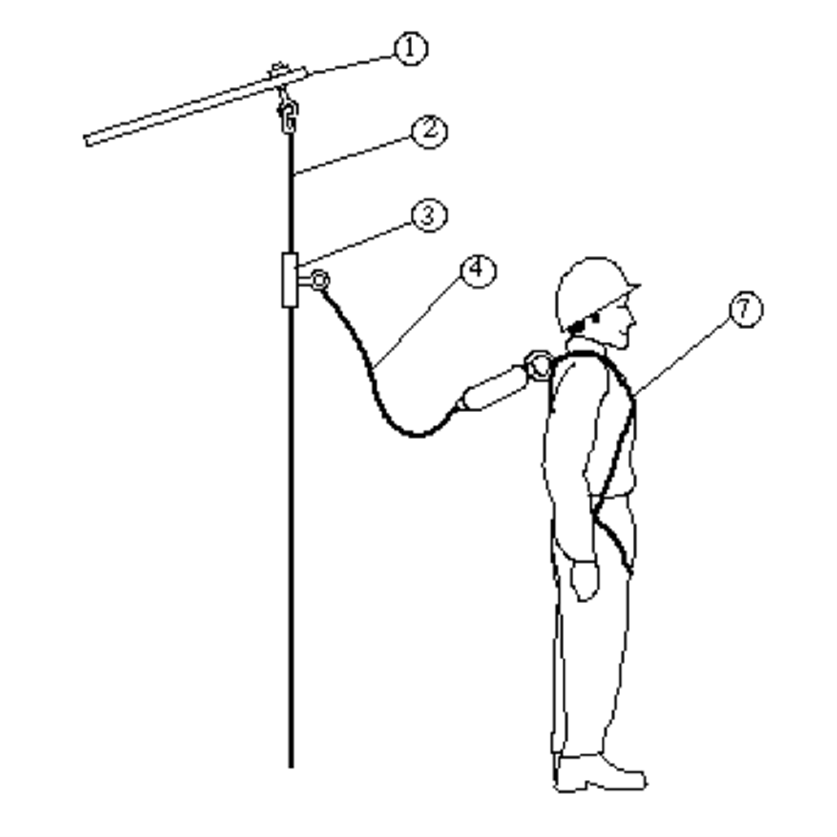


Construction Fall Protection Subpart M – Quick Tips

Here are the relevant guidelines and requirements for construction fall protection:

The following list of questions and associated regulations provide guidance on common safety issues related to 29 CFR 1926.501 to 1926.503. While it by no means covers every area of fall protection in construction, it does highlight some of the more common safety issues and provides a basic understanding of these requirements.

Question: Do walking and working surfaces have the strength and structural integrity to support people safely?

Regulation: 29 CFR 1926.501(a)(2)

Question: Are employees prohibited from working or walking on surfaces that are not designed to support them safely?

Regulation: 29 CFR 1926.501(a)(2)

Question: Do guardrail systems, safety net systems or personal fall arrest systems protect employees when they work on unprotected sides and edges of walking and working surfaces that are six feet or more above a lower level?

Note: Exceptions are permitted if these systems are infeasible or create a greater hazard. However, a fall protection plan must still be developed and implemented.

Regulation: 29 CFR 1926.501(b)(1)

Question: Do guardrail systems, safety net systems or personal fall arrest systems protect employees during construction of leading edges six feet or more above lower levels?

Regulation: 29 CFR 1926.501(b)(2)(i)

Question: Do guardrail systems or personal fall arrest systems protect workers in a hoist area from falling six feet or more to lower levels?

Regulation: 29 CFR 1926.501(b)(3)

Question: Does a personal fall arrest system protect employees if guardrail systems are removed for hoisting operations, requiring employees to lean through the access opening or out over the edge of the access opening (e.g., to receive or guide equipment and materials)?

Regulation: 29 CFR 1926.501(b)(3)

Question: Do personal fall arrest systems, covers, or guardrail systems erected around holes protect employees on walking and working surfaces more than six feet above lower levels from falling through holes (including skylights)?

Regulation: 29 CFR 1926.501(b)(4)(i)

Question: Do covers protect employees on a walking and working surface from tripping in or stepping into holes (including skylights)?

Regulation: 29 CFR 1926.501(b)(4)(ii)

Question: Do covers protect employees on a walking and working surface from objects falling through holes (including skylights)?

Regulation: 29 CFR 1926.501(b)(4)(iii)

Question: Do guardrail systems, safety net systems or positioning device systems protect employees on the face of framework or reinforcing steel more than six feet above lower levels from falling?

Regulation: 29 CFR 1926.501(b)(5)

Question: Do guardrail systems, fences or barricades protect employees at the edge of an excavation six feet or more in depth from falling when the excavations are not readily seen because of plant growth or other visual barrier?

Regulation: 29 CFR 1926.501(b)(7)(i)

Question: Do guardrail systems, fences, barricades or covers protect employees at the edge of a well, pit, shaft or similar excavation six feet or more in depth from falling?

Regulation: 29 CFR 1926.501(b)(7)(ii)

Question: Do guardrail systems or equipment guards protect employees from falling from less than six feet onto dangerous equipment?

Regulation: 29 CFR 1926.501(b)(8)(i)

Question: Do guardrail systems, personal fall arrest systems or safety net systems protect employees six feet or more above dangerous equipment from fall hazards?

Regulation: 29 CFR 1926.501(b)(8)(ii)

Question: Do guardrail systems, safety net systems, personal fall arrest systems or controlled access zones protect employees performing overhand bricklaying and related work six feet or more above lower levels from falling?

Regulation: 29 CFR 1926.501(b)(9)

Question: Does a guardrail system, safety net system or personal fall arrest system protect employees performing overhand bricklaying and related work when reaching more than 10 inches below the level of the walking/working surface from falling?

Note: Bricklaying operations performed on scaffolds are regulated by Subpart L – Scaffolds

Regulation: 29 CFR 1926.501(b)(9)(i)

Question: Are employees engaged in roofing activities on low-slope roofs with unprotected sides and edges six feet or more above lower levels protected from falling by guardrail systems, safety net systems, personal fall arrest systems, or a combination of a warning line system and guardrail system, warning line system and safety net system or warning line system and personal fall arrest system, or warning line system and safety monitoring system?

On roofs 50 feet or less in width, the use of a safety monitoring system alone is permitted.

Regulation: 29 CFR 1926.501(b)(10)

Question: Do guardrail systems with toe boards, safety net systems or personal fall arrest systems protect employees on steep roofs with unprotected sides and edges six feet or more above lower levels from falling?

Regulation: 29 CFR 1926.501(b)(11)

Question: Are employees engaged in the erection of precast concrete members and related operations six feet or more above lower levels protected from falling by guardrail systems, safety net systems or personal fall arrest systems?

Note: Exceptions are permitted if these systems are infeasible or create a greater hazard. However, a fall protection plan must still be developed and implemented.

Regulation: 29 CFR 1926.501(b)(12)

Question: Are employees engaged in residential construction activities six feet or more above lower levels protected from falling by guardrail systems, safety net systems or personal fall arrest systems?

Note: Exceptions are permitted if these systems are infeasible or create a greater hazard. However, a fall protection plan must still be developed and implemented.

Regulation: CFR 1926.501(b)(13)

Question: Are employees protected from falling by a guardrail system, a safety net system or a personal fall arrest system if they are working on, at, above or near wall openings (including those with chutes attached) where (a) the outside bottom edge of the wall opening is six feet or more above lower levels and (b) the inside bottom edge of the wall opening is less than 39 inches above the walking and working surface?

Regulation: 29 CFR 1926.501(b)(14)

Question: Are employees on a walking/working surface not otherwise addressed six feet or more above lower levels protected from falling by a guardrail system, safety net system or personal fall arrest system?

Regulation: 29 CFR 1926.501(b)(15)

Question: When an employee is exposed to falling objects, are they required to wear a hard hat?

Regulation: 29 CFR 1926.501(c)

Question: When an employee is exposed to falling objects, is one of the following measures implemented?

Erect toe boards, screens or guardrail systems to prevent objects from falling from higher levels.

Erect a canopy structure and keep potential fall objects far enough away from the edge of the higher level so that those objects would not go over the edge if they were displaced.

Barricade the area to which objects could fall, prohibit employees and students from entering the barricaded area, and keep objects that may fall far enough away from the edge of a higher level so that those objects would not go over the edge if they were displaced

Regulation: 29 CFR 1926.501(c)

Question: Has a training program been provided to everyone who might be exposed to fall hazards?

Note: The training program must enable each employee to recognize the hazards of falling and know the procedures for minimizing these hazards

Regulation: 29 CFR 1926.503(a)(1)

Question: Is the training program conducted by a competent person?

Regulation: 29 CFR 1926.503(a)(2)

Question: Have individual certification records been prepared that contain the name or other identity of the person trained, the date(s) of the training and the signature of the employer or person who conducted the training?

Regulation: 29 CFR 1926.503(b)(1)

Question: Is the latest training certification for all persons trained available for inspection?

Regulation: 29 CFR 1926.503(b)(2)

Question: Is retraining conducted if a person can no longer recognize the hazards of falling or follow the proper procedures?

Regulation: 29 CFR 1926.503(c)

Question: Is retraining conducted when changes in the workplace render previous training obsolete?

Regulation: 29 CFR 1926.503(c)(1)

Question: Is retraining conducted when changes in the types of fall protection systems or equipment render previous training obsolete?

Regulation: 29 CFR 1926.503(c)(2)

Question: Is retraining conducted if a person cannot use fall protection systems or equipment or has not retained the requisite understanding or skill?

Regulation: 29 CFR 1926.503(c)(3)

FALL RESCUE

All fall rescue programs should be as safe as possible and take as little time as possible to bring a fallen worker to safety. When a fall occurs, any number of factors can create challenges to the effective rescue of the victim. Weather conditions, physical obstacles and the condition of the victim can consume time and create hindrances for rescue personnel.

All rescue plans should be regularly reviewed to ensure that the procedures are manageable and realistic in their time estimates. Employers act in their own best interests by implementing the safest and quickest rescue plan and by practicing procedures to maximize preparation for a real emergency.

OSHA RECOMMENDS THESE GENERAL GUIDELINES:

  • Rescue suspended workers as quickly as possible
  • Be aware of the potentially life threatening risks of orthostatic intolerance and suspension trauma
  • Be aware of signs and symptoms of orthostatic intolerance
  • Be aware that suspended workers who are unconscious or have head injuries are particularly at risk for orthostatic intolerance
  • Be aware of the factors that can increase the risk of suspension trauma
  • Be aware that some authorities advise against moving the rescued workers to a horizontal position too quickly

For more information on the suspension trauma and orthostatic intolerance, see After the Fall Event — Preventing Suspension Trauma.

OTHER CONSTRUCTION STANDARDS RELATED TO FALL PROTECTION

29 CFR 1926.104 SAFETY BELTS, LIFELINES AND LANYARDS

(a) Lifelines, lanyard and safety harnesses must only be used for employee safeguarding. Any of these products that are subject to in-service loading must be immediately removed from service and not be reused again.

(b) Lifelines must be secured above the point of operation to an anchorage capable of supporting a minimum dead weight of 5400 pounds.

(c) Lifelines used on rock-scaling operations, or in areas where the lifeline may be subjected to cutting or abrasion, must be a minimum of 7/8-inch wire core manila rope. For all other lifeline applications, a minimum of 3/4-inch manila or equivalent, with a minimum breaking strength of 5400 pounds, must be used.

(d) Safety belt lanyards must be a minimum 1/2-inch nylon rope or equivalent with a maximum length to allow the user to fall not more than six feet and have a nominal breaking strength of 5400 pounds.

29 CFR 1926.105 SAFETY NETS

(a) Safety nets must be provided when workplaces are higher than 25 feet above ground or water surfaces or other surfaces where the use of ladders, scaffolds, catch platforms, temporary floors, safety lines or safety belts is impractical.

(c)(1) Nets must extend eight feet beyond the edge of the work surface where employees are exposed and must be installed as close under the work surface as practical but in no case more than 25 feet below the work surface. Nets must be hung with sufficient clearance to prevent user’s contact with the surfaces or structures below. Such clearances must be determined by impact load testing.

(d) The mesh size of nets shall not exceed six inches by six inches. All new nets must meet accepted performance standards of 17,500 foot-pounds minimum impact resistance as determined and certified by the manufacturers, and must bear a label of proof test. Edge ropes must provide a minimum breaking strength of 5000 pounds.

DEFINITIONS PERTAINING TO THIS SECTION:

Lanyard means a rope, suitable for supporting one person. One end is fastened to a safety belt or harness and the other end is secured to a substantial object or a safety line.

Lifeline means a rope, suitable for supporting one person, to which a lanyard or safety belt (or harness) is attached.

Safety belt means a device, usually worn around the waist which, by reason of its attachment to a lanyard and lifeline or a structure, will help prevent a worker from falling. Body belts are to be used for restraint and positioning only, not as part of a personal fall arrest system. A worker who uses a body belt as part of a personal fall arrest system is exposed to potentially falling out of the belt, serious internal injuries and asphyxiation through prolonged suspension.

COMMONLY ASKED QUESTION

Q: What is a “competent person”?

A: The term “competent person” is used in many OSHA standards and documents. According to the 1926 construction standard, an OSHA “competent person” is defined as “one who is capable of identifying existing and predictable hazards in the surroundings or working conditions which are unsanitary, hazardous, or dangerous to employees, and who has authorization to take prompt corrective measures to eliminate them” [29 CFR 1926.32(f)]. By way of training and/or experience, a competent person is knowledgeable of applicable standards, is capable of identifying workplace hazards relating to the specific operation, and has the authority to correct them.

SOURCE

29 CFR 1926.501 Subpart M

RELATED ARTICLES

After the Fall Event — Preventing Suspension Trauma
Fall Protection for Aerial Work Platforms
Fall Protection Equipment
OSHA Scaffolding Requirements

(Rev. 9/2015)

The information contained in this article is intended for general information purposes only and is based on information available as of the initial date of publication. No representation is made that the information or references are complete or remain current. This article is not a substitute for review of current applicable government regulations, industry standards, or other standards specific to your business and/or activities and should not be construed as legal advice or opinion. Readers with specific questions should refer to the applicable standards or consult with an attorney.

Source: Grainger Know How – https://www.grainger.com/know-how


Portable Fire Extinguishers – Quick Tips

Almost all fires are small in their incipient stage and can be put out quickly if the proper firefighting equipment is available and the person discovering the fire has been properly trained. Most employers turn to portable fire extinguishers for fighting incipient stage fires.

The requirements for portable fire extinguishers in general industry are governed by OSHA and are located in 29 Code of Federal Regulations (CFR) 1910.157. The intent is to minimize employee exposure to hazardous situations involving fire and to provide for fire protection equipment and services for the safe evacuation or rescue of employees. Additionally, the National Fire Protection Association (NFPA) Standard for Portable Fire Extinguishers, NFPA 10, offers supplementary guidance.

To be effective, according to OSHA, portable fire extinguishers must be:

  • Approved by a recognized testing laboratory — extinguishers manufactured in the U.S. are generally approved by FM Global and listed by Underwriters’ Laboratories, Inc. (UL).
  • The proper type for the class of fire expected. (Portable fire extinguisher types are described in UL guidelines and NFPA 10.)
  • Located where they are readily accessible for immediate use and in sufficient quantity and size to deal with the expected class of fire
  • Kept in good operating condition and inspected and maintained on a regular basis
  • Operated by trained personnel

Scope and Application

This standard addresses the placement, use, maintenance and testing of portable fire extinguishers provided for employee use. Where extinguishers are provided but are not intended for employee use, and the employer has an emergency action plan (29 CFR 1910.38) and a fire prevention plan (29 CFR 1910.39), then only the inspection, maintenance and testing requirements are applicable.

Employers having an emergency action plan which designates certain employees to be the only employees authorized to use the available portable fire extinguishers, and which requires all other employees in the fire area to immediately evacuate the affected work area upon the sounding of the fire alarm, are exempt from the distribution requirements of the standard. When extinguishers are not available, employers who have established and implemented a written fire safety policy which requires the immediate and total evacuation of employees from the workplace upon the sounding of a fire alarm signal are exempt from all requirements.

Understanding Different Kinds of Fire and How Fire Extinguishers Put Them Out

The fire triangle is a simple model for understanding the necessary ingredients for most fires — heat, fuel and an oxidizing agent. A fire can be prevented or extinguished by removing any one of the fire triangle elements.

What Are the Types of Portable Fire Extinguisher?

Different types of fire extinguishers are designed to fight different types of fire. The three most common types of fire extinguishers are air-pressurized water, carbon dioxide (CO2), and dry chemical.

  • Water is one of the most commonly used extinguishing agents for ordinary combustibles. Air-pressurized water extinguishers are filled approximately two-thirds with water, then pressurized with air. In some cases, detergents are added to produce a foam. Air-pressurized water extinguishers extinguish fire by cooling the surface of the fuel to remove the “heat” element of the fire triangle.  Never use water to extinguish flammable liquid or electrical fires.
  • CO2 extinguishers are filled with CO2, a non-flammable gas under pressure. These extinguishers put out fires by displacing the oxygen, and, because of the high pressure, they also have a cooling effect on fires. CO2 extinguishers are designed for flammable liquid and electrical fires only.
  • Dry chemical extinguishers put out fires by coating the fuel with a thin layer of fire retardant powder, separating the fuel from the oxygen.

UL and NFPA 10 classify fire extinguishers by the type of fire that they will extinguish.

Class A fire extinguishers are used for ordinary combustibles such as wood, paper, some plastics and textiles. This fire class requires the heat-absorbing effects of water or the coating effects of certain dry chemicals. According to NFPA, extinguishers suitable for Class A fires should be identified by a triangle containing the letter “A.” If in color, the triangle should be green.

Class B fire extinguishers are used for flammable liquid and gas fires such as oil, gasoline, etc. These fire extinguishers deprive the fire of oxygen and interrupt the fire chain by inhibiting the release of combustible vapors. According to NFPA, extinguishers suitable for Class B fires should be identified by a square containing the letter “B.” If in color, the square should be red.

Class C fire extinguishers are used on fires that involve live electrical equipment that require the use of electrically nonconductive extinguishing agents. Once the electrical equipment is de-energized, extinguishers for Class A or B fires may be used. According to NFPA, extinguishers suitable for Class C fires should be identified by a circle containing the letter “C.” If in color, the circle should be blue.

Class D fire extinguishers are used on combustible metals such as magnesium, titanium, sodium, etc., which require an extinguishing medium that does not react with the burning metal. According to NFPA, extinguishers suitable for Class D fires should be identified by a five-point painted star containing the letter “D.” If in color, the star should be yellow.

Class K fire extinguishers are used on fires involving cooking media (fats, grease and oils) in commercial kitchens. Due to the higher heating rates of vegetable oils in commercial cooking appliances, the NFPA Standard for Portable Fire Extinguishers (NFPA 10) includes a Class K extinguisher. These fire extinguishers work on the principle of saponification, which takes place when alkaline mixtures such as potassium acetate, potassium citrate or potassium carbonate are applied to burning cooking oil or fat. The alkaline mixture combined with the fatty acid creates a soapy foam on the surface that holds in the vapors and steam and extinguishes the fire. These extinguishers are identified by the letter “K.”

Portable Fire Extinguisher Marking

NFPA 10 provides recommended markings for portable fire extinguishers so users can quickly identify the classes of fire on which the extinguisher will be effective. The marking system combines pictographs of both recommended and unacceptable extinguisher types on a single identification label. Extinguisher markings from Annex B of NFPA 10 are shown below.

Fire Extinguisher Ratings

Located on the fire extinguisher label is the UL rating, which is broken down into Class A and Class B:C numerical ratings. These numerical ratings allow users to compare the relative extinguishing effectiveness of various fire extinguishers. For example, an extinguisher that is rated 4A:20B:C indicates the following:

  • The A rating is a water equivalency rating. Each A is equivalent to 1.25 gallons of water; 4A = 5 gallons of water.
  • The B:C rating is equivalent to the amount of square footage the extinguisher can cover, related to the degree of training and experience of the operator; 20 B:C = 20 square feet of coverage.
  • C indicates it is suitable for use on electrically energized equipment.

Note that there is not a numerical rating for Class C or Class D fires. Class C fires are essentially either a Class A or Class B fire involving energized electrical equipment where the fire extinguishing media must be nonconductive. The fire extinguisher for a Class C fire should be based on the amount of the Class A or Class B component. For extinguisher use on a Class D fire, the relative effectiveness is detailed on the extinguisher nameplate for the specific combustible metal fire for which it is suggested.

Where Should a Fire Extinguisher Be Located?

OSHA requires employers to select and distribute fire extinguishers based on the classes of anticipated workplace fires and also on the size and degree of the hazard, which would affect their use. The following chart contains the OSHA-specified maximum travel distances to an extinguisher by fire class.

According to NFPA 10, the travel distance to a Class K fire extinguisher must not exceed 30 feet.

What Kind of Fire Extinguisher Training Is Required?

One of the most commonly asked questions is whether or not “hands on” training is required for fire extinguishers. The answer is that it depends.

For employers who write into their emergency action plan and fire prevention plan (covered in 29 CFR 1910.38 and 29 CFR 1910.39, respectively) that all employees will immediately evacuate the building in case of a fire and that no one will use an extinguisher, neither education nor training is required in portable fire extinguisher use.

Unless employers have communicated differently, the assumption is that any employee can pick up an extinguisher in their area to put out a fire. 29 CFR 1910.157(g)(1) states, “Where the employer has provided portable fire extinguishers for employee use in the workplace, the employer shall also provide an educational program to familiarize employees with the general principles of fire extinguisher use and the hazards involved with incipient stage fire-fighting.”  The standard goes on to explain in paragraph (g)(2) that the “education” required in paragraph (g)(1) “must be provided to employees upon initial employment and at least annually thereafter.” “Education” is defined by Subpart L 1910.155(c)(14) as “the process of imparting knowledge or skill through systematic instruction. It does not require formal classroom instruction.”

If some or all employees are designated to use portable fire extinguishers, then it’s a different story: 29 CFR 1910.157(g)(3) states that “the employer shall provide employees who have been designated to use fire-fighting equipment as part of an emergency action plan with training in the use of the appropriate equipment.” In 29 CFR Subpart L at 1910.155(c)(41), “training” means “the process of making proficient through instruction and hands-on practice in the operation of equipment.” Paragraph (g)(4) states that this training must be provided upon initial assignment and at least annually thereafter.

Maintenance, Inspection and Testing

Employers must inspect, maintain and test all portable fire extinguishers in accordance with 29 CFR 1910.157(e) and (f).

How Do You Inspect a Fire Extinguisher? OSHA Regulations for Visual Inspection

Portable fire extinguishers must be visually inspected monthly per 29 CFR 1910.157(e)(2). This helps ensure that:

  • The extinguishers are in their assigned location
  • No damage has occurred
  • No obstructions are blocking the extinguishers from view or easy access
  • Extinguishers are fully charged and operational
  • Pressure gauges show adequate pressure
  • Pin and seals are in place
  • Nozzles are free of blockage

Fire Extinguisher Maintenance Requirements

The maintenance requirements depend on the type of portable fire extinguisher:

  • Stored pressure or dry chemical type extinguishers do not require an internal examination
  • Water or steam type fire extinguishers should be discharged, disassembled and inspected annually (NFPA 10, 4-4.1.1)
  • Dry chemical extinguishers that require a 12-year hydrostatic test are required to be emptied and subjected to applicable maintenance procedures every six years.
  • Non-refillable, disposable dry chemical extinguishers are exempt from this requirement (29 CFR 1910.157(e)(4))

For additional fire extinguisher maintenance, follow the manufacturers’ suggested maintenance procedure.

Hydrostatic Fire Extinguisher Testing

Hydrostatic testing of portable fire extinguishers is done to help protect against unexpected in-service failure. This can be caused by internal corrosion, external corrosion and damage from abuse, etc. Hydrostatic testing must be performed by trained personnel with proper test equipment and facilities. OSHA requires hydrostatic testing according to the following schedule:

For each extinguisher that is hydrostatically tested, the employer must keep a record that includes:

  • The name of the person or agency who performed the last hydrostatic test, and the test date
  • The signature of the person who performed the test
  • The serial number or other identifier of the fire extinguisher that was tested

This information should also be securely affixed to the tested extinguisher. These records must be kept until the extinguisher is hydrostatically re-tested or until the extinguisher is taken out of service, whichever comes first.

Commonly Asked Questions

Q: What is Halotron?

A: Halotron is a “clean agent” hydrochlorofluorocarbon (HCFC) discharged as a rapidly evaporating liquid that leaves no residue. It is intended for use in areas formerly protected by Halon portable extinguishers. Typical applications are in computer rooms, telecommunications facilities, cleanrooms, data storage areas and offices to help protect sensitive electronic equipment.

Q: What is a “recharge”?

A: A recharge is when a fire extinguisher needs to be refilled because it has been used or has lost pressure. You can tell if the unit needs to be recharged by the gauge on the fire extinguisher. On a fully charged fire extinguisher, the arrow should be pointing to 12 o’clock. If the gauge is in the red and says “recharge,” it can and needs to be recharged. If the gauge is in the red and reads “dispose of after use,” the fire extinguisher cannot be recharged and needs to be disposed of and a new fire extinguisher needs to be purchased. Carbon dioxide (CO2) extinguishers must be weighed to determine if leakage has occurred.

Sources

29 CFR 1910.157, Portable Fire Extinguishers

29 CFR 1910.38, Emergency Action Plans

29 CFR 1910.39, Fire Prevention Plans

2018 NFPA 10, Standard for Portable Fire Extinguishers

UL 711 2018, Rating and Fire Testing of Fire Extinguishers

National Fire Protection Association, Fire Protection Handbook, 20th Edition

National Safety Council, Accident Prevention Manual: Engineering and Technology, 14th Edition

The information contained in this article is intended for general information purposes only and is based on information available as of the initial date of publication. No representation is made that the information or references are complete or remain current. This article is not a substitute for review of current applicable government regulations, industry standards, or other standards specific to your business and/or activities and should not be construed as legal advice or opinion. Readers with specific questions should refer to the applicable standards or consult with an attorney.

Source: Grainger Know How – https://www.grainger.com/know-how


Diet Fatality Report – Spanish

La mujer que sólo bebió refrescos durante 16 años

Como es bien sabido, los refrescos ricos en azúcar pueden infligir un daño horrible al cuerpo humano. Al fin y al cabo, una sola lata de 12 onzas de Coca-Cola contiene el equivalente aproximado de dos vasos de refresco llenos de azúcar puro y granulado. Por eso es sorprendente que una mujer de 31 años de Mónaco afirme haber consumido sólo refrescos durante 16 años seguidos. Ni agua, ni zumo, ni té, sólo refrescos con alto contenido en fructosa y jarabe de maíz. Los médicos lo descubrieron cuando se desmayó debido a unos niveles de potasio peligrosamente bajos. Según los expertos en salud, un exceso de refresco de cola puede provocar la entrada de un exceso de agua en los intestinos, lo que significa que estaba condenada a padecer una diarrea persistente. Sus niveles de potasio -así como su ritmo cardíaco irregular- se estabilizaron un poco después de abstenerse de tomar refrescos durante una semana y obligarse a beber sólo agua.