Nurse Triage Hotline Provides Immediate Access to Medical Advice

Injured at Work? Call the Nurse Triage Hotline for Help

855.469.6877 (855.4MY.NURSE)

Having accurate care intervention right after a workplace accident helps prevent minor injuries from getting worse or turning into a major claim and lost work time. That’s how ICW Group’s Nurse Triage Hotline can help 24 hours a day, 7 days a week. Within one minute of calling, an injured worker can speak directly to a nurse who specializes in treating workplace injuries and will recommend the type of care needed. Fifteen minutes after the call, a summary of the visit with the nurse is sent to the policyholder and a claim is opened.
The immediate attention injured employees receive from the Nurse Triage Hotline can help reduce stress associated with getting injured on the job.

  • Available in English and Spanish
  • Next-day follow-up call when self-care is recommended
  • 24/7 Access to nurses specializing in workplace injuries
  • Easily share pictures of cuts and burns for improved results

Learn more about the Nurse Triage Hotline on ICW Group’s Policyholder Center

Tell your employees about the hotline

The more employees who know about Nurse Triage Hotline, the more likely they are to remember to use it when an injury occurs. We’ve got you covered. Order free materials, like flyers, stickers and wallet cards.

Get Nurse Triage Materials


Help Injured Workers

Suffering a workplace injury can involve more than just physical challenges; employees worry about providing for their families, paying bills and what it will take to return to work. ICW Group offers helpful tools to help injured workers from the moment an injury occurs and all the way through recovery.

Nurse Triage Hotline – peace of mind when an injury occurs

Your employee is injured at work – now what? This 24/7 hotline connects an injured worker with a registered nurse specializing in workplace injuries. The nurse provides medical advice on the care needed.

  • Connects in 1 minute
  • Call summary report sent to you in 15 minutes
  • Claim opened for you

855.469.6877 (855.4MY.NURSE)

Learn more about the Nurse Triage Hotline


Injured Workers Center – helps every step of the way

Your employees look to you for guidance. Help them avoid surprises, reduce stress, navigate the claim process and jump-start their recovery. Ease many of their concerns by bookmarking and sharing the Injured Workers Center. Available in English and Spanish.

Visit the Injured Workers Center

Send an injured worker an eCard with a link to the Injured Workers Center


Telemedicine for workers’ comp injuries

ICW Group offers Concentra Telemed®, the first telemedicine product designed specifically for work comp injuries. Using Telemedicine is easy, and reduces travel and wait time during an injured worker’s treatment and recovery.

  • Works on any device with a webcam
  • Use from any location with internet access
  • Connect in minutes
  • Available in multiple languages

Learn more about getting medical treatment online


8 FAQs about Hypothermia

What Hypothermia Is

Q: What is hypothermia?

A: A condition in which core body temperature drops below the 95.0° F (35.0° C) for normal metabolism.

Why It’s Dangerous

Q: Why is hypothermia dangerous?

A: When body temperature gets too low, the body can’t replenish the heat it loses and thus can’t carry out its normal functions.

How It’s Caused

Q: How does hypothermia happen?

A: It’s usually the result of exposure to low temperatures. Alcohol consumption and dehydration also increase hypothermia risks.

Who’s At Risk

Q: Which workers are most likely to get hypothermia?

A: Those who work in cold temperatures, either indoors or outdoors, especially those who drink alcohol before or during work.

How to Prevent It

Q: How can your workers avoid hypothermia?

A: By doing at least 4 things:

  1. Drinking plenty of liquids (but not alcoholic beverages);
  2. Wearing adequate protective clothing, including a hat, scarf, long-sleeved shirt, mittens (which are warmer than gloves), water-resistant coat and shoes, layers of loose-fitting clothing;
  3. Staying dry and removing/replacing clothing as it gets wet; and
  4. Avoiding prolonged exposure to cold weather.

How to Recognize It

Q: What are signs and symptoms of hypothermia?

A: They include the following:

  • Involuntary, excessive shivering;
  • Confusion;
  • Drowsiness;
  • Slurred speech;
  • Irrational behavior;
  • Falling to the ground;
  • Can’t walk;
  • Curls up;
  • Skin becomes pale;
  • Dilated pupils;
  • Decreased pulse rate.

How to Treat It

Q: What should you do to help a hypothermia victim?

A: 7 things:

  1. Move the victim to a warmer environment;
  2. Remove wet clothing;
  3. Place the victim on a blanket or a warm surface, insulating the body from the cold ground, and wrap in blankets or other warming material;
  4. Apply warm compresses to the center of the body—the chest, neck, head and groin;
  5. Call for medical aid immediately;
  6. Provide warm beverages, such as hot chocolate; and
  7. Share body heat.

How Not to Treat It 

Q: Are there any things that should not be done to help a hypothermia victim?

A: Yes, 5 things:

  1. Don’t apply direct heat, such as hot water or a heating pad;
  2. Don’t attempt to warm the arms and legs as this can cause cold blood to be forced back toward the heart, lungs and brain;
  3. Don’t massage or rub the person. People suffering from hypothermia must be handled gently as they’re at risk of cardiac arrest;
  4. Don’t give the person an alcoholic beverage, which lowers the body’s ability to retain heat; and
  5. Don’t try to give any beverage to a person who is unconscious.


Carbon Monoxide

Carbon Monoxide

Carbon monoxide (also known as CO) is one of the most dangerous and common industrial hazards. This poisonous gas kills outright without warning. It also causes brain damage, heart and breathing problems and other illnesses and injuries.

Where Does It Come From?

The main source of carbon monoxide is incomplete burning of anything that contains carbon. This includes gasoline, natural gas, oil, propane, coal or wood.

At work, the most common source of CO exposure is the internal combustion engine, such as that used in motor vehicles. Other sources include heat furnaces, forges, blast furnaces, coke ovens and kilns.

At home, a poorly adjusted or defective fuel furnace can cause carbon monoxide to form and

accumulate in the house through leaking flues, vents and chimneys. Hot water heaters, clothes dryers and space heaters fueled by natural gas or propane also can generate carbon monoxide. Maintaining adequate ventilation, using devices correctly and installing a carbon monoxide detector are three ways you can prevent poisoning.

Motor vehicles – both moving and stationary – are the main cause of all carbon monoxide deaths. More than one-third of deaths from carbon monoxide poisoning involving motor vehicles occur during the winter, often in garages.

What Does It Do to You?

Carbon monoxide — which gives no warning of its presence because it’s colorless, odorless and tasteless— poisons by displacing oxygen in the blood. After it’s inhaled, CO combines 200 times faster with the blood’s oxygen carrier, hemoglobin, than oxygen does.

Large amounts of CO can kill a person within minutes, even if there is plenty of oxygen available in the air.

At lower levels, carbon monoxide causes headaches, tightness across the chest, fatigue, nausea and drowsiness. With symptoms such as these, carbon monoxide poisoning is often mistaken for an illness such as the flu. A worker with mild CO poisoning is prone to injury and errors because of being drowsy and inattentive.

Increased exposure interferes with physical coordination and mental alertness. Convulsions, coma and death follow. Even if a victim survives a serious exposure, he or she may have permanent damage to body tissue, particularly of the brain and the heart.

Who Is At Risk?

At risk for carbon monoxide poisoning are workers in settings such as these: foundries, ice arenas, tunnels, toll booths, warehouses, loading docks, motor vehicle repair shops, breweries and bakeries.

Conclusion

If carbon monoxide is a potential hazard in your workplace, you should be protected by an alarm that will sound and flash if CO is accumulating. Some jobs will require you to wear a personal monitor. Learn how these systems work for you and heed the warnings. And be sure to install a detector in your home, too.



HAZCOM: 6 SDS Traps to Avoid

Chemical safety in the workplace is a joint effort. It requires employees and employers to work together. Let’s look at 6 of the most common mistakes that occur in the workplace and how to avoid them.

Mistake 1: Relying Too Heavily on the SDS Information

The Problem: The quality of information in SDSs (safety data sheets) is always improving. But there are still too many SDSs that don’t provide enough relevant information about the chemical. A poor quality SDS doesn’t help the employee understand the potential hazard.

The Solution: You have a choice. You can:

  • Ask the supplier for a more thorough explanation of their SDS; or
  • Select a different manufacturer provides a more thorough SDS; and/or
  • Conduct your own risk assessment on the chemical before buying it.

Mistake 2: Not Reviewing the SDS before Using the Chemical

The Problem: While it’s not a good idea to rely too heavily on the SDS, it is essential that the SDS be consulted before the product is used. But how often have you seen an employee actually reviewing an SDS for a chemical before using it?

The Solution: Ensure that the SDSs are accessible. For example store SDSs in binders at strategic locations around the site or make SDSs easily accessible electronically from any computer. 

Mistake 3: Not Having the Proper PPE for the Chemicals Used in the Workplace

The Problem: SDSs tend to be pretty generic regarding PPE requirements. Of course, not all forms of PPE are the same. Even if the SDS is specific, it can raise problems. For instance, if the SDS specifies that it is a skin absorption hazard and that neoprene gloves must be used, should you stock neoprene gloves?

The Solution: A health and safety person should review the SDS of each chemical onsite to ensure adequate protection is available. At our workplace, we developed a PPE selection guide that is available to all employees. This guide outlines:

  • All of the PPE stocked onsite and the specific hazards they are designed to protect against; and
  • Available respirator cartridges/canisters and outlines the specific chemicals onsite that they are appropriate for.

Mistake 4: Failing to Label Containers of Chemicals

The Problem: Unless they fall into certain exempt situations, regulated chemicals must be labeled. One reason for these requirements is that without labels, workers might try to use their senses to determine what a chemical is.

The Solution: Make labeling easy by providing blank stickers and permanent markers for workers to use. Ideally, you should keep these materials readily available at the spot where the worker obtains the chemical. Training on labeling requirements and auditing the workplace will help reduce labeling errors.

Mistake 5: Not Making HazCom Training Site-Specific

The Problem: Although there are lots of good generic HazCom training packages on the market, these packages come up short on site-specific training. Workers return from generic training – often from an outside service provider like a consultant, contractor – and think they are “all done.” But they’re not. Information provided in these training sessions must now be tied to the chemicals, operations, processes, and conditions of your own workplace. You need to give your workers context.

The Solution: Once workers complete generic training, provide them site-specific training that transfers the information to your site. This training should include SDS locations, safe handling procedures and spill response.

Mistake 6: Inadequate Precautions about Smoking & Chemicals

The Problem: Most workers are pretty good about washing their hands before eating. The same can’t be said about washing hands before smoking. Poor hand hygiene habits can result in inadvertent ingestion and inhalation of workplace chemicals via cigarettes.

The Solution: When providing training on the safe handling of hazardous chemicals, remind workers that all hand-to-mouth actions – including smoking – carry the risk of ingesting hazardous chemicals.

Conclusion

Many if not most of the highlighted mistakes are a matter of pure common sense. But you’d be surprised at how these seemingly self-evident points get overlooked.


How to Protect Workers from Cold Stress

Are you doing enough to protect your workers against the risks of cold-stress? If one of your workers should suffer a serious or fatal cold-stress injury, could you and your company be liable?

When Is Cold Stress a “Recognized Hazard”?

The first thing the Guidance clarifies is when cold stress becomes a recognized hazard. It’s not temperature alone, guidance says. It’s how cold the air actually feels on the body. Guidance cites 4 factors that employers must consider in determining how cold is too cold:

  • Temperature of the air;
  • Wind or other factors causing the air to move at a high velocity—thereby making it feel colder;
  • Dampness of the air; and
  • Contact with cold water or surfaces.

Mere lack of comfort isn’t determinative. A cold stress hazard exists when the working climate makes the risk of cold-induced problems a real one. Guidance cites 3 of the most common problems:

  • Hypothermia, i.e., when body temperature drops below the normal 98.6° F to around 95° F or lower;
  • Frostbite, i.e., actual freezing of the skin which can lead to amputation; and
  • Trench foot, i.e., freezing of the foot caused by immersion in cold water or prolonged exposure to extremely cold air.

The 4 Things You Must Do to Protect Workers from Cold Stress

There are 4 kinds of protective measures that employers should take to prevent workers from suffering cold stress:

  1. Require Protective Clothing

First, you need to ensure workers exposed to cold stress wear protective clothing. Here are 6 things employers must make workers do:

  • Wear at least 3 layers of clothing—an inner layer of wool, silk or synthetic to wick moisture, a middle layer of wool or synthetic for insulation and an outer layer of wind and rain protection that allows for ventilation;
  • Wear a hat or hood on their head;
  • Wear boots or other footwear that’s insulated;
  • Keep a change of dry clothes on hand;
  • Wear loose clothing (other than the wicking layer which needs to be tight); and
  • Consider the wetting effects of sweat.
  1. Implement Work Practices

Employers must implement steps to ensure the work is done safely such as:

  • Making workers drink plenty of liquids and avoid caffeine and alcohol so they don’t become dehydrated;
  • Scheduling the heaviest work for the warmest part of the day;
  • Letting workers take frequent breaks so they can come out of the cold; and
  • Having workers work in pairs so they can keep an eye on each other and monitor for signs of cold stress. 
  1. Use Engineering Controls

Employers should use things like radiant heaters, shields, insulating materials and other engineering measures to make the air warmer.

  1. Provide Safety Training

Last but not least, employers need to train workers about the dangers of cold stress, how to recognize when cold stress occurs and how to respond if they experience or see one of their co-workers experiencing such symptoms.

How to Create a Cold Stress Exposure Policy

One of the best ways to comply with requirements is to adopt a written cold stress exposure plan for your workplace. Your plan should:

Explain Purpose. Help workers understand the dangers they are trying to prevent, such as frostbite and hypothermia, by explaining them in the policy.

Require Periodic Monitoring of Temperature, Wind Chill, and Other Factors. The obligation to protect workers against cold stress involves monitoring temperature and wind chill levels. 

Require Supervisors to Protect Workers Subject to Cold Exposure. Your supervisors should also monitor workers performing light, moderate or heavy work. While moderate work provides a warming effect, heavy work produces perspiration which makes workers more vulnerable to cold stress injuries. Another important factor is whether working conditions are wet — which would require additional protection — or dry.

Make Workers Work in Groups. Cold stress problems can creep up on a worker before he realizes what’s going on. The best way to protect your workers is to have them work together, putting each worker in charge of another’s safety.

Provide for Worker Training. The plan should require somebody at your facility to train all workers and supervisors about the signs, symptoms and prevention of cold stress. Too many workers regard being cold as a mere discomfort, something a “real man” (or woman) wouldn’t complain about.


Quick Course – Lead

Lead exposure is a serious issue that many workers face every day. This quick course will cover the dangers of lead in the workplace.


Dropped Objects on the Job Meeting Kit

Dropped objects have been a problem for as long as the force of gravity has existed. In fact, the New York Times published an article in 1903 about dropped objects in which it said: “Dozens of placards posted at various places on the bridge caution the iron workers to use great care in the handling of tools, to avoid dropping them into the river.”

DANGERS/HAZARDS

People Below

While the most obvious person at risk when objects are dropped is the one underneath, the worker using the tool also can be at risk, as his knee-jerk reaction may be to catch or go after the falling object, which could cause him to lose his balance and fall.

Physics of Gravity

To determine what kind of force an object falling from a certain height generates, calculations can be done around the physics of gravity.

Objects as small as a bolt can cause serious injury or even death when dropped from a higher level and striking an employee working on the ground. Outside of injuries and deaths, dropped objects are responsible for a large cost to employers due to property damage incidents as well.

DROPPED OBJECTS PREVENTION

Despite OSHA statistics – and the fact that many of these violations could have been prevented with the proper safety equipment – many contractors do not take the necessary precautions to prevent fall-related injuries by providing workers with personal fall protection systems for both the workers and their tools.

A harness for a person acts as the primary component of a personal fall protection system. However, for Tools, we typically rely on secondary, passive systems, such as debris nets. We rarely deploy a primary system for tools and equipment.

Most organizations have deployed a fall protection program for workers but have not deployed a drop prevention program for Tools and Equipment. Expanding a fall protection program to include tools and equipment is far easier for companies and employees than creating a new program for drop prevention.

The difference between a fall protection program for humans and fall protection program for tools is only a matter of perspective: The first saves you; the second saves others.

Actions to Prevent Dropped Object Incidents

Eliminate the hazard: Remove objects and tools from higher levels, scaffolding, or aerial lifts that do not need to be there.

Engineering controls: Barricade zones below higher work levels to prevent personnel from walking into the line of fire of a dropped object. Install toe boards on higher work levels to make sure objects and tools cannot easily slide off an edge to a lower level.

PPE: Anytime there are overhead hazards present on a jobsite hardhats need to be worn. PPE is always a last line of defense. Wearing a hardhat will only limit the damage a dropped object does, not prevent it from happening.

DROPPED OBJECTS BEST PRACTICES AND SOLUTIONS

Best Practices and Solutions for Organizations When It Comes to Dropped Object Prevention:

  1. Expand fall protection programs to include tools and equipment.
  2. Provide a competent person to manage the expanded program.
  3. Raise awareness of drop hazard identification and mitigation techniques within the workforce.
  4. Require risk assessments before performing work with drop hazards.
  5. Consider regularly scheduled “hazard hunts” to drive awareness of drop hazards.
  6. Consider using tethered tools. These tools either have built-in connection points placed by the manufacturer or can be retrofitted with connection points.
  7. Consider using energy-absorbing lanyards, which will reduce the force associated with the dropped tool.
  8. Tools that weigh more than five pounds should never be tied-off to a person.
  9. If a worker has a tool attached to him and needs to pass it off to a colleague, that colleague can connect to the tool before the passing worker disconnects from it, ensuring the tool is 100 percent tied off and never has the opportunity to become a drop hazard.
  10. Employees should be properly trained on how to use tethered tools. They must be taught how to attach a connection point to the tools, use the lanyards properly and respect the weight rating of the lanyards.
  11. As a best practice, workers at height should only bring up the tools they need to do their job.
  12. Hoist up items and then transfer them over with different lanyards to the workers themselves or to static anchor points. This can be done in a bucket, which can then house the extra tools.
  13. There are many buckets, bags and pouches available on the market with closure systems to dramatically reduce the likelihood of items falling out.
  14. A secondary solution to dropped objects are toe boards. Toe boards should be capable of withstanding a force of at least 50 pounds in any downward or outward motion.
  15. Green netting that goes over buildings when they are being refaced in areas where there are a lot of pedestrians is the most recognized form, but there also is netting that is put up within the construction project, such as directly under work being done, to help stop objects from falling on workers below.

FINAL WORD

When working in your job area today, look for hazards associated with dropped objects and report them to your supervisor or the safety department to get corrected. For all objects at height – including humans – the focus always should be on preventing things from falling rather than on catching objects, or on limiting the damage after they fall.


Dropped Objects on the Job Stats and Facts

FACTS

  1. Tool weighing only 8 pounds falling from a height of 200 feet will travel at a speed of approximately 80 mph and can have an impact force of 5,540 pounds when it impacts the ground. Resulting from this impact, safety nets and drop zones are of little benefit when an object of mass and speed makes a direct impact or deflects off of another object.
  2. A dropped wrench, hammer or even a walkie-talkie can be extremely damaging to your fellow workers engaged in heavy manufacturing, transportation or metalworking. It can be even worse for heavier tools that are frequently used in these or other types of industries.
  3. Any time people work at height, dropped objects are possible. They can pose a real danger to other workers or bystanders on the ground. Even small, seemingly innocent tools and materials are hazardous when dropped from above.
  4. Where fall protection equipment prevents the person from falling, a dropped object prevention plan protects people on the ground from items that can fall off of equipment or a worker.
  5. While the risk of dropping an object may seem insignificant or a prevention plan superficial, consider that your conscious mind is similar to a binary computer; able to process only one thought at a time. When performing a given task, your brain is busy sorting information relevant to that task, say, stocking inventory 30 feet above the surface. It is not actively processing anything other than the task at hand.

STATS

  • According to BLS, there are more than 42,400 “struck by falling object” OSHA recordable incidents every year in the United States. That’s nearly 116 injuries caused by a dropped object every day or one injury caused by a dropped object every 10 minutes.
  • The Bureau of Labor Statistics categorized 278 fatalities in 2017 as resulting from being “struck by falling objects.” (OSHA) includes “struck by object” among its “Fatal Four,” the top causes of more than half of construction worker deaths.
  • (BLS) reported that in 2017, “fatal falls were at their highest level in the 26-year history of the CFOI, accounting for 887 (17 percent) of worker deaths.”
  • BLS reported that being struck by falling objects or equipment resulted in 45,940 injuries in 2017 (5.2% of all workplace injuries).
  • According to the OSHA dropped objects are the third leading cause of injuries in construction.
  • In 2016, dropped objects resulted in 255 worker fatalities, according to the BLS. The issue is one of OSHA’s “Fatal Four” causes of construction deaths, accounting for 9.4% of fatal injuries in the industry.
  • The number of nonfatal falling object-related injuries reported in 2016 was 47,920. Dropped objects, according to BLS data, is the third-leading cause of injuries on jobsites.


Dropped Objects on the Job Fatality Report

Falling Steel Bars Cause Massive Head Injuries

About mid-day a foreman and three carpenters were assisting a crane operator with the placement of a 6000-pound steel mat. The mat was constructed of approximately 80 pieces of reinforcing steel each weighing about 75 pounds.

The mat had to be manually guided into place while suspended from a crane. Three men were standing under the crane boom and load. A fourth was directing the movements with hand signals. As the operator made the final movements to align the mat with another one already in place, the rigging suddenly pulled up on the right side. The mat dropped, dislodging some of the steel bars.

One worker ran north and two, including the foreman, ran south to avoid the falling bars. It appears that the foreman’s hardhat fell off his head as he ran. He was struck in the head by at least one of the falling bars and sustained massive head injuries. He was transported via ambulance to the hospital where he died a short time later.

The investigation did not find any safety infractions with this unfortunate incident although they did make recommendations for a fail-safe way of securing the lift points of similar structures. It was also thought that if the foreman’s hardhat had stayed on his head it may have absorbed enough of the blow that he could have survived the incident.


Dropped Objects on the Job – Picture This

What’s wrong in this picture?   Falling objects, such as work materials and tools, present a serious safety concern whenever work is done overhead or in an elevated location. This hazard is commonly forgotten until a near miss or injury serves as a stark reminder.

The solution is simple: Be proactive and “Stop the Drop”. Simple passive and active safety measures can minimize the risk of falling objects and protect workers below. It’s important to understand how quickly seemingly harmless falling objects accelerate to deadly speeds.


Dropped Objects on the Job Meeting Kit – Spanish

QUÉ ESTÁ EN RIESGO

La caída de objetos ha sido un problema desde que existe la fuerza de la gravedad. De hecho, el New York Times publicó un artículo en 1903 sobre la caída de objetos en el que decía: “Docenas de carteles colocados en varios lugares del puente advierten a los trabajadores del hierro que tengan mucho cuidado en el manejo de las herramientas, para evitar que se caigan al río”.

CUÁL ES EL PELIGRO

PELIGROS/RIESGOS

Personas que están debajo

Aunque la persona más obvia que corre peligro cuando se dejan caer objetos es la que está debajo, el trabajador que utiliza la herramienta también puede estar en peligro, ya que su reacción instintiva puede ser coger o ir detrás del objeto que cae, lo que podría hacerle perder el equilibrio y caer.

Física de la gravedad

Para determinar qué tipo de fuerza genera la caída de un objeto desde cierta altura, se pueden hacer cálculos en torno a la física de la gravedad.

Objetos tan pequeños como un perno pueden causar lesiones graves o incluso la muerte cuando se dejan caer desde un nivel superior y golpean a un empleado que trabaja en el suelo. Aparte de las lesiones y las muertes, los objetos caídos son responsables de un gran coste para los empresarios debido a los incidentes de daños materiales.

COMO PROTEGERSE

PREVENCIÓN DE CAÍDAS DE OBJETOS

A pesar de las estadísticas de la OSHA -y del hecho de que muchas de estas infracciones podrían haberse evitado con el equipo de seguridad adecuado-, muchos contratistas no toman las precauciones necesarias para prevenir las lesiones relacionadas con las caídas proporcionando a los trabajadores sistemas personales de protección contra caídas tanto para ellos como para sus herramientas.

Un arnés para una persona actúa como componente principal de un sistema personal de protección contra caídas. Sin embargo, en el caso de las herramientas, solemos recurrir a sistemas secundarios y pasivos, como las redes de protección contra escombros. Rara vez desplegamos un sistema primario para las herramientas y el equipo.

La mayoría de las organizaciones han desplegado un programa de protección contra caídas para los trabajadores, pero no han desplegado un programa de prevención de caídas para las herramientas y equipos. Ampliar un programa de protección contra caídas para incluir las herramientas y el equipo es mucho más fácil para las empresas y los empleados que crear un nuevo programa de prevención de caídas.

La diferencia entre un programa de protección contra caídas para personas y un programa de protección contra caídas para herramientas es sólo una cuestión de perspectiva: El primero le salva a usted; el segundo salva a otros.

Acciones para prevenir incidentes con objetos caídos

Elimine el peligro: Retire los objetos y las herramientas de los niveles superiores, los andamios o los elevadores aéreos que no necesiten estar allí.

Controles de ingeniería: Coloque barricadas en las zonas situadas por debajo de los niveles de trabajo superiores para evitar que el personal entre en la línea de fuego de un objeto caído. Instale rodapiés en los niveles de trabajo superiores para asegurarse de que los objetos y las herramientas no puedan deslizarse fácilmente desde un borde a un nivel inferior.

EPP: Siempre que haya riesgos por encima de la cabeza en un lugar de trabajo es necesario llevar cascos. El EPP es siempre la última línea de defensa. El uso de un casco sólo limitará el daño que produce la caída de un objeto, pero no evitará que ocurra.

MEJORES PRÁCTICAS Y SOLUCIONES PARA LA CAÍDA DE OBJETOS

Mejores prácticas y soluciones para las organizaciones cuando se trata de la prevención de objetos perdidos:

  1. Ampliar los programas de protección contra caídas para incluir herramientas y equipos.
  2. Proporcionar una persona competente para gestionar el programa ampliado.
  3. Concienciar a los trabajadores sobre las técnicas de identificación y mitigación de los riesgos de caída.
  4. Exigir evaluaciones de riesgo antes de realizar trabajos con peligro de caída.
  5. Considerar la posibilidad de programar periódicamente “cacerías de peligros” para impulsar la concienciación sobre los peligros de caída.
  6. Considere la posibilidad de utilizar herramientas con sujeción. Estas herramientas tienen puntos de conexión incorporados colocados por el fabricante o pueden ser adaptados con puntos de conexión.
  7. Considere la posibilidad de utilizar eslingas de absorción de energía, que reducirán la fuerza asociada a la caída de la herramienta.
  8. Las herramientas que pesan más de dos kilos nunca deben atarse a una persona.
  9. Si un trabajador tiene una herramienta atada a él y necesita pasársela a un compañero, éste puede conectarse a la herramienta antes de que el trabajador que la pasa se desconecte de ella, asegurándose de que la herramienta está atada al 100% y nunca tiene la oportunidad de convertirse en un peligro de caída.
  10. Los empleados deben recibir una formación adecuada sobre el uso de las herramientas atadas. Se les debe enseñar a fijar un punto de conexión a las herramientas, a utilizar correctamente los elementos de amarre y a respetar el peso nominal de los mismos.
  11. Como mejor práctica, los trabajadores en altura deben subir sólo las herramientas que necesitan para hacer su trabajo.
  12. Eleve los elementos y luego transfiéralos con diferentes elementos de amarre a los propios trabajadores o a puntos de anclaje estáticos. Esto puede hacerse en un cubo, que luego puede albergar las herramientas adicionales.
  13. Existen en el mercado muchos cubos, bolsas y fundas con sistemas de cierre para reducir drásticamente la probabilidad de que los elementos se caigan.
  14. Una solución secundaria a la caída de objetos son los rodapiés. Los rodapiés deben ser capaces de soportar una fuerza de al menos 50 libras en cualquier movimiento hacia abajo o hacia afuera.
  15. Las redes verdes que se colocan sobre los edificios cuando se están remodelando en zonas donde hay muchos peatones son la forma más reconocida, pero también hay redes que se colocan dentro del proyecto de construcción, por ejemplo, directamente debajo del trabajo que se está realizando, para ayudar a evitar que los objetos caigan sobre los trabajadores que están debajo.

CONCLUSIÓN

Cuando trabaje hoy en su área de trabajo, busque los peligros asociados a la caída de objetos e informe a su supervisor o al departamento de seguridad para que los corrijan.  Para todos los objetos en altura -incluidas las personas-, la atención debe centrarse siempre en evitar que las cosas se caigan, más que en atrapar los objetos, o en limitar los daños después de su caída.


Dropped Objects on the Job Stats and Facts – Spanish

HECHOS

  1. Una herramienta que pesa sólo 8 libras y que cae desde una altura de 200 pies viajará a una velocidad de aproximadamente 80 mph y puede tener una fuerza de impacto de 5.540 libras cuando impacta contra el suelo. Como resultado de este impacto, las redes de seguridad y las zonas de caída son de poco beneficio cuando un objeto de masa y velocidad hace un impacto directo o se desvía de otro objeto.
  2. La caída de una llave inglesa, un martillo o incluso un walkie-talkie puede ser muy perjudicial para los compañeros que trabajan en la fabricación pesada, el transporte o la metalurgia. Puede ser incluso peor para las herramientas más pesadas que se utilizan con frecuencia en estos u otros tipos de industrias.
  3. Siempre que se trabaje en altura, es posible que se produzcan caídas de objetos. Pueden suponer un peligro real para otros trabajadores o transeúntes en el suelo. Incluso las herramientas y materiales pequeños y aparentemente inocentes son peligrosos cuando se dejan caer desde arriba.
  4. Cuando el equipo de protección contra caídas evita que la persona se caiga, un plan de prevención de caídas de objetos protege a las personas que se encuentran en el suelo de los objetos que pueden caerse del equipo o de un trabajador.
  5. Aunque el riesgo de caída de un objeto puede parecer insignificante o un plan de prevención superficial, considere que su mente consciente es similar a un ordenador binario; capaz de procesar sólo un pensamiento a la vez. Cuando realiza una tarea determinada, su cerebro está ocupado clasificando la información relevante para esa tarea, por ejemplo, almacenar el inventario a 30 pies de altura. No está procesando activamente nada más que la tarea que está realizando.

ESTADÍSTICAS

  • Según el BLS, cada año se producen en Estados Unidos más de 42.400 incidentes registrables por la OSHA por “golpe de objeto caído”. Eso es casi 116 lesiones causadas por un objeto caído cada día o una lesión causada por un objeto caído cada 10 minutos.
  • La Oficina de Estadísticas Laborales categorizó 278 muertes en 2017 como resultado de ser “golpeado por objetos caídos.” (OSHA) incluye el “golpe por objeto” entre sus “Cuatro fatales”, las principales causas de más de la mitad de las muertes de los trabajadores de la construcción.
  • (BLS) informó que en 2017, “las caídas fatales estaban en su nivel más alto en los 26 años de historia del CFOI, representando 887 (17 por ciento) de las muertes de los trabajadores.”
  • BLS informó que ser golpeado por la caída de objetos o equipos resultó en 45.940 lesiones en 2017 (5,2% de todas las lesiones en el lugar de trabajo).
  • Según la OSHA los objetos caídos son la tercera causa principal de lesiones en la construcción.
  • En 2016, la caída de objetos provocó 255 muertes de trabajadores, según el BLS. Esta cuestión es una de las “cuatro causas fatales” de la OSHA en las muertes en la construcción, y representa el 9,4% de las lesiones mortales en el sector.
  • El número de lesiones no mortales relacionadas con la caída de objetos registradas en 2016 fue de 47.920. La caída de objetos, según los datos del BLS, es la tercera causa de lesiones en las obras.


Dropped Objects on the Job Fatality Report – Spanish

La caída de barras de acero provoca lesiones masivas en la cabeza

Hacia el mediodía, un capataz y tres carpinteros estaban ayudando a un operador de grúa a colocar una estera de acero de 6000 libras. La estera estaba formada por unas 80 piezas de acero de refuerzo que pesaban unas 75 libras cada una.

La estera tuvo que ser guiada manualmente en su lugar mientras estaba suspendida de una grúa. Tres hombres se encontraban bajo la pluma de la grúa y la carga. Un cuarto dirigía los movimientos con señales de mano. Cuando el operario hizo los últimos movimientos para alinear la estera con otra ya colocada, el aparejo se levantó de repente por el lado derecho. La estera cayó, desprendiendo algunas de las barras de acero.

Un trabajador corrió hacia el norte y dos, incluido el capataz, corrieron hacia el sur para evitar la caída de las barras. Al parecer, al capataz se le cayó el casco de la cabeza mientras corría. Fue golpeado en la cabeza por al menos una de las barras que caían y sufrió graves lesiones en la cabeza. Fue trasladado en ambulancia al hospital, donde murió poco después.

La investigación no encontró ninguna infracción de seguridad en este desafortunado incidente, aunque sí hizo recomendaciones para que se aseguren los puntos de elevación de estructuras similares. También se pensó que si el capataz hubiera mantenido su casco en la cabeza podría haber absorbido el golpe lo suficiente como para sobrevivir al incidente.


Dropped Objects on the Job – Picture This – Spanish

¿Qué hay de malo en esta imagen?   La caída de objetos, como los materiales de trabajo y las herramientas, supone un grave problema de seguridad siempre que se trabaje por encima de la cabeza o en un lugar elevado. Este peligro suele olvidarse hasta que un accidente o una lesión nos lo recuerdan con crudeza.

La solución es sencilla: Sea proactivo y “detenga la caída”. Unas sencillas medidas de seguridad pasivas y activas pueden minimizar el riesgo de caída de objetos y proteger a los trabajadores que se encuentran debajo. Es importante comprender la rapidez con la que objetos aparentemente inofensivos que caen se aceleran hasta alcanzar velocidades mortales.


Hurricane Preparedness

Course Description

Hurricanes are dangerous and can cause major damage because of storm surge, wind damage, and flooding. They typically form around the equator, but hurricanes can hit much more Northern or Southern coastlines and any territory in the Atlantic or Pacific oceans. This course will help you understand how to prepare for a hurricane.


Dog Attacks Meeting Kit

The majority of dog bites do not occur while on the job, but some do.

The sheer number of dogs dictate that there are many occupations exposed to dog attacks.

OCCUPATIONS EXPOSED

Workers exposed include; cable installers, police, package deliveries, meter readers, mail carriers, garbage collectors, door-to-door salespersons, landscapers; or, anyone else who works near homes run the risk of being bitten by a dog during their workday.

HEALTH CONCERNS WITH DOG BITES

Dog attacks can be as minor as a small single bite to as serious as death. It is estimated that there is 20 to 30 fatalities due to dog attacks every year in the United States. Dogs also carry many bacteria that can be passed on to a human from a bite. The CDC reports that a dog’s mouths can carry over 60 types of bacteria and approximately 18% of all dog bites gets infected. While rabies is a common disease, dogs can also carry Pasteurella, MRSA, and Tetanus.

AVOID DOG ATTACKS

Follow These Steps to Avoid Dog Attacks

  • Do not try to pet unfamiliar dogs.
  • Do not enter an area where a dog could be, like a back yard, especially if the owner is not present.
  • Even if you know the dog they could still bite if they do not recognize you.
  • Do not get aggressive with playing with a dog.
  • Never try to take a bone or other object from the dog if it is growling or showing aggression.
  • Do not let small children play with dogs unattended.

WHAT TO DO WHEN A DOG ATTACKS OR APPROACHES

  • Stand in place and do not make any sudden movements if an unknown dog approaches.
  • Never run from an approaching dog.
  • Yell “NO” to attempt to get the dog to back down.
  • Do not make eye contact or take an aggressive posture towards the dog.
  • If knocked down, get into a fetal position and cover your head and neck.

PROCEDURE IF A DOG BITES

  • Wash the area of your body of the dog bite with soap and water.
  • Report any strange behavior from a dog that has attacked or been aggressive to animal control.
  • If you get an infection or have fever after getting a bite, seek medical attention promptly.

FINAL WORD

According to the ASPCA, there are 70 to 80 million dogs as pets in the United States. It is estimated that over 40% of all households have at least one dog. Because of these numbers, the chance of coming into contact with an aggressive dog at some point over your life time is high. Be cautious when around dogs you do not know and especially protect small children from dogs that can potentially attack.


Dog Attacks Stats and Facts

FACTS

  1. Any dog can bite: big or small, male or female, young or old. Even the cuddliest, fuzziest, sweetest pet can bite if provoked. Remember, it is not a dog’s breed that determines whether it will bite, but rather the dog’s individual history and behavior.
  2. Most dog bites need immediate medical care and emergency treatment. Most of the bite victims are children. The majority of human victims get mauled or bitten on their faces.
  3. Forbes researched the topic and found that there are significant differences by breed. Dog breeds generally considered aggressive, such as the Pit Bull and the Rottweiler, were top among the risk of severe injury or even death.
  4. CDC study found Pit Bull was more likely to bite than other breeds. In this case, the breed was responsible for 60 highlighted incidents.
  5. The second was the Rottweiler with 29 and the German Shepherd with 19. Pit Bulls make up just 6.5% of all dogs in the United States. However, the breed is responsible for 66% of all dog bite fatalities.
  6. On Forbes lists of most fatalities caused by dog breeds:
  • Pitbull: 284
  • Rottweiler: 45
  • German Shepherd: 20
  • Mixed-breed: 17
  • American bulldog: 15
  • Mastiff or Bullmastiff: 14
  • Husky: 13
  • Labrador Retriever: 9
  • Boxer: 7
  • Doberman Pinscher: 6

STATS

  • Dog bites result in approximately 44,000 facial injuries each year. Children are 60% of all dog bite victims. In children less than ten years of age, severe injuries occur almost exclusively.
  • The most frequent target is the face (77% of all casualties). 97% of attacks to mail carriers happen to lower extremities like the legs or feet. The average stay of severely injured patients is 4.2 days. Eighteen deaths a year are caused by dog bites.
  • According to the CDC dog bite injury statistics, someone in the United States must get medical attention for a dog bite every 40 seconds. At least 800,000 people receive dog or pet bites yearly in the U.S.
  • 43 percent of people hospitalized for dog bites required treatment for skin and underlying tissue infection; 22 percent had wounds of the legs or arms; 10.5 percent had wounds of the head, neck and torso; and the remaining patients had problems ranging from bone fracture to blood poisoning.
  • 81% of dog bites cause no injury at all or only minor injuries that do not require medical attention.
  • You have a 1 in 112,400 chance of dying from a dog bite or strike.


Dog Attacks Fatality Report

This investigation, “Mauled: When police dogs bite,” was published in partnership with The Marshall Project, a nonprofit news organization covering the U.S. criminal justice system, IndyStar, AL.com and the Invisible Institute.

The tiny pink house was pretty much empty. And run-down and dark, since the electricity had been shut off. Nevertheless, someone was trying to burglarize it, a caller told 911 well after midnight on a Sunday in Montgomery, Alabama.

The police called in a K-9 handler and his dog, Niko, to search 3809 Cresta Circle. The dog lunged, found a man and bit down, according to court records. It took almost two minutes for the handler to pull the dog off. And before long, their suspect, a 51-year-old Black man, bled to death. The dog had torn an artery in his groin.

The man was Joseph Lee Pettaway, and his family says he was no burglar. He got in trouble for bad checks and served time years ago, but was now taking care of his 87-year-old mother, Lizzie Mae, and helping to repair the pink house in her neighborhood. He had a key and permission to sleep there, they said.

The family is suing the city, seeking damages and information about what happened. “I never thought a dog would end up killing anybody, especially a trained dog,” said Walter Pettaway, Joe’s brother. The family also wants public release of the police bodycam video from July 8, 2018, that is described in court documents.


Dog Attacks – Picture This

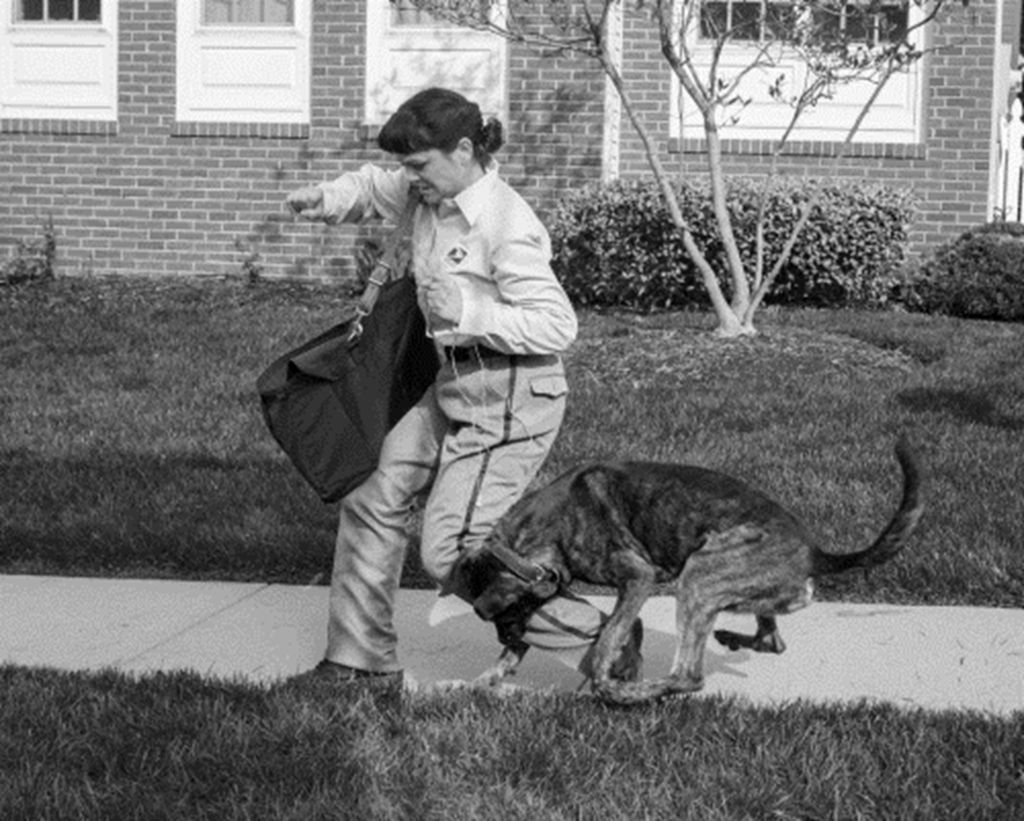
What’s wrong in this picture? This postal worker is being attacked by a dog while making her daily deliveries.

Workers such as mail carriers, garbage collectors, door-to-door sales people, landscapers, or anyone else who works near homes run the risk of being bitten or attacked by a dog during their workday.

While they are not among the most common injuries you may experience while working, they can be severe and cause you to miss time at work, and ultimately wages you need to support yourself and your family.

“Just pay attention to what you’re doing and where you are,” DeCarlo said. “The same applies if you’re crossing the street. You can’t be wearing headphones or texting on your cellphone while trying to cross the street and expect not to get hit.”


Distractions Created by Smartphones When Not in Use Meeting Kit

DISTRACTIONS CREATED BY SMARTPHONES EVEN WHEN NOT IN USE SAFETY TALK

It is a well-known fact that actively using a smartphone (or a regular cellphone) distracts you from other tasks at hand. Research shows there are negative effects from just having your smartphone in the area near you.

DANGERS OF MOBILE DEVICES

Kills Productivity

Employers lose around 5 hours or more of productivity each day. Users report picking up their phones 100 or more times per day. Trying to refocus after a text conversation or a few minutes of mindless scrolling can take some time.

Driving Distracted

Researchers have compared the level of distraction while operating a cell phone to having a blood alcohol level of 0.08. The National Safety Council estimates that 1.6 million crashes are caused by drivers using cell phones and texting each year. Research also has shown that a cell phone conversation while driving is a greater distraction than conversing with a passenger. Drivers reacted significantly slower to unexpected events in the first two minutes of the phone conversation and are, for a large part of the conversation, unaware of traffic movements around them.

Notable Dangers

  • Cell phone use can cause inattention on the plant floor, outside the facility, in a company vehicle, or on the job site
  • Cell phone use in a noisy environment causes the user to focus even more intently on the call and less on their surroundings
  • Co-workers can be distracted by other employee’s cell phone use
  • Inattention distraction may result in property damage or physical injury

Hazard Awareness

  • For supervisors that must use a cell phone for work, step aside from the work area and moving equipment into a safe spot to make or receive calls
  • Do not operate a cell phone around flammable liquids
  • Know site-specific hazard areas associated with cell phone use
  • If you see someone talking on a cell phone and standing in an active work area (such as a salesman or project manager), recognize that they are probably not fully aware of activities going on around them and make a point to watch out for them.
  • Turn off cell phones within 100 feet of any blasting area

Mitigation Techniques

  • Never use a cell phone while operating equipment or working on the production floor
  • Never use a cell phone to send or receive text messages while operating equipment or working on the production floor
  • As with driving, your work tasks require your full attention
  • Store your cell phone in an area where it’s ring will not startle you or a co-worker in the area
  • Let calls go straight to voicemail and be retrieved at a later time
  • Do not text while driving a motor vehicle (DOT regulations prohibit truck drivers from texting while driving a commercial vehicle)

FINAL WORD

While the majority of individuals recognize the dangers of using a cellphone while completing tasks, many do not realize the impact of just having a smartphone in our presence can have on our ability to focus and problem solve. When completing tasks that require your full focus, consider putting your cellphone in a different area where it will not serve as a distraction for you.


Distractions Created by Smartphones When Not in Use Stats and Facts

FACTS

  1. The biggest challenges posed by mobile phones are the attendant safety hazards. Distracted driving is the number one overall cause of workplace fatalities and mobile phones are a major cause of distraction on construction sites, in the forms of text messaging, talking and game playing.
  2. Distracted equipment operation is very dangerous. Although most organizations that use heavy equipment have policies in place that ban cell phone us during operation, those opposed to cell phones in the workplace believe that the policies are not enough to protect workers from the perils of operating equipment while distracted.
  3. While a hit to productivity is not a safety hazard per se, it is a concern. If cell phones are reducing the amount of focus workers are putting toward their work that is a safety concern. For example, some jobs require a lot of focus for safety.

STATS

  • According to a recent CareerBuilder survey, 88 percent of employees have smart phones, and 77 percent of them keep their phones within reach at work. Workers admit to using them throughout the day – 39 percent check their phone several times a day.
  • Over half of employers (53 percent) think their company loses between one and two hours of productivity a day because employees are distracted. The biggest productivity killers are:
  • Cell phone/texting: 49 percent
  • The Internet: 38 percent
  • Social media: 37 percent
  • Gossip: 35 percent
  • Email: 29 percent
  • Co-workers dropping by: 24 percent
  • Smoke breaks or snack breaks: 25 percent

14% of respondents said at least one accident had occurred at their workplace because an employee was distracted by their smartphone.  These accidents had serious consequences:

  • 59% caused property damage
  • 50% caused injury or death

Among respondents who work in an industrial setting, an even greater percentage — 26% — reported accidents had occurred in their workplace because someone was distracted by their smartphone. And these accidents were more consequential:

  • 75% caused property damage
  • 58% caused injury or death


Distractions Created by Smartphones When Not in Use Fatality Report

Kira Hudson was driving, but her attention was on her phone conversation. She was arguing with her boyfriend, one hand on the phone and one on the wheel as she turned onto tree-lined Mill Creek Road near SR-38 in Hamilton County.

She remembers so many things about that day: “1, 2 Step” playing on the radio, the deserted road ahead of her. But she can’t remember what exactly she and her boyfriend were arguing about. Yet as the then-20-year-old drove down that road on Jan. 31, 2005, she was laser-focused on her call.

Movement caught her eye — a squirrel in the middle of the road. She was only driving about 20 mph, but instead of slowing down as she normally would, she panicked.

Still clutching the phone, she cranked the wheel to the right. It was too hard. She dropped her phone to grab the wheel with both hands, turning quickly to the left. Still too much force. Hudson rapidly corrected to the right. The car flipped.

It landed on the driver’s side, facing the opposite direction of traffic. The top of the car caved into a row of trees. Hudson was pinned down, the roof collapsing above her.

Later, the doctors told her she would never walk again.


Distractions Created by Smartphones When Not in Use – Picture This

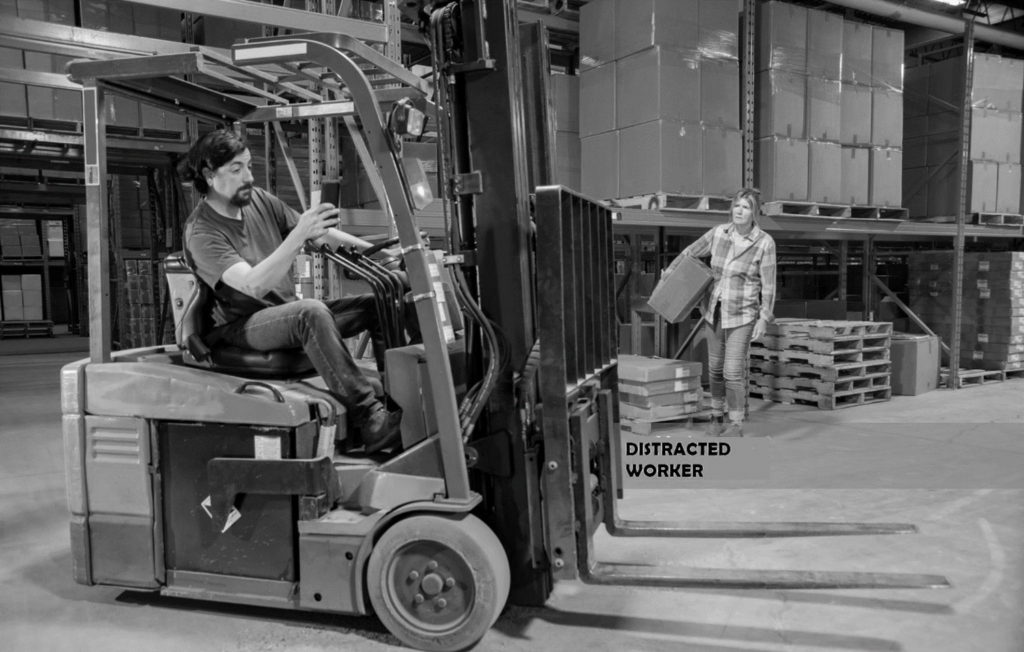
What’s wrong in this picture, there is a driver using his cellphone while he is operating a forklift, he is not paying full attention on the route and how dangerous it could be. Using of cell phone while operating forklift poses a very serious hazard and it should never be allowed. You could be distracted using it. Your full attention should be at the forklift controls and not at the keypad of your mobile device. It is therefore a serious safety violation.

Forklift operators must be properly educated on the issue of safety. One of the hot topics nowadays is the use of mobile phone. OSHA already talked about it, and they encourage all employers to forbid their workers from using it.


Distractions Created by Smartphones When Not in Use Meeting Kit – Spanish

QUÉ ESTÁ EN RIESGO

LAS DISTRACCIONES CREADAS POR LOS SMARTPHONES INCLUSO CUANDO NO SE UTILIZAN CHARLA DE SEGURIDAD

Es un hecho bien conocido que el uso activo de un teléfono inteligente (o de un teléfono móvil normal) le distrae de otras tareas. Las investigaciones demuestran que el mero hecho de tener el teléfono inteligente cerca de usted tiene efectos negativos.

CUÁL ES EL PELIGRO

PELIGROS DE LOS DISPOSITIVOS MÓVILES

Mata la productividad

Los trabajadores pierden alrededor de 5 horas o más de productividad cada día. Los usuarios afirman que cogen sus teléfonos 100 o más veces al día. Intentar volver a concentrarse después de una conversación de texto o de unos minutos de desplazamiento sin sentido puede llevar algún tiempo.

Conducir distraído

Los investigadores han comparado el nivel de distracción mientras se maneja un teléfono móvil con un nivel de alcohol en sangre de 0,08. El Consejo Nacional de Seguridad calcula que cada año se producen 1,6 millones de accidentes por culpa de los conductores que utilizan el teléfono móvil y envían mensajes de texto. Las investigaciones también han demostrado que una conversación por teléfono móvil mientras se conduce es una distracción mayor que conversar con un pasajero. Los conductores reaccionan con mucha más lentitud a los imprevistos en los dos primeros minutos de la conversación telefónica y, durante gran parte de la misma, no son conscientes de los movimientos del tráfico a su alrededor.

Peligros notables

  • El uso del teléfono móvil puede provocar falta de atención en la planta, fuera de las instalaciones, en un vehículo de la empresa o en el lugar de trabajo
  • El uso del teléfono móvil en un entorno ruidoso hace que el usuario se concentre aún más en la llamada y menos en su entorno
  • Los compañeros de trabajo pueden distraerse por el uso del teléfono móvil de otro empleado
  • La distracción por falta de atención puede provocar daños materiales o lesiones físicas.

COMO PROTEGERSE

Conciencia de peligro

  • En el caso de los supervisores que deban utilizar un teléfono móvil para trabajar, apártese del área de trabajo y del equipo en movimiento en un lugar seguro para hacer o recibir llamadas.
  • No utilice el teléfono móvil cerca de líquidos inflamables.
  • Conozca las áreas de peligro específicas del lugar asociadas al uso del teléfono móvil.
  • Si ve a alguien hablando por teléfono móvil y de pie en una zona de trabajo activa (como un vendedor o un director de proyecto), reconozca que probablemente no sea plenamente consciente de las actividades que se están llevando a cabo a su alrededor y procure vigilarlo.
  • Apague los teléfonos móviles a menos de 30 metros de cualquier zona de explosión.

TÉCNICAS DE MITIGACIÓN

  • No utilizar nunca un teléfono móvil mientras se maneja el equipo o se trabaja en la planta de producción.
  • No utilice nunca un teléfono móvil para enviar o recibir mensajes de texto mientras maneja el equipo o trabaja en la planta de producción.
  • Al igual que con la conducción, sus tareas de trabajo requieren toda su atención.
  • Guarde su teléfono móvil en una zona en la que su timbre no le sobresalte a usted o a un compañero de trabajo que se encuentre en la zona.
  • Deje que las llamadas vayan directamente al buzón de voz y las recupere más tarde.
  • No envíe mensajes de texto mientras conduce un vehículo de motor (la normativa del Departamento de Transporte prohíbe a los conductores de camiones enviar mensajes de texto mientras conducen un vehículo comercial)

CONCLUSIÓN

Aunque la mayoría de las personas reconocen los peligros de utilizar el teléfono móvil mientras realizan tareas, muchas no se dan cuenta del impacto que puede tener el mero hecho de tener un teléfono inteligente en nuestra presencia sobre nuestra capacidad de concentración y resolución de problemas. Cuando realice tareas que requieran toda su atención, considere la posibilidad de poner su teléfono móvil en una zona diferente donde no le sirva de distracción.