Drug Abuse Fatality Report – Spanish

Un experimentado operario de prensa murió al ser golpeado por trozos de una matriz lanzada desde su prensa.

Al parecer, el cilindro superior de la prensa estaba ajustado una pulgada más abajo de lo que debería haber estado para el tamaño del troquel. De alguna manera, accionó accidentalmente la prensa y el pistón bajó y rompió el troquel.

El informe de la víctima mortal indicaba que el trabajador tenía un largo historial de abuso de alcohol y había estado tomando varios medicamentos para enfermedades crónicas. Las pruebas realizadas tras su muerte demostraron que su organismo contenía alcohol y otras tres drogas. El informe también recomendaba que se establecieran programas contra el alcohol y las drogas, y que se mejorara la comunicación dentro de la planta.


Drug Abuse – Picture This – Spanish

¿Qué hay de malo en esta imagen?

El abuso de sustancias y su impacto en el lugar de trabajo estadounidense sigue siendo un problema creciente. El abuso de drogas entre los empleados y sus familiares puede ser un problema costoso para las empresas y la industria, con problemas que van desde la pérdida de productividad, el absentismo, las lesiones, los accidentes mortales, los robos y la baja moral de los empleados, hasta el aumento de la atención sanitaria, las responsabilidades legales y los costes de indemnización de los trabajadores.

El 70% de los 14,8 millones de estadounidenses que se calcula que consumen drogas ilegales son empleados. La marihuana es la droga ilegal más consumida y abusada por los empleados, seguida de la cocaína, y el consumo de medicamentos con receta médica aumenta constantemente.


Flammable and Combustible Liquids – Hazards

Flammable and combustible liquids are liquids that can burn. How can workers prevent these liquids from igniting and what to do if a fire occurs?


Doing Work Tasks Wrong the First Time Meeting Kit – Spanish

QUÉ ESTÁ EN RIESGO

Hacer el trabajo mal la primera vez Charla de seguridad

Hacer el trabajo mal por primera vez es un escenario que a menudo resulta en una exposición innecesaria a los peligros. Quien tenga que volver a realizar el trabajo que se ha hecho incorrectamente por primera vez, incluso si el trabajo se ha realizado de forma segura, correrá el riesgo de sufrir lesiones sólo por el hecho de tener que realizar un trabajo adicional.

CUÁL ES EL PELIGRO

RIESGOS AL REHACER EL TRABAJO

Es importante detener el trabajo siempre que se tengan dudas sobre la tarea que se va a realizar o que se está realizando cuando no se está seguro. Realizar el trabajo de forma incorrecta dará lugar a una pérdida de producción, además de exponer a las personas a un riesgo innecesario para rehacer el trabajo. Una simple decisión equivocada puede provocar lesiones.

Las siguientes son las razones por las que el trabajo no se realiza correctamente la primera o la segunda vez.

  • Conocimientos insuficientes
  • Falta de formación
  • Pereza
  • Complacencia
  • Instrucciones inadecuadas
  • Reticencia a preguntar
  • Inexperiencia
  • Materiales o herramientas incorrectas
  • Cambio de planes

COMO PROTEGERSE

PROCEDIMIENTOS/PROTOCOLOS PREVENTIVOS PARA EVITAR QUE SE REPITA EL TRABAJO

  • Entre los métodos de formación adicionales que se deben incorporar se encuentran la tutoría por parte de trabajadores experimentados; la organización de programas de aprendizaje; la publicación de procedimientos escritos claros, breves y concisos; y la provisión de tiempo de práctica para los trabajadores.
  • Desarrolle, aplique y haga cumplir un programa de seguridad exhaustivo por escrito para todos los trabajadores que incluya formación para reconocer los peligros y evitar las condiciones inseguras.
  • Los trabajadores deben escudriñar a los posibles empleadores en lo que respecta a las cuestiones de salud y seguridad, buscando signos de que su nuevo empleador se toma la seguridad en serio y sigue los procedimientos y directrices sugeridos.
  • Recuerde a sus trabajadores que deben informar de los accidentes, los cuasi accidentes y/o las zonas inseguras, tan pronto como los observen. No deben esperar a que otra persona lo haga. En su lugar, deben dirigirse directamente a su jefe y plantear el problema.
  • Pida a los empleados que repasen los procedimientos o prácticas en los que se centran sus directrices para ver si son apropiados.
  • Haz saber a los trabajadores que también es su trabajo velar por su propia seguridad y que siempre pueden pedir copias de las normas y procedimientos de seguridad.

CONCLUSIÓN

Los problemas surgen cuando las tareas de trabajo se realizan de forma incorrecta, incluso de manera segura la primera vez. En la construcción o en la fabricación que implica procesos peligrosos, las consecuencias y la probabilidad de lesiones aumentan en gran medida cuando hay que rehacer el trabajo. Dese cuenta del impacto que tus decisiones tienen no sólo para usted, sino también para sus compañeros de trabajo.


Doing Work Tasks Wrong the First Time Word Search – Spanish


Doing Work Tasks Wrong the First Time Fatality Report – Spanish

Aproximadamente a las 12:00 p.m., la víctima, de 16 años de edad, recogió una escalera de extensión de aluminio Werner modelo D1828-2EQ y se trasladó a la parte delantera de la casa para comenzar a trabajar allí mientras otros tres trabajadores se trasladaban al lado de la casa. En la parte delantera de la casa, había dos arbustos de boj de 4 pies x 4 pies plantados a 3 pies de la pared exterior de la casa en el punto donde la víctima intentaba acceder al tejado.

No hubo testigos, pero se cree que, debido a los arbustos, la víctima tenía problemas para acceder al tejado. Con la escalera aun completamente extendida, la víctima intentó acercarla levantando la escalera y caminando entre los arbustos para encontrar una base adecuada. La escalera se volvió inestable, haciendo que la víctima perdiera el equilibrio y cayera hacia atrás.

Mientras la víctima y la escalera caían, la escalera cayó sobre una línea eléctrica de fase superior que transportaba 7,2 kilovoltios (7.200 voltios). Dado que la víctima seguía en contacto con la escalera de aluminio, de gran conductividad, cuando chocó con la línea eléctrica, la electricidad pudo atravesar el metal y llegar hasta el joven trabajador. Se electrocutó inmediatamente.

Tras oír un ruido en la parte delantera de la casa, el propietario de la empresa subcontratista fue a investigar y encontró a la víctima tendida en el suelo sin reaccionar. Inmediatamente llamó a la puerta de la vivienda e intentó frenéticamente comunicar a la mujer lo que había sucedido y pidió ayuda. El propietario de la vivienda llamó al 911 a las 12:15. Cuando los servicios de emergencia llegaron ocho minutos después, observaron a la víctima tendida en el suelo mirando hacia arriba. Las dos botas del trabajador tenían agujeros de quemadura cerca del quinto dedo del pie; también había marcas de quemaduras en la zona del estómago. El forense del condado declaró su muerte minutos más tarde con la causa de la electrocución.

En una entrevista con la oficina del sheriff del condado con la ayuda de un traductor, los compañeros de trabajo declararon que estaban en el lado de la casa y no observaron el incidente. El propietario de la empresa subcontratada reconoció que había dado instrucciones a la víctima para que se trasladara a la parte delantera de la casa para seguir trabajando allí. Ambos compañeros de trabajo eran conscientes de que la víctima estaba colocando una escalera para acceder al tejado delantero y que la víctima no había pedido ayuda.


Doing Work Tasks Wrong the First Time – Picture This – Spanish

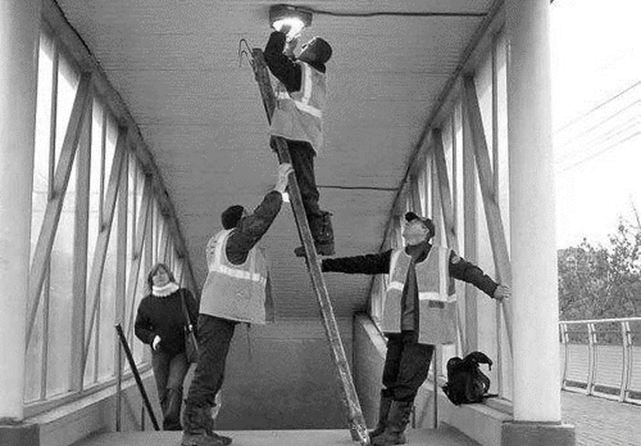
¿Qué hay de malo en esta imagen? Hay un grupo de electricistas trabajando inadecuadamente en una escalera, están poniendo en peligro a su compañero por el procedimiento inseguro que están haciendo para realizar la tarea.

Evitar que se produzcan errores es algo que se puede trabajar tomándose el tiempo necesario para revisar su trabajo y su lugar de trabajo, cuando un compañero cometa un error, intervenga con tacto y no sea crítico ni juzgue. Ofrezca su ayuda. Pregunte por los daños, a quién hay que avisar, cuáles deben ser los siguientes pasos. Sea proactivo y sugiera soluciones.


Drug Abuse Meeting Kit

DRUG ABUSE SAFETY TALK

The use of opioids and marijuana included with the usual variety of street drugs is a major problem around the world. Drug use including prescription drug abuse causes a myriad of problems. At work, there is a decrease of productivity and safety depending on the kind of drug, the individual and the level of abuse.

THE EFFECT OF DRUGS IN THE WORKPLACE

Employees who abuse alcohol and drugs (including illegal drugs, prescription drugs, and over-the-counter drugs), either on their own time or at work, can pose significant problems for their employers, managers, and co-workers.

These problems can include:

  • diminished job performance
  • lowered productivity
  • absenteeism
  • tardiness/sleeping on the job
  • high employee turnover
  • increased medical and workers’ compensation bills
  • potential workplace violence issues
  • hangover/withdrawal
  • Poor decision making
  • Trouble with co-workers
  • Theft
  • Loss of focus

Employees who abuse drugs and alcohol can also make a workplace more volatile and dangerous, exposing employers to legal liability and other legal issues.

Due to the impairment that drugs can have on a person, it is important to report any odd or suspicious behavior to a supervisor. The supervisor will work with HR or another higher level of management to monitor the individual and take further steps if needed.

SIGNS OF WORKPLACE DRUG ABUSE AND ADDICTION

Most addiction sufferers hide their drug use from employers and coworkers, but there are some signs that suggest a problem. Irrationally blame them for personal mistakes. Other indicators someone is abusing drugs in the workplace may include:

  • Openly talking about money problems
  • A decline in personal appearance or hygiene
  • Complaints of failing relationships at home
  • Taking time off for vague illnesses or family problems

WORKPLACE SAFETY GUARDRAIL

Written Drug and Alcohol Testing Policy

  1. Check Your Policy

You must have a Written Drug and Alcohol Testing Policy. It should include drug and alcohol testing for reasonable suspicion. A general policy statement is not enough to permit testing; if your policy does not include testing for reasonable suspicion, you may want to consult a workplace consulting firm or your legal counsel to help you implement one.

  1. Document

Suspicions regarding an employee who may be under the influence may come from co-workers or clients, often before it is noticed by a supervisor. Document any complaints, concerns, behavior patterns or witnesses to the behavior.

  1. Observe

It is important that management also observe the behavior. A second management person should also observe the behavior. Both observers need to document their observations in detail, such as; odors, speech, eyes being dilated or constricted, emotional issues such as agitation or irritability, drowsiness, excessive sweating, and other telltale signs.

  1. Meet

Once the situation is documented and everyone is in agreement, only then should you meet with the employee for a discussion of what has been observed.  And always have a second party at the meeting to act as a witness. You then have the options to follow whatever is stated in your company policy.

  1. Test

Drug testing is a legal issue and may depend on your company policy and legal advisors. If your policy allows for it, contact your drug test facility to notify it that you have an employee on the way for reasonable suspicion testing.

If you send the employee for drug or alcohol testing always explain that in order to rule out the possibility that the employee is in violation of the company’s drug and alcohol policy, you will be sending them for a drug and/or alcohol test. If you have not obtained a drug testing consent previously, you should have a consent form available at this meeting for the employee’s signature.

If they refuse the test refer to your drug and alcohol policy, especially if your policy states that refusing the test will be treated as a positive drug test result or will result in immediate termination of employment.

  1. Act on the Results

If the drug or alcohol test results are negative, contact the employee and return them to their prior job as soon as possible. If it is positive, you have the option of sending them for counseling or treatment and returning to work.

Takeaways

It’s wise to use people who are professionally trained in drug-and-alcohol-at-work issues, non-physical crisis intervention, verbal de-escalation, nonviolent confrontation management, and employee protection techniques, as well as assistance and training for management and supervisory personnel.

FINAL WORD

When an individual comes to work under the influence of drugs it is a huge safety concern for everyone on that jobsite. Upgrades to equipment, pay raises, bonuses, and better benefits could be out of the question at some companies due to drug abuse. Speak up when you think one of your coworkers is suffering from a drug abuse problem.


Drug Abuse Stats and Facts

FACTS

  1. There are some people who abuse drugs or alcohol and qualify as “high-functioning,” or able to reach personal and professional success despite substance abuse. “High-functioning” does not mean healthy. Substance abuse and addiction cause damage in workplaces.
  2. Prevention of problems occurs by implementing an effective workplace drug program that deals with drug testing before hiring, drug testing during employment and consequences for violating the rules.
  3. Factors that contribute to alcohol and drug abuse in the workplace include:
  • Workplace culture and acceptance of misuse of substances.
  • Workplace alienation.
  • Availability of alcohol and drugs.
  • Existence and enforcement of workplace substance abuse policies.
  1. Establishing comprehensive workplace substance abuse programs is a “win-win” situation for employees and employers.
  2. Employers suffer from hiring substance abusers in many ways. Not only do they run the risk of having deadly or dangerous accidents occur, but substance abusers also cost employers money and hurt them financially.

STATS

  • As per U.S. Drug Test Centers, of the $81 billion dollars spent per year on drug abuse in the workplace, researchers estimate that it is spent on:
  • $25.5 billion dollars of this money is spent due to lost productivity and absenteeism at work due to drug abuse each year. Another $25 billion is lost due to healthcare costs per year. Also, an estimated 80% of drug users supported their drug use by stealing from their work.
  • According to (NCADD) some 70 percent of the estimated 14.8 million Americans who use illegal drugs are employed, and workers who report having three or more jobs in the previous five years are about twice as likely to be current or past year users of illegal drugs as those who have had two or fewer jobs.
  • Of all drug users, 68.9% are employed and active in the workplace, according to the Substance Abuse and Mental Health Administration (SAMHSA).
  • Fifty-five more employees died from fatal overdoses in the workplace in 2017 than 2016, offsetting the 33 fewer workplace deaths seen overall last year, according to the BLS data.
  • A total of 5,147 fatal work injuries were recorded in the U.S. in 2017, down only 0.8% from the 5,190 fatal injuries reported in 2016, marking the second consecutive year that workplace deaths surpassed the 5,000 incident mark, according to the BLS.
  • Unintentional overdoses due to nonmedical use of drugs or alcohol while at work increased 25.3% to 272 deaths in 2017, marking the fifth consecutive year in which unintentional workplace overdose deaths have increased by at least 25%, according to the BLS fatality data.
  • 40% of all industrial workplace fatalities are caused by substance abusers.


Drug Abuse Fatality Report

An experienced press operator was killed when he was struck by pieces of a die thrown from his press.

It appeared that the overhead ram of the press was set an inch lower than it should have been for the size of the die. He somehow accidentally triggered the press and the ram came down and smashed the die.

The fatality report indicated that the worker had a long history of alcohol abuse, and had been taking several medications for chronic illnesses. Tests after his death showed that his system contained alcohol as well as three other drugs. The report also recommended that drug and alcohol programs be set up, and that communication should improve within the plant.


Drug Abuse – Picture This

What’s wrong in this picture?

Substance abuse and its impact on the American workplace continues to be a growing problem. Drug abuse among employees and their family members can be an expensive problem for business and industry, with issues ranging from lost productivity, absenteeism, injuries, fatalities, theft and low employee morale, to an increase in health care, legal liabilities and workers’ compensation costs.

70% of the estimated 14.8 million Americans who use illegal drugs are employed. Marijuana is the most commonly used and abused illegal drug by employees, followed by cocaine, with prescription drug use steadily increasing.


Wildlife Awareness Training

In this course you will learn about wildlife awareness including: Poisonous Plants, Insects and Spiders, Snakes, Disease from Animals, Small Animals, Large Animals, How Drivers Can Reduce the Chances of Having a Wildlife Vehicle Collision.


Doing Work Tasks Wrong the First Time Meeting Kit

Doing Work Tasks Wrong the First Time Safety Talk

Doing work wrong for the first time is one scenario that often results in unnecessary exposure to hazards. Whoever has to go back and re do the work that has been done incorrect by the first time around, even if the work has been safely, will be put at risk for injury just by the fact that additional work has to be performed.

HAZARDS OF RE-DOING WORK

It is important to stop work anytime you have questions about the task you are about to complete or in the process of completing when unsure. Doing work incorrectly will result in a loss of production as well as put individuals at unnecessary risk to redo the work. A simple wrong decision can lead to injury.

The following are reasons why work is not done correctly the first or second time around.

  • Insufficient knowledge
  • Lack of training
  • Laziness
  • Complacency
  • Improper instructions
  • Hesitancy to ask question
  • Inexperience
  • Wrong materials or tools
  • Change of plans

PREVENTIVE PROCEDURES/PROTOCOLS TO AVOID RE-DOING WORK

  • Additional training methods to incorporate, include mentoring by experienced workers; hosting apprentice programs; issuing clear, short, and concise written procedures; and providing worker practice time.
  • Develop, implement, and enforce a comprehensive written safety program for all workers which includes training in hazard recognition and the avoidance of unsafe conditions.
  • Workers should scrutinize potential employers regarding health and safety issues, looking for signs that their new employer takes safety seriously and follows the procedures and guidelines suggested.
  • Remind your workers that they need to report accidents, near misses, and/or unsafe areas, as soon as they notice them. They shouldn’t wait for someone else to do it. Instead, they should go directly to their manager and raise the issue.
  • Ask employees to go over any procedures or practices your guidelines focus on to see if they’re appropriate.
  • Let workers know that it’s also their job to look out for their own safety and that they can always ask for copies of any safety rules and procedures.

FINAL WORD

Issues arise when work tasks are done incorrectly, even in a safe manner the first time around. In construction or manufacturing that involves hazardous processes, the consequences and likelihood of injury greatly increase when work has to be redone. Realize the impact your decisions have for not only yourself but your coworkers as well.


Doing Work Tasks Wrong the First Time Word Search


Doing Work Tasks Wrong the First Time Fatality Report

At approximately 12:00 p.m., the 16-year-old victim gathered a model D1828-2EQ Werner aluminum extension ladder and moved to the front of the house to begin work there while three other workers moved on to the side of the house. At the front of the house, there were two 4 ft. x 4 ft. boxwood bushes planted 3 feet from the home’s exterior wall at the point where the victim was attempting to access the roof.

There were no witnesses, but it is believed that because of the bushes, the victim was having trouble accessing the roof. With the ladder still fully extended, the victim attempted to move it closer by lifting the ladder and walking between the bushes to find a suitable base. The ladder became unstable, causing the victim to lose his balance falling backwards.

As the victim and ladder were falling, the ladder fell into a top phase power line carrying 7.2 kilovolts (7,200 volts). Because the victim was still in contact with the highly conductive aluminum ladder when it struck the power line, electricity was able to travel through the metal and into the young worker. He was immediately electrocuted.

After hearing a noise from the front of the home, the owner of the subcontracting company went to investigate and found the victim lying unresponsive on the ground. He immediately knocked on the home’s front door and frantically tried to communicate to the wife what had happened and asked for help. The homeowner called 911 at 12:15 p.m. When EMS arrived eight minutes later, they observed the victim lying on the ground facing upwards. Both of the worker’s boots had burn holes near the fifth toe; burn marks were also present on the stomach area. He was pronounced dead by the county coroner minutes later with electrocution as the cause of death.

In an interview with the county sheriff’s office with the help of a translator, the coworkers stated that they were on the side of the home and did not observe this incident. The owner of the subcontracting company acknowledged that he had instructed the victim to move to the front of the house to continue work there. Both coworkers were aware that the victim was putting up a ladder to access the front roof and that the victim had not asked for assistance.


Doing Work Tasks Wrong the First Time – Picture This

What’s wrong in this picture? There are a group electricians working inadequately on a ladder, they are putting their co-worker in danger because of the unsafe procedure that they are doing to do the task.

Preventing errors from happening is something that can be worked on by taking the time to review your work and your worksite, when a colleague makes a mistake, tactfully step in, and don’t be critical or judgmental. Offer your help. Ask about the damage, who should be notified, what the next steps should be. Be proactive and suggest solutions.


Drowsy Driving Stats and Facts

FACTS

  1. Fatigue decreases our ability to think clearly and remain attentive and vigilant. Drivers who are tired or fatigued are much more likely to make critical errors resulting in crashes.
  2. There is no test to determine sleepiness as there is for intoxication, i.e. a “Breathalyzer”.
  3. State reporting practices are inconsistent. There is little or no police training in identifying drowsiness as a crash factor. Every state currently addresses fatigue and/or sleepiness in some way in their crash report forms.
  4. Self-reporting is unreliable.
  5. Sleep related crashes are most common in young people, especially men, adults with children and shift workers.
  6. Sleep deprivation increases the risk of a sleep-related crash; the less people sleep, the greater the risk.
  7. Research indicates commercial drivers and people with undiagnosed sleep disorders such as sleep apnea and acute insomnia are also at greater risk for fall asleep crashes.
  8. Sleep deprivation and fatigue make lapses of attention more likely to occur, and may play a role in behavior that can lead to crashes attributed to other causes.

STATS

  • More than half of U.S. adult drivers admit to consistently getting behind the wheel while feeling drowsy.
  • About 37% admit to falling asleep behind the wheel, while 13% admit to falling asleep behind the wheel in the past month.
  • Losing even two hours of sleep is similar to the effect of having three beers.
  • The crash risk for driving on 4-5 hours of sleep is more than 4 times higher than someone who has slept 7 hours, which is the same crash risk as a drunk driver with a 0.08 alcohol concentration.
  • Twenty-one percent of fatal crashes involve a drowsy driver.
  • More than 6,400 fatal drowsy-driving crashes occur annually.
  • People are three times more likely to be in a car crash if they are tired.
  • Drowsy driving killed 795 lives in 2017.


Drowsy Driving Fatality Report

The truck accident that critically wounded comedian Tracy Morgan and killed fellow comedian James “Jimmy Mack” McNair has little bright side except that it has put a much-needed spotlight on the dangers of driving while fatigued.

In the Morgan accident, a truck driver for Wal-Mart swerved and plowed into Morgan’s limo bus, allegedly in a belated reaction to slow traffic ahead. A criminal complaint filed against the driver alleges that his delayed reaction and the ensuing crash occurred because he had not slept for more than 24 hours. Operating a motor vehicle with so little sleep is a crime in New Jersey, where the accident took place.

Truckers and bus drivers aren’t the only workers at risk for driving while fatigued

At the end of a grueling 24-hour shift at a natural gas site in a remote part of Texas, Daniel Zambrano climbed behind the wheel of a van carrying six of his co-workers.

Before long, fatigue started to overtake Zambrano. The 26-year-old from Kilgore, TX, allegedly dozed off as he drove along Highway 72, and the full-size van slammed into the back of a school bus that had stopped to pick up a child.

The front of the van was crushed, and the vehicle toppled onto its passenger side. Zambrano and two others were killed. The van tore a hole into the rear right corner of the school bus, but no children were injured.


Drowsy Driving – Picture This

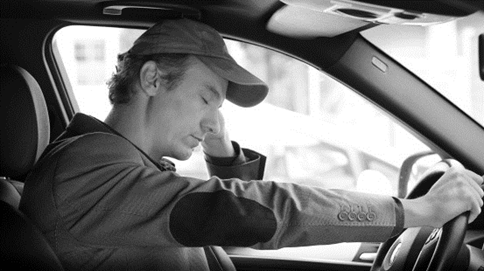
What’s wrong in this picture? There is a driver literally asleep at the wheel due to fatigue from a bad night or an exhausting day. Anyone can experience the effects of inadequate sleep, but certain individuals are more predisposed to drowsy driving. These include commercial drivers who operate tow trucks, semi-trucks, trailers. Shift workers who work at night or whose shifts are relatively long. People with sleep disorders that cause sleep loss and/or sleep-disordered breathing and those who take medications

Getting enough rest each night could potentially prevent some of these collisions, drivers should also educate themselves on the warning signs of drowsy driving and take measures to ensure they remain alert and cautious behind the wheel.

If you experience sudden sleepiness while driving or notice one of the other warning signs listed above, you should stop driving as quickly as possible. Pull into the next rest stop or any other safe, well-lit space that allows you to safely park and not obstruct the road. A 20-minute nap should leave you adequately refreshed and alert, but take more time if needed.


Drowsy Driving Meeting Kit – Spanish

QUÉ ESTÁ EN RIESGO

Charla sobre la seguridad al conducir con somnolencia

Son muchos los peligros a los que nos enfrentamos hoy en día cada vez que conducimos un vehículo de motor. El clima, las malas condiciones de la carretera y la vida salvaje son algunos de los peligros más comunes en la carretera hoy en día. Una actividad muy mortal que tiene lugar con demasiada frecuencia es la conducción somnolienta.

Abordar estas cuestiones puede ser difícil cuando nuestros valores no suelen estar en consonancia con evitar la conducción somnolienta. En una sociedad que trabaja 24 horas al día, 7 días a la semana, con énfasis en el trabajo, los desplazamientos más largos y el avance exponencial de la tecnología, muchas personas no duermen lo que necesitan.

CUÁL ES EL PELIGRO

Lo que los empleados deben saber sobre el peligro de conducir con somnolencia

La falta de sueño puede causar una condición conocida como micro sueño – un breve momento de sueño que puede durar hasta 30 segundos. Cuando se conduce a 65 millas por hora, un conductor que se queda dormido durante tres segundos recorrerá aproximadamente 95 yardas (casi la longitud de un campo de fútbol). En esos pocos segundos, el conductor podría chocar con el vehículo de delante, dar un volantazo y chocar contra un muro o caer en una zanja.

Síntomas que puede experimentar un conductor somnoliento:

  • Parpadeo frecuente, párpados pesados, frotarse los ojos.
  • Desplazarse de un carril a otro, ir a remolque o rozar el arcén de la carretera o la franja de seguridad.
  • Pasar por alto las salidas y las señales de las calles (un importante signo de fatiga y somnolencia).
  • Bostezar, no poder mantener la cabeza erguida.
  • No recordar los últimos kilómetros.
  • Dificultad para concentrarse en la carretera.

IMPACTO DE LA CONDUCCIÓN SOMNOLIENTA

El censo de la NHTSA de los accidentes mortales y la estimación de los accidentes y lesiones relacionados con el tráfico se basan en los informes de la policía y los hospitales para determinar la incidencia de los accidentes por conducción somnolienta. La NHTSA estima que, en el 2017, 91.000 choques reportados por la policía involucraron a conductores somnolientos. Estos choques provocaron un estimado de 50,000 personas heridas y casi 800 muertes. Sin embargo, existe un amplio acuerdo entre las comunidades de seguridad vial, ciencia del sueño y salud pública de que esto es una subestimación del impacto de la conducción somnolienta.

Causas de la somnolencia al conducir

  • Falta de sueño – La cantidad de cosas que tenemos en nuestras vidas puede hacer que sea difícil dormir lo suficiente.
  • Problemas médicos – Ciertos problemas médicos o condiciones de salud pueden provocar la aparición de somnolencia incluso si una persona ha dormido mucho. Un ejemplo común son los problemas de tiroides.
  • Drogas/alcohol: las drogas y el alcohol por sí solos pueden suponer un peligro evidente al conducir. Cuando se combinan con la falta de sueño o con problemas médicos, la situación puede ser extremadamente peligrosa.

COMO PROTEGERSE

Evitar la conducción con somnolencia

  • Duerma lo suficiente. La mayoría de los expertos recomiendan dormir al menos 7 horas.
  • Lleve una buena dieta y beba mucha agua. Cuidar su cuerpo es importante para poder funcionar a niveles óptimos.
  • Consulte a su médico en caso de una fatiga inusual o excesiva. Podría ser un síntoma de un problema de salud subyacente.
  • Nunca beba y conduzca. Tenga precaución incluso cuando sólo utilice la medicación prescrita. Muchos medicamentos provocan somnolencia.
  • Deténgase cuando la somnolencia se haga presente. Una siesta de diez minutos puede suponer la diferencia para llegar o no a su destino.
  • Elabore un horario para los viajes largos por carretera y planifique las paradas a lo largo de la ruta.
  • Realice con sus empleados el “Cuestionario de conducción con somnolencia” de la Fundación Federal de Seguridad de Autotransportes (FMSCA). Este cuestionario pondrá a prueba sus conocimientos sobre la conducción con somnolencia y hará que todos sean más conscientes de los hechos que rodean la conducción con somnolencia.
  • Hable con ellos de la importancia de conducir a la defensiva y de evitar las distracciones.

IMPORTANCIA DEL PROGRAMA DE PREVENCIÓN DE LA CONDUCCIÓN CON SOMNOLENCIA

Toda empresa que tenga empleados que manejen vehículos de motor en nombre de la empresa, o que tenga empleados con alto riesgo de conducir con fatiga (por ejemplo, trabajadores por turnos, jóvenes, viajeros de negocios), debe tener Políticas Explícitas y Programas Educativos con respecto a la conducción con somnolencia.

Ponga por escrito las políticas de conducción con somnolencia. Es posible que su empresa ya tenga una política de conducción por escrito, pero ¿incluye una sección que explique sus políticas con respecto a la conducción con somnolencia? Cualquier política de conducción escrita debe indicar claramente cuánto debe dormir un empleado antes de ponerse al volante de un vehículo y debe describir cómo espera la empresa que los empleados manejen las situaciones de conducción con somnolencia.

Un sólido programa de educación sobre la conducción con somnolencia debe contener al menos tres elementos básicos, entre ellos:

  • Una discusión sobre los hechos, mitos, señales y factores de riesgo de la conducción con somnolencia.
  • Una presentación sobre los buenos hábitos de sueño y su importancia.
  • Una exploración de las estrategias para evitar situaciones de conducción con somnolencia.

CONCLUSIÓN

No sea un conductor somnoliento. Tome las precauciones necesarias para evitar ponerse en una situación peligrosa. Preste atención a los conductores que le rodean y practique técnicas de conducción defensiva para protegerse de otros conductores que puedan estar conduciendo con sueño.


Drowsy Driving Stats and Facts – Spanish

HECHOS

  1. La fatiga disminuye nuestra capacidad para pensar con claridad y permanecer atentos y vigilantes. Los conductores que están cansados o fatigados son mucho más propensos a cometer errores críticos que resultan en choques.
  2. No existe una prueba para determinar la somnolencia como la que existe para la intoxicación, es decir, un “Alcoholímetro”.
  3. Las prácticas de información del Estado son incoherentes. La formación de la policía para identificar la somnolencia como factor de colisión es escasa o nula. Actualmente, todos los estados abordan la fatiga y/o la somnolencia de alguna manera en sus formularios de informes de accidentes.
  4. El auto información no es fiable.
  5. Las colisiones relacionadas con el sueño son más frecuentes en los jóvenes, especialmente en los hombres, en los adultos con hijos y en los trabajadores por turnos.
  6. La privación del sueño aumenta el riesgo de sufrir una colisión relacionada con el sueño; cuanto menos se duerme, mayor es el riesgo.
  7. Las investigaciones indican que los conductores comerciales y las personas con trastornos del sueño no diagnosticados, como la apnea del sueño y el insomnio agudo, también tienen un mayor riesgo de sufrir colisiones relacionadas con el sueño.
  8. La privación del sueño y la fatiga hacen más probable que se produzcan lapsos de atención, y pueden desempeñar un papel en el comportamiento que puede conducir a choques atribuidos a otras causas.

ESTADÍSTICAS

  • Más de la mitad de los conductores adultos de EE.UU. admiten ponerse sistemáticamente al volante cuando se sienten somnolientos.
  • Cerca del 37% admite haberse quedado dormido al volante, mientras que el 13% admite haberse quedado dormido al volante en el último mes.
  • Perder incluso dos horas de sueño es similar al efecto de tomarse tres cervezas.
  • El riesgo de accidente por conducir con 4-5 horas de sueño es más de 4 veces mayor que el de alguien que ha dormido 7 horas, lo que supone el mismo riesgo de accidente que un conductor ebrio con una concentración de alcohol de 0,08.
  • En el 21% de los accidentes mortales está implicado un conductor somnoliento.
  • Cada año se producen más de 6.400 accidentes mortales por conducción somnolienta.
  • Las personas tienen tres veces más probabilidades de sufrir un accidente de tráfico si están cansadas.
  • La conducción somnolienta mató 795 vidas en 2017.


Drowsy Driving Fatality Report – Spanish

El accidente de camión que hirió gravemente al cómico Tracy Morgan y mató a su colega James “Jimmy Mack” McNair tiene pocos aspectos positivos, salvo que ha puesto de relieve los peligros de conducir con fatiga.

En el accidente de Morgan, el conductor de un camión de Wal-Mart dio un volantazo y chocó contra el autobús de la limusina de Morgan, supuestamente en una reacción tardía al tráfico lento que había delante. Una denuncia penal presentada contra el conductor alega que su reacción tardía y el consiguiente accidente se produjeron porque no había dormido durante más de 24 horas. Conducir un vehículo de motor con tan pocas horas de sueño es un delito en Nueva Jersey, donde tuvo lugar el accidente.

Los camioneros y conductores de autobús no son los únicos trabajadores que corren el riesgo de conducir fatigados

Al final de un agotador turno de 24 horas en un emplazamiento de gas natural en una zona remota de Texas, Daniel Zambrano se puso al volante de una furgoneta en la que viajaban seis de sus compañeros de trabajo.

Al poco tiempo, el cansancio empezó a superar a Zambrano. El joven de 26 años de Kilgore (Texas) se quedó dormido mientras conducía por la carretera 72, y la furgoneta de gran tamaño chocó contra la parte trasera de un autobús escolar que se había detenido para recoger a un niño.

La parte delantera de la furgoneta quedó aplastada y el vehículo se volcó sobre el lado del pasajero. Zambrano y otras dos personas murieron. La furgoneta hizo un agujero en la esquina trasera derecha del autobús escolar, pero ningún niño resultó herido.


Drowsy Driving – Picture This – Spanish

¿Qué ocurre en esta imagen? Hay un conductor literalmente dormido al volante debido al cansancio de una mala noche o de un día agotador. Cualquiera puede experimentar los efectos de un sueño inadecuado, pero ciertas personas están más predispuestas a conducir con somnolencia. Entre ellos se encuentran los conductores comerciales que manejan grúas, semirremolques o remolques. Los trabajadores por turnos que trabajan de noche o cuyos turnos son relativamente largos. Las personas con trastornos del sueño que causan pérdida de sueño y/o trastornos respiratorios del sueño y las que toman medicamentos.

Descansar lo suficiente cada noche podría evitar colisiones, los conductores también deberían informarse sobre las señales de advertencia de la conducción somnolienta y tomar medidas para asegurarse de que permanecen alerta y precavidos al volante.

Si experimenta una somnolencia repentina mientras conduce o nota alguna de las otras señales de advertencia mencionadas anteriormente, debe dejar de conducir lo antes posible. Deténgase en la siguiente parada de descanso o en cualquier otro espacio seguro y bien iluminado que le permita aparcar con seguridad y no obstruir la carretera. Una siesta de 20 minutos debería dejarle adecuadamente refrescado y alerta, pero tómese más tiempo si es necesario.


Drowsy Driving Meeting Kit

Drowsy Driving Safety Talk

There are many hazards we face today anytime we operate a motor vehicle. Weather, poor road conditions, and wildlife are some common hazards on the road today. One very deadly activity that is taking place far too often is drowsy driving.

Tackling these issues can be difficult when our values frequently do not align with avoiding drowsy driving. In a 24/7 society, with an emphasis on work, longer commutes, and exponential advancement of technology, many people do not get the sleep they need.

What Employees Need to Know About the Danger of Drowsy Driving

Lack of sleep may cause a condition known as micro sleep—a brief moment of sleep that can last for up to 30 seconds. When driving at 65 miles an hour, a driver that nods off for three seconds will travel approximately 95 yards (nearly the length of a football field). In those few seconds, the driver could run into the car in front of them, they could swerve and hit a wall or drive into a ditch.

Symptoms a drowsy driver may experience:

  • Frequent blinking, heavy eyelids, rubbing eyes
  • Drifting from lane to lane, tailgating, or grazing the shoulder of the road or rumble strip
  • Missing exits and street signs (a major telltale sign of fatigue and drowsiness)
  • Yawning, can’t keep head up
  • No memory of the last few miles
  • Difficulty focusing on the road

IMPACT OF DROWSY DRIVING

NHTSA’s census of fatal crashes and estimate of traffic-related crashes and injuries rely on police and hospital reports to determine the incidence of drowsy-driving crashes. NHTSA estimates that in 2017, 91,000 police-reported crashes involved drowsy drivers. These crashes led to an estimated 50,000 people injured and nearly 800 deaths. But there is broad agreement across the traffic safety, sleep science, and public health communities that this is an underestimate of the impact of drowsy driving.

Causes of Drowsy Driving

  • Lack of sleep- The amount of things we have going on in our lives can make it hard to get plenty of sleep.
  • Medical issues- Certain medical issues or health conditions can bring the onset of drowsiness even if a person has had plenty of sleep. One common example is thyroid issues.
  • Drugs/ alcohol- Drugs and alcohol on their own can cause an obvious hazard while driving. When they are paired with a lack of sleep or medical issues, it can be an extremely dangerous situation.

Avoid Drowsy Driving

  • Get plenty of sleep. Most experts recommend at least 7 hours of sleep.
  • Eat a good diet and drink plenty of water. Taking care of your body is important to be able to function at optimal levels.
  • Consult your doctor for an unusual or excessive fatigue. It could be a symptom of an underlying health issue.
  • Never drink and drive. Use caution even when only using prescribed medication. Many medications cause drowsiness.
  • Pull over when drowsiness is setting in. A ten minute nap can make the difference in whether or not you make it to your destination.
  • Develop a schedule for long road trips and plan stops along the route.
  • Take the Federal Motor Carrier Safety Foundation (FMSCA)’s “Drowsy Driving Quiz” with your employees. This quiz will test your knowledge about drowsy driving and make everyone more aware of the facts surrounding drowsy driving.
  • Discuss with them the importance of driving defensively and avoiding distractions.

IMPORTANCE OF DROWSY DRIVING PREVENTION PROGRAM

Any business that has employees operating motor vehicles on the company’s behalf, or has employees at high risk for driving while fatigued (e.g., shift workers, young people, business travelers), should have Explicit Policies and Educational Programs with respect to drowsy driving.

Put Drowsy Driving Policies in Writing. Your company may already have a written driving policy, but does it include a section explaining your policies with regard to drowsy driving? Any written driving policy should clearly indicate how much sleep an employee must have before getting behind the wheel of a vehicle and should describe how the company expects employees to handle drowsy driving situations.

A Strong Drowsy Driving Education Program Should Contain At Least Three Core Elements, Including:

  • A discussion about the facts, myths, signs and risk factors for drowsy driving.
  • A presentation on good sleep habits and their importance.
  • An exploration of strategies for avoiding drowsy driving situations.

FINAL WORD

Do not be a drowsy driver. Take the necessary precautions to avoid putting yourself in a dangerous situation. Pay attention to the drivers around you and practice defensive driving techniques to protect yourself from other drivers who may be driving drowsy.


If You’ve Been Injured At Work

We’re very sorry you’ve been hurt on the job. Our highest priority is to get you the information you need to help you get back to work sooner!

What to Expect When You’ve Been Injured at Work

Nurse Triage Hotline – peace of mind when an injury occurs

If you experience a non-emergency injury on the job, tell your supervisor and call the Nurse Triage Hotline for immediate, 24/7 access to a registered nurse who specializes in workplace injuries. The nurse will assess your injury over the phone and provide medical advice on the type of care needed. Having accurate care intervention right after a workplace accident helps prevent minor injuries from getting worse.

855.469.6877 (855.4MY.NURSE)

Injured Workers Center – helps every step of the way

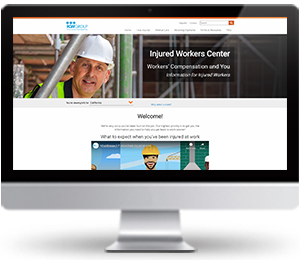
Navigating the claims process after a workplace injury can be confusing. ICW Group is here to help! Visit our Injured Workers Center to find helpful information about medical care, payments, FAQs and more. Available in both English and Spanish, the Injured Workers Center makes your road to recovery as smooth as possible.

Visit the Injured Workers Center

Telemedicine for workers’ comp injuries

ICW Group offers Concentra Telemed®, the first telemedicine product designed specifically for work comp injuries. Everything about it – from the easy checkin to diagnosis – is designed to make the treatment and recovery of occupational injuries easier for you. And it’s online!

Learn how to use Telemed