Electrical Injuries Stats and Facts

FACTS

  1. Not all electrical hazards are created equal. Although each use of electricity creates a potential exposure to a hazard, the dangers vary.
  2. Electricity can be either “static” or “dynamic.” Dynamic Electricity is the uniform motion of electrons through a conductor (this is known as electric current). Conductors are materials that allow the movement of electricity through it. Most metals are conductors. The human body is also a conductor.
  3. Static Electricity is accumulation of charge on surfaces as a result of contact and friction with another surface. This contact/friction causes an accumulation of electrons on one surface, and a deficiency of electrons on the other surface.
  4. Electric current cannot exist without an unbroken path to and from the conductor. Electricity will form a “path” or “loop”. When you plug in a device (e.g., a power tool), the electricity takes the easiest path from the plug-in, to the tool, and back to the power source. This is action is also known as creating or completing an electrical circuit.
  5. According to ESFI, many fatal work-related electrical injuries involved overhead power lines. Workers situated near power lines need to be constantly cognizant of the present hazard. Consider all power lines to be live and dangerous, the organization advises. Instruct co-workers to stay away from downed lines as well as any vehicles or objects in contact with them.

STATS

  • There were 160 electrical fatalities in 2018. An 18% increase over the previous year and the highest number of fatalities since 2011.
  • Fatality rates per 100,000 workers were 0.11 in 2018, compared to 0.13 in 2011.
  • Contact with / Exposure to electric current accounted for 3% of all fatalities in 2018. In 2017, they accounted for 2.6%, in 2016 2.9%, 2015 2.7% and 3.1% in 2014.
  • All electrically related fatalities were caused by electric shock, no fatalities were caused by burns.
  • Construction industry accounted for 54% of all electrical fatalities, the same percentages as in 2017. Professional and business services accounted for 28% of electrical fatalities.
  • The construction industry had the highest rate of fatal electrical injuries (0.8 / 100,000) followed by utility (0.55 / 100,000).
  • In 2018, 9% of all electrical injuries were fatal.


Electrical Injuries Fatality Report

A Fort Worth man who was shocked while doing electrical work at a home has died, according to the Tarrant County medical examiner’s website.

Jose Ismael Angel Perez, 33, died Saturday at a local hospital. He died from injuries suffered in a low voltage electrocution and his death was an accident, according to an ruling by officials with the medical examiner’s office.

The accident occurred about 2 p.m. Wednesday at a home in the 1700 block of Belmont Ave. This was not the victim’s home, authorities said.

Firefighters responded to a report that a man had been working on a home when he was suddenly shocked,

Firefighters responded to the home where they found the man unconscious.

A man in his 30s is in critical condition after a person reported seeing him get shocked by electricity as he worked on a home in Fort Worth, authorities said.

The man was transported to Texas Health Harris Methodist Hospital, according to a MedStar spokesman. Mike Drivdahl, a Fort Worth Fire Department spokesman, said the man was unconscious and in critical condition when firefighters and medics took him to the hospital.

The fire department can’t confirm whether or not the man was shocked, but they received a report a man had been working on a home when he was suddenly shocked, Drivdahl said. Firefighters responded to the home in the 1700 block of Belmont Avenue a little before 2 p.m. Wednesday.

It’s unclear whether the man lived at the home or was a hired professional working on the home.

The man remained in critical condition in the hospital Wednesday afternoon, according to Drivdahl and MedStar.


Electrical Injuries – Picture This

What’s wrong in this picture?

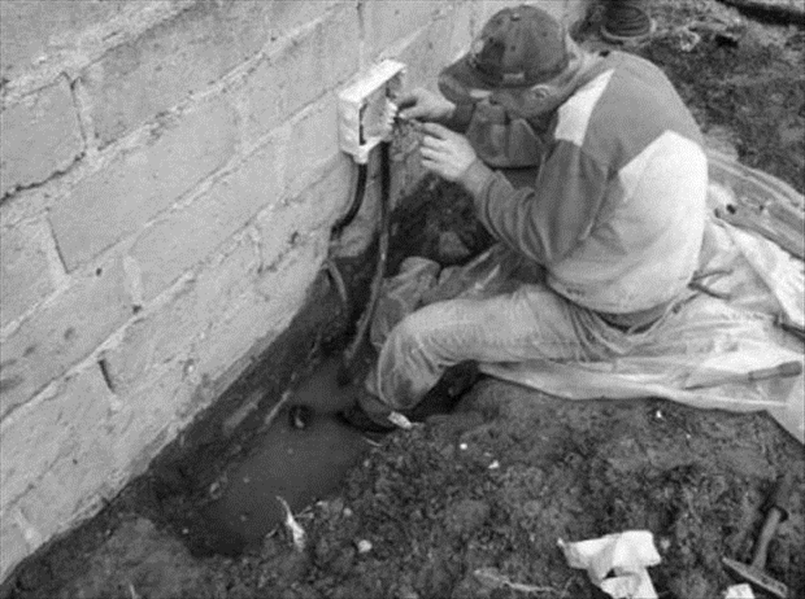
There is a worker who is into contact with an exposed electric conductor or part of a circuit and his feet are under the water. This can cause heart problems, muscle spasms, and loss of breath. This type of injury is more serious and can often end in death.

The most common cause is due to electricity. In 2015 alone, electrical hazards caused 134 workplace fatalities and 2,480 injuries that resulted in lost work days. Electrocution is the sixth most common cause of workplace deaths in the United States. Despite the statistics, preventive measures are insufficient and electrical hazards continue to cause injuries and deaths.

Water is a conductor of electricity, so it increases the risk of electrocution. It’s essential that you ensure all surfaces and work areas are dry when working with electricity and electrical devices or appliances.


Electrical Injuries Meeting Kit – Spanish

QUÉ ESTÁ EN RIESGO

Es importante ser capaz de identificar los riesgos eléctricos, tanto si se dedica a la inducción general como a la construcción o a la agricultura. En la mayoría de los lugares de trabajo hay riesgos asociados a la electricidad.

¿QUÉ ES UNA DESCARGA ELÉCTRICA?

La descarga eléctrica se produce cuando una persona pasa a formar parte de un circuito eléctrico y la corriente atraviesa su cuerpo. Una persona pasa a formar parte de un circuito cuando está en contacto con una corriente eléctrica y una tierra o con una corriente eléctrica y otra corriente eléctrica con un voltaje diferente. Hay tres factores principales que afectan a la gravedad de la descarga que recibe una persona cuando forma parte de un circuito eléctrico:

  1. La cantidad de corriente que circula por el cuerpo (medida en amperios).
  2. Trayectoria de la corriente a través del cuerpo.
  3. Duración del tiempo que el cuerpo está en el circuito.

También hay factores secundarios, como la presencia de humedad, el estado del corazón del individuo y su estado de salud, que pueden afectar a la gravedad de la descarga.

CUÁL ES EL PELIGRO

PELIGROS COMUNES DE LA ELECTRICIDAD

Los siguientes son pasos erróneos comunes y, en ocasiones, se han producido consecuencias mortales en las siguientes situaciones con los trabajadores.

  • No utilizar los dispositivos de bloqueo eléctrico
  • Sobrecargar de los circuitos
  • Abrir la carcasa, o quitar los protectores de barrera, de cualquier equipo que utilice electricidad
  • Utilizar cualquier herramienta o medidor para medir la presencia de electricidad
  • Restablecer un disyuntor disparado o sustituir un fusible fundido
  • Líneas eléctricas aéreas energizadas
  • Un rayo
  • Equipo defectuoso
  • Trabajar en equipos energizados
  • Conexión a tierra inadecuada
  • Aislamiento dañado
  • Empleados descuidados
  • Enchufes demasiado cerca de los conductores
  • Cables y alambres rotos o deshilachados
  • Trabajar con conductores expuestos de 50 voltios o más
  • Hacer reparaciones o alteraciones en cualquier equipo eléctrico

LESIONES POR LA ELECTRICIDAD

Hay cuatro tipos principales de lesiones eléctricas:

  • Electrocución (mortal)
  • Descarga eléctrica
  • Quemaduras
  • Caídas provocadas por el contacto con la energía eléctrica

COMO PROTEGERSE

CONSEJOS GENERALES DE SEGURIDAD AL TRABAJAR CON O CERCA DE LA ELECTRICIDAD

  • Inspeccione los equipos portátiles conectados con cables y enchufes, los alargadores, las barras de alimentación y los accesorios eléctricos para ver si están dañados o desgastados antes de cada uso. Repare o sustituya inmediatamente los equipos dañados.
  • Fije siempre los alargadores a las paredes o al suelo cuando sea necesario.
  • Utilice cables alargadores o equipos que estén clasificados para el nivel de amperaje o vatios que esté utilizando.
  • Utilice siempre el tamaño correcto de fusible. Sustituir un fusible por uno de mayor tamaño puede provocar corrientes excesivas en el cableado y, posiblemente, provocar un incendio.
  • Tenga en cuenta que los enchufes o cables inusualmente calientes pueden ser una señal de que existen condiciones de cableado inseguras.
  • Utilice siempre escaleras fabricadas con rieles laterales no conductores (por ejemplo, de fibra de vidrio) cuando trabaje con o cerca de electricidad o líneas eléctricas.
  • Coloque las luces halógenas lejos de materiales combustibles como telas o cortinas.
  • El riesgo de descarga eléctrica es mayor en zonas húmedas o mojadas. Instale interruptores de circuito por falla a tierra (GFCI), ya que interrumpirán el circuito eléctrico antes de que se produzca una corriente suficiente para causar la muerte o lesiones graves.
  • Utilice un interruptor de circuito de fallo a tierra (GFCI) portátil en línea si no está seguro de que el receptáculo en el que está enchufando el cable de extensión está protegido por GFCI.
  • Asegúrese de que las cajas de los receptáculos expuestos están hechas de materiales no conductores.
  • Sepa dónde se encuentran el panel y los disyuntores en caso de emergencia.
  • Etiquete claramente todos los interruptores y cajas de fusibles. Cada interruptor debe estar identificado positivamente en cuanto a la toma de corriente o el aparato al que corresponde.
  • No utilice tomacorrientes o cables que tengan cables expuestos.
  • No utilice herramientas eléctricas portátiles conectadas con cables y enchufes si se han retirado las protecciones.
  • No bloquee el acceso a los paneles y a los disyuntores o cajas de fusibles.
  • No toque a una persona o aparato eléctrico en caso de incidente eléctrico. Desconecte siempre primero la fuente de alimentación.

CONCLUSIÓN

La electricidad puede ser una amiga o una enemiga. En todo momento, la electricidad debe ser tratada con respeto. La electricidad ha cambiado el mundo con sus múltiples aplicaciones en todos los aspectos de nuestra vida.

Las reparaciones eléctricas deben ser realizadas únicamente por personas cualificadas y autorizadas para ello. Las reparaciones improvisadas de equipos eléctricos han provocado muchas muertes en el lugar de trabajo. Recuerde que corre el riesgo de electrocutarse si las pruebas y reparaciones se realizan de forma incorrecta.


Electrical Injuries Stats and Facts – Spanish

HECHOS

  1. No todos los peligros eléctricos son iguales. Aunque cada uso de la electricidad crea una exposición potencial a un peligro, los peligros varían.
  2. La electricidad puede ser “estática” o “dinámica”. Dinámica La electricidad es el movimiento uniforme de los electrones a través de un conductor (lo que se conoce como corriente eléctrica). Los conductores son materiales que permiten el movimiento de la electricidad a través de ellos. La mayoría de los metales son conductores. El cuerpo humano también es un conductor.
  3. La electricidad estática es la acumulación de carga en superficies como resultado del contacto y la fricción con otra superficie. Este contacto/fricción provoca una acumulación de electrones en una superficie, y una deficiencia de electrones en la otra superficie.
  4. La corriente eléctrica no puede existir sin un camino ininterrumpido hacia y desde el conductor. La electricidad formará un “camino” o “bucle”. Cuando se enchufa un aparato (por ejemplo, una herramienta eléctrica), la electricidad toma el camino más fácil desde el enchufe, hasta la herramienta y de vuelta a la fuente de alimentación. Esta acción también se conoce como crear o completar un circuito eléctrico.
  5. Según el ESFI, muchas de las lesiones eléctricas mortales relacionadas con el trabajo están relacionadas con líneas eléctricas aéreas. Los trabajadores situados cerca de las líneas eléctricas deben ser constantemente conscientes del peligro existente. La organización aconseja considerar que todas las líneas eléctricas están activas y son peligrosas. Instruya a sus compañeros de trabajo para que se mantengan alejados de las líneas caídas, así como de cualquier vehículo u objeto que esté en contacto con ellas.

ESTADÍSTICAS

  • En el 2018 se produjeron 160 víctimas mortales por causas eléctricas. Un aumento del 18% respecto al año anterior y el mayor número de víctimas mortales desde 2011.
  • Las tasas de mortalidad por cada 100.000 trabajadores fueron de 0,11 en el 2018, frente a 0,13 en el 2011.
  • El contacto con/la exposición a la corriente eléctrica supuso el 3% de todas las víctimas mortales en 2018. En 2017, representaron el 2,6%, en el 2016 el 2,9%, en el 2015 el 2,7% y el 3,1% en el 2014.
  • Todas las víctimas mortales relacionadas con la electricidad fueron causadas por descargas eléctricas, ninguna víctima mortal fue causada por quemaduras.
  • La industria de la construcción representó el 54% de todas las víctimas mortales relacionadas con la electricidad, los mismos porcentajes que en el 2017. Los servicios profesionales y empresariales representaron el 28% de las víctimas mortales relacionadas con la electricidad.
  • La industria de la construcción tuvo la tasa más alta de lesiones eléctricas fatales (0,8 / 100,000), seguida por la de servicios públicos (0,55 / 100,000).
  • En el 2018, el 9% de todas las lesiones eléctricas fueron mortales.


Electrical Injuries Fatality Report – Spanish

Un hombre de Fort Worth que recibió una descarga eléctrica mientras realizaba trabajos de electricidad en una casa ha muerto, según el sitio web del médico forense del condado de Tarrant.

José Ismael Ángel Pérez, de 33 años, murió el sábado en un hospital local. Murió a causa de las lesiones sufridas en una electrocución de bajo voltaje y su muerte fue un accidente, según un dictamen de los funcionarios de la oficina del médico forense.

El accidente ocurrió alrededor de las 2 p.m. del miércoles en una casa en la cuadra 1700 de Belmont Ave. Esta no era la casa de la víctima, dijeron las autoridades.

Los bomberos respondieron a un informe de que un hombre había estado trabajando en una casa cuando recibió una descarga eléctrica repentina,

Los bomberos acudieron a la casa donde encontraron al hombre inconsciente.

Un hombre de unos 30 años se encuentra en estado crítico después de que una persona informara de que había recibido una descarga eléctrica mientras trabajaba en una casa en Fort Worth, dijeron las autoridades.

El hombre fue trasladado al Texas Health Harris Methodist Hospital, según un portavoz de MedStar. Mike Drivdahl, un portavoz del Departamento de Bomberos de Fort Worth, dijo que el hombre estaba inconsciente y en estado crítico cuando los bomberos y los médicos lo llevaron al hospital.

El departamento de bomberos no puede confirmar si el hombre recibió o no una descarga eléctrica, pero recibieron un informe de que un hombre había estado trabajando en una casa cuando recibió una descarga repentina, dijo Drivdahl. Los bomberos respondieron a la casa en el bloque 1700 de la Avenida Belmont un poco antes de las 2 p.m. del miércoles.

No está claro si el hombre vivía en la casa o era un profesional contratado para trabajar en la casa.

El hombre seguía en estado crítico en el hospital el miércoles por la tarde, según Drivdahl y MedStar.


Electrical Injuries – Picture This – Spanish

¿Qué hay de malo en esta imagen?

Hay un trabajador que está en contacto con un conductor eléctrico expuesto o parte de un circuito y sus pies están bajo el agua. Esto puede causar problemas cardíacos, espasmos musculares y pérdida de la respiración. Este tipo de lesión es más grave y a menudo puede acabar en la muerte.

La causa más común se debe a la electricidad. Solo en el 2015, los riesgos eléctricos causaron 134 muertes en el lugar de trabajo y 2.480 lesiones que provocaron la pérdida de días de trabajo. La electrocución es la sexta causa más común de muertes en el lugar de trabajo en Estados Unidos. A pesar de las estadísticas, las medidas preventivas son insuficientes y los riesgos eléctricos siguen causando lesiones y muertes.

El agua es un conductor de la electricidad, por lo que aumenta el riesgo de electrocución. Es esencial que se asegure de que todas las superficies y zonas de trabajo estén secas cuando trabaje con electricidad y con dispositivos o aparatos eléctricos.


Are You Unsure Of and Feeling Pressure to Act on Vaccine Mandates?

Access legal guidance to protect your employees and business in light of the new Federal OSHA vaccine mandates.

In September, President Biden asked the Occupational Safety and Health Administration (OSHA) to write rules that would require companies with more than 100 employees to mandate coronavirus vaccinations or weekly testing. But with OSHA fast-tracking the rule-making process which could take several more weeks, the White House is urging companies to act now.

Almost daily, there are reports of large employers implementing mandates, while many others have yet to issue broad requirements.

Employers continue to be worried about losing employees and managing the cost and complexity of vaccinate-or-test mandates, especially as we run-up to the holiday season.

OSHA is working on the time-consuming process of writing standards that pass legal muster. More than likely, the standards will be challenged in various courts once it is handed down.

Find out:

  • Do independent contractors count toward the 100-employee threshold?
  • Who will pay for testing? Companies? The government? The unvaccinated?
  • Will vaccine mandates include boosters, if approved?

For $199.00, you’ll get:

  • Legal briefing from Littler Mendelson P.C. experts
  • Q/A session with Littler Mendelson P.C. experts
  • Access to a recording to share within your organization
  • An OSHA vaccine workbook containing a model policy template, checklists, model communications, and other tools to help with your implementation
  • 30-days access to SafetyNow ILT where you can download instructor-led safety training resources, tools, and more to keep your employees safe during and beyond this pandemic

Register here for this webinar, Space is Limited!

Use discount code “SAFETYONDEMAND” to attend for free.


Dust Hazards in Construction Meeting Kit

Dust Hazards in Construction Safety Talk

Dust is just one of the many different hazards and dangers that survive and flourish in a construction site. Dust poses health concerns and worries including physical hazards for worker. The issue for worker is to fully understand dust causation and then take the necessary preventative action related to this on-site hazard.

TYPES OF CONSTRUCTION DUST

Construction dust is a generic term for natural minerals or human-made mineral fibers that occur when completing certain construction tasks. There are three types of construction dust:

Silica Dust: A natural mineral, silica exists in common construction materials, including cement, concrete, and mortar. Silica dust occurs once the material undergoes a significant change, such as cutting, drilling, grinding, and sandblasting materials like granite, sand, and sandstone. It’s also known as respirable crystalline silica (RCS). This is the most dangerous type of construction dust.

Non-Silica Dust: Some construction projects don’t have silica present or have silica in minimal amounts, thus resulting in lower toxicity. The material where this type of dust is present includes cement, dolomite, gypsum (plasterboard), limestone, and marble. You tend to find non-silica dust when cutting bricks. Non-silica dust is still harmful to human health, so you should still ensure that you adhere to safety measures.

Wood Dust: This type of dust surfaces when you work mainly on hardwood and softwood. Other wood-based products include chipboard, MDF, and plywood.

DUST HEALTH HAZARDS

Dust that contains crystalline silica is also a huge issue for workers on construction sites. Crystalline silica respirable dust particles can penetrate deep into the lungs and cause disabling and sometimes fatal lung diseases, including silicosis and lung cancer, as well as kidney disease. It is never good to breathe in any excessive of amount of dust even if it is thought that no contaminants are present in it.

Once buildup of scar tissue occurs, it can cause difficulty in breathing and may cause you to develop lung cancer or chronic obstructive pulmonary disorder (COPD).

You may also experience irritation in your eyes, nose, throat, skin and lungs.

BEST AVOIDANCE PRACTICES/PROTOCOLS AT THE WORK SITE

  • Protect workers by using personal protective equipment (PPE), including respirators and dust masks.
  • The National Institute for Occupational Safety and Health (NIOSH) has approved filtering respirators or dust masks to provide extra breathing protection from dust. Those marked N100/R100/P100 protect you against dust levels up to 10 times the exposure limit.
  • Another option to consider is an air-purifying respirator. Although these deal more with gas and vapor, they can protect you from construction dust. The respirator comes with a statement of certification, which signifies what you should use the respirator for and how it can protect you.
  • If your work involves being outside, you also need to wear a mask. While the wind has some effect on the dust level created, you may partake in tasks that have you working close to the tools that create the dust.

OTHER MEASURES – CONSTRUCTION DUST CONTROL ON JOBSITE

Several Options Are Available to Minimize Construction Dust At Your Job Site

  • One of the best and most inexpensive ways to cut down on dust is to spray the area down with water. For outdoor projects, depending on the weather and the location of the project, you should water the area at least three times per day. Water trucks can help the dirt and dust stay down. Make sure not to overwater the area, as that can cause erosion and runoff.
  • Laying down mulch and vegetation is another option, as it controls dust and erosion. After you water the area to get it established, you don’t need to tend to it. Tackifiers also create bonds with seeds and keep them from blowing away. Polymers are another resource that you apply on soil and then spray with water trucks.

Indoor Projects

  • With indoor projects, you should always try to barricade off the area or tape down areas to prevent dust from accumulating. Use dust-abatement technology to keep dust levels down, as well as wet saws and dust collectors to keep harmful levels of dust away.
  • Negative-air HEPA-filter vacuums offer inward airflow to help prevent dust and other particulates from escaping into the work area. Afterward, air scrubbers capture the contaminated air and then clean it and filter it back into the area.
  • Avoid using a broom, as this can cause the dust to remain in the air.
  • Daily cleanups are a must to keep the dust from escaping the area.

FINAL WORD

Consider the hazards dust creates onsite. Realize the health issues it can create as well as the physical hazards. Elimination is the best way to protect yourself from dust or any other hazard onsite for that matter.


Dust Hazards in Construction Stats and Facts

FACTS

  1. There are three main types of construction dust: silica dust, non-silica dust and wood dust.
  2. Dust can cause inflammation and scarring of the lungs (fibrosis), and some particular dusts cause severe lung diseases.
  3. The Control of Substances Hazardous to Health Regulations 2002 impose requirements that are legally binding. These include exposure levels for both total alienable dust and for respirable dust.
  4. Exposure to dust should be eliminated wherever possible. If not possible, the risk should be assessed and appropriate control measures implemented.
  5. The risk assessment, where there is no practicable alternative, should provide a “method statement” on how the reduction of exposure to dust to a safe level will be achieved.
  6. Dust levels will need to be monitored to ensure that exposure is adequately controlled.
  7. Operations such as cutting, grinding and sand-blasting can be major sources of airborne particles.

STATS

  • Construction dust can seriously damage the health of construction workers and if exposed for longer times can eventually even kill them. About 22,000 to 52,000 persons per year are dying due to inhaling polluted air in USA alone – most of whom are construction workers. In Great Britain, over 500 construction workers are believed to die every year from lung cancer. America and Europe have enacted rules to mitigate the effects of dust.
  • According to the U.S. Department of Labor’s Occupational Safety and Health Administration (OSHA), about 2.3 million workers receive exposure to crystalline silica in the workplace. This number includes 2 million construction workers.
  • The Construction Index editorial, that “81% of the 500,000 people who are exposed to silica dust at work, are employed in the construction industry.
  • II’s estimated that in the USA, around 2.2 million workers are exposed, with 1.85 million of them in construction.
  • The Control of Substances Hazardous to Health Regulations (COSHH) set in place industry standards for exposure to hazardous substances, including dust.
  • An estimated 3,500 cancer deaths were attributed to the construction and demolition industry in 2013, according to Mike Slater, President of the British Occupational Hygiene Society (BOHS)


Dust Hazards in Construction Fatality Report

Heather’s doctor asked the questions – “was your dad a miner or did he work in construction of any kind.” Answer – yes. She was exposed to asbestos through the dust that permeated his clothing and his car. As a construction worker. Her father was involved in dry wall clean – up and demolition. Much of the dry-wall joint compound he worked on contained asbestos.

Most of the buildings he worked in doing demolition contained asbestos tiles in the floors and in the ceiling.

The insulation around pipes and boilers that he tore out had asbestos insulation.

He would come home from work many days covered in dust, a thick, greyish-white crust covering his work jacket. A jacket she would wear to do her outside chores. A jacket she would put on to go out to the rabbit hutch in the back shed to feed and play with her rabbits. A jacket she would wear because it didn’t matter if it got dirty.

This jacket had asbestos dust all over it. His car had the same dust in it. The dust was just part of her childhood. This dust caused her illness.


Dust Hazards in Construction – Picture This

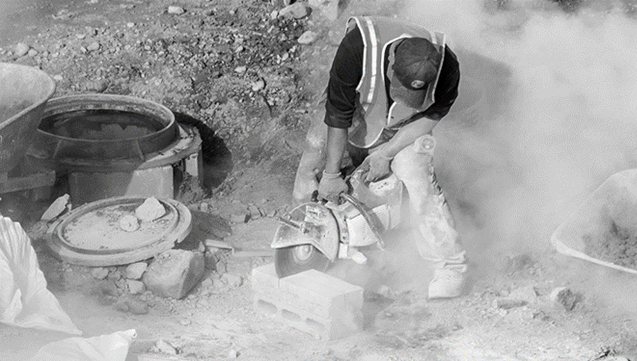
What’s wrong in this picture? There is a construction worker who is working around excessive dust and he is not wearing any proper PPE to avoid dust hazards.

Dust is one of those hazards that come with the construction work territory. Depending on what particulate matter is in the dust, OSHA says workers could react with something as unpleasant as an allergic reaction or a much more serious lung condition.

When dust comes to working in construction, you have to be ready to get dirty. Whether you’re renovating a building or constructing a new house, dust and dirt are part of the job. When there is an excess of dust and dirt traveling through the air though, it can become dangerous for your workers’ health.

So it is important to wear protective equipment such as powered face masks to avoid dust hazards on worker’s health.


Dust Hazards in Construction Meeting Kit – Spanish

QUÉ ESTÁ EN RIESGO

Peligros del polvo en la construcción Charla sobre seguridad

El polvo es sólo uno de los muchos riesgos y peligros diferentes que sobreviven y florecen en una obra de construcción. El polvo plantea problemas de salud y preocupaciones, incluidos los riesgos físicos para los trabajadores. La cuestión para el trabajador es comprender plenamente la causa del polvo y luego tomar las medidas preventivas necesarias en relación con este peligro en la obra.

TIPOS DE POLVO DE LA CONSTRUCCIÓN

El polvo de la construcción es un término genérico que designa a los minerales naturales o a las fibras minerales de origen humano que se producen al realizar determinadas tareas de construcción. Existen tres tipos de polvo de la construcción:

Polvo de sílice: La sílice, un mineral natural, está presente en los materiales de construcción más comunes, como el cemento, el hormigón y el mortero. El polvo de sílice se produce una vez que el material sufre un cambio significativo, como el corte, la perforación, la molienda y el chorro de arena de materiales como el granito, la arena y la piedra arenisca. También se conoce como sílice cristalina respirable (RCS). Es el tipo de polvo de la construcción más peligroso.

Polvo sin sílice: Algunos proyectos de construcción no tienen sílice presente o la tienen en cantidades mínimas, por lo que su toxicidad es menor. Entre los materiales en los que está presente este tipo de polvo se encuentran el cemento, la dolomita, el yeso (cartón yeso), la piedra caliza y el mármol. El polvo sin sílice suele encontrarse al cortar ladrillos. El polvo no silíceo sigue siendo perjudicial para la salud humana, por lo que debe asegurarse de seguir las medidas de seguridad.

Polvo de madera: Este tipo de polvo sale a la superficie cuando se trabaja principalmente con madera dura y blanda. Otros productos derivados de la madera son el aglomerado, el MDF y el contrachapado.

CUÁL ES EL PELIGRO

RIESGOS DEL POLVO PARA LA SALUD

El polvo que contiene sílice cristalina es también un gran problema para los trabajadores de las obras de construcción. Las partículas de polvo respirable de sílice cristalina pueden penetrar profundamente en los pulmones y causar enfermedades pulmonares incapacitantes y a veces mortales, como la silicosis y el cáncer de pulmón, así como enfermedades renales. Nunca es bueno respirar una cantidad excesiva de polvo, aunque se piense que no hay contaminantes en él.

Una vez que se produce la acumulación de tejido cicatrizal, puede causar dificultad para respirar y puede hacer que desarrolle un cáncer de pulmón o un trastorno pulmonar obstructivo crónico (EPOC).

También puede experimentar irritación en los ojos, la nariz, la garganta, la piel y los pulmones.

COMO PROTEGERSE

MEJORES PRÁCTICAS/PROTOCOLOS DE PREVENCION EN EL LUGAR DE TRABAJO

  • Proteja a los trabajadores mediante el uso de equipos de protección personal (EPP), incluyendo respiradores y máscaras anti polvo.
  • El Instituto Nacional de Seguridad y Salud Ocupacional (NIOSH) ha aprobado respiradores con filtro o máscaras anti polvo para proporcionar una protección respiratoria adicional contra el polvo. Las marcadas como N100/R100/P100 le protegen contra niveles de polvo hasta 10 veces el límite de exposición.
  • Otra opción a considerar es un respirador purificador de aire. Aunque éstos se ocupan más de los gases y vapores, pueden protegerle del polvo de la construcción. El respirador viene con una declaración de certificación, que indica para qué debe utilizarlo y cómo puede protegerle.
  • Si su trabajo implica estar al aire libre, también debe usar una máscara. Mientras que el viento tiene algún efecto en el nivel de polvo creado, usted puede participar en tareas que le hacen trabajar cerca de las herramientas que crean el polvo.

OTRAS MEDIDAS – CONTROL DEL POLVO DE LA CONSTRUCCIÓN EN LA OBRA

Existen varias opciones para minimizar el polvo de la construcción en la obra

  • Una de las mejores y más económicas formas de reducir el polvo es rociar la zona con agua. En el caso de proyectos al aire libre, dependiendo del clima y de la ubicación del proyecto, debe regar la zona al menos tres veces al día. Los camiones de agua pueden ayudar a que la suciedad y el polvo se mantengan bajos. Asegúrate de no regar en exceso la zona, ya que eso puede causar erosión y escorrentía.
  • Colocar mantillo y vegetación es otra opción, ya que controla el polvo y la erosión. Después de regar la zona para que se establezca, no tendrás que ocuparte de ella. Los adhesivos también crean vínculos con las semillas y evitan que se vuelen. Los polímeros son otro recurso que se aplica en el suelo y luego se rocía con camiones de agua.

Proyectos de interior

  • En los proyectos de interior, siempre hay que tratar de aislar la zona con barricadas o cinta adhesiva para evitar que se acumule el polvo. Utilice tecnología de reducción de polvo para mantener los niveles de polvo bajos, así como sierras húmedas y colectores de polvo para mantener alejados los niveles nocivos de polvo.
  • Las aspiradoras con filtro HEPA de aire negativo ofrecen un flujo de aire hacia el interior para evitar que el polvo y otras partículas se escapen al área de trabajo. Después, los depuradores de aire capturan el aire contaminado y lo limpian y filtran de nuevo en la zona.
  • Evite utilizar una escoba, ya que puede hacer que el polvo permanezca en el aire.
  • Las limpiezas diarias son imprescindibles para evitar que el polvo se escape de la zona.

CONCLUSIÓN

Considere los peligros que crea el polvo en el lugar. Hay que ser consciente de los problemas de salud que puede crear, así como de los riesgos físicos. La eliminación es la mejor manera de protegerse del polvo o de cualquier otro peligro en la obra.


Dust Hazards in Construction Stats and Facts – Spanish

HECHOS

  1. Existen tres tipos principales de polvo de la construcción: polvo de sílice, polvo no silíceo y polvo de madera.
  2. El polvo puede causar inflamación y cicatrización de los pulmones (fibrosis), y algunos polvos concretos provocan graves enfermedades pulmonares.
  3. El Reglamento de Control de Sustancias Peligrosas para la Salud del 2002 impone requisitos legalmente vinculantes. Estos incluyen niveles de exposición tanto para el polvo total alienable como para el polvo respirable.
  4. La exposición al polvo debe eliminarse siempre que sea posible. Si no es posible, se debe evaluar el riesgo y aplicar las medidas de control adecuadas.
  5. La evaluación de riesgos, cuando no exista una alternativa viable, deberá proporcionar una “declaración de método” sobre cómo se logrará reducir la exposición al polvo a un nivel seguro.
  6. Los niveles de polvo tendrán que ser monitoreados para asegurar que la exposición está adecuadamente controlada.
  7. Operaciones como el corte, la molienda y el chorro de arena pueden ser fuentes importantes de partículas en el aire.

ESTADÍSTICAS

  • El polvo de la construcción puede dañar gravemente la salud de los trabajadores de la construcción y, si la exposición es prolongada, puede llegar a matarlos. Sólo en Estados Unidos mueren entre 22.000 y 52.000 personas al año por inhalar aire contaminado, la mayoría de las cuales son trabajadores de la construcción. En Gran Bretaña, se cree que más de 500 trabajadores de la construcción mueren cada año de cáncer de pulmón. Estados Unidos y Europa han promulgado normas para mitigar los efectos del polvo.
  • Según la Administración de Seguridad y Salud en el Trabajo (OSHA) del Departamento de Trabajo de EE.UU., unos 2,3 millones de trabajadores están expuestos a la sílice cristalina en el lugar de trabajo. Esta cifra incluye a 2 millones de trabajadores de la construcción.
  • El editorial del Construction Index, que “el 81% de las 500.000 personas que están expuestas al polvo de sílice en el trabajo, están empleadas en la industria de la construcción.
  • Se calcula que en EE.UU. hay unos 2,2 millones de trabajadores expuestos, de los cuales 1,85 millones trabajan en la construcción.
  • La normativa de control de sustancias peligrosas para la salud (COSHH) establece normas industriales para la exposición a sustancias peligrosas, incluido el polvo.
  • Se calcula que en el 2013 se atribuyeron 3.500 muertes por cáncer al sector de la construcción y la demolición, según Mike Slater, presidente de la Sociedad Británica de Higiene Ocupacional (BOHS)


Dust Hazards in Construction Fatality Report – Spanish

El médico de Heather le preguntó: “¿Su padre era minero o trabajaba en la construcción de algún tipo?”. Respuesta: sí. Ella estuvo expuesta al amianto a través del polvo que impregnaba su ropa y su coche. Como trabajador de la construcción. Su padre trabajaba en la limpieza y demolición de paredes secas. Gran parte del compuesto para juntas de paredes secas con el que trabajaba contenía amianto.

La mayoría de los edificios en los que trabajó haciendo demoliciones contenían baldosas de amianto en los suelos y en el techo.

El aislamiento de las tuberías y calderas que arrancaba tenía amianto.

Muchos días volvía a casa del trabajo cubierto de polvo, una gruesa costra de color blanco grisáceo que cubría su chaqueta de trabajo. Una chaqueta que se ponía para hacer sus tareas exteriores. Una chaqueta que se ponía para salir a la conejera del cobertizo trasero a dar de comer y jugar con sus conejos. Una chaqueta que se ponía porque no importaba si se ensuciaba.

Esta chaqueta tenía polvo de amianto por todas partes. Su coche tenía el mismo polvo. El polvo formaba parte de su infancia. Este polvo le causó la enfermedad.


Dust Hazards in Construction – Picture This – Spanish

¿Qué ocurre en esta imagen? Hay un trabajador de la construcción que está trabajando en torno a un exceso de polvo y no lleva ningún EPP adecuado para evitar los peligros del polvo.

El polvo es uno de esos peligros que vienen con el territorio de trabajo de la construcción. Dependiendo de las partículas que haya en el polvo, OSHA dice que los trabajadores podrían reaccionar con algo tan desagradable como una reacción alérgica o una afección pulmonar mucho más grave.

Cuando se trata de trabajar en la construcción, hay que estar preparado para ensuciarse. Tanto si se está renovando un edificio como construyendo una casa nueva, el polvo y la suciedad forman parte del trabajo. Sin embargo, cuando hay un exceso de polvo y suciedad viajando por el aire, puede resultar peligroso para la salud de los trabajadores.

Por eso es importante utilizar equipos de protección, como máscaras faciales motorizadas, para evitar los riesgos del polvo para la salud de los trabajadores.


Eating Habits Meeting Kit

It is a little dramatic but “you are what you eat”. We only have one body. We must treat it with respect. Without good health, life becomes more problematical and less enjoyable.

Food is Fuel

Our bodies work like machines and are only able to withstand so much abuse. Food is the equivalent of fuel to our bodies. If you are consistently putting bad fuel in a machine it will breakdown, the same goes for our bodies. Diet has been directly linked to many different aspects of our health.

Fatigue and Diet

There are smaller issues that a poor diet causes that can affect you on a daily basis. Fatigue and lack of focus can sometimes be attributed to eating poorly. Being fatigued can have major effects on performing your job safely. When you are not feeling 100% you are putting yourself and others around you at risk. Eat healthy to benefit yourself and family first, but also think of the positive effects it can have on your work.

FIVE FOOD HABITS EXPLORED

  1. Banish the candy bowl; bring on the fruit bowl
  2. Beware of the vending machine
  3. Plan ahead; bring healthy snacks from home
  4. Stop eating alone at your desk
  5. Don’t forget to hydrate

POSITIVE/NEGATIVE PERSPECTIVES OF WORKPLACE AND EATING HABITS

The workplace is often full of hyperpalatable foods: donuts, cookies, chips, candy, chocolate, cakes, cupcakes, etc. These are foods that are high in fat, sugar, salt, and more often than not, they are highly irresistible.

Food brings people together, so it’s natural that companies use food as a way to drive engagement and to foster company culture. It’s a great initiative, not only because it brings people together but because it also forces people to get up and take a break during the day (short breaks are necessary to prevent burnout and reduce stress and anxiety).

However, the constant temptation of hyperpalatable foods in the workplace makes it harder for people to make a healthy choice, especially for people that are making an effort to take care of their dietary choices and be mindful of their eating habits.

Stress complicates our relationship with food at work, known as stress eating. Research has shown that stress makes us crave tastier foods (fatty, fried, sugary) and that most people eat more when they are feeling stressed.

Psychologists argue that we stress eat in order to take control of a situation, redirecting the source of stress and achieving a feeling of comfort.

ROAD TO HEALTHY LIFE STYLE

  1. Choose better snacks

Try not to be tempted by the vending machine full of chips and chocolate bars! Keep a few healthy snacks near your work station so you’ll have more options when you get the munchies.

  1. Stop drinking your calories

Do you enjoy sipping something while you work? It’s important to stay hydrated, but you shouldn’t be reaching for high-calorie, sugary drinks like pop, fruit-flavoured beverages and sports drinks. Fruit juice may sound healthy, but it’s missing many of the nutrients and all of the fibre in actual fruit.

  1. Take breaks to move your body

Many kinds of jobs involve sitting for long periods of time – and most of us know that isn’t healthy. But there’s good news. Research shows that if you get up and move around at least once every half an hour, you can reduce the health risks of a sedentary job.

  1. Take the stairs

Get in the habit of taking the stairs to get to your office, instead of waiting for the elevator. Not only will you be in better shape, you may be more productive.

TIPS TO A PROPER DIET

  • Consult a doctor or nutritionist before any major diet changes.
  • Drink more water. Water serves many important purposes for our bodies.
  • Limit food with processed sugar. Sodas, candy, sweets, and other junk food are filled with processed sugar.
  • Eat more fiber. Fiber has proven to help fight off some cancers. It also limits the amount of calories your body will absorb.
  • Choose whole grain foods. Whole grain foods contain many nutrients and like fiber, it can help you maintain regular bowel movements.
  • Take a multivitamin. Multivitamins can help you get essential vitamins and nutrients you may not be getting in your diet.

AT WORK

  • Plan your weekly lunches ahead of time and bring in food from home.
  • Bring healthy snacks with you to the workplace.
  • Drink lots of water and avoid sugary beverages. Pro tip: if you feel hungry or feel like snacking, drink some water first; more often than not our body is thirsty and not necessarily hungry.
  • Don’t eat and work. Not only will your desk become full of bacteria but you’ll engage in mindless eating.
  • Eat breakfast. It can keep you fueled through the morning and make you less likely to snack during the day.

FINAL WORD

The way to keep your energy up at work is to make sure you eat breakfast. Even if you are not someone who is generally hungry in the morning, eating breakfast ensures your body moves out of its sleep-friendly energy-conserving state and into its wakeful daytime state. Even a glass of juice, protein shake, or piece of fruit in the morning is better for your productivity than nothing.
Eating Habits Stats and Facts

FACTS

  1. Good eating habits start at birth. These habits will provide optimal nutrition for infants that will benefit them throughout their lives. Healthy eating can reduce the risk of chronic illness and disease including the three leading causes of death: heart disease, cancer and stroke.
  2. The World Health Organization stated that at least 80 percent of all heart disease, stroke and Type 2 diabetes, and up to 40 percent of cancer could be prevented if people ate better, engaged in more physical activity and quit using tobacco.
  3. Everyone should try to eat well and engage in physical activity. These habits are beneficial for all; whether you’re overweight, underweight or at a healthy weight.
  4. Poor diet on the job is costing countries around the world up to 20 per cent in lost productivity, either due to malnutrition that plagues some one billion people in developing countries or the excess weight and obesity afflicting an equal number mostly in industrialized economies.
  5. Better nutrition in the workplace can raise national productivity rates, while workplace meal programs can prevent micronutrient deficiencies and chronic diseases, obesity with modest investments that can be repaid in reduction of sick days and accidents.

STATS

  • The survey of employed U.S. adults who typically eat lunch during work hours found that:
  • More than 9 in 10 (91%) are interested in improving the healthfulness of their typical workday lunch with employees under 40 more likely to be extremely/very interested compared to employees aged 40+ (65% vs. 55%).
  • More than 4 in 5 (82%) agree that having healthy food options at work is important to them and more than 2 in 3 (68%) value help from their employer in becoming healthier.
  • About 4 in 5 (79%) whose workplace has on-site cafeteria, food service or vending machines get food there at least some of the time.
  • Nearly 9 in 10 (86%) prepare work lunches at home at least some of the time, with women more likely to do so than men (91% vs. 82%).
  • When eating an unhealthy lunch, employees under age 40 are more likely to be impacted at least a little bit by cost (91% vs. 79%) and choices of their peers or coworkers (75% vs. 50%) than employees aged 40+.
  • On a stressful day at work, about 1 in 3 (35%) say their lunch is less healthy than a typical day, with women more likely to say so than men (40% vs 32%).
  • About 37 percent of workplace injuries in the US are related to slips, trips and falls. (Occupational Safety and An unhealthy diet is the leading risk factor for death, causing more than 500,000 U.S. deaths in 2016, according to a new study.
  • For the study, University of Washington researchers analyzed data on 333 diseases in every state from 1990-2016.
  • They implicated diet in 529,999 deaths from heart disease, stroke, diabetes, cancer, and other diseases in 2016. After diet, tobacco, high blood pressure, and obesity were the next biggest early death risks.


Eating Habits Fatality Report

Man Died After Eating a Bag of Black Licorice Every Day

Doctors at Massachusetts General Hospital said the unusual case highlighted the risk of consuming too much glycyrrhizic acid, which is found in black licorice.

The black and chewy candy contains glycyrrhizic acid, a plant extract that can lead to high blood pressure if consumed in large doses.

He had no history of heart problems. He walked his dog regularly and worked a physically demanding job as a construction worker, according to his doctors.

Then, in January 2019, he collapsed at a McDonald’s and died.

The likely culprit? Black licorice, according to the doctors who treated him and who this week published their findings about the unusual case in The New England Journal of Medicine.

The report said the man, an unidentified 54-year-old from Massachusetts, had consumed one to two large bags of black licorice a day for three weeks. That habit caused his potassium levels to drop precipitously, prompting a cardiac arrest, according to the study. He never regained consciousness after his collapse and died about 24 hours after he arrived at Massachusetts General Hospital.

Aspiring doctors are taught in medical school that black licorice contains glycyrrhizic acid, a plant extract that is often used as a sweetener in candies and other foods and can lead to dangerously low potassium levels if it is consumed in high enough doses.

The man in Massachusetts had a poor diet and smoked a pack of cigarettes a day, according to his friends and family, his doctors said. But it was a switch from red to black licorice three weeks before his death that doctors said proved fatal.

Dr. Henson said she interviewed the man’s friends and family members, and doctors ran multiple laboratory tests that confirmed the man’s potassium levels were well below normal.

They studied his medical history, which included heroin use, though he had not used opiates for three years. There was no family history of cardiac disease or other conditions that would have led to low potassium levels, said Dr. Henson, who is now a fellow at Duke University School of Medicine in Durham, N.C.

“We had no other clear cause for why his potassium levels were so low,” she said.

Dr. Henson said people who like to eat the occasional piece of licorice should not be alarmed by the case in Massachusetts.

Black licorice is not a poison, she said.

“It’s fine taken in sort of small amounts, infrequently,” Dr. Henson said. “But when taken on a regular basis, it can lead to these issues.”


Eating Habits – Picture This

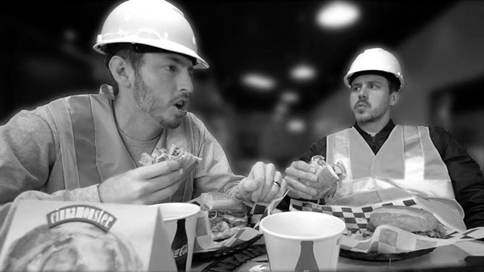
What’s wrong in this picture? There are two construction workers eating junk food at worksite. Eating a poor quality diet high in junk food is linked to a higher risk of obesity, depression, digestive issues, heart disease and stroke, type 2 diabetes, cancer, and early death. And as you might expect, frequency matters when it comes to the impact of junk food on your health.

Accidents (whether they are work accidents, car accidents, slip and falls, or construction accidents) will inevitably happen no matter how carefully an individual tries to prevent them. However, many accidents can be prevented. A major part of accident prevention is living a well balanced, healthy (both mentally and physically) lifestyle. Staying fit by exercising and eating a well balanced diet plays a vital part in accident prevention. Eating healthy isn’t always easy, but committing to a healthy diet can be one of the smartest decisions you ever make.


Dump Truck Overturns Meeting Kit

Overturn of the bed of the truck or the entire truck it self is one of the major hazards for the operation of the truck. Trucks vary greatly in design. But the basic premise of the job they complete is universal. That is, dump trucks haul material and dump the material. Regardless of varying designs and uses of the trucks, many of the hazards of operation remain the same.

DUMP TRUCK INJURIES

Dump truck injuries including fatalities occur all too often. These are broken down to two categories; namely; when dump truck overturn and serious injuries or death can occur, and, secondly in a completely different category than loading and unloading material.

This latter category is set out as fellows.

Musculoskeletal disorders (MSD) of the neck, back and upper extremities – These issues can be caused by loading or unloading the truck or lifting boxes, cartons, containers, garbage cans, tanks or bins. They can also arise when using vehicle dollies or loaders and working on vehicle tires.

Falls from elevations – These injuries can occur when making deliveries on upper floors, exiting the truck or stepping into holes at loading or unloading areas. The most common causes of injuries related to falls from elevations are knee and back sprains that occur when falling out of a vehicle.

Falls on the same level – Theses injuries can occur when lifting the latch on the back of the truck, putting on tire chains or unloading the truck.

Injuries due to being struck by or against objects – Workers can be struck by or against objects when lifting hitched trailers, opening containers and attaching trailers to trucks. The objects that a worker may hit or be hit by include vehicle parts, lift-gates, winch bars, pallet jacks, boxes or cartons or binders and chains.

Vehicle-related injuries – Workers may be hurt when they lose control of the vehicle or when they collide with another car.  Workers are at risk not only of getting hurt in a car accident but also of being rolled over by their own vehicle.

CAUSES OF OVERTURNED DUMP TRUCKS

There are many different causes or contributing factors for the entire truck or just the bed of the truck to overturn. The factors will depend on the worksite as well as the type of truck used. Some common causes of tip overs include:

  • Load That Shifted: When a load shifts in a truck, it can really be a bad situation. It can put too much weight on one side and cause the dump truck to overturn. It is very important to pay close attention to what you are hauling and the grounds that you are driving on. You should always make the necessary adjustments as you see fit when hauling materials in a dump truck.
  • Driving On Uneven Grounds: Driving on uneven grounds can be dangerous when you are operating a heavy vehicle. Not to mention the caution that needs to be taken for the load that you are carrying. When the grounds are uneven it can cause the materials or waste that is being hauled to shift. All precautions should be taken to avoid this from happening.
  • Soft Materials: If the ground that the dump truck is driving on to unload the bed is soft, it can cause some significant problems. The truck can begin to move due to unsteady grounds, posing a big risk for weight being distributed unevenly. This problem can result in the truck overturning.
  • Bed malfunction. All too often bed malfunctions lead to a tip over incident. One example is failure in the lift mechanisms. Another common example is a tailgate that does not open or unlatch. When this occurs and the operator or spotter does not catch it, the entire load shifts to the back of the bed and can cause the front of the truck to lift up and turn over.

PREVENT DUMP TRUCK OVERTURNS

By following the rules, we can keep overturns to a bare minimum and very minor.

  • Never dump a load on uneven grounds. Try to always make sure your dump truck is level on all 4 sides.
  • Inspection of your truck is a very important part of operating one. Before and after each load that is done, a visual inspection should be made of the dump truck. This way you can see any problems that might be occurring or a reason that an incident could possibly occur.
  • Try to always dump away from busy roads or roads in general. There are many safety hazards to unloading a dump truck close to moving traffic and it is best to be a good distance away.
  • When dumping the truck, always make sure all people are a safe distance away from the load that is being dumped. Whether a person is standing around, sitting in a car, or anything else, they should always be out of the direct line of the load.
  • Make sure all grounds are stable and able to withstand the weight of the dump truck. When you dump your load weight is going to shift, and you need to make sure the ground you are on is going to withstand all the weight.
  • Your truck should always be loaded to be as even as possible. When you load your materials, space things out and make them even on each side. This includes the front and back. When things are placed unevenly, you are at a greater risk of overturning the dump truck.
  • When you are unloading the truck, you should always pay close attention to the evenness of the load as well. When materials come off unevenly, you are creating a situation that can result in the bed overturning.
  • Every time you make a delivery of a load, do a walk around of the truck. This is going to keep you and everyone else around safe.

FINAL WORD

There are many different things that can go wrong that can lead to a tip over incident. It is necessary to follow every best practice and safeguard there is when hauling and dumping material in a dump truck. Avoiding complacency while operating these trucks can make the difference in preventing a tip over incident that could have led to a fatality.


Dump Truck Overturns Stats and Facts

FACTS

Dump Truck Crash Factors

Dump trucks have several features that increase the risk of a crash, even when compared to other commercial trucks like 18-wheelers.

  1. Height: Dump trucks are set higher off the ground than other trucks and vehicles. This puts them at higher risk for tip-overs, especially when the back is lifted. Accidents where a car slides underneath the truck are common, and can often be fatal.
  2. Weight: Dump trucks carry tons of materials, making them harder to stop and maneuver. Once they get moving, they can plow right through barriers and other cars.
  3. Driver visibility: Dump trucks have large blind spots, and drivers sometimes can’t see directly behind the vehicle. Visibility issues can lead to pedestrian accidents, back-up accidents, and blind-spot crashes.
  4. Driving formations: Dump trucks often travel in groups in a single-file line, occupying much of the roadway. This can increase the risk of an accident and can cause pile-ups as well.
  5. Merging issues: Failure to yield when exiting a construction site is a common cause of accidents. The “Trucks Entering Highway” signs that you see usually refer to dump trucks.

STATS

  • From 2011 to 2015, 609 workers were killed from injuries at road work zones in the United States. These work zones include construction, maintenance, or utility work on a road, street, or highway. Workers in Texas, Florida, Pennsylvania, and California incurred the most fatal injuries at road construction sites during the 5-year period.
  • About 46 percent of these workers were killed in pedestrian vehicular incidents, which include being struck by a vehicle or mobile equipment. Workers were most frequently struck by automobiles or Dump Trucks. Of the 79 workers struck by an automobile, the automobile was moving forward in 72 cases. Of the 49 workers struck by a dump truck, the dump truck was backing up in 40 cases.
  • During 2012, 756 truck drivers lost their lives in work-related incidents, while over 65,000 private sector truck drivers suffered injuries and illnesses that resulted in time away from work according to the U.S. Bureau of Labor Statistics (BLS) Census of Fatal Occupational Injuries (CFOI) and Survey of Occupational Injuries and Illnesses (SOII). Truck drivers, along with driver/sales workers, had a workplace fatal injury rate of 24.3 in 2012, more than 7 times higher than the overall workplace average.


Dump Truck Overturns Fatality Report

Worker seriously injured after dump truck overturns at Mesa construction site.

MESA, AZ (3TV/CBS5) — Rescue crews pulled a man from an overturned dump truck at a Mesa construction site Thursday afternoon.

Mesa Fire and Medical Department Deputy Chief Forrest Smith says the accident happened just after 3 p.m. at a construction site south of the Loop 202 Red Mountain Freeway near Higley Road and Longbow Parkway.

Smith says the Komatsu heavy haul dump truck overturned with a driver inside and it flipped on it’s back. The driver was in the caged driver’s compartment of the truck.

The driver, a man in his 30’s, is being flown to a trauma center with life-threatening injuries, says Smith.

Mesa Police will be on the scene looking into the cause of the accident. The driver of this heavy duty dump truck was injured after it overturned Thursday afternoon in Mesa. A man in his 30’s was taken to a hospital with life threatening injuries Thursday in Mesa after an accident on a construction site.

Officials in Mesa say a dump truck overturned at a construction site Thursday afternoon injuring the driver.

The driver of a dump truck that overturned was taken to a hospital with life threatening injuries Thursday afternoon.

A Komatsu heavy haul dump truck overturned at a Mesa construction site with a driver inside.


Dump Truck Overturns – Picture This

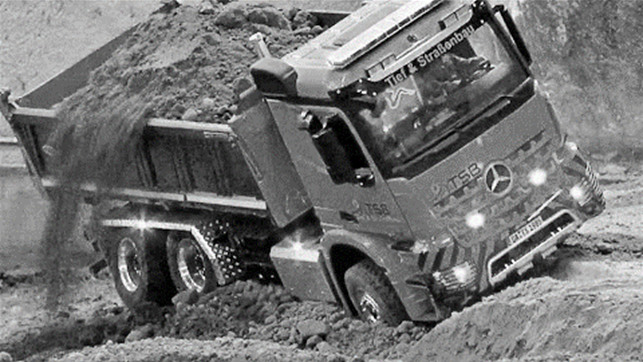
What’s wrong in this picture? This truck is about to roll over due to a bad steering wheel maneuver, and the ground where it is operating is too loose for the weight it is carrying.

One of the most common causes for a dump truck to tip is operating on an uneven surface or a slope when dumping. Even a slight slope alters the truck’s center of gravity and increases the chance of a tip-over as the weight of the load shifts during dumping. If the bed overturns, the cab often tips over as well, unless the truck has an articulating dump bed.

Balance is the name of the game when it comes to operating a dump truck. Before you go to deposit a load, make sure that you’re on stable ground. The truck will become less stable as the bed is lifted, and this could cause it to tip over.

Keep in mind that the longer the truck bed is, the easier it is to tip the truck. Give your truck its best chance of staying upright by being on solid, level ground. Firmly packed soil or gravel are ideal for unloading.


Dump Truck Overturns Meeting Kit – Spanish

QUÉ ESTÁ EN RIESGO

El vuelco de la plataforma del camión o de todo el camión es uno de los principales peligros para el funcionamiento del camión. Los camiones varían mucho en su diseño. Pero la premisa básica del trabajo que realizan es universal. Es decir, los camiones volquetes transportan material y vierten el material. Independientemente de los diferentes diseños y usos de los camiones, muchos de los peligros de la operación siguen siendo los mismos.

CUÁL ES EL PELIGRO

LESIONES EN CAMIONES POR VOLCAMIENTO

Las lesiones en camiones por volcamiento, incluidas las muertes, ocurren con demasiada frecuencia. Éstas se dividen en dos categorías; a saber, cuando el camión volquete vuelca y pueden producirse lesiones graves o la muerte, y, en segundo lugar, en una categoría completamente diferente a la carga y descarga de material.

Esta última categoría se expone como compañeros.

Trastornos musculoesqueléticos (TME) del cuello, la espalda y las extremidades superiores: estos problemas pueden producirse al cargar o descargar el camión o al levantar cajas, cartones, contenedores, cubos de basura, cisternas o cubos. También pueden surgir al utilizar carretillas o cargadores de vehículos y al trabajar en los neumáticos de los mismos.

Caídas desde alturas – Estas lesiones pueden producirse al realizar entregas en pisos superiores, al salir del camión o al pisar huecos en zonas de carga o descarga. Las causas más comunes de lesiones relacionadas con las caídas desde elevaciones son los esguinces de rodilla y de espalda que se producen al caer del vehículo.

Caídas en el mismo nivel – Estas lesiones pueden producirse al levantar el pestillo de la parte trasera del camión, poner las cadenas de los neumáticos o descargar el camión.

Lesiones por golpes o contra objetos – Los trabajadores pueden ser golpeados por o contra objetos al levantar remolques enganchados, abrir contenedores y fijar remolques a los camiones. Los objetos con los que un trabajador puede golpear o ser golpeado incluyen piezas del vehículo, compuertas de elevación, barras de cabrestante, gatos de paletas, cajas o cartones o carpetas y cadenas.

Lesiones relacionadas con el vehículo: los trabajadores pueden resultar heridos cuando pierden el control del vehículo o cuando chocan con otro vehículo.  Los trabajadores corren el riesgo no sólo de resultar heridos en un accidente de tráfico, sino también de ser arrollados por su propio vehículo.

CAUSAS DEL VUELCO DE LOS CAMIONES

Hay muchas causas diferentes o factores que contribuyen a que todo el camión o sólo la plataforma del camión vuelque. Los factores dependerán del lugar de trabajo, así como del tipo de camión utilizado. Algunas causas comunes de los vuelcos incluyen:

  • Carga que se desplaza: Cuando una carga se desplaza en un camión, puede ser realmente una mala situación. Puede poner demasiado peso en un lado y hacer que el camión vuelque. Es muy importante prestar mucha atención a lo que está transportando y a los terrenos por los que está conduciendo. Usted siempre debe hacer los ajustes necesarios como usted ve el ajuste al transportar los materiales en un camión de volteo.
  • Conduciendo en terrenos desiguales: Conducir en terrenos irregulares puede ser peligroso cuando usted está operando un vehículo pesado. Sin mencionar la precaución que necesita ser tomada por la carga que usted está llevando. Cuando el terreno es irregular puede hacer que los materiales o residuos que se transportan se desplacen. Hay que tomar todas las precauciones para evitar que esto ocurra.
  • Materiales blandos: Si el suelo sobre el que circula el camión volquete para descargar la cama es blando, puede causar algunos problemas significativos. El camión puede empezar a moverse debido a la inestabilidad del suelo, lo que supone un gran riesgo de que el peso se distribuya de forma desigual. Este problema puede provocar el vuelco del camión.
  • Mal funcionamiento de la plataforma. Con demasiada frecuencia, el mal funcionamiento de la plataforma conduce a un incidente de vuelco. Un ejemplo es el fallo en los mecanismos de elevación. Otro ejemplo común es un portón trasero que no se abre o desengancha. Cuando esto ocurre y el operador o el observador no lo coge, toda la carga se desplaza hacia la parte trasera de la plataforma y puede hacer que la parte delantera del camión se levante y vuelque.

COMO PROTEGERSE

EVITAR LOS VUELCOS DE LOS CAMIONES

Siguiendo las reglas, podemos mantener los vuelcos al mínimo y de forma muy leve.

  • Nunca vuelque una carga en un terreno irregular. Trate de asegurarse siempre de que su camión volquete está nivelado en los 4 lados.
  • La inspección de su camión es una parte muy importante de su funcionamiento. Antes y después de cada carga que se haga, se debe hacer una inspección visual del camión volquete. De esta manera usted puede ver cualquier problema que pueda estar ocurriendo o una razón por la que podría ocurrir un incidente.
  • Intente descargar siempre lejos de carreteras con mucho tráfico o de carreteras en general. Hay muchos riesgos de seguridad al descargar un camión volquete cerca del tráfico en movimiento y es mejor estar a una buena distancia.
  • Al descargar el camión, asegúrese siempre de que todas las personas estén a una distancia segura de la carga que se está descargando. Si una persona está de pie, sentada en un vehículo o cualquier otra cosa, siempre debe estar fuera de la línea directa de la carga.
  • Asegúrese de que todos los terrenos son estables y capaces de soportar el peso de la volqueta. Cuando usted vierte su peso de la carga va a cambiar, y usted necesita cerciorarse de que la tierra que está en va a soportar todo el peso.
  • Su camión siempre debe ser cargado para ser lo más uniforme posible. Cuando cargue sus materiales, espacie las cosas y hágalas uniformes en cada lado. Esto incluye la parte delantera y trasera. Cuando las cosas se colocan de forma desigual, se corre un mayor riesgo de volcar el camión.
  • Cuando descargue el camión, también debe prestar atención a la uniformidad de la carga. Cuando los materiales se descargan de forma desigual, se crea una situación que puede provocar el vuelco de la plataforma.
  • Cada vez que haga una entrega de una carga, de una vuelta al camión. Esto le mantendrá a usted y a todos los que estén alrededor seguros.

CONCLUSIÓN

Hay muchas cosas diferentes que pueden ir mal y que pueden llevar a un incidente de vuelco. Es necesario seguir todas las mejores prácticas y salvaguardias que existen cuando se transporta y se vierte material en un camión volquete. Evitar la complacencia mientras se operan estos camiones puede marcar la diferencia en la prevención de un incidente de vuelco que podría haber conducido a una fatalidad.