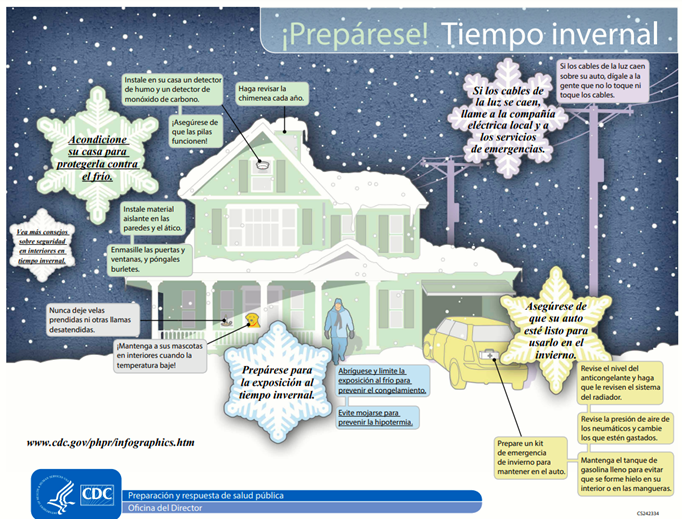
Falls in the Construction Industry – Picture This – Spanish
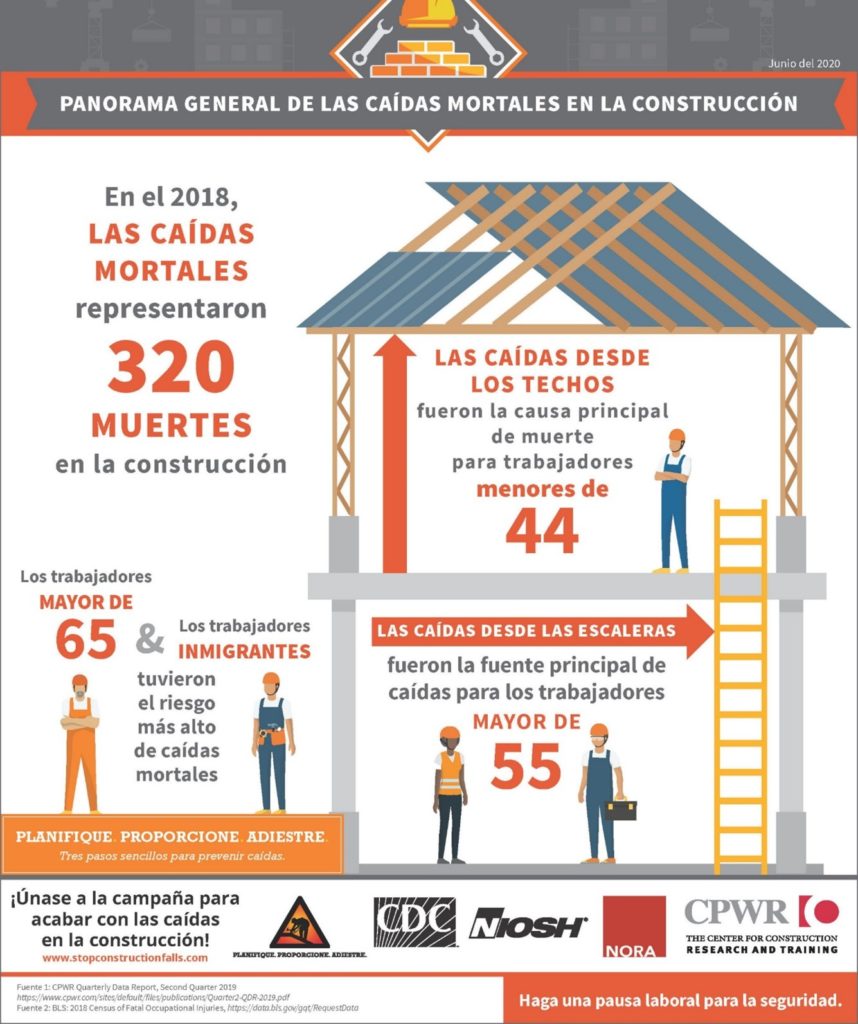
Fuente: https://www.cdc.gov
Fuente: https://www.cdc.gov
When it comes to working safely we should all want to choose to make the right decision. We all are different in the way we think, but there are many common reasons why we should choose to work safe. Keep these five reasons in mind as to why we should all strive to should work safe.
FIVE REASONS TO WORK SAFE
THE FIVE REASONS DISSECTED
The following points hi-lite reasons for working safely:
A workplace accident can permanently change all those plans in an instant. With an accident you could be on your way to the hospital and might have months of painful therapy to recover. Think about how much is resting on your shoulders every day, and all the people who are counting on you to come home safely. Working safe is really a very small price to pay for being able to improve and maintain your lifestyle. There is no job or piece of production that is worth the risk of injury.
Safety is the shared responsibility of workers and management. It is ultimately shaped by the productivity and quality of the goods and services produced. Here are some steps to move this joint responsibility forward.
Be Aware of your surroundings: There are many employees who don’t bother to be aware of their surrounding hazards. But, it is important to observe your co-workers working circumstances. Once you get to know the particular hazards that occur at your workplace, then it will help you in reducing the risk and allow you to take precautionary steps.
Reduce workplace stress: Most employees are not fit and healthy because of their busy schedule, which includes long working hours, work-pressure and conflicts with co-workers or with the boss of the organization. All these can lead to some illness or depression to the employees. Also, this not only affects their professional life but also creates nuisance in their personal lives too. So, instead of waiting to get unfit, it is better that you start take care of your health, by taking regular breaks, eating healthy, and having good posture
Use tools appropriately: Take appropriate precautions while using machinery or other tools, instead of taking any shortcuts. Taking shortcuts is one of the biggest reasons behind workplace loss. It’s a big safety risk to use scaffolding as a ladder or one tool instead of another for a particular job. So, it is always recommended to use the correct tools and reduce the opportunity for workplace injury.
Keep crisis exits which are easily accessible: In case there is an emergency, you will need quick access to the exits. It is also advised to keep clear usage of equipment shutoffs which might stop you from performing in an emergency.
Update Your Supervisor about unsafe conditions: It is important that you keep updating your supervisor about the hazards or risks in the workplace. They are obligated to ensure that their employees are working in a safe environment. And if the employees are not working in safe conditions, then it is the responsibility of the supervisor to listen and understand their condition and create a safe working environment for employees.
Use mechanical assistance: Whenever you want to carry or lift heavy objects, you should use a conveyor belt, crank or forklift.
Stay Alert: There are many employees who ignore advance warning signs, and as a result a number of workplace injuries or fatalities occur.
Wear the right safety equipment: It is essential that you wear the right protection equipment tools during your work. This includes earplugs, earmuffs, hard hats, gloves, full-face masks, safety gloves and any other equipment which is necessary to keep you safe at work.
Ensure Good Posture: If you are often sitting at work, good posture is essential. You need to keep your shoulders in line and back straight to avoid spine problems. Try not to stoop and twist if possible, and use ergonomic equipment whenever possible.
Think about how the choices you make on the job not only affect you, but also how they affect your family, your coworkers, and the company as a whole. Reminding yourself of the far-reaching consequences an incident can have on many different people can reinforce making the right decision when working safely.
Here are 5 facts about workplace safety violations.
A 16-year-old male farm worker (the victim) died in a cotton packing machine after being covered with a load of cotton. Prior to the incident, the victim had been riding with a co-worker who was operating a cotton picker. When the picker was nearly full of cotton, the picker operator stopped and told the victim to walk over to the cotton packing machine and get ready to pack the load while he finished picking. Approximately 30 minutes later, the picker operator drove the fully loaded 240-horsepower picker over to the packing machine. When he arrived at the cotton packing machine he noticed that the tractor used to power it was not running and its lights were not illuminated. He did not see the victim but, thinking the victim had walked to his truck to get some tobacco, drove the picker along the side of the cotton packing machine and dumped the load into it. After he dumped the load, he and the farm owner, who had returned to the packing area after cutting stalks, became concerned when the victim did not return to the cotton packing machine. They began to search for him and when they could not locate him, decided to use the tractor to pull the cotton packing machine forward in order to expose the stack of cotton inside. They found the victim buried in loose cotton within the cotton stack and pulled him out. They found that he had no pulse and was not conscious or breathing. At approximately 10:30 p.m., the farm owner ran to a work truck parked nearby and used a mobile phone to call 911. The co-worker initiated cardiopulmonary resuscitation (CPR). Law-enforcement officers arrived within approximately 10 minutes and took over CPR efforts. EMS arrived within approximately 20 minutes of the 911 call and transported the victim to a local hospital where he was pronounced dead, approximately 2 hours after the incident.
NIOSH investigators concluded that, to help prevent similar occurrences, employers should:

What’s wrong in this picture? There is a worker trying to put a spotlight on the wall but he is not paying the necessary attention to how he is doing it, he is not wearing any fall protection and the walking space on the plank is limited and awkward which makes any movement dangerous.
Workplace safety is crucial, regardless of a business, its size or its industry. Without the proper workplace safety.
The U.S. Occupational Safety and Health Administration (OSHA) reported 5,190 employees were killed on the job in 2016. Meanwhile, OSHA has partnered with companies nationwide to find the best ways to limit workplace dangers. To date, OSHA and its partners have been successful in their workplace safety efforts, reducing the average number of worker deaths per day from 38 in 1970 to 14 in 2016.
Workplace safety requires ongoing collaboration between managers and employees across a company. Together, managers and employees can analyze on-the-job dangers and determine the best ways to eliminate such problems. They also can brainstorm ways to simultaneously reduce on-the-job risks and bolster workplace productivity.
CINCO RAZONES PARA TRABAJAR CON SEGURIDAD HOY (CHARLA SOBRE SEGURIDAD)
Cuando se trata de trabajar con seguridad, todos deberíamos elegir tomar la decisión correcta. Todos somos diferentes en nuestra forma de pensar, pero hay muchas razones comunes por las que deberíamos elegir trabajar con seguridad. Ten en cuenta estas cinco razones por las que todos deberíamos esforzarnos por trabajar de forma segura.
CINCO RAZONES PARA TRABAJAR CON SEGURIDAD
LAS CINCO RAZONES DISECCIONADAS
Los siguientes puntos son razones de peso para trabajar con seguridad:
IMPACTO DEL ACCIDENTE LABORAL
Un accidente laboral puede cambiar permanentemente todos los planes en un instante. Con un accidente podría estar de camino al hospital y podría tener meses de dolorosa terapia para recuperarse. Piense en todo lo que recae sobre sus hombros cada día, y en todas las personas que cuentan con que vuelva a casa sano y salvo. Trabajar con seguridad es realmente un precio muy pequeño a pagar por poder mejorar y mantener su estilo de vida. No hay ningún trabajo o pieza de producción que merezca el riesgo de sufrir una lesión.
PRECAUCIONES DE SEGURIDAD PARA LOS TRABAJADORES Y LA DIRECCIÓN
Al final, la seguridad es una responsabilidad compartida por los trabajadores y la dirección. En última instancia, está condicionada por la productividad y la calidad de los bienes y servicios producidos. He aquí los pasos para hacer avanzar esta responsabilidad conjunta.
Ser consciente del entorno: Hay muchos empleados que no se preocupan por los peligros de su entorno. Sin embargo, es importante observar las circunstancias de trabajo de sus compañeros. Una vez que conozcas los peligros particulares que se producen en su lugar de trabajo, le ayudará a reducir el riesgo y le permitirá tomar las medidas de precaución.
Reducir el estrés en el lugar de trabajo: La mayoría de los empleados no están en forma y no gozan de buena salud debido a su apretada agenda, que incluye largas jornadas de trabajo, presión laboral y conflictos con los compañeros de trabajo o con el jefe de la organización. Y todo esto puede llevar a los empleados a padecer alguna enfermedad o depresión. Además, esto no sólo afecta a su vida profesional, sino que también crea la molestia en su vida personal también. Así que, en lugar de esperar a no estar en forma, es mejor que empiece a cuidar de su salud, haciendo descansos regulares, sentándose en una postura adecuada y con una dieta apropiada.
Utilizar las herramientas de forma adecuada: Tome las precauciones adecuadas al utilizar maquinaria o cualquier otra herramienta, en lugar de tomar cualquier atajo. Tomar atajos es una de las principales razones de las pérdidas en el lugar de trabajo. Es un gran riesgo para la seguridad utilizar un andamio como una escalera o una herramienta en lugar de otra para un determinado trabajo. Por lo tanto, siempre se recomienda utilizar las herramientas correctas y reducir la posibilidad de lesiones en el lugar de trabajo.
Mantener salidas de crisis que sean fácilmente accesibles: En caso de emergencia, necesitará un acceso rápido a las salidas. También se aconseja mantener un uso claro de los cierres de los equipos que podrían impedirle actuar en caso de emergencia.
Informar a su supervisor sobre las condiciones inseguras: Es importante que mantenga informado a su supervisor sobre los peligros o riesgos que se producen en el lugar de trabajo. Ellos deben estar legalmente obligados a asegurar que sus empleados estén trabajando en un ambiente seguro o no. Y, en caso de que los empleados no estén trabajando en condiciones seguras, entonces es responsabilidad del supervisor escuchar y entender su condición y crear un ambiente de trabajo seguro para los empleados.
Utilizar la asistencia mecánica: Siempre que se quiera transportar o levantar algún equipo pesado, se debe utilizar una cinta transportadora, una manivela o una carretilla elevadora. Hay muchos riesgos, si trata de levantar algo que es más pesado, puede afectar a su capacidad de pesaje y puede conducir a algún desplazamiento muscular.
Mantenerse alerta: Hay muchos empleados que suelen comprometer o ignorar las alertas de preaviso y, debido a ello, se producen varias lesiones o muertes en el lugar de trabajo.
Llevar el equipo de seguridad adecuado: Es esencial que lleve los equipos de protección adecuados durante su trabajo. Y, el equipo puede ser de cualquier forma como, tapones para los oídos, orejeras, cascos, guantes, máscaras completas, guantes de seguridad y cualquier otro equipo que se requiere para usar durante el trabajo.
Sentarse en una postura adecuada: Si tiene un trabajo que tenga que permanecer sentado, entonces es esencial que mantenga una postura correcta, mientras trabaja en un escritorio. Hay que mantener los hombros alineados y la espalda recta para evitar cualquier problema de columna. Trate de ignorar la inclinación y la torsión con regularidad y, si es posible, a continuación, tratar de utilizar los muebles de diseño de la comodidad y el equipo de seguridad, de modo que las cosas deseadas será en su alcance.
Piense en cómo las decisiones que toma en el trabajo no sólo le afectan a usted mismo, sino también a su familia, a sus compañeros de trabajo y a la empresa en su conjunto. Recordarse a sí mismo las consecuencias de largo alcance que un incidente puede tener en muchas personas diferentes puede reforzar la toma de la decisión correcta cuando se trabaja con seguridad.
Falls are the leading cause of death in the construction industry, but these are easily preventable. Numerous OSHA guidelines provide the framework for a safer construction site.
Falls from heights is one of the leading causes for injuries and fatalities in the workplace and in the home. In the construction industry, falls are the leading cause of fatalities. In 2018, there were 320 fatal falls to a lower level out of 1,008 construction fatalities (BLS data).
KEY RULE:
One key rule mandates that employers provide fall protection when an employee is working six feet or more above a lower level—or 10 feet when working on a scaffold.
The only exception to this rule is when an employer can demonstrate that such a system is infeasible or when the hazard is increased by using the system. In these cases, an employer must develop a fall protection plan specific to the site where the work is performed.
OTHER MORE SPECIFIC RULES IN THE CONSTRUCTION INDUSTRY INCLUDE:
Accounting for more than a third of all deaths in the industry, falls are the leading cause of fatalities in construction. Most upsetting is the fact that these deaths are preventable. Construction workers are often required to work from roofs, scaffolds and ladders, which are where most fatal falls occur.
1) Think about your site conditions
Often times, construction workers do not consider slips and trips to be “falls,” but they are included under the fall category of the Focus Four Hazards. In fact, back, neck, ankle and knee injuries, which can be brought on by slips and trips, account for the greatest number of lost time cases in the construction industry.
2) Plan your work
With the construction industry’s hectic pace, it’s easy to get caught up on schedules and push planning by the wayside. Planning your work is not only critical to ensuring the success of a project though, it helps minimize safety hazards. By looking at what type of work will be conducted, the types of tasks and tools that will be involved, and accessing the necessary Personal Protective Equipment (PPE), workers can better prepare for the workday ahead. Additionally, when estimating the cost of a job, employers should always include safety equipment and plan to have all necessary tools and equipment at the jobsite.
3) Use the right equipment for the right jobs
It is extremely important to choose the right equipment for the right jobs. With so many types of fall protection equipment available for workers, it can be difficult to determine which is best to use for which job. When used properly, beamers, retractables, rope-grabs, beam straps, butterfly anchors, concrete plunger anchors and retractable lanyards can all save lives. However, if the right equipment is not selected for the right task, not only could it not prevent a fatality, it could be a contributing factor.
4) Remember that training is key
Rarely does OSHA issue just one citation for a fall protection violation— it is almost always at least two. Employers are often cited for lack of training in addition to a witnessed violation. Providing your employees with the right equipment is simply not enough. You must train them on the proper use of the equipment including its limitations, how to care for it and when it is needed.
5) Plan. Provide. Train.
Remembering these three steps can make protecting your employees from falls much easier. Plan ahead to get the job done safely and efficiently. Make sure your company is using engineering controls and work rules for protection when possible. When that’s not possible, make sure only the most effective PPE is used. Once you’ve planned the appropriate PPE, provide it to your employees. Before providing employees with the appropriate PPE though, make sure to train them on how to use it properly, including its limitations.
Compliance with OSHA standards should only be the start of working at heights safely. Following a well thought out plan, providing all the necessary resources, and training employees can help to prevent injuries and fatalities due to falls.
A 51-year-old man was suspended on a scaffold as he did facade repair work on a brick building in Manhattan when he was hit in the head by a heavy stone slab.
There was a cry for help from this man.
“I’m going to fall!” a man repeatedly said in Spanish as he clung to the scaffolding that dangled against a building on East 50th Street in Manhattan.
The man had been struck in the head and bloodied by a heavy piece of molding while repairing the building’s masonry. Although authorities rescued him from the scaffold, he would die later at a hospital at 51 years old.
Amid New York’s towering buildings, where scaffolding is so common it seemingly blends into the design, the man’s death offered a reminder of the risks faced by workers in a city under constant construction.
The man had been outside the 14-story residence at 311 East 50th Street when he was struck by a coping stone that had been removed to anchor the suspended scaffold, a Fire Department official said.
Witnesses saw the man clinging to the structure and heard his shouts.
“He was holding on for his life,” said Rodrigo Galindo, 52, who was delivering food nearby. “I was rooting for him.”
Firefighters climbed a ladder to reach the man, who by that point appeared to have lost consciousness, Mr. Galindo said. They broke a window and pulled the man inside, as a co-worker on the scaffold stood motionless, a witness said.
Jimmy Khan, 50, an employee at a nearby deli, watched as the man was carried away on a gurney. “I had to look away,” Mr. Khan said.
The man was taken to NewYork-Presbyterian Hospital, where he died. His name was not released, pending family notification. It was unclear if he had been wearing a hard hat or harness.
A second worker on the scaffolding at the time of the incident was not injured but was taken to the hospital for observation.
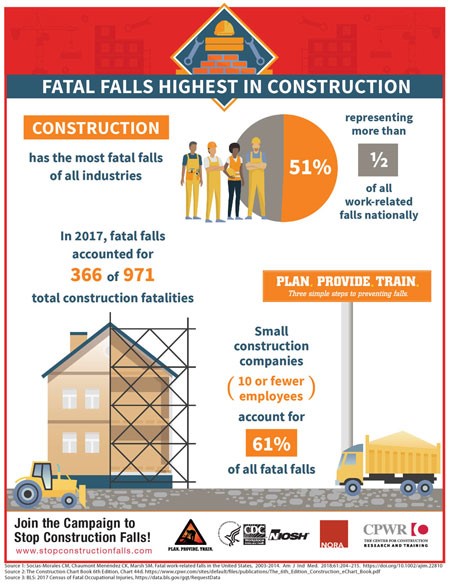
Source: cdc.gov
Protección contra caídas en el sector de la construcción
Las caídas son la principal causa de muerte en el sector de la construcción, pero son fácilmente evitables. Numerosas directrices de la OSHA proporcionan el marco para una obra de construcción más segura.
Las caídas de altura son una de las principales causas de lesiones y muertes en el lugar de trabajo y en el hogar. En la industria de la construcción, las caídas son la principal causa de muertes. En 2018, hubo 320 caídas mortales a un nivel inferior de las 1.008 víctimas mortales de la construcción (datos de BLS).
Una regla clave exige que los empleadores proporcionen protección contra caídas cuando un empleado esté trabajando a seis pies o más por encima de un nivel inferior, o a 10 pies cuando trabaje en un andamio.
La única excepción a esta regla es cuando un empleador puede demostrar que tal sistema es inviable o cuando el peligro aumenta al utilizar el sistema. En estos casos, el empresario debe desarrollar un plan de protección contra caídas específico para el lugar donde se realiza el trabajo.
5 CONSEJOS DE SEGURIDAD PARA EVITAR LAS CAÍDAS EN LA CONSTRUCCIÓN
Las caídas, que representan más de un tercio de las muertes en el sector, son la principal causa de mortalidad en la construcción. Lo más inquietante es el hecho de que estas muertes son evitables. Los trabajadores de la construcción tienen que trabajar a menudo desde tejados, andamios y escaleras, que es donde se producen la mayoría de las caídas mortales.
1. Piense en las condiciones de la obra
A menudo, los trabajadores de la construcción no consideran que los resbalones y los tropezones sean “caídas”, pero se incluyen en la categoría de caídas de los Cuatro Peligros Principales. De hecho, las lesiones de espalda, cuello, tobillos y rodillas, que pueden producirse por resbalones y tropiezos, representan el mayor número de bajas laborales en el sector de la construcción.
2. Planifique su trabajo
Con el ritmo frenético del sector de la construcción, es fácil dejarse llevar por los horarios y dejar de lado la planificación. Sin embargo, la planificación del trabajo no sólo es fundamental para garantizar el éxito de un proyecto, sino que ayuda a minimizar los riesgos de seguridad. Si se tiene en cuenta el tipo de trabajo que se va a realizar, los tipos de tareas y herramientas que se van a emplear y el acceso a los equipos de protección individual (EPP) necesarios, los trabajadores pueden prepararse mejor para el día de trabajo que les espera. Además, a la hora de calcular el coste de un trabajo, los empresarios deben incluir siempre el equipo de seguridad y prever la presencia de todas las herramientas y equipos necesarios en el lugar de trabajo.
3. Utilizar el equipo adecuado para los trabajos adecuados
Es extremadamente importante elegir el equipo adecuado para los trabajos adecuados. Con tantos tipos de equipos de protección contra caídas disponibles para los trabajadores, puede ser difícil determinar cuál es el mejor para cada trabajo. Cuando se utilizan correctamente, las vigas, los retráctiles, las pinzas para cuerdas, las correas para vigas, los anclajes de mariposa, los anclajes de émbolo para hormigón y los cordones retráctiles pueden salvar vidas. Sin embargo, si no se selecciona el equipo adecuado para la tarea correcta, no sólo no se puede evitar un accidente mortal, sino que puede ser un factor que contribuya a ello.
4. Recuerde que la formación es la clave
Rara vez la OSHA emite una sola citación por una infracción de la protección contra caídas; casi siempre son al menos dos. Los empleadores suelen ser citados por falta de formación, además de por una infracción presenciada. Proporcionar a sus empleados el equipo adecuado no es suficiente. Debe formarles en el uso adecuado del equipo, incluyendo sus limitaciones, cómo cuidarlo y cuándo es necesario.
5. Planificar. Proporcionar. Formar.
Recordar estos tres pasos puede hacer que proteger a sus empleados de las caídas sea mucho más fácil. Planifique con antelación para realizar el trabajo de forma segura y eficiente. Asegúrese de que su empresa utiliza controles de ingeniería y normas de trabajo para la protección cuando sea posible. Cuando eso no sea posible, asegúrese de que sólo se utiliza el EPP más eficaz. Una vez que haya planificado el EPP adecuado, proporciónelo a sus empleados. Sin embargo, antes de proporcionar a los empleados el EPP adecuado, asegúrese de formarlos sobre cómo utilizarlo correctamente, incluidas sus limitaciones.
El cumplimiento de las normas de la OSHA debe ser sólo el comienzo de un trabajo en altura seguro. Seguir un plan bien pensado, proporcionar todos los recursos necesarios y formar a los empleados puede ayudar a prevenir lesiones y muertes por caídas.
Charla sobre la seguridad al palear la nieve
El clima invernal conlleva muchos peligros para las personas que tienen que experimentarlo en su lugar de residencia y trabajo. Tanto si se trata de conducir en malas condiciones como de tener que quitar la nieve, cualquier tarea realizada en condiciones climáticas invernales suele dar lugar a una mayor probabilidad de lesiones. Una de las tareas de trabajo en invierno que puede provocar fácilmente una lesión es palear la nieve.
EL PELIGRO
(OSHA) insta a los empleadores, a los trabajadores y al público en general a que sean conscientes de los peligros que entraña la retirada de la nieve de los tejados, dentro y alrededor de los espacios comerciales/empresariales, públicos y de la propiedad privada.
Peligros significativos
Los trabajadores que retiran la nieve se enfrentan a otros peligros importantes, además de las caídas desde los tejados, como son:
OTROS PELIGROS
Exposición al frío
La exposición al frío puede causar congelación (congelación en las capas profundas de la piel y los tejidos) e hipotermia (descenso de la temperatura corporal a menos de 95˚F).
Esfuerzo físico
El esfuerzo físico durante la retirada de la nieve también puede causar lesiones y enfermedades.
PRECAUCIONES GENERALES DE SEGURIDAD
REDUZCA SU RIESGO
Palear la Nieve
PALEAR LA NIEVE HÚMEDA/PESADA
Aunque la tarea de quitar la nieve es sencilla, hay muchas lesiones que pueden producirse al realizarla. Tenga en cuenta las lesiones mencionadas en esta charla y las medidas que puede tomar para evitar una lesión la próxima vez que tenga que palear la nieve. Punto de debate: ¿Qué otros peligros y mejores prácticas existen al palear la nieve?
Un trabajador muere al quitar la nieve del tejado
Si este invierno te toca quitar la nieve del tejado, aprende la lección de este accidente mortal, en el que un empleado se cayó por una claraboya cubierta de nieve. Mark acababa de terminar su turno de trabajo cuando se ofreció a quitar la nieve del tejado de la empresa. Pero no tardó en morir en el suelo de las instalaciones.
Un poco sobre Mark
Este obrero de 43 años trabajó durante 18 años en una planta de fabricación de revestimientos en Wisconsin. Aunque las tareas de Mark consistían principalmente en mezclar pintura, a menudo se ofrecía para realizar otras tareas para la empresa.
Lo que ocurrió
Mark se ofreció como voluntario para limpiar la nieve de una sección plana del tejado. Estaba utilizando unos grandes escalones para atravesar la nieve cuando se cayó a través de una claraboya sin protección, lo que le causó la muerte en el suelo de hormigón que se encuentra a 14 pies de profundidad.
La investigación
Se supo que Mark acababa de terminar su turno habitual en la planta cuando su supervisor le pidió ayuda para limpiar la nieve y el hielo de una sección plana del tejado. Mark se ofreció como voluntario. Aunque existían planes de seguridad por escrito para las actividades rutinarias del trabajo, no había directrices de seguridad para la limpieza de la nieve de un tejado.
Mark y su supervisor subieron al tejado y empezaron a recorrerlo. Minutos más tarde, Mark pisó una claraboya de un metro cuadrado que estaba enterrada en la nieve. La claraboya sólo tenía una ligera cubierta de plástico. Mark murió de lesiones en el cerebro, el cuello y el pecho.
Los trabajadores deben estar atentos
Los empleados deben seguir estas recomendaciones para evitar muertes similares cuando trabajen en tejados, especialmente durante la temporada de invierno:
Workers of all ages can be injured at work, but young and new workers may be more at risk. Injuries can result from inadequate training, orientation, and supervision; inexperience; and lack of awareness of workplace rights and responsibilities.
The Occupational Health and Safety Regulation defines a “young worker” as any worker under age 25. A “new worker” can be any age and includes those who are new to the workplace or location, or facing new hazards.
Why young and new workers get injured
New employee orientation is the process you use for welcoming a new employee into your organization. The goal of new employee orientation is to help the new employee feel welcomed, integrated into the organization, and performing the new job successfully as quickly as possible.
New employee orientation, contains information in areas such as:
Training– Even if a new employee has many years of experience on the job at another company they still need comprehensive training on their job at the new company, jobsite, and the company’s expectations.
Mentoring– Many companies use some type of mentoring program to ensure that individuals who were recently hired have someone to ask questions and get guidance from. This allows these workers to be more comfortable approaching a more experience employee with any questions he or she might have.
Supervision– Newer employees or even just workers completing new tasks need to be supervised. Proper supervision may not necessarily mean an employee’s immediate supervisor. Depending on the task, a subject matter expert or a senior employee may be more beneficial for supervision of newer employees. Just like mentoring, a newer employee may feel more comfortable and get more out of being supervised by someone else other than their immediate supervisor.
Ways to Assist New Employees Mesh with Their Team
Make this transition as easy as possible for everyone and keep the business momentum moving forward? It’s all about preparation, support and communication.
Try to put yourself in their shoes and understand that it will take some time for them to feel comfortable. Also, consider the affect this can have on the current team members. They could be feeling threatened by the new employees’ pushy behavior.
While new employees can be a liability to a company, they also can serve as a great asset to everyone around them. The odds of a new employee avoiding an injury greatly depend on the individuals around them. Everyone starts somewhere and needs guidance in the beginning. Remember the struggles and important lessons learned as a new employee and pass that knowledge on. Safety on the job is everyone’s responsibility. Watch out for those around you and never hesitate to help out a fellow employee.
Temporary Worker Killed at Bacardi Bottling, OSHA Says Company Failed to Train.
Davis, a 20-year-old temporary worker, was killed last August on his first day on the job when he was crushed.
Davis was an employee of a temporary staffing service, Remedy Intelligent Staffing, which is contracted by Bacardi Bottling to provide workers for certain jobs. OSHA requires that employers protect the health and safety of all workers under their supervision and control, even temporary workers who are employed by other companies.
“A worker’s first day at work shouldn’t be his last day on earth,” said Assistant Secretary of Labor for Occupational Safety and Health Dr. David Michaels. “Employers are responsible for ensuring the safe conditions of all their employees, including those who are temporary.”
Davis was cleaning glass from under the hoist of a palletizing machine when an employee restarted the palletizer. Bacardi Bottling had failed to train temporary employees on utilizing locks and tags to prevent the accidental start-up of machines and to ensure its own employees utilized procedures to lock or tag out machines. Proposed penalties for the willful and serious violations total $192,000.
Bacardi said that it worked with OSHA following the incident and “took immediate steps to correct any noted safety concerns identified by the inspector, rather than waiting until after the final report was issued … The company shares with OSHA the common goals of well-trained employees and safe workplace conditions.”
“We are seeing untrained workers – many of them temporary workers – killed very soon after starting a new job. This must stop,” said Michaels. “Employers must train all employees, including temporary workers, on the hazards specific to that workplace – before they start working. Had Bacardi done so, this tragic loss of life could have been prevented.”
OSHA also cited Bacardi for nine alleged serious violations for exposing workers to trips, struck-by and fire hazards where fixed permanent conveyors crossed through the aisle; obstructing exit routes; exposing workers to falling bottles and debris from overhead conveyors and electrical shock hazards. The employer also failed to provide an adequate number of lockout/tagout devices to perform lockout/tagout procedures of energy sources on various equipment, conduct an adequate periodic review of the energy control procedures, perform servicing and maintenance on machines and equipment without training in the methods and means for energy isolation, and require workers to wear safety goggles and long sleeves when using air guns at 90 pounds per square inch. A serious violation occurs when there is substantial probability that death or serious physical harm could result from a hazard about which the employer knew or should have known.
“Bacardi, in its more than 150-year history, has embedded corporate responsibility into all aspects of its business, and with that, continually strives for the highest standards of safety for its employees,” the company noted.

Source: https://www.ccohs.ca
Los trabajadores de todas las edades pueden lesionarse en el trabajo, pero los jóvenes y los nuevos trabajadores pueden correr un mayor riesgo. Las lesiones pueden deberse a una formación, orientación y supervisión inadecuadas, a la inexperiencia y a la falta de conocimiento de los derechos y responsabilidades en el lugar de trabajo.
DEFINICIÓN
El Reglamento de Seguridad y Salud en el Trabajo define a un “trabajador joven” como cualquier trabajador menor de 25 años. Un “trabajador nuevo” puede tener cualquier edad e incluye a los que son nuevos en el lugar de trabajo o en la ubicación, o que se enfrentan a nuevos peligros.
Riesgos
Por qué se lesionan los trabajadores jóvenes y nuevos
ORIENTACIÓN PARA NUEVOS EMPLEADOS: INCORPORACIÓN DE EMPLEADOS
La orientación de nuevos empleados es el proceso que se utiliza para dar la bienvenida a un nuevo empleado en su organización. El objetivo de la orientación para nuevos empleados es ayudar al nuevo empleado a sentirse bienvenido, integrado en la organización y a desempeñar su nuevo trabajo con éxito lo antes posible.
La orientación para nuevos empleados contiene información en áreas como:
GARANTÍAS PARA LOS NUEVOS EMPLEADOS
Formación – Incluso si un nuevo empleado tiene muchos años de experiencia en el trabajo en otra empresa, necesita una formación completa sobre su trabajo en la nueva empresa, el lugar de trabajo y las expectativas de la empresa.
Tutoría: muchas empresas utilizan algún tipo de programa de tutoría para asegurarse de que las personas recién contratadas tengan a alguien a quien hacer preguntas y recibir orientación. Esto permite que estos trabajadores se sientan más cómodos al dirigirse a un empleado con más experiencia con cualquier pregunta que pueda tener.
Supervisión – Los empleados más nuevos o incluso los trabajadores que realizan nuevas tareas deben ser supervisados. La supervisión adecuada no tiene por qué ser la del supervisor inmediato del empleado. Dependiendo de la tarea, un experto en la materia o un empleado senior puede ser más beneficioso para la supervisión de los empleados más nuevos. Al igual que la tutoría, un empleado nuevo puede sentirse más cómodo y sacar más provecho de la supervisión de otra persona que no sea su supervisor inmediato.
Formas de ayudar a los nuevos empleados a integrarse en su equipo
¿Hacer esta transición lo más fácil posible para todos y mantener el impulso de la empresa? Todo es cuestión de preparación, apoyo y comunicación.
Intente ponerse en su lugar y comprenda que tardarán algún tiempo en sentirse cómodos. También hay que tener en cuenta el efecto que esto puede tener en los miembros actuales del equipo. Podrían sentirse amenazados por el comportamiento prepotente de los nuevos empleados.
Aunque los nuevos empleados pueden ser un lastre para la empresa, también pueden ser un gran activo para todos los que les rodean. Las probabilidades de que un nuevo empleado evite una lesión dependen en gran medida de las personas que le rodean. Todo el mundo empieza en algún sitio y necesita orientación al principio. Recuerde las luchas y las lecciones importantes que aprendió como nuevo empleado y transmita esos conocimientos. La seguridad en el trabajo es responsabilidad de todos. Vigila a los que te rodean y nunca dudes en ayudar a un compañero.
Un trabajador temporal muere en la embotelladora Bacardí, la OSHA dice que la empresa no le formó.
Davis, un trabajador temporal de 20 años, murió el pasado agosto en su primer día de trabajo al ser aplastado.
Davis era empleado de un servicio de personal temporal, Remedy Intelligent Staffing, contratado por la embotelladora Bacardí para proporcionar trabajadores para determinados trabajos. La OSHA exige a los empresarios que protejan la salud y la seguridad de todos los trabajadores bajo su supervisión y control, incluso de los trabajadores temporales contratados por otras empresas.
“El primer día de trabajo de un trabajador no debería ser su último día en la tierra”, dijo el Subsecretario de Trabajo para la Seguridad y la Salud Ocupacional, Dr. David Michaels. “Los empresarios son responsables de garantizar las condiciones de seguridad de todos sus empleados, incluidos los temporales”.
Davis estaba limpiando el vidrio de debajo del elevador de una máquina paletizadora cuando un empleado volvió a poner en marcha el paletizador. Bacardi Bottling no había formado a los empleados temporales en la utilización de candados y etiquetas para evitar la puesta en marcha accidental de las máquinas, ni se había asegurado de que sus propios empleados utilizaran los procedimientos para bloquear o etiquetar las máquinas. Las sanciones propuestas por las infracciones intencionadas y graves ascienden a 192.000 dólares.
Bacardí afirmó que colaboró con la OSHA tras el incidente y que “tomó medidas inmediatas para corregir los problemas de seguridad detectados por el inspector, en lugar de esperar a que se emitiera el informe final…”. La empresa comparte con la OSHA los objetivos comunes de contar con empleados bien formados y condiciones de trabajo seguras.”
“Estamos viendo cómo trabajadores sin formación -muchos de ellos temporales- mueren muy poco después de empezar un nuevo trabajo. Esto debe terminar”, dijo Michaels. “Los empresarios deben formar a todos los empleados, incluidos los trabajadores temporales, sobre los peligros específicos de ese lugar de trabajo, antes de que empiecen a trabajar. Si Bacardí lo hubiera hecho, se podría haber evitado esta trágica pérdida de vidas”.
La OSHA también citó a Bacardí por nueve presuntas infracciones graves por exponer a los trabajadores a tropezones, atropellos y riesgos de incendio en los lugares en los que las cintas transportadoras fijas atravesaban el pasillo; por obstruir las vías de salida; por exponer a los trabajadores a la caída de botellas y restos de las cintas transportadoras aéreas y por riesgos de descarga eléctrica. El empleador tampoco proporcionó un número adecuado de dispositivos de bloqueo/etiquetado para llevar a cabo los procedimientos de bloqueo/etiquetado de las fuentes de energía en varios equipos, ni realizó una revisión periódica adecuada de los procedimientos de control de energía, ni llevó a cabo la revisión y el mantenimiento de máquinas y equipos sin formación en los métodos y medios para el aislamiento de energía, ni exigió a los trabajadores que llevaran gafas de seguridad y mangas largas cuando utilizaran pistolas de aire a 90 libras por pulgada cuadrada. Se produce una infracción grave cuando existe una probabilidad sustancial de que pueda producirse la muerte o un daño físico grave como consecuencia de un peligro que el empresario conocía o debería haber conocido.
“En sus más de 150 años de historia, Bacardí ha incorporado la responsabilidad empresarial a todos los aspectos de su negocio y, por ello, se esfuerza continuamente por alcanzar los más altos niveles de seguridad para sus empleados”, señaló la empresa.
Lifting and rigging work tasks are considered a high hazard task by many companies. There are a lot of associated hazards that accompany lifting any loads with cranes or equipment.
The primary function of lifting and rigging is to transport essential equipment and materials into locations where they are easily accessible for workers. This process helps eliminate the risks of having to manually transport equipment and materials up scaffolding, which can be difficult and dangerous.
The first type of incident that often comes to mind regarding lifting and rigging is breakage of a sling, wire rope, or chain resulting in a dropped load. There are many types of less severe incidents that cause the majority of injuries or property damage. Some of the other injuries and incidents that occur are sprains, falls, crush injuries, electrocutions, and struck-by incidents just to name a few. Hazards such as swinging loads, manual handling of heavy rigging, holding on to tag lines, moving equipment, pinch points, working on elevated surfaces, trip hazards, slippery surfaces, etc. can all be present during lifting operations.
It is imperative that regular maintenance is conducted to ensure all components, including the lifting mechanism, are in proper working order.
Once a crane is on the job site the next safety precaution is to verify it is set up correctly before lifting anything. Mobile crane trucks must be supported properly to prevent them from tipping over due to changes in the center of gravity as materials and equipment are lifted and moved.
The supports are often part of the crane truck and can be extended and lowered into place. Before deploying supports, called out-riggers, the crane should be parked on a level and solid surface. The out-riggers also must be on solid ground to prevent the crane from tipping over or sinking into the soft ground.
After verifying the crane is properly parked, supported, and configured, the next safety precaution is to determine the most appropriate rigging method to use.
Once the rigging method is determined, the next thing the operator will need to know is the weight of the materials or equipment to be lifted. Slings have maximum weight stress limits. Exceeding these could cause the slings to snap.
Once the plan has been established, it is important to:
Proper planning and forethought is important to eliminate hazards and avoid incidents. Be aware of the hazards that affect you and your coworkers on each unique lift that is completed.