Fire Watch General Safety Picture This

Hot work can throw sparks and molten material more than 35 feet during welding, cutting, and grinding. These sparks and hot slag are typically burning above 1,000°F—more than enough to easily ignite paper, wood, flammable liquids, vapors, and any other combustibles in the area.

Fire watches are required during any hot work activity and for at least 30 minutes after the work is completed in order to reduce the potential for ignitions and large fire losses.


Fire Watch General Safety Picture This – Spanish

El trabajo en caliente puede lanzar chispas y material fundido a más de 35 pies durante la soldadura, el corte y el amolado. Estas chispas y la escoria caliente suelen arder a más de 1.000 °F, lo que es más que suficiente para encender fácilmente el papel, la madera, los líquidos inflamables, los vapores y cualquier otro combustible en la zona.

Es necesario vigilar el fuego durante cualquier actividad de trabajo en caliente y durante al menos 30 minutos después de la finalización del trabajo para reducir el potencial de igniciones y grandes pérdidas por incendio.


Firework Safety and Injury Prevention Meeting Kit

Fireworks Safety Talk

The Fourth of July brings colourful fireworks that symbolize bombs bursting in air to remind us of those who valiantly fought for our freedom and independence. But with so many community displays being cancelled this year due to the coronavirus pandemic, it´s more important than ever to realize that those fireworks can cause a lot of pain if not handled safely.

The hands and fingers are the most often injured body parts resulting from fireworks, but injury can occur to any part of the body.  Hand Safety is constantly preached at most workplaces because of the effect hand injuries can have on your life. Because of this fact, hand safety should also be a focus point at home.  While injuries from fireworks are often just burns that will heal with time, many individuals experience completely losing their hand or fingers.  It is important to consider how losing even just one finger will affect your life at home as well as your ability to work.  If you choose to use fireworks, it is important to handle them safely. 

DANGER OF FIREWORKS

If not handled properly, fireworks can cause burns and eye injuries in kids and adults.  The best way to protect your family is not to use any fireworks at home – period. Attend public fireworks displays, and leave lighting to the professionals.

Any firecracker with more than 50 milligrams of explosive powder and any aerial firework with more than 130 milligrams of flash powder are banned under federal law, as are mail order kits and components designed to build these fireworks.

However, 92% of the fireworks injuries treated in hospital emergency rooms involved fireworks that Federal regulations permit customers to use.

TYPES OF FIREWORKS

Among the various types of fireworks, some of which are sold legally in some states, bottle rockets can fly into pleoples’ faces and cause eye injuries or start roof fires; sparklers can ignite clothing. Sparklers burn at 1,200⁰F, which is hot enough to cause third degree burns; and firecrackers can injure the hands or face if they explode at close range.

Damage Associated with Fireworks:

  • 30,100-Estimated number of fires caused by fireworks each year.
  • These fires resulted in $34 million in direct property damage. 
  • Younger children often lack the physical coordination to handle fireworks safely.
  • There were 1,100 injuries associated with sparklers, many never being reported.
  • Sparklers cause 200 injuries to children less than 5 years of age. 
  • Think about your pet.  Animals have sensitive ears and can be extremely frightened or stressed on the Fourth of July.  Keep pets indoors to reduce the risk that they’ll run loose or get injured. 

The safest way to prevent fireworks-related injuries and to keep your family protected is to attend fireworks displays and leave the lighting to trained professionals.

FIREWORKS SAFETY FIRST

Keep these safety tips to mind:

  • Kids should never play with fireworks.  Things like firecrackers, rockets, and sparklers are just too dangerous. If you give kids sparklers, make sure they keep them outside and away from the face, clothing and hair.  Sparklers can reach 1,800⁰F (982⁰C) – hot enough to melt gold.
  • Buy only legal fireworks (legal fireworks have a label with the manufacturer’s name and directions; illegal ones are unlabeled), and store them in a cool, dry place. Illegal fireworks usually go by the names M-80, M100, blockbuster, or quarterpounder.  These explosives were banned in 1966, but still account for many fireworks injuries.
  • Never try to make your own fireworks.
  • Always use fireworks outside and have a bucket of water and a hose nearby in case of accidents.
  • Steer clear of others setting off fireworks. They can backfire or shoot off in the wrong direction. 
  • Never throw or point fireworks at someone, even as a joke.
  • Don’t hold fireworks in your hand or have any part of your body over them while lighting. Wear eye protection, and don’t carry fireworks in your pocket — the friction could set them off.
  • Point fireworks away from homes, and keep away from brush and leaves and flammable substances. The National Fire Protection Association estimates that local fire departments respond to more than 50,000 fires caused by fireworks each year.
  • Light one firework at a time (not in glass or metal containers), and never relight a dud.
  • Don’t allow kids to pick up pieces of fireworks after an event. Some may still be ignited and can explode at any time.
  • Soak all fireworks in a bucket of water before throwing them in the trash can. 
  • Never lean over lit fireworks when lighting the fuse. Back up to a safe distance right after lighting them.
  • If you find unexploded fireworks, leave them be. Never try to relight or handle them. Soak them with water and throw them away.
  • Light fireworks one at a time, then move away from them quickly.
  • Never carry fireworks in a pocket or shoot them off in metal or glass containers.
  • Parents and caretakers should always closely supervise teens using fireworks.
  • Only use fireworks outdoors.

FINAL WORD

Holiday weekends are meant to be enjoyed. The 4th of July is a major holiday for most Americans. If you choose to celebrate with fireworks please do so safely. Protect not only yourself, but your loved ones as well, especially children. Injuries sustained resulting from making a poor decision can last a lifetime.


Firework Safety and Injury Prevention Meeting Kit – Spanish

QUÉ ESTÁ EN RIESGO

Charla sobre la seguridad de los fuegos artificiales

El 4 de julio trae consigo coloridos fuegos artificiales que simbolizan bombas que estallan en el aire para recordarnos a aquellos que lucharon valientemente por nuestra libertad e independencia. Pero con tantas exhibiciones comunitarias canceladas este año debido a la pandemia de coronavirus, es más importante que nunca darse cuenta de que esos fuegos artificiales pueden causar mucho dolor si no se manejan con seguridad.

Las manos y los dedos son las partes del cuerpo que se lesionan con más frecuencia a causa de los fuegos artificiales, pero las lesiones pueden producirse en cualquier parte del cuerpo.  La seguridad de las manos se predica constantemente en la mayoría de los lugares de trabajo, no sólo por el gran número de lesiones que pueden tener en su vida. Debido a este hecho, la seguridad de las manos también debería ser un punto de atención en casa.  Mientras que las lesiones provocadas por los fuegos artificiales suelen ser sólo quemaduras que se curan con el tiempo, muchas personas sufren la pérdida total de la mano o los dedos.  Es importante tener en cuenta cómo la pérdida de un solo dedo afectará a su vida en el hogar y a su capacidad de trabajo.  Si decide utilizar fuegos artificiales, es importante que los maneje con seguridad.

CUÁL ES EL PELIGRO

PELIGRO DE LOS FUEGOS ARTIFICIALES

Si no se manipulan adecuadamente, los fuegos artificiales pueden provocar quemaduras y lesiones oculares en niños y adultos.  La mejor manera de proteger a su familia es no utilizar fuegos artificiales en casa, y punto. Asista a espectáculos pirotécnicos públicos y deje el encendido a los profesionales.

La ley federal prohíbe los petardos con más de 50 miligramos de pólvora explosiva y los fuegos artificiales aéreos con más de 130 miligramos de pólvora flash, así como los kits de venta por correo y los componentes diseñados para fabricar estos fuegos artificiales.

Sin embargo, el 92% de las lesiones por fuegos artificiales atendidas en las salas de urgencias de los hospitales estaban relacionadas con fuegos artificiales que la normativa federal permite utilizar a los clientes.

TIPO DE FUEGOS ARTIFICIALES

Entre los diversos tipos de fuegos artificiales, algunos de los cuales se venden legalmente en algunos estados, los cohetes de botella pueden volar hacia la cara de los espectadores y causar lesiones en los ojos o iniciar incendios en los tejados; las bengalas pueden incendiar la ropa. Las bengalas arden a 1.200⁰F, temperatura suficiente para causar quemaduras de tercer grado; y los petardos pueden herir las manos o la cara si explotan a corta distancia.

Daños asociados a los fuegos artificiales:

  • 30.100: número estimado de incendios causados por fuegos artificiales cada año.
  • Estos incendios provocaron 34 millones de dólares en daños materiales directos. 
  • Los niños más pequeños suelen carecer de la coordinación física necesaria para manipular los fuegos artificiales con seguridad.
  • Se produjeron 1.100 lesiones relacionadas con las bengalas, muchas de las cuales nunca se denunciaron.
  • Las bengalas causan 200 lesiones a niños menores de 5 años. 
  • Piense en su mascota.  Los animales tienen oídos sensibles y pueden asustarse o estresarse mucho el 4 de julio.  Mantenga a las mascotas dentro de casa para reducir el riesgo de que se escapen o se lesionen. 

La forma más segura de prevenir las lesiones relacionadas con los fuegos artificiales y de mantener a su familia protegida es asistir a los espectáculos pirotécnicos y dejar la iluminación en manos de profesionales capacitados.

COMO PROTEGERSE

LA SEGURIDAD DE LOS FUEGOS ARTIFICIALES ES LO PRIMERO

Tenga en cuenta estos consejos de seguridad:

  • Los niños nunca deben jugar con fuegos artificiales.  Los petardos, cohetes y bengalas son demasiado peligrosos. Si les das bengalas a los niños, asegúrese de que las mantengan fuera y lejos de la cara, la ropa y el cabello.  Las bengalas pueden alcanzar los 1.800⁰F (982⁰C), temperatura suficiente para fundir el oro.
  • Pero sólo utilice fuegos artificiales legales (los legales tienen una etiqueta con el nombre del fabricante y las instrucciones; los ilegales no tienen etiqueta), y guárdelos en un lugar fresco y seco. Los fuegos artificiales ilegales suelen llamarse M-80, M100, blockbuster o quarterpounder.  Estos explosivos se prohibieron en 1966, pero siguen siendo la causa de muchas lesiones por fuegos artificiales.
  • Nunca intente fabricar sus propios fuegos artificiales.
  • Utilice siempre los fuegos artificiales en el exterior y tenga cerca un cubo de agua y una manguera en caso de accidente.
  • No se acerque a los fuegos artificiales de otras personas. Pueden petardear o salir disparados en la dirección equivocada. 
  • Nunca lance o apunte a alguien con fuegos artificiales, ni siquiera en broma.
  • No sostenga los fuegos artificiales en la mano ni tenga ninguna parte del cuerpo sobre ellos mientras los enciende. Utilice protección para los ojos y no lleve los fuegos artificiales en el bolsillo, ya que la fricción podría hacerlos estallar.
  • Apunte los fuegos artificiales lejos de las casas y manténgalos alejados de la maleza, las hojas y las sustancias inflamables. La Asociación Nacional de Protección contra Incendios estima que los departamentos de bomberos locales responden a más de 50.000 incendios causados por fuegos artificiales cada año.
  • Encienda un solo artefacto pirotécnico a la vez (no en recipientes de vidrio o metal), y nunca vuelva a encender un artefacto fallido.
  • No permita que los niños recojan trozos de fuegos artificiales después de un evento. Algunos pueden seguir encendidos y pueden explotar en cualquier momento.
  • Sumerja todos los fuegos artificiales en un cubo de agua antes de tirarlos a la basura. 
  • No se incline nunca sobre los fuegos artificiales encendidos cuando encienda la mecha. Retroceda hasta una distancia segura justo después de encenderlos.
  • Si encuentra fuegos artificiales sin explotar, déjelos. Nunca intentes volver a encenderlos o manipularlos. Empápalos con agua y tíralos.
  • Encienda los fuegos artificiales de uno en uno y aléjese rápidamente de ellos.
  • No lleve nunca fuegos artificiales en el bolsillo ni los dispares en recipientes de metal o cristal.
  • Los padres y cuidadores deben supervisar siempre de cerca a los adolescentes que utilizan fuegos artificiales.
  • Utilice los fuegos artificiales sólo en el exterior.

CONCLUSIÓN

Los fines de semana festivos son para disfrutarlos. El 4 de julio es una fiesta importante para la mayoría de los estadounidenses. Si decide celebrarlo con fuegos artificiales, hágalo de forma segura. Proteja no sólo a usted, sino también a sus seres queridos, especialmente a los niños. Las lesiones sufridas por una mala decisión pueden durar toda la vida.


Firework Safety and Injury Prevention Fatality File

A man who lost an eye when a firework exploded in his hand is urging others to heed safety advice on Bonfire Night.

Antony Barry, 25, from Cardiff, admits he should not have returned to a lit firework that had toppled over.

He is still coming to terms with the consequences of losing his right eye and said he suffered from anxiety and flashbacks.

“When it exploded, it was like being in a war zone. It was really scary,” said Mr Barry.

He was with friends and their families in a field near his home in Llanrumney when part of a lit rocket fell over.

“There were kids around so I went to get it out of the way and then it blew up in my hand,” he said.

“It was really scary. After the operation, the surgeon told me he couldn’t save the eye.

“It was a real shock, but I was also lucky to be alive.”

Antony Barry has warned other people over the dangers of fireworks

Mr Barry has spent the last year adjusting to life with one eye.

“I’m still getting over it,” he said.

“At first I was walking into things, bumping into people by accident and it has been hard to get a job.

“I’m still suffering anxiety and flashbacks.

“I don’t go out very much in case people look at me funny. It’s been hard.

“Mentally I feel drained, but I’ve got to try and move on and look forward to the future. I can’t let it keep getting me down.”

The memories of the accident have been stirred once more with Guy Fawkes Night approaching, but Mr Barry is eager to warn others.

“I don’t want fireworks banned, but people need to be careful,” he said.

“I’d heard the message myself so many times about not going back to a lit firework, but in the moment you don’t think about it.”


Firework Safety and Injury Prevention Fatality File – Spanish

Un hombre que perdió un ojo cuando le estalló un fuego artificial en la mano insta a los demás a tener en cuenta los consejos de seguridad en la noche de las hogueras.

Antony Barry, de 25 años, de Cardiff, admite que no debería haber vuelto a acercarse a un fuego artificial encendido que se había volcado.

Todavía está asimilando las consecuencias de haber perdido su ojo derecho y afirma que sufre ansiedad y recuerdos.

“Cuando explotó, fue como estar en una zona de guerra. Fue realmente aterrador”, dijo el Sr. Barry.

Estaba con amigos y sus familias en un campo cercano a su casa en Llanrumney cuando cayó parte de un cohete encendido.

“Había niños alrededor, así que fui a apartarlo y me explotó en la mano”, dijo.

“Fue realmente aterrador. Después de la operación, el cirujano me dijo que no podía salvar el ojo.

“Fue un verdadero shock, pero también tuve suerte de estar vivo”.

Antony Barry ha advertido a otras personas sobre los peligros de los fuegos artificiales

El Sr. Barry ha pasado el último año adaptándose a la vida con un solo ojo.

“Todavía estoy superándolo”, dijo.

“Al principio me tropezaba con las cosas, chocaba con la gente por accidente y ha sido difícil conseguir un trabajo.

“Todavía sufro ansiedad y recuerdos.

“No salgo mucho por si la gente me mira raro. Ha sido duro.

“Mentalmente me siento agotado, pero tengo que intentar seguir adelante y mirar al futuro. No puedo dejar que me siga deprimiendo”.

Los recuerdos del accidente se han avivado una vez más con la proximidad de la Noche de Guy Fawkes, pero el Sr. Barry está ansioso por advertir a los demás.

“No quiero que se prohíban los fuegos artificiales, pero la gente debe tener cuidado”, dijo.

“Yo mismo había escuchado muchas veces el mensaje de no volver a encender fuegos artificiales, pero en el momento no piensas en ello”.


Firework Safety and Injury Prevention Stats and Facts

FACTS

  1. About two-thirds of the 11,000 to 13,000 fireworks-related injuries reported each year happen around the July Fourth holiday — between mid-June to mid-July.
  2. Children under 15 years of age experienced about 36 percent of the injuries, and males of all ages were involved in 70 percent.
  3. Burns to fingers, hands and arms are the most common injury.
  4. Public displays of fireworks are involved in less than one percent of injuries.
  5. Experts say that consumer fireworks use and sales could hit an all-time high this year.
  6. In 2017, Sparklers accounted for 14 percent of the estimated injuries; reloadable shells were involved in 12 percent of the estimated injuries; and firecrackers were associated with 10 percent. Bottle rockets and homemade/altered devices were involved in three percent of the injuries each.

STATS

  • More than 9,000 people were treated for fireworks-related injuries last year, according to the US Consumer Product Safety Commission.
  • Nearly 62 percent of those injuries happened during a one-month study period between June 22, 2018 and July 22, 2018.
  • Firecrakers were involved in most of injuries. About 1,000 injuries wee from firecrackers, 500 from sparklers 400 from Roman candles and 200 from bottle rockets.
  • Mostly men were the ones getting injured. Of the number of reported injuries in 2018, 64 percent were to men, whil 36 percent were to women.
  • Young people were commonly treated. Nearly half of the estimated treated fireworks-related injuries were to people younger than 20 years old. Kids under age of 15 made up 36 percent of the estimated injuries.
  • Body parts most injured were hands and fingers: hands and fingers in 2018 were an estimated 28 percent of injuries treated, while arms were about 4 percent. Legs were 24 percent, eyes 19 percent and head, face and ear injuries made up 15 percent.


Firework Safety and Injury Prevention Stats and Facts – Spanish

HECHOS

  1. Aproximadamente dos tercios de las 11.000 a 13.000 lesiones relacionadas con los fuegos artificiales que se registran cada año se producen en torno a la festividad del 4 de julio, entre mediados de junio y mediados de julio.
  2. Los niños menores de 15 años sufrieron cerca del 36% de las lesiones, y los varones de todas las edades estuvieron implicados en el 70%.
  3. Las quemaduras en los dedos, manos y brazos son la lesión más común.
  4. Las exhibiciones públicas de fuegos artificiales están implicadas en menos del uno por ciento de las lesiones.
  5. Los expertos afirman que el uso y la venta de fuegos artificiales por parte de los consumidores podría alcanzar un máximo histórico este año.
  6. En 2017, las bengalas representaron el 14% de las lesiones estimadas; los proyectiles recargables estuvieron implicados en el 12% de las lesiones estimadas; y los petardos se asociaron al 10%. Los cohetes de botella y los dispositivos caseros/alterados estuvieron implicados en el 3% de las lesiones cada uno.

ESTADÍSTICAS

  • Más de 9.000 personas fueron atendidas por lesiones relacionadas con los fuegos artificiales el año pasado, según la Comisión de Seguridad de Productos de Consumo de Estados Unidos.
  • Casi el 62% de esas lesiones se produjeron durante un período de estudio de un mes entre el 22 de junio de 2018 y el 22 de julio de 2018.
  • Los fuegos artificiales estuvieron involucrados en la mayoría de las lesiones. Alrededor de 1.000 lesiones se produjeron por petardos, 500 por bengalas, 400 por velas romanas y 200 por cohetes de botella.
  • La mayoría de los heridos fueron hombres. Del número de lesiones notificadas en 2018, el 64% fueron de hombres, mientras que el 36% fueron de mujeres.
  • Los jóvenes fueron comúnmente tratados. Casi la mitad de las lesiones tratadas relacionadas con los fuegos artificiales estimadas fueron a personas menores de 20 años. Los niños menores de 15 años representaron el 36% de las lesiones estimadas.
  • Las partes del cuerpo más lesionadas fueron las manos y los dedos: las manos y los dedos en 2018 fueron un 28 por ciento estimado de las lesiones tratadas, mientras que los brazos fueron alrededor del 4 por ciento. Las piernas fueron el 24 por ciento, los ojos el 19 por ciento y las lesiones en la cabeza, la cara y el oído representaron el 15 por ciento.


Firework Safety and Injury Prevention Picture This

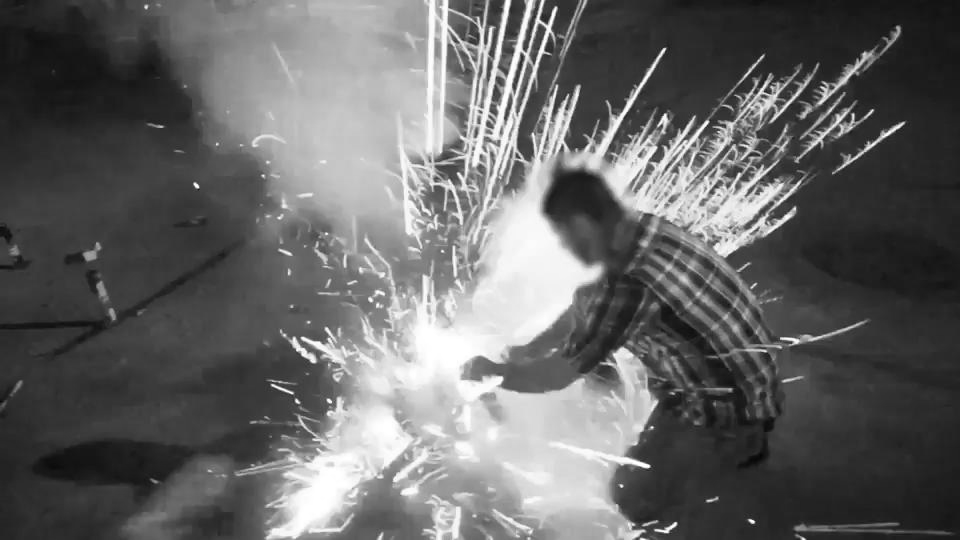
What’s wrong in this picture?

There is guy standing to close to an explosion of fireworks, he is putting himself in high risk that can result in a fatality. 

Fireworks are no joke, and you or someone else can get seriously injured while using them. “These are very risky devices that require extreme caution, Fireworks hold such a high risk for serious burns, fires, and eye injuries.

The National Safety Council and the National Fire Protection Association, recommend people avoid consumer fireworks entirely and enjoy public displays put on by professionals.


Firework Safety and Injury Prevention Picture This – Spanish

¿Qué hay de malo en esta foto?

Hay un tipo parado demasiado cerca de una explosión de fuegos artificiales, se está poniendo en alto riesgo que puede resultar en una fatalidad. 

Los fuegos artificiales no son una broma, y usted o alguien más puede resultar gravemente herido al utilizarlos. “Se trata de dispositivos muy arriesgados que requieren una precaución extrema, los fuegos artificiales presentan un alto riesgo de quemaduras graves, incendios y lesiones oculares.

El Consejo Nacional de Seguridad y la Asociación Nacional de Protección contra los Incendios recomiendan evitar por completo los fuegos artificiales de consumo y disfrutar de los espectáculos públicos organizados por profesionales.


Chemical Safety Course – Spanish

Key Takeaways:

– Identificar todos los peligros químicos del lugar de trabajo y los riesgos asociados a ellos.
– Comprender las condiciones que presentan un riesgo de exposición, las posibles vías de exposición y los factores que influyen en la reacción de un individuo ante un incidente de exposición química.
– Practicar las precauciones de seguridad, tanto por parte de los trabajadores como de los empresarios, para minimizar la exposición a los productos químicos.
– Aprender prácticas seguras de almacenamiento, transporte y eliminación de sustancias químicas peligrosas.
– Comprender las acciones de respuesta apropiadas en caso de un incidente químico.

Course Description

Este curso le enseñará a los aprendices a reconocer los riesgos químicos en el lugar de trabajo, siendo capaces de detectarlos, protegerse y comprender los programas de Hazcom existentes.


Fatigue on the Job Meeting Kit

Fatigue on the Job Safety Talk

Workers suffering from fatigue—physical and mental—are not only less productive and more prone to illness but also more distracted and thus more likely to be involved in a safety incident.

Fatigue can be broadly defined as a feeling of weariness, tiredness or lack of energy. Fatigue is a common complaint but, medically speaking, it’s recognized more as a symptom or cause of other conditions than as a condition itself. The best way to understand fatigue is along a continuum. On one end of the spectrum is the fatigue that most of us occasionally experience in the course of our lives when we get physically or mentally overburdened. This kind of fatigue isn’t serious and can usually be resolved simply and quickly, such as by getting extra rest. On the other end is a less common but more serious form of fatigue that’s symptomatic of a more chronic and disabling condition, such as major depressive disorder or chronic fatigue syndrome. This form of fatigue is an acute and/or ongoing state of tiredness that leads to mental or physical exhaustion and prevents people from functioning as usual. 

FATIGUE IS A WORKPLACE HAZARD

Everyone should be concerned about the impact of fatigue as it can be considered a form of impairment, making fatigue a Workplace Hazard. However, fatigue levels are not easily measured or quantified; therefore, it is difficult to isolate the effect of fatigue on incident and injury rates.

Work-related factors may include long work hours, long hours of physical or mental activity, insufficient break time between shifts, changes to jobs or shift rotations, inadequate rest, excessive stress, having multiple jobs, or a combination of these factors.

SYMPTOMS OF FATIGUE

Workers who are fatigued exhibit the following reactions:

  • excessive yawning;
  • irritability;
  • bloodshot eyes;
  • poor performance;
  • lack of focus

If you have identified any fatigued workers in your workplace, discuss the issue of fatigue with them as soon as practicable. You may also choose to discuss the issue with other workers who could be at risk of fatigue.

FATIGUE DANGERS – ON THE JOB 

  • Fatigue reduces your ability to make decisions and to do complex planning. Communication skills and your ability to respond to and remember directions.
  • Fatigue slows your reaction time, and your ability to respond to changes in surroundings or information provided. 
  • Fatigue lowers your productivity and performance and your ability to handle stress. It makes it hard to stay awake, increases forgetfulness and increases errors in judgment.

Experiencing one or more of these factors can make you dangerous to work with, because it increases the chances for incidents and injuries.

HOW TO PREVENT FATIGUE

One of the most important ways to protect against fatigue is to get enough rest. For most people that means seven to eight hours of sleep per night.

Try these tips for getting a good night’s sleep:

  • Go to bed and get up at same time every day, and weekends. Get a minimum of 7 hours a night.
  • Don’t eat too close to bedtime, as doing so can cause heartburn and just generally make it hard to fall asleep. Do eat a balanced diet of fruits, veggies, healthy fats, proteins and whole grains.
  • Turn off your cell phone or tablet at least one hour before you go to sleep and don’t watch TV in bed.
  • Exercise regularly, but not too close to bed time. Exercising an hour or so before bed can make it hard to fall asleep.
  • Avoid caffeine, tobacco and alcohol before bed as well. Stay away from foods and drinks that contain caffeine for at least five hours before bedtime.
  • Keep your room dark and cool. Most of us sleep better in a cooler room.

SAFE WORK PRACTICES TO PREVENT OR IMPROVE FATIGUE ISSUES

  • If your work schedule is too demanding or the hours you are working are making you feel fatigued every single day, talk with a supervisor. Sometimes responsibilities or schedules can be altered to improve productivity and safety in the workplace.
  • It is important to understand the side effects of medication before using it at work. Talk with your doctor to make sure he/she understands your work responsibilities to ensure the medication will not interfere with your performance.
  • Take care of your health. Addressing other health issues can greatly improve how you feel both at home and at work.
  • Eat a better diet. Food to humans is as gasoline is to a car– if you put dirty gas in your car it will not run well. Same goes for your body!
  • For short periods of less intense fatigue, use caffeinated beverages to help you wake up. Another option is to get up from where you are working to stretch or take a walk.

EMPLOYEES TAKEAWAY

  • Reduce the effects of on-the-job factors such as noise, vibration, chemicals and extreme temperature.

FINAL WORD

Fatigue at work doesn’t have to turn into a nightmare of injuries and accidents. Take care of yourself by getting enough sleep, eating right and knowing the factors that trigger fatigue.


Fatigue on the Job Meeting Kit – Spanish

QUÉ ESTÁ EN RIESGO

Fatiga Laboral Charla sobre seguridad

Los trabajadores que sufren de fatiga -física y mental- no sólo son menos productivos y más propensos a enfermar, sino que también están más distraídos y, por tanto, tienen más probabilidades de verse involucrados en un incidente de seguridad.

La fatiga puede definirse en términos generales como una sensación de cansancio, fatiga o falta de energía. La fatiga es una queja común, pero, desde el punto de vista médico, se reconoce más como un síntoma o una causa de otras condiciones que como una condición en sí misma. La mejor manera de entender la fatiga es a lo largo de un continuo. En un extremo del espectro está la fatiga que la mayoría de nosotros experimentamos ocasionalmente en el curso de nuestras vidas cuando nos sobrecargamos física o mentalmente. Este tipo de fatiga no es grave y suele resolverse de forma sencilla y rápida, por ejemplo, descansando más. En el otro extremo se encuentra una forma de fatiga menos común pero más grave que es síntoma de una enfermedad más crónica e incapacitante, como el trastorno depresivo mayor o el síndrome de fatiga crónica. Esta forma de fatiga es un estado de cansancio agudo y/o continuo que conduce al agotamiento mental o físico y que impide a las personas funcionar como de costumbre. 

CUÁL ES EL PELIGRO

LA FATIGA ES UN RIESGO LABORAL

Todo el mundo debería preocuparse por el impacto de la fatiga, ya que puede considerarse una forma de deterioro, lo que convierte a la fatiga en un Riesgo Laboral. Sin embargo, los niveles de fatiga no son fáciles de medir o cuantificar; por lo tanto, es difícil aislar el efecto de la fatiga en las tasas de incidentes y lesiones.

Los factores relacionados con el trabajo pueden incluir largas jornadas de trabajo, largas horas de actividad física o mental, insuficiente tiempo de descanso entre turnos, cambios de trabajo o rotación de turnos, descanso inadecuado, estrés excesivo, tener varios trabajos o una combinación de estos factores.

SÍNTOMAS DE FATIGA

Los trabajadores fatigados presentan las siguientes reacciones:

  • Bostezos excesivos;
  • Irritabilidad;
  • Ojos inyectados en sangre;
  • Bajo rendimiento;
  • Falta de concentración

 Si ha identificado a algún trabajador fatigado en su lugar de trabajo, discuta el tema de la fatiga con él tan pronto como sea posible. También puede optar por tratar el tema con otros trabajadores que puedan estar en riesgo de fatiga. 

PELIGROS DE LA FATIGA – EN EL TRABAJO 

La fatiga reduce su capacidad para tomar decisiones y realizar una planificación compleja. Las habilidades de comunicación y su capacidad para responder y recordar instrucciones.

La fatiga ralentiza su tiempo de reacción y su capacidad para responder a los cambios en el entorno o en la información proporcionada. 

La fatiga disminuye su productividad y rendimiento y su capacidad para manejar el estrés. Hace que sea difícil mantenerse despierto, aumenta los olvidos y los errores de juicio.

Experimentar uno o más de estos factores puede hacer que sea peligroso trabajar con usted, porque aumenta las posibilidades de que se produzcan incidentes y lesiones.

COMO PROTEGERSE

CÓMO PREVENIR LA FATIGA

Una de las formas más importantes de protegerse contra la fatiga es descansar lo suficiente. Para la mayoría de las personas eso significa dormir entre siete y ocho horas por noche.

Pruebe estos consejos para dormir bien:

  • Acuéstese y levántese a la misma hora todos los días, y los fines de semana. Duerme un mínimo de 7 horas por noche.
  • No coma demasiado cerca de la hora de acostarse, ya que esto puede provocar ardor de estómago y, en general, dificultar la conciliación del sueño. Sigue una dieta equilibrada de frutas, verduras, grasas saludables, proteínas y cereales integrales.
  • Apaga el móvil o la tableta al menos una hora antes de irse a dormir y no vea la televisión en la cama.
  • Haga ejercicio con regularidad, pero no demasiado cerca de la hora de acostarse. Hacer ejercicio una hora antes de acostarse puede dificultar la conciliación del sueño.
  • Evite también la cafeína, el tabaco y el alcohol antes de acostarse. Evite los alimentos y bebidas que contengan cafeína al menos cinco horas antes de acostarse.
  • Mantenga su habitación oscura y fresca. La mayoría de nosotros dormimos mejor en una habitación más fresca.

PRÁCTICAS DE TRABAJO SEGURAS PARA PREVENIR O MEJORAR LOS PROBLEMAS DE FATIGA

  • Si su horario de trabajo es demasiado exigente o las horas que trabaja le hacen sentir fatigado cada día, hable con un supervisor. A veces se pueden modificar las responsabilidades o los horarios para mejorar la productividad y la seguridad en el trabajo.
  • Es importante conocer los efectos secundarios de los medicamentos antes de utilizarlos en el trabajo. Hable con su médico para asegurarse de que entiende sus responsabilidades laborales y que la medicación no interferirá en su rendimiento.
  • Cuide su salud. Tratar otros problemas de salud puede mejorar en gran medida cómo te sientes tanto en casa como en el trabajo.
  • Lleve una mejor dieta. Los alimentos son para los seres humanos lo mismo que la gasolina para un coche: si pones gasolina sucia en tu coche, no funcionará bien. Lo mismo ocurre con tu cuerpo.
  • Para periodos cortos de fatiga menos intensos, utilice bebidas con cafeína para ayudarle a despertarse. Otra opción es levantarse del lugar donde se está trabajando para estirarse o dar un paseo.

LOS EMPLEADOS APORTAN A:

Reducir los efectos de los factores del trabajo, como el ruido, las vibraciones, los productos químicos y las temperaturas extremas.

CONCLUSIÓN

La fatiga en el trabajo no tiene por qué convertirse en una pesadilla de lesiones y accidentes. Cuídate durmiendo lo suficiente, comiendo bien y conociendo los factores que desencadenan la fatiga.

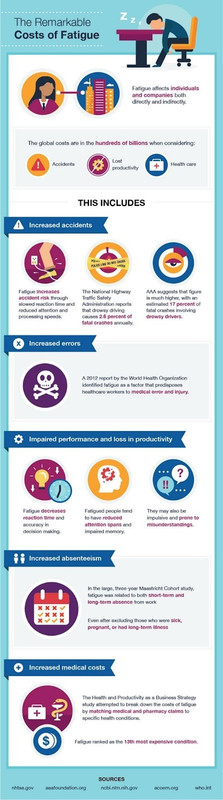

Fatigue on the Job Fatality File

Fatigue Fingered in Jet Crash

Fatigue can leave workers in a fog – which isn’t a good atmosphere for clear, safe decision-making. The crash of a 747 cargo jet at Halifax International Airport in mid-October 2004 is being blamed in part on flight crew fatigue.

Seven MK Airlines Ltd. crew members died when the big jet failed to gain sufficient altitude on takeoff, struck a berm at the end of the runway and crashed into an adjacent forest.

A Transportation Safety Board of Canada (TSB) investigation found that the speed and thrust settings selected by the crew in preparation for a flight to Spain were incorrect for the weight of the aircraft. The TSB says the crew did not receive adequate training on a computer program used to calculate takeoff velocity and necessary power for flight.

As a result the airplane was traveling about 30 knots (35 miles an hour or 56 kilometers an hour) slower than the 160 knots that would have been required for a safe takeoff with the load it was carrying.

Crew fatigue and a dark takeoff environment contributed to the crash, according to the board. It is calling for implementation of an on-board takeoff performance monitoring system “to ensure that crews of large aircraft will be alerted in time when there is not enough power to take off safely.”

Such a device does not currently exist. Since the airplane’s flight voice recorder was destroyed in the crash, investigators do not know what the crew was saying in the seconds leading to the crash.

The TSB found evidence that 12 similar accidents involving insufficient power on takeoff had resulted in 300 deaths around the world. Your workplace probably has nothing to do with airplanes, but rocket science isn’t required to see how fatigue can put your workers at risk. 


Fatigue on the Job Fatality File – Spanish

El cansancio es la causa del accidente de un avión

La fatiga puede dejar a los trabajadores sumidos en la niebla, lo que no es una buena atmósfera para tomar decisiones claras y seguras. El accidente de un avión de carga 747 en el aeropuerto internacional de Halifax a mediados de octubre de 2004 se atribuye en parte a la fatiga de la tripulación.

Siete miembros de la tripulación de MK Airlines Ltd. murieron cuando el gran reactor no ganó suficiente altitud en el despegue, chocó contra una berma al final de la pista y se estrelló en un bosque adyacente.

Una investigación de la Junta de Seguridad del Transporte de Canadá (TSB) descubrió que los ajustes de velocidad y empuje seleccionados por la tripulación en la preparación de un vuelo a España eran incorrectos para el peso de la aeronave. La TSB afirma que la tripulación no recibió una formación adecuada sobre un programa informático utilizado para calcular la velocidad de despegue y la potencia necesaria para el vuelo.

Como resultado, el avión viajaba a unos 30 nudos (35 millas por hora o 56 kilómetros por hora) más lento que los 160 nudos que se habrían requerido para un despegue seguro con la carga que llevaba.

El cansancio de la tripulación y un entorno de despegue oscuro contribuyeron al accidente, según la junta. Pide que se implante un sistema de control del rendimiento del despegue a bordo “para garantizar que las tripulaciones de los aviones grandes sean alertadas a tiempo cuando no haya suficiente potencia para despegar con seguridad”.

Actualmente no existe un dispositivo de este tipo. Dado que la grabadora de voz de vuelo del avión quedó destruida en el accidente, los investigadores no saben qué decía la tripulación en los segundos previos al accidente.

La TSB encontró pruebas de que 12 accidentes similares relacionados con la falta de potencia en el despegue habían provocado 300 muertes en todo el mundo. Probablemente su lugar de trabajo no tenga nada que ver con los aviones, pero no hace falta ser un experto en cohetes para ver cómo la fatiga puede poner en peligro a sus trabajadores.


Fatigue on the Job Stats and Facts

FACTS

  1. Fatigue is defined as being in a state of physical or mental exhaustion, which compromises both workplace safety and a worker’s ability to perform efficiently.
  2. There are three causes of fatigue: sleep loss, disruption of a person’s body clock, and prolonged mental or physical activity.
  3. Fatigue can reduce a worker’s alertness, leading to errors and an increased possibility of injury under these two conditions: either when operating equipment or vehicles, or when performing important tasks requiring considerable concentration.
  4. Seven long-term health effects of fatigue include increased risk for heart disease, high blood pressure, gastrointestinal disorders, diabetes, anxiety, depression, and reduced fertility. (Safe Work Australia)
  5. A University of Pittsburgh School of Medicine study found that fatigued workers had nearly twice the risk for injury compared to non-fatigued workers.
  6. Five symptoms indicating that a worker is experiencing fatigue include excessive yawning or falling asleep at work; impaired decision-making ability; short-term memory impairment and reduced concentration; slowed reflexes and reduced hand-eye coordination; and a noticeable decrease in one’s ability to communicate clearly.

STATS

  • According to the National Safety Council, more than 43 percent of workers are sleep-deprived. Predictably, the problem is even worse for workers who do shift work or take the night shifts – 62 percent of them complain about sleep loss.
  • Research has shown that the number of hours awake can be similar to blood alcohol levels:
    • 17 hours awake is equivalent to a blood alcohol content of 0.05
    • 21 hours awake is equivalent to a blood alcohol content of 0.08 (legal limit in Canada)
    • 24-25 hours awake is equivalent to a blood alcohol content of 0.10


Fatigue on the Job Stats and Facts – Spanish

HECHOS

  1. La fatiga se define como un estado de agotamiento físico o mental, que compromete tanto la seguridad en el trabajo como la capacidad del trabajador para rendir con eficacia.
  2. Existen tres causas de la fatiga: la pérdida de sueño, la alteración del reloj corporal de la persona y la actividad mental o física prolongada.
  3. La fatiga puede reducir el estado de alerta de un trabajador, lo que conduce a errores y a una mayor posibilidad de lesiones en estas dos condiciones: cuando se manejan equipos o vehículos, o cuando se realizan tareas importantes que requieren una concentración considerable.
  4. Entre los siete efectos de la fatiga sobre la salud a largo plazo se encuentran el aumento del riesgo de padecer enfermedades cardíacas, hipertensión arterial, trastornos gastrointestinales, diabetes, ansiedad, depresión y reducción de la fertilidad. (Safe Work Australia)
  5. Un estudio de la Facultad de Medicina de la Universidad de Pittsburgh descubrió que los trabajadores fatigados tenían casi el doble de riesgo de sufrir lesiones en comparación con los trabajadores no fatigados.
  6. Entre los cinco síntomas que indican que un trabajador sufre fatiga se encuentran el bostezo excesivo o el quedarse dormido en el trabajo; el deterioro de la capacidad de toma de decisiones; el deterioro de la memoria a corto plazo y la reducción de la concentración; la ralentización de los reflejos y la reducción de la coordinación mano-ojo; y una notable disminución de la capacidad de comunicarse con claridad.

ESTADÍSTICAS

  • Según el Consejo Nacional de Seguridad, más del 43% de los trabajadores carecen de sueño. Como es de esperar, el problema es aún peor para los trabajadores que realizan trabajos por turnos o hacen el turno de noche: el 62% de ellos se queja de la pérdida de sueño.
  • La investigación ha demostrado que el número de horas despierto puede ser similar a los niveles de alcohol en sangre:
    • 17 horas despierto equivalen a una tasa de alcohol en sangre de 0,05
    • 21 horas despierto equivale a una tasa de alcohol en sangre de 0,08 (límite legal en Canadá)
    • 24-25 horas despierto equivale a una tasa de alcohol en sangre de 0,10


Fatigue on the Job Picture This


Fatigue on the Job Picture This – Spanish


Fire Extinguishers Use and Inspection Meeting Kit

The federal portable fire extinguisher rule applies to the placement, use, maintenance, and testing of portable fire extinguishers provided for the use of employees. Employers are generally required to provide portable fire extinguishing equipment in the workplace for use in fighting incipient-stage fires. An “incipient-stage fire” means initial or beginning stage that can be controlled or extinguished by portable fire extinguishers.

ACCIDENTS WAITING TO HAPPEN 

Organizations of all kinds can take steps to reduce their chances of a fire-related accident:

  • Limit access to flammable or combustible materials, and store them in a cool, dry place—away from other materials or devices that could catch on fire.
  • Inspect electronic devices, as well as flammable and combustible materials, for damage and degradation. If something is broken or has expired, get rid of it.
  • Plan ahead. Use flammable or combustible materials in a safe, open space, and wear proper protective materials. Create an emergency action plan, and train and periodically remind employees what to do in the event of a fire.
  • Practice common-sense safety. Don’t light fireworks indoors, in crowded spaces, or during a windy day. Follow the instructions for using flammable or combustible materials. Don’t mix fire and alcohol.

Safety tips  

Use a portable fire extinguisher when the fire is confined to a small area, such as a wastebasket, and is not growing; everyone has exited the building; the fire department has been called or is being called; and the room is not filled with smoke. 

P.A.S.S. Method 

The easiest way to remember how to use a fire extinguisher is to follow the P.A.S.S. method. The PASS acronym was developed to allow people to remember the basic four steps to properly using a fire extinguisher.

P- Pull. Pull the pin. Hold the extinguisher away and release the locking mechanism.

A- Aim. Aim the stream towards the base of the fire. Spraying the flames will not put the fire out.

S- Squeeze. Squeeze the lever slowly and evenly. Pulling the lever too fast may shoot the stream from your target wasting the valuable firefighting agent.

S- Sweep. Sweep the nozzle side to side to combat the fire.

PORTABLE FIRE EXTINGUISHERS 

Portable fire extinguishers are specifically designed to fight different types of fires. The most common fire extinguisher classifications are as follows:

Class A– Solid combustibles excl. wood, metal, cloth, paper, plastics, and rubber

Class B– Flammable liquids incl. oil, gasoline, paint, and grease

Class C– Energized electrical fire (Class C fire becomes null and void if electrical source is removed)

Class D– Electrical equipment incl. outlets and appliances

Class K– Cooking oil, animal and vegetable fats, and grease

TRAINING AND EDUCATION 

  • Employers must provide an educational program to familiarize employees with the general principles of fire extinguisher use and the hazards involved with incipient stage fire fighting.
  • Provide this education when employees are first hired and once a year thereafter.
  • Train employees (who have been designated to use fire fighting equipment in the emergency action plan) in the use of the equipment.

Provide this training when employees are first given this assignment and once a year thereafter.

FIRE EXTINGUISHER LIMITATIONS

  • A dry chemical fire extinguisher such as the common red “ABC” extinguishers will reach a distance between 5 and 20 feet. It is important to be familiar with the models used in your work areas and the effective distance they can be used for.
  • A 10lb to 20lb dry chemical fire extinguisher will last anywhere from 10 to 25 seconds. Again, this depends on the model and weight you are using.
  • Fire extinguishers are only designed to fight small fires. A rule of thumb a lot of professional’s use is the size of the fire should not be any larger than the size of a small trash can.

FIRE EXTINGUISHER INSPECTION TIPS 

  • Extinguishers should be periodically checked every 30 days. There should be a formal check of all fire extinguishers onsite annually. These inspections should be documented.
  • Ensure the pressure is okay when inspecting a fire extinguisher. There is a gauge that has an arrow that should be in the green portion of the gauge. If the arrow is in the red the fire extinguisher needs to be tagged out of service until recharged.
  • Check to make sure the pin is still in place. Often times the pin is bumped out of place leaving the chance of accidental discharge occurring.
  • Look for rust on the container and ensure that the label is in good readable condition.

MORE TIPS

  • Make Fire Extinguishers Readily Available 
  • Only Use Approved Fire Extinguishers 
  • Avoid Fire Extinguishers with Carbon Tetrachloride or Chlorobromomethane 
  • Test Regularly 

FINAL WORD

It is important to know more than just where the fire extinguishers are located in your work area. Make sure you know how to properly use them in case the time comes where you need to extinguish a fire. Always make sure the fire extinguishers in your work areas are in good condition through thorough inspections.


Fire Extinguishers Use and Inspection Meeting Kit – Spanish

QUÉ ESTÁ EN RIESGO

La norma federal sobre extintores portátiles se aplica a la colocación, el uso, el mantenimiento y las pruebas de los extintores portátiles proporcionados para el uso de los empleados. Por lo general, los empleadores están obligados a proporcionar equipos portátiles de extinción de incendios en el lugar de trabajo para su uso en la lucha contra los incendios en fase incipiente. Un “incendio en fase incipiente” significa la fase inicial o de comienzo que puede ser controlada o extinguida por extintores portátiles.

CUÁL ES EL PELIGRO

ACCIDENTES A PUNTO DE OCURRIR 

Las organizaciones de todo tipo pueden tomar medidas para reducir las posibilidades de sufrir un accidente relacionado con el fuego:

  • Limite el acceso a los materiales inflamables o combustibles y guárdelos en un lugar fresco y seco, lejos de otros materiales o dispositivos que puedan incendiarse.
  • Inspeccione los dispositivos electrónicos, así como los materiales inflamables y combustibles, en busca de daños y degradación. Si algo está roto o ha caducado, deshágase de él.
  • Planifique con antelación. Utilice los materiales inflamables o combustibles en un espacio abierto y seguro, y lleve los materiales de protección adecuados. Cree un plan de acción de emergencia, y forme y recuerde periódicamente a los empleados qué deben hacer en caso de incendio.
  • Practique la seguridad de sentido común. No encienda fuegos artificiales en interiores, en espacios concurridos o durante un día de viento. Siga las instrucciones de uso de materiales inflamables o combustibles. No mezcles fuego y alcohol.

COMO PROTEGERSE

Consejos de seguridad  

Utilice un extintor portátil cuando el fuego esté confinado en una zona pequeña, como una papelera, y no esté creciendo; todo el mundo haya salido del edificio; se haya llamado o se esté llamando a los bomberos; y la habitación no esté llena de humo. 

Método P.A.S.S. 

La forma más fácil de recordar cómo utilizar un extintor es seguir el método P.A.S.S. El acrónimo PASS fue desarrollado para permitir que la gente recuerde los cuatro pasos básicos para utilizar correctamente un extintor.

P- Pull. Tire del perno. Aleje el extintor y libere el mecanismo de cierre.

A- Aim. Apunte el chorro hacia la base del fuego. Rociar las llamas no apagará el fuego.

S- Squeeze. Apriete la palanca lenta y uniformemente. Tirar de la palanca demasiado rápido puede disparar el chorro desde su objetivo, desperdiciando el valioso agente de extinción.

S- Sweep. Desplace la boquilla de lado a lado para combatir el fuego.

EXTINTORES PORTÁTILES 

Los extintores portátiles están diseñados específicamente para combatir diferentes tipos de incendios. Las clasificaciones más comunes de los extintores son las siguientes:

Clase A- Combustibles sólidos, excluyendo madera, metal, tela, papel, plásticos y caucho

Clase B- Líquidos inflamables, incluidos el aceite, la gasolina, la pintura y la grasa

Clase C- Fuego eléctrico energizado (el fuego de clase C queda anulado si se retira la fuente eléctrica)

Clase D– Equipos eléctricos, incluidos enchufes y aparatos

Clase K- Aceite de cocina, grasas animales y vegetales, y grasa

FORMACIÓN Y EDUCACIÓN 

  • Los empleadores deben proporcionar un programa educativo para familiarizar a los empleados con los principios generales del uso de extintores y los peligros que conlleva la lucha contra incendios en fase incipiente.
  • Proporcionar esta educación cuando los empleados son contratados por primera vez y una vez al año a partir de entonces.
  • Forme a los empleados (que han sido designados para utilizar el equipo de lucha contra incendios en el plan de acción de emergencia) en el uso del equipo.

Proporcione esta formación cuando los empleados reciban por primera vez esta asignación y una vez al año a partir de entonces.

LIMITACIONES DE LOS EXTINTORES

  • Un extintor de incendios químico seco, como los extintores rojos comunes “ABC”, alcanzará una distancia de entre 5 y 20 pies. Es importante estar familiarizado con los modelos que se utilizan en sus áreas de trabajo y la distancia efectiva a la que pueden ser utilizados.
  • Un extintor químico seco de 10 a 20 libras durará entre 10 y 25 segundos. Una vez más, esto depende del modelo y del peso que esté utilizando.
  • Los extintores sólo están diseñados para combatir incendios pequeños. Una regla general que utilizan muchos profesionales es que el tamaño del fuego no debe ser mayor que el de un cubo de basura pequeño.

CONSEJOS PARA LA INSPECCIÓN DE EXTINTORES 

  • Los extintores deben revisarse periódicamente cada 30 días. Se debe realizar una revisión formal de todos los extintores en el sitio anualmente. Estas inspecciones deben documentarse.
  • Asegúrese de que la presión está bien cuando inspeccione un extintor. Hay un manómetro que tiene una flecha que debe estar en la parte verde del manómetro. Si la flecha está en rojo, el extintor debe ser etiquetado como fuera de servicio hasta que se recargue.
  • Compruebe que el pasador sigue en su sitio. A menudo, el pasador se sale de su sitio, dejando la posibilidad de que se produzca una descarga accidental.
  • Busque óxido en el contenedor y asegúrese de que la etiqueta está en buenas condiciones de lectura.

MÁS CONSEJOS

  • Tenga los extintores a mano 
  • Utilice únicamente extintores homologados 
  • Evite los extintores con tetracloruro de carbono o cromobromometano 
  • Realice pruebas periódicas

CONCLUSIÓN

Es importante saber algo más que dónde se encuentran los extintores en su área de trabajo. Asegúrese de saber cómo utilizarlos correctamente en caso de que llegue el momento en que tenga que extinguir un incendio. Asegúrese siempre de que los extintores de sus áreas de trabajo estén en buen estado mediante inspecciones exhaustivas.


Fire Extinguishers Use and Inspection Fatality File

One Worker Killed, Another Injured in Manhattan Fire Extinguisher Explosion

On the morning of Wednesday, May 13, 2020, 35-year-old worker Victor Pando was killed and his 26-year-old colleague injured when a fire extinguisher exploded at the Morgan General Mail Facility at 341 Ninth Avenue in Manhattan.

The two men were injured by shrapnel that flew everywhere when the fire extinguisher exploded. Pando was struck in the neck with a piece of shrapnel; he was rushed to Lenox Hill Hospital, but tragically died of his injuries. His colleague, who was struck less severely, was transported to Bellevue Hospital. The younger worker' injuries are reported to be non-life threatening.

The two workers were recharging fire extinguishers on the fourth floor of the Morgan General Mail Facility when one of them exploded, said Department of Buildings (DOB) Press Secretary Andrew Rudansky. The two men were contractors employed by Nordest Services, LLC. The Occupational Safety and Health Administration (OSHA) is now investigating the incident and Nordest Services. According to Gothamist.com, the employer could not be reached for comment.

These men and their families are in our thoughts. We send our condolences to the family of the worker who was killed, and hope for a speedy recovery for the injured worker.

Deaths and injuries caused by explosions on a work site are rare; according to the Bureau of Labor Statistics' 2018 National Census of Fatal Occupational Injuries, there were only 115 fatal work injuries caused by fires and explosions in 2018. Clearly, however, they can still occur, and although it is not clear what exactly caused the fire extinguisher to explode in the above incident, it is always best to follow proper safety precautions to try and prevent such explosions from happening. It is important to note that fire extinguishers must comply with certain regulations in order to be considered safe for use. 


Fire Extinguishers Use and Inspection Fatality File – Spanish

Un trabajador muerto y otro herido en la explosión de un extintor en Manhattan

En la mañana del miércoles 13 de mayo de 2020, el trabajador Víctor Pando, de 35 años, murió y su compañero de 26 años resultó herido al explotar un extintor en las instalaciones de Morgan General Mail, en el número 341 de la Novena Avenida de Manhattan.

Los dos hombres resultaron heridos por la metralla que voló por todas partes cuando el extintor explotó. Pando fue alcanzado en el cuello por un trozo de metralla; fue trasladado de urgencia al hospital Lenox Hill, pero murió trágicamente a causa de sus heridas. Su compañero, que recibió un impacto menos grave, fue trasladado al hospital Bellevue. Se informa de que las lesiones del trabajador más joven no ponen en peligro su vida.

Los dos trabajadores estaban recargando extintores en el cuarto piso de las instalaciones de Morgan General Mail cuando uno de ellos explotó, dijo el secretario de prensa del Departamento de Edificios (DOB), Andrew Rudansky. Los dos hombres eran contratistas empleados por Nordest Services, LLC. La Administración de Seguridad y Salud Ocupacional (OSHA) está investigando el incidente y a Nordest Services. Según Gothamist.com, no fue posible contactar con el empleador para que hiciera comentarios.

Estos hombres y sus familias están en nuestros pensamientos. Enviamos nuestras condolencias a la familia del trabajador fallecido y esperamos una pronta recuperación del trabajador herido.

Las muertes y lesiones causadas por explosiones en un sitio de trabajo son raras; según la Oficina de Estadísticas Laborales' 2018 National Census of Fatal Occupational Injuries, solo hubo 115 lesiones laborales mortales causadas por incendios y explosiones en 2018. Claramente, sin embargo, todavía pueden ocurrir, y aunque no está claro qué causó exactamente que el extintor explotara en el incidente anterior, siempre es mejor seguir las precauciones de seguridad adecuadas para tratar de evitar que ocurran tales explosiones. Es importante tener en cuenta que los extintores deben cumplir ciertas normas para que su uso se considere seguro.


Ground Personnel and Mobile Equipment Picture This

What’s wrong in this picture?

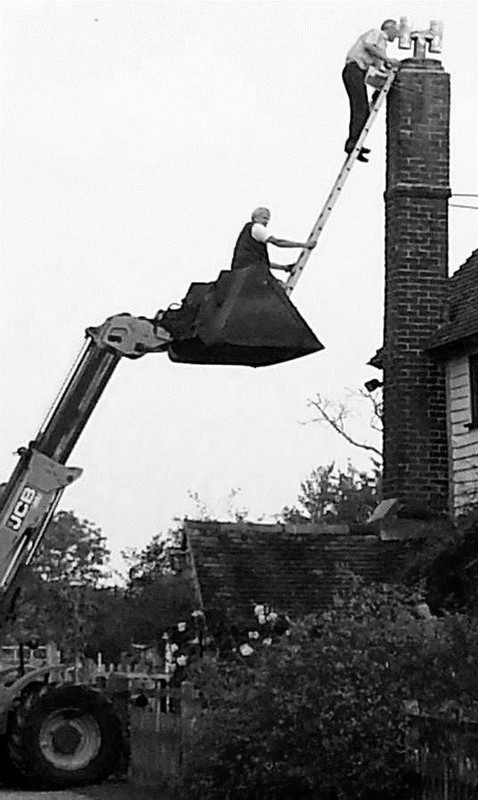
Operating and working near powered mobile equipment can potentially be very dangerous. As a result, it must only be operated by competent employees. Operators must understand the safety requirements when operating powered mobile equipment, for both their own safety and that of others working around the equipment which is clear is not happening in the picture above.

When operating powered mobile equipment, the best measure an operator can take to avoid injury or death in the event of a rollover or collision is to wear the seatbelt. In the event of a rollover, the rollover protective structure (ROPS) will act as a protective box around you and the seatbelt keeps you inside the box.


Ground Personnel and Mobile Equipment Picture This – Spanish

¿Qué hay de malo en esta imagen?

Operar y trabajar cerca de equipos móviles motorizados puede ser potencialmente muy peligroso. Por ello, sólo deben ser manejadas por empleados competentes. Los operarios deben conocer los requisitos de seguridad cuando manejan equipos móviles motorizados, tanto para su propia seguridad como para la de otras personas que trabajan cerca del equipo, lo que está claro que no ocurre en la imagen de arriba.

Cuando se maneja un equipo móvil motorizado, la mejor medida que puede tomar un operador para evitar lesiones o la muerte en caso de vuelco o colisión es usar el cinturón de seguridad. En caso de vuelco, las estructuras de protección antivuelco (ROPS) actuarán como una caja protectora a su alrededor y el cinturón de seguridad le mantendrá dentro de la caja.