HDPE Pipe Welding Stats and Facts

FACTS

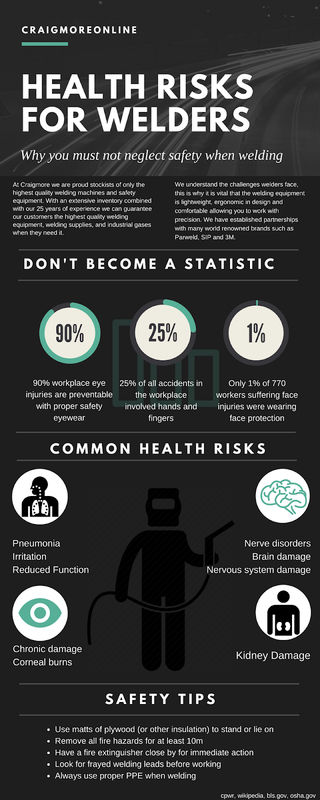
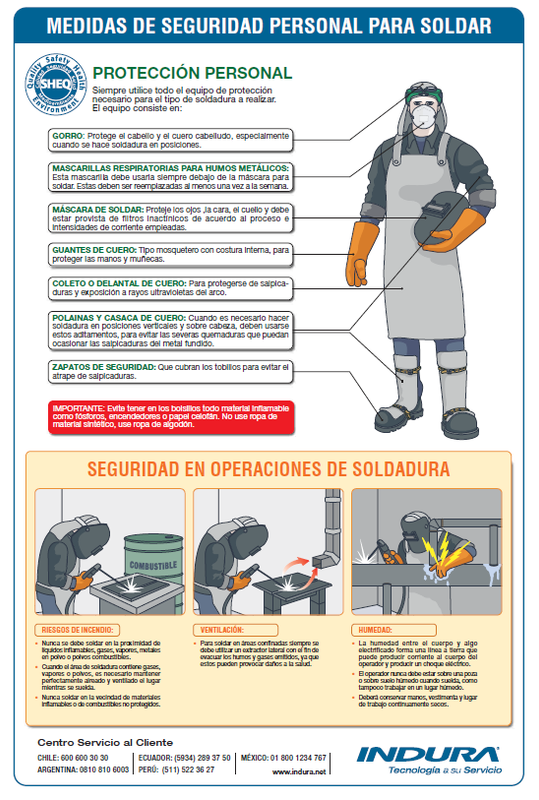
The pipe welding process has dangers resulting in the following risks:

  1. Fire and explosions (as illustrated above)
  2. Airborne contaminants
  3. Radiation
  4. Electrical risks
  5. Burns and exposure to heat
  6. Eye damage
  7. Compressed and liquefied gases
  8. Noise
  9. Lead
  10. Confined spaces
  11. Ventilation

STATS

  • Industrial Safety & Hygiene News reports that 1 in 250 construction workers will die from a welding injury. With over half a million American welders working today, we can conservatively expect 2,000 welding fatalities in our lifetime. 
  • The risks associated with workplace operations that include welding, cutting, and brazing result in the deaths of approximately 60 workers each year in the United States alone. This number translates to a risk of greater than four fatal injuries in every thousand workers over their careers.
  • The Bureau of Labor Statistics reports that over 500,000 workers are injured annually due to welding accidents. Welding is an extremely dangerous occupation, with the risk of death being more than 4 per 1000 over a career.


HDPE Pipe Welding Picture This

Source: https://www.thinglink.com


HDPE Pipe Welding Picture This – Spanish

Fuente: https://www.globaltsst.com


Cost Containment Injury Follow Up Safety Brief

Supervisors play a prominent role in accident prevention as well as effective claims follow-up and monitoring. Effective supervisory intervention after an injury can often prevent litigation, reduce time off and ensure a positive experience of care and concern for all involved. Beyond the critical roles of ensuring treatment of the injured employee and proper processing of paperwork, supervisors are also responsible for the follow-up and prompt return of the employee to productivity.

The Supervisor’s Role

The supervisor should always respond positively to the employee’s first report of injury.

  • Take time to handle the injury
  • Authorize medical attention
  • Do not judge or evaluate the validity of the injury – gather and report
  • Investigate the accident and document all pertinent

The supervisor can play an important role in bringing the injured employee back to work.

  • Keep informed of employee’s
  • Contact the employee to see how they are feeling and to determine progress of medical treatment.
  • Reassure the employee that the team needs him or her. Tell the employee how much he or she is missed.
  • Make sure the employee keeps medical appointments and is satisfied with medical
  • If necessary, discuss the case with the treating physician, including modified duty opportunities/availability and return to work

The supervisor’s attitude can make the employee’s return to work successful.

  • Make the returning employee feel welcome and glad to be back. Encourage fellow employees to follow supervisor’s
  • Provide modified duty, if indicated – clarify duties and expectations -enforce restrictions, and


Five Common Contributing Factors Picture This

If you aren’t thinking about what could go wrong every day, all day while you work, you are not completing the task safely. You must examine equipment, procedures, and the hazards that may exist. You need to focus physically and mentally on your work, no matter how many times you have done the same job in the past.


Five Common Contributing Factors Picture This – Spanish

Si no está pensando en lo que podría salir mal cada día, todo el día mientras trabaja, no está completando la tarea de forma segura. Debe examinar el equipo, los procedimientos y los peligros que puedan existir. Tiene que concentrarse física y mentalmente en su trabajo, sin importar cuántas veces haya hecho el mismo trabajo en el pasado.


Fixed Objects (Motor Vehicle Safety) Meeting Kit

FIXED OBJECTS SAFETY TALK

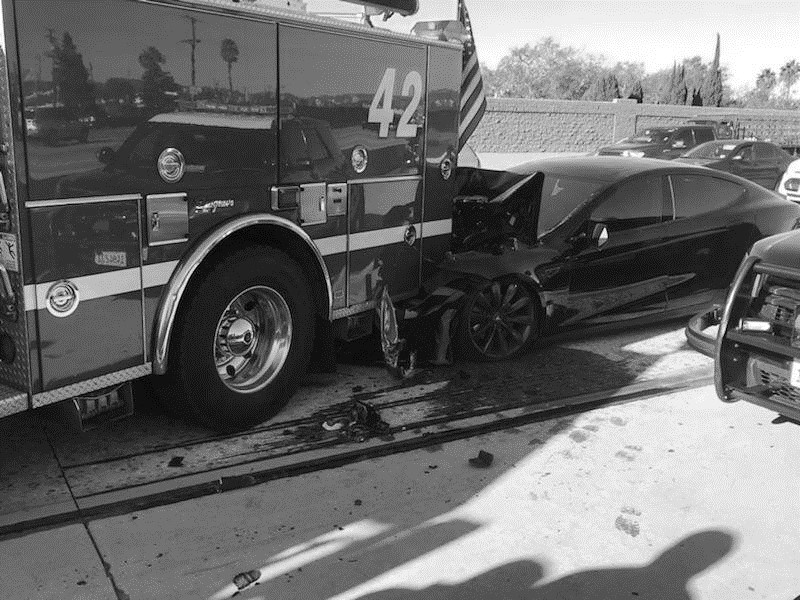
Striking fixed objects with moving equipment or vehicles is common in manufacturing settings, on construction sites, and for occupations such as delivery drivers. Striking fixed objects is 100% avoidable if the proper steps are taken to prevent these kinds of incidents. 

ELIMINATION – BEST WAY

Elimination of the exposure to the hazard is the single best way to prevent these accidents. The only way fixed objects can be struck is from the movement of the vehicle you are controlling.

Elimination can be achieved by not being near the fixed object or by not installing the fixed object in an area where it can be struck. 

CAUSES OF FIXED OBJECT COLLISIONS

Collisions with fixed objects typically occur when a single vehicle leaves the roadway and hits objects like utility poles, trees, or traffic barriers.

Driver negligence is frequently the cause of single-vehicle crashes. Some of the reasons include:

  • Intoxication
  • Speeding
  • Fatigue
  • Distracted driving

OTHER CAUSES

Manufacturer. If a vehicle’s defective part, such as the brakes, caused a driver to veer off the road into an object, the accident victims could have a products liability claim against the manufacturer of the vehicle and defective part.

Another driver. In some cases, the actions of another driver can cause a fixed-object accident even if the negligent driver’s vehicle does not collide with one crashing into the object. 

Road conditions. Some fixed-object wrecks are caused by the defective design of the road, lack of maintenance, or lack of warnings about dangerous road conditions.

PREVENT CRASHES WITH STATIONARY OBJECTS

Hitting stationary objects are preventable crashes. The key to preventing such accidents is to recognize the hazards that can lead to a collision with a stationary object and take appropriate defensive measures. 

ENVIRONMENT

Accidents involving stationary objects often occur in parking lots at truck stops, rest areas, and customer facilities. Bridges, low-hanging wires, overhangs, and signs are additional hazards if the driver is unaware of the height of his/her vehicle. 

EQUIPMENT

Large trucks have several blind spots; these spots make it difficult to manage the space around the truck even at low speeds. Also, dirty, damaged, or inoperable mirrors hinder a driver’s ability to identify hazards.

PERSONAL BEHAVIORS

Driver distraction inside the cab and out are a risk any time the vehicle is in motion. Likewise, failing to inspect the area around the truck (and above) for stationary objects in the vehicle’s path can lead to accidents.

BEFORE-PARKING

  • Slow down when entering a parking area; a crash negates all haste.
  • Avoid parking near stationary objects, if possible.
  • Focus on driving and avoid distractions, like talking on a cell phone, even at low speeds.
  • Try to time deliveries during non-peak traffic times.
  • Know the height of your truck and be mindful of low-hanging signs, overhangs, etc.

BEFORE BACKING

  • Remember GOAL; get out and look behind the truck to ensure it is clear of hazards.
  • Use a spotter and traffic control, especially if backing across traffic lanes.
  • Use your mirrors and do not rely solely on backing cameras.
  • Roll down the windows and turn off all devices to limit noise distractions.

BEFORE DRIVING AWAY

  • Walk around the truck to identify potential hazards.
  • Plan your exit route to ensure there are no hazards in your path.
  • Set out orange cones to protect your exit route if a wide turn is needed.

WHILE DRIVING

  • Know the height of your tractor and trailer.
  • When route planning, do not rely solely on GPS for route restrictions – use your eyes and sound judgment to make a safe decision, even if it means finding an alternate route.

FINAL WORD

There are many ways to prevent striking a fixed object. Elimination of work tasks near these objects or avoiding installing fixed objects near paths of travel in the first place is the best choice. A combination of safeguards is another effective method to reduce the chance of striking fixed objects.


Fixed Objects (Motor Vehicle Safety) Meeting Kit – Spanish

QUÉ ESTÁ EN RIESGO

CHARLA DE SEGURIDAD SOBRE OBJETOS FIJOS

Golpear objetos fijos con equipos o vehículos en movimiento es habitual en entornos de fabricación, en obras de construcción y en profesiones como la de conductor de reparto. Los golpes con objetos fijos son 100% evitables si se toman las medidas adecuadas para prevenir este tipo de incidentes. 

CUÁL ES EL PELIGRO

ELIMINACIÓN – LA MEJOR MANERA

La eliminación de la exposición al peligro es la mejor manera de prevenir estos accidentes. La única forma de golpear objetos fijos es por el movimiento del vehículo que se está controlando.

La eliminación se puede conseguir no estando cerca del objeto fijo o no instalando el objeto fijo en una zona donde pueda ser golpeado. 

CAUSAS DE LAS COLISIONES CON OBJETOS FIJOS

Las colisiones con objetos fijos suelen producirse cuando un vehículo se sale de la calzada y choca con objetos como postes de electricidad, árboles o barreras de tráfico.

La negligencia del conductor es frecuentemente la causa de los choques de un solo vehículo. Algunas de las razones son

  • Intoxicación
  • Exceso de velocidad
  • Fatiga
  • Conducción distraída

 OTRAS CAUSAS

Si la negligencia del conductor fue la causa de su accidente, no tendría otra parte a la que responsabilizar más que a él mismo. Sin embargo, en otros casos, la culpa puede ser de otra parte, como la siguiente

El fabricante. Si una pieza defectuosa de un vehículo, como los frenos, hizo que el conductor se saliera de la carretera y chocara contra un objeto, las víctimas del accidente podrían presentar una demanda de responsabilidad civil por productos defectuosos contra el fabricante del vehículo y de la pieza defectuosa.

Otro conductor. En algunos casos, las acciones de otro conductor pueden causar un accidente con un objeto fijo, incluso si el vehículo del conductor negligente no colisiona con el que choca con el objeto. 

Las condiciones de la carretera. Algunos accidentes con objetos fijos son causados por el diseño defectuoso de la carretera, la falta de mantenimiento o la falta de advertencias sobre las condiciones peligrosas de la carretera.

COMO PROTEGERSE

PREVENIR LOS CHOQUES CON OBJETOS INMÓVILES

Los choques con objetos estacionarios son choques evitables. La clave para prevenir este tipo de accidentes es reconocer los peligros que pueden conducir a una colisión con un objeto estacionario y tomar las medidas defensivas adecuadas. 

RECONOCER LOS PELIGROS

La clave para prevenir este tipo de accidentes es reconocer los peligros que pueden llevar a una colisión con un objeto estacionario y tomar las medidas defensivas adecuadas. 

ENTORNO

Los accidentes con objetos estacionarios suelen ocurrir en los aparcamientos de las paradas de camiones, áreas de descanso e instalaciones para clientes. Los puentes, los cables bajos, los voladizos y las señales son peligros adicionales si el conductor no es consciente de la altura de su vehículo. 

EQUIPOS

Los camiones grandes tienen varios puntos ciegos; estos puntos dificultan el manejo del espacio alrededor del camión incluso a baja velocidad. Además, los espejos sucios, dañados o inoperantes dificultan la capacidad del conductor para identificar los peligros.

COMPORTAMIENTOS PERSONALES

Las distracciones del conductor dentro y fuera de la cabina son un riesgo siempre que el vehículo esté en movimiento. Del mismo modo, no inspeccionar el área alrededor del camión (y por encima) para detectar objetos fijos en la trayectoria del vehículo puede provocar accidentes.

ANTES DE APARCAR

  • Reduzca la velocidad al entrar en una zona de aparcamiento; un choque anula toda prisa.
  • Evita aparcar cerca de objetos inmóviles, si es posible.
  • Concéntrese en la conducción y evite las distracciones, como hablar por teléfono móvil, incluso a baja velocidad.
  • Intente programar las entregas durante las horas de menor tráfico.
  • Conozca la altura de su camión y tenga en cuenta las señales bajas, los voladizos, etc.

ANTES DE RETROCEDER

  • Recuerde la META; bájese y mire detrás del camión para asegurarse de que está libre de peligros.
  • Utilice un observador y el control del tráfico, especialmente si retrocede a través de los carriles de tráfico.
  • Utilice los retrovisores y no confíe únicamente en las cámaras de marcha atrás.
  • Baje las ventanillas y apague todos los dispositivos para limitar las distracciones por ruido.

ANTES DE CONDUCIR

  • Camine alrededor del camión para identificar posibles peligros.
  • Planifique su ruta de salida para asegurarse de que no hay peligros en su camino.
  • Coloque conos naranjas para proteger su ruta de salida si es necesario realizar un giro amplio.

DURANTE LA CONDUCCIÓN

  • Conozca la altura de su tractor y su remolque.
  • Cuando planifique la ruta, no confíe únicamente en el GPS para las restricciones de la ruta – utilice sus ojos y su buen juicio para tomar una decisión segura, incluso si esto significa encontrar una ruta alternativa.

CONCLUSIÓN

Hay muchas formas de evitar chocar con un objeto fijo. La mejor opción es eliminar las tareas de trabajo cerca de estos objetos o evitar la instalación de objetos fijos cerca de las trayectorias de desplazamiento. Una combinación de medidas de protección es otro método eficaz para reducir la posibilidad de golpear objetos fijos.

Fixed Objects (Motor Vehicle Safety) Fatality File

Man dies of complications 2 years after Washington Park crash

An Englewood man died from injuries sustained in a crash two years ago in Washington Park on the South Side.

Carlos Jordan, 22, was pronounced dead at 8:30 a.m. Wednesday, according to the Cook County medical examiner’s office.

He was in a vehicle that slammed into a fixed object about 2:55 a.m. Jan. 25, 2018, at 50 W. Garfield Blvd., the medical examiner’s office said.

Autopsy results released Thursday found he died of complications of multiple injuries from the crash and ruled his death an accident, the medical examiner’s office said.

Chicago police could not immediately provide details on the crash.


Fixed Objects (Motor Vehicle Safety) Fatality File – Spanish

Un hombre muere por complicaciones 2 años después de un accidente en Washington Park

Un hombre de Englewood murió a causa de las lesiones sufridas en un accidente hace dos años en Washington Park en el lado sur.

Carlos Jordan, de 22 años, fue declarado muerto a las 8:30 de la mañana del miércoles, según la oficina del médico forense del condado de Cook.

Él estaba en un vehículo que se estrelló contra un objeto fijo alrededor de las 2:55 a.m. del 25 de enero de 2018, en el 50 W. Garfield Blvd., dijo la oficina del examinador médico.

Los resultados de la autopsia publicados el jueves encontraron que murió por complicaciones de múltiples lesiones del choque y dictaminaron que su muerte fue un accidente, dijo la oficina del médico forense.

La policía de Chicago no pudo proporcionar inmediatamente detalles sobre el accidente.


Fixed Objects (Motor Vehicle Safety) Stats and Facts

FACTS

  1. When a driver swerves off the road and hits a tree, he will likely suffer injuries and face increased insurance rates. In these kinds of accidents, known as single-vehicle crashes, fault is typically placed on the driver.
  2. Accidents with fixed objects and animals outside the central of the driver.
    • 20 percent of motor vehicle crash deaths result from a vehicle leaving the roadway and hitting a fixed object alongside the road. 
    • Trees, utility poles, and traffic barriers are the most common objects struck. 
    • Half of the deaths in fixed object crashes occur at night. 
    • Alcohol is a frequent contributing factor. 
    • Motorists also run off the road because of excessive speeds, falling asleep, inattention or poor visibility.

STATS

  • Motor-vehicle-related deaths occur more often in collisions between motor vehicles than any other type of incident, fixed object crashes represented less than half of the total in 2018 (42%). 
  • Collisions between a motor vehicle and a fixed object were the next most common type, with nearly 27% of deaths, followed by pedestrian incidents and non-collisions (rollovers, etc.).
  • Collisions between motor vehicles accounted for less than half of motor-vehicle fatalities, fixed objects crash represented nearly 79% of injuries, 74% of injury crashes, and 72% of all incidents.
  • Single-vehicle crashes involving collisions with fixed objects, pedestrians, and non-collisions accounted for a greater proportion of fatalities and fatal crashes compared to less serious crashes. These three crash types made up 55% of fatalities and 57% of fatal crashes, but only 25% or less of injuries, injury crashes, or all crashes.
  • Collisions between motor vehicles, angle collisions cause the greatest number of deaths (about 7,400 in 2018).


Fixed Objects (Motor Vehicle Safety) Stats and Facts – Spanish

HECHOS

  1. Cuando un conductor se desvía de la carretera y choca contra un árbol, es probable que sufra lesiones y tenga que hacer frente a un aumento de las tarifas del seguro. En este tipo de accidentes, conocidos como choques de un solo vehículo, la culpa suele recaer en el conductor.
  2. Accidentes con objetos fijos y animales ajenos a la central del conductor.
  3. El 20 por ciento de las muertes por accidente de tráfico se deben a que un vehículo se sale de la calzada y choca contra un objeto fijo situado junto a la carretera. 
  4. Los árboles, los postes de servicios públicos y las barreras de tráfico son los objetos más comunes con los que se choca. 
  5. La mitad de las muertes en choques contra objetos fijos ocurren de noche. 
  6. El alcohol es un factor que contribuye con frecuencia. 
  7. Los automovilistas también se salen de la carretera por exceso de velocidad, por quedarse dormidos, por falta de atención o por mala visibilidad.

ESTADÍSTICAS

  • Las muertes relacionadas con los vehículos de motor se producen con más frecuencia en las colisiones entre vehículos de motor que en cualquier otro tipo de incidente, las colisiones con objetos fijos representaron menos de la mitad del total en 2018 (42%). 
  • Las colisiones entre un vehículo de motor y un objeto fijo fueron el siguiente tipo más común, con casi el 27% de las muertes, seguido de los incidentes con peatones y las no colisiones (vuelcos, etc.).
  • Las colisiones entre vehículos de motor representaron menos de la mitad de las muertes de vehículos de motor, los choques con objetos fijos representaron casi el 79% de las lesiones, el 74% de las colisiones con heridos y el 72% de todos los incidentes.
  • Las colisiones de un solo vehículo con objetos fijos, los peatones y las no colisiones representaron una mayor proporción de víctimas mortales y choques mortales en comparación con las colisiones menos graves. Estos tres tipos de colisiones representaron el 55% de las víctimas mortales y el 57% de las colisiones mortales, pero sólo el 25% o menos de los heridos, las colisiones con heridos o todas las colisiones.
  • Las colisiones entre vehículos de motor, las colisiones en ángulo causan el mayor número de muertes (alrededor de 7.400 en 2018).


Fixed Objects (Motor Vehicle Safety) Picture This

What’s wrong in this picture? 

Accidents involving stationary objects often occur in parking lots at truck stops, rest areas, and customer facilities. Bridges, low-hanging wires, overhangs, and signs are additional hazards if the driver is not unaware of the height of his/her vehicle. Likewise, adverse weather affects visibility and a driver’s ability to identify hazards. A critical factor in accidents involving stationary objects is driver behavior. Distractions inside the cab and out are a risk any time the vehicle is in motion. Likewise, failing to inspect the area around the truck (and above) for stationary objects in the vehicle’s path can lead to accidents.

When you backing up remember GOAL; get out and look behind the truck to ensure it is clear of hazards, use a spotter and traffic control, especially if backing across traffic lanes, use your mirrors and do not rely solely on backing cameras, and, roll down the windows and turn off all devices to limit noise distractions.


Fixed Objects (Motor Vehicle Safety) Picture This – Spanish

¿Qué hay de malo en esta imagen?

Los accidentes en los que están implicados objetos fijos ocurren a menudo en los aparcamientos de las paradas de camiones, áreas de descanso e instalaciones para clientes. Los puentes, los cables bajos, los salientes y las señales son peligros adicionales si el conductor no es consciente de la altura de su vehículo. Asimismo, las condiciones meteorológicas adversas afectan a la visibilidad y a la capacidad del conductor para identificar los peligros. Un factor crítico en los accidentes con objetos fijos es el comportamiento del conductor. Las distracciones dentro y fuera de la cabina son un riesgo siempre que el vehículo esté en movimiento. Del mismo modo, no inspeccionar el área alrededor del camión (y por encima) en busca de objetos estacionarios en la trayectoria del vehículo puede provocar accidentes.

Cuando dé marcha atrás, recuerde que debe salir y mirar detrás del camión para asegurarse de que no hay peligros, utilizar un observador y un control de tráfico, especialmente si da marcha atrás a través de los carriles de tráfico, utilizar los espejos y no confiar únicamente en las cámaras de marcha atrás, y bajar las ventanillas y apagar todos los dispositivos para limitar las distracciones por ruido.


Habits and Safety Meeting Kit

HABITS AND SAFETY

Habits are the small decisions you make and actions you perform every day. According to researchers at Duke University, habits account for about 40 percent of our behaviors on any given day. 

Getting promoted at work or making crucial achievements in your career doesn’t just happen or fall into your lap. Many times, everything you attain needs to be earned and worked for. Earning your success means committing yourself to hard work, a great attitude, and dedication. For this reason, it’s important to develop the right habits at work.

HABITS – HOW THEY WORK

Look at habits as three-pronged process. The first part is the trigger, the second is the routine or behavior itself, and the third is the reward.

Examples

You are a welder and every single day you JSA, but many days there are times you choose not to lower your helmet while welding. Why do you choose to follow one safety procedure but not the other? Maybe you complete your JSA every day because you have to turn it in at the end of the day and you have learned that it gets reviewed. The reward would be not getting disciplined by a supervisor so you choose to do the JSA every day. On the other hand choose not to lower your welding helmet because it is hard to see trough and you know supervisors rarely enter your work area. The reward is that you feel it is quicker to do the task, you can see better, and you have not been injured yet. In your mind there is no consequence that will most likely come that is more negative than the reward you receive from not putting the helmet down so you continue the behavior.

HABITS OF PEOPLE HIGHLY SUCCESSFUL AT WORK

Here are some of the habits of people who are highly successful at work.

  • Scheduling is Everything

Scheduling means keeping to a set time and not deviating from what should be accomplished. Successful people know there is no room to delay what has to be done now.

  • Prioritize

They focus on being excellent at what they do. They do not multitask. Knowing that multitasking often gets in the way of productivity, successful people rather prioritize and eliminate what will not gear them towards their success.

  • Don’t Take Yourself Seriously

Rather than focus on their flaws, they do well to get better at what they do by engaging in more work. 

  • Plan

Successful people know how to plan. They make it a habit to plan their activities. 

  • Accountability

Successful people hold themselves accountable for how their time is spent. 

  • Focus

They understand how important the deep and rigorous task could affect their success, so they throw their energy at their top priorities first. 

  • Exercise Regularly

When your body feels good, so does your mind. Getting exercise regularly helps you focus, gives you an energy.

  • Get Enough Sleep

Using electronics while lying in bed, eating foods high in sugar before sleeping, or maintaining high stress levels throughout the day can all get in the way of a good night’s sleep. 

  • Keep a Positive Attitude

Maintain a positive attitude and see solutions rather than problems, opportunities rather than failures. 

  • Grateful

Successful people boost their self esteem and self worth by appreciating the people around them. They can say thank you and show appreciation for anything good they have received. 

THINK HAPPY-TAKEWAYS

To ease your stress, work on your personal habits. You might need to get more sleep, eat more healthy foods, and get into a good exercise routine. If managing your stress doesn’t boost your positivity as much as you had hoped, try the following:

  • Smile.
  • Change the way you think about things. 
  • Before you complain, pause. 
  • Anticipate problems and plan how you’ll respond to them. 

FINAL WORD

Pay attention to the habits you hold on to and how they affect you daily. How many of these habits are positive ones and how many are negative? Look at the choices you make at work and if they lead to negative behaviors then look at changing them. By addressing the trigger or experiencing a different reward for your behaviors you may find a way to change bad habits.


Habits and Safety Meeting Kit – Spanish

QUÉ ESTÁ EN RIESGO

HÁBITOS Y SEGURIDAD

Los hábitos son las pequeñas decisiones que toma y las acciones que realiza cada día. Según los investigadores de la Universidad de Duke, los hábitos representan alrededor del 40% de nuestros comportamientos en un día cualquiera. 

Conseguir un ascenso en el trabajo o alcanzar logros cruciales en su carrera no es algo que ocurra o caiga en sus manos. Muchas veces, todo lo que se consigue hay que ganárselo y trabajar por ello. Ganarse el éxito significa comprometerse a trabajar duro, tener una gran actitud y dedicación. Por eso es importante desarrollar los hábitos adecuados en el trabajo.

CUÁL ES EL PELIGRO

HÁBITOS – CÓMO FUNCIONAN

Considere los hábitos como un proceso de tres partes. La primera parte es el desencadenante, la segunda es la rutina o el comportamiento en sí, y la tercera es la recompensa.

Ejemplos

Usted es soldador y todos los días se somete a una prueba de seguridad, pero muchos días decide no bajarse el casco mientras suelda. ¿Por qué elige seguir un procedimiento de seguridad y no el otro? Tal vez, porque tienes que entregar su JSA al final del día y ha aprendido que se revisa. La recompensa sería no ser disciplinado por un supervisor, por lo que elige hacer el JSA todos los días. Por otro lado, elige no bajarse la careta de soldador porque es difícil ver a través de ella y sabes que los supervisores rara vez entran en su área de trabajo. La recompensa es que crees que es más rápido hacer la tarea, puedes ver mejor y aún no se ha lesionado. En su mente no hay ninguna consecuencia que probablemente venga que sea más negativa que la recompensa que recibe por no ponerse el casco, así que continúa con el comportamiento.

COMO PROTEGERSE

HÁBITOS DE LAS PERSONAS DE GRAN ÉXITO EN EL TRABAJO

Estos son algunos de los hábitos de las personas altamente exitosas en el trabajo.

  • La programación lo es todo

Programar significa mantener un tiempo establecido y no desviarse de lo que se debe realizar. Las personas de éxito saben que no hay lugar para retrasar lo que hay que hacer ahora.

  • Priorizar

Se centra en ser excelente en lo que hace. No realiza múltiple tarea. Sabiendo que la multitarea a menudo se interpone en el camino de la productividad, las personas de éxito prefieren priorizar y eliminar lo que no les orienta hacia su éxito.

  • No  tomarse en serio a sí mismos

En lugar de centrarse en sus defectos, haga bien en mejorar en lo que hace dedicándose a más trabajo. 

  • Planificar

Las personas con éxito saben planificar. Tienen el hábito de planificar sus actividades.

  • Rendición de cuentas

Las personas de éxito se responsabilizan de cómo emplean su tiempo. 

  • Enfocar

Entienda la importancia de la tarea profunda y rigurosa que podría afectar su éxito, por lo que lanza su energía a sus principales prioridades primero. 

  • Hacer ejercicio con regularidad

Cuando su cuerpo se siente bien, también lo hace su mente. Hacer ejercicio regularmente le ayuda a concentrarse, le da energía.

  • Dormir lo suficiente

Usar aparatos electrónicos mientras se está en la cama, comer alimentos con alto contenido de azúcar antes de dormir o mantener altos niveles de estrés a lo largo del día pueden obstaculizar una buena noche de sueño. 

  • Mantener una actitud positiva

Mantenga una actitud positiva y vea soluciones en lugar de problemas, oportunidades en lugar de fracasos. 

  • Agradecer

Las personas con éxito aumentan su autoestima y su valor personal apreciando a las personas que les rodean. Saben dar las gracias y mostrar aprecio por todo lo bueno que han recibido.

PENSAR EN LA FELICIDAD

Para aliviar el estrés, trabaje en sus hábitos personales. Puede que necesite dormir más, comer más alimentos saludables y adoptar una buena rutina de ejercicios. Si la gestión del estrés no aumenta su positividad tanto como esperaba, pruebe lo siguiente:

  • Sonría.
  • Cambie su forma de pensar sobre las cosas. 
  • Antes de quejarse, haga una pausa. 
  • Anticípate  los problemas y planifique cómo va a responder a ellos.

CONCLUSIÓN

Preste atención a los hábitos a los que se aferra y a cómo le afectan diariamente. ¿Cuántos de estos hábitos son positivos y cuántos son negativos? Fíjese en las decisiones que toma en el trabajo y, si se llevan a comportamientos negativos, busca cómo cambiarlos. Si aborda el desencadenante o experimenta una recompensa diferente por sus comportamientos, puede encontrar una forma de cambiar los malos hábitos.


Habits and Safety Fatality File

He had no history of heart problems. He walked his dog regularly and worked a physically demanding job as a construction worker, according to his doctors.

Then, in January 2019, he collapsed at a McDonald’s and died.

The likely culprit? Black licorice, according to the doctors who treated him and who this week published their findings about the unusual case in The New England Journal of Medicine.

The report said the man, an unidentified 54-year-old from Massachusetts, had consumed one to two large bags of black licorice a day for three weeks. That habit caused his potassium levels to drop precipitously, prompting a cardiac arrest, according to the study. He never regained consciousness after his collapse and died about 24 hours after he arrived at Massachusetts General Hospital.

“We almost didn’t believe it when we figured it out,” said Dr. Jacqueline B. Henson, who treated the man while she was a resident at the hospital. “We were all shocked and surprised.”


Habits and Safety Fatality File – Spanish

No tenía antecedentes de problemas cardíacos. Paseaba a su perro con regularidad y tenía un trabajo físicamente exigente como trabajador de la construcción, según sus médicos.

Luego, en enero de 2019, se desplomó en un McDonald’s y murió.

¿El probable culpable? El regaliz negro, según los médicos que lo trataron y que esta semana publicaron sus hallazgos sobre el inusual caso en The New England Journal of Medicine.

El informe dice que el hombre, de 54 años de edad no identificados de Massachusetts, había consumido una o dos bolsas grandes de regaliz negro al día durante tres semanas. Ese hábito hizo que sus niveles de potasio descendieran precipitadamente, provocando una parada cardíaca, según el estudio. Nunca recuperó la conciencia tras el colapso y murió unas 24 horas después de llegar al Hospital General de Massachusetts.

“Casi no nos lo creímos cuando lo descubrimos”, dijo la doctora Jacqueline B. Henson, que trató al hombre mientras era residente en el hospital. “Todos estábamos conmocionados y sorprendidos”.


Habits and Safety Stats and Facts

FACTS

5 Interesting Facts About Habits

  1. Habits are the ultimate energy saver
  2. Over 40 percent of what you do is habitual
  3. It takes, on average, around 66 days to change a habit
  4. You never forget a habit
  5. Habits are relicts of your past goals

STATS

  • Dietary Risks

The total number of deaths caused by dietary risks in the U.S. is 559,000.

  • Tobacco Smoke

The total number of deaths caused by tobacco smoke in the U.S. is 447,000.

  • High BMI (BODY MASS INDEX)

The total number of deaths caused by high BMI in the U.S. is 335,000.

  • High Sytolic Blood Pressure

The total number of deaths caused by high blood pressure in the U.S. is 421,000.

  • Diabetes

The total number of deaths caused by diabetes in the U.S. is 246,000.

  • High Cholesterol

The total number of deaths caused by high cholesterol in the U.S. is 174,000.

  • Alcohol and Drug Use

The total number of deaths caused by alcohol and drug use in the U.S. is 159,000.

  • Low Physical Activity

The total number of deaths caused by low physical activity in the U.S. is 145,000.


Habits and Safety Stats and Facts – Spanish

HECHOS

5 datos interesantes sobre los hábitos

  1. Los hábitos son el máximo ahorrador de energía
  2. Más del 40 por ciento de lo que haces es habitual
  3. Se tarda, de media, unos 66 días en cambiar un hábito
  4. Nunca se olvida un hábito
  5. Los hábitos son reliquias de tus objetivos pasados

ESTADÍSTICAS

  • Riesgos alimentarios

El número total de muertes causadas por riesgos dietéticos en los Estados Unidos es de 559.000.

  • Humo de tabaco

El número total de muertes causadas por el humo del tabaco en EE.UU. es de 447.000.

  • IMC elevado (índice de masa corporal)

El número total de muertes causadas por un IMC elevado en EE.UU. es de 335.000.

  • Presión arterial sistólica alta

El número total de muertes causadas por la presión arterial alta en EE.UU. es de 421.000.

  • Diabetes

El número total de muertes causadas por la diabetes en EE.UU. es de 246.000.

  • Colesterol alto

El número total de muertes causadas por el colesterol alto en EE.UU. es de 174.000.

  • Consumo de alcohol y drogas

El número total de muertes causadas por el consumo de alcohol y drogas en EE.UU. es de 159.000.

  • Baja actividad física

El número total de muertes causadas por la baja actividad física en EE.UU. es de 145.000.


Habits and Safety Picture This

What’s wrong in this picture?

Office workers are at lower risk for workplace injuries than most, but it’s still important to talk about safety with office employees. In this case there is an office worker who looks distracted when working and his desk is dirty, messy and with junk food on it. Lack of awareness and lack of cleaning is visualizing in this situation.

A safe work environment is essential for the wellbeing of employees. Being aware of hazards in the workplace and learning office safety tips goes a long way toward preventing accidents.

Slips and falls are the most frequent cause of injuries in the workplace, and people working in an office are twice as likely to be injured by falling than people who are working in other types of workplaces. Keeping alert and thinking ahead can help minimize the risk.


Habits and Safety Picture This – Spanish

¿Qué hay de malo en esta foto?

Los trabajadores de oficina corren menos riesgo de sufrir lesiones laborales que la mayoría, pero sigue siendo importante hablar de seguridad con los empleados de oficina. En este caso hay un oficinista que parece distraído cuando trabaja y su mesa está sucia, desordenada, con comida y basura encima. La falta de concienciación y de limpieza se visualiza en esta situación.

Un entorno de trabajo seguro es esencial para el bienestar de los empleados. Ser consciente de los peligros en el lugar de trabajo y aprender consejos de seguridad en la oficina contribuye en gran medida a prevenir accidentes.

Los resbalones y las caídas son la causa más frecuente de lesiones en el lugar de trabajo, y las personas que trabajan en una oficina tienen el doble de probabilidades de sufrir lesiones por caídas que las personas que trabajan en otros tipos de lugares de trabajo. Mantenerse alerta y pensar con antelación puede ayudar a minimizar el riesgo.


Alcohol Use Meeting Kit

WHAT’S AT STAKE

Alcohol use and abuse in the workplace can vary greatly by industry and setting. Drinking at work can cause a multitude of other problems for employees, employers and their customers. 

The availability of alcohol in the workplace environment can make a big difference in how much is consumed, as well as employee supervision and accountability.

WHAT’ S THE DANGER

NEGATIVE EFFECTS OF ALCOHOLISM IN THE WORKPLACE

Your drinking habits can affect companies, regardless of how large or small the organization may be.  Drinking not only increases the possibility of employees getting injured, it can also lead to more on-the-job accidents. Additionally, alcohol can cause a lack of concentration and coordination in an your work performance. This reduces productivity, which in turn impacts business goals and objectives.

PERFORMANCE PROBLEMS

  • Missed deadlines
  • Careless or sloppy work or incomplete assignments
  • Production quotas not met
  • Many excuses for incomplete assignments or missed deadlines
  • Faulty analysis

BEHAVIOR AT WORK

The appearance of being inebriated or under the influence of alcohol might include:

  • The smell of alcohol
  • Staggering, or an unsteady gait
  • Bloodshot eyes
  • Smell of alcohol on the breath
  • Mood and behavior changes such as excessive laughter and inappropriate loud talk
  • Excessive use of mouthwash or breath mints
  • Avoidance of supervisory contact, especially after lunch
  • Tremors
  • Sleeping on duty

HOW TO PROTECT YOURSELF

WORKPLACE HELP

A company EAP is one of the most efficient ways to combat alcohol, as well as other substance-abuse problems, in the workplace. The program helps both employees and their families’ access the resources needed for a successful recovery.

FINAL WORD

If you are going to drink, it is important to do so responsibly. A spilt second decision under the influence of alcohol can change your entire life. Over the long term, alcohol abuse will negatively affect your health.  Think about your health, your life, and your family before you drink the drink that puts you over the edge.


Hand Safety and Injury Prevention Meeting Kit

Hand Safety and Injury Prevention Safety Talk

We use our hands for virtually every task we do at work. Keeping our hands and fingers out of harm’s way at work is critical. A serious injury to an individual’s hands or fingers results in a huge negative impact on their ability to work and overall quality of life. While gloves are the most common form of PPE found in the workplace, hand injuries are still the second leading type of injury on the job.

The most common cause of hand injuries in the workplace today is human error. That’s right… not lack of personal protective hand coverage, not faulty machines, not environmental issues. Your own personal mistakes.

Even the most skilled and experienced workers are susceptible to hand-related work injuries.  Human error doesn’t mean we can’t handle the job, but it does mean we have a tendency to grow complacent and get distracted while working.  Complacency and distraction are dangerous habits that lead to numerous work-related injuries each year.

TYPE OF HAND INJURY PREVENTION SHOULD YOU FOCUS ON

The most common hand injuries are lacerations and punctures. These are often hand tool injuries caused by cutting tools.

Other common hand and finger injuries to watch for include:

  • Smashes, pinches, crushes
  • Overuse
  • Avulsions and detachments
  • Abrasions and burns
  • Impact from trips and falls

PROTECTION

There is a myriad of ways to protect hands in the workplace.

  • Wear Personal Protective Equipment (PPE)

Donning personal protective equipment (PPE) is a great a way to stay safe at work. To protect working hands, wearing proper gloves is a necessity. 

  • Heat Resistant: These gloves provide protection against burns and flammable surfaces.
  • Cut Resistant: These are commonly used when working with knives. They prevent punctures and cuts to the hands.
  • Non-Conductive: Thicker non-conductive gloves are worn by electricians to protect themselves against low-voltage electricity.
  • Chemical Gloves: These gloves provide much-needed protection against solvents, acids, oils, and caustic materials. Neoprene, nitrile, latex, and vinyl are all examples of materials that offer chemical protection.
  • Implement Engineering Controls

Engineering controls are another way of ensuring safety in high-risk work environments. Oftentimes, physical safety guards are put into place. These are built into machines with the objective of protecting a worker’s hands from pinch points, rotating parts, and sharp objects. In addition, man-made ergonomic engineering controls are designed to put less strain on wrists, fingers, and hands.

Moreover, engineering controls are important when it comes to hand safety in the workplace. Sensors, light beams, and switches are perfect for ensuring that a worker’s hands aren’t in close proximity to dangerous equipment.

  • Utilize Administrative Controls

Administrative controls come in handy when it’s impossible to safely implement engineering controls. It’s vital that you introduce proper hand injury prevention training to your team. Some examples of administrative controls include:

  • Safety training
  • Warning signs
  • Lock and tag rules
  • Product substitution
  • Designing with ergonomic principles
  • Solid Safety Training

Make sure employees are properly and thoroughly trained when it comes to protecting their hands is crucial. In addition, having hand and finger injury prevention campaign materials readily available for your workers is a must. 

SAFE WORK PRACTICES

  • Use tools to remove your hands from the line of fire when doing a work task that could result in injury to your hands or fingers. Using Hand Safety Toolbox Talktools such as push sticks when using a table saw is an example that removes your hands from the line of fire.
  • Avoid using fixed open blade knives. There are safety knives that limit the length of the blade exposed. They also have a safety feature that retracts the blade when pressure is let off the handle or switch that controls the blade.
  • Never put your hand in an area where you cannot see it.
  • Always wear the proper gloves for whatever work task you are doing. Understand the limitations of your gloves and what work tasks they are appropriate for.
  • Never work on an energized piece of equipment. Lock and tag out the equipment to ensure there will not be unintentional start up while you are working on the equipment.

FINAL WORD

Next time you are doing a simple task at home such as setting the table for dinner, getting ready in the morning, or cleaning- try doing the task with one or two less fingers. It sounds like a silly exercise, but this can help put into perspective how hard it would be to complete tasks without some of our fingers. It is easy to take for granted our health and abilities when we have had them for so long.


Hand Safety and Injury Prevention Meeting Kit – Spanish

QUÉ ESTÁ EN RIESGO

Charla sobre la seguridad de las manos y la prevención de lesiones

Utilizamos las manos para prácticamente todas las tareas que realizamos en el trabajo. Mantener nuestras manos y dedos fuera de peligro en el trabajo es fundamental. Una lesión grave en las manos o los dedos de una persona tiene un enorme impacto negativo en su capacidad de trabajo y en su calidad de vida en general. Aunque los guantes son la forma más común de EPP en el lugar de trabajo, las lesiones en las manos siguen siendo el segundo tipo de lesión en el trabajo.

CUÁL ES EL PELIGRO

La causa más común de las lesiones en las manos en el lugar de trabajo hoy en día es el error humano. Así es… no la falta de cobertura de protección personal para las manos, ni las máquinas defectuosas, ni los problemas ambientales. Son los propios errores personales.

Incluso los trabajadores más cualificados y experimentados son susceptibles de sufrir lesiones laborales relacionadas con las manos.  Los errores humanos no significan que no podamos realizar el trabajo, pero sí que tenemos tendencia a ser complacientes y a distraernos mientras trabajamos.  La complacencia y la distracción son hábitos peligrosos que conducen a numerosas lesiones laborales cada año.

TIPO DE PREVENCIÓN DE LESIONES EN LAS MANOS EN QUE DEBE CENTRARSE

Las lesiones más comunes en las manos son las laceraciones y los pinchazos. Suelen ser lesiones causadas por herramientas cortantes.

Otras lesiones comunes en manos y dedos a las que hay que prestar atención son:

  • Golpes, pellizcos, aplastamientos
  • Uso excesivo
  • Avulsiones y desprendimientos
  • Abrasiones y quemaduras
  • Impactos por tropiezos y caídas

COMO PROTEGERSE

PROTECCIÓN

Hay un sinfín de formas de proteger las manos en el lugar de trabajo.

  • Utilice equipos de protección individual (EPP)

El uso de equipos de protección individual (EPP) es una buena manera de mantenerse seguro en el trabajo. Para proteger las manos en el trabajo, es necesario usar guantes adecuados. 

  • Resistentes al calor: Estos guantes proporcionan protección contra las quemaduras y las superficies inflamables.
  • Resistentes a los cortes: Se utilizan habitualmente cuando se trabaja con cuchillos. Evitan los pinchazos y cortes en las manos.
  • No conductores: Los electricistas utilizan guantes no conductores más gruesos para protegerse de la electricidad de baja tensión.
  • Guantes químicos: Estos guantes proporcionan la protección necesaria contra disolventes, ácidos, aceites y materiales cáusticos. El neopreno, el nitrilo, el látex y el vinilo son ejemplos de materiales que ofrecen protección química.
  • Aplicar controles técnicos

Los controles técnicos son otra forma de garantizar la seguridad en entornos de trabajo de alto riesgo. A menudo, se colocan protecciones físicas de seguridad. Éstos se incorporan a las máquinas con el objetivo de proteger las manos del trabajador de puntos de pellizco, piezas giratorias y objetos afilados. Además, los controles de ingeniería ergonómicos creados por el hombre están diseñados para reducir la tensión en las muñecas, los dedos y las manos.

Además, los controles de ingeniería son importantes cuando se trata de la seguridad de las manos en el lugar de trabajo. Los sensores, los haces de luz y los interruptores son perfectos para garantizar que las manos de un trabajador no estén cerca de equipos peligrosos.

  • Utilice los controles administrativos

Los controles administrativos resultan útiles cuando es imposible aplicar con seguridad los controles de ingeniería. Es vital que introduzca en su equipo una formación adecuada para la prevención de lesiones en las manos. Algunos ejemplos de controles administrativos son:

  • Formación en seguridad
  • Señales de advertencia
  • Normas de bloqueo y etiquetado
  • Sustitución de productos
  • Diseño con principios ergonómicos
  • Formación sólida en materia de seguridad

Asegurarse de que los empleados reciben una formación adecuada y completa en lo que respecta a la protección de sus manos es crucial. Además, es imprescindible disponer de materiales de campaña de prevención de lesiones en manos y dedos para sus trabajadores. 

PRÁCTICAS DE TRABAJO SEGURAS

  • Utilice herramientas para retirar las manos de la línea de fuego cuando realice una tarea que pueda provocar lesiones en las manos o los dedos. El uso de herramientas de seguridad para las manos, como los palos de empuje, cuando se utiliza una sierra de mesa, es un ejemplo que aleja las manos de la línea de fuego.
  • Evite utilizar cuchillos de hoja abierta fija. Existen cuchillos de seguridad que limitan la longitud de la hoja expuesta. También tienen un dispositivo de seguridad que retrae la hoja cuando se deja de presionar el mango o el interruptor que controla la hoja.
  • Nunca ponga la mano en una zona donde no pueda verla.
  • Lleve siempre los guantes adecuados para cualquier tarea que esté realizando. Comprenda las limitaciones de sus guantes y para qué tareas de trabajo son apropiados.
  • No trabaje nunca en un equipo energizado. Bloquee y etiquete el equipo para asegurarse de que no se produzca un arranque involuntario mientras trabaja en él.

CONCLUSIÓN

La próxima vez que realice una tarea sencilla en casa, como poner la mesa para cenar, prepararse por la mañana o limpiar, intente realizarla con uno o dos dedos menos. Parece un ejercicio tonto, pero esto puede ayudar a poner en perspectiva lo difícil que sería completar las tareas sin algunos de nuestros dedos. Es fácil dar por sentada nuestra salud y nuestras habilidades cuando las hemos tenido durante tanto tiempo.