LockOut TagOut Meeting Kit

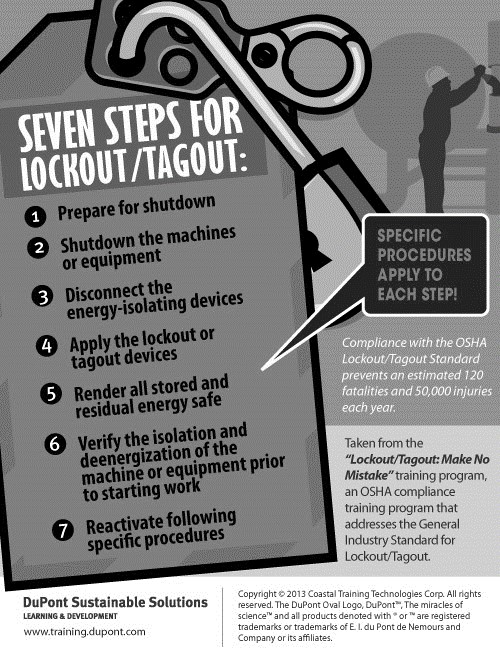
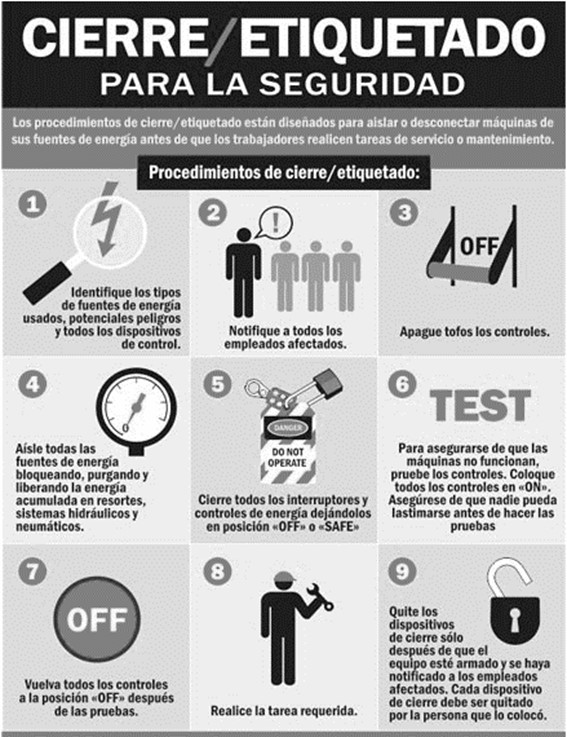
Lockout/Tagout (LOTO) is a safety procedure used to ensure proper shut-off and prevent the inability to start up machines prior to completion of maintenance or repair work. It is important that training takes place for employees authorized to carry out LOTO procedures as well as employees who will be affected by the use of these practices.

THE DANGERS 

OSHA reports that the number of Lockout/Tagout (LOTO) deaths each year ranges from 150 to 200 people. Additionally, each year about 60,000 LOTO accidents occur. 

Lockout Devices hold energy-isolation devices in a safe or “off” position. They provide protection by preventing machines or equipment from becoming energized because they are positive restraints that no one can remove without a key or other unlocking mechanism, or through extraordinary means, such as bolt cutters.

Tagout Devices by contrast, are prominent warning devices that an authorized employee fastens to energy-isolating devices to warn employees not to reenergize the machine while they service or maintain it. Tagout devices are easier to remove and, by themselves, provide employees with less protection than lockout devices.

HOW TO PROTECT EMPLOYEES 

Before employees attempts to repair or adjust a machine, it must be shut down and isolated from energy sources so it cannot accidentally start up. That’s where lockout procedures come in. A lockout isolates the machine from energy sources which could cause it to operate or to move.

These sources include electrical, compressed air, hydraulic, fuel and others. Lockouts are also used to prevent the worker from being struck by materials moving through the machine or even through pipes or other conduits.

Those employees affected by safety procedures of lockout / tagout are:

  • Authorized Employee – An employee who manually locks/tags machines or equipment to perform servicing or maintenance.
  • Affected Employee – An affected employee is one who is not qualified to lock/tag a piece of equipment which may need maintenance or servicing. An affected employee can also be a person who works in/around an area where the equipment may be locked/tagged out.

CATEGORIES OF LOTO TRAINING

  • Maintenance and Testing: Training allows for all the relevant parties to assess any potential issues with the equipment. Training can be a perfect time to troubleshoot your technology while using the LOTO procedure. LOTO is about reducing the risks of hazardous energy. Training directs focus, and with that, you can anticipate hazards from damaged or improperly functioning equipment.
  • Increased Familiarity with Relevant Devices: It is easy to take it for granted that employees will know the right way to use LOTO devices, but when it comes to safety, you never want to rely on assumptions. The best way to know that everyone using the tags and locks correctly is to train everyone on the usage. Not only how things are meant to affix to equipment and machinery but also the mistakes that can be made.

This is also very important for getting workers familiar with common misconceptions about the devices. How tags can fall off and the devices that require group lockouts. 

  • Improved Issue Identification: With everyone trained on the expectations and usage of lockout/tagout practices, there will be more people that can tell when something’s not right. A team is only as strong as its weakest link, and sometimes that link can be higher up in the chain. Because daily operations will limit the use of LOTO procedures to authorized workers, training might be the only opportunity affected workers will get to become familiar with the protocols being used for their benefit.

Safety meetings can be significantly improved by having more employees be knowledgeable about the safety expectations of their peers and their superiors. More people can have something to say about the way procedures are being used and feel more involved and invested in these meetings. Training in this way creates safety nets for human error.

  • Make the Process Less Daunting: Anything can seem complicated if you have no experience with it. What training does is demystify the procedures. It allows for questions to be asked and mistakes to be made when they will not be harmful or lead to a tremendous disaster. 

LOTO inspections should take place once a year, and when training has not taken place effectively, everyone can be rather hesitant or stressed out about the processes. 

  • Safety Plan Refinement: Training with safety gets everyone thinking about safety. While training with LOTO procedures you might find that you are unwittingly violating an OSHA requirement. Going around to simulate a practice LOTO inspection can double as a general practice safety inspection. Practice serves as a great reminder of what is expected in terms of safety.

FINAL WORD

A lockout is insurance against being struck by moving equipment while you are doing repairs or adjustments. Use it every time — even for quick jobs.

LockOut TagOut Stats and Facts – Spanish

HECHOS

  1. Es una precaución común apagar la máquina y desconectarla de la fuente de alimentación antes de ponerla a trabajar. Sin embargo, algunos empleados se saltan accidental o deliberadamente este paso. Hay otros casos en los que las unidades se alimentan con múltiples fuentes de energía, lo que hace obligatorio identificar todas las fuentes de energía y apagarlas todas. Un interruptor es sólo un dispositivo intermedio de alimentación. Apagarlo no equivale a desconectar la energía principal.
  2. Apagar un equipo o cortar el suministro de energía no significa necesariamente que la unidad sea segura de manejar. La energía almacenada en las baterías, el exceso de presión acumulado en un sistema, las máquinas aún calientes por su funcionamiento anterior, las tuberías que aún contienen líquidos y gases calientes o tóxicos, todo ello debe ser drenado de sustancias residuales, cuya exposición puede resultar bastante fatal.
  3. Antes de iniciar las reparaciones, hay que asegurarse de que las fuentes de energía están desconectadas, las partes móviles de la máquina firmemente bloqueadas, los residuos vaciados y el equipo bloqueado.
  4. Cada empleado al que se le confíen trabajos de mantenimiento o reparación debe recibir capacitación sobre los procedimientos de seguridad y bloqueo de los sistemas y equipos bajo su control. La falta de capacitación no sólo pone en riesgo la vida del técnico, sino que también compromete la seguridad de los demás en el taller.
  5. Los dispositivos de bloqueo específicos para cada pieza y las etiquetas de identificación para cada empleado en el trabajo son una necesidad.
  6. Suele ser normal que cada técnico tenga su propio juego de dispositivos de bloqueo etiquetados con una sola llave (para facilitar la tarea) a efectos de rendición de cuentas, responsabilidad y trazabilidad. Los duplicados o las llaves maestras pueden ser utilizados por otras personas sin verificar completamente si el equipo o el área han sido despejados para las operaciones. Compartir cerraduras es un problema potencial con consecuencias igualmente peligrosas.

ESTADÍSTICAS

  • Se calcula que más de 100 trabajadores sufren lesiones graves cada día por no haber bloqueado y etiquetado correctamente los equipos.
  • Cada año, aproximadamente 3.000 trabajadores sufren lesiones con pérdida de tiempo por quedar atrapados en partes peligrosas de equipos o maquinaria durante el mantenimiento o la limpieza, según datos de la Oficina de Estadísticas Laborales (BLS). Además, cada año se producen aproximadamente 60 muertes por exposiciones similares.
  • El bloqueo/etiquetado (LOTO) fue una de las diez infracciones más citadas por la OSHA en 2017. Dado que se estima que LOTO evita 120 muertes y más de 50.000 lesiones de trabajadores cada año, es una parte crítica de cada programa de EHS y debe aprovecharse al máximo. Los trabajadores lesionados en el trabajo por la exposición a energías peligrosas pierden una media de 24 días para recuperarse.
  • En el año fiscal 2016, la Administración de Seguridad y Salud Ocupacional recibió informes de 868 amputaciones causadas por incidentes en el lugar de trabajo en todo el país. Todos y cada uno de estos accidentes que alteran la vida eran evitables.
  • Los empleados que prestan servicio o mantienen máquinas o equipos pueden estar expuestos a daños físicos graves o a la muerte si no se controla adecuadamente la energía peligrosa. Los trabajadores artesanales, los operadores de máquinas y los obreros se encuentran entre los 3 millones de trabajadores que prestan servicio a los equipos y se enfrentan al mayor riesgo.
  • La OSHA ha calculado que la falta de control de la energía peligrosa almacenada es la causa de casi el diez por ciento de los accidentes graves en todos los sectores, y además los trabajadores lesionados en el trabajo por exposición a energía peligrosa pierden una media de 24 días de trabajo.


LockOut TagOut Stats and Facts

FACTS

  1. It is a common precaution to shut down the machine and disconnect it from the power source before putting it to work. However, some employees accidentally or deliberately skip this step. There are a few other cases where units are energized using multiple sources, which makes it mandatory to identify all sources of energy and shut down all of them. A switch is just one intermediate powering device. Flipping it off is not equivalent to disconnecting the main power.
  2. Shutting down a piece of equipment or cutting off the power supply does not necessarily mean the unit is safe to handle. Energy stored in batteries, excess pressure built up within a system, machines still hot from their previous run, pipes still containing hot or toxic liquids and gases all need to be drained of residual substances – exposure to which can prove quite fatal.
  3. Making sure that the power sources are disconnected, movable machine parts firmly locked in place, residues emptied and equipment locked out is a must before commencing repairs.
  4. Each employee entrusted with maintenance or repair jobs must be trained on safety and lockout procedures for systems and equipment under their control. Lack of training not only puts the technician’s life at risk, but also compromises on the safety of others on the shop floor.
  5. Specific lockout devices for each part and identification tags for each employee on the job are a must.
  6. It is usually normal for each technician to hold his or her own set of tagged lockout devices with a single key (to facilitate the task) for accountability, responsibility and traceability purposes. Duplicate or master keys may be used by others without fully verifying if the equipment or area has been cleared for operations. Sharing locks are a potential problem with equally dangerous consequences.

STATS

  • It is estimated that over 100 workers are seriously injured every day due to failure to properly lockout-tagout equipment.
  • Each year, approximately 3,000 workers suffer lost-time injuries from being caught in dangerous parts of equipment or machinery during maintenance or cleaning, according to Bureau of Labor Statistics (BLS) data. Further, each year there are approximately 60 fatalities from similar exposures.
  • Lockout/Tagout (LOTO) was one of OSHA’s top ten cited violations for 2017. Given that it’s estimated LOTO prevents 120 deaths and over 50,000 worker injuries each year, this is a critical part of every EHS program and should be leveraged to its fullest potential. Workers injured on the job from exposure to hazardous energy lose an average of 24 days for recuperation.
  • In FY2016, the Occupational Safety and Health Administration received reports of 868 amputations caused by workplace incidents nationwide. Each and every one of these life-altering accidents was preventable.
  • Employees servicing or maintaining machines or equipment may be exposed to serious physical harm or death if hazardous energy is not properly controlled. Craft workers, machine operators, and laborers are among the 3 million workers who service equipment and face the greatest risk.
  • OSHA has estimated that not controlling hazardous stored energy causes nearly ten percent of serious accidents across industries, and in addition, workers injured on the job from exposure to hazardous energy lose an average of 24 workdays.


LockOut TagOut Fatality File – Spanish

John era miembro del departamento de mantenimiento. Le llamaron para realizar una reparación en una máquina de la unidad 3. John simplemente apagó la máquina, cogió sus herramientas, retiró las protecciones necesarias y se puso a trabajar. El trabajo estaba en la parte trasera de la maquinaria, lejos del panel de control. John estaba haciendo un excelente trabajo de reparación de la máquina, pero se olvidó del componente más importante de este trabajo – Bloqueo / etiquetado / prueba.

Mientras tanto, Bill, el operario, regresó de su descanso. No vio a John y no había ninguna indicación de que la máquina estuviera en reparación. Suponiendo que su máquina estaba lista para funcionar, Bill la puso en marcha. No tenía ni idea de que John estaba dentro.

En un instante, John resultó gravemente herido y sus dolorosos gritos quedaron grabados para siempre en la mente de Bill.


Fatality File: LOTO

John was a member of the maintenance department. He was called to perform a repair on a machine in unit 3. John simply turned the machine off, got his tools, removed the necessary guards, and started to work. The job was on the back side of the machinery away from the control panel. John was doing an outstanding job of repairing the machine, but he forgot the most important component of this job – Lockout / Tagout / Tryout.

Meanwhile, – Bill, the operator – returned from his break. He did not see John and there was no indication that the machine was under repair. Assuming his machine was ready to run, Bill started it. He had no idea that John was inside!

In an instant John was seriously injured and his painful screams have been forever etched into Bill’s mind.


LockOut TagOut Picture This


LockOut TagOut Picture This – Spanish


Quick Course – Combustible Dust Its No Ordinary Dust

A combustible dust is any fine material that can catch fire and explode when mixed with air. This quick course will cover what combustible dust is, what the danger is and how to protect yourself.


Quick Course – Obliterating Dust Explosions

Bad housekeeping in any industry that uses flammable materials can go far beyond creating an image of a sloppily run, unprofessional operation. It could lead to a fatal explosion. This quick course will identify hazards of dust explosions and how to protect yourself.


Quick Course – Reasonable Suspicion for Supervisors

Every organization needs supervisors who are able to appropriately and effectively identify possible substance abuse on the job. Supervisors must determine whether or not reasonable suspicion exists and what to do when they suspect it.


Quick Course – Lightning Safety at Work and Home

Individuals need to identify and plan for the potential of lightning before beginning a work activity or any leisure activity during storm season. This quick course will cover the dangers of lightning and how to protect yourself.


Quick Course – Resolve Conflict Before it Escalates Into Violence

Conflict is to be expected in fast-paced work environments. Hundreds, sometimes even thousands of workers perform their duties inside the same facility, which can increase the likelihood of a conflict turning into large-scale instance of workplace violence. This quick course will outline some strategies on resolving conflict.


Quick Course – Stay Strong As You Age

In this quick course we’ll look at some of the issues workers face as they age and what they can do to stay focused and accident-free.


Ergonomics and The Mature Worker – Quick Course

While many people are quite capable of working well into their 60s or longer, they are at greater risk for injury and job-related illnesses because of reduced strength, balance, hearing, vision, and slower reaction time. This quick course covers some of the dangers of working as you age and how to protect yourself.


Quick Course – Learning the Hard Way

One area in life we cannot afford to learn the hard way is avoiding injury at work (or at home). This quick course will talk about learning the hard way and how to protect yourself from further injury.


Quick Course – First Day Back to Work

Workplace injuries are subject to many different and various risk factors. This quick course will cover the dangers of returning to work and how to prevent hazards associated with the first day back at work.


Quick Course – A Slice of Safety Can Help Prevent Knife Injuries

The utility and straight hand knife is also a commonly used tool in many industries and the cause of many severe accidents. This quick course will cover the hazards of using a knife incorrectly and how to protect yourself.


Quick Course – Beware of Bloodborne Pathogens

Nearly any worker could encounter bloodborne pathogens (BBP) – whether bandaging a co-worker’s cut, stepping on a used hypodermic needle in the alley or helping an accident victim on the way home. This quick course covers the hazards of BBP and how to protect yourself.


Worker’s Memorial Day

Every year, on April 28, the world recognizes Workers Memorial Day.

Today is the day we pay our respects to those who lost their lives on the job, and recognize the impact of these tragic losses on the families, co-workers, and communities of those we have lost.

As we navigate our way out of the COVID pandemic, this year, like last, is especially somber given the increasing number of essential workers who put their lives on the line during the pandemic, some of whom got sickened and/or died. They were not all healthcare workers, many were grocery clerks and stock people, farm workers, delivery drivers, truck drivers, farmers, law enforcement professionals, teachers, sanitation workers and others we relied on daily.

Nobody should die for simply going to work.

Today we we remember, respect, and honor all of those that lost their lives to what is largely preventable – workplace fatal injuries and illness. What’s more, we dedicate ourselves to improving workplace safety, the culture of workplace safety, and recommitting to the priority of workplace safety in business so that no life lost, no family grieving, and no community impacted is suffering in vain.

Currently, every 99 minutes a worker in North America dies from a workplace accident, injury, or illness. Every 99 minutes a family grieves. Every 99 minutes a community mourns.

Safety is EVERY worker’s right.


Locating Underground Utilities Before You Dig Meeting Kit

WHAT IS 811 ONE-CALL? 

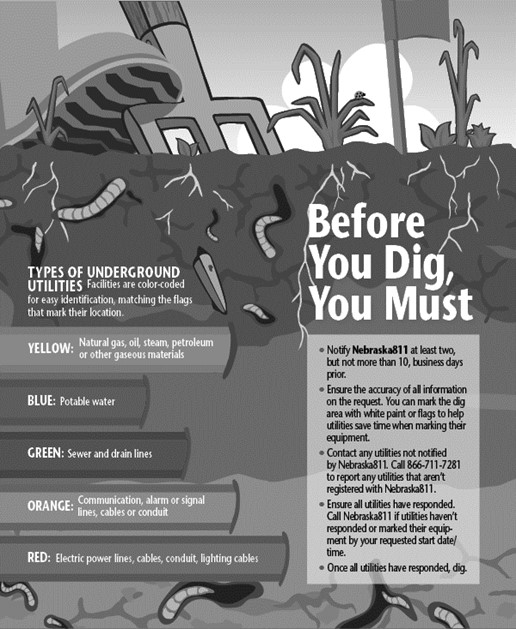
Call 811 before excavating on any piece of commercial or residential land, including your own private property. It’s a free service. Technicians will be sent to the site to locate public utilities using electromagnetic equipment. Then, they mark any that run from the street to the service meter. This will help homeowners and professionals prevent damage to public water, sewage, power and natural gas lines.

PUBLIC AND PRIVATE UNDERGROUND LOCATORS 

Private utility locators are necessary to mark out electrical, gas, septic, water and drainage lines on private, residential, commercial, and municipal properties.

Once you call “811” it does not mean you can proceed with digging. One call location crews only locate public utility lines. 

SECOND CALL – PRIVATE UTILITY LOCATOR 

Before starting your project, you will likely need to make a second call. The call will be to a private utility locator to find and demarcate underground electrical lines, gas pipes, and more on private, residential, commercial and municipal land.

WHAT ARE PRIVATE UTILITIES? 

Private utilities are the lines that run beyond the service meter. For example, electrical cables that go from the meter to a house or building would be considered private. For safety and liability reasons, it’s important to have these lines accurately and properly marked before starting to dig, even on your own property. To have these marked, you will need to call in a private underground utility locator.

Most properties have unmarked private utility lines, but they present a real danger for anyone digging. It’s important to have all lines located and marked. Examples of underground utilities that might be hidden on your property.

  • Electricity for exterior lighting,
  • Propane lines,
  • Septic pipes,
  • Sprinkler systems,
  • Gas for heated pools,
  • Power for a detached garage

WHERE DO YOU HAVE PRIVATE UTILITY LINES?

  • Neighborhood communities,
  • Apartment complexes,
  • School grounds and college campuses,
  • Medical facilities,
  • Industrial areas,
  • Commercial property including a parking lot,
  • Government facility.

Private owners are responsible for maintaining these types of cables and pipes.

IMPORTANCE OF PROPERLY LOCATING UTILITIES BEFORE DIGGING. TRAINED EXPERTS PREVENT INJURY 

Standard operating procedure before any project that breaks ground is to call 811, the national “call-before-you-dig” phone number. From there, the service will trigger a request for utility companies to mark the location of underground lines. But what happens if someone lacks awareness about what’s buried beneath the ground? A person digging with a shovel, spade, or another tool with metal components could put themselves and others around them at risk of electrocution if they strike a high-voltage electric line.

AVOID OUTAGES AND DISRUPTIONS BY LOCATING UTILITIES 

While human safety is paramount, there is a significant risk of causing a service outage when digging without locating utilities. Unknowingly cutting a line could cause a home, neighborhood, or even an entire section of the city to lose power, water, or telephone functionality. But there are other disruptions beyond just service outages that can occur if digging takes place before locating utilities first.

FINAL WORD

The risks and potential damage by unknowingly cutting a line could cause a home, neighborhood or an entire section of city to lose power. Striking a gas line can result in a building’s evacuation while hitting a water main can require a boil-water advisory.


Locating Underground Utilities Before You Dig Stats and Facts – Spanish

HECHOS

  1. Una de las mayores causas de muertes, lesiones e interrupciones del servicio relacionadas con los servicios básicos en este país son las excavadoras que dañan las instalaciones subterráneas de los servicios básicos.
  2. Daños personales (posible pérdida de vidas), daños al medio ambiente, costosos daños a la propiedad, daños a servicios básicos importantes que incapacitarían a otros para realizar llamadas de emergencia o perder la disponibilidad de un servicio público, costosos retrasos, costosas reparaciones, problemas legales y sanciones civiles.
  3. Una excavación descuidada puede romper las instalaciones y, a menudo, causar lesiones graves, incluso la muerte, al trabajador involuntario, por no hablar de la pérdida del servicio público a cientos de personas.
  4. Debido a la posibilidad de que se produzcan lesiones graves/muertes y la interrupción de un servicio esencial si se corta accidentalmente una tubería subterránea, la Ley de Salud y Seguridad en el Trabajo de Ontario exige que todos los servicios subterráneos se localicen y marquen con precisión antes de la excavación.

ESTADÍSTICAS

  • Cada año se producen más de 200.000 incidentes de daños involuntarios en las infraestructuras subterráneas de servicios básicos (incluyendo tuberías, líneas eléctricas, de telecomunicaciones, de agua y de alcantarillado), muchos de ellos como resultado de un individuo que no tiene localizadas las líneas de servicios básicos subterráneos antes de excavar;
  • Sólo este año, más de 38,6 millones de personas excavarán en el suelo sin marcar las líneas de los servicios básicos, lo que puede suponer una interrupción del servicio en las líneas telefónicas, eléctricas o de gas de su comunidad. Las estadísticas recogidas por la CGA o Common Ground Alliance, revelan que en promedio una línea de servicios públicos se daña cada seis segundos en los Estados Unidos. 
  • El 13 de abril de 2007, se determinó que el número 811 era el número nacional al que había que llamar para localizar líneas de servicios básicos subterráneos. Sólo este año, el 25% de los daños que se produzcan en estas líneas serán el resultado de que un individuo no llame para confirmar la ubicación de las líneas de servicios básicos antes de empezar a cavar. El 15% de los daños serán causados por alguien que cree que la excavación que está realizando no será lo suficientemente profunda como para causar ningún daño.


Locating Underground Utilities Before You Dig Stats and Facts

FACTS

  1. One of the largest causes of utility-related deaths, injuries and service interruptions is excavators damaging underground utility facilities.
  2. Personal injury (possible loss of life), damage to environment, costly property damage, damage to important utilities that would disable others to make emergency calls or lose the availability of a utility, costly delays, expensive repairs, legal problems, and civil penalties.
  3. Careless digging can rupture facilities and often cause severe injury, even death, to the unwitting worker – not to mention the loss of utility service to hundreds of people.
  4. Due to the potential of serious injury / death and interruption of essential service occurring if an underground pipe is accidentally severed, the Ontario Occupational Health and Safety Act requires that all underground services shall be accurately located and marked prior to excavation.

STATS

  • Each year there are over 200,000 incidences of unintentional damage to underground utility infrastructure (including pipelines, electrical,  telecommunications, water, and sewer lines), many as a result of an  individual who fails to have underground utilities lines located before  digging;
  • This year alone over 38.6 million individuals will dig in the ground without marking utility lines, which can account for disruption in service in the phone, electric, or gas lines for your community. The statistics collected by the CGA or the Common Ground Alliance, reveals that on average a utility line is damaged every six seconds in the United States. 
  • On April 13th of 2007, the number 811 was determined to be the national number to call to locate underground utility lines. This year alone, 25 % of the damage that occurs to these lines will be the result of an individual not calling to confirm the locations of the utility lines before they begin digging. 15 % of the damage will be caused by someone believing that the digging that they are doing will not be deep enough to cause any damage.


Locating Underground Utilities Before You Dig Fatality File

Man dies after being trapped under 16 tons of dirt 

A 29-year-old man who has been buried under 16 to 20 tons of dirt since about 10:30 a.m. at a construction site near 53rd North and Webb has died, Bel Aire Police Chief Darrell Atteberry confirmed at around 3:30 p.m.

Crews reached the man after about 5 hours of digging and removed him from the trench at 4:15 p.m. He has not been identified.

The man’s family has been on the scene for several hours.

“They’re grieving at this point,” the chief said at 2 p.m.

The site is close to a FedEx Ground Sort Facility and Next Level Hoops Academy.

Atteberry said the man was working at the bottom of a trench at about 10:30 a.m. when it caved in. Whether or not crews were using a trench box is unknown. Atteberry referred questions about the specifics of what happened to the Occupational Safety and Health Administration.

OSHA has been on scene talking to other people who were at the dig site, Atteberry said. About four men were working this morning when the collapse happened.

About 35 people worked at the site trying to get him out of the trench, including crews from the Sedgwick County and Wichita fire departments.

The man was excavating a hole to bury a pipe.

He works for Wilks Underground Utilities and was the only person in the trench at the time of the collapse, Atteberry said.

Wilks Underground is an excavation company based in Wichita. The crews were not part of the city of Bel Aire, Atteberry said.


Locating Underground Utilities Before You Dig Fatality File – Spanish

Hombre muere tras quedar atrapado bajo 16 toneladas de tierra 

Un hombre de 29 años que llevaba enterrado bajo entre 16 y 20 toneladas de tierra desde aproximadamente las 10:30 de la mañana en una obra de construcción cerca de la 53 Norte y Webb ha fallecido, según ha confirmado el jefe de policía de Bel Aire, Darrell Atteberry, sobre las 15:30 horas.

Los equipos llegaron al hombre después de unas 5 horas de excavación y lo sacaron de la zanja a las 4:15 p.m. No ha sido identificado.

La familia del hombre lleva varias horas en el lugar de los hechos.

“Están de duelo en este momento”, dijo el jefe a las 14:00 horas.

El lugar está cerca de una instalación de clasificación de FedEx Ground y de la Academia Next Level Hoops.

Atteberry dijo que el hombre estaba trabajando en el fondo de una zanja alrededor de las 10:30 a.m. cuando se derrumbó. Se desconoce si los equipos estaban utilizando una caja de zanja o no. Atteberry remitió las preguntas sobre los detalles de lo ocurrido a la Administración de Seguridad y Salud Laboral.

La OSHA ha estado en el lugar de los hechos hablando con otras personas que se encontraban en el lugar de la excavación, dijo Atteberry. Unos cuatro hombres estaban trabajando esta mañana cuando se produjo el derrumbe.

Alrededor de 35 personas trabajaban en el lugar tratando de sacarlo de la zanja, incluyendo equipos de los departamentos de bomberos del condado de Sedgwick y de Wichita.

El hombre estaba excavando un agujero para enterrar una tubería.

Trabaja para Wilks Underground Utilities y era la única persona en la zanja en el momento del derrumbe, dijo Atteberry.

Wilks Underground es una empresa de excavación con sede en Wichita. Los equipos no formaban parte de la ciudad de Bel Aire, dijo Atteberry.


Locating Underground Utilities Before You Dig Picture This

Source: https://oppdthewire.com/can-you-dig-it-better-call-nebraska-811-first/