Pinch Points Fatality File

Operator Pulled into Tinning Line 

A machine operator died of crush injuries to his head when caught by an ingoing pinch point on a hot tin coating machine.

The victim and some other operators had been taking shortcuts when cleaning the steel rollers. Standard procedure required first stopping the tinning line and putting it into lockout mode. 

Operators were then supposed to scrub the rollers with a long-handled wire brush, and rotate rollers only by pushing a “jog” button. Instead, the victim was wiping a bridle roller with sandpaper while the line was running at 50 feet (15 meters) per minute. 

The bridle roller tensioned metal strips that came down the line to be coated.

An incoming six-inch (15-centimeter) wide brass strip apparently caught his glove and he was pulled into the line and jammed and crushed by the roller and the brass strip. 

He was pronounced dead at the scene.


Pinch Points Fatality File – Spanish

Operador atrapado en la línea de estañado 

Un operario de una máquina murió de lesiones por aplastamiento en la cabeza al ser atrapado por un punto de pellizco entrante en una máquina de revestimiento de estaño caliente.

La víctima y otros operarios habían estado tomando atajos al limpiar los rodillos de acero. El procedimiento estándar exigía detener primero la línea de estañado y ponerla en modo de bloqueo. 

A continuación, los operarios debían fregar los rodillos con un cepillo de alambre de mango largo, y girar los rodillos sólo pulsando un botón de “marcha”. En cambio, la víctima limpiaba un rodillo de brida con papel de lija mientras la línea funcionaba a 15 metros por minuto. 

El rodillo de brida tensaba las tiras de metal que bajaban por la línea para ser recubiertas.

Al parecer, una tira de latón de 15 centímetros de ancho que bajaba le pilló el guante y le arrastró hacia la línea, quedando atascado y aplastado por el rodillo y la tira de latón. 

Fue declarado muerto en el lugar de los hechos.


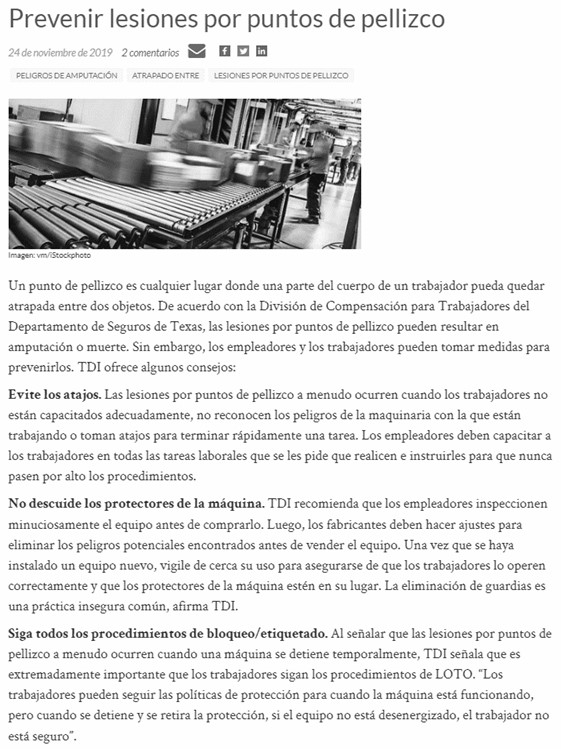
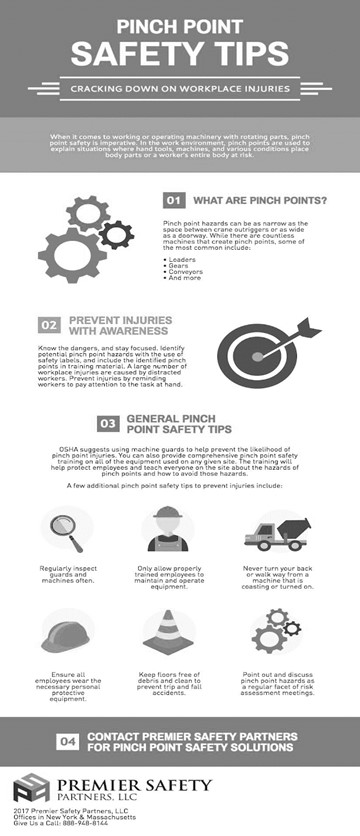
Pinch Points Picture This

Source: http://premiersafetypartners.com


Pinch Points Picture This – Spanish

Fuente: https://www.safetyandhealthmagazine.com


Getting a Hand on safety Meeting Kit

KEEP HANDS SAFE IN THE WORKPLACE – HAND SAFETY STARTS IN THE HEAD

Pay attention! Two simple words that demand action, issue a warning, and perhaps even save you from serious injury or death.  It is hard to maintain focus.

Minds wander. It’s part of our nature as human beings. You come to work, grab a quick cup of coffee and start on your first task of the day: cutting plywood. Before you know it, you’ve mentally reviewed half of your to-do list, fantasized about your upcoming vacation, practiced the talk you need to have with your boss, and… cut off your little finger!

Routine tasks lull us into a sense of safety. “I know what I’m doing. I don’t need to pay close attention.” Maintaining your concentration when you’re tired, bored, or distracted is extremely difficult, but even more critical to staying safe. In order to practice hand safety at work, start with your head.

ENSURE BEFORE EVERY TASK, ASK THE FOLLOWING QUESTIONS TO AVOID HAND INJURY 

  • Do you know the hand hazards of performing the task? What hazards could be in the place that you are about to put your hands and fingers?
  • Is the right tool being used for the job?
  • Have you been trained on the correct use of the tool you are using?
  • Has unexpected movement from the tool, part or material which could result in a line of fire injury been considered?
  • Have you asked yourself what can go wrong? 
  • What happens if the tool slips? Is there anything you might hit? Could you cut yourself on anything?
  • Can you get burned?
  • If there is a liquid, could it be harmful to your skin or body?
  • Have you protected your hands and fingers with the right PPE?

COMMON HAND AND FINGER HAZARDS 

  • Heavy machinery
  • Hand and power tools
  • Electrical equipment
  • Extremely hot or cold environments
  • Chemicals

COMMON TYPES OF GLOVES

  • General use gloves, which are ideal for light material handling and cleanup
  • Leather gloves, which can protect against sparks, burns, moderate temperatures, and rough objects or surfaces
  • Chemical-resistant gloves, which can protect against different chemical hazards
  • Cut-resistant gloves, which can protect against cuts, punctures and lacerations
  • Anti-vibration gloves, which can protect against fatigue from vibrating equipment, like chainsaws and jackhammers
  • Electrically-insulating gloves, which can protect against electrical hazards such as live wires

HOW EMPLOYEES CAN PROTECT HANDS AT WORK 

  • Wear protective clothing and don’t take it off.
  • Use appropriate work gloves when handling rough materials and when hands are directly involved with lifting or moving objects. Make sure the work gloves offer the right combination of dexterity and protection needed for the job/task.
  • Take time to remove or bend down protruding nails, splinters and sharp edges on materials before you begin working with them.
  • Always use machinery guards.
  • When moving objects with a hand cart or truck, make sure that you have sufficient room to get through doorways and small spaces with enough clearance for cart and hands.
  • Keep hands free of grease and oil – slippery hands can get you in trouble. If you get grease or oil on your hands, clean them right away.
  • For safety’s sake, do not wear any rings when working – a ring caught in machinery or on a protruding object can badly damage a finger.
  • Wear gloves to pick up broken glass, nails or other sharp objects – including when sweeping up. Never attempt to handle these things with your bare hands.
  • Keep your hands in places where you can see them. Avoid putting them out of your line of sight.
  • Work smarter rather than working faster.
  • Do not count on your reflexes to save your hands and fingers.

FINAL WORD

Being tired, bored, or distracted in the workplace means you are not concentrating on work tasks to the extent you should. This is where and when workplace accidents occur. Hands and fingers injuries are often the result. 


Getting a Hand on safety Meeting Kit – Spanish

QUÉ ESTÁ EN RIESGO

MANTENER LAS MANOS SEGURAS EN EL LUGAR DE TRABAJO – LA SEGURIDAD DE LAS MANOS EMPIEZA EN LA CABEZA

¡Preste atención! Dos sencillas palabras que exigen una acción, una advertencia y quizás incluso le salven de una lesión grave o de la muerte.  Es difícil mantener la concentración.

La mente divaga. Forma parte de nuestra naturaleza como seres humanos. Llega al trabajo, se toma un café rápido y empieza con su primera tarea del día: cortar madera contrachapada. Antes de que se dé cuenta, ha repasado mentalmente la mitad de su lista de tareas ha fantaseado con sus próximas vacaciones, ha practicado la charla que usted debe tener con su jefe y… ¡se ha cortado el dedo meñique!

Las tareas rutinarias nos adormecen con una sensación de seguridad. “Sé lo que estoy haciendo. No necesito prestar mucha atención”. Mantener la concentración cuando se está cansado, aburrido o distraído es extremadamente difícil, pero aún más crítico para mantenerse seguro. Para practicar la seguridad de las manos en el trabajo, empieza por la cabeza.

CUÁL ES EL PELIGRO

ASEGÚRESE DE QUE, ANTES DE CADA TAREA, SE HACE LAS SIGUIENTES PREGUNTAS PARA EVITAR LESIONES EN LAS MANOS 

  • ¿Conoce los riesgos para las manos al realizar la tarea? ¿Qué peligros puede haber en el lugar donde se van a poner las manos y los dedos?
  • ¿Se está utilizando la herramienta adecuada para el trabajo?
  • ¿Ha recibido capacitación sobre el uso correcto de la herramienta que está utilizando?
  • ¿Se ha tenido en cuenta el movimiento inesperado de la herramienta, la pieza o el material que podría provocar una lesión en la línea de fuego?
  • ¿Se ha preguntado qué puede salir mal? 
  • ¿Qué ocurre si la herramienta se resbala? ¿Hay algo que pueda golpear? ¿Podría cortarse con algo?
  • ¿Puede quemarse?
  • Si hay un líquido, ¿podría ser perjudicial para su piel o su cuerpo?
  • ¿Se ha protegido las manos y los dedos con el EPP adecuado?

RIESGOS COMUNES PARA LAS MANOS Y LOS DEDOS 

  • Maquinaria pesada
  • Herramientas manuales y eléctricas
  • Equipos eléctricos
  • Ambientes extremadamente calientes o fríos
  • Productos químicos

COMO PROTEGERSE

TIPOS COMUNES DE GUANTES

  • Guantes de uso general, ideales para la manipulación de materiales ligeros y de limpieza
  • Guantes de cuero, que pueden proteger contra chispas, quemaduras, temperaturas moderadas y objetos o superficies rugosas
  • Guantes resistentes a los productos químicos, que pueden proteger contra diferentes riesgos químicos
  • Guantes resistentes a los cortes, que pueden proteger contra cortes, pinchazos y laceraciones
  • Guantes anti vibratorios, que pueden proteger contra la fatiga producida por equipos que vibran, como sierras de cadena y martillos neumáticos.
  • Guantes aislantes de la electricidad, que pueden proteger contra los riesgos eléctricos, como los cables con corriente.

CÓMO LOS EMPLEADOS PUEDEN PROTEGER LAS MANOS EN EL TRABAJO 

  • Lleve ropa de protección y no se la quite.
  • Utilice guantes de trabajo adecuados cuando manipule materiales ásperos y cuando las manos estén directamente implicadas en el levantamiento o movimiento de objetos. Asegúrese de que los guantes de trabajo ofrecen la combinación adecuada de destreza y protección necesaria para el trabajo/tarea.
  • Tómese el tiempo necesario para retirar o doblar los clavos que sobresalen, las astillas y los bordes afilados de los materiales antes de empezar a trabajar con ellos.
  • Utilice siempre los protectores de la maquinaria.
  • Cuando mueva objetos con una carretilla o un camión, asegúrese de que tiene espacio suficiente para pasar por las puertas y los espacios pequeños con suficiente espacio libre para la carretilla y las manos.
  • Mantenga las manos libres de grasa y aceite: las manos resbaladizas pueden causarle problemas. Si se mancha las manos de grasa o aceite, límpielas inmediatamente.
  • Por seguridad, no lleve anillos cuando trabaje: un anillo atrapado en la maquinaria o en un objeto que sobresalga puede dañar gravemente un dedo.
  • Utilice guantes para recoger vidrios rotos, clavos u otros objetos afilados, incluso al barrer. Nunca intente manipular estos objetos con las manos descubiertas.
  • Mantenga las manos en lugares donde pueda verlas. Evite ponerlas fuera de su línea de visión.
  • Trabaje de forma más inteligente en lugar de trabajar más rápido.
  • No cuente con sus reflejos para salvar sus manos y dedos.

CONCLUSIÓN

Estar cansado, aburrido o distraído en el lugar de trabajo significa que no se está concentrando en las tareas laborales en la medida que debería. Es aquí donde y cuando se producen los accidentes laborales. Las lesiones en manos y dedos suelen ser el resultado.


Getting a Hand on safety Stats and Facts

FACTS

  1. Common causes of hand injuries include:
  • Improper use of tools or using the incorrect tool
  • Lifting or applying force incorrectly
  • Using the wrong PPE or failing to utilize PPE
  • Distraction and lack of awareness/focus due to to complacency
  • Inadequate assessment of risk
  • Bypassing safety procedures
  • Cutting corners or rushing
  1. Common types of hand injuries include: 

Bruises, pinches, lacerations, abrasions, strains, amputations, dislocations, Carpel Tunnel Syndrome, and Raynaud’s Disease. The non-dominant hand is the most vulnerable to injury.

STATS

  • About 10 % of hand injuries result from the improper use of hand tools, while 40 percent are caused during the handling of materials. (Workplace Safety North, Ontario)
  • Workers can avoid hand injuries by following these 6 safety tips: consider all potential hazards involved in a job before starting it; never take shortcuts; concentrate on the task being performed; always wear appropriate hand PPE; follow safety rules and safe working procedures; and practice good housekeeping.
  • There are several types of workplace hazards that can cause serious hand and finger injuries, including these four: mechanical hazards, such as pinch points or cutting surfaces; personal hazards, such as jewelry, loose-fitting clothing, or improper PPE; contact hazards such as chemicals, electricity or hot/cold surfaces; and housekeeping hazards, including improper storage of equipment and slippery conditions.
  • Every year in Canada, an estimated 500,000 work-related hand injuries occur. (Government of Canada Labour Program)
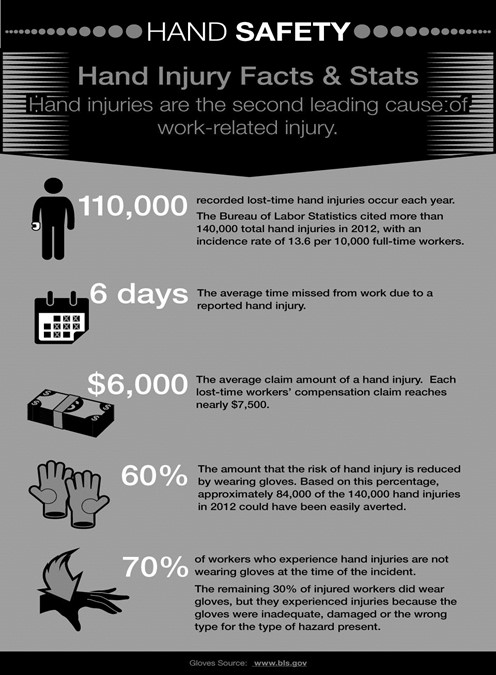
  • An Occupational Safety and Health Administration (OSHA) study found that 70 % of the workers suffering hand injuries in manufacturing operations were not wearing safety gloves at the time of injury.

5 types of hand injuries are: lacerations (cuts), accounting for 63 % of the total; crush (13 %); avulsion (tearing of skin or soft tissue), accounting for eight percent; puncture (6 %); and fracture (five percent), according to the National Safety Council.


Getting a Hand on safety Stats and Facts – Spanish

HECHOS

  1. Las causas más comunes de las lesiones en las manos son:
  • El uso inadecuado de herramientas o el uso de la herramienta incorrecta
  • Levantar o aplicar la fuerza de forma incorrecta
  • Utilizar el EPP incorrecto o no utilizarlo
  • Distracción y falta de conciencia/concentración debido a la complacencia
  • Evaluación inadecuada del riesgo
  • Ignorar los procedimientos de seguridad
  • Tomar atajos o apresurarse
  1. Los tipos más comunes de lesiones en las manos son: 

Magulladuras, pellizcos, laceraciones, abrasiones, esguinces, amputaciones, dislocaciones, síndrome del túnel carpiano y enfermedad de Raynaud. La mano no dominante es la más vulnerable a las lesiones.

ESTADÍSTICAS

  • Alrededor del 10% de las lesiones en las manos se producen por el uso inadecuado de herramientas manuales, mientras que el 40% se producen durante la manipulación de materiales. (Seguridad Laboral Norte, Ontario)
  • Los trabajadores pueden evitar las lesiones en las manos siguiendo estos 6 consejos de seguridad: tener en cuenta todos los riesgos potenciales que conlleva un trabajo antes de empezarlo; no tomar nunca atajos; concentrarse en la tarea que se está realizando; llevar siempre el EPP adecuado para las manos; seguir las normas de seguridad y los procedimientos de trabajo seguros; y practicar una buena limpieza.
  • Existen varios tipos de riesgos en el lugar de trabajo que pueden causar lesiones graves en las manos y los dedos, entre los que se incluyen estos cuatro: riesgos mecánicos, como puntos de pellizco o superficies cortantes; riesgos personales, como joyas, ropa holgada o EPP inadecuados; riesgos de contacto, como productos químicos, electricidad o superficies calientes/frías; y riesgos de mantenimiento, como el almacenamiento inadecuado del equipo y las condiciones resbaladizas.
  • Se calcula que en Canadá se producen cada año unas 500.000 lesiones en las manos relacionadas con el trabajo. (Programa Laboral del Gobierno de Canadá)
  • Un estudio de la Administración de Seguridad y Salud en el Trabajo (OSHA) reveló que el 70% de los trabajadores que sufren lesiones en las manos en operaciones de fabricación no llevaban guantes de seguridad en el momento de la lesión.
  • Los cinco tipos de lesiones en las manos son: laceraciones (cortes), que representan el 63 % del total; aplastamiento (13 %); avulsión (desgarro de la piel o de los tejidos blandos), que representa el ocho por ciento; pinchazo (6 %); y fractura (cinco por ciento), según el Consejo Nacional de Seguridad.


Getting a Hand on safety Fatality File – Spanish

Un hombre de Georgia muere en un accidente laboral – mano derecha 

Un portavoz del Departamento de Trabajo de Georgia dijo que la agencia está investigando una muerte en el lugar de trabajo que ocurrió en Pratt Industries en Conyers. Mientras operaba una máquina de procesamiento de astillas de madera, un empleado de 31 años de la empresa fue halado hacia la máquina y murió. Como los demás empleados estuvieron buscando al hombre durante algún tiempo, no se sabe cuánto tiempo estuvo atrapado en la máquina.

Después de que los empleados descubrieran al hombre, se alertó al departamento de policía local, que llegó al lugar de los hechos aproximadamente a las 18:30. El forense acudió media hora después para confirmar que el hombre había muerto en el accidente laboral. Según el forense, la víctima se quedó con la mano derecha atrapada en la cinta transportadora antes de ser arrastrada al punto de rodamiento. El hombre sufrió entonces heridas críticas en el brazo, el hombro, las manos y la espalda, y parece haberse asfixiado.

Tras el accidente mortal, un portavoz de Pratt Industries emitió una declaración pública en la que daba el pésame a la familia de la víctima. Continuó diciendo que era un día muy triste para todos los empleados de Pratt. Pratt Industries es una empresa de papel y embalaje fundada originalmente en Australia. Recientemente, la empresa inició una nueva asociación de residuos sólidos y reciclaje con la ciudad.

Después de que se lleve a cabo una investigación de la OSHA, las pruebas pueden revelar si el accidente mortal fue o no el resultado de un empleador negligente. Sin embargo, incluso si el empleador no tuvo la culpa directa del accidente, los familiares de la víctima pueden solicitar prestaciones presentando una reclamación de indemnización por accidente de trabajo. La cónyuge, los hijos o los padres de la víctima fallecida tienen derecho a presentar una reclamación.


Getting a Hand on safety Fatality File

Georgia man dies in workplace accident – right hand 

A Georgia Department of Labor spokesman said the agency is looking into a workplace death that occurred at Pratt Industries in Conyers. While operating a wood chip processing machine, a 31-year-old employee at the company was pulled into the machine and killed. Because the other employees were looking for the man for some time, it is not known how long he was trapped in the machine.

After employees discovered the man, the local police department was alerted and arrived at the scene at approximately 6:30 p.m. The coroner followed about a half hour later to confirm that the man had died in the work accident. According to the coroner, the victim got his right hand trapped in the conveyor belt before being pulled into the roller point. The man then suffered from critical injuries to his arm, shoulder, hands and back and appears to have suffocated.

Following the fatal accident, a spokesman for Pratt Industries released a public statement offering their condolences to the victim’s family. He went on to say that it was a very sad day for all Pratt employees. Pratt Industries is a paper and packaging company that was originally founded in Australia. Recently, the company began a new solid waste and recycling partnership with the city.

After an OSHA investigation is conducted, evidence may reveal whether or not the fatal accident was the result of a negligent employer. Even if the employer was not directly at fault in the accident, however, the victim’s family members may still seek benefits by filing a workers’ compensation claim. The spouse, children or parents of the deceased victim are entitled to file a claim.


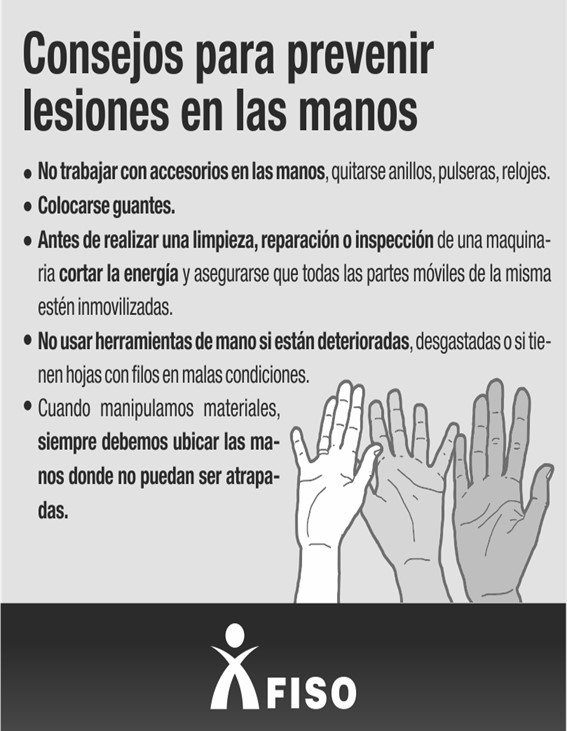
Getting a Hand on safety Picture This – Spanish

Fuente: https://charlasdeseguridad.com.ar/


Getting a Hand on safety Picture This

Source: https://www.quill.com


Playing Safe on the Farm Meeting Kit – Spanish

QUÉ ESTÁ EN RIESGO

PELIGROS COMUNES 

Los peligros más comunes son el ahogamiento en represas, tanques y arroyos, las lesiones por armas de fuego o productos químicos, los accidentes con tractores, cuatrimotos, motocicletas, maquinaria y animales, y las caídas de altura. Los principales factores de riesgo son la inexperiencia con equipos o animales, el intento de realizar una tarea que está por encima de sus capacidades, las tareas agrícolas y las masas de agua expuestas.

CUÁL ES EL PELIGRO

LOS PRINCIPALES RIESGOS PARA LOS NIÑOS

  • Los animales pueden ser imprevisibles, especialmente si se asustan o protegen a sus crías.
  • Los niños carecen de juicio para tratar con los animales de forma segura y no tienen el tamaño, la velocidad y la destreza para apartarse con seguridad. Los niños también pueden contraer enfermedades de los animales como la leptospirosis, la tiña y la campilobacteria.
  • Los niños carecen del juicio, el peso corporal y la fuerza necesarios para manejar vehículos agrícolas de tamaño normal, como los cuadriciclos.
  • Los niños más pequeños deben entender que pueden lesionarse cuando juegan sobre o cerca de los tractores. Los niños mayores pueden lesionarse como pasajeros o mientras realizan tareas agrícolas.
  • Disponga de un mapa de todos los peligros del agua en la propiedad: ríos, arroyos, abrevaderos, zanjas, depósitos, represas y estanques. El agua también puede quemar, sobre todo en el establo donde se utiliza agua caliente a temperaturas elevadas.
  • Las protecciones de la maquinaria agrícola pueden tener agujeros lo suficientemente pequeños para las manos de los niños.
  • Es responsabilidad del adulto asegurarse de que los productos agroquímicos peligrosos están fuera del alcance de los niños.

COMO PROTEGERSE

LO MÁS IMPORTANTE PARA LA SEGURIDAD DE LOS NIÑOS EN LA GRANJA ES EL PLAN DE EMERGENCIA DE LA GRANJA 

  • Asegurar el fácil acceso a un botiquín de primeros auxilios adecuado y bien abastecido.
  • Asegurarse de que al menos una persona de la granja esté capacitada en primeros auxilios.
  • Mantener los números de emergencia y las direcciones correctas junto al teléfono.
  • Planifique las rutas hacia el hospital más cercano con servicio de urgencias.
  • Repase regularmente su plan de emergencia con su familia y otros trabajadores.
  • Asegúrese de que sus hijos entienden qué hay que hacer en caso de emergencia.

REALIZAR AUDITORÍAS DE SEGURIDAD EFICACES

Una forma importante de promover la seguridad con los niños es realizar auditorías de seguridad periódicas en su granja y en su casa. Al detectar y corregir los peligros, los padres dan un paso importante para proteger a sus hijos de una tragedia innecesaria. Listas de comprobación de la seguridad de la granja e información relacionada que pueden utilizar los padres y las familias de la granja para realizar auditorías.

  • Los niños deben participar en la auditoría para aumentar su conciencia de seguridad y sus conocimientos sobre la prevención de lesiones.
  • Piense en las “cuasi accidentes” del pasado o en las posibles situaciones futuras que puedan causar lesiones. Determine los factores que fueron o podrían ser responsables de un casi accidente e intente explicar esos factores a los niños que son lo suficientemente maduros para entenderlos.

TAREAS EN LA GRANJA 

Haga que su hijo realice tareas y actividades adecuadas a su edad y etapa de desarrollo. Asegúrese de que los niños estén

  • supervisados.
  • siempre en un lugar seguro
  • debidamente capacitados
  • siempre con el equipo de seguridad adecuado
  • no manejen maquinaria agrícola (por ejemplo, tractores, vehículos todoterreno) hasta los 16 años

Si se muestra a un niño cómo hacer un trabajo, es más fácil que aprenda. Un adulto responsable debe supervisar siempre.

REGLAS DE LA GRANJA PARA NIÑOS MAYORES

Algunas sugerencias para fomentar la responsabilidad y la precaución en los niños mayores son:

  • Enseñar las normas de seguridad que se aplican a las diferentes áreas de la granja.
  • Asegúrese de que los niños entienden que ciertas áreas están fuera de sus límites, por ejemplo, los silos, las zonas de carga de grano, la maquinaria agrícola y los corrales de los animales.
  • Sea consistente, y si un niño rompe las reglas, vuelva a explicar con firmeza los peligros y las consecuencias.

¡SUPERVISIÓN! ¡SUPERVISIÓN! ¡SUPERVISIÓN!

Aunque la realización de una inspección de seguridad exhaustiva y un análisis de seguridad en el trabajo son pasos importantes para prevenir lesiones y muertes, la supervisión adecuada sigue siendo la mejor medida preventiva. Los niños pequeños deben ser siempre supervisados. No basta con decirles que “no se acerquen”. Los niños pequeños quieren estar con sus padres y a menudo olvidan lo que se les ha dicho cuando ven a papá y mamá trabajando en el campo o conduciendo un tractor. Recuerde siempre que ayudar a los niños a aprender es un proceso lento que requiere paciencia y comprender que las normas e instrucciones pueden tener que repetirse cada vez que el niño realice un trabajo o se encuentre en una situación potencialmente peligrosa. Sin embargo, proporcionar este tipo de supervisión e instrucción constantes suele ser difícil. Muchos padres de granjeros tienen trabajos fuera de la granja, y hay momentos en los que los padres deben trabajar para realizar las tareas. Por ello, los padres deben anticiparse a la necesidad de cuidar a los niños, determinar el tiempo que se necesitará ese cuidado y hacer los arreglos por adelantado.

CONSIDERACIONES 

  • Los niños no son adultos pequeños y perciben las cosas de forma diferente a los adultos.
  • Los niños tienen menos fuerza, coordinación y comprensión de las situaciones que los adultos.
  • Los niños quieren explorar, probar cosas nuevas y superar los límites.
  • Es divertido jugar en una granja, pero las granjas no son parques infantiles.

CONCLUSIÓN

La agricultura no es sólo una ocupación, sino una forma de vida. Se da un gran valor a las tradiciones que las familias de agricultores han creado y mantenido a lo largo de muchas generaciones. Quizás algún día la agricultura se convierta en una ocupación menos peligrosa en lugar de ser una de las más peligrosas.


Playing Safe on the Farm Meeting Kit

COMMON HAZARDS 

Common hazards include drowning in dams, tanks and creeks, injury from guns or chemicals, accidents with tractors, quad bikes, motorbikes, machinery, and animals, and falls from heights. The main risk factors are inexperience with equipment or animals, attempting to perform a task that is beyond their abilities, farm chores and open bodies of water.

THE MAIN RISKS FOR CHILDREN

  • Animals can be unpredictable, especially if startled or protecting their young.
  • Children lack the judgement to deal with animals safely and don’t have the size, speed and dexterity to get out of the way safely. Children can also get animal diseases like leptospirosis, ringworm and campylobacter.
  • Children lack the judgement, body weight and strength to handle full-sized farm vehicles like quad bikes.
  • Younger children need to understand that they can be injured when playing on or near tractors. Older children are likely to be injured as passengers or while carrying out farm tasks.
  • Have a map of all the water hazards on the property – rivers, creeks, troughs, dips, tanks, dams and ponds. Water can also burn, especially in the dairy shed where hot water is used at scalding temperatures.
  • Farm machinery guards may have holes small enough for children’s hands.
  • It is the adult’s responsibility to make sure dangerous agri-chemicals are out of reach of children.

THE MOST IMPORTANT FEATURE OF CHILD SAFETY ON THE FARM IS IN THE FARM EMERGENCY PLAN 

  • Ensure easy access to a suitable and well-stocked first aid kit.
  • Make sure at least one person on the farm is trained in first aid.
  • Keep emergency numbers and correct addresses next to the telephone.
  • Plan routes to the nearest hospital with an emergency department.
  • Regularly talk through your emergency plan with your family and other workers.
  • Make sure your children understand what to do in an emergency.

CONDUCT EFFECTIVE SAFETY AUDITS

An important way to promote safety with children is to conduct periodic safety audits of your farm and home. By targeting and correcting hazards, parents take a major step toward protecting their children from unnecessary tragedy. Farm safety inspection checklists and related information that can be used by parents and farm families for auditing purposes.

  • Children should be involved in the audit to increase their safety awareness and knowledge of injury prevention.
  • Think about past “close calls” or potential future situations that might cause injuries. Determine the factors that were or could be responsible for a near-miss and attempt to explain those factors to children who are mature enough to understand.

FARM CHORES 

Have your child do chores and activities that are appropriate for his or her age and stage of development. Make sure children are:

  • supervised.
  • always in a safe place
  • properly trained
  • always wearing the right safety gear
  • not operating farm machinery (e.g., tractors, ATVs) until 16 years old

If you show a child how to do a job, it is easier to learn. A responsible adult must always supervise.

OLDER CHILDREN FARM RULES

Suggestions to encourage responsibility and caution in older children include:

  • Teach safety rules that apply to the different areas of the farm.
  • Make sure children understand that certain areas are out-of-bounds for them – for example silos, grain loading areas, farm machinery and animal pens.
  • Be consistent, and if a child breaks the rules, firmly re-explain the hazards and consequences.

SUPERVISION! SUPERVISION! SUPERVISION!

Although performing a thorough safety inspection and Job Safety Analysis are important steps to prevent injuries and fatalities, appropriate supervision is still the best preventive measure. Small children must always be supervised. It is not enough to tell them to “stay away.” Young children want to be with their parents and often forget what they have been told when they see mom and dad working in the field or driving a tractor. Always remember that helping children learn is a slow process that requires patience and understanding–rules and instructions may have to be repeated each time a child performs a job or is in a potentially hazardous situation. Providing this kind of constant supervision and instruction is often difficult, though. Many farm parents hold jobs away from the farm, and there are times when parents must work to get the chores done. Accordingly, parents should anticipate the need for child care, determine how long that care will be needed, and make arrangements in advance.

TAKEAWAYS 

  • Children are not small adults and perceive things differently to adults.
  • Children have less strength, co-ordination and understanding of situations than adults.
  • Children want to explore, try new things, and push boundaries.
  • It’s fun to play on a farm, but farms are not playgrounds.

FINAL WORD

Farming is not just an occupation but a way of life. A very high value is placed upon the traditions that farming families have created and maintained throughout many generations. Perhaps someday farming will become a less dangerous occupation rather than being one of the most dangerous. 


Dropped Objects on the Job – Quick Course

This quick course reviews the dangers of dropping objects on the job including the hazards and possible consequences as well as how to protect yourself and prevent incidents.


Quick Course – Doing Work Tasks Wrong The First Time – Spanish

Este curso rápido cubrirá por qué hacer el trabajo mal inicialmente puede causar más problemas de los que cualquiera quiere. Cubre los peligros del trabajo que necesita ser rediseñado y cómo evitar hacer el trabajo mal la primera vez.


DEVELOPING A VISITOR ORIENTATION Meeting Kit

One of the first questions to address is how to assure that each visitor’s experience is memorable and meaningful.  Everyone needs to have an on-boarding process and/or orientation for contractors and visitors.

Create an information guide and delivery system.  Utilize a quiet area with no distractions for delivery and include a tour or walk through if appropriate.  When contractors and visitors come ensure they are protected.

There are three general areas that you can start with to educate your contractors and visitors, general safety requirements, site/job specific requirements and emergency actions.

First:  Most of your contractors will have had some type of safety training prior to entering your site.  The first area to address with the contractors is a review of general safety requirements.  Most of these requirements are regulatory in nature.  Review your program requirements such as lockout/tagout, confined space and personal protective equipment (PPE).

Second:  Review any site/job specific information.  For example, if vehicles are allowed, tell your contractors and visitors what the speed limit is for vehicles traveling on site.  Most sites require safety glasses, safety shoes and hard hats and you’ll need to let contractors and visitors know if there are any other (PPE) requirements such as hearing protection or heat protection.  Let people know if there are certain areas where no PPE is required, such as break rooms, rest rooms or dedicated smoking areas.  Provide details for programs such as Hazard Communication, chemical hazards and chemical restrictions.  Review the chemicals that they may come in contact with as part of your processes.  Explain required permits such as confined space, hot work, excavations and line breaks.

Third:  Every contractor and visitor should know what to do in the event of an emergency.  Review emergency procedures.  Go over your emergency alarm and if you have more than one type of alarm, explain what each of the different alarms mean.  Remember alarms can be sound, site or other indicators.  Explain and if possible show them where they are to go and what they are to do in the event of an emergency or alarm.  Explain your accountability process.  Provide contractors and visitors with the requirements for reporting near misses and injuries.  If you have a response team, let your contractors and visitors know who the response team is and how to engage your response team.  If you have emergency facilities on site, include the facilities on your tour.

Be sure this information is presented in a classroom type setting as free from distraction as possible. No matter how the training is delivered, it is best practice to require completion of a quiz where the answers reviewed would satisfy an evaluation of the passing of knowledge.

CHECKLIST TO KEEP VISITORS SAFE

Site Control

  • Do visitors enter your site in a controlled fashion, through designated entry points?
  • Do you know how many visitors are on your site at any given time?
  • Do you know where the visitors are? In an emergency, you will need to contact them quickly.
  • Do you have measures in place to keep visitors from wandering into dangerous or restricted areas by mistake?
  • Do your employees know how to identify unauthorized visitors to your site, and what to do?
  • Do you know when all visitors have left your site?

Emergency Planning

  • Does your emergency action plan address visitor safety?
  • Are visitors informed when they come on-site of the emergency notifications and procedures?
  • Do workers know how to ensure visitor safety in the event of an emergency?

General Safety Considerations

  • If visitors create hazards, identify those hazards and take precautions to protect workers.
  • If visitors may be exposed to hazards, have you informed them of those hazards?
  • If visitors must wear protective equipment, is this equipment readily available and provided to visitors on entry?

RESPONSIBILITY

When a visitor comes onto your facility, they have a reasonable expectation of not getting injured. You are responsible for maintaining a safe environment for them. Setting up a comprehensive visitor orientation which is automated so that no-one slips through the net can offer real peace of mind. It gives your company transparency if an accident does occur at your facility, and you need to be able to show that orientation training was given.

FINAL WORD

Visitors have a wide range of motivation, needs and expectations. Their basic level needs for security and orientation must be met before higher level needs such as understanding can be addressed successfully.


Quick Course – First Aid – Poisoning – Spanish

En este curso rápido, aprenderá técnicas de primeros auxilios para hacer frente a su propia intoxicación y a la de los demás en el trabajo.


DEVELOPING A VISITOR ORIENTATION Fallen Phrases – Spanish

Respuesta:
La función de la orientación e información básicas consiste en atender las necesidades fisiológicas y de seguridad básicas del visitante. Asegúrese de intentar comprender por qué un visitante actúa de determinada manera y reconozca sus necesidades.


DEVELOPING A VISITOR ORIENTATION Fallen Phrases

Answer:
The role of basic orientation and information is to address the basic phycological and security needs of the visitor. Be sure to try and understand why a visitor is acting a certain way and acknowledge their needs.


Quick Course – First Aid – Electrical Burns – Spanish

La electricidad de alta tensión genera mucho calor y toma la ruta más directa que puede encontrar entre su punto de contacto y el lugar donde puede salir del cuerpo. Este curso cubre los peligros de las quemaduras eléctricas y cómo protegerse.


Quick Course – First Aid – Choking – Spanish

En este curso rápido, aprenderá técnicas de primeros auxilios para hacer frente a su propia asfixia y a la de los demás en el trabajo.


DEVELOPING A VISITOR ORIENTATION Fatality File

Zoo Visit Ends In Tragedy

NEW DELHI, Dec. 20, 2007 — — It was the end of his vacation, and all 50-year-old Jyoti Prakash Bezbarua wanted to do was to take a close-up picture of a tiger.

Bezbarua was visiting the Assam state zoo in Northeast India when he saw two royal Bengal tigers, some of the most endangered and beautiful creatures on the planet. Instead of staying behind the barricades, he slipped past them and, holding his cell phone camera in his left hand, reached about a foot inside their cage.

The female tiger, Dipya, who was eating nearby, bit his hand, and Gobardhana, a male tiger, quickly joined her. As the man’s family screamed and onlookers rushed to help him, Bezbarua’s hand was mangled by the giant cats. He would later bleed to death at a nearby hospital.

“He wanted to take a photograph, so he crossed the string of barriers. Our security guards who were there tried to convince him not to,” the zoo warden, Narayan Mahanta, told ABC News. “There is no fault of the tiger, there is no fault of the barrier. … If somebody does this type of thing, that’s his problem.”

Bezbarua, a teacher at a nearby Junior Technical School, was with his wife and two children at the time. His family watched the whole incident unfold.

Mahanta is adamant that the fault lies with Bezbarua and that the zoo does all it can to prevent incidents like this. “I’ve worked here for five years. This has never happened before” he said, although in the last four decades, three people have tried to commit suicide by jumping into tiger cages.

According to Dito Joseph of the Wildlife Protection Society of India, the country’s laws protect the tigers, not their victims. “He has committed a crime by approaching the tiger enclosure,” Joseph told ABC News. “If the tiger attacks, that is not the fault of the tiger. That is negligence on the part of the visitor.”

The tiger is a doomed species. In the last 100 years, as much as 95 percent of the world’s tiger population have been killed, experts say. In India, where nearly eight of out every 10 tigers live, their population in 1900 was as high as 100,000. Today, the number is down to 1,500, according to a new census released last month by the government-run Wildlife Institute of India.

Mahanta, the zoo keeper, admitted that he was considering posting additional warnings to visitors, but he is hesitant. “We’re thinking about putting more signs in position. I don’t want to create panic though. … We need to develop the love and affection of the people toward the animals.”

The turnout at the zoo today, he added, was normal. And will anything change for the two tigers who killed a 50-year-old visitor in front of his family? “They’ve never created any problems. They’re a majestic animal. Unless you provoke them,” Mahanta said. “They do not do anything.”    


DEVELOPING A VISITOR ORIENTATION Fatality File – Spanish

Una visita al zoo acaba en tragedia

Un hombre que visitaba un zoo en la India murió tras acercarse demasiado a la jaula.

NUEVA DELHI, 20 de diciembre de 2007 – – Era el final de sus vacaciones y lo único que quería hacer Jyoti Prakash Bezbarua, de 50 años, era fotografiar de cerca de un tigre.

Bezbarua estaba visitando el zoológico del estado de Assam, en el noreste de la India, cuando vio dos tigres reales de Bengala, unas de las criaturas más amenazadas y bellas del planeta. En lugar de quedarse detrás de las barricadas, se escabulló entre ellas y, con la cámara de su teléfono móvil en la mano izquierda, se metió medio metro dentro de su jaula.

La tigresa Dipya, que estaba comiendo cerca, le mordió la mano, y Gobardhana, un tigre macho, se le unió rápidamente. Mientras la familia del hombre gritaba y los espectadores se apresuraban a ayudarle, la mano de Bezbarua fue destrozada por los gigantescos felinos. Más tarde moriría desangrado en un hospital cercano.

“Quería hacerse una foto, así que cruzó la cadena de barreras. Nuestros guardias de seguridad que estaban allí trataron de convencerle de que no lo hiciera”, dijo el guardián del zoo, Narayan Mahanta, a ABC News. “No es culpa del tigre ni de la barrera. … Si alguien hace este tipo de cosas, es su problema”.

Bezbarua, profesor de una Escuela Técnica Junior cercana, estaba con su mujer y sus dos hijos en ese momento. Su familia vio cómo se desarrollaba todo el incidente.

Mahanta insiste en que la culpa es de Bezbarua y que el zoo hace todo lo posible para evitar incidentes como éste. “Llevo cinco años trabajando aquí. Esto no había ocurrido nunca”, dijo, aunque en las últimas cuatro décadas, tres personas han intentado suicidarse saltando a las jaulas de los tigres.

Según Dito Joseph, de la Sociedad de Protección de la Vida Salvaje de la India, las leyes del país protegen a los tigres, no a sus víctimas. “Ha cometido un delito al acercarse al recinto de los tigres”, dijo Joseph a ABC News. “Si el tigre ataca, no es culpa del tigre. Es una negligencia por parte del visitante”.

El tigre es una especie condenada. En los últimos 100 años, hasta el 95% de la población mundial de tigres ha muerto, según los expertos. En la India, donde viven casi ocho de cada diez tigres, su población en 1900 llegaba a los 100.000 ejemplares. En la actualidad, el número se ha reducido a 1.500, según un nuevo censo publicado el mes pasado por el Instituto de Vida Silvestre de la India, gestionado por el gobierno.

Los críticos del gobierno dicen que no está haciendo lo suficiente para proteger a los animales. Son muy apreciados en Asia, sobre todo en China, y son objetivos muy valiosos para los cazadores furtivos. Una piel de tigre puede venderse por más de 10.000 dólares, y los penes de tigre, considerados un afrodisíaco mágico en China, pueden alcanzar los 13.000 dólares por kilo. Y en una India en auge, su hábitat natural está siendo sustituido lentamente por la industria y las zonas residenciales.

El zoológico de Assam, que visitan 500.000 personas al año, tiene nueve tigres. Su dieta consiste en más de seis kilos de carne por tigre cada día.

Mahanta, el cuidador del zoo admitió que estaba considerando poner más advertencias a los visitantes, pero tiene dudas. “Estamos pensando en colocar más carteles. Pero no quiero que cunda el pánico. … Tenemos que desarrollar el amor y el afecto de la gente hacia los animales”.

La afluencia al zoo hoy añadió, fue normal. ¿Y cambiará algo para los dos tigres que mataron a un visitante de 50 años delante de su familia? “Nunca han creado ningún problema. Son un animal majestuoso. A menos que los provoques”, dijo Mahanta. “No hacen nada”.  


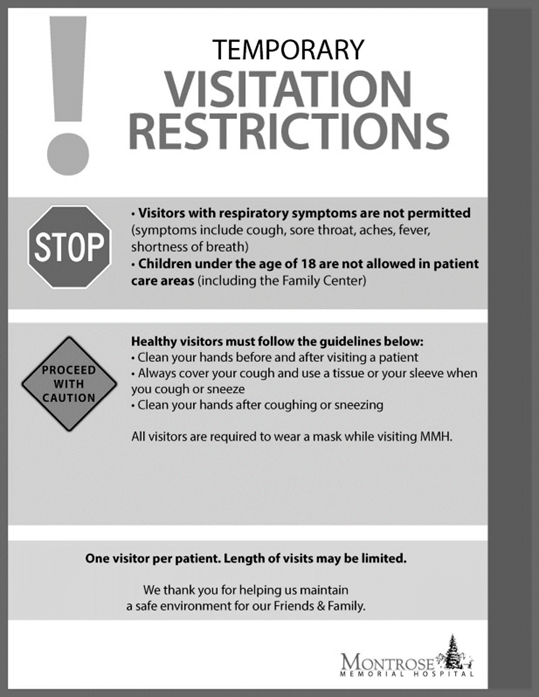
DEVELOPING A VISITOR ORIENTATION Picture This

Source: https://montrosehealth.com/blog/montrose-memorial-hospital-implements-visitation-restrictions-for-patient-safety/