Comparative Noise and Light Levels – Quick Tips

The potential for dangerous noise levels and harmful light levels exists in many day-to-day personal and workplace activities. The following information provides a better understanding of the comparative noise and light levels to a number of locations and applications.

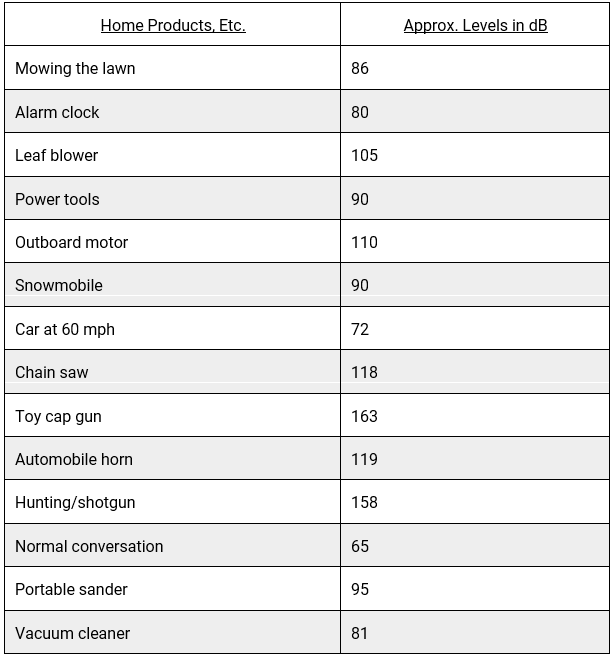
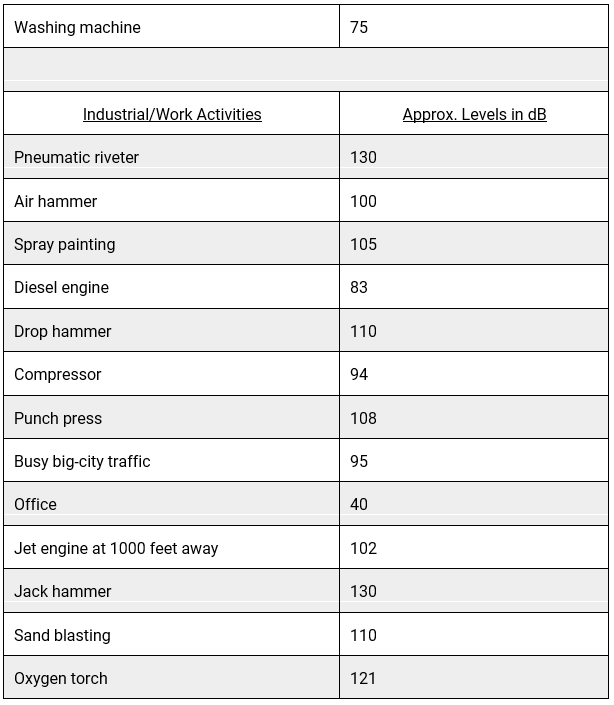
Noise Levels

Hearing loss (recordable or reportable) is addressed under OSHA in 29 CFR 1904. According to the OSHA regulation, hearing protectors must be made available to workers exposed at or above the action level of 85 dB. OSHA requires that hearing protectors be provided and worn by employees when:

  • Noise exposures exceed 90 dB
  • Employees are exposed to greater than 85 dB and have not yet had a baseline audiogram or have experienced a standard threshold shift (loss of hearing)

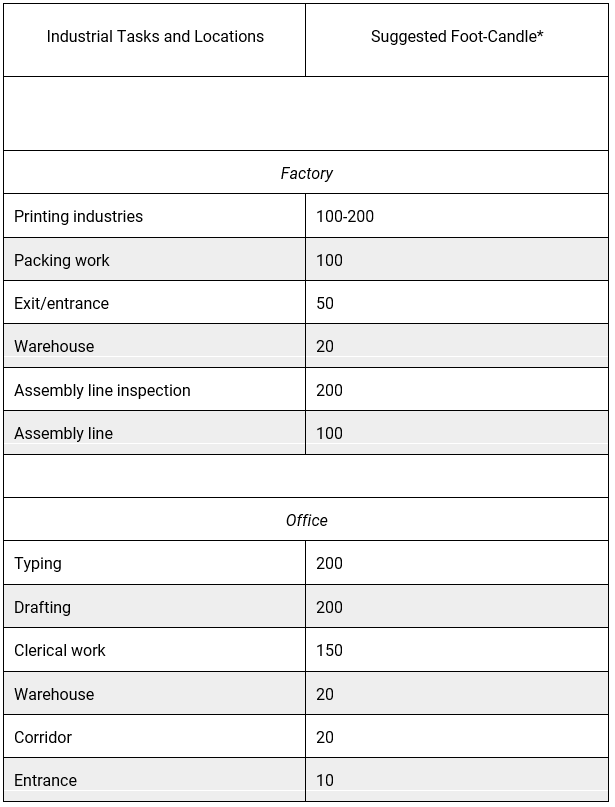
Light Levels

* Illumination levels are suggested and intended to be a minimum on the task referenced. To assure these values at all times, higher initial levels should be provided as required per task.

Commonly Asked Questions

Q: What are three indicators that I might be exposed to too much noise?

A: Three indicators of excessive noise exposure:

  1. Difficulty understanding normal conversation at work with someone two feet away.
  2. Prolonged ringing in the ears or other unusual noises after leaving work.
  3. Trouble hearing TV or speech, but can hear normally again after a few hours once off the job.

Q: When can a person begin experiencing hearing pain?

A: Depending on an individual’s hearing sensitivity, a person can begin experiencing hearing pain between 125 and 160 dB.

Q: When does OSHA require employers to implement a hearing conservation program?

A: In the United States, whenever employee noise exposures equal or exceed an eight-hour time-weighted average sound level of 85 dB. For more information, see Quick Tips #260: Effective Hearing Conservation Program Elements.

Q: What are three forms of hearing protection?

A: Earplugs, earmuffs and hearing bands.

Sources

Pattys Industrial Hygiene & Toxicology, Third Revised Edition, 1978.

Safety Technicians Handbook, Webber Publishing, 1996.

Lab Safety Supply Insights, May 1992 Volume 1, Issue 1.

Plant Engineering, July 18, 1991.


The information contained in this article is intended for general information purposes only and is based on information available as of the initial date of publication. No representation is made that the information or references are complete or remain current. This article is not a substitute for review of current applicable government regulations, industry standards, or other standards specific to your business and/or activities and should not be construed as legal advice or opinion. Readers with specific questions should refer to the applicable standards or consult with an attorney.

Source: Grainger Know How – https://www.grainger.com/know-how


Wastewater Treatment Facility Safety Guidelines – Quick Tips

Wastewater treatment facilities are dangerous workplaces. Slips, trips and falls; permit-required confined spaces; mechanical equipment; pathogenic bacteria; and hazardous chemicals are just a few of the hazards faced. Identifying these hazards, assessing the risks and following the hierarchy of controls to either eliminate or reduce exposure to these hazards is a must.

Slips, Trips and Falls

The potential for slips, trips and falls exists in every wastewater treatment facility. Steps needed to ensure your safety include identifying areas that are prone to excessive water and puddling, fixing leaks promptly, practicing good housekeeping, using non-slip surfaces and wearing slip-resistant footwear.

Permit-Required Confined Spaces

In wastewater treatment confined-space hazard awareness can mean the difference between life and death. Aeration basins, digesters, storage tanks, sample vaults, and manholes are all potential permit-required confined spaces.

The Occupational Safety and Health Administration (OSHA) defines a confined space as an area that:

  • Is large enough and so configured that an employee’s body can enter and perform assigned work;
  • Has limited or restricted means for entry or exit; and
  • Is not designed for continuous employee occupancy.

A permit-required confined space is defined as a confined space that:

  • Contains or has a potential to contain a hazardous atmosphere;
  • Contains a material that potentially could engulf an entrant;
  • Has an internal configuration that could trap or asphyxiate an entrant through inwardly converging walls or a floor that slopes downward and tapers to a smaller cross-section; and/or
  • Contains any other recognized serious safety or health hazards.

There are several steps that you should follow when developing a confined space program. The first is to evaluate the workplace and determine whether it contains permit-required confined spaces. If it is determined that there are permit-required confined spaces, then employees must be informed of the dangers by posting signs or some other equally effective means.

The next decision that must be made is whether or not the confined space should be entered:

  • If NO — Effective measures to prevent employees from entering the permit space must be taken.
  • If YES — A written permit space entry program must be developed and implemented.

Please refer to Quick Tips #115: Confined Spaces, 29 CFR 1910.146, which provides additional details on confined spaces and has a permit-required, confined-space decision flow reference chart.

Lockout/Tagout

Routine maintenance, inspections, repairs and testing take on another important area of safety known as lockout/tagout. Nearly 90 percent of the activities that require lockout/tagout are applications that require de-energizing an electrical source that provides power to a system or equipment components within the system. These might include pumps, electrical motors, valves and mixing systems. The remaining activities include lockout/tagout of pipelines and systems, and valves in which the energized source of potential danger could be water under pressure, air pressure and/or steam. All of these hazardous energy sources are present in wastewater treatment facilities.

Pathogenic Bacteria and Hazardous Chemicals

Wastewater contains bacteria, funguses, parasites and viruses that can cause intestinal, lung and other infections. Operators who are not protected from exposure can get sick.

All employees must understand the importance of making good personal hygiene a habit. Frequent hand washing with an anti-bacterial soap is a good place to start. Any open cuts or skin abrasions must be properly covered and protected. Providing a location for employees to change after their shift is highly recommended – work clothes should not be worn home.

Chlorine (gas), sodium hypochlorite, lime, aluminum sulfate, ferric chloride, various polymers, and a variety of acids and bases are commonly used to treat wastewater. Being aware of the chemicals, the physical state (liquid, solid or gas) and the physiological effects that are caused by exposure is paramount. Proper and safe chemical management should be part of your wastewater treatment facility’s culture and is everyone’s responsibility.

Chemicals and biological hazards abound in wastewater treatment. Safety data sheets (SDS) help you understand the properties, exposure limits, suggested personal protective equipment (PPE), and emergency actions for the treatment chemicals in use and must be maintained.

Hierarchy of Controls

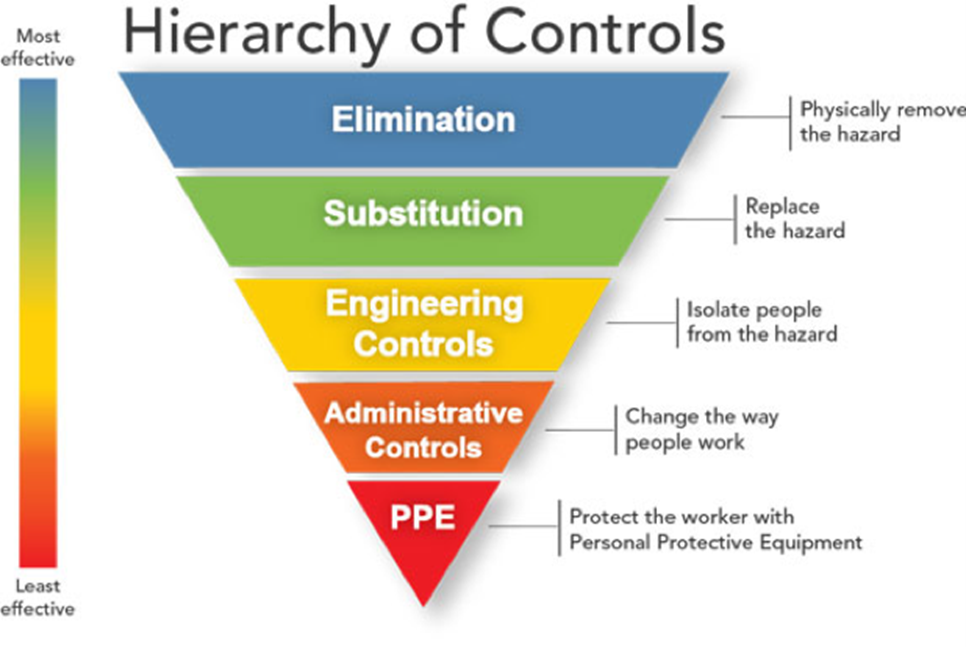
Controlling exposures to occupational hazards is the fundamental method of protecting workers. Traditionally, a hierarchy of controls has been used as a means of determining how to implement feasible and effective control solutions.

One representation of this hierarchy is shown below:

The idea behind this hierarchy is that the control methods at the top are more effective and protective than those at the bottom and should be implemented first if possible. Following the hierarchy of controls normally leads to the implementation of inherently safer systems, where the risk of illness or injury is substantially reduced.

Personal Protective Equipment (PPE)

As a last line of defense employees may depend on PPE to protect themselves from the hazards encountered in wastewater treatment facilities. PPE includes head, eye and face, hearing, respiratory, body, hand, and foot protection as well as fall protection equipment. Please visit Grainger’s Safety Resource Center for PPE to view a variety of related products, services and resources, To determine what PPE employees may need employers are required to perform a PPE hazard assessment of each work area. The purpose of the assessment is to identify any hazards that may be present and what PPE may be appropriate.

Conclusion

Wastewater treatment operations fall under many regulations. Developing written wastewater treatment facility safety guidelines that are specific to the worksite is critical. Regardless of the many safety issues that pertain to wastewater treatment workplaces, enforcing the safety procedures and processes are critical to promoting employee safety.

Commonly Asked Questions

Within the hierarchy of controls, why are engineering controls preferred over administrative and PPE controls?

Engineering controls are preferred over administrative and PPE controls because they are designed to remove the hazard at the source, before it comes in contact with the worker.

Are there specific regulations governing chemical handling and safety at wastewater treatment facilities?

Depending on which chemicals you have at your facility and the amount you store, the following regulations may apply:

  • Hazard Communication (29 CFR 1910.1200) – designed to ensure that information about chemical hazards and associated protective measures is shared with and understood by those who may be exposed
  • Process Safety Management of Highly Hazardous Chemicals (29 CFR 1910.119) – targets highly hazardous chemicals that could cause catastrophic events and encompasses every aspect of chemical use—system design, written information available, operation, employee training, contractors, pre-startup safety, mechanical integrity, non-routine work, and managing change
  • Risk Management Plan (40 CFR Part 68) – Environmental Protection Agency (EPA) regulation to protect the public and the environment from the release of highly hazardous chemicals – elements of the plan can closely track those of OSHA’s Process Safety Management regulation
  • Emergency Planning and Community Right to Know Act (40 CFR Part 370) – encourages and supports emergency planning for responding to chemical accidents, and provides local governments and the public with information about possible chemical hazard in their communities.


The information contained in this article is intended for general information purposes only and is based on information available as of the initial date of publication. No representation is made that the information or references are complete or remain current. This article is not a substitute for review of current applicable government regulations, industry standards, or other standards specific to your business and/or activities and should not be construed as legal advice or opinion. Readers with specific questions should refer to the applicable standards or consult with an attorney.


Source: Grainger Know How – https://www.grainger.com/know-how


Wind Chill Temperature Measurement – Quick Tips

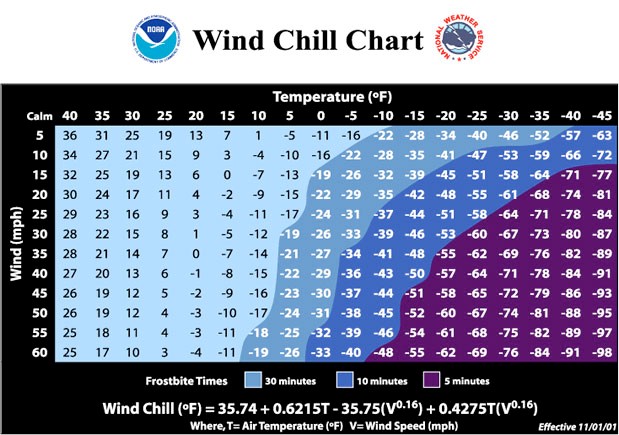
On blustery winter days, it’s not uncommon to see two temperature readings on your local weather report. That’s because the air temperature taken alone doesn’t always tell the whole story. Some seemingly moderate days will feel much colder simply because the wind is blowing. This effect is known as the wind chill factor. The wind chill index is a method that compensates for the wind chill factor using wind speed to calculate a measurement called the wind chill temperature (WCT). The wind chill temperature measurement is a more realistic number in terms of how the cold feels to human skin. This is essential information for anyone gearing up to work or play outdoors. For additional safety, the method also includes a frostbite danger index.

The wind chill index used in the U.S. and Canada was developed using advances in science, computer modeling and technology. The index is based on:

  • Wind speed measured at an average face height of 5 feet off the ground, where the face is the most likely part of the body to be exposed to the wind
  • A consistent standard for skin tissue resistance
  • Heat transfer theory (heat loss from the body to surroundings during cold windy periods)
  • A calm wind threshold of 3 mph
  • Assumption of no heat impact from the sun (clear night sky conditions)

Referring to the chart below, we see that a temperature of 10°F with a wind speed of 20 mph results in a wind chill temperature of -9°F. This variation could make a big difference in the type of clothing you’d choose to wear when spending time outdoors.


If you know the air temperature and wind speed, the wind chill temperature and frostbite risk can easily be determined using this reference chart. For more information on the chart and other winter related resources, please click on this National Weather Service Wind Chill Chart and Winter Resources link.

Commonly Asked Questions

Q: What is the wind chill temperature?

A: Wind chill temperature is the temperature it feels like outside to people and animals. Wind chill is based on the rate of heat loss from exposed skin caused by the combined effects of wind and cold.

Q: What is frostbite?

A: Frostbite is the result of the body tissue freezing and most frequently affects the extremities such as fingers, nose and toes. Symptoms include a pale white appearance and loss of feeling in these extremities.

Q: What is an anemometer?

A: An anemometer is a device for measuring wind speed.

Q: What is hypothermia?

A: Hypothermia occurs when the body temperature falls below 95°F. Hypothermia is caused by exposure to cold and is aggravated by wet conditions, wind and exhaustion. Warning signs include uncontrollable shivering, disorientation, memory loss, slurred speech, incoherence, drowsiness and exhaustion.

Q: Is frostbite possible when the temperature is above freezing but the wind chill is below freezing?

A: The air temperature has to be below freezing in order for frostbite to develop on exposed skin. Wind chill cannot bring the temperature to below freezing for humans and animals when the thermometer shows it is above freezing, so you will not get frostbite; however, you might get hypothermia from exposure to cold. You can only get frostbite if the actual air temperature, not the wind chill temperature, near your skin is below freezing.

Additional information on cold weather safety:

https://www.osha.gov/dts/weather/winter_weather/index.html

Source

NOAA-National Oceanic and Atmospheric Administration

The information contained in this article is intended for general information purposes only and is based on information available as of the initial date of publication. No representation is made that the information or references are complete or remain current. This article is not a substitute for review of current applicable government regulations, industry standards, or other standards specific to your business and/or activities and should not be construed as legal advice or opinion. Readers with specific questions should refer to the applicable standards or consult with an attorney.

Source: Grainger Know How – https://www.grainger.com/know-how


Avoid Silicosis from Abrasive Sandblasting – Quick Tips

Abrasive blasting uses compressed air or water to direct a high velocity stream of an abrasive material to clean an object or surface, remove burrs, apply a texture or prepare a surface for painting. Abrasive blasting is more commonly known as sandblasting since silica sand is commonly used as the abrasive, although not the only one always used. Industries that rely on sandblasting on a daily basis include painters who work on large structures like bridges, granite monument makers, foundries and shipbuilders.

The term “silica” broadly refers to the mineral compound silicon dioxide (SiO2). Although silica can be crystalline or amorphous in form, crystalline silica is more hazardous to employees. It is most commonly found in the form of quartz, but it is also found in substances such as cristobalite, tridymite and tripoli. Breathing crystalline silica dust poses an industrial hazard and can lead to severe health problems and even death.

Exposure to silica or crystalline silica can cause silicosis and a host of other illnesses. Silicosis is one of the world’s oldest known occupational diseases, with reports of employees contracting the disease dating back to ancient Greece.

In March, 2016 the Occupational Safety and Health Administration (OSHA) issued a final rule to control exposure to respirable crystalline silica. The rule is comprised of two standards: one for Construction (29 Code of Federal Regulations (CFR) 1926.1153) and the other for General Industry (29 CFR 1910.1053) and Maritime (29 CFR 1915.1053). The Maritime and General Industry standards are exactly the same but differ from the Construction standard. The key difference lies in qualifying the worker exposure level to crystalline silica. The General Industry/Maritime Standard requires the employer to perform air monitoring to determine the eight-hour average exposure level for each affected job task. Employers governed by the Construction standard can either use a control method spelled out for common construction work tasks or perform air monitoring as detailed in the General Industry/Maritime standard.

Air Monitoring

When using silica in the workplace, the first action that needs to be completed is to see what, if any, protective measures need to be taken. To make this determination, collecting and measuring the concentration of silica in the air will need to be done. Once collected, the sample is sent to a laboratory for analysis. The results of this analysis will determine if better ventilation and/or a change in work practices or respiratory protection is needed. Typically, air monitoring is done by an Industrial Hygienist. If there is not an Industrial Hygienist or safety professional available on your worksite, contact Grainger for assistance. Grainger provides several safety based services such as collecting silica exposure samples.

The new action limit and permissible exposure limit (PEL) for crystalline silica for General Industry, Construction and Maritime are all the same and can be found in Construction (29 CFR 1926.1153), General Industry (29 CFR 1910.1053) or Maritime (29 CFR 1915.1053). The action limit is established at 25 micrograms per meter cubed (ug/m3) and the PEL is established at 50 ug/m3.

To help control the risk of respirable crystalline silica exposure, OSHA’s “three lines of defense” philosophy is suggested. The first line of defense is to eliminate and/or engineer the crystalline silica exposure hazard out. When engineering/elimination controls are not feasible or practical, the second and third lines of defense can be used to help control the crystalline silica exposure hazard. The second line of defense is administrative controls, and the last line of defense to be considered is personal protective equipment (PPE).

Three Lines of Defense

  1. Engineering Controls
  • Substitution
  • Isolation and Containment
  • Ventilation
  1. Silica Substitutes>

OSHA suggests the first engineering control to consider is substitution. OSHA suggests using a less toxic abrasive blasting media that can be delivered with water to reduce dust generation. Some of the possible substitutes are:

  • Dry ice
  • Plastic bead media
  • Sponge
  • Sodium bicarbonate (baking soda)
  • Ground walnut shells
  • Ground corn cob
  • High pressure water

The advantages of using a silica substitute outweigh using silica in abrasive sandblasting. Any health issues and healthcare costs related to silica would be greatly reduced or eliminated. The time and cost of implementing and maintaining engineering controls would also be eliminated. The disadvantages are that the substitutes may not be as hard as a silica product; therefore, more of the substitute may need to be used to achieve the same result. It may also be more expensive. However, with several substitute types available, there should be one product that will get your needed job done.

  1. Isolation and Containment

OSHA suggests if substitution is not feasible then isolation and containment is the next best engineering control method for controlling silica exposure in the workplace. Some examples of isolation and containment include:

  • Use of barriers and curtain walls to isolate the blasting operation from the operator
  • Use blast rooms or blast cabinets for smaller operations
  • Use restricted areas for non-enclosed blasting operations
  • Keep coworkers away from the blaster

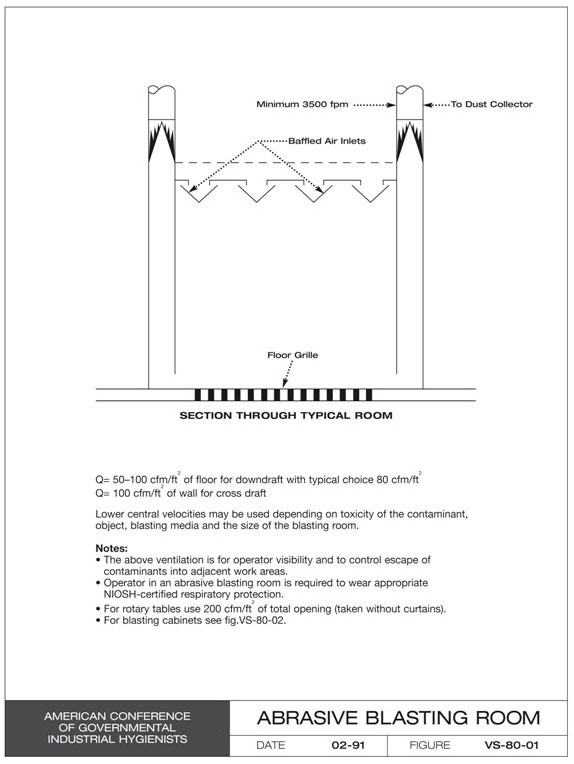
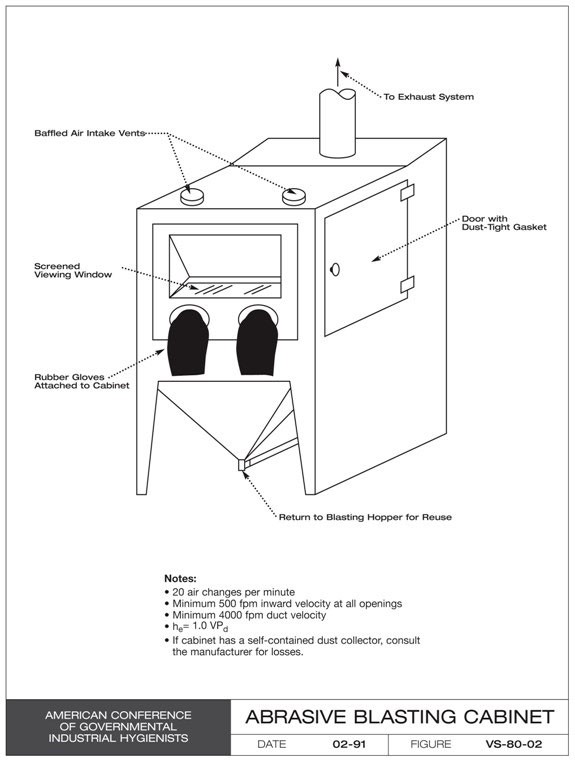
A blasting room is an enclosed room where the operator works inside the area, moving around freely with respiratory protection equipment such as an accepted blasting helmet supplied air system. Sandblasting in a blasting room ( Figure 1 below), is generally performed where larger pieces need to be sand blasted. Cabinet sandblasting (Figure 2 below), another common application, is generally performed in an enclosed cabinet where the operator stands outside the cabinet and operates a sand blast nozzle through openings in the cabinet wall. Gloves usually extend into the cabinet and the silica dust is evacuated to a dust collection and ventilation system. Where a room or cabinet enclosure is not feasible, due to size or logistics, abrasive sandblasting is done in an outdoor location. The ventilation needed is dependent on each situation. OSHA standard 1910.94 (a)(4)(i) gives the requirements on the construction, installation and inspection requirements for abrasive blasting ventilation as set forth by the American National Standard Institute (ANSI) which is specified by OSHA.

Fig.2

  1. Ventilation

The next line of engineering controls OSHA suggests to use is ventilation. OSHA regulation 1910.94(a)(1)(viii) requires mechanical ventilation for the removal of contaminated air where abrasive sandblasting and silica use takes place. In protecting employees from contaminated air, engineering controls such as ventilation should be the first choice, after sourcing silica substitutes. This can be accomplished through a number of options. OSHA describes a ventilation system in 1910.94(a)(1)(viii) as “A system for removing contaminated air from a space, comprising two or more of the following elements (a) enclosure or hood, (b) duct work, (c) dust collecting equipment, (d) exhauster and (e) discharge stack.”

  1. Administrative Controls

If all engineering controls prove to be infeasible then administrative controls can be used. Perform routine cleanup using wet methods or high efficiency particulate air/absolute (HEPA) filtered vacuuming to minimize the accumulation of toxic dusts. Other suggested activities to consider include:

  • Do not use compressed air to clean as this will create dust in the air
  • Clean and decontaminate tarps and other equipment on the worksite
  • Schedule blasting when the least number of workers are at the site
  • Avoid blasting in windy conditions to prevent the spread of any hazardous materials

Personal Hygiene Practices

  • Prohibit eating, drinking or using tobacco products in blasting areas
  • Provide wash stations so workers can wash their hands and face routinely and before eating, drinking or smoking
  • Vacuum or remove contaminated work clothes before eating, drinking or smoking
  • Provide accommodations for end-of-shift showers and change areas with separate storage facilities for street clothes, protective clothing and equipment
  • Keep contaminated clothing and equipment out of the clean change area
  1. Personal Protective Equipment (PPE) Controls

The last line of defense controls to be used when all engineering and administrative controls prove to be infeasible is PPE.

Respiratory Protection

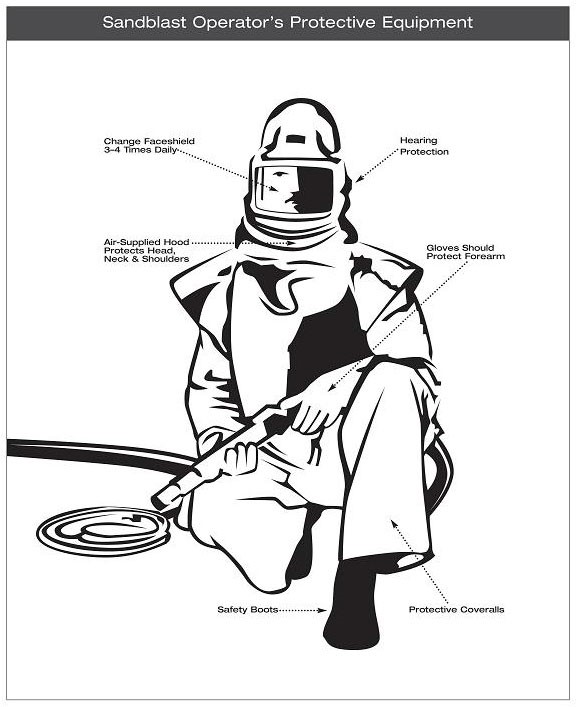
An abrasive-blasting respirator must cover the wearer’s head, neck and shoulders to protect the wearer from rebounding abrasive. Workers must use only respirators approved by the National Institute for Occupational Safety and Health (NIOSH) to provide protection from dusts produced during abrasive-blasting operations:

  • Type CE NIOSH-certified blasting airline respirator with positive pressure blasting helmet

Air purifying respirators and powered air purifying respirators (PAPR’s) are not recommended for abrasive blasting operations but they may be suitable for auxiliary work, such as clean-up operations. In very limited situations, the 1910.94(a)(5)(ii)(b) interpretation only provides for limited deviation, such as a breakdown in the air supply or when the abrasive blasting respirator is temporarily unavailable. Only then can a dust filter respirator can be used as interim protection. If it does not provide additional face and eye protection supplementary equipment will be needed. This is in accordance with the OSHA standard 1910.94 (a)(5)(v)(b).

Other Personal Protective Equipment

Whether it be General Industry 29 CFR1910, Construction 29 CFR 1926 or Shipyard 29 CFR 1915 standards, all these OSHA standards have PPE requirements that need to be followed. The requirements may also intertwine with each other such as the shipyard PPE standard 1915 referring to the 1910 standard for respiratory protection. All three industry standards are similar in their PPE requirements. The following is an example of the requirements from the shipbuilding 1915 standard for PPE.

Workers performing abrasive blasting should wear:

  • A protective helmet (if the respirator design does not provide this protection and there is potential for head injury); (155)
  • Appropriate protective clothing, including gloves to protect from the impact of abrasives; (34(c)(3)(iv))
  • Safety shoes or boots; (156)
  • Hearing protectors to reduce noise levels below the OSHA PELs; (95)

An example of typical PPE worn by a worker when performing abrasive blasting is shown in Figure 3.

Conclusion

Abrasive blasting can create a host of safety issues, considerations and necessary protections when it comes to employees in any industry in which it is performed. To help keep employees who are performing abrasive blasting and those in the areas around them safe, follow the suggestions found in OSHA’s fact sheet on protecting workers from the hazards of abrasive blasting materials.

For more on silica exposure and silicosis see our Crystalline Silicon Exposure.

Sources for Information:

Occupational Safety and Health Administration(OSHA) Fact Sheet 3697, “Protecting Workers from Hazards of Abrasive Blasting Materials”, November 2013

Occupational Safety and Health Administration(OSHA) Guidance Document, “Abrasive Blasting Hazards in Shipyard Employment”. December 2006.


The information contained in this article is intended for general information purposes only and is based on information available as of the initial date of publication. No representation is made that the information or references are complete or remain current. This article is not a substitute for review of current applicable government regulations, industry standards, or other standards specific to your business and/or activities and should not be construed as legal advice or opinion. Readers with specific questions should refer to the applicable standards or consult with an attorney.


Source: Grainger Know How – https://www.grainger.com/know-how


What is the CDC – Quick Tips

History

In 1946, the Communicable Disease Center (CDC) was opened in the old Office of Malaria Control in War Areas in downtown Atlanta, Georgia. Its mission at the time was to work with state and local health officials in the fight against malaria, typhus and other communicable diseases. Through the 1960s, the CDC started to broaden its focus to include polio and then smallpox. Over time the CDC established closer working ties with the states throughout the U.S.

The 1970s saw the name of the CDC change to the Center for Disease Control to better reflect its broader mission in preventive health. In 1973, the National Institute for Occupational Safety and Health (NIOSH) became part of the CDC.

In the 1980s, the agency was again renamed, this time to the Centers for Disease Control to reflect a change in its organizational structure. The 1980s also saw the CDC becoming much more diversified. It established the Violence Epidemiology Branch and the Center for Chronic Disease Prevention and Health Promotion. Also, the Office of Smoking and Health was incorporated into the CDC.

In the 1990s, the CDC once again changed its name, this time to include “Prevention” but retained the initials CDC.

The CDC’s Current Role in Protecting Health and Safety

The mission of the CDC is to promote health and quality of life by preventing and controlling disease, injury and disability. It works to accomplish this goal with the help of partners throughout the nation and world to monitor health, detect and investigate health problems, conduct research to enhance prevention, develop and advocate sound public health policies, implement prevention strategies, promote healthy behaviors, foster safe and healthful environments and provide leadership and training.

In 1981, with the California Department of Health, the CDC reported the first cases of an illness that would later be called acquired immunodeficiency syndrome (AIDS). In 1987, the CDC reported a strong association between Reye Syndrome and aspirin, noting that 90 percent of cases could be preventable by reducing aspirin treatment for children. In May of 1993, an outbreak of an unexplained pulmonary illness occurred in southwestern United States. Virologists used new methods to pinpoint virus genes at the molecular level. The new disease caused by the virus is called hantavirus pulmonary syndrome, or HPS.

New diseases have the potential ability to spread across the globe in just days. The CDC plays a critical role in controlling these diseases and travels at a moment’s notice to investigate outbreaks at home and abroad.

CDCs Current Role in Providing Credible Information to Enhance Health Decisions

The CDC works with public health and grassroots partners, the media and the Internet to make sure the best health and safety information is available to the communities and people that need it. Some examples of actions the CDC takes to communicate information include the following:

  • Since 1961, the CDC has taken over the publication of the Morbidity and Mortality Weekly Report (MMWR), which publishes important data on deaths and certain diseases from every state every week.
  • Since 1995, the CDC has published the Emerging Infectious Diseases Journal, which is a peer-reviewed publication established expressly to promote the recognition of new and reemerging infectious diseases around the world.
  • The National Vital Statistics System produces key indicators of health from birth and death certificates.
  • The Behavioral Risk Factor Surveillance System (BRFSS) is the primary source of information on the prevalence of risk behaviors among Americans and their perceptions of a variety of health issues.
  • The CDC has established seven Centers of Excellence for Birth Defects Prevention Research across the country.

The CDC continues to work with both foreign and domestic agencies to inform all people of current global health issues. Some of the new issues the CDC is dealing with include:

  • Meeting the health and safety needs of a changing workforce
  • Unitizing new technologies to provide credible health information through multimedia tools such as podcasts, mobile apps and blogs to their resume of services that help keep people healthy and safe.
  • Protecting individuals against emerging infectious diseases including bioterrorism by offering general information, fact sheets and contact information in the event of an emergency all available today at the CDC website cdc.gov
  • The CDC continues to work toward fostering safe and healthy environments by offering on-line tools and resources with up to date on line information.

Source

http://www.cdc.gov


The information contained in this article is intended for general information purposes only and is based on information available as of the initial date of publication. No representation is made that the information or references are complete or remain current. This article is not a substitute for review of current applicable government regulations, industry standards, or other standards specific to your business and/or activities and should not be construed as legal advice or opinion. Readers with specific questions should refer to the applicable standards or consult with an attorney.

Source: Grainger Know How – https://www.grainger.com/know-how


West Nile Virus Facts and Insect Bite Prevention – Quick Tips

West Nile Virus first made headlines in the United States after the first case was identified in New York City, nearly two decades ago. And while it was new to this country at the time, West Nile Virus had been on the radar of healthcare officials for years. According to the World Health Organization (WHO), West Nile Virus was first identified in 1937 in the West Nile District of Uganda, and the first appearance in North America was in 1999.

How is West Nile Virus Spread?

Infected mosquitoes spread West Nile Virus. Mosquitoes most commonly pick up the disease from infected birds and go on to infect other animals while feeding on their blood. In a mosquito, the virus is found in the salivary glands which mosquitoes use to anesthetize the skin of the animal on which they are feeding.

West Nile Virus in Humans

According to the Centers for Disease Control and Prevention (CDC), anyone can get infected with West Nile Virus, although some people are at higher risk for infection of the brain or spinal cord. For example, people over the age of 50 are at higher risk for experiencing encephalitis (swelling of the brain) as a result of West Nile Virus exposure.

In terms of the symptoms of West Nile Virus, the CDC says most people (70-80%) who become infected with West Nile Virus do not have any symptoms. About one in five people who are infected will develop a fever with other symptoms such as headache, body aches, joint pains, vomiting, diarrhea, or rash. Most people with this type of West Nile Virus recover completely, but feeling tired and weak can last for weeks or months, according to the CDC.

While the vast majority of those infected with West Nile will have minor symptoms or no symptoms at all, for the unfortunate few it can have serious health consequences. The CDC says that less than 1% of people who are infected will develop a serious neurologic illness such as encephalitis or meningitis (inflammation of the lining of the brain and spinal cord). The symptoms of neurologic illness can include headache, high fever, neck stiffness, disorientation, coma, tremors, seizures, or paralysis. The CDC also reports that since West Nile Virus was first identified in the U.S. in 1999, more than 1,900 (as of spring 2017) people have died from complications caused by West Nile Virus.

Prevention

Presently, there’s no West Nile Virus vaccine. According to the CDC, the best way to prevent diseases spread by mosquitoes is to protect yourself and your family from mosquito bites. They recommend the following:

  • Wear long-sleeved shirts and long pants.
  • Stay in places with air conditioning and window and door screens to keep mosquitoes outside.
  • Treat your clothing and gear with permethrin or buy pre-treated items.
  • Use Environmental Protection Agency (EPA)-registered insect repellents and always follow the product label instructions.
    • When used as directed, these insect repellents are proven safe and effective even for pregnant and breastfeeding women.
  • Sleep under a mosquito bed net if air conditioned or screened rooms are not available or if sleeping outdoors.

Specifically addressing the EPA registered mosquito repellants, the CDC says that those containing DEET, picaridin, IR3535, and some oil of lemon eucalyptus and para-menthane-diol products provide longer-lasting protection. The EPA registration number means that the insect repellent manufacturer has provided the EPA with technical information on the safety of the product and its effectiveness against mosquitoes. The EPA does not expect the product to cause adverse effects to human health or the environment when used according to the label.

When considering using repellants around children, the CDC offers the following directions:

  • Do not use insect repellent on babies younger than two months old.
  • Do not use products containing oil of lemon eucalyptus or para-menthane-diol on children younger than three years old.
  • Dress your child in clothing that covers their arms and legs.
  • Cover cribs, strollers and baby carriers with mosquito netting.
  • Do not apply insect repellent onto a child’s hands, eyes, mouth, and cut or irritated skin.
  • Adults: Spray insect repellent onto your hands and then apply to a child’s face.

Mosquito Control

In its’ West Nile Virus in the United States: Guidelines for Surveillance, Prevention, and Control resource, the CDC says an effective mosquito control program must address both adult mosquitos and mosquito larva. The use of pesticides is an important tool in a comprehensive mosquito control program. And the EPA offers guidance and direction for pesticide use to combat both adult and larval mosquito control.

Source control is another piece of a comprehensive mosquito control plan. Mosquitos need access to water to reproduce so eliminating standing water, even tiny amounts, can have a huge impact on mosquito populations. The CDC says that source reduction can range from draining roadside ditches to properly disposing of discarded tires and other trash containers. Even standing water in a bottle cap can become a mosquito breeding ground according to the EPA.

OSHA

The Occupational Safety and Health Administration (OSHA) created its Workplace Precautions Against West Nile Virus as a resource for employers who have workers that could be exposed to West Nile Virus. OSHA says that workers primarily working outside are at risk, particularly in warmer weather (when mosquitoes are more likely to be present). In regions of the U.S. with warm climates, workers are at risk for a longer period. At risk occupations include farm workers, loggers, landscapers/groundskeepers, construction workers, painters, summer camp workers, pavers and other outdoor workers.

In addition, OSHA says that in at least two cases, laboratory workers handling West Nile Virus-infected fluids or tissues have become infected; therefore, these workers should also take precautions against West Nile Virus infection. An exposure may occur due to a needlestick, an accidental cut, or an existing open wound that comes in contact with infectious fluid or tissues. Laboratory workers who work with West Nile Virus- infected animals or who handle other tissue, fluid or other West Nile Virus-infected material should report to their supervisors if they believe they may have had an exposure that could result in infection. Laboratory workers handling human blood or other potentially infectious materials require protection as described in OSHA’s Bloodborne Pathogens Standard, 29 Code of Federal Regulations (CFR) 1910.1030.

Commonly Asked Questions

  1. Where can I get more information on West Nile Virus?

A: Both the CDC and the WHO have West Nile Virus landing pages where additional information and updates reside.

  1. Is West Nile Virus the same as Zika Virus?

A: These are two separate viruses that pass to humans primarily through mosquito bites. For information on the Zika Virus see Quick Tips #395.


The information contained in this article is intended for general information purposes only and is based on information available as of the initial date of publication. No representation is made that the information or references are complete or remain current. This article is not a substitute for review of current applicable government regulations, industry standards, or other standards specific to your business and/or activities and should not be construed as legal advice or opinion. Readers with specific questions should refer to the applicable standards or consult with an attorney.

Source: Grainger Know How – https://www.grainger.com/know-how


Avian Influenza Information – Quick Tips

What Is Bird Flu?

Bird flu is the disease caused by the viral infection with avian (bird) influenza (flu) viruses. These viruses occur naturally among wild aquatic birds worldwide. They carry the viruses in their intestines and respiratory tract and usually do not get sick from them. However, bird flu is very contagious among birds and can possibly sicken or kill domesticated birds such as chickens, ducks and turkeys.

Which Virus Causes Bird Flu?

There are four types of influenza virus: A, B, C and D. The virus that causes bird flu is influenza A. These viruses are categorized based on their genetic makeup, impact on bird health and other factors. AI viruses are classified by a combination of two groups of proteins: the hemagglutinin or H proteins, of which there are 18 (H1–H18), and neuraminidase or N proteins, of which there are 11 (N1–N11). Some of these are worse or more severe than others.

How Does the Bird Flu Affect Birds?

Most often there are no signs a bird is infected. But in some cases, the viruses are highly pathogenic, meaning they kill and spread quickly. A1 strains are divided into two groups based on the ability of the virus to produce disease in domestic poultry: low pathogenic avian influenza (LPAI) and highly pathogenic avian influenza (HPAI). In the late 1990s, a new strain of bird flu arose that was remarkable for its ability to cause severe disease and death, especially in domesticated birds. As a result, this strain was called highly pathogenic avian influenza and termed H5N1.

From December 2014 to June 2015, the U.S. endured its largest animal health emergency with more than 200 cases of highly pathogenic avian influenza found in commercial and backyard poultry, as well as wild birds. Additional cases were confirmed in 2016, 2017, 2018 and early 2019.

Is Bird Flu Contagious to Humans?

At first, bird flu was thought only to infect wild and domestic bird populations, and not humans. However, some of the strains, such as H5N1 and H7N9, have caused serious infections in people. These cases have been largely confined to Southeast Asia, Africa, the Pacific, the Middle East and parts of Europe. One of the more common means of contracting the virus is through the inhalation of dried/pulverized fecal matter from an infected bird.

There is no evidence that the virus can spread from one human to another. However, the World Health Organization (WHO) and other experts warn that if it ever spreads person to person, it could cause a worldwide pandemic. Unlike an annual flu that people typically encounter, a pandemic flu occurs three or four times a century and can occur in any season. A pandemic infection rate can affect anywhere from 25 percent to 50 percent of the population and is usually associated with more severe illness and a high risk of death.

What Are the Symptoms of Bird Flu in Humans?

For people who might have had contact with the H5N1 virus, the infectious period is seven days after resolution of fever in adults and 21 days after onset of illness in children. The median time between exposure and onset of illness is three days and can range from two to four days. Avian flu symptoms are like other flu types and include fever, malaise, sore throat and cough. In certain cases, victims also might develop conjunctivitis.

How Can I Prevent the Spread of Bird Flu?

Decontamination and isolation techniques are suggested for people culling, transporting or disposing of infected birds, as well as for people in the healthcare industry who might have contact with the virus. People should choose and use the appropriate level of personal protective equipment (PPE), which might include dust- and fluid-resistant protective garments/clothing, gloves, overshoes that can be disinfected or disposed of, goggles and respiratory protection. The minimum form of respiratory protection that OSHA suggests is an N95, N99 or N100 NIOSH-approved disposable particulate respirator.

The most basic method to control the spread of infection is proper hand hygiene practices, such as washing hands thoroughly with soap and clean running water for 15 to 20 seconds. If handwashing facilities are not readily available, use of alcohol-based hand sanitizers that contain at last 60 percent alcohol is suggested.

Research on vaccines against avian influenza viruses is ongoing. Antiviral drugs are being produced and stockpiled to help limit the symptoms and potentially reduce the disease’s opportunity to spread.

As a general precaution, people should avoid wild birds and observe them only from a distance. They should also avoid contact with domestic birds (poultry) that appear ill or have died, and avoid contact with surfaces that appear to be contaminated with feces from wild or domestic birds.

Commonly Asked Questions

Q: What are bird flu symptoms?
A: Reported symptoms of avian influenza in humans have ranged from normal influenza-like symptoms (cough, sore throat, fever and muscle aches) to eye infections, acute respiratory distress, pneumonia, viral pneumonia and other severe, life-threatening complications.

Q: What are the antiviral agents for bird flu?
A: Some antiviral drugs that could potentially treat or prevent bird flu are clinically effective against uncomplicated influenza A infection, but they might have limitations. In addition, these drugs are expensive and supplies are limited. Authorities have stockpiled the antiviral drug Tamiflu, which seems to be an effective antiviral agent against bird flu. Studies are under way to prove its effectiveness and the effectiveness of other antiviral agents such as Oseltamavir, Zanamavir and Relenza.

Q: What is used to clean/disinfect surfaces within the healthcare industry that have been exposed to the virus?
A: According to the World Health Organization’s interim infection-control guidelines for healthcare facilities, the virus is inactivated by 70 percent alcohol and by chlorine. Therefore, cleaning environmental surfaces with a neutral detergent followed by a disinfectant solution is recommended.

Sources

World Health Organization – Avian Influenza

United States Department of Agriculture – Avian Influenza

Centers for Disease Control and Prevention NIOSH Alert – Protecting Poultry Workers From Avian Influenza (Bird Flu) (PDF)

United States Department of Agriculture Animal and Plant Health Inspection Service

Centers for Disease Control Prevention Influenza Type A Viruses


The information contained in this article is intended for general information purposes only and is based on information available as of the initial date of publication. No representation is made that the information or references are complete or remain current. This article is not a substitute for review of current applicable government regulations, industry standards, or other standards specific to your business and/or activities and should not be construed as legal advice or opinion. Readers with specific questions should refer to the applicable standards or consult with an attorney.

Source: Grainger Know How – https://www.grainger.com/know-how


Hantavirus – Quick Tips

History

According to the Centers for Disease Control and Prevention (CDC), hantaviruses are a group of viruses that may be carried by some rodents. Some hantaviruses can cause a rare but deadly disease called Hantavirus Pulmonary Syndrome. The disease is commonly called “HPS” for short. Hantavirus and HPS first appeared on the radar of healthcare professionals in 1993 after a cluster of mysterious respiratory related deaths occurred in the Four Corners (the borders of Arizona, Colorado, New Mexico and Utah) region of the U.S.

Within six months of these reports, area medical investigators and virologists were able to link the deaths to a virus that was carried by rodents. Researchers then began to examine stored lung tissue from people in the area who died from unexplained lung diseases. They found evidence of infection from the hantavirus as early as 1959 indicating the virus existed, unrecognized, for several decades.

The CDC believes that the initial outbreak in the Four Corner region was caused by a 1993 increase of rainfall in the area. The resulting spike in crop production meant more food for rodents. The CDC estimates the rodent population increased by 100% over the prior year. This spike in population led to increased rodent contact with people.

How the Virus is Transmitted

According to the CDC, the deer mouse, white-footed mouse, cotton rat and rice rat are the known transmitters of hantaviruses in the U.S. But in the interest of safety, the CDC recommends avoiding contact with all rodents.

Transmission occurs, according to the CDC, when rodents shed the virus in their urine, droppings and saliva. The virus is mainly transmitted to people when they breathe in air contaminated with the virus.

The CDC describes the most common transmission method and less common methods this way:

The most common reason is when fresh rodent urine, droppings, or nesting materials are stirred up, tiny droplets containing the virus get into the air. This process is known as “airborne transmission.”

Less common methods rodents may spread hantavirus to people include:

  • If a rodent with the virus bites someone, the virus may be spread to that person, but this type of transmission is rare.
  • Researchers believe that people may be able to get the virus if they touch something that has been contaminated with rodent urine, droppings, or saliva, and then touch their nose or mouth.
  • Researchers also suspect people can become sick if they eat food contaminated by urine, droppings, or saliva from an infected rodent.

According to the Mayo Clinic, the North American strain of HPS isn’t transmitted via person-to-person contact. They state, “People who become infected with the North American strain of hantavirus pulmonary syndrome aren’t contagious to other people. However, certain outbreaks in South America have shown evidence of being transmitted from person-to-person, which illustrates variation across strains in different regions.” The CDC’s hantavirus resource page also states that HPS cannot be transferred person-to-person via blood transfusion.

The CDC flags occupations such as construction, utility and pest-control as being most at risk for hantavirus exposure. However, anyone who comes in contact with a rodent is at risk.

The CDC also identifies activities that place individuals at risk for hantavirus exposure as:

  • Opening and cleaning previously unused buildings
    • Opening or cleaning cabins, sheds and outbuildings, including barns, garages and storage facilities that have been closed during the winter is a potential risk for hantavirus infections, especially in rural settings.
  • Housecleaning activities
    • Cleaning in and around your own home can put you at risk if rodents have made it their home too. Many homes can expect to shelter rodents, especially as the weather turns cold.
  • Work-related exposure
    • Construction, utility and pest control workers can be exposed when they work in crawl spaces, under houses, or in vacant buildings that may have a rodent population.
  • Campers and hikers
    • Campers and hikers can also be exposed when they use infested trail shelters or camp in other rodent habitats.

Through January of 2016, there were 692 confirmed cases of the HPS in the U.S. This map from the CDC shows the breakdown for each state (map current as of January 8, 2016):

Hantavirus Pulmonary Syndrome (HPS) Cases, by State of Residence

Symptoms and Treatment

According to the CDC, “due to the small number of HPS cases, the “incubation time” is not positively known. However, on the basis of limited information, it appears that symptoms may develop between one and eight weeks after exposure to fresh urine, droppings, or saliva of infected rodents.” The CDC breaks symptoms down into early and late. Early symptoms include fatigue, fever and muscle aches, especially in the large muscle groups—thighs, hips, back, and sometimes shoulders. These symptoms are universal. There may also be headaches, dizziness, chills and abdominal problems, such as nausea, vomiting, diarrhea, and abdominal pain. About one-half of all HPS patients experience these symptoms.

Four to 10 days after the initial phase of illness, the late symptoms of HPS appear. According to CDC resources, “these include coughing and shortness of breath, with the sensation of, as one survivor put it, a “…tight band around my chest and a pillow over my face” as the lungs fill with fluid.” The CDC reports that HPS has a mortality rate of 38%.

There are limited treatment options for HPS, and both the CDC and Mayo Clinic state that because of this, the earlier the victim receives medical attention the better the long term prognosis. The Mayo Clinic offers the following overview of treatment protocols:

Specific treatment options for hantavirus pulmonary syndrome are limited. But the prognosis improves with early recognition, immediate hospitalization and adequate support for breathing.

Supportive therapy

People with severe cases need immediate treatment in an intensive care unit. Intubation and mechanical ventilation may be needed to support breathing and to help manage fluid in the lungs (pulmonary edema). Intubation involves placing a breathing tube through your nose or mouth into the windpipe (trachea) to help keep your airways open and functioning.

Blood oxygenation

In extremely severe cases of pulmonary distress, you’ll need a method called extracorporeal membrane oxygenation to help ensure you retain a sufficient supply of oxygen. This involves continuously pumping your blood through a machine that removes carbon dioxide and adds oxygen. The oxygenated blood is then returned to your body.

Prevention, Personal Protection and Cleaning

Back in 1993, during the peak of the hantavirus outbreak, the CDC published their Interim guidelines for hantavirus risk reduction. There have been no updates to this document since its original publication. The guidelines offer direction for those looking to safely eradicate rodent infestations and those looking to reduce exposure risk when rodent contact is a possibility. Detailed cleaning procedures as well as appropriate personal protective equipment (PPE) are discussed. For those seeking direction in this area, please refer to the CDC’s guidelines.

Commonly Asked Questions

Q: What PPE should I use if I’m cleaning up rodent contaminants that may contain hantavirus?

A: The best answer to this is currently found in the CDC’s Hantavirus Infection — Southwestern United States: Interim Recommendations for Risk Reduction. It states the following, “Persons involved in the clean-up should wear coveralls (disposable if possible), rubber boots or disposable shoe covers, rubber or plastic gloves, protective goggles, and an appropriate respiratory protection device, such as a half-mask air-purifying (or negative-pressure) respirator with a high-efficiency particulate air (HEPA) filter or a powered air-purifying respirator (PAPR) with HEPA filters. Respirators (including positive-pressure types) are not considered protective if facial hair interferes with the face seal, since proper fit cannot be assured. Respirator practices should follow a comprehensive user program and be supervised by a knowledgeable person.” Since 1993, the approval designations for negative-pressure, air-purifying respirators has changed. The current equivalent to a HEPA filter is a P100 filter.

Sources

CDC’s Hantavirus Resource Page

Mayo Clinic’s Hantavirus Resource Page

OSHA’s Hantavirus Resource Page

CDC’s Hantavirus Infection — Southwestern United States: Interim Recommendations for Risk Reduction


The information contained in this article is intended for general information purposes only and is based on information available as of the initial date of publication. No representation is made that the information or references are complete or remain current. This article is not a substitute for review of current applicable government regulations, industry standards, or other standards specific to your business and/or activities and should not be construed as legal advice or opinion. Readers with specific questions should refer to the applicable standards or consult with an attorney.

Source: Grainger Know How – https://www.grainger.com/know-how


Biosafety Levels – Quick Tips

When working with biological contaminants, protecting just the worker is oftentimes not enough. Systems must also be in place to protect the environment and the facility from possible contamination. Depending on the type of potentially infectious biological microorganism or laboratory animal, specific containment and safety procedures must be followed.

The Centers for Disease Control and Prevention (CDC) in conjunction with the National Institutes of Health (NIH) have defined four biosafety levels, BSL-1 through BSL-4. Within each level, laboratory practices and techniques; laboratory facilities; and engineering controls have been recommended for the handling of hazards posed by the infectious organisms within each biosafety level. The following is a summary of recommended biosafety levels for infectious agents.

Biosafety Level 1 (BSL-1)

Classification:

Biosafety Level 1 (BSL-1) laboratories are working with well-characterized agents that are not known for causing disease in healthy adult humans and are of minimal potential hazard to laboratory personnel and the environment.

Standard practices:

  1. The laboratory supervisor must enforce the institutional policies that control access to the laboratory.
  2. Persons must wash their hands after working with potentially hazardous materials and before leaving the laboratory.
  3. Eating, drinking, smoking, handling contact lenses, applying cosmetics and storing food for human consumption must not be permitted in laboratory areas. Food must be stored outside the laboratory area in cabinets or refrigerators designated and used for this purpose.
  4. Mouth pipetting is prohibited; mechanical pipetting devices must be used.
  5. Policies for the safe handling of sharps, such as needles, scalpels, pipettes and broken glassware must be developed and implemented. Whenever practical, laboratory supervisors should adopt improved engineering and work practice controls that reduce risk of sharps injuries.
  6. All procedures must be performed so as to minimize the creation of splashes and/or aerosols.
  7. Work surfaces must be decontaminated with appropriate disinfectant after completion of work and after any spill or splash of potentially infectious material.
  8. All cultures, stocks and other potentially infectious materials must be decontaminated before disposal.
  9. A sign incorporating the universal biohazard symbol must be posted at the entrance to the laboratory when infectious agents are present. The sign may include the name of the agent(s) in use and the name and phone number of the laboratory supervisor or other responsible personnel. Agent information should be posted in accordance with the institutional policy.
  10. An effective integrated pest management program is required.
  11. The laboratory supervisor must ensure that laboratory personnel receive appropriate training regarding their duties, the necessary precautions to help prevent exposures and exposure evaluation procedures.

Special practices:

None.

Safety equipment (primary barriers):

Biological safety cabinets (BSC) are generally not used with this level of agent. Employees are encouraged to wear lab coats, gowns or uniforms to help prevent contamination of street clothes. Gloves should be worn if skin is broken or a rash is present. Appropriate eyewear should be worn for procedures where splash of microorganisms or hazardous materials is anticipated.

Laboratory facilities (secondary barriers):

  1. Laboratories should have doors for access control.
  2. Laboratories must have a sink for hand washing.
  3. The laboratory should be designed so that it can be easily cleaned. Carpets and rugs in laboratories are not appropriate.
  4. Laboratory furniture must be capable of supporting anticipated loads and uses. Spaces between benches, cabinets and equipment should be accessible for cleaning.
    1. Bench tops must be impervious to water and resistant to heat, organic solvents, acids, alkalis and other chemicals.
    2. Chairs used in laboratory work must be covered with a non-porous material that can be easily cleaned and decontaminated with appropriate disinfectant.
  5. Laboratory windows that open to the exterior should be fitted with screens.

Biosafety Level 2 (BSL-2)

Classification:

BSL-2 laboratories are working with agents of moderate potential hazard to personnel and the environment. Laboratory personnel have specific training in handling pathogenic agents.

Standard practices:

Same as BSL-1.

Special practices:

  1. All persons entering the laboratory must be advised of the potential hazards and meet specific entry/exit requirements.
  2. Laboratory personnel must be provided medical surveillance, as appropriate and offered available immunizations for agents handled or potentially present in the laboratory.
  3. Each institution should consider the need for collection and storage of serum samples from at-risk personnel.
  4. A laboratory-specific biosafety manual must be prepared and adopted as policy. The biosafety manual must be available and accessible.
  5. The laboratory supervisor must ensure that laboratory personnel demonstrate proficiency in standard and special microbiological practices before working with BSL-2 agents.
  6. Potentially infectious materials must be placed in a durable, leak-proof container during collection, handling, processing, storage or transport within a facility.
  7. Laboratory equipment should be routinely decontaminated, as well as after spills, splashes or other potential contamination.
  8. Incidents that may result in exposure to infectious materials must be immediately evaluated and treated according to procedures described in the laboratory biosafety manual. All such incidents must be reported to the laboratory supervisor. Medical evaluation, surveillance and treatment should be provided and appropriate records maintained.
  9. Animals and plants not associated with the work being performed must not be permitted in the laboratory.
  10. All procedures involving the manipulation of infectious materials that may generate an aerosol should be conducted within a biological safety cabinet (BSC) or other physical containment devices.

Safety equipment (primary barriers):

  1. Properly maintained BSCs, other appropriate personal protective equipment (PPE) or other physical containment devices must be used whenever:
    1. Procedures with a potential for creating infectious aerosols or splashes are conducted. These may include pipetting, centrifuging, grinding, blending, shaking, mixing, sonicating, opening containers of infectious materials, inoculating animals intranasally and harvesting infected tissues from animals or eggs.
    2. High concentrations or large volumes of infectious agents are used. Such materials may be centrifuged in the open laboratory using sealed rotor heads or centrifuge safety cups.
  2. Protective laboratory coats, gowns, smocks or uniforms designated for laboratory use must be worn while working with hazardous materials. Protective clothing must be removed before leaving for non-laboratory areas. Protective clothing must be disposed of appropriately, or deposited for laundering by the institution. It is suggested that laboratory clothing not be taken home.
  3. Eye and face protection (goggles, mask, faceshield or other splatter guard) is to be used for anticipated splashes or sprays of infectious or other hazardous materials when the microorganisms must be handled outside the BSC or containment device. Eye and face protection must be disposed of with other contaminated laboratory waste or decontaminated before reuse. Persons who wear contact lenses in laboratories should also wear eye protection.
  4. Gloves must be worn to protect hands from exposure to hazardous materials. Glove selection should be based on an appropriate risk assessment. Alternatives to latex gloves should be available.
  5. Gloves must not be worn outside the laboratory. In addition, BSL-2 laboratory workers should:
    1. Change gloves when contaminated, glove integrity is compromised or when otherwise necessary.
    2. Remove gloves and wash hands when work with hazardous materials has been completed and before leaving the laboratory.
  • Not wash or reuse disposable gloves. Used gloves must be disposed of with other contaminated laboratory waste. Hand washing protocols must be rigorously followed.
  1. Eye, face and respiratory protection should be used in rooms containing infected animals as determined by the risk assessment.

Laboratory facilities (secondary barriers):

Same as BSL -1 plus:

  1. Biological safety cabinets (BSCs) must be installed so that fluctuations of the room air supply and exhaust do not interfere with proper operations. BSCs should be located away from doors, windows that can be opened, heavily traveled laboratory areas and other possible airflow disruptions.
  2. Vacuum lines should be protected with liquid disinfectant traps.
  3. An eyewash station must be readily available.
  4. There are no specific requirements for ventilation systems. However, planning of new facilities should consider mechanical ventilation systems that provide an inward flow of air without recirculation to spaces outside of the laboratory.
  5. High efficiency particulate air (HEPA) filtered exhaust air from a Class II BSC can be safely recirculated back into the laboratory environment if the cabinet is tested and certified at least annually and operated according to manufacturer’s recommendations. BSCs can also be connected to the laboratory exhaust system by either a thimble (canopy) connection or directly exhausted to the outside through a hard connection. Provisions to assure proper safety cabinet performance and air system operation must be verified.
  6. A method for decontaminating all laboratory wastes should be available in the facility (e.g., autoclave, chemical disinfection, incineration or other validated decontamination method).

Biosafety Level 3 (BSL-3)

Classification:

Laboratories that fall under this category include clinical, diagnostic, teaching, research or production facilities working with indigenous or exotic agents that may cause serious or potentially lethal diseases as a result of exposure by inhalation.

Standard practices:

Same as BSL-1 and BSL-2.

Special practices:

Same as BSL-2 plus:

  1. The laboratory supervisor must ensure that laboratory personnel demonstrate proficiency in standard and special microbiological practices before working with BSL-3 agents.
  2. Controlled access required.
  3. All waste must be decontaminated.
  4. Laboratory clothing must be decontaminated before laundering.

Safety equipment (primary barriers):

  1. All procedures involving the manipulation of infectious materials must be conducted within a biological safety cabinet (BSC) (preferably Class II or Class III) or other physical containment devices.
  2. Workers in the laboratory must wear protective laboratory clothing with a solid-front, such as tie-back or wrap-around gowns, scrub suits or coveralls. Protective clothing must not be worn outside of the laboratory. Reusable clothing must be decontaminated before being laundered. Clothing must be changed when contaminated.
  3. Eye and face protection (goggles, mask, faceshield or other splash guard) must be used for anticipated splashes or sprays of infectious or other hazardous materials. Eye and face protection must be disposed of with other contaminated laboratory waste or decontaminated before reuse. Persons who wear contact lenses in laboratories must also wear eye protection.
  4. Gloves must be worn to protect hands from exposure to hazardous materials. Glove selection should be based on an appropriate risk assessment. Alternatives to latex gloves should be available. Gloves must not be worn outside the laboratory. In addition, BSL-3 laboratory workers must:
    1. Change gloves when contaminated, glove integrity is compromised or when otherwise necessary. Must wear two pairs of gloves when risk assessment deems it appropriate.
    2. Remove gloves and wash hands when work with hazardous materials has been completed and before leaving the laboratory.
  • Not wash or reuse disposable gloves. Must dispose of used gloves with other contaminated laboratory waste. Hand washing protocols must be rigorously followed.
  1. Eye, face and respiratory protection must be used in rooms containing infected animals.

Laboratory facilities (secondary barriers):

Same as BSL-2 plus:

  1. Physical separation from access corridors.
  2. Self-closing, double-door access.
  3. Exhausted air not recirculated.
  4. Negative airflow into laboratory.
  5. Entry through airlock or anteroom.
  6. Hand washing sink near laboratory exit.

Biosafety Level 4 (BSL-4)

Classification:

This level of protection is required when working with dangerous and exotic agents that pose a high individual risk of aerosol-transmitted laboratory infections and life-threatening diseases. Agents with a close or identical antigenic relationship to known BSL-4 agents and related agents with unknown risk of transmission are handled at this level until sufficient data is obtained to confirm work at BSL-4 or to reclassify them to a lower level.

Standard practices:

Same as BSL-1, BSL-2 and BSL-3.

Special practices:

Same as BSL-3 plus:

  1. Clothing change before entering.
  2. Shower on exit.
  3. All material decontaminated on exit from facility.

Safety equipment (primary barriers):

All procedures within these facilities are conducted in a Class III BSC or in a Class II BSC used in conjunction with full-body, air-supplied, positive pressure suits.

Laboratory facilities (secondary barriers):

There are two models for BSL-4 laboratories and they can follow requirements of either model or a combination of the two:

  1. Class III Cabinet laboratory – Handling of agents must be done in a Class III BSC. Exhaust air from the Class III BSC must pass through two HEPA filters prior to release to external environment.
  2. Suit laboratory – Dedicated room air supply and exhaust systems are required. A one-piece positive pressure supplied air protective suit must be worn by the laboratory personnel.

BSL-4 builds upon BSL-1, -2 and -3. Here are a few different criteria that must be fulfilled in a BSL-4 laboratory:

  1. Entry must be limited by a secure, locked door. A means of documentation of persons entering and leaving the laboratory must be maintained.
  2. No one should work alone in the laboratory—a two-person rule should apply.
  3. An inner disposable pair of gloves must be worn with an outer pair of gloves.
  4. A method of communication for emergency contacts must be developed between the staff working in the laboratory.
  5. There must be a controlled air system—negative pressure must be maintained in the laboratory.
  6. A double-door, pass-through autoclave must be readily available for the materials passing out from Class III BSC.
  7. A chemical shower must be provided for the decontamination of the positive-pressure suit before the staff leaves the laboratory.
  8. A separate detailed work manual and an emergency program should be developed.

Additional details may be found in the U.S. Department of Health and Human Services Public Health Service Centers for Disease Control and Prevention National Institutes of Health’s Biosafety in Microbiological and Biomedical Laboratories 5th Edition on pages 51– 58.

Sources

For other documents related to this topic, see:

Quick Tips #206: Disinfectants and Antiseptics
OSHA Lab Standard, 29 CFR 1910.1450.
Biosafety in Microbiological and Biomedical Laboratories (BMBL) 4th Edition.

(Rev. 8/2015)

The information contained in this article is intended for general information purposes only and is based on information available as of the initial date of publication. No representation is made that the information or references are complete or remain current. This article is not a substitute for review of current applicable government regulations, industry standards, or other standards specific to your business and/or activities and should not be construed as legal advice or opinion. Readers with specific questions should refer to the applicable standards or consult with an attorney.

Source: Grainger Know How – https://www.grainger.com/know-how


NFPA 70E Safety – Spanish

Key Takeaways:

– Understanding the difference between arc flash and electric shock
– Understanding hazards, injuries, and indirect consequences related to arc flash and electric shock
– Comprehending the way approach protection boundaries are determined
– Connecting approach boundary criteria with worker qualifications
– Recognizing necessary training and skills for qualified workers
– Identifying the primary elements of an electrical safety program
– Understanding the purpose of lock and tag procedures
– Acknowledging different types of lock and tag devices
– Understanding basic procedural steps for lock and tag
– Learning the requirements for the use of test instruments and equipment
– Remembering the requirements, benefits, and components of a job briefing
– Observing the requirements, benefits, and components of an energized work permit
– Acknowledging PPE responsibilities and requirements related to work around energized electrical equipment and parts

Course Description

OSHA has labeled electrocution as one of the “fatal four” causes of fatalities in the private construction industry, accounting for 9% of deaths.

Death by electrocution is a daily hazard that requires attention for lineman and other utility workers. Especially in the utility sector, daily awareness of electrical hazards must be emphasized by safety and training professionals.

In order to minimize the risk of injury in the utility industry, trade associations and federal agencies now have many safe work practices and procedures in place to protect employees working on or near energized electrical equipment and conductors. Today, following regulations and industry standards protects electrical workers from the hazards of shock, electrocution, arc flash, and arc blast.

The regulatory bodies that govern electrical safety in the workplace are the National Fire Protection Association (NFPA) and the Occupational Safety and Health Administration (OSHA). NFPA provides information and guidelines that protect workers from electrical hazards, while OSHA is the enforcement agency for electrical safety in the workplace.

Industry regulations that govern electrical hazards:

NFPA Standards:
– 70-NEC
– 70B Maintenance Electrical
– 70E “Standard for Electrical Safety in the Workplace”

For the safety of all employees, your company must provide electrical safety training to employees who face a risk of electrical hazards that are not reduced to a safe level by the applicable electrical installation requirements.

NFPA 70E (Arc Flash Training) must teach about:
– All specific hazards around electrical energy.
– Necessary safe work practices and procedures for providing protection from electrical hazards associated with jobs or tasks.
– The relationship between electrical hazards and possible injury.

In the case that there has been a big, recent change in how your workforce operates or interacts with electrical equipment and power generation devices, safety professionals must make appropriate changes to protect the workforce.

When supervision or annual inspections show that employees fail to comply with the safety-related work practices, them retraining is then required. As well, retraining is required if new technology, equipment types, or changes in processes alter the safe work practices, or if workers need to employ safe work practices that are not normally used during regular job duties.

Also, for tasks performed less than once a year, retraining is a must before employees go back in the field for the performance of related work.

For further illustration, NFPA 70E 110.2 (E) states employers need to record each employee receiving the training required for both qualified and unqualified employees.

Training documentation is required to:
– Identify employee names and dates of training.
– Happen when the employee demonstrates proficiency in the work practice involved.
– Continue throughout an employee’s employment.

It is important that electrical tasks involving work around energized electrical equipment or conductors need to be performed only by qualified employees (i.e. employees that have received the necessary training required to safely negotiate specific hazards).

To be qualified, one must have the skills and knowledge related to the construction and operation of the electrical equipment and installations, and have received safety training to recognize and avoid the electrical hazards that might be present with respect to that equipment or work method. As well, they must have received additional training and demonstrate proficiency in working on exposed energized equipment, recognizing the hazards associated with the task or job, and taking precautions needed to prevent injury or death.

Also, a qualified person will be trained in the proper use of special precautionary techniques and in selecting and using the appropriate personal protective equipment (PPE) — including arc flash, insulating and shielding materials, and insulated tool and test equipment. Lastly, they need to have proper training in responding to emergency situations, which is especially important but often overlooked.

To become qualified, the employee needs to actually do the work or have ‘hands on’, performance based training. It should be that only trained and qualified employees ever have access to the space within reach of ‘live’ parts or equipment. NFPA 70E (Arc Flash) enforces that only trained and qualified employees are allowed to work on or near exposed energized electrical parts and supervise unqualified persons in the vicinity of the hazard.

In addition, another requirement of NFPA 70E (Arc Flash) is the development of an overall electrical safety program.

NFPA 70E (Arc Flash) requires that electrical safety programs:
– Supply awareness training of electrical hazards that includes shock and arc flash.
– Implement administrative and engineering controls to measure and monitor methods, and procedures, for working within the Limited Approach Boundary of energized electrical conductors and circuit parts 50 volts or more.
– Evaluate hazards and risks, and job briefing before each job, for repetitive or similar tasks, and for routine work.
– Prescribe activity appropriate for the voltage, energy level, and circuit conditions.

Electrical safety programs need to be audited regularly to ensure principle and procedures are being followed. Ensure that your electrical safety program is frequently reviewed, but also measured for performance. Employers will determine the frequency of audits is determined based on the complexity of the procedures and the type of work being covered. Although, OSHA also requires employers to audit their Safety Programs, which include Electrical Safety Programs, at least every year.


Spill Prevention, Control, and Countermeasure Plan

This course covers the harmful effects of spilled oil and regulations for oil pollution prevention. The purpose and requirements of a SPCC Plan, procedures to prevent spills, and measures for stopping a spill from reaching the environment.


PPE – Personal Protective Equipment: Eye Protection

The course covers workplace eye hazards, PPE used to protect against them, and proper fit and care of PPE.


Sharps Safety – Spanish

Course Description

This course will cover sharp safety including what a sharp it, the risk of handling sharps, ways to protect yourself and what to do if you’ve been pricked or cut by a sharp.


Quick Course – Fatigue Can Be Fatal

Fatigue can lead to mistakes on the job. And those mistakes can lead to injuries and fatalities. This quick course covers the dangers of working while experiencing fatigue and how to identify a fatigued worker and how to protect yourself.


Quick Course – Forklifts Are Dangerous Animals

Imagine a vehicle that weighs twice as much as your car, can’t stop nearly as quickly and is operated by a person who may not see you. This quick course covers the dangers of working around forklifts and ways to protect yourself when working in areas with forklifts.


Quick Course – Sexual Harassment: Addressing and Reporting Complaints

This quick course covers the importance of addressing and reporting complaints including the current perception of reporting and how to address complaints and some guidelines to share with employees for reporting complaints.


Quick Course – Maintenance Workers Must Maintain Safety

Maintenance employees are confronted with many hazards that can cause injury or death. This quick course covers the risk of asbestos and exposure in the workplace and how to protect yourself.


Quick Course – Hazardous Waste

It’s important for you to understand the potential hazards that you may be exposed to while working with hazardous waste. This quick course will cover the dangers associated with hazardous waste and how to protect yourself from them.


Working Alone Meeting Kit

WORKING ALONE 

A person is “alone” at work when they are on their own; when they cannot be seen or heard by another person.

IS WORKING ALONE DANGEROUS, OR, AT LEAST A PROBLEM?

While it is not always hazardous to work alone, it can be when other circumstances are present. Whether a situation is a high or low risk will depend on:

  • interaction with the public.
  • type of work.
  • consequences of an emergency, incident, injury.
  • the location.

THE RISKS

Exposure to violence and poor access to emergency assistance are the two main hazards of working alone. However, these hazards can also be faced by people who work with colleagues.

Working alone can increase the likelihood of some workplace hazards or risks occurring and in those cases where incidents do occur, the consequences can be more severe.

JOBS THAT CAN’T BE DONE WORKING ALONE

  1. Firefighting operations inside structures that contain atmospheres which are immediately dangerous.
  2. Installation, removal or repair of electrical lines over 600 volts
  3. Work with de energized electrical lines exposing risk of contact with parts over 600 volts
  4. Handling of radioactive, explosive or highly reactive substances
  5. Handling of toxic gases, liquids or solids
  6. Handling of flammable liquids
  7. Working on highly pressurized systems
  8. Welding or cutting near combustible materials
  9. Using fall arrest equipment or scaffolding
  10. Working in extreme weather

LONE WORKER PROTECTION ADVICE

  • Talk to your boss and colleagues about your job, the hazards and how to minimize them.
  • Can work be rescheduled so you do not have to work alone?
  • Agree on a tracking method to be used if you are overdue.
  • Carry a personal alarm, cell phone or two-way radio. Manage the batteries so you will always be able to use them.
  • Use a buddy system in higher risk situations.
  • File a travel plan and let someone know your route and ETA when you drive somewhere alone.
  • Keep vehicles well-maintained to avoid breakdowns.
  • Stock an emergency survival kit in the vehicle.
  • When visiting a possibly intimidating client, take a taxi and have the driver wait outside.
  • If you work alone late at night, get a security escort to your vehicle or bus stop.
  • Handling cash or other valuables puts you at risk for violent robbery.
  • Have your employer take steps to reduce the amount of cash on hand to lower the incentive for robbers.
  • Have your work area arranged for maximum visibility from windows.
  • Get training in how to avoid and handle a robbery and learn to use the security system.
  • Avoid having a lone worker whenever possible, especially for jobs with a recognized risk.
  • Establish a check-in procedure. Make sure that regular contact is kept with all workers. Establish ways to account for people (visually or verbally) while they are working.
  • Schedule higher risk tasks to be done during normal business hours, or when another worker capable of helping in an emergency is present.

FINAL WORD

A lone worker can be anyone who works alone in a fixed facility or away from his or her typical base. At times, the definition applies to those who work alone in factories or warehouses on nights or weekends. It also applies to traveling workers in construction, utilities, maintenance and repair, agriculture, and other fields.


Working Alone Meeting Kit – Spanish

QUÉ ESTÁ EN RIESGO

TRABAJAR SOLO 

Una persona está “sola” en el trabajo cuando está por su cuenta; cuando no puede ser vista ni oída por otra persona.

¿ES PELIGROSO, O AL MENOS PROBLEMÁTICO, ¿TRABAJAR SOLO?

Aunque no siempre es peligroso trabajar solo, puede serlo cuando se dan otras circunstancias. El hecho de que una situación sea de alto o bajo riesgo dependerá de:

  • la interacción con el público.
  • el tipo de trabajo.
  • las consecuencias de una emergencia, incidente o lesión.
  • el lugar.

CUÁL ES EL PELIGRO

LOS RIESGOS

La exposición a la violencia y el escaso acceso a la asistencia de emergencia son los dos principales riesgos de trabajar solo. Sin embargo, estos peligros también pueden ser afrontados por personas que trabajan con compañeros.

Trabajar solo puede aumentar la probabilidad de que se produzcan algunos peligros o riesgos en el lugar de trabajo y, en los casos en que se produzcan incidentes, las consecuencias pueden ser más graves.

COMO PROTEGERSE

TRABAJOS QUE NO SE PUEDEN HACER TRABAJANDO SOLO

  1. Las operaciones de extinción de incendios en el interior de estructuras que contienen atmósferas inmediatamente peligrosas.
  2. Instalación, retirada o reparación de líneas eléctricas de más de 600 voltios
  3. Trabajos con líneas eléctricas sin tensión que expongan al riesgo de contacto con piezas de más de 600 voltios
  4. Manipulación de sustancias radiactivas, explosivas o altamente reactivas
  5. Manipulación de gases, líquidos o sólidos tóxicos
  6. Manipulación de líquidos inflamables
  7. Trabajar en sistemas altamente presurizados
  8. Soldar o cortar cerca de materiales inflamables
  9. Utilizar equipos anticaídas o andamios
  10. Trabajar en condiciones meteorológicas extremas

CONSEJOS PARA LA PROTECCIÓN DEL TRABAJADOR SOLITARIO

  • Hable con su jefe y sus colegas sobre su trabajo, los riesgos y cómo minimizarlos.
  • ¿Se puede reprogramar el trabajo para no tener que trabajar solo?
  • Acuerde un método de seguimiento que se utilizará si se retrasa.
  • Lleve consigo una alarma personal, un teléfono móvil o una radio bidireccional. Gestione las baterías para poder utilizarlas siempre.
  • Utilice un sistema de compañeros en situaciones de alto riesgo.
  • Haga un plan de viaje y comunique a alguien su ruta y hora de llegada cuando conduzca solo a algún lugar.
  • Mantenga los vehículos en buen estado para evitar averías.
  • Tenga un kit de supervivencia de emergencia en el vehículo.
  • Cuando visite a un cliente posiblemente intimidante, tome un taxi y haga que el conductor espere fuera.
  • Si trabaja solo a altas horas de la noche, consiga una escolta de seguridad hasta su vehículo o parada de autobús.
  • Manejar dinero en efectivo u otros objetos de valor le pone en riesgo de sufrir un robo violento.
  • Haga que su empleador tome medidas para reducir la cantidad de dinero en efectivo que tiene a mano para disminuir el incentivo de los ladrones.
  • Disponga su área de trabajo de forma que tenga la máxima visibilidad desde las ventanas.
  • Reciba capacitación sobre cómo evitar y manejar un robo y aprenda a utilizar el sistema de seguridad.
  • Evite tener un trabajador solo siempre que sea posible, especialmente en trabajos con un riesgo reconocido.
  • Establezca un procedimiento de control. Asegúrese de que se mantiene un contacto regular con todos los trabajadores. Establezca formas de dar cuenta de las personas (visual o verbalmente) mientras están trabajando.
  • Programe las tareas de mayor riesgo para que se realicen durante el horario laboral normal, o cuando haya otro trabajador capaz de ayudar en caso de emergencia.

CONCLUSIÓN

Un trabajador solitario puede ser cualquiera que trabaje solo en una instalación fija o fuera de su base habitual. En ocasiones, la definición se aplica a quienes trabajan solos en fábricas o almacenes por la noche o los fines de semana. También se aplica a los trabajadores itinerantes de la construcción, los servicios públicos, el mantenimiento y la reparación, la agricultura y otros campos.


Working Alone Stats and Facts

FACTS

  1. Hazards that lone workers may encounter include:
  • accidents or emergencies,  including inadequate provision of first aid.
  • sudden illnesses.
  • inadequate provision of rest, hygiene and welfare facilities.
  • physical violence from members of the public and/or intruders.
  1. Dangerous Falls. A fall can turn fatal if help is not dispatched immediately. If the worker is knocked out or concussed, they won’t be able to call for help. Using security cameras doesn’t typically help with lone workers, as it is financially unfeasible to have cameras at every single turn.
  2. Health Emergencies. Risks facing lone workers include on the job health emergencies such as heart attacks or strokes are not uncommon for employees working in industrial environments.
  3. Workplace Violence. Risks facing lone workers include workplace violence. Workplace violence has become an increasingly important safety and security issue for many organizations.
  4. Fires & Explosions. In the event of a fire, or explosion in a remote location, how would a lone worker be able to handle it? 

STATS

There are 53 million lone workers in the United States, Canada, and Europe combined. To put that statistic into perspective, it represents about 15% of the overall workforce. In fact, the International Labor Organization estimates that 2.3 million work-related fatalities happen each year. 

  • 44% of workers say they face personal safety issues in their primary employment practices.
  • OSHA states that 48% more assaults occur in the healthcare and social services industries more than any other.
  • 62% of social workers have been subject to psychological aggression in the past year, with 86% experiencing this at some point in their careers.
  • 15% of social workers have been physically assaulted by clients in the past year, with 30% having experienced this at some point in their career.
  • 50% of retail workers that are killed are employed alone at late night establishments, such as liquor stores or gas stations.
  • An HSE report found that of the workplace fatalities reported between 2012 and 2017, 22 percent were individuals working in the manufacturing industry.
  • In 2014, the Occupational Safety and Health Administration (OSHA) reported multiple Oil & Gas-related fatalities in the United States.


Working Alone Stats and Facts – Spanish

HECHOS

  1. Los riesgos que pueden encontrar los trabajadores en solitario son los siguientes:
  • accidentes o emergencias, incluida la prestación inadecuada de primeros auxilios.
  • enfermedades repentinas.
  • la provisión inadecuada de instalaciones de descanso, higiene y bienestar.
  • violencia física por parte de miembros del público y/o intrusos.
  1. Caídas peligrosas. Una caída puede resultar fatal si no se envía ayuda inmediatamente. Si el trabajador queda inconsciente o conmocionado, no podrá pedir ayuda. El uso de cámaras de seguridad no suele ser de ayuda en el caso de los trabajadores solitarios, ya que es inviable económicamente tener cámaras en cada uno de los rincones.
  2. Emergencias sanitarias. Los riesgos a los que se enfrentan los trabajadores solitarios incluyen las emergencias sanitarias en el trabajo, como los infartos de miocardio o los accidentes cerebrovasculares, que no son infrecuentes en los empleados que trabajan en entornos industriales.
  3. Violencia en el lugar de trabajo. Los riesgos a los que se enfrentan los trabajadores en solitario incluyen la violencia en el lugar de trabajo. La violencia en el lugar de trabajo se ha convertido en un problema de seguridad cada vez más importante para muchas organizaciones.
  4. Incendios y explosiones. En caso de incendio o explosión en una ubicación remota, ¿cómo podría un trabajador solitario hacer frente a ello?

ESTADÍSTICAS

Hay 53 millones de trabajadores solitarios en Estados Unidos, Canadá y Europa juntos. Para poner esta estadística en perspectiva, representa alrededor del 15% de la mano de obra total. De hecho, la Organización Internacional del Trabajo calcula que cada año se producen 2,3 millones de muertes relacionadas con el trabajo. 

  • El 44% de los trabajadores afirman que se enfrentan a problemas de seguridad personal en sus principales prácticas laborales.
  • La OSHA afirma que se producen un 48% más de agresiones en los sectores de la asistencia sanitaria y los servicios sociales que en cualquier otro.
  • El 62% de los trabajadores sociales ha sido objeto de agresiones psicológicas en el último año, y el 86% lo ha experimentado en algún momento de su carrera.
  • El 15% de los trabajadores sociales han sido agredidos físicamente por los clientes en el último año, y el 30% lo han experimentado en algún momento de su carrera.
  • El 50% de los trabajadores del sector minorista que son asesinados trabajan solos en establecimientos nocturnos, como licorerías o gasolineras.
  • Un informe del HSE encontró que de las muertes en el lugar de trabajo reportadas entre 2012 y 2017, el 22% eran individuos que trabajaban en la industria manufacturera.
  • En 2014, la Administración de Seguridad y Salud Ocupacional (OSHA) informó de múltiples muertes relacionadas con el petróleo y el gas en Estados Unidos.


Working Alone Fatality File

Lone working – gamekeeper found dead following accident on an ATV 

The 53-year old, who was employed as a temporary stand-in gamekeeper, sustained serious injuries to his pelvis when the quad bike he was driving overturned on a slope. However, his absence was not detected until 52 hours later, at which point a search was initiated. His body was found some 200 yards away from the scene of the accident, in a separate field.

He had no means of raising the alarm although there was a mobile phone signal and the normal gamekeeper (who was undergoing surgery) had been issued with a phone.

It appears the injured gamekeeper had attempted to reach a nearby farmhouse to seek help and had opened a farm gate in order to get there. The trustees were prosecuted because the injured gamekeeper clearly did not die immediately and if he had a means of communication then he would have had an opportunity to summon help.

The accident occurred in October 2004, but the case had been to the Court of Appeal on a point of law relating to the prosecution of a Trust and the case was not heard in court until March of this year. It was also the first time an agricultural concern had been prosecuted in respect of lone working.

The trustees admitted failing to provide a means of communication or carrying out a risk assessment for a lone worker to report in at the end of a shift.

Advice

Health and Safety Executive investigating officer Lawrence Murray said the decision sent out an important message. “Hopefully other employers will learn from this case and ensure all precautions are taken to cope with the hazards that lone workers are exposed to” he said.

“They need a system in place for lone workers keeping in touch with people and also a means of communication to contact the emergency services if need be.” 


Working Alone Fatality File – Spanish

Un guardabosques que trabajaba en solitario fue hallado muerto tras un accidente con un cuadriciclo

El hombre de 53 años, que estaba empleado como guarda de caza temporal, sufrió graves lesiones en la pelvis cuando el cuadriciclo que conducía volcó en una pendiente. Sin embargo, su ausencia no se detectó hasta 52 horas después, momento en el que se inició una búsqueda. Su cuerpo fue encontrado a unos 200 metros del lugar del accidente, en un campo aparte.

No tenía medios para dar la alarma, aunque había señal de teléfono móvil y el guardabosques habitual (que estaba siendo operado) había recibido un teléfono.

Al parecer, el guardabosques herido había intentado llegar a una granja cercana para pedir ayuda y había abierto una puerta de la granja para llegar allí. Los administradores fueron procesados porque es evidente que el guardabosques herido no murió inmediatamente y si hubiera tenido un medio de comunicación habría tenido la oportunidad de pedir ayuda.

El accidente ocurrió en octubre de 2004, pero el caso había llegado al Tribunal de Apelación por una cuestión de derecho relativa al enjuiciamiento de un fideicomiso y el caso no se vio en el tribunal hasta marzo de este año. También era la primera vez que se procesaba a una empresa agrícola en relación con el trabajo en solitario.

Los administradores admitieron no haber proporcionado un medio de comunicación ni haber realizado una evaluación de riesgos para que un trabajador solitario se presentara al final de su turno.

Consejo

Lawrence Murray, responsable de la investigación del Ejecutivo de Salud y Seguridad, afirmó que la decisión enviaba un mensaje importante. “Esperemos que otros empresarios aprendan de este caso y se aseguren de que se toman todas las precauciones para hacer frente a los peligros a los que están expuestos los trabajadores solitarios”, dijo.

“Necesitan un sistema para que los trabajadores solitarios se mantengan en contacto con la gente y también un medio de comunicación para contactar con los servicios de emergencia en caso necesario”.


Working Alone Picture This

What do you see in this picture that could be dangerous if you were working in this space, particularly if you were alone?

There are several unsafe conditions in this image that could be harmful to any worker, but especially a lone worker. Use the Picture This to spark discussion about the hazards of working alone and the precautions and procedures your organization has in place to protect lone workers. Here are a few observations to get the discussion started.

  1. The “fog” of an unknown origin settling in over the area. Is it smoke from a fire? Exhaust from a vehicle? Vapor from an accidental chemical reaction of two spilled materials?
  2. If you were alone in here and the “fog” started to appear what would you do? Continue to work? Try and find the source? Open a window?
  3. What in your work area could create a hazardous atmosphere? Think about chemicals, working in a confined space, potential sources of exhaust, working from heights, etc.
  4. The propane-powered forklift could also cause a hazardous atmosphere – one that’s not visible like the “fog”. If you were working alone operating the lift or repairing the lift while it was running (not the best idea in most circumstances) there’s a chance you could be overcome by carbon monoxide before you realized what was happening.