ATV Safety and Gear Picture This
El calzo, también conocido como bloqueo, se hace para evitar que los camiones y remolques se muevan involuntariamente, como rodar o volcar, mientras los trabajadores están cargando, descargando, enganchando, desenganchando o dando servicio al vehículo. El movimiento involuntario es una situación temible y peligrosa. Puede causar lesiones y, en algunos casos, la muerte.
CONCEPTOS BÁSICOS DE CALZOS
Asegúrese de invertir en calzos diseñados específicamente para el tipo de vehículo que conduce, prestando especial atención al tamaño.
Nunca utilice un calzo improvisado. Eso incluye maderas, ladrillos, piedras o cualquier otro artilugio creativo que se le ocurra sobre la marcha. Utilice sólo los calzos adecuados, fabricados y regulados para hacer el trabajo correctamente.
LA IMPORTANCIA DE ENTENDER LOS PROCEDIMIENTOS DEL CALZO PARA RUEDAS
Los calzos para ruedas son dispositivos de seguridad eficaces cuando se utilizan correctamente. Sin embargo, los procedimientos de calce de ruedas no siempre son tan sencillos como parecen. Hay varios aspectos clave para un calce adecuado que pueden no ser obvios para todos los usuarios. Para garantizar la máxima seguridad tanto para los trabajadores como para el equipo, es responsabilidad del usuario final tomar la decisión final sobre el calce adecuado de un vehículo en las circunstancias que se presenten. No se puede simplemente probar un par de calzos para rueda con un vehículo específico en una pendiente específica y asumir ampliamente que los calzos para rueda sostendrán el mismo camión todas las veces.
Existen innumerables variables que deben tenerse en cuenta a la hora de seleccionar el calzo más adecuado para cada aplicación. Deben realizarse pruebas minuciosas en cada lugar para garantizar que los calzos para rueda específicos cumplan con sus requisitos de calce específicos. Además, los calzos de rueda requieren una inspección visual periódica para detectar grietas, astillas u otros deterioros que indiquen la necesidad de sustituirlos; sin embargo, deberían requerir poco o ningún mantenimiento.
VARIABLES A TENER EN CUENTA ANTES DE UTILIZAR CALZOS DE RUEDA – COMBINACIONES DE CONDICIONES
Cómo elegir los calzos adecuados: Encontrarás calzos para las ruedas en una amplia gama de tamaños, que se corresponden con los tamaños de los distintos neumáticos. La mayoría de los fabricantes especifican la altura de los neumáticos para la que están diseñados sus calzos, pero hay otras consideraciones importantes:
LISTA DE COMPROBACIÓN PARA EL USO DE CALZOS POR PARTE DE LOS EMPLEADOS
Si trabaja en el muelle de carga y sus alrededores, debe entender qué son los calzos para las ruedas y por qué se utilizan. También debe entender (y aplicar) los procedimientos de comunicación establecidos para confirmar el estado de los calzos. El incumplimiento de este tipo de políticas puede dar lugar a que el proceso de carga o descarga comience antes de que los calzos estén colocados y sea seguro hacerlo.
Si usted es el encargado de colocar los calzos en las ruedas, tiene una gran responsabilidad. Siga estos pasos para asegurarse de que está colocando los calzos en el remolque correctamente:
ADVERTENCIAS SOBRE LOS CALZOS
Otras cosas que hay que tener en cuenta:
Los calzos y el bloqueo son buenas prácticas para evitar que las cargas pesadas y los vehículos se muevan involuntariamente. Si está cargando o descargando, enganchando o desenganchando, o realizando el mantenimiento de un vehículo, debe tomarse el tiempo de calzar y bloquear el equipo para protegerse a sí mismo y a los demás del movimiento involuntario del equipo y/o la carga.
Chocking, also known as blocking, is done to prevent trucks and trailers from unintentionally moving, like rolling or overturning, while workers are loading, unloading, hitching, unhitching or servicing the vehicle. Unintentional movement is a scary and dangerous situation. It can cause injury and in some cases death.
Make sure you invest in chocks that are specifically designed for the type of vehicle you are driving, especially paying attention to size.
Never use a make-shift chock. That includes lumber, bricks, rocks or any other creative contraption you come up with on the fly. Use only proper wheel chocks that are manufactured and regulated to do the job right.
Wheel chocks are effective safety devices when used properly. However, wheel chocking procedures are not always as straightforward as they may seem. There are several key aspects to proper chocking that may not be obvious to every user. To ensure maximum safety for both workers and equipment, it is the responsibility of the end user to make the final determination about proper chocking of a vehicle under the circumstances presented. You cannot simply test a pair of wheel chocks with a specific vehicle on a specified grade and broadly assume that the wheel chocks will hold the same truck every time.
Countless variables exist and must be considered when selecting the most appropriate wheel chock for each application. Thorough testing must be completed at each location to ensure that specific wheel chocks will meet their specific chocking requirements. In addition, wheel chocks require regular visual inspection for cracking, chipping or other deterioration signaling the need for replacement; however, they should require little or no maintenance.
Choosing the Right Chocks: You’ll find wheel chocks in a wide range of sizes, which correspond to the sizes of various tires. Most manufacturers specify the tire height that their chocks are designed to accommodate, but there are other important considerations:
If you’re working in and around the loading dock, you should understand what wheel chocks are and why they’re used. You must also understand (and apply) the established communication procedures for confirming the status of the chocks. Failure to adhere to policies like this could result in the loading or unloading process beginning before the chocks are set and it’s safe to do so.
If you’re the one in charge of putting the wheel chocks into place, you have a great responsibility. Follow these steps to ensure you’re chocking the trailer properly:
Other things to note:
Chocking and blocking are good practices to prevent heavy loads and vehicles from unintentionally moving. If you are loading or unloading, hitching or unhitching, or performing maintenance on a vehicle, you must take time to chock and block the equipment to protect you and others from unintended movement of the equipment and/or cargo.
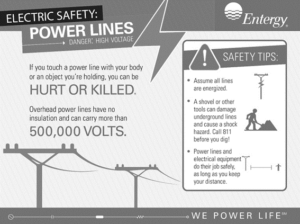
When setting, moving, or removing a power pole near any exposed live conductor, the pole could contact the conductor and energize the pole and/or damage the conductor, creating multiple hazards for a work crew.
Electricity can arc out from a point of contact and the area around a conduction point, such as a crane that has touched a live power line, can become electrically charged. This means electrocution can occur even if a worker is not in direct contact with the power line.
If you are working within a distance of 10m (measured at ground level horizontally from below the nearest wire) you are classed as working in close proximity.
1. Plan and Prepare
The first step is to find out whether there is any overhead power line within or immediately next to the work area, or across any access route.
If there are any overhead lines over the work area, near the site boundaries, or over access roads to the work area, consult the owners of the lines so that the proposed plan of work can be discussed.
2. Eliminate the Danger
If the danger cannot be eliminated, you should manage the risk by controlling access to, and work beneath, overhead power lines.
3. Control the Access To Work
Where there is no scheduled work or requirement for access under the lines, barriers should be erected at the correct clearance distance away from the line to prevent close approach. The safe clearance distance should be ascertained from the Distribution Network Operator (DNO).
4. Control the Work – Precautions
If work beneath live overhead power lines cannot be avoided, barriers, goal posts and warning notices should be provided. Where field work is taking place it may be impractical to erect barriers and goal posts around the overhead lines.
The following are crucial points to follow if you find yourself near broken power lines:
Knowledge and respect for the power of electricity are two fundamental tenets for working safely and with any longevity in the world of overhead wire. The one without the other will most certainly leave a wake of devastation.
When you install or remove overhead lines, you must protect yourself and others against hazards that could expose you to shock, electrocution, falls, flying and falling objects, and burns.
LOS PELIGROS
Al colocar, mover o retirar un poste de electricidad cerca de cualquier conductor vivo expuesto, el poste podría entrar en contacto con el conductor y energizar el poste y/o dañar el conductor, creando múltiples peligros para un equipo de trabajo.
La electricidad puede salir en forma de arco desde un punto de contacto y el área alrededor de un punto de conducción, como una grúa que ha tocado una línea eléctrica viva, puede cargarse eléctricamente. Esto significa que puede producirse una electrocución, aunque el trabajador no esté en contacto directo con la línea eléctrica.
RIESGOS/PRECAUCIONES
Si se trabaja a una distancia de 10 m (medida a nivel del suelo en horizontal desde debajo del cable más cercano) se considera que se trabaja en proximidad.
PREVENCIÓN
1. Planificar y preparar
El primer paso es averiguar si hay alguna línea eléctrica elevada dentro de la zona de trabajo o inmediatamente al lado, o a través de cualquier ruta de acceso.
Si hay alguna línea elevada sobre el área de trabajo, cerca de los límites de la obra, o sobre las vías de acceso al área de trabajo, consulte a los propietarios de las líneas para poder discutir el plan de trabajo propuesto.
2. Eliminar el peligro
Si no se puede eliminar el peligro, debe gestionar el riesgo controlando el acceso a las líneas eléctricas aéreas y el trabajo bajo ellas.
3. Controle el acceso al trabajo
Cuando no haya trabajos programados ni se requiera el acceso por debajo de las líneas, se deben erigir barreras a la distancia correcta de separación de la línea para evitar el acercamiento. La distancia de seguridad debe ser comprobada por el operador de la red de distribución (DNO).
4. Control del trabajo – Precauciones
Si no se puede evitar el trabajo debajo de líneas eléctricas elevadas bajo tensión, se deben colocar barreras, postes de portería y avisos de advertencia. Cuando se realicen trabajos de campo, puede que no resulte práctico erigir barreras y postes de portería alrededor de las líneas aéreas.
CUANDO SE PRODUCEN ACCIDENTES
Los siguientes son puntos cruciales de seguridad que debe seguir si se encuentra cerca de cables eléctricos rotos:
El conocimiento y el respeto por el poder de la electricidad son dos principios fundamentales para trabajar con seguridad y con cierta longevidad en el mundo de los cables aéreos. El uno sin el otro dejará sin duda una estela de devastación.
Cuando instale o retire cables elevados, debe protegerse a sí mismo y a los demás contra los peligros que podrían exponerles a descargas, electrocución, caídas, objetos que vuelan y caen, y quemaduras.
Some people may have viewed working from home as a luxury prior to the pandemic. However, it has now become a necessity for many people because it is a key strategy for increasing safety. This course covers the fundamentals of working from home including what it means to work from home, potential advantages, potential issues, safety or security issues and other tips on remote work.
Frank hung in there “until the cows came home,” but in the end he couldn’t bargain with a blood clot.
The 66-year-old Wisconsin farmer died two weeks after his all-terrain vehicle (ATV) rolled on top of him during a fence-fixing project. The week he was going to be discharged from the hospital, he unexpectedly died when getting out of bed. The cause of death was respiratory failure due to a pulmonary embolism (blood clot).
The Investigation
According to the investigation, Frank had finished fixing a fence that was damaged by a windstorm. He was driving his ATV slowly down a hill when he tried to maneuver over a small tree growing out of a stump. Frank assumed the ATV’s tires would crush the tree, but they didn’t. Instead, the machine tipped over, causing him to fall down a 20-foot (six-meter) embankment. The ATV followed Frank down the hill and rolled on top of him, causing multiple injuries, including a cut on the head and broken ribs. He was not wearing a helmet.
Frank, who was described as very safety conscious, managed to survive the rollover but the blunt trauma he suffered was too much in the end.
The following recommendations were made after Frank’s death:
Farmers and other outdoor workers should conduct a thorough evaluation of the terrain to identify hazards prior to operating any offroad vehicle, including ATVs. Frank was aware of the terrain, but misjudged the impact that the small tree would have on the ATV.
Farmers (and other employers) should select an off-road utility vehicle equipped with a rollover protective structure (ROPS) and a seatbelt.
Operators of off-road utility vehicles should wear a helmet and follow the basic ATV Safety Code.
Frank aguantó “hasta que las vacas volvieron a casa”, pero al final no pudo lidiar con un coágulo de sangre.
Este agricultor de 66 años de Wisconsin murió dos semanas después de que su vehículo todoterreno (ATV) se le echara encima durante un proyecto de reparación de una valla. La semana en que iba a recibir el alta hospitalaria, murió inesperadamente al levantarse de la cama. La causa de la muerte fue una insuficiencia respiratoria debida a una embolia pulmonar (coágulo de sangre).
La investigación
Según la investigación, Frank había terminado de arreglar una valla dañada por un temporal de viento. Estaba conduciendo su cuatriciclo lentamente por una colina cuando trató de maniobrar sobre un pequeño árbol que crecía de un tocón. Frank supuso que los neumáticos del todoterreno aplastarían el árbol, pero no fue así. En su lugar, la máquina volcó, haciéndole caer por un terraplén de 6 metros. El todoterreno siguió a Frank colina abajo y rodó sobre él, causándole múltiples heridas, entre ellas un corte en la cabeza y costillas rotas. No llevaba casco.
Frank, que fue descrito como muy consciente de la seguridad, logró sobrevivir al vuelco, pero el traumatismo cerrado que sufrió fue demasiado al final.
Tras la muerte de Frank se hicieron las siguientes recomendaciones:
Los agricultores y otros trabajadores al aire libre deben realizar una evaluación exhaustiva del terreno para identificar los peligros antes de manejar cualquier vehículo todoterreno, incluidos los cuatriciclos. Frank era consciente del terreno, pero calculó mal el impacto que tendría el pequeño árbol en el cuatriciclo.
Los agricultores (y otros empleadores) deben elegir un vehículo utilitario todoterreno equipado con una estructura de protección contra vuelcos (ROPS) y un cinturón de seguridad.
Los operadores de vehículos utilitarios todoterreno deben llevar casco y seguir el código básico de seguridad para vehículos todoterreno.
A man was killed while working in a field after a crane mounted on the truck he was driving touched high voltage overhead cables and electrocuted him.
Sussex Police said that the man, who has not been named, died shortly after the incident at Pond Farm in East Ashling, near Chichester in Sussex.
At around 9:30 on the morning of Saturday 18 July, the man was preparing to load hay bales onto the truck in a field.
After the truck-mounted crane touched the cable, the man was immediately thrown from the cab of the vehicle by the electric shock he suffered, and power was knocked out to 400 nearby homes.
He was taken by helicopter the Queen Alexandra Hospital in Portsmouth, but sadly died.
Un hombre murió mientras trabajaba en un campo después de que una grúa montada en el camión que conducía tocara cables elevados de alta tensión y lo electrocutara.
La policía de Sussex dijo que el hombre, que no ha sido nombrado, murió poco después del incidente en Pond Farm en East Ashling, cerca de Chichester en Sussex.
Alrededor de las 9:30 de la mañana del sábado 18 de julio, el hombre se disponía a cargar balas de heno en el camión en un campo.
Después de que la grúa montada en el camión tocara el cable, el hombre fue arrojado inmediatamente de la cabina del vehículo por la descarga eléctrica que sufrió, y se cortó la electricidad en 400 viviendas cercanas.
Fue trasladado en helicóptero al hospital Queen Alexandra de Portsmouth, pero lamentablemente falleció.
An ATV, is any two, three or four wheeled motorized vehicle designed for off-road, rugged landscapes. By design, ATVs are “driver active” where the operator sits on a saddle-like seat, and steers with handlebars, similar to a motorcycle or snowmobile. On “driver active” vehicles, the operator´s body movements help control the steering and direction, requiring a strong combination of skill, good judgement, attention and physical strength.
ATVs have unique features that enable them to operate in harsh work environments where larger, less mobile vehicles cannot safely be used. Their oversized, deep tread, and low-pressure tires (4-5 psi) and light weight (600-1000 pounds) – compared to other motorized vehicles – enhance their maneuverability but also present risks such as a rollover which may occur due to a high center of gravity and a relatively narrow wheelbase.
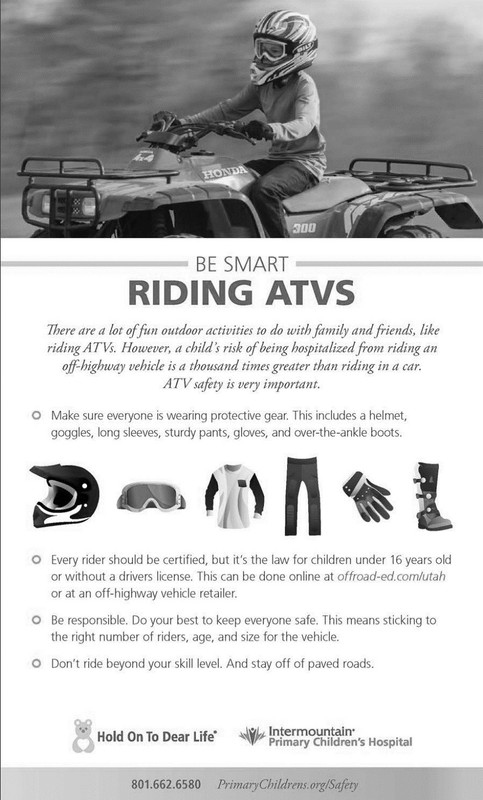
Helmet: The most important piece of safety gear you can wear while riding your ATV.
The first thing you should do when purchasing a helmet is look at the back to see which safety standards the helmet has met.
When wearing a helmet, it should fit nice and snug, it shouldn’t be able to rotate while you’re wearing it and you shouldn’t be able to fit your thumb between the helmet and your forehead. If you can, you need one slightly smaller in size.
Long sleeve shirts/pants: A cotton or synthetic riding jersey really comes in handy when weather conditions aren’t ideal. If it is raining or snowing out, the jersey will help wick moisture. Not only that, but make sure to get one with good elbow pads on them.
A good long sleeve shirt and pants will help your skin if you fall.
Gloves: It may seem like a luxury to wear gloves while riding your ATV out on the trails, but these are essential. Good gloves will protect your hands from flying gravel and rocks, they’ll also protect your hands from bushes and branches as you drive past large trees.
The constant rubbing and squeezing of the handles can cause your hands to get sore, callused and blistery, all of which a good pair of gloves will help prevent.
Goggles: Of this list of safety gear items to wear while on the trails, probably the most necessary one in terms of usage would be safety goggles.
The goggles, on the other hand, will get more use than you would imagine. Both tiny and large objects flying rapidly towards your eyes never actually make it into your eyes because they get refracted through the use of goggles.
Motocross goggles keep sweat, dust, dirt, mud, rocks, bugs, sticks and branches out of your eyes and allow you to keep focused of the road in front of you.
Boots: You want to have boots that provide adequate ankle and foot support and that ride up high enough to prevent burns from the engine and exhaust.
Chest Protector: Chest protectors probably aren’t as necessary if your use of the ATV is limited to work on the farm, but if your plan is to do heavy trail riding under high speeds, then a chest protector is a must have!
Neck Protector: “Do I really need one?” And when it comes down to it, the answer that seems to stick out most is “what is your level of risk tolerance?”
Injuries and deaths can happen at all points while operating an ATV: mounting and dismounting, transporting farm supplies, driving on slopes and performing maintenance. Rollovers, collisions, flying debris, pinch points, moving parts, uneven surfaces, burn hazards and noises are all things we have to be aware of when operating an ATV.
¿QUÉ ES UN CUADRICICLO O VEHÍCULO TODO TERRENO?
Un cuatriciclo es un vehículo motorizado de dos, tres o cuatro ruedas diseñado para circular fuera de la carretera y por terrenos accidentados. Por su diseño, los cuatriciclos son “activos para el conductor”, es decir, el operador se sienta en un asiento similar a un sillín y dirige el vehículo con el manillar, como una motocicleta o una moto de nieve. En los vehículos de “conducción activa”, los movimientos del cuerpo del conductor ayudan a controlar la dirección y el sentido de la marcha, lo que requiere una fuerte combinación de habilidad, buen juicio, atención y fuerza física.
DATOS DE LOS VEHÍCULOS TODOTERRENO
Los cuatriciclos tienen características únicas que les permiten operar en entornos de trabajo difíciles en los que no se pueden utilizar con seguridad vehículos más grandes y menos móviles. Sus neumáticos sobredimensionados, de banda de rodadura profunda y de baja presión (4-5 psi) y su peso ligero (600-1000 libras) -en comparación con otros vehículos motorizados- mejoran su maniobrabilidad, pero también presentan riesgos como el de volcar, que puede producirse debido a un centro de gravedad alto y a una distancia entre ejes relativamente estrecha.
RAZONES PRINCIPALES DE LOS ACCIDENTES LABORALES EN LOS QUE ESTÁN IMPLICADOS LOS CUATRICICLOS
PRECAUCIONES PARA EL USO SEGURO DE LOS CUATRICICLOS EN EL TRABAJO PARA LOS EMPLEADOS
SEGURIDAD OPERATIVA: HAGA UNA COMPROBACIÓN PREVIA A LA CONDUCCIÓN
LISTA DE COMPROBACIÓN DEL EQUIPO DE SEGURIDAD PARA LOS CONDUCTORES DE VEHÍCULOS TODO TERRENO
Casco: La pieza más importante del equipo de seguridad que usted puede usar mientras conduce su cuatriciclo.
Lo primero que debe hacer al comprar un casco es mirar la parte trasera para ver qué normas de seguridad ha cumplido el casco.
Cuando se usa un casco, debe quedar bien ajustado, no debe poder girar mientras lo lleva puesto y no debe poder meter el pulgar entre el casco y la frente. Si puedes, necesitas uno de un tamaño ligeramente inferior.
Camisetas/pantalones de manga larga: Una camiseta de algodón o sintética para montar en moto es realmente útil cuando las condiciones meteorológicas no son las ideales. Si llueve o nieva, el maillot ayudará a absorber la humedad. No sólo eso, sino que asegúrese de conseguir uno con buenas coderas.
Una buena camiseta de manga larga y unos pantalones ayudarán a tu piel si te caes.
Guantes: Puede parecer un lujo usar guantes mientras conduces tu cuatriciclo en los senderos, pero son esenciales. Unos buenos guantes protegerán tus manos de la grava y las rocas que vuelan, y también te protegerán de los arbustos y las ramas cuando pases por delante de grandes árboles.
El constante roce y apriete de los mangos puede hacer que sus manos se llenen de dolor, callos y ampollas, todo lo cual un buen par de guantes ayudará a prevenir.
Gafas: De esta lista de elementos del equipo de seguridad que hay que llevar en los senderos, probablemente el más necesario en términos de uso serían las gafas de seguridad.
Las gafas, por otra parte, tendrán más uso del que imagina. Tanto los objetos pequeños como los grandes que vuelan rápidamente hacia sus ojos nunca llegan a ellos porque son refractados por el uso de las gafas.
Las gafas de motocross evitan que el sudor, el polvo, la suciedad, el barro, las piedras, los insectos, los palos y las ramas entren en tus ojos y permiten que mantenga la atención en la carretera que tiene delante.
Botas: Debe tener unas botas que le proporcionen un soporte adecuado para los tobillos y los pies y que sean lo suficientemente altas como para evitar las quemaduras del motor y el escape.
Protector de pecho: Los protectores pectorales probablemente no sean tan necesarios si el uso del cuatriciclo se limita al trabajo en la granja, pero si su plan es hacer una conducción pesada en el camino bajo altas velocidades, entonces un protector pectoral es una necesidad.
Protector de cuello: “¿Realmente necesita uno?” Y a la hora de la verdad, la respuesta que más parece sobresalir es “¿cuál es su nivel de tolerancia al riesgo?”
Las lesiones y las muertes pueden producirse en todos los puntos mientras se maneja un cuatriciclo: montando y desmontando, transportando suministros agrícolas, conduciendo en pendientes y realizando el mantenimiento. Los vuelcos, las colisiones, los escombros que salen despedidos, los puntos de pellizco, las piezas móviles, las superficies irregulares, los riesgos de quemaduras y los ruidos son cosas que debemos tener en cuenta al manejar un todoterreno.
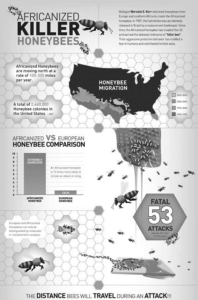
A hive of approximately 40,000 Africanized honeybees killed a farmer near Waco, Texas, on Saturday, after he drove past their hive on a tractor.
The victim was identified Monday as Larry Goodwin of Moody, Texas, the Waco Herald-Tribune reports. McLennan County Chief Sheriff’s Deputy Matt Cawthon told the paper that Goodwin bumped into an unused chicken coop where the hive was living, prompting them to give chase.
Goodwin dashed 50 feet to a garden hose, which he attempted to use to dispel the bees. A woman identified by KCEN-TV as a neighbor attempted to help, but was stung repeatedly, as were volunteer firefighters who responded.
Allen Miller was called to remove the bees from Goodwin’s farm. Miller, the owner of Bees Be Gone, told U.S. News he typically exterminates six hives of Africanized bees per year. In the past 30 days alone, he said, he’s exterminated six hives.
“If this is a sign of things to come I’m getting out of this business,” Miller said. “I’ve been seeing a whole lot more.”
Miller kills the bees where he finds them, using various insecticides that are safe for humans 2 hours after application. “I have a 90-day warranty, so I’m real serious,” he said. When they cover his body and sting through his gloves and clothing, Miller retreats to his car and turns on the air conditioning, which causes the bees to flee.
“The killer bees are the only ones that give me any problem,” Miller said, “because they can get in my gloves and in my pants. It’s amazing what killer bees can do. With killer bees, all 100 percent [of the hive] think they’re supposed to save the queen and be killers. They terrify people out of their gourds because there are so many of them.”
Miller gets stung during most Africanized bee exterminations. For the killers, he takes off his “sissy gloves” and puts on heavier ones. “I’ve got a full suit, but I usually don’t use it because it’s so hot,” he said, opting for a veiled hat suit and heavyweight jeans.
He didn’t get stung on Saturday, which he attributes to a ferocious surprise-attack on the bee colony. “I laid it on, I did not give them an equal chance,” he said.
Family members said the 62-year-old victim’s skin was entirely covered by red sting marks, KCEN-TV reports.
Africanized honeybees, popularly known as “killer bees,” are similar to farm-raised honeybees used to pollinate plants and make honey. The bees look similar and have “almost identical” venom in individual stings, according to an Ohio State University fact sheet. The Africanized bees, however, are notably more aggressive. Entire hives pursue perceived attackers, often killing their target.
Una colmena de aproximadamente 40.000 abejas africanizadas mató a un agricultor cerca de Waco, Texas, el sábado, después de que pasara por delante de su colmena en un tractor.
La víctima fue identificada el lunes como Larry Goodwin, de Moody, Texas, informa el Waco Herald-Tribune. El ayudante del sheriff jefe del condado de McLennan, Matt Cawthon, declaró al periódico que Goodwin chocó con un gallinero en desuso en el que vivía la colmena, lo que les llevó a emprender una persecución.
Goodwin corrió 15 metros hasta llegar a una manguera de jardín, que intentó utilizar para disipar las abejas. Una mujer identificada por KCEN-TV como vecina intentó ayudar, pero fue picada repetidamente, al igual que los bomberos voluntarios que acudieron.
Allen Miller fue llamado para retirar las abejas de la granja de Goodwin. Miller, propietario de Bees Be Gone, dijo a U.S. News que normalmente extermina seis colmenas de abejas africanizadas al año. Sólo en los últimos 30 días, dijo, ha exterminado seis colmenas.
“Si esto es una señal de lo que está por venir, voy a dejar este negocio”, dijo Miller. “He visto muchas más”.
Miller mata a las abejas donde las encuentra, utilizando varios insecticidas que son seguros para los humanos dos horas después de su aplicación. “Tengo una garantía de 90 días, así que soy muy serio”, dijo. Cuando le cubren el cuerpo y le pican a través de los guantes y la ropa, Miller se retira a su vehículo y enciende el aire acondicionado, lo que hace que las abejas huyan.
“Las abejas asesinas son las únicas que me dan problemas”, dijo Miller, “porque pueden meterse en mis guantes y en mis pantalones. Es increíble lo que pueden hacer las abejas asesinas. Con las abejas asesinas, el 100% [de la colmena] cree que debe salvar a la reina y ser asesina. Aterrorizan a la gente porque son muchas”.
Miller es picado durante la mayoría de los exterminios de abejas africanizadas. Para las asesinas, se quita los “guantes de marica” y se pone unos más pesados. “Tengo un traje completo, pero no suelo usarlo porque hace mucho calor”, dice, y opta por un traje con sombrero velado y unos vaqueros gruesos.
El sábado no le picaron, lo que atribuye a un feroz ataque sorpresa de la colonia de abejas. “Me la jugué, no les di la misma oportunidad”, dijo.
Los familiares dijeron que la piel de la víctima, de 62 años, estaba totalmente cubierta por marcas de picaduras rojas, informa KCEN-TV.
Las abejas africanizadas, conocidas popularmente como “abejas asesinas”, son similares a las abejas de granja utilizadas para polinizar las plantas y fabricar miel. Las abejas tienen un aspecto similar y un veneno “casi idéntico” en sus picaduras, según una hoja informativa de la Universidad Estatal de Ohio. Sin embargo, las abejas africanizadas son notablemente más agresivas. Colmenas enteras persiguen a las atacantes, a menudo matando a su objetivo.
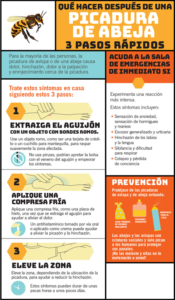
Fuente: https://www.msdmanuals.com/