PPE – Personal Protective Equipment: Eye Protection
The course covers workplace eye hazards, PPE used to protect against them, and proper fit and care of PPE.
The course covers workplace eye hazards, PPE used to protect against them, and proper fit and care of PPE.
This course will cover sharp safety including what a sharp it, the risk of handling sharps, ways to protect yourself and what to do if you’ve been pricked or cut by a sharp.
Fatigue can lead to mistakes on the job. And those mistakes can lead to injuries and fatalities. This quick course covers the dangers of working while experiencing fatigue and how to identify a fatigued worker and how to protect yourself.
Imagine a vehicle that weighs twice as much as your car, can’t stop nearly as quickly and is operated by a person who may not see you. This quick course covers the dangers of working around forklifts and ways to protect yourself when working in areas with forklifts.
This quick course covers the importance of addressing and reporting complaints including the current perception of reporting and how to address complaints and some guidelines to share with employees for reporting complaints.
Maintenance employees are confronted with many hazards that can cause injury or death. This quick course covers the risk of asbestos and exposure in the workplace and how to protect yourself.
It’s important for you to understand the potential hazards that you may be exposed to while working with hazardous waste. This quick course will cover the dangers associated with hazardous waste and how to protect yourself from them.
The Industrial Hygiene Laboratory Accreditation Program (IHLAP) is designed for labs that analyze samples taken in the work environment. The laboratory accreditation program will help ensure you are meeting the stringent quality control standards on which your important safety and health decisions are based.
Criteria for laboratory accreditation include personnel qualifications for education and work experience for the laboratory director, laboratory supervisor and quality control coordinator. Laboratories must meet adequate facility and equipment guidelines, periodic reviews of their laboratory records and methods of analysis and quality control procedures. Site visits are conducted approximately every three years by experienced inspectors sent by the AIHA. The accreditation period is for a length of three years.
Accredited laboratories participating in the IHLAP program can be viewed at
https://www.aihaaccreditedlabs.org/LabAccreditationPrograms/IHLAP/Pages/default.aspx
Sources
Lists of Accredited Labs
The information contained in this article is intended for general information purposes only and is based on information available as of the initial date of publication. No representation is made that the information or references are complete or remain current. This article is not a substitute for review of current applicable government regulations, industry standards, or other standards specific to your business and/or activities and should not be construed as legal advice or opinion. Readers with specific questions should refer to the applicable standards or consult with an attorney.
Source: Grainger Know How – https://www.grainger.com/know-how
On December 29, 1970, President Richard M. Nixon signed into law the Williams-Steiger Occupational Safety and Health (OSH) Act. As a result, the Occupational Safety and Health Administration (OSHA) was established in April, 1971.
This Act requires that “every employer covered under the Act furnish to his employees employment and a place of employment which are free from recognized hazards that are causing or are likely to cause death or serious physical harm to his employees” (29 CFR 1903.1). This is commonly known as the General Duty Clause. Failure to comply with this Clause or any of the standards set forth by OSHA may result in a citation.
To avoid citations, employers need to comply with the governing OSHA standards. Compliance can be achieved in a variety of ways by using internal safety staff or through the use of outside consultants. Both of these options may cause financial hardships for small businesses. Fortunately, there is an alternative.
The OSH Act makes confidential OSHA consultation services available to small businesses at no cost (29 CFR 1908.1). Consultants work with employers to identify workplace hazards, provide advice on compliance with OSHA standards, and assist in establishing effective injury and illness preventions programs. The service is provided by state agencies or universities and is separate from the standard OSHA inspection efforts.
Eligibility Requirements
Requirements for the employer include:
Size determination shall be based on the average level of employment during the past 12 months.
If either of these parameters is exceeded, employers may still seek assistance, provided that only specific assistance is requested.
Request for Services
The consultation service is a voluntary activity, therefore employers must request it. Requests may be done via a telephone call, email message, or through the OSHA Consultation Program website. Requests are prioritized according to the nature of the workplace and the existence of any backlog of requests. A consultant discusses the employer’s specific needs and sets a date for a visit that is convenient to both the employer and consultant.
Opening Conference
As scheduled, the consultant arrives at the worksite and conducts an opening conference with the employer and employee representative(s) to explain his/her role and the obligations of the employer. The employer’s only obligation is to correct any “serious,” unsafe or unhealthy working conditions discovered by the consultant within a reasonable time frame. According to OSHA, a “serious” condition exists when the workplace hazard could cause an accident or illness that would most likely result in death or serious physical harm. As stated earlier, this service is separate from standard OSHA inspections. The consultant will detail the relationship between the two organizations and encourage employee participation during the inspection.
Inspection Process
Together the employer, employee representative(s), and the consultant conduct a walk-through and inspect the conditions in the workplace. The consultant evaluates potential hazards, physical work practices and the employer’s safety and health management program. A complete review of the business’ safety and health situation is encouraged however employers may limit the visit to specific areas—the scope depends on the facility’s original request.
Closing Conference
During this portion of the OSHA consultation, the consultant discusses the detailed findings and the employer learns not only what improvements are needed, but also what is being done right. A detailed written report explaining these findings and confirming any abatement schedules is sent to the employer following the closing conference.
Correcting Hazards
If a “serious” hazard is noted during the walk-through, the consultant will assist the employer with developing a specific plan to correct the hazard within a given time frame.
If a condition is judged to be an “imminent danger,” the employee must take immediate action to protect the employees. “Imminent danger” is defined as any conditions or practices which are such that a danger exists which could reasonably be expected to cause death or serious physical harm immediately or before they can be eliminated through OSHA enforcement procedures.
Employer Requirements
As part of the agreement, the employer must respond to and correct the violations noted in the findings. If the employer fails to eliminate or control any identified serious or imminent danger hazards according to the plan and within the limits agreed to, the situation is referred from consultation to an OSHA enforcement office. Employers who correct all identified hazards and institute a comprehensive program may gain an added benefit: a certificate that exempts the employer from OSHA programmed inspections for one year. Inspections prompted by employee complaints or fatalities are not included.
Summary
The OSHA consultation service has many benefits for small businesses. It will:
The service will NOT:
SHARP
OSHA has also developed a program for smaller businesses similar to their Voluntary Protection Program (VPP). “The Safety and Health Achievement Recognition Program (SHARP) is designed to provide incentives and support to employers to develop, implement and continuously improve effective safety and health programs at their worksite(s). SHARP provides for recognition of employers who have demonstrated exemplary achievements in workplace safety and health by receiving a comprehensive safety and health consultation visit, correcting all workplace safety and health hazards, adopting and implementing effective safety and health management systems, and agreeing to request further consultative visits if major changes in working conditions or processes occur which may introduce new hazards. Employers who meet these specific SHARP requirements may be exempted from OSHA programmed inspections for a period of not less than one year.”
Commonly Asked Questions
Q: Approximately how many requests do consultants respond to annually?
A: Each year, on-site consultants respond to approximately 30,000 requests from businesses looking to improve worker safety and health.
Q: What is VPP?
A: The Voluntary Protection Program (VPP) is an OSHA cooperative program that promotes effective worksite-based safety and health. All groups covered by OSHA, including federal agencies, are eligible to join the VPP. Each worksite that applies must show a commitment to effective safety and health management systems and work to be an industry leader in occupational safety and health.
Sources
OSHA FactSheet: The OSHA Consultation Program
Safety and Health Achievement Recognition Program
Recommended Practices for Safety and Health Programs
The information contained in this article is intended for general information purposes only and is based on information available as of the initial date of publication. No representation is made that the information or references are complete or remain current. This article is not a substitute for review of current applicable government regulations, industry standards, or other standards specific to your business and/or activities and should not be construed as legal advice or opinion. Readers with specific questions should refer to the applicable standards or consult with an attorney.
Source: Grainger Know How – https://www.grainger.com/know-how
The Occupational Safety and Health Administration’s (OSHA’s) Hazard Communication Standard found in 29 Code of Federal Regulations (CFR) 1910.1200 was promulgated on November 25, 1983 and became effective two years later. Since that time, the performance-orientated Hazard Communication Standard has been the primary tool for providing employers and employees with information about the chemical hazards in their workplaces
A much-anticipated revision to the Standard was published in the Federal Register on March 26, 2012 and became effective 60 days thereafter on May 25, 2012. One of the most significant changes in this revision was OSHA’s adoption of portions of the United Nations’ Globally Harmonized System of Classification and Labeling of Chemicals (GHS) Third Edition. There were three major areas of change – hazard classification, shipped container labels and safety data sheets (SDSs).
However, the parts of the Standard not related to the GHS—basic framework, scope and purpose—remained largely unchanged. The Hazard Communication Standard now requires chemical manufacturers, importers and distributors to provide a shipped container label that has six standardized elements:
The Hazard Communication Standard now requires chemical manufacturers, importers and distributors to provide a shipped container label that has six standardized elements:
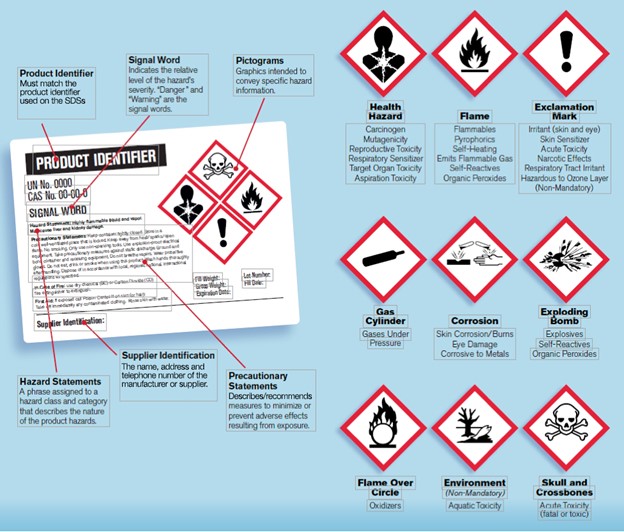
With the revision, OSHA continues to allow employers the flexibility to determine what types of workplace labels they will use. Two options are available:
There are several alternate workplace labeling systems:
Alternate Workplace Labeling
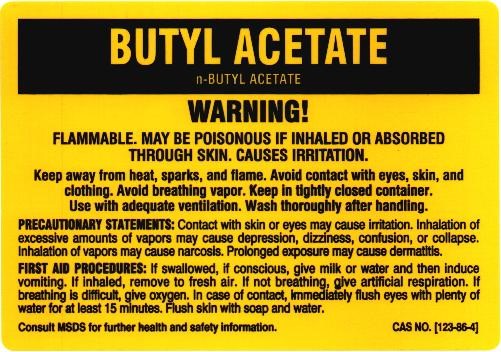
RTK
Consists of labels that list the chemical name, synonym or common name, hazard information, Chemical Abstract Service (CAS) number, precautionary measures and first aid procedures.
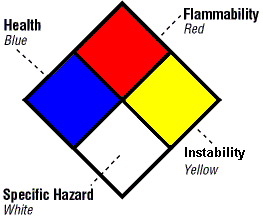
NFPA/NFR 704
The NFPA/NFR labeling systems employ a color-coded rating guide in a diamond shape. Health is defined by the color blue, flammability is red and instability is represented in yellow. The numbers 0–4 are assigned according to the level of hazard the chemical(s) present (0 being no hazard and 4 the greatest hazard). The hazards are arranged spatially as follows: health at the nine o’clock position, flammability at the twelve o’clock position and instability at the three o’clock position. The six o’clock position on the symbol represents special hazards and has a white background. The special hazards in use include unusual reactivity with water (W), the material is an oxidizer (OX) or the material is a simple asphyxiant gas (SA). This labeling option offers books, charts and wallet cards to help explain the classification.
NFR signs are commonly seen on the exterior of a building or on a storage vessel containing a hazardous chemical. In the event of a fire or emergency these signs alert the fire department or emergency responders to the types of chemical hazards that are present.
HMIG
Presents a color formatted label and is rectangular in shape. The numbers used in this system to identify the hazard level of the chemical are based on the acute and chronic hazards present in normal day-to-day use in the workplace and range from 0 (no hazard) to 4 (greatest hazard). There are also charts, labels and wallet cards for this system.

The numbers for the HMIG labeling systems may be obtained by reviewing the Safety Data Sheets (SDSs) accompanying the chemical or in reference books that list chemical hazards by the numerical rating, such as The Fire Protection Guide to Hazardous Materials. These three labeling systems (RTK, NFR and HMIG) are all offered through Grainger.
HMIS III
This label system looks similar to the HMIG labeling system (using the color bar format and rectangular shape) and utilizes a rating system developed by the National Paint and Coatings Association. The four bars are blue for health, red for flammability, orange for physical hazard and white for personal protection. The number ratings range from 0 – 4. The health bar has two spaces, one for an asterisk and one for the numeric hazard rating. If present, the asterisk signifies a chronic health hazard, meaning that long-term exposure to the material could cause a health problem.

Any of these alternate workplace labeling methods may be used as long as the employee understands the hazards being communicated and how to read the label. However, once a system has been chosen, OSHA prefers to see consistency throughout the workplace.
Commonly Asked Questions
Q: Is one of the chemical labeling systems better than another?
A: No. One labeling system is not better than the other. However, keep in mind consistency is the key. Once you choose a system, all chemicals should be labeled the same.
Q: When must the NFPA 704 rating system be used?
A: The NFPA / NFR 704 rating system is required when another Federal, state or local regulation or code or an authority having jurisdiction (AHJ) requires its use. Some of the more widely adopted and used NFPA codes that require 704 for specific occupancies, storage, and hazardous materials include NFPA 1, Fire Code, NFPA 30, Flammable and Combustible Liquids Code and NFPA 400, Hazardous Materials Code.
Sources
OSHA’s 29 CFR 1910.1200 Hazard Communication Standard
OSHA Label and Pictogram Technical Brief, February 2013
The Fire Protection Guide to Hazardous Material
The information contained in this article is intended for general information purposes only and is based on information available as of the initial date of publication. No representation is made that the information or references are complete or remain current. This article is not a substitute for review of current applicable government regulations, industry standards, or other standards specific to your business and/or activities and should not be construed as legal advice or opinion. Readers with specific questions should refer to the applicable standards or consult with an attorney.
Source: Grainger Know How – https://www.grainger.com/know-how
Introduction
In the workplace, it is the job of a first aid responder to assist in stabilizing an injured or ill person until professional medical help arrives. 29 Code of Federal Regulations (CFR) 1910.151(b) states, “In the absence of an infirmary, clinic or hospital in near proximity of the workplace which is used for the treatment of all injured employees, a person or persons shall be adequately trained to render first aid. Adequate first aid supplies shall be readily available.” The basic purpose of this standard is to assure that adequate first aid is available in the critical minutes between the occurrence of an injury or illness and the availability of professional care.
First aid is medical attention that is typically administered immediately after an injury or illness occurs. It usually consists of one-time, short-term treatment, such as cleaning minor cuts, treating minor burns, applying bandages, and using non-prescription medicine. The overall goals of first aid are:
Good Samaritan Laws
Every state has some form of a Good Samaritan statute. These laws were enacted to encourage people to help others in emergency situations. They offer legal protection to responders who provide emergency care to ill or injured persons. They require that the provider act in good faith with good intentions, use common sense, only provide care that they have been trained to give and act voluntarily. Coverage and circumstances under which care is delivered varies by state. If you’re interested in learning more about the Good Samaritan Laws in your state, contact a local legal professional.
First-aid Training Program
The first step in planning a first-aid training program for any worksite is to evaluate the injuries, illnesses and fatalities that have occurred. Use the Occupational Safety and Health Administration (OSHA) 300 logs, 301 forms, and Workers’ Compensation reports to help identify specific first-aid needs.
Employers should also consult with the local fire and rescue service or emergency medical service (EMS) to obtain response time estimates for all locations and for all times that workers are on duty.
The training program should address:
If an employee is expected to render first aid as part of his or her job, then they are covered by the requirements of the Occupational Exposure to Bloodborne Pathogens standard (29 CFR 1910.1030). Learning the importance of universal precautions is a must.
The first-aid training program should be reviewed periodically and kept up-to-date with current first-aid techniques and knowledge.
First-aid Courses
OSHA does not offer first-aid courses or certify first-aid training courses for instructors or trainees. First-aid training is offered by the American Heart Association, the American Red Cross, the National Safety Council and other nationally recognized and private educational organizations.
Unique conditions at a specific worksite may require the addition of customized elements to a first-aid training program.
Mayo Clinic and WebMD are two recognized sources for basic first aid information and suggested treatment procedures.
Cardiopulmonary Resuscitation (CPR)
In addition to the first-aid requirements of 29 CFR 1910.151, several OSHA standards also require training in CPR. The OSHA standards requiring CPR training are:
Although training responders in CPR is not required in 29 CFR1910.151 many employers choose to offer CPR training for their first aid responders.
Automated External Defibrillators (AEDs)
AEDs are now widely available, effective, portable and ready to use. They provide the critical and necessary treatment for sudden cardiac arrest (SCA) caused by ventricular fibrillation (V-FIB). SCA is a potential risk at all worksites. Each workplace should assess its own requirements for an AED program as part of its first-aid response.
Conclusion
The outcome of a workplace injury or illness depends on the severity of the injury, available first-aid and subsequent medical treatment. Promptly administered first aid may mean the difference between rapid or prolonged recovery, temporary or permanent disability, or even life or death.
Commonly Asked Questions
Sources
American Heart Association
American Red Cross
National Safety Council
The information contained in this article is intended for general information purposes only and is based on information available as of the initial date of publication. No representation is made that the information or references are complete or remain current. This article is not a substitute for review of current applicable government regulations, industry standards, or other standards specific to your business and/or activities and should not be construed as legal advice or opinion. Readers with specific questions should refer to the applicable standards or consult with an attorney.
Source: Grainger Know How – https://www.grainger.com/know-how
In December 1970, President Richard M. Nixon signed the Occupational Safety and Health (OSH) Act of 1970. This act created the Occupational Safety and Health Administration (OSHA), which formally came into being on April 28, 1971.
OSHA’s mission is to ensure safe and healthful working conditions for all working men and women. One of the ways OSHA carries out its mission is by developing job safety and health standards, and enforcing them through worksite inspections.
Every establishment covered by the OSH Act is subject to inspection by OSHA Compliance Safety and Health Officers. The goal of these trained safety professionals is to ensure compliance with OSHA requirements while helping employers and employees reduce on-the-job hazards and prevent injuries, illnesses and deaths in the workplace.
Inspection Priorities
OSHA is a small agency and does not have the resources to cover the 130 million workers employed at more than eight million worksites in the U.S. So what triggers an inspection? Inspections are focused on the most hazardous workplaces and fall into two categories—programmed and un-programmed. The established order of priority is:
States with OSHA-approved state plans provide the same protections to workers as federal OSHA, although they may follow slightly different processing procedures.
Inspection and post inspection processes are detailed in the OSHA Fact Sheet titled OSHA Inspections.
Complaint Protocol
Complaints can be received from current or former employees or their representatives via phone, fax, letter or the OSHA website (worker page). If requested, the identity of the complainant is kept confidential throughout the process. Once received, OSHA will determine if there is merit to the complaint to move forward with an investigation.
Two types of investigations may result:
If it is determined that a formal investigation will take place, an inspection will be scheduled five days from receipt of the signed complaint. No prior notice is given to the employer. The inspection will be limited to specific complaint items and plain view hazards.
In the case of a non-formal investigation, OSHA will handle the investigation administratively. With permission from the complainant, OSHA will telephone the employer to make them aware of the alleged concern(s), following up with a fax or letter providing details on the alleged concern(s). The employer has five working days to respond back to OSHA, identifying any problems found and noting corrective actions taken or planned. If the response is adequate and the complainant satisfied with the response, OSHA generally will not conduct an on-site inspection. If the employer does not respond, it will be upgraded to a formal investigation.
Evaluation of Inspection Activity
In the past, OSHA used the number of inspections as the primary metric to measure inspection activity. This system failed to recognize the complexity of some inspections versus just counting the total number of inspections completed. It gave equal weight to all inspections and may have discouraged some OSHA offices from committing necessary resources to fully complete more time-consuming, complex investigations. In fiscal year 2016, OSHA adopted a new metric to measure inspection activity that underscores the importance of the resource-intensive inspection activity that is focused on some of the most hazardous workplace issues by assigning a value to a type of inspection based on its complexity. The value is known as an Enforcement Unit (EU) and most inspections receive an EU value of at least one:
This new system has improved OSHA’s strategic planning process. it ensures that sufficient enforcement resources are allocated to cases that require more, and does not shortchange the more difficult inspections in favor of those that can be done quickly.
Types of Violations and Associated Penalties
In November 2015, Congress enacted legislation requiring federal agencies to adjust their civil monetary penalties with an initial “catch-up” adjustment and to make subsequent annual adjustments to account for inflation. The Department of Labor adjusted OSHA maximum penalty amounts took effect August 1, 2016 – they were last adjusted in 1990 and the “catch-up” increased penalties by 78%. Since that time the maximum penalty amounts have been adjusted for inflation each year based on the Consumer Price Index (inflation rate).
Willful: A willful violation is one that the employer intentionally and knowingly commits. The employer is aware that a hazardous condition exists and knows the condition violates a standard, but makes no reasonable effort to eliminate it. As of January 2, 2018 OSHA may propose penalties of up to $129,336 for each willful violation. According to the current OSHA Field Operations Manual (FOM) CPL-02-00-160 the minimum willful penalty is $8,908. In accordance with the Sentencing Reform Act of 1984 an employer who is convicted in a criminal proceeding of a willful violation of a standard that has resulted in the death of an employee may be fined up to $250,000 (or $500,000 if the employer is a corporation) or imprisoned up to six months, or both.
Serious: A serious violation exists when there is a substantial probability that death or serious physical harm could result from a condition that exists, or from one or more practices, means, methods, operations or processes that are in use unless the employer did not and could not know of the violation. Violations considered serious carry a mandatory penalty of up to $12,934 per violation (effective 1/2/2018).
Other-Than-Serious: An other-than-serious violation is cited where the accident/incident or illness that would be most likely to result would probably not cause death or serious physical harm, but would have a direct and immediate relationship to the safety and health of employees. OSHA may impose a penalty of up to $12,934 per violation (effective 1/2/2018).
Failure to Abate: A failure to abate violation exists when the employer has not corrected a violation for which OSHA has issued a citation and the abatement date has passed. A failure to abate also exists when the employer has not complied with interim measures involved in a long-term abatement within the time given. These failures may bring a civil penalty of up to $12,934 per day (effective 1/2/2018).
Repeated: An employer may be cited for a repeated violation if, upon re-inspection, the same or a substantially similar condition is found and the citation has become a final order. These violations can bring a fine of up to $129,336 for each such violation within the previous three years (effective 1/2/2018).
De Minimis: Conditions where an employer has implemented a measure different from one specified in a standard that has no direct or immediate relationship to safety or health. These conditions do not result in citations or penalties.
Posting Requirements
Upon receipt of any citation (except De Minimis violations), the employer must immediately post the citation (or a copy of it) at or near the place where each alleged violation occurred. If it is not practicable to post the citation at or near each place of alleged violation, then it must be posted in a prominent place where it will be readily observable by all affected employees. The citation must remain posted for three working days or until the violation is abated, whichever is longer. The employer must comply with these posting requirements even if the citation is contested. Violation of the posting requirements results in a fine of up to $12,934 for each violation (effective 1/2/2018).
Employer Options
Employers who have been cited can take either of the following courses of action:
How Employers Comply
For violations that are not contested, the employer needs to promptly notify the OSHA Area Director via letter stating that appropriate corrective action has been taken within the time frame outlined. A member of management must sign this letter. The employer must also pay any itemized penalties. This letter/notification is referred to as the Abatement Certification. For other-than-serious violations, the Abatement Certification may be a signed letter identifying the inspection number, the citation item number and noting that the violation was corrected by the date specified.
For more serious violations such as serious, willful, repeat or failure-to-abate, the Abatement Certification requires more detailed proof such as:
Commonly Asked Questions
Q: What is the difference between a formal and non-formal employee complaint investigation?
A: OSHA carefully prioritizes all complaints it receives based on their severity to determine if there is merit to the complaint to move forward with an investigation. Two types of investigations may result:
Q: How many inspectors does OSHA have?
A: Federal OSHA is a small agency. With state partners, there are approximately 2, 100 inspectors responsible for the health and safety of 130 million workers employed at more than eight million worksites.
Sources
OSHA, Commonly Used Statistics
OSHA Fact Sheet, OSHA Penalty Adjustments to Take Effect After August 1, 2016, Publication number 3879, June 2016
OSHA Publication 3000-08R 2016, Employer Rights and Responsibilities Following a Federal OSHA Inspection
OSHA Fact Sheet number 3783, OSHA Inspections, August 2016
OSHA Memo, Enforcement Weighting System (EWS), September 30, 2015
OSHA Publication 3302-09R 2015, All About OSHA
OSHA Instruction CPL-00-02-160 Field Operations Manual
Sentencing Reform Act of 1984
The information contained in this article is intended for general information purposes only and is based on information available as of the initial date of publication. No representation is made that the information or references are complete or remain current. This article is not a substitute for review of current applicable government regulations, industry standards, or other standards specific to your business and/or activities and should not be construed as legal advice or opinion. Readers with specific questions should refer to the applicable standards or consult with an attorney.
Source: Grainger Know How – https://www.grainger.com/know-how
Introduction
Isocyanates are widely used and found in many industries and occupations, including painting, construction, shipbuilding, upholstery manufacturing and firefighting. Isocyanates have been used in the United States since the late 1940s. They are produced by reacting a primary aliphatic or aromatic amine dissolved in a solvent such as xylene or monochlorobenzene with phosgene dissolved in the same solution. This exothermic reaction forms polyurethane. This polyurethane is then used in the production of rigid or flexible foams, surface coatings, paints, electrical wire insulation, adhesives, rubbers and fibers.
The most common forms of isocyanates are toluene diisocyanate (TDI), methylene diphenyl diisocyanate (MDI) and hexamethylene diisocyanate (HDI).
TDI is a liquid at room temperature, and can cause asthma-like conditions when inhaled as an aerosol. TDI is a key ingredient in many spray paints and coatings. It’s used in flexible foams that are used in making cushions for automobiles, furniture and mattresses.
MDI is used in the manufacturing of rigid foams, and when heated causes asthma-like conditions when inhaled as an aerosol. This makes MDI somewhat less hazardous than TDI, so it has been replacing TDI in certain applications. MDI is commonly used in the production of adhesives, automobile bumpers, shoe soles, coated fabrics and spandex fibers. It can also be found in paints.
HDI is mainly used to make polyurethane foams and coatings it is also used as a hardener in automobile and airplane paint. Exposure can cause an allergic asthma-like response with coughing, wheezing and shortness of breath.
Some less common forms of isocyanates include:
Isocyanate Exposure Levels
The Occupational Safety and Health Administration’s (OSHA) permissible-exposure limit (PEL) for TDI and MDI is 0.02 part per million (ppm) in air as a ceiling limit (C). The ceiling is the highest concentration to which an employee can be exposed. The American Conference of Governmental Industrial Hygienists (ACGIH) recognizes 0.005 ppm as its threshold-limit value (TLV) as an eight-hour time-weighted average and 0.02 ppm as a short-term exposure limit (STEL) for TDI, MDI and HDI. A summary of exposure limits established for isocyanates can be found in Appendix B of the Isocyanate Compliance Directive (CPL 03-00-017)
Air Monitoring for Isocyanates
OSHA test method 42 (for TDI and HDI) and test method 47 (for MDI) spell out personal-monitoring procedures for isocyanates. Appendix B of the Isocyanate Compliance Directive (CPL 03-00-017) details the sampling protocols and sample shipment procedures.
You can also conduct continuous monitoring for isocyanates. Many companies offer single-point monitors that continuously monitor isocyanates for up to one month. They operate by an electro-optical sensing system, which uses a cassette-like tape. A stain occurs on the tape, and is then read in proportion to the concentration of the isocyanate. Different cassette tapes are available. Standard-play tapes are replaced every two weeks. Extended play tapes last for a month. Datalogging monitors with alarms are also available. These types of monitors are ideal in spray-booth operations.
Effects of Isocyanate Overexposure
Exposure to isocyanates can lead to chemical bronchitis and pneumonitis. An isocyanate reaction often includes coughing, tightness of the chest, shortness of breath, nausea, vomiting, eye and skin irritations, gastric pain and loss of consciousness.
Continuous overexposure to isocyanates can lead to pulmonary sensitization or “isocyanate asthma.” When this occurs, symptoms improve when the irritant is removed. However, acute asthma attacks occur on renewed exposure, even when the encounter is very brief or at low levels of isocyanates, and can cause death.
Skin contact can cause inflammation and necrosis, which might lead to dermatitis. Wash hands with soap and water immediately upon contact. It is important to use soap and vigorous washing of the hands because isocyanates are not readily water soluble making them difficult to remove from the skin or clothing.
National Emphasis Program
Due to the systemic health effects that isocyanates have on the body coupled with the wide range of industries and occupations where isocyanate exposure exists, OSHA took action in June of 2013 issuing the 3-year National Emphasis Program (NEP) targeting isocyanate exposure. OSHA has recently extended the NEP through June of 2019. The core purpose of the NEP for Isocyanates is to identify and reduce, or eliminate, the incidence of adverse health effects associated with occupational exposure to isocyanates through enforcement and outreach efforts. The goal is to raise awareness among employers, workers, and safety and health professionals of the serious health effects associated with occupational exposure to isocyanates.
Corrective Actions to Reduce Exposure
OSHA recognizes the “Three Lines of Defense” (see figure 1) as a way of thinking about and applying specific actions to reduce or eliminate potential exposures to identified hazards. This is a commonly used and understood practice within the safety community. In this philosophy you always apply the most effective method first, working down from there. This strategy begins with eliminating/engineering the hazards out and then implementing administrative controls such as policies and procedures. Lastly, if the first two lines of defense are not feasible or insufficient to adequately reduce exposure levels, then personal protective equipment (PPE) is to be used as the last line of defense. Preventing exposure to isocyanates is a critical step in eliminating the health hazard.
Lines of Defense
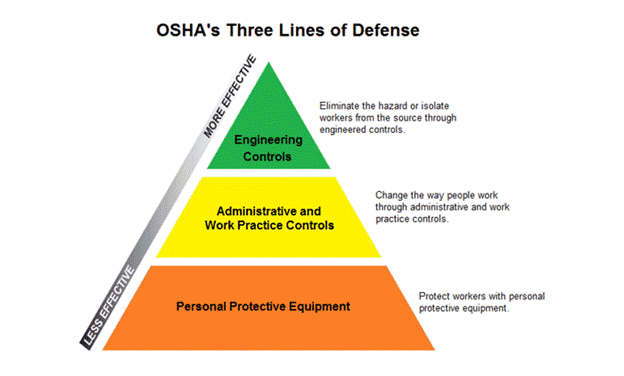
Figure 1: OSHA’s Three Lines of Defense
Solutions are presented in the NEP-Isocyanates to reduce isocyanate exposure based on OSHA’s Three Lines of Defense:
PPE for Handling Isocyanates
As part of the NEP for isocyanates, OSHA assesses the work environment for appropriate use of PPE under the following four categories: body protection, eye protection, respiratory protection, and hand protection.
Eye protection: Individuals working with isocyanate based products need to consider the use of appropriate eye and face protection. Isocyanate compounds can irritate the eyes and skin and are not water soluble so they can be difficult to remove, so exposure prevention is very important. The proper selection of eye protection is vital to prevent contact with the eyes and face. Where handling liquid isocyanate compounds and splash potential is present safety eyewear alone is not adequate. Non-vented or indirectly vented goggles worn with a face shield or a standalone full-face respirator provides liquid exposure protection.
Respiratory protection: Must be used in accordance to the requirements set forth in OSHA’s Respiratory Protection Standard (29 Code of Federal Regulations (CFR) 1910.134). OSHA states that use of air purifying (cartridge) respirators (APRs) is acceptable only if a cartridge change schedule is utilized (OSHA Interpretation Letter 2000). Change schedules will ensure the cartridge is not used beyond its life expectancy. If air concentrations of the isocyanate compound are not quantified or known, like in emergency situations, APRs cannot be used. In these situations a supplied air respirator (SAR) or self-contained breathing apparatus (SCBA) must be used.
Clothing/Gloves: Because various glove/clothing materials resist differently, no one glove/clothing is suited for all isocyanate compounds. A glove or garment that is well suited for one application may not be right for another exposure related task. It is best to base glove/clothing material selection on the manufacturer’s chemical resistance testing guide as well as considering other factors such as dexterity, comfort, temperature, seam construction, and overall durability. Based on the chemical guides and consideration of all factors, a glove or clothing garment that is most resistant to the chemicals being used and best suited for the job task should be selected. It is important to note that section 8 of the Safety Data Sheet (SDS) will not be brand specific. The actual chemical compatibility of a given glove or clothing garment material can vary between manufacturers. Selections must be based on the particular manufacturer’s test data.
Commonly Asked Questions
Q: Can I wear an air-purifying, cartridge-style respirator for protection against isocyanates?
A: Yes. Air-purifying respirators can be used with contaminants that have poor warning properties, such as isocyanates. However, you must check with the manufacturer of your respirator for specifics. For example, 3M and MSA have a respirator change-out formula for some isocyanates. If you know the airborne concentration in ppm, you can calculate about how long a cartridge will last. Please refer to Quick Tips #196: Respirator Cartridge Change Schedule for information.
Q: In what types of products are isocyanates commonly found? What types of occupations involve exposure to isocyanates?
A: Isocyanates are commonly found in automotive paints, foam cushions, mattresses, car seats, foam insulation, foam packaging materials, under-carpet padding, polyurethane rubber and adhesives. Some professionals who might encounter isocyanates are auto/truck-body repair-shop painters, insulation manufacturers, plastic wire coating and pipe manufacturers, and tire and furniture manufacturers.
Q: Are isocyanates considered a fire hazard? What type of fire extinguisher should be use to put out a fire that contains isocyanates?
A: Isocyanates have an approximate flash point of 527°F, OSHA defines a flammable liquid as a flash point under 199.4°F so Isocyanates are not considered a flammable liquid and do not pose a serious fire hazard. Fires may be extinguished with carbon dioxide or dry-chemical extinguishers. However, when isocyanates burn, they do become harmful to anyone who is not equipped with a SAR.
Sources
3M Job Health Highlights-Respirator Selection for Diisocyanates, Vol 18, August, 2009
What are Diisocyantes?, American Chemistry Council. 2016
OSHA National Emphasis Program – Occupational Exposure to Isocyanates Instruction Directive number CPL 03-00-017 Occupational Safety and Health Administration. June 2016
OSHA Standard Interpretation letter, Occupational Safety and Health Administration. July 18, 2000. (OSHA Interpretation Letter 2000)
“Guidance for Selection of Protective Clothing for MDI Users” American Chemistry Council. March 2013
“Guidance for Selection of Protective Clothing for TDI Users” American Chemistry Council. March 2013
“Occupational Hygiene Air Monitoring for MDI & TDI Guidance” American Chemistry Council. August 2012
The information contained in this article is intended for general information purposes only and is based on information available as of the initial date of publication. No representation is made that the information or references are complete or remain current. This article is not a substitute for review of current applicable government regulations, industry standards, or other standards specific to your business and/or activities and should not be construed as legal advice or opinion. Readers with specific questions should refer to the applicable standards or consult with an attorney.
Source: Grainger Know How – https://www.grainger.com/know-how
Un hombre del sur de Florida fue mutilado por un leopardo negro después de haber pagado 150 dólares por una “experiencia de contacto total” con el gran felino en lo que se describe como un “zoológico de patio trasero”. Se suponía que la experiencia incluía jugar con el leopardo, frotar su vientre y tomar fotos… en cambio el hombre ha tenido que someterse a múltiples cirugías.
Informado originalmente por WPLG Local 10 News, el incidente tuvo lugar detrás de una casa en Davies, Florida, el 31 de agosto. La experiencia fue ofrecida por un hombre llamado Michael Poggi que dirige Poggi’s Animal House: un santuario de animales autodenominado que, según su página de Facebook ahora eliminada, “rescata […] y cría animales raros y en peligro de extinción.”
Según el reportaje de WPLG, Dwight Turner descubrió el santuario del patio trasero a través de Facebook y pagó 150 dólares por una experiencia de “contacto total” y una sesión de fotos con el leopardo, pero en cuanto entró en el recinto del patio trasero, el animal le atacó. Un informe de la Comisión de Conservación de la Pesca y la Vida Silvestre de Florida describe las heridas de Davies con un detalle espantoso, escribiendo que su cuero cabelludo “colgaba de su cabeza y su oreja derecha estaba desgarrada por la mitad”.
Davies ha demandado a Poggi y al santuario, alegando que la renuncia que se le pidió que firmara no cubre las lesiones que sufrió, ya que toda la experiencia fue ilegal. Esta afirmación está respaldada por las autoridades, que han acusado a Poggi de permitir el contacto pleno con un animal extremadamente peligroso y de mantener la fauna silvestre cautiva en condiciones inseguras.
A man in South Florida was mauled by a black leopard after he paid $150 for a “full-contact experience” with the big cat in what is being described as a “backyard zoo.” The experience was supposed to include playing with the leopard, rubbing its belly, and taking pictures… instead the man has had to undergo multiple surgeries.
Originally reported by WPLG Local 10 News, the incident took place behind a home in Davies, Florida on August 31st. The experience was offered by a man named Michael Poggi who runs Poggi’s Animal House: a self-described animal sanctuary that, according to its now-removed Facebook page, “rescues […] and breeds rare and endangered animals.”
According to WPLG’s reporting, Dwight Turner discovered the backyard sanctuary through Facebook and paid $150 for a “full contact” experience and photo op with the leopard, but as soon as he entered the backyard enclosure, the animal attacked. A report by the Florida Fish and Wildlife Conservation Commission describes Davies’ injuries in gruesome detail, writing that his scalp was “hanging from his head and his right ear was torn in half.”
Davies is suing Poggi and the sanctuary, claiming that the waiver he was asked to sign does not cover the injuries he sustained since the entire experience was illegal. This assertion is backed up by authorities who have charged Poggi with allowing full contact with an extremely dangerous animal and maintaining captive wildlife in an unsafe condition.
A person is “alone” at work when they are on their own; when they cannot be seen or heard by another person.
While it is not always hazardous to work alone, it can be when other circumstances are present. Whether a situation is a high or low risk will depend on:
Exposure to violence and poor access to emergency assistance are the two main hazards of working alone. However, these hazards can also be faced by people who work with colleagues.
Working alone can increase the likelihood of some workplace hazards or risks occurring and in those cases where incidents do occur, the consequences can be more severe.
A lone worker can be anyone who works alone in a fixed facility or away from his or her typical base. At times, the definition applies to those who work alone in factories or warehouses on nights or weekends. It also applies to traveling workers in construction, utilities, maintenance and repair, agriculture, and other fields.
TRABAJAR SOLO
Una persona está “sola” en el trabajo cuando está por su cuenta; cuando no puede ser vista ni oída por otra persona.
¿ES PELIGROSO, O AL MENOS PROBLEMÁTICO, ¿TRABAJAR SOLO?
Aunque no siempre es peligroso trabajar solo, puede serlo cuando se dan otras circunstancias. El hecho de que una situación sea de alto o bajo riesgo dependerá de:
LOS RIESGOS
La exposición a la violencia y el escaso acceso a la asistencia de emergencia son los dos principales riesgos de trabajar solo. Sin embargo, estos peligros también pueden ser afrontados por personas que trabajan con compañeros.
Trabajar solo puede aumentar la probabilidad de que se produzcan algunos peligros o riesgos en el lugar de trabajo y, en los casos en que se produzcan incidentes, las consecuencias pueden ser más graves.
TRABAJOS QUE NO SE PUEDEN HACER TRABAJANDO SOLO
CONSEJOS PARA LA PROTECCIÓN DEL TRABAJADOR SOLITARIO
Un trabajador solitario puede ser cualquiera que trabaje solo en una instalación fija o fuera de su base habitual. En ocasiones, la definición se aplica a quienes trabajan solos en fábricas o almacenes por la noche o los fines de semana. También se aplica a los trabajadores itinerantes de la construcción, los servicios públicos, el mantenimiento y la reparación, la agricultura y otros campos.
There are 53 million lone workers in the United States, Canada, and Europe combined. To put that statistic into perspective, it represents about 15% of the overall workforce. In fact, the International Labor Organization estimates that 2.3 million work-related fatalities happen each year.
Hay 53 millones de trabajadores solitarios en Estados Unidos, Canadá y Europa juntos. Para poner esta estadística en perspectiva, representa alrededor del 15% de la mano de obra total. De hecho, la Organización Internacional del Trabajo calcula que cada año se producen 2,3 millones de muertes relacionadas con el trabajo.
The 53-year old, who was employed as a temporary stand-in gamekeeper, sustained serious injuries to his pelvis when the quad bike he was driving overturned on a slope. However, his absence was not detected until 52 hours later, at which point a search was initiated. His body was found some 200 yards away from the scene of the accident, in a separate field.
He had no means of raising the alarm although there was a mobile phone signal and the normal gamekeeper (who was undergoing surgery) had been issued with a phone.
It appears the injured gamekeeper had attempted to reach a nearby farmhouse to seek help and had opened a farm gate in order to get there. The trustees were prosecuted because the injured gamekeeper clearly did not die immediately and if he had a means of communication then he would have had an opportunity to summon help.
The accident occurred in October 2004, but the case had been to the Court of Appeal on a point of law relating to the prosecution of a Trust and the case was not heard in court until March of this year. It was also the first time an agricultural concern had been prosecuted in respect of lone working.
The trustees admitted failing to provide a means of communication or carrying out a risk assessment for a lone worker to report in at the end of a shift.
Advice
Health and Safety Executive investigating officer Lawrence Murray said the decision sent out an important message. “Hopefully other employers will learn from this case and ensure all precautions are taken to cope with the hazards that lone workers are exposed to” he said.
“They need a system in place for lone workers keeping in touch with people and also a means of communication to contact the emergency services if need be.”
El hombre de 53 años, que estaba empleado como guarda de caza temporal, sufrió graves lesiones en la pelvis cuando el cuadriciclo que conducía volcó en una pendiente. Sin embargo, su ausencia no se detectó hasta 52 horas después, momento en el que se inició una búsqueda. Su cuerpo fue encontrado a unos 200 metros del lugar del accidente, en un campo aparte.
No tenía medios para dar la alarma, aunque había señal de teléfono móvil y el guardabosques habitual (que estaba siendo operado) había recibido un teléfono.
Al parecer, el guardabosques herido había intentado llegar a una granja cercana para pedir ayuda y había abierto una puerta de la granja para llegar allí. Los administradores fueron procesados porque es evidente que el guardabosques herido no murió inmediatamente y si hubiera tenido un medio de comunicación habría tenido la oportunidad de pedir ayuda.
El accidente ocurrió en octubre de 2004, pero el caso había llegado al Tribunal de Apelación por una cuestión de derecho relativa al enjuiciamiento de un fideicomiso y el caso no se vio en el tribunal hasta marzo de este año. También era la primera vez que se procesaba a una empresa agrícola en relación con el trabajo en solitario.
Los administradores admitieron no haber proporcionado un medio de comunicación ni haber realizado una evaluación de riesgos para que un trabajador solitario se presentara al final de su turno.
Consejo
Lawrence Murray, responsable de la investigación del Ejecutivo de Salud y Seguridad, afirmó que la decisión enviaba un mensaje importante. “Esperemos que otros empresarios aprendan de este caso y se aseguren de que se toman todas las precauciones para hacer frente a los peligros a los que están expuestos los trabajadores solitarios”, dijo.
“Necesitan un sistema para que los trabajadores solitarios se mantengan en contacto con la gente y también un medio de comunicación para contactar con los servicios de emergencia en caso necesario”.
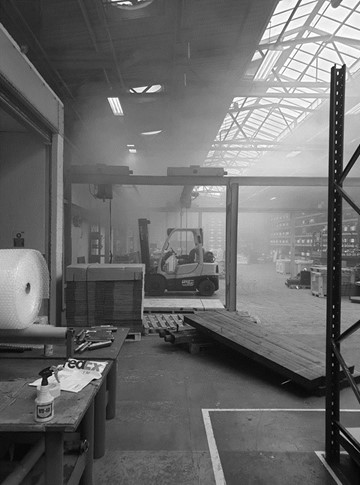
What do you see in this picture that could be dangerous if you were working in this space, particularly if you were alone?
There are several unsafe conditions in this image that could be harmful to any worker, but especially a lone worker. Use the Picture This to spark discussion about the hazards of working alone and the precautions and procedures your organization has in place to protect lone workers. Here are a few observations to get the discussion started.
¿Qué ve en esta imagen que podría ser peligroso si estuviera trabajando en este espacio, especialmente si estuviera solo?
En esta imagen hay varias condiciones inseguras que podrían ser perjudiciales para cualquier trabajador, pero especialmente para un trabajador solitario. Utilice la imagen para iniciar un debate sobre los peligros de trabajar solo y las precauciones y procedimientos que su organización ha establecido para proteger a los trabajadores solitarios. He aquí algunas observaciones para iniciar el debate.
Los trabajos de excavación y zanjas matan a más de 50 trabajadores al año. Los empleados aprenderán a identificar los riesgos de excavación y zanja, las prácticas de trabajo seguras y los sistemas de protección, así como a recordar los requisitos de protección contra derrumbes diseñados para mantener a los trabajadores seguros.