Biosecurity Protocols Fatality File

Salmonella egg factory owner arrested over man’s death 

A poultry farmer whose contaminated eggs caused a salmonella outbreak at a Birmingham hospital has been arrested over the death of a man in Austria.

Five patients died at Heartlands Hospital in Bordesley Green and the bacteria was traced back to eggs from factory Bayern Ei in Bavaria, Germany.

The same source of salmonella is blamed for the death of a 75-year-old man.

It played a part in other deaths because inadequately equipped wards, unmonitored food preparation and poor cleaning helped it spread, the report stated.

German prosecutor, Theo Ziegler, said the wealthy businessman is being held on suspicion of grievous bodily harm causing death – due to harmful substances.

BBC Midlands Today discovered 60,000 contaminated eggs from Bayern Ei got to England last month but were destroyed before they entered the food chain. 


Biosecurity Protocols Fatality File – Spanish

El propietario de una fábrica de huevos con salmonela es detenido por la muerte de un hombre 

Un avicultor cuyos huevos contaminados provocaron un brote de salmonela en un hospital de Birmingham ha sido detenido por la muerte de un hombre en Austria.

Cinco pacientes murieron en el hospital Heartlands de Bordesley Green y se descubrió que la bacteria procedía de los huevos de la fábrica Bayern Ei de Baviera (Alemania).

A la misma fuente de salmonela se le atribuye la muerte de un hombre de 75 años.

El informe señala que la bacteria participó en otras muertes, ya que las salas mal equipadas, la falta de control en la preparación de los alimentos y la escasa limpieza contribuyeron a su propagación.

El fiscal alemán, Theo Ziegler, declaró que el acaudalado empresario está detenido como sospechoso de daños corporales graves que causaron la muerte, debido a sustancias nocivas.

BBC Midlands Today descubrió que 60.000 huevos contaminados del Bayern Ei llegaron a Inglaterra el mes pasado, pero fueron destruidos antes de entrar en la cadena alimentaria.


Biosecurity Protocols Picture This

Source: https://pestrisk.org


Biosecurity Protocols Picture This – Spanish

Fuente: https://core.ac.uk/


Ergonomics and Manual Handling Meeting Kit – Spanish

QUÉ ESTÁ EN RIESGO

ERGONOMÍA

La ergonomía es la ciencia de adaptar el trabajo al trabajador. El diseño de puestos de trabajo y herramientas para reducir los trastornos musculoesqueléticos (TME) relacionados con el trabajo puede ayudar a los trabajadores a mantenerse sanos y a las empresas a reducir o eliminar los elevados costes asociados a los TME.

Las pruebas científicas demuestran que las intervenciones ergonómicas eficaces pueden reducir las exigencias físicas de las tareas de manipulación manual de materiales (MMH), disminuyendo así la incidencia y la gravedad de las lesiones musculoesqueléticas que pueden causar. Su potencial para reducir los costes relacionados con las lesiones hace que las intervenciones ergonómicas sean una herramienta útil para mejorar la productividad, la calidad de los productos y la competitividad general de una empresa. Pero muy a menudo la productividad recibe una inyección adicional y sólida cuando los directivos y los trabajadores examinan de nuevo la mejor manera de utilizar la energía, el equipo y el esfuerzo para realizar el trabajo de la forma más eficiente y eficaz posible.

MANIPULACIÓN MANUAL 

“Manipulación manual” significa utilizar el cuerpo para ejercer fuerza para manipular, sostener o sujetar cualquier objeto, e incluye no sólo el levantamiento y el transporte, sino también las tareas repetitivas. Una tarea de manipulación manual que tiene el potencial de causar lesiones es una “tarea de manipulación manual peligrosa”. La manipulación manual incluye el uso de ordenadores y la ergonomía de los puestos de trabajo.

TRASTORNOS MUSCULOESQUELÉTICOS Y TRABAJO DE MANIPULACIÓN MANUAL DE MATERIALES 

El trabajo de manipulación manual de materiales contribuye a un gran porcentaje de los trastornos musculoesqueléticos notificados. Los trastornos musculoesqueléticos suelen consistir en torceduras y esguinces en la zona lumbar, los hombros y las extremidades superiores. Pueden dar lugar a un dolor prolongado, a una discapacidad, a un tratamiento médico y a un estrés económico para quienes los padecen.

CUÁL ES EL PELIGRO

FACTORES ERGONÓMICOS QUE CAUSAN TME. 

  • Ejercer una fuerza excesiva.
  • Repetición excesiva de movimientos que pueden irritar los tendones y aumentar la presión sobre los nervios.
  • Posturas incómodas, o posiciones sin apoyo que estiran los límites físicos, pueden comprimir los nervios e irritar los tendones.
  • Las posturas estáticas, o posiciones que el trabajador debe mantener durante largos periodos de tiempo, pueden restringir el flujo sanguíneo y dañar los músculos.
  • El movimiento, como el aumento de la velocidad o la aceleración al agacharse y girar, puede aumentar la cantidad de fuerza ejercida sobre el cuerpo.
  • La compresión, al agarrar bordes afilados como los mangos de las herramientas, puede concentrar la fuerza en pequeñas zonas del cuerpo, reducir el flujo sanguíneo, la transmisión nerviosa y dañar las vainas de los tendones.
  • El tiempo de recuperación inadecuado debido a las horas extraordinarias, la falta de descansos y el hecho de no variar las tareas, dejan un tiempo inadecuado para la curación de los tejidos.

COMO PROTEGERSE

CAPACITACIÓN DE LOS EMPLEADOS

Los empleados que han recibido capacitación para identificar y evitar los riesgos ergonómicos están mejor capacitados para evitar los riesgos. Los empleados deben conocer:

  • Los TME más comunes y sus signos y síntomas.
  • La importancia de notificar los TME, así como sus signos y síntomas, lo antes posible.
  • Cómo notificar los TME en el lugar de trabajo.
  • Los factores de riesgo y las actividades laborales asociadas a los TME.

LAS MEJORES PRÁCTICAS PARA REDUCIR O ELIMINAR LOS RIESGOS DE LA MANIPULACIÓN MANUAL

  • Cambie la tarea: pregúntese “¿Es necesario realizar esta tarea? Si es así, ¿tiene que hacerse así?”.
  • Cambie el objeto – por ejemplo, vuelva a empaquetar una carga pesada en paquetes más pequeños
  • Cambie el espacio de trabajo: por ejemplo, utilice muebles ergonómicos y asegúrese de que los bancos de trabajo están a una altura óptima para limitar las flexiones o los estiramientos.
  • Modificar las condiciones ambientales, incluyendo el calor, el frío y las vibraciones.
  • Utilice ayudas mecánicas, como carretillas, cintas transportadoras, grúas o carretillas elevadoras.
  • Cambie la naturaleza del trabajo: por ejemplo, ofrezca descansos frecuentes o la posibilidad de realizar tareas diferentes.
  • Ofrezca una capacitación adecuada: los trabajadores sin experiencia tienen más probabilidades de lesionarse.

CONCLUSIÓN

Además de reducir el riesgo de lesiones, una buena ergonomía y un entorno de trabajo saludable pueden aumentar la productividad, mejorar la calidad, reducir las repeticiones de trabajo, disminuir las tasas de rotación de los empleados, reducir los costes de capacitación y mejorar la moral en el lugar de trabajo. Se trata de un excelente retorno de la inversión.


Ergonomics and Manual Handling Meeting Kit

ERGONOMICS

Ergonomics is the science of fitting the job to the worker. Designing workstations and tools to reduce work-related musculoskeletal disorders (MSDs) can help workers stay healthy and companies to reduce or eliminate the high costs associated with MSDs.

Scientific evidence shows that effective ergonomic interventions can lower the physical demands of manual material handling (MMH) work tasks, thereby lowering the incidence and severity of the musculoskeletal injuries they can cause. Their potential for reducing injury related costs alone make ergonomic interventions a useful tool for improving a company’s productivity, product quality, and overall business competitiveness. But very often productivity gets an additional and solid shot in the arm when managers and workers take a fresh look at how best to use energy, equipment, and exertion to get the job done in the most efficient and effective way possible.

MANUAL HANDLING 

“Manual handling” means using your body to exert force to handle, support or restrain any object, and includes not only lifting and carrying but also repetitive tasks. A manual handling task that has the potential to cause injury is a “hazardous manual handling task”. Manual handling includes computer use and workstation ergonomics.

MUSCULOSKELETAL DISORDERS AND MANUAL MATERIAL HANDLING WORK 

Manual material handling work contributes to a large percentage of reported musculoskeletal disorders. Musculoskeletal disorders often involve strains and sprains to the lower back, shoulders, and upper limbs. They can result in protracted pain, disability, medical treatment, and financial stress for those afflicted with them.

ERGONOMIC FACTORS THAT CAUSE MSDs. 

  • Exerting excessive force.
  • Excessive repetition of movements that can irritate tendons and increase pressure on nerves.
  • Awkward postures, or unsupported positions that stretch physical limits, can compress nerves and irritate tendons.
  • Static postures, or positions that a worker must hold for long periods of time, can restrict blood flow and damage muscles.
  • Motion, such as increased speed or acceleration when bending and twisting, can increase the amount of force exerted on the body.
  • Compression, from grasping sharp edges like tool handles, can concentrate force on small areas of the body, reduce blood flow, nerve transmission and damage tendon sheaths.
  • Inadequate recovery time due to overtime, lack of breaks and failure to vary tasks, leave inadequate time for tissue healing.

EMPLOYEE TRAINING

Employees who have been trained to identify and avoid ergonomic hazards are better able to avoid hazards. Employees should be aware of:

  • Common MSDs and their signs and symptoms.
  • The importance of reporting MSDs, and signs and symptoms, as soon as possible.
  • How to report MSDs in the workplace.
  • Risk factors and work activities associated with MSDs hazards.

BEST PRACTICES TO REDUCE OR ELIMINATE MANUAL HANDLING RISKS

  • Change the task – ask ‘Does this task need to be carried out? If so, does it have to be done this way?’
  • Change the object – for example, repack a heavy load into smaller parcels
  • Change the workspace – for example, use ergonomic furniture and make sure work benches are at optimum heights to limit bending or stretching
  • Change the environmental conditions – including heat, cold and vibration
  • Use mechanical aids – such as wheelbarrows, conveyor belts, cranes or forklifts
  • Change the nature of the work – for example, offer frequent breaks or the chance to do different tasks
  • Offer proper training – inexperienced workers are more likely to be injured.

FINAL WORD

In addition to reducing the risk of injury, good ergonomics and a healthy work environment can increase productivity, improve quality, reduce rework, lower employee turnover rates, reduce training costs and improve workplace morale. That’s an excellent return on investment! 


Ergonomics and Manual Handling Stats and Facts

FACTS

  1. Manual material handling (MMH) is the most common cause of occupational fatigue and low back pain. 
  2. Back injuries account for about one third of all lost work and even more than one third of all compensation costs. 
  3. Each year several thousand workers are permanently disabled by back injuries. Many others are unable to return to their former jobs. 
  4. Manual handling injuries do not happen in isolation. Poor design of workplaces and activities can also contribute to both type and severity of injury. 
  5. Risk assessments determine the risk of manual handling injury and to help identify what remedial action is required. Medical and scientific knowledge stress the importance of an ergonomic approach to manual handling, taking into account the nature of the task, the load, the working environment and individual capability, and worker participation.

STATS

  • According to the Health and Safety Executive approximately 120,000 people are injured at work from manual handling incidents each year. 
  • Over 30% of food and drink industry injuries reported to HSE are manual handling injuries such as back injuries, this represents around 1700 acute injuries per year. 
  • Manual handling injuries are caused by handling and lifting – 60% of the injuries involve lifting heavy objects.
  • Overexertion and bodily reaction were the leading cause of lost-time occupational injuries, accounting for 36.6 % of all lost-time nonfatal cases, even more than slips, trips, and falls (24.2 %).
  • According to the Bureau of Labor Statistics, the back was the body part most frequently affected in 2012 private-sector injuries involving days away from work. Back injuries accounted for 19.6 % of those 905,690 injuries, significantly higher than hand (13.4 %), shoulder (7.5 %), knee (8.5 %), or head (5.0 %). 


Ergonomics and Manual Handling Stats and Facts – Spanish

HECHOS

  1. La manipulación manual de materiales (MMH) es la causa más común de fatiga laboral y lumbalgia. 
  2. Las lesiones de espalda suponen aproximadamente un tercio de todas las bajas laborales e incluso más de un tercio de todos los costes de indemnización. 
  3. Cada año, varios miles de trabajadores quedan discapacitados de forma permanente a causa de las lesiones de espalda. Muchos otros son incapaces de volver a sus antiguos puestos de trabajo. 
  4. Las lesiones por manipulación manual no se producen de forma aislada. Un mal diseño de los lugares de trabajo y de las actividades también puede contribuir al tipo y a la gravedad de las lesiones. 
  5. Las evaluaciones de riesgos determinan el riesgo de lesiones por manipulación manual y ayudan a identificar las medidas correctoras necesarias. Los conocimientos médicos y científicos subrayan la importancia de un enfoque ergonómico de la manipulación manual, teniendo en cuenta la naturaleza de la tarea, la carga, el entorno de trabajo y la capacidad individual, así como la participación del trabajador.

ESTADÍSTICAS

  • Según el Ejecutivo de Salud y Seguridad, cada año se lesionan en el trabajo aproximadamente 120.000 personas por incidentes de manipulación manual. 
  • Más del 30% de las lesiones de la industria de la alimentación y las bebidas notificadas al Ejecutivo de Salud y Seguridad son lesiones por manipulación manual, como por ejemplo lesiones de espalda, lo que representa unas 1.700 lesiones graves al año. 
  • Las lesiones por manipulación manual están causadas por la manipulación y el levantamiento de objetos: el 60% de las lesiones están relacionadas con el levantamiento de objetos pesados.
  • Los sobreesfuerzos y las reacciones corporales fueron la principal causa de lesiones laborales con baja, representando el 36,6% de todos los casos sin baja, incluso más que los resbalones, tropiezos y caídas (24,2%).
  • Según la Oficina de Estadísticas Laborales, la espalda fue la parte del cuerpo más frecuentemente afectada en las lesiones del sector privado de 2012 que implicaron días de ausencia del trabajo. Las lesiones de espalda representaron el 19,6% de esas 905.690 lesiones, cifra significativamente superior a la de las manos (13,4%), los hombros (7,5%), las rodillas (8,5%) o la cabeza (5,0%).


Ergonomics and Manual Handling Fatality File – Spanish

¡Ataque a la espalda! El coste real de las lesiones por manipulación manual 

Una auxiliar de biblioteca de 54 años recibió instrucciones de su empleador para ayudar a trasladar 80.000 libros de una zona de la biblioteca a otra durante un periodo de cuatro meses. Se le pidió que levantara pilas de libros y los metiera en cajas, que pesaban hasta 22 kg cada una. A continuación, se cargaron en carros y se llevaron a su nuevo destino.

La bibliotecaria no había recibido capacitación en técnicas de manipulación manual y, en consecuencia, desarrolló dolores de espalda por el persistente levantamiento de objetos pesados. Informó a su jefe del dolor y se tomó tres días libres para descansar, pero al volver al trabajo le dijeron que siguiera moviendo las cajas.

El dolor de espalda se hizo tan intenso que se le agarrotó por completo. A pesar de buscar tratamiento en una clínica especializada en el dolor para ayudarla a controlar las molestias, sigue sufriendo un dolor de espalda crónico que le impide trabajar. Su empleador local no le ofreció tareas ligeras alternativas y posteriormente fue despedida por incapacidad médica.

Ella dijo: Nunca había tenido problemas de espalda antes de levantar esas cajas, pero ahora tengo que adaptar mi vida a la gestión del dolor”.

“El hecho de que mis empleadores negaran ser los culpables de mis lesiones y del fin de mi carrera fue especialmente irritante. Pensaba seguir trabajando hasta la jubilación para ayudar a pagar la matrícula universitaria de mi hija, pero eso ya no es una opción para mí.”


Ergonomics and Manual Handling Fatality File

Back attack! The real cost of manual handling injuries 

A 54-year-old library assistant was instructed by her employer to help move 80,000 books from one area of the library to another over a four-month period. She was told to lift stacks of books and pack them into boxes – weighing up to 22kg each. These were then loaded onto trolleys and taken to their new destination.

The librarian had not been trained in manual handling techniques and consequently developed back pain from the persistent heavy lifting. She told her manager about the pain and took three days off to rest, however, on returning to work she was told to carry on with moving the boxes.

Her back pain became so severe that her back seized up altogether. Despite seeking treatment from a specialist pain clinic to help her to manage the discomfort, she continues to suffer from chronic back pain which prevents her from working. Her local authority employer did not offer her alternative light duties and she was subsequently dismissed on grounds of medical incapability.

She said: “I never had any problems with my back before lifting those boxes but now I have to adapt my life around managing the pain.

“The fact that my employers denied they were to blame for my injuries and the end of my career was particularly galling. I planned to carry on working until retirement to help pay for my daughter’s university tuition fees but that’s no longer an option for me.”


Ergonomics and Manual Handling Picture This

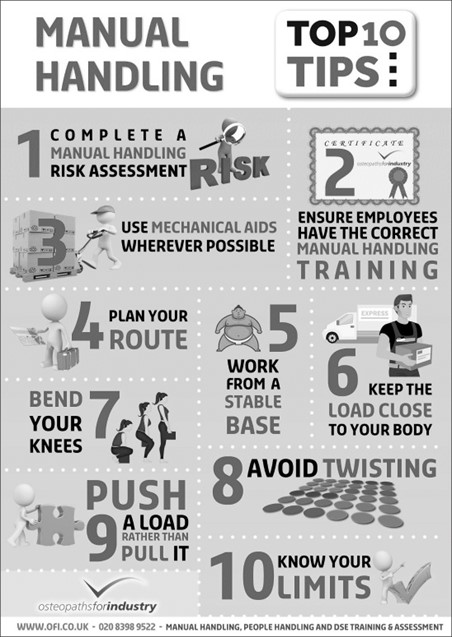
Source: https://www.ofi.co.uk


Ergonomics and Manual Handling Picture This – Spanish

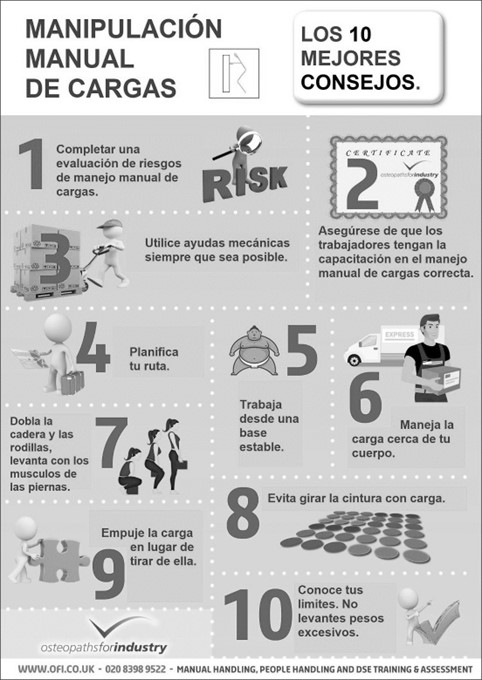
Fuente: http://themelisting.com/


Risk Assessment Meeting Kit – Spanish

QUÉ ESTÁ EN RIESGO

La gestión de riesgos es un proceso que identifica los posibles peligros para las personas, los productos y los bienes, y lo que hay que hacer al respecto. Hay cuatro áreas principales en las que existen peligros:

  • Personas: capacitación inadecuada, supervisión deficiente, falta de atención, no trabajar con seguridad, etc.
  • Equipos: mal mantenimiento, ausencia de protecciones, uso de equipos inadecuados para la tarea.
  • Materiales: sustancias inflamables o peligrosas, riesgos de manipulación, almacenamiento especial, etc.
  • Entorno: suelo mojado, mala iluminación, ruidos fuertes, inclemencias del tiempo, etc. 

CUÁL ES EL PELIGRO

¿Cuándo debe realizarse una gestión de riesgos?

  • Antes de introducir nuevos procesos o actividades.
  • Antes de que se introduzcan cambios en los procesos o actividades existentes, incluso cuando cambien los productos, la maquinaria, las herramientas o los equipos, o cuando se disponga de nueva información relativa a los daños.
  • Cuando se identifican peligros.

COMO PROTEGERSE

Cómo planificar la gestión de riesgos

Conozca: 

  • Cuál será el alcance de su gestión de riesgos.
  • Los recursos necesarios.
  • Qué tipo de medidas de análisis de riesgos se utilizarán (por ejemplo, la exactitud de la escala o los parámetros necesarios).
  • Quiénes son las partes interesadas (por ejemplo, el director, los supervisores, los trabajadores, los representantes de los trabajadores, etc.).
  • Qué leyes, reglamentos, códigos o normas pertinentes pueden aplicarse en su jurisdicción.

La importancia de la gestión de riesgos

  • Crear conciencia de los peligros y los riesgos.
  • Identificar quién puede estar en riesgo (por ejemplo, empleados, personal de limpieza, visitantes, contratistas, el público, etc.).
  • Determinar si es necesario un programa de control para un peligro concreto.
  • Determinar si las medidas de control existentes son adecuadas o si hay que hacer algo más.
  • Prevenir lesiones o enfermedades, especialmente cuando se hace en la fase de diseño o planificación.
  • Priorizar los peligros y las medidas de control.
  • Cumplir con los requisitos legales cuando sea aplicable.

El objetivo de la gestión de riesgos

El objetivo es tratar de responder a las siguientes preguntas

  1. ¿Qué puede ocurrir y en qué circunstancias?
  2. ¿Cuáles son las posibles consecuencias?
  3. ¿Qué probabilidad hay de que se produzcan las posibles consecuencias?
  4. ¿Se ha controlado el riesgo de forma eficaz o es necesario tomar más medidas?

PASOS PARA REALIZAR UNA GESTIÓN DE RIESGOS

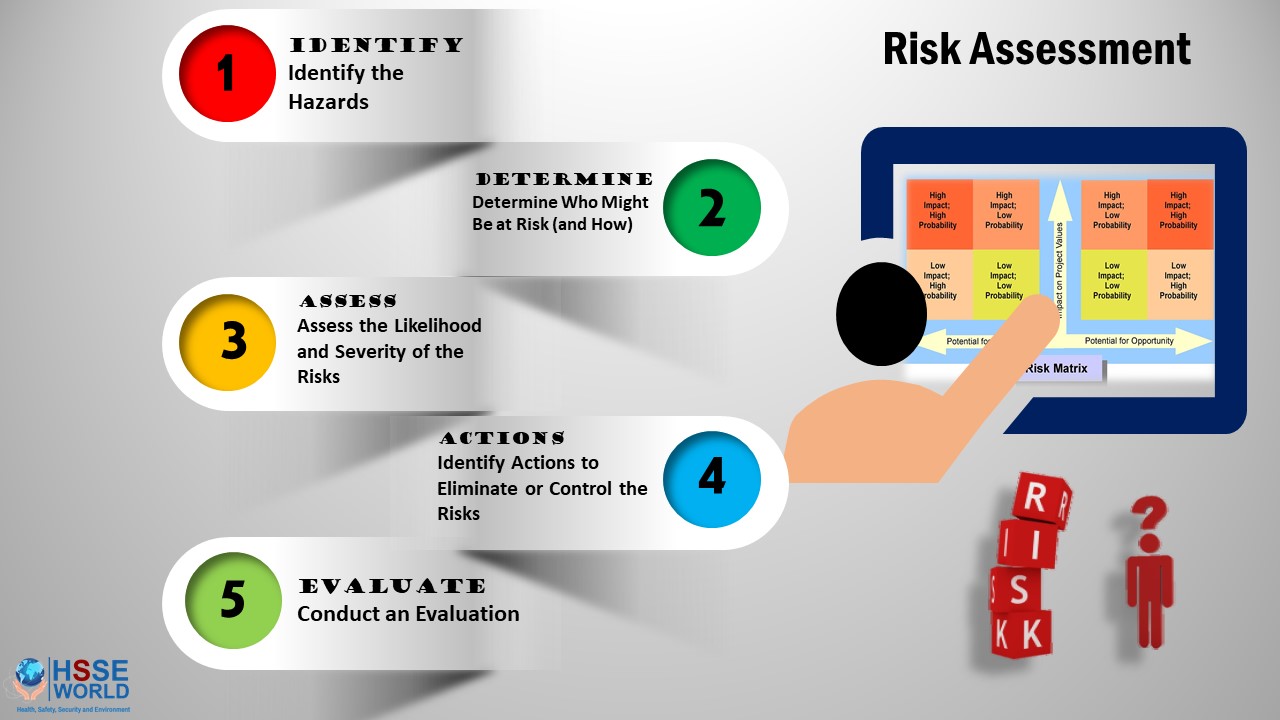
Paso 1: El proceso de identificación 

Los empleadores tienen la obligación de evaluar los riesgos para la salud y la seguridad de sus trabajadores. El empleador debe comprobar sistemáticamente los posibles peligros físicos, mentales, químicos y biológicos.

Paso 2: Decidir quién puede resultar perjudicado y cómo

La identificación de quién está en riesgo comienza con los propios empleados a tiempo completo y parcial de su organización. Los empleadores también deben evaluar los riesgos a los que se enfrentan el personal de la agencia y el contratado, los visitantes, los clientes y otros miembros del público en sus instalaciones.

Paso 3: Evaluar los riesgos y tomar medidas

Esto significa que los empleadores deben considerar la probabilidad de que cada peligro pueda causar daños. Esto determinará si el empleador debe o no reducir el nivel de riesgo. Incluso después de tomar todas las precauciones, suele quedar algún riesgo. Los empleadores deben decidir para cada peligro restante si el riesgo sigue siendo alto, medio o bajo.

Paso 4: Hacer un registro de los hallazgos

Los empleadores con cinco o más empleados deben registrar por escrito las principales conclusiones de la gestión de riesgos. Este registro debe incluir detalles de cualquier peligro observado en la gestión de riesgos, y las medidas adoptadas para reducir o eliminar el riesgo.

Paso 5: Revisar la gestión de riesgos

Asegúrese de que se siguen aplicando las prácticas de trabajo seguras acordadas (por ejemplo, que los supervisores y los superiores jerárquicos respetan las instrucciones de seguridad de la dirección). Tenga en cuenta las nuevas prácticas de trabajo, la nueva maquinaria o los objetivos de trabajo más exigentes.

Es importante saber si la gestión de riesgos fue completa y precisa. También es esencial asegurarse de que cualquier cambio en el lugar de trabajo no ha introducido nuevos peligros o ha cambiado los peligros que antes se clasificaban como de menor prioridad a una prioridad mayor. 

COMUNICAR LOS RIESGOS

El último paso es comunicar a todos los riesgos identificados. Deben conocer a fondo los riesgos existentes y cómo prevenirlos o mitigarlos para alcanzar los objetivos de la organización.

CONCLUSIÓN

Para cada tarea o trabajo para el que realice una gestión de riesgos, piense en cómo se realiza habitualmente y en cómo puede producirse un peligro por parte de las personas, los equipos, los materiales o el entorno.


Risk Assessment Meeting Kit

Risk assessment is a process that identifies possible hazards to people, product and property—and what to do about it. There are four main areas where hazards exist:

  • People: improper training, poor supervision, not paying attention, not working safely, etc.
  • Equipment: poorly maintained, no guards, using the wrong equipment for the task.
  • Materials: flammable or dangerous substances, handling hazards, special storage, etc.
  • Environment: wet floor, poor lighting, loud noise, inclement weather, etc. 

When Should a Risk Assessment be Conducted?

  • Before new processes or activities are introduced.
  • Before changes are introduced to existing processes or activities, including when products, machinery, tools, equipment change or new information concerning harm becomes available.
  • When hazards are identified.

How to Plan for Risk Assessment

Find out: 

  • What the scope of your risk assessment will be.
  • The resources needed.
  • What type of risk analysis measures will be used (e.g., how exact the scale or parameters needed).
  • Who are the stakeholders involved (e.g., manager, supervisors, workers, worker representatives, etc.).
  • What relevant laws, regulations, codes, or standards may apply in your jurisdiction.

The Importance of Risk Assessment

  • Create awareness of hazards and risk.
  • Identify who may be at risk (e.g., employees, cleaners, visitors, contractors, the public, etc.).
  • Determine whether a control program is required for a particular hazard.
  • Determine if existing control measures are adequate or if more should be done.
  • Prevent injuries or illnesses, especially when done at the design or planning stage.
  • Prioritize hazards and control measures.
  • Meet legal requirements where applicable.

The Goal of Risk Assessment

The goal is to try to answer the following questions:

  1. What can happen and under what circumstances?
  2. What are the possible consequences?
  3. How likely are the possible consequences to occur?
  4. Is the risk controlled effectively, or is further action required?

STEPS IN CONDUCTING A RISK ASSESSMENT

Step 1: The Identification Process 

Employers have a duty to assess the health and safety risks faced by their workers. Your employer must systematically check for possible physical, mental, chemical and biological hazards.

Step 2: Decide Who May Be Harmed, and How

Identifying who is at risk starts with your organization’s own full- and part-time employees. Employers must also assess risks faced by agency and contract staff, visitors, clients and other members of the public on their premises.

Step 3: Assess the Risks and Take Action

This means employers must consider how likely it is that each hazard could cause harm. This will determine whether or not your employer should reduce the level of risk. Even after all precautions have been taken, some risk usually remains. Employers must decide for each remaining hazard whether the risk remains high, medium or low.

Step 4: Make A Record of The Findings

Employers with five or more staff are required to record in writing the main findings of the risk assessment. This record should include details of any hazards noted in the risk assessment, and action taken to reduce or eliminate risk.

Step 5: Review the Risk Assessment

Ensure that agreed safe working practices continue to be applied (e.g. that management’s safety instructions are respected by supervisors and line managers). Take account of any new working practices, new machinery or more demanding work targets.

It is important to know if your risk assessment was complete and accurate. It is also essential to be sure that any changes in the workplace have not introduced new hazards or changed hazards that were once ranked as lower priority to a higher priority. 

COMMUNICATE THE RISKS

The final step is to communicate the risks that you identify to everyone. They need to have a comprehensive understanding of the existing risks and how to prevent or mitigate them to achieve your organizational objectives.

FINAL WORD

For every task or job you perform a risk assessment for, think about how it is usually completed, and how a hazard may be caused by people, equipment, materials, or environment. 


Risk Assessment Stats and Facts

FACTS

  1. Accident rates are lower where employees genuinely feel they have a say in H&S matters, compared with workplaces where employees don’t get involved.
  2. Workplaces with H&S committees where some members are selected by unions have significantly lower rates of work-related injury than workplaces with no co-operative H&S management. 
  3. Certain work conditions can prove hazardous to workers and hence permit-to-work system should be followed to safeguard workers who do repair, cleaning or maintenance services in dangerous areas.
  4. The work involving electrical, mechanical or process isolation or handling hazardous materials can sometime prove fatal. Permit-to-work systems analyse the risks and provide proper risk control measures for workers’ safety.

STATS

  • 1.6 million working people suffering from a work-related illness
  • 2,369 mesothelioma deaths due to past asbestos exposures (2019)
  • 142 workers killed at work (2020/21)
  • 693,000 working people sustain an injury at work according to the Labour Force Survey
  • 65,427 injuries to employees reported under RIDDOR
  • 38.8 million working days lost due to work-related illness and workplace injury
  • Workplace injuries are alarmingly common. According to the National Safety Council, in the United States, a worker is injured on the job every seven seconds. This equates to:
    • 540 work injuries per hour
    • 12,900 work injuries per day
    • 90,400 work injuries per week
    • 7 million work injuries per year
    • Also according to the NSC, these injuries result in 99 million days of lost productivity on an annual basis. This means that, on average, each work injury results in 21 days of disability. As an average, this means that some workers are able to return to work fairly quickly (if they even miss any time at all); but, it also means that many workers experience long-term disabling effects from their job-related injuries.


Risk Assessment Stats and Facts – Spanish

HECHOS

  1. Los índices de accidentes son menores cuando los empleados sienten realmente que tienen voz en las cuestiones de salud y seguridad, en comparación con los lugares de trabajo en los que los empleados no participan.
  2. Los centros de trabajo que cuentan con comités de salud y seguridad en los que algunos miembros son seleccionados por los sindicatos presentan índices de lesiones relacionadas con el trabajo significativamente más bajos que los centros de trabajo que no cuentan con una gestión cooperativa de salud y seguridad. 
  3. Ciertas condiciones de trabajo pueden resultar peligrosas para los trabajadores, por lo que debe seguirse el sistema de permisos de trabajo para salvaguardar a los trabajadores que realizan servicios de reparación, limpieza o mantenimiento en zonas peligrosas.
  4. Los trabajos que implican el aislamiento eléctrico, mecánico o de procesos, o la manipulación de materiales peligrosos, pueden resultar a veces fatales. Los sistemas de permiso de trabajo analizan los riesgos y proporcionan medidas de control de riesgos adecuadas para la seguridad de los trabajadores.

ESTADÍSTICAS

  • 1,6 millones de trabajadores que sufren una enfermedad relacionada con el trabajo
  • 2.369 muertes por mesotelioma debido a exposiciones pasadas al amianto (2019)
  • 142 trabajadores muertos en el trabajo (2020/21)
  • 693.000 trabajadores sufren una lesión en el trabajo según la Encuesta de Población Activa
  • 65.427 lesiones de trabajadores notificadas en el marco de RIDDOR
  • 38,8 millones de jornadas laborales perdidas por enfermedades y lesiones laborales
  • Las lesiones en el lugar de trabajo son alarmantemente frecuentes. Según el Consejo Nacional de Seguridad, en Estados Unidos un trabajador se lesiona en el trabajo cada siete segundos. Esto equivale a
    • 540 lesiones laborales por hora
    • 12.900 lesiones laborales al día
    • 90.400 lesiones laborales por semana
    • 7 millones de lesiones laborales al año
    • Además, según el NSC, estas lesiones provocan 99 millones de días de pérdida de productividad al año. Esto significa que, por término medio, cada lesión laboral provoca 21 días de incapacidad. Como media, esto significa que algunos trabajadores pueden volver al trabajo con bastante rapidez (si es que pierden algún tiempo); pero también significa que muchos trabajadores experimentan efectos incapacitantes a largo plazo por sus lesiones relacionadas con el trabajo.


Risk Assessment Fatality File

A man who fell into the gap between the train and platform while getting off a London Underground service was not seen by two drivers, a report has found.

He was crushed by the Tube train he had been on and then hit by another one. He died at the scene.

The curve of the track meant the passenger was difficult to detect on the drivers’ CCTV, the Rail Accident Investigation Branch (RAIB) found.

It happened on the Bakerloo line at Waterloo station in May 2020.

The RAIB has made several safety recommendations to London Underground.

The accident, which happened mid-morning during the first coronavirus lockdown, took place when there were no staff or other passengers to help. When the man was unable to free himself the train left with him still in the gap, crushing him as it moved off.

He had been trapped for more than a minute before the train departed. Only his head and arm had been above platform level, and so the passenger was difficult to detect using monitors.

He then lay motionless for a further minute and a half before being hit by the second train as it entered the station.

The driver of that train was unaware of the passenger because their attention was focused on the platform and the train’s stopping point.

The RAIB found that London Underground’s risk assessments did not identify extra risks caused by curved platforms at certain stops.

The investigation found that the model used by London Underground to assess safety issues relating to what the RAIB calls the “platform-train interface” did not take into account non-fatal injuries. Therefore, the model understated the risk to passengers in such scenarios and presented an “incomplete picture” of it.

The three recommendations made by the branch:

  • To recognize and assess location-specific risks so they can be properly managed
  • To evaluate existing safety measures at stations, and provide periodic risk assessment for individual locations.
  • To effectively deliver the above actions. 


Risk Assessment Fatality File – Spanish

Un hombre que cayó en el hueco entre el tren y el andén mientras bajaba de un servicio del metro de Londres no fue visto por dos conductores, según un informe.

Fue aplastado por el tren subterráneo en el que había subido y luego golpeado por otro. Murió en el lugar de los hechos.

La curva de la vía hizo que el pasajero fuera difícilmente detectable por las cámaras de seguridad de los conductores, según el informe de la Oficina de Investigación de Accidentes Ferroviarios (RAIB).

Ocurrió en la línea Bakerloo, en la estación de Waterloo, en mayo de 2020.

La RAIB ha hecho varias recomendaciones de seguridad al metro de Londres.

El accidente, que ocurrió a media mañana durante el primer cierre por coronavirus, tuvo lugar cuando no había personal ni otros pasajeros para ayudar. Cuando el hombre fue incapaz de liberarse, el tren se marchó con él todavía en el hueco, aplastándolo mientras se alejaba.

Estuvo atrapado más de un minuto antes de que el tren partiera. Sólo su cabeza y su brazo habían estado por encima del nivel del andén, por lo que el pasajero era difícil de detectar mediante los monitores.

Permaneció inmóvil durante un minuto y medio más antes de ser atropellado por el segundo tren al entrar en la estación.

El conductor de ese tren no se percató del pasajero porque su atención estaba centrada en el andén y en el punto de parada del tren.

La RAIB descubrió que las evaluaciones de riesgo del metro de Londres no identificaban los riesgos adicionales causados por los andenes curvos en determinadas paradas.

La investigación descubrió que el modelo utilizado por el metro London para evaluar los problemas de seguridad relacionados con lo que la RAIB denomina “interfaz andén-tren” no tenía en cuenta las lesiones no mortales. Por lo tanto, el modelo subestimaba el riesgo para los pasajeros en tales escenarios y presentaba una “imagen incompleta” del mismo.

Las tres recomendaciones formuladas por la rama:

  • Reconocer y evaluar los riesgos específicos de cada lugar para poder gestionarlos adecuadamente.
  • Evaluar las medidas de seguridad existentes en las estaciones y proporcionar una gestión periódica de los riesgos en cada lugar.
  • Llevar a cabo de forma efectiva las acciones anteriores


Risk Assessment Picture This

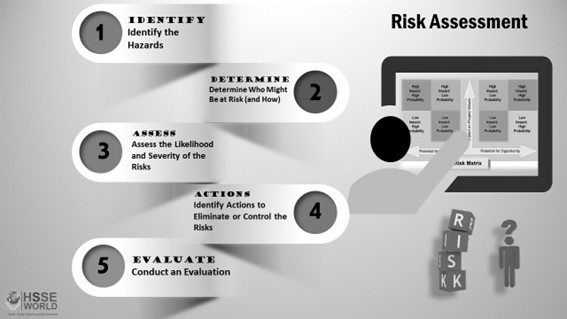
Source: https://hsseworld.com/wp-content/uploads/2020/04/Risk-Assessment-.jpg


Risk Assessment Picture This – Spanish

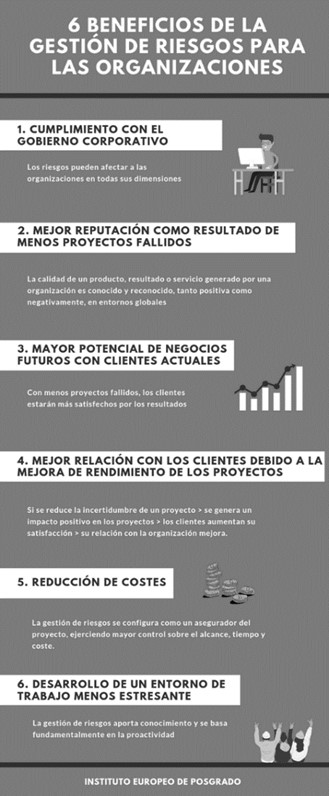
Fuente:  https://www.iep.edu.es/


Quick Course – Dust Off Your Knowledge of Silica

Course Description

This quick course covers the dangers of working with silica, symptoms of silicosis and how to protect yourself from the dangers of working with silica.


Quick Course – Communication Issues

Course Description

This quick course covers why communicating issues is so important. It covers how communication issues occur and how strong communication can be achieved.


Lifting Safely Meeting Kit

BACK INJURIES RESULTING FROM LIFTING TASKS 

The Bureau of Labor Statistics (BLS) also says that more than one million workers experience back injuries each year. One fourth of all workers compensation indemnity claims are a result of back injuries. Low back pain is one of the most common reason that people miss work, second only to the common cold. In America, we spend more than $100 billion annually in medical bills, disability and lost productivity at work from back injuries and illnesses. A BLS survey shows that 75% of back injuries occurred while performing lifting tasks, which underscores the importance of reducing back injuries caused by lifting.

LIFTING/HANDLING AND MUSCULOSKELETAL INJURIES (MSIs)

Changing work practices and work policies, and training workers in proper lifting and handling techniques, can limit risk of MSIs. Some questions to consider:

  • Can the task design be changed? For example, changing a carrying task to a pushing or pulling task.
  • Can workers be given time to rest or recover when lifting or handling loads?
  • Can work demands and work pace be balanced more effectively
  • Can the tasks be varied?

RISKS/DANGERS

Workers are exposed to risk when they lift, lower, or carry objects. Risk factors include:

  • The weight of the load
  • How close the load is to the body. A load lifted far from the body imposes more stress on the back than the same load lifted close to the body
  • The distance the load has to be carried
  • The initial height of the load and the vertical distance lifted
  • Lifting in combination with twisting
  • How long the load has to be carried
  • The number and frequency of lifts performed

THE LIFT EXAMINED

Think before you lift: Plan the lift. Where is the load going to be placed? Will help be needed with the load? Is there equipment you could use, such as a hoist, that could help with the lift?

Remove obstructions, such as discarded wrapping materials. For long lifts, such as from floor to shoulder height, consider resting the load midway on a table or bench to change your grip on it.

Keep the load close to the waist: Keep the load close to the waist for as long as possible while lifting to reduce the amount of pressure on the back.

Keep the heaviest side of the load next to the body. If closely approaching the load is not possible, try to slide it towards the body before trying to lift it.

Adopt a stable position: Your feet should be apart with 1 leg slightly forward to maintain balance (alongside the load, if it’s on the ground).

Be prepared to move your feet during the lift to maintain a stable posture. Wearing over-tight clothing or unsuitable footwear, such as high heels or flip flops, may make this difficult.

Ensure a good hold on the load: Where possible, hug the load close to the body. 

Do not bend your back when lifting: A slight bending of the back, hips and knees at the start of the lift is preferable to either fully flexing the back (stooping) or fully flexing the hips and knees.

Do not bend the back any further while lifting: This can happen if the legs begin to straighten before starting to raise the load.

Do not twist when you lift: Avoid twisting the back or leaning sideways, especially while the back is bent.

Look ahead: Keep your head up when handling the load. Look ahead, not down at the load.

Move smoothly: Do not jerk or snatch the load. This makes it harder to keep control and increases the risk of injury.

Know your limits: Do not lift or handle more than you can easily manage. 

Lower down, then adjust: Put the load down and then adjust. If you need to position the load precisely, put it down first, then slide it into the desired position.

IMPORTANT THINGS TO REMEMBER

  • Use mechanical means (e.g. hand trucks, pushcarts, etc.) when possible for heavier or awkward loads. 
  • It is easier and safer to push than to pull.
  • Keep loads as close to the body as possible and do not twist while lifting, carrying, or setting down a load. Nose, shoulders, hips, and toes should all be facing the same direction.
  • Minimize reaching.
  • As a general rule, bend at the knees, not the hips.
  • Get help when needed. Do not lift or carry things you don’t feel comfortable with, no matter how light the load.
  • Plan ahead for all parts of the lift: lifting, carrying, and setting down.
  • Try to utilize proper handholds while lifting. If an item does not have a good handhold, think of ways to remedy this, such as placing the item in a container with good handholds, creating a safe and proper handhold with an appropriate tool, etc.
  • Use personal protective equipment where needed, such as gloves with good grip and steel-toed boots.
  • Implement rest breaks and job rotation for frequent and/or heavy lifting.
  • Place items to be lifted within the “power zone”. The power zone is close to the body, between the mid-thigh and mid-chest of the person doing the lifting.

FINAL WORD

Back injuries and repetitive strain injuries are problems that all workers can do without. Good planning and safe work regimen can prevent these injuries throughout all white and blue collar workplaces.

Whether at work or at home, lifting heavy objects can be unavoidable. These quick tips and reminders for safe lifting techniques could save you from a potential injury and will help keep you healthy and safe!


Lifting Safely Meeting Kit – Spanish

QUÉ ESTÁ EN RIESGO

LESIONES DE ESPALDA PROVOCADAS POR TAREAS DE LEVANTAMIENTO 

La Oficina de Estadísticas Laborales (BLS) también afirma que más de un millón de trabajadores sufren lesiones de espalda cada año. Una cuarta parte de las reclamaciones de indemnización de los trabajadores son consecuencia de lesiones de espalda. La lumbalgia es una de las razones más comunes por las que la gente falta al trabajo, sólo superada por el resfriado común. En Estados Unidos, se gasta más de 100.000 millones de dólares al año en facturas médicas, incapacidades y pérdida de productividad en el trabajo por lesiones y enfermedades de la espalda. Una encuesta del BLS muestra que el 75% de las lesiones de espalda se producen al realizar tareas de levantamiento, lo que subraya la importancia de reducir las lesiones de espalda causadas por el levantamiento.

CUÁL ES EL PELIGRO

LEVANTAMIENTO/MANIPULACIÓN Y LESIONES MUSCULOESQUELÉTICAS (LME)

La modificación de las prácticas y políticas de trabajo, así como la capacitación de los trabajadores en técnicas adecuadas de levantamiento y manipulación, pueden limitar el riesgo de LME. Algunas cuestiones para tener en cuenta:

  • ¿Puede cambiarse el diseño de la tarea? Por ejemplo, cambiar una tarea de transporte por una tarea de empuje o tracción.
  • ¿Puede darse a los trabajadores tiempo para descansar o recuperarse cuando levantan o manipulan cargas?
  • ¿Pueden equilibrarse mejor las exigencias y el ritmo de trabajo?
  • ¿Pueden variarse las tareas?

RIESGOS/PELIGROS

Los trabajadores están expuestos a riesgos cuando levantan, bajan o transportan objetos. Los factores de riesgo incluyen

  • El peso de la carga
  • La proximidad de la carga al cuerpo. Una carga levantada lejos del cuerpo impone más tensión a la espalda que la misma carga levantada cerca del cuerpo
  • La distancia a la que hay que transportar la carga
  • La altura inicial de la carga y la distancia vertical levantada
  • El levantamiento en combinación con la torsión
  • La duración del transporte de la carga
  • El número y la frecuencia de los levantamientos realizados

COMO PROTEGERSE

EL LEVANTAMIENTO EXAMINADO

Piense antes de levantar: Planifique el levantamiento. ¿Dónde se va a colocar la carga? ¿Se necesitará ayuda con la carga? ¿Hay algún equipo que pueda utilizar, como un polipasto, que pueda ayudar al levantamiento?

Retire los obstáculos, como los materiales de embalaje desechados. En el caso de levantamientos largos, como las que se realizan desde el suelo hasta la altura de los hombros, considere la posibilidad de apoyar la carga a mitad de camino en una mesa o banco para cambiar el agarre de esta.

Mantenga la carga cerca de la cintura: Mantenga la carga cerca de la cintura el mayor tiempo posible mientras la levanta para reducir la cantidad de presión en la espalda.

Mantenga el lado más pesado de la carga cerca del cuerpo. Si no es posible acercarse a la carga, intente deslizarla hacia el cuerpo antes de intentar levantarla.

Adopte una posición estable: Los pies deben estar separados con una pierna ligeramente adelantada para mantener el equilibrio (junto a la carga, si está en el suelo).

Prepárese para mover los pies durante el levantamiento para mantener una postura estable. Llevar ropa demasiado ajustada o calzado inadecuado, como tacones altos o chanclas, puede dificultar esta tarea.

Asegúrese de sujetar bien la carga: Siempre que sea posible, abrazar la carga cerca del cuerpo. 

No doblar la espalda al levantar la carga: Una ligera flexión de la espalda, las caderas y las rodillas al comienzo del levantamiento es preferible a flexionar totalmente la espalda (encorvarse) o flexionar totalmente las caderas y las rodillas.

No flexione más la espalda mientras levanta: Esto puede ocurrir si las piernas comienzan a enderezarse antes de comenzar a levantar la carga.

No se tuerza al levantar: Evite torcer la espalda o inclinarse hacia los lados, especialmente mientras la espalda está doblada.

Mire hacia delante: Mantenga la cabeza levantada cuando manipule la carga. Mire hacia adelante, no hacia abajo en la carga.

Muévase con suavidad: No dé tirones ni arrebate la carga. Esto hace más difícil mantener el control y aumenta el riesgo de lesiones.

Conozca sus límites: No levante o manipule más de lo que pueda manejar fácilmente. 

Baje la carga y luego ajústela: Baje la carga y luego ajústela. Si necesita colocar la carga con precisión, bájela primero y luego deslícela hasta la posición deseada.

ASPECTOS IMPORTANTES PARA TENER EN CUENTA

  • Utilice medios mecánicos (por ejemplo, carretillas de mano, carros de empuje, etc.) cuando sea posible para las cargas más pesadas o incómodas. 
  • Es más fácil y seguro empujar que tirar.
  • Mantenga las cargas lo más cerca posible del cuerpo y no se tuerza al levantar, transportar o depositar una carga. La nariz, los hombros, las caderas y los dedos de los pies deben estar orientados en la misma dirección.
  • Reduzca al mínimo los esfuerzos.
  • Como regla general, doble las rodillas, no las caderas.
  • Pida ayuda cuando la necesite. No levante ni lleve cosas con las que no se sienta cómodo, por muy ligera que sea la carga.
  • Planifique con antelación todas las partes del levantamiento: levantar, transportar y depositar.
  • Intente utilizar asideros adecuados al levantar. Si un artículo no tiene un buen asidero, piense en formas de remediarlo, como colocar el artículo en un contenedor con buenos asideros, crear un asidero seguro y adecuado con una herramienta apropiada, etc.
  • Utilice equipos de protección personal cuando sea necesario, como guantes con buen agarre y botas con punta de acero.
  • Realice pausas de descanso y rotación de trabajo en caso de levantamiento frecuente y/o pesado.
  • Coloque los objetos que vaya a levantar dentro de la “zona de fuerza”. La zona de fuerza está cerca del cuerpo, entre la mitad del muslo y la mitad del pecho de la persona que levanta.

CONCLUSIÓN

Las lesiones de espalda y de torceduras repetitivas son problemas de los que todos los trabajadores pueden prescindir. Una buena planificación y un régimen de trabajo seguro pueden prevenir estas lesiones en todos los lugares de trabajo de cuello blanco y azul.

Ya sea en el trabajo o en casa, levantar objetos pesados puede ser inevitable. Estos rápidos consejos y recordatorios sobre técnicas seguras de levantamiento podrían salvarle de una posible lesión y le ayudarán a mantenerse sano y salvo.
Lifting Safely Stats and Facts

FACTS

  1. Strains and sprains from lifting loads improperly or from carrying loads that are either too large or too heavy are common hazards associated with manually moving materials.
  2. When employees use smart lifting practices, they are less likely to suffer from back sprains, muscle pulls, wrist injuries, elbow injuries, spinal injuries, and other injuries caused by lifting heavy objects. 
  3. Force. Exerting too much force on your back — such as by lifting or moving heavy objects — can cause injury.
  4. Repetition. Repeating certain movements, especially those that involve twisting or rotating your spine. 
  5. Inactivity. An inactive job or a desk job can contribute to back pain, especially if you have poor posture or sit all day in a chair with inadequate back support.
  6. Start by eating a healthy diet. Make sure you get enough calcium and vitamin D. These nutrients can help prevent a condition that causes your bones to become weak and brittle (osteoporosis). Osteoporosis is responsible for many of the bone fractures that lead to back pain.
  7. Combine aerobic exercise, such as swimming or walking, with exercises that strengthen and stretch your back muscles and abdomen. 
  8. For most healthy adults, the Department of Health and Human Services recommends at least 150 minutes a week of moderate aerobic activity or 75 minutes a week of vigorous aerobic activity — preferably spread throughout the week — and strength training exercises at least twice a week.
  9. Smoking reduces blood flow to your lower spine, which can contribute to spinal disk degeneration and slow healing from back injuries.  

STATS

  • Lifting heavy items is one of the leading causes of injury in the workplace. In 2001, the Bureau of Labor Statistics reported that over 36 percent of injuries involving missed workdays were the result of shoulder and back injuries.
  • More than one million back injuries are sustained in the workplace annually.
  • BLS ran a survey and discovered that 80% of these injuries were to the lower back and, unsurprisingly, 75% of these happened during lifting tasks.
  • In 2016, musculoskeletal disorders involving the back accounted for 38.5% of all work-related musculoskeletal disorders.
  • Nursing assistants take the most days off work as a result of a back injury.
  • According to the Bureau of Labor Statistics (BLS), back injuries account for one of every five injuries and illnesses in the workplace. Eighty percent of these injuries occur to the lower back and are associated with manual materials handling tasks.
  • Back pain is the third most common reason for visits to the doctor’s office, behind skin disorders and osteoarthritis/joint disorders.