Aerial Platform Safety Stats and Facts

FACTS

  1. According to OSHA, the top hazards associated with aerial lifts are falls, electrocutions and collapses or tip-overs. 
  2. Half of the falls from boom lifts involve being ejected from the bucket after being struck by vehicles, cranes, crane loads, or falling objects, or when a lift suddenly jerked.
  3. Two-thirds of the deaths from collapses / tipovers of boom lifts occurred when the bucket cable or boom broke or the bucket fell; almost one-third were due to tipovers.
  4. Half of the boom lift electrocutions involved body contact with overhead power lines, mostly involving electricians or electrical power installers and repairers. Over one-third of the electrocutions involved an overhead power line contacting the lift boom or bucket.
  5. In most of the caught between deaths, a worker was caught between the bucket edge and objects such as roof joists or beams while repositioning the bucket.

STATS

  • An average of 26 construction workers die each year from using aerial lifts. This is 2 to 3% of all construction deaths. On aerial lifts, the major causes are falls, electrocutions, and collapses or tip overs.
  • Electricians had the most deaths (25%), followed by construction laborers (15%), electrical power installers and repairers (13%), painters (8%), and carpenters (5%). 
  • The causes of scissor lift falls were unknown for over half of the fall deaths; in one-fifth of the falls, the worker was ejected from the scissor lift, mostly when the scissor lift was struck by an object. The rest of the fall deaths occurred after removal of chains or guardrails, or while standing on or leaning over railings.
  • Three-quarters of the tip overs of scissor lifts resulted in fall deaths; for the rest, workers died from being struck by the falling scissor lift. About two-fifths of the tip overs occurred when the scissor lift was extended over 15 feet, mostly while driving the lift.
  • 25 % of aerial lift deaths are due to scissor lift accidents, which typically occur from falls related to being struck by an object and tip-overs from driving with the lift extended. 


Aerial Platform Safety Stats and Facts – Spanish

HECHOS

  1. Según la OSHA, los principales riesgos asociados a los elevadores aéreos son las caídas, las electrocuciones y los desplomes o vuelcos. 
  2. La mitad de las caídas de los elevadores de pluma tienen que ver con la expulsión del cubo tras ser golpeado por vehículos, grúas, cargas de grúa u objetos que caen, o cuando un elevador se sacude repentinamente.
  3. Dos tercios de las muertes por colapsos / vuelcos de las plataformas elevadoras de brazo se produjeron cuando el cable del cubo o la pluma se rompieron o el cubo se cayó; casi un tercio se debió a vuelcos.
  4. La mitad de las electrocuciones de grúas de brazo se produjeron por contacto del cuerpo con líneas eléctricas aéreas, y en ellas participaron sobre todo electricistas o instaladores y reparadores de energía eléctrica. En más de un tercio de las electrocuciones, una línea eléctrica aérea entró en contacto con la pluma o la cuchara de la grúa.
  5. En la mayoría de las muertes por atrapamiento, un trabajador quedó atrapado entre el borde de la cuchara y objetos como viguetas o vigas del tejado mientras reposicionaba la cuchara.

ESTADÍSTICAS

  • Una media de 26 trabajadores de la construcción muere cada año por utilizar elevadores aéreos. Esto supone entre el 2 y el 3% de todas las muertes en la construcción. En los ascensores aéreos, las principales causas son las caídas, las electrocuciones y los desplomes o vuelcos.
  • Los electricistas son los que más muertes registran (25%), seguidos de los obreros de la construcción (15%), los instaladores y reparadores de energía eléctrica (13%), los pintores (8%) y los carpinteros (5%). 
  • Se desconocen las causas de las caídas de las plataformas elevadoras de tijera en más de la mitad de las muertes por caída; en una quinta parte de las caídas, el trabajador fue expulsado de la plataforma elevadora de tijera, sobre todo cuando ésta fue golpeada por un objeto. El resto de las muertes por caída se produjeron después de retirar las cadenas o las barandillas, o mientras se encontraban de pie o inclinados sobre las barandillas.
  • Tres cuartas partes de los vuelcos de los elevadores de tijera provocaron muertes por caída; en el resto, los trabajadores murieron al ser golpeados por la caída del elevador de tijera. Aproximadamente dos quintas partes de los vuelcos se produjeron cuando el elevador de tijera estaba extendido más de 15 pies, sobre todo mientras se conducía el elevador.
  • El 25% de las muertes por ascensores aéreos se deben a accidentes con elevadores de tijera, que suelen producirse por caídas relacionadas con el golpe de un objeto y por vuelcos al conducir con el elevador extendido.


Aerial Platform Safety Fatality File

A 49 year-old male millwright employed at a magnetic powder manufacturing company sustained fatal injuries when an aerial work platform (an extensible articulating boom lift) he was operating tipped over. On the day of the incident, the victim and a co-worker operated the lift that was leased from a local leasing company to perform maintenance tasks. The aerial lift was equipped with a stabilizing device: an extendable axle to enhance the vehicle’s stability. The manufacturer stated in the Operators and Safety Manual that all operators must properly position the extendable axle and lock it into position before raising the platform or extending the boom. There were two safety features on the lift that were designed to ensure the use of the stabilizing device: an axle set indicator light and an interlock. A post incident test showed that while the indicator light worked, the interlock was inoperable. The plant maintenance crew did not receive the Operators and Safety Manual from the leasing company nor did they receive any training on how to operate the lift. According to the witnesses, the extendable axle was never set out during the entire day of the incident. At approximately 3:30PM, the victim was performing a visual inspection of the exterior of a bucket elevator that was about 70 feet high. He wore a harness with a lanyard that was attached and secured to the platform attachment point, a hard hat, safety glasses and steel-toed boots. Just prior to the incident, the co-worker saw the victim in the platform directly underneath the elevator’s catwalk that was about 54 feet high. A few minutes later, the co-worker and a swing shift millwright heard and saw the lift fall. The boom was extended to 38 feet when the lift tipped.

The platform hit a pickup truck parked nearby causing the victim, who was still attached to the platform by the lanyard, to be bounced out of the platform. The co-worker and the swing shift millwright ran to the victim and found him unconscious and not breathing. The fire department and the rescue crew responded within three minutes after receiving a 911 call from the plant. The victim was transported to a local hospital where he was pronounced dead.

New York State Fatality Assessment and Control Evaluation (NY FACE) investigators concluded that to help prevent similar incidents from occurring in the future, employers should:

  • Ensure that the employees receive proper training before allowing them to operate aerial lifts;
  • Require that the operators inspect the aerial lift and test critical safety features before each use and perform safety checkups each time the platform is repositioned during operation; 


Aerial Platform Safety Fatality File – Spanish

Un hombre de 49 años, montador de molinos, empleado en una empresa de fabricación de polvos magnéticos, sufrió lesiones mortales al volcar la plataforma de trabajo aéreo (un elevador de brazo articulado extensible) que estaba manejando. El día del incidente, la víctima y un compañero de trabajo manejaban el elevador, que había sido alquilado a una empresa local de alquiler para realizar tareas de mantenimiento. El elevador aéreo estaba equipado con un dispositivo estabilizador: un eje extensible para mejorar la estabilidad del vehículo. El fabricante indicaba en el Manual de Operadores y Seguridad que todos los operadores debían colocar correctamente el eje extensible y bloquearlo en su posición antes de elevar la plataforma o extender la pluma. Había dos elementos de seguridad en el elevador que estaban diseñados para garantizar el uso del dispositivo estabilizador: una luz indicadora de ajuste del eje y un enclavamiento. Una prueba posterior al incidente demostró que, si bien la luz indicadora funcionaba, el enclavamiento era inoperante. El personal de mantenimiento de la planta no recibió el Manual de Operadores y Seguridad de la empresa arrendataria ni recibió ninguna capacitación sobre el manejo del elevador. Según los testigos, el eje extensible nunca se puso en marcha durante todo el día del incidente. Aproximadamente a las 3:30PM, la víctima estaba realizando una inspección visual del exterior de un elevador de cangilones de unos 70 pies de altura. Llevaba un arnés con una cuerda de seguridad atada y asegurada al punto de sujeción de la plataforma, un casco, gafas de seguridad y botas con punta de acero. Justo antes del incidente, el compañero de trabajo vio a la víctima en la plataforma directamente debajo de la pasarela del ascensor, que tenía unos 54 pies de altura. Unos minutos más tarde, el compañero de trabajo y un montador del turno de trabajo oyeron y vieron caer el ascensor. La pluma estaba extendida a 38 pies cuando el ascensor se volcó.

La plataforma chocó con una camioneta aparcada en las inmediaciones, lo que provocó que la víctima, que seguía sujeta a la plataforma por el cordón, saliera despedida de esta. El compañero de trabajo y el montador del turno de trabajo corrieron hacia la víctima y la encontraron inconsciente y sin respirar. Los bomberos y el equipo de rescate acudieron en tres minutos tras recibir una llamada al 911 desde la planta. La víctima fue trasladada a un hospital local donde fue declarada muerta.

Los investigadores de la Evaluación de Fatalidad y Control del Estado de Nueva York (NY FACE) concluyeron que para ayudar a evitar que se produzcan incidentes similares en el futuro, los empresarios deben:

Asegurarse de que los empleados reciben la capacitación adecuada antes de permitirles operar elevadores aéreos;

Exigir a los operarios que inspeccionen el elevador aéreo y comprueben los elementos de seguridad críticos antes de cada uso y que realicen comprobaciones de seguridad cada vez que se cambie de posición la plataforma durante su funcionamiento;


Operating Portable Augers Stats and Facts – Spanish

HECHOS

  1. Los sinfines son una de las máquinas más peligrosas de la explotación. Pueden producirse accidentes con resultado de lesiones si los sinfines no se utilizan correctamente.
  2. Causas de los accidentes con sinfines    

La mayoría de los accidentes con sinfines son causados por el operador. Las lesiones relacionadas con los sinfines son principalmente el resultado de uno o más de los siguientes tipos de incidentes: 

  • Contacto o enredo con el tornillo expuesto en la entrada. 
  • Enredo en una correa de transmisión. 
  • Golpe por una manivela que gira sin control para subir o bajar el sinfín. 
  • Enredarse en un eje de transmisión de la toma de fuerza. 
  • Electrocución al desplazar un sinfín elevado por la finca y contacto con un cable eléctrico aéreo.
  • Descuido o falta de mantenimiento. 
  • Descuido en el manejo del sinfín. 
  • Desconocimiento por parte del operario de la seguridad y el funcionamiento del sinfín. 
  • Mano de obra joven sin experiencia.       

ESTADÍSTICAS

  • Alrededor del 25% de los agujeros que se intentan hacer con sinfines acaban siendo excavados a mano.
  • Se produjeron aproximadamente 37 muertes por cada 100.000 trabajadores agrícolas y se calcula que los trabajadores agrícolas sufrieron 140.000 lesiones incapacitantes.
  • El Servicio de Extensión de Minnesota recibió informes de 14 muertes relacionadas con los barrenos, que se atribuyeron a enredos o aplastamientos (ocho) y a electrocución (seis).
  • Según un informe de EE. UU., en Iowa se produce una media de seis a ocho lesiones relacionadas con los sinfines cada mes. El Programa de Vigilancia de Lesiones Agrícolas de Canadá informó en 2013 de que las lesiones causadas por los sinfines ocupan el segundo lugar después de las causadas por los tractores.


Basic Tractor Operation Fatality File

Farmer Killed While Bypass-Starting His Tractor

A 67-year-old farmer was killed while trying to bypass start his tractor. The farmer was transporting bales of hay to a field when the tractor stopped and would not restart. The farmer went to the barn where his wife was working and together they drove their pickup truck to the tractor. The farmer stood between the tractor and the truck, connected the jumper cables, and then touched a metal wrench to the starter to bypass the ignition. When the engine started, the tractor moved forward and ran over him. He died later that day.

Bypass-starting bypasses all safety start and neutral start switches engineered in the tractor’s electrical and hydraulic systems. If the tractor is left in gear and a bypass start is performed, the starter will engage as soon as the circuit is complete, and the tractor will start moving. The operator does not have enough time to jump away and may be injured or killed by the tractor. When starting a tractor, the farmer should remain in the tractor seat, with the transmission and power take-off in neutral and the brake engaged. The manufacturer’s recommendations for safe Startup should be followed. These procedures should be marked by decals on the tractor. To prevent incidents, such as unintentional movement, the tractor should always be shut down correctly when not in use. Farmers should periodically check all operating and safety systems of the tractor and repair or replace them as necessary.


Basic Tractor Operation Fatality File – Spanish

Un agricultor muere al intentar arrancar su tractor por derivación

Un agricultor de 67 años murió mientras intentaba arrancar su tractor por derivación. El agricultor estaba transportando pacas de heno a un campo cuando el tractor se paró y no volvió a arrancar. El agricultor se dirigió al granero donde su mujer estaba trabajando y juntos condujeron su camioneta hasta el tractor. El agricultor se situó entre el tractor y la camioneta, conectó los cables de arranque y luego tocó con una llave metálica el motor de arranque para puentear el encendido. Cuando el motor se puso en marcha, el tractor avanzó y le atropelló. Murió más tarde ese mismo día.

El arranque por derivación anula todos los interruptores de seguridad de arranque y de arranque en punto muerto diseñados en los sistemas eléctrico e hidráulico del tractor. Si el tractor se deja en marcha y se realiza un arranque por derivación, el motor de arranque se conectará en cuanto se complete el circuito y el tractor comenzará a moverse. El operario no tiene tiempo suficiente para saltar y puede resultar herido o muerto por el tractor. Al arrancar un tractor, el agricultor debe permanecer en el asiento del tractor, con la transmisión y la toma de fuerza en punto muerto y el freno accionado. Deben seguirse las recomendaciones del fabricante para una puesta en marcha segura. Estos procedimientos deben estar marcados por calcomanías en el tractor. Para evitar incidentes, como un movimiento involuntario, el tractor debe estar siempre correctamente apagado cuando no se utilice. Los agricultores deben comprobar periódicamente todos los sistemas de funcionamiento y seguridad del tractor y repararlos o sustituirlos si es necesario.


Basic Tractor Operation Picture This

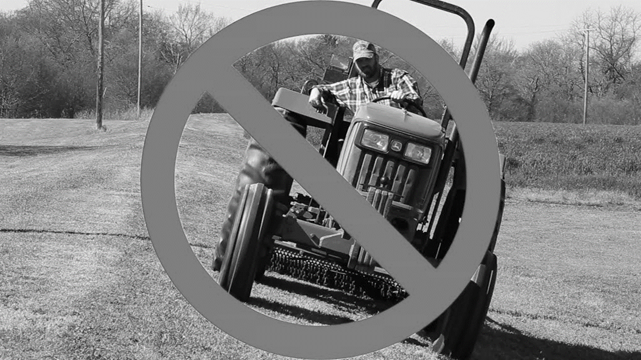
What’s wrong in this picture?

Failure to observe safety precautions when operating tractors and attachments can result in serious injury or death. In the picture above the operator is using a tractor with a mowing implement. He is not wearing his safety belt. While mowing on a slope, the tractor can roll to the side, pinning him between the rollover protective structure (ROPS) and the ground. He might die from his injuries.

Operators must be trained/experienced enough to do the job

To prevent tractor accidents, read and follow directions in the equipment operator’s manual. Pay attention to safety instructions in the manual and warning labels you see on the equipment. If you have questions, stop, and ask your supervisor before you continue.

Reduce the risk of injuries and fatalities by providing practical guidance on how to manage various tractor hazards.

Safe work habits are important to be safe on the job site.


Basic Tractor Operation Picture This – Spanish

¿Qué hay de malo en esta imagen?

El incumplimiento de las precauciones de seguridad al utilizar tractores e implementos puede provocar lesiones graves o la muerte. En la imagen de arriba, el operador está utilizando un tractor con un implemento de siega. No lleva puesto el cinturón de seguridad. Al segar en una pendiente, el tractor puede rodar hacia un lado y quedar atrapado entre la estructura de protección antivuelco (ROPS) y el suelo. Podría morir a causa de sus lesiones.

Los operadores deben tener la capacitación/experiencia suficiente para realizar el trabajo

Para evitar accidentes con el tractor, lea y siga las instrucciones del manual del operador del equipo. Preste atención a las instrucciones de seguridad del manual y a las etiquetas de advertencia que vea en el equipo. Si tiene dudas, deténgase y pregunte a su supervisor antes de continuar.

Reduzca el riesgo de lesiones y muertes proporcionando una guía práctica sobre cómo manejar los diversos peligros del tractor.

Los hábitos de trabajo seguros son importantes para estar a salvo en el lugar de trabajo.


Operating Portable Augers Fatality File – Spanish

Un trabajador agrícola de 53 años murió al quedar atrapado en un sinfín de un silo de grano. 

En el momento del incidente, la víctima estaba limpiando los restos de trigo de un silo cuando se enredó en el sinfín de barrido que se movía por el suelo del silo.

Los ganchos del sinfín de barrido atraparon el material de los pantalones del trabajador y sus piernas se enredaron posteriormente en el sinfín. Un compañero que trabajaba cerca oyó que las correas de transmisión empezaban a chirriar y, tras apagar el mecanismo de transmisión, descubrió a la víctima enredada. El compañero pidió inmediatamente al propietario de la granja que llamara al 911 mientras él y otro trabajador acudían a socorrer a la víctima. Los compañeros de trabajo cortaron el material de los pantalones de la víctima y trabajaron para desenredar las piernas de la víctima del sinfín. Los servicios de emergencia llegaron en cuestión de minutos y trasladaron a la víctima en ambulancia al hospital cercano, donde la estabilizaron antes de trasladarla en helicóptero al centro de traumatismos más cercano. La víctima falleció a causa de sus heridas seis horas después en el centro de traumatología.

Los investigadores de la Evaluación de Fatalidad y Control del Estado de Nueva York (NY FACE) concluyeron que para ayudar a prevenir que ocurran incidentes similares en el futuro, los empleadores/propietarios de granjas deben

Asegurarse de que los trabajadores no entren en los silos de grano mientras el mecanismo de descarga esté en funcionamiento;

Establecer procedimientos de bloqueo/etiquetado y asegurarse de que los trabajadores los siguen cada vez que un trabajador entra en un silo de grano u otro espacio confinado;

Proporcionar a los empleados la capacitación adecuada en los procedimientos de bloqueo y etiquetado y en los procedimientos de entrada segura en espacios confinados, como los silos de grano y;

Considerar la utilización de diseños de depósitos de grano y sinfines que puedan ayudar a garantizar la seguridad de los trabajadores, como los depósitos de autodescarga o de descarga inferior.


Operating Portable Augers Fatality File

A 53-year-old farm worker was killed when he became entangled in a grain bin auger. 

At the time of the incident, the victim was cleaning the remaining wheat out of a grain bin when he became entangled in the sweep auger that was moving around the floor of the bin.

Hooks on the sweep auger caught the material on the worker’s pants and his legs were subsequently entangled in the auger. A co-worker working nearby heard the drive belts begin to squeal and after turning off the drive mechanism, discovered the entangled victim. The co-worker immediately asked the farm owner to call 911 while he and another worker went to the aid of the victim. The coworkers cut the material of the victim’s pants loose and worked to disentangle the victim’s legs from the auger. Emergency responders arrived within minutes and transported the victim via ambulance to the nearby hospital where the victim was stabilized prior to being transported via helicopter to the nearest major trauma center. The victim died from his injuries six hours later at the trauma center.

New York State Fatality Assessment and Control Evaluation (NY FACE) investigators concluded that to help prevent similar incidents from occurring in the future, employers/farm owners should:

  • Ensure that workers do not enter grain bins while the unloading mechanism is operating;
  • Establish lockout/tagout procedures and ensure workers follow them any time a worker enters a grain bin or other confined space;
  • Provide employees with proper training in lockout/tagout procedures and procedures for safe entry into confined spaces, such as grain bins and;
  • Consider utilizing grain bin and auger designs that can help ensure safety for workers such as self-unloading or bottom-unloading bins. 


Operating Portable Augers Picture This – Spanish

¿Qué ocurre en esta imagen? La afilada cuchilla en forma de sacacorchos de un sinfín gira mientras extrae el grano. Entrar en contacto con una cuchilla desprotegida puede provocar importantes laceraciones y roturas de huesos, como ocurre en la imagen de arriba. 

Cada año, el uso de un sinfín portátil contribuye al número total de muertes y lesiones relacionadas con la agricultura en todo el país. Estos sinfines pueden ser peligrosos si no se seleccionan, utilizan y mantienen adecuadamente.

Siempre que sea posible, los operarios deben asegurarse de estar bien parados mientras trabajan cerca de los sinfines. Los sinfines portátiles deben colocarse en un terreno seco y nivelado o en una plataforma de grava. El grano derramado debe retirarse entre carga y carga, después de que el equipo se haya apagado.

Es importante que todos los operadores de explotaciones agrícolas y de sinfines reciban formación sobre los procedimientos de funcionamiento seguro y los peligros asociados a los sinfines.


Operating Portable Augers Picture This

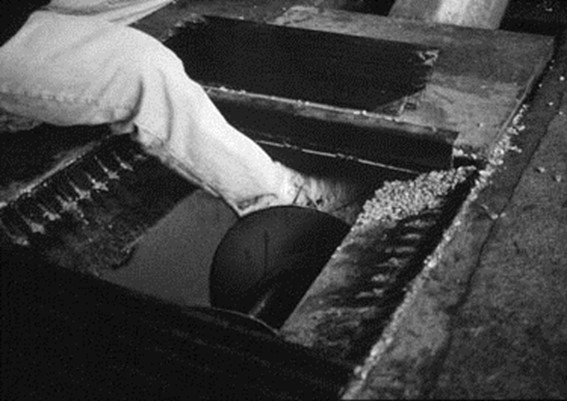
What’s wrong in this picture?  an auger’s sharp corkscrew blade rotates as it draws grain up. Coming into contact with an unguarded blade can result in significant lacerations and broken bones which is happening in the picture above. 

Each year, the use of a portable auger contributes to the total number of farm-related deaths and injuries across the nation. These augers can be dangerous if not properly selected, used, and maintained.

Whenever possible, operators should ensure good footing while working around augers. Portable augers should be placed on dry, level ground or a gravel pad. Spilled grain should be removed between loads, after the equipment has been turned off.

It is important that all farm and auger operators should be educated about safe operating procedures and hazards associated with augers. 


Preparing Grain Bins for Harvest Meeting Kit – Spanish

QUÉ ESTÁ EN RIESGO

EL OBJETIVO – UN BUEN ALMACENAMIENTO DEL GRANO 

La clave para un buen almacenamiento de grano es poner el grano de mayor calidad en el silo o llevarlo a la condición de humedad adecuada lo más rápido posible. La calidad general del grano almacenado siempre se deteriora, sólo es cuestión de la rapidez. Tener un buen plan de comercialización y vender la mayor cantidad posible antes de que el grano se caliente en la próxima primavera es la mejor manera de tener grano almacenado de calidad. Nunca es tan bueno como el día en que se pone en el silo. Almacenar el grano más tiempo que la próxima primavera requiere mucha más vigilancia en la gestión. 

CUÁL ES EL PELIGRO

PROBLEMAS / PELIGROS EN EL ALMACENAMIENTO DEL GRANO

Elimine todo rastro de grano viejo de las cosechadoras, las plataformas de los camiones, los carros de grano, los sinfines y cualquier otro equipo utilizado para cosechar, transportar y manipular el grano. Incluso pequeñas cantidades de grano mohoso o infestado de insectos que queden en el equipo pueden contaminar un contenedor de grano nuevo.

Los roedores y los problemas de plagas son grandes problemas con los residuos de grano que quedan en los silos y en el equipo/maquinaria.

Inspeccione los silos en busca de problemas estructurales. Los asentamientos desiguales de los cimientos provocan huecos entre los cimientos y el borde inferior del silo. Esto da lugar a derrames de grano y proporciona puntos de entrada para el agua, los insectos y los roedores. 

COMO PROTEGERSE

CÓMO LOGRAR UN ALMACENAMIENTO DE GRANO DE CALIDAD 

La protección del grano almacenado es un proceso de gestión clave para mantener la calidad del grano y obtener el mejor beneficio económico y el entorno de trabajo más seguro. El grano con daños por insectos, moho, semillas y granos dañados y olores desagradables supone muchos peligros para los trabajadores que se encuentran en las instalaciones de almacenamiento. Muchos de los indicadores de calidad también se reflejan en una menor calidad del grano en el momento de la comercialización, lo que repercute en los beneficios. Hay tres medidas que pueden tomarse incluso antes de cosechar el grano para garantizar la calidad. 

  • Preparación de las instalaciones. La más mínima cantidad de grano enmohecido, grano viejo, grano infestado de insectos o basura puede contaminar el grano recién cosechado que entra en el almacén. Es esencial limpiar todo el equipo que estará en contacto con el grano nuevo. Retire el grano viejo, la basura y el polvo de las cosechadoras y los cabezales de las cosechadoras, los camiones, los carros de grano, los sinfines, las secadoras, los fosos, los contenedores y cualquier otro equipo utilizado para manipular o transportar el grano.
  • Mantenimiento. Una vez que se haya limpiado el equipo y la zona, realice una inspección minuciosa para detectar fugas o zonas por las que pueda entrar humedad en el silo. Calafatee o repare cualquier zona sospechosa. También es un buen momento para revisar las correas, los cojinetes, la alineación de las correas, los escudos y protectores de seguridad, los cables de temperatura y los equipos electrónicos. Los cables eléctricos, las conexiones y los cables deben inspeccionarse en busca de daños causados por ratones, corrosión, cables deshilachados o zonas descubiertas en el cableado. Las conexiones corroídas pueden causar un mal funcionamiento del equipo eléctrico y pueden ser difíciles de localizar más adelante. Una inspección y reparación minuciosa ahora puede ahorrar tiempo y dinero más adelante. Pruebe todos los ventiladores de aireación. Si hay que hacer reparaciones y sustituciones, hay tiempo para que el contratista o la empresa de ventas hagan estos ajustes antes de que se necesite el sistema de aireación en el momento de la cosecha.
  • Aplicación de insecticidas. Una vez completados los pasos de saneamiento y mantenimiento, los insecticidas para el tratamiento de estructuras vacías pueden ser una sabia inversión. Si hay zonas difíciles de limpiar, como por ejemplo bajo el suelo perforado, estos insecticidas pueden ser muy útiles para controlar la actividad de los insectos. Si hay un historial de problemas de insectos en una estructura, estos tratamientos pueden ser útiles para romper el ciclo de infestación. Es mejor dar a los tratamientos de estructuras vacías dos semanas para que funcionen antes de cargar con el grano. Deje que las pulverizaciones líquidas se sequen durante al menos 24 horas antes de cargar el grano. Lo mejor es dejar pasar más tiempo -hasta dos semanas-. Las pulverizaciones perimetrales pueden reducir la entrada de la infestación desde el exterior de la estructura. Una estructura muy infestada puede requerir la fumigación con insecticida antes de que los tratamientos ayuden. La fumigación con insecticida generalmente utiliza gas fosfina y debe ser aplicada por especialistas en fumigación certificados y con licencia en su estado. Una vez controladas estas infestaciones iniciales y completados los pasos de saneamiento y mantenimiento, los aerosoles para estructuras vacías pueden hacer el trabajo de protección y prevención.

Consejos -Trabajar en y alrededor de los depósitos de grano

  • Haga saber a todos en la granja que habrá personas trabajando alrededor de las estructuras de almacenamiento de granos y que nadie debe poner en marcha ningún equipo en el lugar.
  • Reúna un equipo que trabajará en estas tareas y asigne a cada persona sus funciones.  Trabajar en estas estructuras es, como mínimo, un trabajo de dos o tres personas.  Al menos una persona tiene que estar fuera del contenedor y poder oír al individuo que está dentro del mismo. 
  • Antes de entrar en el recinto, haga funcionar el sistema de aireación y abra la parte superior del contenedor durante al menos una hora para ayudar a eliminar cualquier nivel de gas tóxico.
  • Antes de entrar, realice una lectura de gases para asegurarse de que los niveles de gas son seguros.
  • Cuando el equipo esté listo para trabajar, etiquete y bloquee todo el equipo de manipulación de granos.  Esto ayuda a prevenir la operación accidental de este equipo mientras se trabaja en el interior.
  • La persona que entre en el recinto debe llevar un arnés de seguridad fijado al exterior del silo.

CONCLUSIÓN

La preparación de los silos para la cosecha debe hacerse para mantener la calidad del grano y para asegurarse de que las zonas alrededor de los silos están listas para la ajetreada temporada que se avecina. También es un buen momento para inspeccionar los componentes mecánicos y limpiar los alrededores del silo. Unas sencillas normas de mantenimiento y seguridad evitarán cualquier problema en la próxima temporada.


Preparing Grain Bins for Harvest Meeting Kit

THE GOAL – GOOD GRAIN STORAGE 

The key to good grain storage is to put the highest quality grain into the bin or bring it to the proper moisture condition as quickly as possible. Overall quality of stored grain always deteriorates, it is just a matter of how fast. Having a good marketing plan and selling as much as possible before the grain heats up next spring is the best way to have quality stored grain. It is never as good as the day it is put into the bin. Storing the grain longer than next spring requires much more vigilance in management.

PROBLEMS / HAZARDS IN GRAIN STORAGE

Remove all traces of old grain from combines, truck beds, grain carts, augers, and any other equipment used for harvesting, transporting, and handling grain. Even small amounts of moldy or insect-infested grain left in equipment can contaminate a bin of new grain.

Rodents and pest problems are big issues with left over grain residue in bins and equipment / machinery.

Inspect bins for structural problems. Uneven settlement of foundations causes gaps between the foundation and bottom edge of the bin. This results in grain spills and provide entry points for water, insects, and rodents. 

HOW TO ACCOMPLISH QUALITY GRAIN STORAGE 

Protecting grain in storage is a key management process to maintain the quality of grain and result in the best economic gain and the safest working environment. Grain with insect damage, mold, damaged seeds and kernels and off odors pose many hazards to workers around storage facilities. Many of the quality indicators are also reflected in lower grain grades at marketing time, impacting profit. There are three steps that can be taken even before the grain is harvested to ensure quality. 

  1. Facility Preparation. The smallest amount of moldy grain, old grain, insect-infested grain or trash can contaminate the freshly harvested grain coming into storage. It is essential to clean all equipment that will be in contact with new grain. Remove old grain, trash and dust from combines and combine headers, trucks, grain carts, augers, driers, pits, bins and any other equipment used to handle or transport the grain.
  2. Maintenance. Once the equipment and area has been cleaned, conduct a thorough inspection for leaks or areas where moisture can enter the bin. Caulk or repair any suspicious areas. It is also a good time to check belts, bearings, belt alignment, safety shields and guards, temperature cables and electronic equipment. Electrical cords, connections and cables must be inspected for mouse damage, corrosion, frayed wires or bare areas in wiring. Corroded connections can cause malfunction of electrical equipment and can be hard to locate later on. Thorough inspection and repairs now can save time and money later. Test all aeration fans. If repairs and replacements need to be made, there is time for the contractor or sales company to make these adjustments before the aeration system at harvest time is needed.
  3. Insecticide Application. After the sanitation and maintenance steps have been completed, insecticides for empty-structure treatments can be wise investments. If there are areas that are hard to clean, such as under perforated flooring, these insecticides can be very helpful in controlling insect activity. If there is a history of insect problems in a structure, these treatments can be helpful to break the cycle of infestation. It is best to give empty structure treatments two weeks to work before loading with grain. Allow at least 24 hours for liquid sprays to dry before loading the grain. More time–up to two weeks–is the best schedule. Perimeter sprays can reduce infestation entry from outside the structure. A heavily infested structure may require insecticide fumigation before treatments will help. Insecticide fumigation generally uses phosphine gas and must be applied by certified fumigation specialists that are licensed in your state. After these initial infestations are controlled and sanitation and maintenance steps have been completed, the empty structure sprays can do the job as protectants and prevention.
  1. Let everyone on the farm know that there will be people working around the grain storage structures and that no one is to start any equipment at the site.
  2. Assemble a team that will work on these tasks and assign each person their duties.  Working in these structures is at minimum a two- to three-person job.  At least one person needs to be outside the bin and to be able to hear the individual inside the bin. 
  3. Prior to entering the enclosure, run the aeration system and open the top of the bin for at least an hour to help remove any toxic gas levels.
  4. Before entering, take a gas reading to make sure the gas levels are safe.
  5. When the team is ready to go to work, tag out and lock out all grain handling equipment.  This helps prevent accidental operation of this equipment while working inside.
  6. The person entering the enclosure needs to be in a safety harness that is secured to the outside of the bin.

FINAL WORD

Preparing grain bins for harvest should be done to maintain the quality of grain and to make sure the areas around bins are ready for the busy season ahead. It is also a good time to inspect any mechanical components and clean up around the bin. Simple maintenance and safety rules will prevent any problems in the season ahead. 


Quick Course – Don’t Let Bullying Poison Your Workplace

Course Description

This quick course covers how bullying can effect the workplace including the worker being effected by the bullying as well as risks to coworkers. It covers how to protect yourself and deal with a bullying situation at the workplace.


Preparing Grain Bins for Harvest Stats and Facts

FACTS

  1. Proper bin and equipment preparation is key to preserving stored grain quality.
  2. Small amounts of moldy or insect-infested grain left in equipment can contaminate a bin of new grain.
  3. Rodents and pest problems are big issues with left owner grain residue in bins and equipment / machinery.
  4. Making sure that the bins are ready to be loaded with newly harvested grain reduces the chances of spoilage.
  5. Grain bins are one of the biggest safety hazards for farmers who work in and around them. Serious and life-threatening dangers lurk throughout grain facilities, so it is imperative that farmers and workers are aware of these threats in order to protect themselves from serious injury and fatalities. Farm workers die by suffocation every year.

STATS

  • The United States averaged about 35 reported grain-handling incidents per year from 2005 to 2015, about 60% to 70% of which were fatal, according to Purdue University. The actual number of entrapments is likely a third higher because many non-fatal incidents are never reported.
  • In recent years, grain entrapments and fatalities have risen. In 2017, 23 grain entrapments and 12 deaths were recorded; in 2018, 30 grain entrapments and 15 deaths were recorded; and in 2019, 38 grain entrapments led to 23 deaths. Total grain entrapments rose by 65% over that 3-year period.
  • Early data collection for 2020 shows that the year is off to a dangerous start, particularly in regard to grain bin entrapments.
  • 30 documented grain entrapments resulted in 15 deaths (50% fatality rate) in 2018, a 30% increase from 2017 when 23 were recorded.
  • In 2018, the state with the most documented grain entrapments, was Iowa with five cases total, followed by Kansas and Wisconsin, each with three.
  • The majority of grain entrapment cases – 83% – occurred in the Midwest.
  • Grain entrapments accounted for 49% of the documented cases of entrapments in confined spaces. 


Preparing Grain Bins for Harvest Stats and Facts – Spanish

HECHOS

  1. La preparación adecuada del silo y del equipo es clave para preservar la calidad del grano almacenado.
  2. Las pequeñas cantidades de grano mohoso o infestado de insectos que se dejan en el equipo pueden contaminar un silo de grano nuevo.
  3. Los roedores y los problemas de plagas son grandes problemas con los residuos de grano que quedan en los silos y en el equipo/maquinaria.
  4. Asegurarse de que los silos están listos para ser cargados con el grano recién cosechado reduce las posibilidades de deterioro.
  5. Los depósitos de grano son uno de los mayores peligros para la seguridad de los agricultores que trabajan en ellos y a su alrededor. Peligros graves y mortales acechan en todas las instalaciones de grano, por lo que es imperativo que los agricultores y trabajadores sean conscientes de estas amenazas para protegerse de lesiones graves y muertes. Los trabajadores agrícolas mueren por asfixia cada año.

ESTADÍSTICAS

  • Según la Universidad de Purdue, en Estados Unidos se registraron una media de 35 incidentes de manipulación de granos al año entre 2005 y 2015, de los cuales entre el 60% y el 70% fueron mortales. El número real de atrapamientos es probablemente un tercio más alto porque muchos incidentes no fatales nunca se reportan.
  • En los últimos años, los atrapamientos de granos y las muertes han aumentado. En 2017, se registraron 23 atrapamientos de granos y 12 muertes; en 2018, se registraron 30 atrapamientos de granos y 15 muertes; y en 2019, 38 atrapamientos de granos provocaron 23 muertes. El total de atrapamientos de grano aumentó un 65% en ese período de 3 años.
  • La recopilación temprana de datos para 2020 muestra que el año está comenzando de manera peligrosa, particularmente en lo que respecta a los atrapamientos de granos.
  • 30 atrapamientos de granos documentados resultaron en 15 muertes (tasa de fatalidad del 50%) en 2018, un aumento del 30% con respecto a 2017, cuando se registraron 23.
  • En 2018, el estado con más atrapamientos de grano documentados fue Iowa con cinco casos en total, seguido de Kansas y Wisconsin, cada uno con tres.
  • La mayoría de los casos de atrapamiento de granos, el 83%, ocurrieron en el Medio Oeste.
  • Los atrapamientos de granos representaron el 49% de los casos documentados de atrapamientos en espacios confinados.


Preparing Grain Bins for Harvest Fatality File

On March 7, a farmer on a Hughes County property about 30 miles southeast of Pierre became trapped in a grain bin to mid-torso depth for about six hours before being rescued by rescue workers from three fire departments and a grain company. 

The man entered the bin and became trapped in the corn, at which time another person on the scene was able to secure a rope around the man’s chest to prevent further slippage into the grain.

Attempts to build a temporary “tube” around the man to lift him out from above failed, so responders had to use saws to slowly cut holes in the bin to drain the corn and reach the man with a stretcher. The man suffered non-life-threatening injuries.

Two men die in grain bin accidents 

RUSK COUNTY – Two men are dead in two unrelated grain bin accidents this month.

According to the Rusk Rusk County Sheriff’s Office, a Glen Flora man died after he was pulled from a corn bin on Thursday, September 19.

The fatality occurred at the Sheldon Co-op in the Village of Sheldon. While Kevin Wiemer, 58, of Glen Flora was rescued from the corn bin, Sheriff Jeffrey Wallace says life-saving measures were unsuccessful. Wiemer was pronounced dead at the scene.

A 74-year-old Minnesota man also suffered the same fate after being trapped inside a grain bin on a farm in Faxon Township just west of Belle Plaine. 


Preparing Grain Bins for Harvest Fatality File – Spanish

El 7 de marzo, un agricultor de una propiedad del condado de Hughes, a unos 50 kilómetros al sureste de Pierre, quedó atrapado en un silo de grano hasta la mitad del torso durante unas seis horas antes de ser rescatado por los socorristas de tres cuerpos de bomberos y una empresa de cereales. 

El hombre entró en el silo y quedó atrapado en el maíz, momento en el que otra persona que se encontraba en el lugar pudo asegurar una cuerda alrededor del pecho del hombre para evitar que siguiera deslizándose en el grano.

Los intentos de construir un “tubo” temporal alrededor del hombre para sacarlo desde arriba fracasaron, por lo que los socorristas tuvieron que utilizar sierras para abrir lentamente agujeros en el silo para drenar el maíz y llegar al hombre con una camilla. El hombre sufrió lesiones que no ponen en peligro su vida.

Dos hombres mueren en accidentes en un silo de grano 

CONDADO DE RUSK – Dos hombres han muerto en dos accidentes de graneros no relacionados este mes.

De acuerdo con la Oficina del Sheriff del Condado de Rusk, un hombre de Glen Flora murió después de ser halado de un contenedor de maíz el jueves 19 de septiembre.

La fatalidad ocurrió en la Cooperativa de Sheldon en el pueblo de Sheldon. Aunque Kevin Wiemer, de 58 años, de Glen Flora fue rescatado del contenedor de maíz, el Sheriff Jeffrey Wallace dice que las medidas de salvamento no tuvieron éxito. Wiemer fue declarado muerto en la escena.

Un hombre de 74 años de Minnesota también sufrió el mismo destino después de quedar atrapado dentro de un contenedor de grano en una granja en el municipio de Faxon, al oeste de Belle Plaine.


Preparing Grain Bins for Harvest Picture This

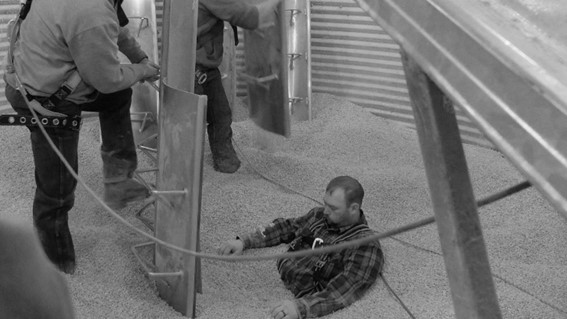
What’s wrong in this picture? Grain bin suffocation accidents, from entrapment or engulfment, are reminders that grain storage, especially flowing grain, may become very dangerous.

The term entrapment is used when a grain bin worker becomes buried in the grain beyond the point of self extraction. On the other hand, the term is used when a grain bin worker is completely buried or submerged beneath the surface of the grain.

Most entrapment and engulfment events occur because workers enter a bin or storage structure to check on condition of grain or to address problems with grain flow due to spoiled grain or equipment malfunction.

Grain engulfment and entrapment incidents are on the rise in recent years due to record harvests, larger storage facilities, and equipment that moves grain at faster rates than ever.

The best ways to prevent engulfment incidents are to eliminate the reasons for entering a bin in the first place, and to restrict unauthorized access by youth or other individuals who may be unaware of hazards


Preparing Grain Bins for Harvest Picture This – Spanish

¿Qué ocurre en esta imagen? Los accidentes de asfixia en silos de grano, por atrapamiento o engullimiento, recuerdan que el almacenamiento de grano, especialmente el que fluye, puede ser muy peligroso.

El término “atrapamiento” se utiliza cuando un trabajador de un silo de grano se entierra en el grano más allá del punto de extracción por sí mismo. Por otro lado, el término se utiliza cuando un trabajador del silo de grano está completamente enterrado o sumergido bajo la superficie del grano.

La mayoría de los casos de atrapamiento y engullimiento se producen porque los trabajadores entran en un silo o estructura de almacenamiento para comprobar el estado del grano o para solucionar problemas de flujo de grano debido a grano estropeado o a un mal funcionamiento del equipo.

Los incidentes de engullimiento y atrapamiento del grano han aumentado en los últimos años debido a las cosechas récord, a las instalaciones de almacenamiento más grandes y a los equipos que mueven el grano a mayor velocidad que nunca.

La mejor manera de prevenir los incidentes de engullimiento es eliminar las razones por las que se entra en un silo en primer lugar, y restringir el acceso no autorizado de los jóvenes u otras personas que pueden no ser conscientes de los peligro


Transporting Oversized Loads Meeting Kit

DEFINITION – OVERSIZED LOAD 

In road transport, an oversize load (or overweight load) is a load that exceeds the standard or ordinary legal size and/or weight limits for a specified portion of road or highway. 

REQUIREMENTS OF OVERSIZED LOADS FOR OPERATORS: 

(1) ensuring that the load can be moved safely and legally from its point of origin to its destination, and (2) obtaining the necessary permits to move the load.

For larger oversize loads, such as widths up to 15 feet or heights exceeding 13.5 feet, a route survey may be required prior to the haul. It must be determined that overhead utility lines, bridges and overpasses, overhead signs, etc., do not pose a contact hazard. For overweight loads, it must be determined that trucks do not overstress bridges and overpasses, and that weight is properly distributed across the axels to protect roadways.

TYPICAL OVERSIZE LOAD DETAILS 

  • Generally, a maximum legal load is 8.5 feet for both height and width. 
  • Most oversize loads exceeding 12 feet require an escort or pilot car for safe travel.
  • Permitted travel times for oversize loads vary by jurisdictions. For instance, some mandates restrict oversize load transport during holidays and weekends. Others only allow for transport during certain hours of the day.

SAFETY TIPS FOR TRANSPORTING OVERSIZED LOADS

1. Take Time to Plan Your Route: Routes you have used in the past may not be applicable for oversized loads. Check ahead to see if the route you want to use accommodates oversized loads or if routes allow such loads. Construction is also another factor when planning a route.

Whether it’s the primary choice or an alternative, every route plan should include information about travel times, delays, fueling locations, and break spots. It’s important to think about every possible factor when planning the route. Not having a stringent refueling plan in place can balloon transportation costs, as drivers are forced to go out of their way or choose fueling stations that are less than ideal or overpriced.

2. Check the Weather Forecast: Check the 10-day weather forecast affecting the route you plan to take. You may need to allow yourself more time to safely transport an oversized load or find another route if the forecast calls for severe weather. Weather conditions may also change the way you protect your load from inclement weather.

Hauling oversized loads should never happen in extreme weather conditions, except in rare circumstances, such as a major emergency. If possible, find a rest stop to wait out the storm and hit the road when it’s safe to travel again.

3. Reference the Laws: There are rules and regulations about hauling oversized loads or items. Drivers must abide by those laws at all times. 

Hauling oversized loads requires a permit, which details the origin of the shipment and its destination. Driving without one can result in severe fines and sometimes other penalties and may even come with a license suspension for the driver. It’s important to keep all documentation updated before, during and after a haul.

4. Use the Right Securement: When hauling loads of any size, it’s critical to keep the pieces, items or components locked down and secured. There are many different types of fastening devices, from ropes and straps to friction mats and binders. They’re not always interchangeable, and sometimes devices are not ideal for certain loads or gear. It’s up to the drivers to know which securement tools are best for a particular load. Using the wrong devices can have major repercussions and may or may not lead to the heavy load falling off the trailer or transport.

Devices should be inspected regularly to ensure they’re in proper working order and have not been damaged in any way. This should be done before and after a haul, and any broken or failing items should be replaced right away.

5. Drive Defensively and Watch Your Speed: It’s easy to be driving for long periods of time, on a straight stretch of highway, and not realize how fast you are going. While hauling an oversized load on interstates, remember to look down at the speedometer every 10 minutes.

Maintain adequate distance from vehicles in front and beside you. Driving at night, in hilly areas, on curvy roads, and on secondary/poorly kept roads always demands assuring there is enough room for you to make sudden stops.

6. Proactive Maintenance: It’s important to carry out proactive maintenance on a vehicle or fleet before a big trip to prevent incidents from happening. Fluids should be topped up and monitored, the tires should be checked, spare parts and gear should be added to the truck.

FINAL WORD

While many oversize loads do reach their destination point safely, even one accident involving one of these monster vehicles is one too many. Serious injury and even fatalities can be the end result when carriers are not operating safely according to the rules of the road.


Transporting Oversized Loads Meeting Kit – Spanish

QUÉ ESTÁ EN RIESGO

DEFINICIÓN – CARGA

SOBREDIMENSIONADA 

En el transporte por carretera, una carga sobredimensionada (o con sobrepeso) es una carga que excede los límites legales de tamaño y/o peso estándar u ordinario para una parte específica de la carretera o autopista. 

REQUISITOS DE LAS CARGAS SOBREDIMENSIONADAS PARA LOS OPERADORES 

(1) asegurarse de que la carga puede ser trasladada de forma segura y legal desde su punto de origen hasta su destino, y (2) obtener los permisos necesarios para trasladar la carga.

En el caso de las cargas de gran tamaño, como las que tienen una anchura de hasta 15 pies o una altura superior a 13,5 pies, puede ser necesario realizar un estudio de la ruta antes del transporte. Debe determinarse que las líneas aéreas de servicios BÁSICOS, puentes y pasos elevados, señales aéreas, etc., no suponen un peligro de contacto. En el caso de las cargas con sobrepeso, debe determinarse que los camiones no sobrecarguen los puentes y pasos elevados, y que el peso se distribuya adecuadamente entre los ejes para proteger las carreteras.

CUÁL ES EL PELIGRO

DETALLES TÍPICOS DE LA CARGA CON SOBREPESO 

  • Por lo general, la carga máxima legal es de 8,5 pies tanto en altura como en anchura. 
  • La mayoría de las cargas de gran tamaño que superan los 12 pies requieren un vehículo escolta o piloto para viajar con seguridad.
  • Los tiempos de viaje permitidos para las cargas de gran tamaño varían según las jurisdicciones. Por ejemplo, algunos mandatos restringen el transporte de cargas de gran tamaño durante los días festivos y los fines de semana. Otros sólo permiten el transporte durante ciertas horas del día.

COMO PROTEGERSE

CONSEJOS DE SEGURIDAD PARA EL TRANSPORTE DE CARGAS DE GRAN TAMAÑO

1. Tómese el tiempo necesario para planificar su ruta: Las rutas que ha utilizado en el pasado pueden no ser aplicables a las cargas de gran tamaño. Compruebe con antelación si la ruta que desea utilizar admite cargas de gran tamaño o si las rutas permiten este tipo de cargas. La construcción también es otro factor a la hora de planificar una ruta.

Tanto si se trata de la opción principal como de una alternativa, todo plan de ruta debe incluir información sobre los tiempos de viaje, los retrasos, los lugares para repostar y los puntos de descanso. Es importante pensar en todos los factores posibles al planificar la ruta. No contar con un plan de repostaje riguroso puede disparar los costes de transporte, ya que los conductores se ven obligados a desviarse de su camino o a elegir estaciones de servicio que no son ideales o que tienen un precio excesivo.

2. Compruebe la previsión meteorológica: Compruebe la previsión meteorológica a 10 días vista que afecta a la ruta que piensa seguir. Es posible que tenga que dejar más tiempo para transportar con seguridad una carga de gran tamaño o encontrar otra ruta si la previsión anuncia mal tiempo. Las condiciones meteorológicas también pueden cambiar la forma de proteger su carga de las inclemencias del tiempo.

El transporte de cargas de gran tamaño nunca debe realizarse en condiciones meteorológicas extremas, salvo en raras circunstancias, como una emergencia grave. Si es posible, encuentre una parada de descanso para esperar a que pase la tormenta y salga a la carretera cuando sea seguro volver a viajar.

3. Consulta las leyes: Existen normas y reglamentos sobre el transporte de cargas o artículos de gran tamaño. Los conductores deben cumplir esas leyes en todo momento. 

El transporte de cargas de gran tamaño requiere un permiso, que detalla el origen del envío y su destino. Conducir sin un permiso puede dar lugar a multas severas y a veces a otras sanciones, e incluso puede conllevar la suspensión de la licencia para el conductor. Es importante mantener toda la documentación actualizada antes, durante y después de un transporte.

4. Utilice la sujeción adecuada: Cuando se transportan cargas de cualquier tamaño, es fundamental mantener las piezas, artículos o componentes cerrados y asegurados. Hay muchos tipos diferentes de dispositivos de sujeción, desde cuerdas y correas hasta esteras de fricción y ataduras. No siempre son intercambiables, y a veces los dispositivos no son ideales para determinadas cargas o equipos. Depende de los conductores saber qué herramientas de sujeción son las mejores para una carga concreta. Utilizar los dispositivos incorrectos puede tener repercusiones importantes y puede provocar o no que la carga pesada se caiga del remolque o del transporte.

Los dispositivos deben inspeccionarse con regularidad para asegurarse de que están en buen estado de funcionamiento y no han sufrido ningún daño. Esto debe hacerse antes y después de un transporte, y cualquier elemento roto o que falle debe ser reemplazado de inmediato.

5. Conduzca de forma defensiva y vigile su velocidad: Es fácil conducir durante largos periodos de tiempo, en un tramo recto de la carretera, y no darse cuenta de la velocidad a la que se va. Mientras transporta una carga de gran tamaño en las interestatales, recuerde mirar el velocímetro cada 10 minutos.

Mantenga una distancia adecuada con los vehículos que tiene delante y a su lado. Conducir de noche, en zonas montañosas, en carreteras con curvas y en carreteras secundarias o en mal estado exige siempre asegurarse de que hay espacio suficiente para realizar paradas repentinas.

6. Mantenimiento proactivo: Es importante realizar un mantenimiento proactivo del vehículo o de la flota antes de un gran viaje para evitar que se produzcan incidentes. Hay que rellenar y controlar los fluidos, revisar los neumáticos y añadir piezas de repuesto y equipamiento al camión.

CONCLUSIÓN

Aunque muchas cargas de gran tamaño llegan a su punto de destino de forma segura, incluso un accidente que implique a uno de estos vehículos monstruosos es demasiado. Las lesiones graves e incluso las muertes pueden ser el resultado final cuando los transportistas no operan con seguridad de acuerdo con las reglas de la carretera.

Personal Protective Equipment (PPE) Meeting Kit

PERSONAL PROTECTIVE EQUIPMENT

Personal protective equipment, commonly referred to as “PPE”, is equipment worn to minimize exposure to hazards that cause serious workplace injuries and illnesses. These injuries and illnesses may result from contact with chemical, radiological, physical, electrical, mechanical, or other workplace hazards. Personal protective equipment may include items such as gloves, safety glasses and shoes, earplugs or muffs, hard hats, respirators, or coveralls, vests and full body suits. 

EMPLOYEE REFUSAL TO WEAR PPE

An employee’s refusal to wear PPE may be cause for discipline, particularly if the refusal creates a risk for other employees at the workplace. 

ENSURE PROPER USE OF PERSONAL PROTECTIVE EQUIPMENT

All personal protective equipment should be safely designed and constructed, and should be maintained in a clean and reliable fashion. It should fit comfortably, encouraging worker use. If the personal protective equipment does not fit properly, it can make the difference between being safely covered or dangerously exposed. When engineering, work practice, and administrative controls are not feasible or do not provide sufficient protection, employers must provide personal protective equipment to their workers and ensure its proper use. Employers are also required to train each worker required to use personal protective equipment to know:

  • When it is necessary, What kind is necessary, How to properly put it on, adjust, wear and take it off, The limitations of the equipment, Proper care, maintenance, useful life, and disposal of the equipment

If PPE is to be used, a PPE program should be implemented. This program should address the hazards present; the selection, maintenance, and use of PPE; the training of employees; and monitoring of the program to ensure its ongoing effectiveness.

PPE ISN’T PERFECT

In the hierarchy of risk control, PPE is considered to rank lowest and represent the option of last resort. It is only appropriate where the hazard in question cannot be totally removed or controlled in such a way that harm is unlikely.

  • PPE protects only the person using it, whereas measures controlling the risk at source can protect everyone.
  • Effective protection can only be achieved by equipment which is correctly fitted, maintained and properly used at all times;
  • PPE may restrict the wearer by limiting mobility, visibility or by requiring additional weight to be carried.
  • Use of PPE may alter employees’ perception of the hazards they are dealing with.
  • PPE is critically important as it is generally only used where other measures are insufficient preventive and reduce fatalities, injuries and diseases.

EMPLOYER’S OBLIGATION TO PROVIDE PPE

Selecting, Using, and Maintaining PPE: Employers are responsible for selecting, providing and fitting of appropriate PPE for the hazardous exposures in the workplace. Consult the Material Safety Data Sheet (MSDS) for advice. Consider how the materials will be used, the quantity used, and the types and duration of exposure. Ensure that the PPE provides a good fit. The PPE should not impair dexterity or flexibility or create safety issues such as entrapment.

EMPLOYEES RESPONSIBILITY 

  • Understand the limitations of the PPE and know what to do in the event of exposure or device failure (e.g. how to use emergency showers, eyewash stations, and first aid).
  • Understand when to discard/replace PPE (e.g. end of shift, every hour).
  • Report any missing or defective devices to the supervisor.

WHEN AN EMPLOYEE PROVIDES THEIR OWN PPE

If an employee wishes to provide their own PPE, employers must ensure that the employee can adhere to PPE protocols, including measures for donning, doffing, and disposing of PPE. Some issues that may arise are:

  • Can the employer ensure the self-provided PPE is being properly cleaned or disposed of?
  • Is the self-provided PPE fit for its purpose?
  • Are there any hazards associated with the re-use of self-provided PPE?

FINAL WORD

PPE used in hazardous work environments is a crucial last resort to prevent serious injury to workers. Employers must ensure that they take all steps to fulfill their obligations in providing effective PPE to workers in hazardous work environments.