Slips and Trips Fatality File

Anderson County Man Dies After Workplace Accident Causes Him to Fall Into Machine

A worker has died after a workplace accident caused him to fall into a metal stamping machine at an Anderson County plant.

The man – 62-year-old Kendall Collier – was working on the machine at 9 AM on Tuesday, January 22nd, at Stanco Metal Products, a factory in Williamston, SC. He lost his footing and fell into the machine, which two of his coworkers were operating.

Stanco Metal Products is headquartered in Grand Rapids, Michigan.

Greg Shore, Anderson County Coroner, says there were safety features on the machine, according to one of the plant manager. However, workplace accident investigators will determine whether the machines’ safeties were working or not.

Shore added, “There was a coworker also helping operate the machine, and right now we’re trying to determine why the safety features on the machine did not cause the machine to shut down with him being so close to it … There are sensors set up around the machine, so right now we’re waiting on OSHA to get here from Columbia to help us determine why that safety feature didn’t work.”

Collier’s fall into the machine caused traumatic head injuries, which he later died from.

The Williamston plant had one previous workplace accident, in 2007, when a worker fell off a scissor lift when a crane hit him while he worked on electrical lines. The company was fined $550.


Slips and Trips Fatality File – Spanish

Un hombre del condado de Anderson muere tras un accidente laboral que le hizo caer dentro de una máquina  

Un trabajador ha muerto después de que un accidente laboral le hiciera caer en una máquina de estampación de metal en una planta del condado de Anderson.

El hombre, Kendall Collier, de 62 años, estaba trabajando en la máquina a las 9 de la mañana del martes 22 de enero en Stanco Metal Products, una fábrica de Williamston, SC. Perdió el equilibrio y cayó dentro de la máquina, que estaban operando dos de sus compañeros de trabajo.

Stanco Metal Products tiene su sede en Grand Rapids, Michigan.

Greg Shore, forense del condado de Anderson, afirma que la máquina contaba con dispositivos de seguridad, según uno de los responsables de la planta. Sin embargo, los investigadores de accidentes laborales determinarán si los dispositivos de seguridad de las máquinas funcionaban o no.

Shore añadió: “Había un compañero de trabajo que también ayudaba a manejar la máquina, y ahora mismo estamos intentando determinar por qué los dispositivos de seguridad de la máquina no hicieron que ésta se apagara estando él tan cerca de ella… Hay sensores instalados alrededor de la máquina, así que ahora mismo estamos esperando a que llegue la OSHA de Columbia para que nos ayude a determinar por qué no funcionó ese dispositivo de seguridad”.

La caída de Collier en la máquina le causó lesiones traumáticas en la cabeza, de las que murió posteriormente.

La planta de Williamston tuvo un accidente laboral anterior, en 2007, cuando un trabajador se cayó de un elevador de tijera cuando una grúa lo golpeó mientras trabajaba en las líneas eléctricas. La empresa fue multada con 550 dólares.


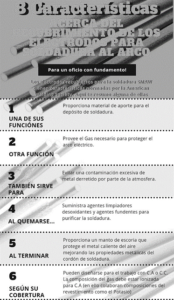
Arc Welding Safety Picture This

Source: https://www.kemppi.com/en-US/offering/discover/welding-safety/


Arc Welding Safety Picture This – Spanish

Fuente: https://www.demaquinasyherramientas.com/


Amusement Park Hazards Meeting Kit

Amusement and theme park workers have one of the highest injury, illness, and fatality rates in the industry. Get training on the mechanical hazards associated with rides, lockout/tagout, safe ride operation, and hazard recognition and reporting. 

COMMON CAUSES OF AMUSEMENT PARK INJURIES

Some of the most common causes of amusement park injuries include:

  • Machinery is not properly maintained and inspected
  • Operators are not properly trained
  • Failure of brakes, wiring, safety structures, or metal parts
  • Lack of adequate instructions to patrons
  • Security is inadequate to protect guests from assaults, robberies, or other crimes
  • Medical care is not available or provided in the event of an emergency
  • Unmarked hazards, such as spills, construction, or potential risks

SAFE WORK ISSUES FOR WORKERS 

  • Workers that tried to dodge or board moving rides or ride improperly have suffered injuries and fatalities. To avoid these accidents, get training on the hazards and safe work practices for each piece of equipment that you operate, maintain, test, and repair.
  • Be familiar with workplace Injury and Illness Prevention Program (IIPP). Know the workplace hazards identified in the IIPP and how to manage them. Be responsible for safety and follow safe work practices. Report and correct unsafe work conditions and acts.
  • Know and use the lockout/tagout procedures that cover the hazards and power isolation method for each ride or piece of equipment in the park. Never enter a ride area or access ride mechanical parts, even if they seem “off” or “shut down,” unless the equipment has been locked out/tagged out.
  • Cameras and/or mirrors eliminate blind spots. When riding for fun, or to test a ride, sit in the ride properly and keep your hands, legs, feet, and head inside the car. Do not stand on couplings between cars or any other footholds on the outside of cars. 
  • Never enter a ride area while it is operating. Warning signs should be placed at all ride area entrances to restrict access. While a ride is operating, stay within the areas marked as safe for ride attendants. These areas should be clearly marked with paint, railings, and/or floor surfacing materials to identify them. Interlock doors, infrared lights and sensors, and pressure-sensitive mats restrict access to a ride area while it is in motion. 
  • Minimum age requirements for ride operators ensure that workers have the maturity necessary to run rides in a safe manner. 

ADEQUATE TRAINING FOR WORKERS

Amusement park employees should adhere to all recommended safety practices and notify supervisors of any violations or potential hazards.

TRAINING INCLUDES:

  • Unloading, building, dismantling and reloading – For rides that are part of temporary or travelling theme parks and fairs, being able to safely set up and dismantle the equipment is very important. This might mean your teams require further training in manual handling, working at height and electrical safety. Ensuring your team knows how to set up the rides correctly not only protects them from injuring themselves and each other but also means that the risk of danger to visitors from incorrectly assembled equipment is minimised.
  • Daily Checks – Your team members need to know which parts of the machine to check, how to carry out the check properly, how to record that the checks have been done, and what to do when a problem is found.
  • Rider Safety –Restrictions on height, weight or physical ability can apply, as well as restrictions on visitors who are under the influence of alcohol or drugs, or if the rider is pregnant. Workers need to be able to identify potential problems, make decisions on who should not be allowed to ride, and deal with the public in a way that does not escalate or lead to violence. 
  • Operating the ride – Operation of the ride includes everything from loading passengers correctly, ensuring it is correctly balanced, making sure all restraints are correctly in place and safety features are working, ensuring spectators and queuing visitors are clear of any danger zones while the machine is in motion, operating the ride safely through manual control and dealing with incidents such as passengers who become ill or injured while on the ride.
  • Emergency Procedures – Your team should have full training in evacuation and other emergency procedures, and it’s also recommended that they are able to access Health and Safety documentation for reference. 

FINAL WORD

All amusement parks post all ride safety rules and make sure that all ride operators give verbal instructions or guide visitors with recorded announcements. Observe all the posted rules and verbal instructions given to you to stay safe from injury or accident. 


Amusement Park Hazards Meeting Kit – Spanish

QUÉ ESTÁ EN RIESGO

Los trabajadores de los parques de atracciones y temáticos tienen una de las tasas más altas de lesiones, enfermedades y muertes del sector. Obtenga capacitación sobre los riesgos mecánicos asociados a las atracciones, el bloqueo/etiquetado, el funcionamiento seguro de las atracciones y el reconocimiento y la notificación de riesgos. 

CUÁL ES EL PELIGRO

CAUSAS COMUNES DE LAS LESIONES EN LOS PARQUES DE ATRACCIONES

Algunas de las causas más comunes de las lesiones en los parques de atracciones son:

  • La maquinaria no se mantiene e inspecciona adecuadamente
  • Los operadores no están debidamente capacitados
  • Fallos en los frenos, el cableado, las estructuras de seguridad o las piezas metálicas
  • Falta de instrucciones adecuadas a los clientes
  • La seguridad es inadecuada para proteger a los clientes de asaltos, robos u otros delitos
  • No hay atención médica disponible o proporcionada en caso de emergencia
  • Peligros no señalizados, como derrames, construcciones o riesgos potenciales

COMO PROTEGERSE

PROBLEMAS DE SEGURIDAD PARA LOS TRABAJADORES 

  • Los trabajadores que han intentado esquivar o subir a atracciones en movimiento o montar de forma inadecuada han sufrido lesiones y muertes. Para evitar estos accidentes, reciba capacitación sobre los peligros y las prácticas de trabajo seguras para cada pieza de equipo que usted opera, mantiene, prueba y repara.
  • Familiarícese con el Programa de Prevención de Lesiones y Enfermedades (IIPP) del lugar de trabajo. Conozca los peligros del lugar de trabajo identificados en el IIPP y cómo gestionarlos. Ser responsable de la seguridad y seguir prácticas de trabajo seguras. Informar y corregir las condiciones y actos de trabajo inseguros.
  • Conocer y utilizar los procedimientos de bloqueo/etiquetado que cubren los peligros y el método de aislamiento de energía para cada atracción o pieza de equipo en el parque. Nunca entre en una zona de atracciones ni acceda a las partes mecánicas de las mismas, aunque parezcan “apagadas” o “desconectadas”, a menos que el equipo haya sido bloqueado o etiquetado.
  • Las cámaras y/o los espejos eliminan los puntos ciegos. Cuando monte por diversión o para probar una atracción, siéntese correctamente en la atracción y mantenga las manos, las piernas, los pies y la cabeza dentro del vehículo. No se sitúe en los enganches entre vehículos ni en ningún otro punto de apoyo en el exterior de los vehículos. 
  • No entre nunca en la zona de la atracción mientras esté en funcionamiento. Se deben colocar señales de advertencia en todas las entradas del área de atracciones para restringir el acceso. Mientras una atracción esté en funcionamiento, manténgase dentro de las zonas marcadas como seguras para los asistentes a la atracción. Estas zonas deben estar claramente marcadas con pintura, barandillas y/o materiales de revestimiento del suelo para identificarlas. Las puertas con enclavamiento, las luces y sensores infrarrojos y las alfombras sensibles a la presión restringen el acceso a la zona de la atracción mientras está en movimiento. 
  • Los requisitos de edad mínima para los operadores de atracciones garantizan que los trabajadores tengan la madurez necesaria para dirigir las atracciones de forma segura.

CAPACITACIÓN ADECUADA PARA LOS TRABAJADORES

Los empleados del parque de atracciones deben cumplir todas las prácticas de seguridad recomendadas y notificar a los supervisores cualquier infracción o peligro potencial.

LA CAPACITACIÓN INCLUYE:

  • Descarga, construcción, desmontaje y recarga – En el caso de las atracciones que forman parte de parques temáticos y ferias temporales o itinerantes, es muy importante ser capaz de montar y desmontar el equipo de forma segura. Esto puede significar que sus equipos necesiten más capacitación en manipulación manual, trabajo en altura y seguridad eléctrica. Asegurarse de que su equipo sabe cómo montar las atracciones correctamente no sólo les protege de lesionarse a sí mismos y a los demás, sino que también significa que se minimiza el riesgo de peligro para los visitantes por un montaje incorrecto de los equipos.
  • Comprobaciones diarias – Los miembros de su equipo deben saber qué partes de la máquina deben comprobar, cómo llevar a cabo la comprobación correctamente, cómo registrar que se han realizado las comprobaciones y qué hacer cuando se encuentra un problema.
  • Seguridad de los conductores: pueden aplicarse restricciones de altura, peso o capacidad física, así como restricciones a los visitantes que estén bajo la influencia del alcohol o las drogas, o si el conductor está embarazado. Los trabajadores deben ser capaces de identificar los problemas potenciales, tomar decisiones sobre quién no debe ser autorizado a montar y tratar con el público de una manera que no se intensifique o conduzca a la violencia. 
  • Funcionamiento de la atracción – El funcionamiento de la atracción incluye todo, desde cargar a los pasajeros correctamente, asegurarse de que está correctamente equilibrada, comprobar que todas las sujeciones están correctamente colocadas y que los dispositivos de seguridad funcionan, asegurarse de que los espectadores y los visitantes que hacen cola están alejados de cualquier zona de peligro mientras la máquina está en movimiento, hacer funcionar la atracción de forma segura a través del control manual y ocuparse de incidentes como los pasajeros que se enferman o se lesionan mientras están en la atracción.
  • Procedimientos de emergencia – Su equipo debe tener una capacitación completa en materia de evacuación y otros procedimientos de emergencia, y también se recomienda que puedan acceder a la documentación sobre salud y seguridad para su consulta.

CONCLUSIÓN

Todos los parques de atracciones publican todas las normas de seguridad de las atracciones y se aseguran de que todos los operadores de estas den instrucciones verbales o guíen a los visitantes con anuncios grabados. Respete todas las normas publicadas y las instrucciones verbales que se le den para evitar lesiones o accidentes.


Amusement Park Hazards Stats and Facts

FACTS

The most common causes of amusement park injuries into the following five areas:

  • Mechanical issues – such as exposed electrical wires, malfunctioning lap bars, failing to shut off, etc
  • Operator behavior – such as not properly maintaining the ride, stopping the ride abruptly, improperly assembling the attraction.
  • Consumer Behaviors – standing up, rocking the cars/ride, not sitting properly.
  • Other Injuries that occur while the ride is functioning normally, such as loss of consciousness or hemorrhages on a rapidly spinning ride.
  • Combination of hazards listed above.

STATS

  • In 2019, there were an estimated 1,299 ride-related accidents resulting in injuries in amusement parks in the U.S.
  • This is about 3.7 injuries per 1 million visitors in 2019.
  • In 2016, there were 1,253 injuries among people who went on rides on fixed-ride amusement parks.
  • In 2015, there were 1,508 injuries in fixed-ride amusement parks in the U.S.

According to a 2017 study by Nationwide Children’s Hospital on child injuries at amusement parks:

  • 29% of the injuries were soft-tissue injuries
  • 28% of injuries were to the head and neck
  • Strains and sprains were also the most common at 21%
  • 20% of the injuries were cuts
  • 10% of the accidents in children resulted in broken bones
  • The areas of the body that suffered the most injuries include arms, face, and legs.


Amusement Park Hazards Stats and Facts – Spanish

HECHOS

Las causas más comunes de las lesiones en los parques de atracciones se dividen en las siguientes cinco áreas:

  • Problemas mecánicos – como cables eléctricos expuestos, mal funcionamiento de las barras de vuelta, fallo en el apagado, etc.
  • Comportamiento del operador – como no mantener adecuadamente la atracción, parar la atracción bruscamente, montar la atracción de forma incorrecta.
  • Comportamiento del consumidor – ponerse de pie, balancear los vehículos/la atracción, no sentarse correctamente.
  • Otras lesiones que se producen mientras la atracción funciona normalmente, como la pérdida de conocimiento o las hemorragias en una atracción que gira rápidamente.
  • Combinación de los peligros mencionados anteriormente.

ESTADÍSTICAS

  • En 2019, se estima que hubo 1.299 accidentes relacionados con atracciones que resultaron en lesiones en los parques de atracciones en los Estados Unidos.
  • Esto supone unas 3,7 lesiones por cada millón de visitantes en 2019.
  • En 2016, se produjeron 1.253 lesiones entre las personas que se subieron a las atracciones de los parques de atracciones de recorrido fijo.
  • En 2015, hubo 1.508 lesiones en parques de atracciones de recorrido fijo en Estados Unidos.

Según un estudio de 2017 del Nationwide Children’s Hospital sobre las lesiones infantiles en los parques de atracciones:

  • El 29% de las lesiones fueron de tejidos blandos
  • El 28% de las lesiones fueron en la cabeza y el cuello
  • Las torceduras y los esguinces también fueron los más comunes, con un 21%
  • El 20% de las lesiones fueron cortes
  • El 10% de los accidentes en niños provocaron roturas de huesos
  • Las zonas del cuerpo que más lesiones sufrieron fueron los brazos, la cara y las piernas.


Amusement Park Hazards Fatality File

One Dead, Several Hurt in Ohio State Fair Ride Accident 

One person was killed and several others were seriously hurt after a ride malfunction at the Ohio State Fair in Columbus Wednesday, officials said.

Ohio State Highway Patrol Superintendent Col. Paul Pride said a trooper reported the incident at around 7:24 p.m. at the Ohio State Fair, which began Wednesday. One person died and seven people were injured.

Witnesses reported that the ride that malfunctioned was the Fire Ball, which spins and swings passengers in a pendulum-like motion.

Ohio Gov. John Kasich said he has ordered a full investigation and ordered all rides closed until additional safety inspections can be conducted. “We will get to the bottom of this,” Kasich said at a press conference.

Tyler Jarrell, 18, of Columbus, Ohio, was identified by the Ohio State Highway Patrol as the person killed.

Officials named six of the injured as Tamika Dunlap, 36, of Reynoldsburg, Ohio; Russell Franks, 42, of Columbus, Ohio; Keziah Lewis, 19, of Columbus, Ohio; Jacob Andrews, 22, of Pataskala, Ohio; Jennifer Lambert, 18, of Columbus, Ohio; Abdihakim Hussein, 19, of Columbus, Ohio.

A video of the incident posted on YouTube showed seats of the ride breaking off and bodies flying through the air. A witness told NBC News that “the whole car went flying off and over the side while in motion.”

Sisters Britney and Kiley Neal were next in line to ride the Fire Ball when the row of seats detached.

“The ride was going as normal, and then all of a sudden you see people flying out, and then the guy hit the emergency stop button, which then made the seat fly off and people flew off as well,” Britney told TODAY on Thursday.

The girls’ mother Kristy Neal, who was in a different part of the Ohio State Fair, said one of her daughters called her in hysterics.

“I just ran towards the direction of the rides. There were two state troopers beside me. I don’t know if they had even heard anything at that point and I said, ‘Something terrible has happened. I need to find my daughters,’” Kristy said.

William Brown told NBC News in an email that his wife was on the ride before the accident occurred. “I was in total disbelief,” Brown said. “My wife just got off that ride before the accident happened. 


Amusement Park Hazards Fatality File – Spanish

Un muerto y varios heridos en un accidente en una atracción de la Feria Estatal de Ohio 

Una persona murió y varias otras resultaron gravemente heridas después de un mal funcionamiento de una atracción en la Feria Estatal de Ohio en Columbus el miércoles, dijeron las autoridades.

El superintendente de la Patrulla de Carreteras del Estado de Ohio, el coronel Paul Pride, dijo que un policía informó del incidente alrededor de las 7:24 p.m. en la Feria Estatal de Ohio, que comenzó el miércoles. Una persona murió y siete resultaron heridas.

Los testigos informaron de que la atracción que funcionó mal fue la Bola de Fuego, que hace girar y balancear a los pasajeros en un movimiento similar al de un péndulo.

El gobernador de Ohio, John Kasich, dijo que ha ordenado una investigación completa y ordenó el cierre de todas las atracciones hasta que se puedan realizar inspecciones de seguridad adicionales. “Llegaremos al fondo de esto”, dijo Kasich en una conferencia de prensa.

Tyler Jarrell, de 18 años, de Columbus (Ohio), fue identificado por la Patrulla de Carreteras del Estado de Ohio como la persona fallecida.

Las autoridades nombraron a seis de los heridos como Tamika Dunlap, de 36 años, de Reynoldsburg (Ohio); Russell Franks, de 42 años, de Columbus (Ohio); Keziah Lewis, de 19 años, de Columbus (Ohio); Jacob Andrews, de 22 años, de Pataskala (Ohio); Jennifer Lambert, de 18 años, de Columbus (Ohio); Abdihakim Hussein, de 19 años, de Columbus (Ohio).

Un vídeo del incidente publicado en YouTube mostraba cómo los asientos de la atracción se rompían y los cuerpos volaban por el aire. Un testigo dijo a NBC News que “todo el vehículo salió volando y por el lado mientras estaba en movimiento”.

Las hermanas Britney y Kiley Neal eran las siguientes en montar en la Bola de Fuego cuando la fila de asientos se desprendió.

“La atracción iba con normalidad, y de repente ves a la gente salir volando, y entonces el chico pulsó el botón de parada de emergencia, lo que hizo que el asiento saliera volando y la gente también”, dijo Britney a TODAY el jueves.

La madre de las niñas, Kristy Neal, que estaba en otra parte de la Feria Estatal de Ohio, dijo que una de sus hijas la llamó histérica.

“Corrí hacia la dirección de las atracciones. Había dos policías estatales a mi lado. No sé si habían oído algo en ese momento y les dije: ‘Ha ocurrido algo terrible. Necesito encontrar a mis hijas'”, dijo Kristy.

William Brown dijo a NBC News en un correo electrónico que su esposa estaba en la atracción antes de que ocurriera el accidente. “Estaba totalmente incrédulo”, dijo Brown. “Mi mujer se bajó de la atracción antes de que ocurriera el accidente.


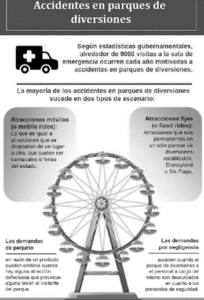
Amusement Park Hazards Picture This

Source: https://banvillelaw.com/vacation-travel-accident/theme-park/


Amusement Park Hazards Picture This – Spanish

Fuente: https://abogadosdeaccidentesahora.com/


Live Animal Handling For Butchering Meeting Kit

Safe handling of animals for butchering (processing) starts with the facility layout. It begins with the management of the animals as they move through the process, and ends with a properly trained worker in butchering techniques.

DANGERS/HAZARDS/RISKS  

Handlers must be made aware that the potential risks each task poses are many. If handlers are too comfortable and do not consider the possible risks of the jobs they are carrying out, they may find themselves trampled, crushed, pinned, stepped on, bit, rammed or thrown off. The dangers happen quickly, as animals can injure their handlers both deliberately and accidentally. These accidents are more than likely due to a worker who failed to follow safe animal-handling practices.

IMPORTANT FACTORS TO INCORPORATE IN ANIMAL HANDLING ROUTINES 

1. Heed the Warnings Signs of Animals

  • Raised or pinned ears
  • Raised tail
  • Raised back hair
  • Bared teeth
  • Pawing the ground and/or snorting

2. Handling Methods

  • Move calmly, slowly, and deliberately, and announce your approach with a soft touch to their front end where you are in full view.
  • Avoid loud noises.
  • Give new animals time and space to adjust to the surroundings.
  • Never prod an animal if it has no place to go.
  • Be wary of male animals, as they tend to be more aggressive.
  • Do not work in close quarters with no escape route when you are working with animals who are sick or injured, or there are outside elements, like a storm, that may spook them.
  • When working with new animals or if strangers must be in the space, exercise extreme caution.

3. Handling Animals During Transport and Lairage

  • An electric goad should be used rather than a stick or tail-twisting not only to avoid stress but also to prevent carcass bruising. 
  • To avoid fighting, animals not reared together must not be mixed during transport and lairage. Load and unload using shallow stepped ramps to avoid stumbles. Trucks should be neither over- nor underloaded. Overloading causes stress and bruising due to crushing. Underloading results in animals being thrown around and falling more than necessary. Drivers should not corner at excessive speed and must accelerate and decelerate gently.
  • Fasting before slaughter reduces the volume of gut contents and hence bacteria and therefore reduces the risk of contamination of the carcass during dressing. It is usually sufficient for the animals to receive their last feed on the day before slaughter. Stock should have a rest period after arrival at the slaughterhouse. However, long periods in the lairage can lead to DFD if the animals are restless and fighting or mounting.
  • Animals should be as clean as possible at slaughter. Producers should wash their animals before leaving the farm. Trucks used for transport must be washed after each load and the lairage at the slaughterhouse should be kept clear of faecal matter and frequently washed.
  • The weather, especially expected temperatures the few days following slaughter, is extremely important. Night temperatures should be 32 degrees Fahrenheit or lower for the carcass to chill properly without refrigeration.

FINAL WORD

Handling animals must be done with respect for the appropriate methods and the animals themselves. Understanding how to read the warning signs of animals in a state of fear or aggression, keeping the spaces where animals are held and directed through in good working order, and wearing the proper protective gear are all ways to maintain a safe working environment with very unpredictable animals.


Live Animal Handling For Butchering Meeting Kit – Spanish

QUÉ ESTÁ EN RIESGO

La manipulación segura de los animales para el despiece (procesamiento) comienza con la disposición de las instalaciones. Comienza con el manejo de los animales a medida que avanzan en el proceso, y termina con un trabajador debidamente capacitado en las técnicas de carnicería.

CUÁL ES EL PELIGRO

PELIGROS/AMENAZAS/RIESGOS

Los manipuladores deben ser conscientes de que los riesgos potenciales de cada tarea son muchos. Si los manipuladores se sienten demasiado cómodos y no tienen en cuenta los posibles riesgos de los trabajos que realizan, pueden verse pisoteados, aplastados, pinzados, pisados, mordidos, embestidos o lanzados. Los peligros suceden rápidamente, ya que los animales pueden herir a sus adiestradores tanto deliberada como accidentalmente. Lo más probable es que estos accidentes se deban a que un trabajador no haya seguido las prácticas seguras de manipulación de animales.

COMO PROTEGERSE

FACTORES IMPORTANTES PARA INCORPORAR EN LAS RUTINAS DE MANEJO DE ANIMALES 

1. Preste atención a las señales de advertencia de los animales

  • Orejas levantadas o en punta
  • Cola levantada
  • Pelo de la espalda levantado
  • Dientes descarnados
  • Dar un zarpazo en el suelo y/o resoplar

2. Métodos de manipulación

  • Muévase con calma, despacio y deliberadamente, y anuncie su aproximación con un toque suave en su parte delantera donde esté a la vista.
  • Evite los ruidos fuertes.
  • Dé a los nuevos animales tiempo y espacio para que se adapten al entorno.
  • Nunca pinche a un animal si no tiene dónde ir.
  • Desconfíe de los animales machos, ya que suelen ser más agresivos.
  • No trabaje en espacios cerrados sin vías de escape cuando trabaje con animales enfermos o heridos, o cuando haya elementos externos, como una tormenta, que puedan asustarlos.
  • Cuando se trabaje con animales nuevos o si debe haber extraños en el espacio, extreme las precauciones.

3. Manipulación de los animales durante el transporte y la estabulación

  • Es preferible utilizar un chicharro eléctrico en lugar de un palo o de retorcer la cola, no sólo para evitar el estrés, sino también para evitar que se produzcan magulladuras en el canal. 
  • Para evitar peleas, los animales no criados juntos no deben mezclarse durante el transporte y la estabulación. Cargar y descargar utilizando rampas escalonadas poco profundas para evitar tropiezos. Los camiones no deben estar sobrecargados ni infra cargados. La sobrecarga provoca estrés y magulladuras por aplastamiento. La infra carga hace que los animales salgan despedidos y se caigan más de lo necesario. Los conductores no deben tomar las curvas a una velocidad excesiva y deben acelerar y desacelerar suavemente.
  • El ayuno antes del sacrificio reduce el volumen del contenido intestinal y, por lo tanto, de las bacterias, con lo que se reduce el riesgo de contaminación de la canal durante el faenado. Por lo general, basta con que los animales reciban su último alimento el día anterior al sacrificio. Los animales deben tener un periodo de descanso tras su llegada al matadero. Sin embargo, los periodos prolongados en el establo pueden conducir a la DFD si los animales están inquietos y se pelean o montan.
  • Los animales deben estar lo más limpios posible en el momento del sacrificio. Los productores deben lavar a sus animales antes de salir de la granja. Los camiones utilizados para el transporte deben lavarse después de cada carga y los establos del matadero deben mantenerse limpios de materia fecal y lavarse con frecuencia.
  • El clima, especialmente las temperaturas previstas los días siguientes al sacrificio, es extremadamente importante. Las temperaturas nocturnas deben ser de 32 grados Fahrenheit o inferiores para que la canal se enfríe adecuadamente sin refrigeración.

CONCLUSIÓN

La manipulación de los animales debe hacerse respetando los métodos adecuados y a los propios animales. Saber leer las señales de advertencia de los animales en estado de miedo o agresividad, mantener en buen estado de funcionamiento los espacios por los que se mantienen y dirigen los animales y llevar el equipo de protección adecuado son formas de mantener un entorno de trabajo seguro con animales muy imprevisibles.


Live Animal Handling For Butchering Stats and Facts

FACTS

  1. Amputations, fractured fingers, second-degree burns and head trauma are just some of the serious injuries suffered by US meat plant workers.
  2. US meat workers are already three times more likely to suffer serious injury than the average American worker, and pork and beef workers nearly seven times more likely to suffer repetitive strain injuries. And some fear that plans to remove speed restrictions on pig processing lines – currently being debated by the government – will only make the work more difficult.

STATS

  • According to the Bureau of Labor Statistics, more than 75,000 workers received injuries and 375 workers were killed from animal-related injuries. Cattle are responsible for most injuries caused by farm animals.
  • 730 deaths and 150,000 disabling injuries occurred on U.S. farms. Each day, about 500 agricultural workers suffer lost-time injuries, 25 of which result in permanent impairment. Farm operators and their family members accounted for most of the injuries reported.
  • Amputations happen on average twice a week, according to the data. There were 270 incidents in a 31-month period spanning 2015 to 2017, according to the OSHA figures. Most of the incidents involved the amputation of fingers or fingertips, but there were recordings of lost hands, arms or toes. During the period there were a total of 550 serious injuries which cover 22 of the 50 states so the true total for the USA would be substantially higher.


Live Animal Handling For Butchering Stats and Facts – Spanish

HECHOS

  1. Amputaciones, fracturas de dedos, quemaduras de segundo grado y traumatismos craneoencefálicos son algunas de las graves lesiones sufridas por los trabajadores de las plantas cárnicas estadounidenses.
  2. Los trabajadores del sector cárnico de Estados Unidos ya tienen tres veces más probabilidades de sufrir lesiones graves que la media de los trabajadores estadounidenses, y los trabajadores de la carne de cerdo y de vacuno tienen casi siete veces más probabilidades de sufrir lesiones por esfuerzo repetitivo. Y algunos temen que los planes para eliminar las restricciones de velocidad en las líneas de procesado de cerdos -que el gobierno está debatiendo actualmente- no hagan más que dificultar el trabajo.

ESTADÍSTICAS

  • Según la Oficina de Estadísticas Laborales, más de 75.000 trabajadores sufrieron lesiones y 375 murieron a causa de lesiones relacionadas con animales. El ganado es el responsable de la mayoría de las lesiones causadas por animales de granja.
  • En las granjas estadounidenses se produjeron 730 muertes y 150.000 lesiones incapacitantes. Cada día, unos 500 trabajadores agrícolas sufren lesiones con baja, 25 de las cuales provocan una discapacidad permanente. Los operarios de las explotaciones agrícolas y sus familiares representan la mayor parte de las lesiones registradas.
  • Según los datos, las amputaciones se producen una media de dos veces por semana. Hubo 270 incidentes en un período de 31 meses que abarca de 2015 a 2017, según las cifras de la OSHA. La mayoría de los incidentes consistieron en la amputación de dedos o puntas de los dedos, pero se registraron pérdidas de manos, brazos o dedos de los pies. Durante el periodo hubo un total de 550 lesiones graves que abarcan 22 de los 50 estados, por lo que el verdadero total de Estados Unidos sería sustancialmente mayor.


Air Bag Safety Meeting Kit

The air bag is a supplemental vehicle safety device; the first line of defense is the seatbelt. The risk of death in an accident is reduced by 65 percent with seat belts alone; seat belt use in combination with an air bag reduces risk by an additional 15 percent. 

HOW AIRBAGS WORK 

The airbag’s deployment is controlled by sensors that detect the occurrence and severity of a crash. When the airbag controller determines that the airbag should be deployed, the system triggers an inflator unit that burns chemicals very rapidly to produce large volumes of inert gas to inflate the bag.

As the bag inflates, it splits open the covers on the wheel / dash / pillar / seat etc. 

In the case of a front airbag, as the occupant’s head and upper body moves forward and strikes the inflated bag, the bag starts deflating through vent holes in its base to cushion the decelerating head’s forward movement.

The whole process of inflating and deflating occurs within about 100 milliseconds.

Side and curtain airbags are sometimes slightly slower to deflate as the types of crash they are designed to protect against are different to frontal impacts.

DRIVER AND PASSENGER PROTOCOL 

Drivers should review the vehicle owner’s manual to determine the type and location of the vehicle air bags. Drivers should wear shoulder and lap belts securely and move the seat back as far as possible and recline it slightly. To reduce the risk of arm and hand injuries, drivers should hold the steering wheel from the sides (the traditional 10 o’clock and 2 o’clock positions). Tilting the steering wheel down directs the air bag deployment force away from the head and neck.

Passengers should always wear their lap and shoulder belts securely. Passengers in the front seat should move the seat as far back as possible and slightly recline it. Pregnant women, children age 13 and up, small statured adults (5 feet, two inches or shorter), adults with medical conditions, and the elderly may sit in the front seat with an air bag if they are securely belted, move the seat back, recline it slightly, and sit straight in the seat with feet on the floor. 

ON-OFF SWITCH: There are few circumstances under which the risk of sitting in front of an active frontal air bag outweigh the safety benefits. Under these circumstances, NHTSA will authorize the installation of an air bag ON-OFF switch. Authorization will be granted under the following four circumstances:

  1. A rear-facing infant restraint must be placed in the front seat of a vehicle because there is no rear seat or the rear seat is too small for the child restraint. (For the passenger air bag only.)
  2. A child under 13 years of age must ride in the front seat because the child has a condition that requires frequent medical monitoring in the front seat. (For the passenger air bag only.)
  3. An individual with a medical condition is safer if the frontal air bag is turned off. A written statement from a physician must accompany each request based on a medical condition unless the request is based on a medical condition for which the National Conference on Medical Indications for Air Bag Deactivation recommends deactivation. (For driver and/or passenger frontal air bag as appropriate.)
  4. A driver must sit within a few inches of the air bag, typically because she or he is of extremely small stature (i.e., 4 feet 6 inches or less). (For the driver frontal air bag only.)

THE BEST SAFETY AIRBAG PRACTICES FOR CHILDREN 

  • The safest place for all infants and children younger than 13 years to ride is in the back seat.
  • All children should be properly secured in car seats, belt-positioning booster seats, or the seat belts correct for their size.
  • All infants and toddlers should ride in a rear-facing car seat as long as possible or until they reach the highest weight or height allowed by their car safety seat’s manufacturer.
  • All children who have outgrown the rear-facing weight or height limit for their car seat, should use a forward-facing car seat with a harness for as long as possible, up to the highest weight or height allowed by the car seat’s manufacturer.
  • All children whose weight or height is above the forward-facing limit for their car seat should use a belt-positioning booster until the seat belts fit properly, typically when they have reached 4 feet 9 inches in height and are between 8 and 12 years of age.
  • When children are old enough and large enough to use seat belt alone, they should always use lap and shoulder seat belts for optimal protection.

FINAL WORD

The use of air bags in vehicles can supplement safety for drivers and passengers, but improper use of safety devices such as seatbelts can cause serious injury or death. Always make sure to wear your seatbelt, and buckle children up in the back seat. 


Air Bag Safety Meeting Kit – Spanish

QUÉ ESTÁ EN RIESGO

El airbag es un dispositivo de seguridad complementario del vehículo; la primera línea de defensa es el cinturón de seguridad. El riesgo de muerte en un accidente se reduce en un 65% sólo con los cinturones de seguridad; el uso del cinturón de seguridad en combinación con un airbag reduce el riesgo en un 15% adicional. 

CUÁL ES EL PELIGRO

CÓMO FUNCIONAN LOS AIRBAGS 

El despliegue del airbag está controlado por sensores que detectan la ocurrencia y la gravedad de un accidente. Cuando el controlador del airbag determina que éste debe desplegarse, el sistema activa una unidad de inflado que quema sustancias químicas muy rápidamente para producir grandes volúmenes de gas inerte para inflar la bolsa.

A medida que la bolsa se infla, se abren las cubiertas de la rueda / el salpicadero / el pilar / el asiento, etc. 

En el caso de un airbag frontal, cuando la cabeza y la parte superior del cuerpo del ocupante se desplazan hacia delante y golpean la bolsa inflada, ésta comienza a desinflarse a través de los orificios de ventilación de su base para amortiguar el movimiento hacia delante de la cabeza que se desacelera.

Todo el proceso de inflado y desinflado se produce en unos 100 milisegundos.

En ocasiones, los airbags laterales y de cortina se desinflan con más lentitud, ya que los tipos de choque para los que están diseñados son diferentes a los impactos frontales.

COMO PROTEGERSE

PROTOCOLO PARA EL CONDUCTOR Y EL PASAJERO 

Los conductores deben revisar el manual del propietario del vehículo para determinar el tipo y la ubicación de los airbags del vehículo. Los conductores deben llevar bien puestos los cinturones de hombro y cadera y desplazar el asiento hacia atrás lo máximo posible y reclinarlo ligeramente. Para reducir el riesgo de lesiones en brazos y manos, los conductores deben sujetar el volante por los lados (las posiciones tradicionales de las 10 y las 2). Inclinar el volante hacia abajo dirige la fuerza de despliegue del airbag lejos de la cabeza y el cuello.

Los pasajeros deben llevar siempre bien puestos los cinturones de cadera y hombro. Los pasajeros del asiento delantero deben mover el asiento lo más atrás posible y reclinarlo ligeramente. Las mujeres embarazadas, los niños a partir de 13 años, los adultos de baja estatura (1,70 m o menos), los adultos con problemas de salud y las personas mayores pueden sentarse en el asiento delantero con airbag si llevan el cinturón de seguridad puesto, desplazan el asiento hacia atrás, lo reclinan ligeramente y se sientan rectos en el asiento con los pies en el suelo. 

INTERRUPTOR DE ENCENDIDO Y APAGADO: Hay pocas circunstancias en las que el riesgo de sentarse delante de un airbag frontal activo supere los beneficios de seguridad. En estas circunstancias, la NHTSA autorizará la instalación de un interruptor ON-OFF del airbag. La autorización se concederá en las cuatro circunstancias siguientes:

  1. Un sistema de retención infantil orientado hacia atrás debe colocarse en el asiento delantero del vehículo porque no hay asiento trasero o el asiento trasero es demasiado pequeño para el sistema de retención infantil. (Sólo para el airbag del acompañante).
  2. Un niño menor de 13 años debe viajar en el asiento delantero porque el niño tiene una condición que requiere un control médico frecuente en el asiento delantero. (Sólo para el airbag del acompañante).
  3. Una persona con una afección médica está más segura si el airbag frontal está desactivado. Una declaración escrita de un médico debe acompañar cada solicitud basada en una condición médica, a menos que la solicitud se base en una condición médica para la cual la Conferencia Nacional sobre Indicaciones Médicas para la Desactivación de Bolsas de Aire recomiende la desactivación. (Para la bolsa de aire frontal del conductor y/o del pasajero, según corresponda).
  4. El conductor debe sentarse a unos pocos centímetros del airbag, normalmente porque es de estatura extremadamente baja (es decir, 1,20 metros o menos). (Sólo para el airbag frontal del conductor).

LAS MEJORES PRÁCTICAS DE SEGURIDAD DEL AIRBAG PARA NIÑOS 

  • El lugar más seguro para todos los bebés y niños menores de 13 años es el asiento trasero.
  • Todos los niños deben ir bien sujetos en asientos de coche, asientos elevados con cinturón de seguridad o cinturones de seguridad adecuados a su tamaño.
  • Todos los bebés y niños pequeños deben viajar en un asiento de seguridad orientado hacia atrás el mayor tiempo posible o hasta que alcancen el mayor peso o altura permitidos por el fabricante de su asiento de seguridad.
  • Todos los niños que hayan superado el límite de peso o altura de su asiento de seguridad orientado hacia atrás deben utilizar un asiento de seguridad orientado hacia delante con un arnés durante el mayor tiempo posible, hasta el mayor peso o altura permitidos por el fabricante del asiento de seguridad.
  • Todos los niños cuyo peso o estatura supere el límite de orientación hacia delante para su vehículo deben utilizar un asiento elevador con cinturón de seguridad hasta que los cinturones de seguridad se ajusten con corrección, normalmente cuando hayan alcanzado 1,2 metros de altura y tengan entre 8 y 12 años.
  • Cuando los niños tengan la edad y el tamaño suficientes para usar solo el cinturón de seguridad, deben usar siempre los cinturones de seguridad de regazo y hombro para una protección óptima.

CONCLUSIÓN

El uso de airbags en los vehículos puede complementar la seguridad de los conductores y pasajeros, pero el uso inadecuado de dispositivos de seguridad como el cinturón de seguridad puede causar lesiones graves o la muerte. Asegúrese de llevar siempre el cinturón de seguridad y abroche a los niños en el asiento trasero.


Air Bag Safety Stats and Facts

FACTS

1. There are three general types of airbag defects (1) failure of an airbag to deploy or (2) an airbag deploys too aggressively, or (3) an airbag deploys at the wrong time.

  • The sensor might deploy one airbag, but not all airbags are necessary to protect occupants during a crash.
  • The airbag might deploy but do so too late to be effective. Even a fraction of a second late and the airbag could deploy too close to the occupant’s head. 
  • Airbags deploy at 200 miles per hour and can do a great deal of damage.
  • Airbags can harm a vehicle’s occupants in the following ways:
    • Head and neck injuries: When an airbag fails to deploy, the occupant can strike their head on the steering wheel, windows, or other hard interior structures in the vehicles. Airbags would protect those contacts if the airbags had deployed. Failure to deploy can cause head and neck injuries that include facial trauma, brain injuries, skull fractures, and cervical spine fractures.
    • Torso injuries: Injuries to the chest and abdomen are common when an airbag fails to deploy. These can include rib fractures, heart valve and aortic injuries, cardiac rupture, abdominal and organ injuries, and injuries to the spine.

STATS

  • In frontal crashes, frontal air bags reduce driver fatalities by 29 percent and fatalities of front-seat passengers age 13 and older by 32 percent. 
  • NHTSA estimates that the combination of an air bag plus a seat belt reduces the risk of death in frontal crashes by 61 percent.
  • From 1987-2015, frontal air bags saved 44,869 lives.
  • In 2016, air bags are estimated to have saved 2,756 people.
  • Some airbags can have faulty wiring. In 2017, Fiat-Chrysler recalled 1.3 million vehicles because of faulty wiring. Within the wiring harness of the steering wheel, these airbags were improperly wired, which caused the airbags to deploy randomly.
  • Mazda recalled 60,000 vehicles relating to a short circuit in the airbag wiring, which means the airbag won’t deploy when it’s supposed to in the event of an accident.
  • The Takata airbag recall, which began in 2015, is the largest recall in U.S. history, with an estimated 70 million vehicles to be recalled by 2019. The problem that prompted the recall has been tied to 15 confirmed deaths in the U.S. and more than 250 reported injuries.


Air Bag Safety Stats and Facts – Spanish

HECHOS

1. Hay tres tipos generales de defectos en los airbags: (1) que un airbag no se despliegue o (2) que un airbag se despliegue de forma demasiado agresiva, o (3) que un airbag se despliegue en el momento equivocado.

  • El sensor puede desplegar un airbag, pero no todos los airbags son necesarios para proteger a los ocupantes durante un accidente.
  • El airbag podría desplegarse, pero hacerlo demasiado tarde para ser eficaz. Incluso una fracción de segunda tarde y el airbag podría desplegarse demasiado cerca de la cabeza del ocupante. 
  • Los airbags se despliegan a 200 millas por hora y pueden causar un gran daño.
  • Los airbags pueden dañar a los ocupantes de un vehículo de las siguientes maneras
    • Lesiones en la cabeza y el cuello: Cuando un airbag no se despliega, el ocupante puede golpear su cabeza contra el volante, las ventanillas u otras estructuras interiores duras del vehículo. Los airbags protegerían esos contactos si se hubieran desplegado. El fallo de despliegue puede causar lesiones en la cabeza y el cuello que incluyen traumatismos faciales, lesiones cerebrales, fracturas de cráneo y fracturas de la columna cervical.
    • Lesiones en el torso: Las lesiones en el tórax y el abdomen son comunes cuando un airbag no se despliega. Pueden incluir fracturas de costillas, lesiones de las válvulas del corazón y de la aorta, rotura cardíaca, lesiones abdominales y de órganos, y lesiones en la columna vertebral.

ESTADÍSTICAS

  • En las colisiones frontales, los airbags delanteros reducen las muertes del conductor en un 29% y las de los pasajeros de 13 años o más en un 32%. 
  • La NHTSA estima que la combinación de un airbag y un cinturón de seguridad reduce el riesgo de muerte en colisiones frontales en un 61%.
  • Entre 1987 y 2015, los airbags frontales salvaron 44.869 vidas.
  • En 2016, se estima que los airbags han salvado a 2.756 personas.
  • Algunos airbags pueden tener un cableado defectuoso. En 2017, Fiat-Chrysler retiró del mercado 1,3 millones de vehículos por un cableado defectuoso. Dentro del mazo de cables del volante, estos airbags estaban mal cableados, lo que hacía que los airbags se desplegaran aleatoriamente.
  • Mazda retiró 60.000 vehículos por un cortocircuito en el cableado del airbag, lo que significa que éste no se despliega cuando se supone que debe hacerlo en caso de accidente.
  • La retirada de los airbags de Takata, que comenzó en 2015, es la mayor de la historia de Estados Unidos, y se calcula que hasta 2019 se retirarán 70 millones de vehículos. El problema que motivó la retirada se ha relacionado con 15 muertes confirmadas en Estados Unidos y más de 250 lesiones registradas.


Air Bag Safety Fatality File

Defective Takata Airbag Inflator Causes 17th U.S. Death 

Subject of the largest recall in U.S. automotive history, the airbag was in a 2002 Honda Civic and had been under an aggressive recall for years.

Just this past August, Reuters reported, Honda settled an investigation into the problem by U.S. states, agreeing to pay $85 million.

A defective Takata airbag killed a Honda driver in August, marking at least the 17th death caused by the shrapnel-shooting airbags in the U.S.

According to Reuters and Associated Press reports, an unnamed driver was killed when the airbag in a 2002 Honda Civic exploded after a crash in Mesa, Arizona, on August 20. No other details of the crash were available. This particular car is one of seven “Alpha” Honda models from the early 2000s with frontal airbags that are most likely to rupture during a crash and shoot shrapnel from the inflator into the car’s occupants. The Alpha cars have a 50 percent chance of their airbags failing, according to the National Highway Traffic Safety Administration (NHTSA), which has led a recall on 56 million Takata airbag inflators since 2013 that is the largest automotive recall in U.S. history.

At least 26 people have died worldwide and several hundred have been injured from the airbag inflators. Several have occurred in Malaysia and Australia. Nearly all have occurred in older Honda vehicles, although two deaths in the U.S. have occurred in Ford vehicles. In June 2018, another driver in Arizona was killed in a 2002 Civic.

In August 2020, shortly after the Arizona driver was killed, Honda settled with 46 U.S. states for $85 million over its involvement with the airbag inflators. The automaker had reportedly known about the defect for years before the massive recall began. Takata is now bankrupt after being fined $1 billion by the U.S. and hit with multiple lawsuits. Multiple auto suppliers are manufacturing replacement airbag inflators. Despite aggressive recall efforts, about 30 percent of affected cars in the U.S. have not been repaired. 


Air Bag Safety Fatality File – Spanish

El inflador de airbag defectuoso de Takata causa la decimoséptima muerte en Estados Unidos 

El airbag, objeto de la mayor retirada de la historia de la automoción en Estados Unidos, se encontraba en un Honda Civic de 2002 y había sido objeto de una agresiva retirada durante años.

El pasado mes de agosto, según informó Reuters, Honda resolvió una investigación sobre el problema por parte de los estados de EE.UU., acordando el pago de 85 millones de dólares.

Un airbag defectuoso de Takata mató a un conductor de Honda en agosto, lo que supuso al menos la decimoséptima muerte causada por los airbags que disparan metralla en Estados Unidos.

Según informes de Reuters y Associated Press, un conductor anónimo murió cuando el airbag de un Honda Civic de 2002 explotó tras un accidente en Mesa, Arizona, el 20 de agosto. No se dispone de más detalles sobre el accidente. Este coche en concreto es uno de los siete modelos “Alpha” de Honda de principios de la década de 2000 con airbags frontales que tienen más probabilidades de romperse durante un accidente y disparar metralla del inflador a los ocupantes del vehículo. Los vehículos Alpha tienen un 50% de probabilidades de que sus airbags fallen, según la Administración Nacional de Seguridad del Tráfico en las Carreteras (NHTSA), que ha liderado una retirada de 56 millones de infladores de airbag de Takata desde 2013 que es la mayor retirada de automóviles en la historia de Estados Unidos.

Al menos 26 personas han muerto en todo el mundo y varios centenares han resultado heridas a causa de los infladores de airbag. Varios han ocurrido en Malasia y Australia. Casi todos han ocurrido en vehículos Honda más antiguos, aunque dos muertes en Estados Unidos han ocurrido en vehículos Ford. En junio de 2018, otro conductor en Arizona murió en un Civic de 2002.

En agosto de 2020, poco después de la muerte del conductor de Arizona, Honda llegó a un acuerdo con 46 estados de Estados Unidos por 85 millones de dólares por su implicación en los infladores de los airbags. Al parecer, el fabricante de automóviles conocía el defecto desde hacía años, antes de que comenzara la retirada masiva. Takata está ahora en bancarrota tras haber sido multada por Estados Unidos con 1.000 millones de dólares y ser objeto de múltiples demandas. Varios proveedores de automóviles están fabricando infladores de airbag de repuesto. A pesar de los agresivos esfuerzos de retirada, alrededor del 30% de los vehículos afectados en Estados Unidos no han sido reparados.


Air Bag Safety Picture This

Source: https://www.good-legal-advice.com


Air Bag Safety Picture This – Spanish

Fuente: https://segurossura.com/


Aircraft Maintenance Safety Meeting Kit

The best way to avoid accidents and ensure quality aircraft maintenance is to plan. Frequent employee safety training is the best way to educate your crew and keep them vigilant.

1. Review Risk Management Practices: When on the job, employees should do their best to keep their mind clear of distractions and anything that will take attention away from their work. Remind your crew that it’s a good idea to double check even simple maintenance tasks to make sure not to forget anything.

2. Follow the Appropriate Procedures: Maintenance technicians should always follow approved data and procedures when performing any maintenance operation. 

3. Use Safety Signs: Clearly-displayed signs that remind technicians to adhere to basics — like wearing a safety harness when working on top of wings and fuselages — is both a cost-effective and consistent method of pushing safety to the forefront of your team’s mind. 

4. Ensure Team Communication is Effective: By regularly holding safety meetings and bringing up safety issues whenever you communicate important information to your personnel, you’ll go a long way toward being proactive instead of reactive. 

5. Be Prepared for the Worst: From clearly marked eyewash units and first aid kits to fire suppression equipment and emergency exits, you must be ready to respond to accidents when they happen. Make sure all members of your team — from the most senior to the most junior — are fully trained in the use of emergency equipment,— In an emergency, every second counts.

USE THE RIGHT AIRCRAFT MAINTENANCE EQUIPMENT AND TOOLS TO REDUCE INJURY

1. Use Protective Equipment: Aircraft have many sharp edges and moving parts as well as hazardous fuels and other toxic liquids. This is why stressing the regular and consistent use of personal protective equipment is number one on this list.

Safety goggles, hearing protection, sturdy clothing and even breathing apparatuses must be used by technicians whenever appropriate.

2. Use Respiratory Protection: Everyone should take proper precaution, especially when working on landing gear sections and brake replacement. These areas contain asbestos and can contribute to the development of asbestos-related diseases such as mesothelioma. 

3. Use Aircraft Maintenance Equipment: Giving employees the right ground support equipment is just as crucial to safety and efficiency. Safe access to a work area is essential for any maintenance job, and aircraft maintenance stands are the only solution for aviation work. They provide mechanics with secure access to even the most awkward areas. 

4. Use the Right Tools: It’s important for employees know that it’s better to inform about the need for a tool rather than try to get the job done without it, as improvising can lead to a compromised aircraft.

5. Return Tools to Their Storage Areas: When your technicians complete a work day or a task, return all tools to their proper storage areas. A checklist for all tools is needed for a task so that they can be accounted for when they are put away, or at least the mechanics can consult the list to ensure they don’t leave anything where it shouldn’t be.

One tool that has no substitute is a fire extinguisher — one should always be easily accessible for your technicians. While this one is obvious, too often the fire extinguisher is out of reach or nonexistent. For personal safety and for protection of valuable assets, everyone needs easy access to fire prevention tools.

KEEP AIRCRAFT TECHNICIANS HEALTHY AND SAFE

Here are steps to take to maximize safety caused by employee fatigue and complacency.

1. Daily Limits: Make sure your employees don’t work for too long for on any one shift. Working overtime is necessary sometimes, but it should be kept to a minimum if possible. There is a 37 percent increase in the chance for injury when an employee works more than 12 hours. Not only does fatigue start to set in, but complacency and lack of concentration which can lead to mistakes and counter-productive work. 

2. Limit the Number of Night Shifts: The more time employees spend working at night or irregular hours, the more chance they will have for decreased concentration and accidents. Compared to daytime shifts, injury and accident rates are 30 percent higher during night shifts. They are also 18 percent higher during evening shifts.

3. Breaks: The longer an employee goes without a break the more likely they are to make mistakes with detail-oriented and sensitive work like aircraft maintenance. Try to schedule adequate breaks for all employees.

4. Set Multi-Day Limits: Working several days in a row, even with proper breaks within the workday can take a mental and physical toll. Allow employees to take days off as necessary and use vacation days to recharge.

5. Communicate: It comes down to employees. They may not always feel comfortable voicing their concerns, so it’s always good to make sure they feel healthy, well-equipped and well protected.

FINAL WORD

Maintenance errors account for a significant portion of failure or malfunction of aircraft equipment. This can be traced to human conditions such as lack of motivation, fatigue, stress, time pressures, medical problems and misperception of hazards.