Conveying A Safety Message Stats and Facts

FACTS

  1. Working at a conveyor or belt may include manual material handling, including repetitive motions, reaching, and lifting that may lead to musculoskeletal injuries, especially when movements are done quickly and for a long period of time.
  2. Common employee injuries incurred working with conveyors include arm and hand amputations, finger lacerations, burns, scrapes and broken bones.
  3. Every conveyor belt injury in a warehouse is costly, affecting worker morale, availability of trained labor, lost production, and increased overhead due to insurance premiums, along with mountains of paperwork, lawsuits and possible fines from government regulatory agencies.
  4. While conveyor belts are integral facets of the distribution process and most warehouses could not function without them, they also pose the potential to cause serious injuries and sometimes even fatalities. 

STATS

  • The U.S. Department of Labor, Bureau of Labor Statistics has reported that over 40 workplace fatalities a year are the result of conveyor accidents, along with 9,000 injuries.
  • Conveyor belt accidents lead to roughly 9,000 injuries per year, along with dozens of fatalities, according to the U.S. Bureau of Labor Statistics.
  • The U.S. Department of Labor Bureau of Labor Statistics reports over fifty workplace fatalities a year where conveyors are the primary source of injury. Workplace injuries account for nearly 25% of all workers’ compensation claims and up to 35% of all associated costs. 
  • According to the data provided by related to the U.S., more than 40% of the fatalities and the accidents attributable  to the  conveyor represent 10%  of  all  fatalities  occurred  in the  last decade  in the mining  industry.
  • 15% of the accidents were related to a jammed belt.
  • 26% of accidents occurred during maintenance intervention. 
  • While in motion, conveyor systems have inherent and obvious dangers. Belts continuously move at speeds up to 600 feet per minute or 10 feet per second. 


Conveying A Safety Message Stats and Facts – Spanish

HECHOS

  1. El trabajo en una cinta transportadora o en una banda puede incluir la manipulación manual de materiales, incluidos los movimientos repetitivos, los alcances y el levantamiento que pueden provocar lesiones musculoesqueléticas, especialmente cuando los movimientos se realizan con rapidez y durante un largo período de tiempo.
  2. Las lesiones comunes de los empleados que trabajan con transportadores incluyen amputaciones de brazos y manos, laceraciones de dedos, quemaduras, raspaduras y huesos rotos.
  3. Cada lesión en una cinta transportadora es costosa, ya que afecta a la moral de los trabajadores, a la disponibilidad de mano de obra capacitada, a la pérdida de producción y al aumento de los gastos generales debido a las primas de los seguros, además de las montañas de papeleo, las demandas judiciales y las posibles multas de los organismos reguladores gubernamentales.
  4. Aunque las cintas transportadoras son parte integrante del proceso de distribución y la mayoría de los almacenes no podrían funcionar sin ellas, también tienen el potencial de causar lesiones graves y a veces incluso muertes.

ESTADÍSTICAS

  • La Oficina de Estadísticas Laborales del Departamento de Trabajo de los Estados Unidos ha informado de que más de 40 muertes en el lugar de trabajo al año son el resultado de accidentes con cintas transportadoras, junto con 9.000 lesiones.
  • Los accidentes con cintas transportadoras provocan unas 9.000 lesiones al año, junto con decenas de víctimas mortales, según la Oficina de Estadísticas Laborales de los Estados Unidos.
  • La Oficina de Estadísticas Laborales del Departamento de Trabajo de EE. UU. informa de más de cincuenta accidentes laborales mortales al año en los que las cintas transportadoras son la principal fuente de lesiones. Las lesiones en el lugar de trabajo representan casi el 25% de todas las reclamaciones de indemnización de los trabajadores y hasta el 35% de todos los costes asociados. 
  • Según los datos proporcionados por relacionados con los EE. UU., más del 40% de las muertes y los accidentes atribuibles al transportador representan el 10% de todas las muertes ocurridas en la última década en la industria minera.
  • El 15% de los accidentes estuvieron relacionados con un atasco de la cinta.
  • El 26% de los accidentes se produjeron durante una intervención de mantenimiento. 
  • Mientras están en movimiento, los sistemas transportadores tienen peligros inherentes y evidentes. Las cintas se mueven continuamente a velocidades de hasta 600 pies por minuto o 10 pies por segundo.


Compressed Gas Cylinder (CGC) Safety Fatality File – Spanish

PINELLAS PARK – Dos agencias federales están investigando una explosión que tuvo lugar el mes pasado y que causó la muerte de un hombre que falleció mientras trasladaba un cilindro de gas presurizado lleno de MagneGas, un producto de una empresa de combustibles alternativos del mismo nombre en Pinellas Park.

El incidente tuvo lugar en el condado de Suwannee, en el norte de Florida, y es la tercera explosión conocida en la que está implicado un contenedor de MagneGas Corp. desde 2010. Dos personas han muerto y una ha resultado herida en las explosiones.

Ese gas estaba en un cilindro presurizado en Suwannee Iron Works & Fence el 6 de junio cuando Andrew Reynolds, de 32 años, lo movió y explotó, según un informe de la Oficina del Sheriff del Condado de Suwannee.

La explosión amputó las piernas de Reynolds de las rodillas para abajo y le causó un traumatismo importante de la cintura para abajo. Fue declarado muerto en el lugar de los hechos. El informe del sheriff, así como el informe del médico forense del 13 de julio, indicaron que la causa de la muerte fue un traumatismo causado por la explosión, así como quemaduras.

Reynolds dejó una esposa y dos hijos pequeños. 

La Administración Federal de Seguridad y Salud en el Trabajo había abierto una investigación sobre la empresa el mes pasado a raíz de una explosión, pero se negó a hablar de lo sucedido.

Esta es la segunda víctima mortal relacionada con un cilindro de MagneGas que explota. En 2015, Michael Sheppard, un residente de Safety Harbor de 29 años que trabajaba para MagneGas, murió mientras realizaba un procedimiento de rutina en un cilindro de MagneGas. Sheppard y su compañero de trabajo Eric Newell estaban ventilando el contenedor, que elimina el exceso de fluidos, cuando éste explotó.

Sheppard murió a causa de las lesiones provocadas por la explosión, y Newell sufrió pérdida de audición permanente y quemaduras.

Tras la explosión de 2015, OSHA abrió una investigación y citó a la empresa por 23 infracciones “graves” y cuatro “otras”, además de imponerle una multa de 52.045 dólares. MagneGas, según la OSHA, no formó adecuadamente a los empleados en la manipulación de materiales peligrosos y tenía varias herramientas alrededor de la zona que podían producir una chispa y, por tanto, provocar un incendio o una explosión. OSHA no pudo determinar la causa de la explosión.

Una tercera explosión tuvo lugar en 2010, cuando una bombona de MagneGas explotó en la planta de la empresa, situada entonces en Tarpon Springs, y se estrelló contra el tejado de una iglesia situada al lado. Según un informe del Departamento de Bomberos de Tarpon Springs, no había nadie en la iglesia de la Comunidad de Cristo cuando el contenedor se precipitó a través del techo justo antes de las 3 de la tarde.


Compressed Gas Cylinder (CGC) Safety Fatality File

PINELLAS PARK — Two federal agencies are investigating an explosion last month that killed a man who died while moving a pressurized gas cylinder filled with MagneGas, a product from an alternative fuel company of the same name in Pinellas Park.

The incident took place in Suwannee County in North Florida and is the third-known explosion involving a MagneGas Corp. container since 2010. Two people have been killed and one injured in the blasts.

That gas was in a pressurized cylinder at Suwannee Iron Works & Fence on June 6 when Andrew Reynolds, 32, moved it and it exploded, a Suwannee County Sheriff’s Office report said.

The blast amputated Reynolds’ legs from the knees down and caused significant trauma from the waist down. He was pronounced dead at the scene. The sheriff’s report, as well as a July 13 medical examiner’s report, said the cause of death was trauma from the blast as well as burns.

Reynolds left a wife and two small children. 

The federal Occupational Safety and Health Administration had opened an investigation into the company last month following an explosion, but declined to discuss what happened.

This is the second fatality involving a MagneGas cylinder that exploded. In 2015, Michael Sheppard, a 29-year-old Safety Harbor resident working for MagneGas, was killed while performing a routine procedure on a MagneGas cylinder. Sheppard and fellow employee Eric Newell were venting the container, which removes excess fluids, when it exploded.

Sheppard died from injuries caused by the blast, and Newell suffered permanent hearing loss and burns.

Following the 2015 explosion, OSHA opened an investigation, citing the company for 23 “serious” violations and four “other” violations and a $52,045 fine. MagneGas, OSHA said, failed to properly train employees to handle hazardous material and had several tools around the area that could produce a spark and thus cause a fire or explosion. OSHA could not determine the cause of the explosion.

A third explosion took place in 2010, when a MagneGas cylinder exploded at the company’s plant, then located in Tarpon Springs, and crashed through the roof of a church next door. According to a Tarpon Springs Fire Department report, no one was in the Community of Christ church when the container plunged through the roof just before 3 p.m.


Conveying A Safety Message Fatality File

Worker Pulled from Catwalk Into Conveyor 

A worker was standing on a catwalk, using a vacuum with a long nozzle to clean a fast-moving conveyor belt. It appears the nozzle became caught between two large rollers and pulled the worker into the machinery.

A co-worker radioed to have the machinery shut down and to call for help. The victim was found with his left hand and arm pulled into a pinch point formed by a roller and the return side of the belt. His arm had been pulled over the roller, jamming his head against the belt and roller. The victim was taken to a hospital, where he was pronounced dead upon arrival. He had suffered a head injury and multiple fractures, cuts and bruises.

Cleanup or maintenance tasks such as vacuuming a conveyor should never be done while the machinery is moving or able to move. This equipment should have been halted and locked out from any power sources before any such work was attempted.

There have been many similar incidents in which workers become entangled in moving machinery and are pulled into their deaths. Remember, always strictly observe your company’s procedures for locking out equipment before attempting maintenance. 


Conveying A Safety Message Fatality File – Spanish

Un trabajador es arrastrado desde la pasarela a la cinta transportadora 

Un trabajador estaba de pie en una pasarela, utilizando una aspiradora con una boquilla larga para limpiar una cinta transportadora que se movía rápidamente. Al parecer, la boquilla quedó atrapada entre dos grandes rodillos y haló al trabajador hacia la maquinaria.

Un compañero de trabajo pidió por radio que se apagara la maquinaria y que se pidiera ayuda. La víctima fue encontrada con la mano y el brazo izquierdos arrastrados hacia un punto de pellizco formado por un rodillo y el lado de retorno de la cinta. Le habían halado el brazo por encima del rodillo, atascando su cabeza contra la cinta y el rodillo. La víctima fue trasladada a un hospital, donde fue declarada muerta al llegar. Había sufrido una lesión en la cabeza y múltiples fracturas, cortes y contusiones.

Las tareas de limpieza o mantenimiento, como la aspiración de una cinta transportadora, nunca deben realizarse mientras la maquinaria esté en movimiento o pueda moverse. Este equipo debería haber sido detenido y bloqueado de cualquier fuente de energía antes de intentar cualquier trabajo de este tipo.

Se han producido muchos incidentes similares en los que los trabajadores se enredan en la maquinaria en movimiento y son arrastrados hacia la muerte. Recuerde, siempre observe estrictamente los procedimientos de su empresa para bloquear el equipo antes de intentar el mantenimiento.


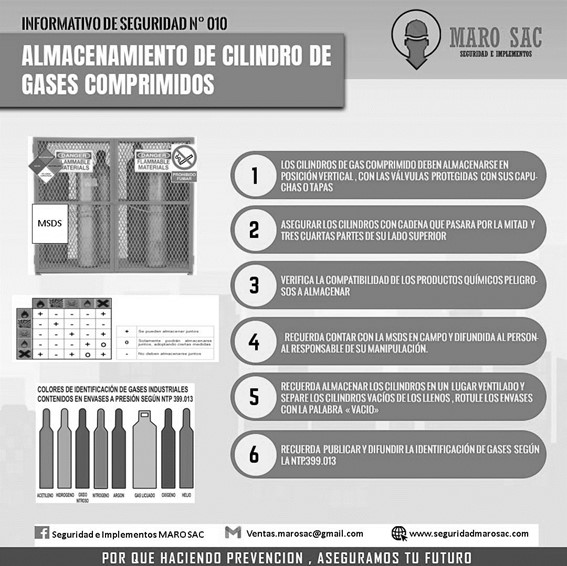
Compressed Gas Cylinder (CGC) Safety Infographic

Source: https://www.utm.my/cmc/files/2020/04/Safety-of-Compressed-Gas-Cylinder.png


Compressed Gas Cylinder (CGC) Safety Infographic – Spanish

Fuente: https://www.revistaseguridadminera.com/


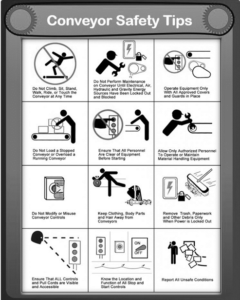
Conveying A Safety Message Infographic


Conveying A Safety Message Infographic – Spanish

Fuente: https://www.ajtransmisiones.com/


Cruise Control Driving Meeting Kit – Spanish

QUÉ ESTÁ EN RIESGO

El control de crucero se puede utilizar para controlar automáticamente la velocidad de su vehículo (normalmente a más de 25-35 millas por hora) sin tener que mantener el pie en el acelerador. Es una gran herramienta para evitar el cansancio del conductor, el exceso de velocidad y ayudar al ahorro de combustible durante los viajes largos en carreteras planas y rectas y autopistas. El control de crucero puede provocar accidentes si se utiliza de forma inadecuada o en condiciones de carretera peligrosas, como calles urbanas, tráfico denso, colinas, carreteras sinuosas y carreteras mojadas y resbaladizas.

CUÁL ES EL PELIGRO

VENTAJAS/DESVENTAJAS DEL CONTROL DE CRUCERO

La ventaja más evidente del control de crucero es que permite al conductor mantener una velocidad constante (fijada por él) mientras descansa. Otras ventajas que ofrece el control de crucero son:

  • Aumenta la comodidad del conductor durante los viajes largos por carretera.
  • Al establecer la velocidad mediante el control de crucero, un conductor puede evitar superar el límite de velocidad indicado e infringir las leyes de conducción.
  • El control de crucero permite al conductor mantener una velocidad constante y aumentar el ahorro de combustible.

A pesar de la conveniencia del control de crucero, también tiene algunas desventajas importantes:

  • Los conductores que utilizan el control de crucero no aplican una presión constante sobre el pedal del acelerador, lo que puede aumentar el riesgo de accidentes automovilísticos al maniobrar en el tráfico.
  • El uso del control de crucero no se recomienda en condiciones de lluvia, nieve o hielo, ya que el vehículo podría empezar a deslizarse sobre la carretera mojada.
  • Durante las inclemencias del tiempo, sobre todo si llueve o nieva, pisar el freno para desactivar el control de crucero puede hacer que el vehículo se desvíe y provoque un accidente.
  • Si conduce por carreteras secundarias o está muy cansado, el control de crucero puede hacer que el conductor se “desconecte” y preste menos atención a la carretera.

COMO PROTEGERSE

RIESGOS DEL CONTROL DE CRUCERO – RESUMEN 

  • Cuando el control de crucero está activado, intenta mantener el vehículo a una velocidad constante fijada por el conductor. Si la velocidad del vehículo se ha fijado en 100 km/h, el vehículo entrará automáticamente en una curva a 100 km/h. Si esta es una velocidad inadecuada para la curva, el frenado posterior para reducir la velocidad afectará, durante la toma de esta, al equilibrio del vehículo, lo que puede, a su vez, inducir inestabilidad en el mismo.
  • Esto afectará a la maniobrabilidad del vehículo y, si el conductor no lo compensa correctamente, puede provocar, en el peor de los casos, la pérdida de control del vehículo.
  • El control de crucero puede conducir a una mayor variabilidad de la posición en el carril, a un retraso en la frenada y a chocar con mayor frecuencia contra una cola de espera.
  • Las carreteras mojadas afectan significativamente a la adherencia del neumático y esto, a su vez, puede hacer que las acciones correctivas del conductor sean mucho más difíciles de juzgar.
  • El conductor debe permanecer alerta mientras conduce: la fatiga y una falsa sensación de seguridad pueden provocar una falta de atención y un accidente.
  • El control de crucero NUNCA debe ser utilizado por un conductor que se sienta cansado o hastiado.
  • Otro riesgo es que el conductor no pueda responder con la misma rapidez y eficacia a una situación de emergencia.
  • Con el control de crucero, el conductor deja de pisar el acelerador y el freno. El conductor suele mantener el pie en el suelo cerca. Si tiene que detenerse repentinamente, para evitar un peligro en la carretera, tardará unos milisegundos más en encontrar el pedal del freno, y este tiempo marca una gran diferencia en lo que ocurre después.
  • La conducción por terrenos “ondulados”, con suaves subidas y bajadas, puede hacerse normalmente de forma más económica (usando menos combustible) por un conductor experto que vea el terreno que se aproxima, manteniendo una posición relativamente constante del acelerador y permitiendo que el vehículo acelere en las bajadas y desacelere en las subidas, mientras reduce la potencia al llegar una subida y añade un poco antes de llegar a una subida.
  • Si el Control de Crucero Avanzado se utiliza en situaciones de tráfico intenso, y en carreteras rurales y urbanas que no sean vías principales, existe una posible reducción de la capacidad de detección del ACC.
  • Los accidentes, los carriles de incorporación, la congestión en las salidas… son posibles peligros en la carretera que son difíciles de anticipar, y más difíciles de evitar cuando se utiliza el control de crucero

CONSEJOS PARA EL CONTROL DE CRUCERO 

  • Como punto de partida seguro, lea el manual del propietario de su vehículo sobre el funcionamiento de la función de control de crucero de su vehículo – Preste atención a las advertencias del fabricante sobre el uso del control de crucero.
  • Sigue siendo el deber del conductor evaluar las condiciones de la carretera y ajustar la velocidad del vehículo a una velocidad segura y adecuada a la carretera y a las condiciones actuales de conducción.
  • La forma más segura de conducir un vehículo es asegurarse de que en todas las condiciones de conducción se puede controlar el vehículo (frenar, girar y acelerar) de forma segura.
  • Durante el control de crucero, su pie puede descansar del acelerador, pero mantenga los dos pies apoyados en el suelo del lado del conductor y preparados para frenar o maniobrar si necesita reducir la velocidad repentinamente o realizar una parada de emergencia.
  • No se recueste, ni enrosque el pie debajo de usted, ni lo suba al salpicadero, al alféizar de la ventana, etc., mientras conduce.
  • Aunque no tenga que controlar el acelerador, debe controlar el pedal del freno en todo momento. 
  • El pedal del freno desactivará el control de crucero, así que esté atento si pisa o pisa accidentalmente el pedal del freno mientras conduce.

CONCLUSIÓN

Los automovilistas deben comprender las ventajas, pero sobre todo los límites de la conducción con control de crucero. Primera y única regla: la conducción con control de crucero solo está diseñada para condiciones de conducción ideales y nada más.


Cruise Control Driving Meeting Kit

WHAT IS CRUISE CONTROL 

Cruise control can be used to automatically control the speed in your vehicle (usually over 25-35 miles per hour) without keeping your foot on the accelerator. It is a great tool to prevent driver fatigue, speeding, and help with fuel economy during long trips on flat, straight roads and highways. Cruise control can cause accidents if you use it improperly or in hazardous road conditions such as city streets, heavy traffic, hills, winding roads, and wet, slippery roads.

ADVANTAGES/DISADVANTAGES OF CRUISE CONTROL

The most obvious advantage of cruise control is that it allows a driver to maintain a steady rate of speed (set by them) while they rest their feet. Some other benefits that cruise control offers include:

  • It enhances driver comfort during extended road trips.
  • By setting the speed via cruise control, a driver can avoid exceeding the posted speed limit and violating driving laws.
  • Cruise control allows a motorist to maintain a consistent speed and increase fuel economy.

Despite the convenience of cruise control, there are some important disadvantages to it as well, including:

  • Drivers using cruise control do not apply constant pressure on the gas pedal, which can increase the risk of auto accidents when maneuvering through traffic.
  • The use of cruise control is not recommended in rain, snow, or icy conditions when the vehicle could begin to slide on the wet road.
  • During inclement weather, particularly rain or snow, applying pressure on the brake to deactivate cruise control may cause the vehicle to veer out of control and cause an accident.
  • If you’re driving on back roads or are extremely tired, cruise control can cause a driver to “zone out” and pay less attention to the road.

RISKS OF CRUISE CONTROL – A SUMMARY 

  • Cruise control when deployed will attempt to keep the car at a constant speed set by the driver. If the vehicle speed has been set to a 100 km/h speed, the car will automatically enter a corner at 100 km/h. If this is an inappropriate speed for the corner the subsequent braking to reduce speed will, while cornering, affect the balance of the vehicle which may, in turn, induce instability in the vehicle.
  • This will affect the vehicle handling and if not correctly compensated for by the driver, can in the worst-case result in a loss of control of the vehicle.
  • Cruise control may lead to increased lane position variability, delayed braking, and crashing into a stationary queue more frequently.
  • Wet roads significantly affect the grip of the tire and this, in turn, can make corrective actions by the driver much more difficult to judge.
  • A driver should remain alert while driving – Fatigue and a false sense of security can lead to a lack of attention and an accident.
  • Cruise control should NEVER be used by a driver who is feeling tired or jaded.
  • Another risk is that a driver may not be able to respond as swiftly and effectively to an emergency situation.
  • With cruise control, it takes the driver’s foot off the gas pedal and the brake. The driver usually keeps his foot on the floor nearby. If you have to stop suddenly, to avoid a hazard on the road, it will take a few extra miliseconds to find the brake pedal, and this time makes a lot of difference in what happens next.
  • Driving over “rolling” terrain, with gentle up and down portions, can usually be done more economically (using less fuel) by a skilled driver viewing the approaching terrain, by maintaining a relatively constant throttle position and allowing the vehicle to accelerate on the downgrades and decelerate on upgrades, while reducing power when cresting a rise and adding a bit before an upgrade is reached.
  • If Advanced Cruise Control is used in busy traffic, and on rural and urban roads other than main roads, there is a potential reduction of the ACC detection capacity.
  • Accidents, merge lanes, exit congestion—all are possible highway hazards that are hard to anticipate, and harder to avoid when you’re on cruise control

CRUISE CONTROL TAKEAWAYS 

  • As a safe starting point, reading your vehicle owner’s manual on how to operate your vehicle’s cruise control feature – Pay attention to the manufacturer’s warnings about cruise control use.
  • It remains the duty of the driver to assess the conditions of the road and adjust vehicle speed to a safe speed suitable for the road and current driving conditions.
  • The safest way to operate a vehicle is to ensure that under all driving conditions you can control the vehicle (brake, corner and accelerate) in a safe manner.
  • During cruise control, your foot may take a rest from the accelerator, but keep both feet flat on the driver’s side floor and ready for braking or manoeuvring if you need to suddenly slow or emergency stop.
  • Don’t lounge, curl your foot up underneath you, or put it up on the dashboard, windowsill, etc. while you drive.
  • Even though you may not have to control your accelerator you still need to control the brake pedal at all times. 
  • The brake pedal will disable cruise control, so be aware if the brake pedal is accidentally hit or pressed while driving.

FINAL WORD

Motorists need to understand the advantages but more importantly the limits of Cruise Control Driving. First and only rule – cruise control driving is only designed for ideal driving condition and nothing less. 


Crane Safety – Safety Precautions for Working Near Overhead Pow Stats and Facts

FACTS

  1. Falling Loads: When a load is being moved through the air it is possible that something could happen resulting in it falling. The worst-case option is that the line snaps and the entire load is dropped onto the area below. Much more common, however, is for one or more objects to be improperly secured so that they fall off. 
  2. Overloading the Crane: Every crane has a maximum load weight that it can handle. In some cases, that maximum load will vary based on things like how far out the crane is reaching, the foundation it is on, and more. If the load that is being moved is greater than the maximum rated amount, it could cause the crane to tip over, the load to sway too much, or other problems. 
  3. Electrical Hazards: Cranes typically operate at high heights, which means they may be in the same area as electrical lines and hazards. This could result in electrocution for the operator, or causing the line to break, exposing those on the ground to great risk.
  4. Pinch Points: Most cranes will be able to move at the base in order to put the load where it needs to go. When this happens, anyone who is in the area surrounding the crane could get trapped in a pinch point and get crushed. 

STATS

  • Around 50% of accidents involving overhead cranes are a result of a metal part of a crane coming into contact with a power source (i.e., a high-voltage power line).
  • Of the total 632 crane-related deaths, 157 were caused by overhead power line electrocutions (25%), 132 deaths were associated with workers being struck by crane loads, 125 deaths involved being struck by cranes, crane booms/jibs or other crane parts (20%), 89 deaths involved crane collapses (14%), 56 deaths involved falls (9%), and 30 deaths involved being caught in/between crane parts.

The causes of 79 incidents involving construction worker deaths and injuries were:

    • 26 crane collapses (33%), involving 24 deaths and 54 injuries
    • 13 struck by crane load incidents (16%), involving 6 deaths and 10 injuries
  • 12 overhead power line contacts (15%), involving 10 deaths and 8 injuries
  • 8 struck by other crane part incidents (10%), involving 6 deaths and 6 injuries
  • 19 other causes (23%) – including 6 highway incidents, 4 falls, 3 caught in/between, 3 struck by non-crane falling objects, and 1 struck by lightning. These involved 6 deaths and 15 injuries 


Crane Safety – Safety Precautions for Working Near Overhead Pow Stats and Facts – Spanish

HECHOS

  1. Caída de cargas: Cuando una carga se desplaza por el aire es posible que ocurra algo que provoque su caída. El peor de los casos es que la línea se rompa y toda la carga caiga sobre la zona de abajo. Sin embargo, es mucho más común que uno o más objetos estén mal asegurados y se caigan. 
  2. Sobrecargar la grúa: Toda grúa tiene un peso máximo de carga que puede soportar. En algunos casos, esa carga máxima varía en función de aspectos como la distancia que alcanza la grúa, los cimientos en los que se encuentra, etc. Si la carga que se está moviendo es mayor que la cantidad nominal máxima, podría causar que la grúa se vuelque, que la carga se balancee demasiado, u otros problemas. 
  3. Peligros eléctricos: Las grúas suelen operar a gran altura, lo que significa que pueden estar en la misma zona que las líneas eléctricas y los peligros. Esto podría provocar la electrocución del operario, o hacer que la línea se rompa, exponiendo a los que están en el suelo a un gran riesgo.
  4. Puntos de pellizco: La mayoría de las grúas pueden moverse en la base para colocar la carga donde debe ir. Cuando esto ocurre, cualquier persona que se encuentre en la zona que rodea a la grúa podría quedar atrapada en un punto de pellizco y ser aplastada.

ESTADÍSTICAS

  • Alrededor del 50% de los accidentes en los que están implicadas las grúas aéreas son consecuencia del encuentro de una parte metálica de la grúa con una fuente de energía (es decir, una línea eléctrica de alta tensión).
  • Del total de 632 muertes relacionadas con las grúas, 157 fueron causadas por electrocuciones en líneas eléctricas aéreas (25%), 132 muertes estuvieron relacionadas con trabajadores golpeados por cargas de grúas, 125 muertes fueron golpeadas por grúas, plumas de grúa u otras partes de la grúa (20%), 89 muertes fueron causadas por colapsos de grúas (14%), 56 muertes fueron causadas por caídas (9%) y 30 muertes fueron causadas por quedar atrapadas entre partes de grúas.

Las causas de 79 incidentes con muertes y lesiones de trabajadores de la construcción fueron:

  • 26 colapsos de grúa (33%), con 24 muertos y 54 heridos
  • 13 incidentes de golpes con la carga de la grúa (16%), con 6 muertos y 10 heridos
  • 12 contactos con líneas eléctricas aéreas (15%), con 10 muertos y 8 heridos
  • 8 incidentes de impacto con otra parte de la grúa (10%), con 6 muertos y 6 heridos
  • 19 otras causas (23%) – incluyendo 6 incidentes en la carretera, 4 caídas, 3 atrapamientos, 3 golpes con objetos que no son de la grúa y 1 impacto de rayo. En estos casos se produjeron 6 muertes y 15 lesiones


Cruise Control Driving Stats and Facts

FACTS

  1. The use of cruise control technology puts drivers at a higher risk of traffic accidents due to increased likelihood of speeding.
  2. Current “self-driving” tech works right up to the point at which it doesn’t and then fails catastrophically. Failure happens in response to extreme, unexpected, or unknown situations — also known as edge (or corner) cases — and after the human has disengaged from the task of monitoring the system.
  3. In a Level 2 system, the human is required to keep their eyes permanently on the road and mind on the driving task but can briefly take their hands off the steering wheel; Level 3 is sometimes called “eyes-off” and Level 4 “mind-off.” Thus, the SAE’s automation levels are most easily understood in terms of which driving tasks the human can STOP doing — e.g., steering, looking, concentrating.
  4. Much of the confusion around self-driving and autonomy lies in the conflation of task automation (slowly moving from human driver to machine driver) with responsibility (all human, all of the time). Responsibility will only move to the machine driver at Level 5 — sometimes called “driver-off” — which is decades away from mass-market deployment, assuming it is even possible at all.
  5. The danger with relying on cruise control when going downhill or approaching curves is that you could lose control entirely.
  6. Do not use cruise control in heavy traffic, on winding roads or when the road surface is slippery. This could result in loss of vehicle control, serious injury or death.
  7. Cruise control can’t see road conditions or upcoming turns – so it won’t slow down if roads are slippery or if you’re about to hit a sharp curve.
  8. Using cruise control while driving through hilly terrain could cause the system to force multiple transmission shifts which could lead to overheating of the transmission fluid and premature component wear. 

STATS

  • Drivers who used adaptive cruise control technology in a 40-person study were more likely to speed compared to individuals using manual control. Cars with the technology exceeded the speed limit 95 % of the time, while manual drivers broke the speed limit 77 % of the time.
  • Drivers using adaptive cruise control with added lane centering were also more likely to speed, doing so 96 % of the time.
  • 90 % of all light vehicles in use on our roads and highways have no automated or assisted-driving features at all — otherwise known as Level 0. With about 40,000 lives lost each year on American highways, the easiest and fastest way to make human drivers into safer drivers is with the mandatory installation of well-known, proven, and ground-trothed ADAS and camera-based DMS.


Cruise Control Driving Stats and Facts – Spanish

HECHOS

  1. El uso de la tecnología de control de crucero pone a los conductores en un mayor riesgo de accidentes de tráfico debido a la mayor probabilidad de exceso de velocidad.
  2. La tecnología actual de “autoconducción” funciona hasta el punto en que no lo hace y entonces falla catastróficamente. El fallo se produce en respuesta a situaciones extremas, inesperadas o desconocidas -también conocidas como casos límite (o de esquina)- y después de que el humano se haya desentendido de la tarea de supervisar el sistema.
  3. En un sistema de nivel 2, el ser humano debe mantener los ojos permanentemente en la carretera y la mente en la tarea de conducir, pero puede retirar brevemente las manos del volante; el nivel 3 se denomina a veces ” ojos-apagados ” y el nivel 4 ” mente-apagada “. Así, los niveles de automatización de la SAE se entienden más fácilmente en términos de qué tareas de conducción puede dejar de hacer el ser humano, por ejemplo, dirigir, mirar, concentrarse.
  4. Gran parte de la confusión en torno al autoconducción y la autonomía radica en la confusión de la automatización de tareas (pasar lentamente del conductor humano al conductor máquina) con la responsabilidad (todo humano, todo el tiempo). La responsabilidad sólo se trasladará al conductor de la máquina en el nivel 5 -a veces llamado “sin conductor”-, que está a décadas de distancia del despliegue en el mercado masivo, suponiendo que sea posible.
  5. El peligro de confiar en el control de crucero al ir cuesta abajo o al acercarse a las curvas es que se puede perder el control por completo.
  6. No utilice el control de crucero cuando haya mucho tráfico, en carreteras sinuosas o cuando el firme esté resbaladizo. Esto podría provocar la pérdida de control del vehículo, lesiones graves o la muerte.
  7. El control de crucero no puede ver el estado de la carretera ni los giros que se avecinan, por lo que no reducirá la velocidad si la carretera está resbaladiza o si está a punto de tomar una curva cerrada.
  8. Utilizar el control de crucero mientras se conduce por un terreno accidentado podría hacer que el sistema forzara varios cambios de transmisión, lo que podría provocar el sobrecalentamiento del líquido de transmisión y el desgaste prematuro de los componentes.

ESTADÍSTICAS

  • Los conductores que utilizaron la tecnología de control de crucero adaptativo en un estudio de 40 personas eran más propensos a exceder la velocidad en comparación con los que utilizaban el control manual. Los vehículos con esta tecnología superaron el límite de velocidad el 95% de las veces, mientras que los conductores manuales lo hicieron el 77%.
  • Los conductores que utilizaban el control de crucero adaptativo con centrado de carril añadido también eran más propensos a exceder el límite de velocidad, ya que lo hacían el 96 % de las veces.
  • El 90% de los vehículos ligeros que circulan por nuestras carreteras y autopistas no tienen ninguna función de conducción automatizada o asistida, lo que se conoce como nivel 0. Con cerca de 40.000 vidas perdidas cada año en las carreteras americanas, la forma más fácil y rápida de convertir a los conductores humanos en conductores más seguros es con la instalación obligatoria de ADAS y DMS basados en cámaras, bien conocidos y probados.


Crane Safety – Safety Precautions for Working Near Overhead Pow Fatality File

3 Killed in Pa. as Crane Hits 7,200-Volt Line 

A crane operator was electrocuted, and two co-workers died trying to save him after the crane struck an overhead power line at a concrete plant in a suburb of Philadelphia.

As electricity coursed through the rig, one of the rescuers began administering CPR. But the second worker touched the still-electrified crane, sending a deadly jolt through all three men, authorities said.

Terrified co-workers stood by until the live wire was shut off, said George Strickland, general manager of the JDM Materials plant where the accident took place.

While they waited, the crane caught fire and was left a smoking ruin. A 7,200-volt electrical line remained draped over its boom hours after the accident. Witnesses said the crane was backing up when it ran into the wires, Strickland said.

Authorities did not immediately release the names of the victims.

Strickland said the three worked for a company that had been hired to demolish an old structure at the plant. 


Crane Safety – Safety Precautions for Working Near Overhead Pow Fatality File – Spanish

3 muertos en Pensilvania al chocar una grúa con una línea de 7.200 voltios 

Un operario de grúa se electrocutó y dos compañeros murieron tratando de salvarlo después de que la grúa chocara con una línea eléctrica aérea en una planta de hormigón en un suburbio de Filadelfia.

Mientras la electricidad corría por la grúa, uno de los rescatadores empezó a administrarle reanimación cardiopulmonar. Pero el segundo trabajador tocó la grúa aún electrificada, enviando una sacudida mortal a los tres hombres, según las autoridades.

Los compañeros de trabajo, aterrorizados, se mantuvieron a la espera hasta que se desconectó el cable en tensión, dijo George Strickland, director general de la planta de JDM Materials donde tuvo lugar el accidente.

Mientras esperaban, la grúa se incendió y quedó como una ruina humeante. Una línea eléctrica de 7.200 voltios permanecía colgada sobre su pluma horas después del accidente. Los testigos dijeron que la grúa estaba retrocediendo cuando chocó con los cables, dijo Strickland.

Las autoridades no revelaron inmediatamente los nombres de las víctimas.

Strickland dijo que los tres trabajaban para una empresa que había sido contratada para demoler una antigua estructura en la planta.


Cruise Control Driving Fatality File

Car Accidents Caused by Defective Cruise Control 

Cruise control is a modern convenience that allows us to enjoy our long drives and family car trips. But what happens when the cruise control is defective? In one case, the answer was tragic.

On a road trip, in a car, a family had the cruise control engaged. At length, the car began to accelerate on its own. Eventually, the car accelerated to over 90 miles per hour before crashing and rolling over. The crash and rollover ejected the occupants from the vehicle. The occupants, who did not suffer fatal head, neck, and spinal injuries, were left with a variety of ailments such as brain damage, spinal fractures, paraplegia, and quadriplegia.

After an investigation into the car accident was completed, it was discovered that the cruise control system was defective because it permitted electrical signals, which normally occur in a car, to affect the electrical functioning of the cruise control system. As a result, the system malfunctioned which led to the car’s rapid acceleration. If the wiring and speed control sensors been appropriately designed, this tragic cruise control accident would not have happened.

Examples of vehicles that have been known to be plagued with design problems that can lead to cruise control accidents include:

Oldsmobile Cutlass Supreme, Chevrolet Caprice, Toyota Corolla, Ford Aero Star mini van, Ford Explorer, Lincoln Town Car, Lincoln Mark VII, Mercedes Benz, Yamaha Motorcycles, Chevrolet Van, Ford Taurus, Ford F150 pickup truck, and Ford Crown Victoria. 


Cruise Control Driving Fatality File – Spanish

Accidentes de vehículos causados por un control de crucero defectuoso 

El control de crucero es una comodidad moderna que nos permite disfrutar de nuestros largos viajes en coche y en familia. Pero ¿qué ocurre cuando el control de crucero es defectuoso? En un caso, la respuesta fue trágica.

En un viaje por carretera, en un vehículo, una familia tenía el control de crucero conectado. Al final, el vehículo empezó a acelerar por sí solo. Finalmente, el vehículo aceleró a más de 90 millas por hora antes de chocar y volcar. El choque y el vuelco expulsaron a los ocupantes del vehículo. Los ocupantes, que no sufrieron lesiones mortales en la cabeza, el cuello y la columna vertebral, quedaron con diversas dolencias como daños cerebrales, fracturas de la columna vertebral, paraplejia y tetraplejia.

Una vez concluida la investigación del accidente de coche, se descubrió que el sistema de control de crucero era defectuoso porque permitía que las señales eléctricas, que normalmente se producen en un vehículo, afectaran al funcionamiento eléctrico del sistema de control de crucero. Como resultado, el sistema funcionó mal, lo que provocó la rápida aceleración del vehículo. Si el cableado y los sensores de control de velocidad se hubieran diseñado adecuadamente, este trágico accidente del control de crucero no habría ocurrido.

Ejemplos de vehículos que han sido conocidos por estar plagados de problemas de diseño que pueden conducir a accidentes de control de crucero incluyen:

Oldsmobile Cutlass Supreme, Chevrolet Caprice, Toyota Corolla, Ford Aero Star minivan, Ford Explorer, Lincoln Town Car, Lincoln Mark VII, Mercedes Benz, Yamaha Motorcycles, Chevrolet Van, Ford Taurus, Ford F150 pickup truck, y Ford Crown Victoria.


Cruise Control Driving Infographic

Source: https://visual.ly/community/Infographics/business/tips-safely-use-cruise-control


Cruise Control Driving Infographic – Spanish

Fuente: https://es.wikihow.com/


Close Calls – Take a Close Look at Close Calls Meeting Kit

When a “close call” happens, it should immediately send up a red warning flag that something was wrong, unplanned, unexpected, and could happen again. The next time it happens, it could result in serious damage, injury or death. For every accident there are usually several contributing factors, most of which can be controlled.

ROOT CAUSES

The best way to prevent the reoccurrence of an accident is by looking at close calls. By investigating the root causes of an accident, steps can be taken to eliminate the hazard and improve the work system.

Look for immediate and underlying causes. An immediate cause may be an unsafe condition like a mechanical failure or it could be an unsafe action by an employee. The underlying cause could be poor machine maintenance, a missing guard, a crowded work area or a lack of training.

REPORT AND DOCUMENT INCIDENTS 

All incidents should be reported to the supervisor so that accident/injury report forms can be completed.

Once an investigation is completed, solutions should be sought to prevent the accident from occurring again. 

LEARN FROM CLOSE CALLS/NEAR MISSES

  • Employees need to understand that the purpose of studying near misses is not to punish employees or assign blame; it is to improve workplace safety and reduce injuries.
  • Reporting close calls leads to improvements in work areas and job procedures while allowing the correction of unsafe conditions before an injury occurs.

Workers should inspect the work area daily for unsafe conditions or unsafe actions and, if found, report them to the supervisor. Hazard awareness is key to preventing accidents before they happen. Take steps to eliminate hazards as soon as they are discovered. Learn the real lesson from close calls. They can happen again and again until they cause injury, so tell your supervisor about every accident, no matter how minor it may seem at the time. You never know when an incident may be repeated and result in an injury or even death.

HUMAN ERROR AND OTHER HAZARDS:  Most close calls result from a combination of factors. Although human error is often one cause, other hazards often play a role as well. These include:

  • Poor lighting
  • Inadequate ventilation
  • Lack of a warning sign
  • A missing machine guard
  • Lack of effective safety rules

To prevent a looming accident, you have to move quickly and seize the opportunity to eliminate the hazards that caused the close call. Historical data has shown time and again that serious accidents are almost always preceded by warnings and near misses.

SAFETY MANAGEMENT PROGRAM

An investigation cannot take place if the near miss is not reported accurately. Setting up a successful safety management program to ensure near misses are reported and investigated is an important step in reducing occurrences of serious incidents. 

  • Create a clear definition of a near miss.
  • Make a written disclosure and report the identified near miss.
  • Prioritize reports and classify information for future actions.
  • Distribute information to the people involved in the near miss.
  • Analyze the causes of the problem.
  • Identify solutions to the problem.
  • Disseminate the solutions to the people impacted.
  • Resolve all actions and check any changes.

FINAL WORD

There are few “accidents” that happen without some advance warning. These advance warnings come in the form of close calls or near misses. Don’t dismiss a close call, instead talk about it and fix it.


Close Calls – Take a Close Look at Close Calls Meeting Kit – Spanish

QUÉ ESTÁ EN RIESGO

Cuando se produce una “situación de peligro”, debería saltar inmediatamente una bandera roja de advertencia de que algo iba mal, no estaba previsto, era inesperado y podría volver a ocurrir. La próxima vez que ocurra, podría provocar daños graves, lesiones o la muerte. En cada accidente suele haber varios factores que contribuyen a él, la mayoría de los cuales pueden controlarse.

CUÁL ES EL PELIGRO

CAUSAS DE ORIGEN

La mejor manera de prevenir la recurrencia de un accidente es analizar los eventos peligros. Si se investigan las causas fundamentales de un accidente, se pueden tomar medidas para eliminar el peligro y mejorar el sistema de trabajo.

Busque las causas inmediatas y subyacentes. Una causa inmediata puede ser una condición insegura, como un fallo mecánico, o una acción insegura por parte de un empleado. La causa subyacente puede ser un mantenimiento deficiente de la máquina, la falta de una protección, una zona de trabajo abarrotada o la falta de capacitación.

INFORMAR Y DOCUMENTAR LOS INCIDENTES 

Todos los incidentes deben notificarse al supervisor para que pueda cumplimentar los formularios de notificación de accidentes/lesiones.

Una vez finalizada la investigación, deben buscarse soluciones para evitar que el accidente vuelva a producirse. 

COMO PROTEGERSE

APRENDER DE LOS EVENTOS PELIGROSOS/CASI ACCIDENTES

  • Los empleados deben comprender que el objetivo de estudiar los casi accidentes no es castigar a los empleados ni culparlos, sino mejorar la seguridad en el lugar de trabajo y reducir las lesiones.
  • La notificación de los incidentes que estuvieron a punto de ocurrir conduce a la mejora de las áreas de trabajo y de los procedimientos laborales, al tiempo que permite corregir las condiciones inseguras antes de que se produzca una lesión.

Los trabajadores deben inspeccionar diariamente el área de trabajo para detectar condiciones o acciones inseguras y, si las encuentran, informar al supervisor. La concienciación sobre los peligros es fundamental para prevenir los accidentes antes de que se produzcan. Tome medidas para eliminar los peligros tan pronto como los descubra. Aprenda la verdadera lección de los accidentes cercanos. Pueden repetirse una y otra vez hasta que causen lesiones, así que informe a su supervisor de cada accidente, por pequeño que parezca en ese momento. Nunca se sabe cuándo un incidente puede repetirse y provocar una lesión o incluso la muerte.

ERROR HUMANO Y OTROS PELIGROS: La mayoría de los accidentes con víctimas se deben a una combinación de factores. Aunque el error humano suele ser una de las causas, también suelen influir otros peligros. Entre ellos se encuentran:

  • Iluminación deficiente
  • Ventilación inadecuada
  • Falta de una señal de advertencia
  • Falta de una protección de la máquina
  • Falta de normas de seguridad eficaces

Para evitar un accidente inminente, hay que actuar con rapidez y aprovechar la oportunidad para eliminar los peligros que han provocado el cuasi accidente. Los datos históricos han demostrado una y otra vez que los accidentes graves casi siempre van precedidos de advertencias y cuasi accidentes.

PROGRAMA DE GESTIÓN DE LA SEGURIDAD

No se puede llevar a cabo una investigación si el cuasi accidente no se notifica con precisión. Establecer un programa de gestión de la seguridad que garantice que los cuasi accidentes se comunican e investigan es un paso importante para reducir los incidentes graves. 

  • Establezca una definición clara de cuasi accidente.
  • Haga una declaración por escrito y notifique el cuasi accidente identificado.
  • Dar prioridad a los informes y clasificar la información para futuras acciones.
  • Distribuir la información a las personas implicadas en el cuasi accidente.
  • Analizar las causas del problema.
  • Identificar las soluciones al problema.
  • Difundir las soluciones a las personas afectadas.
  • Resolver todas las acciones y comprobar los cambios.

CONCLUSIÓN

Son pocos los “accidentes” que ocurren sin una advertencia previa. Estas advertencias previas se producen en forma de eventos peligrosos o casi peligrosos. No descarte una situación de peligro, sino que hable de ella para solucionarla.  


Cold Storage Safety Meeting Kit

Cold storage spaces include refrigerator or freezer boxes or rooms in which food and other materials can be stored or processed at controlled, cool temperatures. When you work in and around such spaces, get training and be aware of the hazards that might be involved with cold storage: cold stress, slips and trips, confined space, chemical storage, and ergonomics.

DANGERS TO WORKERS 

People in real life get trapped in walk-in refrigerators or freezers, and sometimes they die. Exposure to cold temperatures can cause hypothermia, a potentially fatal lowering of the body’s core temperature. If the space is small, lack of oxygen could cause death before freezing does. Spending too long a time in a freezer, or being in continual contact with frozen items, can also cause frostbite, which is tissue damage from freezing. Amputating fingers and toes is sometimes necessary after frostbite.

DANGERS IN COLD STORAGE FACILITIES: Cold storage facilities carry all the same potential dangers as a standard warehouse, as well as a few special risks and fire hazards that have to be dealt with. Risk assessment shows the kind of approach a cold storage warehouse might take. 

Insulated Metal Panels: Effectively sustaining adequate temperature ranges in refrigerated warehouses presents itself as an obstacle that is frequently cleared by installing insulation in the ceilings and walls of the facility. However, it’s important to avoid using unprotected spray-on foam padding while performing cold storage maintenance in order to lessen the chances of fire spreading quickly across the building’s ceilings and walls. 

Ammonia: Very frequently, ammonia is the preferred coolant in refrigerated storage facilities. Anhydrous ammonia, which is a highly combustible gas, has the ability to cause catastrophic fires and explosions

Moisture: In addition to temperatures within cold storage units and warehouses, moisture levels are of considerable importance. When relative humidity levels are too dry, goods dehydrate and shrink. When condensation levels are too high, electronics may experience problems, goods deteriorate and products may experience mold, bacterial or insect contamination that may pose health risks to workers and consumers. 

Fire risks: It may sound illogical given the extremely cold conditions, but cold storage facilities actually carry a fire risk. Contributing factors include chemicals, air composition, and storage of flammable materials.

SAFETY SOLUTIONS TO MINIMIZE RISK FOR WORKERS: Because cold storage areas are generally confined spaces, there is always a need to get training and become familiar with the safety features along with some pre-requisite safety measures. Here are safety solutions to minimize risk.

  • reduce worker exposure to the cold, consider using upright or deep freezers instead of walk-in coldrooms
  • reduce the time workers are in coldrooms – restrict to the shortest time period possible
  • for periods of more than about 10 minutes, ensuring clothing suits the temperature and duration of activity and minimises skin exposure to the cold (eg thermal/fleece jumper, gloves, hat etc.)
  • ensure walk-in coldrooms’ internal door opening mechanisms are in good working order and are regularly maintained and tested
  • ensure walk-in coldrooms have emergency alarm buttons fitted and regularly tested so that anyone trapped inside can send for help
  • use slip-resistant floor surfaces to reduce slip hazards
  • maintain good housekeeping practices when stacking and storing items to remove trip hazards
  • use a buddy system to provide an immediate support in the event of an emergency and avoiding people working in isolation
  • have emergency response procedures in place with appropriate training and regular test drills
  • have reliable communications systems in place that you test regularly
  • assess manual handling tasks and implementing systems to eliminate the risk of injury
  • provide appropriate personal protective equipment (PPE) to suit the working conditions (eg footwear and clothing) and making sure workers wear it.
  • For escape in an emergency, cold storage rooms should have at least one door that opens from the inside
  • Lighting must be supplied through a constantly burning bulb or a light with an illuminated switch located inside the cold room
  • If anti-freeze doors are not installed at the cold storage workplace, ensure a firefighter’s axe is available.
  • Doors at the worksite must have inside and outside locking mechanisms.
  • Other options include posting warning signage on the door and providing audible and visible signal systems inside the room that are tested daily.
  • Ensure that chemicals in cold storage are stocked properly and with compatible materials.
  • Note that forklifts and combustion equipment can cause fumes to build up in enclosed spaces – use only with proper ventilation.

BEST SAFETY COLD STORAGE PRACTICES TAKEAWAYS 

  • Provide Proper Work Attire: When working in areas with low temperatures, all employees should have protective clothing to prevent slips and frost-related health issues. Make sure employees have warm, layered clothes, gloves with gripping surfaces and steel toe shoes with non-slip soles. Also, make sure employees have easy access to a warm room with warmers and hot beverages.
  • Practice Regular Facility Upkeep: Keep your cold storage warehouse in pristine condition and safe by regularly removing any ice buildup and maintaining workspaces by clearing debris and promptly cleaning any spills.
  • Install Safety Features: To avoid accidentally having employees locked in cold storage spaces, create safety guidelines and install the necessary equipment. Only allow authorized workers into specific areas, ensure there is at least one clearly marked emergency exit that opens from the inside and install a battery backed-up alarm and lighting system that automatically triggers during lock-ins. 
  • Follow Proper Operating Procedures: Always follow safety guides when using large machinery or equipment to prevent and avoid unexpected equipment failures and potential personal injuries.
  • Conduct Regular Health Screenings: All cold storage employees should be periodically screened and tested throughout the year to ensure they’re physically fit enough to work in a cold storage warehouse. 

FINAL WORD

Cold conditions can increase the hazards of strains and sprains in jobs such as processing poultry, meat or fish. Talk to your supervisor about the correct procedures and equipment to help you work without developing repetitive strain injuries.