Tractor Safety Meeting Kit – Spanish

QUÉ ESTÁ EN RIESGO

Los tractores son esenciales en las explotaciones agrícolas. Los tractores realizan todo tipo de tareas que de otro modo serían imposibles. La seguridad de los tractores es para todos los que utilizan maquinaria accionada por tractores.

CUÁL ES EL PELIGRO

PELIGROS DE LAS MANIOBRAS DEL TRACTOR – CAUSAS DE ACCIDENTES

Vuelcos del tractor hacia atrás

  • El tractor está atascado en el barro o la nieve.
  • Las cadenas, tablas u otros dispositivos pueden impedir a veces el giro de las ruedas.
  • El tractor está subiendo una cuesta demasiado empinada.
  • El embrague se suelta demasiado rápido en una marcha baja con el motor en marcha a un régimen alto.
  • La carga está enganchada por encima de la barra de tracción del tractor.

Vuelcos laterales del tractor

  • cuando se conduce el tractor por una ladera demasiado empinada
  • cuando el cargador frontal está demasiado alto para una carga determinada en una pendiente o al girar
  • cuando el tractor se conduce demasiado cerca del borde de una cuneta u otra pendiente pronunciada.

COMO PROTEGERSE

PROCEDIMIENTOS OPERATIVOS DEL TRACTOR

  • Arranque el tractor sólo desde el puesto de conducción y no desde el suelo.
  • No desmonte de un tractor en movimiento.
  • Asegúrese de que el freno de estacionamiento está puesto y funciona correctamente antes de desmontar.
  • No estacione el tractor en una pendiente pronunciada.
  • Retire la llave de arranque cuando no utilice el tractor.
  • Conduzca a velocidades lo suficientemente lentas como para mantener el control en circunstancias inesperadas.
  • Reduzca la velocidad antes de girar o frenar.
  • Tenga cuidado con las zanjas, los terraplenes y las depresiones: los taludes desmoronados y resbaladizos pueden provocar vuelcos.
  • Si se queda atascado en un terreno blando, dé marcha atrás. Si no lo consigue, pida ayuda.
  • Dé marcha atrás en pendientes pronunciadas, en lugar de conducir hacia delante (asegúrese de que no hay implementos de arrastre enganchados).
  • Utilice una vía de ruedas lo más ancha posible cuando trabaje en laderas y terrenos inclinados. Descienda las pendientes con precaución. Mantenga el tractor en marchas cortas y deje que la compresión del motor actúe como freno.

PROCEDIMIENTOS DE MANTENIMIENTO

  • Revise el tractor con regularidad.
  • Compruebe regularmente el ROPS.
  • No retire ni sustituya las correas mientras las poleas estén bajo tensión.
  • Pare el motor antes de realizar tareas de mantenimiento o engrase.
  • Mantenga los escalones y las plataformas de trabajo libres de grasa y aceite para evitar resbalones y caídas.
  • Cambie las ruedas sólo en superficies planas. Antes de desmontar una rueda, compruebe las demás. Evite los medios de elevación improvisados. Utilice un gato de base ancha y capacidad de elevación adecuada. Cuando el tractor esté levantado con un gato, bloquéelo uniformemente para obtener un apoyo adicional.
  • Asegúrese de que se ha liberado toda la presión de aire antes de desmontar un neumático de la llanta. Utilice los procedimientos correctos. Las llantas partidas pueden causar lesiones graves. Las llantas deben inflarse en una jaula por seguridad.

PROCEDIMIENTOS MUSCULOESQUELÉTICOS

  • Ajuste el asiento para adaptarlo a su cuerpo. Tenga en cuenta el tipo de asiento cuando compre su próximo tractor.
  • Se recomienda encarecidamente un tractor con un asiento con suspensión que absorba las vibraciones. La exposición prolongada a las vibraciones puede causar daños en la espalda.
  • Lleve calzado que proporcione un agarre firme al montar o desmontar el tractor o al accionar los pedales.
  • Ajuste el asiento del tractor para que apoye la espalda y resulte cómodo.
  • Al comprar un tractor, asegúrese de que el asiento es seguro y cómodo.
  • Compruebe la altura del asiento, la profundidad del asiento, la altura y el ángulo del respaldo, el movimiento hacia delante y hacia atrás, la inclinación del asiento, el acolchado firme, el giro parcial (si tiene que pasar largos periodos mirando hacia atrás) y la suspensión que absorbe las vibraciones.
  • Desmonte cada hora aproximadamente y dedique 5 ó 10 minutos a hacer algo activo.
  • Planifique su próximo tractor de modo que incluya escalones adecuadamente bajos, asideros para las manos, un espacio adecuado para la puerta y la cabina, y una plataforma de montaje segura.
  • Desmonte bajando -no saltando- y utilice cada uno de los agarres para pies y manos previstos.

RECOMENDACIONES ESPECÍFICAS PARA EL USO DEL TRACTOR

  • Los operadores deben estar lo suficientemente capacitados/experimentados para realizar el trabajo.
  • Utilice siempre el cinturón de seguridad si el tractor dispone de una estructura de protección antivuelco (ROPS).
  • No lleve pasajeros en tractores que no dispongan de asientos de instructor, ROPS y cinturones de seguridad.
  • Asegúrese de que los ejes y conexiones de la TDF están protegidos y manténgase alejado cuando esté acoplada.
  • Nunca salte sobre o desde un tractor en movimiento.

CONCLUSIÓN

Los tractores son la principal causa de muerte accidental en las granjas. A lo largo de los años, muchos agricultores, trabajadores agrícolas y otras personas que viven en las granjas o las visitan, han muerto o han resultado gravemente heridos al caer de tractores en movimiento, han sido atropellados por tractores o han sido aplastados cuando un tractor se desplaza lateralmente o hacia atrás.

Tractor Safety Meeting Kit

WHAT’S AT STAKE

Tractors are essential in farm operations. Tractors perform all sorts of tasks that would be otherwise impossible. Tractor safety is for everyone who uses a tractor-operated machinery.

WHAT’S THE DANGER

DANGERS OF TRACTOR OPERATIONS – CAUSES ACCIDENTS

Rearward tractor turnovers

  • The tractor is stuck in mud or snow.
  • Chains, boards, or other devices can sometimes prevent wheels from turning.
  • The tractor is climbing a hill that is too steep.
  • The clutch is released too quickly in a low gear with the engine running at a high speed.
  • A load is hitched above the drawbar of the tractor.

Sideways tractor rollovers

  • when the tractor is driven on a hillside that is too steep
  • when the front-end loader is too high for a given load on a hill or when turning
  • when the tractor is driven too close to the edge of a roadside ditch or other steep slope

HOW TO PROTECT YOURSELF

TRACTOR OPERATIONAL PROCEDURES

  • Start the tractor only from the driving position and not from the ground.
  • Do not dismount from a moving tractor.
  • Ensure the park brake is on and operating effectively before dismounting.
  • Do not park a tractor on a steep slope.
  • Remove the starting key when the tractor is not in use.
  • Drive at speeds slow enough to retain control in unexpected circumstances.
  • Reduce speed before turning or applying brakes.
  • Watch out for ditches, embankments, and depressions – crumbling and slippery banks can cause overturns.
  • When stuck in soft ground, back out. If unsuccessful, get help.
  • Reverse up steep slopes, rather than driving forward (ensure no trailing implements are attached).
  • Use as wide a wheel track as possible when working on hillsides and sloping ground. Descend slopes cautiously. Keep the tractor in low gear and allow the motor compression to act as a brake.

MAINTENANCE PROCEDURES

  • Service your tractor regularly.
  • Check ROPS regularly.
  • Do not remove or replace belts while the pulleys are under power.
  • Stop the engine before servicing or greasing.
  • Keep steps and working platforms free of grease and oil to avoid slips and falls.
  • Change wheels on flat surfaces only. Before removing any wheel, check the other wheels. Avoid improvised lifting arrangements. Use a wide-based jack of adequate lifting capacity. When the tractor is jacked up, block it up evenly for additional support.
  • Ensure all the air pressure has been released before removing a tyre from the rim. Use correct procedures. Split rims can cause serious injuries. Tires should be inflated in a cage for safety.

MUSCULOSKELETAL PROCEDURES

  • Adjust the seat to suit your body. Consider the type of seating when buying your next tractor.
  • A tractor with a seat that has vibration absorbing suspension is highly recommended. Prolonged exposure to vibration may cause back damage.
  • Wear footwear that provides a firm grip when mounting or dismounting the tractor or operating foot pedals.
  • Adjust the tractor seat for back support and comfort.
  • When buying a tractor, ensure seating is safe and comfortable.
  • Check seat height, seat depth, back rest height and angle, fore and aft movement, seat tilt, firm padding, partial pivoting (if you have to spend long periods looking behind you), and vibration-absorbing suspension.
  • Dismount every hour or so and spend 5 or 10 minutes doing something active.
  • Plan for your next tractor to include suitably low steps, hand grips, adequate doorway and cab space, and a safe mounting platform.
  • Dismount by climbing down – not jumping down – and use each provided foot and hand hold.

TRACTOR TAKEAWAY SUMMARY

  • Operators must be trained/experienced enough to do the job.
  • Always wear a seatbelt if the tractor has a Roll-Overprotective Structure (ROPS).
  • Do not carry passengers on tractors that do not have instructor seats, ROPS, and safety belts.
  • Ensure PTO shafts and connections are guarded and keep clear when it is engaged.
  • Never jump on or off a moving tractor.

FINAL WORD

Tractors are the main cause of accidental deaths on farms. Over the years, many farmers, farm workers and others living on or visiting farms, have been killed or seriously injured falling from moving tractors, run over by tractors, or crushed when a tractor rolls sideways or backwards.


Tractor Safety Stats and Facts

FACTS

  1. The most frequent causes of tractor-related deaths in the farm are side and rear overturns. The vehicles typically involved in these incidents are older tractors that are not equipped with Roll-Over Protective Structures (ROPS).
  2. Farming is among the most dangerous occupations in the United States, with a fatality rate that is 800 percent higher than the average American worker
  3. Roll-overs are among the leading causes of injury and death for farm tractor operators.
  4. Tractor overturn incidents can result in major injuries (crushing injuries, broken bones, and so on) and even death.
  5. Side overturns are the most common type of tractor overturn incident. In a side overturn incident, a tractor rolls onto its side.
  6. The two major factors at play inside overturn incidents are center of gravity and centrifugal force.

STATS

  • Each year, an average of 132 American farm workers are crushed to death as tractors overturn during operation.
  • If tractors without ROPS are not retrofitted, NIOSH estimates that 2,800 rollover-related deaths could occur during the period that these tractors remain in use (an estimated 31 years).
  • Forty percent of the 250 persons involved in unprotected tractor rollover incidents died. In contrast, the study found that only 2%, or one person died, of the 61 persons operating ROPS-equipped tractors that rolled over. The one fatal victim was not personally restrained and was thrown from the ROPS protective zone during rollover.
  • The most common type of tractor accident is rollovers—The U.S. Department of Labor (USDL) reports that 44% of farm accidents are due to tractor rollovers.
  • Of the 4.8 million tractors currently operated in the U.S., 50% don’t have ROPS or seat belts.
  • 1 in 10 operators overturn a tractor in his or her lifetime.
  • 80% of deaths caused by tractor overturns involve experienced operators.
  • 1 in 7 farmers involved in tractor overturns is permanently disabled.
  • 7 of 10 farms will go out of business within 5 years following a tractor-related fatality.


Tractor Safety Stats and Facts – Spanish

HECHOS

  1. Las causas más frecuentes de muertes relacionadas con tractores en las explotaciones agrícolas son los vuelcos laterales y traseros. Los vehículos típicamente implicados en estos incidentes son tractores antiguos que no están equipados con Estructuras de Protección Antivuelco (ROPS).
  2. La agricultura se encuentra entre las ocupaciones más peligrosas de Estados Unidos, con una tasa de mortalidad que es un 800 por ciento superior a la media de los trabajadores estadounidenses.
  3. Los vuelcos se encuentran entre las principales causas de lesiones y muerte de los operadores de tractores agrícolas.
  4. Los incidentes de vuelco de tractores pueden provocar lesiones importantes (lesiones por aplastamiento, rotura de huesos, etc.) e incluso la muerte.
  5. Los vuelcos laterales son el tipo más común de incidente de vuelco de tractor. En un incidente de vuelco lateral, una tractor rueda sobre su costado.
  6. Los dos factores principales que intervienen en los vuelcos son el centro de gravedad y la fuerza centrífuga.

ESTADÍSTICAS

  • Cada año, una media de 132 trabajadores agrícolas estadounidenses mueren aplastados al volcar los tractores durante su funcionamiento.
  • Si no se retroadaptan los tractores sin ROPS, NIOSH estima que podrían producirse 2.800 muertes relacionadas con vuelcos durante el periodo en que estos tractores permanezcan en uso (un periodo estimado de 31 años).
  • El 40% de las 250 personas implicadas en incidentes de vuelco de tractores sin protección fallecieron. Por el contrario, el estudio encontró que sólo el 2%, o una persona murió, de las 61 personas que operaban tractores equipados con ROPS que volcaron. La única víctima mortal no estaba sujeta personalmente y salió despedida de la zona de protección ROPS durante el vuelco.
  • El tipo más común de accidente de tractor es el vuelco: el Departamento de Trabajo de EE.UU. (USDL) informa de que el 44% de los accidentes agrícolas se deben al vuelco de tractores.
  • De los 4,8 millones de tractores que operan actualmente en EE.UU., el 50% no tienen ROPS ni cinturones de seguridad.
  • 1 de cada 10 operadores vuelca un tractor a lo largo de su vida.
  • 80% de las muertes causadas por vuelcos de tractores implican a operadores experimentados.
  • 1 de cada 7 agricultores implicados en vuelcos de tractor sufre una discapacidad permanente.
  • 7 de cada 10 explotaciones agrícolas dejarán de funcionar en los 5 años siguientes a un accidente mortal relacionado con un tractor.


Tractor Safety Fatality File

Farmer Killed While Bypass-Starting His Tractor

A 67-year-old farmer was killed while trying to bypass start his tractor. The farmer was transporting bales of hay to a field when the tractor stopped and would not restart. The farmer went to the barn where his wife was working and together, they drove their pickup truck to the tractor. The farmer stood between the tractor and the truck, connected the jumper cables, and then touched a metal wrench to the starter to bypass the ignition. When the engine started, the tractor moved forward and ran over him. He died later that day.

Bypass-starting bypasses all safety start and neutral start switches engineered in the tractor’s electrical and hydraulic systems. If the tractor is left in gear and a bypass start is performed, the starter will engage as soon as the circuit is complete, and the tractor will start moving. The operator does not have enough time to jump away and may be injured or killed by the tractor. When starting a tractor, the farmer should remain in the tractor seat, with the transmission and power take-off in neutral and the brake engaged. The manufacturer’s recommendations for safe Startup should be followed. These procedures should be marked by decals on the tractor. In order to prevent incidents, such as unintentional movement, the tractor should always be shut down correctly when not in use. Farmers should periodically check all operating and safety systems of the tractor and repair or replace them as necessary.


Tractor Safety Fatality File – Spanish

Un agricultor muere al intentar arrancar su tractor por derivación

Un agricultor de 67 años murió mientras intentaba arrancar su tractor por derivación. El agricultor estaba transportando pacas de heno a un campo cuando el tractor se paró y no volvió a arrancar. El agricultor fue al granero donde estaba trabajando su mujer y juntos condujeron su camioneta hasta el tractor. El agricultor se colocó entre el tractor y la camioneta, conectó los cables de arranque y luego tocó el motor de arranque con una llave metálica para puentear el encendido. Cuando el motor arrancó, el tractor avanzó y le atropelló. Murió ese mismo día.

El arranque en derivación anula todos los interruptores de arranque de seguridad y de arranque en punto muerto diseñados en los sistemas eléctrico e hidráulico del tractor. Si el tractor se deja en marcha y se realiza un arranque por derivación, el motor de arranque se conectará en cuanto se complete el circuito y el tractor empezará a moverse. El operador no tiene tiempo suficiente para apartarse y puede resultar herido o morir atropellado por el tractor. Al arrancar un tractor, el agricultor debe permanecer en el asiento del tractor, con la transmisión y la toma de fuerza en punto muerto y el freno accionado. Deben seguirse las recomendaciones del fabricante para un arranque seguro. Estos procedimientos deben indicarse mediante calcomanías en el tractor. Para evitar incidentes, como movimientos involuntarios, el tractor debe apagarse siempre correctamente cuando no se utilice. Los agricultores deben comprobar periódicamente todos los sistemas operativos y de seguridad del tractor y repararlos o sustituirlos según sea necesario.


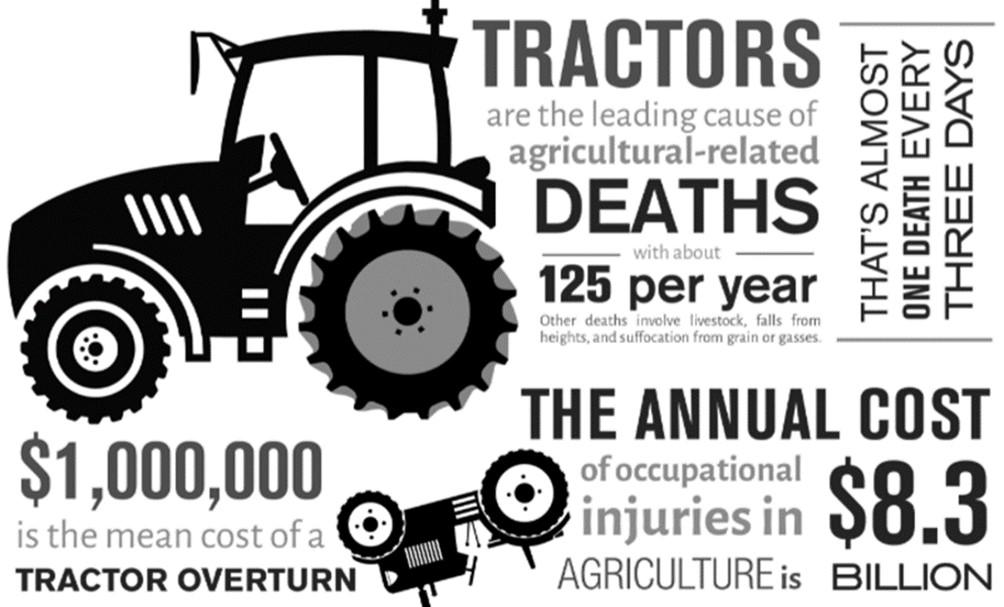
Tractor Safety Infographic

Source: https://www.teamtractor.com/blog/


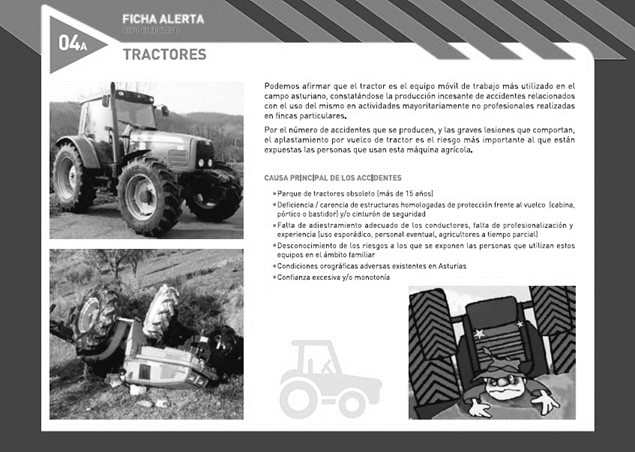
Tractor Safety Infographic – Spanish

Fuente: http://www.iaprl.org


Tree Trimming Safety Meeting Kit

What’s At Stake

Tree trimming operations require climbing, pruning, and felling trees. Hand and portable power tools such as loppers, trimmers, and chainsaws make the necessary cuts. Aerial lifts and chippers bring workers to the right height and clean up the worksite.

What’s the Danger

TREE TRIMMING

Trees are beautiful and enhance the character of our neighborhoods. But trees can also cause problems.

THREE REASONS TO TRIM OR PRUNE A TREE

Aesthetics – Pruning a tree helps to maintain its shape and appearance. You shouldn’t try to impose an unnatural shape or size on a tree. The amount of trimming and pruning that will be needed could seriously damage it.

Safety – Dead or broken branches and limbs can fall off at any time, which is a serious safety hazard. If the branches of a tree obstruct your vision while driving, they should be trimmed away. Finally, tree limbs and branches occasionally grow too close to utility lines. Contact the utility company to handle such issues.

Health – It is sometimes possible to save an infected tree by strategically pruning away affected branches and limbs. Thinning the crown of a tree improves airflow, which can be very beneficial. If branches are crossing or rubbing together, they should be trimmed, or removed so that they don’t fall unexpectedly.

  • never drop start a chain saw when working on the ground.
  • wear cut resistant leg protection, hearing and eye protection when using a chainsaw.
  • start and warm up the chainsaw before climbing to prevent starting difficulty while the climber is on the tree.

HOW TO PROTECT YOURSELF

BEST GENERAL TREE TRIMMING PRACTICES

  • It’s almost always best to trim or prune a tree during its dormant season. Although you can technically prune a pine tree at any time, it is still better to do so when it is dormant. The only exception is when a hazard exists.
  • Be conscientious about the size of the branch that you are going to remove. If it is less than five centimeters in diameter, removing it is fine. If it is between five and 10 centimeters in diameter, you might not want to do it. If it is more than 10 centimeters in diameter, you should only do so if you have a really good reason.
  • Only trim branches that have weak, V-shaped, narrow angles. Retain branches that have strong, U-shaped angles.
  • Lateral branches should be between one-half and three-quarters the diameter of the stem at point of attachment. Otherwise, they should be removed.
  • When pruning is complete, the ratio of living crown to tree height should be two-thirds.
  • Try to prune away branches when they are young. They are much easier to manage at that point, and the risk of leaving nasty scars is much lower.
  • Don’t trim a branch too close or too long. You shouldn’t leave a large stub or remove the branch collar.

PROPER PLANNING AVOIDS WORKER INJURIES

  • only competent persons should undertake the assessment of trees and sites, planning and preparation of the work method.
  • determine appropriate control measures in consultation with workers and document the safe work method to serve as evidence of managing risks.
  • discuss the control measures at the tool box talk.
  • consider conducting a site-specific risk assessment.
  • the risks that are common to many jobs may not be re-assessed but persons undertaking the work must be familiar with the current control measures in place.
  • use plant and equipment only within its capabilities and in accordance with manufacturer’s recommendations.

TRAINING – BEST ANTIDOTE FOR WORKER SAFETY IN TREE TRIMMING

Training should be documented and delivered to each worker before they are assigned on the job.

  • Job-specific hazards associated with tree work.
  • Safe work practices and special techniques for tree pruning, trimming, and felling.
  • Proper and safe use of all equipment.
  • How to identify and prevent contact with common poisonous plants and harmful animals.
  • Pesticide and fertilizer applications for employees using and exposed to them, if applicable.
  • Electrical hazard identification and prevention.
  • Fall prevention equipment and practices.
  • Communication methods.
  • Roadway safety.

REFRESHER TRAINING AVOIDS COMPLACENCY AND NEGLIGENCE

Refresher or additional training is required for any employee who has:

  • Been observed to violate the safe work practices required by Cal/OSHA.
  • Been involved in an accident or near miss.
  • Been assigned a new job that includes the use of equipment, machinery, tools, or tasks new to the employee.

FINAL WORD

The key to controlling hazards and preventing injuries and accidents in tree and ornamental palm maintenance is through extensive training and experience for all of the workers involved in the operation. Most importantly, each worksite should be overseen by a qualified tree worker with the proper training and experience to direct correct work methods and prevent injuries and accidents.


Tree Trimming Safety Meeting Kit – Spanish

QUÉ ESTÁ EN RIESGO

Las operaciones de poda de árboles requieren trepar, podar y talar árboles. Las herramientas manuales y eléctricas portátiles, como podadoras, recortadoras y motosierras, realizan los cortes necesarios. Los elevadores aéreos y las astilladoras llevan a los trabajadores a la altura adecuada y limpian el lugar de trabajo.

CUÁL ES EL PELIGRO

PODA DE ÁRBOLES

Los árboles son hermosos y realzan el carácter de nuestros barrios. Pero también pueden causar problemas.

TRES RAZONES PARA PODAR UN ÁRBOL

Estética – Podar un árbol ayuda a mantener su forma y aspecto. No se debe tratar de imponer una forma o tamaño antinatural a un árbol. La cantidad de recortes y podas necesarios podría dañarlo gravemente.

Seguridad – Las ramas y ramas muertas o rotas pueden desprenderse en cualquier momento, lo que supone un grave peligro para la seguridad. Si las ramas de un árbol obstruyen su visión mientras conduce, deben podarse. Por último, a veces las ramas y ramas de los árboles crecen demasiado cerca de las líneas de suministro. Póngase en contacto con la compañía eléctrica para solucionar estos problemas.

Salud – A veces es posible salvar un árbol infectado podando estratégicamente las ramas y ramas afectadas. Adelgazar la copa de un árbol mejora la circulación del aire, lo que puede ser muy beneficioso. Si las ramas se cruzan o rozan entre sí, deben podarse o eliminarse para que no caigan inesperadamente.

  • nunca deje caer una motosierra cuando trabaje en el suelo.
  • lleve protección resistente a los cortes en las piernas y protección auditiva y ocular cuando utilice una motosierra.
  • arranque y caliente la motosierra antes de trepar para evitar dificultades de arranque mientras el trepador está en el árbol.

COMO PROTEGERSE

MEJORES PRÁCTICAS GENERALES DE PODA DE ÁRBOLES

  • Casi siempre es mejor podar un árbol durante su periodo de reposo. Aunque técnicamente se puede podar un pino en cualquier momento, es mejor hacerlo cuando está inactivo. La única excepción es que exista algún peligro.
  • Sea consciente del tamaño de la rama que va a eliminar. Si tiene menos de cinco centímetros de diámetro, no hay problema. Si tiene entre 5 y 10 centímetros de diámetro, es mejor no hacerlo. Si tiene más de 10 centímetros de diámetro, sólo deberías hacerlo si tienes una razón de peso.
  • Recorte sólo las ramas que tengan ángulos débiles, estrechos y en forma de V. Conserve las ramas con ángulos fuertes en forma de U.
  • Las ramas laterales deben tener entre la mitad y las tres cuartas partes del diámetro del tallo en el punto de unión. En caso contrario, deben eliminarse.
  • Una vez finalizada la poda, la proporción entre la copa viva y la altura del árbol debe ser de dos tercios.
  • Procure podar las ramas cuando son jóvenes. En ese momento son mucho más fáciles de manejar y el riesgo de dejar cicatrices desagradables es mucho menor.
  • No recortes una rama demasiado cerca ni demasiado larga. No deje un tronco grande ni elimine el cuello de la rama.

UNA PLANIFICACIÓN ADECUADA EVITA LESIONES A LOS TRABAJADORES

  • Sólo personas competentes deben llevar a cabo la evaluación de árboles y lugares, la planificación y la preparación del método de trabajo.
  • Determine las medidas de control apropiadas en consulta con los trabajadores y documente el método de trabajo seguro para que sirva como prueba de la gestión de los riesgos.
  • Discutir las medidas de control en la charla de la caja de herramientas.
  • Considerar la realización de una evaluación de riesgos específica del emplazamiento.
  • Los riesgos comunes a muchos trabajos pueden no ser reevaluados, pero las personas que realicen el trabajo deben estar familiarizadas con las medidas de control vigentes.
  • Utilice las instalaciones y el equipo sólo dentro de sus posibilidades y de acuerdo con las recomendaciones del fabricante.

CAPACITACIÓN – EL MEJOR ANTÍDOTO PARA LA SEGURIDAD DE LOS TRABAJADORES EN LA PODA DE ÁRBOLES

La capacitación debe estar documentada y debe impartirse a cada trabajador antes de que se le asigne el trabajo.

  • Riesgos específicos del trabajo asociado a la poda de árboles.
  • Prácticas de trabajo seguras y técnicas especiales para la poda, el recorte y la tala de árboles.
  • Uso adecuado y seguro de todo el equipo.
  • Cómo identificar y prevenir el contacto con plantas venenosas comunes y animales dañinos.
  • Aplicaciones de plaguicidas y fertilizantes para los empleados que los utilicen y estén expuestos a ellos, si procede.
  • Identificación y prevención de riesgos eléctricos.
  • Equipos y prácticas de prevención de caídas.
  • Métodos de comunicación.
  • Seguridad vial.

LA CAPACITACIÓN DE ACTUALIZACIÓN EVITA LA COMPLACENCIA Y LA NEGLIGENCIA

Se requiere capacitación de repaso o adicional para cualquier empleado que haya:

  • Ha sido observado violando las prácticas de trabajo seguras requeridas por Cal/OSHA.
  • Ha estado involucrado en un accidente o casi accidente.
  • Se le ha asignado un nuevo trabajo que incluye el uso de equipo, maquinaria, herramientas o tareas nuevas para el empleado.

CONCLUSIÓN

La clave para controlar los peligros y prevenir lesiones y accidentes en el mantenimiento de árboles y palmeras ornamentales es capacitar ampliamente y dotar de experiencia a todos los trabajadores que intervienen en la operación. Y lo que es más importante, cada lugar de trabajo debe estar supervisado por un arboricultor cualificado con la capacitación y experiencia adecuadas para dirigir los métodos de trabajo correctos y prevenir lesiones y accidentes.


Tree Trimming Safety Stats and Facts

FACTS

  1. Every year people are seriously injured or killed while doing tree work. Most people injured have extensive experience in tree work.
  2. Common causes of injuries include falls from heights, being struck by falling objects, working around power lines, musculoskeletal disorders, exposure to noise, working with equipment and sun exposure.
  3. Hazards are known in advance which can be unforeseen.
  • condition and stability of the tree
  • falling or swinging objects including tree parts that have been cut or have the potential to break
  • onsite conditions that increase the risk of slips, trips and falls
  • manual tasks including pulling, pushing, lifting and plant vibration
  • electric shocks from energised power lines
  • working with plant including mobile plant
  • dehydration and fatigue
  • wind and rain
  • allergic reactions to trees and poisonous plants
  • biting or stinging (insects/snakes)

STATS

  • Fatalities among tree care workers dipped nearly 22 percent in 2017, while incidents decreased about 16 percent, according to a recent analysis from the Tree Care Industry Association.
  • Researchers examined media reports and found that 72 of the 129 tree work-related incidents that occurred in 2017 were fatal – down from 92 in both 2016 and 2015 and 81 in 2014. TCIA reported 153 total incidents in 2016, 45 of which resulted in “serious injury.”
  • A total of 1,285 workers died while performing tree care and maintenance; 44% were trimming or pruning a tree when fatally injured. The most common causes of death were being struck by or against an object (42% of deaths), most commonly a tree or branch; falls to a lower level (34%); and electrocutions (14%). Most of the decedents (57%) worked for small establishments with 10 or fewer employees.
  • A total of 1,285 worker deaths associated with tree care in the United States were reported to CFOI, an average of 80 deaths per year.


Tree Trimming Safety Stats and Facts – Spanish

HECHOS

  1. Todos los años hay personas que resultan gravemente heridas o mueren mientras realizan trabajos en árboles. La mayoría de las personas lesionadas tienen una amplia experiencia en el trabajo con árboles.
  2. Las causas comunes de lesiones incluyen caídas desde alturas, ser golpeado por objetos que caen, trabajar cerca de líneas eléctricas, trastornos musculoesqueléticos, exposición al ruido, trabajo con equipos y exposición al sol.
  3. Se conocen de antemano peligros que pueden ser imprevistos.
  • estado y estabilidad del árbol
  • caída o balanceo de objetos, incluidas las partes del árbol que se hayan cortado o que puedan romperse
  • condiciones del lugar que aumenten el riesgo de resbalones, tropiezos y caídas
  • tareas manuales como tirar, empujar, levantar y vibraciones de la planta
  • descargas eléctricas provocadas por líneas de alta tensión
  • trabajo con instalaciones, incluidas las móviles
  • deshidratación y fatiga
  • viento y lluvia
  • reacciones alérgicas a árboles y plantas venenosas
  • mordeduras o picaduras (insectos/serpientes)

ESTADÍSTICAS

  • Las muertes entre los trabajadores del cuidado de árboles disminuyeron casi un 22% en 2017, mientras que los incidentes disminuyeron aproximadamente un 16%, según un análisis reciente de la Asociación de la Industria del Cuidado de Árboles.
  • Los investigadores examinaron los informes de los medios de comunicación y descubrieron que 72 de los 129 incidentes relacionados con el trabajo en árboles que se produjeron en 2017 fueron mortales, una cifra inferior a los 92 de 2016 y 2015 y a los 81 de 2014. TCIA informó de 153 incidentes totales en 2016, 45 de los cuales resultaron en “lesiones graves.”
  • Un total de 1.285 trabajadores murieron mientras realizaban tareas de cuidado y mantenimiento de árboles; el 44% estaba podando o podando un árbol cuando se lesionó mortalmente. Las causas de muerte más comunes fueron los golpes contra un objeto (42% de las muertes), normalmente un árbol o una rama; las caídas a un nivel inferior (34%); y las electrocuciones (14%). La mayoría de los fallecidos (57%) trabajaban en pequeños establecimientos con 10 o menos empleados.
  • Se notificaron al CFOI un total de 1.285 muertes de trabajadores relacionadas con el cuidado de árboles en Estados Unidos, lo que supone una media de 80 muertes al año.


Tree Trimming Safety Fatality File

FALL

A 27-year-old tree trimmer (the victim) was working as part of a four-man crew to remove dead trees from a private home in a semi-rural area. The crew had been on the site for 2 days and had removed four large trees. They were working on the fifth tree and had cut off all of the tree limbs. Even though each tree was checked for rot by tapping on the trunk, the crew was unaware of the presence of wood wasps in the upper trunk–a sign of rot. At midmorning, the victim (wearing a saddle belt attached to a cloth lanyard) climbed the tree to cut it away in sections. While ascending the tree, the victim reportedly realized that the tree was more damaged than expected, stopped climbing at approximately 35 feet, and tied off at that height. The rotted tree had a list of approximately 10 to 15 degrees, and as the top section was cut away, the tree bent with it.

As the tree sprang back to its original position, the backlash was strong enough to fracture the trunk 6 feet below the cut area where the victim had tied his lanyard. The tree trimmer died when he fell to the ground with the tree section, which landed on top of him.

ELECTROCATION

A 27-year-old tree-trimming groundman (the victim), three coworkers, and a foreman were clearing brush and trees from an electric utility right-of-way. The victim and three coworkers were cutting and removing brush at ground level beneath the power line. Another tree trimmer in an aerial lift bucket was simultaneously clearing limbs near the 23,000-volt energized power line. At the time of the incident, the tree trimmer positioned the aerial bucket between the bottom energized phase of the three- phase power line and a lower neutral conductor. He extended the boom and bucket through the conductors to a tree on the opposite side of the power line. The tree trimmer then climbed out of the bucket into the tree to proceed with the tree-trimming operation. The foreman climbed onto the aerial bucket to retract the boom and bucket using the controls mounted on the boom pedestal. As he repositioned the boom, it contacted the power line, allowing current to flow through the uninsulated boom and truck to the ground. The victim, who was standing on the ground in contact with the aerial bucket truck, was electrocuted.


Tree Trimming Safety Fatality File – Spanish

CAÍDA

Un podador de árboles de 27 años (la víctima) estaba trabajando como parte de una cuadrilla de cuatro hombres para retirar árboles muertos de una casa particular en una zona semirrural. El equipo llevaba dos días en el lugar y había retirado cuatro árboles grandes. Estaban trabajando en el quinto árbol y habían cortado todas las ramas. Aunque se había comprobado la podredumbre de cada árbol golpeando el tronco, la cuadrilla no se dio cuenta de la presencia de avispas de la madera en la parte superior del tronco, un signo de podredumbre. A media mañana, la víctima (que llevaba un cinturón atado a un cordón de tela) subió al árbol para cortarlo por secciones. Al parecer, mientras ascendía, la víctima se dio cuenta de que el árbol estaba más dañado de lo esperado, dejó de subir a unos 35 pies y se amarró a esa altura. El árbol podrido tenía una inclinación de aproximadamente 10 a 15 grados, y al cortar la sección superior, el árbol se dobló con ella.

Cuando el árbol volvió a su posición original, el contragolpe fue lo suficientemente fuerte como para fracturar el tronco 6 pies por debajo de la zona cortada donde la víctima había atado su cuerda. El podador murió al caer al suelo con la sección del árbol, que le cayó encima.

ELECTROCACIÓN

Un podador de árboles de 27 años (la víctima), tres compañeros de trabajo y un capataz estaban limpiando matorrales y árboles de la servidumbre de paso de una compañía eléctrica. La víctima y sus tres compañeros estaban cortando y retirando la maleza a ras de suelo bajo el tendido eléctrico. Al mismo tiempo, otro podador de árboles en un cubo elevador aéreo estaba limpiando ramas cerca de la línea eléctrica de 23.000 voltios. En el momento del incidente, el podador de árboles colocó la cuchara aérea entre la fase inferior energizada de la línea eléctrica trifásica y un conductor neutro inferior. Extendió la pluma y la cuchara a través de los conductores hasta un árbol situado en el lado opuesto de la línea eléctrica. A continuación, el podador se subió al árbol desde la cuchara para proceder a la poda. El capataz se subió a la cuchara aérea para replegar la pluma y la cuchara utilizando los controles montados en el pedestal de la pluma. Al volver a colocar la pluma, ésta entró en contacto con el tendido eléctrico, lo que permitió que la corriente fluyera a través de la pluma no aislada y del camión hasta el suelo. La víctima, que estaba de pie en el suelo en contacto con el camión cazo aéreo, resultó electrocutada.


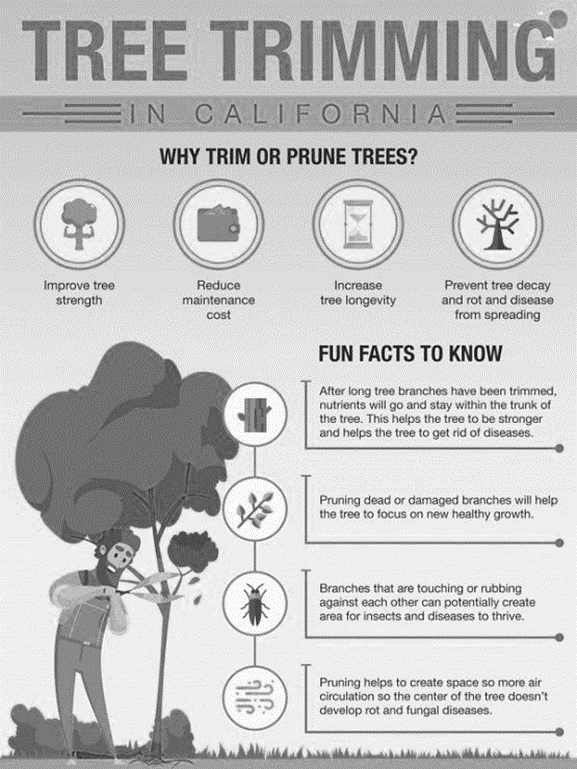
Tree Trimming Safety Infographic

Source: https://longbeachtreeexperts.com/


Tree Trimming Safety Infographic – Spanish

Fuente: https://www.cpsenergy.com


Truck Tarping Meeting Kit – Spanish

QUÉ ESTÁ EN RIESGO

Los camioneros utilizan lonas para cubrir y asegurar sus cargas y proteger a otros conductores y peatones. Sin embargo, uno de los riesgos de lesiones más importantes a los que se enfrentan sus conductores son las caídas que pueden producirse mientras se instalan las lonas.

CARGAS QUE REQUIEREN LONAS

Hay varios tipos de cargas que requieren lonas. Las más comunes son la maquinaria de acabado, como calderas o máquinas CNC, bobinas y tubos de acero, madera o materiales de construcción, algunos tipos de equipos de construcción, piezas de vehículos (a menos que se trate de una carga destinada a chatarra) y determinados equipos de perforación y minería.

También existe la carga mixta ocasional en la que una parte de la carga requiere lona y la otra no. La mejor opción para la carga mixta depende del conductor, y a menudo requiere una cierta dosis de creatividad para asegurarse de que toda la carga -o al menos la parte que debe cubrirse- está cubierta correctamente.

CUÁL ES EL PELIGRO

RIESGOS HABITUALES PARA LA LONA

Pero el mayor peligro para las lonas es el viento. El viento dificulta mucho el atado de lonas. Puede hacer que la lona ondee contra el remolque o la carga. Este aleteo puede dañar la lona, el remolque o la carga.
Otro peligro puede ser una forma inusual de la carga. Equilibrar correctamente la forma y el peso de la carga es una habilidad aprendida que es fundamental para la seguridad. Una carga desequilibrada puede arruinar el día de un operador.

LA SEGURIDAD DE LAS LONAS ES LA PRIORIDAD NÚMERO UNO

Muchas lesiones laborales están relacionadas con la manipulación de lonas. Estos riesgos incluyen caídas, lesiones por sobreesfuerzo muscular y abrasiones. Todas las empresas deben asegurarse de que se toman las precauciones de seguridad adecuadas en la manipulación de lonas. Deben asegurarse de que se utilizan las lonas adecuadas y de que se dispone de ayudas mecánicas para evitar estos riesgos. También es necesario informar a los empleados sobre los riesgos y las mejores prácticas de seguridad en la colocación de lonas.

COMO PROTEGERSE

CÓMO INSTALAR LONAS DE FORMA SEGURA – LA MECÁNICA

Si un empleado debe subir al camión para instalar una lona, debe utilizar un sistema de detención de caídas para atarse de forma segura y limitar la distancia a la que podría caer. Al mover una lona a mano, utilice una buena mecánica corporal: los empleados deben mirar hacia la lona, mantener la espalda recta y tirar de la lona con las manos aproximadamente a la altura de la cintura. Deben evitar torcerse o tirar hacia abajo con los brazos por encima de la cabeza. Otros pasos a seguir son:

  • Utilizar escalones o una pequeña escalera para subir y bajar. Colóquese de frente al camión y mantenga tres puntos de contacto en todo momento al subir y desplazarse.
  • Al caminar alrededor y por encima de la carga, vigile que no queden huecos entre los elementos. Sujete firmemente la lona y las cuerdas para evitar resbalones.
  • Separe los pies a la anchura de los hombros y sepárelos ligeramente para conseguir más fuerza y estabilidad.
  • Vigile los vientos de superficie o las ráfagas de tráfico que podrían hacer que la lona saliera volando.
  • Fije bien las lonas a la carga.
  • Cuando trabaje a nivel del suelo, esté atento al tráfico que se aproxima.
  • Nunca salte de la carga o del camión.

PRÁCTICAS DE RETIRADA DE LONAS – LA MECÁNICA

La retirada de la lona requiere un procedimiento seguro y eficaz. Asegúrese de llevar equipo de seguridad e identifique cualquier hueco o problema de seguridad. Los bordes afilados en las cargas son comunes, incluso si usted piensa que no hay ninguno. Una lona rasgada es dinero tirado a la basura. También puede dañar potencialmente la carga si la lona está cubriendo una carga directamente, en lugar de una carga en un contenedor.

Quite los amarres, levante una esquina de la lona y deje que el viento pase por debajo de ella. Deje que el viento le eche una mano. El viento es horrible cuando intenta atar una lona, pero cuando la está retirando, el viento puede ayudarle a separar la lona de la carga.

Si no hay brisa, unos cuantos aleteos de la lona mientras la retira pueden ayudar. Sin embargo, con el peso de la lona, esto no siempre es fácil. Una vez retirada la lona, enróllala o dóblala y pide ayuda a una carretilla elevadora para levantarla y transportarla a su lugar de almacenamiento.

Para retirar una lona, aflójela abanicándola para mover el aire por debajo. Los empleados deben utilizar los brazos, las piernas y el peso del cuerpo para sacar la lona del camión. Preste atención a las cargas inestables. Extienda la lona sobre una superficie plana y compruebe si hay agujeros o daños. No camine sobre las lonas, ya que esto puede causar daños a la lona y ser un peligro de resbalón para el empleado.

Planifique un trabajo de recogida o entrega antes de conducir hasta un lugar. Conozca la disposición de los clientes que visita con más frecuencia. Obtenga información anticipada sobre los detalles de la carga o el material y los procedimientos de carga y descarga, incluido el equipo y la ayuda disponibles. Tenga en cuenta el tipo de camión, la altura y los puntos de acceso antes de salir a la carretera. Pregunte directamente sobre la política de colocación de lonas; ¿puede hacerse en el lugar o tendrá que buscar el conductor una zona segura fuera de las instalaciones? Nunca lonas en el lado de una carretera o autopista con mucho tráfico.

LAS MEJORES PRECAUCIONES DE SEGURIDAD PARA LOS TRABAJADORES EN LAS OPERACIONES DE ENTOLDADO

  • Las lonas ligeras pueden parecer más fáciles de usar, pero crean peligros únicos. Los trabajadores deben reconocer que estas lonas pueden ser más peligrosas, sobre todo si subestiman la fuerza necesaria para retirarlas sin el equipo adecuado.
  • Las lonas se vuelven más peligrosas cuando el viento sopla a gran velocidad. Las lonas que soplan con suficiente rapidez pueden derribar a los trabajadores de sus escaleras o de la parte superior del camión. Para minimizar estos peligros, es necesario disponer del andamiaje adecuado.
  • Es mucho más probable que los trabajadores se lesionen al manipular manualmente las lonas. Corren el riesgo de realizar sobreesfuerzos, sufrir distensiones musculares o perder el equilibrio. Las ayudas mecánicas reducen considerablemente estos riesgos.
  • Desplácese siempre sobre una lona o carga, en lugar de ponerse encima de ella.
  • Mantener las lonas en el interior durante el proceso de carga cuando las temperaturas sean inferiores al punto de congelación, para que la lona pueda descongelarse.
  • Desenrollar la lona trasera antes de empezar a desenrollar la lona delantera.
  • Asegurar correctamente todas las esquinas de la lona.

CONCLUSIÓN

Los camioneros que manejan vagones cisterna, plataformas, camiones de grava y vehículos similares utilizan lonas para asegurar y cubrir sus cargas en el transcurso de su trabajo. La instalación y retirada de lonas plantea graves problemas de seguridad.


Truck Tarping Meeting Kit

What’s At Stake

Truckers use tarps to cover and secure their loads and protect other drivers and pedestrians. One of the most significant injuries risks your drivers face, however, are falls that can occur as tarps are being installed.

LOADS THAT REQUIRE TARPS

Various types of loads require tarps. The most common are finished machinery such as boilers or CNC machines, steel coil and tubing, lumber or construction materials, some types of construction equipment, vehicle parts (unless it is a load headed for scrap), and certain drilling and mining equipment.

There is also the occasional mixed load in which part of the load requires tarping and the other does not. The best tarping option for mixed loads is up to the driver, often times requiring a certain amount of creativity ensuring that either the entire load – or at least the part that must be covered – is tarped correctly.

What’s the Danger

COMMON HAZARDS FOR TARPING

But the ultimate hazard for tarping is wind. Wind makes tying down tarps very difficult. It can cause the tarp to flap against your trailer or your cargo. This flapping can cause damage to your tarp, trailer, or cargo.

Another hazard can be an unusual cargo shape. Properly balancing out cargo for shape and weight is a learned skill that’s critical for safety. An unbalanced load can ruin an operator’s day.

TARPING SAFETY IS THE NUMBER ONE PRIORITY

Many workplace injuries involve handling tarps. These risks include falls, muscle overexertion injuries, and abrasions. All companies need to make sure adequate tarping safety precautions are in place. They must make sure the appropriate tarps are used, and mechanical aids are available to avoid these risks. Employees also need to be informed about the risks and best tarping safety practices.

HOW TO PROTECT YOURSELF

HOW TO SAFELY INSTALL TARPS – THE MECHANICS

If an employee must climb the truck to install a tarp, they need to use a fall arrest system to securely tie-in and limit the distance they could fall. When moving a tarp by hand, use good body mechanics—employees should face the tarp, keep their back straight, and pull the tarp out with their hands at about waist height. They should avoid twisting or pulling down with their arms overhead. Other steps to follow include:

  • Use steps or a small ladder to climb and dismount. Face the truck and keep three points of contact at all times when climbing and moving around.
  • When walking around and over the load—watch for gaps between items. Keep a firm grip on the tarp and ropes to prevent slipping.
  • Spread the feet to shoulder width apart and stagger them slightly for the most power and stability.
  • Watch for surface winds or gusts from traffic that could cause the tarp to fly away.
  • Securely fix tarps to the load.
  • When working at ground level, watch for oncoming traffic.
  • Never jump from the load or truck.

TARP REMOVAL PRACTICES – THE MECHANICS

Tarp removal requires a safe and efficient procedure – don’t just yank it off! Be sure to wear safety gear and identify any gaps or safety concerns. Sharp edges on loads are common, even if you don’t think there are any. A ripped tarp is money down the drain. You can also potentially damage cargo if the tarp is covering a load directly, instead of a load in a container.

Remove tie downs, lift a corner of the tarp, and allow the wind underneath the tarp. Let wind give you a hand. Wind is awful when trying to tie down a tarp, but when you’re removing it, the wind can help you separate the tarp from the load.

If there’s no breeze, a few flaps of the tarp as you’re removing it can help. With the weight of a tarp, though, this isn’t always easy! Once the tarp is off, roll or fold it back up and then get forklift assistance to lift and transport the tarp to its storage place.

To remove a tarp, loosen it by fanning to move air underneath. Employees need to use their arms, legs, and body weight to pull the tarp off the truck. Watch for any unstable loads. Lay the tarp out on a flat area and check for holes or damage. Don’t walk on tarps—as this can cause damage to the tarp and be a slip hazard for the employee.

Plan a pickup or delivery job before driving to a site. Know the site layout for the customers most frequently visited. Get advanced information on the load or material details and loading/unloading procedures, including available equipment and help. Consider the truck type, height, and access points before heading out on the road. Ask directly about the tarping policy; can it be done on site, or will the driver need to find a safe area outside the facility? Never tarp on the side of a busy road or highway.

BEST WORKER SAFETY PRECAUTIONS IN TARPING OPERATIONS

  • Lightweight tarps might seem easier to use, but they create unique hazards. Employees need to recognise that these tarps might be more dangerous, especially if they underestimate the amount of force needed to remove them without the right equipment.
  • Tarps become more dangerous during high wind velocities. Tarps that are blown fast enough could knock workers off their ladders or the top of the truck. They need the right scaffolding in place to minimise these dangers.
  • Employees are far more likely to injure themselves while manually handling tarps. They run the risk of overexertion, strained muscle injuries, or balance loss. Mechanical aids significantly reduce these risks.
  • Always crave over a tarp or load, rather than stand on top of it.
  • Keeping tarps indoors during the loading process when temperatures are below freezing, so that the tarp can defrost.
  • Unroll the rear tarp before starting to unroll the front tarp.
  • Properly secure all corners of the tarp.

FINAL WORD

Truckers who operate tank cars, flatbeds, gravel trucks and similar vehicles use tarps to secure and cover their loads in the course of their work. Falls are serious safety concerns in installation and removal of tarps.


Truck Tarping Stats and Facts

FACTS

  1. The transporting loads often involves installing tarps to protect them. With loads such as aggregates, you often need tarps to prevent material from flying out of the truck box.
  2. While tarps can do a lot to safeguard and secure whatever they cover, they’re not immune to the elements. In adverse weather conditions, tarps can come loose, snap wildly, and cause real harm.
  3. Tarping is the process of covering a load of a flatbed trailer with a tarp. Although it’s best done using automated tarping equipment, these machines aren’t always available, which means the truck driver must do the work manually.
  4. Manual tarping is an awkward and dangerous activity. It can break bones, cause dangerous falls, cause a driver to be crushed, or lead to a truck accident.
  5. Tarps are floppy, cumbersome, and can weigh over a hundred pounds. They can also catch the wind and knock the trucker off a ladder or off the top of the load. The fall distance can be 10 or 15 feet, depending on the height of the load.
  6. Tarping may require standing on top of the tarped load. If you must do your work on top of a load, take care not to place your weight on voids, and keep your center of gravity low by crawling.

STATS

  • Falls from 8 percent of all injuries in trucking come from tarping. With only 14 percent of total trucking miles coming from flatbed operations–where most tarping occurs.
  • One regional trucking company revealed tarp-handling injuries made up 20 percent of the company’s typical injuries–a significant statistic because the company tarps only 30-40 percent of its truck loads. The company reduced its frequency of tarp-handling injuries per million miles by 30 percent during a three-year period. The result: a direct savings of approximately $50,000.
  • Many injuries occur in trucking, but the totals include overexertion and repetitive motion injuries as well as injuries from falls. Specific causes for truck falls reports that 8% of all injuries in trucking are related to tarping/untapping operations.
  • Where truckers park performs tiedown/tarping and adjust the load, 14 of 36 drivers said, “a concrete apron near the loading dock” and 17 said “parking area near the facility.” 86% of drivers interviewed perform these potentially hazardous tasks in the open, away from the loading dock. This compares with the responses from shippers, 64% of whom said one of these two locations was where drivers/helpers performed the tarping function.


Truck Tarping Stats and Facts – Spanish

HECHOS

  1. El transporte de cargas suele implicar la instalación de lonas para protegerlas. Con cargas como áridos, a menudo se necesitan lonas para evitar que el material salga volando de la caja del camión.
  2. Aunque las lonas pueden hacer mucho para salvaguardar y asegurar lo que cubren, no son inmunes a los elementos. En condiciones climáticas adversas, las lonas pueden soltarse, romperse salvajemente y causar daños reales.
  3. Tarpear es el proceso de cubrir la carga de un remolque de plataforma con una lona. Aunque se realiza mejor utilizando equipos automatizados de tarpeado, estas máquinas no siempre están disponibles, lo que significa que el conductor del camión debe hacer el trabajo manualmente.
  4. El proceso manual es una actividad incómoda y peligrosa. Puede romper huesos, provocar caídas peligrosas, aplastar al conductor o provocar un accidente de camión.
  5. Las lonas son blandas, incómodas y pueden pesar más de cien kilos. También pueden atrapar el viento y derribar al camionero de una escalera o de la parte superior de la carga. La distancia de caída puede ser de 10 o 15 pies, dependiendo de la altura de la carga.
  6. El proceso de tarpeado puede requerir estar de pie encima de la carga tarpeada. Si tiene que hacer su trabajo encima de una carga, tenga cuidado de no poner su peso en los huecos, y mantenga su centro de gravedad bajo arrastrándose.

ESTADÍSTICAS

  • El 8% de todas las lesiones que se producen en el transporte por carretera se deben al alquitranado. Sólo el 14% del total de kilómetros recorridos por los camiones corresponde a operaciones con plataformas, que es donde se produce la mayor parte de la manipulación de lonas.
  • Una empresa regional de transporte por carretera reveló que las lesiones por manipulación de lonas representaban el 20% de las lesiones típicas de la empresa, una estadística significativa porque la empresa sólo cubre con lonas el 30-40% de sus cargas de camión. La empresa redujo su frecuencia de lesiones por manipulación de lonas por millón de millas en un 30% durante un período de tres años. El resultado: un ahorro directo de aproximadamente 50.000 dólares.
  • En el sector del transporte por carretera se producen muchas lesiones, pero los totales incluyen lesiones por sobreesfuerzo y por movimientos repetitivos, así como lesiones por caídas. Causas específicas de las caídas de camiones informa de que el 8% de todas las lesiones que se producen en el transporte por carretera están relacionadas con las operaciones de colocación de lonas/desmontaje.
  • Dónde aparcan los camioneros realiza el amarre/desamarre y ajuste de la carga, 14 de 36 conductores dijeron, “una plataforma de hormigón cerca del muelle de carga” y 17 dijeron “zona de aparcamiento cerca de las instalaciones”. El 86% de los conductores entrevistados realizan estas tareas potencialmente peligrosas al aire libre, lejos del muelle de carga. Esto contrasta con las respuestas de los cargadores, el 64% de los cuales dijeron que uno de estos dos lugares era donde los conductores/ayudantes realizaban la función de alquitranado.


Truck Tarping Fatality File

Truck Driver Has Fatal Fall While Tarping Flatbed Trailer

A 57-year-old long-haul semi-truck driver died after he fell to the ground while tarping a flatbed trailer. He had been employed by the flatbed cargo hauling business for 13 years. It was his first day back at work after having spent a month recovering from back sprain injuries caused by a previous traffic collision. The weather was sunny and dry. He had picked up a load of sheet aluminum wrapped in plastic from a nearby rolling mill and returned to his employer’s yard to tarp it. A mechanic placed a tarp on the rear of the trailer deck with a forklift and drove away. A co-worker leaving the yard waved to the driver who was standing by his truck. No one else saw the driver until an hour later when a worker driving into the yard noticed the driver laying unresponsive and bleeding on the ground below the driver’s side cab steps. First responders arrived soon after being called but could not save the driver. The coroner determined that the driver died of traumatic head injuries caused by a fall.

As the incident had no witnesses, investigators presumed from physical evidence that the driver had climbed on top of the trailer, placed tarps at the front and rear ends, and at some point afterward fell around 51 inches to the ground on the passenger’s side. Evidence at the scene suggested that the driver got up after falling, walked around the front of the tractor, climbed into the cab, and, while exiting the cab, fell again to the ground where he was found. The employer’s Accident Prevention Plan (APP) or safety program lacked a requirement policy for drivers to use specific procedures to safely access, exit, and tarp flatbed trailers. Other possible contributing factors were that the driver was wearing loosely tied sneakers and in poor health with coronary and kidney diseases. The employer did not follow state requirements to report workplace fatalities within eight hours and to leave equipment unmoved at the incident scene.


Truck Tarping Fatality File – Spanish

Un camionero sufre una caída mortal mientras alquitranaba un remolque de plataforma

Un conductor de semirremolque de 57 años murió al caer al suelo mientras cubría con lona un remolque de plataforma. Llevaba 13 años empleado en una empresa de transporte de mercancías. Era su primer día de trabajo tras haber pasado un mes recuperándose de un esguince de espalda provocado por una colisión de tráfico anterior. El tiempo era soleado y seco. Había recogido una carga de chapa de aluminio envuelta en plástico de un laminador cercano y había vuelto al patio de su empleador para cubrirla con una lona. Un mecánico colocó una lona en la parte trasera de la plataforma del remolque con una carretilla elevadora y se marchó. Un compañero que salía del astillero saludó al conductor, que estaba de pie junto a su camión. Nadie más vio al conductor hasta una hora más tarde, cuando un trabajador que entraba en el astillero se dio cuenta de que el conductor yacía inconsciente y sangrando en el suelo bajo los escalones de la cabina del conductor. Los primeros auxilios llegaron poco después de recibir la llamada, pero no pudieron salvar al conductor. El forense determinó que el conductor había muerto de traumatismo craneoencefálico causado por una caída.

Como no hubo testigos del incidente, los investigadores supusieron, a partir de las pruebas físicas, que el conductor se había subido al remolque, había colocado lonas en los extremos delantero y trasero y, en algún momento posterior, había caído al suelo unos 51 centímetros por el lado del pasajero. Las pruebas halladas en el lugar de los hechos sugerían que el conductor se había levantado después de caer, había rodeado la parte delantera del tractor, había subido a la cabina y, al salir de ella, había vuelto a caer al suelo, donde fue encontrado. El Plan de Prevención de Accidentes (APP) o programa de seguridad del empleador carecía de una política de requisitos para que los conductores utilizaran procedimientos específicos para acceder, salir y cubrir con lonas los remolques de plataforma de forma segura. Otros posibles factores que contribuyeron al accidente fueron que el conductor llevaba zapatillas de deporte poco atadas y su estado de salud era deficiente, con enfermedades coronarias y renales. El empleador no cumplió los requisitos estatales de notificar las muertes en el lugar de trabajo en un plazo de ocho horas y de dejar el equipo inmovilizado en el lugar del incidente.


Truck Tarping Infographic – Spanish

Fuente: https://osha.oregon.gov


Truck Tarping Infographic

Source: https://bellavancetrucking.com


Trucker Safety Meeting Kit

What’s At Stake

Truck driving is one of the most dangerous occupations in Canada, and in the U. S. In addition to driving accidents, truckers are also at high risk for equipment-related injuries and ergonomic injuries.

What’s the Danger

DANGERS OF TRUCK DRIVING

One of the main causes of truck accidents is negligent driving by the person behind the wheel of the truck. There are many risk factors for truck drivers that make them more likely to cause an accident.

Health Problems

Driving a truck is a sedentary job, which means drivers are sitting for long periods of time, which can lead to numerous health problems

Factors that can contribute to health issues for truck drivers include:

  • Loading and unloading heavy cargo (truck drivers have a high rate of musculoskeletal injuries)
  • Exposure to hazardous chemicals
  • Exposure to diesel fumes that can cause lung problems and respiratory issues
  • Extreme fatigue
  • Smoking, which increases the chance of lung problems and cancer
  • Increased likelihood of dependence on stimulants to stay awake
  • Increased likelihood of depression due to being isolated on the job

The nature of truck driving makes many drivers susceptible to serious health problems, such as:

  • Obesity
  • Diabetes
  • Cancer
  • Musculoskeletal injuries
  • Cardiovascular disease
  • Elevated blood pressure
  • High blood sugar
  • Increased cholesterol levels
  • Stress
  • Sleep apnea

HOW TO PROTECT YOURSELF

BEST TRUCKER SAFETY DRIVER PROTOCOL

  1. Drive Defensively

Stay aware of your blind spots: 10-15 feet in front of you, directly behind your trailer, on the passenger side from the door to the back of your sleeper unit, and on the driver side from the front bumper to the nose of the trailer. Checking your mirrors every 3-5 seconds can help you maintain 360 degrees of awareness at all times.

  1. Maintenance Schedules

Keep a regular maintenance schedule for operating a commercial vehicle safely. Maintenance issues are a leading cause for tractor trailer accidents.

  1. Pre & Post Trip Inspections

When inspecting your vehicle pay close attention to:

Your braking system which includes your air compressor, air brake lines, brake pads, drums or rotors and calipers, low air pressure alarm and brake lights

Your steering system which includes the amount of play in your steering column, rack and pinion components, power steering fluid and your steering tires

  1. Avoid unsafe areas at bad times and stay alert in truck yards and loading docks

There are some places you just don’t want to visit outside of daylight hours. You don’t always know where those areas are, especially when you’re driving new routes.

  1. Always do a circle check

Circle checks are a small step that can save a lot of time and energy later.

  1. Use caution on trailer decks and loads

It’s tempting to climb up the back of your rig. You might just be going up for a quick fix after all.

  1. Avoid Distractions

Distracted driving has grown to become one of the greatest threats to your safety on the road. The odds of being involved in a crash, near crash, or unintentional lane deviation are 23.2 times greater for truck and bus drivers who are texting while driving.

  1. Prepare for Dangerous Road Conditions

Icy roads – Pay attention to weather and road condition reports and plan your trip around winter conditions.

Snow – Snow can compact into ice so caution is needed on roads that have not been plowed.

Rain – Rain conditions can make the roadway slick because of oil and other materials present on the road.

Fog – When encountering heavy fog slow down and keep your headlights on low beam to see better.

Disabled vehicles – When approaching disabled vehicle on the side of the road, move over and slow down.

Road construction – When entering road construction observe all posted speed limits and other signs.

Accidents – If you come up on an accident, slow down if it’s possible to maneuver around the accident.

Animals on the road – Do not swerve or slam on your brakes if an animal is on the roadway.

  1. Take Adequate Breaks

Driver fatigue is another leading cause of accidents in the trucking industry. Especially when you first start your truck driving career, a great tip for new truck drivers is to take breaks to lower fatigue like drivers’ knee.

  1. Invest in a Dash Cam

To protect yourself from unjust accusations, legal penalties, increased insurance costs, and potential termination by your employer, invest in a quality dash cam.

  1. Maintain Space Cushion

If conditions are unsafe use extra caution and give yourself even more space.

FINAL WORD

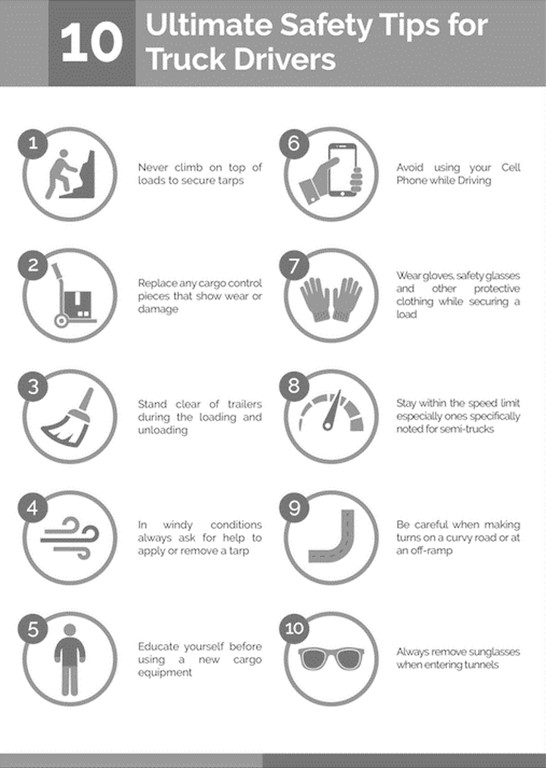
Other drivers are one of the big dangers of being a truck driver. Be alert to your surroundings and the other vehicles around you.