Preventing Silicosis Stats and Fact

FACTS

  1. Silica is a mineral found in sand, sandstone, shale, and granite. When workers drill, crush, chip or break materials that contain crystalline silica, large amounts of respirable crystalline silica can form as dust.
  2. The dust particles are microscopic, so they can penetrate deep into a worker’s lungs if inhaled, eventually affecting a person’s ability to breathe.
  3. When silica dust enters the lungs, it causes inflammation which over time leads to the development of scar tissue.
  4. Cigarette smoking adds to the lung damage caused by silicosis. Quitting smoking is an important part of managing the disease.
  5. Complications from silicosis can include tuberculosis, lung cancer, chronic bronchitis, autoimmune disorders, and kidney disease
  6. There is no cure for silicosis, but treatment is available, and employers and workers can take steps to prevent it.
  7. Acute silicosis causes coughing, weight loss and fatigue within a few weeks or years of exposure to inhaled silica.
  8. Chronic silicosis appears roughly 10 to 30 years after exposure and can cause extensive lung scarring, particularly in the upper lungs.
  9. Accelerated silicosis occurs within 10 years of high-level exposure.

STATS

  • Government has certified and compensated over 25,000 patients of silicosis, of which 5,500 have already died of the disease.
  • Experts estimate 1 to 2 million U.S. workers are still exposed to silica.
  • Approximately 2,000 workers were digging a tunnel through high-silica rock with no respiratory protection. As many as 1,500 men died as a result of inhaling silica dust.
  • Approximately 2.3 million U.S. workers are exposed to silica in the workplace, including 2 million in construction and 300,000 in other industries.
  • Each year, more than 250 American workers die with silicosis.
  • More than 100,000 workers in the United States encounter high-risk, silica exposures through sandblasting, rock drilling and mining.


Preventing Silicosis Stats and Fact – Spanish

HECHOS

  1. La sílice es un mineral que se encuentra en la arena, la arenisca, el esquisto y el granito. Cuando los trabajadores perforan, trituran, astillan o rompen materiales que contienen sílice cristalina, pueden formarse grandes cantidades de sílice cristalina respirable en forma de polvo.
  2. Las partículas de polvo son microscópicas, por lo que pueden penetrar profundamente en los pulmones de un trabajador si se inhalan, afectando finalmente a la capacidad respiratoria de una persona.
  3. Cuando el polvo de sílice penetra en los pulmones, provoca una inflamación que, con el tiempo, conduce al desarrollo de tejido cicatricial.
  4. El tabaquismo agrava el daño pulmonar causado por la silicosis. Dejar de fumar es una parte importante del tratamiento de la enfermedad.
  5. Las complicaciones de la silicosis pueden incluir tuberculosis, cáncer de pulmón, bronquitis crónica, trastornos autoinmunes y enfermedad renal.
  6. No existe cura para la silicosis, pero hay tratamiento disponible, y los empleadores y los trabajadores pueden tomar medidas para prevenirla.
  7. La silicosis aguda provoca tos, pérdida de peso y fatiga a las pocas semanas o años de la exposición a la sílice inhalada.
  8. La silicosis crónica aparece aproximadamente entre 10 y 30 años después de la exposición y puede causar cicatrices pulmonares extensas, sobre todo en la parte superior de los pulmones.
  9. La silicosis acelerada aparece a los 10 años de una exposición de alto nivel.

ESTADÍSTICAS

  • El gobierno ha certificado e indemnizado a más de 25.000 pacientes de silicosis, de los cuales 5.500 ya han muerto a causa de la enfermedad.
  • Los expertos calculan que entre 1 y 2 millones de trabajadores estadounidenses siguen expuestos a la sílice.
  • Aproximadamente 2.000 trabajadores estaban excavando un túnel a través de roca con alto contenido en sílice sin protección respiratoria. Hasta 1.500 hombres murieron como consecuencia de la inhalación de polvo de sílice.
  • Aproximadamente 2,3 millones de trabajadores estadounidenses están expuestos a la sílice en el lugar de trabajo, de los cuales 2 millones trabajan en la construcción y 300.000 en otras industrias.
  • Cada año, más de 250 trabajadores estadounidenses mueren de silicosis.
  • En Estados Unidos, más de 100.000 trabajadores están expuestos a sílice de alto riesgo a través del chorro de arena, la perforación de rocas y la minería.


Preventing Silicosis Fatality File

SAND BLASTER

A 39-year-old man was diagnosed with silicosis (progressive massive fibrosis) and tuberculosis after working 22 years as a sandblaster. He had noticed a gradual increase in shortness of breath, wheezing, and discomfort from minimal exertion. Tissue taken from his lungs showed extensive fibrosis.

The sandblaster was first diagnosed with silicosis in 2011 when a coworker had developed tuberculosis and the State health department had administered chest X-rays and skin testing to the entire crew. He was one of 20 workers who sandblasted welds during water tank construction to prepare the metal for painting. While sandblasting, he wore a charcoal filter respirator. During a 10- to 11-hour day, he spent 6 hours sandblasting.

Two brothers and three nephews who worked with him all tested positive for tuberculosis. A brother-in-law had also worked at the company for 20 years but had died from progressive silicosis.


Preventing Silicosis Fatality File – Spanish

CHORREADOR DE ARENA

Un hombre de 39 años fue diagnosticado de silicosis (fibrosis masiva progresiva) y tuberculosis tras haber trabajado 22 años como arenero. Había notado un aumento gradual de la disnea, las sibilancias y el malestar ante esfuerzos mínimos. Los tejidos tomados de sus pulmones mostraban una fibrosis extensa.

El arenero fue diagnosticado de silicosis por primera vez en 2011, cuando un compañero de trabajo había desarrollado tuberculosis y el departamento de salud del Estado había realizado radiografías de tórax y pruebas cutáneas a toda la tripulación. Era uno de los 20 trabajadores que limpiaban con chorro de arena las soldaduras durante la construcción de un depósito de agua para preparar el metal para la pintura. Mientras realizaba el chorro de arena, llevaba un respirador con filtro de carbón. Durante una jornada de 10 a 11 horas, pasaba 6 horas chorreando arena.

Dos hermanos y tres sobrinos que trabajaban con él dieron positivo en la prueba de la tuberculosis. Un cuñado también había trabajado en la empresa durante 20 años, pero había fallecido de silicosis progresiva.


Preventing Silicosis Infographic

178

Source: https://www.osha-pros.com


Preventing Silicosis Infographic – Spanish

179

Fuente: https://www.scribd.com


Prevent Injuries From Falling Objects Meeting Kit – Spanish

QUÉ ESTÁ EN RIESGO

La caída de objetos, como materiales de trabajo y herramientas, supone un grave problema de seguridad siempre que se trabaja por encima de la cabeza o en un lugar elevado. Este peligro suele olvidarse hasta que un accidente o una lesión nos lo recuerdan con crudeza.

CUÁL ES EL PELIGRO

PELIGROS Y RIESGOS DE LA CAÍDA DE OBJETOS

Los objetos que caen con más frecuencia en una obra son las herramientas que dejan caer sus compañeros. Los cubos, herramientas, martillos y trozos de madera o metal mal colocados pueden caer y lesionar a varios trabajadores.
Uno de los escenarios más peligrosos en el trabajo es cuando a alguien se le cae algo mientras trabaja en altura o un objeto se desprende inesperadamente de un borde, lo que puede provocar terribles lesiones o la muerte de los empleados. Los empleadores deben disponer de un procedimiento de trabajo seguro para los empleados que trabajan en altura, así como capacitar adecuadamente a todos los empleados implicados. Es necesario inspeccionar periódicamente los equipos y las plataformas de trabajo para garantizar la seguridad de las personas que trabajan en altura, así como de las que se encuentran debajo de las zonas de trabajo.
Las lesiones más comunes que sufren los trabajadores por la caída de objetos son contusiones, fracturas, torceduras y esguinces. Los objetos que suelen caer van desde objetos grandes, como cerchas de tejado y vigas de acero, hasta objetos pequeños, como elementos de fijación y pequeñas herramientas de mano.

COMO PROTEGERSE

REDUZCA EL RIESGO DE CAÍDA DE OBJETOS

  • Procure mantenerse alejado de las zonas con señales que adviertan de la posibilidad de caída de objetos.
  • Manténgase alejado de las zonas de peligro con barricadas.
  • Nunca camine o permanezca en la zona de caída debajo de una grúa, polipasto, cargador frontal u otras piezas de equipo pesado.
  • No camine ni permanezca debajo de escaleras o andamios, ni en ningún otro lugar en el que se estén realizando trabajos por encima de la cabeza, ya que es probable que caigan objetos y escombros.
  • Utilice siempre el equipo adecuado para cada trabajo o tarea.
  • No apile materiales u objetos demasiado altos.
  • Tómese el tiempo necesario para apilar los materiales de forma que se evite que resbalen, se caigan o se desplomen.
  • Inspeccione las herramientas y equipos antes de utilizarlos.
  • No utilice nunca equipos o herramientas defectuosos o en mal estado.
  • No supere la capacidad de elevación de una grúa, montacargas o polipasto.
  • Cuando realice trabajos por encima de la cabeza, asegure correctamente sus herramientas y equipos.
  • Utilice cuerdas de seguridad para evitar que las herramientas se caigan.
  • Mantenga el material a 3 pies del borde de ataque, excepto el material necesario para el trabajo en curso.
  • Retire los objetos de todos los bolsillos sueltos o sin cierre, especialmente los bolsillos superiores de la camisa, como teléfonos, bolígrafos y herramientas.
  • No cuelgue objetos sobre las barandillas.
  • Asegure todos los objetos cuando trabaje en una superficie elevada.
  • Asegúrese de que los rodapiés están colocados y se inspeccionan con frecuencia.
  • Cascos y equipos de protección individual para todas las personas que se encuentren en zonas con riesgo de caída de objetos.
  • Aísle con cuerdas, si es posible, la zona en la que pueda haber riesgo de caída de objetos.
  • Inspeccione todos los EPP antes de utilizarlos para confirmar que siguen cumpliendo las recomendaciones de los fabricantes.
  • Comuníquese a menudo. Trabaje en equipo para evitar la complacencia y permanezca atento a estos procedimientos en todo momento.

LAS MEJORES MEDIDAS PARA EVITAR LESIONES POR CAÍDA DE OBJETOS

Los ojos de un empleado son la mejor herramienta para prevenir lesiones. Con ellos, un empleado puede detectar los peligros y tomar las medidas necesarias para evitar lesiones.

  1. Advierta. Cuando se trabaja en una obra en la que existe la posibilidad de que caigan objetos, debe haber una advertencia adecuada para el empleado y otras personas que puedan entrar en la obra. Las formas de hacerlo incluyen la comunicación verbal de los peligros y la colocación de señales que indiquen que hay que tener cuidado con la caída de equipos. Otra forma de garantizar la seguridad de los invitados en el lugar de trabajo es tener un empleado a cargo de escoltarlos que sea consciente de las áreas que tienen potencial de caída de objetos.
  2. Asegure las cargas. Si un empleado tiene que elevar una carga a un nivel superior, debe asegurarse de que la carga está bien sujeta. En el caso de levantar un palé con pilas de cajas, una envoltura de plástico puede proporcionar estabilidad y evitar que los objetos se caigan. Si se utiliza envoltura de plástico no hay que olvidar que el plástico puede estirarse debido al alto calor en la parte superior de las estanterías y puede hacer que la carga se desplace. Para cargas más pesadas los empleados pueden utilizar correas metálicas o de tela para asegurarlas.
  3. Mueva la carga correctamente. Al mover una carga es importante no levantarla, bajarla ni balancearla nunca por encima de la cabeza de nadie. En las zonas donde las cargas se colocan en estantes altos con la posibilidad de caerse por el otro lado, asegúrese de que hay un vigilante que evita que los empleados entren en el peligro trasero y que puede ayudar a instruir al empleado que coloca la carga.  Si es posible, restrinja estas operaciones de apilamiento y movimiento pesado a las horas en que haya menos personas presentes.
  4. Mantenga limpio el lugar de trabajo. Las herramientas y los escombros son una de las principales causas de caída de objetos. Para mitigar este peligro, los empleados deben asegurarse de que las zonas de trabajo estén limpias y ordenadas. Cuando un trabajador termine de utilizar una herramienta, debe guardarla en el lugar adecuado.
  5. Controles administrativos. Los controles administrativos son una buena forma de prevenir o detener la caída de objetos en el lugar de trabajo. Ejemplos de este tipo de controles incluyen la instalación de tablas en los laterales de las zonas de trabajo elevadas o andamios para evitar que los objetos caigan por el borde, el uso de barras en las zonas de almacenamiento para evitar que el material caiga, el uso de redes para capturar los objetos que caen, la implementación de vallas u otras barricadas para mantener a los trabajadores y a los invitados fuera de las zonas de caída y la programación del trabajo para un momento en el que la cantidad de personas en los niveles inferiores sea mínima.
  6. Equipos de protección. Cuando todo lo demás falla, la última línea de defensa es el equipo de protección personal. Cualquiera que vaya a estar en una zona donde exista el riesgo potencial de caída de objetos debe llevar casco y calzado con puntera de acero. Ambos equipos deben ser inspeccionados antes de su uso y deben estar en buenas condiciones de funcionamiento y ajustarse correctamente.

CONCLUSIÓN

Siempre que exista riesgo de caída de objetos en un lugar de trabajo, el empleador está obligado a proporcionar protección a los trabajadores y visitantes del lugar. Los cascos y el calzado de seguridad son ejemplos de protección personal contra la caída de objetos.


Prevent Injuries From Falling Objects Meeting Kit

WHAT’S AT STAKE

Falling objects, such as work materials and tools, present a serious safety concern whenever work is done overhead or in an elevated location. This hazard is commonly forgotten until a near miss or injury serves as a stark reminder.

WHAT’S THE DANGER

DANGERS AND HAZARDS OF FALLING OBJECTS

The most common falling objects at a construction site are dropped tools from fellow workers. Poorly placed buckets, tools, hammers, and scraps of wood or metal can fall and injure multiple workers.

One of the most dangerous scenarios at work is when someone drops something while working at a height or an object is knocked off an edge unexpectedly, which can result in terrible injuries or fatalities to employees. Employers must have a safe work procedure in place for employees working at heights, as well as give proper training to all employees involved. Inspection of equipment and working platforms is required on a regular basis to ensure the safety of individuals working at height as well as those present below the working areas.

The most common injuries workers suffer from falling objects are bruises, fractures, strains, and sprains. The objects that commonly fall range from large items such as roof trusses and steel beams to small items such as fasteners and small hand tools.

HOW TO PROTECT YOURSELF

REDUCE THE RISK OF FALLING OBJECTS

  • Be careful to stay out of areas with posted signs warning about the potential for falling objects.
  • Stay away from barricaded hazard areas.
  • Never walk or stand in the fall zone under a crane, hoist, front loader, or other pieces of heavy equipment.
  • Do not walk or stand under ladders or scaffolds, or any other place where overhead work is being done as objects and debris are likely to fall.
  • Always use the right equipment for jobs or tasks at hand.
  • Do not stack materials or objects too high.
  • Take the time to stack materials in such a way that prevents sliding, falling, or having them collapse.
  • Inspect tools and equipment before using them.
  • Never use faulty or improperly maintained equipment or tools.
  • Do not exceed the lifting capacity of a crane, lift, or hoist.
  • When doing overhead work, secure your tools and equipment properly.
  • Use tool lanyards to prevent tools from falling.
  • Keep material 3 feet from a leading edge, other than material required for work in process.
  • Remove items from all loose or unsealed pockets, especially top shirt pockets, such as phones, pens, and tools.
  • Do not hang objects over guardrails.
  • Secure all objects when working on an elevated surface.
  • Ensure toe boards are in place and inspected frequently.
  • Hard hats and personal protective equipment for every person in areas at risk for falling objects.
  • Rope off the area, if possible, where fall or drop hazards may exist.
  • Inspect all PPE prior to use to confirm it still meets manufacturers’ recommendations.
  • Communicate often. Work as a team to avoid complacency and remain vigilant of these procedures at all times.

BEST STEPS TO PREVENT INJURIES FROM FALLING OBJECTS

The eyes of an employee are the greatest tools in the injury prevention toolbox. With them an employee can spot hazards and take the steps necessary to prevent injury.

  1. Provide Warning. When working on a jobsite where the potential for falling objects exist there must be adequate warning for employee and other people who may enter the jobsite. Ways to do this include verbally communicating the hazards and by placing of signage tat states beware of falling equipment. Another way to ensure safety of guest on the jobsite is to have an employee in charge of escorting them who is aware of areas that have potential for falling objects.
  2. Secure loads. If an employee is required to lift a load to a higher level they need to make sure the load is properly secure. In cases of lifting a pallet with stacks of boxes plastic wrap can provide stability and keep objects from falling. If using plastic wrap don’t forget that plastic may stretch due to the high heat at the top of the racks and may cause the load to shift. For heavier loads employees can use metal or cloth straps to secure.
  3. Properly move load. When moving a load, it is important to never lift, lower or swing a load over anyone’s head. In areas where loads are being placed on high shelves with the potential to tumble over the other side ensure you have a spotter in place that keeps employees from entering the backside hazard and that can help instruct the employee placing the load.  If possible, restrict these stacking and heavy moving operations to hours when fewer people are present.
  4. Keep a clean worksite. Tools and debris are one of the main causes of falling objects. To mitigate this hazard employees need to ensure the work areas is clean and tidy. When a worker is done using a tool, they need to put it in the proper storage area.
  5. Administrative controls. Administrative controls are a great way to prevent or stop falling objects in the workplace. Examples of these types of controls include the installation of boards on the sides of elevated work areas or scaffolds to prevent objects from falling over the edge, the usage of bars across storage areas to keep material from tumbling out, the usage of nets to capture falling object, the implementation of fences or other barricades to keep workers and guest out of fall zones and scheduling work for a time when the amount of people at lower levels is at a minimum.
  6. Protective Equipment. When all else fails the last line of defense is personal protective equipment. Anyone who is going to be in an area where to potential for falling object hazards exists needs to wear a hard hat and steel toed shoes. Both of these pieces of equipment must be inspected before use and be in proper working condition and fit properly.

FINAL WORD

Whenever there’s a risk of falling objects at a worksite, an employer is required to provide protection for workers and visitors to the site. Hard hats and safety shoes are examples of personal protection against falling objects.


Prevent Injuries From Falling Objects Stats and Facts

FACTS

1. Most falling object accidents occur when workers are struck by tools or equipment that fall from an elevated work platform, scaffold, or crane. Other common causes of falling object accidents include objects that are knocked over by wind gusts and objects that are improperly stored or secured.

2. The Occupational Safety and Health Administration (OSHA) considers being struck by objects among the fatal four leading causes of construction accident deaths.

3. Construction workers are at risk of broken bones, head injuries, or even death from falling objects when they work beneath cranes, scaffolds, ladders, and wherever overhead work is being performed.

4. Other common injuries sustained in falling object incidents are:

  • Lacerations
  • Bruises
  • Bone fractures
  • Neck and back injuries
  • Concussions and head trauma
  • Spine injuries and paralysis
  • Permanent disability

5. The extent of falling object injuries a construction worker might sustain depends on the size and weight of the object, the height from which it fell, whether other objects slowed its fall, and whether or not the victim was wearing protective gear.

STATS

  • Falling objects are one of the leading causes of worker injuries and fatalities. In fact, OSHA estimates that each year there are over 34,000 injuries and nearly 400 deaths caused by falling objects. These accidents can occur when workers are struck by tools or equipment that fall from height, or when they are hit by debris that has been dislodged from above.
  • A solid object dropped from 64 feet will hit the ground in 2 seconds at a speed of 43.8 miles per hour.
  • The same object dropped at 106 feet will hit the ground in 3 seconds at a speed of 65.8 miles per hour.
  • A 2-ounce pen dropped from 230 feet has the potential to penetrate a hardhat.
  • According to the Bureau of Labor Statistics, there are more than 42,400 “struck by falling object” accidents every year. That accounts for 116 injuries caused by falling objects every day or one every 10 minutes.
  • Nearly 17% of all job site related deaths are attributed to objects falling or striking a worker. While safety helmets are often required in work sites, there are times when these helmets just aren’t enough.
  • According to OSHA (the Occupational Health and Safety Administration), more than 50,000 of people are injured every year at places of work by falling objects.


Prevent Injuries From Falling Objects Stats and Facts – Spanish

HECHOS

1. La mayoría de los accidentes por caída de objetos se producen cuando los trabajadores son golpeados por herramientas o equipos que caen desde una plataforma de trabajo elevada, un andamio o una grúa. Otras causas comunes de accidentes por caída de objetos incluyen objetos que son derribados por ráfagas de viento y objetos que están mal almacenados o asegurados.

2. La Administración de Seguridad y Salud Ocupacional (OSHA) considera que ser golpeado por objetos se encuentra entre las cuatro causas principales de muerte por accidente en la construcción.

3. Los trabajadores de la construcción corren el riesgo de sufrir fracturas óseas, lesiones en la cabeza o incluso la muerte por la caída de objetos cuando trabajan debajo de grúas, andamios, escaleras y dondequiera que se realicen trabajos por encima de la cabeza.

4. Otras lesiones comunes sufridas en incidentes de caída de objetos son:

  • Laceraciones
  • Contusiones
  • Fracturas óseas
  • Lesiones de cuello y espalda
  • Conmociones cerebrales y traumatismos craneales
  • Lesiones y parálisis de la columna vertebral
  • Incapacidad permanente

5. El alcance de las lesiones por caída de objetos que puede sufrir un trabajador de la construcción depende del tamaño y el peso del objeto, la altura desde la que cayó, si otros objetos frenaron su caída y si la víctima llevaba o no equipo de protección.

ESTADÍSTICAS

  • La caída de objetos es una de las principales causas de lesiones y muertes entre los trabajadores. De hecho, la OSHA calcula que cada año se producen más de 34.000 lesiones y casi 400 muertes causadas por la caída de objetos. Estos accidentes pueden producirse cuando los trabajadores son golpeados por herramientas o equipos que caen desde altura, o cuando son golpeados por escombros que se han desprendido desde arriba.
  • Un objeto sólido lanzado desde una altura de 64 pies golpeará el suelo en 2 segundos a una velocidad de 43,8 millas por hora.
  • El mismo objeto lanzado desde una altura de 106 pies golpeará el suelo en 3 segundos a una velocidad de 65,8 millas por hora.
  • Un bolígrafo de 2 onzas lanzado desde 230 pies tiene el potencial de penetrar un casco.
  • Según la Oficina de Estadísticas Laborales, cada año se producen más de 42.400 accidentes por caída de objetos. Esto supone 116 lesiones diarias causadas por la caída de objetos, o una cada 10 minutos.
  • Casi el 17% de todas las muertes relacionadas con el lugar de trabajo se atribuyen a objetos que caen o golpean a un trabajador. Aunque los cascos de seguridad suelen ser obligatorios en los lugares de trabajo, hay ocasiones en las que estos cascos no son suficientes.
  • Según la OSHA (Administración de Salud y Seguridad en el Trabajo), más de 50.000 personas resultan heridas cada año en lugares de trabajo por la caída de objetos.


Prevent Injuries From Falling Objects Fatality File

25-year-old man dies from falling object in construction zone

Working in construction can be dangerous, and there are always hazards around. Safety protocols prevent most accidents, but falling objects still account for many accidents, injuries, and deaths each year. Objects that are above the heads of workers should always be secured. Most of the time, they are. Sometimes, an item is dropped or comes loose, and that’s when problems arise. Even if the workers wear hard hats, they won’t be guaranteed to be safe from these falling objects.

If you’re struck by a falling item while working, you could suffer a head injury, like bleeding on the brain, an aneurysm, or seizures, or you could even suffer a wrongful death. That’s when your attorney may be able to help you and your family get the compensation needed to cover the losses you face.

A falling object is reportedly the cause of a man’s death in Ocoee, Florida. A 25-year-old construction worker was working on State Road 50 when an object on a crane suddenly fell over 50 feet, striking him in the head. The preliminary report showed that the man was struck and survived initially, but by the time he reached the hospital by ambulance, he had passed away.

The man was working with a team that was reconstructing the roads on the way into the West Oaks Mall entrance. They were being widened for increasing traffic to help the flow through the entrance. Now, the Lane Construction Corp., the company responsible for the construction, is under investigation for the incident. Police are aiming to find out why the object was not secured.


Prevent Injuries From Falling Objects Fatality File – Spanish

Un hombre de 25 años muere por la caída de un objeto en una zona en construcción

Trabajar en la construcción puede ser peligroso, y siempre hay peligros alrededor. Los protocolos de seguridad evitan la mayoría de los accidentes, pero la caída de objetos sigue siendo la causa de muchos accidentes, lesiones y muertes cada año. Los objetos que están por encima de las cabezas de los trabajadores deben estar siempre asegurados. La mayoría de las veces, lo están. A veces, un objeto se cae o se suelta, y es entonces cuando surgen los problemas. Aunque los trabajadores lleven cascos, no se les garantiza que estén a salvo de estos objetos que caen.

Si usted es golpeado por un objeto que cae mientras trabaja, podría sufrir una lesión en la cabeza, como una hemorragia cerebral, un aneurisma o convulsiones, o incluso podría sufrir una muerte por negligencia. Es entonces cuando su abogado puede ayudarle a usted y a su familia a obtener la indemnización necesaria para cubrir las pérdidas a las que se enfrenta.

Según los informes, la caída de un objeto fue la causa de la muerte de un hombre en Ocoee, Florida. Un trabajador de la construcción de 25 años estaba trabajando en la carretera estatal 50 cuando un objeto en una grúa cayó repentinamente más de 50 pies, golpeándolo en la cabeza. Según el informe preliminar, el hombre fue golpeado y sobrevivió inicialmente, pero cuando llegó al hospital en ambulancia, había fallecido.

El hombre trabajaba con un equipo que estaba reconstruyendo las carreteras de entrada al West Oaks Mall. Se estaban ensanchando para aumentar el tráfico y facilitar el paso por la entrada. Ahora, Lane Construction Corp, la empresa responsable de la construcción está siendo investigada por el incidente. La policía intenta averiguar por qué no se aseguró el objeto.


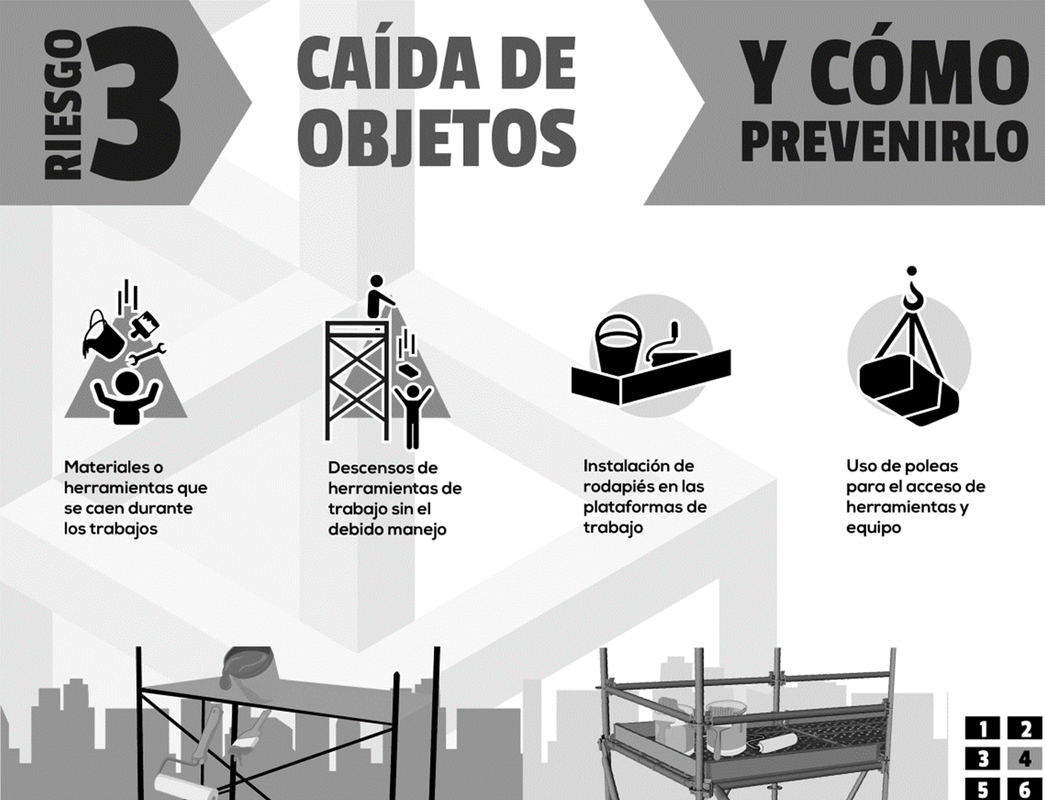
Prevent Injuries From Falling Objects Infographic

176

Source: https://ehsdailyadvisor


Prevent Injuries From Falling Objects Infographic – Spanish

Fuente: https://www.segurmaniazurekin.eus


Newsletter – February 2024

  • Mental Health;
  • Safety Talks on Mental Health, Powered Platforms, Hearing Conservation and Aerial Lifts;
  • Fatality Reports;
  • Control Measures to Prevent Hearing Damage From Excessive Noise in the Workplace;
  • and more…


Cold-Related Hazards

Date: January 31, 2024

Time: 9:00-10:00 AM (PST)

Speaker: Shiron Vick

2023 had record breaking heat, and 2024 has started off with record breaking cold snaps. In fact, there were over 500 reported cases of hypothermia and frostbite from spectators of the Kansas City/Miami football game on January 13th. The temperature for the wild-card playoff game was minus-4 degrees Fahrenheit (minus-20 Celsius), and wind gusts up to 27 mph made for a wind chill of minus-27 degrees; making it the 4th coldest game in NFL history.

Imagine what that was like for the players. Imagine what it was like for the lineman. Now imagine what it was like for the poor kid working the concession stand.

Working in cold weather presents several occupational health and safety (OHS) risks. It’s important for employers and employees to be aware of these risks and take appropriate precautions to avoid:

  • Hypothermia
  • Frostbite
  • Trench Foot or Immersion Foot
  • Slips, Trips, and Falls
  • Cold Stress
  • Respiratory Issues
  • And more..


Shiron is a former law enforcement administrator with the experience and skill set to offer clients the dedication and results they need. Since 2001, Shiron has served as a subject matter expert on OSHA, EPA, and state safety regulatory matters. He has a proven track record of creating and fostering environments that are vigilant about safety and hazard avoidance.


Newsletter – January 2024

  • Cold Stress;
  • Safety Talks on Chemical Safety, Cold Stress, Chemical Storage and Hazard Identification;
  • Fatality Reports;
  • Chemical Safety: 7 Training Mistakes to Avoid;
  • and more…


Hypothermia Meeting Kit – Spanish

QUÉ ESTÁ EN RIESGO

La hipotermia se produce cuando el cuerpo pierde la capacidad de mantener el calor corporal y la temperatura central desciende por debajo de 95 grados Fahrenheit. La hipotermia puede provocar enfermedades, alteraciones en la capacidad de tomar decisiones e incluso la muerte. Los riesgos de hipotermia aumentan cuando las temperaturas son muy bajas. A medida que aumentan los vientos, éstos alejan el calor del cuerpo con mayor rapidez. Los factores de sensación térmica hacen que las temperaturas percibidas parezcan incluso más frías que las reales. Por ejemplo, un viento de 20 millas por hora puede hacer que las temperaturas reales de 40 grados parezcan de 30 grados. La humedad de la niebla, la lluvia, la aguanieve, la nieve y el sudor también pueden provocar una rápida pérdida de temperatura corporal.

CUÁL ES EL PELIGRO

SÍNTOMAS DE HIPOTERMIA

Algunos de los síntomas iniciales de la hipotermia son:

  • Escalofríos
  • Contracción leve de los vasos sanguíneos
  • Malestar estomacal
  • Aumento de la producción de orina
  • Confusión leve
  • Entumecimiento de las manos y otras extremidades

A medida que el cuerpo sigue perdiendo calor, aparecen estos síntomas

  • Temblores violentos
  • Movimientos lentos y dificultosos
  • Falta de coordinación
  • Confusión
  • Los labios, las orejas, los dedos de las manos y de los pies pueden ponerse azules.
  • La piel se vuelve pálida, ya que los vasos sanguíneos superficiales se contraen aún más mientras el cuerpo se centra en mantener calientes los órganos vitales.

Síntomas de hipotermia grave:

  • Los escalofríos cesan
  • Incapacidad para moverse
  • Disminuyen el pulso y la respiración
  • Dificultad para hablar
  • Desorientación
  • Amnesia

Los síntomas de las fases finales de la hipotermia incluyen:

  • Desvestirse paradójicamente
  • Madriguera terminal
  • Fallo orgánico
  • Coma
  • Muerte clínica

COMO PROTEGERSE

ACTÚE

La hipotermia es una emergencia médica. Si la temperatura es inferior a 95° F, ¡consiga atención médica inmediatamente!

  • Lleve a la persona a una habitación caliente o a un refugio.
  • Quítele la ropa mojada que lleve puesta.
  • Caliente el centro del cuerpo de la persona -pecho, cuello, cabeza e ingle- utilizando una manta eléctrica, si dispone de ella. También puede utilizar el contacto piel con piel bajo capas sueltas y secas de mantas, ropa, toallas o sábanas.
  • Las bebidas calientes pueden ayudar a aumentar la temperatura corporal, pero no dé bebidas alcohólicas. No intente dar bebidas a una persona inconsciente.
  • Una vez que la temperatura corporal haya aumentado, mantenga a la persona seca y envuelva su cuerpo, incluyendo la cabeza y el cuello, en una manta caliente.
  • Consiga que la persona reciba atención médica adecuada lo antes posible.

Realice la RCP, aunque la persona parezca muerta. La RCP debe continuar hasta que la persona responda o se disponga de ayuda médica. Siga calentando a la persona mientras realiza la RCP. En algunos casos, las víctimas de hipotermia que parecen estar muertas pueden ser reanimadas con éxito.

A LA ESPERA DE AYUDA – QUÉ HACER Y QUÉ NO HACER

  • Traslade a la persona al interior o a un lugar protegido lo antes posible
  • Quítele la ropa mojada, envuélvalo en una manta, un saco de dormir o una toalla seca, asegurándose de cubrirle la cabeza
  • Dele una bebida caliente sin alcohol y algún alimento azucarado, como chocolate, si está completamente despierto
  • Manténgalo despierto hablándole hasta que llegue la ayuda
  • Asegúrese de que usted u otra persona se queda con ellos
  • No utilice un baño caliente, una bolsa de agua caliente ni una lámpara de calor para calentarle

PAUTAS Y PRÁCTICAS DE TRABAJO SEGURAS EN CASO DE HIPOTERMIA

Planifique su trabajo en función de las previsiones meteorológicas. Cancele o posponga el trabajo cuando se prevean condiciones meteorológicas adversas.

  • Descensos de temperatura extremos y repentinos que no te dan la oportunidad de aclimatarte al frío.
  • Aumento de los vientos que pueden hacer que las temperaturas frías parezcan aún más frías debido al factor de sensación térmica.
  • Lluvia, aguanieve o nieve que pueden mojarte y aumentar el riesgo de hipotermia.
  • Condiciones de hielo que pueden provocar accidentes de tráfico, resbalones o riesgos físicos por la caída de carámbanos.

Prepárese con antelación para trabajar en climas fríos, cuídese y cuide a sus compañeros, y utilice prácticas de trabajo seguras.

  • Utilice métodos de comunicación para informar a los demás de su lugar de trabajo y de cuándo le esperan de vuelta.
  • Utilice el sistema de compañeros para vigilar a los demás en busca de signos y síntomas de hipotermia.
  • Lleve equipo adicional para el frío y mudas de ropa.
  • Abastezca el botiquín de primeros auxilios con compresas de calor químico.

Vístase adecuadamente para el frío para que su cuerpo conserve energía y se mantenga seco y caliente.

  • Un gorro y orejeras para cubrirse el pelo, la cabeza y las orejas.
  • Una bufanda que pueda colocarse en capas y recogerse para proteger el cuello, la nariz y las mejillas.
  • Manoplas (normalmente más calientes que los guantes).
  • Varias capas de ropa holgada para un buen aislamiento.

CONCLUSIÓN

La hipotermia aparece cuando la temperatura corporal desciende de la normal (98,6 grados Fahrenheit) a menos de 95 grados. El corazón, el sistema nervioso y otros órganos no pueden funcionar con normalidad cuando la temperatura corporal desciende demasiado. Si no se trata, la hipotermia puede provocar insuficiencia cardiaca, insuficiencia respiratoria y la muerte.


Hypothermia Meeting Kit

What’s At Stake

Hypothermia occurs when your body loses its ability to maintain body heat and your core temperature drops below 95-degrees Fahrenheit. Hypothermia can lead to illness, altered decision-making ability, and even death. Hypothermia risks increase during very cold temperatures. As winds increase, they carry heat away from the body faster. Wind chill factors make perceived temperatures feel even colder than actual temperatures. For example, a 20-mile-per-hour wind can make actual 40-degree temperatures feel like 30 degrees. Moisture from fog, rain, sleet, snow, and perspiration can also cause rapid body temperature loss.

What’s the Danger

SYMPTOMS OF HYPOTHERMIA

 Some of the initial symptoms of hypothermia include:

  • Shivering
  • Mild contraction of the blood vessels
  • Upset stomach
  • Increased urine production
  • Mild confusion
  • Numbness in the hands and other extremities

As the body continues to lose heat, these symptoms appear:

  • Violent shivering
  • Slow and labored movements
  • Lack of coordination
  • Confusion
  • Lips, ears, fingers and toes may become blue.
  • Skin becomes pale as surface blood vessels contract further as body focuses on keeping vital organs warm.

Symptoms of severe hypothermia:

  • Shivering stops
  • Inability to move
  • Pulse and respiration decrease
  • Difficulty speaking
  • Disorientation
  • Amnesia

Symptoms of the final stages of hypothermia include:

  • Paradoxical undressing
  • Terminal burrowing
  • Organ Failure
  • Coma
  • Clinical Death

HOW TO PROTECT YOURSELF

TAKE ACTION

Hypothermia is a medical emergency. If it is below 95° F, get medical attention immediately!

  • Get the person into a warm room or shelter.
  • Remove any wet clothing the person is wearing.
  • Warm the center of the person’s body—chest, neck, head, and groin—using an electric blanket, if available. You can also use skin-to-skin contact under loose, dry layers of blankets, clothing, towels, or sheets.
  • Warm drinks can help increase body temperature, but do not give alcoholic drinks. Do not try to give beverages to an unconscious person.
  • After body temperature has increased, keep the person dry and wrap their body, including their head and neck, in a warm blanket.
  • Get the person proper medical attention as soon as possible.

Perform CPR, even if the person appears dead. CPR should continue until the person responds or medical aid becomes available. Keep warming the person while performing CPR. In some cases, hypothermia victims who appear to be dead can be successfully resuscitated.

WHILE WAITING FOR HELP – DO AND DON’T

  • move the person indoors or somewhere sheltered as quickly as possible
  • remove any wet clothing, wrap them in a blanket, sleeping bag or dry towel, making sure their head is covered
  • give them a warm non-alcoholic drink and some sugary food like chocolate if they’re fully awake
  • keep them awake by talking to them until help arrives
  • make sure you or someone else stays with them
  • not use a hot bath, hot water bottle or heat lamp to warm them up

BEST SAFETY HYPOTHERMIA WORK GUIDELINES AND PRACTICES

Plan your work according to the weather forecast. Cancel or postpone work when severe weather is anticipated.

  • Extreme and sudden temperature drops that don’t give you a chance to acclimate to the cold.
  • Increased winds that can make cold temperatures feel even colder due to wind chill factor.
  • Rain, sleet, or snow that can get you wet and put you at higher risk of hypothermia.
  • Ice conditions that can cause vehicle accidents, slip hazards, or physical hazards from falling icicles.

Prepare ahead for cold weather work, watch out for yourself and coworkers, and use safe work practices.

  • Using communication methods to let others know your work location and when to expect you back.
  • Using the buddy system to monitor each other for signs and symptoms of hypothermia.
  • Carrying extra cold weather gear and changes of clothing.
  • Stocking your first aid kit with chemical heat packs.

Dress properly for cold weather to help your body conserve energy and stay dry and warm.

  • A hat and earmuffs to cover your hair, head, and ears.
  • A scarf that can be layered and pulled up to protect your neck, nose, and cheeks.
  • Mittens (typically warmer than gloves).
  • Several loose layers of clothing for good insulation.

FINAL WORD

Hypothermia sets in when the body temperature drops from normal (98.6 degrees Fahrenheit) to below 95 degrees. The heart, nervous system, and other organs cannot function normally when the body temperature drops too low. If untreated, hypothermia can lead to heart failure, respiratory system failure, and death.


Hypothermia Stats and Facts

FACTS

Risk factors for hypothermia include:

  1. Exhaustion. Your tolerance for cold diminishes when you are fatigued.
  2. Older age. The body’s ability to regulate temperature and to sense cold may lessen with age.
  3. Very young age. Children lose heat faster than adults do. They may not have the judgment to dress properly in cold weather or to get out of the cold when they should.
  4. Mental problems. People with a mental illness, dementia or other conditions that interfere with judgment may not dress appropriately for the weather or understand the risk of cold weather.
  5. Alcohol and drug use. Alcohol may make your body feel warm inside, but it causes your blood vessels to expand, resulting in more rapid heat loss from the surface of your skin.
  6. Certain medical conditions. Some health disorders affect your body’s ability to regulate body temperature. Examples include an underactive thyroid (hypothyroidism), poor nutrition or anorexia nervosa, diabetes, stroke, severe arthritis, Parkinson’s disease, trauma, and spinal cord injuries.
  7. Medications. Some drugs can change the body’s ability to regulate its temperature. Examples include certain antidepressants, antipsychotics, narcotic pain medications and sedatives.

STATS

  • Hypothermia is the cause of at least 1,500 deaths a year in the United States. It is more common in older people and males.
  • An average of 15 cold-related deaths, 150 emergency department visits, and 255 hospital admissions occur each year during the cold season (October through April).
  • About 70% of cold-related deaths occurred after exposure to cold outdoors including on subway stations or platforms.
  • According to the data, adults ages 40 to 84 are at higher risk of dying from hypothermia compared to other age groups.
  • During the period of interest, the vast majority of the deceased were white, representing 80 % of all hypothermia- related deaths.
  • Hypothermia, a preventable lowering of the core body temperature to <95° F (<35° C), causes approximately 600 deaths each year in the United States.
  • The CDC found too much cold has a worse effect on life than the heat has had. 800+ people died because of hypothermia, while less than 400 people died from hyperthermia (WP).


Hypothermia Stats and Facts – Spanish

HECHOS

Los factores de riesgo de hipotermia incluyen

  1. Agotamiento. Su tolerancia al frío disminuye cuando está fatigado.
  2. Edad avanzada. La capacidad del cuerpo para regular la temperatura y sentir el frío puede disminuir con la edad.
  3. Edad muy temprana. Los niños pierden calor más rápidamente que los adultos. Es posible que no tengan el juicio suficiente para vestirse adecuadamente cuando hace frío o para salir del frío cuando deben hacerlo.
  4. Problemas mentales. Las personas con una enfermedad mental, demencia u otras condiciones que interfieren con el juicio pueden no vestirse adecuadamente para el clima o entender el riesgo del clima frío.
  5. Consumo de alcohol y drogas. El alcohol puede hacer que su cuerpo se sienta caliente por dentro, pero hace que los vasos sanguíneos se dilaten, lo que provoca una pérdida de calor más rápida de la superficie de la piel.
  6. Ciertas enfermedades. Algunos trastornos de salud afectan a la capacidad del organismo para regular la temperatura corporal. Algunos ejemplos son una tiroides poco activa (hipotiroidismo), mala nutrición o anorexia nerviosa, diabetes, derrame cerebral, artritis grave, enfermedad de Parkinson, traumatismos y lesiones de la médula espinal.
  7.  Medicamentos. Algunos fármacos pueden alterar la capacidad del organismo para regular su temperatura. Algunos ejemplos son ciertos antidepresivos, antipsicóticos, analgésicos narcóticos y sedantes.

ESTADÍSTICAS

  • La hipotermia es la causa de al menos 1.500 muertes al año en Estados Unidos. Es más frecuente en personas mayores y en varones.
  • Cada año, durante la estación fría (de octubre a abril), se produce una media de 15 muertes relacionadas con el frío, 150 visitas a urgencias y 255 ingresos hospitalarios.
  • Cerca del 70% de las muertes relacionadas con el frío se produjeron tras la exposición al frío al aire libre, incluidas las estaciones de metro o los andenes.
  • Según los datos, los adultos de 40 a 84 años tienen un mayor riesgo de morir de hipotermia en comparación con otros grupos de edad.
  • Durante el periodo de interés, la gran mayoría de los fallecidos eran de raza blanca, representando el 80% de todas las muertes relacionadas con la hipotermia.
  • La hipotermia, una disminución prevenible de la temperatura corporal central a <95° F (<35° C), causa aproximadamente 600 muertes al año en Estados Unidos.
  • Los CDC descubrieron que el exceso de frío tiene peores efectos sobre la vida que el calor. Más de 800 personas murieron por hipotermia, mientras que menos de 400 murieron por hipertermia (WP).


Hypothermia Fatality File – Spanish

Un trabajador acusado de la muerte por congelación de una mujer en una residencia asistida

ONDURANT, Iowa (KCCI) – Una empleada de un centro de vida asistida de Iowa ha sido acusada de la muerte de una mujer de 77 años que fue encontrada fuera del centro a temperaturas bajo cero.

Catherine Forkpa, de 30 años, está acusada de maltrato de adultos dependientes y maltrato imprudente intencionado por la muerte de Lynne Harriet Stewart, de 77 años. Es empleada de Courtyard Estates at Hawthorne Crossing, una residencia asistida para personas con demencia en Bondurant, Iowa.

Stewart, que se mantenía en el centro, fue encontrada a la intemperie a temperaturas bajo cero el 21 de enero y falleció en el hospital. La temperatura mínima esa mañana era de -9 grados Fahrenheit.

Según la Oficina del Sheriff del Condado de Polk, Stewart murió de hipotermia.

Las autoridades consideraron la muerte de Stewart “sospechosa” en enero, como informó por primera vez KCCI.

Según informes del Departamento de Inspecciones y Apelaciones de Iowa, Courtyard Estates fue multado con $ 1,500 en el verano de 2020 por no tener una política o procedimiento para su sistema de alarma. Se requiere que los programas de vida asistida para personas con demencia tengan un sistema de alarma operativo en cada puerta de salida.


Hypothermia Fatality File

Worker charged after woman froze to death at assisted living facility

ONDURANT, Iowa (KCCI) – An employee at an Iowa assisted living facility has been charged in the death of a 77-year-old woman who was found outside the facility in sub-zero temperatures.

Catherine Forkpa, 30, is charged with dependent adult abuse and intentional reckless abuse in the death of 77-year-old Lynne Harriet Stewart. She is an employee at the Courtyard Estates at Hawthorne Crossing, an assisted living facility for people with dementia in Bondurant, Iowa.

Stewart, who was staying at the facility, was found outside in sub-zero temperatures Jan. 21 and later died at the hospital. The low temperature that morning was minus 9 degrees Fahrenheit.

Deputies with the Polk County Sheriff’s Office say Stewart died of hypothermia.

Authorities considered Stewart’s death “suspicious” in January, as first reported by KCCI.

According to reports from the Iowa Department of Inspections and Appeals, Courtyard Estates was fined $1,500 in summer 2020 for not having a policy or procedure for their alarm system. Assisted living programs for people with dementia are required to have an operating alarm system on each exit door.


Hypothermia Infographic

78

Source: https://www.grainger.com


Hypothermia Infographic – Spanish

79

Fuente: https://ideasqueayudan.com