Time Management: Taking Time for Hazard Assessments Meeting Kit

WHAT’S AT STAKE

A serious injury takes months to recover from, sometimes longer. A hazard assessment takes two minutes. The math is simple, but in the moment, when the pressure is on, that two-minute pause feels like the hardest thing to do. This talk is about why it is worth it every single time.

WHAT’S THE DANGER

Most workers who skip hazard assessments are not lazy. They are confident, experienced, and in a hurry. Those are exactly the conditions that lead to incidents.

Confidence From Experience The number one reason workers skip hazard assessments is confidence. You have done this job a hundred times. But conditions change: a new spill, a different tool, a worn surface. Experience tells you what usually happens. It does not tell you what is different today.

Pressure to Start Fast

When the pressure to start is high, a deadline, a supervisor watching, a crew waiting, workers feel like stopping to assess is wasting time. That pressure is real. But so is the hazard you did not see because you did not look

Conditions That Change Without Warning

A job you did last week may look the same today but be completely different. A new material in the work area, a wet floor, a missing guard, a changed procedure overnight. These things show up without warning, and they become hazards only if you do not catch them first.

HOW TO PROTECT YOURSELF

Taking time to assess is not a delay. It is the job. Here is how to make it stick.

Make It a Non-Negotiable First Step Before you touch anything, stop and look. This is not a suggestion. It is the first step of every job, every time. It does not matter how many times you have done the task before. What matters is what is in front of you right now. Build the habit until stopping to assess feels automatic, not optional.

Know What You Are Looking For

  • Check the work area: floor condition, lighting, overhead hazards, nearby workers
  • Check the equipment: guards in place, no damage, correct for the job
  • Check the materials: right product, right quantity, proper labeling, no visible damage
  • Check yourself: do you have the right PPE, do you understand the task, are you fit to work

Speak Up If Something Has Changed If you notice something during your assessment that was not there before, or something that does not look right, stop and report it. Talk to your supervisor before the work starts, not after something goes wrong. Safe work depends on current information. Your observation matters.

Use the Assessment to Set Your Pace A good hazard assessment does more than spot risks. It also helps you plan the job. You think through the steps, identify what you need, and spot anything that could slow you down or create a problem mid-task.

Push Back on Pressure to Skip

  • If someone tells you to skip the assessment because they are in a hurry, that is not their call to make
  • You have the right and the responsibility to take the time to assess before you start
  • A simple statement like ’Give me two minutes to check this over’ is all it takes

Reassess When Conditions Change

  • If something changes mid-job, a new person enters the area, a tool breaks, a spill happens, stop and reassess
  • Your initial assessment only covers what was there at the start
  • Conditions change and your assessment needs to keep up

FINAL WORD

Two minutes before the job starts could be the most important two minutes of your day. Take the time. Look at what is in front of you. The hazard you catch before you start is the one that never gets the chance to hurt you.


Time Management: Taking Time for Hazard Assessments Meeting Kit – Spanish

QUÉ ESTÁ EN RIESGO

La recuperación de una lesión grave lleva meses, a veces incluso más. Una evaluación de riesgos lleva dos minutos. La cuenta es sencilla, pero en el momento, cuando la presión es alta, esos dos minutos

CUÁL ES EL PELIGRO

La mayoría de los trabajadores que se saltan las evaluaciones de riesgos no son perezosos. Tienen confianza, experiencia y prisa. Esas son precisamente las condiciones que provocan incidentes.

Confianza Derivada de la Experiencia: La razón principal por la que los trabajadores se saltan las evaluaciones de riesgos es la confianza. Ya has hecho este trabajo cientos de veces. Pero las condiciones cambian: un nuevo derrame, una herramienta diferente, una superficie desgastada. La experiencia te dice lo que suele pasar. No te dice qué es lo que es diferente hoy.

La presión por Empezar Rápido

Cuando la presión por empezar es alta —un plazo que cumplir, un supervisor observando, un equipo esperando—, los trabajadores sienten que detenerse a evaluar es una pérdida de tiempo. Esa presión es real. Pero también lo es el peligro que no viste porque no te fijaste

Condiciones que Cambian sin Previo Aviso

Un trabajo que hiciste la semana pasada puede parecer igual hoy, pero ser completamente diferente. Un material nuevo en el área de trabajo, un piso mojado, una protección que falta, un procedimiento que cambió de la noche a la mañana. Estas cosas aparecen sin previo aviso y solo se convierten en peligros si no las detectas primero.

COMO PROTEGERSE

Tomarse el tiempo para evaluar no es un retraso. Es el trabajo en sí. A continuación te explicamos cómo hacer que se convierta en un hábito.

Conviértelo en un Primer paso Innegociable: antes de tocar nada, detente y observa. Esto no es una sugerencia. Es el primer paso de cada trabajo, siempre. No importa cuántas veces hayas realizado la tarea antes. Lo que importa es lo que tienes frente a ti en este momento. Desarrolla el hábito hasta que detenerte a evaluar se sienta como algo automático, no opcional.

Sepa qué está Buscando

  • Revise el área de trabajo: estado del piso, iluminación, peligros en altura, trabajadores cercanos
  • Revise el equipo: que las protecciones estén en su lugar, que no haya daños, que sea el adecuado para el trabajo
  • Revise los materiales: producto correcto, cantidad correcta, etiquetado adecuado, sin daños visibles
  • Revísese a sí mismo: ¿cuenta con el equipo de protección personal (EPP) adecuado?, ¿entiende la tarea?, ¿está en condiciones de trabajar?

Informa si Algo ha Cambiado. Si durante tu evaluación notas algo que no estaba ahí antes, o algo que no se ve bien, detente y reportalo. Habla con tu supervisor antes de que comience el trabajo, no después de que algo salga mal. El trabajo seguro depende de la información actualizada. Tu Observación es Importante.

Usa la Evaluación para Establecer tu Ritmo. Una buena evaluación de riesgos hace más que detectar peligros. También te ayuda a planificar el trabajo. Reflexionas sobre los pasos, identificas lo que necesitas y detectas cualquier cosa que pudiera retrasarte o crear un problema en medio de la tarea.

No Cedas a la Presión de Saltarte la Evaluación

  • Si alguien te dice que te saltes la evaluación porque tiene prisa, esa no es una decisión que le corresponda a esa persona
  • Tienes el derecho y la responsabilidad de tomarte el tiempo necesario para evaluar antes de comenzar
  • Basta con una simple frase como «Dame dos minutos para revisar esto»

Reevalúa cuando cambien las condiciones

  • Si algo cambia en medio del trabajo, entra una persona nueva al área, se rompe una herramienta o se produce un derrame, detente y reevalúa
  • Tu evaluación inicial solo cubre lo que estaba presente al inicio
  • Las condiciones cambian y tu evaluación debe adaptarse a ellas

CONCLUSIÓN

Los dos minutos previos al inicio del trabajo podrían ser los dos minutos más importantes de tu día. Tómate ese tiempo. Observa lo que tienes frente a ti. El peligro que detectes antes de empezar es aquel que nunca tendrá la oportunidad de causarte daño.


Time Management: Taking Time for Hazard Assessments Stats and Facts

FACTS

  • Rushed Task Start-Up: Beginning work without a hazard assessment increases the chance of overlooking unsafe conditions, equipment defects, or environmental hazards.
  • Changing Work Conditions: Weather, traffic, equipment status, and worksite layouts can change rapidly, making previous assessments outdated.
  • Hazard Recognition Failure: Workers under time pressure may focus on task completion rather than identifying risks before work begins.
  • Uncontrolled Energy Sources: Skipping assessments can leave electrical, mechanical, hydraulic, or stored-energy hazards unidentified and unisolated.
  • Assumption-Based Decisions: Relying on familiarity instead of evaluating current conditions increases the likelihood of incidents and near misses.
  • Communication Gaps: Failure to discuss hazards with team members can result in inconsistent understanding of risks and controls.
  • Shortcuts Under Pressure: Tight schedules often encourage workers to bypass inspections and assessments that could prevent serious injuries.

STATS

  • There were 5,283 fatal work injuries recorded in the United States in 2023, a rate of 3.5 fatalities per 100,000 full-time equivalent workers, according to the Bureau of Labor Statistics. Occupational Safety and Health Administration
  • In 2023, a worker in the United States died every 99 minutes from a work-related injury, according to Bureau of Labor Statistics data.
  • Over the 2023–2024 period, there were 1.8 million cases involving days away from work in private industry in the United States, at an annualized incidence rate of 86.6 cases per 10,000 full-time equivalent workers, according to the Bureau of Labor Statistics. U.S.
  • The leading cause of days away from work, job restriction, or transfer (DART) cases in the U.S. during 2023–2024 was overexertion, repetitive motion, and bodily conditions, accounting for 946,290 cases — hazards directly linked to tasks where physical demands were not assessed before work began. U.S.
  • The U.S. private sector experienced 937,620 musculoskeletal disorder DART cases, including 484,620 days-away-from-work cases, during the 2023–2024 period, according to the Bureau of Labor Statistics.
  • In Canada, a total of 348,747 lost-time injury claims were filed and 993 workplace fatalities were recorded in 2022, according to data from the Association of Workers’ Compensation Boards of Canada.


Time Management: Taking Time for Hazard Assessments Fatality File

US Engineering Services employees electrocuted while servicing HVAC systems

On August 24, 2022, a fourth-year apprentice HVAC technician employed by U.S. Engineering Services was fatally electrocuted while repairing HVAC equipment at University Academy, a college prep charter school in Kansas City, Missouri. The worker came into contact with energized parts during the repair task.

A subsequent federal investigation by the U.S. Department of Labor’s Occupational Safety and Health Administration (OSHA) found that the company had failed to de-energize the equipment before work began and had not taken steps to prevent the equipment from unintentionally restarting during the repair. OSHA also found the company failed to conduct hazard assessments to identify personal protective equipment needs and other safety requirements for field employees at contracted sites. dol

What made this tragedy especially alarming was that it was not the first. A year earlier, in July 2021, another HVAC technician from the same company was fatally electrocuted under nearly identical circumstances while working on a rooftop air conditioning unit in Wichita, Kansas — a unit that had not been drained of all its energy before work began. A federal investigation found the company failed to follow required procedures which would have prevented the incident, a violation cited by federal investigators in July 2021, when another company HVAC technician was fatally electrocuted while working on a rooftop air conditioning unit not drained of all its energy. dol

In both cases, the workers were servicing equipment under time and operational pressure. In both cases, the hazard assessment step — the check that would have identified the live energy source and triggered the appropriate lockout/tagout controls — was not completed before work began.

The 2022 worker did not survive. He was the second person from the same company to die for the same reason, under the same preventable conditions.

Source: https://www.dol.gov


Time Management: Taking Time for Hazard Assessments Picture This

image

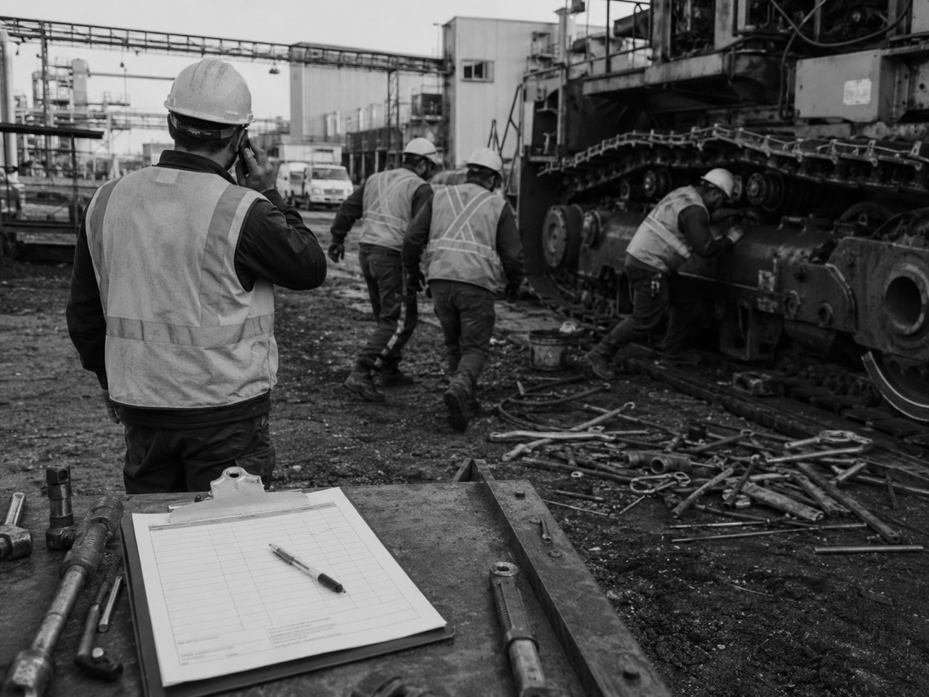
This image shows a busy industrial worksite at the start of a shift. A crew has just received a task assignment and is moving quickly to begin work on recently modified equipment. Tools are already out, a supervisor is occupied on a phone call, and a pre-task hazard assessment form sits on a nearby table — blank and unsigned. The equipment has not been inspected for new risks, energy sources have not been verified as isolated, and workers have not been briefed on what could go wrong. One worker is already positioned in a zone that would be dangerous if the equipment activated unexpectedly.

In fast-paced work environments, pressure to start quickly is one of the most common reasons hazard assessments get skipped or rushed — but unassessed tasks don’t become safer once work begins, they become more dangerous. Before any task starts, stop and take the time to identify what could go wrong at each step and communicate the hazards and controls to everyone involved. A hazard assessment does not need to take long, but it does need to happen. Those few minutes could be the most important minutes of the workday.


Time Management: Taking Time for Hazard Assessments Fatality File – Spanish

Empleados de US Engineering Services mueren Electrocutados Mientras Realizaban Mantenimiento en Sistemas de Climatización

El 24 de agosto de 2022, un aprendiz de técnico en climatización de cuarto año empleado por US Engineering Services murió electrocutado mientras reparaba equipos de climatización en University Academy, una escuela autónoma de preparación para la universidad ubicada en Kansas City, Misuri. El trabajador entró en contacto con partes energizadas durante la tarea de reparación.

Una investigación federal posterior realizada por la Administración de Seguridad y Salud Ocupacional (OSHA) del Departamento de Trabajo de EE. UU. determinó que la empresa no había desconectado la energía del equipo antes de comenzar el trabajo y no había tomado medidas para evitar que el equipo se reiniciara accidentalmente durante la reparación. La OSHA también determinó que la empresa no había realizado evaluaciones de riesgos para identificar las necesidades de equipo de protección personal y otros requisitos de seguridad para los empleados de campo en los sitios contratados.

Lo que hizo que esta tragedia fuera especialmente alarmante fue que no era la primera. Un año antes, en julio de 2021, otro técnico de sistemas de climatización de la misma empresa murió electrocutado en circunstancias casi idénticas mientras trabajaba en una unidad de aire acondicionado en una azotea en Wichita, Kansas —una unidad de la que no se había descargado toda la energía antes de comenzar el trabajo. Una investigación federal determinó que la empresa no siguió los procedimientos requeridos que habrían evitado el incidente, una infracción señalada por los investigadores federales en julio de 2021, cuando otro técnico de climatización de la empresa murió electrocutado mientras trabajaba en una unidad de aire acondicionado en un techo que no había sido descargada de toda su energía. dol

En ambos casos, los trabajadores realizaban el mantenimiento del equipo bajo presión de tiempo y operativa. En ambos casos, el paso de evaluación de riesgos —la verificación que habría identificado la fuente de energía activa y activado los controles adecuados de bloqueo y etiquetado— no se completó antes de comenzar el trabajo.

El trabajador de 2022 no sobrevivió. Fue la segunda persona de la misma empresa en fallecer por la misma razón, en las mismas condiciones que se podían haber evitado.

Fuente: dol.gov


Time Management: Taking Time for Hazard Assessments Stats and Facts – Spanish

HECHOS

  • Inicio Apresurado de la Tarea: Comenzar a trabajar sin una evaluación de riesgos aumenta la probabilidad de pasar por alto condiciones inseguras, fallas en el equipo o riesgos ambientales.
  • Cambios en las Condiciones de Trabajo: El clima, el tráfico, el estado del equipo y la disposición del lugar de trabajo pueden cambiar rápidamente, lo que hace que las evaluaciones anteriores queden desactualizadas.
  • Falta de Reconocimiento de Riesgos: Los trabajadores que se encuentran bajo presión de tiempo pueden enfocarse en completar la tarea en lugar de identificar los riesgos antes de comenzar a trabajar.
  • Fuentes de Energía no Controladas: Saltarse las evaluaciones puede hacer que los riesgos eléctricos, mecánicos, hidráulicos o de energía almacenada no se identifiquen ni se aíslen.
  • Decisiones Basadas en Suposiciones: Confiar en la familiaridad en lugar de evaluar las condiciones actuales aumenta la probabilidad de incidentes y cuasi accidentes.
  • Faltas de Comunicación: No discutir los peligros con los miembros del equipo puede dar lugar a una comprensión inconsistente de los riesgos y los controles.
  • Atajos bajo Presión: Los plazos ajustados a menudo animan a los trabajadores a saltarse las inspecciones y evaluaciones que podrían prevenir lesiones graves.

ESTADÍSTICAS

  • En 2023 se registraron 5,283 accidentes laborales mortales en Estados Unidos, lo que representa una tasa de 3.5 muertes por cada 100,000 trabajadores equivalentes a tiempo completo, según la Oficina de Estadísticas Laborales. Administración de Seguridad y Salud Ocupacional
  • En 2023, un trabajador en Estados Unidos falleció cada 99 minutos a causa de un accidente laboral, según datos de la Oficina de Estadísticas Laborales.
  • Durante el período 2023–2024, se registraron 1,8 millones de casos que implicaron días de baja laboral en el sector privado de Estados Unidos, con una tasa de incidencia anualizada de 86,6 casos por cada 10 000 trabajadores equivalentes a tiempo completo, según la Oficina de Estadísticas Laborales. EE. UU.
  • La principal causa de los casos de días de baja laboral, restricción laboral o reasignación (DART) en EE. UU. durante 2023–2024 fue el esfuerzo excesivo, los movimientos repetitivos y las afecciones físicas, que representaron 946 290 casos —riesgos directamente vinculados a tareas en las que no se evaluaron las exigencias físicas antes de comenzar a trabajar. EE. UU.
  • El sector privado de EE. UU. registró 937 620 casos de DART por trastornos musculoesqueléticos, incluidos 484 620 casos con días de baja laboral, durante el período 2023–2024, según la Oficina de Estadísticas Laborales.
  • En Canadá, se presentaron un total de 348 747 reclamaciones por lesiones con tiempo de inactividad y se registraron 993 muertes en el lugar de trabajo en 2022, según datos de la Asociación de Juntas de Indemnización Laboral de Canadá.


Time Management: Taking Time for Hazard Assessments Picture This – Spanish

image

Esta imagen muestra un sitio de trabajo industrial muy activo al inicio de un turno. Un equipo acaba de recibir una asignación de tareas y se apresura a comenzar a trabajar en un equipo recientemente modificado. Las herramientas ya están preparadas, un supervisor está ocupado hablando por teléfono y un formulario de evaluación de riesgos previa a la tarea se encuentra sobre una mesa cercana —en blanco y sin firmar—. El equipo no ha sido inspeccionado para detectar nuevos riesgos, no se ha verificado que las fuentes de energía estén aisladas y no se ha informado a los trabajadores sobre lo que podría salir mal. Un trabajador ya se encuentra en una zona que sería peligrosa si el equipo se activara inesperadamente.

En entornos de trabajo de ritmo acelerado, la presión por comenzar rápidamente es una de las razones más comunes por las que se omiten o se realizan a toda prisa las evaluaciones de riesgos; sin embargo, las tareas no evaluadas no se vuelven más seguras una vez que comienza el trabajo, sino que se vuelven más peligrosas. Antes de comenzar cualquier tarea, detente y tómate el tiempo para identificar qué podría salir mal en cada paso y comunica los riesgos y las medidas de control a todas las personas involucradas. Una evaluación de riesgos no tiene por qué llevar mucho tiempo, pero sí es necesario realizarla. Esos pocos minutos podrían ser los más importantes de la jornada laboral.


Time Management: Managing Multiple Tasks Safely Fatality File

Framer Struck by Wall, Falls through Floor Opening

A fatality case reported by the Washington State FACE Program involved a 73-year-old framer who died while helping a crew raise a large exterior wood-framed wall. The wall was approximately 14 feet high and weighed about 2,100 pounds. As the crew lifted the wall into position, a brace failed, and the wall struck the worker on the head. The impact caused him to fall through an unprotected 4-by-8-foot floor opening, approximately 8 feet down to a concrete floor below. He later died from his injuries.

This case relates closely to time management and managing multiple tasks safely because the crew was handling several critical tasks at the same time. They were lifting a heavy wall, positioning braces, using tools, coordinating with several workers, and working near a floor opening. When multiple tasks happen at once, it becomes easier to miss hazards, lose communication, or continue working before proper controls are in place.

Source: www.lni.wa.gov


Time Management: Managing Multiple Tasks Safely Fatality File – Spanish

Carpintero Golpeado por una Pared, Cae por un Hueco en el Piso

Un caso fatal reportado por el Programa FACE del estado de Washington involucró a un carpintero de 73 años que falleció mientras ayudaba a un equipo a levantar una gran pared exterior con estructura de madera. La pared medía aproximadamente 14 pies de alto y pesaba unas 2,100 libras. Mientras el equipo levantaba la pared para colocarla en su lugar, un puntal falló y la pared golpeó al trabajador en la cabeza. El impacto lo hizo caer por una abertura sin protección de 4 por 8 pies en el piso, desde una altura de aproximadamente 8 pies hasta un piso de concreto. Más tarde falleció a causa de sus lesiones.

Este caso está estrechamente relacionado con la gestión del tiempo y la ejecución segura de múltiples tareas, ya que el equipo estaba realizando varias tareas críticas al mismo tiempo. Estaban levantando un muro pesado, colocando puntales, utilizando herramientas, coordinándose con varios trabajadores y trabajando cerca de una abertura en el piso. Cuando se realizan múltiples tareas al mismo tiempo, es más fácil pasar por alto los peligros, perder la comunicación o seguir trabajando antes de que se hayan implementado los controles adecuados.

Fuente: lni.wa.gov


Time Management: Managing Multiple Tasks Safely Meeting Kit – Spanish

QUÉ ESTÁ EN RIESGO

Cuando tienes que hacer malabarismos con demasiadas tareas a la vez, algo se te pasa por alto. Ese «algo» podría ser una medida de seguridad, una revisión o un momento para pensar. Un trabajador apurado es un trabajador distraído, y un trabajador distraído es un trabajador que se lesiona.

CUÁL ES EL PELIGRO

Hacer varias cosas al mismo tiempo parece eficiente. En realidad, divide tu atención y aumenta la probabilidad de cometer un error. Estas son las formas más comunes en que esto sale mal.

Los Pequeños Errores se Acumulan. Cuando manejas varias tareas, empiezas a cometer pequeños errores: mediciones incorrectas, pasos omitidos, configuraciones inadecuadas. Cada uno parece insignificante. Juntos, crean las condiciones para un incidente grave.

Aceptar Demasiado Trabajo

  • Asumir más trabajo del que se puede manejar de manera segura, ya sea para ser servicial o para evitar conflictos, te pone en una situación peligrosa
  • No puedes concentrarte por completo en una tarea peligrosa si mentalmente estás pensando en otros tres trabajos
  • Comprometerte en exceso significa que el riesgo ya existe incluso antes de que tomes una herramienta
  • Ser Interrumpido en el Momento Equivocado Ser interrumpido en medio de un paso crítico es una de las causas más comunes de errores.

Apresurarse para Terminar La presión por completar múltiples tareas en poco tiempo lleva a tomar atajos. Te mueves más rápido, revisas menos y dejas de pensar con anticipación. Es ahí cuando ocurren las lesiones.

COMO PROTEGERSE

Manejar tu carga de trabajo de manera segura es una habilidad. A continuación te explicamos cómo mantener el control cuando el ritmo se acelera.

Trabaja en una Tarea a la Vez. La multitarea es un mito cuando se trata de trabajo práctico. Dedica toda tu atención a la tarea que tienes frente a ti. Cuando termines o llegues a un punto de parada seguro, pasa a la siguiente. Dividir tu atención entre dos tareas no ahorra tiempo. Duplica la probabilidad de que se te pase algo por alto.

Termina antes de Cambiar de Tarea

  • Antes de interrumpir una tarea para atender otra cosa, asegúrate de que el área de trabajo esté segura: que el equipo esté apagado, que los materiales estén bien asegurados y que no haya peligros sin resolver
  • Nunca te alejes en medio de un paso de cualquier tarea que implique energía, presión, sustancias químicas o piezas móviles
  • Busca un punto de parada seguro antes de responder, no en medio de un paso crítico
  • Comenta Cuando estés Sobrecargado. Si tienes más trabajo del que puedes manejar de manera segura, díselo a tu supervisor, no solo a ti mismo. Sentirte abrumado es una señal de que el riesgo ya existe. Habla antes de que algo salga mal, no después.

Tómate Treinta Segundos Antes de Empezar

Antes de comenzar una tarea, especialmente una compleja o de varios pasos, tómate treinta segundos para pensar bien lo que estás a punto de hacer. Averigua cuáles son los riesgos, qué equipo de protección personal (EPP) necesitas y cuáles son los pasos a seguir. Esta rápida revisión mental no cuesta casi nada y detecta la mayoría de los problemas antes de que ocurran

Después de una Interrupción, Reorientate. Si te alejas de una tarea y regresas a ella, no sigas simplemente desde donde crees que te quedaste. Tómate un momento para reorientarte. Verifica en qué punto del proceso te encuentras. Confirma el último paso que realmente se completó, no solo el último paso que recuerdas.

Conoce la Diferencia entre Estar Ocupado y ser Productivo

  • Estar ocupado no es lo mismo que ser productivo, y ser rápido no es lo mismo que ser seguro
  • Una tarea bien hecha desde el principio es más rápida que una tarea que hay que repetir por un error
  • Mantén tu propio ritmo. El objetivo es terminar de manera segura, no solo terminar

CONCLUSIÓN

No se puede verter de una taza vacía, y tampoco se puede trabajar de manera segura cuando la atención está demasiado dispersa. Conoce tus límites. Administra tu carga de trabajo. El trabajo se hará cuando se haga de manera segura.


Time Management: Managing Multiple Tasks Safely Stats and Facts – Spanish

HECHOS

  • Errores por Cambio de Tarea: Pasar con frecuencia de una tarea a otra reduce la concentración y aumenta la probabilidad de cometer errores, omitir pasos y tomar decisiones inseguras.
  • Actuar con Prisa Bajo Presión: Los plazos ajustados y las cargas de trabajo excesivas fomentan el uso de atajos que eluden los procedimientos de seguridad y aumentan el riesgo de lesiones.
  • Sobrecarga de Atención: Manejar múltiples responsabilidades al mismo tiempo puede saturar la memoria de trabajo, lo que hace que los trabajadores pasen por alto los peligros y las advertencias.
  • Flujos de Trabajo Interrumpidos: Las interrupciones constantes aumentan la probabilidad de olvidar pasos críticos durante la operación de equipos, las inspecciones o las actividades de mantenimiento.
  • Acumulación de Fatiga: El esfuerzo mental derivado de la multitarea aumenta la fatiga, lo que reduce el tiempo de reacción, la capacidad de juicio y la conciencia situacional.
  • Errores en el Establecimiento de Prioridades: Sin un orden claro de prioridades en las tareas, los trabajadores pueden enfocarse en tareas urgentes mientras descuidan actividades importantes relacionadas con la seguridad.
  • Fallas en la Comunicación: Hacer malabares con múltiples tareas puede dar lugar a instrucciones omitidas, traspasos incompletos y malentendidos entre los miembros del equipo.

ESTADÍSTICAS

  • El Instituto Nacional de Seguridad y Salud Ocupacional identifica la presión por la carga de trabajo y la fatiga mental como factores importantes que contribuyen a los errores e incidentes en el lugar de trabajo.
  • Las investigaciones muestran que cambiar frecuentemente de tarea puede reducir la productividad hasta en un 40 %, al tiempo que aumenta las tasas de error y la fatiga mental (estudios sobre el lugar de trabajo de la Asociación Americana de Psicología).
  • Los Centros para el Control y la Prevención de Enfermedades informan que el deterioro del desempeño relacionado con la fatiga puede asemejarse a los efectos del alcohol en la toma de decisiones y el tiempo de reacción.
  • En Canadá, casi 1 de cada 4 trabajadores reporta sentirse abrumado por las exigencias de la carga de trabajo, según Statistics Canada.
  • Los estudios sobre incidentes laborales indican que la distracción y la falta de atención son factores que contribuyen a miles de lesiones laborales cada año en toda América del Norte.


Time Management: Managing Multiple Tasks Safely Meeting Kit

WHAT’S AT STAKE

When you are juggling too many tasks at once, something gets missed. That something could be a safety step, a check, or a moment to think. A rushed worker is a distracted worker, and a distracted worker is a worker who gets hurt.

WHAT’S THE DANGER

Doing multiple things at the same time sounds efficient. In reality, it splits your attention and raises the chance of making a mistake. Here are the most common ways it goes wrong.

Small Errors Add Up When you are managing several tasks, you start making small errors: wrong measurements, missed steps, improper setups. Each one seems minor. Together, they create the conditions for a serious incident.

Saying Yes to Too Much

  • Taking on more work than is safely manageable, to be helpful or to avoid conflict, puts you in a dangerous spot
  • You cannot fully focus on a hazardous task if you are mentally tracking three other jobs
  • Overcommitting means the risk is already there before you even pick up a tool

Interrupted at the Wrong Moment Getting interrupted in the middle of a critical step is one of the most common causes of errors.

Rushing to Finish Pressure to complete multiple tasks in a short window leads to cutting corners. You move faster, check less, and stop thinking ahead. That is when injuries happen.

HOW TO PROTECT YOURSELF

Managing your workload safely is a skill. Here is how to keep control when the pace picks up.

Work One Task at a Time Multitasking is a myth when it comes to hands-on work. Give your full attention to the task in front of you. When you finish or reach a safe stopping point, then move to the next. Splitting your focus between two jobs does not save time. It doubles the chance something gets missed.

Finish Before You Switch

  • Before you stop a task to respond to something else, make sure the work area is safe: equipment is off, materials are secured, no hazards are left open
  • Never walk away mid-step on anything that involves energy, pressure, chemicals, or moving parts
  • Find a safe stopping point before responding, not in the middle of a critical step

Say Something When You Are Overloaded If you have more work than you can handle safely, say so to your supervisor, not just to yourself. Feeling overwhelmed is a signal that the risk is already there. Speak up before something goes wrong, not after.

Take Thirty Seconds Before You Start

Before you start a task, especially a complex or multi-step one, take thirty seconds to think through what you are about to do. Know what the hazards are, what PPE you need, and what the steps look like. This quick mental check costs almost nothing and catches most problems before they happen

After an Interruption, Reorient If you are pulled away from a task and come back to it, do not just pick up where you think you left off. Take a moment to reorient. Check where you are in the process. Confirm the last step that was actually completed, not just the last step you remember.

Know the Difference Between Busy and Productive

  • Being busy is not the same as being productive, and being fast is not the same as being safe
  • A task done right the first time is faster than a task done twice because of a mistake
  • Pace yourself. The goal is to finish safely, not just to finish

FINAL WORD

You cannot pour from an empty cup, and you cannot work safely when your attention is stretched too thin. Know your limits. Manage your load. The job will get done when it gets done safely.


Time Management: Managing Multiple Tasks Safely Stats and Facts

FACTS

  • Task Switching Errors: Frequently moving between tasks reduces concentration and increases the likelihood of mistakes, missed steps, and unsafe decisions.
  • Rushing Under Pressure: Tight deadlines and excessive workloads encourage shortcuts that bypass safety procedures and increase injury risk.
  • Attention Overload: Managing multiple responsibilities simultaneously can overwhelm working memory, causing workers to overlook hazards and warnings.
  • Interrupted Workflows: Constant interruptions increase the chance of forgetting critical steps during equipment operation, inspections, or maintenance activities.
  • Fatigue Accumulation: Mental strain from multitasking increases fatigue, reducing reaction time, judgment, and situational awareness.
  • Prioritization Failures: Without clear task prioritization, workers may focus on urgent tasks while neglecting important safety-related activities.
  • Communication Breakdowns: Juggling multiple assignments can result in missed instructions, incomplete handovers, and misunderstandings among team members.

STATS

  • The National Institute for Occupational Safety and Health identifies workload pressure and mental fatigue as significant contributors to workplace errors and incidents.
  • Research shows that frequent task switching can reduce productivity by up to 40%, while increasing error rates and mental fatigue (American Psychological Association workplace studies).
  • The Centers for Disease Control and Prevention reports that fatigue-related performance impairment can resemble the effects of alcohol impairment on decision-making and reaction time.
  • In Canada, nearly 1 in 4 workers report feeling overwhelmed by workload demands, according to the Statistics Canada.
  • Studies of workplace incidents indicate that distraction and inattention are contributing factors in thousands of occupational injuries annually across North America.


Time Management: Managing Multiple Tasks Safely Picture This

image

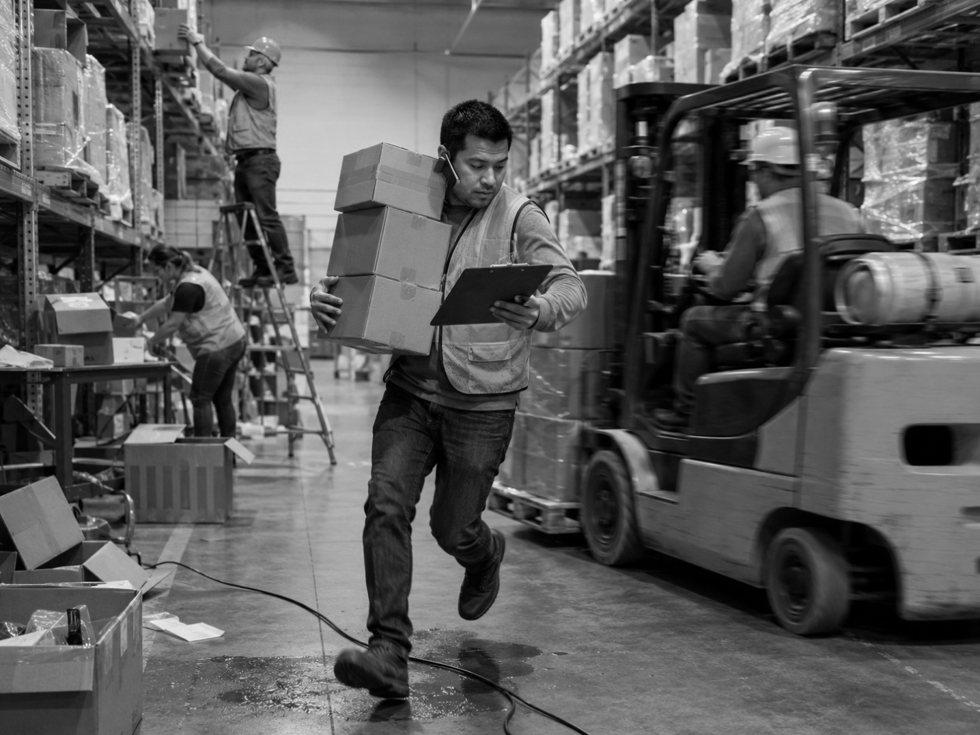
The image shows a busy warehouse where several employees are working at the same time in a rushed and disorganized environment. One worker is carrying multiple boxes while looking at a clipboard and using a headset, walking near a moving forklift. In the background, another worker is reaching from a ladder to handle boxes on a high shelf, while other materials and packages are scattered around the work area.

What’s wrong is that workers are multitasking instead of focusing on one task safely. The main worker has limited visibility, is distracted by the clipboard and headset, and is walking near a forklift while stepping close to a spill and a loose cord. The walkway is cluttered, the forklift is operating too close to pedestrians, and the worker on the ladder is overreaching. These unsafe actions show poor time management, rushing, and lack of attention to hazards, which can lead to slips, trips, falls, struck-by incidents, or serious injuries.


Time Management: Managing Multiple Tasks Safely Picture This – Spanish

image

La imagen muestra un almacén muy concurrido donde varios empleados trabajan al mismo tiempo en un ambiente ajetreado y desorganizado. Un trabajador lleva varias cajas mientras mira un portapapeles y usa audífonos, caminando cerca de una carretilla elevadora en movimiento. Al fondo, otro trabajador se estira desde una escalera para manipular cajas en un estante alto, mientras que otros materiales y paquetes están esparcidos por toda el área de trabajo.

Lo que está mal es que los trabajadores están realizando varias tareas a la vez en lugar de enfocarse en una sola tarea de manera segura. El trabajador principal tiene visibilidad limitada, está distraído por el portapapeles y los audífonos, y camina cerca de una carretilla elevadora mientras pasa junto a un derrame y un cable suelto. El pasillo está desordenado, la carretilla elevadora opera demasiado cerca de los peatones y el trabajador en la escalera se está estirando demasiado. Estas acciones inseguras reflejan una mala gestión del tiempo, prisas y falta de atención a los peligros, lo que puede provocar resbalones, tropiezos, caídas, atropellos o lesiones graves.


Cyber-Physical Risks: When Data Attacks Meet Physical Safety Stats and Facts – Spanish

HECHOS

  • Sistemas de Control Comprometidos: Los ciberataques contra los sistemas de control industrial pueden alterar el comportamiento de los equipos, lo que puede provocar movimientos peligrosos, fallos en las paradas de emergencia o liberaciones incontroladas de energía.
  • Acceso Remoto no Autorizado: Los intrusos que logran acceder a equipos conectados o a sistemas de seguridad pueden anular los controles y desactivar las protecciones sin que los trabajadores se den cuenta.
  • Manipulación de Sensores y Datos: Los datos alterados o falsos de los sensores pueden inducir a error a los operadores, lo que da lugar a decisiones inseguras y a un reconocimiento tardío de los peligros.
  • Fallo de los Sistemas de Apagado y Seguridad: Los ataques dirigidos a los enclavamientos de seguridad o a los sistemas de apagado de emergencia pueden impedir que se activen las protecciones críticas durante los incidentes.
  • Respuesta Tardía ante Peligros: La interrupción de los sistemas de comunicación puede ralentizar la respuesta de emergencia, lo que aumenta la gravedad de los incidentes.
  • Dependencia de los sistemas Conectados: La mayor dependencia de los sistemas digitales significa que las fallas o las brechas pueden afectar directamente las operaciones físicas y la seguridad de los trabajadores.
  • Error Humano bajo Estrés Cibernético: La confusión durante los incidentes cibernéticos puede llevar a acciones incorrectas, lo que aumenta el riesgo de lesiones físicas.

ESTADÍSTICAS

  • En Estados Unidos, aproximadamente el 32 % de las organizaciones industriales informaron de incidentes cibernéticos que afectaron a los sistemas de tecnología operativa (OT), lo que aumentó el riesgo de repercusiones en la seguridad física (IBM Security e informes del sector, 2023-2024).
  • Los datos de EE. UU. muestran que más del 40 % de los ciberataques dirigidos a infraestructuras críticas implican intentos de interrumpir operaciones físicas, incluidos los sectores de la energía, la manufactura y los servicios públicos (informes de la CISA y el DHS, 2022-2024).
  • En América del Norte, alrededor del 25 % de las organizaciones informaron que los incidentes cibernéticos tuvieron consecuencias directas operativas o relacionadas con la seguridad, incluyendo paradas de equipos o condiciones inseguras (SANS Institute, 2023).
  • Los informes de EE. UU. indican que más del 50 % de los incidentes de ciberseguridad industrial implican sistemas de control comprometidos, lo que puede afectar directamente a la maquinaria y a la seguridad de los trabajadores (Informe de ciberseguridad industrial de Dragos, 2023-2024).
  • En Canadá, aproximadamente el 30 % de las organizaciones de infraestructura crítica informaron de incidentes de ciberseguridad que afectaron a las operaciones, incluyendo interrupciones que podrían afectar a la seguridad de los trabajadores (Public Safety Canada, 2022–2024).
  • Los datos de EE. UU. muestran que los ataques de ransomware representaron más del 20 % de los incidentes cibernéticos en los sectores industriales, causando a menudo paradas y condiciones operativas inseguras (Informe del FBI IC3, 2023).


Cyber-Physical Risks: When Data Attacks Meet Physical Safety Fatality File

Triton/Trisis Safety System Attack

At a petrochemical facility, attackers infiltrated the plant’s industrial control system and safety instrumented system (SIS)—the very system designed to prevent explosions and protect workers. The malware (known as Triton/Trisis) attempted to disable these safety controls, which would have allowed unsafe operating conditions to continue without automatic shutdown.

During the incident, abnormal behavior in the system triggered an unexpected shutdown. Investigations later confirmed that the attackers were actively trying to override critical safety protections. If the attack had succeeded fully, it could have led to a catastrophic explosion, placing workers at immediate risk of serious injury or death.

Source: https://www.theguardian.com


Cyber-Physical Risks: When Data Attacks Meet Physical Safety Meeting Kit

WHAT’S AT STAKE

A cyberattack used to mean stolen passwords or a frozen email inbox, but those days are over. Today, attackers can reach into a factory and crash a robot, override a safety interlock, or shut down the building’s heating and cooling. When the digital and physical worlds connect, every weak password becomes a potential injury — and every worker is on the front line.

WHAT’S THE DANGER

Phishing into the Plant

Most cyber-physical attacks start with one clicked link in an ordinary email. From the office network, attackers move laterally into operational systems. Malware that begins on a laptop can reach machine controllers within hours.

Tampered Sensors and Alarms

  • Spoofed gas, temperature, or pressure readings
  • Suppressed alarms that should have stopped the line
  • False alerts that trigger unnecessary evacuations

Unsecured Remote Access and Robots

Vendors and contractors often connect into plant systems through laptops, tablets, and VPNs left open. Forklifts, AGVs, and collaborative robots take their commands over the network and can be redirected at the worst moment. Workers nearby may have no warning before a vehicle changes course.

HOW TO PROTECT YOURSELF

Cyber safety on the shop floor is everyone’s job.

Notice Equipment Acting Strangely

  • Unexpected restarts or reboots without explanation
  • Set points or timers changing on their own
  • Alarms that don’t match the real conditions

Treat Every Login Like a Lock

Use strong, unique passwords on every system, and never share credentials with co-workers — even when it is faster. Enable multi-factor authentication anywhere it is offered, including on plant tablets and HMI panels. A login is the difference between a controlled machine and a compromised one.

Watch for Phishing on Plant Devices

HMI tablets, shared kiosks, and dispatch terminals are prime targets because they sit at the intersection of office and plant. If a message looks off — unexpected sender, urgent language, strange link — don’t click it and don’t dismiss it. Report it so they can warn the rest of the crew.

Lock Down Removable Media

USB sticks and personal devices are one of the most common attack paths into plant networks. Use only company-approved drives on plant systems, and never plug in something you found in the parking lot or got from a vendor without inspection. Treat unknown media the same way you would treat unknown chemicals.

If It Happens: Act Fast

  • Stop the machine using the physical e-stop
  • Isolate it from the network if you safely can
  • Report to IT and supervision immediately
  • Don’t try to log back in or ’fix’ it yourself

FINAL WORD

The line between a keyboard and a kill switch is thinner than ever. When data attacks reach the physical world, the people who keep operations safe are the same ones who notice when something’s off. Stay alert online, stay alert on the floor — they’re the same shift now.


Cyber-Physical Risks: When Data Attacks Meet Physical Safety Stats and Facts

FACTS

  • Compromised Control Systems: Cyberattacks on industrial control systems can alter equipment behavior, leading to unsafe movements, shutdown failures, or uncontrolled energy release.
  • Unauthorized Remote Access: Intruders gaining access to connected equipment or safety systems can override controls and disable protections without worker awareness.
  • Sensor and Data Manipulation: Altered or false data from sensors can mislead operators, resulting in unsafe decisions and delayed hazard recognition.
  • Shutdown and Safety System Failure: Attacks targeting safety interlocks or emergency shutdown systems can prevent critical protections from activating during incidents.
  • Delayed Response to Hazards: Disrupted communication systems can slow emergency response, increasing the severity of incidents.
  • Dependence on Connected Systems: Increased reliance on digital systems means failures or breaches can directly impact physical operations and worker safety.
  • Human Error Under Cyber Stress: Confusion during cyber incidents can lead to incorrect actions, increasing the risk of physical injury.

STATS

  • In the United States, approximately 32% of industrial organizations reported cyber incidents affecting operational technology (OT) systems, increasing the risk of physical safety impacts (IBM Security & industry reports, 2023–2024).
  • U.S. data shows that over 40% of cyberattacks targeting critical infrastructure involve attempts to disrupt physical operations, including energy, manufacturing, and utilities sectors (CISA and DHS reports, 2022–2024).
  • In North America, around 25% of organizations reported that cyber incidents had direct operational or safety-related consequences, including equipment shutdowns or unsafe conditions (SANS Institute, 2023).
  • U.S. reports indicate that over 50% of industrial cybersecurity incidents involve compromised control systems, which can directly affect machinery and worker safety (Dragos Industrial Cybersecurity Report, 2023–2024).
  • In Canada, approximately 30% of critical infrastructure organizations reported cybersecurity incidents impacting operations, including disruptions that could affect worker safety (Public Safety Canada, 2022–2024).
  • U.S. data shows that ransomware attacks accounted for over 20% of cyber incidents in industrial sectors, often causing shutdowns and unsafe operating conditions (FBI IC3 Report, 2023).


Cyber-Physical Risks: When Data Attacks Meet Physical Safety Meeting Kit – Spanish

QUÉ ESTÁ EN RIESGO

Antes, un ciberataque solía significar contraseñas robadas o una bandeja de entrada de correo electrónico bloqueada, pero esos días ya quedaron atrás. Hoy en día, los atacantes pueden infiltrarse en una fábrica y bloquear un robot, anular un sistema de seguridad o apagar la calefacción y la refrigeración del edificio. Cuando los mundos digital y físico se conectan, cada contraseña débil se convierte en un riesgo potencial de lesiones, y todos los trabajadores se encuentran en primera línea.

CUÁL ES EL PELIGRO

Ciberataques en la Planta

La mayoría de los ataques ciberfísicos comienzan con un simple clic en un enlace de un correo electrónico común. Desde la red de la oficina, los atacantes se desplazan lateralmente hacia los sistemas operativos. El malware que se inicia en una computadora portátil puede llegar a los controladores de las máquinas en cuestión de horas.

Sensores y Alarmas Manipulados

  • Lecturas falsificadas de gas, temperatura o presión
  • Alarmas silenciadas que deberían haber detenido la línea
  • Falsas alertas que provocan evacuaciones innecesarias

Acceso Remoto y Robots sin Seguridad

Los proveedores y contratistas a menudo se conectan a los sistemas de la planta a través de computadoras portátiles, tabletas y VPN que se dejan abiertas. Las carretillas elevadoras, los vehículos guiados automáticamente (AGV) y los robots colaborativos reciben sus comandos a través de la red y pueden ser redirigidos en el peor momento. Es posible que los trabajadores cercanos no reciban ninguna advertencia antes de que un vehículo cambie de rumbo.

COMO PROTEGERSE

La seguridad cibernética en la planta de producción es responsabilidad de todos.

Presta Atención a los Equipos que Funcionan de Manera Anómala

  • Reinicios inesperados o reinicios sin explicación
  • Puntos de ajuste o temporizadores que cambian por sí solos
  • Alarmas que no coinciden con las condiciones reales

Trata Cada Inicio de Sesión Como si Fuera una Cerradura

Utiliza contraseñas seguras y únicas en cada sistema, y nunca compartas tus credenciales con tus compañeros de trabajo, aunque sea más rápido. Habilite la autenticación multifactorial siempre que sea posible, incluso en las tabletas de la planta y los paneles HMI. Un inicio de sesión marca la diferencia entre una máquina controlada y una comprometida.

Esté Atento al Phishing en los Dispositivos de la Planta

Las tabletas HMI, los quioscos compartidos y las terminales de despacho son objetivos principales porque se encuentran en la intersección entre la oficina y la planta. Si un mensaje parece sospechoso —remitente inesperado, lenguaje urgente, enlace extraño— no haga clic en él y no lo ignore. Denúncielo para que puedan advertir al resto del equipo.

Bloquee los Soportes Extraíbles

Las memorias USB y los dispositivos personales son una de las vías de ataque más comunes a las redes de la planta. Utilice únicamente unidades aprobadas por la empresa en los sistemas de la planta, y nunca conecte algo que haya encontrado en el estacionamiento o que le haya dado un proveedor sin inspeccionarlo. Trate los soportes desconocidos de la misma manera que trataría los productos químicos desconocidos.

Si Ocurre: Actúe Rápido

  • Detenga la máquina utilizando la parada de emergencia física
  • Aíslela de la red si puede hacerlo de forma segura
  • Informe inmediatamente al departamento de TI y a la supervisión
  • No intente volver a iniciar sesión ni «arreglarlo» usted mismo

CONCLUSIÓN

La línea que separa un teclado de un interruptor de emergencia es más delgada que nunca. Cuando los ataques cibernéticos llegan al mundo físico, quienes velan por la seguridad de las operaciones son los mismos que se dan cuenta cuando algo anda mal. Mantente alerta en línea, mantente alerta en el lugar de trabajo: ahora ambos turnos son uno solo.


Cyber-Physical Risks: When Data Attacks Meet Physical Safety Fatality File – Spanish

Ataque al Sistema de Seguridad Triton/Trisis

En una planta petroquímica, los atacantes se infiltraron en el sistema de control industrial y en el sistema instrumentado de seguridad (SIS) de la planta —precisamente el sistema diseñado para prevenir explosiones y proteger a los trabajadores—. El malware (conocido como Triton/Trisis) intentó desactivar estos controles de seguridad, lo que habría permitido que las condiciones de operación inseguras continuaran sin que se produjera un apagado automático.

Durante el incidente, un comportamiento anormal en el sistema provocó un apagado inesperado. Las investigaciones posteriores confirmaron que los atacantes estaban intentando activamente anular las protecciones de seguridad críticas. Si el ataque hubiera tenido éxito, podría haber provocado una explosión catastrófica, poniendo a los trabajadores en riesgo inmediato de sufrir lesiones graves o la muerte.

Fuente: Theguardian.com


Cyber-Physical Risks: When Data Attacks Meet Physical Safety Picture This

image

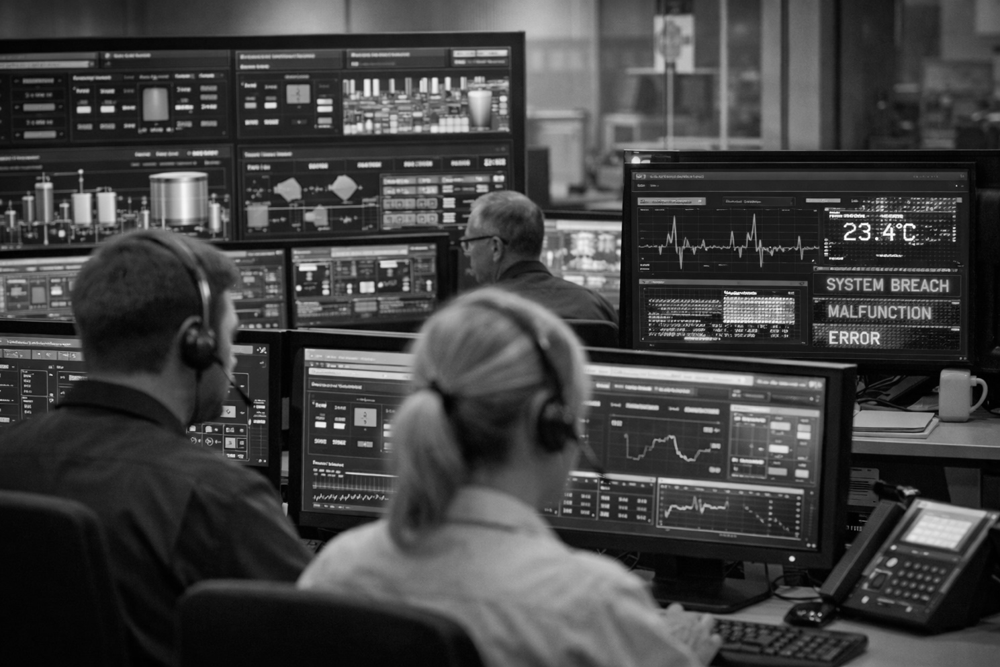
This image shows a modern industrial control room where operators are monitoring multiple digital systems that control a live production process. Everything appears normal on the screens—pressures, temperatures, and system indicators all show within acceptable ranges. However, in the background, one workstation displays subtle anomalies that go unnoticed. Unknown to the team, a cyber intrusion has already taken control of part of the system, silently manipulating data and masking real conditions on the floor.

Out in the facility, equipment continues running, but not as safely as it appears. Safety systems that should trigger alarms or shut down operations are no longer fully reliable. Workers on the ground trust the system readings, unaware that critical protections may be compromised. In cyber-physical incidents, the danger isn’t visible—it’s hidden behind data that looks correct. One false reading, one delayed shutdown, one system that doesn’t respond—and the result can be a catastrophic failure. Always verify anomalies, report irregular system behavior, and never assume digital systems are infallible when safety is on the line.


Cyber-Physical Risks: When Data Attacks Meet Physical Safety Picture This – Spanish

image

Esta imagen muestra una moderna sala de control industrial donde los operadores supervisan múltiples sistemas digitales que controlan un proceso de producción en marcha. Todo parece normal en las pantallas: las presiones, las temperaturas y los indicadores del sistema se encuentran dentro de los rangos aceptables. Sin embargo, en segundo plano, una estación de trabajo muestra sutiles anomalías que pasan desapercibidas. Sin que el equipo lo sepa, una intrusión cibernética ya ha tomado el control de parte del sistema, manipulando datos de forma silenciosa y ocultando las condiciones reales en la planta.

En las instalaciones, los equipos siguen funcionando, pero no con tanta seguridad como parece. Los sistemas de seguridad que deberían activar alarmas o detener las operaciones ya no son totalmente confiables. Los trabajadores en el piso confían en las lecturas del sistema, sin saber que las protecciones críticas pueden estar comprometidas. En los incidentes ciberfísicos, el peligro no es visible: está oculto detrás de datos que parecen correctos. Una lectura errónea, un apagado retrasado, un sistema que no responde… y el resultado puede ser un fallo catastrófico. Verifique siempre las anomalías, informe sobre el comportamiento irregular del sistema y nunca dé por sentado que los sistemas digitales son infalibles cuando la seguridad está en juego.


Silent Hazards: Noise, Vibration and Long-Term Health Risks Meeting Kit

WHAT’S AT STAKE

Some hazards don’t bleed, burn, or break bones — they wear you down a little at a time. Year by year they chip away at your hearing, your circulation, your nerves, and your sleep. By the time you notice the damage from noise and vibration, it is usually permanent.

WHAT’S THE DANGER

Noise and vibration injuries develop slowly and quietly, which is exactly what makes them so dangerous.

Noise-Induced Hearing Loss

Sustained exposure above 85 decibels permanently damages the tiny hair cells in the inner ear. There is no pain, no obvious moment of injury, and no way to grow those cells back. Workers often realize they have lost hearing only when conversations at home become a struggle.

Hand-Arm Vibration Syndrome

Power tools transfer vibration into the fingers, hands, and arms with every minute of use. Over time the small blood vessels constrict, and the nerves inflame. Numb or whitened fingertips after work are an early warning that should never be ignored.

Whole-Body Vibration

  • Spinal compression from long hours on heavy equipment
  • Disc irritation from rough terrain and poor seats
  • Chronic back pain that ends careers early

Tinnitus and Communication Risk

Persistent ringing in the ears does not stop when the shift ends — it follows the worker home and disrupts sleep, focus, and mood. When background noise drowns out alarms and shouted warnings, the silent hazard becomes a fast-acting one.

HOW TO PROTECT YOURSELF

The damage is preventable, but only if you treat low-level exposure as seriously as a sudden injury.

Wear Hearing Protection Properly

Choose the right Noise Reduction Rating for the task and make sure plugs are inserted fully and rolled before fitting. Earmuffs need a tight seal around the entire ear cup with no hair or eyewear arms breaking the contact. Above 100 decibels, double up plugs and muffs together for adequate protection.

Take Vibration Breaks

Rotate tasks throughout the shift so that vibration exposure is broken up by recovery time. Set tool-time limits and stick to them, even when production pressure pushes you to keep going. The body repairs itself between exposures only if it is given the chance.

Choose Lower-Vibration Tools and Setups

  • Anti-vibration gloves and properly maintained grips
  • Balanced equipment with sharp cutting edges
  • Isolated, well-adjusted seats on heavy machinery

Know Your Exposure Limits

Action levels for noise and vibration are set in regulation and apply to every workplace where these hazards exist. If you do not know your limits, ask your supervisor or your health and safety committee — it is your right to know.

Get Annual Hearing Tests

Audiograms catch early hearing loss before it becomes permanent and irreversible. Skipping the test does not make the damage go away — it just hides it from you.

FINAL WORD

You can’t grow back the hair cells in your ear or unwind a damaged disc in your spine. Silent hazards take what they take and never give it back. Protect what you’ve still got — every day, every shift, every tool.