Housekeeping Matters: Clean Floors, Clear Aisles, Safer Workplace Picture This

image

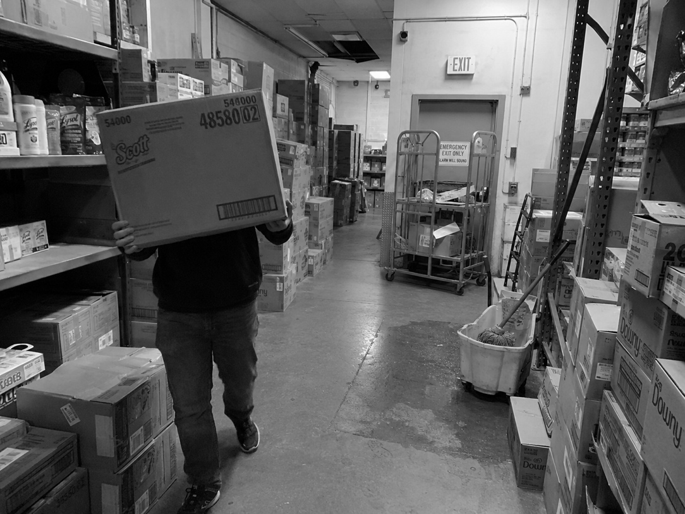
This image shows the back stockroom and main aisle of a busy retail or warehouse environment during a restocking shift. Cardboard boxes of various sizes are stacked unevenly along the walls and spilling into the walkway, narrowing the aisle to the point where a worker must turn sideways to pass through. A rolling merchandise cart has been left unattended in the middle of the floor directly in front of a door marked as an emergency exit. A wet mop and bucket sit beside a recently cleaned section of floor with no wet floor sign in sight. Overhead, one of the light fixtures is out, leaving a section of the aisle noticeably darker than the rest. A worker carrying a heavy box is moving quickly through the cluttered space, unable to see the floor clearly ahead of them.

None of these conditions look dramatic on their own — a box here, a cart there, a dim light, a damp floor. But together they create a workplace where a slip, a trip, or a blocked escape route is one moment away. Poor housekeeping rarely announces itself as a serious hazard. It builds quietly, shift by shift, until someone gets hurt or cannot get out in time. Clean floors, clear aisles, proper lighting, and accessible exits are not optional standards — they are the foundation of a safe workplace. Every worker shares responsibility for maintaining them. Do not wait for an inspection or an incident to fix what can be corrected right now.


Housekeeping Matters: Clean Floors, Clear Aisles, Safer Workplace Stats and Facts

FACTS

  • Wet and Contaminated Floors: Spilled liquids, grease, oil, and tracked-in moisture are among the most common floor hazards — a surface that looks clean may still be dangerously slippery after mopping, waxing, or chemical treatment.
  • Cluttered Aisles: Stock carts, boxes, pallets, and loose cords left in walkways force workers into awkward movements around obstacles, increasing the risk of a misstep or contact with nearby machinery.
  • Same-Level Falls: Workers do not need to fall from a height to suffer a serious injury. Slipping on a wet floor or tripping over an object regularly results in fractures, spinal injuries, and head trauma.
  • Hidden Hazards: Poor lighting in storage areas, stairwells, and loading zones conceals spills and floor defects that would otherwise be easy to avoid. Housekeeping and lighting failures compound each other.
  • Stacking and Storage Risk: Improperly stacked materials create two hazards at once — unstable loads that can fall onto workers and reduced aisle space that eliminates safe travel and exit paths.
  • Spill Response Delays: A spill left unattended grows more dangerous with every passing minute, as other workers enter the area unaware of the condition.
  • Egress Obstruction: Cluttered aisles and blocked exits are not just a daily trip hazard — in an emergency, they can prevent workers from evacuating quickly and safely.

STATS

  • In 2024, 844 U.S. workers died in falls — 17 percent of all workplace deaths — and nearly 480,000 were injured badly enough to require days away from work, according to the National Safety Council.
  • In 2024, 145 U.S. workers were killed in falls on the same level, incidents directly tied to floor conditions such as wet surfaces and clutter, according to the National Safety Council.
  • Falls on the same level cost U.S. employers nearly $10 billion annually in medical expenses and lost wage claims, according to Liberty Mutual’s 2024 Workplace Safety Index.
  • Uneven or wet surfaces are the leading cause of workplace slips, trips, and falls, contributing to 55 percent of these incidents, according to U.S. occupational injury data.
  • In Canada, slips, trips, and falls account for approximately 20 percent of workplace injuries in British Columbia — around 7,000 workers annually from 2020 to 2024 — driven largely by wet floors and cluttered work areas, according to provincial WCB data.
  • More than 40,000 Canadian workers are injured annually due to falls, with poor housekeeping practices identified as a primary contributing factor, according to Workplace Safety North.


Housekeeping Matters: Clean Floors, Clear Aisles, Safer Workplace Meeting Kit

WHAT’S AT STAKE

A cluttered, dirty workplace doesn’t just look unprofessional. It actively creates the conditions for injuries. Slips, trips, and falls are among the most common causes of lost-time injuries across every industry, and the majority of them are caused by something that could have been cleaned up or moved. Good housekeeping is one of the simplest and most effective safety actions you can take, and it costs almost nothing.

WHAT’S THE DANGER

Mess and clutter don’t cause accidents by themselves. They set the stage so that a normal action, like walking, turning, or carrying something, suddenly goes wrong.

Slips and Spills

Spilled liquids and wet floors are one of the most common causes of same-level falls. A spill that sits for a few minutes is long enough for someone to walk through it without noticing.

Cluttered Aisles

Boxes, pallets, and equipment left in walkways force people to step around obstacles, often while carrying something or not looking at the floor. That is when trips happen.

Loose Cords and Cables

Cords running across walkways are easy to miss, especially in low light. A single cord can take a worker down hard.

Blocked Emergency Equipment

Fire extinguishers, exits, and emergency stations only help if people can reach them. Material stacked in front of these turns a fast response into a dangerous scramble.

Unstable Storage

Items stacked too high or piled carelessly can shift and fall, especially when someone moves past. A falling box is bad. A falling pallet is worse.

HOW TO PROTECT YOURSELF

Keeping your workspace clean and organized is not a chore added on top of the real work. It is part of doing the job safely. Here is how to make it stick.

Clean Up Spills Immediately

The moment you see a spill, deal with it or flag it. Grab a mop, put down a cone, or get someone on it right away. Do not assume someone else will handle it. The longer a spill sits, the more likely someone walks through it without looking down.

Keep Walkways Clear

Aisles exist so people can move without obstacles. If you need to set something down, even briefly, keep it out of the path people walk. A box that seems out of the way to you might be right in someone else’s line of travel.

Manage Cords and Hoses

Route cords along walls or use cord covers when they cross a walkway. If you cannot do either, flag the cord clearly so people see it before they reach it. Never leave a hose or extension cord lying across an active path without warning.

Never Block Emergency Equipment

  • Keep three feet of clear space in front of fire extinguishers, electrical panels, and exits at all times
  • Never use these areas as temporary storage, even for a short job
  • If you find equipment blocked, move it or report it before you move on

Store Things Properly

Heavy items go on lower shelves. Stack only as high as is stable. If something looks like it could shift or tip, fix it now. Do not leave it for the next shift to deal with.

Wear the Right Footwear

Slip-resistant footwear makes a real difference on wet or uneven floors. Check your soles regularly. Worn soles lose their grip before they look worn out.

Clean as You Go

Housekeeping is not a task you do at the end of the shift. It is something you do throughout the shift. Put tools away when you are done with them. Pick up material when you are finished with it. A workspace that stays organized all day is far safer than one that gets a five-minute clean-up before everyone leaves.

Report What You Cannot Fix

If you spot a hazard you cannot clean up or move on your own, report it right away. Do not walk past it assuming someone else will notice.

FINAL WORD

A clean workspace is a safe workspace. Every spill you clean up, every aisle you keep clear, and every cord you route properly is a potential injury you just prevented. It takes seconds. It saves careers.


Housekeeping Matters: Clean Floors, Clear Aisles, Safer Workplace Meeting Kit – Spanish

QUÉ ESTÁ EN RIESGO

Un lugar de trabajo desordenado y sucio no solo da una imagen poco profesional, sino que además crea las condiciones propicias para que se produzcan lesiones. Los resbalones, tropiezos y caídas se encuentran entre las causas más comunes de lesiones con pérdida de tiempo en todos los sectores, y la mayoría de ellas se deben a algo que se podría haber limpiado o retirado. Mantener el lugar de trabajo ordenado es una de las medidas de seguridad más sencillas y efectivas que puedes tomar, y casi no cuesta nada.

CUÁL ES EL PELIGRO

El desorden y la desorganización no causan accidentes por sí mismos. Crean las condiciones para que una acción normal, como caminar, girar o cargar algo, de repente salga mal.

Resbalones y Derrames

Los líquidos derramados y los pisos mojados son una de las causas más comunes de caídas en el mismo nivel. Un derrame que permanece sin limpiar durante unos minutos es tiempo suficiente para que alguien camine sobre él sin darse cuenta.

Pasillos Desordenados

Las cajas, los palés y el equipo que se dejan en los pasillos obligan a las personas a esquivar obstáculos, a menudo mientras cargan algo o no miran al piso. Es ahí cuando ocurren los tropiezos.

Cables Sueltos

Los cables que cruzan los pasillos son fáciles de pasar por alto, especialmente con poca luz. Un solo cable puede hacer que un trabajador sufra una caída grave.

Equipos de Emergencia Bloqueados

Los extintores, las salidas y las estaciones de emergencia solo sirven de ayuda si las personas pueden acceder a ellos. El material apilado frente a ellos convierte una respuesta rápida en una carrera peligrosa.

Almacenamiento Inestable

Los artículos apilados demasiado altos o amontonados sin cuidado pueden desplazarse y caer, especialmente cuando alguien pasa por cerca. La caída de una caja es grave. La caída de un palé es peor.

COMO PROTEGERSE

Mantener tu espacio de trabajo limpio y organizado no es una tarea adicional al trabajo en sí. Es parte de realizar el trabajo de manera segura. A continuación te explicamos cómo hacerlo de manera constante.

Limpia los Derrames de Inmediato

En cuanto veas un derrame, resuélvelo o señálalo. Toma una trapeadora, coloca un cono de señalización o pídele a alguien que se encargue de inmediato. No des por sentado que alguien más se encargará de ello. Cuanto más tiempo permanezca un derrame, mayor es la probabilidad de que alguien lo pise sin darse cuenta.

Mantén los Pasillos Despejados

Los pasillos existen para que las personas puedan moverse sin obstáculos. Si necesitas dejar algo en el suelo, aunque sea por un momento, manténlo fuera del camino por donde caminan las personas. Una caja que a ti te parezca que no estorba podría estar justo en la trayectoria de otra persona.

Organiza los Cables y las Mangueras

Pasa los cables por las paredes o usa protectores de cables cuando crucen un pasillo. Si no puedes hacer ninguna de las dos cosas, señaliza el cable claramente para que la gente lo vea antes de llegar a él. Nunca dejes una manguera o un cable de extensión tirado en un pasillo sin avisar.

Nunca Bloquees el Equipo de Emergencia

  • Mantén tres pies de espacio libre frente a los extintores, los paneles eléctricos y las salidas en todo momento
  • Nunca utilices estas áreas como almacenamiento temporal, ni siquiera para un trabajo breve
  • Si encuentras equipo bloqueado, muévelo o reporta el problema antes de seguir adelante

Almacena las Cosas Correctamente

Los artículos pesados deben ir en los estantes inferiores. Apila solo hasta la altura en que sea estable. Si algo parece que podría desplazarse o volcarse, arréglalo de inmediato. No lo dejes para que lo resuelva el siguiente turno.

Usa el Calzado Adecuado

El calzado antideslizante marca una gran diferencia en pisos mojados o irregulares. Revisa tus suelas con regularidad. Las suelas desgastadas pierden su agarre antes de que se vean gastadas.

Limpia a Medida que Avanzas

La limpieza no es una tarea que se hace al final del turno. Es algo que se hace a lo largo de todo el turno. Guarda las herramientas cuando ya no las necesites. Recoge el material cuando ya no lo necesites. Un espacio de trabajo que se mantiene organizado todo el día es mucho más seguro que uno al que solo se le dedica una limpieza de cinco minutos antes de que todos se vayan.

Informa lo que no Puedas Arreglar

Si detectas un peligro que no puedas limpiar o mover por tu cuenta, infórmalo de inmediato. No pases de largo asumiendo que alguien más lo notará.

CONCLUSIÓN

Un espacio de trabajo limpio es un espacio de trabajo seguro. Cada derrame que limpias, cada pasillo que mantienes despejado y cada cable que colocas correctamente es una posible lesión que acabas de evitar. Solo toma unos segundos. Salva carreras profesionales.


Housekeeping Matters: Clean Floors, Clear Aisles, Safer Workplace Fatality File – Spanish

Cuestiones de Limpieza y Orden: Pisos Limpios, Pasillos Despejados, un Lugar de Trabajo más Seguro

Lo que Sucedió

Durante años, los investigadores de la OSHA encontraron repetidamente las mismas condiciones en las tiendas Dollar General de todo Estados Unidos: pasillos bloqueados por carritos con ruedas, salidas de emergencia ocultas detrás de la mercadería y extintores inaccesibles detrás de pilas de inventario. Los trabajadores se enfrentaban a estos peligros en cada turno. En agosto de 2023, un hombre armado entró a una tienda Dollar General en Jacksonville, Florida, y abrió fuego, matando a tres personas. Las grabaciones de seguridad mostraron un laberinto de carritos metálicos, contenedores altísimos y pilas desordenadas de productos que obstruían las rutas de salida de la tienda, y la OSHA inició una investigación por muerte y catástrofe el 26 de agosto de 2023, citando como factor las leyes federales contra las salidas bloqueadas y los pasillos congestionados.

¿Qué Salió Mal?

Los riesgos eran conocidos, estaban documentados y se ignoraron. El propio administrador regional de la OSHA había advertido por escrito que «los segundos que se pierden tratando de mover cajas para llegar a un extintor o salir por una salida de emergencia pueden marcar la diferencia entre la vida y la muerte en una emergencia». A pesar de las multas propuestas por más de 21 millones de dólares en más de 240 inspecciones desde 2017, seguían apareciendo las mismas fallas de mantenimiento: salidas bloqueadas, pasillos abarrotados y mercancía apilada de manera insegura. El mal mantenimiento no fue un accidente. Fue un patrón no corregido con el que los trabajadores convivían todos los días.

Conclusión

Como parte de un acuerdo de 12 millones de dólares con la OSHA en 2024, Dollar General tuvo que garantizar que las salidas de emergencia tuvieran accesos despejados, que los pasillos estuvieran libres de obstáculos y que el inventario se apilara de manera segura —medidas que deberían haber sido una práctica estándar desde el primer día. Los pasillos desordenados y las salidas bloqueadas no son un inconveniente menor. Son un peligro documentado que pone en riesgo la vida. Un buen mantenimiento mantiene todas las salidas abiertas y garantiza la seguridad de todos los trabajadores.

Fuente: Dol.gov/


Housekeeping Matters: Clean Floors, Clear Aisles, Safer Workplace Fatality File

Housekeeping Matters — Clean Floors, Clear Aisles, Safer Workplace

What Happened

For years, OSHA investigators repeatedly found the same conditions inside Dollar General stores across the United States: aisles blocked by rolling carts, emergency exits buried behind merchandise, and fire extinguishers inaccessible behind stacked inventory. Workers navigated these hazards every shift. In August 2023, a gunman entered a Dollar General store in Jacksonville, Florida and opened fire, killing three people. Security footage showed a maze of metal carts, towering containers, and cluttered product piles obstructing the store’s exit routes, and OSHA opened a fatality and catastrophe investigation on August 26, 2023, citing federal laws against blocked exits and congested walkways as a factor.

What Went Wrong

The hazards were known, documented, and ignored. OSHA’s own regional administrator had warned in writing that “seconds lost trying to move boxes to reach a fire extinguisher or get out a safety exit can be the difference between life and death in an emergency.” Despite over $21 million in proposed penalties across more than 240 inspections since 2017, the same housekeeping failures kept appearing — blocked exits, cluttered walkways, and unsafely stacked merchandise. Poor housekeeping was not an accident. It was an uncorrected pattern that workers lived with every day.

The Bottom Line

As part of a $12 million OSHA settlement in 2024, Dollar General was required to ensure emergency exits had clear paths, aisles were unobstructed, and inventory was stacked safely — measures that should have been standard practice from day one. Cluttered aisles and blocked exits are not a minor inconvenience. They are a documented, life-threatening hazard. Good housekeeping keeps every exit open and every worker safe.

Source: https://www.dol.gov/


Housekeeping Matters: Clean Floors, Clear Aisles, Safer Workplace Picture This – Spanish

Cuestiones de Limpieza y Orden: Pisos Limpios, Pasillos Despejados, un Lugar de Trabajo más Seguro

Lo que Sucedió

Durante años, los investigadores de la OSHA encontraron repetidamente las mismas condiciones en las tiendas Dollar General de todo Estados Unidos: pasillos bloqueados por carritos con ruedas, salidas de emergencia ocultas detrás de la mercadería y extintores inaccesibles detrás de pilas de inventario. Los trabajadores se enfrentaban a estos peligros en cada turno. En agosto de 2023, un hombre armado entró a una tienda Dollar General en Jacksonville, Florida, y abrió fuego, matando a tres personas. Las grabaciones de seguridad mostraron un laberinto de carritos metálicos, contenedores altísimos y pilas desordenadas de productos que obstruían las rutas de salida de la tienda, y la OSHA inició una investigación por muerte y catástrofe el 26 de agosto de 2023, citando como factor las leyes federales contra las salidas bloqueadas y los pasillos congestionados.

¿Qué Salió Mal?

Los riesgos eran conocidos, estaban documentados y se ignoraron. El propio administrador regional de la OSHA había advertido por escrito que «los segundos que se pierden tratando de mover cajas para llegar a un extintor o salir por una salida de emergencia pueden marcar la diferencia entre la vida y la muerte en una emergencia». A pesar de las multas propuestas por más de 21 millones de dólares en más de 240 inspecciones desde 2017, seguían apareciendo las mismas fallas de mantenimiento: salidas bloqueadas, pasillos abarrotados y mercancía apilada de manera insegura. El mal mantenimiento no fue un accidente. Fue un patrón no corregido con el que los trabajadores convivían todos los días.

Conclusión

Como parte de un acuerdo de 12 millones de dólares con la OSHA en 2024, Dollar General tuvo que garantizar que las salidas de emergencia tuvieran accesos despejados, que los pasillos estuvieran libres de obstáculos y que el inventario se apilara de manera segura —medidas que deberían haber sido una práctica estándar desde el primer día. Los pasillos desordenados y las salidas bloqueadas no son un inconveniente menor. Son un peligro documentado que pone en riesgo la vida. Un buen mantenimiento mantiene todas las salidas abiertas y garantiza la seguridad de todos los trabajadores.

Fuente: Dol.gov/


Housekeeping Matters: Clean Floors, Clear Aisles, Safer Workplace Stats and Facts – Spanish

HECHOS

  • Pisos Mojados y Contaminados: Los líquidos derramados, la grasa, el aceite y la humedad traída por los zapatos se encuentran entre los peligros más comunes en los pisos; una superficie que parece limpia puede seguir siendo peligrosamente resbaladiza después de fregarla, encerarla o someterla a un tratamiento químico.
  • Pasillos Abarrotados: Los carritos de inventario, las cajas, los palés y los cables sueltos que se dejan en los pasillos obligan a los trabajadores a realizar movimientos incómodos para esquivar los obstáculos, lo que aumenta el riesgo de dar un paso en falso o de chocar contra la maquinaria cercana.
  • Caídas al Mismo Nivel: Los trabajadores no necesitan caer desde una altura para sufrir una lesión grave. Resbalarse en un piso mojado o tropezarse con un objeto suele provocar fracturas, lesiones en la columna vertebral y traumatismos craneales.
  • Peligros Ocultos: La iluminación deficiente en las áreas de almacenamiento, las escaleras y las zonas de carga oculta derrames y defectos en el piso que, de otra manera, serían fáciles de evitar. Las fallas en el mantenimiento y la iluminación se agravan mutuamente.
  • Riesgos de Apilamiento y Almacenamiento: Los materiales apilados de manera inadecuada crean dos peligros a la vez: cargas inestables que pueden caer sobre los trabajadores y un espacio reducido en los pasillos que elimina las rutas seguras de desplazamiento y salida.
  • Retrasos en la Respuesta ante Derrames: Un derrame que se deja sin atender se vuelve más peligroso con cada minuto que pasa, ya que otros trabajadores ingresan al área sin darse cuenta de la situación.
  • Obstrucción de las Salidas: Los pasillos desordenados y las salidas bloqueadas no son solo un peligro diario de tropiezos; en caso de emergencia, pueden impedir que los trabajadores evacúen de manera rápida y segura.

ESTADÍSTICAS

  • En 2024, 844 trabajadores estadounidenses fallecieron por caídas —el 17 por ciento de todas las muertes en el lugar de trabajo— y casi 480 000 sufrieron lesiones lo suficientemente graves como para requerir días de baja laboral, según el Consejo Nacional de Seguridad.
  • En 2024, 145 trabajadores estadounidenses fallecieron por caídas en el mismo nivel, incidentes directamente relacionados con las condiciones del piso, como superficies mojadas y desorden, según el Consejo Nacional de Seguridad.
  • Las caídas en el mismo nivel le cuestan a los empleadores estadounidenses casi 10 mil millones de dólares al año en gastos médicos y reclamaciones por salarios perdidos, según el Índice de Seguridad Laboral 2024 de Liberty Mutual.
  • Las superficies irregulares o mojadas son la principal causa de resbalones, tropiezos y caídas en el lugar de trabajo, y representan el 55 por ciento de estos incidentes, según datos de lesiones laborales de EE. UU.
  • En Canadá, los resbalones, tropiezos y caídas representan aproximadamente el 20 por ciento de las lesiones laborales en Columbia Británica —alrededor de 7,000 trabajadores al año entre 2020 y 2024—, provocadas en gran medida por pisos mojados y áreas de trabajo desordenadas, según datos de la WCB provincial.
  • Más de 40 000 trabajadores canadienses se lesionan anualmente debido a caídas, y las malas prácticas de limpieza y orden se identifican como un factor contribuyente principal, según Workplace Safety North.


The Alert Is Not the Intervention

How insurers can turn risk intelligence into verified loss prevention

The central idea

The insurance industry is becoming remarkably good at seeing risk. The next competitive advantage will come from helping policyholders act on what insurers can see, then verifying that the exposure truly changed.


A commercial fleet installs telematics across 86 vehicles. Within days, the system identifies repeated speeding, harsh braking and mobile-device distraction. The risk manager receives weekly dashboards. Supervisors receive alerts. Drivers are assigned scores. Six months later, many of the same unsafe patterns remain.

The technology did not fail. It detected the exposure exactly as intended. The loss-prevention process failed after detection.

No one consistently interpreted why the events were occurring. Some supervisors used the data for coaching, while others ignored it. A few drivers were warned, but route pressure, unrealistic delivery windows and inconsistent enforcement remained untouched. The organization could prove it had data. It could not prove it had reduced the risk.

This is becoming one of the defining challenges in modern insurance loss prevention. Carriers, brokers and policyholders can collect more information than ever through claims analytics, telematics, connected sensors, aerial imagery, digital inspections, wearables and artificial intelligence. These technologies can reveal patterns that were previously invisible or discovered only after a serious loss.

Yet a signal is not an intervention. A dashboard is not corrective action. A recommendation is not implementation. Even training is only one part of the answer unless it reaches the right people, addresses the real cause and is followed by evidence that the work changed.

The insurers that create the greatest value will not simply identify more risks. They will build a closed-loop system that converts risk intelligence into owned action, verified change and better decisions across loss control, underwriting, claims and policyholder service.

Insurers can see risk earlier and in greater detail

Insurance has always been a data business, but the nature of the data is changing. Traditional loss histories, inspections and applications are increasingly supplemented by continuous or near-real-time information about how people, vehicles, buildings and equipment behave.

Vehicle telematics can identify speed, harsh braking, rapid acceleration, cornering, mileage, route patterns and possible distraction. Connected property sensors can detect abnormal water flow, freezing temperatures, smoke, electrical anomalies, unauthorized access and equipment conditions. Wearables can generate proximity alerts, monitor movement patterns or help identify exposure conditions. Remote imagery can surface roof, vegetation, drainage and property characteristics that may warrant attention.

The National Association of Insurance Commissioners describes big data as a way for insurers to improve underwriting, claims handling, fraud detection and operating efficiency, while also incentivizing risk reduction. Its 2026 artificial-intelligence topic guidance notes the industry’s movement from a detect-and-repair model toward a predict-and-prevent model.

This is not theoretical. Travelers describes smart-property technology that can notify property managers of potential issues before they become severe. Its workplace-wearables guidance explains that near-miss data can be reviewed and interpreted to identify opportunities to modify the work environment. Nationwide’s telematics guidance makes an equally important point: some insurers will look for improved driving behaviour and fewer accidents, not simply the presence of a telematics device.

Triple-I published a 2025 study of the Ting electrical-fire prevention solution that illustrates the potential when detection is connected to an effective response. Within the study sample, researchers estimated a 63 percent reduction in a broad category of fire claims by the third year after installation, equal to 0.39 fewer electrical fire claims per 1,000 home-years and an estimated annual claim-reduction benefit of $81 per customer. The finding is specific to that program and study population, but it demonstrates the broader principle: prevention value comes from a system that detects a condition and helps ensure it is resolved.

The strategic shift

Risk intelligence creates potential. Loss prevention creates value only when the signal changes a decision, a condition or a behaviour.


The missing signal-to-action gap

The signal-to-action gap is the distance between what the insurer knows and what the policyholder changes.

Carriers often assume that providing a report, alert, recommendation, webinar, checklist or training library constitutes an intervention. Each of those may be useful, but each is still an input. The policyholder must interpret the information, understand its significance, identify the appropriate control, assign responsibility, act within a reasonable period and confirm that the exposure has been reduced.

That chain breaks for predictable reasons. Recommendations may be broad, technical or disconnected from the policyholder’s operations. The organization may not know who owns the response. A supervisor may see the issue as a safety department problem. The employer may acknowledge the alert without understanding the potential severity. The corrective action may be expensive, inconvenient or operationally disruptive. Training may be assigned because it is easy, even when the actual need is maintenance, engineering or work redesign.

The risk signal What the action layer must resolve
A pattern of harsh braking Is the cause driver technique, route design, traffic exposure, vehicle condition, unrealistic scheduling or a combination?
Repeated water-flow alerts Who investigates, how quickly, what qualifies as resolved and how is the repair confirmed?
Recurring lifting claims Is the exposure primarily knowledge, load design, frequency, equipment, staffing, layout or production pressure?
A deteriorating roof condition What mitigation is required, who owns it, when must it be completed and what evidence will demonstrate completion?
Frequent worker-equipment proximity events Should the response focus on pedestrian routes, blind spots, traffic control, equipment, schedules, supervision or worker behaviour?

A recommendation tells the policyholder what should change. A loss-prevention system determines whether it changed.

Why more alerts can produce less action

The intuitive response to an emerging exposure is often to collect more data and produce more alerts. That can make the problem worse when the organization has not designed a response system.

Policyholders may receive information from insurers, brokers, fleet platforms, security systems, equipment manufacturers, environmental health and safety software, maintenance systems and internal reporting channels. When every source creates its own dashboard and priority score, managers are left to reconcile competing messages with limited time and incomplete context.

Over time, repeated warnings can become operational background noise. People acknowledge them to clear a queue. Supervisors learn that nothing happens when an item remains open. Employees distrust a score they do not understand. High-frequency, low-value notifications obscure the smaller number of signals that require urgent action.

A mature loss-prevention program separates signals into three categories.

  • Informational signals support trend monitoring, planning or future investigation. They do not require an immediate operational response.
  • Actionable signals indicate that a defined person should investigate or complete a specific response within a stated period.
  • Critical signals indicate a condition that may require immediate escalation, work interruption, emergency response or executive attention.

This classification should consider potential severity, frequency, exposure, confidence in the data and the cost of delay. It should also account for the possibility that a high-frequency alert is a symptom of a system problem rather than repeated individual carelessness.

A closed-loop model for verified loss prevention

The following seven-stage model converts raw risk intelligence into a documented intervention. It can be applied to a single account or deployed across an insurer’s portfolio.

Stage Core question Evidence of progress
1  Detect What credible signal suggests that an exposure exists or is worsening? Claims pattern, telematics event, sensor alert, inspection finding, near miss, imagery, audit or underwriting data.
2  Interpret What could be causing the signal in this operation? Operational review, worker input, supervisor discussion, task observation, route or equipment analysis.
3  Prioritize How quickly and at what level should the organization respond? Severity, frequency, number exposed, recurrence potential, legal significance and cost of delay.
4  Prescribe Which control or combination of controls fits the cause? Engineering, maintenance, procedure, scheduling, supervision, training, equipment or exposure elimination.
5  Activate Who owns the action and what must happen by when? Named owner, affected group, deadline, resources, assignment and escalation path.
6  Verify Did the action occur, and did the exposure change? Inspection, behaviour data, observation, photographs, work records, sensor trends, assessment or practical demonstration.
7  Learn What should this result change across the account or portfolio? Underwriting insight, revised recommendation, targeted campaign, product design, renewal discussion or broader prevention strategy.

Detect the exposure without mistaking the signal for the cause

The first discipline is to treat data as a prompt for inquiry, not a verdict. A harsh-braking event may indicate unsafe following distance. It may also reflect congestion, a dangerous intersection, poor route planning, an overloaded vehicle or pressure to meet an unrealistic schedule. A cluster of back injuries may reflect weak lifting technique, but it may also point to load weight, shelf height, staffing, equipment or workflow.

Data becomes more useful when it is combined with operational knowledge. Loss-control professionals can help policyholders ask what changed, where the pattern is concentrated, which workers or locations are exposed, and what conditions surround the event.

Prioritize by consequence, not by dashboard volume

The loudest signal is not always the most consequential. Programs should prioritize the possibility of severe harm, the number of people or properties exposed, the likelihood of recurrence and the difficulty of recovering after a loss. A rare signal linked to a catastrophic exposure may deserve faster action than a frequent but low-severity deviation.

Prescribe the right intervention

Training is one possible intervention, not the default answer. If workers do not know the rule, cannot recognize the hazard or need practice making a decision, training may be appropriate. If the problem is a leaking valve, failed guard, poor layout, inadequate staffing or unrealistic production standard, more training may simply transfer responsibility to the worker without controlling the exposure.

Activate with ownership and a deadline

Recommendations frequently fail because they belong to everyone and therefore to no one. Every actionable item should name an owner, define the expected result, establish a deadline and identify the evidence required to close it. Critical items should have a visible escalation path when the policyholder does not act.

Verify both completion and effect

Verification has two levels. The first asks whether the action occurred. The second asks whether it reduced the exposure. Installing a telematics device confirms implementation. A sustained reduction in speeding and distracted-driving events provides evidence of effect. Assigning a lifting course confirms delivery. Improved task observations, reduced high-risk motions or fewer related incidents provide stronger evidence that the intervention mattered.

Learn at the account and portfolio levels

Closed-loop prevention creates information that can improve future decisions. Insurers can learn which interventions policyholders adopt, which account characteristics predict engagement, which signals produce meaningful action and where recommendations repeatedly stall. That information can strengthen loss-control strategies, broker conversations, underwriting questions and renewal decisions.

Five examples of the model in practice

Commercial fleet risk

Signal: Telematics identifies repeated speeding, harsh braking and phone distraction among a subset of drivers.

Weak response: The fleet manager receives a scorecard and sends a general reminder to all drivers.

Closed-loop response: The organization identifies the affected drivers and routes, checks whether scheduling or vehicle conditions contribute to the pattern, assigns focused coaching and scenario-based defensive-driving training, provides supervisors with a consistent conversation guide and reviews event frequency after 30 and 60 days. Nationwide’s guidance reinforces the principle by noting that insurers may look for improved driving behaviour and reduced accidents, not merely device installation.

Water and property loss

Signal: A connected sensor identifies unusual water flow overnight at a commercial property.

Weak response: The platform sends an automated email that remains unread until the next morning.

Closed-loop response: The alert is classified by severity, routed to a named responder, escalated if it is not acknowledged, followed by an inspection and repair, and closed only when the organization documents that the condition was resolved. The system also tests whether after-hours contact information and shutoff procedures worked as intended.

Recurring musculoskeletal injuries

Signal: Claims data shows repeated shoulder and lower-back injuries among employees handling one product line.

Weak response: Every employee is assigned a generic lifting course.

Closed-loop response: The employer observes the task, measures load characteristics, reviews frequency and shelf height, speaks with workers and identifies the mixture of equipment, layout and technique issues. Engineering and workflow changes are implemented first. Targeted training addresses the decisions and methods that remain under worker control. Supervisors conduct follow-up observations and the insurer tracks whether the injury pattern changes.

Property resilience and remote inspection

Signal: Remote imagery or inspection data identifies roof deterioration, overhanging vegetation or drainage conditions that could increase the severity of a future loss.

Weak response: The item is placed in a renewal file as a broad recommendation.

Closed-loop response: The insurer explains the loss pathway, provides a specific mitigation standard, assigns a realistic deadline and defines acceptable evidence such as contractor invoices, photographs or inspection results. NAIC discussions in 2025 noted that aerial-imagery data used in underwriting can also help identify risk-mitigation steps that may prevent a loss. The value increases when the information is translated into a clear and verifiable policyholder action.

Worker and equipment interaction

Signal: Proximity sensors show repeated close interactions between pedestrians and forklifts in one loading area.

Weak response: Workers are told to stay alert.

Closed-loop response: The employer studies traffic flow, blind spots, staging, schedules, barriers, pedestrian routes and supervision. It redesigns the work where possible, reinforces the remaining rules and monitors whether proximity events decline. Travelers’ guidance on workplace wearables makes this point directly: the goal of understanding the data is to identify opportunities to modify the work environment and reduce risk.

A useful test

If the intervention ends with “the report was sent” or “the course was completed,” the loop is probably still open.


Where training belongs in the action layer

Training has a critical role when the gap involves knowledge, recognition, judgment, communication or consistent execution. It can help workers identify a hazard, understand a control, practise a response, recognize when a task must stop and apply a procedure under realistic conditions.

Training is also valuable for supervisors. Many risk interventions fail because front-line leaders do not know how to interpret the data, conduct a coaching conversation, reinforce the required behaviour or document what they observed. A targeted supervisor tool can be more valuable than assigning another course to the entire workforce.

However, training should not be used to conceal a control failure. It is not the primary remedy for defective equipment, inadequate guarding, unreasonable schedules, insufficient staffing, poor traffic design, deferred maintenance or an exposure that can be eliminated.

Training is likely part of the answer when Another control should lead when
Workers do not recognize the hazard or understand the required response. The hazard can be eliminated or physically reduced.
Supervisors need a consistent coaching and reinforcement method. Equipment, guarding or maintenance is inadequate.
The task requires judgment under changing conditions. Workflow, staffing or scheduling creates the exposure.
A procedure changed and affected workers must understand the new standard. The procedure is unrealistic or cannot be followed as written.
The organization needs role-specific practice or refresher learning. The risk results primarily from layout, design or environmental conditions.


Turning one account signal into a portfolio intervention

The greatest insurer value may come from applying the closed-loop model across groups of policyholders. Claims and underwriting data can reveal patterns by industry, geography, size, tenure, job type or exposure. Instead of sending the same resource library to every insured, the carrier can activate targeted prevention campaigns.

Examples include a distracted-driving campaign for commercial fleets with elevated mobile-device events, a new-worker program for accounts with high first-year injury frequency, a material-handling campaign for warehouse and distribution risks, a seasonal heat program, a contractor-control initiative for construction accounts or a slip-and-fall campaign for property management, retail and hospitality.

A portfolio intervention should still preserve account-level relevance. The carrier can provide a common framework, approved content, implementation tools and reporting while allowing policyholders to select the roles, locations and controls that fit their operations.

This approach also changes the role of the broker and underwriter. They gain something more useful than a link to a resource centre. They can discuss a specific exposure, the intervention offered, the policyholder’s participation and the evidence of follow-through.

What insurers should measure

Loss prevention is often measured at the extremes. At one end are activity counts such as reports issued, courses completed and policyholders registered. At the other are lagging outcomes such as claim frequency and severity. A closed-loop model needs measures between those points.

Measurement layer Examples What it proves
Reach Accounts invited, users registered, locations represented, target roles reached. The intervention reached the intended population.
Engagement Resources opened, assignments started, supervisor tools used, discussions completed. The audience interacted with the intervention.
Understanding Assessment results, scenario decisions, confidence gaps, questions raised. Participants understood key concepts and decisions.
Action Repairs completed, procedures changed, coaching delivered, controls installed, observations conducted. The policyholder implemented the prescribed response.
Verification Reduced alerts, improved observations, inspection results, photographs, sensor trends. The exposure or relevant behaviour changed.
Outcome Claim frequency, severity, near misses, downtime, equipment damage, retention or renewal indicators. The program may be contributing to meaningful business and loss results.

These layers also protect against false conclusions. A decline in claims may result from many factors, including exposure changes, economic conditions, workforce size, weather or chance. Insurers should establish a baseline, track implementation quality, examine comparable groups where possible and avoid claiming that training or technology alone caused an outcome without credible evidence.

Governance, privacy and trust

The closer risk technology comes to monitoring individual behaviour, location or health, the more important transparency and restraint become. A prevention program can lose credibility quickly when workers believe data collected for safety will be used unpredictably for discipline, productivity monitoring or unrelated employment decisions.

NIOSH’s ethical framework for wearable sensors recommends asking why the monitoring is justified, whether the least intrusive means is being used and how adverse consequences will be minimized. It also urges organizations to decide how results will be communicated, how data will be used and whether informed consent is appropriate.

Insurers and policyholders should define:

  • What data is collected and why it is necessary.
  • Who can access individual and aggregate information.
  • How long the information is retained and how it is secured.
  • Whether the data is used for coaching, claims, underwriting, discipline or another purpose.
  • How people can correct inaccurate information or challenge an automated score.
  • What human review is required before a consequential decision is made.

The operating principle should be simple: the goal is prevention, not surveillance. The least intrusive data that can reliably support the prevention objective is usually the better choice.

SafetyNow as the policyholder action layer

Many insurers already possess valuable risk intelligence and strong loss-control expertise. The scalability challenge begins after the exposure is identified. A loss-control professional may know exactly what a policyholder should do, but cannot personally train every affected worker, support every supervisor and follow every recommendation across hundreds or thousands of accounts.

SafetyNow can provide the execution infrastructure between the insurer’s insight and the policyholder’s workplace response. Its current platform supports white-labelled programs for insurers and policyholders, large training libraries, online and instructor-led delivery, assignment and progress tracking, reporting, course customization and carrier-branded resources.

A carrier can use that infrastructure to:

  1. Identify the affected segment. Use claims, underwriting, telematics or loss-control data to define the accounts, locations or roles facing the exposure.
  2. Build the intervention. Select or customize training, safety meetings, policies, checklists, supervisor tools and reinforcement resources that fit the risk.
  3. Deliver under the carrier’s brand. Provide a consistent policyholder experience that extends the carrier’s loss-prevention value beyond an annual visit or renewal discussion.
  4. Assign the right content to the right people. Target workers, supervisors, locations, industries or account groups instead of sending a generic library to everyone.
  5. Track participation and understanding. Use assignments, assessments, reminders and reporting to identify where engagement or comprehension is weak.
  6. Connect training to field action. Add supervisor discussions, observations, practical verification or documented corrective actions when the risk requires more than online completion.
  7. Report results back to the insurer. Give loss control, underwriting and broker teams evidence of policyholder engagement and follow-through.

SafetyNow’s value is not that every risk signal should produce another course. Its value is that when education, reinforcement or supervisor action is part of the prescribed response, the carrier has a scalable way to deliver it, document it and connect it to a broader prevention process.

The SafetyNow position

SafetyNow can become the action layer between the insurer’s risk intelligence and the policyholder’s workplace response.


A practical 90-day pilot

Insurers do not need to redesign their entire loss-control model before testing this approach. A focused pilot can establish whether the closed-loop process improves policyholder action.

  1. Days 1 to 15 Select one exposure. Choose a risk with credible data, a defined policyholder segment and a realistic intervention. Fleet distraction, new-worker injuries, material handling, slips and falls or seasonal heat are practical candidates.
  2. Days 16 to 30 Define the loop. Document the signal, target audience, intervention, owner, deadline, required evidence and success measures. Agree on privacy and data-use boundaries before launch.
  3. Days 31 to 60 Activate. Launch the carrier-branded campaign, assign the relevant resources, support supervisors and monitor participation. Escalate accounts or locations that do not respond.
  4. Days 61 to 90 Verify and learn. Review whether prescribed actions occurred, whether leading indicators changed and what policyholder feedback reveals. Decide which parts should be scaled, revised or discontinued.

The pilot should not be judged only by course completions. It should answer a more important question: did the carrier make it easier for policyholders to take the right action, and can the carrier show what changed?

The next competitive advantage in loss prevention

Insurance is moving from periodic snapshots toward continuous risk intelligence. That creates an extraordinary opportunity, but it also creates a danger. Carriers can become excellent at detecting exposures while leaving policyholders overwhelmed by alerts, reports and recommendations that never become operational change.

The differentiator will not be the number of dashboards an insurer can provide. It will be the quality of the action system behind them.

A credible system detects the signal, interprets it in context, prioritizes the consequence, prescribes the correct control, assigns ownership, verifies the result and learns from the outcome. It respects privacy, uses training only where training fits and gives underwriting and loss-control teams evidence that extends beyond activity counts.

The insurance industry is becoming remarkably good at seeing risk. The carriers that lead the next phase will be those that help policyholders change it.

Turn risk intelligence into policyholder action

SafetyNow helps insurers deliver targeted, carrier-branded loss-prevention campaigns, training, supervisor resources and measurable policyholder engagement. Book a demonstration to see how SafetyNow can help close the gap between identifying risk and preventing the next loss.


Sources and further reading

Insurance Information Institute. The Efficacy and Return on Investment of Loss Prevention Programs, 2025.

Nationwide. Telematics: A Safety Investment.

Travelers. Using Smart Technology to Manage Commercial Property from a Distance.

Travelers Risk Control. The Wearables Revolution Meets Safety.

National Association of Insurance Commissioners. Insurance Topics: Big Data.

National Association of Insurance Commissioners. Insurance Topics: Artificial Intelligence.

National Association of Insurance Commissioners. Big Data and Artificial Intelligence Working Group Minutes, August 2025.

National Institute for Occupational Safety and Health. Wearable Sensors: An Ethical Framework for Decision-Making.

SafetyNow. Turning Loss Prevention into a Scalable Engine for Engagement.

SafetyNow. Custom Development and White-Labelled Solutions.

SafetyNow. Workplace Safety Training and Learning Management System.

Editorial note: The examples and frameworks in this article are intended for loss-prevention planning. They do not replace jurisdiction-specific legal advice, underwriting judgment, qualified risk-control assessment or the hierarchy of controls.

Posting metadata

Publication package
Article title The Alert Is Not the Intervention
Subtitle How insurers can turn risk intelligence into verified loss prevention
SEO title How Insurers Turn Risk Signals Into Loss Prevention
Focus keyphrase insurance risk signals and loss prevention
Secondary keywords insurance loss prevention, policyholder engagement, telematics risk management, IoT loss prevention, loss control technology, risk mitigation, carrier-branded safety training, insurance analytics, SafetyNow insurance partnerships
Meta description Insurers can detect more risk than ever. Learn how to turn telematics, sensor and claims signals into owned action, verified change and fewer losses.
Suggested slug alert-is-not-the-intervention-insurance-loss-prevention
Excerpt Insurers are becoming remarkably good at seeing risk. The next competitive advantage will come from helping policyholders act on those signals, verifying that the exposure changed and using the result to improve loss control and underwriting.
Featured-image caption Risk data creates value only when an insurer can connect the signal to policyholder action and verified risk reduction.
Social caption A telematics alert is not coaching. A sensor notification is not a repair. A loss-control recommendation is not risk reduction until someone acts and the result is verified. This article examines the missing action layer between insurance risk intelligence and real prevention.
Suggested categories Insurance and Loss Prevention; Risk Management; Safety Technology
Suggested tags loss prevention, insurance analytics, telematics, IoT, policyholder engagement, risk control, underwriting, safety training, SafetyNow
CTA heading Turn Risk Intelligence Into Policyholder Action
CTA copy SafetyNow helps insurers deliver targeted, carrier-branded loss-prevention campaigns, training, supervisor resources and measurable policyholder engagement. See how SafetyNow can help close the gap between identifying risk and preventing the next loss.
CTA button See SafetyNow for Insurers
Estimated reading time 18 to 20 minutes


Driving in Fog Fatality File

Firefighter Responding in Dense Fog Killed When POV Leaves Roadway

A volunteer firefighter was killed and another injured when their privately owned vehicle left the roadway while they were self-dispatching to a medical call in rural Louisiana. The incident occurred in the early morning hours under dense fog conditions, where visibility was severely reduced and roadway markings were minimal. As the vehicle approached a sharp 90-degree curve on an unmarked rural road, the driver lost sight of the roadway, causing the vehicle to leave the pavement and strike a stand of trees. One firefighter was partially ejected and pronounced dead at the scene; the passenger sustained minor injuries.

A NIOSH investigation found that low visibility due to fog, lack of road markings, inattentive driving, and the decision to respond without official dispatch were significant contributing factors. The case highlights the extreme risks of driving in fog, where reduced sight distance and unclear roadway boundaries can quickly turn emergency response into a fatal situation.

Source: Firerescue1.com


Driving in Fog Fatality File – Spanish

Bombero que Respondía a una Llamada en Medio de una Densa Niebla Fallece al Salirse de la Carretera con su Vehículo Particular

Un bombero voluntario falleció y otro resultó herido cuando su vehículo particular se salió de la carretera mientras se dirigían por su cuenta a una llamada médica en una zona rural de Luisiana. El incidente ocurrió en las primeras horas de la mañana en condiciones de densa niebla, con visibilidad muy reducida y señalización mínima en la carretera. Cuando el vehículo se acercaba a una curva cerrada de 90 grados en una carretera rural sin señalizar, el conductor perdió de vista la carretera, lo que provocó que el vehículo se saliera del pavimento y chocara contra un grupo de árboles. Uno de los bomberos salió parcialmente expulsado del vehículo y fue declarado muerto en el lugar del accidente; el pasajero sufrió heridas leves.

Una investigación del NIOSH determinó que la baja visibilidad debido a la niebla, la falta de señalización en la carretera, la conducción distraída y la decisión de acudir sin una orden oficial fueron factores importantes que contribuyeron al accidente. El caso pone de relieve los riesgos extremos de conducir con niebla, donde la reducción de la distancia de visibilidad y los límites poco claros de la carretera pueden convertir rápidamente una respuesta de emergencia en una situación mortal.

Fuente: Firerescue1.com


Stairways & Ramps – The Forgotten Fall Zones in Facilities Fatality File

Employee is killed by falling trailer ramp

An employee had just finished loading a roller onto a lowboy trailer. He was securing the ramps, which had been modified by the employer. This modification added 398 pounds to the tip of the ramp. He was standing behind the ramp, pushing it forward, to give him room to place the side straps on to hold the ramp in place. The support for the hydraulic piston broke which caused the ramp to fall. The employee tried to run, but was struck on his back by the falling ramp. He died as a result of his injuries.

Source: Osha.gov


Stairways & Ramps – The Forgotten Fall Zones in Facilities Fatality File – Spanish

Empleado Muere al Caerle Encima la Rampa de un Remolque

Un empleado acababa de terminar de cargar un rodillo en un remolque de plataforma baja. Estaba asegurando las rampas, que habían sido modificadas por el empleador. Esta modificación añadía 398 libras a la punta de la rampa. Estaba de pie detrás de la rampa, empujándola hacia adelante, para tener espacio para colocar las correas laterales que la mantuvieran en su sitio. El soporte del pistón hidráulico se rompió, lo que provocó la caída de la rampa. El empleado intentó correr, pero la rampa que caía le golpeó en la espalda. Murió como consecuencia de sus lesiones.

Fuente: Osha.gov


Visual Fatigue: Lighting, Glare and Worker Performance Fatality File – Spanish

Trabajadores Peatones Atropellados y Muertos en Zonas de Trabajo de EE. UU.

Resumen del Patrón de Incidentes

Según la Administración Federal de Carreteras, 176 peatones — la mayoría de ellos trabajadores viales — fueron atropellados y muertos dentro de zonas de trabajo en EE. UU. en 2023. La proporción de fatalidades de trabajadores de carreteras causadas por un vehículo que golpeó a un trabajador aumentó del 35% en 2015 al 63% en 2021, con condiciones de poca luz, resplandor solar, resplandor de faros y fatiga visual del operador citados repetidamente entre los factores contribuyentes.

Hallazgos de Investigación (Nivel de Patrón)

El Boletín Científico 2024 de NIOSH sobre planes de control de tráfico interno y los archivos de casos de golpe del programa FACE identifican repetidamente los mismos factores contribuyentes: trabajo al amanecer, al anochecer y en turno nocturno realizado sin iluminación de tarea adecuada; resplandor solar y de faros que reduce la detección por parte del conductor de trabajadores con ropa de alta visibilidad; turnos largos que producen fatiga visual y tiempo de reacción más lento; y falta de separación positiva entre trabajadores a pie y tráfico en movimiento.

Peligros Clave Demostrados por el Patrón

La fatiga visual rara vez aparece como la única causa en un certificado de defunción, pero está consistentemente presente en la cadena de eventos: el operador que no vio al trabajador, el trabajador que no vio el vehículo, el paso resbaladizo en la escalera tenue, la señal perdida al final de un turno largo. Reducir el resplandor, mantener la iluminación según el estándar y gestionar la fatiga son controles directos.

Conclusiones para la Charla de Seguridad

Mantén la iluminación según el estándar en cada área de trabajo y reporta los accesorios fallidos de inmediato. Controla el resplandor con accesorios blindados, pantallas antirreflejos, viseras de gorras y gafas de seguridad de calidad. Aplica la regla 20-20-20 en el trabajo intensivo en pantalla — cada 20 minutos, mira a 20 pies de distancia durante 20 segundos. Gestiona la fatiga con descansos, rotación e informes honestos. Trata el trabajo al amanecer, al anochecer y nocturno como condiciones de riesgo elevado y ajusta el ritmo, el EPP y los controles de tráfico en consecuencia.

Fuentes: https://ops.fhwa.dot.gov


Visual Fatigue: Lighting, Glare and Worker Performance Stats and Facts

FACTS

  • Eye Strain and Headaches: Long hours at screens or under poor lighting reduce blink rate by nearly 70%, causing dry eye, headaches, and blurred vision.
  • Glare and Reflected Light: Direct or reflected light on monitors, windshields, and polished surfaces forces the eye to constantly refocus, accelerating fatigue and slowing reaction time.
  • Inadequate Illumination: Dim work areas hide trip hazards, moving parts, and pinch points; low light levels are repeatedly linked to slips, falls, and machinery incidents.
  • Flicker: Aging fluorescents and poor-quality LEDs flicker at frequencies the eye cannot consciously detect, triggering headaches, nausea, and fatigue.
  • Night and Shift Work: Working against circadian rhythm reduces alertness and visual processing; 17 hours awake produces impairment equivalent to a 0.05 BAC.
  • Sun and Headlight Glare: Direct sunlight, oncoming headlights, and snow or water reflection cause temporary blindness and slow visual recovery in seconds.
  • Fatigue-Driven Errors: Tired eyes lead to misread gauges, missed signals, missed pedestrians, and missed steps — turning routine tasks into incident reports.

STATS

  • NIOSH reports U.S. office workers spend an average of 7.5 hours per day on screens, with blink rate dropping by nearly 70% during sustained screen focus.
  • The U.S. BLS recorded 5,283 fatal work injuries in 2023, with transportation incidents accounting for 36.8% — a leading category strongly tied to driver fatigue and visual impairment.
  • NHTSA estimates approximately 1 in 5 fatal U.S. crashes involve a drowsy driver.
  • The FMCSA Large Truck Crash Causation Study found driver fatigue associated with 13% of investigated truck crashes.
  • NIOSH and FMCSA research confirm that 17 consecutive hours awake produce impairment equivalent to a 0.05 blood alcohol concentration.
  • FHWA reported 176 pedestrians struck and killed in U.S. work zones in 2023, with low-light visibility cited among contributing factors.
  • OSHA’s construction lighting rule (29 CFR 1926.56) sets minimum illumination levels, yet inadequate lighting remains a recurring contributing factor in NIOSH FACE slip, trip, and struck-by fatality reports.


Visual Fatigue: Lighting, Glare and Worker Performance Stats and Facts – Spanish

HECHOS

  • Fatiga Ocular y Dolores de Cabeza: Las largas horas frente a pantallas o bajo iluminación deficiente reducen la tasa de parpadeo en casi un 70%, causando ojo seco, dolores de cabeza y visión borrosa.
  • Resplandor y Luz Reflejada: La luz directa o reflejada en monitores, parabrisas y superficies pulidas obliga al ojo a reenfocarse constantemente, acelerando la fatiga y ralentizando el tiempo de reacción.
  • Iluminación Inadecuada: Las áreas de trabajo tenues ocultan riesgos de tropiezo, piezas móviles y puntos de presión; los niveles de luz bajos se relacionan repetidamente con resbalones, caídas e incidentes con maquinaria.
  • Parpadeo: Los fluorescentes envejecidos y los LED de baja calidad parpadean a frecuencias que el ojo no puede detectar conscientemente, desencadenando dolores de cabeza, náuseas y fatiga.
  • Trabajo Nocturno y por Turnos: Trabajar contra el ritmo circadiano reduce la vigilancia y el procesamiento visual; 17 horas despierto produce un deterioro equivalente a un BAC de 0.05.
  • Resplandor Solar y de Faros: La luz solar directa, los faros del tráfico en sentido contrario y el reflejo de nieve o agua causan ceguera temporal y recuperación visual lenta en segundos.
  • Errores por Fatiga: Los ojos cansados llevan a leer mal los medidores, perder señales, no ver peatones y saltarse pasos — convirtiendo tareas rutinarias en informes de incidentes.

ESTADÍSTICAS

  • NIOSH reporta que los trabajadores de oficina en EE. UU. pasan un promedio de 7.5 horas al día frente a pantallas, con una tasa de parpadeo que cae casi un 70% durante el enfoque sostenido en pantalla.
  • The U.S. BLS registró 5,283 lesiones laborales fatales en 2023, con incidentes de transporte que representaron el 36.8% — una categoría líder fuertemente vinculada a la fatiga del conductor y el deterioro visual.
  • NHTSA estima que aproximadamente 1 de cada 5 choques fatales en EE. UU. involucra a un conductor somnoliento.
  • The FMCSA El Estudio de Causas de Accidentes de Camiones encontró que la fatiga del conductor está asociada con el 13% de los accidentes de camiones investigados.
  • NIOSH y FMCSA la investigación confirma que 17 horas consecutivas despierto producen un deterioro equivalente a una concentración de alcohol en sangre de 0.05.
  • FHWA reportó 176 peatones atropellados y muertos en zonas de trabajo de EE. UU. en 2023, con la visibilidad con poca luz citada entre los factores contribuyentes.
  • La normativa de OSHA de iluminación en construcción (29 CFR 1926.56) establece niveles mínimos de iluminación, pero la iluminación inadecuada sigue siendo un factor contribuyente recurrente en los informes de fatalidades por resbalón, tropiezo y golpe de NIOSH FACE.


Visual Fatigue: Lighting, Glare and Worker Performance Meeting Kit – Spanish

QUÉ ESTÁ EN RIESGO

Tus ojos trabajan duro en cada turno. Cuando la iluminación es mala — demasiado tenue, demasiado brillante o llena de resplandor — tus ojos se esfuerzan para compensar, y con el tiempo eso afecta qué tan bien ves, qué tan rápido reaccionas y cuántos errores cometes. La iluminación deficiente no solo lastima tus ojos. Daña tu seguridad.

CUÁL ES EL PELIGRO

La mayoría de los trabajadores no relacionan un cuasi accidente o un error con la iluminación de su área. Pero la iluminación deficiente es un factor oculto en más incidentes de lo que la gente cree.

Luz Tenue o Insuficiente Cuando no hay suficiente luz para ver con claridad, los trabajadores juzgan mal las distancias, pierden detalles y no detectan peligros como derrames, superficies irregulares o equipos en movimiento. Las tareas que requieren precisión — leer etiquetas, operar controles, inspeccionar materiales — se vuelven propensas a errores.

Resplandor e Iluminación Intensa

  • El resplandor directo de luces superiores o ventanas obliga a tus ojos a ajustarse constantemente
  • El resplandor reflejado en superficies brillantes — pantallas, metal, pisos mojados — crea el mismo problema
  • Las luces parpadeantes causan fatiga visual y dolores de cabeza incluso cuando los trabajadores no notan conscientemente el parpadeo

Fatiga Ocular y Fatiga Visual Entrecerrar los ojos, enfocar y ajustarse a la luz deficiente durante todo el día es un trabajo agotador para tus ojos. La fatiga visual se manifiesta como dolores de cabeza, ojos secos o ardorosos, visión borrosa y dificultad para concentrarse — todo lo cual te ralentiza y aumenta la probabilidad de un error o incidente.

Trabajo en Pantalla y de Detalle Los trabajadores que realizan tareas de cerca — leer medidores, inspeccionar piezas, usar computadoras o tabletas — son especialmente vulnerables a la fatiga visual cuando las condiciones de iluminación no están adaptadas al trabajo.

Sombras en las Zonas de Trabajo

  • La colocación deficiente de la luz crea sombras que ocultan riesgos de tropiezo, bordes de equipos y derrames
  • Los trabajadores pueden moverse hacia áreas sombreadas con menos precaución porque no pueden ver lo que hay allí
  • Los muelles de carga, las cajas de escalera y las áreas de almacenamiento son puntos problemáticos comunes

COMO PROTEGERTE

Una mejor iluminación te hace más alerta, más seguro y menos cansado al final del turno.

Reporta la Iluminación Deficiente en Tu Área de Trabajo Si tu área de trabajo es demasiado tenue, tiene bombillas fundidas, luces parpadeantes o problemas de resplandor, repórtalo — no solo te adaptes a ello. Los trabajadores se acostumbran tanto a las malas condiciones que dejan de notarlas, pero su rendimiento sufre todo el tiempo. Si ya lo mencionaste antes y nada cambió, menciónalo de nuevo. La iluminación deficiente es un peligro de seguridad documentado.

Posiciónate para Reducir el Resplandor

  • Inclina tu pantalla o superficie de trabajo para que las fuentes de luz no estén directamente frente a ti ni se reflejen en ella
  • Usa persianas o cubiertas para controlar el resplandor de las ventanas si tu área las tiene
  • Si trabajas en una computadora, posiciona la pantalla de modo que las ventanas estén a los lados — no detrás ni frente a ti
  • Los filtros de pantalla antirreflejos pueden marcar una diferencia real para los trabajadores que hacen turnos largos frente a un monitor

Da a Tus Ojos Descansos Regulares Para el trabajo de cerca o en pantalla, sigue la regla 20-20-20: cada 20 minutos, mira algo a al menos 20 pies de distancia durante al menos 20 segundos. Parece simple, pero genuinamente reduce la fatiga ocular durante el transcurso de un turno. Si tu trabajo no permite descansos regulares del trabajo de cerca, menciónalo a tu supervisor.

Usa Iluminación de Tarea Cuando la Necesites

  • Para el trabajo detallado o de precisión, una luz de tarea enfocada es mucho mejor que depender únicamente de la iluminación general superior
  • Posiciona las luces de tarea para iluminar la superficie de trabajo sin crear nuevo resplandor o sombras
  • Si la iluminación de tarea no está disponible en tu área y la necesitas, pídela — es una solicitud razonable y una necesidad de seguridad real

Conoce las Señales de Fatiga Visual Los dolores de cabeza, los ojos ardorosos o llorosos, la visión borrosa, el aumento de la sensibilidad a la luz y la dificultad para enfocar son señales de que tus ojos están trabajando demasiado. Si notas estos síntomas durante tu turno, no te esfuerces a seguir. Aléjate de la tarea, descansa los ojos e informa a tu supervisor. Si estos síntomas ocurren regularmente en el trabajo, deben investigarse — son la forma en que tu cuerpo te dice que algo en tu entorno necesita cambiar.

CONCLUSIÓN

Tus ojos son una de tus herramientas de seguridad más importantes en el trabajo. Cuídalos. Reporta la iluminación deficiente, tómate descansos y no ignores las señales de que tus ojos están luchando. Un lugar de trabajo bien iluminado es un lugar donde las personas pueden ver lo que se avecina.


Visual Fatigue: Lighting, Glare and Worker Performance Fatality File

Pedestrian Workers Struck and Killed in U.S. Work Zones

Summary of Incident Pattern

According to the Federal Highway Administration, 176 pedestrians — most of them roadway workers — were struck and killed inside U.S. work zones in 2023. The share of highway worker fatalities caused by a vehicle striking a worker rose from 35% in 2015 to 63% by 2021, with low-light conditions, sun glare, headlight glare, and operator visual fatigue repeatedly cited among the contributing factors. OSHA, NIOSH, and the Georgia Struck-By Alliance launched the National Safety Stand-Down to Prevent Struck-by Incidents during National Work Zone Awareness Week (April 15–19, 2024) to address this trend.

Investigation Findings (Pattern-Level)

NIOSH’s 2024 Science Bulletin on internal traffic control plans and the FACE program’s struck-by case files repeatedly identify the same contributing factors: dawn, dusk, and night-shift work performed without adequate task lighting; sun and headlight glare reducing driver detection of high-vis-clad workers; long shifts producing visual fatigue and slowed reaction time; and lack of positive separation between workers on foot and moving traffic. The FMCSA Large Truck Crash Causation Study links 13% of investigated truck crashes to driver fatigue — a category in which compromised vision is a primary mechanism.

Key Hazards Demonstrated by the Pattern

Visual fatigue rarely appears as the sole cause on a death certificate, but it is consistently present in the chain of events: the operator who did not see the worker, the worker who did not see the vehicle, the slipped step on the dim stair, the missed signal at the end of a long shift. Reducing glare, maintaining illumination to standard, and managing fatigue are direct controls.

Takeaways for the Toolbox Talk

Maintain lighting to standard in every work area and report failed fixtures immediately. Control glare with shielded fixtures, anti-reflective screens, hat brims, and quality safety eyewear. Apply the 20-20-20 rule on screen-heavy work — every 20 minutes, look 20 feet away for 20 seconds. Manage fatigue with breaks, rotation, and honest reporting. Treat dawn, dusk, and night work as elevated-risk conditions and adjust pace, PPE, and traffic controls accordingly.

Sources: https://ops.fhwa.dot.gov


Visual Fatigue: Lighting, Glare and Worker Performance Meeting Kit

WHAT’S AT STAKE

Your eyes work hard every shift. When the lighting is bad, too dim, too bright, or full of glare — your eyes strain to compensate, and over time that affects how well you see, how fast you react, and how many mistakes you make. Poor lighting doesn’t just hurt your eyes. It hurts your safety.

WHAT’S THE DANGER

Most workers don’t connect a near-miss or an error to the lighting in their area. But poor lighting is a hidden factor in more incidents than people realize.

Dim or Insufficient Light

When there isn’t enough light to see clearly, workers misjudge distances, miss details, and fail to spot hazards like spills, uneven surfaces, or moving equipment. Tasks that require precision, reading labels, operating controls, inspecting materials become error prone.

Glare and Harsh Lighting

  • Direct glare from overhead lights or windows forces your eyes to constantly adjust
  • Reflected glare off shiny surfaces — screens, metal, wet floors — creates the same problem
  • Flickering lights cause eye strain and headaches even when workers don’t consciously notice the flicker

Eye Strain and Visual Fatigue Squinting, focusing, and adjusting to poor light all day is exhausting work for your eyes. Visual fatigue shows up as headaches, dry or burning eyes, blurred vision, and difficulty concentrating all of which slow you down and increase the chance of an error or incident.

Screen and Detail Work Workers doing close-up tasks reading gauges, inspecting parts, using computers or tablets are especially vulnerable to visual fatigue when lighting conditions aren’t matched to the work.

Shadows in Work Zones

  • Poor light placement creates shadows that hide trip hazards, equipment edges, and spills
  • Workers may move into shadowed areas with less caution because they can’t see what’s there
  • Loading docks, stairwells, and storage areas are common problem spots

HOW TO PROTECT YOURSELF

Better lighting makes you sharper, safer, and less tired at the end of the shift.

Report Poor Lighting in Your Work Area If your work area is too dim, has burned-out bulbs, flickering lights, or glare problems, report it — don’t just adapt to it. Workers get so used to bad conditions that they stop noticing them, but their performance suffers the whole time. If you’ve mentioned it before and nothing changed, mention it again. Bad lighting is a documented safety hazard.

Position Yourself to Reduce Glare

  • Angle your screen or work surface so light sources aren’t directly in front of you or reflecting off it
  • Use blinds or coverings to manage window glare if your area has them
  • If you work at a computer, position the screen so windows are to the side — not behind or in front of you
  • Anti-glare screen filters can make a real difference for workers doing long shifts at a monitor

Give Your Eyes Regular Breaks

For close-up or screen-based work, follow the 20-20-20 rule: every 20 minutes, look at something at least 20 feet away for at least 20 seconds. It sounds simple, but it genuinely reduces eye strain over the course of a shift. If your job doesn’t allow regular breaks from close work, mention it to your supervisor.

Use Task Lighting When You Need It

  • For detailed or precision work, a focused task light is far better than relying on general overhead lighting alone
  • Position task lights to illuminate the work surface without creating new glare or shadows
  • If task lighting isn’t available in your area and you need it, ask — it’s a reasonable request and a real safety need

Know the Signs of Visual Fatigue

Headaches, burning or watery eyes, blurred vision, increased sensitivity to light, and difficulty focusing are all signs your eyes are working too hard. If you notice these symptoms during your shift, don’t push through. Step away from the task, rest your eyes, and let your supervisor know. If these symptoms happen regularly at work, they need to be investigated — they’re your body telling you something in your environment needs to change.

FINAL WORD

Your eyes are one of your most important safety tools on the job. Take care of them. Report bad lighting, give yourself breaks, and don’t ignore the signs that your eyes are struggling. A workplace that’s well-lit is a workplace where people can see what’s coming.


Visual Fatigue: Lighting, Glare and Worker Performance Picture This

Visual Fatigue Lighting Glare and Worker Performance

This image shows a forklift operator on the third hour of a night shift in a high-bay warehouse. Most of the overhead lights are working, but the strip above the loading aisle has been out for two weeks. The operator’s eyes have been bouncing between bright dock doors, dim shelving, and the glowing screen on the lift’s display for hours. They have stopped blinking. They are rubbing their eyes between turns. Coming out of the bright dock area into the dim aisle, their pupils have not adjusted. A pallet jack operator steps across the aisle — and is one second too slow to be visible.
Visual fatigue does not announce itself. The eye does not warn you it is missing things, the warehouse does not stop being busy because the lights are dim, and the job does not stop being dangerous just because you have done it a hundred shifts. One operator squinting into a dark aisle, one missing fixture, one second of slow reaction — and a routine pick becomes a fatality investigation. Maintain lighting to standard and report outages the moment you see them. Reduce glare with shielded fixtures, anti-reflective screens, and clean lenses. Take regular eye breaks — 20-20-20 — and rotate tasks during long shifts. Tell your supervisor when fatigue or glare are affecting you. The aisle does not forgive a tired eye.


Visual Fatigue: Lighting, Glare and Worker Performance Picture This – Spanish

Visual Fatigue Lighting Glare and Worker Performance

Esta imagen muestra a un operador de montacargas en la tercera hora de un turno nocturno en un almacén de gran altura. La mayoría de las luces superiores funcionan, pero la tira sobre el pasillo de carga ha estado apagada durante dos semanas. Los ojos del operador han estado alternando entre las brillantes puertas del muelle, los estantes tenues y la pantalla luminosa del display del elevador durante horas. Han dejado de parpadear. Se frotan los ojos entre los turnos. Al salir del área brillante del muelle hacia el pasillo tenue, sus pupilas no se han ajustado. Un operador de transpaleta cruza el pasillo — y es un segundo demasiado lento para ser visible.
La fatiga visual no se anuncia. El ojo no te advierte que está perdiendo cosas, el almacén no deja de estar ocupado porque las luces estén tenues, y el trabajo no deja de ser peligroso solo porque lo hayas hecho cien turnos. Un operador entrecerrado mirando hacia un pasillo oscuro, un accesorio faltante, un segundo de reacción lenta — y una recogida rutinaria se convierte en una investigación de fatalidad. Mantén la iluminación según el estándar y reporta los cortes en el momento en que los veas. Reduce el resplandor con accesorios blindados, pantallas antirreflejos y lentes limpias. Toma descansos oculares regulares — 20-20-20 — y rota las tareas durante los turnos largos. Dile a tu supervisor cuando la fatiga o el resplandor te estén afectando. El pasillo no perdona a un ojo cansado.


Electrical Safety: Shock, Arc Flash and Lock-out/Tag-out Fatality File – Spanish

Trabajador Muerto en Destello de Arco y Explosión en Subestación de Eversource Energy

Resumen del Incidente

El 12 de julio de 2022, Fabio Pires, empleado de Eversource Energy de 31 años, murió a causa de un destello de arco y una explosión mientras trabajaba en equipos eléctricos energizados en Boston. El arco ocurrió cuando el equipo se volvía a colocar en su lugar durante el mantenimiento. Pires sufrió lesiones térmicas y por explosión fatales en el lugar.

Investigación

OSHA abrió una inspección y propuso multas por un total de $333,560 contra Eversource Energy. Los investigadores encontraron que la empresa no había desenergizado completamente el equipo, no había seguido las recomendaciones de mantenimiento del fabricante y no había realizado una estimación razonable de la energía calorífica (energía de incidente) a la que estarían expuestos los trabajadores si ocurriera un destello de arco. Se emitieron citaciones bajo los estándares federales de prácticas de trabajo seguro en sistemas eléctricos y de EPP.

Peligros Clave Demostrados por el Incidente

El caso refleja los tres fallos que OSHA cita con mayor frecuencia en las fatalidades por destello de arco. Primero, se realizó trabajo en equipo que debería haber sido desenergizado y bloqueado bajo 29 CFR 1910.147. Segundo, el empleador no realizó un análisis de energía de incidente ni especificó EPP con clasificación de arco adecuada al peligro, conforme a NFPA 70E. Tercero, los procedimientos de mantenimiento del fabricante no se siguieron durante el reensamblaje, lo que permitió la falla que inició el arco.

Conclusiones

Desenergiza, bloquea, etiqueta y verifica que está desenergizado con un medidor conocido como bueno antes de cualquier tarea de mantenimiento. Realiza una evaluación de peligros de destello de arco y define la energía de incidente y los límites de aproximación para el equipo. Usa el EPP con clasificación de arco que la tarea requiere, siempre. Sigue los procedimientos de mantenimiento del fabricante exactamente durante el reensamblaje y la re-energización.

Fuentes: Utilitydive.com


Electrical Safety: Shock, Arc Flash and Lock-out/Tag-out Stats and Facts – Spanish

HECHOS

  • Choque y Electrocución: El contacto con conductores activos puede detener el corazón en segundos, incluso a bajas tensiones, cuando la corriente pasa por el pecho.
  • Destello de Arco: Un cortocircuito puede liberar una bola de fuego que alcanza 35,000°F, causando quemaduras graves, ceguera y daño pulmonar por inhalación de aire sobrecalentado.
  • Explosión de Arco: La onda de presión de un arco puede lanzar a los trabajadores al otro lado de una habitación, colapsar pulmones y romper tímpanos en un instante.
  • Contacto con Líneas Eléctricas Aéreas: Herramientas, escaleras, andamios, elevadores y grúas regularmente tienden un puente hacia las líneas energizadas, causando electrocución inmediata.
  • Fallo en el Bloqueo: El equipo que se apaga pero no se bloquea, etiqueta y verifica como desenergizado puede re-energizarse por energía almacenada, errores de control o por otro trabajador.
  • Cables y Herramientas Dañadas: El aislamiento deshilachado, los pines de tierra faltantes y la falta de protección GFCI convierten las herramientas comunes con cable en riesgos de electrocución.
  • EPP Inadecuado: Trabajar en sistemas energizados sin ropa con clasificación de arco, guantes con clasificación de voltaje, protector facial y control de límites expone al trabajador a quemaduras fatales.

ESTADÍSTICAS

  • Los datos del BLS muestran 2,070 fatalidades laborales eléctricas en EE. UU. entre 2011 y 2024.
  • ESFI reporta 5,180 lesiones eléctricas no fatales con días de ausencia del trabajo en 2023-2024, un salto del 59% respecto a los dos años anteriores.
  • El contacto con líneas eléctricas aéreas representa el 49% de todas las fatalidades eléctricas laborales (ESFI).
  • Aproximadamente el 70% de las fatalidades eléctricas laborales ocurren en ocupaciones no eléctricas (ESFI/BLS).
  • Las 10 Normas Más Citadas de OSHA para el año fiscal 2023 clasificaron el Control de Energía Peligrosa (29 CFR 1910.147) en el sexto lugar, con 2,539 infracciones.
  • OSHA registró 2,532 citaciones de LOTO en 1,368 inspecciones en el año fiscal 2023, con un total de más de $20.7 millones en multas — un aumento del 29% desde 2022.
  • El sector de servicios públicos tiene la tasa de fatalidad eléctrica más alta de EE. UU. con 0.75 por cada 100,000 trabajadores, seguido de la construcción con 0.73 (ESFI 2011-2024).


Electrical Safety: Shock, Arc Flash and Lock-out/Tag-out Stats and Facts

FACTS

  • Shock and Electrocution: Contact with live conductors can stop the heart in seconds, even at low voltages, when current passes through the chest.
  • Arc Flash: A short circuit can release a fireball reaching 35,000°F, causing severe burns, blindness, and lung damage from inhaled superheated air.
  • Arc Blast: The pressure wave from an arc can throw workers across a room, collapse lungs, and rupture eardrums in an instant.
  • Overhead Power Line Contact: Tools, ladders, scaffolds, lifts, and cranes regularly bridge the gap to energized lines, causing immediate electrocution.
  • Failure to Lock Out: Equipment switched “off” but not locked, tagged, and verified dead can re-energize from stored energy, control errors, or another worker.
  • Damaged Cords and Tools: Frayed insulation, missing ground pins, and lack of GFCI protection turn ordinary corded tools into electrocution hazards.
  • Improper PPE: Working energized without arc-rated clothing, voltage-rated gloves, face shield, and boundary control exposes the worker to fatal burns.

STATS

  • BLS data show 2,070 workplace electrical fatalities in the U.S. between 2011 and 2024.
  • ESFI reports 5,180 non-fatal electrical injuries with days away from work in 2023–2024, a 59% jump over the prior two years.
  • Overhead power line contact accounts for 49% of all workplace electrical fatalities (ESFI).
  • About 70% of workplace electrical fatalities occur in non-electrical occupations (ESFI/BLS).
  • OSHA’s Top 10 Most Cited Standards for FY2023 ranked Control of Hazardous Energy (29 CFR 1910.147) sixth, with 2,539 violations.
  • OSHA logged 2,532 LOTO citations across 1,368 inspections in FY2023, totaling more than $20.7 million in penalties — a 29% increase from 2022.
  • The utility sector has the highest U.S. electrical fatality rate at 0.75 per 100,000 workers, followed by construction at 0.73 (ESFI 2011–2024).


Electrical Safety: Shock, Arc Flash and Lock-out/Tag-out Fatality File

Worker Killed in Arc Flash and Blast at Eversource Energy Substation

Summary of Incident

On July 12, 2022, 31-year-old Fabio Pires, an Eversource Energy employee, was killed by an arc flash and blast while working on energized electrical equipment in Boston. The arc occurred when equipment was being set back into place during maintenance. Pires sustained fatal thermal and blast injuries on site.

Investigation

OSHA opened an inspection and proposed penalties totaling $333,560 against Eversource Energy. Investigators found the company had not fully de-energized the equipment, had not followed the manufacturer’s maintenance recommendations, and had failed to make a reasonable estimate of the heat energy (incident energy) to which workers would be exposed if an arc flash occurred. Citations were issued under federal electrical safe-work-practice and PPE standards.

Key Hazards Demonstrated by the Incident

The case reflects the three failures OSHA cites most often in arc flash fatalities. First, work was performed on equipment that should have been de-energized and locked out under 29 CFR 1910.147. Second, the employer did not perform an incident-energy analysis or specify arc-rated PPE matched to the hazard, in line with NFPA 70E. Third, manufacturer maintenance procedures were not followed during reassembly, allowing the fault that initiated the arc.

Takeaways

De-energize, lock out, tag out, and verify dead with a known-good meter before any maintenance task. Conduct an arc flash hazard assessment and define the incident energy and approach boundaries for the equipment. Wear the arc-rated PPE the task requires, every time. Follow manufacturer maintenance procedures exactly during reassembly and re-energization.

Sources: Utilitydive.com